
Samsung Debuts Its First Trifold Phone

At an event in Seoul on Tuesday, Samsung unveiled the Galaxy Z TriFold, a dual-hinged smartphone that unfolds into a 10-inch tablet (source paywalled; alternative source). It launches on Dec. 12 in Korea for about $2,450. The company plans to sell the phone in the U.S., but hasn’t shared pricing. Bloomberg reports: Samsung’s device has a different hinge design, folding inward from two sides whereas the Mate models take on a Z shape when being folded. When closed, the TriFold’s outer screen offers similar dimensions to a regular smartphone. But when unfurled, it provides a tablet-style experience with a 10-inch display, larger than the panel on the Galaxy Z Fold 7. In the tablet-like mode, each of the device’s screens can independently run a different app. This provides the equivalent of three separate 6.5-inch bar-style handsets side by side.

Using Samsung’s DeX software, which has been tweaked for this particular hardware type, you can also run a desktop-like experience directly on the large inner display. (Other Samsung phones must be plugged into an external monitor to activate DeX mode.) In DeX, the TriFold can operate as many as four distinct workspaces that can each run five apps simultaneously. To preempt concerns about potential breakage, Samsung said it has refined the phone’s hinges, aluminum frame and display technology to improve long-term durability. The company will also offer a one-time 50% discount on display repair costs should one eventually be needed.

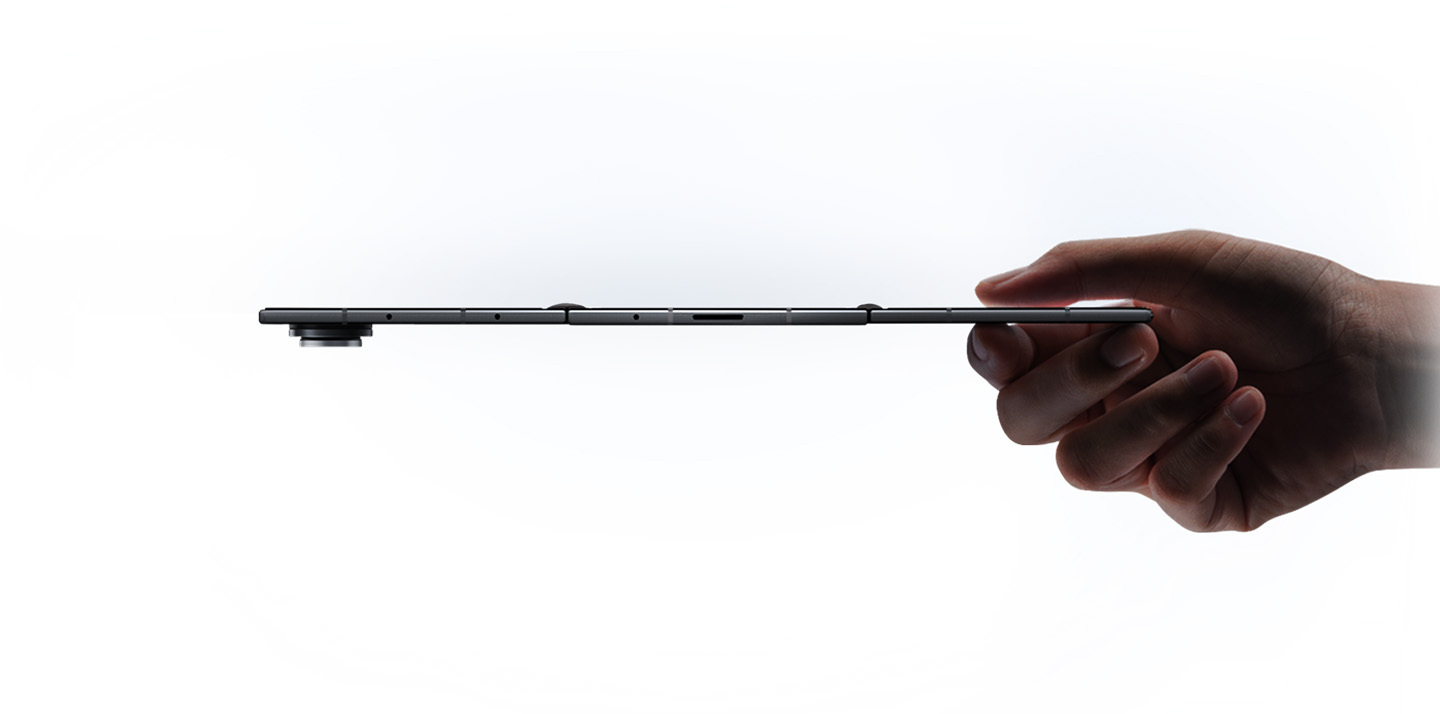
At its thinnest point, the TriFold measures 3.9 millimeters (0.15 inch). Inside, it contains a 5,600 milliamp-hour battery, marking the largest capacity that Samsung has used in a folding phone so far. The battery provides as much as 17 hours of consecutive video playback with the TriFold display fully open. However, in specifications shared with Bloomberg, the company didn’t say how long it expects the battery to last with typical usage.


Read more of this story at Slashdot.

‘We Built a Database of 290,000 English Medieval Soldiers’

An anonymous reader quotes a report from the Conversation, written by authors Adrian R. Bell, Anne Curry, and Jason Sadler: When you picture medieval warfare, you might think of epic battles and famous monarchs. But what about the everyday soldiers who actually filled the ranks? Until recently, their stories were scattered across handwritten manuscripts in Latin or French and difficult to decipher. Now, our online database makes it possible for anyone to discover who they were and how they lived, fought and travelled. To shed light on the foundations of our armed services — one of England’s oldest professions — we launched the Medieval Soldier Database in 2009. Today, it’s the largest searchable online database of medieval nominal data in the world. It contains military service records giving names of soldiers paid by the English Crown. It covers the period from 1369 to 1453 and many different war zones.

We created the database to challenge assumptions about the lack of professionalism of soldiers during the hundred years war and to show what their careers were really like. In response to the high interest from historians and the public (the database has 75,000 visitors per month), the resource has recently been updated. It is now sustainably hosted by GeoData, a University of Southampton research institute. We have recently added new records, taking the dataset back to the late 1350s, meaning it now contains almost 290,000 entries. […] We hope the database will continue to grow and go on providing answers to questions about our shared military heritage. We are sure that it will unlock many previously untold stories of soldier ancestors.


Read more of this story at Slashdot.

Swiss Illegal Cryptocurrency Mixing Service Shut Down

Longtime Slashdot reader krouic shares a report from Europol: From November 24-28, 2025, Europol supported an action week conducted by law enforcement authorities from Switzerland and Germany in Zurich, Switzerland. The operation focused on taking down the illegal cryptocurrency mixing service Cryptomixer, which is suspected of facilitating cybercrime and money laundering. Three servers were seized in Switzerland, along with the cryptomixer.io domain. The operation resulted in the confiscation of over 12 terabytes of data and more than EUR 25 million worth of Bitcoin. After the illegal service was taken over and shut down, law enforcement placed a seizure banner on the website. Authorities allege that the mixing service laundered over 1.3 billion euros in bitcoin since 2016.


Read more of this story at Slashdot.

Samsung fully unveils its Galaxy Z TriFold phone, and it’ll be available in Korea in a few days

Samsung has unveiled its newest smartphone, and it’s the highly-anticipated Galaxy Z TriFold. During an interview in July, a Samsung exec confirmed that the company was working on a three-panel phone that it aimed to release by the end of the year. The company said it expects the phone to be available for purchase in Korea on December 12, with markets including China, Taiwan, Singapore and the United Arab Emirates. For US shoppers, the TriFold will be available in the first quarter of 2026, but no specific date has been revealed yet.

The phone has an inward-folding design intended to protect the main display. If it has been folded incorrectly, the device will automatically vibrate and show an on-screen alert to notify its user. When fully extended, the TriFold has a 10-inch screen and the cover screen is 6.5 inches when folded up. It is 3.9mm at its thinnest point when unfolded and then 12.9mm while collapsed. 

To give that some context, the Galaxy Z Fold 7 is a traditional foldable that also has a 6.5-inch exterior screen and an internal display that opens to 8 inches wide diagonally. It has a profile of 8.9mm when folded and weighs 215 grams compared with the TriFold’s 309 grams. With its two-hinge form, the TriFold makes it so you have basically a ten-inch tablet that folds down to a slightly heftier version of the Z Fold 7.

A side view of the Samsung Galaxy Z TriFold showing its thickness in the unfolded state
Samsung

Foldables introduce some additional design demands, and Samsung said that the screen panels meet with minimal gap but no actual contact when they are closed. The hinges have been designed to resist wear and the screen received a new reinforced overcoat to improve resistance. 

The phone runs on a custom Snapdragon 8 chip. It has a 5,600mAh three-cell battery system and offers 45W super-fast charging. The rear camera lineup includes a 12MP ultra-wide lens, a 200MP wide-angle lens and a 10MP telephoto lens, which is identical to the setup on the Z Fold 7. The main screen and the cover screen both have 10MP front cameras. 

No pricing information is currently available, but it seems like a safe assumption that this will be expensive. The Z Fold 7 starts at $2,000, so expect to pay a premium for that second hinge.

Promo image showing the fold angles of the Samsung Galaxy Z TriFold
Samsung

This article originally appeared on Engadget at https://www.engadget.com/mobile/smartphones/samsung-fully-unveils-its-galaxy-z-trifold-phone-and-itll-be-available-in-korea-in-a-few-days-010000499.html?src=rss

Smartphones At Age 12 Linked To Worse Health

A new study from the University of Pennsylvania finds that preteens who own smartphones by age 12 have significantly higher odds of depression, obesity, and poor sleep compared to their peers. Axios reports: Kids who owned a smartphone at age 12 were found to have about 31% higher odds of depression, 40% higher odds of obesity and 62% higher odds of insufficient sleep than their peers who didn’t have one. The researchers analyzed data from the National Institutes of Health-supported Adolescent Brain Cognitive Development Study assessments conducted between 2016 and 2022. The study included responses from 10,588 youths. Kids who had smartphones were more likely to be female, Black or Hispanic, and from lower-income households. The study has been published in the journal Pediatrics.


Read more of this story at Slashdot.
Apple AI Chief Retiring After Siri Failure

Apple’s longtime AI chief John Giannandrea is retiring, with former Microsoft and Google AI leader Amar Subramanya stepping in to take over. MacRumors notes the retirement comes after the company’s repeated delays in delivering its revamped Siri and internal turmoil that led to an AI team exodus. From the report: Giannandrea will serve as an advisor between now and 2026, with former Microsoft AI researcher Amar Subramanya set to take over as vice president of AI. Subramanya will report to Apple engineering chief Craig Federighi, and will lead Apple Foundation Models, ML research, and AI Safety and Evaluation. Subramanya was previously corporate vice president of AI at Microsoft, and before that, he spent 16 years at Google. He was head of engineering for Google’s Gemini Assistant, and Apple says that he has “deep expertise” in both AI and ML research that will be important to “Apple’s ongoing innovation and future Apple Intelligence features.”

Some of the teams that Giannandrea oversaw will move to Sabih Khan and Eddy Cue, such as AI Infrastructure and Search and Knowledge. Khan is Apple’s new Chief Operating Officer who took over for Jeff Williams earlier this year. Cue has long overseen Apple services. […] Apple said that it is “poised to accelerate its work in delivering intelligent, trusted, and profoundly personal experiences” with the new AI team. “We are thankful for the role John played in building and advancing our AI work, helping Apple continue to innovate and enrich the lives of our users,” said Apple CEO Tim Cook in a statement. “AI has long been central to Apple’s strategy, and we are pleased to welcome Amar to Craig’s leadership team and to bring his extraordinary AI expertise to Apple. In addition to growing his leadership team and AI responsibilities with Amar’s joining, Craig has been instrumental in driving our AI efforts, including overseeing our work to bring a more personalized Siri to users next year.”


Read more of this story at Slashdot.

Rudolph The Red-Nosed Reindeer In The Style Of A Creed Song

This is another mashup from Youtuber There I Ruined It (previously), featuring Christmas classic Rudolph The Red-Nosed Reindeer performed in the style of a Creed song. It’s really…something. Will I be playing this at my Christmas party this year? Yes, on repeat and at full volume. And, if anybody manages to stay longer than an hour, they win my candy factory.

Texas AG opens probe into Shein

Texas Attorney General Ken Paxton has opened an investigation into online fast fashion retailer Shein. The probe will examine whether the company violated state laws related to labor practices and product safety. According to a release, Paxton’s office wants to know if Shein uses toxic or hazardous materials and whether it misleads consumers about product safety and ethical sourcing. The Texas investigation will also look into privacy concerns and data collection at Shein, which isn’t the first time those topics have arisen for the business.

Shein also drew criticism last month after a French consumer protection watchdog discovered illegal weapons and childlike sex dolls available on its website. France is now taking steps to suspend Shein’s business in the country. Last year, the US government also seemed ready to take action against Shein and fellow low-cost retailer Temu over issues of product safety.

This article originally appeared on Engadget at https://www.engadget.com/big-tech/texas-ag-opens-probe-into-shein-000812688.html?src=rss

Flock Uses Overseas Gig Workers To Build Its Surveillance AI

An anonymous reader quotes a report from 404 Media: Flock, the automatic license plate reader and AI-powered camera company, uses overseas workers from Upwork to train its machine learning algorithms, with training material telling workers how to review and categorize footage including images people and vehicles in the United States, according to material reviewed by 404 Media that was accidentally exposed by the company. The findings bring up questions about who exactly has access to footage collected by Flock surveillance cameras and where people reviewing the footage may be based. Flock has become a pervasive technology in the US, with its cameras present in thousands of communities that cops use every day to investigate things like carjackings. Local police have also performed numerous lookups for ICE in the system.

Companies that use AI or machine learning regularly turn to overseas workers to train their algorithms, often because the labor is cheaper than hiring domestically. But the nature of Flock’s business — creating a surveillance system that constantly monitors US residents’ movements — means that footage might be more sensitive than other AI training jobs. […] Broadly, Flock uses AI or machine learning to automatically detect license plates, vehicles, and people, including what clothes they are wearing, from camera footage. A Flock patent also mentions cameras detecting “race.” It included figures on “annotations completed” and “annotator tasks remaining in queue,” with annotations being the notes workers add to reviewed footage to help train AI algorithms. Tasks include categorizing vehicle makes, colors, and types, transcribing license plates, and “audio tasks.” Flock recently started advertising a feature that will detect “screaming.” The panel showed workers sometimes completed thousands upon thousands of annotations over two day periods. The exposed panel included a list of people tasked with annotating Flock’s footage. Taking those names, 404 Media found some were located in the Philippines, according to their LinkedIn and other online profiles.

Many of these people were employed through Upwork, according to the exposed material. Upwork is a gig and freelance work platform where companies can hire designers and writers or pay for “AI services,” according to Upwork’s website. The tipsters also pointed to several publicly available Flock presentations which explained in more detail how workers were to categorize the footage. It is not clear what specific camera footage Flock’s AI workers are reviewing. But screenshots included in the worker guides show numerous images from vehicles with US plates, including in New York, Michigan, Florida, New Jersey, and California. Other images include road signs clearly showing the footage is taken from inside the US, and one image contains an advertisement for a specific law firm in Atlanta.


Read more of this story at Slashdot.

Apple hires Google veteran as its new vice president of AI

Apple has tapped AI researcher Amar Subramanya, a longtime Google exec who was most recently corporate vice president of AI at Microsoft, as its new VP of AI. The company also announced that current AI exec, John Giannandrea, will retire in 2026.

Subramanya, who Apple describes as a “renowned AI researcher,” spent 16 years at Google, where he was head of engineering for Gemini. He left Google earlier this year for Microsoft. In a press release, Apple said that Subramanya will report to Craig Federighi and will “be leading critical areas, including Apple Foundation Models, ML research, and AI Safety and Evaluation.” 

It’s not entirely surprising that Apple is shaking up its AI leadership. Giannandrea joined Apple in 2018 after a stint at Google that included VP of search. While his hiring was seen as a major coup for Apple at the time, the company has faced some significant setbacks since. Most notably, its failure to deliver a more personalized, AI-centric version of Siri that it previewed last year. Giannandrea, who oversaw Siri for years, has shouldered much of the blame for the delays. Bloomberg reported earlier this year that Apple CEO Tim Cook had “lost confidence in the ability of AI head John Giannandrea to execute on product development” and put other executives in charge of Siri instead. 

In a statement, Cook said he was “thankful” for Giannandrea’s contributions to the company and credited Federighi with pushing the revamped Siri forward. “In addition to growing his leadership team and AI responsibilities with Amar’s joining, Craig has been instrumental in driving our AI efforts, including overseeing our work to bring a more personalized Siri to users next year.”

This article originally appeared on Engadget at https://www.engadget.com/big-tech/apple-hires-google-veteran-as-its-new-vice-president-of-ai-234820021.html?src=rss

Attempting To Build A Flyable Single-Person Plane Out Of Cardboard

This is a video of maker of things Peter Sripol constructing and attempting to fly a single-person plane made almost entirely out of cardboard, hot glue, and tape. The plane is powered by brushless motors but has to be towed behind a car to take off. But does it fly? SPOILER SPOILER SPOILER: Yes, but only VERY briefly. Like, less than the Wright Brothers’ first flight. He probably should have built that plane with a little more hope. I build all my projects almost entirely out of hope. Granted they always fail miserably, but I save a fortune on supplies.

Keep going for the videos, the second of which is the plane’s build.

The missile meant to strike fear in Russia’s enemies fails once again

A Russian intercontinental ballistic missile (ICBM) fired from an underground silo on the country’s southern steppe Friday on a scheduled test to deliver a dummy warhead to a remote impact zone nearly 4,000 miles away. The missile didn’t even make it 4,000 feet.

Russia’s military has been silent on the accident, but the missile’s crash was seen and heard for miles around the Dombarovsky air base in Orenburg Oblast near the Russian-Kazakh border.

A video posted by the Russian blog site MilitaryRussia.ru on Telegram and widely shared on other social media platforms showed the missile veering off course immediately after launch before cartwheeling upside down, losing power, and then crashing a short distance from the launch site. The missile ejected a component before it hit the ground, perhaps as part of a payload salvage sequence, according to Pavel Podvig, a senior researcher at the United Nations Institute for Disarmament Research in Geneva.

Read full article

Comments

Austria’s Rebel Nuns Refuse To Give Up Instagram To Stay In Their Convent

Three Austrian nuns in their 80s who escaped a care home and reclaimed their old convent are refusing the church’s offer to stay because it requires them to quit Instagram, stop speaking to the press, and avoid legal counsel — conditions they call a gag order. Their standoff with church authorities has now escalated to the Vatican as the nuns continue posting to their 185,000 followers. NPR reports: Before the church authorities moved the nuns into care almost two years ago, the local abbey and Archdiocese of Salzburg acquired the convent. The sisters say they were not aware they were signing away what they understood to be their lifelong right to remain in the cloister. On Friday, their superior, Provost Markus Grasl from Reichersberg Abbey, announced that the sisters can stay. But his offer comes with conditions: The nuns must cease all social media activities, stop talking to the press and forgo seeking legal advice. The nuns have rejected the proposal, and now Grasl has called on the Vatican to intercede.

In a statement released Friday, the nuns said the provost’s offer is nothing short of a gag order. Speaking via Instagram, Sister Regina said, “We can’t agree to this deal. Without the media, we’d have been silenced.” Sister Bernadette told Instagram followers: “We need to resolve this but any agreement we reach must be in accordance with God’s will and shaped by human reason.” […] The provost’s proposed agreement — which NPR has seen — also bans laypeople from entering the cloisters, including the sisters’ helpers, many of whom they’ve known for decades and on whom the nuns now depend for help.

Speaking to NPR on Monday, the provost’s spokesperson, crisis PR manager Harald Schiffl, said that the provost does not understand why the nuns reject his offer and that, in response, he has requested the Vatican authorities responsible for religious orders to step in. The Vatican has not commented on the situation. So while they await news from Rome, the sisters continue to follow the papal Instagram account. Schiffl says the terms relating to the nuns’ social media use are reasonable: “The abbey wishes to discontinue the sisters’ social media accounts because what they show has very little to do with real religious life.”


Read more of this story at Slashdot.

Zipcar To End UK Operations

“The car-sharing company, first launched in the U.S. in 2000, has been active in the UK since 2010 and has just under half a million members,” writes Slashdot reader guesstral. “‘I’m writing to let you know that we are proposing to cease the UK operations of Zipcar,’ wrote Zipcar UK’s general manager, James Taylor, in an email to members today. He went on to say that Zipcar will temporarily suspend new bookings after December 31, pending the outcome of a consultation with its 71 staff members.” From the BBC: In its most recent company accounts for 2024, Zipcar blamed the “cost of living crisis,” which was affecting UK customers, for revenues falling to 46 million pounds to 53 million the year before, while its after-tax losses had widened to 11.6 million pounds. According to the same accounts, Zipcar membership fees cover the cost of fuelling or charging the vehicle and, as energy costs continued to rise last year, it has added to financial pressures on the company. The company would also be liable for the incoming congestion charge in London that is expanding to include electric vehicles from 26 December, although this was not referenced in Zipcar’s email to membership or company accounts.


Read more of this story at Slashdot.

Supreme Court hears case that could trigger big crackdown on Internet piracy

Supreme Court justices expressed numerous concerns today in a case that could determine whether Internet service providers must terminate the accounts of broadband users accused of copyright infringement. Oral arguments were held in the case between cable Internet provider Cox Communications and record labels led by Sony.

Some justices were skeptical of arguments that ISPs should have no legal obligation under the Digital Millennium Copyright Act (DMCA) to terminate an account when a user’s IP address has been repeatedly flagged for downloading pirated music. But justices also seemed hesitant to rule in favor of record labels, with some of the debate focusing on how ISPs should handle large accounts like universities where there could be tens of thousands of users.

Justice Sonia Sotomayor chided Cox for not doing more to fight infringement.

Read full article

Comments

OpenAI desperate to avoid explaining why it deleted pirated book datasets

OpenAI may soon be forced to explain why it deleted a pair of controversial datasets composed of pirated books, and the stakes could not be higher.

At the heart of a class-action lawsuit from authors alleging that ChatGPT was illegally trained on their works, OpenAI’s decision to delete the datasets could end up being a deciding factor that gives the authors the win.

It’s undisputed that OpenAI deleted the datasets, known as “Books 1” and “Books 2,” prior to ChatGPT’s release in 2022. Created by former OpenAI employees in 2021, the datasets were built by scraping the open web and seizing the bulk of its data from a shadow library called Library Genesis (LibGen).

Read full article

Comments