
Budget model slips in at $45 while other boards climb amid AI-driven component crunchRaspberry Pi has raised prices across much of its latest lineup while launching a new $45 Raspberry Pi 5 with 1GB of RAM, it’s first sub-$50 model in the series.…
Category Archives: Unfiltered RSS
NASA seeks a “warm backup” option as key decision on lunar rover nears
By the time the second group of NASA astronauts reach the Moon later this decade, the space agency would like to have a lunar rover waiting for them. But as the space agency nears a key selection, some government officials are seeking an insurance policy of sorts to increase the program’s chance of success.
At issue is the agency’s “Lunar Terrain Vehicle” (LTV) contract. In April 2024, the space agency awarded a few tens of millions of dollars to three companies—Intuitive Machines, Lunar Outpost, and Astrolab—to complete preliminary design work on vehicle concepts. NASA then planned to down-select to one company to construct one or more rovers, land on the Moon, and provide rover services for a decade beginning in 2029. Over the lifetime of the fixed-price services contract, there was a combined maximum potential value of $4.6 billion.
The companies have since completed their design work, including the construction of prototypes, and submitted their final bids for the much larger services contract in August. According to two sources, NASA has since been weighing those bids and is prepared to announce a final selection before the end of this month.
Switch 2 Mario Kart World Bundle Is $50 Off In Surprise Holiday Deal
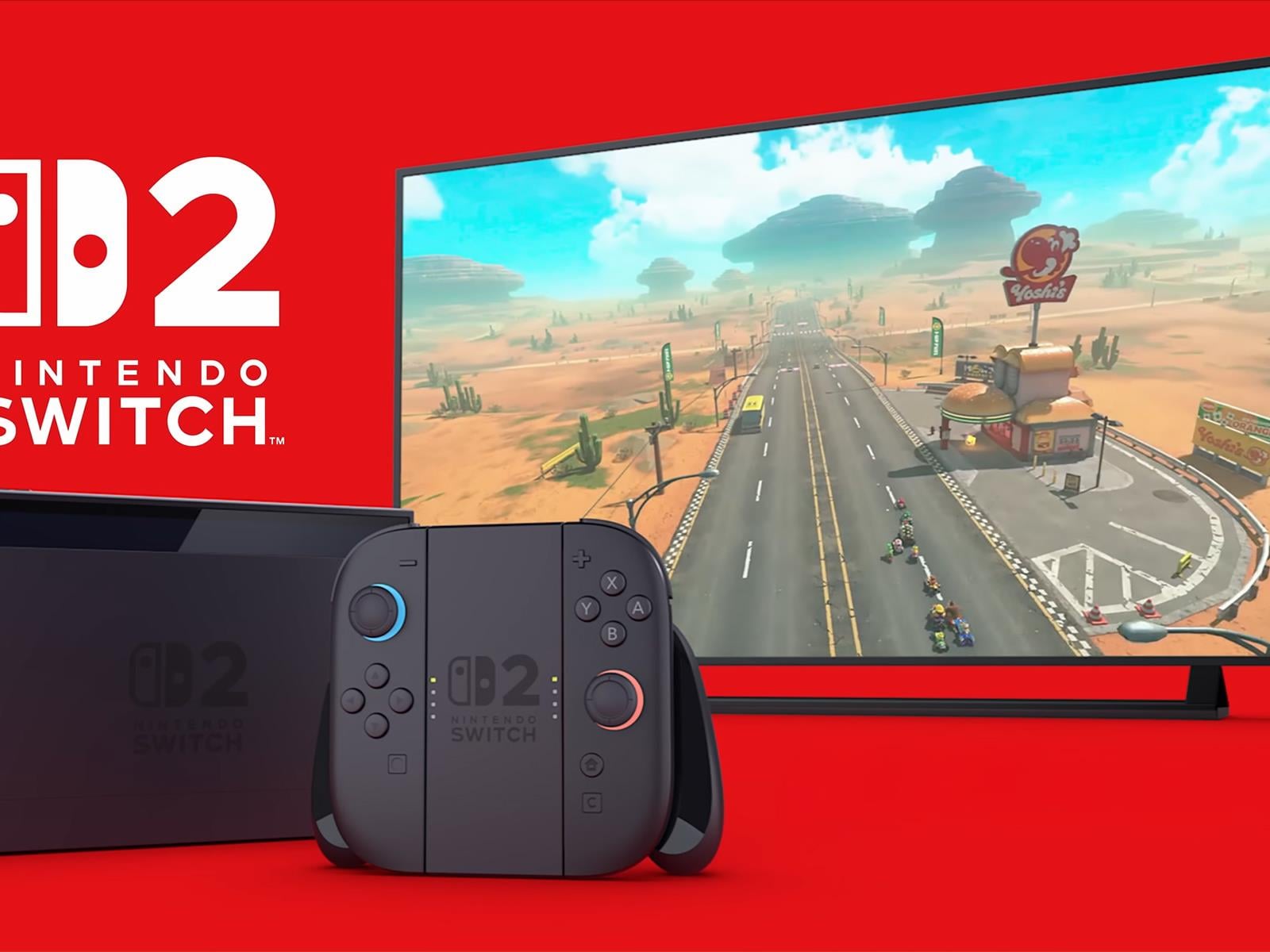
Psst, hey you there, the one with the Switch 2 console in your shopping cart who’s getting ready to hit the checkout button. STOP WHAT YOU’RE DOING! Sorry, we didn’t mean to yell, but you’re about to make a $50 mistake. How so? If you know where to look, you can score the Switch 2 + Mario Kart World bundle for the same price, and who doesn’t
Steam On Linux Hits An All-Time High In November
Steam’s November 2025 survey shows Linux gaming climbed to its highest share in a decade “thanks to the success of the Steam Deck, the underlying Steam Play (Proton) software, and now further excitement thanks to the upcoming Steam Machine and Steam Frame,” writes Phoronix’s Michael Larabel. From the report: A decade ago in the early Steam days the initial use was around 3% and back then the Steam user-base in absolute terms was much smaller than it is today. Back in October Steam on Linux finally re-crossed that 3% threshold after for years being stuck in a 1~2% rut. Now the Steam Survey results were published minutes ago for November and they continue an upward trend for Linux.
Steam on Linux is up to 3.2%, an increase of 0.15% for the month. One year ago Steam on Linux was at 2.03% last November, 1.91% for November 2023, and a decade ago for November 2015 was at just 0.98%. […] Due to AMD APUs powering the Steam Deck, AMD CPUs continue to power nearly 70% of Linux gaming systems. Meanwhile under Windows, AMD has around a 42% CPU marketshare.


Read more of this story at Slashdot.
Linux 6.19 To Allow File-Systems To Increase The Writeback Chunk Size
Linux has maintained a default 4MB minimum writeback chunk size but with the in-development Linux 6.19 kernel it will allow file-systems to override that minimum value. This in turn can help avoid fragmentation and yield a better experience for zoned rotation media and other uses…
Apple Music Replay 2025 is here to highlight your unimpeachable music taste
Music streaming services are starting to unleash their year-in-review features for 2025, and Apple Music’s version is out now. Apple Music Replay is here to lay bare your listening stats for the year — at least so far, because these tools go live with a whole month of the year left to go. You can check out the 2025 edition from the Home tab in the app.
As ever, Replay shows your total listening time, the number of artists you checked out, your most-listened-to song and album and more. New this year is a discovery stat, which highlights new artists you started listening to in 2025. The loyalty factor will tell you which artists you listen to year after year, and the comebacks tab shows which artists have slotted back into your rotation.
The most popular song on Apple Music overall this year was the ultra-catchy “Apt.” by Rosé and Bruno Mars. “Luther” by Kendrick Lamar and SZA; “Die with a Smile” by Lady Gaga and Mars; “Not Like Us” by Lamar; and “Birds of a Feather” by Billie Eilish rounded out the top five. “Apt.” is also the most Shazamed song of the year.
I really didn’t need Replay to tell me that party metal vanguards Electric Callboy and kawaii metal pioneers Babymetal were my top artists for 2025, since I’ve had both on extremely heavy rotation since the spring — their stupendously fun collab, “Ratatata,” was my top song this year. I was a little surprised that the wonderful Japanese math rock band Toe were in third place and that post-punk revival crew Editors made the top five, though I did listen to the latter’s The Back Room a bunch at the start of the year.
Early last year, Apple Music rolled out a monthly version of Replay, which shows the top songs, albums and artists and personal listening milestones for each month. You can also go back and listen to previous versions of your personalized Replay playlists, and check out a Replay All Time one, which highlights the songs you’ve listened to most on Apple Music overall.
This article originally appeared on Engadget at https://www.engadget.com/entertainment/music/apple-music-replay-2025-is-here-to-highlight-your-unimpeachable-music-taste-151224318.html?src=rss
“Players are selfish”: Fallout 2’s Chris Avellone describes his game design philosophy
Chris Avellone wants you to have a good time.
People often ask creatives—especially those in careers some dream of entering—”how did you get started?” Video game designers are no exception, and Avellone says that one of the most important keys to his success was one he learned early in his origin story.
“Players are selfish,” Avellone said, reflecting on his time designing the seminal computer roleplaying game Planescape: Torment. “The more you can make the experience all about them, the better. So Torment became that. Almost every single thing in the game is about you, the player.”
Metroid Prime 4: Beyond review: an excellent modernization, but not a total reinvention
It’s been 18 years since the last Metroid Prime game, but I felt right at home in Metroid Prime 4: Beyond. Almost too at home. Whether fighting my way through a volcano, exploring a research base in a frozen tundra or getting lost in a vast desert, I couldn’t shake the feeling I’d done this before. As the fourth game in a series, that’s not a huge surprise, but it was my main disappointment in Metroid Prime 4: Beyond. Think about the leap Nintendo took going from 2011’s The Legend of Zelda: Skyward Sword and 2017’s Breath of the Wild. They were both recognizably Zelda games, but Nintendo redefined what that means between those two games.
No such reinvention has happened with Metroid Prime 4: Beyond. But that doesn’t mean it isn’t a great time — it executes the template for a Metroid Prime game extremely well. It’s thrilling to see the series finally make the jump to HD, iconic bounty hunter Samus Aran has some intriguing new powers, there’s a badass motorcycle to shuttle her around the game’s open world hub and the game’s design and art direction show Nintendo at its best. It’s everything you’d expect from a Metroid Prime game — no more, no less. Whether that’s a good thing is up to you to decide.
If you haven’t played the previous Metroid Prime games before, fear not. There isn’t anything story-wise that you need to know before you jump into this adventure. As with all Metroid games, you take control of acclaimed bounty hunter Samus Aran, an ultra-powerful warrior with a mechanized suit full of fun tricks. The vast majority of the game takes place in first-person view where you can lock on to the many creatures trying to kill you and blast away with an ever-expanding arsenal. The other main interface is your scan visor, where you can learn about your surroundings and enemies to find weaknesses and figure out what you need to do to advance.
Nintendo
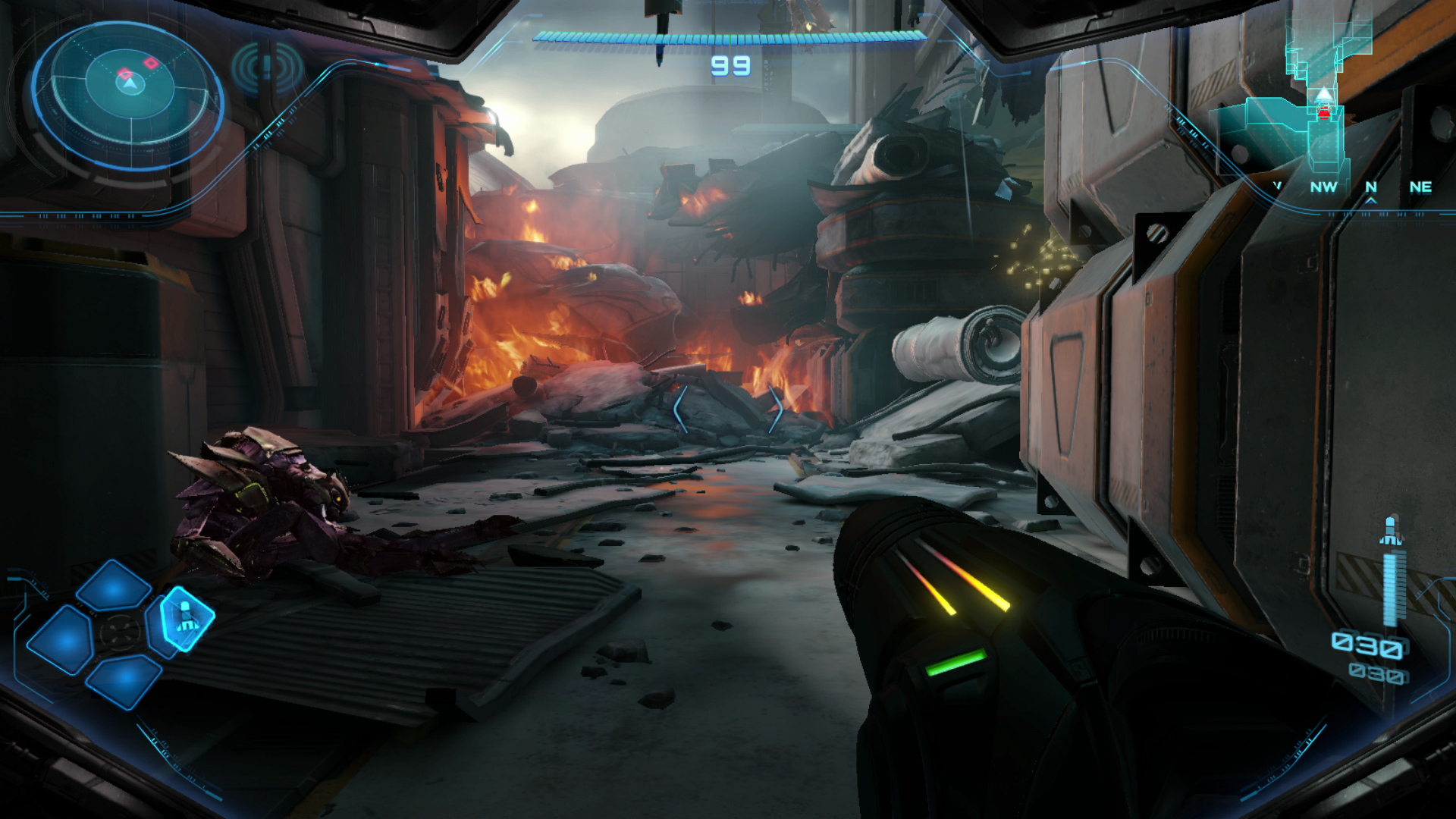
Beyond throws you right into a firefight that serves as a solid tutorial for the game’s varied control schemes. A Galactic Federation outpost is under attack, and Samus flies in to help defend the troops and keep a secret artifact safe. This somewhat bombastic intro is a great way to show off the Switch 2’s power. Sure, we’re not talking about a PS5 Pro here, but this is perhaps the most visually-advanced game Nintendo has released. With a Switch 2 docked to a TV, you can play it at either 4K / 60fps or 1080p / 120fps (in handheld mode, that drops to 1080p or 720p with the same frame rates). I don’t have a huge TV, so I mostly went with “performance mode,” but in either case the game felt extremely fluid with no frame rate drops and looked outstanding.
The game starts as Samus Aran flies in to help the Galactic Federation fight off an invasion, and that opening cut scene shows off with some HDR-enhanced explosions and a detailed environment of a space base in chaos. There are little fires and explosions everywhere; it’s visually busy but in a good way that serves the setting, and it all looks vibrant and life-like. As with basically all Nintendo games, Metroid Prime 4: Beyond isn’t aiming for realism, but it’s closer to a game like Horizon Forbidden West or Cyberpunk 2077 than any other Nintendo titles I can think of. Things like the textures of metal installations, the leaves on alien trees or Samus’ gloves all have a level of textural detail you don’t usually see in Nintendo’s games. Often, that’s due to a conscious art direction choice to go in a more cartoonish direction, but the Switch 2’s hardware is helping make the game as lifelike as possible.
Nintendo
(Note that Metroid Prime 4: Beyond is also available on the original Switch. I didn’t play it there so I can’t comment on how things like frame rates and textures hold up on that much older console. If you’re thinking about trying this game on the first Switch, it’s probably a good idea to see how other reviewers find that experience before shelling out $60.)
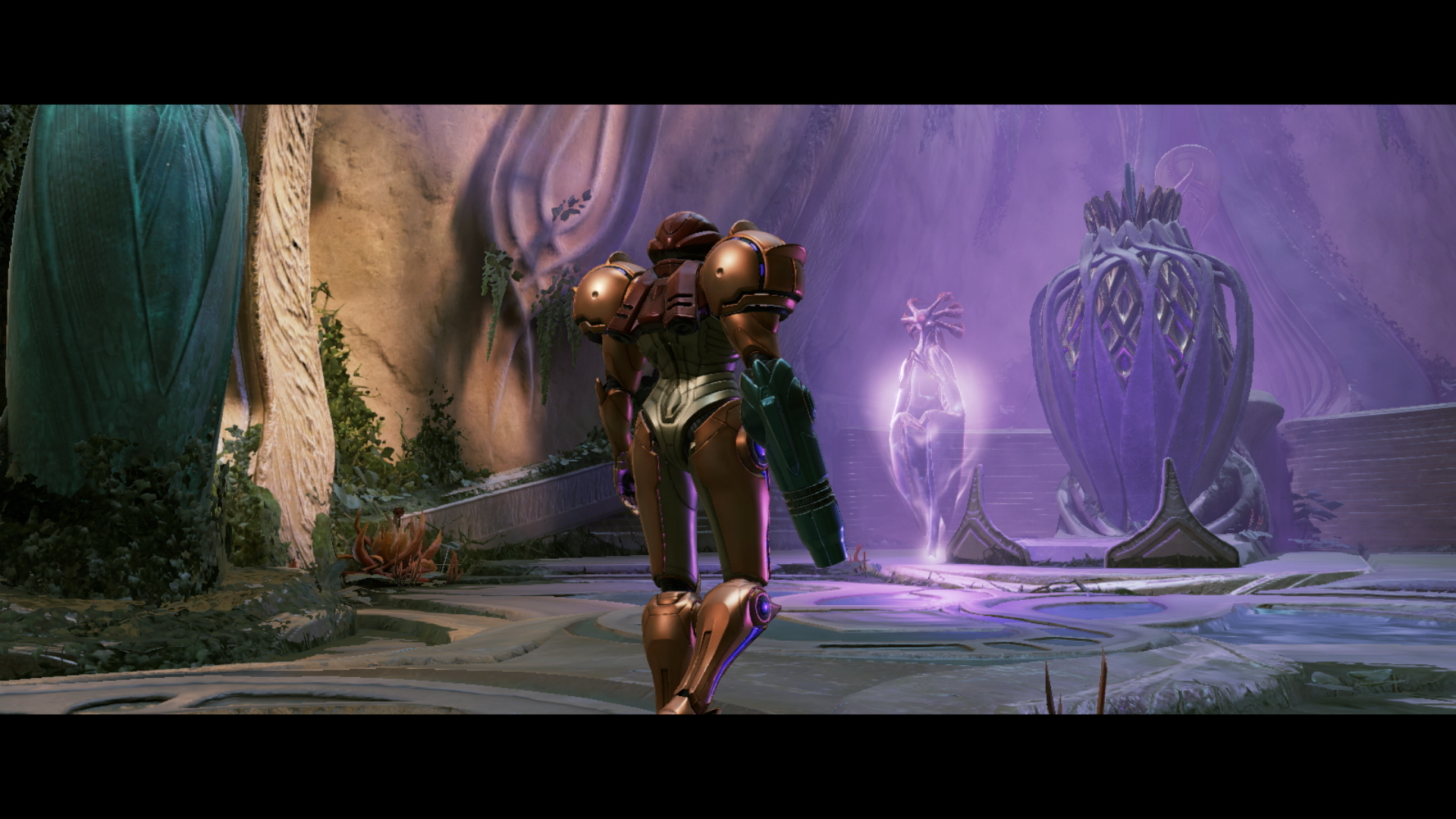
The aforementioned intro sets up the big conflict in Beyond. As Samus comes in to try and help the troops defend a mysterious artifact, the game’s big bad Sylux shows up and everything hits the fan. Samus and some other Galactic Federation forces are mysteriously transported to the planet Viewros, where Samus comes into contact with a near-excinct society called the Lamorn. A Lamorn elder telepathically pleads with Samus to try and save the society from being totally forgotten — indeed, she may be able to bring them back from the brink of extinction if all goes well. They’ve been waiting for a “chosen one,” you see, and Samus is naturally it.
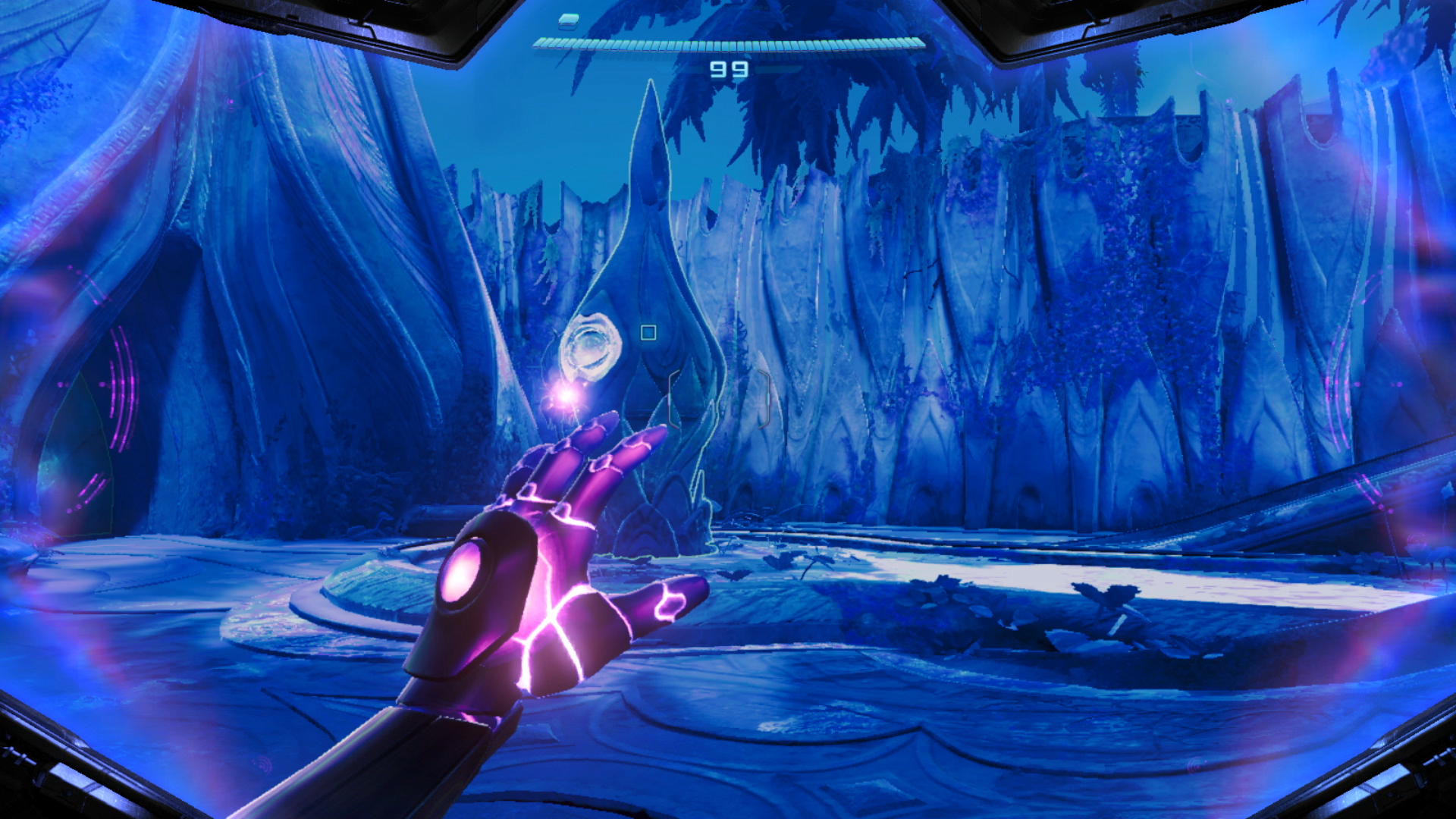
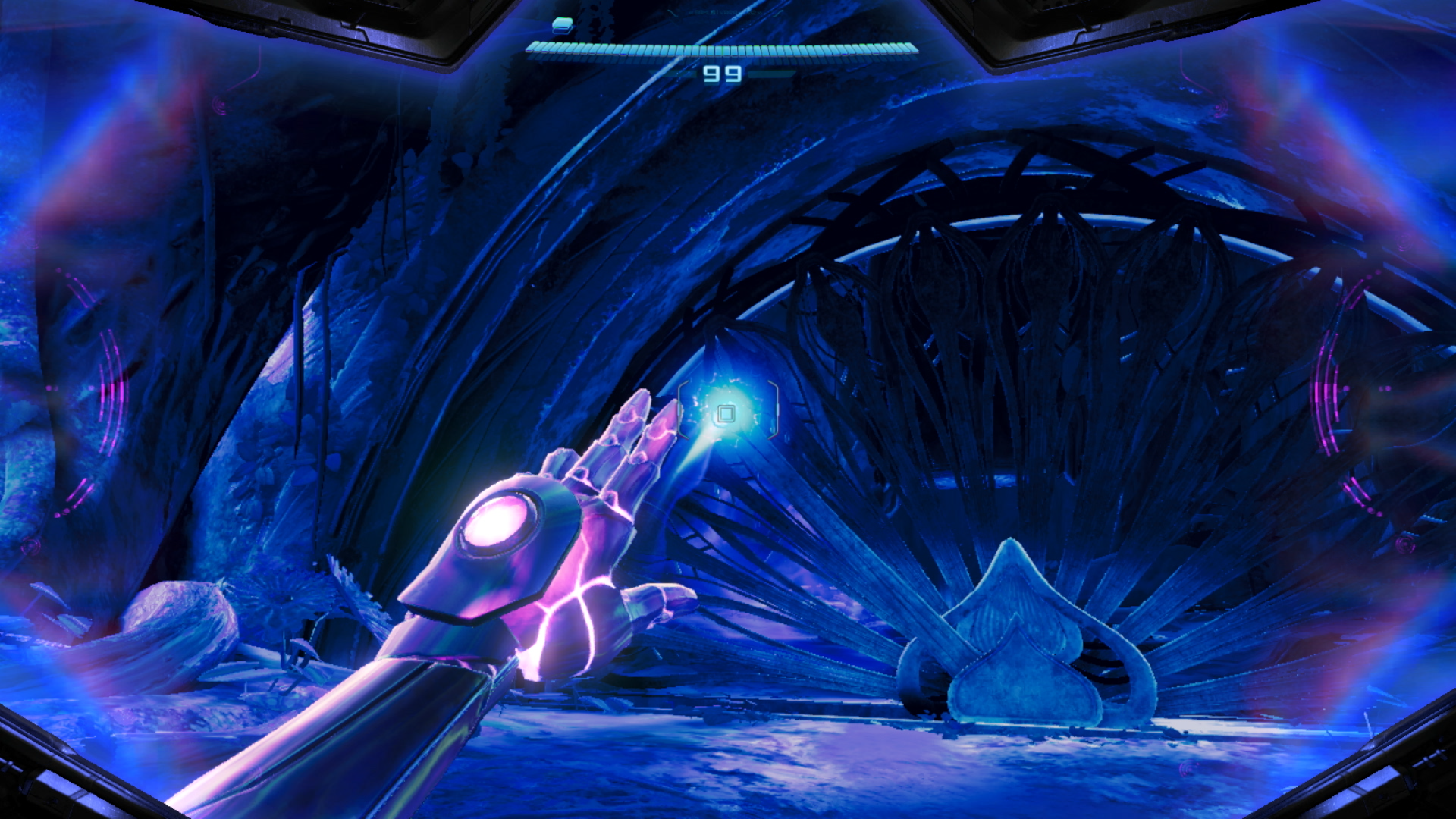
As part of this intro, Samus gains her signature new physic powers in Beyond. These allow her to interact with otherwise-hidden parts of the environment to solve puzzles. The most significant is the Control Beam. When you charge your arm cannon while in the psychic scan visor mode (a slight tweak on the environmental scanning feature that has been a major part of all Metroid Prime games), you can fire a beam that slows time down and can be controlled with the right joystick. That means you can pass the Control Beam through multiple targets, something you’ll need to do periodically to weaken enemies or unlock the way forward.
Nintendo
For the most part, though, the psychic powers besides the beam are just repackaging of already-familiar tools. Metroid veterans will be familiar with the Spider Ball, an upgrade to the Morph Ball that lets Samus magnetically attach to tracks that help her get to out-of-reach areas. In Beyond, you instead get the “Psychic” Spider Ball — that does essentially the same thing. Occasionally, you’ll find Psychic Ball Tracks that you have to scan to reveal; they’ll then blast Samus into a secret area that usually has a weapon upgrade or energy tank. Even Samus’ main weapon gets a fancy “Psychic Beam” name — but the description of it in the inventory admits that it’s the same weapon. “The Psychic Beam’s strength and performance are equal to the standard Power Beam.” While the Control Beam adds a fun wrinkle to the gameplay, the psychic abilities don’t otherwise change the Metroid Prime formula in any significant way.
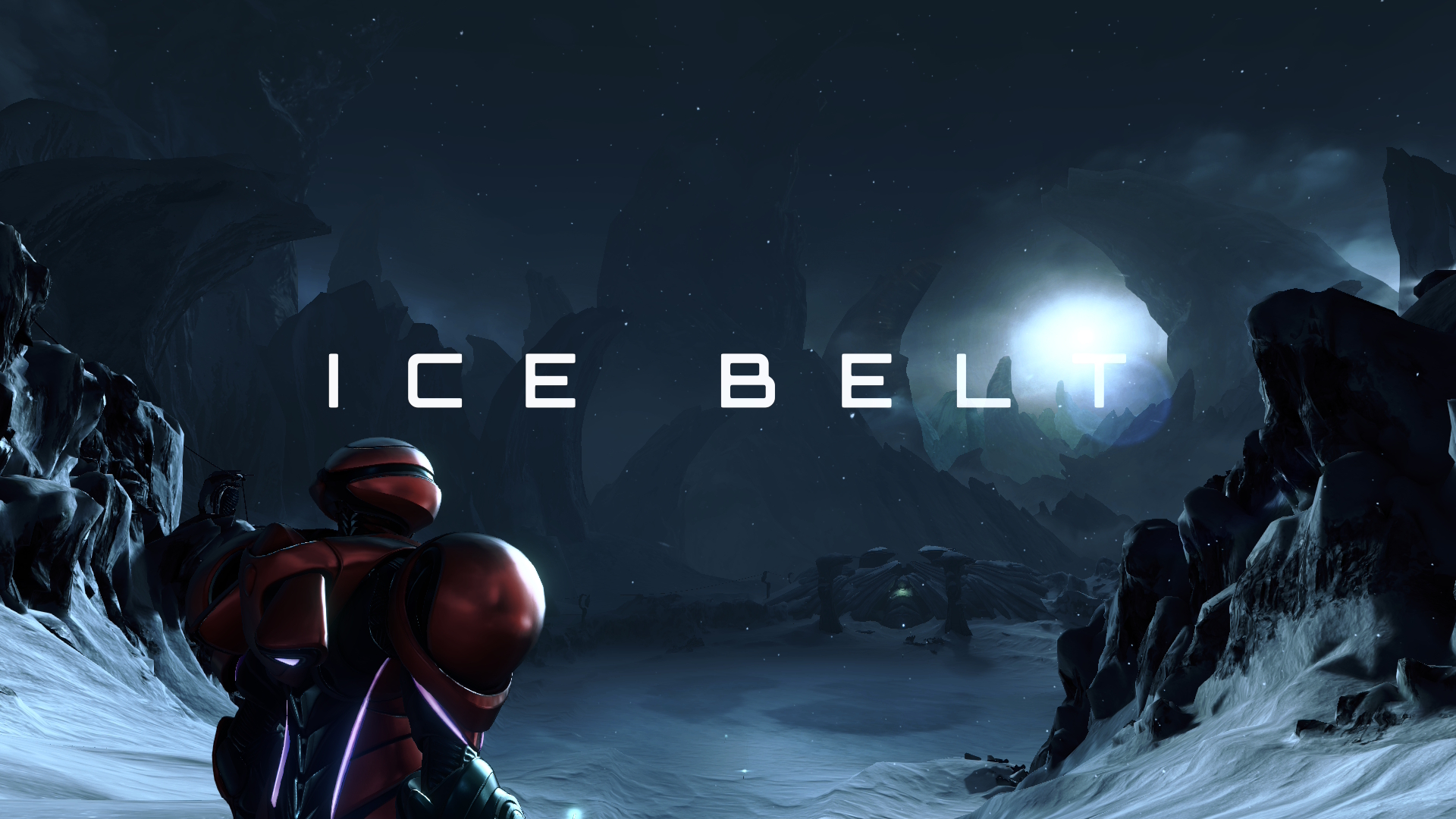
The main task Samus faces is collecting five Teleporter Keys that can get her off the planet. Those keys are hidden in various environments around Viewros that are all connected by Sol Valley, a large desert that holds lots of upgrades and side quests that you’ll need to clear to advance in the game. The desert is more of a hub than an open world — there are small areas to explore dotted around it, but the main action happens in places like Ice Belt, Volt Forge, Flare Pool and several others you’ll find your way to as you collect those teleporter keys.
Nintendo
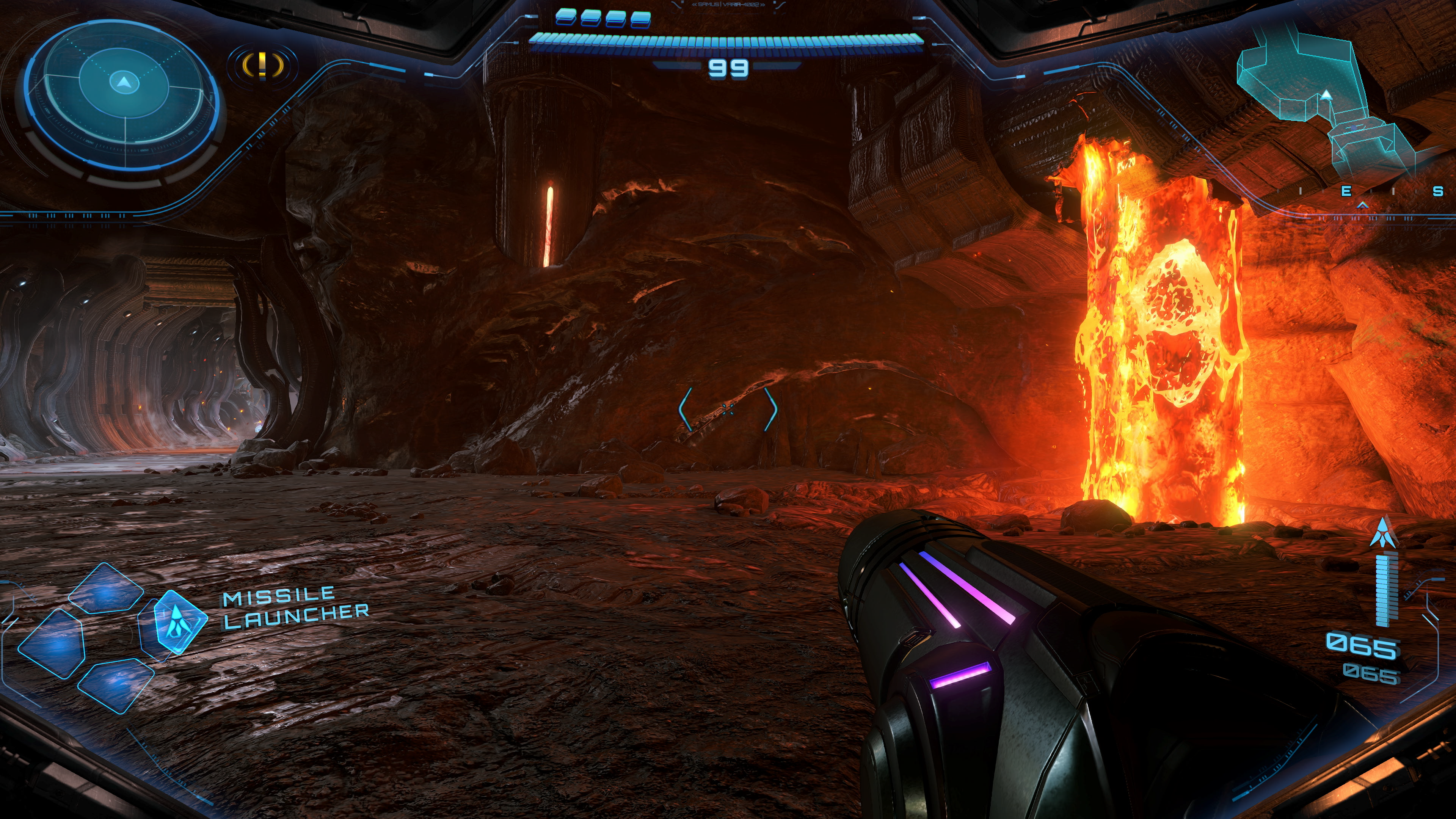
As those names suggest, Ice Belt is a frozen area where you explore an abandoned research facility, while Flare Pool is inside of a volcano. And, as you might expect, you’ll need certain weapons to advance in those areas. In addition to her standard beam and missile weapons, Samus collects the obligatory freeze ray and fire blaster sort of weapons. This is where the game really started to remind me of the original Metroid Prime — the three elemental weapons she collects are essentially the same as those in the first game, and environments like a frozen wasteland or a fiery volcano are nearly identical to ones you’ll find in that game. The Lamorn, meanwhile, reminded me a lot of the departed Chozo tribe you’ll find on Tallon IV in the first Metroid Prime. Of course, that game came out all the way back in 2002, and Metroid Prime 4: Beyond will likely be the first game of the series many play. A little recycling of classic elements is forgivable.
That said, I was a bit disappointed that the game has a tightly-scripted flow. After the intro and the first mission on Viewros, you hit the desert with multiple locations where Teleporter Keys are believed to be hidden. But you can’t tackle them in any order you choose. This is a Metroid game, after all, and that means exploring to find powers that let you explore a new area that was previously closed off. Part of me was hoping for the freedom of a game like Breath of the Wild where you could tackle areas in any order you choose. But after playing through nearly the entire game, I appreciate the excellent execution of the familiar formula.
Nintendo
Another thing that’ll be familiar to those who’ve played the older Metroid Prime games is the control scheme. For the most part, you can pick up the controller and get right to it, as the main control layout employs a two-joystick first-person view that should be pretty easy to get the hang of. But there are definitely times where I found myself wishing for more precision. You can lock onto enemies and targets with the ZL button and start blasting away with your chosen weapon, but many of the boss battles require you to lock on to a large creature and then use the right stick to adjust your aim to hit very specific targets. This took some getting used to, because I was used to the lock-on target vulnerable areas. Doing it with a Switch Pro Controller made things much easier, but using the standard Joy-Cons could get frustrating in a hurry. If I was playing in handheld mode, I would often pause before a big battle and wait until I could hook up to my TV and use a proper controller. I’d recommend you do the same — it’ll make for a much more enjoyable experience.
Beyond also offers the option of using one Joy-Con in “mouse” mode for aiming while using the other for moving around. For me, this isn’t a viable option. I tried it a few times and immediately felt completely disoriented and far worse at aiming than I was with the right stick. I can appreciate the idea behind offering mouse-like controls for a first-person FPS game, but it just did not feel well executed. That said, this might be on me. I haven’t played a game with a keyboard and mouse in years; nearly all of my gaming is on a twin-stick controller, so I’m just more comfortable with that setup. I’m thinking about starting from the beginning and seeing how I adapt to mouse mode and will update this review if my opinion changes.
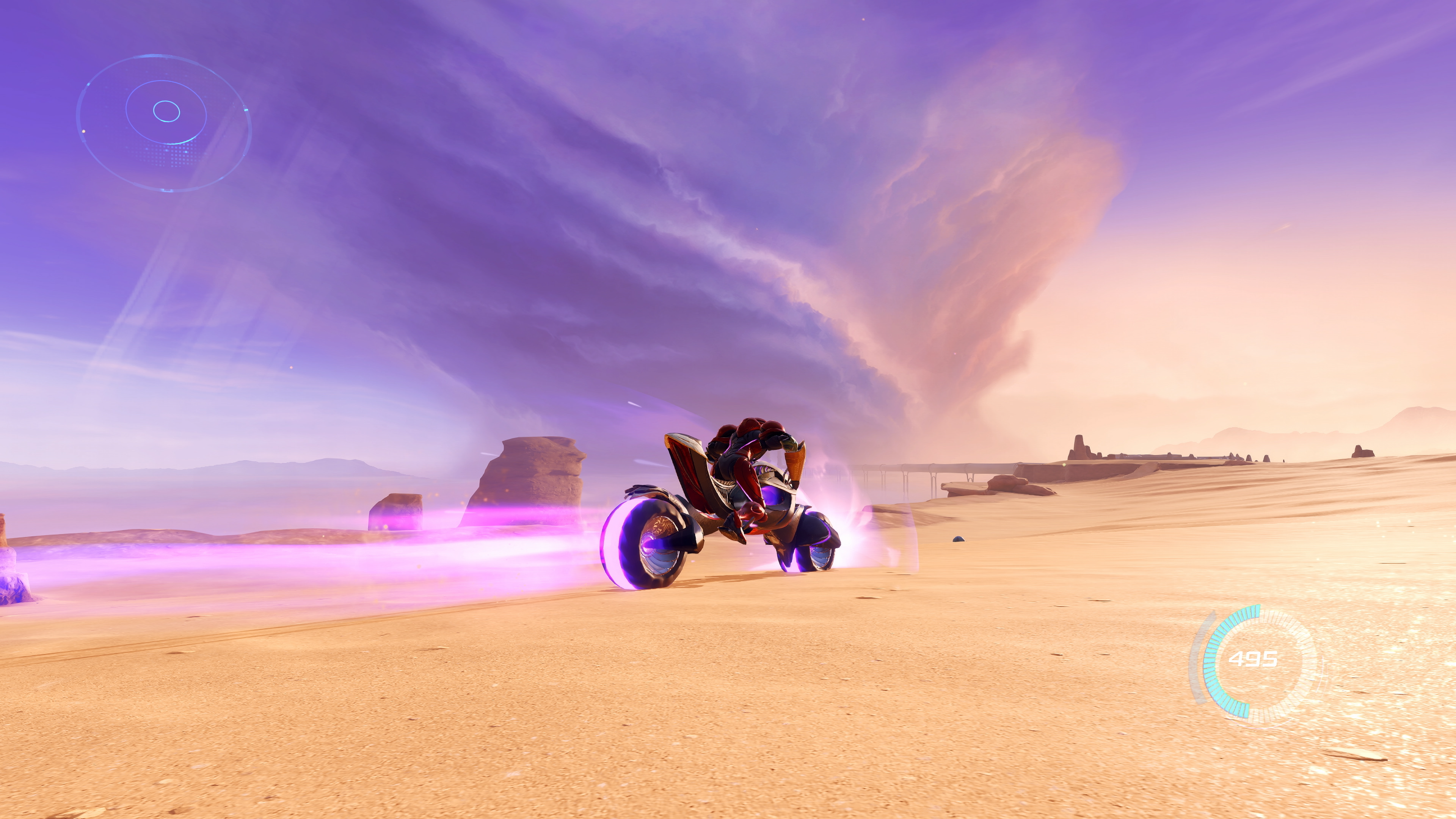
There are a few things that Beyond does that are completely new to the series. The most obvious one is Vi-O-La, the wild robotic motorcycle that Samus rides. You’ll unlock that early in the game, and its primary utility is to get around Sol Valley. For anyone worried that the game is overly focused on an element that admittedly feels a bit anachronistic to the usual Metroid vibe, fear not. You’ll use it a bunch, but it’s more about fast transportation and exploration than something that has detailed mechanics you need to master. There are a few segments where it’s a major part of the mission, but for the most part it’s just another tool in your arsenal rather than something that steals the focus of the game.
Nintendo
The same can be said for the motley crew of adventures you assemble. One of the loudest bits of feedback that came out of the preview Nintendo offered the press a few weeks ago was “what’s the deal with Myles MacKenzie?” You see, in the first hours of the game you come across MacKenzie, a bumbling engineer type who you rescue in the jungles of Viewros shortly after landing on the planet. You then have to escort him around a bit, during which he makes some pretty bad and occasionally obnoxious jokes. This led many who played the preview to worry about MacKenzie shattering the quiet and lonely solitude the Metroid series is known for.
Don’t worry — Samus is on her own for the vast majority of the game. You’ll encounter a few more stranded Galactic Federation soldiers throughout the game, but they usually only stick around for short segments before returning to the home base you establish with Myles. And as for Myles himself, he’ll help upgrade your weapons and is available on the radio to give you hints on where you need to go, something that I honestly didn’t mind. I’d rather have hints at hand than spend all my time wandering lost throughout the vast world of Beyond. But I can also see that the hint system is occasionally too aggressive in dropping details on where to go next.
As a seasoned player, Beyond mostly felt challenging but fair. Games in the Metroid Prime series are notorious for moments of serious difficulty, but this one feels a little more forgiving. When battling bosses, there were plenty of ammo and energy drops that helped me even the score. I usually died a handful of times while figuring out my strategy or getting a feel for their attacks, but it wasn’t overly frustrating or tedious. That said, there were two bosses near the end (including the final boss) where the difficult curve spiked in a way that felt completely unreasonable.

Nintendo
There were also a few times when I felt wildly lost, with no useful information about my next step to be found anywhere on the map. Myles told me to find a member of the crew “out in the desert.” And while Sol Valley isn’t the same open-world scale of some bigger games, it’s still a pretty big space to explore without any other indication of where to go. I wasted far too much time riding my motorcycle across dunes aimlessly figuring out where to go. It wouldn’t be a Metroid game if you didn’t get hopelessly stuck at some point, though.
For the most part, I enjoyed the addition of some people helping Samus along her way. It helps flesh out the world of the game in small ways, giving some perspectives on everything going on from people who aren’t ultra-powerful, silent bounty hunters. It did make Samus’ never-ending silence feel a bit awkward, but it also fits with her otherworldly, not-quite-human presence.
Nintendo
In some ways, it’s easy to sum up Metroid Prime 4: Beyond. It’s the Metroid Prime experience, modernized. The graphics are better, the world is bigger, experiences like Vi-O-La and Samus’ psychic abilities offer a greater variety of gameplay experiences. But it’s also very much a Metroid Prime game at its core, with the familiar but effective mix of biomes to exploration, giant enemies to dispatch and weapon upgrades to find. And, of course, there were moments of immense frustration when things just got too difficult, another hallmark of the series. Seriously, the final battle is wildly frustrating. Maybe I just need to get good, but it felt so far out of sync with the entire rest of the game that it almost ruined the fun that came before.
That intense moment of frustration aside, anyone who played earlier games in the series will find a lot to love here. But, they also might be disappointed that Nintendo didn’t push the series further. However, there are also a lot of people who’ve never played a Metroid Prime game in the last two decades or so — those people will find that the formula Nintendo engineered in the 2000s still holds up here. Metroid Prime 4: Beyond is far more unique than your average first-person shooter, it was worth the long wait, and it’s a must-play for anyone who is up for the challenge.
This article originally appeared on Engadget at https://www.engadget.com/gaming/nintendo/metroid-prime-4-beyond-review-an-excellent-modernization-but-not-a-total-reinvention-150000082.html?src=rss
Samsung Galaxy Z TriFold Launches With Huge OLED Display & Beastly Specs
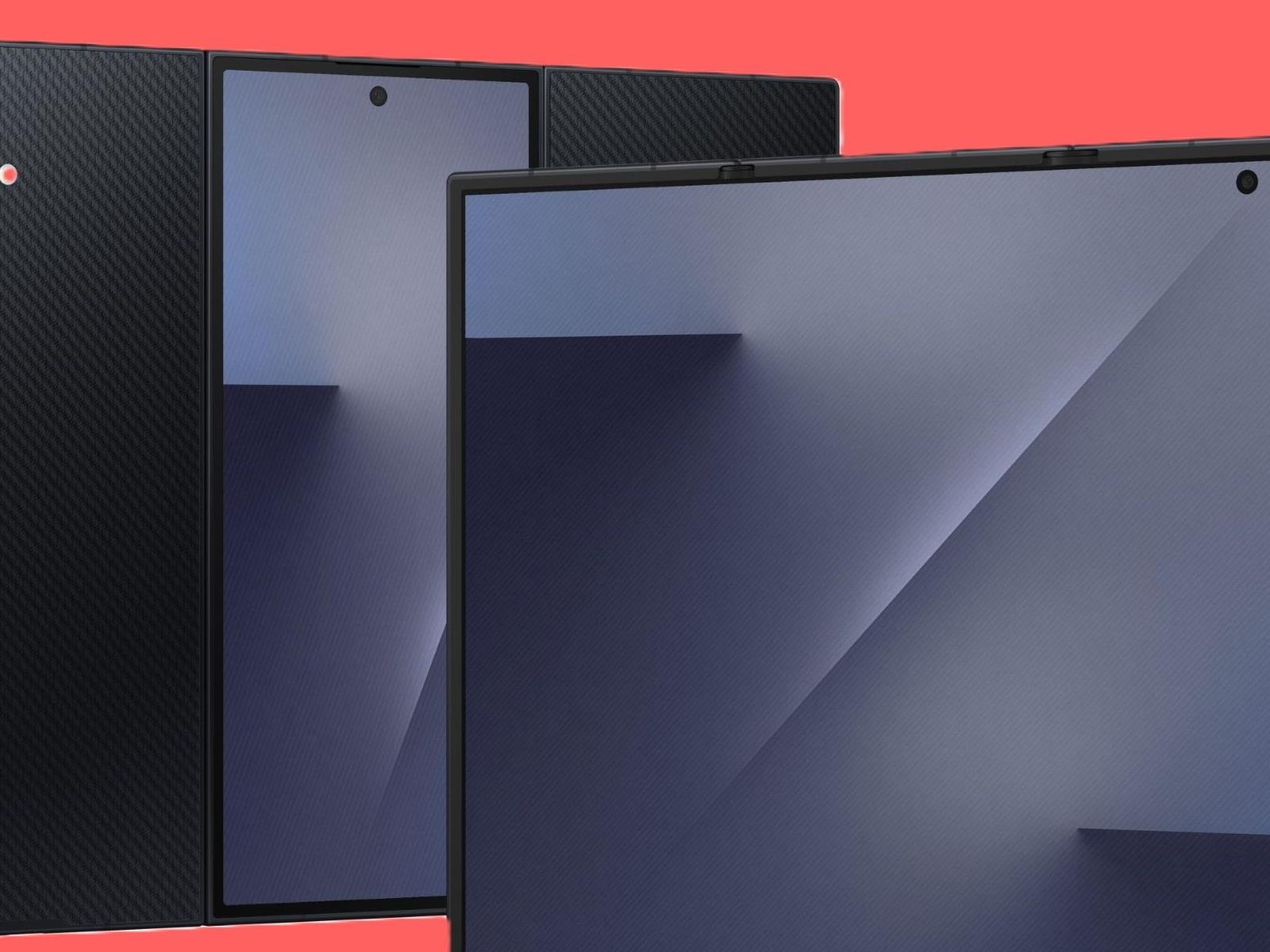
Samsung’s Galaxy Z TriFold is finally official. Built upon Samsung’s decade-long investment in foldables, the TriFold is being hailed by the company as the “shape of what’s next in mobile innovation,” but will shoppers care?
Whether it becomes a market success or not, you can’t deny the engineering behind this premium inward-folding design.
Geekom Unveils All-Metal GeekBook X14 Pro OLED Laptop To Challenge MacBook Air

Geekom may be best known for its lineup of mini PCs, but it’s looking to make a splash in the laptop market with what it claims is the world’s first all-metal ultralight model, the GeekBook X14 Pro. From our vantage point, it’s basically a Windows version of Apple’s newest MacBook Air, though there are key differences, not the least of which
Apple will reportedly refuse to pre-install India’s state-mandated security app
India has issued a mandate to all smartphone manufacturers and importers requiring them to install a state-owned cyber security app. But Apple is reportedly not going to comply, citing privacy and security concerns, according to Reuters.
The app, called Sanchar Saathi (meaning Communication Companion), is supposed to expedite the process of finding lost or stolen devices and stopping their misuse, according to a government press release on Monday. It further states that companies, including the likes of Samsung and Xiaomi, should “endeavor” to use software updates to download the app on previously purchased smartphones.
The Sanchar Saathi app comes alongside an entire website designed for reporting fraudulent communication and tracking missing phones. However, critics worry that the app is a means for Prime Minister Narendra Modi’s government to gain access to every smartphone in India.
The messages coming out of the Indian government have been mixed so far. In Monday’s public announcement, it said companies must comply within 90 days and submit a report within 120 days. It also states that the app should be “readily visible and accessible to the end users at the time of first use or device setup and that its functionalities are not disabled or restricted.”
Yet, today, India’s Union Communications Minister Shri Jyotiraditya Scindia stated that the app is “completely democratic and fully voluntary.” He added that users can deactivate or delete it “at any time.”
At the same time, industry sources told Reuters that Apple will not comply with preinstalling the app. Whether that pushback lasts remains to be seen — Apple has bowed to government mandates in the past. Recently, it removed two of China’s biggest LGBTQ+ dating apps, following orders from the country’s internet regulator and censor.
This article originally appeared on Engadget at https://www.engadget.com/big-tech/apple-will-reportedly-refuse-to-pre-install-indias-state-mandated-security-app-143050110.html?src=rss
The Out-of-Touch Adults’ Guide to Kid Culture: The Horror of Rizzmas Carols
We may earn a commission from links on this page.
Generations A and Z contain multitudes. While some kids are gleefully crapping out AI-generated Rizzmas carols—holiday brain-rot so potent it should probably be classified as a controlled substance—other kids are dissecting the work of esoteric 19th-century novelist Robert W. Chambers like they’re in a graduate seminar. And they’re the same kids. So we’re whipsawing between rizz and cosmic horror, with side quests to discover Diddy tag and this year’s hottest Christmas toy.
What is “67 Rizzmas”?
In what’s becoming a regrettable holiday tradition, the internet has begun releasing rizzmas carols—brainrot versions of beloved seasonal songs. (“Rizz” is slang for charisma, but here it’s just a stand-in for meaningless meme-speak.) In the past, redoing a classic required at least singing over a recording, but the rise of AI has made it nearly effortless to churn out as many brain-rot rizzmas carols as you want—I made Skibiddi Christmas Rizz in 45 seconds. It’s a terrible song; all these songs are terrible, but that doesn’t stop TikTok accounts from churning them out. Perhaps inevitably, one of these AI abominations has become a “hit.” @html.brainrot’s “67 on a Merry Rizzmas” has been viewed over 3.7 million times. Set to the tune of “We Wish You a Merry Christmas” and consisting only of meme lyrics, “67” has grown popular enough that 146,000 other videos have used the song. There are meme-heavy dance videos like this:
understandable critiques like this:
and plenty of AI slop like this:
Merry Christmas, I guess.
Dumb videos are only one symptom of rizzmas fever. There’s also a rizzmas meme coin that one could invest in, if one were stupid, and so many other unfunny, annoying rizzmas carols to listen to. In the unlikely event that you want to hear more rizzmas carols or want to watch videos of people telling you that investing in rizzmas coin will make you rich, go to the hashtag—there are over 12,000 videos to choose from.
American Girls Wicked dolls sell out
Remember that Christmas when Tickle Me Elmo dolls were so coveted that re-sellers were charging thousands of dollars for them? This year’s Elmo is American Girl’s limited-edition Wicked dolls. Launched in September for $295 each, the Elphaba and Glinda American Girls dolls quickly sold out. Now they’re only available from re-sellers, where they’re commanding prices of up to $1,000, and it’s only the beginning of December. Whether American Girl is going to sell more of the coveted dolls isn’t known, so if a kid in your life has to have one, you’re going to have to go to eBay or fork over half your bank account to a shady guy in a parking lot on Christmas Eve.
Kids are playing “Diddy tag”
According to TikToker @nestaog’s son, the hottest game in elementary school this year is Diddy tag. “Diddy tag is when you tag someone and that person’s Diddy,” the kid said. “He got baby oil,” he added.
TikTok commenters say that kids in their lives are also playing Diddy-based schoolyard games like “Escape from Diddy’s House” and insulting each other by saying, “you’re going to Diddy’s house.”
Kids were making and playing games based on the convicted sex offender on Roblox too, until the company banned user-created games with names like “Five Nights At Diddy’s,” “Nice Try Diddy,” and “Diddy Survival” from the platform. Roblox reportedly nuked over 600 fan-created experiences about Diddy and Jeffery Epstein from the service.
So Diddy is clearly on kids’ minds. While it’s concerning that children know enough about him to cast Diddy as the boogeyman in their schoolyard games, if you think back to your own school days, you were probably playing “Ebola Tag,” “Nuclear War,” or “Vietnam.” It’s how kids deal with their fears. And is it really the worst thing for kids to be warning each other to stay away from Diddy?
Who is Boy Throb and are they a joke?
Boy Throb is an online boy band who wear matching pink track suits and make videos featuring self-consciously cheesy pop songs. Despite online debate and the group’s insistence that they are not a joke, Boy Throb is obviously a joke. But it’s a funny joke.
The group initially went viral on TikTok about a month ago with this video:
According to the band, an immigration lawyer told them they need a million followers so Darshawn, the Indian Boy Throbber, can get a visa so he can “sing and dance in America.” I’m no attorney, but I’m pretty sure that’s not how immigration law works. A couple of days ago, Boy Throb hit their follower goal on TikTok, but their lawyer had another request:
Now they say that, in order for Darshawn to make it here, they need journalists to write a “couple articles of press” about them. Now, I don’t work for Rolling Stone or Readers Digest, but I’d still like to confirm that Darshawn has extraordinary abilities and he should be allowed to sing and dance in America.
Viral video of the week: Searching for a World That Doesn’t Exist
It would be easy to look at the brainrot memes and general numbskullery of generations A and Z and despair, but there’s a countervailing force of ad-hoc intellectualism that I find fascinating, as evidenced by the fact that Robert W. Chambers is having a viral moment.
Don’t worry if you’re not familiar with the name. Chambers was a popular author in the late 1800s, known for romances and historical novels, but most of his work didn’t stand the test of time like Dickens or Poe—except for half of one collection of short stories. The King in Yellow was published in 1895, and its cosmic horror is different from everything else Chambers wrote. These short stories revolve around a play called The King in Yellow that will drive you mad if you read it. The book has been a cult favorite of horror weirdos since it was published—it’s my personal choice for best piece of horror literature ever written, but it’s esoteric and dense, so it’s strange that The King in Yellow is having a pop culture moment among the young people.
There’s been no shortage of popular culture riffs on The King in Yellow—John Carpenter’s 1994 feature In the Mouth of Madness and the first season of HBO’s True Detective especially—but Chambers’ Yellow King is catching on with the YouTube and Minecraft generation in a bigger way.
This three-and-a-half hour long close reading of the King in Yellow from YouTuber Wendigoon has been viewed over four million times:
In it, Wendigoon illustrates how the titular figure in Chambers’ novel is a malevolent mimetic entity, a supernatural thought-contagion that spreads through information. Chambers was definitely ahead of his time.
Like its namesake, the King spread to even more young people in the form of a Minecraft alternative reality game, courtesy of YouTuber Wifies, whose “Searching for a World That Doesn’t Exist” is this week’s viral video.
Wifies’ video details the unfortunate adventures of a young gamer who finds a laptop in a storage container and plays Minecraft on it, only to discover a haunted virtual world with plenty of similarities to Chambers’ work. “Searching for a World That Doesn’t Exist” draws its understated dread from a combination of Chambers’ themes and the uncanny alienation of Minecraft itself. It’s subtle and thoughtful—the opposite of brain-rot—and the kids are into it.
“Searching” has been viewed over a million times, Google searches for “The King in Yellow” are through the roof, and fans are responding with tribute videos and memes, and the phrase “Don’t go left” is growing as a catch-all warning. Some kids are probably even reading the book and connecting the constant temptation of forbidden knowledge to their own lives lived entirely online.
FreeBSD 15.0 released
FreeBSD
15.0 has been released. Notable changes in this release include a new
method for installing
the base system using the pkg package manager, an update
to OpenZFS 2.4.0-rc4,
native support for the inotify(2)
interface, and the addition of Open Container Initiative (OCI) images
to FreeBSD’s release artifacts. See the release
notes for a full list of changes, hardware
notes for supported hardware, and check the errata
before installing or upgrading.
Supreme Court Hears Copyright Battle Over Online Music Piracy
The Supreme Court appears inclined to side with Cox Communications in a major copyright case, suggesting that ISPs shouldn’t be held liable for users’ music piracy based solely on “mere knowledge,” given the risk of forcing outages for universities, hospitals, and other large customers. The New York Times reports: Leading music labels and publishers who represent artists ranging from Bob Dylan to Beyonce sued Cox Communications in 2018, saying it had failed to terminate the internet connections of subscribers who had been repeatedly flagged for illegally downloading and distributing copyrighted music. At issue is whether providers like Cox can be held legally responsible and be required to pay steep damages — a billion dollars or more — if they know that customers are pirating the music but do not take sufficient steps to terminate their internet access.
Justices from across the ideological spectrum on Monday raised concerns about whether finding for the music industry could result in internet providers being forced to cut off access to large account holders such as hospitals and universities because of the illegal acts of individual users. “What is the university supposed to do in your view?” asked Justice Samuel A. Alito Jr., a conservative, suggesting it would be difficult to track down bad actors without the risk of losing service campuswide. “I just don’t see how it’s workable at all.”
“The internet is so amorphous,” added Justice Sonia Sotomayor, a liberal, saying that a single “customer” could represent tens of thousands of users, particularly in rural areas where an entire region might be considered a “customer.” After nearly two hours of argument, a majority of justices seemed likely to side with Cox and to send the case back to the U.S. Court of Appeals for the Fourth Circuit for review under a stricter standard. Several justices suggested the company’s “mere knowledge” of the illegal downloads was not sufficient to hold Cox liable.


Read more of this story at Slashdot.
[$] Zig’s new plan for asynchronous programs
The designers of the
Zig programming language have been working to find a
suitable design for asynchronous code for some time.
Zig is a carefully minimalist language, and its
initial design for
asynchronous I/O did not fit well with its other
features. Now, the project has
announced (in a Zig SHOWTIME video) a new approach to asynchronous I/O that
promises to solve the
function coloring problem, and allows writing code that will execute
correctly using either synchronous or asynchronous I/O.
Arch Linux’s December 2025 ISO Is Out Now with the Archinstall 3.0.14 Installer
The Arch Linux project released Arch Linux 2025.12.01 today as the December 2025 ISO snapshot for the Arch Linux distribution, which features a new version of the Archinstall menu-based installer and the latest updates.
NVIDIA 590.44.01 Beta Linux Driver Released With Wayland Improvements
NVIDIA today released the 590.44.01 Linux driver build as the first beta of their R590 series driver branch for Linux customers…
Sony’s much-anticipated A7 V is here with a faster 33MP sensor and 4K 120p video
Sony has launched its mid-range flagship mirrorless camera, the A7 V, with a strong emphasis on speed but a bit less on video than some may have hoped. The new model sports a 33MP partially stacked full-frame Exmor RS sensor and an all-new Bionz XR2 processor with built-in AI, powering what the company calls its fastest, most accurate subject-detect autofocus ever. At the same time, it can shoot 14-bit photos at up to 30 fps with 16 stops of dynamic range, the highest ever on a Sony (or nearly any other) camera.
On the video side, the A7 V now supports 4K 10-bit S-Log3 video at 60 fps using the full sensor width with supersampling from 7K. Note that to get full-width video in 4K 60 fps mode, you must turn on a feature called Angle of View Priority that turns off in-camera noise reduction but doesn’t affect quality, according to Sony. 4K at 120 fps is also possible with an APS-C crop. The graphite heatsink disperses heat well, so you can record 90 minutes continuously at 4K 60 fps.
However, the A7 V doesn’t offer any resolutions beyond that, unlike its primary rivals in this price range: the Canon R6 III (7K 60 fps), Nikon Z6 III (6K at 60 fps) and Panasonic S1 II (6K at 60 fps). Also surprisingly, there’s no internal or external RAW capture, unlike all three rival cameras, with recording limited to Sony’s XAVC (H.265 and H.264) formats.
Sony
Sony told Engadget that rather than RAW or 7K, it preferred to focus on features that it believes creators really want, namely sharp, high-quality 4K 60 fps that won’t fill up your hard drive (along with fast and precise autofocus, of course). It also prioritized speed with the partially stacked shutter in order to reduce rolling shutter for full-frame video.
The company has a point that while RAW video provides extra quality, a single minute can take up gigabytes of space and requires a powerful PC for processing. That said, I’d personally like to have a 6K or 7K capture option in case I need to reframe a shot or output high-resolution vertical video. However, the A7 V can kind of do that itself with its Auto Framing mode that keeps a human in the scene and crops in on them automatically, like robotic cameraperson.
With all the extra speed, the A7 V can shoot 30 fps blackout-free RAW bursts with accurate AF and auto exposure in electronic shutter mode (with 14-bit RAW quality rather than 12-bit as before), or 10 fps with the mechanical shutter. There’s no fully uncompressed RAW option, but it does support lossless compressed RAW and a new lightweight RAW format. It also supports extended RAW processing on PC with high-resolution output, along with 12 creative look presets with custom parameters.
With the new sensor and image processor, Sony is promising precise AF down to EV-4.0 in low light conditions, with 759 phase-detection points that cover about 94 percent of the image area. It also supports pre-capture and speed boost so you won’t miss important moments in wildlife or sports photography. In terms of AI recognition, it now supports Human, Animal, Bird, Insect, Car/Train and Airplane detection, along with Auto Recognition of the target.
Sony
The A7 V’s five-axis in-body stabilization delivers up to 7.5 stops of shake reduction, compared to 8.5 for Canon and Panasonic’s latest models. It offers both Active and Dynamic Active modes depending on how energetically you’re handling the camera, with the latter introducing some cropping.
The 2.1-million-dot rear display flips out for vloggers as before, but also tilts up and down for easier hip-level photography. The OLED electronic viewfinder has the same 3.69-million dot resolution as the A7 IV. Battery life via Sony’s NP-FZ100 battery stretches out to 750 shots (CIPA), the best of any camera in this category. Rather than the dual-dual card slot configuration of the A1 II, the A7 V offers a hybrid CFexpress Type A (that only Sony uses) and SD UHS II slot, along with single SD UHS II slot. Other features include 3.5mm mic and headphone ports, a full-sized HDMI port, Wi-Fi 6 and two USB-C ports.
With the extra speed, high resolution compared to rivals and gain in picture quality, Sony’s A7 V should appeal to hybrid shooters who focus on photography and so some video. It’s now on pre-order starting at $2,899 ($3,099 with a kit lens) or $3,699/$3,899 CAD. It’s due to start shipping on December 18, 2025, but only in limited numbers to start with.
This article originally appeared on Engadget at https://www.engadget.com/cameras/sonys-much-anticipated-a7-v-is-here-with-a-faster-33mp-sensor-and-4k-120p-video-140403371.html?src=rss
YouTube just introduced a yearly recap of your watched videos
YouTube has introduced a yearly recap to the main app for the first time ever, bringing the focus to video. This recap highlights a user’s favorite channels, topics and other fun little nuggets sourced from viewing habits throughout the year. It’s available for perusal right now for both free and premium users.
Just look for the “You” tab at the bottom of the app to get started. Alternatively, web users can head to youtube.com/recap to access the same information. This recap can be shared across social media, just like all of the other ones from platforms like Spotify and Apple Music.
YouTube
Speaking of music, the yearly YouTube Music recap is still going, but there’s a slight twist. Users will get shuttled to the Music app for a dedicated recap after working through the 2025 video highlight reel. This feature only triggers for users who have enjoyed the YouTube Music app for at least ten hours.
These recaps are only available for adults, which should please parents who don’t want to see an itemized list of all of the annoying loudmouths their kids watch on YouTube all day. This was the platform’s 20th year, so we recently compiled our own list of our favorite videos going all the way back to 2005.
This article originally appeared on Engadget at https://www.engadget.com/apps/youtube-just-introduced-a-yearly-recap-of-your-watched-videos-140016460.html?src=rss
This Fitbit Smartwatch for Kids Is Nearly 50% Off Right Now
We may earn a commission from links on this page. Deal pricing and availability subject to change after time of publication.
A children’s smartwatch usually walks a fine line between being helpful for parents and entertaining enough for kids to actually keep on their wrist. The Fitbit Google Ace LTE leans fully into that balance, and this price drop to $99.95 from $179.95—its lowest ever, according to price trackers—makes it easier to consider.
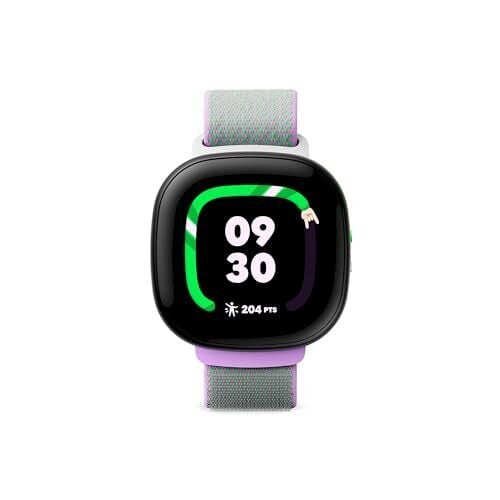
Fitbit has been in the “make healthy habits fun” business for years, and Google’s influence shows in how polished the Ace LTE feels. The watch uses animated creatures and simple games to nudge kids between seven and 11 toward movement. The catch—which is the whole point—is that you can’t sit and play uninterrupted. Every few minutes, the watch asks for a bit of movement, like hitting a step goal, before the game continues. For a lot of parents, that structure helps turn the watch into a tool that encourages activity rather than another screen to fight over.
Where the device becomes more than just a toy is in the built-in LTE GPS tracking. The watch can send and receive calls and texts, and you can see your child’s location through the companion Fitbit Ace app, which you install on your phone. It works with both iOS and Android, and the parental controls cover the basics, including contact management. There are limits, though. The Ace LTE doesn’t support music apps or sleep tracking, and this PCMag review notes that there’s occasional sluggishness when swapping between features. Still, the hardware itself feels sturdy, and the screen is easy for kids to navigate.
That said, the software is clearly built around the subscription model. And that subscription is the real consideration here. The watch requires a $9.99 monthly Ace Pass for GPS location tracking, LTE features, and access to the games—an ongoing cost you have to factor into the decision. Without the subscription, the watch becomes a basic step counter, and if it’s only doing that, you might as well get the older Fitbit Ace 3. Still, for families who want reliable location tracking and a structured way to encourage daily movement, the Ace LTE offers both in a kid-friendly package.
Our Best Editor-Vetted Tech Deals Right Now
Shark AI Ultra Matrix Clean Mapping Voice Control Robot Vacuum with XL Self-Empty Base
—
$249.99
(List Price $599.00)
Shark AI Ultra Matrix Clean Mapping Voice Control Robot Vacuum with XL Self-Empty Base
—
$249.99
(List Price $599.00)
Deals are selected by our commerce team