We may earn a commission from links on this page. Deal pricing and availability subject to change after time of publication.
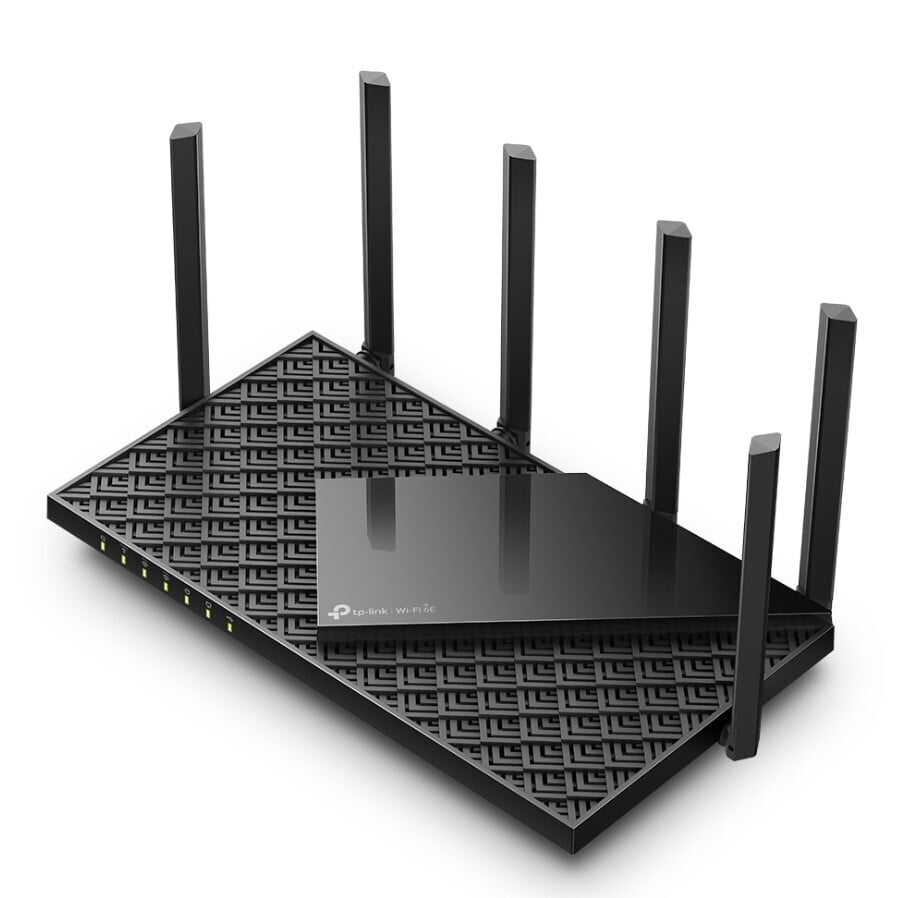
If your wifi is too damn slow (and I bet it is), the bottleneck is probably the router. This TP-Link Archer AXE75 might be the solution, and it’s 44% off for Amazon’s Big Spring Sale, bringing it down to $112.99—and it’s already a good deal at the full price.
This is a Wi-Fi 6E router, which unlocks the 6GHz band, so it’s a serious router for the price of a bargain one. It features a 1.7 GHz Quad-Core CPU, so it won’t freeze up when you’re gaming while someone else is streaming 4K in the next room, and it has six high-gain antennas that are built to kill dead zones in medium-to-large homes. Check out PCMag’s review for more details.
That’s the good news. The bad news is the FCC regulations regarding foreign-made routers going into effect. Like most routers, AXE75 is “foreign made”—but the regulations only affect the future authorization of brand-new models. Since the Archer AXE75 is already an authorized, existing model, you can legally buy and use it without worry. But there’s a caveat: The FCC has allowed security updates for these models through March 1, 2027. After that, it’s not certain it will be supported. TP Link says it’s planning to move manufacturing to the U.S. If that happens, the FCC is expected to extend its waiver, and the device will be supported. But no one can say for sure.
Our Best Editor-Vetted Amazon Big Spring Sale Deals Right Now
For decades, video conferencing has been defined by a persistent, frustrating barrier: the screen. No matter how high the resolution or how low the latency, you are always acutely aware that you are looking at a flat representation of a human being. You are talking to a TV, not a person. But as I sat across from a woman who appeared to be sitting just three feet away from me—despite being hundreds of miles apart—I realized that the “glass wall” has finally shattered. This is the promise of HP Dimension with Google Beam, a collaboration that represents the most significant leap in communication technology since the invention of the telephone.
A Handshake Across the Void
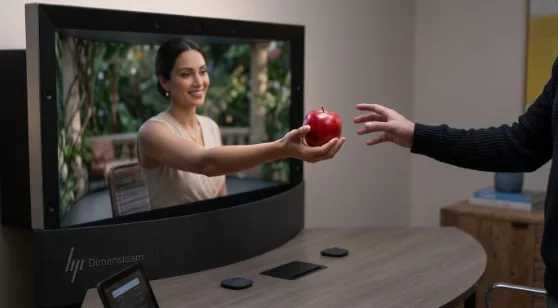
My journey with this technology began with a demonstration that felt less like a product briefing and more like a magic trick. The setup for HP Dimension uses specialized light-field display technology, similar to the anamorphic 3D electronic billboards you might see in Times Square or Tokyo, which make objects appear to float in free space or move toward the viewer.The moment of “total buy-in” happened when the woman on the other side of the link picked up an apple. She held it out toward me, and as her arm extended, the apple moved beyond the physical plane of the monitor. It was well out of the screen, rendered in full 3D with perfect depth parity. My brain didn’t see a pixelated fruit; it saw an object I could reach out and grab. This is the power of Google Beam—it provides a true-to-life sense of presence that traditional 2D video simply cannot replicate.
Beyond the Headset: Natural Interaction
One of the most profound advantages of HP Dimension is what it doesn’t require: a headset. While the industry has pushed VR and AR as the future of work, the reality is that wearing a heavy goggle set for eight hours is a non-starter for most professionals. It ruins eye contact, causes physical fatigue, and creates a barrier to the very “human” connection it tries to facilitate.
HP Dimension delivers a glasses-free 3D experience. By using advanced computational photography and light-steering optics, the system ensures that your eyes see different perspectives of the remote person simultaneously. This mimics how we perceive depth in the real world. Because you aren’t tethered to a headset, you can maintain natural eye contact, read subtle micro-expressions, and engage in the kind of deep, empathetic communication that is often lost in the “Zoom fatigue” of the modern era.
From the Home Office to the Boardroom
While the initial rollout of HP Dimension with Google Beam—slated for later in 2026—will likely target high-end enterprise environments, the roadmap for this technology is expansive. We are looking at a future line of teleconferencing products that scale to meet every need:
The Prosumer/Home Edition: A compact, lower-cost version designed for the millions of remote workers who need to maintain a “seat at the table” without being physically present in the corporate office.
The Executive Suite: Mid-tier systems for private offices that allow for 1:1 mentorship and high-stakes negotiations where non-verbal cues are critical.
The Dimension Hall: High-cost, large-scale versions for conference rooms where two remote teams can be “joined” at a virtual table. Imagine a board meeting where half the team is in London and half is in New York, yet everyone feels as though they are sharing the same physical air.
Healing the Distance: Family and Legacy
The implications of this technology extend far beyond the quarterly earnings call. As these systems become more affordable, they will redefine how we maintain our most personal relationships.
Imagine a college student living thousands of miles from home. Instead of a grainy FaceTime call on a smartphone, they can sit down for “dinner” with their parents. The sense of presence provided by HP Dimension could drastically reduce the isolation often felt by remote students or elderly family members.
Taking this a step further, the integration of human digital twins and AI-driven avatars opens a door to something even more profound. By utilizing historical data and high-fidelity 3D modeling, we could eventually use this technology to “speak” with virtual celebrities, politicians, or even relatives who have passed away. While the ethical considerations are vast, the ability to have a 3D, life-sized conversation with a digital representation of a lost loved, or a living person who doesn’t have the time or bandwidth to chat with fans or constituents, one offers a level of closure and connection that a photograph or video recording never could.
Speculating on the 3D Frontier
Once we master the ability to project “presence” without headsets, the use cases for HP Dimension and Google Beam will explode into other sectors:
Remote Medicine: A specialist in one country could virtually “stand” over a patient in another, guiding a local GP through a complex diagnostic procedure with perfect spatial awareness.
High-End Retail: Imagine a luxury car brand or a high-fashion house “beaming” a salesperson into your living room to show you the intricate details of a product that appears to be sitting on your coffee table.
Education and Training: Instead of watching a video on how to repair a jet engine, a 3D instructor could stand next to the technician, pointing to specific components in three-dimensional space.
Challenges and the Path to 2026
Of course, moving from a demo to a shipping product involves hurdles. The bandwidth requirements for “true to life” 3D are significant, requiring high speed connections and sophisticated compression algorithms from Google. There is also the matter of lighting and camera placement—the system must capture the user from multiple angles to reconstruct the 3D volume in real-time.
However, HP’s history of hardware engineering combined with Google’s AI and cloud prowess makes this the most “realistic” attempt at holography we’ve seen to date.
Wrapping Up
HP Dimension with Google Beam is more than just an upgrade to your webcam; it is the first step toward the “Star Trek” (Holodeck) future of communication. By removing the headset and breaking the 2D plane of the screen, this technology restores the physical and emotional nuances of human interaction. Whether it is a business leader closing a deal, a family staying together across oceans, or the preservation of a legacy through digital twins, the feeling of being “in person” is no longer a luxury of geography. When this ships in 2026, the world will get a little smaller, and our connections will become significantly deeper.
For about four years now, AMD has offered special “X3D” variants of its high-end desktop processors with an extra 64MB of L3 cache attached, an addition that disproportionately benefits games. AMD calls this “3D V-Cache” because it stacks the cache directly on top of (for Ryzen 5000 and 7000) or beneath (for Ryzen 9000) the CPU die.
The 12- and 16-core Ryzen chips have their CPU cores split between two silicon chiplets, which has historically made the 7900X3D, 7950X3D, 9900X3D, and 9950X3D a bit weird. One of their two CPU chiplets has the 64MB of 3D V-Cache attached, and one does not. AMD relies on its driver software to make sure that software that benefits from the extra cache is run on the V-Cache-enabled CPU cores, which usually works well butisoccasionallyerror-prone.
Enter the Ryzen 9 9950X3D2 Dual Edition, a mouthful of a chip that includes 64MB of 3D V-Cache on both processor dies, without the hybrid arrangement that has defined the other chips up until now. This gives the chip a grand total of 208MB of cache—16MB of L2 cache, the 32MB of L3 cache built into each of the two CPU dies (for a total of 64MB), and then another 64MB chunk of 3D V-Cache per die. In total, AMD says the new chip should be as much as 10 percent faster than the 9950X3D in games and other apps that benefit from the extra cache.
The Document Foundation announced today the general availability of LibreOffice 26.2.2 as the second maintenance update to the latest LibreOffice 26.2 office suite series with various bug fixes.
Welcome to Edition 8.35 of the Rocket Report! The headlines this week are again dominated by the big changes afoot in NASA’s exploration program, with the announcement of a Moon base and a nuclear-powered rocket to Mars. The shakeups come as the agency is just a week away from launching Artemis II, a circumlunar flight carrying a crew of four around the Moon. The Ars space team will be writing extensively about this mission in the days ahead, and we may skip the Rocket Report next week to focus on our Artemis II coverage.
As always, we welcome reader submissions. If you don’t want to miss an issue, please subscribe using the box below (the form will not appear on AMP-enabled versions of the site). Each report will include information on small-, medium-, and heavy-lift rockets, as well as a quick look ahead at the next three launches on the calendar.
NASA announces nuclear rocket demo. NASA’s announcement Tuesday that it will “pause” work on a lunar space station and focus on building a surface base on the Moon was no big surprise to anyone paying attention to the Trump administration’s space policy. But what should NASA do with hardware already built for the Gateway outpost? NASA spent close to $4.5 billion on developing a human-tended complex in orbit around the Moon since the Gateway program’s official start in 2019. There are pieces of the station undergoing construction and testing in factories scattered around the world. The centerpiece of Gateway, called the Power and Propulsion Element, is closest to being ready for launch. NASA’s rejigged exploration roadmap, revealed Tuesday in an all-day event at NASA headquarters in Washington, calls for repurposing the core module for a nuclear-electric propulsion demonstration in deep space, Ars reports.
We may earn a commission from links on this page. Deal pricing and availability subject to change after time of publication.
This week is Amazon’s Big Spring Sale, and I can think of no better way to celebrate the end of this interminable winter than a backyard film festival. Amazon has just the thing for it: this Onoayo digital projector. It’s currently $219.98 from a list price of $439.99, and that’s for a projector with a 4.6/5 rating with over 1000 reviews on Amazon.
This isn’t one of those projectors where you need to figure out how to connect it with something else, either. While you can stream from other devices, you don’t have to; major streaming apps are built in, as are a pair of Dolby-tuned speakers. It features automatic focus, keystone correction, obstacle avoidance, screen-fit, and projection orientation detection right out of the box. The picture is great, too: 3200 ANSI brightness and 4K video decoding means a very defined, bright image. It weighs less than three pounds, so you can take it anywhere you need to project anything. But it’s seriously good enough to replace a TV in your house.
Our Best Editor-Vetted Amazon Big Spring Sale Deals Right Now
It turns out people don’t actually love having Copilot shoved into their faces. This week, Devindra and PCWorld Senior Editor Mark Hachman discuss Microsoft’s surprising plan to “fix” Windows 11 by refocusing on customization and core features, instead of bringing Copilot AI into tons of apps. Is there any enthusiasm left for Windows? Or will most people be better off considering macOS or Linux?
Microsoft hits the reset button on Windows 11, de-emphasizing Copilot AI – 1:03
OpenAI pulls the plug on its Sora video generation app after just 5 months – 25:23
Meta’s terrible week in court, part 1: $375 million ruling in New Mexico child engagement case – 33:58
Meta’s terrible week in court, part 2: Meta and Google lose landmark social media addiction suit – 38:49
OpenAI puts erotic chat on hold indefinitely – 43:49
Update your iPhones: iOS exploit ‘Darksword’ released on GitHub – 46:39
Epic games lays off 1,000 workers after Fortnite engagement dips – 47:48
Honda and Sony kill off their Afeela EV collaboration – 49:26
Listener Mail: Which Mac Mini to get for a budding pro photographer – 55:15
Pop culture picks – 57:52
Credits
Host: Devindra Hardawar Guest: Mark Hachman Producer: Ben Ellman Music: Dale North and Terrence O’Brien
This article originally appeared on Engadget at https://www.engadget.com/computing/engadget-podcast-can-microsoft-fix-windows-11-by-dumping-ai-122601592.html?src=rss
With sched_ext there is support for BPF-based CPU scheduling policies for the Linux kernel while now a new initiative is working on BPF-based I/O schedulers…
Honda and Sony announced that they are discontinuing both the Afeela 1 and 2, their electric cars. The company is reviewing its “business direction,” but it’s hard to expect much from a car company that’s cancelled all of its cars.
The Afeela 1, casually called the PlayStation Car, was meant to be a fusion of a modern EV and your own digital media bubble. (You could have a God of War-themed dash — if you wanted that.)
Engadget
There’s a wider pressure on Honda, beyond this risky collaboration with Sony. It expects to take a $15.7 billion loss after writing off a large portion of its EV investment. The US’s removal of federal EV tax credits and the imposition of tariffs have hit everything hard.
The Afeela was exciting on paper, but in person, it was a pretty unassuming sedan. And expensive! Rival EV makers were offering more for less. Also: don’t tease a car for six full years. It’s never a good sign. Check out Tim Steven’s editorial on how it all fell apart.
TikTok and Snap settled ahead of the trial. Smart.
A jury in Los Angeles has found that Meta and YouTube were negligent in a closely watched trial over social media addiction. The two companies were ordered to pay $6 million in damages to a woman who said their addictive features harmed her.
For Meta, it’s the second legal setback in recent weeks, after a New Mexico jury ruled against it on child safety issues. Meta was ordered to pay $375 million in penalties, making this settlement seem small in comparison. The companies are planning to appeal.
The Sonos Play could be the company’s reset button, a way to remind people what the company does well – and move on from busted updates, expensive gambits and fussy apps. The $299 Play is a portable speaker that sits between the $499 Sonos Move 2 and the $179 Roam 2. The new speaker sounds great, has a wide and versatile feature set and won’t break the bank. We particularly like the inclusion of Bluetooth grouping.
DJI responded quickly to Insta360’s debut drone, the Antigravity A1, with the Avata 360. It’s drawn from years of drone experience (and tech from its new Osmo 360 action cam). Compared to the A1, it’s safer to fly around people and offers single-camera OIS 4K footage in addition to 8K 360 video. The 360 video it shoots offers incredible editing flexibility, but overall quality is lower than that of DJI’s other drones. It’s cheaper than its 360 drone rival, too, though US availability remains unclear.
Zwift events headline our list of notable events this weekend, with the Big Spin, Zwift Games, and the zFondo series earning their spots for different reasons. We’ve also got two community race series to feature – one wrapping up with a banger of a long course, and another just starting, with age group-based categories!
Zwift Big Spin, Stage 2
Popular Prizes MX Rider
Zwift’s annual Big Spin series launched this week, with stage 2 on Watopia’s Mayan San Remo route (21.3km, 219m). Join the fun and unlock fun stuff!
The Zwift Games are wrapping up, with the final stage happening this week. Stage 6 is actually two different races – a time trial on Scotland’s new The Epiloch (11.1km, 93m), and a Crit Cade steering-required race on 5 laps of Crit City’s The Bell Lap (15.8km, 128m).
The Crit Cade events are particularly interesting to me, since they’re the largest field of steering Zwifters we’ve ever seen. I hear the races have been pretty wild!
Bonus XP Popular Endurance Challenge Jersey Unlock
This weekend is the last zFondo weekend of Zwift’s 2025/26 series. Rides will be on the Zwift Gran Fondo 2022 route, clocking in at 92.7km with 1116m of elevation.
The final race of the SISU Racing Club Championships happens this weekend, and it’s a popular event, on a long, challenging route! This is the “road race” stage of the series, held on New York’s Fuhgeddaboudit (79km, 838m).
Even if you haven’t been racing the series, you’re invited to jump in and take part in the race. Lots of riders already signing up, so this will be a banger of an endurance challenge!
This week, the Herd kicks off their 6-week season of masters racing on New York’s Green to Screen (28.4km, 207m). There will be 5 age groups (u40, 40-49, 50-59, 60-69 and 70+) but all categories start together to give everyone a chance to find a group to ride with.
We choose each weekend’s Notable Events based on a variety of factors including:
Is the event unique/innovative in some way?
Are celebrities (pro riders, etc) attending/leading?
Are signup counts already high, meaning the event is extra-popular?
Does the ride include desirable unlocks or prizes?
Does the event appeal to ladies on Zwift? (We like to support this under-represented group!)
Is it for a good cause?
Is it just plain crazy (extra long races, world record attempts, etc)?
Is it a long-running, popular weekly event with a dedicated leader who deserves a shout out?
In the end, we want to call attention to events that are extra-special and therefore extra-appealing to Zwifters. If you think your event qualifies, comment below with a link/details and we may just include it in an upcoming post!
There were two questions I was looking to answer as I fired up MLB The Show 26. First, how much does the game cater to a baseball newbie like me? Second, will it keep me hooked enough to keep playing after my first few games?
I think it’s important to share some personal context. I have very limited experience with baseball. I have been to one MLB game, which was on my first visit to Canada as a teen. The lead-off Toronto Blue Jays hitter scored a home run on his first at-bat. Fireworks went off and everyone was going wild. Fun!
But that was the only score of the whole game. My dad and I (both lifelong soccer fans, for what it’s worth) were bored lifeless for the rest of the three hours.
An incredible run of a dog playing a baseball game at Games Done Quick aside, I had no real interest in the sport for the next couple of decades until the Blue Jays made a deep run into the 2025 playoffs. This time, now as a Canadian citizen, I bought into the excitement and watched all of the World Series last year. I was enthralled.
I slowly started to appreciate the nuances of pitching, the skill of trying to make every pitch look identical at the time the ball is thrown to hopefully hoodwink the batter. Friends who are in-the-know tolerated my most basic of questions about how everything works as the postseason wore on. Now, I’m planning to watch a lot more games this year and MLB The Show 26 arrived at just the right time to get me ready for the new season.
Sony’s San Diego Studio seemed to be speaking to me, personally, when the first thing the game asked me to do was select my preferred playstyle. The Competitive track was definitely out for now. The Simulation option offers an “authentic MLB experience that plays true to player and team ratings.” I wasn’t quite feeling that either. As a newcomer to all of this, I had to select the Casual style. That’s billed as “an easier, fun, pick up and play experience with an emphasis on learning the game.” Exactly what I needed.
I was immediately impressed with how deeply you can customize the gameplay, even if the vast array of batting and pitching options in particular felt a little overwhelming. Using both a thumbstick to aim and button to swing at the ball seemed too much for someone who has no idea as yet how to read pitches.
Dipping my toes in slowly was surely going to help me avoid getting too frustrated too quickly and uninstalling the game, so I chose to keep everything as simple as possible. I’m not switching off options like automated bullpen warm ups for a long time, if ever.
Finally, after about 20 minutes of fine-tuning some settings in the tutorial, it was game time.
The Dodgers didn’t know what hit ’em as I won my first game 38-0. I thought this Shohei guy was supposed to be good? Pffft, he didn’t even register a hit. His team only got a measly two players on base, while I had 46 hits. That blowout was a fun intro to MLB The Show 26, but I had to bump up the difficulty and make it a little more challenging if there was any chance of me sticking with it.
Instead of jumping into the Road to the Show career mode, an online match or another exhibition game to get my feet a tad wetter, I next tried the Storylines feature. This is what really drew me into MLB The Show 26.
San Diego Studio has been sharing the stories of several notable players from the Negro Leagues in the last few editions of the series. I know very little about baseball history outside of household names. So I was fascinated to learn about the likes of Roy Campanella, who debuted in the league as a 15-year-old catcher, and Mamie “Peanut” Johnson, the league’s first female pitcher.
The developers did a fantastic job of connecting these athletes’ stories to playable moments from their playing careers. Cutscene insights from Bob Kendrick, the president of the Negro Leagues Baseball Museum, tied everything together quite beautifully. Great stories are such an effective way to pull you into a sport and to start learning about it. Stories connect us more than just about anything else.
The default difficulty in the Storylines mode was much higher than I dealt with in my first washout game. Still, that gave me a chance to practice the Competitive playstyle without having to play a full game or the stop-start nature of the tutorial.
My pitching was less accurate, so figuring out how to compensate for that made for an interesting challenge. Batting was a lot tougher too, with balls travelling faster and pitchers trying to trick me. At first, I was swinging at every ball, but that clearly was the wrong idea. I tried to be more judicious and wait to see if a ball was breaking, but that meant I was swinging too late and fouling or giving the fielders an easy catch. That’s a tricky conundrum to solve, and I’ll need a lot more practice before I dream of playing online. I’m not even going to get started on how woeful I am at catching.
And yet all of this deepened my appreciation for baseball. There’s so much more nuance and complexity to the sport than I realized until a few months ago. And even as someone who doesn’t typically enjoy turn-based games, I found myself getting into the swing of it… so to speak.
I’m never going to care about Diamond Dynasty, MLB The Show’s take on Ultimate Team modes in EA Sports games. I can’t see myself diving into the team management-focused Franchise mode, in large part because I don’t yet have a strong enough understanding of stats to have a decent handle on what makes a specific player great in their role. And as much as I like the idea of the Road to the Show career mode — in which you can stick with a player from their high school days all the way to a Hall of Fame induction — I don’t think I can invest enough time into that to make it worth the effort.
I did find the answers to the two main questions I had about MLB The Show 26. It does a bang-up job of easing a baseball newbie like me into the fray. I’m eager to keep playing as well. I don’t think MLB The Showhas quite enough pull to keep me away from my actual forever game, Overwatch, for too long. But I can absolutely see myself playing it on a second screen while streaming some MLB games this season. After all, I’m always on the lookout for a great story.
MLB The Show 26 is out now on PS5, Xbox Series X/S and Nintendo Switch.
This article originally appeared on Engadget at https://www.engadget.com/gaming/playstation/mlb-the-show-26-is-turning-me-into-more-of-a-baseball-fan-120000724.html?src=rss
I know what you’re thinking: “Isn’t Fender a guitar company?” It sure is, and has been one of the most iconic names in guitars and amplifiers since 1946. So what is the company doing making headphones and speakers? Well, it isn’t, exactly. Like Zound Industries used to do with Marshall (before buying the amp business), another company is licensing the Fender name for its consumer audio products. Fender Audio, the brand that’s on the headphones I’m reviewing, is owned by the Fender Corporation, but Riffsound oversees the design and production of portable audio gear.
The first products from Fender Audio are the Mix headphones and the Elie speaker (in two sizes). The company revealed these in January before properly showing them off at CES. I’ll get to those speakers in a few weeks, but the Mix headphones are first up on the review docket.
With the Mix, Fender Audio seeks to offer a set of premium over-ear, noise-canceling headphones at a lower price than the likes of Sony, Bose and Sennheiser. There’s also marathon battery life, several smart design touches, a lossless Bluetooth transmitter and swappable parts that combine for a unique formula to take on those big names. I’m honestly impressed that Fender Audio could cram all of that in a more affordable package, but the final verdict on the Mix isn’t so straightforward.
What’s good about the Fender Mix headphones?
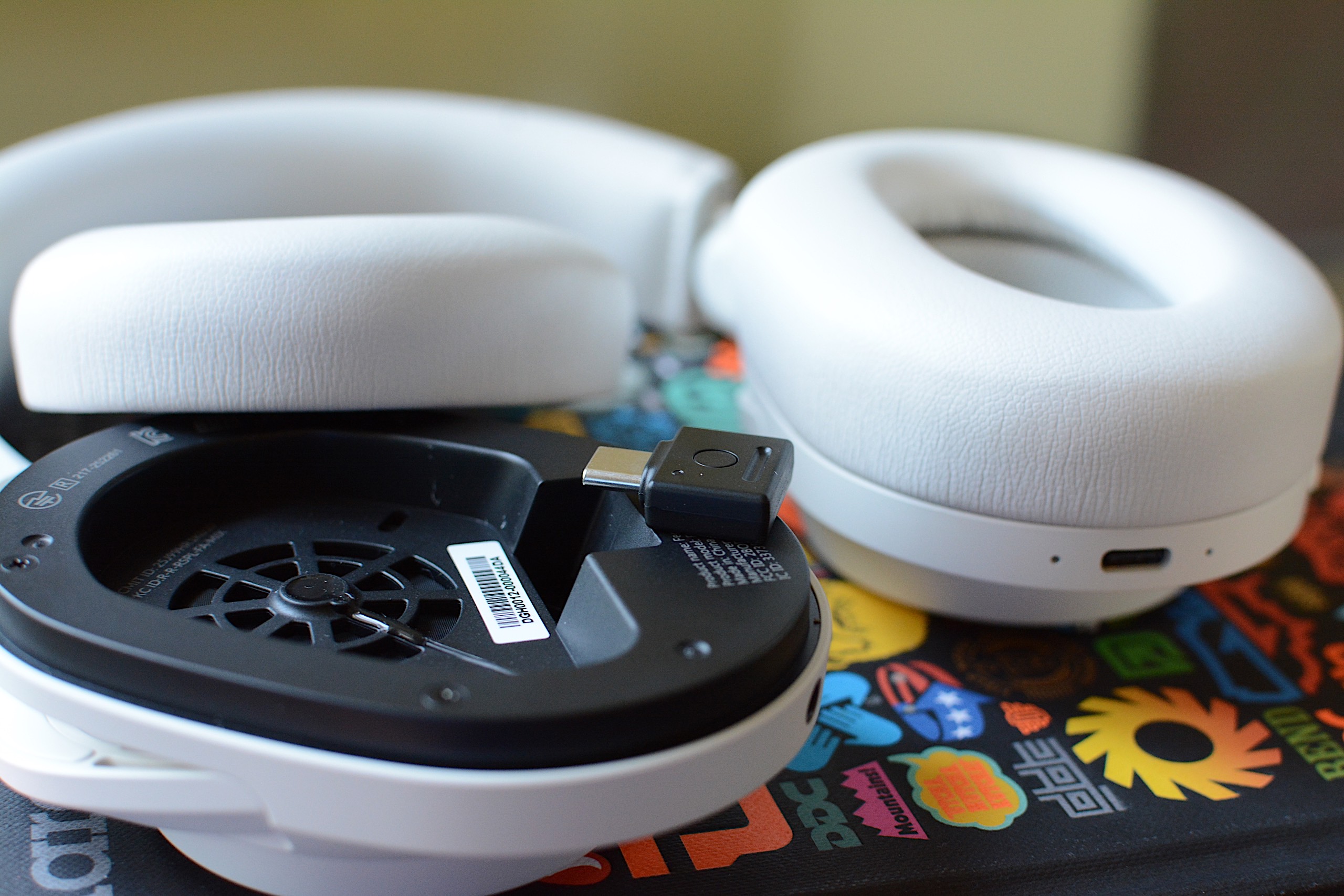
Fender Audio made numerous smart design decisions on the Mix headphones, and they resulted in my favorite things about using them. To start, you can swap out the ear pads, ear cups and headband as you see fit. The ear cups attach to the headband via USB-C ports, so they’re easy to snap on and off. Obviously, this allows you to change the look of the Mix over time, within the bounds of Fender’s available colors.
Underneath the ear pads, Fender put a storage slot for the lossless dongle on the left side and gives you access to the removable battery on the right. I’m thrilled that I can enjoy higher quality Bluetooth connectivity without having to remember to bring along such a small accessory. Plus, it’s nice to know that users will be able to install a fresh battery, provided the company sells those at some point.
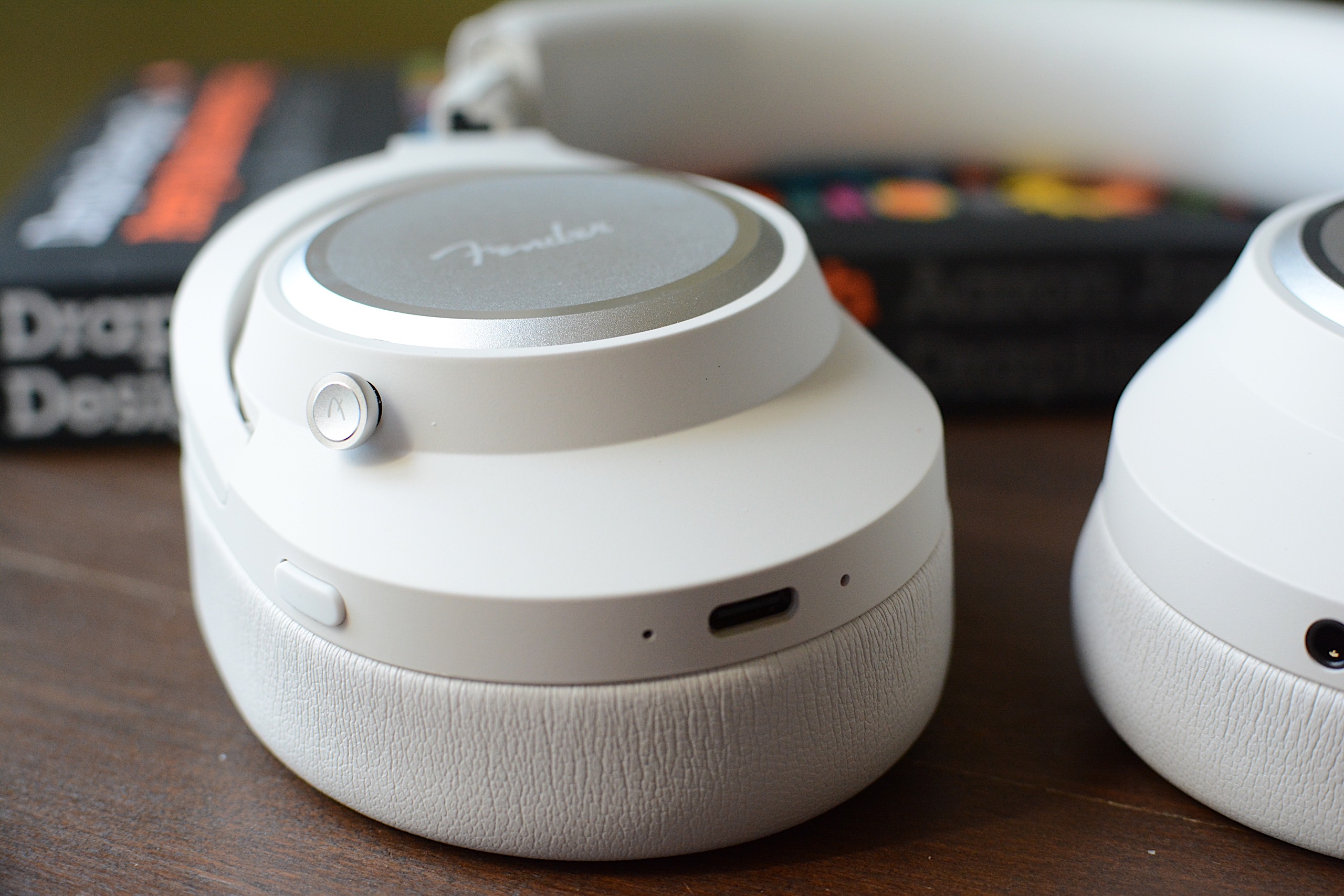
I also enjoy how Fender Audio designed the onboard controls. First, they’re physical buttons, which are always my preference over touch- or gesture-based options. Second, the main one is a five-way joystick, so they’re very simple. Press it to play/pause, press and hold for pairing mode or press longer to power on or off. If you push the joystick up or down, you can adjust the volume, while moving it left and right skips the track forward or backward. You can also push down twice to enable Auracast pairing right on the headphones. A second button, which is just the regular kind, is used to cycle through noise canceling modes: ANC, transparency and both off.
The lossless Bluetooth dongle inside the left ear cup
Billy Steele for Engadget
Sonically, the Mix headphones are at the height of their powers in lossless mode, which is enabled by the Bluetooth dongle hidden inside the ear cup. Bass tuning that’s otherwise overpowering in most cases is restrained, and you can pick up finer details in the more balanced mix. When listening to Watchhouse’s Rituals, I got the sense that I was surrounded by the band, with strings, drums and vocals enveloping my ears with sound — rather than it simply being projected from the left and right channels. There’s more nuance with the lossless mode, and it kept calling me back to the Mix headphones at the times when I’d probably opt for the conveniences of earbuds or a speaker.
ANC performance is respectable, although it’s not on the level of Bose. It’s good enough to block out mild-to-moderate distractions, but it struggles with louder human voices and sudden jolts of noise. It will certainly do the job in the office or coffee shop, but you may notice some sounds invade your ears during a commute. For calls, transparency mode provides natural sound and it picks up enough of my voice that I never felt the need to shout. Call quality, though, is a different matter (more on that in a bit).
Another big perk of the Mix is its long battery life. Fender Audio says you’ll get up to 52 hours with ANC on or a whopping 100 hours with it off. The company is forthcoming with the fact that the latter number is achieved at 50 percent volume, which will be too low for most “regular” use. Still, with noise canceling enabled and the volume around 70 percent, I had 52 percent battery left after nearly 30 hours of use. I spent most of that time with either ANC or transparency mode on.
What’s not so good about the Fender Mix?
The five-way joystick and ANC button on the Fender Mix
Billy Steele for Engadget
Out of the box, Fender Mix’s tuning is too bass heavy. I realize a lot of people prefer a thundering low-end tone out of their headphones, but I found it to be too overpowering here. The stock sound profile is my biggest issue with this model, although it’s somewhat alleviated by using the lossless Bluetooth dongle. In that mode, the bass is slightly subdued, but it’s still quite prominent at times when it shouldn’t be.
On that Watchhouse album, the kick drum starts to drive the sound, rather than the guitars, mandolin and other instruments. When I listen to the same songs on other headphones, I’ve noticed a better blend of drums and strings. With more intense genres, like the hardcore riffs and breakdowns of Incendiary’s Product of New York, the booming bass isn’t as much of an issue. The distorted guitars still cut through, and there’s plenty of texture in their tone. And when each song hits its climax, the cranked up lows offer extra oomph. It works for metal, but it isn’t always nice for bluegrass, jazz and synth-laiden electronic tunes where the extra bass can muddy the mix.
The Fender Mix also lacks many of the smart features that are present in premium headphones today, which is probably how the company is able to sell them for $299. Things like automatic EQ tweaks and adaptive ANC are missing, as is automatic pausing when you speak or things like head gestures. These headphones don’t have wear detection either, so they don’t pause the audio when you take them off. There’s also no app available to dial in the EQ or adjust other settings (it’s coming soon).
These headphones only have two microphones for calls, and you can tell almost instantly that those are insufficient. Despite claims of “crystal clear calls,” your voice will just sound okay to the person on the other end. Honestly, I would’ve sounded better just using my iPhone with no headphones. The Mix works to get your voice across, but don’t dream of dialing into a podcast recording with them. What’s more, the Mix isn’t good at blocking background noise, so you’ll need to use them in a quiet location to have a chance at sounding decent. Which, again, is about the best these headphones can muster.
While the modular design allows for a decent degree of customization, the extra parts you’ll need aren’t on sale yet. What’s more, only two colors — white, which is really more of a light gray, and black — are currently available. So, for now, one of the perks of the Mix remains untapped.
Wrap-up
The Fender Mix headphones
Billy Steele for Engadget
There’s a lot to like about the Fender Mix, from the clever design choices to the crisp, detailed sound. The lack of finesse with the bass tuning and the omission of advanced features, particularly the absence of an app for settings changes, keeps these headphones firmly planted in the midrange category.
Clearly that’s not what the company is aiming for with tools like the lossless Bluetooth dongle, but that’s where it lands for me at the end of the day. So, at $299, the Mix is a tough call when a $250 price tag would make these an easier sell. Sure, there’s enough here to make these a capable daily audio accessory, but not everything I’d need to call them a must buy.
This article originally appeared on Engadget at https://www.engadget.com/audio/headphones/fender-mix-review-well-designed-headphones-that-just-fall-short-of-greatness-120000974.html?src=rss
Ryu Ga Gotoku Studio has revealed more details about its upcoming title, Stranger Than Heaven, at the Xbox Partner Preview stream. While previous teasers showed that it was going to be set in the 1910s and 1940s, it turns out its gameplay will span five different time periods: 1915, 1929, 1943, 1951 and 1965. The game’s events will also take place in five different cities. Ryu Ga Gotoku has yet to reveal what the locations will be based on, but the setting for 1965 seems to be Kamurocho. That’s the fictionalized version of Tokyo’s Kabukicho entertainment district in the studio’s games, the Yakuza and Judgment series.
One time period seems to be set during winter, while another focuses on a hot spring town. It’s clear from teasers and the new trailer RGG released that new title will share Yakuza’s aesthetics and maybe even its fighting mechanics. The studio has yet to say whether it will be connected to the Yakuza series, but fans believeStranger Than Heaven could focus on the beginnings of the yakuza clans that appeared throughout the franchise.
RGG Studio will reveal more details about the game on another stream with Xbox on May 6 at 7PM Eastern time. For now, you can watch the trailer below for a preview. Take note that while the studio has teamed up with Xbox for these reveals, the game will also be available on Steam and the PS5.
This article originally appeared on Engadget at https://www.engadget.com/gaming/rggs-stranger-than-heaven-game-will-span-five-time-periods-114554699.html?src=rss
Greg Kroah-Hartman can’t explain the inflection point, but it’s not slowing down or going awayInterview I was at a press luncheon at KubeCon Europe this week when, to my surprise, who should sit down next to me but long-term Linux kernel maintainer Greg Kroah-Hartman. Greg, who lives in the Netherlands these days, was there to briefly comment on AI, Linux, and security. We spoke about how, over the last month, AI-driven activity around Linux security and code review has “really jumped” in a way no one in the open source world saw coming.…
OpenAI has indefinitely paused plans for an erotic mode in ChatGPT as part of a broader strategy shift away from side projects and toward business and coding tools. TechCrunch reports: The proposed “adult mode,” which CEO Sam Altman first floated in October, had inspired considerable controversy from tech watchdog groups as well as from OpenAI’s own staff. In January, a meeting between company executives and its council of advisers got heated, with one of the advisers cautioning that OpenAI could be in the process of developing a “sexy suicide coach,” The Wall Street Journal previously reported.
Amidst all of the criticism, the release of the feature was delayed multiple times. FT notes that the erotic feature now has no timeline for release. When reached for comment by TechCrunch, an OpenAI spokesperson said the company had “nothing further to add.”
In addition to this week’s ROCm 7.2.1 stable point release, ROCm 7.12 was also released as the newest tech preview in working toward what will presumably be called ROCm 8.0…
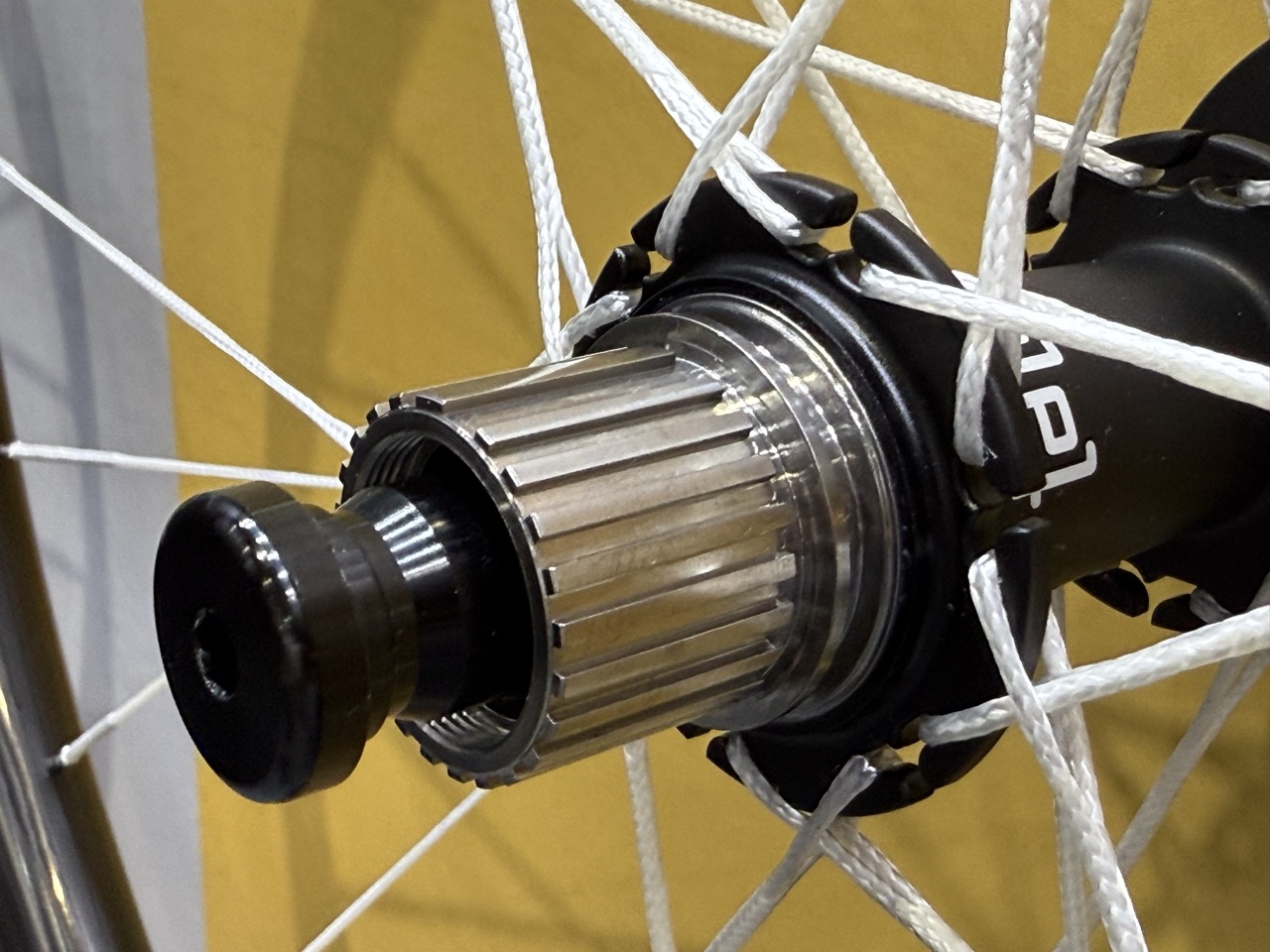
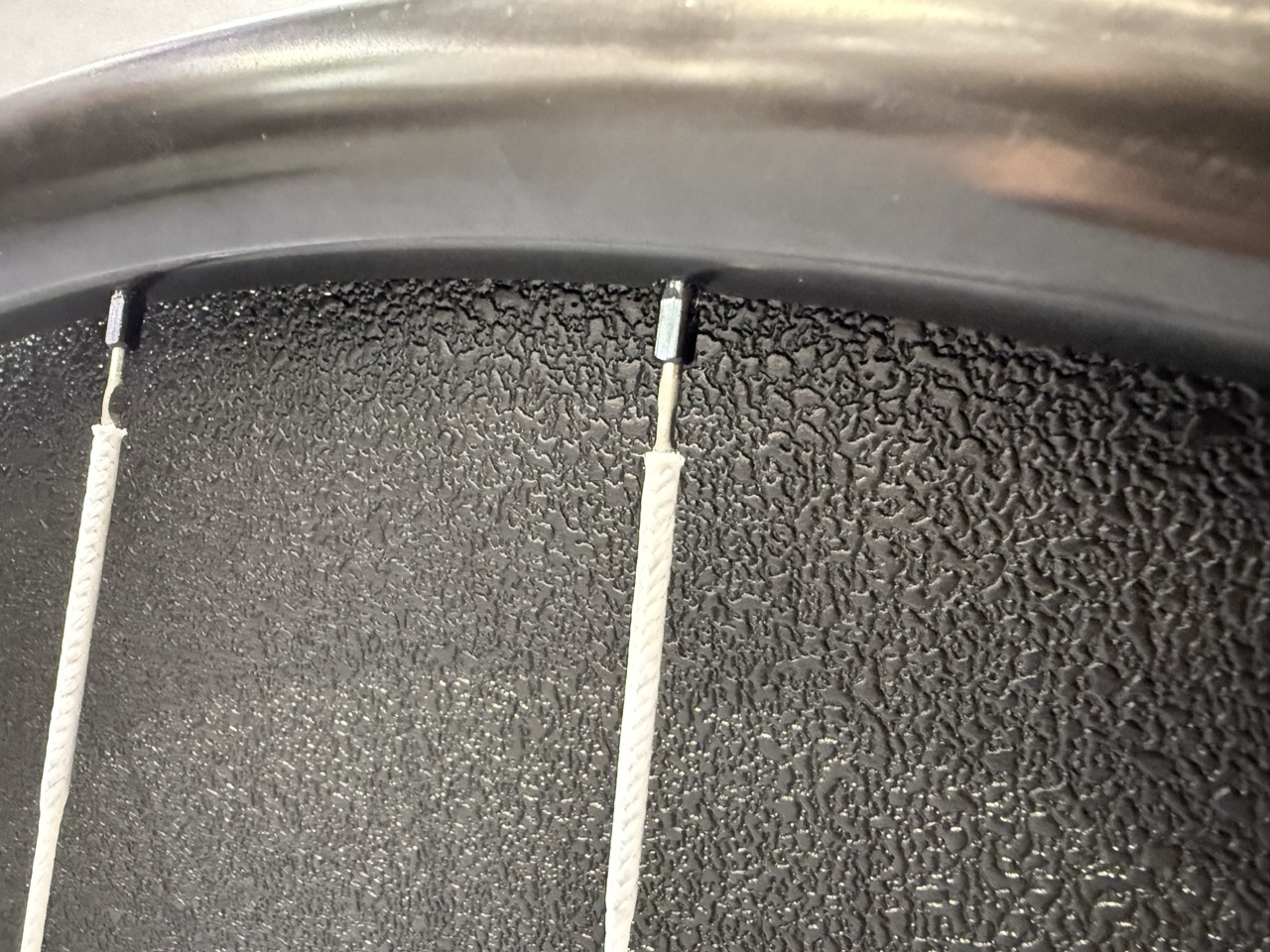
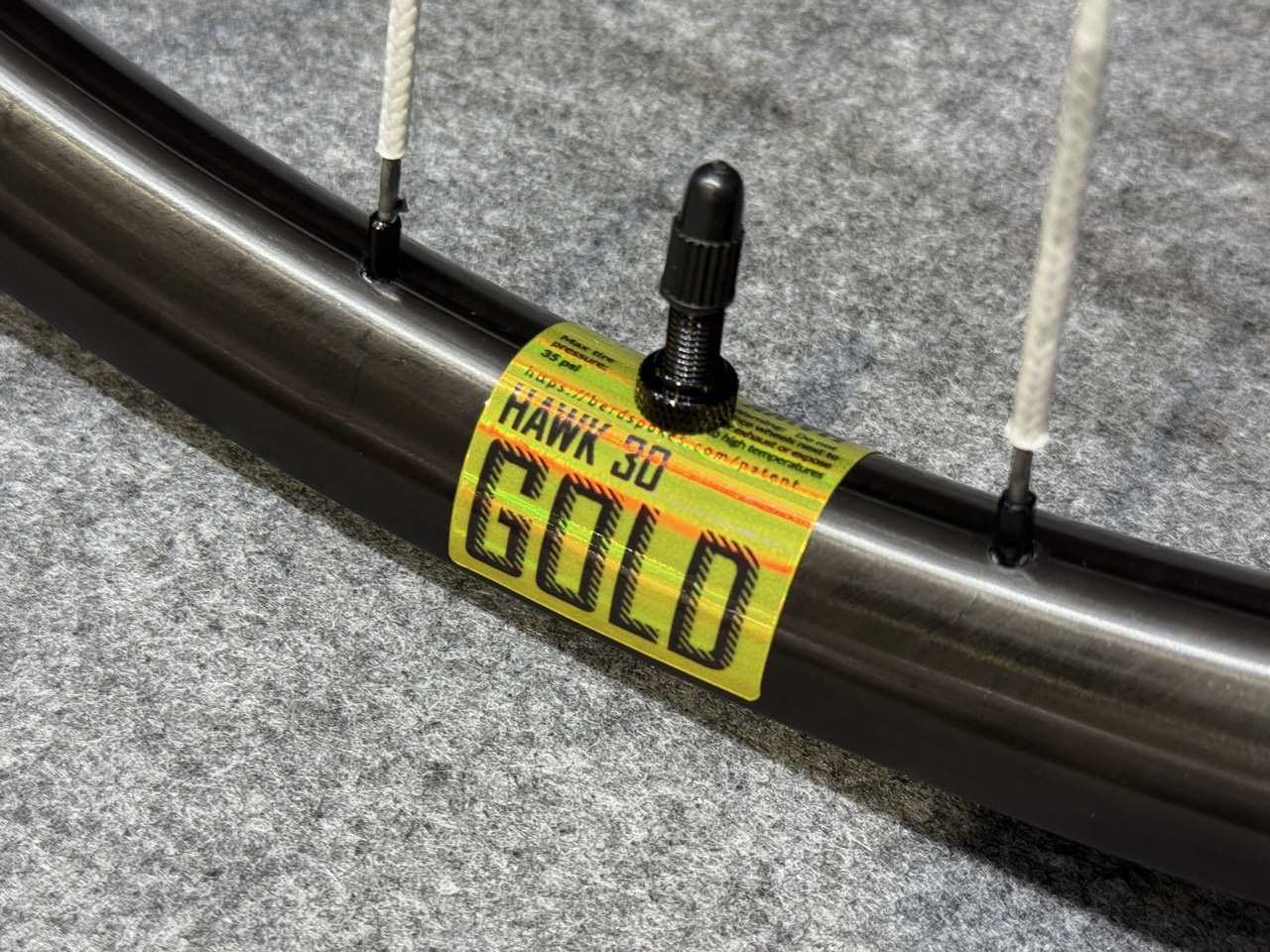
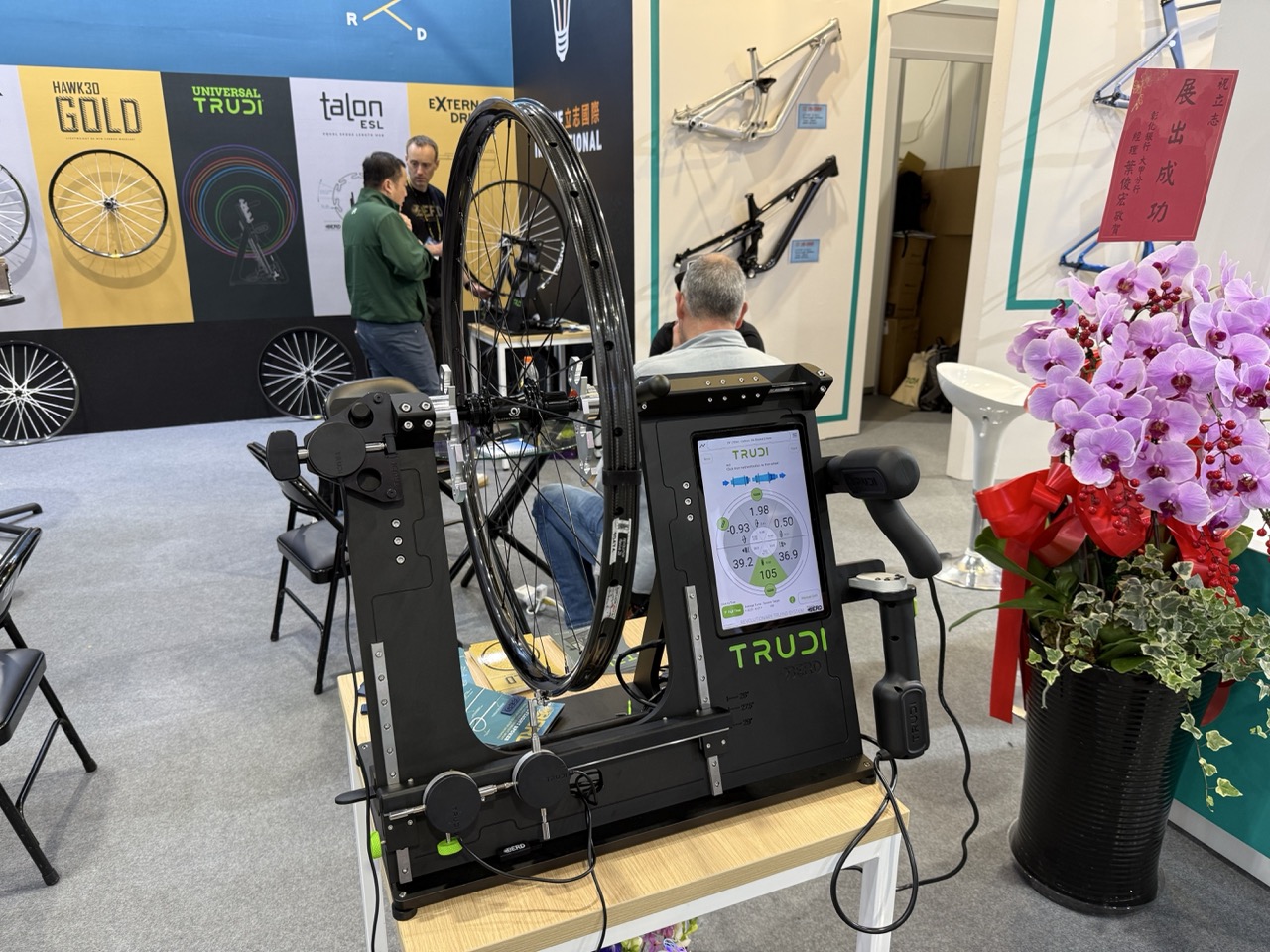
Berd Spokes has been toying with 32in wheels for a while, and after launching its PolyLight spokes at the start of the year, it has now unveiled the new Hawk32 Gold wheelset.
The new wheels are the lightest 32in wheelset I’ve seen, with the total weight said to be 1,196g for the pair.
While not in the running for the lightest cross-country wheelset, the light weight is impressive given the claimed performance gains of the new wheel size.
An important set of Linux scheduler patches were posted for review on Thursday for improving the SMT-aware asymmetric CPU capacity handling. These patches to improve the Linux kernel scheduler around CPU Simultaneous Multi-Threading (SMT) is needed after NVIDIA engineers discovered up to a ~2x performance drop for CPU-intensive workloads on their upcoming Vera Rubin platform…
Another round of AMDGPU/AMDKFD kernel driver improvements were sent out this week as feature development for DRM-Next ahead of Linux 7.1 begins to wind down…
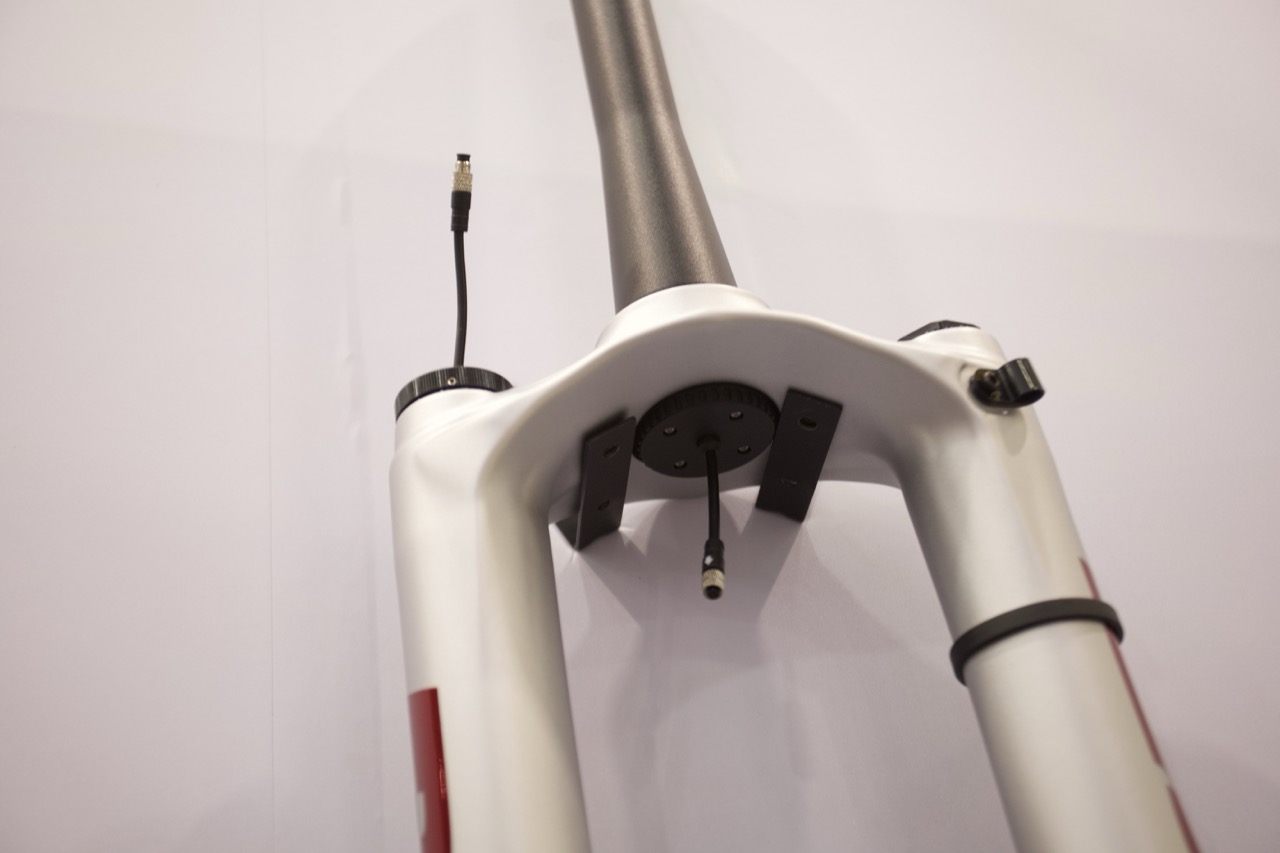
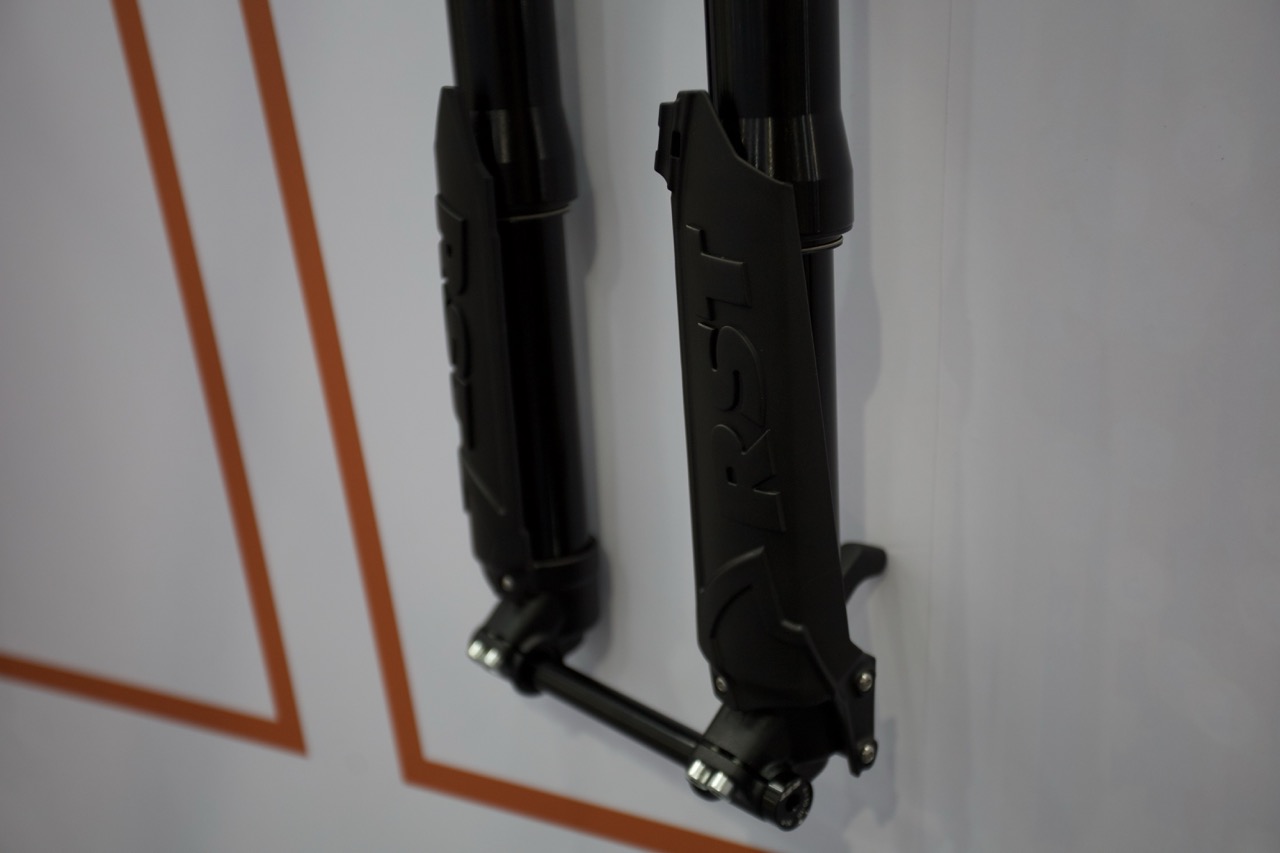
RST had an E TACK-branded upside-down gravel fork featuring an electronic damper on its stand at the Taipei international Cycle Show.
The fork is designed to work with electric gravel bikes, taking charge from the main battery, but it can also be used with conventional gravel bikes using a battery in the steerer tube.
It’s not the first upside-down gravel fork we’ve seen, with Cane Creek’s Invert CS impressing us with its take on the theme.
RST’s fork goes one step further, though, with the electronic damper controlling the 60mm of travel.
The cable routing may not be the neatest. Nick Clark / Our Media
There are three modes for the damper: Open, Pedal and Closed, while the Auto setting cycles through them by sensing the ground you’re pedalling on using accelerometers.
Buttons are mounted near the hoods. Nick Clark / Our Media
You can take command yourself, with buttons mounted to the handlebar that control the damper’s setting.
The battery sits in the steerer tube on non-assisted bikes. Nick Clark / Our Media
The fork is also said to feature a built-in mudguard.
32in forks for the masses? Nick Clark / Our Media
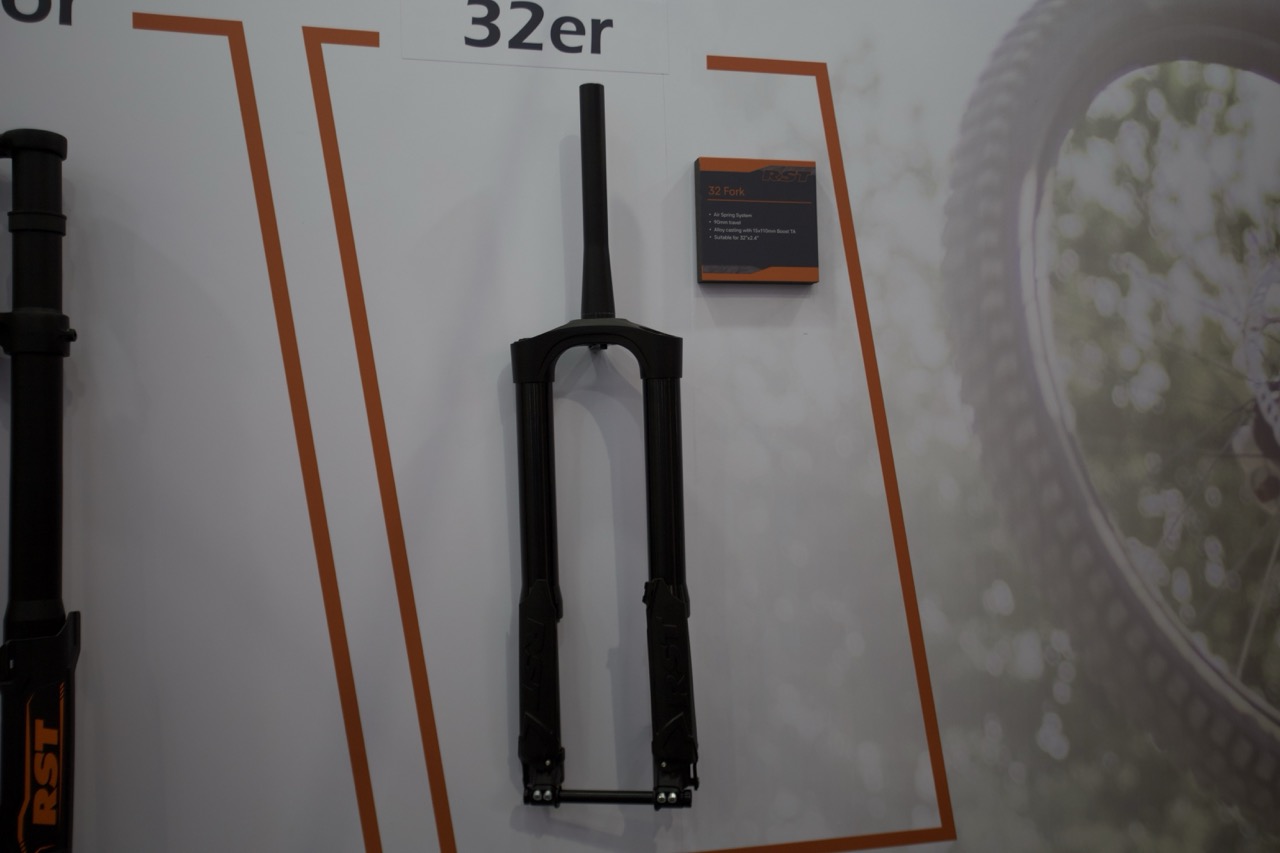
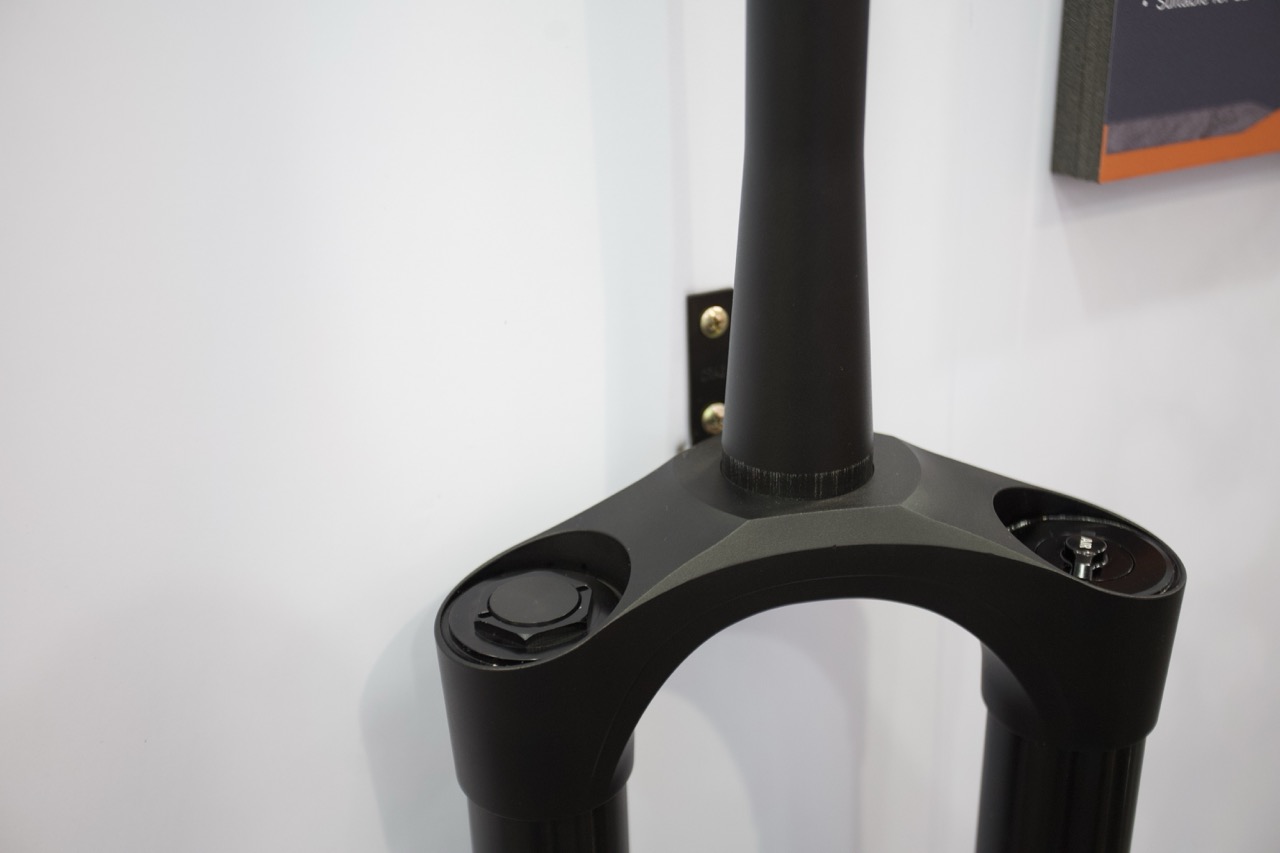
Elsewhere on the stand, RST displayed its 32er fork, which shares an upside-down design but is focused on cross-country mountain biking.
Upside-down forks are more at risk of scratched stanchions. Nick Clark / Our Media
The fork sees guards positioned over the stanchions, and if I had to describe it in one word, it would be ‘black’.
No doubt about it, this is a basic fork. Nick Clark / Our Media
An air-spring system is used internally, and the fork provides 90mm of travel, putting it on the shorter side compared to XFusion’s Rezza 32er.
There’s no word as yet on pricing, but we can expect to see 32in making its way to more affordable bikes in the future.




![Projector-4K with WiFi and Bluetooth:[3200 ANSI/AI Auto Focus/Built-in APPs] Outdoor-Projector Smart OS 2.0 & 50W DoIby, ONOAYO Portable Proyector Compatible with Netflix/YouTube/PrimeVideo Upgraded](https://www.prime-wow.com/wp-content/uploads/2026/03/hero-imagefillsize_autoxautov1774566692.jpg)
 Zwift Big Spin, Stage 2
 Popular
  Zwift Games, Stages 6a/6b