
For years, Windows users frustrated with constant changes, aggressive updates, and growing system bloat have flirted with switching to Linux. But 2025 marks a noticeable shift: a new generation of Linux distributions built specifically for ex-Windows users is gaining real traction. One of the standout examples is Bazzite, a gaming-optimized Fedora-based distro that has quickly become a go-to choice for people abandoning Windows in favor of a cleaner, more customizable experience.
Category Archives: Unfiltered RSS
Rust Drivers In Linux 6.19 Will Now Support… Module Parameters
On top of the Rust driver core changes and other Rust code for Linux 6.19, the modules infrastructure for this new kernel version is also bringing some new code. Surprisingly, it’s taken until now for Rust kernel modules/drivers to support module parameters as is common practice for passing different options when booting the kernel or manually loading kernel drivers with extra non-default options…
Is Ruby Still a ‘Serious’ Programming Language?
Wired published an article by California-based writer/programmer Sheon Han arguing that Ruby “is not a serious programming language.”
Han believes that the world of programming has “moved on”, and “everything Ruby does, another language now does better, leaving it without a distinct niche.
Ruby is easy on the eyes. Its syntax is simple, free of semicolons or brackets. More so even thanPython — a language known for its readability — Ruby reads almost like plain English… Ruby, you might’ve guessed, is dynamically typed. Python and JavaScript are too, but over the years, those communities have developed sophisticated tools to make them behave more responsibly. None of Ruby’s current solutions are on par with those. It’s far too conducive to what programmers call “footguns,” features that make it all too easy to shoot yourself in the foot.
Critically, Ruby’s performance profile consistently ranks near the bottom (read: slowest) among major languages. You may remember Twitter’s infamous “fail whale,” the error screen with a whale lifted by birds that appeared whenever the service went down. You could say that Ruby was largely to blame. Twitter’s collapse during the 2010 World Cup served as a wake-up call, and the company resolved to migrate its backend to Scala, a more robust language.
The move paid off: By the 2014 World Cup, Twitter handled a record 32 million tweets during the final match without an outage. Its new Scala-based backend could process up to 100 times faster than Ruby. In the 2010s, a wave of companies replaced much of their Ruby infrastructure, and when legacy Ruby code remained, new services were written in higher-performance languages.
You may wonderwhy people are still using Ruby in 2025. It survives because of its parasitic relationship with Ruby on Rails, the web framework that enabled Ruby’s widespread adoption and continues to anchor its relevance…. Rails was the framework of choice for a new generation of startups. The main code bases of Airbnb, GitHub, Twitter, Shopify, and Stripe were built on it.
He points out on Stack Overflow’s annual developer survey, Ruby has slipped from a top-10 technology in 2013 to #18 this year — “behind evenAssembly” — calling Ruby “a kind of professional comfort object, sustained by the inertia of legacy code bases and the loyalty of those who first imprinted upon it.” But the article drew some criticism on X.com. (“You should do your next piece about how Vim isn’t a serious editor and continue building your career around nerd sniping developers.”)
Other reactions…
“Maybe WIRED is just not a serious medium…”
“FWIW — Ruby powered Shopify through another Black Friday / Cyber Monday — breaking last year’s record.”
“Maybe you should have taken a look at TypeScript…”
Wired’s subheading argues that Ruby “survives on affection, not utility. Let’s move on.” Are they right? Share your own thoughts and experiences in the comments.
Is Ruby still a ‘serious’ programming language?


Read more of this story at Slashdot.
Fastfetch 2.56 Arrives With Improved Config Loading and NUMA Detection
Fastfetch 2.56, the system information tool, enhances config loading, adds NUMA node detection, and broadens hardware and OS support.
GParted Live 1.7.0-12 Stable Release Drops 32 Bit Support
GParted Live 1.7.0-12 ends 32-bit support and moves fully to AMD64, delivering a refreshed, stable release with updated components.
The Anxieties of Full-Body MRI Scans (Not Covered by Insurance)
Washington Post columnist Dana Milbank calls himself “a highly creative hypochondriac” — who just paid for an expensive MRI scan to locate abnormal spots as tiny as 2 millimeters.
He discusses the pros and cons of its “diffusion-weighted imaging” technology combined with the pattern recognition of AI, which theoretically “has the potential to save our lives by revealing budding cancers, silent aneurysms and other hidden would-be killers before they become deadly. ”
But the scans cost $2,500 a pop and insurance won’t pay. Worse, for every cancer these MRIs find, they produce a slightly greater number of false positives that require a biopsy, with the potential for infection and bleeding and emotional distress. Even when the scans don’t produce a false positive, they almost always come up with some vague and disconcerting abnormality…. Will we feel better after viewing our insides? Or will we become anxious about things we hadn’t even thought to worry about?
Part of living has always been in the mystery, in not knowing what tomorrow will bring. Now, because of sophisticated imaging, genome sequencing and other revolutionary screening tools, we can have predictability, or at least the illusion of it. But do we want that? The American College of Radiology says we do not. Its still-current 2023 statement says there is not “sufficient evidence” to recommend full-body screening, cautioning that the scan could lead to needless testing and expense. But David Larson, chair of ACR’s Commission on Quality and Safety, told me that could change as more data comes in. “When people ask me, ‘Would you recommend it?’ I would say it depends on your tolerance for ambiguity,” he said, giving the example of somebody found to have a borderline aortic aneurysm who is advised to wait and monitor it. If “that won’t keep you up at night, then I wouldn’t necessarily recommend against it….”
About 1 in 20 gets that dreaded call. A study Prenuvo presented earlier this year of 1,011 participants found that 4.9 percent of scans required a follow-up biopsy. Of those, 2.2 percent were actually cancer, and the other 2.7 percent were false positives. Of the 22 cancers the scans caught, 86 percent of patients had no specific symptoms. But if finding something truly awful is rare, finding something abnormal is almost guaranteed. [Vikash Modi, Prenuvo’s senior medical director of preventative medicine] said only 1 in 20 scans come back completely clean. The vast majority of patients wind up in the ambiguous realm where something may look suspicious but doesn’t require urgent follow-up.
He opted for the cheaper $1,000 torso scan, which the senior medical director calls “our bread-and-butter area,” since 17 of the 22 cancers detected in one Prenuvo study were in that area and is where they often find cancers that wouldn’t be discovered until they were incurable like “that scary pancreatic stuff….”
Milbank’s scan found 12 “abnormalities” included “a 2.5 mm pulmonary nodule in the right lower lobe” and “a 4.6 mm intraductal papillary mucinous neoplasm in the pancreatic tail” — but with 10 abnormalities labeled “minor” (and six being musculoskeletal wear-and-tear problems “I already knew about from the usual aches and pains”.)
Even the two “moderate” findings didn’t sound that grim when I read on. The “indeterminant lesion” in my lung requires no follow-up, while the thing in my pancreas is “low-risk.”… The “most interesting” finding was the pancreatic cyst, because, at this size and location, there’s a 3 percent chance it will become cancerous in the next five years. But if annual follow-up scans of my pancreas (covered by insurance) show it’s getting bigger, the cyst can be removed before it becomes cancer. For me, this made the MRI worthwhile. Sure, there was a 97 percent likelihood the cyst never would develop into a problem even if I hadn’t learned about it. But now, with minimal inconvenience, I can eliminate that 3 percent risk of getting pancreatic cancer, the most lethal of major malignancies.


Read more of this story at Slashdot.
Toradex Introduces Coin-Sized Modules Powered with NXP i.MX 93 and i.MX 91 Processors
Toradex has unveiled the OSM and Lino Computer on Module families, incorporating NXP’s i.MX 93 and i.MX 91 processors. These ultra-compact modules target high-volume industrial automation and edge systems, offering a rugged, cost-effective solution for space-constrained environments. The new lineup includes the OSM iMX93, OSM iMX91, Lino iMX93, and Lino iMX91. These modules are powered […]
Linux 6.19 Adds New Console Font To Better Handle Modern Laptops With HiDPI Displays
Sent in for the Linux 6.19 merge window when it comes to the frame-buffer device “FBDEV” subsystem are just a set of “fixes” for FBDEV drivers and code clean-ups. But it does also include a new console font option for better supporting modern laptops with high density displays…
Solaris 11.4 SRU 87 Released With New Security Features, GCC 15
For anyone still relying on Solaris in production or just nostalgic Solaris users from the grand Sun Microsystems days, Solaris 11.4 SRU 87 was released by Oracle this week as one of the heavier stable release updates in recent memory…
Could America’s Paper Checks Be On the Way Out, Like the Penny?
“First the penny. Next, paper checks?” asks CNN:
When the U.S. Mint stopped making pennies last month for the first time in 238 years, it drew a lot of attention. But there have been quiet moves to stop using paper checks as well. The government stopped sending out most paper checks to recipients as of the end of September, part of an effort to fully modernize federal benefits payments. And on Thursday the Federal Reserve put out a notice that suggested it is considering — but only considering — the “winding down” of checking services it now provides for banks.
The central bank’s statement said that as an alternative to winding down those services, it is mulling more investment in its check processing services, but noted that would come at a higher cost. But it is also considering not making any such investments, in order to keep costs roughly unchanged. That would lead to reduced reliability of those services going forward. “Over time, check use has steadily declined, digital payment methods have grown in availability and use, and check fraud has risen,” said the notice from the Fed. “Also, the Reserve Banks will need to make substantial investments in their check infrastructure to continue providing the same level of check services going forward.”
A report from the Federal Reserve Bank of Atlanta in June found that as of last year, more than 90% of surveyed consumers said they prefer to use something other than a check for paying bills, and just 6% paid by check. That’s a sharp drop from the 18% of bills paid by checks as recently as 2017. Consumers also reported they view checks as second-worst for convenience and speed of payment, ahead of only money orders. And they’re ranked as the least secure form of any payment other than cash.
But even if it’s true that options such as direct deposit, automatic bill paying and electronic payment systems such as Venmo, PayPal and Zelle have all reduced the need for traditional checks, paper checks are still an important part of the payment system. They make up about 5% of transactions and represent 21% of the value of all those payments, according to a statement from Michelle Bowman, the Fed’s vice chair for supervision, who dissented from the Fed’s Thursday statement.


Read more of this story at Slashdot.
Google Must Limit Its ‘Default Search’ Contracts to One Year, Judge Rules
Bloomberg reports that Google “must renegotiate any contract to make its search engine or artificial intelligence app the default for smartphones and other devices every year, a federal judge ruled.”
Judge Amit Mehta in Washington sided with the US Justice Department on the one year limitation in his final ruling on what changes the search giant must make in the wake of a landmark ruling that the company illegally monopolized online search. The yearly renegotiation will give rivals — particularly those in the burgeoning generative AI field — a chance to compete for key placements.
The final judgment will still allow Google to offer its products to Apple Inc. for use in its popular iPhone and pay other electronics makers like Samsung Electronics Co. for default placement. But the judge said those contracts must be renegotiated annually. Mehta noted in his ruling that both Google and the US government said they could work with the one-year limitation on default contracts. As such, “the court holds that a hard-and-fast termination requirement after one year would best carry out the purpose of the injunctive relief.”


Read more of this story at Slashdot.
Oracle Linux 10.1 Released With Security and Toolchain Updates
Oracle Linux 10.1 is now GA, delivering new kernels, post-quantum crypto defaults, upgraded toolchains, and expanded container and storage capabilities.
Woman Hailed As a Hero For Smashing Man’s Meta Smart Glasses On Subway
“Woman Hailed as Hero for Smashing Man’s Meta Smart Glasses on Subway,” reads the headline at Futurism:
As Daily Dot reports, a New York subway rider has accused a woman of breaking his Meta smart glasses. “She just broke my Meta glasses,” said the TikTok user, who goes by eth8n, in a video that has since garnered millions of views.
“You’re going to be famous on the internet!” he shouted at her through the window after getting off the train. The accused woman, however, peered back at him completely unfazed, as if to say that he had it coming.
“I was making a funny noise people were honestly crying laughing at,” he claimed in the caption of a followup video. “She was the only person annoyed…” But instead of coming to his support, the internet wholeheartedly rallied behind the alleged perpetrator, celebrating the woman as a folk hero — and perfectly highlighting how the public feels about gadgets like Meta’s smart glasses.
“Good, people are tired of being filmed by strangers,” one user commented.
“The fact that no one else on the train is defending him is telling,” another wrote…
Others accused the man of fabricating details of the incident. “‘People were crying laughing’ — I’ve never heard a less plausible NYC subway story,” one user wrote.
In a comment on TikTok, the man acknowledges he’d filmed her on the subway — it looks like he even zoomed in. The man says then her other options were “asking nicely to not post it or blur my face”.
He also warns that she could get arrested for breaking his glasses if he “felt like it”. (And if he sees her again.) “I filed a claim with the police and it’s a misdemeanor charge.” A subsequent video’s captions describe him unboxing new Meta smartglasses “and I’m about to do my thing again… no crazy lady can stop me now.”
I’m imagining being mugged — and then telling the mugger “You’re going to be internet famous!”
But maybe that just shows how easy it is to weaponize smartglasses and their potential for vast public exposure.


Read more of this story at Slashdot.
Judge puts a one-year limit on Google’s contracts for default search placement
A federal judge has expanded on the remedies decided for the Department of Justice’s antitrust case against Google, ruling in favor of putting a one-year limit on the contracts that make Google’s search and AI services the default on devices, Bloomberg reports. Judge Amit Mehta’s ruling on Friday means Google will have to renegotiate these contacts every year, which would create a fairer playing field for its competitors. The new details come after Mehta ruled in September that Google would not have to sell off Chrome, as the DOJ proposed at the end of 2024.
This all follows the ruling last fall that Google illegally maintained an internet search monopoly through actions including paying companies such as Apple to make its search engine the default on their devices and making exclusive deals around the distribution of services such as Search, Chrome and Gemini. Mehta’s September ruling put an end to these exclusive agreements and stipulates that Google will have to share some of its search data with rivals to “narrow the scale gap” its actions have created.
This article originally appeared on Engadget at https://www.engadget.com/big-tech/judge-puts-a-one-year-limit-on-googles-contracts-for-default-search-placement-215549614.html?src=rss
Microsoft’s RAMDAX Driver Merged For Linux 6.19 To Carve Out RAM As NVDIMM Devices
The Non-Volatile Memory Device (NVDIMM) subsystem updates were merged today for the in-development Linux 6.19 kernel. Most notable this cycle for the NVDIMM code is a new open-source driver addition courtesy of Microsoft…
A 1950s Material Just Set a Modern Record For Lightning-fast Chips
“Researchers engineered a strained germanium layer on silicon that allows charge to move faster than in any silicon-compatible material to date,” reports Science Daily. “This record mobility could lead to chips that run cooler, faster, and with dramatically lower energy consumption.
“The discovery also enhances the prospects for silicon-based quantum devices…”
Scientists from the University of Warwick and the National Research Council of Canada have reported the highest “hole mobility” ever measured in a material that works within today’s silicon-based semiconductor manufacturing…. The researchers created a nanometer-thin germanium epilayer on silicon that is placed under compressive strain. This engineered structure enables electric charge to move faster than in any previously known silicon-compatible material…
The findings establish a promising new route for ultra-fast, low-power semiconductor components. Potential uses include quantum information systems, spin qubits, cryogenic controllers for quantum processors, AI accelerators, and energy-efficient servers designed to reduce cooling demands in data centers. This achievement also represents a significant accomplishment for Warwick’s Semiconductors Research Group and highlights the UK’s growing influence in advanced semiconductor materials research.


Read more of this story at Slashdot.
Apple’s Johny Srouji could continue the company’s executive exodus, according to report
Apple’s Johny Srouji may be the latest company executive to seek greener pastures, according to a report from Bloomberg. The report said that Srouji, Apple’s senior vice president of hardware technologies, told Tim Cook that he is “seriously considering leaving in the near future.”
While the report didn’t mention if Srouji has another job lined up, Bloomberg‘s sources claimed that he wants to join another company if he leaves Apple. Srouji joined the company in 2008 to develop Apple’s first in-house system-on-a-chip and eventually led the transition to Apple silicon.
If Srouji leaves Apple, he would be the latest in a string of departures of longtime execs. At the start of the month, Apple announced that John Giannandrea, the company’s senior vice president for machine learning and AI strategy, would be retiring from his role in spring 2026. A couple of days later, Bloomberg reported that the company’s head of interface design, Alan Dye, would be leaving for a role at Meta. Adding to those exits, Apple also revealed that Kate Adams, who has been Apple’s general counsel since 2017, and Lisa Jackson, vice president for Environment, Policy, and Social Initiatives, will both be leaving in early 2026.
The shakeup at the executive level comes after Bloomberg‘s Mark Gurman previously reported that Cook may not be preparing for his own departure as CEO next year. Gurman’s prediction counters a report from the Financial Times that claimed that Apple was accelerating succession plans for Cook with an expected stepping down sometime next year.
This article originally appeared on Engadget at https://www.engadget.com/big-tech/apples-johny-srouji-could-continue-the-companys-executive-exodus-according-to-report-200750252.html?src=rss
MSI Wraps Intel Panther Lake In Thin & Sleek Prestige OLED Laptops
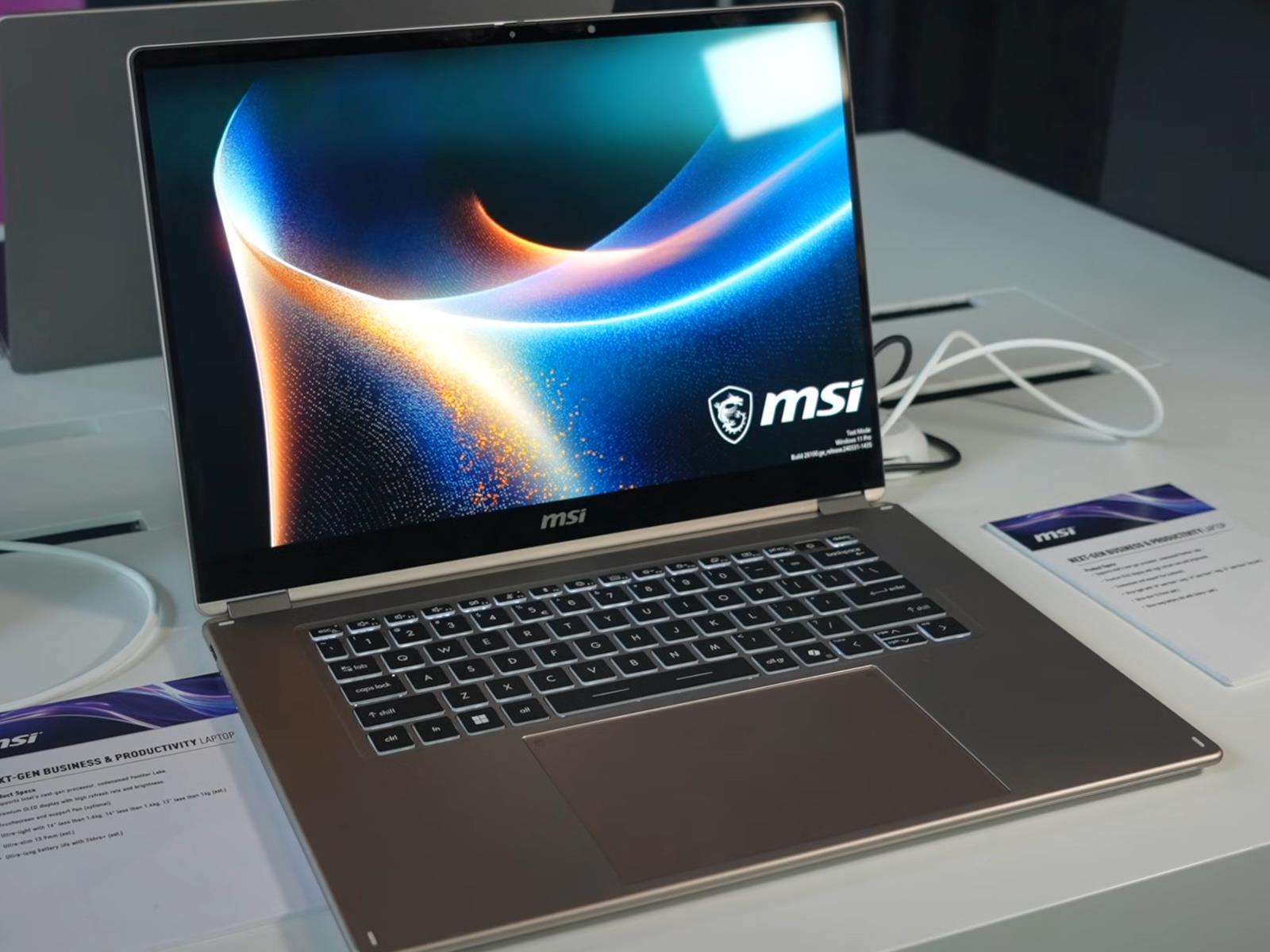
Intel’s Panther Lake processors are due to arrive soon in new notebooks from a wide array of partners. MSI has a refreshed line-up of Prestige machines coming, for example, powered by Intel’s latest and greatest mobile chips, flaunting OLED screens up to 16 inches and long battery life. Based on initial disclosures from Intel and some leaked
Chernobyl’s Protective Shield Can No Longer Confine Radiation, UN Nuclear Watchdog Says
“A structure designed to prevent radioactive leakage at the defunct Chernobyl nuclear plant in Ukraine is no longer operational,” reports Politico, “after Russian drones targeted it earlier this year, the U.N.’s nuclear watchdog has found.”
[T]he large steel structure “lost its primary safety functions, including the confinement capability” when its outer cladding was set ablaze after being struck by Russian drones, according to a new report by the International Atomic Energy Agency. Beyond that, there was “no permanent damage to its load-bearing structures or monitoring systems,” it said. “Limited temporary repairs have been carried out on the roof, but timely and comprehensive restoration remains essential to prevent further degradation and ensure long-term nuclear safety,” IAEA Director General Rafael Mariano Grossi said in astatement.
The Guardian has pictures of the protective shield — incuding the damage from the drone strike. The shield is the world’s largest movable land structure, reports CNN:
The IAEA, which has a permanent presence at the site, will “continue to do everything it can to support efforts to fully restore nuclear safety and security,” Grossi said…. Built in 2010 and completed in 2019, it was designed to last 100 years and has played a crucial role in securing the site.
The project cost €2.1 billion and was funded by contributions from more than 45 donor countries and organizations through the Chernobyl Shelter Fund, according to the European Bank for Reconstruction and Development, which in 2019 hailed the venture as “the largest international collaboration ever in the field of nuclear safety.”


Read more of this story at Slashdot.
AMD Starts Enabling Zen 6 “znver6” Compiler Support In GCC
Making for a bit more exciting weekend is that minutes ago AMD has posted their first patch for enabling Zen 6 processor support within the GNU Compiler Collection (GCC) for -march=znver6 targeting…