Congress Quietly Strips Right-To-Repair Provisions From US Military Spending Bill

Congress quietly removed provisions that would have let the U.S. military fix its own equipment without relying on contractors, despite bipartisan and Pentagon support. The Register reports: The House and Senate versions of the NDAA passed earlier both included provisions that would have extended common right-to-repair rules to US military branches, requiring defense contractors to provide access to technical data, information, and components that enabled military customers to quickly repair essential equipment. Both of those provisions were stripped from the final joint-chamber reconciled version of the bill, published Monday, right-to-repair advocates at the US Public Interest Research Group (PIRG) pointed out in a press release. […]

According to PIRG’s press release on the matter, elected officials have been targeted by an “intensive lobbying push” in recent weeks against the provisions. House Armed Services Committee chair Mike Rogers (R-AL) and ranking Democrat Adam Smith (D-WA), responsible for much of the final version of the bill, have received significant contributions from defense contractors in recent years, and while correlation doesn’t equal causation, it sure looks fishy. [Isaac Bowers, PIRG’s federal legislative director] did tell us that he was glad that the defense sector’s preferred solution to the military right to repair fight — a “data as a service” solution — was also excluded, so the 2026 NDAA isn’t a total loss for the repairability fight. “That provision would have mandated the Pentagon access repair data through separate vendor contracts rather than receiving it upfront at the time of procurement, maintaining the defense industry’s near monopoly over essential repair information and keeping troops waiting for repairs they could do quicker and cheaper themselves,” Bowers said in an email.

An aide to the Democratic side of the Committee told The Register the House and Senate committees did negotiate a degree of right-to-repair permissions in the NDAA. According to the aide and a review of the final version of the bill, measures were included that require the Defense Department to identify any instances where a lack of technical data hinders operation or maintenance of weapon systems, as well as aviation systems. The bill also includes a provision that would establish a “technical data system” that would “track, manage, and enable the assessment” of data related to system maintenance and repair. Unfortunately, the technical data system portion of the NDAA mentions “authorized repair contractors” as the parties carrying out repair work, and there’s also no mention of parts availability or other repairability provisions in the sections the staffer flagged — just access to technical data. That means the provisions are unlikely to move the armed forces toward a new repairability paradigm.


Read more of this story at Slashdot.

Millions of Australian Teens Lose Access To Social Media As Ban Takes Effect

Australia’s world-first ban blocking under-16s from major social platforms has come into effect. The BBC is live reporting the reactions “both from within Australia and outside it.” From the report: I’ve been speaking to 12-year-old Paloma, who lives in Sydney and says she is “sad” about the ban. She spends between 30 minutes and two hours a day on social media. “I’m upset… because I am part of several communities on Snapchat and TikTok,” she tells me. “I’ve developed good friendships on the apps, with people in the US and New Zealand, who have common interests like gaming, and it makes me feel more connected to the world.”

Paloma says she regularly talks about the ups and downs of her life with a boy of the same age in New Jersey, in the US, who she knows through gaming and TikTok. “I feel like I can explore my creativity when I am in a community online with people of similar ages,” she says. Everyone Paloma knows is “a bit annoyed” about the ban. By stopping them from using social media, she says “the government is taking away a part of ourselves.”

Two 15-year-olds, Noah Jones and Macy Neyland, backed by a rights group, are arguing at Australia’s highest court that the legislation robs them of their right to free communication. The Digital Freedom Project (DFP) announced the case had been filed in the High Court late last month. After news of the case broke, Australia’s Communications Minister Anika Wells told parliament the government would not be swayed. “We will not be intimidated by threats. We will not be intimidated by legal challenges. We will not be intimidated by big tech. On behalf of Australian parents, we will stand firm,” she said.


Read more of this story at Slashdot.

Over 250 people quarantined in South Carolina as measles outbreak rages

A measles outbreak that began in South Carolina at the start of October is showing no signs of slowing as officials on Tuesday reported 27 new cases since Friday. Those cases bring the outbreak total to 111.

The southern state’s outbreak now rivals outbreaks ongoing in Utah and Arizona, which have tallied 115 and 176 cases, respectively. The outbreaks are threatening to cost the country its measles elimination status, which was earned in 2020 after vaccination efforts stopped the virus from spreading continuously. If the current transmission of the virus isn’t halted by January, the virus will have circulated for 12 consecutive months, marking it once again as an endemic disease in the US.

In an update on Tuesday, South Carolina’s health department suggested the spread is far from over. Of the state’s 27 new cases, 16 were linked to exposure at a church, the Way of Truth Church in Inman. And amid the new cases, new exposures were identified at Inman Intermediate School. That’s on top of exposures announced Friday at four other schools in the region, which led to well over 100 students being quarantined.

Read full article

Comments

Uber is installing kiosks for booking rides without the mobile app

Uber is rolling out kiosks for travelers to book rideshares without using the mobile app. The company is pitching the service as a convenience for international travelers who may not have a data plan, but it could also be a lifesaver if your phone runs out of juice and you don’t have a way to recharge it. A passenger can use the kiosk to enter their destination and desired ride type, then will receive a printed receipt with the details about their booked ride. The first kiosk will debut in Terminal C at LaGuardia Airport in New York City, but Uber said it would have additional locations in airports, hotels and ports over the coming months. 

In airport situations, these kiosks make Uber even more of a direct competitor to traditional taxis. With the removal of the app, the kiosk can essentially stand is as the dispatcher and a passenger can decide how to travel based on their preferences (or on wait times) for a rideshare versus a yellow cab.

Uber also used LaGuardia as the starting point for its shuttle bus service in New York, with $18 rides between the airport and Manhattan transit hubs in October 2024; it later rolled out the shuttles to John F. Kennedy Airport in March 2025. Today, Uber said it is bringing the shuttle bus option to Newark Liberty International Airport, so all major NYC airports now have access to the service.

This article originally appeared on Engadget at https://www.engadget.com/transportation/uber-is-installing-kiosks-for-booking-rides-without-the-mobile-app-220904106.html?src=rss

Slack’s CEO is joining OpenAI to find the money to pay for all those data centers

OpenAI has announced that Denise Dresser, the current CEO of Slack, will be the company’s new Chief Revenue Officer. Dresser will oversee the company’s revenue strategy “across enterprise and customer success,” according to OpenAI’s announcement, and will presumably play a key role in leading the company towards profitability now that it’s reorganized as a public benefit corporation.

“We’re on a path to put AI tools into the hands of millions of workers, across every industry,” Fidji Simo, OpenAI’s CEO of Products said in the announcement. “Denise has led that kind of shift before, and her experience will help us make AI useful, reliable, and accessible for businesses everywhere.”

Simo joined OpenAI in May of this year, after serving as CEO of Instacart, and before that, the head of Facebook at Meta. Hiring Simo and Dresser could be a good indication of how OpenAI plans to approach ChatGPT going forward. Which is to say, the company is taking a very Silicon Valley approach to growing its chatbot business and focusing on scale and monetizing as many AI interactions as possible. It’s not a mistake that Simo helped establish Meta’s ads business and OpenAI is reportedly planning to introduce ads into chats with its AI models.

Even with the possibility of ad revenue, Dresser will still have to overcome what OpenAI continues to spend to offer its various AI products. OpenAI pays for multiple partnerships for data center access and has commitments to both buy and build server components for those data centers. Add in the cost of just processing a ChatGPT query itself, and growing the company’s revenue seems like a tall order.

This article originally appeared on Engadget at https://www.engadget.com/ai/slacks-ceo-is-joining-openai-to-find-the-money-to-pay-for-all-those-data-centers-220411962.html?src=rss

Apple’s Slow AI Pace Becomes a Strength As Market Grows Weary of Spending

An anonymous reader quotes a report from Bloomberg: Shares of Apple were battered earlier this year as the iPhone maker faced repeated complaints about its lack of an artificial intelligence strategy. But as the AI trade faces increasing scrutiny, that hesitance has gone from a weakness to a strength — and it’s showing up in the stock market. Through the first six months of 2025, Apple was the second-worst performer among the Magnificent Seven tech giants, as its shares tumbled 18% through the end of June. That has reversed since then, with the stock soaring 35%, while AI darlings like Meta Platforms and Microsoft slid into the red and even Nvidia underperformed. The S&P 500 Index rose 10% in that time, and the tech-heavy Nasdaq 100 Index gained 13%. […] As a result, Apple now has a $4.1 trillion market capitalization and the second biggest weight in the S&P 500, leaping over Microsoft and closing in on Nvidia. The shift reflects the market’s questioning of the hundreds of billions of dollars Big Tech firms are throwing at AI development, as well as Apple’s positioning to eventually benefit when the technology is ready for mass use. “It is remarkable how they have kept their heads and are in control of spending, when all of their peers have gone the other direction,” said John Barr, portfolio manager of the Needham Aggressive Growth Fund.

Bill Stone, chief investment officer at Glenview Trust Company, added: “While they most certainly will incorporate more AI into the phones over time, Apple has avoided the AI arms race and the massive capex that accompanies it.” His company views Apple’s stock as “a bit of an anti-AI holding.”


Read more of this story at Slashdot.

Super Easy KDE Plasma 6 Customization | Beautiful Clean Forest Green Setup

In this video, I showcase a Super Easy KDE Plasma 6 Customization using a clean and natural forest vibe. This setup uses the Layan theme combined with Kvantum Layan-Breath, creating a smooth and modern look with soft green tones. For the icons, I use Yet Another Monochrome, giving the desktop a minimal and consistent appearance. The forest wallpaper is forest illustration, so the visual style feels more personal and unique.

Instagram May Be Quietly Adding AI-Generated Headlines to Your Posts

Few of us are under the illusion that we own the content that we post on Instagram, but we do get a say in how that content is presented—w can choose which photos and videos we share, what captions appear (or don’t appear) on each post, as well as whether or not we include where the image was taken or shared from. We might not control the platform, but we do control the content of our posts—unless those posts are found on search engines like Google.

As reported by 404 Media, it appears that Instagram is experimenting with AI-generated SEO titles for users’ posts—without those users’ input or permission. Take this post for example: Author Jeff VanderMeer uploaded a short video of rabbits eating a banana to his Instagram. The video was posted as-is: There was no caption, location tag, or any other public-facing information. It’s just a couple of rabbits having a bite.

View this post on Instagram

A post shared by Jeff VanderMeer (@jeff_vandermeer123)

Instagram, however, took it upon itself to add a headline to the post—at least when you stumble upon it on via Google. Rather than display a link featuring Jeff’s Instagram handle and some metadata about the video, the Google entry comes back with the following headline: “Meet the Bunny Who Loves Eating Bananas, A Nutritious Snack for…” (the rest of the headline cuts off here).

VanderMeer was less than pleased with the discovery. He posted a screenshot of the headline to Bluesky, writing, “now [Instagram] appears to generate titles [and] headlines via AI for stuff I post…to create [clickbait] for [Google] wtf do not like.”

This was not the only AI-generated headline VanderMeer was roped into. This post from the Groton Public Library in Massachusetts, which advertises VanderMeer’s novel Annihilation as the library’s December book group pick, was also given the “clickbait” treatment on Google. Just as with VanderMeer’s post, the Groton Public Library didn’t include any text in its Instagram post—just an image showing off the book. But if you see the post within a Google search, you’ll see the following partial headline: “Join Jeff VanderMeer on a Thrilling Beachside Adventure with Mesta…”

404 Media’s Emanuel Maiberg says that they’ve confirmed that Instagram is also generating headlines for other users on the platform, all without permission or knowledge. Meta did not return 404 Media’s request for comment. (I have also reached out for comment.) Google, on the other hand, did return 404 Media’s messages, and confirmed the headlines are not coming from its AI generators—though it has been using deceptive AI-generated headlines of its own on Google Discover. In fact, the company says its search engine is simply pulling the text from Instagram itself. Maiberg found that these headlines do appear under title tags for Instagram posts when using Google’s Rich Result Test tool. When digging through the code, Maiberg also discovered AI-generated descriptions for each post, which could be what Instagram is ultimately using to generate the headlines.

Why would Instagram generate AI headlines for posts?

I’ll update this post if I hear back from Instagram regarding these AI-generated headlines. Until then, I can only speculate on their intended purpose (assuming Instagram is the one generating these headlines in the first place). And the likeliest reason is to boost engagement: Instagram probably wants to increase the visibility of its users’ posts in search, which means giving Google more information to work with. If the user doesn’t provide their own details about the image, Instagram’s AI appears to be filling in the blanks, first generating a description, and from there, sticking a “clicky” headline onto it.

The results aren’t actually all that appealing, though. Just because Meta AI may be capable of generating headlines, doesn’t mean it is good at it, or even that it should—especially when users never consented to this practice in the first place. It’d be one thing if Instagram had an option before you post—something like “Generate a headline for me using Meta AI that will appear in search engines for my post.” Most of us would opt out of that, but it’d at least be a choice. However, it appears that Instagram decided that users like VanderMeer weren’t capable of writing a headline as clever as “Meet the Bunny Who Loves Eating Bananas.”

The worst part is, the AI doesn’t even accurately describe the posts. That Groton Public Library post was only about a book club meeting featuring VanderMeer’s novel, but the headline says “Join Jeff VanderMeer,” as if he’d be making an appearance. Not only did Instagram add a headline without VanderMeer’s consent, it spread misinformation about his whereabouts. And for what? Some extra engagement on Google?

If Instagram wants its posts to appear as headlines on search engines, it should include the actual posters in the conversation. As VanderMeer told 404 Media: “If I post content, I want to be the one contextualizing it, not some third party.”

Instagram is generating SEO-bait headlines for its users’ posts

It looks like Meta has decided to turn Instagram users into unwitting SEO spam pawns. On Tuesday, 404 Media reported that the platform is generating sensational, likely AI-generated headlines for user posts without their knowledge or explicit consent. An Engadget editor has also noticed this on their posts. The headlines are found in the pages’ code and are only visible in search results.

The scheme appears to be an effort to boost the Google search ranking of Instagram content. For example, author Jeff VanderMeer’s untitled video about a bunny eating a banana received a generic, SEO-style title. “Meet the Bunny Who Loves Eating Bananas, A Nutritious Snack For Your Pet,” it reads. That indeed reads like the work of an LLM.

In another example, a Massachusetts library’s post promoting a reading of a VanderMeer book got the same treatment. “Join Jeff VanderMeer on a Thrilling Beachside Adventure with Mesta …”, the headline reads.

Multiple cosplayers also found their posts gaining strange titles. “I would not write mediocre text like that, and it sounds as if it was auto-generated at scale with an LLM,” cosplayer Brian Dang told 404 Media. “This becomes problematic when the headline or description advertises someone in a way that is not how they would personally describe themselves.”

The headlines appear in the posts’ code, as confirmed by Google’s Rich Result Test tool. (They’re found in the <title></title> tags for the post.) The spammy headlines differ from the page’s alt text, which Instagram generates for people with low vision.

You might want to search for your recent content to see if you’re affected. Engadget reached out to Meta for confirmation. We’ll update this story if we hear back.

This article originally appeared on Engadget at https://www.engadget.com/social-media/instagram-is-generating-seo-bait-headlines-for-its-users-posts-213702800.html?src=rss

Pebble Is Releasing a $75 Ring, but It’s Not an Oura Competitor

We may earn a commission from links on this page.

When I hear that a smartwatch company is launching a ring, I assume it’s going to be a smart ring. But Pebble went a different direction, instead creating what’s basically a remote microphone that can work with your phone and other devices. It’s available for pre-order for $75, and will sell for $99 after launch.

Pebble’s new ring is called the Index 01. It’s got a button you can click and hold, and a microphone that will listen to what you’re saying as you hold the button. The recording is then sent to your phone, where it’s processed on-device. That’s it—no heart rate sensor, and no charging dock.

The Index 01’s specs and functionality

Eric Migicovsky, Pebble’s founder, describes using the Index to capture short messages and send instructions to his Pebble watch via his phone. The idea is that you wear the Index on your index finger (get it?) and press the button with your thumb. The ring comes in three colors: matte black with a black button, polished gold with a blue button, and silver with a white button. 

There is no battery to charge, just a built-in battery that lasts a total of 12 to 15 hours. Migicovsky writes: “On average, I use it 10-20 times per day to record 3-6 second thoughts. That’s up to 2 years of usage.” 

The ring doesn’t have a speaker and can’t vibrate for notifications; it’s just for input. Communication between the ring and your phone is encrypted, and the voice recordings are processed into text on your phone, without requiring an internet connection. The ring doesn’t talk directly to a Pebble watch, but it can talk to your phone and your phone can then display any output to the watch—for example, displaying the text of a reminder that you set. 

Who should buy an Index 01 ring?

So far, Pebble users don’t seem to be nearly as excited about this product as Migicovsky is. A Reddit thread discussing the announcement has comments like “Cool idea, weird product,” and “Why would I want this if I already have a Pebble that has all the capability to take voice notes?” 

Migicovsky explains in the company’s blog post that his goal was for the button to be operated with one hand, and gestures on the Pebble weren’t reliable enough. He also emphasizes the fact you don’t need to charge it, while some of the users seem to be more concerned that a device that can’t be charged is basically disposable—”manufactured e-waste.”

After about two years of use (or less, if you make longer recordings), the app will ask if you’d like to order another ring. The ring will cost $75 to pre-order, and $99 at its regular price. There hasn’t been any mention of a discounted rate for a replacement; it sounds like you’re supposed to buy a new $99 ring every two years. 

The ring’s functionality could be extended in the future. A double click-and-hold could signal the Pebble app to process the data in a different way (perhaps sending it to ChatGPT, Migicovsky suggests) and developers could connect the voice processing in the app to other services like calendar and weather apps. 

Finally, A Decent Butt-Mounted Cat Carrier

Because…okay I have absolutely no idea why (but hopefully just a college design project), this is a video of a cat carrier that unzips from the rear of a pair of pants, allowing a cat to be carried directly behind the owner’s ass. “But what did you have for lunch?” I imagine every cat worrying while it’s being reluctantly stuffed inside. Is it a good idea? Not unless you want to absentmindedly sit on your pet. I accidentally stepped on my dog’s paw the other week and she got so upset about it she puked shortly after. I still feel awful about it. Ten years from now I’ll still feel awful about it. I’ll probably think about it on my deathbed and speed my way into the tunnel. And, if life was a perfect fairy tale, she’d be right there on the other side waiting for me.

2025 Will Be World’s Second or Third-Hottest Year on Record, EU Scientists Say

This year is set to be the world’s second or third-warmest on record, potentially surpassed only by 2024’S record-breaking heat, the European Union’s Copernicus Climate Change Service (C3S) said on Tuesday. From a report: The data is the latest from C3S following last month’s COP30 climate summit, where governments failed to agree to substantial new measures to reduce greenhouse gas emissions, reflecting strained geopolitics as the U.S. rolls back its efforts, and some countries seek to weaken CO2-cutting measures.

This year will also likely round out the first three-year period in which the average global temperature exceeded 1.5 degrees Celsius (2.7 degrees Fahrenheit) above the 1850-1900 pre-industrial period, when humans began burning fossil fuels on an industrial scale, C3S said in a monthly bulletin. “These milestones are not abstract — they reflect the accelerating pace of climate change,” said Samantha Burgess, strategic lead for climate at C3S.


Read more of this story at Slashdot.

Big Tech joins forces with Linux Foundation to standardize AI agents

Big Tech has spent the past year telling us we’re living in the era of AI agents, but most of what we’ve been promised is still theoretical. As companies race to turn fantasy into reality, they’ve developed a collection of tools to guide the development of generative AI. A cadre of major players in the AI race, including Anthropic, Block, and OpenAI, has come together to promote interoperability with the newly formed Agentic AI Foundation (AAIF). This move elevates a handful of popular technologies and could make them a de facto standard for AI development going forward.

The development path for agentic AI models is cloudy to say the least, but companies have invested so heavily in creating these systems that some tools have percolated to the surface. The AAIF, which is part of the nonprofit Linux Foundation, has been launched to govern the development of three key AI technologies: Model Context Protocol (MCP), goose, and AGENTS.md.

MCP is probably the most well-known of the trio, having been open-sourced by Anthropic a year ago. The goal of MCP is to link AI agents to data sources in a standardized way—Anthropic (and now the AAIF) is fond of calling MCP a “USB-C port for AI.” Rather than creating custom integrations for every different database or cloud storage platform, MCP allows developers to quickly and easily connect to any MCP-compliant server.

Read full article

Comments

The Out-of-Touch Adults’ Guide to Kid Culture: ‘Millennial Optimism’

This week, young people are longing for a past they were barely alive for, roasting people who dare to read books in public, and sharing videos of the last moments their lives made sense. So, not exactly an uplifting collection of cultural observations, but I threw in some truly banger Christmas carol mashups to lighten the mood. Everything is nostalgic, melancholic, or festive—sometimes all at once.

What is “millennial optimism”?

Nostalgia for Y2K is dying out, replaced by romanticization of the years around 2010, which some younger people are imagining as a more innocent, hopeful time that they missed out on. At the same time, many millennials who were setting those trends then are feeling nostalgic for their lost youth, so both groups are posting TikTok videos about “millennial optimism.” You see, supposedly post-2010 was an era marked by whimsical possibility and confidence in a bright future, which is decidedly not how kids feel today. Thus: Nostalgia.

Here are some examples of videos about the time, one made by a young person:

and one by an older person:

So is “millennial optimism” really a thing? Yes and no. While it’s hard for an older person to see a decade that included both the fallout from the 2008 recession and the election of 2016 as the best of times, a youth living through our current nightmare might see it that way. And I’m sure many millennial hipsters were having a lovely time back in the late-aughts and teens, growing funny mustaches, going to farmer’s markets, and listening to Stomp Clap Hey music.

But whatever fun and whimsy was on order back then wasn’t because of some overall cultural optimism; it was because that’s when millennials were young, and it’s fun to be young. Also, the urban hipsters at the center of these memes were only a tiny percentage of the population; everyone else was just living their lives—which were, more or less, the same lives people have always led. Anyway, if young people you know start talking about the golden age of optimism that was 2010-2020, this is the context behind their understanding of the recent past. It’s flawed, but nostalgia for times we didn’t live always is.

What is “performative reading”?

The rise of the term “performative reading” could be seen as an indicator that the recent past was actually more optimistic. Performative reading was coined around 2020 and originally referred to people who read books in public as a social status indicator. You might know it better as “acting pretentious” or “being a pseudo intellectual.” As an insult toward people who use books as fashion accessories, “performative reading” wasn’t widely employed back then, but lately, the term is being connected to the insult “performative male,” and is often used to refer to young men who read books written by women authors in public in an attempt to get women to notice/like them. I don’t think this actually a widespread trend—it feels like one of those things that is commented upon more often than actually happens. Regardless, the result is the worst type of people posting photos (that I won’t link to) of “performative readers” they spot on subways and coffeeshops, so other horrible people can comment like, “look at this jerk, readin’ a book! Written by a woman!”

This is troubling on many levels—it’s anti-intellectual, it’s sexist, it’s bullying, and it’s also part of a larger trend among generations Z and A, who seem reluctant to do anything out-of-the-ordinary for fear of being publicly judged and/or ridiculed for it online. Before everything was online, you could sit at a coffeeshop reading bell hooks and the worst you might have to deal with would have been a smirk from a stranger. Now, a picture of you in a beret could end up online with a hundreds of thousands of faceless strangers dunking on your pretentious ass. The result is a drop in the number of annoying urban attention seekers, but also a drop in the number of people who do anything interesting at all. So maybe nostalgia for the aughts antwenty-d teens is warranted.

What is the white rabbit trend?

In Alice’s Adventures in Wonderland, the main character chases after a white rabbit and is led into a surreal, troubling world. That’s the basis of the White Rabbit trend on TikTok. The idea is to post a video of yourself experiencing a moment of happiness right before the “white rabbit” appeared to change the trajectory of your life. It’s the calm before the storm, the tragic equivalent of the “photo taken moments before disaster” meme, but with the confessional intimacy of TikTok. The melancholic mood is driven home by a soundtrack of a metronome counting down, accompanied by a baleful lo-fi piano riff.

Here’s an example, in which a TikToker posted a graduation walk, taken two days before her white rabbit showed up in the form of a serious car accident.

Many white rabbit videos don’t offer any context, leaving you to fill in the blanks:

It’s not exactly an uplifting trend, but if you like the camaraderie of knowing you’re not the only person whose life has been suddenly uprooted by forces beyond your control, you can check out over 200,000 videos that use the “white rabbit” audio.

What does “hemmy” mean?

Back in my day, “hemmy” was a word gearheads used to describe the engines in Ram trucks, but among a growing number of young people, “hemmy” now means “homie,” but as said by a white person. The originator of the word is Milk, a fan-favorite character in Legends of Chamberlain Heights, an “edgy,” crudely animated cartoon that premiered on Comedy Central in 2016 and ran for two seasons.

Viral video of the week: Noteliwood’s Christmas Mash-ups

It’s Christmas, so let’s check out some Christmas carols that are going viral. TikTok DJ Noteliwood is blowing up (as they used to say) for his holiday-themed mash-ups, like this collision of “Linus and Lucy” from the Vince Guaraldi Trio and and GloRilla’s “Yeah Glo!” that I cannot stop listening to (along with 3.3 million other people):

If that’s not enough to get you in the Christmas spirit, how about “Money in the Sleigh,” a mashup of Wham!’s “Last Christmas” and Drake’s “Money in the Grave” that’s closing in on four million streams:

How to watch The Game Awards 2025 on December 11

The Game Awards are this week, with the grand showcase for 2025 coming up on Thursday, December 11 at 8PM ET. There’s also a pre-show (in case the multi-hour affair just isn’t enough TGA for you) and that kicks off at 7:30PM ET. The ceremony will be a mix of honoring games from the past year and debuting trailers for future releases, so expect a couple interesting announcements to emerge from Thursday night. Engadget will be reporting on any big stories as they happen at The Game Awards, but if you want to watch along with us, the whole shebang is available to watch for free on just about every streaming platform you could want. 

The primo spot to watch is probably YouTube, since it will be broadcasting the show in 4K and you’ll want to see all those trailers in their full glory. The video is embedded above. The other official co-streaming partners are Twitch and TikTok Live, but you can also watch everything on Steam and Amazon Prime Video. The Game Awards will also be on social media via Facebook Live, Instagram and X. 

It’s been a good year for gaming and lots of top-notch projects are up for nominations at the show this year. The Game Awards will also shine a light on important subjects such as Innovation in Accessibility and Games For Impact as well as recognizing recent releases for excellence in artistry and design. And don’t sleep on the Day of the Devs showcase happening tomorrow, Wednesday, December 10; that will almost certainly have some hype stuff emerging from the indie scene.

In terms of reveals, host Geoff Keighley has shared a few looks at what’s to come. There will definitely be an appearance by Lara Croft and whatever is happening at Wildflower Interactive, the new studio helmed by The Last of Us co-director Bruce Straley, is due to be announced. PlayStation will also have more to say about Saros, which is Housemarque’s follow-up to Returnal. And of course, hope springs eternal (as do the memes) for Half-Life 3.

This article originally appeared on Engadget at https://www.engadget.com/gaming/how-to-watch-the-game-awards-2025-on-december-11-205500124.html?src=rss

Traeger debuts Woodridge Pro Plus grill with Wi-Fi features and built-in storage cabinet

Traeger debuted its Woodridge line of Wi-Fi-enabled pellet grills back in January. The overall theme across the Woodridge, Woodridge Pro and Woodridge Elite is the company’s reliable performance and features are available for less than the cost of its most premium models. Just before Christmas, the company is adding to the the Woodridge lineup with the Woodridge Pro Plus.

For $400 more than the Woodridge Pro, this Plus model adds the enclosed storage cabinet from the Woodridge Elite. Instead of an open shelf, the cabinet offers a better option for keep pellet bins and other accessories close to the grill. This Plus version also has four casters on the bottom of the cart, so it’s easier to maneuver on solid surfaces than the Woodridge Pro. The main difference between the Pro Plus and Elite models is that the latter includes an induction burner on the side shelf.

This new Woodridge Pro Plus still carries all of the handy features from the Woodridge Pro, including Wi-Fi-powered WiFIRE connectivity with the Traeger app, Super Smoke mode, 970 square inches of cooking space and an integrated pellet level sensor. You can also use wireless food probes from the Traeger-owned Meater lineup and the P.A.L. Rail system allows you to customize the grill to your needs with extra organization.

This article originally appeared on Engadget at https://www.engadget.com/home/kitchen-tech/traeger-debuts-woodridge-pro-plus-grill-with-wi-fi-features-and-built-in-storage-cabinet-205320548.html?src=rss

Microsoft 365 Prices Rising For Businesses and Governments in July 2026

Microsoft has announced that it will raise prices on its Microsoft 365 productivity suites for businesses and government clients starting in July 2026, marking the first commercial price increase since 2022. Small business and frontline worker plans face the steepest hikes: Business Basic jumps 16.7% to $7 per user per month, while frontline worker subscriptions surge up to 33%. Enterprise plans see more modest bumps, ranging from 5.3% for E5 to 8.3% for E3. Microsoft attributed the increases to more than 1,100 new features added to the suite, including AI-driven tools and security enhancements. Copilot remains a separate $30-per-month add-on.


Read more of this story at Slashdot.

NotebookLM Has a New Feature for Visual Learners

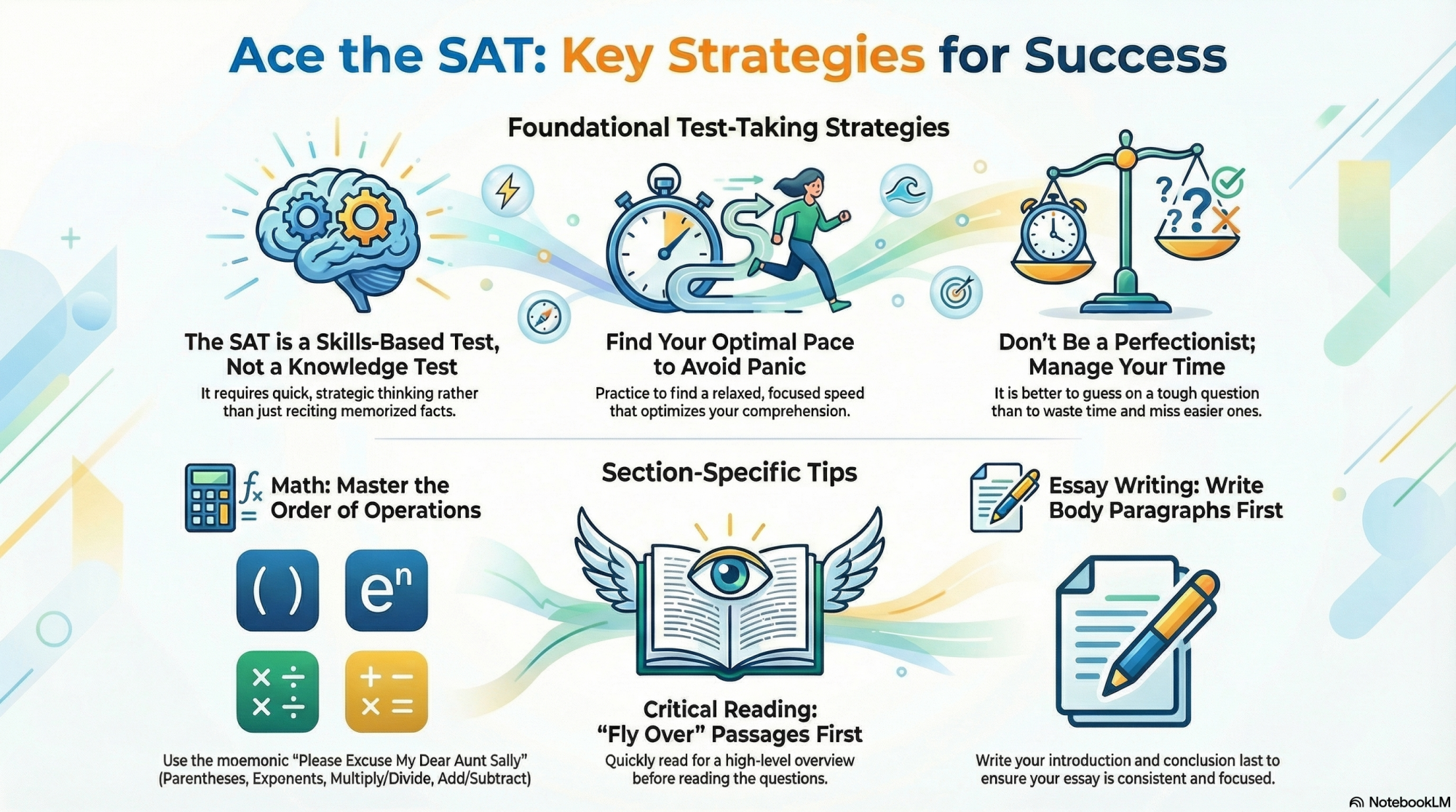
Another day, another update to Google’s NotebookLM, the versatile AI tool that functions like a personal assistant focused only on you and your needs. The latest update is for visual learners: You can turn your source materials into helpful infographics that give you a clear picture—literally—of what the PDFs, websites, videos, or other materials you’re studying or organizing are about.

How to use the new NotebookLM infographics feature

To use the new feature, open any of your NotebookLM Notebooks (the name given to folders full of specific materials you’ve uploaded) and navigate to the panel on the right side. It’s the same panel where you find the other offerings like the video creator and flashcard maker.

As with those tools, you just tap the associated button to generate the corresponding product, making sure the sources from your left panel that you want to include are all checked off. I tried it out this morning, first using the NotebookLM account associated with my personal Chrome profile and what I’m studying in my private life, then using the one I have set up for work, which has a tester notebook full of materials about how to study for the SAT. (I am strict about using different Chrome profiles for various parts of my life and am now up to seven.)

In my personal account, the button was labeled BETA—and it acted like it. After two failed attempts, NotebookLM could not produce an infographic based on my materials. In my work account, though, the beta label was missing and it performed the function just fine, spitting this out:

NotebookLM infographic

Credit: Google

This is rolling out in full functionality to accounts at different times, obviously, but I was glad to see one of mine had easy access because I thought the infographic was solid.

Who the infographics feature is helpful for

I don’t consider myself a visual learner and primarily use NotebookLM to refine ideas or generate educational audio clips I can listen to while I clean the house, so I wasn’t expecting to like this. I don’t like the mind map creator within NotebookLM at all, for instance; flowcharts just aren’t how I learn best, and that’s fine.

But the infographic was concise, engaging, and just detailed enough to keep me interested and looking at it. It’s unlikely I’ll use this to study or refine my work often, but I can absolutely see how it would be useful to someone who learns more visually, especially if all the lines and boxes of a mind map can get too convoluted to be useful.