If you don’t yet have a REAL ID, you can continue to fly, but it’s going to cost you. Beginning Feb. 1, 2026, the Transportation Security Administration (TSA) will start collecting a $45 fee from travelers using non-compliant forms of identification at airport security checkpoints.
The agency previously proposed a fee of $18 to cover the administrative and IT costs of ID verification for those traveling without a REAL ID or passport but increased the total to $45 in an announcement released earlier this month.
REAL ID requirements
The 2005 REAL ID Act mandated the standardization of state-issued driver’s licenses and identification cards. After multiple delays since 2008, the Department of Homeland Security earlier this year finally began requiring anyone age 18 and over to have a REAL ID-compliant license to clear airport security or enter certain federal buildings.
Travelers can also comply with the regulations using a U.S. passport, U.S. passport card, DHS Trusted Traveler card, or state-issued Enhanced Driver’s License (from Michigan, Minnesota, New York, Vermont, of Washington). Enhanced Tribal Cards, permanent resident and border crossing cards, Department of Defense IDs, and foreign passports are also accepted.
You can still travel without a REAL ID
The vast majority of Americans—94 percent—already have a REAL ID or another accepted form of identification. Those who don’t will have to complete an online verification process and pay the $45 fee before they are able to clear airport security. Travelers are being encouraged to do this in advance: If you arrive without approval, you’ll be sent out of line to complete the process (which can take up to 30 minutes) before being allowed through.
The $45 fee covers security checkpoint access for up to 10 days, after which you’ll have to repeat the process and payment. Travelers whose REAL ID or passport has been lost or stolen also have to pay.
The European Union has provisionally agreed to reduce greenhouse gas emissions by 90 percent (based on 1990 levels) by 2040, the EU parliament announced in a press release. That goes beyond the goals of most other major economies, including China, but falls short of the original one recommended by the EU’s climate science advisors. “The target delivers on the need for climate action while safeguarding our competitiveness and security,” said Denmark’s minister Lars Aagaard, who helped negotiate the deal.
The new accord — a vital step in the bloc’s long-term goal of achieving climate neutrality by 2050 — was a political compromise months in the making. On one hand, countries like Poland and Hungary argued that deeper cuts would be too onerous for industries already facing high energy costs. And on the other, members including Spain and Sweden said action was needed to help blunt extreme weather events and allow the EU to catch up with China in green tech manufacturing.
To achieve the target, European industries will need to reduce emissions by 85 percent and sell carbon credits to developing nations to make up the balance. The EU also agreed on an option to use additional international carbon credits (up to five percent) to soften the impact on industry and to delay a carbon tax for fuel by a year to 2028.
Even with the reduced targets Europe is more committed than all other major polluters, having already cut emissions 37 percent from 1990 levels. During the same period, the US has only managed a reduction of about 7 percent, according to Statista. And under the Trump administration, the US has once again pulled out of the Paris climate accord, scrubbed references to climate change from government sites and promoted polluting energy sectors like coal and gas.
The deal must still be ratified by the EU parliament and individual countries to become law. Normally, though, that’s a formality for such pre-agreed deals.
This article originally appeared on Engadget at https://www.engadget.com/general/eu-pledges-90-percent-cut-to-carbon-emissions-by-2040-133919256.html?src=rss
For the first time, Instagram will start letting you control the topics its algorithm recommends, much as you now can on TikTok. The new feature is starting with the Reels tab but will eventually come to Explore and other areas of the app. Like much of what Meta is doing right now (for better or worse), the “Your Algorithm” feature will be powered by AI.
“As your interests evolve over time, we want to give you more meaningful ways to control what you see,” Instagram wrote on its blog post. “Using AI, you can now more easily view and personalize the topics that shape your Reels, making recommendations feel even more tailored to you.”
To see and control the Reels algorithm, tap the icon in the upper right corner (two lines with hearts) to open Your Algorithm. It will show what topics Instagram thinks you’re interested in, then you can specify which ones you want to see more or less of and your recommendations will adapt. You can fine tune topics as well:
See your top interests: View a summary of the topics Instagram thinks you care about most, right at the top.
Tune your preferences: Type in the topics you want to see more or less of, and your Reels will reflect your choices.
Share your algorithm: If you’d like, you can share your interests to your Story, so friends and followers can see what you’re into.
Another AI “feature” that surfaced yesterday on the platform didn’t go over well with some users. It was discovered that Instagram was generating sensational and often inaccurate headlines that were likely created by an LLM. And you can expect AI to infiltrate its apps even more down the road, judging by the company’s recent acquisitions and priority shifts. In any case, the new Your Algorithm feature for the Reels tab is debuting today in the US only and expanding to other territories in the future.
This article originally appeared on Engadget at https://www.engadget.com/social-media/instagram-will-let-you-control-which-topics-its-algorithm-recommends-133002612.html?src=rss
There’s a fine line between being micromanaged and overly surveilled and being monitored enough that you get good work done. That line is actually called the Hawthorne Effect, and it’s a phenomenon in which people are more productive when they feel they’re being observed. If you’ve ever noticed you push yourself a little more when you’re working out in a full gym or group fitness class than when you’re working out alone, you already get the concept, but it can be applied to all kinds of scenarios to make you more productive—even if you’re not actually being observed.
What is the Hawthorne Effect?
This phenomenon is said to have been discovered during some research conducted at the Hawthorne Western Electric Plant, though there’s some debate on whether that’s true. What isn’t up for debate is the behavior trend itself: When someone is participating in an experiment, they may tend to work a little harder than normal, knowing they’re being watched. Even outside of experiments, an awareness of being observed or monitored can spur a little productivity boost.
Researchers and social scientists have spent decades trying to figure out if the Hawthorne Effect, as described in early research, is real or not, but it’s still a concept that has been noted and studied for a long time—and to which you may relate. Consider your childhood: You probably cleaned your room a little more diligently when your mom was standing in the doorway glaring at you than if she just told you to go do it. Not everyone performs better under the watchful eye of someone else, but if you’ve found that you do better work when you have regular check-ins with a boss, stay more focused when you know your time is being monitored, become the master of your maps app when you and your friends are lost, or spring into action when colleagues are looking for a leader, you could benefit from tapping into the Hawthorne Effect.
Putting the Hawthorne Effect to use
You can’t really make yourself be observed, right? You can’t ask your boss to monitor you all the time, for instance, but there are a few ways you can create the feeling of being watched or checked in on and harness it to be more productive. If you want to try to incorporate some of the Hawthorne Effect into your own life, try these ideas:
Request regular check-ins with your manager, even if they’re just weekly, 10-minute chats. Adding structured, scheduled conversations to your week will enhance the feeling that they’ll be expecting to hear about your recent work and results.
Find an accountability partner. This could be a coworker, classmate, roommate, or anyone who is working on something similar to what you’re doing. Check in with them regularly, again on a set schedule, and always be prepared to update them on your progress.
Use apps that can give you a feeling of being tracked, at least when it comes to your goals. Here’s a list of apps that can serve the purpose, whether you’re looking for a virtual accountability buddy or even one that acts as a demanding “boss,” sending you messages demanding proof of your progress. I use Finch, an app that forces me to check off to-do list items so I can buy little outfits for a pixelated bird avatar. Even the feeling that the app is monitoring me—which it is, by awarding me streaks and points when I complete tasks—motivates me. Whatever works!
Work somewhere with other people around you, like a coffee shop or communal workspace, if you aren’t in the office. This actually works great for me, as I find it embarrassing to zone out or scroll social media if I’m working from a coffee shop. Logically, I realize no one there actually cares what I’m doing, but illogically, I still want to appear productive in front of strangers.
Take group fitness classes. I teach spin classes and take my colleagues’ various class formats multiple times per week in addition to working out on my own, and I know from experience that it is truly motivating to be surrounded by other people.
The AerynOS team released AerynOS 2025.12 today as the latest development ISO snapshot of this independent distribution created by ex-Solus maker Ikey Doherty.
An anonymous reader quotes a report from Reuters: U.S. Secretary of State Marco Rubio on Tuesday ordered diplomats to return to using Times New Roman font in official communications, calling his predecessor Antony Blinken’s decision to adopt Calibri a “wasteful” diversity move, according to an internal department cable seen by Reuters. The department under Blinken in early January 2023 had switched to Calibri, a modern sans-serif font, saying this was a more accessible font for people with disabilities because it did not have the decorative angular features and was the default in Microsoft products.
A cable dated December 9 sent to all U.S. diplomatic posts said that typography shapes the professionalism of an official document and Calibri is informal compared to serif typefaces.
“To restore decorum and professionalism to the Department’s written work products and abolish yet another wasteful DEIA program, the Department is returning to Times New Roman as its standard typeface,” the cable said. “This formatting standard aligns with the President’s One Voice for America’s Foreign Relations directive, underscoring the Department’s responsibility to present a unified, professional voice in all communications,” it added.
There’s plenty of chatter and research surrounding the so-called “laws” of productivity, but even the laws we use to govern other areas of our lives can be applicable when there are things that need to get done. Newton’s Laws of Motion can be adapted to productivity, especially the first one.
What’s Newton’s first law all about?
Newton’s first law of motion is this: “An object at rest remains at rest, and an object in motion remains in motion at constant speed and in a straight line unless acted on by an unbalanced force.”
Obviously, he was talking about physics here, but in productivity spaces around the web, people who spend their time thinking about more efficient ways to get things done have started applying his wisdom to people. It makes sense: When you’re on a roll, say, cleaning your house, you kind of get into the zone and keep going. When you’re sitting on the couch dreading and putting off starting to work, it’s really easy to stay there and do nothing.
The thinking reminds me of the productivity approach I fall back on most often, which I call the “one more” trick. Using it, you don’t schedule out how long you’ll work on a given task so much as you commit to getting started, then continually ask yourself, “Could I do one more?” with the “one” being any individual part of the overall task. The more you get done, the more motivated you are, and the more likely the answer to that question will be “yes.” After years of failed attempts to follow other approaches, this is what I use when I’m cleaning, but it works for a variety of things, from doing reps at the gym to responding to emails.
How can Newton’s law be applied to productivity?
Research has looked into how adapting a mindset of getting into and staying in motion can help you be more productive. One review of its use by healthcare workers in a nuclear medicine department found it “novel,” but also able to “have a positive impact on productivity,” for instance.
The trick isn’t staying in motion, but getting into it, so here’s where you should start. Try adhering to the two-minute rule, or the practice of immediately doing something if it will take two minutes or less. I use this in conjunction with the “one more” trick constantly, trying to do something the moment I think of it, or as soon as motivation or inspiration strikes. If an email comes in, respond to it right away. If you need to take the trash out, do it the minute you notice. If you have to cancel an appointment, call that second. Getting in the habit of doing smaller tasks immediately can help you build momentum. When I do pre-plan what I have to work on, I capitalize on the two-minute rule by frontloading my to-do list with simple tasks instead of opting for the “eat the frog” approach, which calls on you to do your biggest, most demanding duties first.
One day when I was first starting to use this trick, for instance, I had to confirm a ticket order, fill out a W9, order my graduation attire, clean out my entire clothing rack, and do a 12-page paper. By doing the three smaller things first, I built up some positivity and momentum, which helped push me to do the more daunting stuff later in the day. It’s rewarding to see checkmarks fill up your to-do list, so knock out whatever you can in the moment to get that rush and make you want to secure the checkmarks on the bigger items. (I quite literally jot my to-dos down in my notes app and check them off as I get them done, just for the boost.) If you’re using a 1-3-5 to-do list (and you should be!) try flipping your day so you tackle the five small tasks before the three medium-sized ones and large one so you can harness the power of Newton’s law yourself.
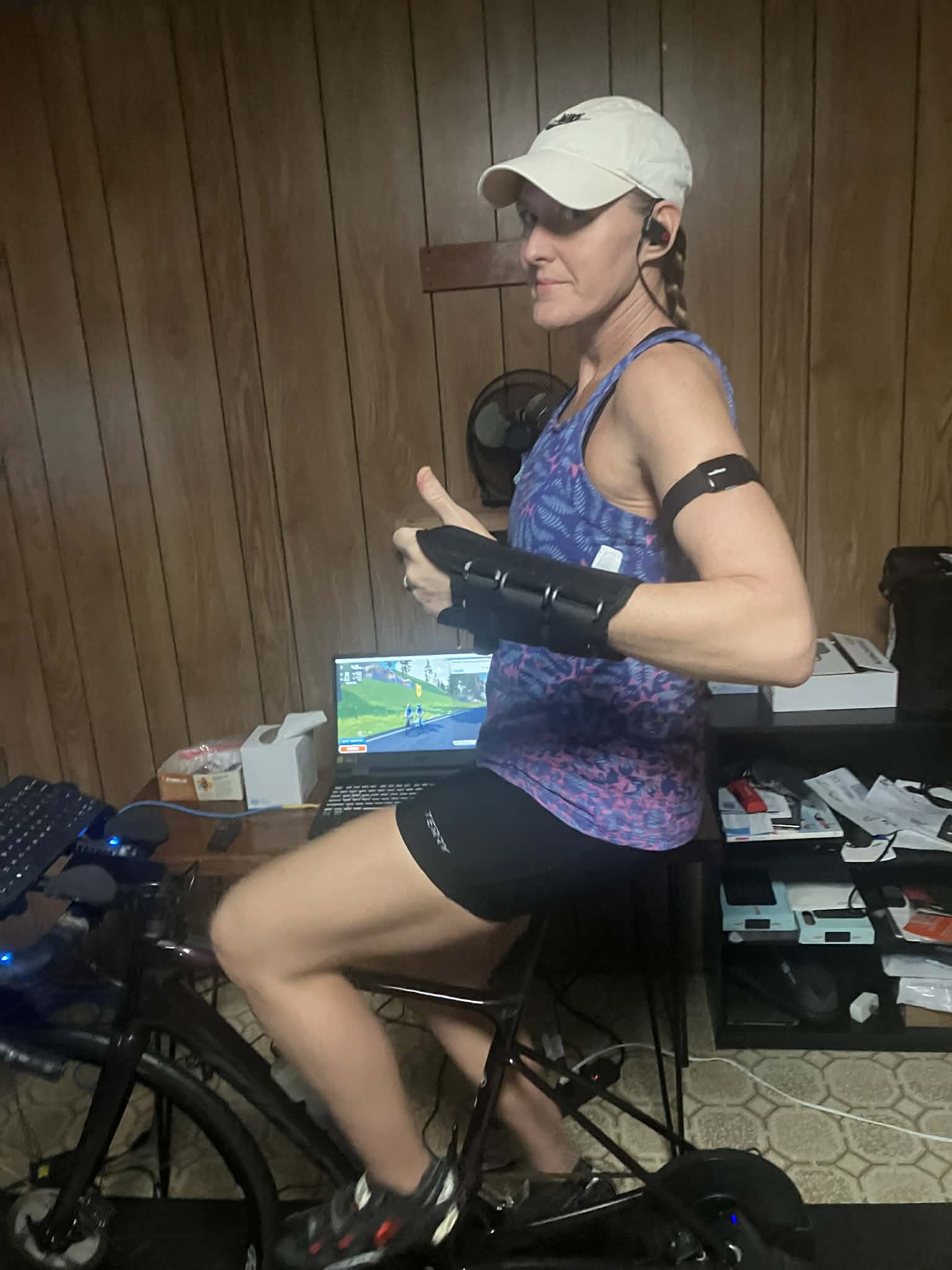
One moment I was out on the road doing something I loved; the next, I was dealing with injuries, restrictions, fear, and the uncertainty that comes with recovering from a cycling accident. Like many riders, I had relied on outdoor miles for stress relief, fitness, and a sense of identity. Losing that – even temporarily – felt overwhelming.
What surprised me most, though, was the role Zwift would play in helping me rebuild my strength, confidence, and routine.
Returning to the Bike — Carefully
Riding in ERG mode to manage intensity
In the early weeks after the accident, I wasn’t sure when I’d be allowed to ride again. Once my physician and physical therapist gave the green light to begin low-intensity training, I knew the safest place to start wasn’t on the roads – it was inside, with Zwift.
For my rehab team, the controlled environment was a major advantage. No balance hazards. No traffic. No sudden braking. No risk of hitting a pothole (unless you count the ones on Cobbled Climbs). It gave me a platform where the only variable was my own power output.
Zwift allowed me to:
Keep a strictly aerobic, low-wattage range when required
Incrementally build time in the saddle
Track changes in power and endurance with precision
Manage intensity using ERG mode and structured workouts
Ride consistently without worrying about weather or terrain
That stability gave me the reassurance I needed to focus on healing instead of what-ifs.
From Short Spins to Stronger Efforts
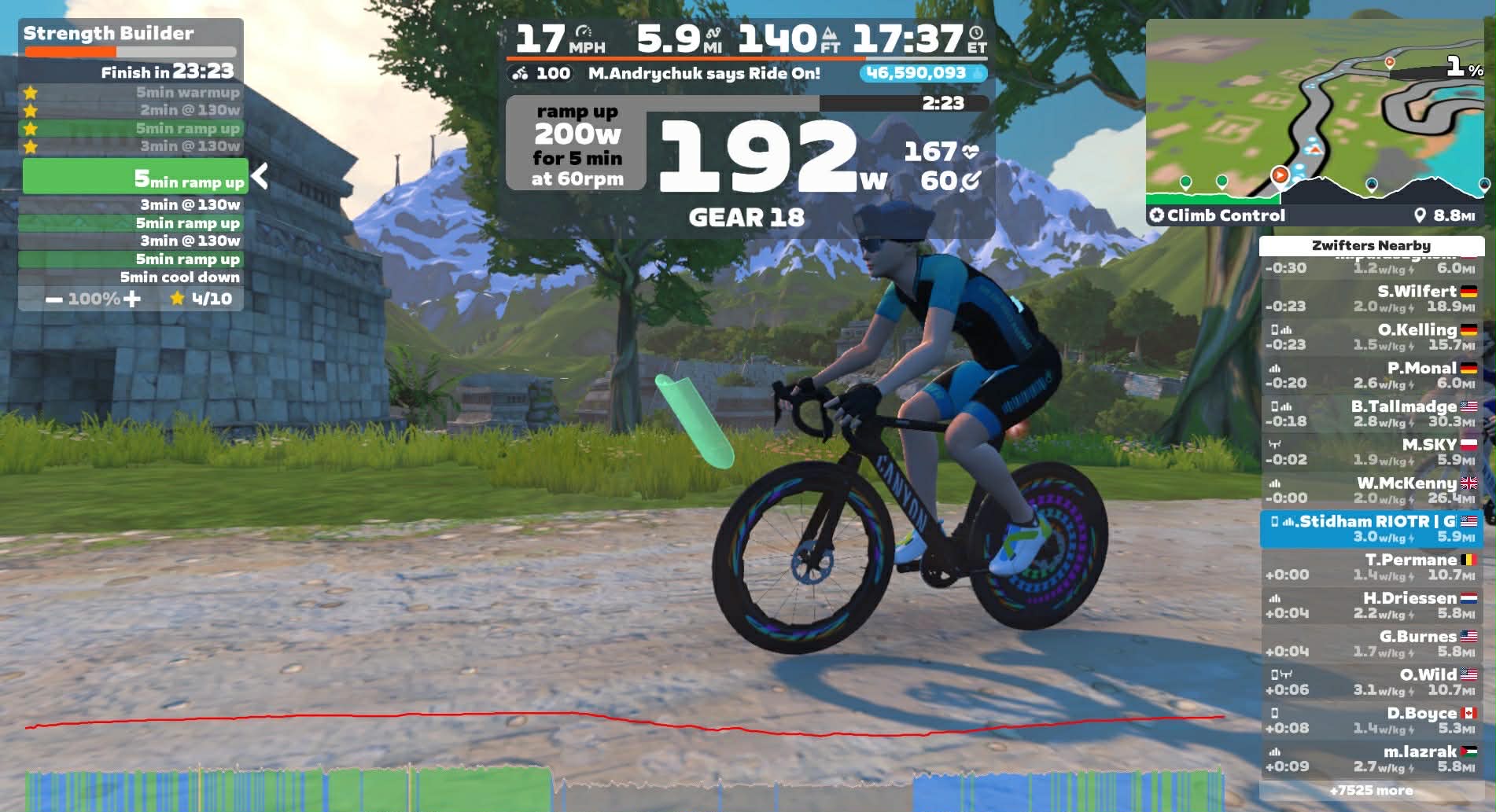
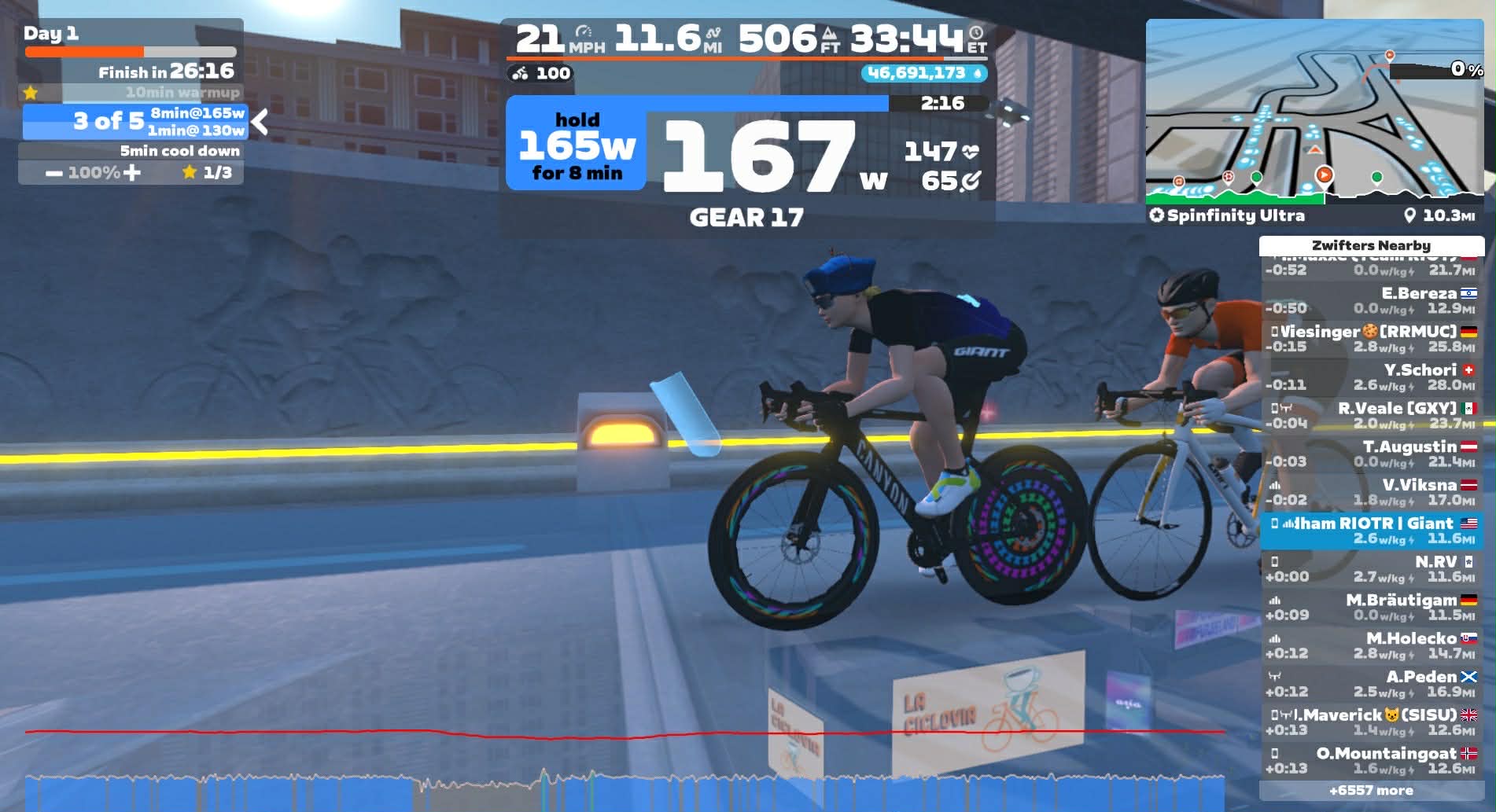
At first, my rides were short – 20 to 30 minutes – focused entirely on light spinning (well, I’m still a masher) and loosening up. Riding every day was actually encouraged because the intensity was so low. Zwift became part of my daily rehab routine: part workout, part meditation, part rebuilding.
As I progressed, my physio gradually expanded the plan:
Longer rides: first 45 minutes, eventually pushing toward an hour
Higher-intensity short rides: allowing me to test cadence, control, and targeted power
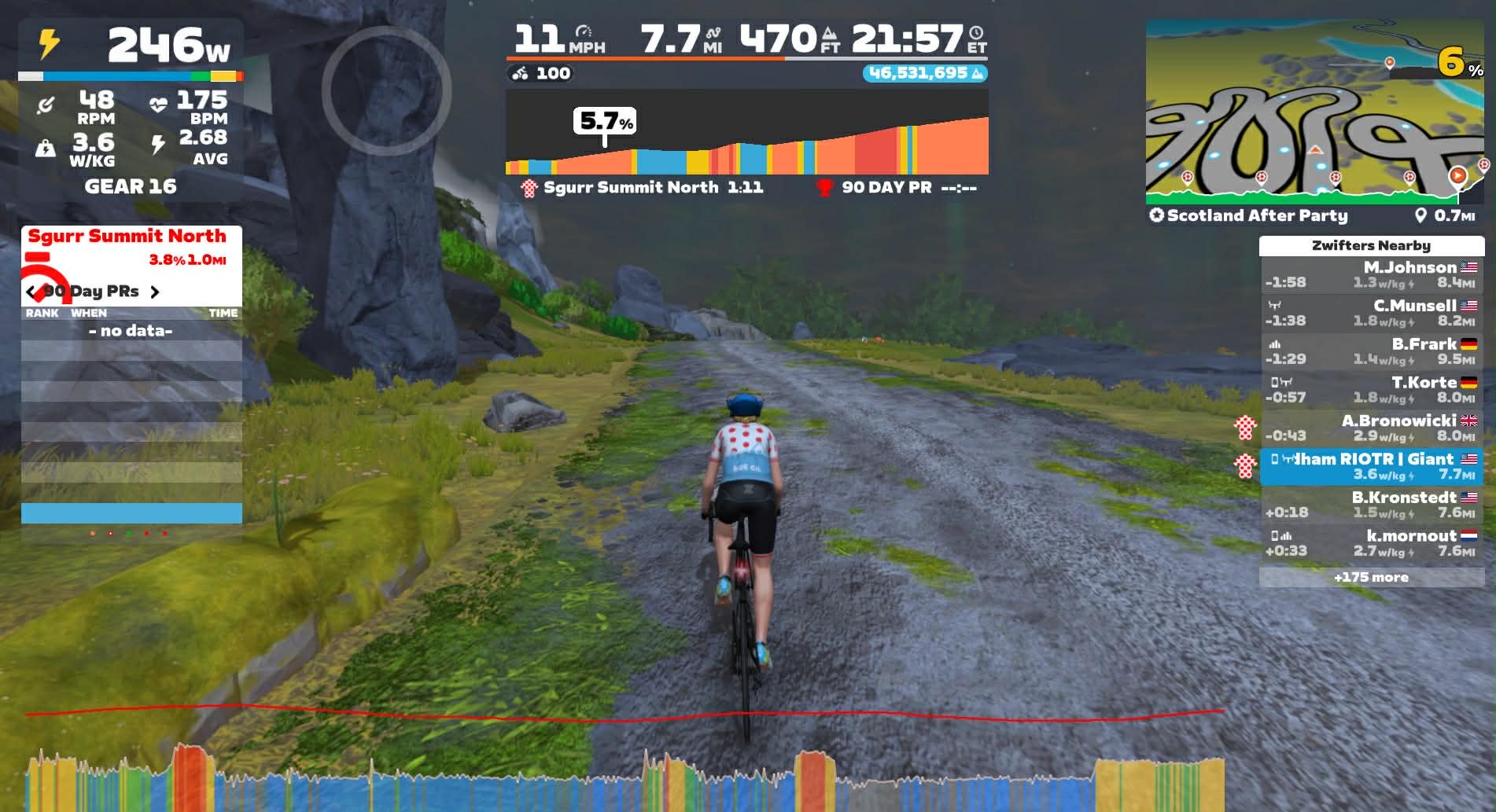
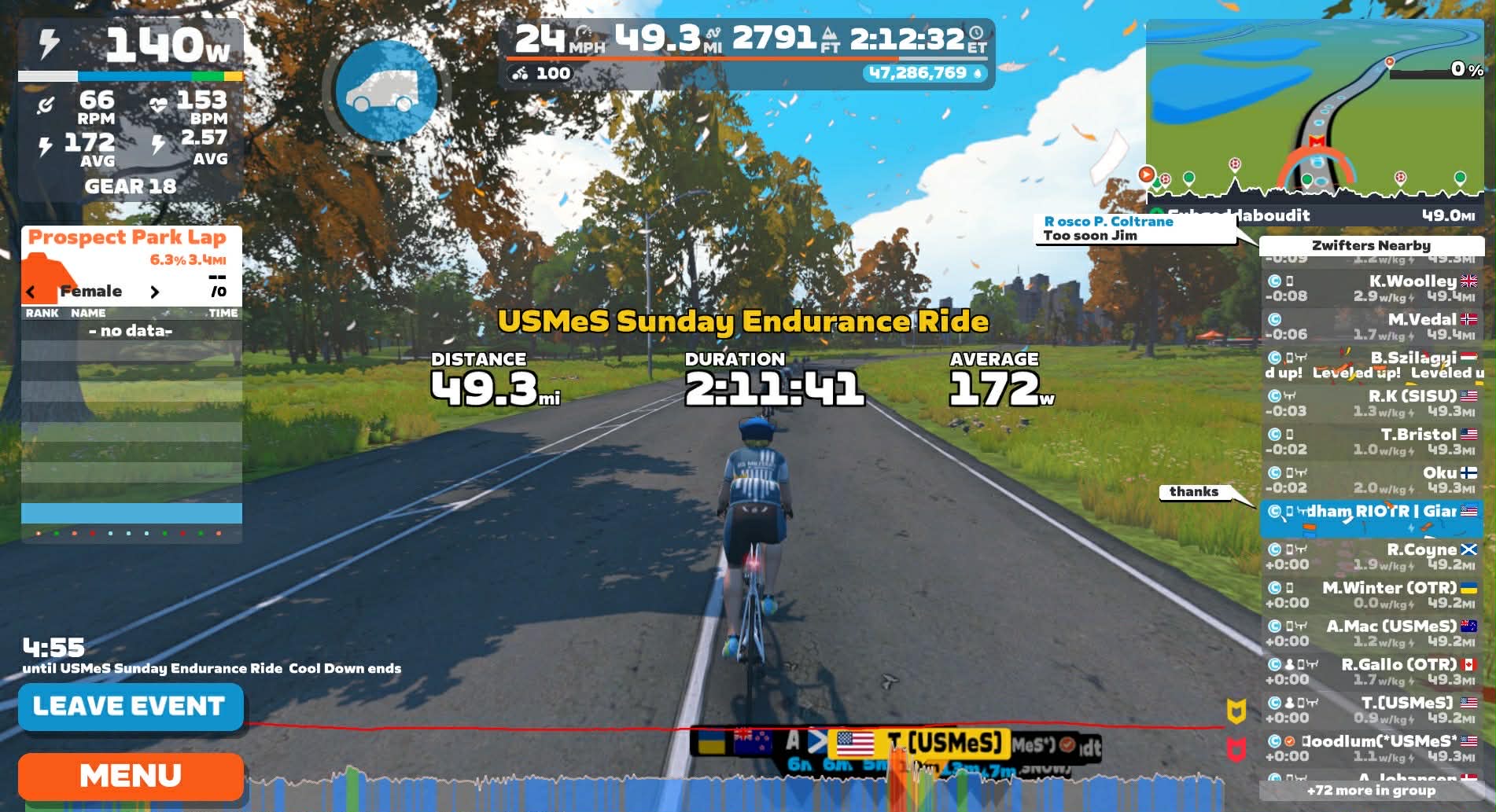
Reintroducing efforts: like a 30-minute ride averaging 2.7 w/kg, which felt like a breakthrough. I chose Scotland After Party for this as it allowed me to do efforts.
Seeing those numbers come back on the screen helped me trust my body again. Zwift’s data gave me objective proof that I wasn’t as limited as I feared.
No Restrictions — and What That Meant Mentally
At my follow-up appointment, my ortho told me something I had been hoping for: no restrictions. The words sat with me. They felt liberating, exciting, and – if I’m honest – a little intimidating. I was a little nervous about trusting my body after multiple injuries, but I was also ready to put in the work and regain my fitness.
Zwift made the transition manageable. Instead of jumping into long outdoor rides, which were off limits, I used the platform to:
Test my endurance safely
Slowly increase total weekly volume by 10-15%
Rebuild my muscular resilience
Reintroduce climbs, sprints, and threshold intervals
Regain confidence before facing real-world variables
Zwift gave me a structured, safe progression that matched exactly where my recovery was.
The Emotional Side of Virtual Riding During Rehab
The physical side of recovery is one thing. But the emotional storm after a crash is its own challenge. Fear. Frustration. Loss of routine. Losing fitness. Even questioning whether you’ll ever feel like “you” on the bike again.
Zwift helped bridge that gap, and with each ride, I felt more confident in my abilities.
There’s something uniquely healing about moving your legs in a familiar cadence, even if the scenery is virtual. The digital rides, the community chat, the route badges, the gamified accomplishments – they gave me small wins every day. And small wins are exactly what you need when the big picture feels uncertain.
Looking Ahead — Stronger Than Before
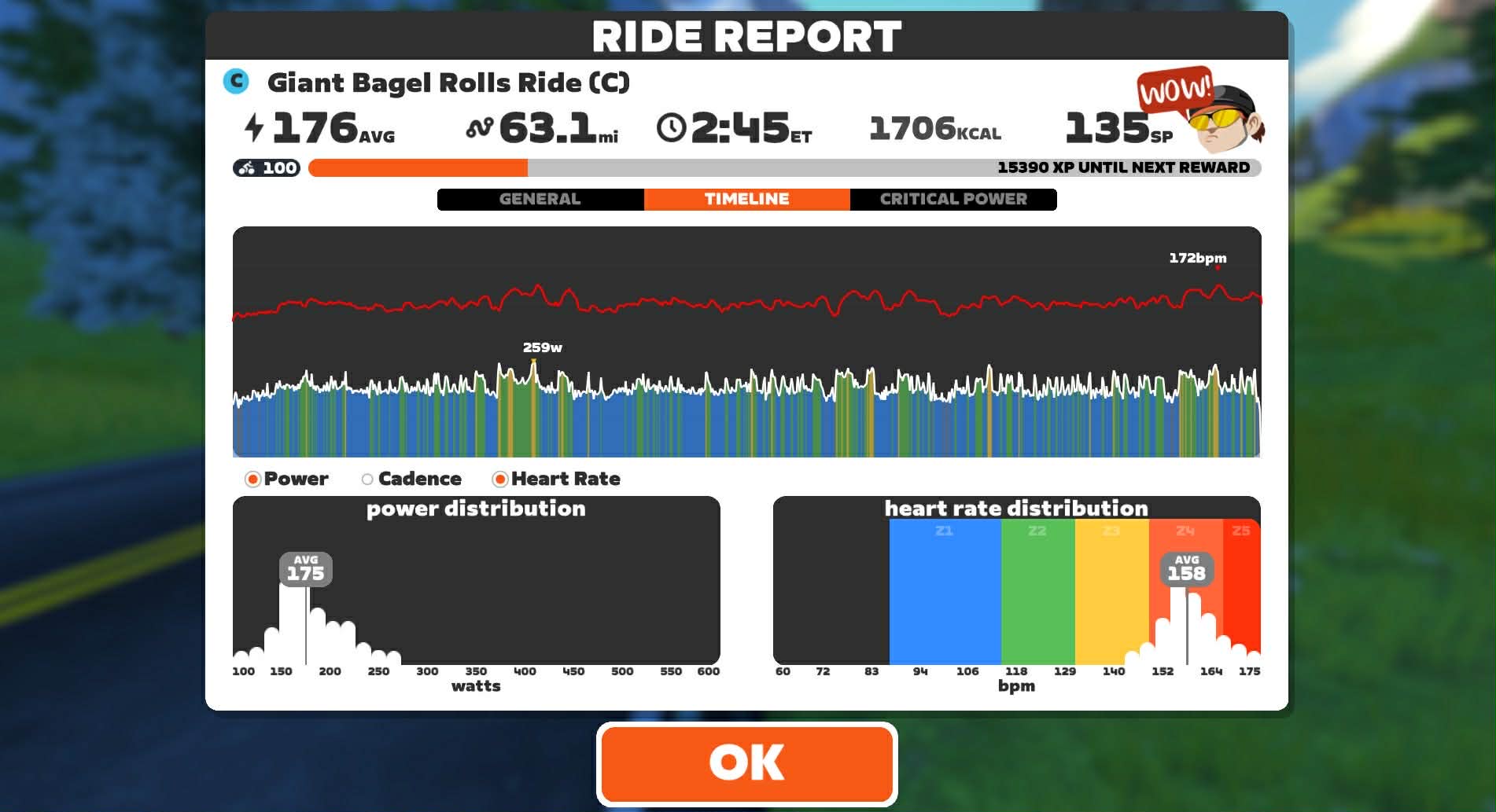
Before the accident, my FTP was 254. Watching myself gradually push pace and duration on Zwift has helped me feel not only like I’m returning to that level, but that I might come back even stronger. I’m back to leading my rides with Team Giant, and I led my first post-accident 100k!
I’ve learned that rehabilitation isn’t just about regaining fitness; it’s about rebuilding confidence and reconnecting with the joy of movement. Zwift gave me a way to stay consistent, stay safe, and stay motivated when I needed it most.
If there’s one thing I’d share with any athlete rehabbing after injury, it’s this: Zwift meets you exactly where you are—and helps you get where you want to go.
What About You?
Got a rehab story where Zwift played a role? Got questions? Share below!
Back in October, OpenAI announced apps like Spotify and Canva would be accessible in ChatGPT. At the time, the company said more software was on the way, and now one of the most popular professional applications is available through the chatbot.
Starting today, you can access Photoshop, Acrobat and Adobe Express inside of ChatGPT. All the apps are free to use through OpenAI’s website, though before you can begin generating PDFs and illustrations using Acrobat and Adobe Express, you’ll need to sign into your Adobe account. To use any of the apps in ChatGPT, either name them in your prompt or select them from the plus menu.
Of the three apps, the way OpenAI’s chatbot connects to Photoshop is probably the most interesting. Depending on the prompt, the interface will change to display the sliders most relevant to your request. For example, if you want to brighten an image, you’ll see one slider allowing you to adjust the exposure, alongside other ones for the shadows and highlights. By comparison, if you want to add an effect to an image, ChatGPT might display options related to dithering and tri-tone, among others.
What’s interesting about all this is the way ChatGPT is interacting with Adobe’s tools, through an MCP server, to offer a slice of the company’s apps. I don’t know about you, but I’ve always found Adobe software to be far too complicated, with often one too many ways to accomplish the same task. Granted, what I saw was a hands-off demo, but the routing Adobe created worked well.
A ChatGPT user asks the chatbot to create a dance party invitation.
Adobe
“We build the Lego blocks, which are the MCP tools, and we create detailed instructions, and then ChatGPT figures out what it wants to do,” Aubrey Cattell, vice-president of developer platform and partner ecosystem at Adobe, explains. “Sometimes it does what we want it, and sometimes it doesn’t. That’s the nature of it being non-deterministic, and we’re continuing to hone as much as we can from users’ intent and natural language to give them the result that they’re looking for.”
Of course, if you ever want more control, the web versions of Photoshop, Acrobat and Adobe Express are a click away.
For OpenAI, this is easily the biggest coup to date of its push to reshape ChatGPT into an operating system for all the apps its more than 800 million users depend on daily. For Adobe, it feels like the company is partnering with an entity out to eat its lunch. After all, OpenAI offers its own image generation. However, Cattell said Adobe doesn’t see it that way.
“A couple weeks back, OpenAI dropped Apps SDK as a new paradigm for accessing ChatGPT, we saw there was a natural fit in the work we were doing with our applications,” he said. “Essentially, they gave us an operating system we were able to leverage to bring our applications to their surface. There’s a lot of natural affinity there between the workflows OpenAI is trying to enable and Adobe’s best in class capabilities.”
Cattell promised Adobe would continue to explore what it could offer inside of ChatGPT, but added the company’s apps will continue to be the place users can go if they want more power, precision and control.
This article originally appeared on Engadget at https://www.engadget.com/ai/adobe-brings-photoshop-acrobat-and-adobe-express-to-chatgpt-130000389.html?src=rss
For many of us at Engadget, a big part of our jobs is testing out new tech on a regular basis. Our desks are cluttered with new smartphones, power banks, gaming accessories and more pretty much all the time, and there are plenty of winners and losers amongst them. Similarly, there are winners and losers in the things we buy for ourselves throughout the year, and we like to sing their praises just as much as we do for the best new tech that (professionally) comes across our desks. These are the best things Engadget staffers purchased in 2025 that will continue to get lots of use in the new year.
This article originally appeared on Engadget at https://www.engadget.com/the-best-things-engadget-editors-bought-in-2025-130000576.html?src=rss
Training camps are typically a time when pro cycling teams gather themselves and prepare for the season ahead, but Red Bull-Bora-hansgrohe have got theirs off to a flying start.
Nine of the WorldTour team, led by Tour de France podium finisher Florian Lipowitz, towed a piloted glider plane into flight in Son Bonet, Mallorca.
The team used a 1,500m runway to accelerate to 54kph while connected to a cord and a specially designed harness.
“When I first heard about this project, I didn’t think it was possible. Launching a plane? It seemed impossible. Nothing like this has ever been done in road cycling”, Lipowitz said.
The riders are said to have averaged 650W for 90 seconds to get the glider, piloted by Andy Hediger, into the air.
“Being towed by manpower was a special feeling. I’m so happy to finally combine aviation with cycling, and to see Red Bull bringing our new ideas to life,” Hediger said.
Dan Bigham, Red Bull-Bora-hansgrohe’s head of engineering, went as far as to say the project was “game-changing for the sport” because it enabled him to use his expertise in aerodynamics and engineering.
“From the data and our models, we knew it would take ~500watts from each rider to launch the plane, but we did not want to stop there. Every watt more meant more altitude for the plane. To see Andy reach 100 meters was pretty special,” Bigham said.
A Virginia startup calling itself “Operation Bluebird” announced this week that it has filed a formal petition with the US Patent and Trademark Office, asking the federal agency to cancel X Corporation’s trademarks of the words “Twitter” and “tweet” since X has allegedly abandoned them.
“The TWITTER and TWEET brands have been eradicated from X Corp.’s products, services, and marketing, effectively abandoning the storied brand, with no intention to resume use of the mark,” the petition states. “The TWITTER bird was grounded.”
If successful, two leaders of the group tell Ars, Operation Bluebird would launch a social network under the name Twitter.new, possibly as early as late next year. (Twitter.new has created a working prototype and is already inviting users to reserve handles.)
It’s once again that special time of year when we give you a chance to do well by doing good. That’s right—it’s the 2025 edition of our annual Charity Drive!
Every year since 2007, we’ve encouraged readers to give to Penny Arcade’s Child’s Play charity, which provides toys and games to kids being treated in hospitals around the world. In recent years, we’ve added the Electronic Frontier Foundation to our charity push, aiding in their efforts to defend Internet freedom. This year, as always, we’re providing some extra incentive for those donations by offering donors a chance to win pieces of our big pile of vendor-provided swag. We can’t keep it, and we don’t want it clogging up our offices, so it’s now yours to win.
This year’s swag pile is full of high-value geek goodies. We have over a dozen prizes valued at nearly $5,000 total, including gaming hardware and collectibles, apparel, and more. In 2023, Ars readers raised nearly $40,000 for charity, contributing to a total haul of more than $542,000 since 2007. We want to raise even more this year, and we can do it if readers dig deep.
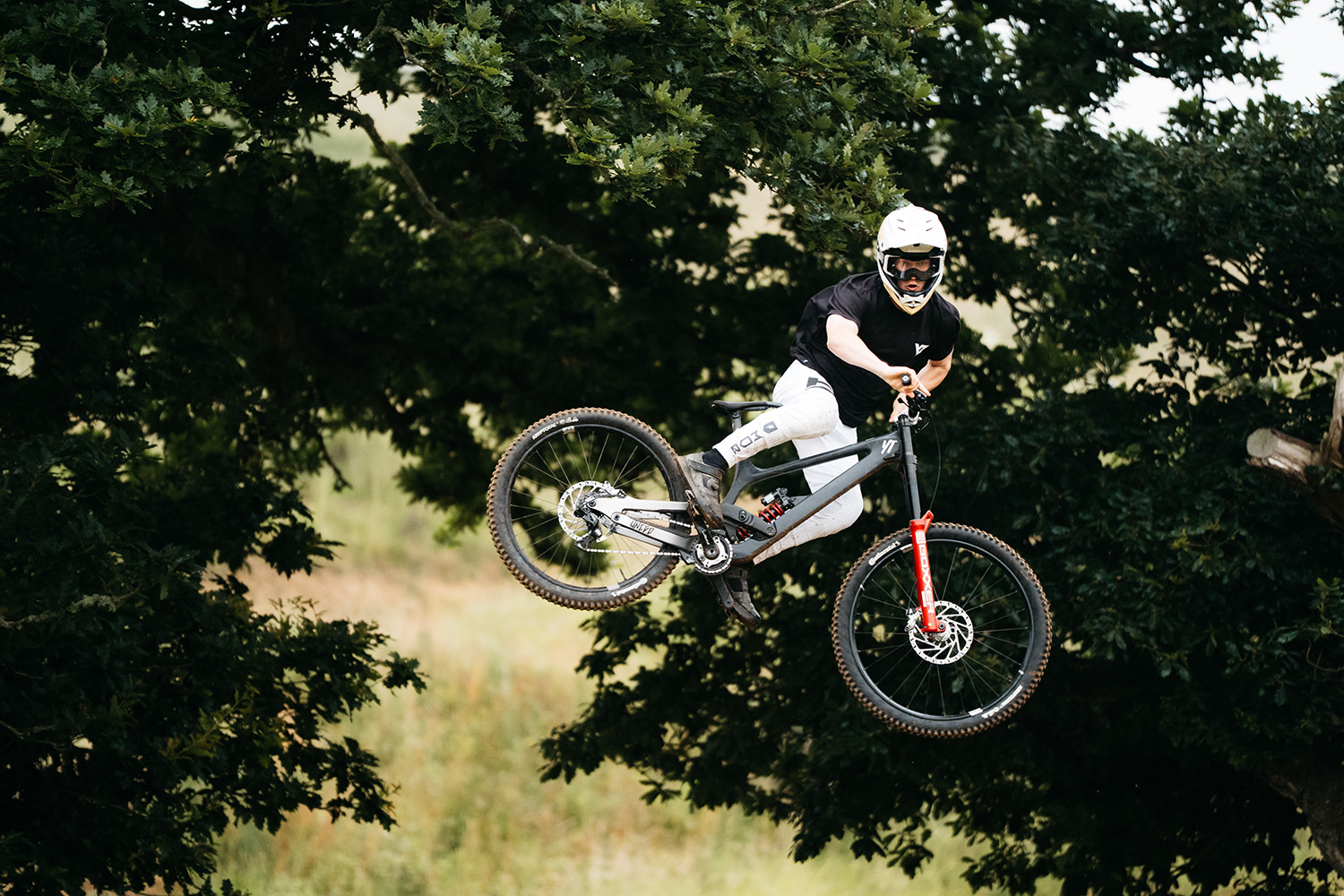
YT Industries has unveiled the new Tues Limited, its first bike to be released since relaunching.
The new bike renews YT’s tradition of launching a special limited-edition downhill bike at the end of each year, with the most recent version being in 2013.
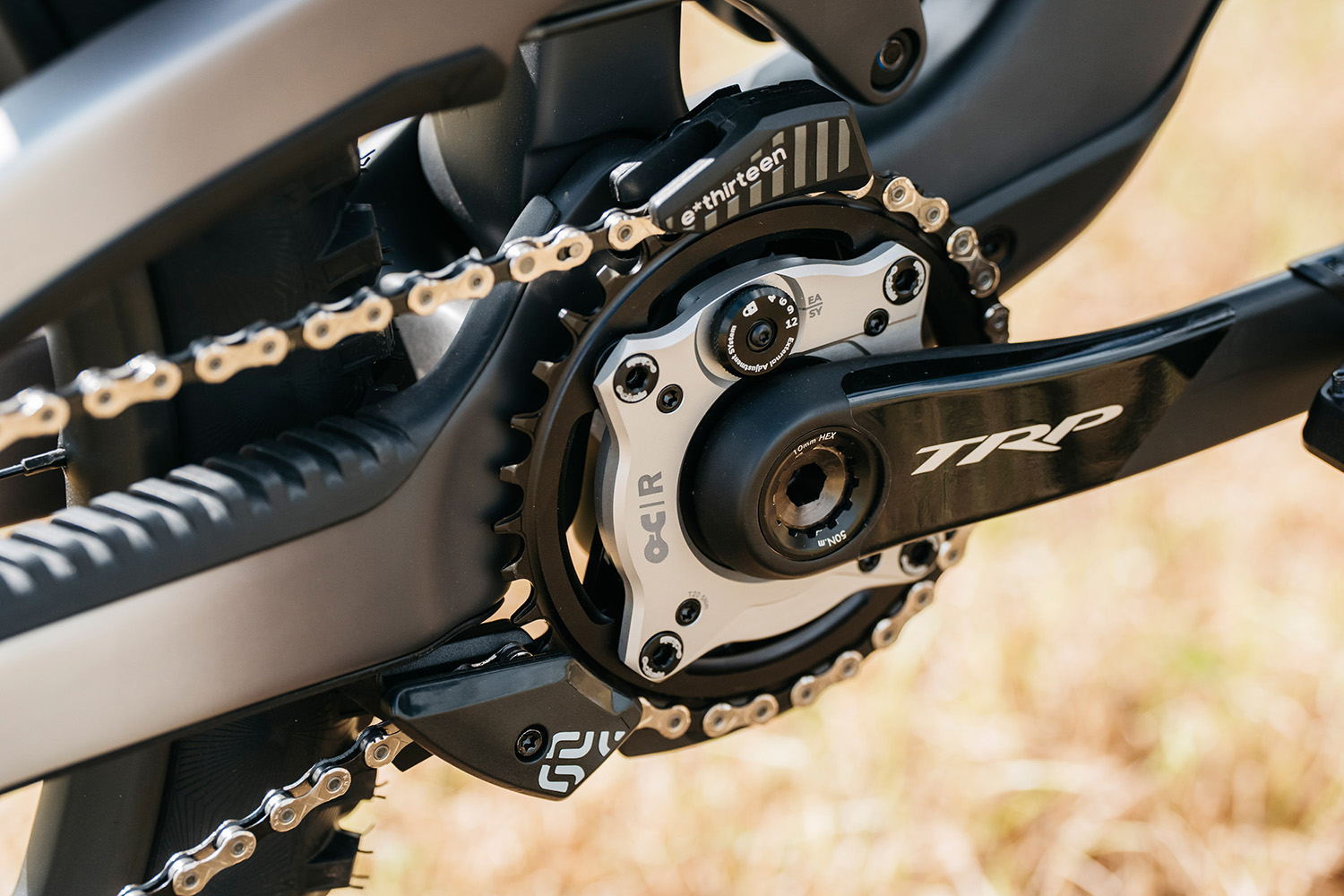
Similar to those old bikes, the new Tues Limited features a drool-worthy spec, including RockShox Boxxer and Vivid Ultimate suspension, TRP DH-R Evo Pro brakes and a Crankbrothers DH carbon wheelset with Industry Nine hubs.
The Tues platform enables you to fine-tune geometry and wheel size to match your riding style.
The Tues is a familiar sight at DH races. YT Industries
Like the Core models, the Tues Limited ships with either mullet or 29in wheels, depending on the frame size, although the flip chip system makes running either possible on all sizes.
YT has limited the model to 50 units worldwide, with the price set at €4,444.
The spec even includes an Ochain device. YT Industries
It looks as though YT is back in the business of delivering impressively specced bikes at equally impressive prices, albeit we suspect you’ll have to act quickly if you want to pick one up.
The Tues Limited is a mean-looking bike. YT Industries
Trixie may have gone 64-bit for installs, but WMLive still ships an i686-bootable buildWindow Maker Live 13.2 is stubbornly keeping 32-bit PCs alive on Debian 13 “Trixie,” shipping a new release that boots on i686 hardware.…
Turbostat is the Linux command-line utility for reporting CPU frequency / power / C-states and related performance / power management items namely for modern AMD and Intel processors. This CLI utility lives within the Linux kernel source tree and for Linux 6.19 has picked up a few new features…
This week’s App of the Week takes a fresh look at VLC 3.0.22, from dark mode on Plasma and Cosmic to niche perks like proper playback of classic Doom and Hexen music files.
In addition to approving Fedora Cloud switching /boot to a Btrfs subvolume, another change approved this week by the Fedora Engineering and Steering Committee (FESCo) is for shipping the Budgie 10.10 desktop packages in Fedora 44…
The past several months Intel software engineers have been quite busy with LLM-Scaler as part of Project Battlematrix. LLM-Scaler is a Docker-based solution for AI workloads on Intel graphics hardware to ship an optimized vLLM stack and other AI frameworks. Out today is a new LLM-Scaler-Omni release to help enhance ComfyUI performance on Intel hardware…