
See zwiftinsider.com/tiny for current Tiny Race details.
Category Archives: Unfiltered RSS
Spotube: A Spotify, YouTube, JioSaavn Client App for Linux
Discover a modern Spotify client app that is free, open-source, and available for all major platforms, including Linux.
OpenAI releases GPT-5.2 to take on Google and Anthropic
OpenAI’s “code red” response to Google’s Gemini 3 Pro has arrived. On the same day the company announced a Sora licensing pact with Disney, it took the wraps off GPT-5.2. OpenAI is touting the new model as its best yet for real-world, professional use. “It’s better at creating spreadsheets, building presentations, writing code, perceiving images, understanding long contexts, using tools, and handling complex, multi-step projects,” said OpenAI.
In a series of 10 benchmarks highlighted by OpenAI, GPT-5.2 Thinking, the most advanced version of the model, outperformed its GPT-5.1 counterpart, sometimes by a significant margin. For example, in AIME 2025, a test that involves 30 challenging mathematics problems, the model earned a perfect 100 percent score, beating out GPT-5.1’s already state-of-the-art score of 94 perfect. It also achieved that feat without turning to tools like web search. Meanwhile, in ARC-AGI-1, a benchmark that tests an AI system’s ability to reason abstractly like a human being would, the new system beat GPT-5.1’s score by more than 10 percentage points.
OpenAI says GPT-5.2 Thinking is better at answering questions factually, with the company finding it produces errors 30 percent less frequently. “For professionals, this means fewer mistakes when using the model for research, writing, analysis, and decision support — making the model more dependable for everyday knowledge work,” the company said.
The new model should be better in conversation too. Of the version of the system most users are likely to encounter, OpenAI says “GPT‑5.2 Instant is a fast, capable workhorse for everyday work and learning, with clear improvements in info-seeking questions, how-tos and walk-throughs, technical writing, and translation, building on the warmer conversational tone introduced in GPT‑5.1 Instant.“
While it’s probably overstating things to suggest this is a make or break release for OpenAI, it is fair to say the company does have a lot riding on GPT 5.2. Its big release of 2025, GPT-5, didn’t meet expectations. Users complained of a system that generated surprisingly dumb answers and had a boring personality. The disappointment with GPT-5 was such that people began demanding OpenAI bring back GPT-4o.
Then came Gemini 3 Pro — which jumped to the top of LMArena, a website where humans rate outputs from AI systems to vote on the best one. Following Google’s announcement, Sam Altman reportedly called for a “code red” effort to improve ChatGPT. Before today, the company’s previous model, GPT-5.1, was ranked sixth on LMArena, with systems from Anthropic and Elon Musk’s xAI occupying the spots between OpenAI between Google.
For a company that recently signed more than $1.4 trillion worth of infrastructure deals in a bid to outscale the competition, that was not a good position for OpenAI to be in. In his memo to staff, Altman said GPT-5.2 would be the equal of Gemini 3 Pro. With the new system rolling out now, we’ll see whether that’s true, and what it might mean for the company if it can’t at least match Google’s best.
OpenAI is offering three different versions of GPT-5.2: Instant, Thinking and Pro. All three models will be first available to users on the company’s paid plans. Notably, the company plans to keep GPT-5.1 around, at least for a little while. Paid users can continue to use the older model for the next three months by selecting it from the legacy models section.
This article originally appeared on Engadget at https://www.engadget.com/ai/openai-releases-gpt-52-to-take-on-google-and-anthropic-185029007.html?src=rss
GPT-5.2 Arrives as OpenAI Scrambles To Respond To Gemini 3’s Gains
OpenAI on Thursday released GPT-5.2, its latest and what the company calls its “best model yet for everyday professional use,” just days after CEO Sam Altman declared a “code red” internally to marshal resources toward improving ChatGPT amid intensifying competition from Google’s well-received Gemini 3 model. The GPT-5.2 series ships in three tiers: Instant, designed for faster responses and information retrieval; Thinking, optimized for coding, math, and planning; and Pro, the most powerful tier targeting difficult questions requiring high accuracy.
OpenAI says the Thinking model hallucinated 38% less than GPT-5.1 on benchmarks measuring factual accuracy. Fidji Simo, OpenAI’s CEO of applications, denied that the launch was moved up in response to the code red, saying the company has been working on GPT-5.2 for “many, many months.” She described the internal directive as a way to “really signal to the company that we want to marshal resources in this one particular area.”
The competitive pressure is real. Google’s Gemini app now has more than 650 million monthly active users, compared to OpenAI’s 800 million weekly active users. In October, OpenAI’s head of ChatGPT Nick Turley sent an internal memo declaring the company was facing “the greatest competitive pressure we’ve ever seen,” setting a goal to increase daily active users by 5 percent before 2026. GPT-5.2 is rolling out to paid ChatGPT users starting Thursday, and GPT-5.1 will remain available under “legacy models” for three months before being sunset.


Read more of this story at Slashdot.
RAMmageddon Memory Crisis May Hit PC And Phone Specs Hard
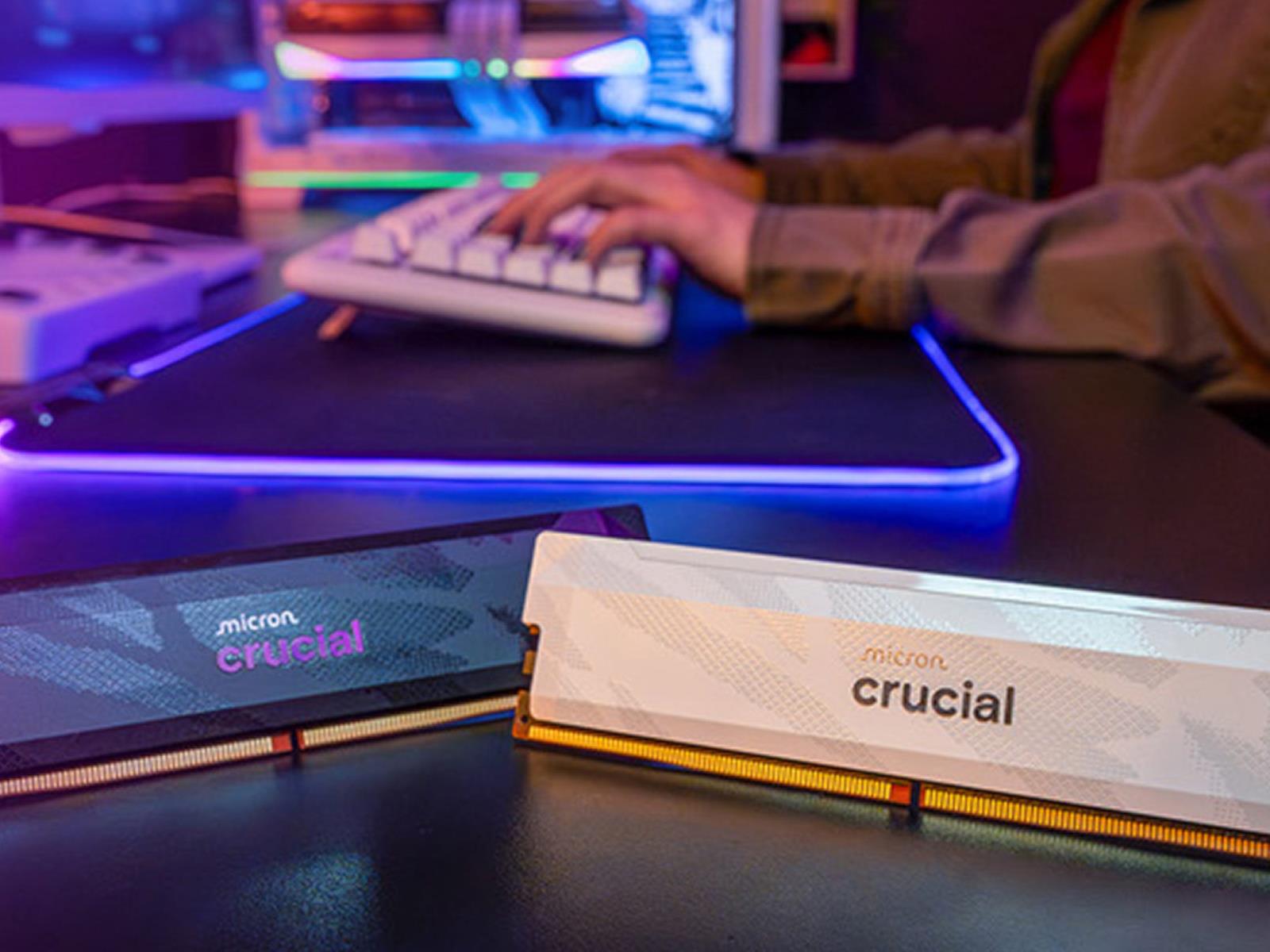
The ongoing memory shortage and resulting price hikes continue to impact various markets, and according to TrendForce, smartphone, notebook, and console manufacturers, are about to react. The impact won’t simply trigger price increases in existing products, either—rather, new devices are expected to compromise on other specifications as well
Solus 4.8 ‘Opportunity’: An Independent Distro Struts Its Stuff
Our Larry Cafiero takes a look at Solus and its homegrown desktop Budgie, and discovers why it’s one of the most popular scratch-built distros.
The post Solus 4.8 ‘Opportunity’: An Independent Distro Struts Its Stuff appeared first on FOSS Force.
Rust 1.92.0 released
Version
1.92.0 of Rust has been released. This release includes a number
of stabilized APIs, emits unwind tables by default on Linux, validates
input to #[macro_export], and much more. See the separate
release notes for Rust,
Cargo,
and Clippy.
Ars Live: 3 former CDC leaders detail impacts of RFK Jr.’s anti-science agenda
The Centers for Disease Control and Prevention is in critical condition. This year, the premier public health agency had its funding brutally cut and staff gutted, its mission sabotaged, and its headquarters riddled with literal bullets. The over 500 rounds fired were meant for its scientists and public health experts, who endured only to be sidelined, ignored, and overruled by Health Secretary Robert F. Kennedy Jr., an anti-vaccine activist hellbent on warping the agency to fit his anti-science agenda.
Then, on August 27, Kennedy fired CDC Director Susan Monarez just weeks after she was confirmed by the Senate. She had refused to blindly approve vaccine recommendations from a panel of vaccine skeptics and contrarians that he had hand-selected. The agency descended into chaos, and Monarez wasn’t the only one to leave the agency that day.
Three top leaders had reached their breaking point and coordinated their resignations upon the dramatic ouster: Drs. Demetre Daskalakis, Debra Houry, and Daniel Jernigan walked out of the agency as their colleagues rallied around them.
This Roborock Vacuum/Mop Combo Is Just $220 Right Now
We may earn a commission from links on this page. Deal pricing and availability subject to change after time of publication.
The holidays are hectic enough without adding “deep clean floors” to your already packed to-do and errands list, which is why buying a robot mop and vacuum is more appealing than ever. Right now, the Roborock Q7 M5+ Robot Vacuum/Mop is $219.99 (originally $359.99) on Amazon—a 39% discount that marks its lowest price to date, according to price-tracking tools.
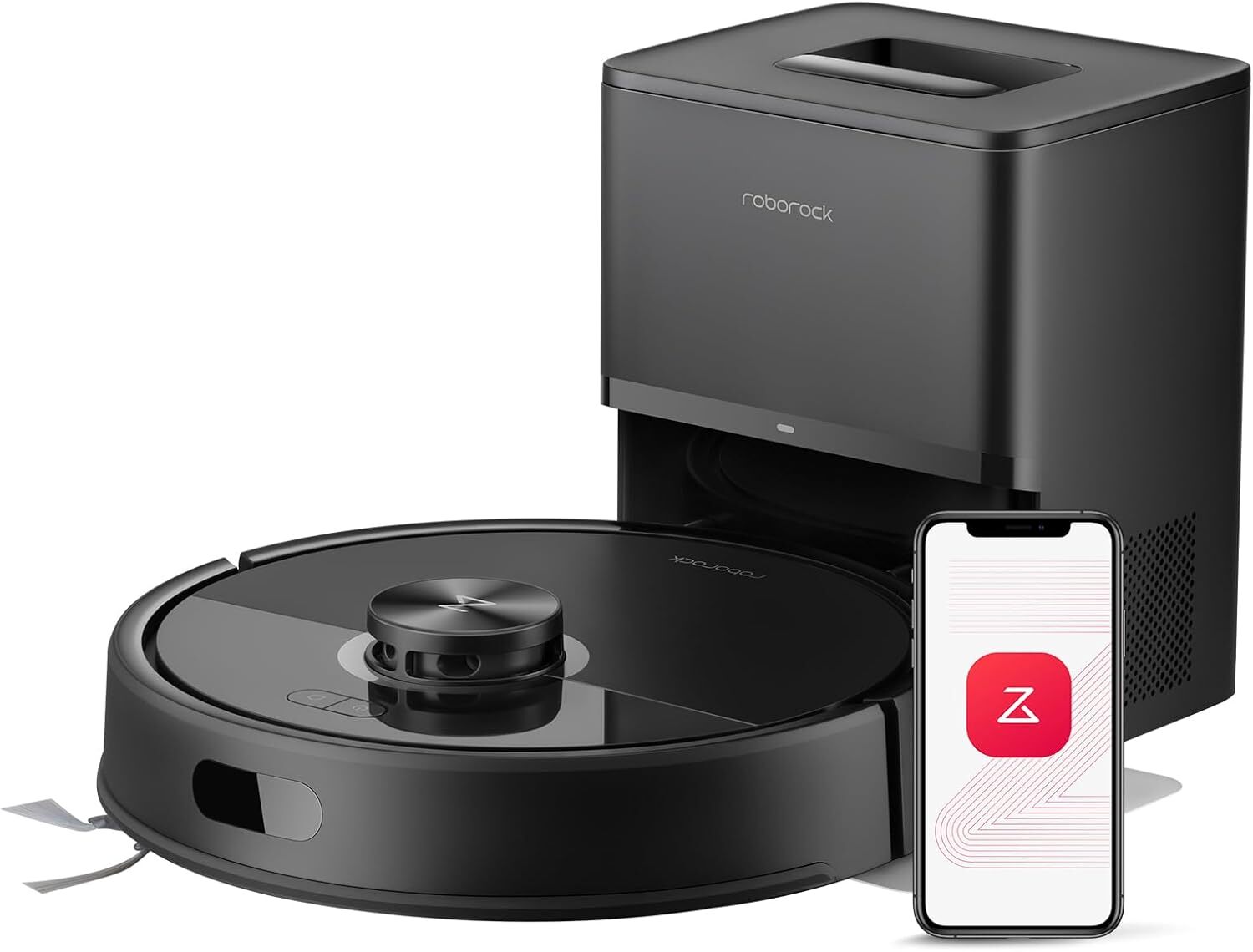
An anti-tangle brush makes this a solid choice for pet owners who have furry friends that shed, and the self-emptying dock holds nearly two months’ worth of debris, so you don’t have to empty the bin each time you run it. Another major perk is the 10,000 Pa HyperForce suction, which is surprisingly strong for a sub-$250 price point, as is the fact that it can vacuum and mop in one run.
This member of the Q-series lineup features smart navigation and LiDAR mapping, making it easy to plan routes, create multi-floor maps, and customize no-go zones. Compared to Roborock predecessors in this mid-tier price range, this model has been upgraded with more automation and power and has a 150-minute max runtime, which is enough battery life to manage most homes in a single run.
That said, the mopping system is still basic compared to pricier S-series models like the Roborock S8 MaxV Ultra, which uses hot water, automatic detergent dispensing, and heated air drying. The Q7 M5+ also lacks obstacle avoidance, only connects to 2.4GHz wifi, and the self-emptying dock uses disposable bags that you’ll need to replace, adding an additional ongoing cost.
Ultimately, if you’re looking for a mid-range self-emptying robot vacuum and mop hybrid, the Roborock Q7 M5+ Robot Vacuum/Mop is a strong choice given its low maintenance nature, strong suction, and smart navigation for under $250—especially if you’re a pet owner. If you want the best-in-class cleaning power or premium features like obstacle avoidance, you’ll need to upgrade to the higher-end S-series, but expect to pay significantly more.
Our Best Editor-Vetted Tech Deals Right Now
Deals are selected by our commerce team
Gazelle’s Arroyo offers a belt drive, continuous variable transmission
A little while back, we took a look at a large cargo bike from Urban Arrow that had some interesting features: a drive train that sported continuous variable gearing and a belt drive. But it was difficult to get a feel for what using that drivetrain was like when it was being used to shift a large and extremely heavy cargo bike. So, I jumped at the opportunity when Urban Arrow’s sister company, Gazelle, offered a chance to ride one of its new Arroyo models, which feature the same drivetrain, but this time coupled to a fairly standard commuter bike.
Getting rid of all the weight and bulk really allowed the drive system to shine. And, as with its cargo-carrying cousin, the bike is filled with thoughtful touches and design decisions that make riding it a pleasure. But all that comes at a cost: This is a premium bike with little in the way of compromises, and it’s priced accordingly.
High-end hardware
The Arroyo line is meant for commuters and urban/suburban riding. It has a step-through frame, a large rack, fenders, and its riding stance is very upright. In keeping with its Dutch heritage, it’s meant to be ridden as a bicycle, rather than a bike-like scooter. There’s no throttle to let you avoid pedaling, and even when it’s set to its maximum assist rating, you’ll end up putting in a reasonable amount of effort during the ride. If you’re looking for something that lets you handle a commute in hot weather without sweating, you’ll probably want to look elsewhere.
System76 Launches Pop!_OS 24.04 LTS With COSMIC Desktop
Back in October System76 announced a planned release date for Pop!_OS 24.04 LTS and the COSMIC Desktop… And they’ve made it! The new Pop!_OS 24.04 is now available for download as the long-awaited update atop an Ubuntu 24.04 LTS base while using their Rust-based COSMIC desktop environment…
[$] Toward a policy for machine-learning tools in kernel development
The first topic of discussion at the 2025 Maintainers Summit has been in
the air for a while: what role — if any — should machine-learning-based
tools have in the kernel development process? While there has been a fair
amount of controversy around these tools, and concerns remain, it seems
that the kernel community, or at least its high-level maintainership, is
comfortable with these tools becoming a significant part of the development
process.
D7VK 1.0 Released For “Production Ready” Direct3D 7 On Vulkan
The D7VK project recently started as the Direct3D 7 API implemented atop the Vulkan API akin to DXVK and VKD3D-Proton with newer versions of Microsoft Direct3D. Today marks the D7VK 1.0 release for this project in now declaring itself “production ready” for Linux gamers…
The Game Awards Are Losing Their Luster
The Game Awards, which broadcasts tonight on Twitch, YouTube, and Prime Video, has become the biggest night on the video game calendar since launching in 2014, but the show’s treatment of developers has drawn increasing criticism. At the 2023 ceremony, acceptance speeches were often cut off after roughly 30 seconds while Hideo Kojima received five minutes to discuss his upcoming game OD — enough time for 13 acceptance speeches, Aftermath calculated. That year’s show also ignored the industry’s mass layoffs entirely; host Geoff Keighley acknowledged the labor crisis only at the 2024 ceremony.
The show’s Future Class program, launched in 2020 to celebrate game makers representing an inclusive future for the industry, has quietly ended. No new class has been named for two years. “At this time, we are not planning a new Future Class for this year,” organizer Emily Weir told Game Developer.


Read more of this story at Slashdot.
Disney Will Now Let You Make AI Slop of Its Characters on Sora
If you’ve engaged in any sort of doomscrolling over the past year, you’ve no doubt encountered some wild AI-generated content. While there are plenty of AI video generators out there producing this stuff, one of the most prevalent is OpenAI’s Sora, which is particularly adept at generating realistic short-form videos mimicking the content you might find on TikTok or Instagram Reels. These videos can be so convincing at first glance, that people often don’t realize what they’re seeing is 100% fake. That can be harmless when it’s videos of cats playing instruments at midnight, but dangerous when impersonating real people or properties.
It’s that last point that I thought would offer some pushback to AI’s seemingly exponential growth. These companies have trained their AI models on huge amounts of data, much of which is copyrighted, which means that people are able to generate images and videos of iconic characters like Pikachu, Superman, and Darth Vader. The big AI generators put guardrails on their platforms to try to prevent videos that infringe on copyright, but people find a way around them. As such, corporations have already started suing OpenAI, Google, and other AI companies over this blatant IP theft. (Disclosure: Lifehacker’s parent company, Ziff Davis, filed a lawsuit against OpenAI in April 2025, alleging it infringed Ziff Davis copyrights in training and operating its AI systems.)
Disney is handing its characters over to Sora users
But it seems not all companies want to go down this path. Take Disney, as a prime example. On Thursday, OpenAI announced that it had made a three-year licensing agreement with the company behind Mickey Mouse. As part of the deal, Sora users can now generate videos featuring over 200 Disney, Marvel, Pixar, and Star Wars characters. The announcement names the following characters and movies specifically:
-
Mickey Mouse
-
Minnie Mouse
-
Lilo
-
Stitch
-
Ariel
-
Belle
-
Beast
-
Cinderella
-
Baymax
-
Simba
-
Mufasa
-
Black Panther
-
Captain America
-
Deadpool
-
Groot
-
Iron Man
-
Loki
-
Thor
-
Thanos
-
Darth Vader
-
Han Solo
-
Luke Skywalker
-
Leia
-
The Mandalorian
-
Stormtroopers
-
Yoda
-
Encanto
-
Frozen
-
Inside Out
-
Moana
-
Monsters Inc.
-
Toy Story
-
Up
-
Zootopia
That includes licensed costumes, props, vehicles, and environments. What’s more, Disney+ will host a “selection” of these “fan-inspired” Sora videos. (I’ll admit, that last point genuinely shocks me.) This does only apply to Disney’s visual assets, however, as Sora users won’t have access to voice acting. ChatGPT users will also be able to generate images with these characters, so this news doesn’t just affect Sora users.
You might think OpenAI is paying Disney a hefty licensing fee here, but it appears to be quite the opposite. Not only is Disney pledging to use OpenAI APIs to build “products, tools, and experiences,” it is rolling out ChatGPT to its employees as well. Oh, and the company is making a $1 billion equity investment in OpenAI. (Is that all?)
I know many companies are embracing AI, often in ways I disagree with. But this deal is something else entirely. I’m not sure any Disney executives actually searched for “Sora Disney” on the internet, because right now, you’ll find fake AI trailers for Pixar movies filled with racism, sexual content, and generally offensive content—all generated using an app Disney just licensed all of its properties to. OpenAI asserts in its announcement that both companies are committed to preventing “illegal or harmful” content on the platform, but Sora users are already creating harmful content. What kind of content can we expect with carte blanch access to Disney’s properties?
Now that Disney’s characters are fair game, I can’t imagine the absolute slop that some users are going to make here. The only hope I have is in the fact that Disney+ is going to host some of these videos. Staff will have to weed through some garbage to find videos that are actually suitable for the platform. And maybe seeing the “content” that Sora users like to make with iconic characters will be enough for Disney to rethink its plans.
Rivian goes all in on ‘universal hands-free’ driving at its first Autonomy and AI day
EV automaker Rivian just held its inaugural Autonomy and AI day which, unsurprisingly, focused extensively on hands-free driving. An upcoming software update promises the introduction of “universal hands-free” driving. The company says its vehicles will be able to autonomously navigate more than 3.5 million miles of roads in North America, “covering the vast majority of marked roads in the US.”
This is coming to the R2 line of EVs, but also Gen 2 R1 vehicles like the recently-released Rivian R1S. The service will be locked behind a subscription for something called Autonomy+ that includes self-driving, but also offers access to forthcoming and unannounced autonomous features. Rivian customers can pay $2,500 for lifetime access to the platform or $50 per month.
The R2 is getting LiDAR sensors, which will presumably help enable some of those upcoming autonomous features, in addition to a new chip called the Rivian Autonomy Processor. The processor has been designed for multimodal applications and runs the company’s proprietary neural net engine. Both of these features are expected “to ship on R2 models starting at the end of 2026.”
Today’s event wasn’t just about hands-free driving. Many of the company’s vehicles will soon be given access to the AI-powered Rivian Assistant, which uses LLMs and can connect to apps like Google Calendar. This assistant will be model-agnostic, as it will “orchestrate different models and choose the best one for the task.”
In addition to the upcoming R2, the company is prepping the R3 and R3X. A Rivian offshoot just introduced an extremely expensive, but modular, electric bike called the TM-B.
This article originally appeared on Engadget at https://www.engadget.com/transportation/evs/rivian-goes-all-in-on-universal-hands-free-driving-at-its-first-autonomy-and-ai-day-172004733.html?src=rss
The Amazon Is Morphing Into a ‘Hypertropical’ Climate—and It’s as Apocalyptic as It Sounds

A new study predicts that by 2100, the Amazon rainforest could experience up to 150 days of hot drought conditions each year, causing mass tree die-offs.
Why Switzerland Is Weighing a 10 Million Population Limit
An anonymous reader shares a report: Growing support for far-right parties is pressuring European governments to introduce stricter controls on immigration. Switzerland is set to vote on a proposal that would take the idea to the next level — imposing a cap on its population [non-paywalled link]. The initiative could lead eventually to a blanket ban on new arrivals if the number of residents rises from around 9 million currently to above 10 million, with little distinction made between refugees, skilled workers and top managers on six-figure salaries.
Citizens will likely vote on the proposal next year under the country’s unique system of plebiscites on constitutional amendments and policy, and polls suggest there’s a chance they’ll approve it. The risk is it could lead to shortages of critical skills that end up harming Switzerland’s competitiveness. The outcome will show how far citizens are willing to go to preserve some of the traits that made their country such an appealing destination. […] The right-wing Swiss People’s Party, or SVP, won 28% of the vote in the last election with a campaign that presented Swiss citizenship as a privilege, not a right. It came up with the idea of a population limit in 2023, presenting it as a way to preserve the Swiss lifestyle and protect its environment from excessive human activity.


Read more of this story at Slashdot.
Disney has accused Google of copyright infringement on a ‘massive scale’
Disney has accused Google of copyright infringement on a “massive scale,” alleging that the tech giant is training its AI tools on protected materials as well as allowing those tools to generate infringing images and videos. Variety reports that Disney attorneys sent a cease-and-desist letter to Google on Wednesday.
“Google is infringing Disney’s copyrights on a massive scale, by copying a large corpus of Disney’s copyrighted works without authorization to train and develop generative artificial intelligence (‘AI’) models and services, and by using AI models and services to commercially exploit and distribute copies of its protected works to consumers in violation of Disney’s copyrights,” reads the letter, which Variety reviewed.
The letter includes examples of images from several Disney properties including Deadpool, Moana, Star Wars and others, reproduced by Google’s AI tools. Disney is demanding that Google implement guardrails within all its AI products to prevent further infringement. The media giant sent a similar letter to Character.AI in September, and is currently suing Hailuo and Midjourney over alleged copyright infringement.
Copyright enforcement has become more challenging in the face of AI-created imagery, and companies are increasingly taking an “if you can’t beat them, join them” approach. Today Disney announced a deal with OpenAI to license its characters for use in Sora, OpenAI’s video generator. The deal will see Disney invest $1 billion in OpenAI (a paltry sum by some standards), with the option to purchase additional equity at a later date.
This article originally appeared on Engadget at https://www.engadget.com/ai/disney-has-accused-google-of-copyright-infringement-on-a-massive-scale-163737642.html?src=rss
This 65″ Fire TV For $265 Is A Steal Plus More Big Screen Holiday Deals
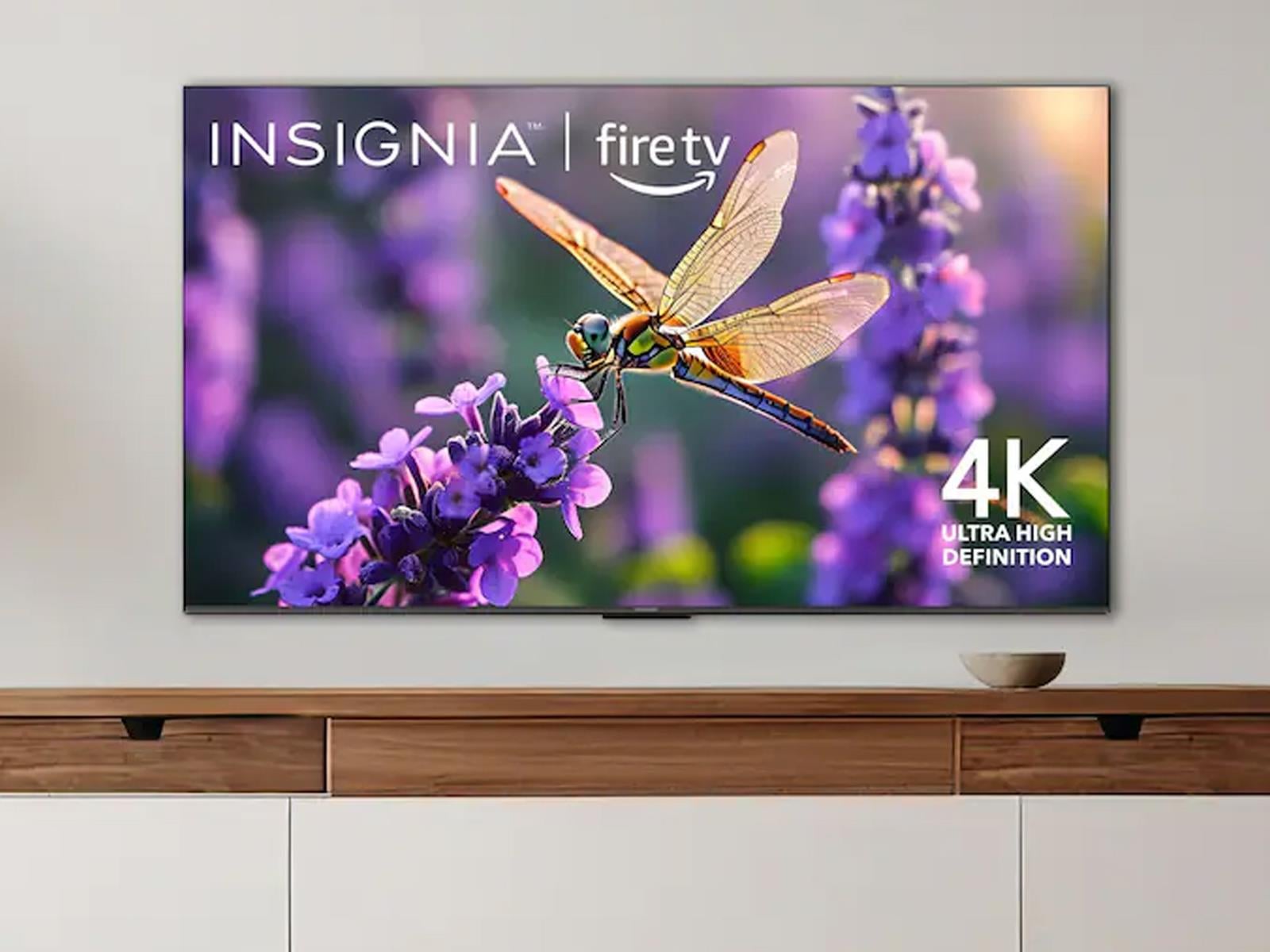
We’re old enough to remember when big screen TVs came with big time prices. They were also a lot more bulky than they are now. Fortunately, this is one area in tech where pricing now favors the consumer (unlike DRAM, don’t even get us started), and if you’re not ultra-picky, you can score a 65-inch model for less than $300, or even less than