From learners to leaders: Jayantika and Ruturaj’s journey as Code Club youth mentors

Two remarkable teenagers from Pune in the state of Maharashtra, India — Jayantika (age 16) and Ruturaj (age 14) — have turned curiosity into community impact.
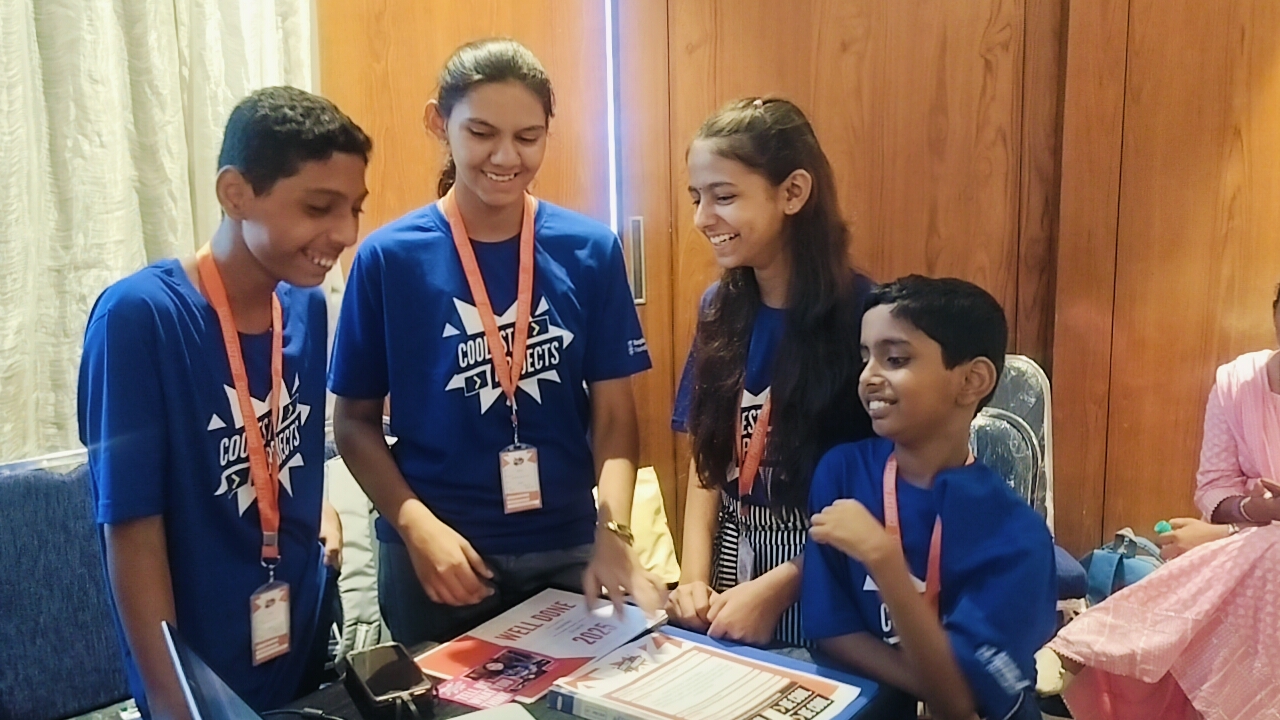
Jayantika (age 16) and Ruturaj (age 14) taking part in Coolest Projects India.
Jayantika, Ruturaj, and their friends at Coolest Projects India 2025.

With support from the Bidkar Foundation and the Raspberry Pi Foundation, they now help run five Code Clubs, reaching over 200 young people in rural areas of Pune. Along the way, they have twice received the Coolest Projects Judges’ Favourite Award: first online in 2023, and again at Coolest Projects India in September 2025. 

How it all began

For Jayantika and Ruturaj, the spark for coding began at home. During the pandemic, when schools were closed and days felt long, their father encouraged them to try something new.

“When we were at home and there was nothing to do,” recalls Jayantika, “my dad introduced us to coding, and from that time till this date we are participating — and yeah, we love it.”

In 2021, they joined their local Code Club, run by the Bidkar Foundation, which provides coding opportunities for young people in rural areas of Pune. That moment opened a door to creativity neither of them expected. Scratch projects soon filled their weekends with problem-solving, and Ruturaj found himself fascinated by how games worked.

“I was too curious how games were made,” he says. “After a while in Code Club, I learned new things and got the answers to my questions.”

As their confidence grew, so did their sense of purpose. They wanted others to experience the same excitement they had discovered. “We thought these things should be shared with others,” says Jayantika. “So that’s why we started a Code Club and began teaching — to spread awareness and knowledge to everyone.”

Reaching out to rural learners

Each weekend, Jayantika and Ruturaj set out for nearby villages, with laptops, lesson plans, and a sense of possibility. Their aim is simple but powerful: to bring coding opportunities to children who might otherwise never encounter them. “Village students must also learn coding and get opportunities to come in front,” explains Jayantika.
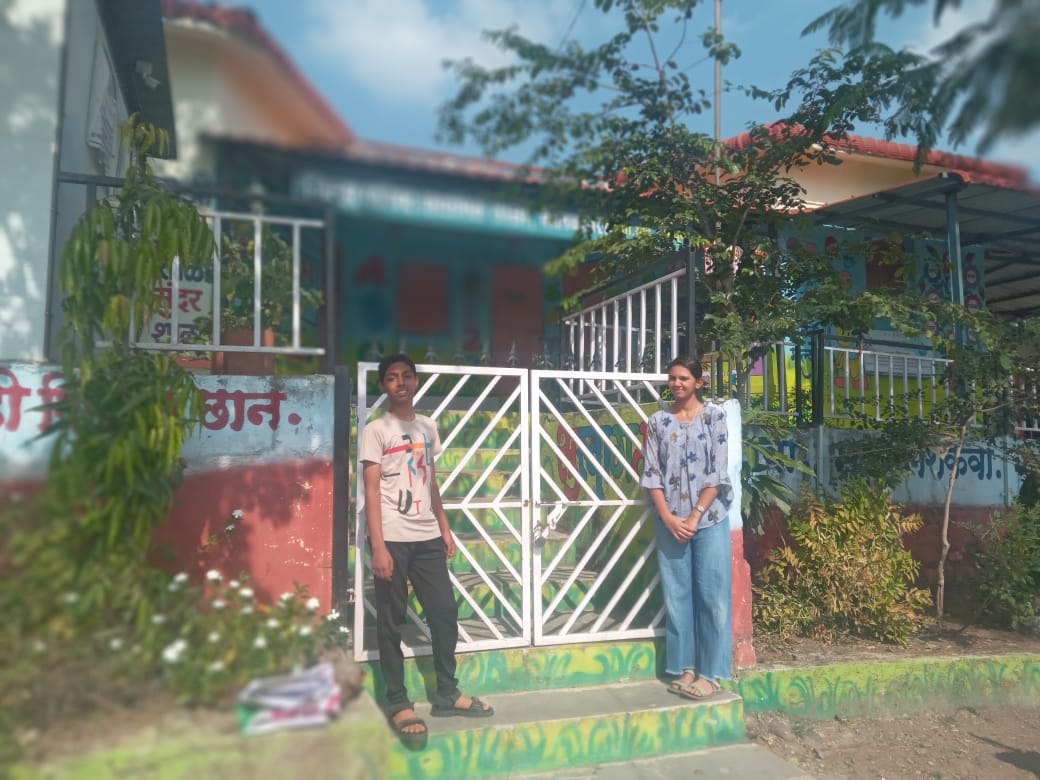
Jayantika (age 16) and Ruturaj (age 14)

What started modestly — “one computer and seven students” — has become a thriving network of clubs that now reaches hundreds of young learners. Their father, Mr Bidkar, has been by their side throughout, watching as their initiative has grown from a small idea to something that’s changing lives. “Now we are 25 computers, 200-plus children,” he says proudly.

Inside their Code Club sessions

Their Code Club sessions are lively and filled with curiosity. Children crowd around laptops, excited to build their next animation or game. The mentors blend teaching with fun, alternating between theory and practice to keep things engaging.

“At first, we take theory classes — we explain what’s the game,” says Jayantika. “At the end we let them sit on computers.”

Some weeks are spent planning and others creating. “We give them a plan, and then next time they create,” she explains. Younger learners, aged six to ten, start with small projects such as animations or motion-based activities. Older learners tackle bigger challenges in Scratch, building their own games from ideas they’ve brainstormed together.

Jayantika (age 16) and Ruturaj (age 14)

Sessions end with a much-loved tradition: “After the session ends, we give them 15–20 minutes to do whatever they want,” says Ruturaj. “Because they’re very curious.” The pair work in perfect rhythm. “I manage one group and Ruturaj manages another,” says Jayantika. “If any doubt is there, we solve them together.”

Mentoring has given both siblings new confidence and skills. “At first we were only on Scratch, and now we’ve expanded our knowledge,” says Jayantika. “Next, we’re going to start robotics. It is simple and it is creative also and it can connect to Scratch.”

The role of a mentor

Over time, Jayantika and Ruturaj have learned that mentoring is as much about listening as it is about instructing.

“Sometimes their questions are not so obvious,” laughs Jayantika. “Like ‘Why can’t we change the sprite?’ or ‘Why can’t we use another block?’ We can explain to a certain limit, but after that we are speechless!”

These moments, she says, are part of the magic of teaching. They push the mentors to explore new ways of explaining and to see coding from a beginner’s perspective again. 

Watching their students succeed brings the biggest reward. “We feel very happy that the students are listening to us and they’re doing what we wanted — and they’re even adding extras,” says Jayantika. “Most of them tell us they want to create another project; they want more time.”

And for those thinking about becoming mentors, they both agree that empathy is key. “If you want to teach them, you must become a student,” says Ruturaj. 

“First, think at the students’ level… explain in simple language and give more time to experiment,” adds Jayantika.

Looking ahead

Ruturaj dreams of exploring game development and cybersecurity, while Jayantika hopes to move into web and app design. Together, they balance logic and creativity, each complementing the other’s strengths.

“Even though both are coding, we are on different paths,” she smiles.
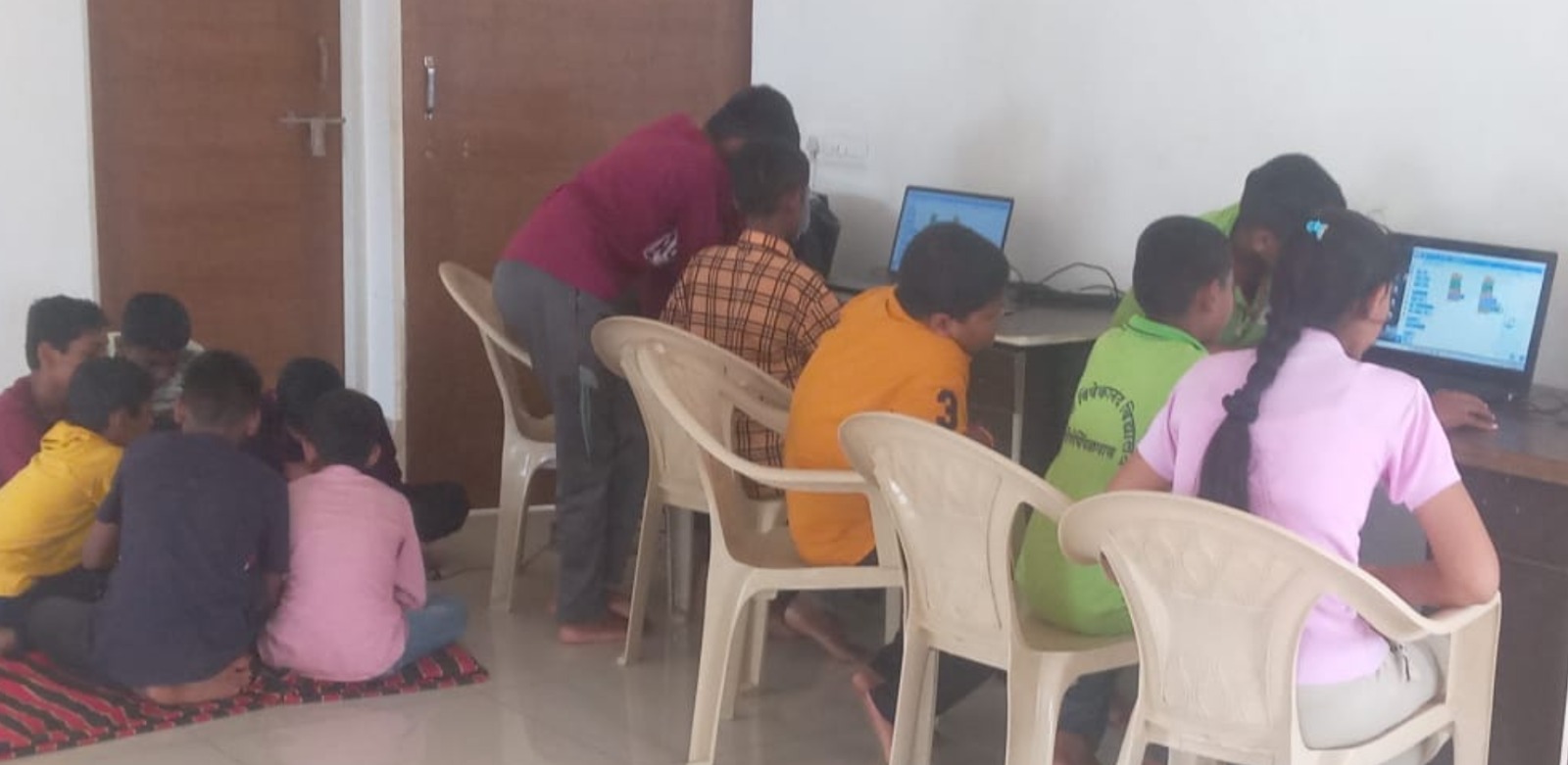
Bidkar foundation young learners in the classroom

For anyone curious about coding, Ruturaj’s advice is simple: “Do it by yourself. Make projects by yourself, share them, and learn from others.” Jayantika adds: “Coding has no limits. You can create anything you imagine — open your mind, open your creativity.”

Their father, rightly, is proud not just of their achievements but of how they have inspired others to learn. From a single laptop to five thriving Code Clubs, Jayantika and Ruturaj’s journey shows what’s possible when young people lead with passion and purpose. With support from their family, the Bidkar Foundation, and the Raspberry Pi Foundation’s India team, they’re proving that talent truly is everywhere — opportunity just needs a spark.

Thank you, Jayantika and Ruturaj, for inspiring young people across India and around the world.

The post From learners to leaders: Jayantika and Ruturaj’s journey as Code Club youth mentors appeared first on Raspberry Pi Foundation.

MSI MEG X870E Godlike X Motherboard Debuts At $1,300 And Will Likely Sell Out

MSI MEG X870E Godlike X Motherboard Debuts At $1,300 And Will Likely Sell Out
If you’re going to spend a fortune on memory for your new build, you might has well pair it with an extravagant motherboard that has all the bells and whistles, right? Hey, it’s your money and if you have over a grand to spend on a motherboard, then MSI’s newly available MEG X870E Godlike X Edition has your name written all over it. Just be

Samsung’s P9 microSD Express card for Switch 2 is 40 percent off right now

It was a big day in gaming history when Nintendo finally released its Switch sequel. But the Nintendo Switch 2 lacked many options for microSD Express cards. Samsung helped change that this fall, with the release of its P9 Express series of microSD Express cards, and now one of them is on sale.

Currently, you can pick up the 256GB Samsung P9 Express microSD Express Card for $33, down from $55. The 40 percent discount brings the microSD down to a new all-time low price. That means your new Nintendo Switch 2 gets a lot more memory with transfer speeds reaching 800MB/s. The specs are on par with some of our other favorite microSD cards for the Nintendo Switch 2. 

Samsung’s new microSD also comes with the company’s Dynamic Thermal Guard, which should keep things from heating up too much during gameplay. It also works with devices other than the Switch 2, including other gaming consoles, computers, Steam Deck, cameras and more. 

Follow @EngadgetDeals on X for the latest tech deals and buying advice.

This article originally appeared on Engadget at https://www.engadget.com/deals/samsungs-p9-microsd-express-card-for-switch-2-is-40-percent-off-right-now-141947128.html?src=rss

Security Researcher Found Critical Kindle Vulnerabilities That Allowed Hijacking Amazon Accounts

The Black Hat Europe hacker conference in London included a session titled “Don’t Judge an Audiobook by Its Cover” about a two critical (and now fixed) flaws in Amazon’s Kindle. The Times reports both flaws were discovered by engineering analyst Valentino Ricotta (from the cybersecurity research division of Thales), who was awarded a “bug bounty” of $20,000 (£15,000 ).

He said: “What especially struck me with this device, that’s been sitting on my bedside table for years, is that it’s connected to the internet. It’s constantly running because the battery lasts a long time and it has access to my Amazon account. It can even pay for books from the store with my credit card in a single click. Once an attacker gets a foothold inside a Kindle, it could access personal data, your credit card information, pivot to your local network or even to other devices that are registered with your Amazon account.”

Ricotta discovered flaws in the Kindle software that scans and extracts information from audiobooks… He also identified a vulnerability in the onscreen keyboard. Through both of these, he tricked the Kindle into loading malicious code, which enabled him to take the user’s Amazon session cookies — tokens that give access to the account. Ricotta said that people could be exposed to this type of hack if they “side-load” books on to the Kindle through non-Amazon stores.

Ricotta donated his bug bounties to charity…


Read more of this story at Slashdot.

You Can Now Use Your MacBook’s Display As a Ring Light

Sometimes you need just a little bit more light during a video call, especially if you’re in a dimly lit room. The latest macOS update (26.2) has a trick for this: you can use the edge of your screen as a ring light.

The feature, which adds a rounded white rectangle to your screen, is called Edge Light. The rectangle takes up part of your screen but will become partially transparent if you move your mouse pointer into it, meaning you’ll mostly be able to use your computer normally.

You can use the feature by clicking the camera icon on the menu bar during a call and toggling on the Edge Light option. You can also adjust the brightness and the color of the edge light from here.

A screenshot of the camera menu on a Mac, complete with the new Edge Light feature.There are sliders for brightness and color.

Credit: Justin Pot

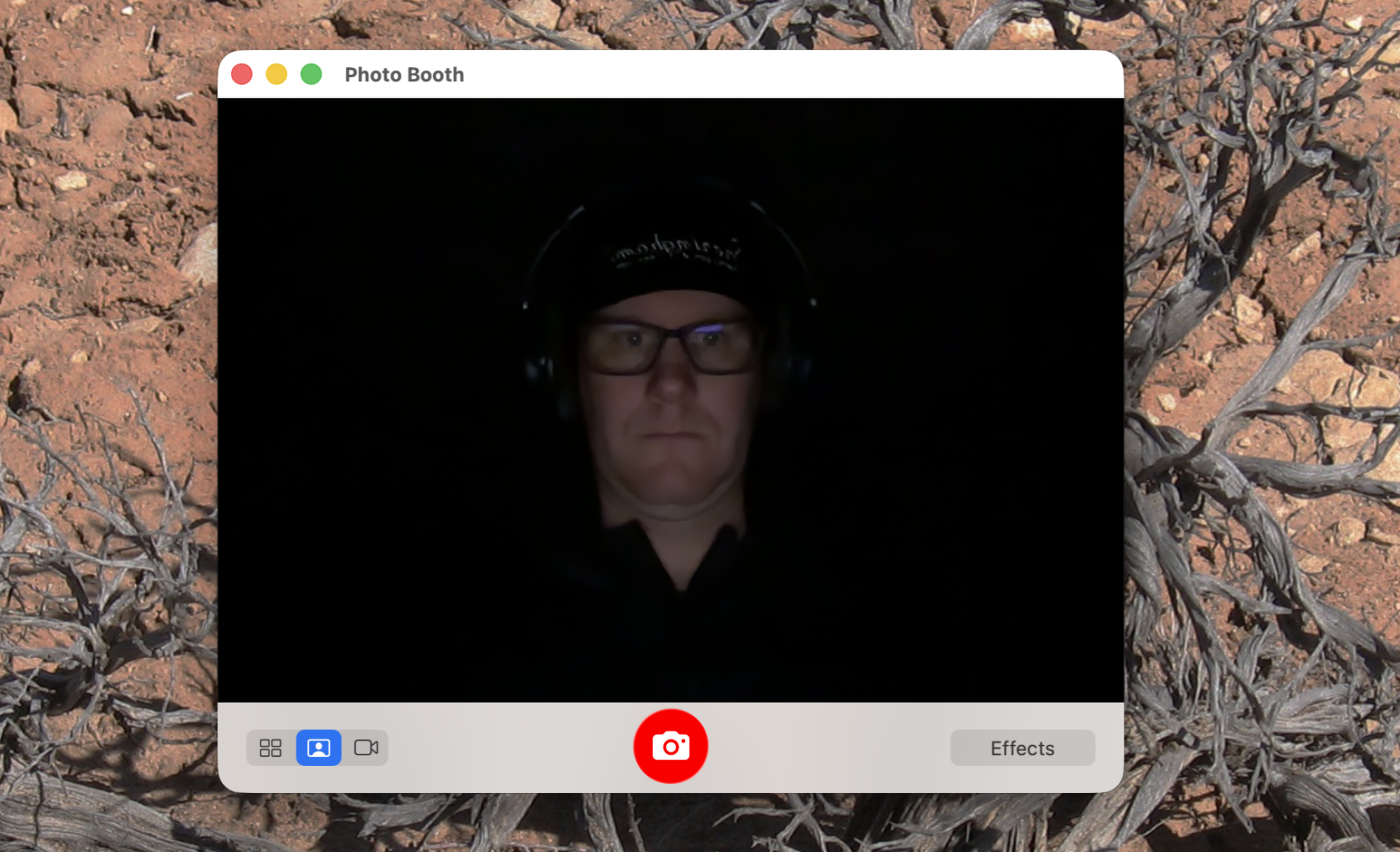
I tried this in a well-lit room and didn’t notice much of a difference, which makes sense. In a totally dark room, though, it proved extremely helpful. Here’s how I looked without Edge Light:

The Photo Booth app showing a dark picture of the author

Credit: Justin Pot

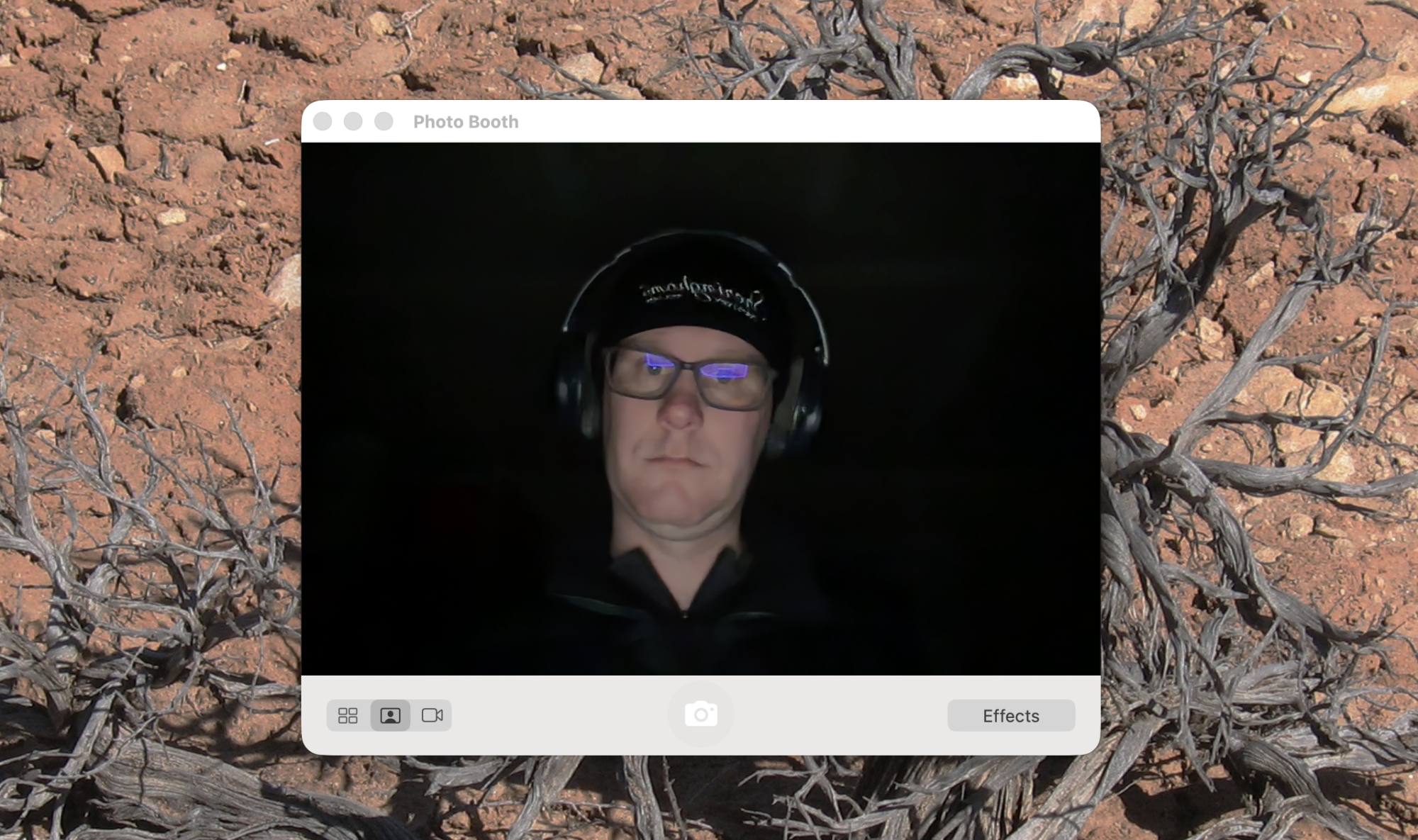
As you can see, I’m just barely lit by the laptop itself. Here’s how I look with the feature turned on:

Another screenshot of Photo Booth, this time with a slightly brighter

Credit: Justin Pot

It’s a lot easier to make out my face, but whether that’s a pro or a con is a matter of opinion. Try the feature out if you find yourself on a video call with the lights off. Note that it’s only offered on devices with Apple Silicon.

Top 5 Zwift Videos: Home Gyms, and Animating Races, and Exoskeletons

Looking for some inspiration for your own home gym improvements? In this week’s top video, hear from one Zwifter as he shares how he completely transformed his garage into a beautiful home gym.

Also included in this week’s picks are videos about FTP tests, attacking in a Zwift race, and using exoskeletons with indoor cycling.

I Transformed My Garage Into My Dream Gym

Ryan Condon shares how he transformed his garage into a home gym.

Zwift 20 min FTP Test | Why I’m ditching ERG mode

As Max from The Watt Life starts training for the 2026 season, he tackles an FTP test and shares why everyone should do an FTP test before a training block.

Sitting in the pack is boring… so I attacked

After getting bored of sitting in the pack, Liam Shaw takes a risk and attacks in his latest Zwift race. Can he hold on for the win?

First Time Up The Grade on Zwift

Jessica Strange tackles The Grade for the first time to test her FTP. With the help of some pointers from Ryan Condon, can Jessica set a new FTP?

I ‘Cheated’ at Zwift

With the recent launch of exoskeletons enhancing physical activity, many influencers have been putting them to the test in sports like running and cycling. In this video, Road.cc tries to set an Alpe du Zwift PR with the exoskeleton.

Got a Great Zwift Video?

Share the link below and we may feature it in an upcoming post!

Verizon refused to unlock man’s iPhone, so he sued the carrier and won

When Verizon refused to unlock an iPhone purchased by Kansas resident Patrick Roach, he had no intention of giving up without a fight. Roach sued the wireless carrier in small claims court and won.

Roach bought a discounted iPhone 16e from Verizon’s Straight Talk brand on February 28, 2025, as a gift for his wife’s birthday. He intended to pay for one month of service, cancel, and then switch the phone to the US Mobile service plan that the couple uses. Under federal rules that apply to Verizon and a Verizon unlocking policy that was in place when Roach bought the phone, this strategy should have worked.

“The best deals tend to be buying it from one of these MVNOs [Mobile Virtual Network Operators] and then activating it until it unlocks and then switching it to whatever you are planning to use it with. It usually saves you about half the value of the phone,” Roach said in a phone interview.

Read full article

Comments

Sam Shaw sets new Auckland to Wellington record, following Lachlan Morton controversy 

Samuel Shaw has broken the record for the fastest known time between Auckland and Wellington in New Zealand, covering the 638 kilometres in 17 hours and 21 minutes.

The mountain biker finished on Monday evening (New Zealand time) and his time beat the previous FKT of 18 hours, 26 minutes set in February 2025 by Lachlan Morton, making Shaw the first rider to crack the challenge in under 18 hours.

According to Strava, Shaw completed the ride with an average speed of 36.8kph and a weighted average power of 277 watts.

Morton’s attempt at the record, which was completed last year, was the inspiration for Shaw’s ride.

Morton’s ride was documented in a YouTube video by Rapha, the then clothing sponsor of his EF Education pro team. But that video caused controversy by concentrating on Brian Fleck, who held the record between 1983 and 1984, when it was taken back by the previous record holder, Brian Lambert.

There was no mention in the video of Lambert, whose record stood for 41 years, prompting Rapha to issue an apology to the family of Lambert, who died of Parkinson’s Disease in 2022. His family accused Rapha of a ‘false narrative‘ in the video.

Congratulated by Lambert’s son

Brian Lambert’s son, James, congratulated Shaw on the new record, which has yet to be ratified by Cycling New Zealand. 

“Brilliant ride. And smashed through the magical 18 hour mark our father went on and on about being possible for years,” he said. 

“Our family congratulates Sam on a truly exceptional effort. The Auckland to Wellington has a long and evolving history and it’s good to see it continue to be taken on with ambition and respect for the challenge.”

Meanwhile, Morton’s FKT for the 14,200km ride around the perimeter of Australia, set in October 2024, still stands, while Rapha has announced it will cease to clothe EF Education’s male and female teams at the end of 2025, moving on as the new kit sponsor for USA Cycling.

Bose’s new QuietComfort Headphones are 53 percent off

The holiday season is very much upon us and, whether you’re traveling or need a last-minute present, noise-canceling headphones are a great purchase for this time of year. This is made all the more true when they’re on sale. Take the Bose QuietComfort Headphones, which are down to $170 from $359. The 53 percent discount brings these headphones to a new record-low price — even better than their Black Friday deal. 

Bose released its new QuietComfort Headphones in October and they’re an incredible option, especially for the sale price. It offers ANC with two modes: Quiet and Aware. It also has up to 24 hours of battery life and should give you two and a half hours of juice after just 15 minutes of charging.  

Looking for something a bit more high-tech? The second-generation Bose QuietComfort Ultra Bluetooth Headphones have also been on sale for some time now. An 11 percent discount brings them down to $399, from $449 — an all-time low price since they came out in September. We gave the second-gen Quiet Comfort Ultras a 90 in our review, thanks to incredible active noise cancelation and upgraded sound quality. They also overtook Sony’s WH-1000XM6 headphones (also great and 12 percent off) for the top spot in our best noise-canceling headphones for 2025 list. 

Follow @EngadgetDeals on X for the latest tech deals and buying advice.

This article originally appeared on Engadget at https://www.engadget.com/deals/boses-new-quietcomfort-headphones-are-53-percent-off-122332817.html?src=rss

Even Uber has an end-of-year wrap-up now

End-of-year wrap-ups were popularized by Spotify, and these days you can look back on the last 12 months of listening with most of the music streaming apps, as well as your gaming and YouTube viewing habits. The next logical step? A full recap of all of the Uber trips and takeaways you’ve guiltily ordered this year, of course!

Uber is calling its new wrap-up feature, which launches today, “YOUBER”, and it takes into consideration both your Uber and Uber Eats usage. You can see where you went, how often you demanded Uber Comfort, and how frequently you returned to the same pizza place on Uber Eats. If you rank in the top one percent of a specific restaurant’s customers, YOUBER is going to tell you all about it, whether the realization fills you with shame or not.

There are also 14 “Uber Personality Profiles” that you could be assigned, such as “Do-Gooder” for the Uber Electric loyalists, “Rise & Shiner” for the early morning riders, and “Delivery Darling” for those who “live for deliveries of all kinds.” Uber lets you share your results straight from YOUBER using the “Share this Story” button from within the app.

YOUBER is available to Uber and Uber Eats customers in the US from today, and can be accessed from your homescreen or account page.

This article originally appeared on Engadget at https://www.engadget.com/apps/even-uber-has-an-end-of-year-wrap-up-now-120035274.html?src=rss

iRobot has filed for bankruptcy and may be taken over by its primary supplier

iRobot, which brought robotic vacuum cleaners to the masses with its iconic Roomba models, has filed for Chapter 11 bankruptcy. The Massachusetts-based company plans to sell all assets to its primary supplier, a Chinese company known as Picea Robotics. If approved by a bankruptcy court, the move would allow iRobot to “continue operating in the ordinary course, pursue its product development roadmap, and maintain its global footprint,” iRobot wrote in a press release.

The company expects the deal to close in February 2026, but says it will continue to operate “with no anticipated disruption to its app functionality, customer programs, global partners, supply chain relationships or ongoing product support.” That means your Roomba should continue to clean normally and you’ll be able to get consumables and replacement parts. 

However, investors of common stock “will experience a total loss and not receive recovery on their investment” if the deal is approved, iRobot stated. The company didn’t discuss how the move might affect its employees in the US or elsewhere. 

Bankruptcy seemed a likely outcome for iRobot after Amazon dropped its $1.7 billion acquisition of the company last year following a veto threat by European regulators. The company’s fortunes continued to decline and it issued a statement to investors in March 2025 that it had “substantial doubt about [its] ability to continue.”

It’s a sad turn of events for the company that invented the robotic vacuum niche and launched its first product, the Roomba, back in 2002. It dominated that space for more than a decade, but its market size has steadily shrunk more recently, particularly since Covid, due to competition from rivals like Roborock and Dreame. 

Though iRobot retooled its product lineup earlier this year with new models like the Roomba 105 Vac Robot series and Roomba Plus 505 Combo Robot + AutoWash Dock, but they failed to move the sales needle enough. The company was reportedly hit hard by Trump’s 46 percent tariff in Vietnam where it manufactures products for the US market. 

If the sale is approved, iRobot says it will return in force. “Today’s announcement marks a pivotal milestone in securing iRobot’s long-term future,” said CEO Gary Cohen. “The transaction will strengthen our financial position and will help deliver continuity for our consumers, customers, and partners.”

This article originally appeared on Engadget at https://www.engadget.com/home/irobot-has-filed-for-bankruptcy-and-may-be-taken-over-by-its-primary-supplier-091602257.html?src=rss

Paris-Based ‘Open Source Experience’ Conference Hands Out ‘Acteurs du Libre’ Awards

At Paris’s Open Source Experience conference, six Acteurs du Libre awards mapped out a snapshot of Europe’s free software ecosystem in 2025, from enterprise strategy to privacy‑first Android and public‑sector platforms.

The post Paris-Based ‘Open Source Experience’ Conference Hands Out ‘Acteurs du Libre’ Awards appeared first on FOSS Force.

Are Warnings of Superintelligence ‘Inevitability’ Masking a Grab for Power?

Superintelligence has become “a quasi-political forecast” with “very little to do with any scientific consensus, emerging instead from particular corridors of power.” That’s the warning from James O’Sullivan, a lecturer in digital humanities from University College Cork. In a refreshing 5,600-word essay in Noema magazine, he notes the suspicious coincidence that “The loudest prophets of superintelligence are those building the very systems they warn against…”

“When we accept that AGI is inevitable, we stop asking whether it should be built, and in the furor, we miss that we seem to have conceded that a small group of technologists should determine our future.” (For example, OpenAI CEO Sam Altman “seems determined to position OpenAI as humanity’s champion, bearing the terrible burden of creating God-like intelligence so that it might be restrained.”)

The superintelligence discourse functions as a sophisticated apparatus of power, transforming immediate questions about corporate accountability, worker displacement, algorithmic bias and democratic governance into abstract philosophical puzzles about consciousness and control…
Media amplification plays a crucial role in this process, as every incremental improvement in large language models gets framed as a step towards AGI. ChatGPT writes poetry; surely consciousness is imminent…” Such accounts, often sourced from the very companies building these systems, create a sense of momentum that becomes self-fulfilling. Investors invest because AGI seems near, researchers join companies because that’s where the future is being built and governments defer regulation because they don’t want to handicap their domestic champions…
We must recognize this process as political, not technical. The inevitability of superintelligence is manufactured through specific choices about funding, attention and legitimacy, and different choices would produce different futures. The fundamental question isn’t whether AGI is coming, but who benefits from making us believe it is… We do not yet understand what kind of systems we are building, or what mix of breakthroughs and failures they will produce, and that uncertainty makes it reckless to funnel public money and attention into a single speculative trajectory.

Some key points:

“The machines are coming for us, or so we’re told. Not today, but soon enough that we must seemingly reorganize civilization around their arrival…”
“When we debate whether a future artificial general intelligence might eliminate humanity, we’re not discussing the Amazon warehouse worker whose movements are dictated by algorithmic surveillance or the Palestinian whose neighborhood is targeted by automated weapons systems. These present realities dissolve into background noise against the rhetoric of existential risk…”
“Seen clearly, the prophecy of superintelligence is less a warning about machines than a strategy for power, and that strategy needs to be recognized for what it is… ”
“Superintelligence discourse isn’t spreading because experts broadly agree it is our most urgent problem; it spreads because a well-resourced movement has given it money and access to power…”

“Academic institutions, which are meant to resist such logics, have been conscripted into this manufacture of inevitability… reinforcing industry narratives, producing papers on AGI timelines and alignment strategies, lending scholarly authority to speculative fiction…”
“The prophecy becomes self-fulfilling through material concentration — as resources flow towards AGI development, alternative approaches to AI starve…”
The dominance of superintelligence narratives obscures the fact that many other ways of doing AI exist, grounded in present social needs rather than hypothetical machine gods. [He lists data sovereignty movements “that treat data as a collective resource subject to collective consent,” as well as organizations like Canada’s First Nations Information Governance Centre and New Zealand’s’s Te Mana Raraunga, plus “Global South initiatives that use modest, locally governed AI systems to support healthcare, agriculture or education under tight resource constraints.”] “Such examples… demonstrate how AI can be organized without defaulting to the superintelligence paradigm that demands everyone else be sacrificed because a few tech bros can see the greater good that everyone else has missed…”
“These alternatives also illuminate the democratic deficit at the heart of the superintelligence narrative. Treating AI at once as an arcane technical problem that ordinary people cannot understand and as an unquestionable engine of social progress allows authority to consolidate in the hands of those who own and build the systems…”

He’s ultimately warning us about “politics masked as predictions…”

“The real political question is not whether some artificial superintelligence will emerge, but who gets to decide what kinds of intelligence we build and sustain. And the answer cannot be left to the corporate prophets of artificial transcendence because the future of AI is a political field — it should be open to contestation.

“It belongs not to those who warn most loudly of gods or monsters, but to publics that should have the moral right to democratically govern the technologies that shape their lives.”


Read more of this story at Slashdot.