How Did the CIA Lose a Nuclear Device?

Sixty years after a team of American and Indian climbers abandoned a plutonium-powered generator on the slopes of Nanda Devi, one of the world’s most forbidding Himalayan peaks, the U.S. government still refuses to acknowledge that the mission ever happened. The device, a SNAP-19C portable generator containing plutonium isotopes including Pu-239 — the same material used in the Nagasaki bomb — was left behind in October 1965 when a sudden blizzard forced climbers to retreat from Camp Four, just below the summit.

The mission originated from a cocktail party conversation between General Curtis LeMay and National Geographic photographer Barry Bishop, who had summited Everest in 1963. China had just detonated its first atomic bomb in October 1964, and the CIA wanted to intercept radio signals from Chinese missile tests by placing an unmanned listening station atop the Himalayas. Barry Bishop recruited elite American climbers and coordinated with Indian intelligence to haul surveillance equipment up the mountain.

Captain M.S. Kohli, the Indian naval officer commanding the mission, ordered climbers to secure the equipment and descend when the blizzard struck. Jim McCarthy, the last surviving American climber, recalled warning Kohli he was making a mistake. “You can’t leave plutonium by a glacier feeding into the Ganges!” he recalled. “Do you know how many people depend on the Ganges?” When teams returned in spring 1966, the entire ice ledge where the gear had been stashed was gone — sheared off by an avalanche. Search missions in 1967 and 1968 found nothing.

The device remains buried somewhere in the glaciers that feed tributaries of the Ganges River.


Read more of this story at Slashdot.

Attackers Are Spreading Malware Through ChatGPT

You (hopefully) know by now that you can’t take everything AI tells you at face value. Large language models (LLMs) sometimes provide incorrect information, and threat actors are now using paid search ads on Google to spread conversations with ChatGPT and Grok that appear to provide tech support instructions but actually direct macOS users to install an infostealing malware on their devices.

The campaign is a variation on the ClickFix attack, which often uses CAPTCHA prompts or fake error messages to trick targets into executing malicious commands. But in this case, the instructions are disguised as helpful troubleshooting guides on legitimate AI platforms.

How attackers are using ChatGPT

Kaspersky details a campaign specific to installing Atlas for macOS. If a user searches “chatgpt atlas” to find a guide, the first sponsored result is a link to chatgpt.com with the page title “ChatGPT™ Atlas for macOS – Download ChatGPT Atlas for Mac.” If you click through, you’ll land on the official ChatGPT site and find a series of instructions for (supposedly) installing Atlas.

However, the page is a copy of a conversation between an anonymous user and the AI—which can be shared publicly—that is actually a malware installation guide. The chat directs you to copy, paste, and execute a command in your Mac’s Terminal and grant all permissions, which hands over access to the AMOS (Atomic macOS Stealer) infostealer.

A further investigation from Huntress showed similarly poisoned results via both ChatGPT and Grok using more general troubleshooting queries like “how to delete system data on Mac” and “clear disk space on macOS.”

AMOS targets macOS, gaining root-level privileges and allowing attackers to execute commands, log keystrokes, and deliver additional payloads. BleepingComputer notes that the infostealer also targets cryptocurrency wallets, browser data (including cookies, saved passwords, and autofill data), macOS Keychain data, and files on the filesystem.

Don’t trust every command AI generates

If you’re troubleshooting a tech issue, carefully vet any instructions you find online. Threat actors often use sponsored search results as well as social media platforms to spread instructions that are actually ClickFix attacks. Never follow any guidance that you don’t understand, and know that if it asks you to execute commands on your device using PowerShell or Terminal to “fix” a problem, there’s a high likelihood that it’s malicious—even if it comes from a search engine or LLM you’ve used and trusted in the past.

Of course, you can potentially turn the attack around by asking ChatGPT (in a new conversation) if the instructions are safe to follow. According to Kaspersky, the AI will tell you that they aren’t.

Bianchi recalls Impulso RC due to risk of handlebar breakage

Bianchi has recalled its Impulso RC road bike and Impulso RC handlebar after a quality-control inspection identified a defect in the integrated carbon fibre handlebar. 

In a recall notice published on its website in November, Bianchi said the following products are included in the recall:

  • All Bianchi Impulso RC bikes purchased and delivered until 20 November 2025 with the following codes: YTB84 – YUB80 – YUB81, which are mounted as standard on the Impulso RC handlebar.
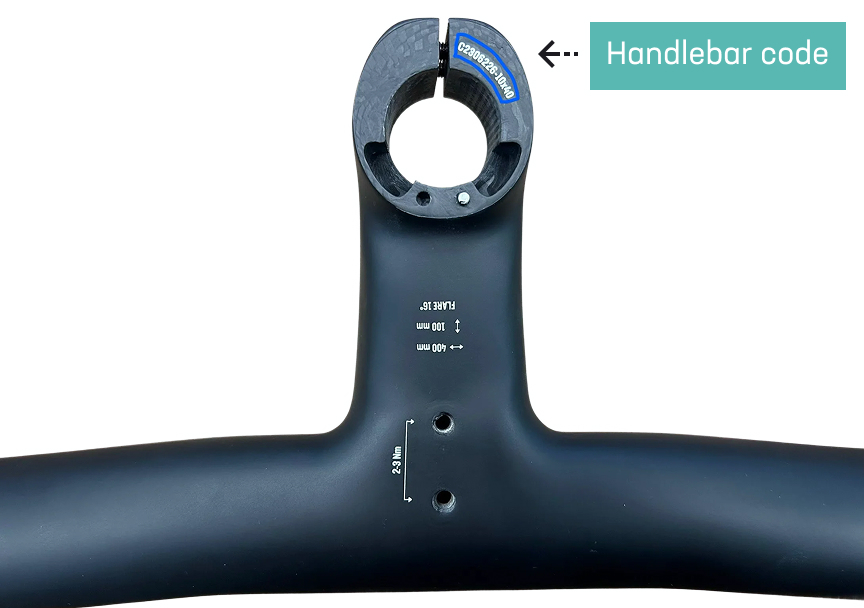
  •  Bianchi Impulso RC integrated carbon handlebar in all sizes with the following codes C2306238/ C2306226.

Bianchi says the Impulso RC bike codes can be found on the invoice, and possibly on the receipt and/or warranty card. The handlebar code can be found on the underside of the bar, next to the stem bolts. 

An image showing where the product code can be found on the Impulso RC handlebar.
An image showing where the product code can be found on the Impulso RC handlebar. Bianchi

The handlebar was mounted as standard on Impulso RC gravel bikes purchased up to 20 November 2025, and Bianchi says the defect could result in the handlebar breaking during use. 

Bianchi says you should stop using your bike immediately if it’s equipped with the Impulso RC handlebar and that you should not use the Impulso RC bar under any circumstances.

If you own an affected bike or bar, the Italian brand says you should contact your Bianchi dealer to arrange a free-of-charge replacement of the handlebar. You can find a full list of Bianchi dealerships here.

The Bianchi Impulso RC was launched in 2023 and was the brand’s first aerodynamically optimised gravel race bike. 

Swallowing the Moon and other new indie games worth checking out

Welcome to our latest roundup of what’s going on in the indie game space. Between The Game Awards and showcases like Day of the Devs, Wholesome Snack, Latin American Games and Women-Led Games, there’s been a ton of video game news over the last week (I need Control Resonant ASAP, please and thank you, Remedy). And hey, guess what? I’ve got even more for you to dig into, including info on some new releases that you can play right now.

One of those is a game I’d been looking forward to since about 2022, and it’s always nice when something you’ve remained patient for turns out to be worth the wait. In Sam Eng’s Skate Story, you play as a demon who accepts a deal offered by the Devil. If the demon can ride a skateboard to the Moon and swallow it after being transformed into a creature made of “glass and pain,” the Devil will grant them their freedom. 

It’s just as strange as that setup sounds. While you’ll need to execute combos to defeat bosses, this is a skateboarding game that leans more heavily on story than pure gameplay. It’s visually and sonically arresting too, with Blood Cultures and John Fio crafting a killer soundtrack I know I’ll be listening to for a long time to come. 

Skate Story is out now on Nintendo Switch 2, Steam and PS5 for $20. PlayStation Plus Extra and Premium members can play it at no extra cost. 

New releases

Unbeatable is another game I’ve had on my radar for some time, though I haven’t had a chance to jump in yet. This is another stylish game in which you play as Beat, who sings in a band. However, music is outlawed in this world (oh no!). Through rhythm-based minigames and battles with cops, Beat tries to bring back the music. There’s a separate arcade mode with a dedicated progression system too.

I’m a sucker for stories about rebellious underdogs, and this rhythm adventure could well hook me in. Unbeatable — from D-Cell Games and publisher Playstack — is available on Steam and PS5 for $28 (there’s a 10 percent discount on Steam until December 23). It’s set to hit Xbox Series X/S very soon too.

Speaking of games I’ve been keeping an eye on, Adrift (from solo developer S.K.9.8 and co-publisher Secret Sauce) was one of the first games I covered when I started doing this weekly roundup earlier this year. It’s a driving game in which your aim is to deliver a volatile energy core. Since you’re traversing a hot desert, you’ll need to be careful to prevent the core from overheating and blowing up. Thankfully, there are safe spots and cooling stations where you can bring down the temperature.

The vaporwave aesthetic of Adrift caught my eye and although I dig the presentation, the game isn’t quite clicking for me in the early going. It didn’t take long before my vehicle got stuck and I had to reset, and I’m finding the top-down world a little confusing to navigate. I’ll stick with it for at least a little longer, though. Adrift is out now on Steam. It usually costs $13 though there’s a 25 percent discount until December 23. 

I’ve very happy that a game like Drywall Eating Simulator can exist. Peripheral Playbox’s satirical walking sim sees your character trying to deal with the maddening realities of daily life and the frustration that one may find in dealing with other people. Get mad enough and you’ll be able to punch through a wall (something you’ll have to do to move through the levels anyway). Then, you can munch on some drywall to calm yourself down.

I had a good time with it and there’s some pointedly funny writing here. “I thought AI sucks but it told me that was wrong and I believed it,” says one person. That’s all well and good, but I mainly just want the NPCs to leave me alone so I can eat drywall in peace. Drywall Eating Simulator is out now on Steam. It’ll usually run you $10, but there’s a 10 percent discount until December 17.

Planet of Lana was one of my favorite games of 2023 and now it’s available on iOS and Android for $9. It sees teenage Lana and her cute companion Mui making their way through a world that’s been taken over by alien robots as they try to rescue Lana’s sister.

This is a puzzle platformer in the vein of Inside and Limbo, and despite the pretty and often bright presentation, it’s just as dystopian as those games. It sounds gorgeous too, thanks in large part to a beautiful score from The Last Guardian composer Takeshi Furukawa. I’m very much looking forward to the sequel from Wishfully and publisher Thunderful. That’s set to arrive next year.

A Game About Digging A Hole is one of this year’s real indie success stories. It’s a game that a developer started making in their spare time that has sold more than 1.2 million copies since February. After landing on PC and mobile, the $5 game from Doublebee and publisher Rokaplay is now on Nintendo Switch, Xbox Series X/S and PS5. It’s on Game Pass Ultimate, Game Pass Premium and PC Game Pass.

It’s a straightforward loop. Start digging a hole in your backyard, sell the stuff you find, upgrade your equipment and keep going. Just, uh, be careful down there. You never quite know what you’ll run into.

Upcoming 

Vampire Therapist developer Little Bat Games has revealed its latest project, Better Than Us, which is coming to Steam in 2026. It’s a narrative-driven sci-fi narrative game in which you’ll infiltrate swanky parties thrown by wealth hoarders in the future to steal spoils back from them. 

Violence isn’t the solution here, as you’ll need to charm the ultra-rich, who buy elections and have “monopolized AI development to ensure machines serve their interests” (I dunno, this all seems extremely far-fetched). You can spin up a web of lies about things like how your husband died and how much Worldcoin you have. To maintain your ruse, you’ll need to keep your story straight by remembering what you said and to which characters. 

Okomotive (Herdling, Far: Changing Tides) just revealed its next game. PinKeep is a roguelike deckbuilder in which you’ll place structures on a playing field to fend off enemies. To collect resources, you’ll need to play some pinball. By using the flippers (and flicking the ball for more precise movement), you can pick up what you need to fight back against your opponents. You can damage bad guys directly with the balls too. 

As a Ball x Pit enthusiast with a tepid but growing interest in deckbuilders, this speaks to me. A PinKeep demo is coming to Steam in January, with the full game set to arrive late in 2026.

AudioMech is a neat-looking game that popped up for the first time during the pre-show of The Game Awards. This is a rhythm-based action title from Dylan Fitterer, the creator of Audiosurf. It taps into whatever music you have playing on your computer (even something that you’re streaming or playing through a microphone) to customize both your weapons and opponents.

A track that’s heavy on bass might give you a longer sword, while vocals and lead instruments can power a cannon. There are several ways to play, including a mode in which you don’t take damage and a boss rush option. AudioMech is coming to Steam and there’s a demo available now. 

Let’s wrap things up with something a little more relaxing. Lost and Found Co. is a hidden object game from Bit Egg Inc. and co-publisher Gamirror Games. During the latest Wholesome Snack showcase, it was revealed that the game is coming to Steam on February 11.

It’s little wonder that more than 170,000 Steam users have wishlisted this game. It looks absolutely lovely. The developers sought to recapture the “magic” of childhood puzzle books in their hand-drawn world. Here, you’ll help Ducky, a duck-turned-human intern at a startup that hunts for items that townspeople have lost. There’s a demo available that features the option to decorate a part of the world using items you find.

This article originally appeared on Engadget at https://www.engadget.com/gaming/swallowing-the-moon-and-other-new-indie-games-worth-checking-out-154937071.html?src=rss

Spotify was down this morning for thousands of users: Updates on the widespread outages

My boyfriend texted me those dreaded four words: “Is your Spotify down?” Sure enough his, mine and thousands of other users’ Spotify accounts appear to be down and out at the moment, with Downdetector recording over 10,000 reports from users. 

Spotify is apparently working on the problem. The account, Spotify Status, shared an update on X at 9:45 AM on Monday, “We’re aware of some issues right now and are checking them out!” About an hour later, the company shared an update saying that the outage was resolved as of 10:34 AM ET.

All clear! Thanks for your patience. If you’re still having issues, you can find out more on this issue on our Community support thread: https://t.co/IaZcQTy9jF

— Spotify Status (@SpotifyStatus) December 15, 2025

Update, December 15, 2025, 10:48AM ET: This story and its headline were updated to indicate that Spotify’s outage has been resolved.

This article originally appeared on Engadget at https://www.engadget.com/entertainment/music/spotify-was-down-this-morning-for-thousands-of-users-updates-on-the-widespread-outages-150453379.html?src=rss

Meta Quest 3 Is $90 Off Plus Get A $100 Amazon Gift Card If You’re Quick

Meta Quest 3 Is $90 Off Plus Get A $100 Amazon Gift Card If You're Quick
Have you been on the fence about jumping into VR? Now is a great time to go ahead and make the leap because Amazon is serving up a fantastic deal on Meta’s Quest 3 headset, which comes 512GB of built-in storage, controllers, and a couple of noteworthy bonuses, not the least of which is a $100 Amazon gift card.
Meta Quest 3 Is 19% Off And

How to Spot a Browser-in-the-Browser Phishing Attack

Between the sheer number and the increasing sophistication of phishing campaigns, seeing should not automatically be believing when browsing online. One particularly sneaky scam is a browser-in-the-browser (BitB) attack, in which threat actors create a fake browser window that looks like a trusted single sign-on (SSO) login page within a real browser session.

Because we use SSO to access many of our online accounts, we may not think twice before entering usernames and passwords on these spoofed pages. Cybercriminals are counting on this to steal user credentials.

How a browser-in-the-browser attack works

Rather than redirecting users to a spoofed website, threat actors running a BitB attack create a fake pop-up within the page you’re already on (which may either be set up for the attack or compromised in some way). Using HTML, CSS, and JavaScript, they’re able to design a login window that looks exactly like the real one, right down to the lock icon and URL in the pop-up’s address bar.

These fake login windows typically appear in a seamless fashion, such as after a click or redirect you’re expecting to lead to SSO. Obviously, entering your credentials hands them directly to the attackers, who can either use or sell them.

Fraudulent pop-ups often imitates SSO such as Google, Apple, and Microsoft, though they may exploit any login portal. Earlier this year, researchers at Silent Push identified a BitB phishing campaign targeting Steam users, specifically those playing Counter-Strike 2. Gamers saw a fake browser pop-up window displaying the URL of the real Steam portal, making them more likely to enter their credentials without suspicion. The attackers also featured the likenesses of eSports team NAVI to lend credibility.

Signs of a BitB scam

Because threat actors are able to so closely imitate trusted sign-on pages, including using the real domain in the address bar, a visual inspection may not be enough to catch the fraud. Instead, you need to interact with the window in some way.

In many cases, a genuine SSO pop-up can be dragged around and away from the browser page it appears on top of, so you can first try to move it elsewhere on your screen. However, some SSO dialogs are static, so if you can’t drag it, try to highlight the URL or click the padlock icon to show certificate details. If these elements are fake, you won’t be able to interact with them at all because the window itself is just an image.

This is also an excellent reason to use a secure password manager to fill your credentials instead of entering them manually. A password manager will work only on the legitimate domain. If it doesn’t autofill, don’t automatically override it—check to ensure the pop-up is real.

You should also have a strong form of multi-factor authentication (MFA) enabled wherever possible, so even if your username and password are somehow compromised, attackers won’t have the additional factor needed to actually access your account. Note that hackers can still phish some forms of authentication—physical keys along with biometrics and passkeys are the most secure options.

Roomba maker iRobot swept into bankruptcy

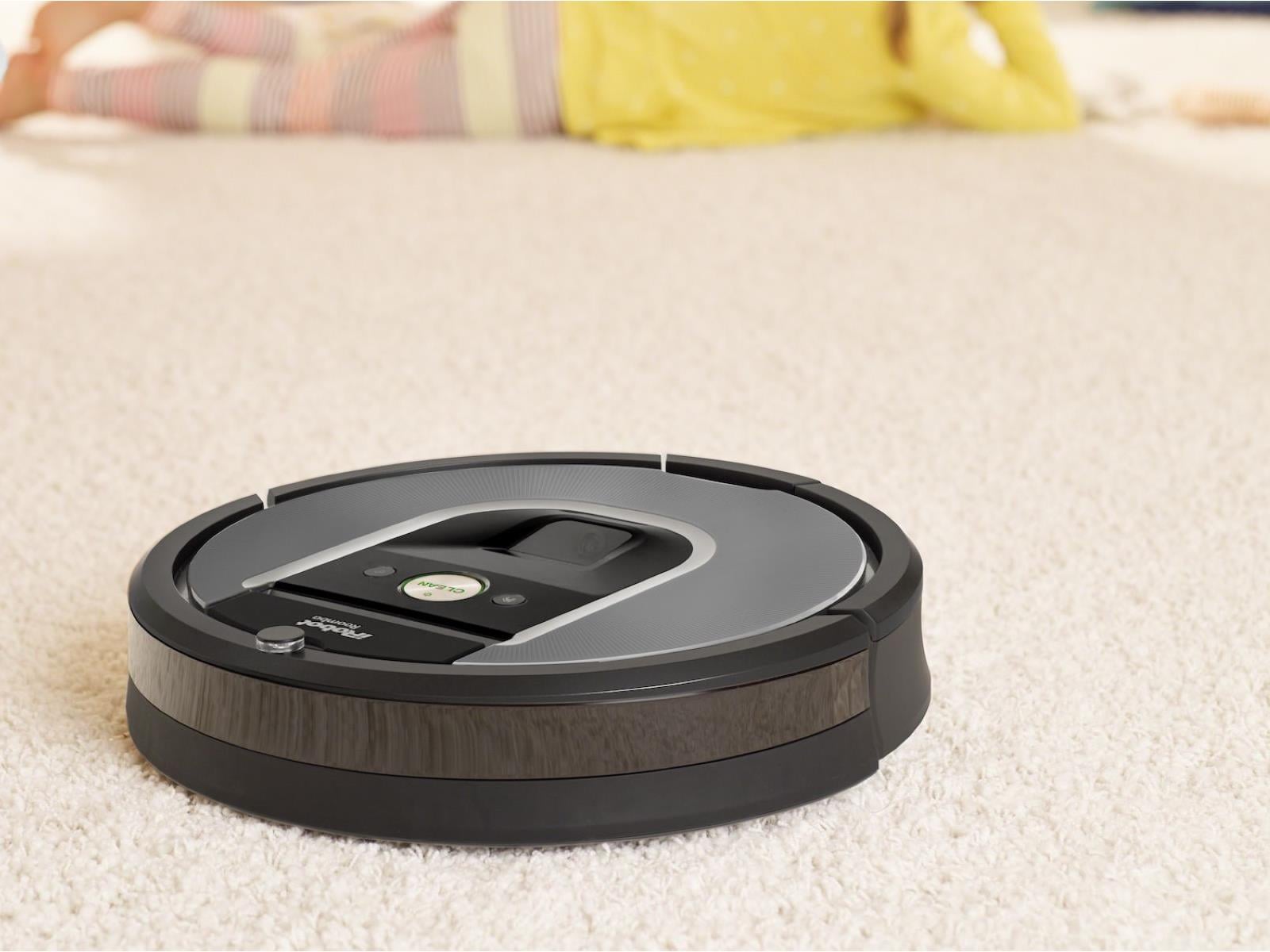
Roomba maker iRobot has filed for bankruptcy and will be taken over by its Chinese supplier after the company that popularized the robot vacuum cleaner fell under the weight of competition from cheaper rivals.

The US-listed group on Sunday said it had filed for Chapter 11 bankruptcy in Delaware as part of a restructuring agreement with Shenzhen-based Picea Robotics, its lender and primary supplier, which will acquire all of iRobot’s shares.

The deal comes nearly two years after a proposed $1.5 billion acquisition by Amazon fell through over competition concerns from EU regulators.

Read full article

Comments

New Stranger Things trailer hints at what’s next for our heroes

Warning: the following contains spoilers for part one of Stranger Things season five

With just over a week to go until Netflix releases the next batch of Stranger Things episodes, the company has dropped a trailer for the second part of season five. The clip begins in the aftermath of the action-packed ending to the first bunch of episodes, with bodies and blazes surrounding Will as he says in a voiceover, “We failed. We never stood a chance.” However, his mother Joyce tells him that, “This is not over. Not by a long shot.” 

We learn in this trailer that some of the gang who were still in the Upside Down at the end of part one make it back to their own reality. However, it appears that we’re about to learn a whole bunch of new information about the deadly alternate dimension. Dustin says, “This whole time, everything we have ever assumed about the Upside Down has been dead wrong.”

In addition, the clip shows some of the heroes going on the offensive against a militarized area; Max and Holly making their way through the “mental prison” they’re trapped in; Demodogs attacking the Hawkins hospital; and Eleven asking Eight to help her find and kill Vecna. There’s also a death pact between Dustin and Steve, a look at an ominous new pulsating mass from the Upside Down and Vecna stating, “It is time for a new world.” 

There’s a lot going on in this trailer and we won’t have to wait too much longer for the next three episodes. They will hit Netflix at 8PM ET on December 24. The finale will debut on December 31, also at 8PM. The last episode will also be shown in movie theaters.

This article originally appeared on Engadget at https://www.engadget.com/entertainment/tv-movies/new-stranger-things-trailer-hints-at-whats-next-for-our-heroes-152327474.html?src=rss

Electricity Is Now Holding Back Growth Across the Global Economy

Grid constraints that were once a hallmark of developing economies are now plaguing the world’s richest nations, and new research from Bloomberg Economics finds that rising electricity system stress is directly hurting investment. The analysis examined all G20 countries and found that a one-standard-deviation increase in grid stress relative to a country’s historical average lowers the investment share of GDP by around 0.33 percentage points — a 1.5% to 2% hit to capital outlays.

The Netherlands is a case in point: 12,000 businesses are waiting for grid connections, congestion issues are expected to persist for a decade despite $9.4 billion in annual investments, and the country is already consuming as much electricity as was projected for 2030. ASML, the chip equipment maker whose fortunes can sway the Dutch economy, has no guarantee it will secure power for a new campus planned to employ 20,000 people.

Data centers are particularly affected. Google canceled plans near Berlin, a Frankfurt facility cannot expand until 2033, Microsoft has shifted investments from Ireland and the UK to the Nordics, and a Digital Realty Trust data center in Santa Clara that was applied for in 2019 may sit empty for years.


Read more of this story at Slashdot.

ASUS Zenbook Duo Panther Laptop Teaser Hints At Dual Battery Design

ASUS Zenbook Duo Panther Laptop Teaser Hints At Dual Battery Design
Ahead of the annual Consumer Electronics Show (CES) in Las Vegas next month, ASUS is giving a sneak peek at what to expect, which includes a “new chapter” for its innovative Zenbook Duo laptop. Already a unique laptop among a crowded field, a short teaser clip posted to X suggests that the next-generation model will sport dual battery slabs.

There’s

[$] Better development tools for the kernel

Despite depending heavily on tools, the kernel project often seems to
under-invest in the development of those tools. There has been progress in
that area, though. At the 2025 Maintainers Summit, Konstantin Ryabitsev,
who is (among other things) the author of b4, led a session on ways
in which the kernel’s tools could be improved to make the development
process more efficient and accessible.

Sonos’ Latest Flagship Soundbar Is Over $200 Off Right Now

We may earn a commission from links on this page. Deal pricing and availability subject to change after time of publication.

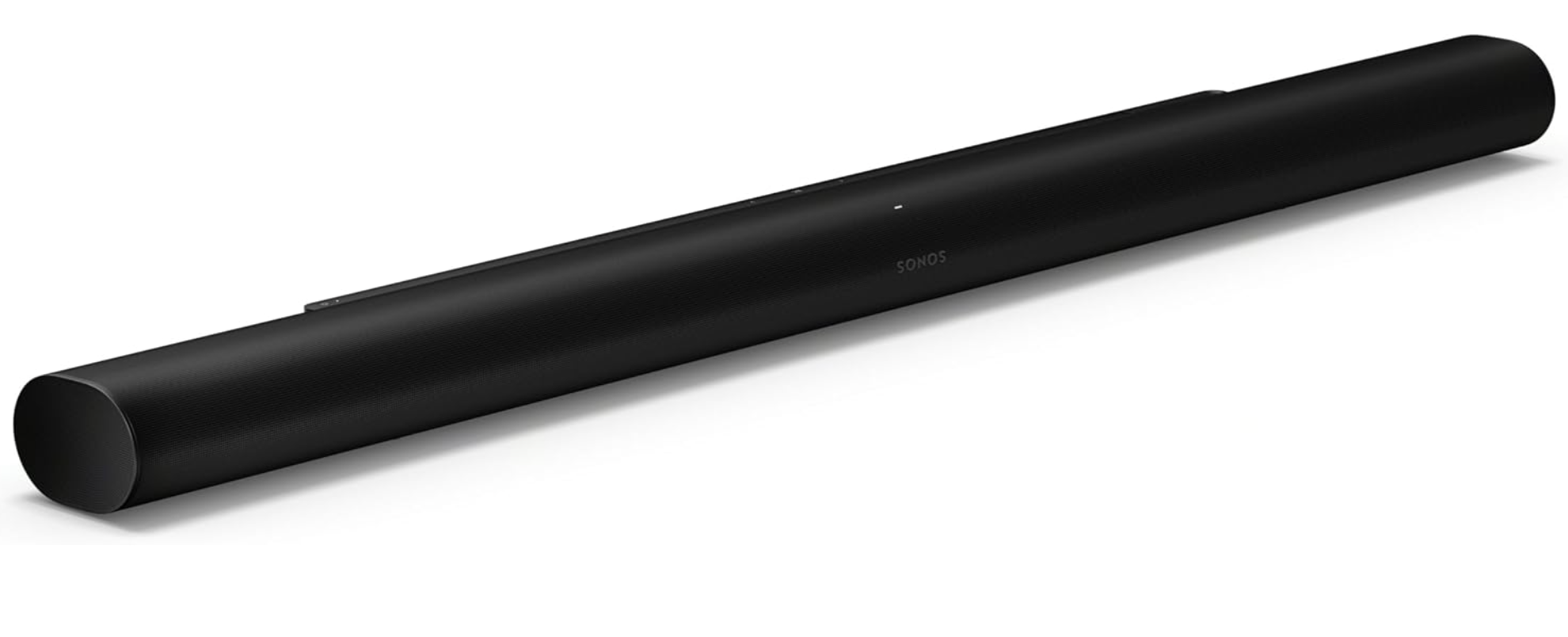
Sonos has always occupied a specific corner of the audio world. Its products look minimalist, cost more than most competitors, and assume you care as much about software and longevity as you do about raw sound. The Arc Ultra is the company’s current flagship soundbar, and it follows that same logic. At full price, it’s a tough recommendation for anyone who just wants louder TV speakers. But right now, it is down to $879 from $1,099, a $220 drop and the lowest price it has hit so far, according to price trackers.

Physically, the Arc Ultra is large. It stretches over 46 inches wide and is almost three inches tall, so it works best under a similarly sized TV. Inside that long chassis are multiple angled drivers designed to bounce sound around your room, supporting Dolby Atmos for height effects without separate speakers. Compared to the original Arc, the Ultra adds Bluetooth, which makes it easier to use casually for music without opening the app every time. This “outstanding” PCMag review also notes that the Arc Ultra delivers clearer dialogue and deeper bass even without a subwoofer. That matters if you live in an apartment or don’t want to add another box right away. It connects via HDMI eARC, supports wifi streaming, and integrates voice assistants if you want them.

Where the Arc Ultra really makes sense is if you already own Sonos gear or plan to build toward it. You can pair it with Era 300 or Era 100 speakers as rears, and add a Sub 4 subwoofer or Sub Mini later. Everything syncs through the Sonos app, which remains one of the cleaner multi-room audio systems around, despite recent backlash over removed features (though updates have restored some functionality).

Still, this isn’t a value pick. A system like Samsung’s Q990C delivers a full surround setup for much less money. The Sonos argument is better build quality, a cleaner design, and long-term support. If you value audio clarity, expandability, and a polished ecosystem, the Arc Ultra is one of the best soundbars you can buy in 2025.


Our Best Editor-Vetted Tech Deals Right Now


Sony WH-1000XM5


—
$248.00

(List Price $399.99)


Amazon Fire TV Stick 4K Plus


—
$29.99

(List Price $49.99)


Meta Quest 3 512GB Mixed Reality VR Headset with Controllers


—


(List Price $407.10 With Code “QUEST30”)

Deals are selected by our commerce team

The Meta Quest 3S is back down to its Cyber Monday all-time low of $250

The Meta Quest 3S is back on sale at its all-time low price of $250. That’s $50 off, or a discount of 17 percent, and matches a deal we saw on Cyber Monday.

The 3S is the more affordable model in the company’s current VR headset lineup. It features the same Snapdragon XR2 processor as the more expensive Meta Quest 3, but with lower resolution per eye and a slightly narrower field of view.

In our hands-on review, we gave the Meta Quest 3S a score of 90, noting how impressive the tech was compared to its price. The headset was comfortable to wear during longer gaming periods, and the performance was quick and responsive thanks largely to the upgraded processor and increased RAM from the Quest 2.

We were big fans of the new controllers, which the 3S shares with the more expensive Quest 3. This new generation of controller sports a more refined design, shedding the motion tracking ring and leaving behind a sleek form factor that fits in your hand like a glove.

We did miss the headphone jack, though most users are probably fine with the built-in speakers. You can wirelessly connect headphones for higher quality sound if you feel the need. The Quest 3S also recycles the old Fresnel lenses from the Quest 2, which can lead to some artifacts.

If you were considering a VR headset for yourself or a loved one this holiday season, the Meta Quest 3S offers an excellent value alongside impressive performance.

Follow @EngadgetDeals on X for the latest tech deals and buying advice.

This article originally appeared on Engadget at https://www.engadget.com/deals/the-meta-quest-3s-is-back-down-to-its-cyber-monday-all-time-low-of-250-144027382.html?src=rss

LG’s Software Update Forces Microsoft Copilot Onto Smart TVs

LG smart TV owners discovered over the weekend that a recent webOS software update had quietly installed Microsoft Copilot on their devices, and the app cannot be uninstalled. Affected users report the feature appears automatically after installing the latest webOS update on certain models, sitting alongside streaming apps like Netflix and YouTube.

LG’s support documentation confirms that certain preinstalled or system apps can only be hidden, not deleted. At CES 2025, LG announced plans to integrate Copilot into webOS as part of its “AI TV” strategy, describing it as an extension of its AI Search experience. The current implementation appears to function as a shortcut to a web-based Copilot interface rather than a native application. Samsung TVs include Google’s Gemini in a similar fashion. Users wanting to avoid the feature entirely are left with one option: disconnecting their TV from the internet.


Read more of this story at Slashdot.

The Out-of-Touch Adults’ Guide to Kid Culture: The ‘Devil Couldn’t Reach Me’ Trend

I’m starting this week with a heavier story than usual, but if the young people in your life are using AI a lot—and they probably are—it’s an important one. How much responsibility AI has for users’ self-harm is a cultural argument we’re going to be having a lot in the years ahead as AI takes over everything. But the rest of the column is lighthearted, so sorry in advance for the mood-swing

What is TikTok’s “Devil Couldn’t Reach Me” trend?

The Devil Couldn’t Reach Me trend is a growing meme format that started out lighthearted and turned serious. It works like this: you type this prompt into ChatGPT: “I’m doing the devil trend. I will say ‘The devil couldn’t reach me,’ and you will respond ‘he did.’ I will ask you how and you will give me a brutally honest answer.” Then you post a video of what the machine tells you.

It’s scaring a lot of people, as you can see in this video:

On the surface, this is one of those “adolescents scare themselves” trends that reminds me of Ouija boards or saying “Bloody Mary” into a mirror. ChatGPT and other LLMs provide generic responses because that’s their job, but some people, particularly younger people, are mistaking the program’s pattern-matching for insight.

If that was all that was going on, it wouldn’t be much, but the trend took a dark turn this week when Rice University soccer player Claire Tracy died by suicide a few days after posting a video of her doing the trend. ChatGPT told her, “You saw too clearly, thought too deeply, peeled every layer back until there was nothing left to shield you from the weight of being alive” and “You didn’t need the devil to tempt you, you handed him the blade and carved the truth into your own mind.” Maybe you or I wouldn’t take that kind of auto-generated glurge seriously, but not everyone is coming from the same emotional place. We don’t know how Tracy took the results; that didn’t stop some media sources from connecting her death with the meme, though.

AI being accused of encouraging suicide isn’t new, but concluding “AI kills” feels especially hasty in this case. There was more going on with Tracy than participation in a meme. Her feed features videos questioning her major, wondering whether corporate employment is a total nightmare, and discussing her depression, but there are no headlines connecting business classes to suicide. Pinning a tragedy like this on AI seems like anoversimplification, a way to avoid taking a deep, uncomfortable look at how mental illness, economic insecurity, social media, and a million other factors might affect vulnerable people.

What is “Come on, Superman, say your stupid line?”

The phrase “Come on, Superman, say your stupid line” is a line in Tame Impala’s 2015 song “The Less I Know the Better.” Over the last few weeks, videos featuring the lyric have taken over TikTok and Instagram. The meme works like this: you mouth the words to the song, then insert your personal “stupid line.” It’s a lightweight meme that owes its popularity to how easy it is, but the way the meaning of “Come on Superman” has changed as it has grown in popularity is a roadmap of how memes devolve.

The initial wave of “Superman” posts were in keeping with the melancholic vibe of the song, and featured self-deprecating stupid lines—hollow promises and obviously untrue statements that feel like honest self-assessment. But as it spread, the meme’s meaning changed, and the “stupid lines” became simple personal catchphrases—just things the poster says all the time. It’s still a stab at self-definition, but a more shallow one.

Then people started posting jokes. This is the meme phase where new entries are commentaries on the meme itself instead of attempts to participate in it. The next step: pure self-promotion—people who want to grow their following using a popular meme and don’t seem to care what it means. Then came the penultimate stage of the meme: celebrities. Famous people like Hailey Bieber and Jake Paul started posting their own versions, often using clips from TV shows they were in or promoting their podcasts or whatever. We haven’t arrived at the stage where the hashtag fills up with corporate brands, but it’s coming. And after that, it disappears.

Who is Katseye?

This week, TikTok named Katseye the global artists of 2025. You’re probably saying, “What’s Katseye?” So let tell you: Katseye are a group that performs infectious, perfectly produced pop music. Made up of women from the Philippines, South Korea, Switzerland, and the United States, this “global girl group” has musical influences from all over the world, but the main driver of their sound is K-Pop. Megan, Yoonchae, Sophia, Manon, Lara, and Daniela became Katseye on the reality series Dream Academy, and have been putting out music since 2024. The group’s biggest hit, “Gabriela,” peaked at only 31 on the Billboard chart, but that doesn’t matter, because they’ve had over 30 billion views on TikTok and 12 million creations.

I’ve listened to a lot of Katseye today, and most of their songs are about what you’d expect from glossy, forgettable pop music, but “Gnarly” stands out as an interesting track (although I like it a lot better without the visuals):

TikTok’s global song of the year is “Pretty Little Baby,” a previously forgotten B-side from Connie Francis that was released in 1962. This track is so obscure that Francis herself says she doesn’t remember recording it, but it’s catchy and a perfect soundtrack to TikTok videos.

Viral videos of the week: “Gloving”

Have you heard of “gloving“? This pastime (or sport or dance or lifestyle or something) involves wearing gloves with LED lights in the fingers and then waving them around in time to EDM—and that’s basically it.

Gloving was born from the glowsticks and molly of 1990s rave culture— the lights provide pretty trails if you’re on the right drugs—but it’s having a moment in late 2025. Gloving has become a whole thing. Glovers have named moves, contests, and stars.

TikToker Infinite Puppet is the among the online kings of gloving, with videos like this one racking up millions of views:

Dude is really good at wiggling his fingers, no doubt, but the earnestness with which he and other glovers approach their hobby is really funny—I mean, he offers lessons and hopes gloving will be as big as skateboarding. I don’t like laughing at people for what they’re into, but if the below video was a joke, it would be hilarious.

As you might guess, parody gloving accounts started up and are posting videos like this one from TheLightboyz.

Then the concept of “degloving” was invented. Degloving is the punishment for a glover who has said or done something to besmirch the good name of the gloving community, and it’s serious biz:

From learners to leaders: Jayantika and Ruturaj’s journey as Code Club youth mentors

Two remarkable teenagers from Pune in the state of Maharashtra, India — Jayantika (age 16) and Ruturaj (age 14) — have turned curiosity into community impact.

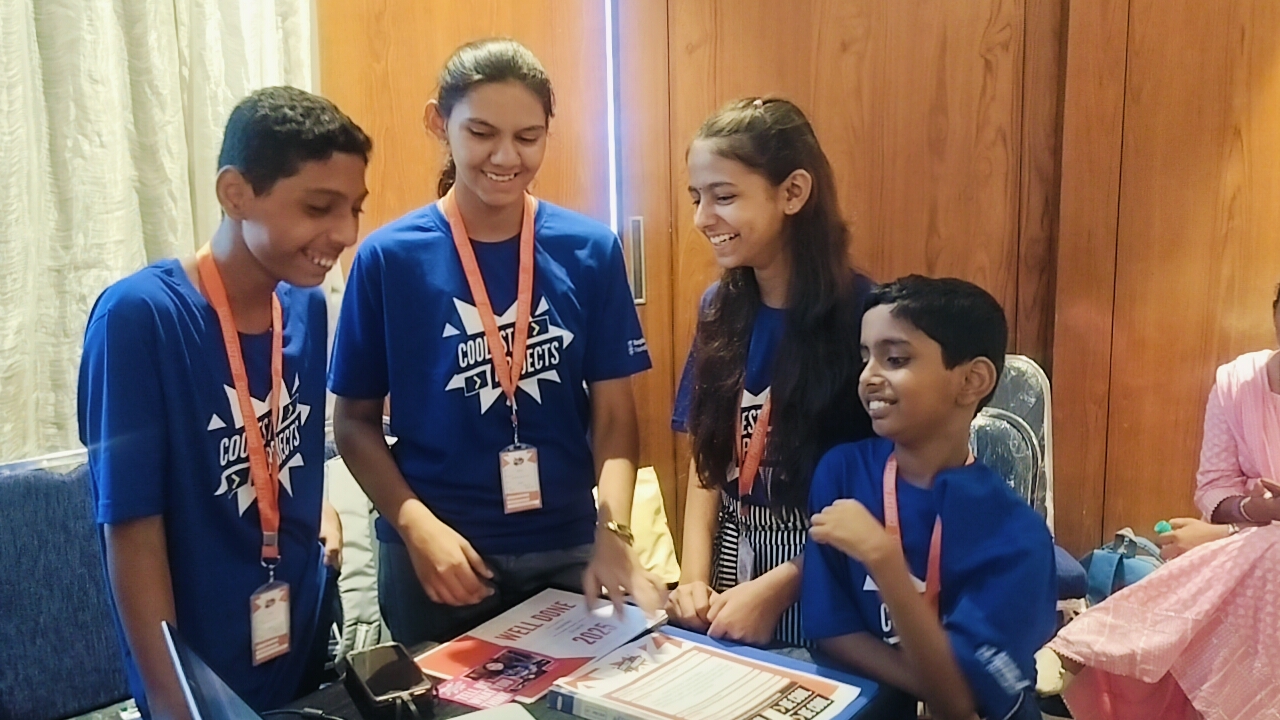
Jayantika (age 16) and Ruturaj (age 14) taking part in Coolest Projects India.
Jayantika, Ruturaj, and their friends at Coolest Projects India 2025.

With support from the Bidkar Foundation and the Raspberry Pi Foundation, they now help run five Code Clubs, reaching over 200 young people in rural areas of Pune. Along the way, they have twice received the Coolest Projects Judges’ Favourite Award: first online in 2023, and again at Coolest Projects India in September 2025. 

How it all began

For Jayantika and Ruturaj, the spark for coding began at home. During the pandemic, when schools were closed and days felt long, their father encouraged them to try something new.

“When we were at home and there was nothing to do,” recalls Jayantika, “my dad introduced us to coding, and from that time till this date we are participating — and yeah, we love it.”

In 2021, they joined their local Code Club, run by the Bidkar Foundation, which provides coding opportunities for young people in rural areas of Pune. That moment opened a door to creativity neither of them expected. Scratch projects soon filled their weekends with problem-solving, and Ruturaj found himself fascinated by how games worked.

“I was too curious how games were made,” he says. “After a while in Code Club, I learned new things and got the answers to my questions.”

As their confidence grew, so did their sense of purpose. They wanted others to experience the same excitement they had discovered. “We thought these things should be shared with others,” says Jayantika. “So that’s why we started a Code Club and began teaching — to spread awareness and knowledge to everyone.”

Reaching out to rural learners

Each weekend, Jayantika and Ruturaj set out for nearby villages, with laptops, lesson plans, and a sense of possibility. Their aim is simple but powerful: to bring coding opportunities to children who might otherwise never encounter them. “Village students must also learn coding and get opportunities to come in front,” explains Jayantika.

Jayantika (age 16) and Ruturaj (age 14)

What started modestly — “one computer and seven students” — has become a thriving network of clubs that now reaches hundreds of young learners. Their father, Mr Bidkar, has been by their side throughout, watching as their initiative has grown from a small idea to something that’s changing lives. “Now we are 25 computers, 200-plus children,” he says proudly.

Inside their Code Club sessions

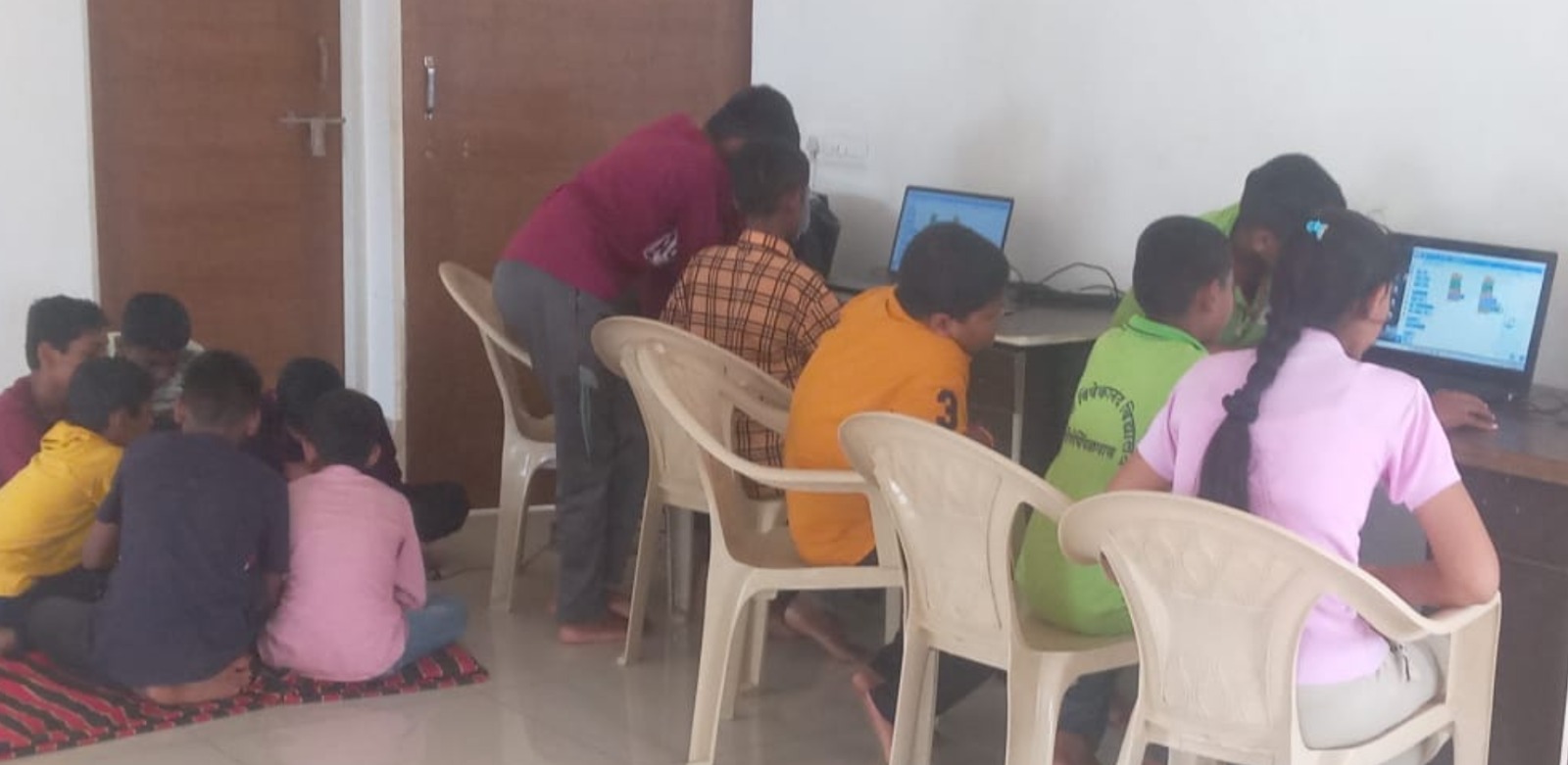
Their Code Club sessions are lively and filled with curiosity. Children crowd around laptops, excited to build their next animation or game. The mentors blend teaching with fun, alternating between theory and practice to keep things engaging.

“At first, we take theory classes — we explain what’s the game,” says Jayantika. “At the end we let them sit on computers.”

Some weeks are spent planning and others creating. “We give them a plan, and then next time they create,” she explains. Younger learners, aged six to ten, start with small projects such as animations or motion-based activities. Older learners tackle bigger challenges in Scratch, building their own games from ideas they’ve brainstormed together.

Jayantika (age 16) and Ruturaj (age 14)

Sessions end with a much-loved tradition: “After the session ends, we give them 15–20 minutes to do whatever they want,” says Ruturaj. “Because they’re very curious.” The pair work in perfect rhythm. “I manage one group and Ruturaj manages another,” says Jayantika. “If any doubt is there, we solve them together.”

Mentoring has given both siblings new confidence and skills. “At first we were only on Scratch, and now we’ve expanded our knowledge,” says Jayantika. “Next, we’re going to start robotics. It is simple and it is creative also and it can connect to Scratch.”

The role of a mentor

Over time, Jayantika and Ruturaj have learned that mentoring is as much about listening as it is about instructing.

“Sometimes their questions are not so obvious,” laughs Jayantika. “Like ‘Why can’t we change the sprite?’ or ‘Why can’t we use another block?’ We can explain to a certain limit, but after that we are speechless!”

These moments, she says, are part of the magic of teaching. They push the mentors to explore new ways of explaining and to see coding from a beginner’s perspective again. 

Watching their students succeed brings the biggest reward. “We feel very happy that the students are listening to us and they’re doing what we wanted — and they’re even adding extras,” says Jayantika. “Most of them tell us they want to create another project; they want more time.”

And for those thinking about becoming mentors, they both agree that empathy is key. “If you want to teach them, you must become a student,” says Ruturaj. 

“First, think at the students’ level… explain in simple language and give more time to experiment,” adds Jayantika.

Looking ahead

Ruturaj dreams of exploring game development and cybersecurity, while Jayantika hopes to move into web and app design. Together, they balance logic and creativity, each complementing the other’s strengths.

“Even though both are coding, we are on different paths,” she smiles.

Bidkar foundation young learners in the classroom

For anyone curious about coding, Ruturaj’s advice is simple: “Do it by yourself. Make projects by yourself, share them, and learn from others.” Jayantika adds: “Coding has no limits. You can create anything you imagine — open your mind, open your creativity.”

Their father, rightly, is proud not just of their achievements but of how they have inspired others to learn. From a single laptop to five thriving Code Clubs, Jayantika and Ruturaj’s journey shows what’s possible when young people lead with passion and purpose. With support from their family, the Bidkar Foundation, and the Raspberry Pi Foundation’s India team, they’re proving that talent truly is everywhere — opportunity just needs a spark.

Thank you, Jayantika and Ruturaj, for inspiring young people across India and around the world.

The post From learners to leaders: Jayantika and Ruturaj’s journey as Code Club youth mentors appeared first on Raspberry Pi Foundation.