
OpenShot 3.4 is now available as the latest feature update to this open-source video editor app. OpenShot 3.4 happens to be “one of our largest updates we’ve ever done” with a variety of improvements in tow…
Category Archives: Unfiltered RSS
2025 highlights from the Raspberry Pi Computing Education Research Centre
It’s been over a year since I last wrote an update on this blog about our research and as we’ve just published our 2025 Annual Report, this is an ideal opportunity to share what we’ve been working on at the Raspberry Pi Computing Education Research Centre.
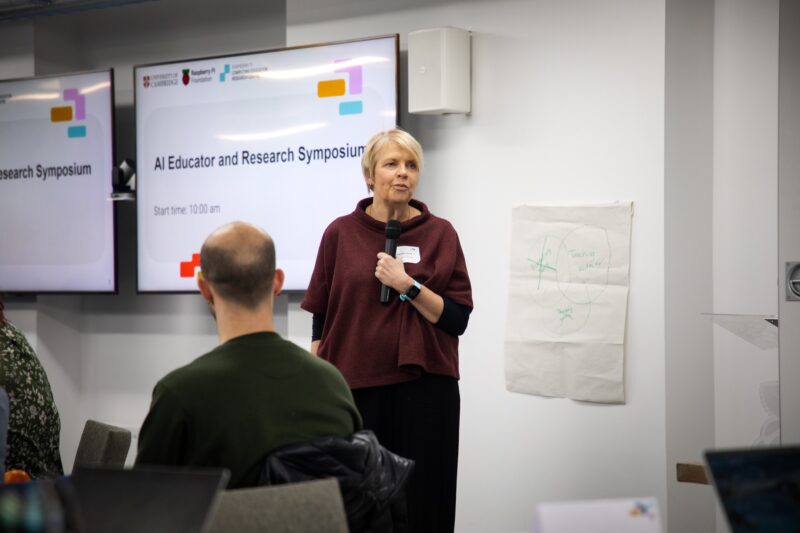
We are a research centre based in the Department of Computer Science and Technology at the University of Cambridge, with a team that spans the university and the Raspberry Pi Foundation. We conduct research into many aspects of the teaching and learning of computing and AI and we work closely with schools, teachers and young people to ensure our research is applicable to practice.
Below I highlight some of the projects we’ve worked on in the academic year 2024-2025:
- Computing Around the World
- AI education
- Programming education
- Physical computing (EPICS project)
- Teacher action research (TICE project)
Computing Around the World
As I’ve written on this blog before, computing education is a global challenge. In one of the Research Centre’s projects, we are looking at how computing education is spreading around the world.
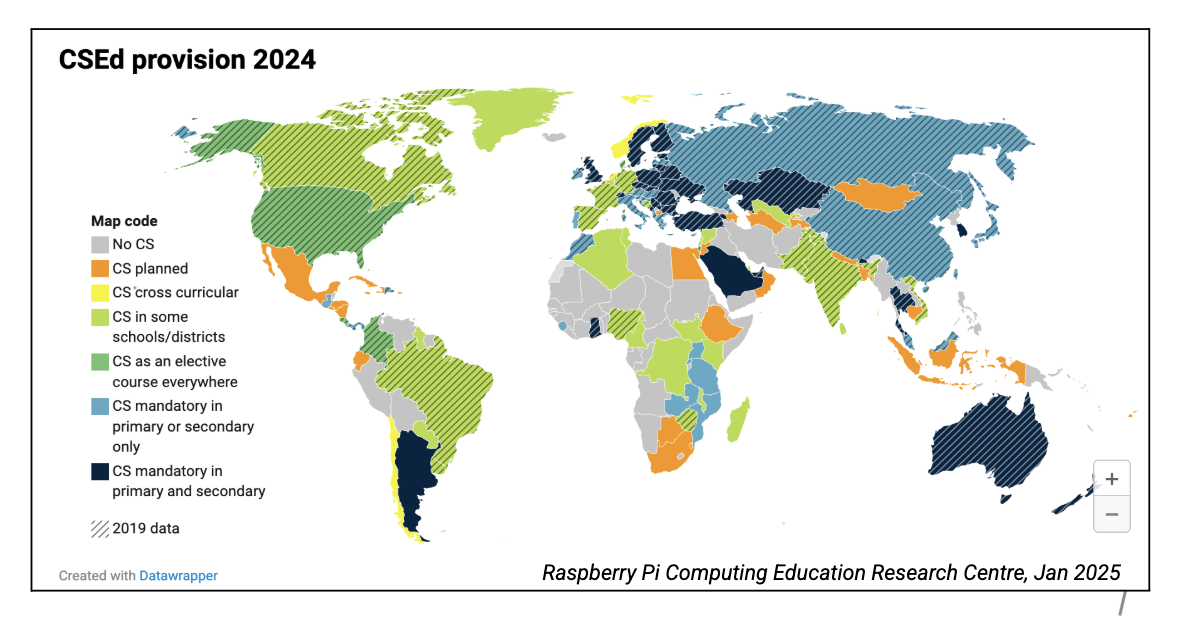
We found that between 2019 and 2024 the number of countries offering computing education had doubled, and that two thirds of all countries now offer, or have concrete plans to offer, computing education. This research has already been highlighted in the Stanford AI Index, and we are considering repeating the analysis in future years in order to have the most accurate and up-to-date information displayed in our map.
AI education
We have a number of projects in the area of AI education.
Teaching about AI
We are very interested in how to teach about AI, and held a workshop with teachers who were interested in the teaching of AI in February. Following on from the workshop results, we are interviewing more stakeholders, including UK-based experts, teachers and students, about their perspectives on concepts and skills that should be taught as part of an AI curriculum.
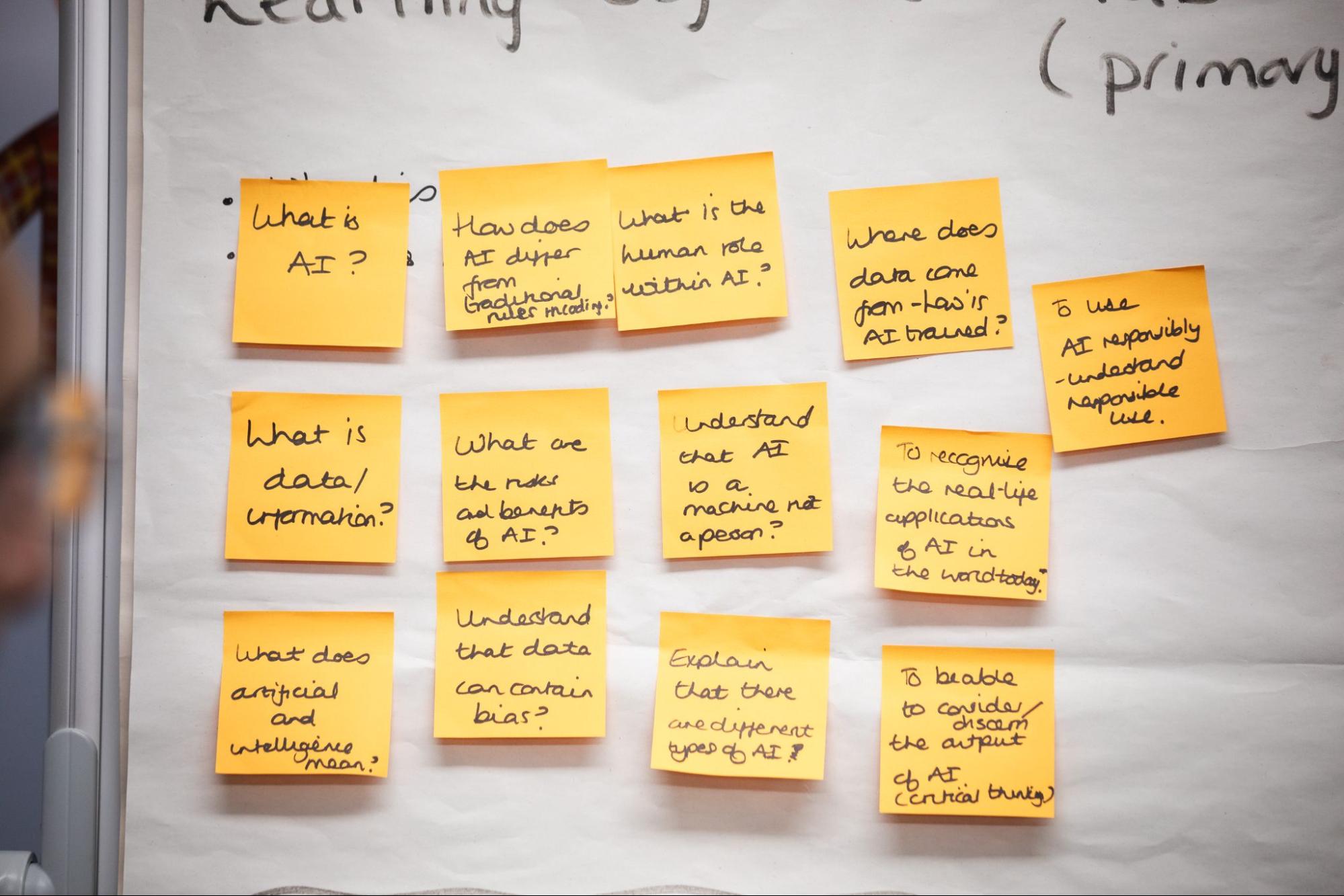
We’re also researching data science and data ethics education, which are foundational aspects of AI literacy. Most of the current AI systems are data-driven, having been trained on vast amounts of data. Therefore students need to understand about data and data science if they are to learn about AI systems. Therefore we’ve conducted two detailed literature reviews on data science and on data ethics this year. The first of these will be published in March at the WiPSCE conference.
Unplugged AI in Ghana
One of our PhD students, Salomey Addo, has been examining how AI is taught in Ghana, where it is part of the curriculum for young people between ages 12 and 15. This year Salomey published a paper reporting that Ghanaian teachers have positive attitudes towards teaching AI but feel unprepared for it. She’s also developed unplugged resources to teach about artificial neural networks (ANNs).
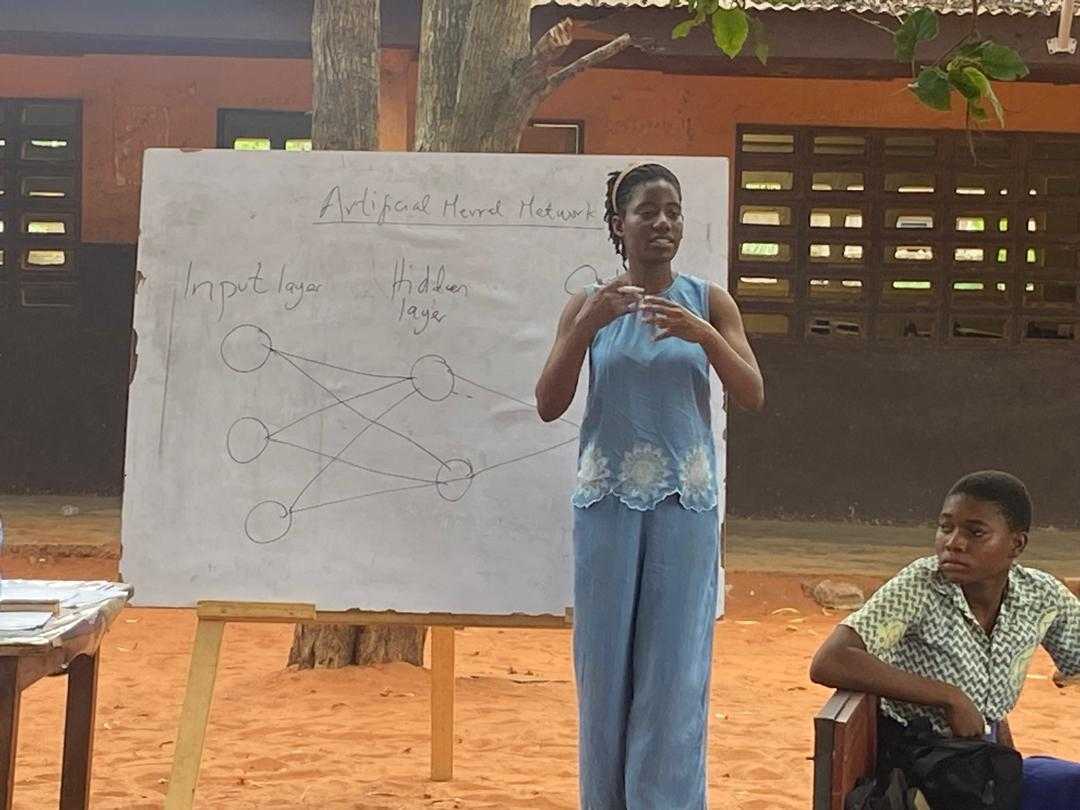
ANNs are a fundamental technology used in a variety of AI systems, including image recognition and language translation systems. While ANNs are included in the Ghanaian AI curriculum, Salomey observed that teachers had difficulty with this particular topic The resources she developed are directly inspired by this, and involved teaching through role play and a board game.
Using AI in learning and teaching computing
This is an area we’ve also done some research in in the past year.
Carrie Anne Philbin published a paper in September showing that — at least in higher education — much of the use of generative AI in computing education is just duplicating the way teachers might already teach, and is primarily passive from a students’ perspective.
Meanwhile Katharine Childs and Veronica Cucuiat have been looking at how large language models (LLMs) can support secondary school programming education by helping students understand programming error messages.
Programming education: Learning to debug
Text-based programming is a topic featured in many computing curricula around the world. Teachers and researchers know that younger learners, for example at the lower secondary school level, can find debugging text-based programs very challenging. Although we’ve seen decades of research around programming and debugging focusing on learners who are in higher education, very little research has been done with school-age students.
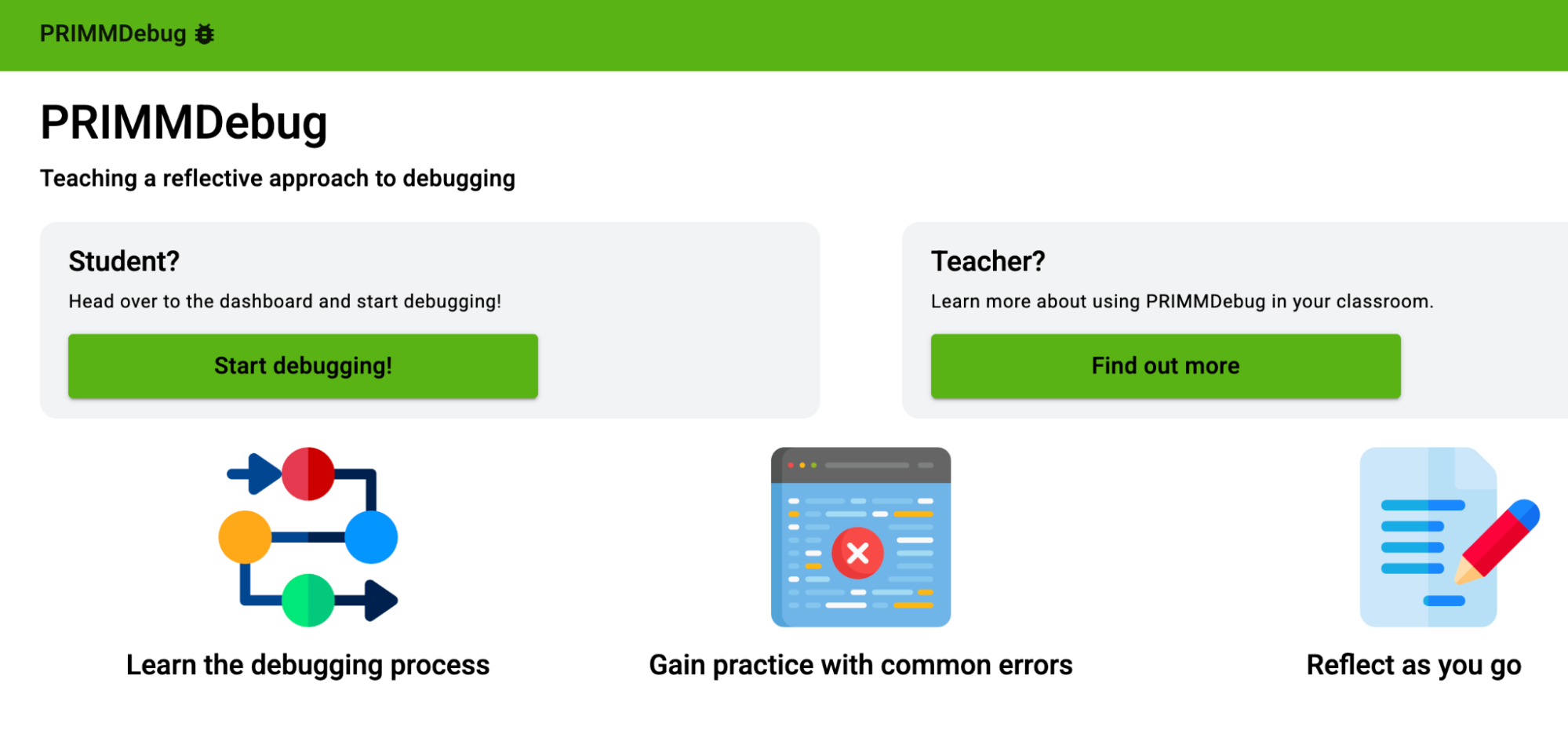
In his research, Laurie Gale, a final-year PhD student at the Research Centre, found that learners were impatient to fix programs by trial and error, without figuring out what the real problemwas with their code or the underlying algorithm. He subsequently developed a tool called PRIMM Debug, which supports a more reflective and systematic approach to debugging. This tool enables learners to slow down when they are programming and to be more reflective. You can read more about it on the Research Centre website, and also catch up on the Foundation research seminar where he presented his work.
EPICS: Physical computing in school
As part of a 5-year longitudinal project, running across the whole UK and the first project of its kind, we are looking at how physical computing impacts primary and secondary school learners. We’re investigating the effect of physical computing on learners’ creativity, agency and confidence, over time and at particular points known to be important for their subject choices. We are working with a wonderful set of partner primary schools who we visit each year.
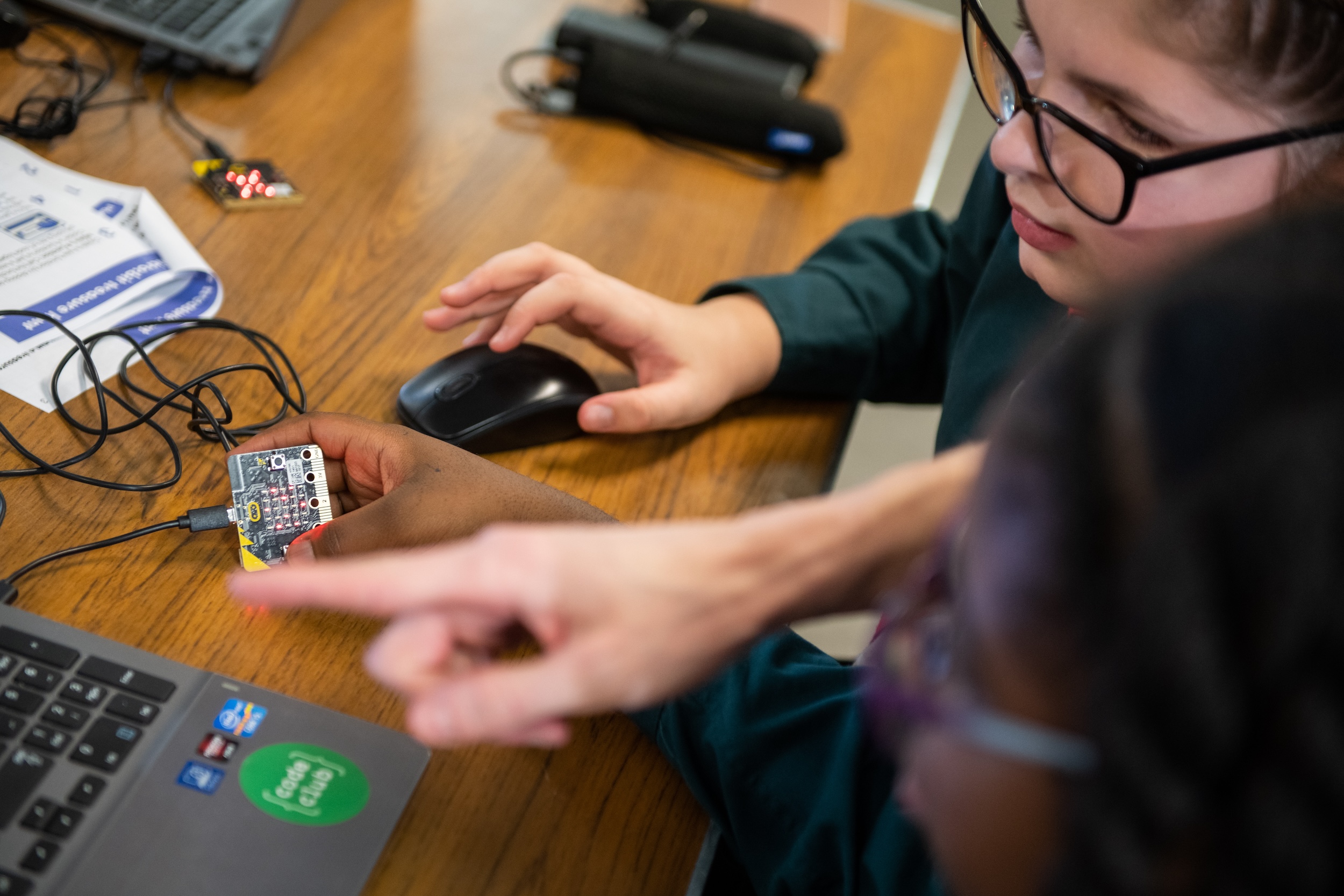
This year we reported some of our first results, which point to teachers’ perceptions of physical computing being engaging and inclusive for primary-aged children. Starting next spring, we will be carrying out our third year of data collection with our pupil cohort, who have reached the age of 10 to 11.
We’ll also be running a survey next summer for upper primary-aged children and their teachers. Please sign up for our Teacher Research Network newsletter to be the first to hear about taking part in this survey.
Teacher Inquiry in Computing Education (TICE)
As part of our TICE project we support teachers to conduct their own action research projects. This is a collaborative project, involving academics across the UK who volunteer to support teachers. The goal is to enable teachers to take a deep dive into a curriculum topic, a pedagogical approach, or a new resource, or to address a wider issue such as gender diversity or accessibility, to inform a change in their practice.
This year 16 teachers published their reports in our Teacher Research Booklet, and many also presented their findings online at CAS events or at the KCL-CAS London conference and the CAS National Conference. We’re very proud of them!
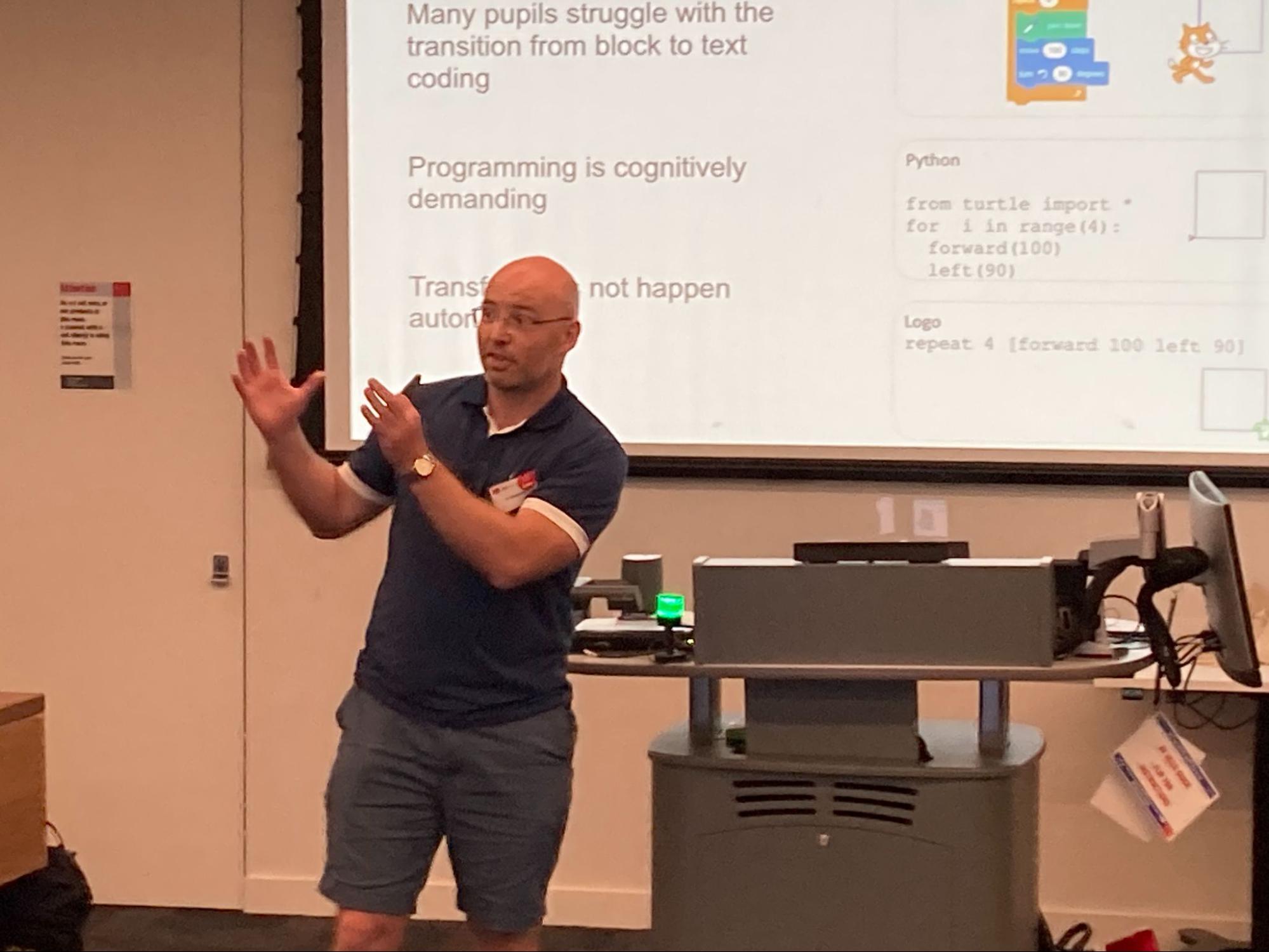
Two of our TICE teachers will be also presenting their research at an academic conference to be held in January. Congratulations to Will Grey and Joanne Hodge!
Get involved
There are many other projects you can find out about on our website and in our annual report, so I hope that you will keep reading. It goes without saying that I’m incredibly proud of the team who’ve worked on all of these projects!
To summarise, here’s how you can stay up to date with our work and maybe even get involved in studies:
- Sign up to the Research Centre newsletter
- Sign up to our Teacher Research Network newsletter if you’re a teacher and interested in participating in projects
Finally, I am pleased to announce that we will be hosting the UKICER 2026 conference for researchers and teachers in Cambridge on 3 and 4 2026 September. More details will follow on the UKICER website and on the Research Centre website in due course.
The post 2025 highlights from the Raspberry Pi Computing Education Research Centre appeared first on Raspberry Pi Foundation.
Microsoft Releases Last Azure Linux 3.0 Update Of 2025
Microsoft on Monday released Azure Linux 3.0.20251206 as the newest monthly update to its in-house Linux distribution used within the Azure cloud and elsewhere at the Windows company…
PayPal Applies To Become a Bank As US Loosens Regulatory Reins
PayPal has applied to become a US bank by forming a Utah-chartered industrial loan company, signaling a push to deepen its financial services “as companies rush to capitalize on a friendly regulatory environment under the Trump administration,” reports Reuters. From the report: If approved, the move will help PayPal to strengthen its lending offerings to small businesses in the U.S. as well as reduce its reliance on third parties. “Securing capital remains a significant hurdle for small businesses striving to grow and scale,” said PayPal CEO Alex Chriss. “Establishing PayPal Bank will strengthen our business and improve our efficiency, enabling us to better support small business growth and economic opportunities across the U.S.”
PayPal also plans to offer interest-bearing savings accounts to customers. The company has provided over $30 billion in loans and capital since 2013, it said. […] PayPal has selected Mara McNeill to serve as PayPal Bank’s president. She comes with over two decades of experience in banking and commercial lending, and has previously served as the CEO of Toyota Financial Savings Bank.


Read more of this story at Slashdot.
Scribus 1.6.5 Open-Source Desktop Publishing App Released with Various Changes
The development team behind Scribus, an open-source and cross-platform desktop publishing app, released version 1.6.5 today as yet another minor update to the Scribus 1.6 stable series.
Beginners Guide for Type Command in Linux
In this article, you will learn everything about the type command, including its different options (with practical examples).
Glaciers To Reach Peak Rate of Extinction In the Alps In Eight Years
A new study warns that glaciers in the European Alps will hit their peak extinction rate within eight years, with global glacier loss accelerating toward thousands per year unless emissions are rapidly cut. “Glaciers in the western US and Canada are forecast to reach their peak year of loss less than a decade later, with more than 800 disappearing each year by then,” adds the Guardian. From the report: About 200,000 glaciers remain worldwide, with about 750 disappearing each year. However, the research indicates this pace will accelerate rapidly as emissions from burning fossil fuels continue to be released into the atmosphere. Current climate action plans from governments are forecast to push global temperatures to about 2.7C above preindustrial levels, supercharging extreme weather. Under this scenario, glacier losses would peak at about 3,000 a year in 2040 and plateau at that rate until 2060. By the end of the century, 80% of today’s glaciers will have gone. By contrast, rapid cuts to carbon emissions to keep global temperature rise to 1.5C would cap annual losses at about 2,000 a year in 2040, after which the rate would decline. […]
The new study, published in Nature Climate Change, analyzed more than 200,000 glaciers from a database of outlines derived from satellite images. The researchers used three global glacier models to assess their fate under different heating scenarios. Regions with the smallest and fastest-melting glaciers were found to be the most vulnerable. The study estimates the 3,200 glaciers in central Europe would shrink by 87% by 2100 — even if global temperature rise is limited to 1.5C, rising to 97% under 2.7C of heating.
In the western US and Canada, including Alaska, about 70% of today’s 45,000 glaciers are projected to vanish under 1.5C of heating, and more than 90% under 2.7C. The Caucasus and southern Andes are also expected to face devastating losses. Larger glaciers take longer to melt, with those in Greenland reaching their peak extinction rate in about 2063 — losing 40% by 2100 under 1.5C of heating and 59% under 2.7C. However, the melting is forecast to continue beyond 2100. The researchers said the peak loss dates represent more than a numerical milestone. “They mark turning points with profound implications for ecosystems, water resources and cultural heritage,” they wrote. “[It is] a human story of vanishing landscapes, fading traditions and disrupted daily routines.”


Read more of this story at Slashdot.
Toradex Luna SL1680 SBC Features Synaptics SL1680 SoC with 8 TOPS NPU, Starts at $105
Toradex has announced the Luna SL1680, a SBC that introduces the company’s new “Pro Consumer” product tier. Positioned between consumer development boards and fully industrial hardware, the platform targets applications such as smart kiosks, light industrial systems, and advanced maker projects. The Luna SL1680 is built around the Synaptics SL1680 system-on-chip, which integrates a quad-core […]
Microsoft Will Finally Kill Obsolete Cipher That Has Wrecked Decades of Havoc
An anonymous reader quotes a report from Ars Technica: Microsoft is killing off an obsolete and vulnerable encryption cipher that Windows has supported by default for 26 years following more than a decade of devastating hacks that exploited it and recently faced blistering criticism from a prominent US senator. When the software maker rolled out Active Directory in 2000, it made RC4 a sole means of securing the Windows component, which administrators use to configure and provision fellow administrator and user accounts inside large organizations. RC4, short for Rivist Cipher 4, is a nod to mathematician and cryptographer Ron Rivest of RSA Security, who developed the stream cipher in 1987. Within days of the trade-secret-protected algorithm being leaked in 1994, a researcher demonstrated a cryptographic attack that significantly weakened the security it had been believed to provide. Despite the known susceptibility, RC4 remained a staple in encryption protocols, including SSL and its successor TLS, until about a decade ago. […]
Last week, Microsoft said it was finally deprecating RC4 and cited its susceptibility to Kerberoasting, the form of attack, known since 2014, that was the root cause of the initial intrusion into Ascension’s network. “By mid-2026, we will be updating domain controller defaults for the Kerberos Key Distribution Center (KDC) on Windows Server 2008 and later to only allow AES-SHA1 encryption,” Matthew Palko, a Microsoft principal program manager, wrote. “RC4 will be disabled by default and only used if a domain administrator explicitly configures an account or the KDC to use it.” […] Following next year’s change, RC4 authentication will no longer function unless administrators perform the extra work to allow it. In the meantime, Palko said, it’s crucial that admins identify any systems inside their networks that rely on the cipher. Despite the known vulnerabilities, RC4 remains the sole means of some third-party legacy systems for authenticating to Windows networks. These systems can often go overlooked in networks even though they are required for crucial functions.
To streamline the identification of such systems, Microsoft is making several tools available. One is an update to KDC logs that will track both requests and responses that systems make using RC4 when performing requests through Kerberos. Kerberos is an industry-wide authentication protocol for verifying the identities of users and services over a non-secure network. It’s the sole means for mutual authentication to Active Directory, which hackers attacking Windows networks widely consider a Holy Grail because of the control they gain once it has been compromised. Microsoft is also introducing new PowerShell scripts to sift through security event logs to more easily pinpoint problematic RC4 usage. Microsoft said it has steadily worked over the past decade to deprecate RC4, but that the task wasn’t easy. “The problem though is that it’s hard to kill off a cryptographic algorithm that is present in every OS that’s shipped for the last 25 years and was the default algorithm for so long, Steve Syfuhs, who runs Microsoft’s Windows Authentication team, wrote on Bluesky. “See,” he continued, “the problem is not that the algorithm exists. The problem is how the algorithm is chosen, and the rules governing that spanned 20 years of code changes.”


Read more of this story at Slashdot.
Google is retiring its free dark web monitoring tool next year
Google will stop sending out dark web reports starting early next year, as it shuts down the free tool that can tell you if your personal information has appeared on the seedy underbelly of the internet. The tool used to be exclusively available to Google One subscribers until the company opened it up to everyone in mid-2024. If you switch it on, you’ll receive a notification whenever your name, email address and phone number leak on the internet, typically due to data breaches.
In Google’s email announcement, however, it said it was discontinuing dark web reports because “feedback showed that it did not provide helpful next steps.” A report just lets you know that your information has appeared on the dark web. You can also see a list of all the hits you get on your Google account, along with what data breach leaked that particular detail. However, it doesn’t give you guidance on what to do afterwards.
The company explained that it will focus on tools that can give you clear, actionable step to take instead. Google will stop monitoring for new dark web results on January 15, 2026 and will remove access to the report from your account on February 16. You can also remove your monitoring profile right now by going to the “results with your info” section on the tool’s official page.
This article originally appeared on Engadget at https://www.engadget.com/cybersecurity/google-is-retiring-its-free-dark-web-monitoring-tool-next-year-023103252.html?src=rss
Fedora Games Lab Looks To Be Revitalized As Modern Linux Gaming Showcase
One of the lesser known Fedora spins under the “Fedora Labs” initiative is the Fedora Games Lab that showcases some open-source games and can serve as an easy demonstrator for Linux gaming. Looking forward to 2026 with Fedora 44, there is a proposal to revitalize Fedora Games Lab to become a better showcase for the modern potential of Linux gaming…
Lidar-Maker Luminar Files For Bankruptcy
Once a star of the self-driving hype cycle, lidar maker Luminar has filed for bankruptcy amid legal turmoil, layoffs, and a cooling autonomous-vehicle market. It plans to sell off its assets before shutting down entirely. The Verge reports: As part of its bankruptcy, Luminar is seeking permission to sell both its lidar and semiconductor businesses, the latter of which it has already agreed to sell to Quantum Computing for $110 million. The company plans to continue to operate during the bankruptcy proceedings “to minimize disruptions and maintain delivery of its LiDAR hardware and software.” That said, Luminar will cease to exist once the process is complete. “As we navigate this process, our top priority is to continue delivering the same quality, reliability and service our customers have come to expect from us,” CEO Paul Ricci said in a statement.
After launching in 2017, Luminar muscled its way to the front of the autonomous vehicle industry as a top maker of lidar systems, a key technology that driverless cars use to sense the shapes and distances of objects around them. Luminar has sold sensors to Mercedes-Benz, Volvo, Audi, Toyota Research Institute, Caterpillar, and even Tesla, which has dismissed lidar sensors in favor of traditional cameras. The company was valued at nearly $3 billion when it went public through a reverse merger with a SPAC in 2020.


Read more of this story at Slashdot.
LG will debut its first Micro RGB television at CES
LG is getting in on one of the newest trends for televisions with the introduction of Micro RGB. The company will unveil the LG Micro RGB evo at CES 2026, but it shared some preliminary information about the screen today.
Micro RGB is a newer screen technology where rather than white lights, the backlight can be any hue thanks to individually controlled red, green and blue Micro LEDs, offering a wider color array. This approach is a mid-way point between the precision of OLED with its individual pixel lighting, but it offers an upgrade over screens only using mini LEDs.
The television is also equipped with an upgraded engine for AI upscaling. According to the company’s press release, the LG Micro RGB evo is certified by Intertek for 100 percent color gamut coverage in BT.2020, DCI-P3, and Adobe RGB. The TV has more than a thousand dimming zones for brightness control.
The few other brands currently using micro RGB are charging a pretty penny for it; the one announced by Samsung earlier this year costs $29,999. At 115 inches, the Samsung version is also much larger than LG’s offerings, which include options at 100 inches, 86 inches and 75 inches. Although the size is reduced, expect the eventual prices for the LG Micro RGB evo to also be very expensive.
This article originally appeared on Engadget at https://www.engadget.com/home/home-theater/lg-will-debut-its-first-micro-rgb-television-at-ces-010037923.html?src=rss
Stainless Steel Bear Claw Mule Slides
Inspired by bare bear feet, these Bear Claw Mules from Bravest Studios are $115 faux fur mules with real steel claws, perfect for destroying the legs of your favorite furniture. Now I know what you’re wondering — but are they also available in white, grey, black, purple, green, blue, orange, and spotted purple and teal like Sullivan in Monsters, Inc.? AND YES THEY ARE. Buy a pair of each and you can wear a different color bear claw slide nine days a week! That’s when you know you’ve made it. Where exactly you’ve made it, I have no clue, but there you are with your blue bear claw slides on a Mursday.







Google Search Homepage Adds a ‘Plus’ Menu
After introducing an AI Mode shortcut earlier this year, Google has now added a new “plus” menu to its Search homepage, highlighting options for image and file uploads. 9to5Google reports: On google.com, the Search bar now has a plus icon at the far left that replaces the magnifying glass. Clicking lets you “Upload image” or “Upload file.” It very much matches the AI Mode experience. Those two capabilities aren’t new, but this plus menu does help emphasize that you can use Google to accomplish tasks, and not just find information. Additionally, it helps indicate that they can be used with AI Mode and AI Overviews. This is just available on desktop web (not mobile) and is live on all the devices we checked today, including across signed-out Incognito sessions.


Read more of this story at Slashdot.
Judge blocks Louisiana’s social media age verification law
A Louisiana law that would have required social media platforms to verify the ages of their users has been blocked by a judge. The law, known as the Secure Online Child Interaction and Age Limitation, was passed in 2023 and required Meta, Reddit, Snap, YouTube Discord and others to implement age verification and parental control features.
The ruling came just days before the law, which technically took effect over the summer, would have started to be enforced. In his ruling, Judge John W. deGravelles wrote that the law’s “age-verification and parental-consent requirements are both over- and under-inclusive,” and that its definition of “social media platform” was “nebulous.”
The ruling was a victory for NetChoice, a lobbying group that represents the tech industry and has challenged the growing number of age verification laws around the world. The group had argued that the law was unconstitutional and posed a safety and security risk.
In a statement following the ruling, the group pointed to the “massive privacy risk” posed by the Louisiana law and others like it. “Louisiana’s law would have done more than chill speech,” Paul Taske, the co-director of NetChoice’s Litigation Center said. “It would have created a massive privacy risk for Louisianans like those playing out in real time in countries without a First Amendment, like the UK.”
The Louisiana Attorney General’s office didn’t immediately respond to a request for comment.
This article originally appeared on Engadget at https://www.engadget.com/social-media/judge-blocks-louisianas-social-media-age-verification-law-001212758.html?src=rss
China, Iran Are Having a Field Day With React2Shell, Google Warns
A critical React vulnerability (CVE-2025-55182) is being actively exploited at scale by Chinese, Iranian, North Korean, and criminal groups to gain remote code execution, deploy backdoors, and mine crypto. The Register reports: React maintainers disclosed the critical bug on December 3, and exploitation began almost immediately. According to Amazon’s threat intel team, Chinese government crews, including Earth Lamia and Jackpot Panda, started battering the security hole within hours of its disclosure. Palo Alto Networks’ Unit 42 responders have put the victim count at more than 50 organizations across multiple sectors, with attackers from North Korea also abusing the flaw.
Google, in a late Friday report, said at least five other suspected PRC spy groups also exploited React2Shell, along with criminals who deployed XMRig for illicit cryptocurrency mining, and “Iran-nexus actors,” although the report doesn’t provide any additional details about who the Iran-linked groups are and what they are doing after exploitation. “GTIG has also observed numerous discussions regarding CVE-2025-55182 in underground forums, including threads in which threat actors have shared links to scanning tools, proof-of-concept (PoC) code, and their experiences using these tools,” the researchers wrote.


Read more of this story at Slashdot.
LG quietly added an unremovable Microsoft Copilot app to TVs
Microsoft made a big punt this year with Copilot. The company put its AI chatbot into a special line of laptops and has also tried to integrate it into other tech products. The latest place you may find Copilot is on your LG smart television, whether you want it or not.
Several LG smart TV owners have taken to Reddit over the past few days to complain that they suddenly have a Copilot app on the device and cannot uninstall it. Two Engadget staffers discovered the app on a 2022 LG OLED and a 2023 UA8000. They confirmed that the app can’t be removed, although they were able to hide it from the home screen. One other person from our team also has a 2022 LG OLED but isn’t seeing Copilot, so your mileage may vary based on what permissions and privacy settings you already have set up with LG.
Karissa Bell for Engadget
LG said during the 2025 CES season that it would have a Copilot-powered AI Search in its next wave of TV models, but putting in a permanent AI fixture is sure to leave a bad taste in many customers’ mouths, particularly since Copilot hasn’t been particularly popular among people using AI assistants.
This article originally appeared on Engadget at https://www.engadget.com/ai/lg-quietly-added-an-unremovable-microsoft-copilot-app-to-tvs-235923754.html?src=rss
These Two New iPhone Features Are Coming to iOS 26.3
Just three days after Apple released iOS 26.2 to iPhones everywhere, the company is back at it with a new update. iOS 26.3 is official, though only for beta testers. Those brave enough to install Apple’s unfinished software on their devices won’t find an update packed to the brim with new features and changes, but they will stumble upon two key new features. The thing is, we already knew both of them were on the way.
This isn’t the end all be all for the update, however: Since iOS 26.3 is so new, it’s possible testers will discover additional features hidden within the update. In addition, Apple may add new changes in subsequent beta versions. I’ll continue to update this article to reflect any new features that reveal themselves, but, until then, here are the two new features we know about.
Notification forwarding
Back in September, we learned that Apple was quietly working on some type of notification forwarding feature, but other than that basic functionality, the details were left to speculation. At the time, the common assumption was that Apple intended the feature to be used to forward notifications to third-party devices, specifically smartwatches, in an attempt to open up the platform to wearables other than the Apple Watch. This wouldn’t be Apple’s choice, of course—left to its own devices, the company would keep as many features locked to Apple devices as possible. Instead, the motivation would come from the EU, which has compelled Apple to make its platforms more cooperative with third-party devices.
After three months, we are now getting our first official look at this feature. In this first iOS 26.3 beta, there is now a “Notification Forwarding” option in Notification settings. While the option isn’t live at this time, Apple does have a description for how the feature works, saying that notifications can be forwarded to one device at a time. Importantly, the description says that when notifications are forwarded to another device, they will not appear on your Apple Watch. Is that limitation really necessary, Apple?
This Tweet is currently unavailable. It might be loading or has been removed.
Transfer to Android
Knowledge of iOS 26.3’s second feature is not quite so old. In fact, we only learned about it last week. As it happens, Apple is working directly with Google on an official way to make transferring between an iPhone and an Android device more seamless.
As of last week, Google had already rolled out its first test of the feature to Android Canary, but it was nowhere to be found in Apple’s betas. Now, we know what to expect: In iOS’ “Transfer or Reset iPhone” settings, there is now a new “Transfer to Android” option. Here, iOS instructs you to place your iPhone near your Android device, where you can choose to pass along data like photos, messages, notes, and apps. However, it seems not all data will transfer: Health data, devices paired with Bluetooth, and “protected items” like locked notes will not come along with this transfer feature.
This Tweet is currently unavailable. It might be loading or has been removed.
Beware of running betas on your iPhone
This isn’t the flashiest beta Apple has ever shipped, but it is possible to install right now. Both the developer and public betas are now available, which means anyone interested can enroll their device in Apple’s beta program to give 26.3 a try.
However, know the risks before you do. Unfinished software could come with bugs and glitches that could impact your experience using your iPhone. If the software is particularly glitchy, you could lose data when downgrading back to iOS 26.2. If you do decide to install the beta, make a complete backup of your iPhone to a Mac or PC before you do.
Creating Data Analysis Pipelines using DuckDB and RStudio
This data project details the shift to an In-Situ ELT workflow showcases a hybrid RStudio/Python environment essential for transforming today’s analysts into “Data Ops.”