Gemini 3 Flash Outperforms Gemini 3 Pro and GPT 5.2 In These Key Benchmarks

The AI wars continue to heat up. Just weeks after OpenAI declared a “code red” in its race against Google, the latter released its latest lightweight model: Gemini 3 Flash. This particular Flash is the latest in Google’s Gemini 3 family, which started with Gemini 3 Pro, and Gemini 3 Deep Think. But while this latest model is meant to be a lighter, less expensive variant of the existing Gemini 3 models, Gemini 3 Flash is actually quite powerful in its own right. In fact, it beats out both Gemini 3 Pro and OpenAI’s GPT-5.2 models in some benchmarks.

Lightweight models are typically meant for more basic queries, for lower-budget requests, or to be run on lower-powered hardware. That means they’re often faster than more powerful models that take longer to process, but can do more. According to Google, Gemini 3 Flash combines the best of both those worlds, producing a model with Gemini 3’s “Pro-grade reasoning,” with “Flash-level latency, efficiency, and cost.” While that likely matters most to developers, general users should also notice the improvements, as Gemini 3 Flash is now the default for both Gemini (the chatbot) and AI Mode, Google’s AI-powered search.

Gemini 3 Flash performance

You can see these improvements in Google’s reported benchmarking stats for Gemini 3 Flash. In Humanity’s Last Exam, an academic reasoning benchmark that tests LLMs on 2,500 questions across over 100 subjects, Gemini 3 Flash scored 33.7% with no tools, and 43.5% with search and code execution. Compare that to Gemini 3 Pro’s 37.5% and 45.8% scores, respectively, or OpenAI’s GPT-5.2’s scores of 34.5% and 45.5%. In MMMU-Pro, a benchmark that test a model’s multimodal understanding and reasoning, Gemini 3 Flash got the top score (81.2%), compared to Gemini 3 Pro (81%) and GPT-5.2 (79.5). In fact, across the 21 benchmarking tests Google highlights in its announcement, Gemini 3 Flash has the top score in three: MMMU-Pro (tied with Gemini 3 Pro), Toolathlon, and MMMLU. Gemini 3 Pro still takes the number one spot on the most tests here (14), and GPT-5.2 topped eight tests, but Gemini 3 Flash is holding its own.

Google notes that Gemini 3 Flash also outperforms both Gemini 3 Pro and the entire 2.5 series in the SWE-bench Verified benchmark, which tests the model’s coding agent capabilities. Gemini 3 Flash scored a 78%, while Gemini 3 Pro scored 76.2%, Gemini 2.5 Flash scored 60.4%, and Gemini 2.5 Pro scored 59.6%. (Note that GPT-5.2 scored the best of the models Google mentions in this announcement.) It’s a close race, especially when you consider this is a lightweight model scoring alongside these company’s flagship models.

Gemini 3 Flash cost

That might present an interesting dilemma for developers who pay to use AI models in their programs. Gemini 3 Flash costs $0.50 per every million input tokens (what you ask the model to do), and $3.00 per every million output tokens (the result the models returns from your prompt). Compare that to Gemini 3 Pro, which costs $2.00 per every million input tokens, and $12.00 per every million output tokens, or GPT-5.2’s $3.00 and $15.00 costs, respectively. For what it’s worth, it’s not as cheap as Gemini 2.5 Flash ($0.30 and $2.50), or Grok 4.1 Fast for that matter ($0.20 and $0.50), but it does outperform these models in Google’s reported benchmarks. Google notes that Gemini 3 Flash uses 30% fewer tokens on average than 2.5 Pro, which will save on cost, while also being three times faster.

If you’re someone who needs LLMs like Gemini 3 Flash to power your products, but you don’t want to pay the higher costs associated with more powerful models, I could image this latest lightweight model looking appealing from a financial perspective.

How the average user will experience Gemini 3 Flash

Most of us using AI aren’t doing so as developers who need to worry about API pricing. The majority of Gemini users are likely experiencing the model through Google’s consumer products, like Search, Workspace, and the Gemini app.

Starting today, Gemini 3 Flash is the default model in the Gemini app. Google says it can handle many tasks “in just a few seconds.” That might include asking Gemini for tips on improving your golf swing based on a video of yourself, or uploading a speech on a given historical topic and requesting any facts you might have missed. You could also ask the bot to code you a functioning app from a series of thoughts.

You’ll also experience Gemini 3 Flash in Google Search’s AI Mode. Google says the new model is better at “parsing the nuances of your question,” and thinks through each part of your request. AI Mode tries to return a more complete search result by scanning hundreds of sites at once, and putting together a summary with sources for your answer. We’ll have to see if Gemini 3 Flash improves on previous iterations of AI Mode.

I’m someone who still doesn’t find much use for generative AI products in their day-to-day lives, and I’m not entirely sure Gemini 3 Flash is going to change that for me. However, the balance of performance gains with the cost to process that power is interesting, and I’m particularly intrigued to see how OpenAI responds.

Gemini 3 Flash is available to all users starting today. In addition to general users in Gemini and AI Mode, developers will find it in the Gemini API in Google AI Studio, Gemini CLI, and Google Antigravity, the company’s new agentic development platform. Enterprise users can use it in Vertex AI and Gemini Enterprise.

Man sues cops who jailed him for 37 days for trolling a Charlie Kirk vigil

Larry Bushart, a man who was jailed for 37 days for reposting a Trump meme, has now sued the cops who allegedly schemed to keep him imprisoned for as long as possible simply because they disagreed with his point of view.

Bushart is a former cop who lost his post-retirement job after a seemingly vengeful sheriff jailed him for trolling a Charlie Kirk vigil post in a Facebook group. Upset that Kirk’s death commanded more attention than other victims of gun violence, Bushart posted a string of memes, among which was an image of Trump with an actual quote saying “We have to get over it” about a 2024 school shooting.

Perry County sheriff Nick Weems has since acknowledged that he “knew” that the meme referenced a prior school shooting. However, the entire time that Bushart was detained, Weems maintained that Bushart’s post incited “mass hysteria” from parents concerned that he was threatening violence at a local high school. Painting Bushart as indifferent to the supposed hysteria, Weems justified his arrest, as well as the $2 million bond ensuring Bushart couldn’t afford bail and remained behind bars.

Read full article

Comments

FCC deletes “independent agency” from website as Carr defends allegiance to Trump

Federal Communications Commission Chairman Brendan Carr today faced blistering criticism in a Senate hearing for his September threats to revoke ABC station licenses over comments made by Jimmy Kimmel. While Democrats provided nearly all the criticism, Sen. Ted Cruz (R-Texas) said that Congress should act to restrict the FCC’s power to intimidate news broadcasters.

As an immediate result of today’s hearing, the FCC removed a statement from its website that said it is an independent agency. Carr, who has embraced President Trump’s declaration that independent agencies may no longer operate independently from the White House, apparently didn’t realize that the website still called the FCC an independent agency.

“Yes or no, Is the FCC an independent agency?” Sen. Ben Ray Luján (D-N.M.) asked. Carr answered that the FCC is not independent, prompting Luján to point to a statement on the FCC website calling the FCC “an independent US government agency overseen by Congress.”

Read full article

Comments

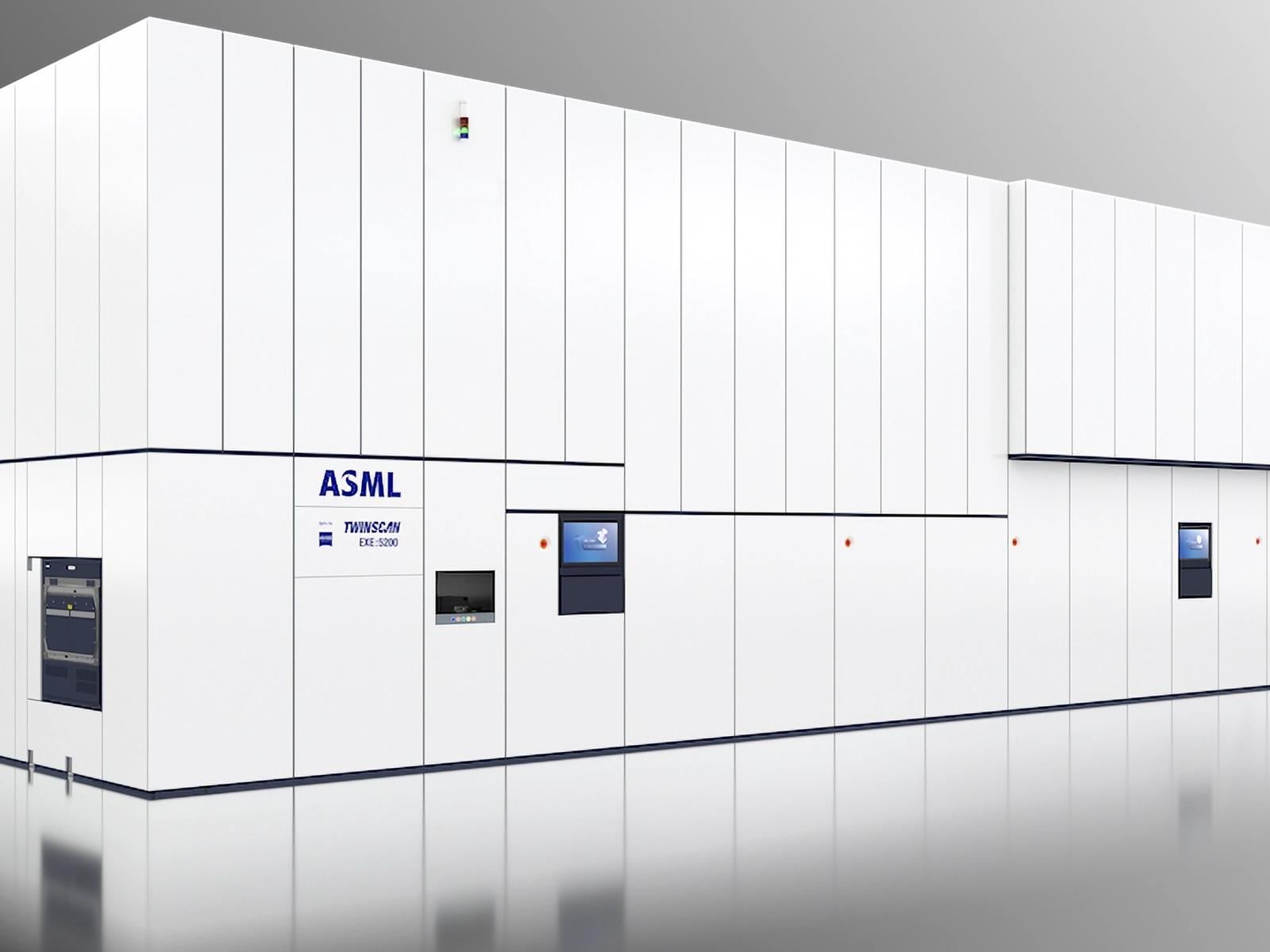
Intel Sets Chipmaking Milestone With First High NA EUV Tool For Next-Gen Chips

Intel Sets Chipmaking Milestone With First High NA EUV Tool For Next-Gen Chips
Intel’s foundry arm says it has crossed a major lithography milestone: it has announced successful acceptance testing of ASML’s TWINSCAN EXE:5200B High Numerical Aperture (High-NA) EUV scanner, one of the most advanced chipmaking tools currently in existence anywhere. It’s the first time the higher-throughput version of ASML’s High-NA platform

Bethesda Details Highly Anticipated Elder Scrolls VI Launch Timeline

Bethesda Details Highly Anticipated Elder Scrolls VI Launch Timeline
Bethesda is hard at work on The Elder Scrolls VI, per a recent interview with Game Informer. The hotly-anticipated game, already in playtesting, is currently “progressing really well” according to Todd Howard, with “The majority of the studio” working on it. Game Informer didn’t just speak to Todd Howard, though—they also collected statements

[$] Going boldly into the COSMIC desktop environment

After three years of development, Linux hardware provider System76
has declared
the COSMIC desktop
environment
stable. It shipped COSMIC Epoch 1 as part of the
long-awaited Pop!_OS 24.04 LTS
release on December 11, just in time for Linux enthusiasts to
have something to tinker with over the end-of-year holidays. With the
stable release out the door, it seemed like a good time to check back
in on COSMIC and see how it has evolved since the first alpha. For a first
stable release of a new desktop environment, COSMIC shows a lot of
promise and room to grow.

Donut Lab’s hub motor meets WATT’s battery to create new EV skateboard

One of the big stories of last year’s Consumer Electronics Show in Las Vegas was the debut of Donut Lab’s diminutive but powerful electric motors. When I spoke with Donut earlier this year, the company told me that it was looking at applications ranging from drones to large automotive motors, but also things like wind turbines and even washing machines. Now, almost a year later, we have our first look at an electric vehicle that uses the technology, thanks to a new collaboration between Donut Lab and WATT Electric Vehicle Company.

WATT had previously developed the Passenger and Commercial EV Skateboard (PACES), a lightweight aluminum platform for low-volume EVs. Now, it’s integrating Donut’s motors, first with one for each rear wheel, although there will eventually be an all-wheel-drive variant, too.

The small EV chassis is rather intriguing—with the motors in the rear wheel hubs, the layout is even more space-efficient than a more conventional EV, which still needs to find a few cubic feet to package its drive unit(s). The two companies see plenty of potential for the platform, which they say could give rise to “multiple vehicle configurations from beach buggies to high-performance sports cars to commercial delivery vehicles.”

Read full article

Comments

All About Zwift’s New Draft Indicator

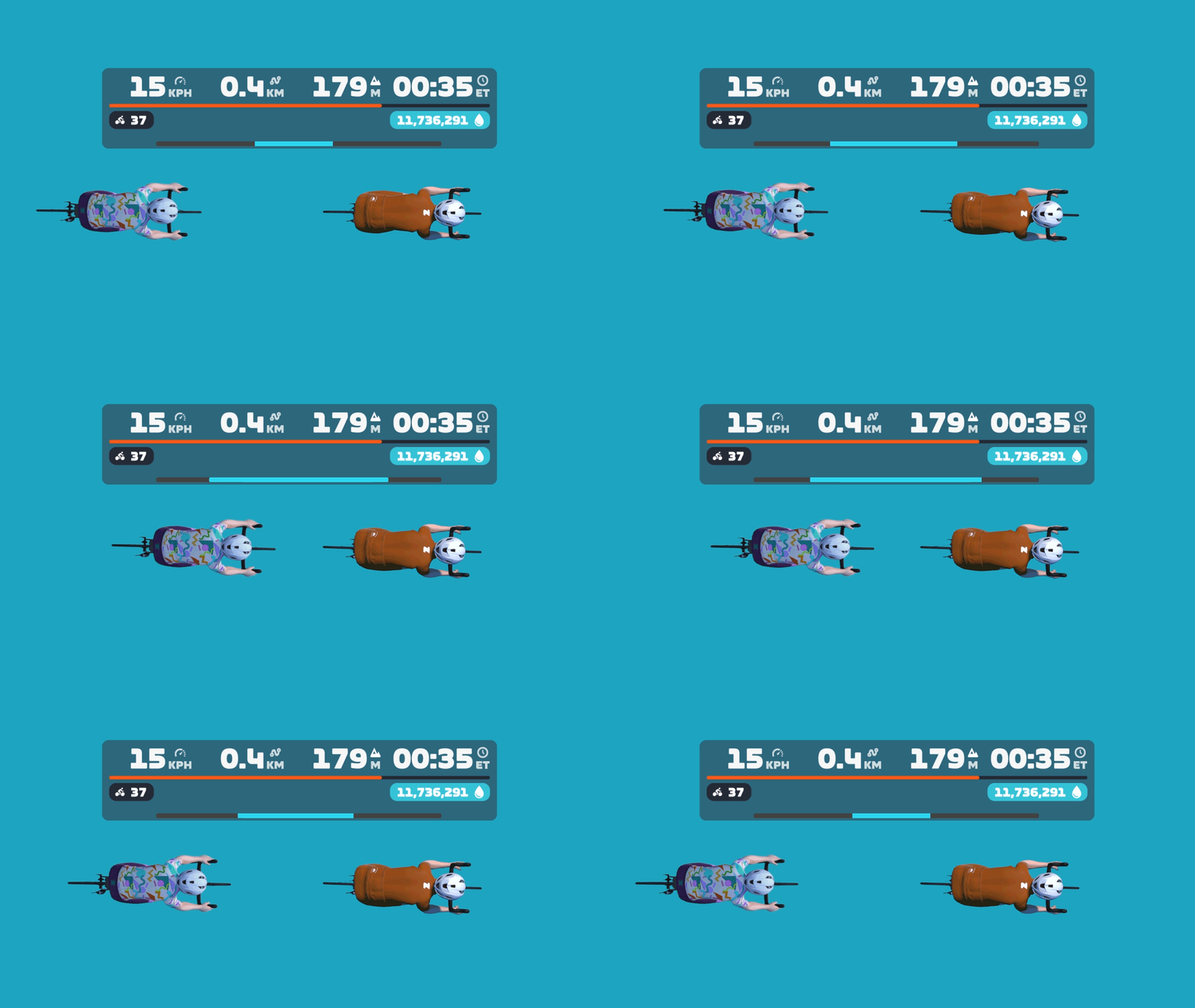
Yesterday’s Zwift update included the release of a long-awaited feature: a draft indicator! It’s a very simple yet useful addition to the game UI: a horizontal blue line that expands and contracts at the bottom of the center HUD element. This animation shows how it basically works:

Want to see it in action? Here’s a quick recording I made while spinning around Watopia yesterday:

Into the Weeds

The new draft indicator, in typical Zwift fashion, is a very simple UI element. But there are lots of details worth discussing, so let’s dig deeper…

What are we measuring?

This is a tricky question to answer, actually.

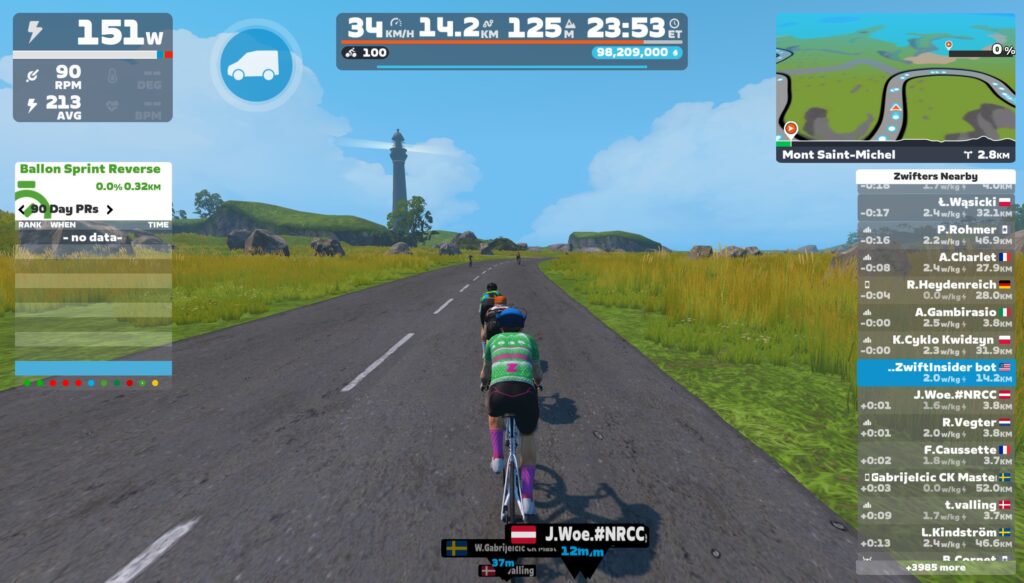
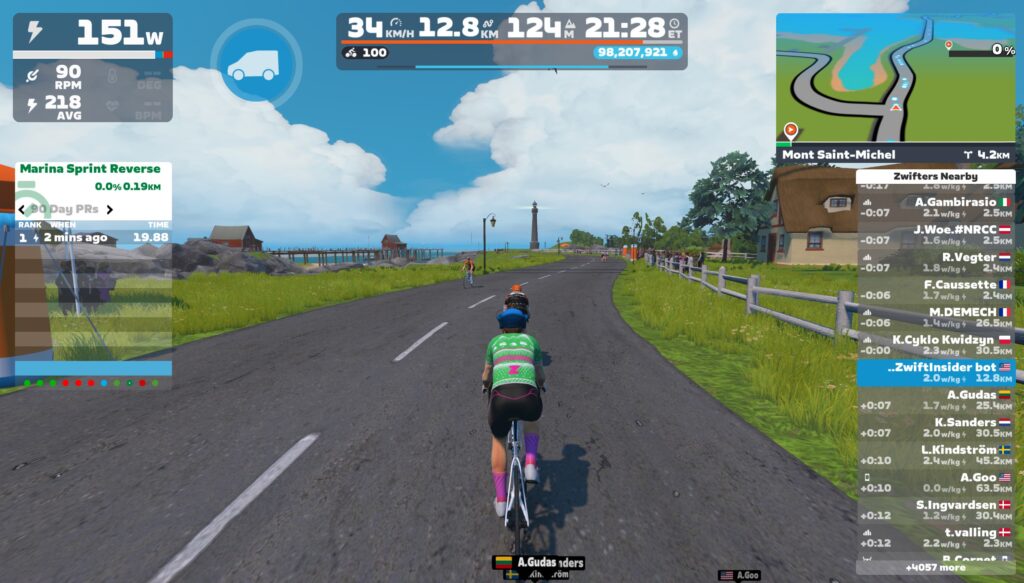
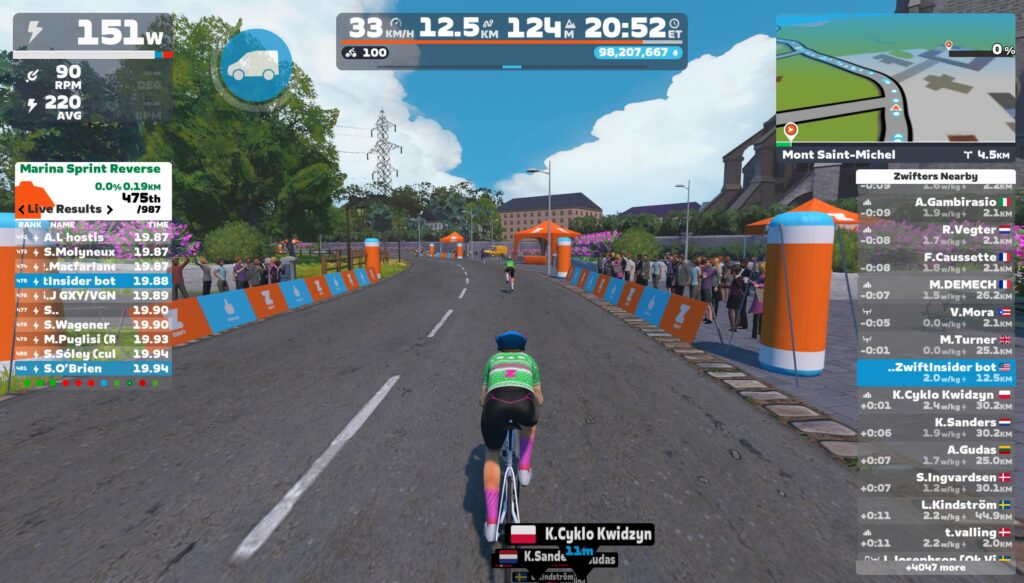
The blue bar isn’t showing exactly how much power you’re saving. If that were the case, it would be wider when drafting two riders at ~60kph on flat ground, vs drafting the same two riders at a lower speed. But that’s not the case. The bar is full even at 34kph, as shown here:

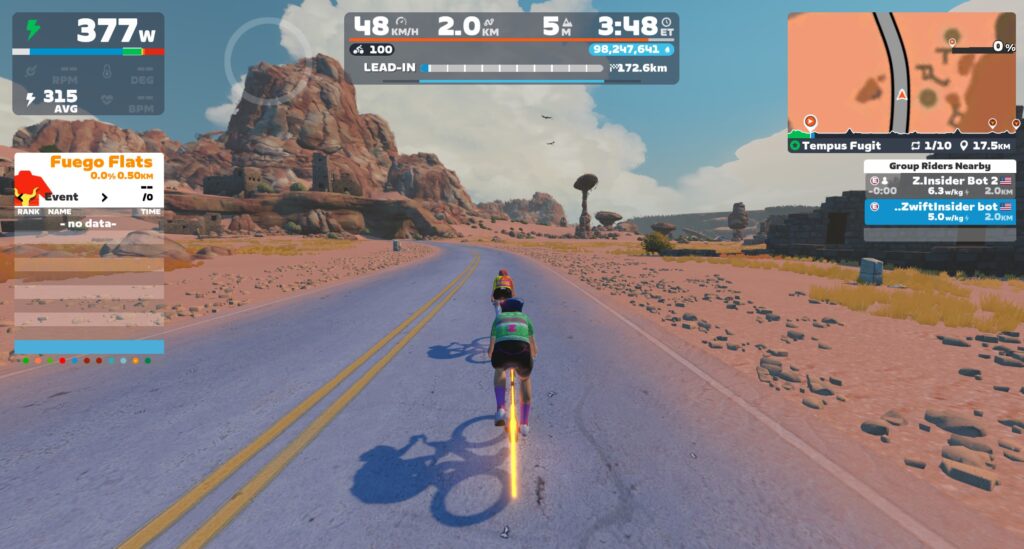
And here you can see it’s filled to the same level drafting off of one rider, whether I’m saving a lot of power at 48kph, or less power at 34kph:

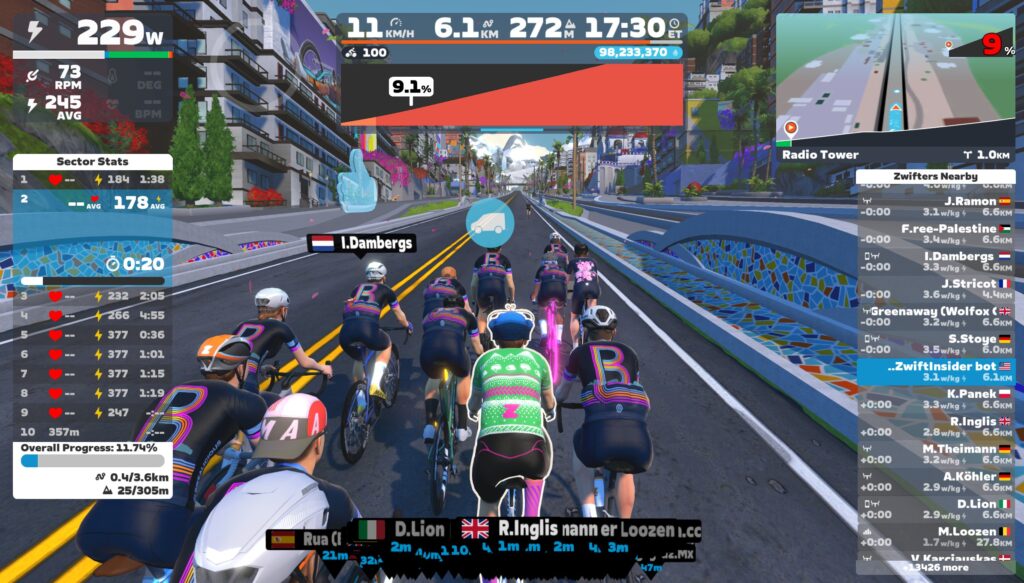
The blue bar is also not indicating how much of the potential draft you are experiencing. If that were the case, the bar would be full when you’re on a climb in the middle of a pack, receiving as much draft as possible in your current location. But that’s not the case. On steep climbs, the bar only fills partway:

Draft Indicator partially filled while sitting mid-pack on a climb

So what is it displaying? I think it’s best to think of the Draft Indicator as showing what percentage of your power is being saved in the draft. This isn’t a perfect description of what it’s showing (especially since the blue bar fills up even when you’re coasting), but I think it’s as close as we’re going to get.

A Note About Bar Width

No, I’m not talking about the UCI’s controversial recent stance on handlebar widths. I’m referring to how the draft indicator’s design could stand to be polished a bit. Currently, the draft indicator bar only fills ~80% of the HUD’s width, but it’s so low-contrast that you can’t really tell how wide the bar should be, if there’s a dark background behind the center HUD:

Because of this, when the bar is fully filled, it can look like it’s only partially-filled, since it doesn’t go to the edges of the HUD.

The bar only expands to the edges of the HUD box when using a Draft Boost powerup (see below). But perhaps the bar should be the full width at all times, then a Draft Boost powerup changes the color of the indicator, or the bar expands to be a bit wider than the main HUD element?

Draft Boost Powerups

What happens when you activate a Draft Boost? I’m glad you asked. Here’s a demo:

How many riders for max draft?

How many riders have to be ahead of you for you to fill the Draft Indicator to max? The answer appears to be two, at least on flat ground at a descent speed.

If you’re well-positioned behind a single rider, the bar fills to this level (around 75% of max):

But get behind two riders, and it fills completely:

This doesn’t quite line up with my Pack Dynamics tests from past years (see Test 2 in this post, for example), which seemed to show that a 4th rider got a bit more benefit than the 3rd rider in a TTT. But my guess is the discrepancy can be explained by Zwift’s new draft indicator having a cap on the power savings it displays, as explained in “What are we measuring?” above.

Goodbye, “Close the Gap”

Zwift says the “Close the Gap” text will be retired with the rollout of the Draft Indicator. I don’t think anyone will complain about that, as long as the Draft Indicator is always visible in its place! (“Close the Gap” was a handy tool in TTT’s… IYKYN.)

How Far Back?

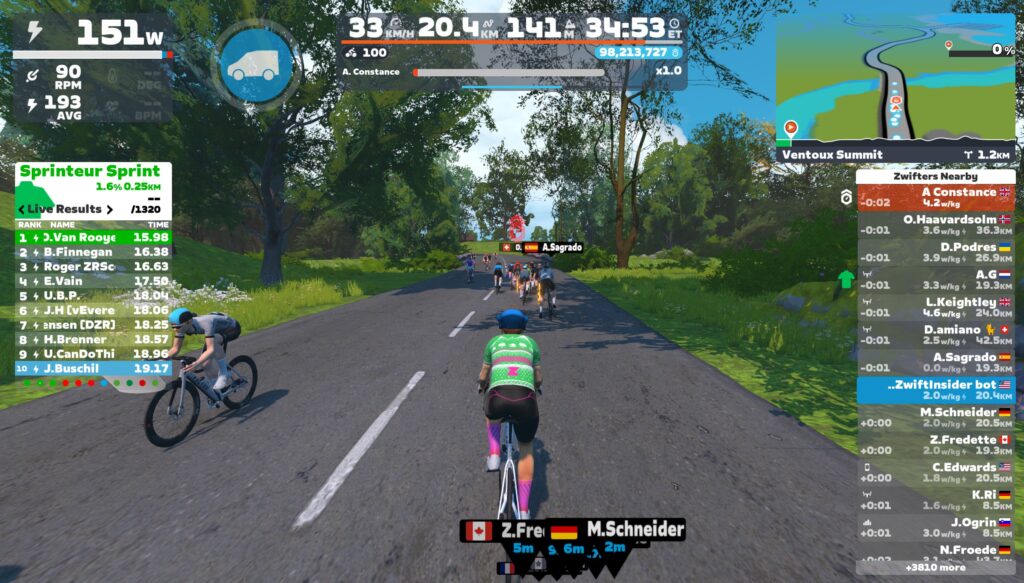
One thing the Draft Indicator will teach Zwifters is that you receive a draft benefit from riders quite far up the road. How far back can you be, and still receive some benefit? I don’t have precise measurements, but here’s a visual showing where the Draft Indicator begins to show a benefit on flat ground at 33kph:

Zwift vs Sauce for Zwift

Until this week’s release, the only draft gauge Zwifters could access was the one provided for Sauce for Zwift. Here’s a quick demo video where I compare Sauce’s drafting gauge and Zwift’s new Draft Indicator:

Sauce’s gauge is titled “W Savings” to indicate that it is showing how much power you’re saving in the draft. This isn’t perfectly accurate, though, as it’s actually showing you how much more power you’d need to be doing to hold your current speed on flat ground without a draft.

Some Zwifters prefer having an actual number displayed. But I think Zwift’s choice to keep it a simple bar is probably the right call, in the interest of keeping the HUD clean and simple.

Drafting Ghosts

With the Draft Indicator now being used by hundreds of thousands of riders, people are going to start discovering new things.

For example, on Zwifter wrote in yesterday to tell me they discovered in a Ladder Race that you can draft off of someone who is invisible due to the ghost powerup. I’d already written about this a few years back (see the post), and of course it makes sense: everyone knows ghosts still have bodies, even if they’re invisible. Right?

TTT Drafting

While Zwift’s Draft Indicator announcement in the forum says, “this indicator will not appear when riding a TT bike…” sources in Zwift tell me that’s not actually true. If you’re in an event where TT bikes can draft (like a TTT), Zwift says the Draft Indicator will be visible. I guess racers will find out tomorrow if that’s true!

Questions or Comments?

What do you think of the new draft indicator? Comment below, and you can also chat on this Zwift forum topic.

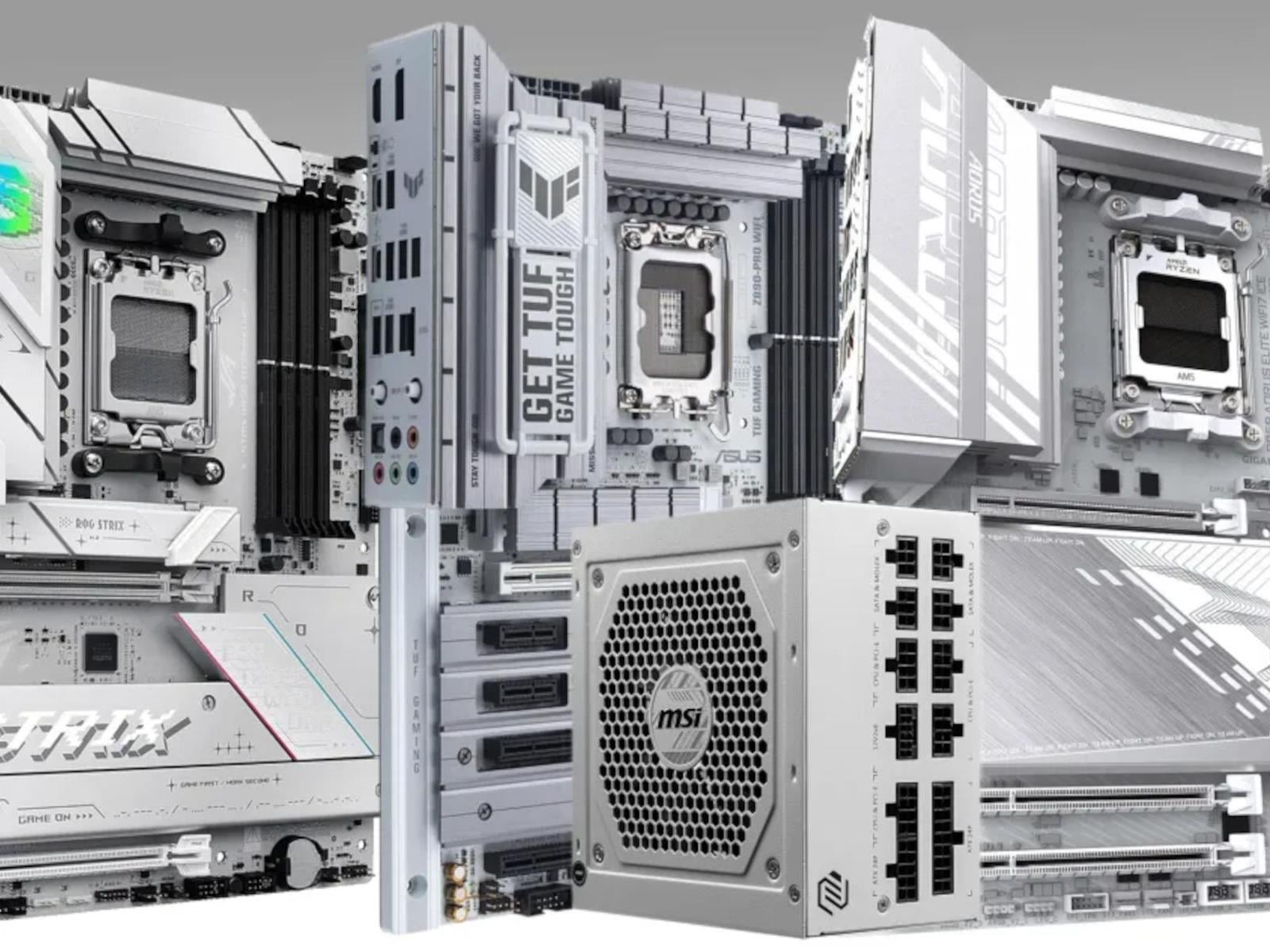
7 Stunning White Motherboards For A Clean, High-End Gaming PC Build

7 Stunning White Motherboards For A Clean, High-End Gaming PC Build
It’s the 2025 Holiday Season, and you know what that means—snowy-white motherboards, meant for PCs with cool temperatures and high performance. To encourage this, a number of reputable motherboard manufacturers have put their white motherboards on sale on Amazon, and we’ll be highlighting the 7 most compelling options below, sorted by price.

The Oscars will exclusively air on YouTube starting in 2029

The entertainment industry’s most well-known awards show is heading to streaming. The Academy of Motion Picture Arts and Sciences (AMPAS) has announced that the Academy Awards, popularly known as the Oscars, will exclusively air on YouTube starting in 2029. The new deal means the awards show is abandoning its long-time partnership with ABC (owned by frequent Oscars heavyweight, The Walt Disney Company), though the Oscars will continue to air on the network through its 100th anniversary in 2028.

The Academy Awards will be joined by other Academy events and programming on the Oscars YouTube channel, including “the Governors Awards, the Oscars Nominations Announcement, the Oscars Nominees Luncheon, the Student Academy Awards, the Scientific and Technical Awards, Academy member and filmmaker interviews, film education programs, podcasts, and more,” AMPAS says. The Google Arts & Culture initiative will also digitize artifacts in the Academy collection and help provide digital access online as part of the new partnership.

“We are thrilled to enter into a multifaceted global partnership with YouTube to be the future home of the Oscars and our year-round Academy programming,” Academy CEO Bill Kramer and Academy President Lynette Howell Taylor said in the announcement of the new YouTube deal. “The Academy is an international organization, and this partnership will allow us to expand access to the work of the Academy to the largest worldwide audience possible — which will be beneficial for our Academy members and the film community.”

Awards shows have struggled to find their footing in the streaming era, particularly because they already served a niche audience even when broadcast TV was the norm. Prior to the Oscars heading to YouTube, Netflix snagged the rights to stream the SAG Awards in 2023, an acting-focused award show that’s often seen as a precursor to the Oscars.

This article originally appeared on Engadget at https://www.engadget.com/entertainment/tv-movies/the-oscars-will-exclusively-air-on-youtube-starting-in-2029-181545531.html?src=rss

Bursting AI bubble may be EU’s “secret weapon” in clash with Trump, expert says

The US threatened to restrict some of the largest service providers in the European Union as retaliation for EU tech regulations and investigations are increasingly drawing Donald Trump’s ire.

On Tuesday, the Office of the US Trade Representative (USTR) issued a warning on X, naming Spotify, Accenture, Amadeus, Mistral, Publicis, and DHL among nine firms suddenly yanked into the middle of the US-EU tech fight.

“The European Union and certain EU Member States have persisted in a continuing course of discriminatory and harassing lawsuits, taxes, fines, and directives against US service providers,” USTR’s post said.

Read full article

Comments

NVIDIA May Slash GeForce RTX 50 GPU Production And You Already Know Why

NVIDIA May Slash GeForce RTX 50 GPU Production And You Already Know Why
The problem with a memory shortage is that virtually every single part of a computer uses memory in some way. That, obviously, includes graphics cards, and despite the author’s earlier optimism that GDDR might be one of the less-affected memory types, it turns out that NVIDIA may be cutting GPU production next year because it’s concerned about