Trump media, the company behind the president’s personal social media platform Truth Social, is inexplicably merging with a Google-backed fusion energy company called TAE Technologies. The deal is worth $6 billion, according to reporting by Financial Times.
Why is an entity known for publishing frenzied hot takes by the president at 3AM combining with a fusion energy company? Who the heck really knows, but a statement says the two organizations will join together to build the “world’s first utility-scale fusion power plant.” This would be huge, if true, as there are currently no operational commercial nuclear fusion power plants.
�TAE Technologies, a premier global fusion power company, to merge with Trump Media & Technology Group to create one of the world’s first publicly traded fusion companies.
We know what TAE would bring to the table in that scenario. The energy company has been around since the 1990s and has attracted interest from Google, Chevron and others. Trump Media would be a great partner when building a reactor powered by insults, but doesn’t seem to offer much of anything else.
The merger statement does mention that Trump Media would provide TAE with “access to significant capital.” The company lost $55 million last quarter, as there’s only so much money in a social media platform primarily used by just one person.
However, the president himself is likely the world’s most renowned raiser of funds when it comes to personal pet projects. He knows how to get a roomful of billionaires to open up their wallets, provide copious compliments and even hand-deliver gold statues. The terms of the deal state that Trump Media will provide TAE with $300 million in capital as a bonus of sorts, though we don’t know where that money is coming from as it represents over ten percent of the company’s entire valuation.
This is an all-stock deal and stocks aren’t exactly immune from the manipulative whims of billionaires. To that end, shares in Trump Media have risen dramatically since this deal was announced. President Trump shifted his stake in the company to a revocable trust that he is the sole beneficiary of and is controlled by Donald Trump Jr.
There’s also the potential notion of using access to shore up federal support for grants, low-interest loans and permit approvals. That kind of thing seems particularly thorny and, to put it mildly, legally gray.
Creating a power plant for large-scale nuclear fusion would be an incredible undertaking and it’s something humanity has yet to figure out. TAE CEO Michl Binderbauer told CNN the newly-formed company will have it done in “five-ish years.” Most experts put that time frame in the “30-ish years” category.
This article originally appeared on Engadget at https://www.engadget.com/big-tech/trump-media-is-merging-with-a-google-backed-fusion-energy-company-in-a-deal-worth-6-billion-180910779.html?src=rss
As you build your DIY toolkit, you’ll quickly discover there’s rarely just one version of any given tool. Of course there are Phillips head and slotted screwdrivers, but even hammers—possibly the simplest tool of all—come in a surprising range of varieties designed for different tasks.
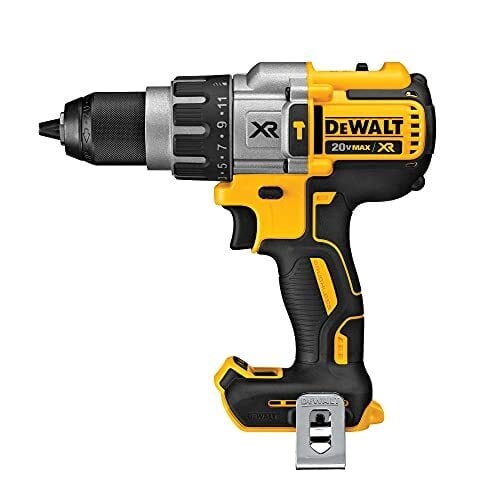
When it comes to power tools, the differences can be more complex to suss out. Take drills: When starting out on a job, how do you know if you need a standard power drill, a hammer drill, or whatever an “impact driver” is? While you can get pretty far in your home maintenance career without knowing the difference, but there will come a point when using the right tool for the job will make your life a lot easier. If you’ve managed to get through life without knowing the difference between a drill, a hammer drill, and an impact driver, here’s the rundown you need.
Drills vs. impact drivers vs. hammer drills
Drills, impact drivers, and hammer drills are all used to drill holes and drive fasteners, but they work in different ways and are well-suited to different tasks:
Drills are the easiest to understand, conceptually: Your trusty power drill spins the bit, delivering consistent, constant torque at a variety of speeds. When the motor encounters resistance, it disengages. That means that when your drill hits its limit, there’s not much more it can do to drive a fastener or bore a hole. A standard drill is good at both drilling and boring holes.
Impact drivers also spin the bit and provide consistent torque—until the driver hits resistance. Then it adds a rapid, perpendicular, concussive force that temporarily increases the torque beyond what a standard drill can do. If you’ve ever hit something on the side with a hammer to loosen it, or clamped a wrench in place and hit the handle with a hammer to get a stuck bolt moving, that’s what’s going on here, but it’s happening dozens of times a second. The impact driver doesn’t have a clutch and will keep working even when it hits resistance. It’s usually pretty loud, and the vibration involved can tire out your hands and arms. As a result, an impact driver isn’t great for drilling—it’s best used to drive fasteners.
Hammer drills operate like a standard drill, but when they’re in hammer mode (which you have to select), they deliver a downward-driving force (like a hammer hitting a nail) as opposed to the impact driver’s horizontal force. Hammer drills can operate like a standard drill if you disengage the hammer function—and like a standard drill, the motor will disengage when it hits resistance. A hammer driver in hammer mode is best for boring holes in tough materials, but not driving fasteners.
How to choose between a drill, impact driver, and hammer drill
Knowing how each of these tools works makes it a little easier to decide when to use one over the other. In general, here’s when to use a drill, impact driver, or hammer drill on your project:
Drills are precision tools that are ideal for driving small fasteners like standard screws or boring holes into softer materials, like wood or drywall. It’s an ideal general tool for most small-scale DIY projects, and when you need more control over the driving or drilling action.
Impact drivers are best used on denser materials, like very hard woods, or with larger or longer fasteners that require a lot of power to drive home. If you’ve ever tried to drive a long screw with a drill and discovered that it becomes frozen halfway through, that’s when an impact driver might be the answer.
Hammer drills are best for drilling or fastening in very hard materials like stone, concrete, or brick—in fact, you should avoid using hammer mode on lighter materials, because it can cause damage. But because you can disengage the hammer function on most hammer drills and use them as standard drills, they can be a good multipurpose choice.
One final difference: Hammer drills and standard drills use a chuck that can accept a variety of bits, but an impact driver will only work with 1/4-inch hex-shaped bits.
Since a hammer drill can also be used as a standard drill, it’s the best option if you’re not sure which tool you should get or you want to avoid buying an additional tool for a future project—it gives you both standard drill capabilities and the added power of the hammer action. You can hold off on picking up an impact driver until you tackle a project that actually calls for one.
The holidays have snuck up on us. How is it already that time?
If you’re on top of things and have already bought all your Christmas gifts, I commend you. Not all of us are so conscientious. In fact, one of us is so behind on holiday prep that he is not only running late on buying gifts; he’s also behind on publishing the Ars staff gift guide he said he’d write. (Whoever could we be talking about?)
So for my fellow last-minute scramblers, I polled Ars writers and editors for gift ideas they know will be solid because they’ve actually used them. As such, you’ll find gift options below that Ars staffers have used enough to feel good about recommending. Further, I made sure all of these are available for delivery before Christmas as of today, at least where I live.
You can add Japan to the list of regions where Apple has been forced to do something it would rather not: open up the App Store. On Thursday, the company announced changes to iOS in Japan to comply with the nation’s Mobile Software Competition Act (MSCA). The tighter regulations for Apple and Google, which overlap with Europe’s, took effect today. Users in the US and elsewhere won’t see any of these changes.
Apple’s changes in iOS 26.2 in Japan revolve around alternative app stores, payments outside the App Store and browser choice. The company worked with Japanese regulators on new protections for increased security risks.
The company calls this set of safeguards Notarization. It involves an authorization process for alternative app stores and child-safety protocols. Third-party marketplaces will need to undergo a baseline security review. This uses a combination of human and automated checks to block malware and other threats.
Naturally, Apple cautions that Notarization is less comprehensive than the App Store’s reviews. “The App Store — where every app is reviewed to meet the App Store’s high bar for privacy and security — remains the best place for iOS users in Japan to discover and download the apps they love,” the company wrote.
To state the obvious, the App Store is a booming business for the iPhone maker. In 2024, it generated $1.3 trillion in total sales. Opening it up poses a threat to one of the company’s most reliable revenue streams. Big Tech seems to talk a lot about fewer rewards and more penalties for users when their own money trees are at risk.
Apple CEO Tim Cook in Tokyo in October 2025
ANDREW CABALLERO-REYNOLDS via Getty Images
iOS 26.2 in Japan also introduces new payment options. Developers can now use non-Apple payment processors within their apps or link to external websites for purchases. (Children’s content is exempt from this.) Here, Apple again warns the user about the penalties for doing something that will hurt its bottom line. “For apps that use alternative payment processing or link users to the web for transactions, Apple will not be able to issue refunds and will have less ability to support customers encountering issues, scams or fraud,” the company cautioned.
The last big change involves picking defaults within the operating system. Users in Japan will see new browser and search engine choice screens. They’ll also find default controls for navigation apps and app stores. Finally, developers can now offer browsers that use alternative engines other than Apple’s WebKit.
Apple’s announcement comes a day after Google detailed its compliance with the MSCA. Since Android is more open than iOS, Google’s changes in response to the regulations are a bit less pronounced. Android users will find new browser / search choice screens, expanded billing options and side-by-side comparisons of external vs. Play Store payment options.
This article originally appeared on Engadget at https://www.engadget.com/mobile/apple-opens-up-ios-in-japan-in-response-to-new-regulations-174854950.html?src=rss
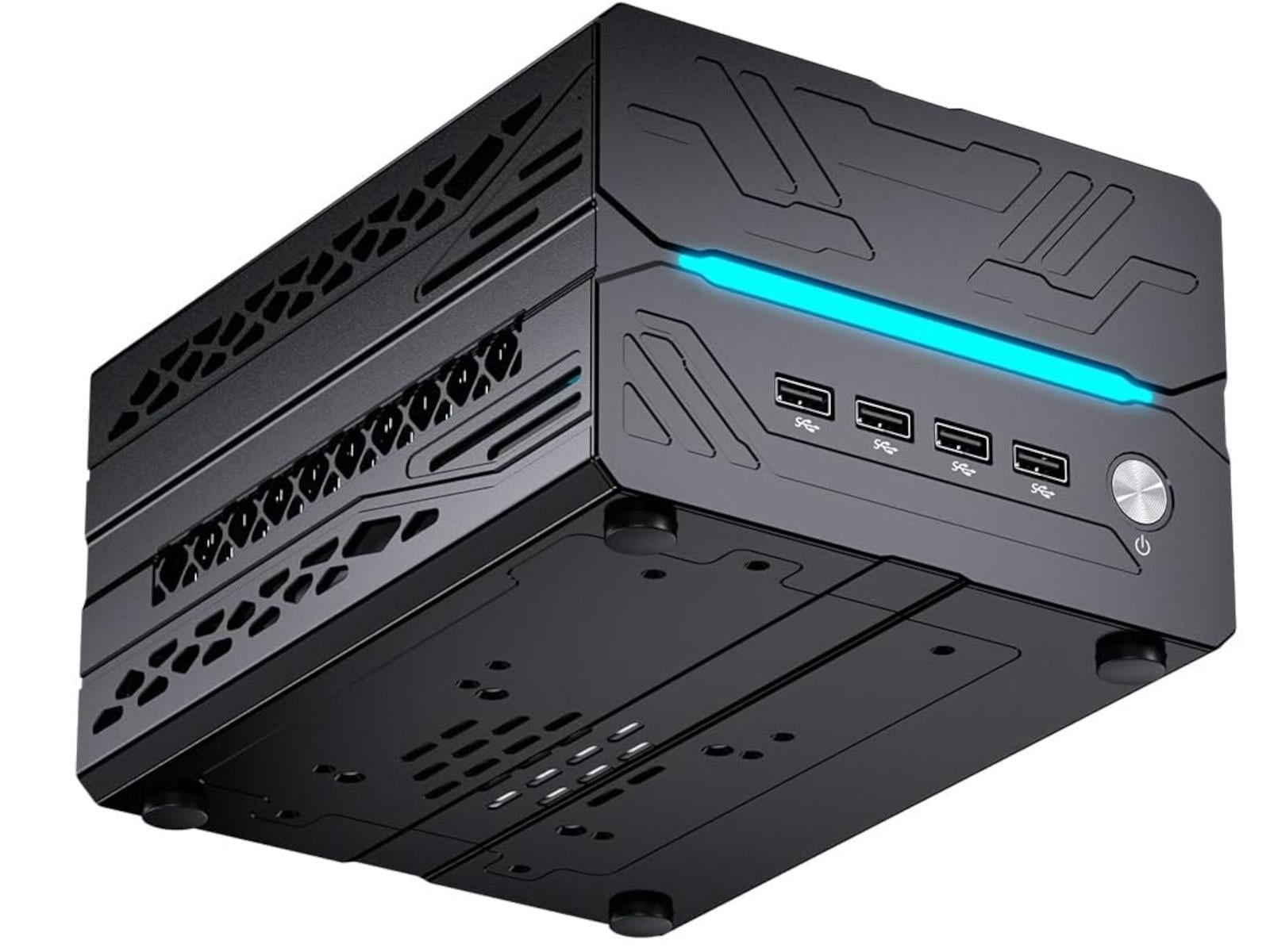
MSECore’s latest small form factor system, the MV10 Mini PC, is a compact computing beast. The diminutive machine features four cooling fans to manage the heat from an Intel Core i9-14900F and an NVIDIA GeForce RTX 5060 Ti 16GB, along with up to 64 GB of DDR5-5600 MT/s RAM and a 4TB NVMe Gen 4 SSD. There are also 32GB DDR5 and 8GB GDDR5 GeForce
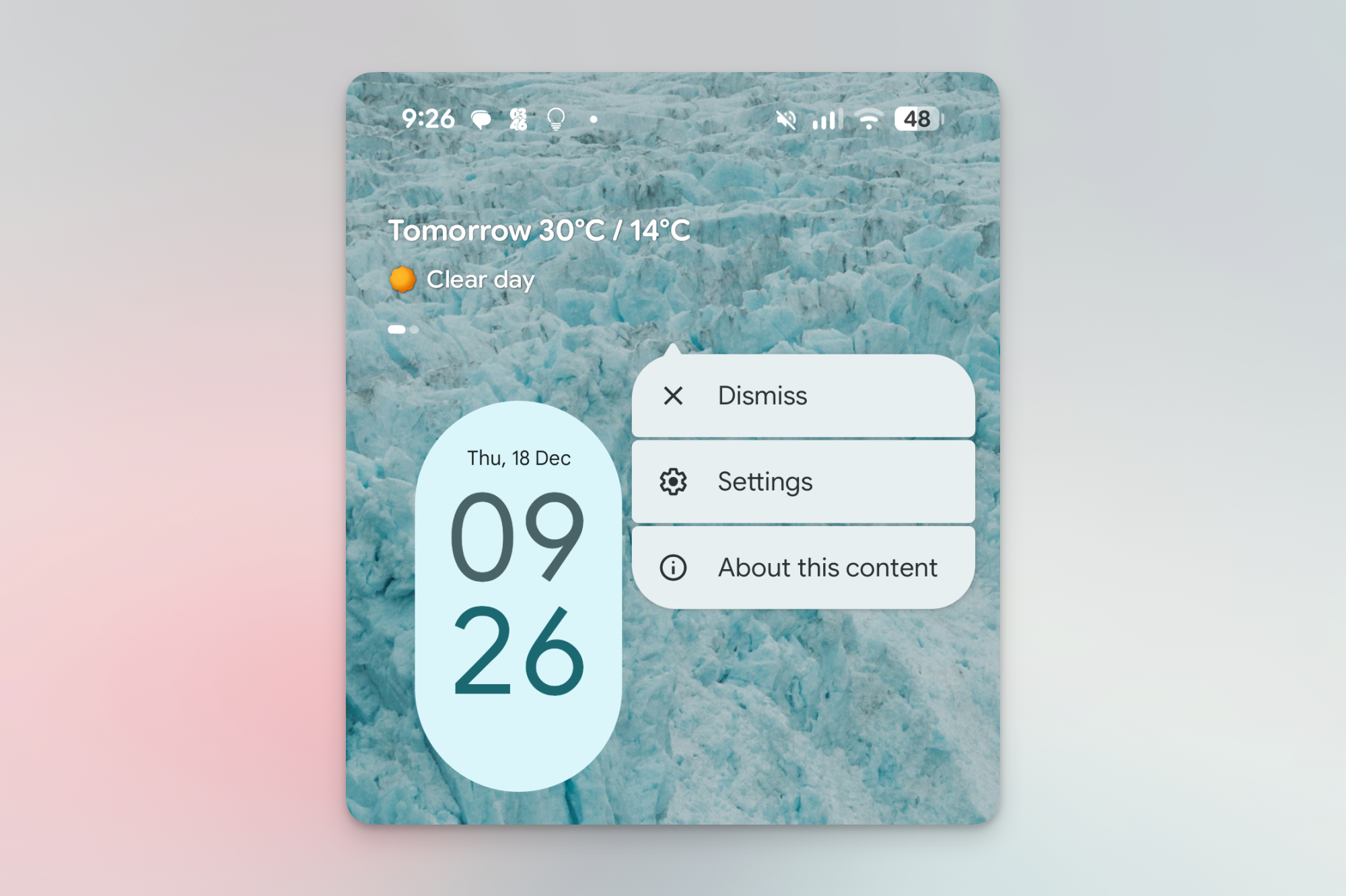
I really like my Pixel 9a, but there’s one glaring issue with my Pixel that stares at me every time I unlock my phone. And it’s the At a Glance widget on top the screen that Google just won’t let me remove. I like a clean lock screen, and eventually, I got so frustrated looking at this totally uncustomizable widget that shows the time and the weather that I gave up and switched to Niagara Launcher. And if you think that this is just my own pickiness, I can confidently say it’s not just me; Reddit is filled with people complaining about this.
But seems like after 10 iterations of Pixels, Google is finally letting people get rid of this widget, clearing space for something, anything better than this. The new option will be part of Android 16’s QPR 3 update, which will be out sometime in March 2026. But if you install the beta, you can try it now.
How to install Android 16 QPR 3 beta 1
Android’s QPR betas are refreshed every quarter, and anyone with a compatible Pixel device can enroll. Visit the Android Beta Program website and enroll your device. Reboot, and you’ll be on the beta channel. It’s really easy to hop on, and it won’t require a factory reset. But getting rid of an installed beta is not so easy. Once you install the latest QPR 3 beta, you’re in for the long haul, at least until Android 16 ships the stable version in March. If something goes wrong, or if you’re facing battery issues, the only way to downgrade would be to wipe your device. So before you start, make sure you have a full backup.
How to disable the At A Glance widget in Android 16
At a Glance is an interesting idea, but it’s rarely helpful. It’s supposed to show you relevant information like the weather, your next appointment, alerts, air quality, and even suggestions from fitness apps and delivery updates. But instead, what it shows is unpredictable and pretty barebones, and it takes up valuable screen real estate. Worse, you can’t customize it to make it better. I’m excited to get rid of it once and for all.
Once you’re running the latest software, it’s quite straightforward. Long press the At a Glance widget and choose the Settings option.
Credit: Khamosh Pathak
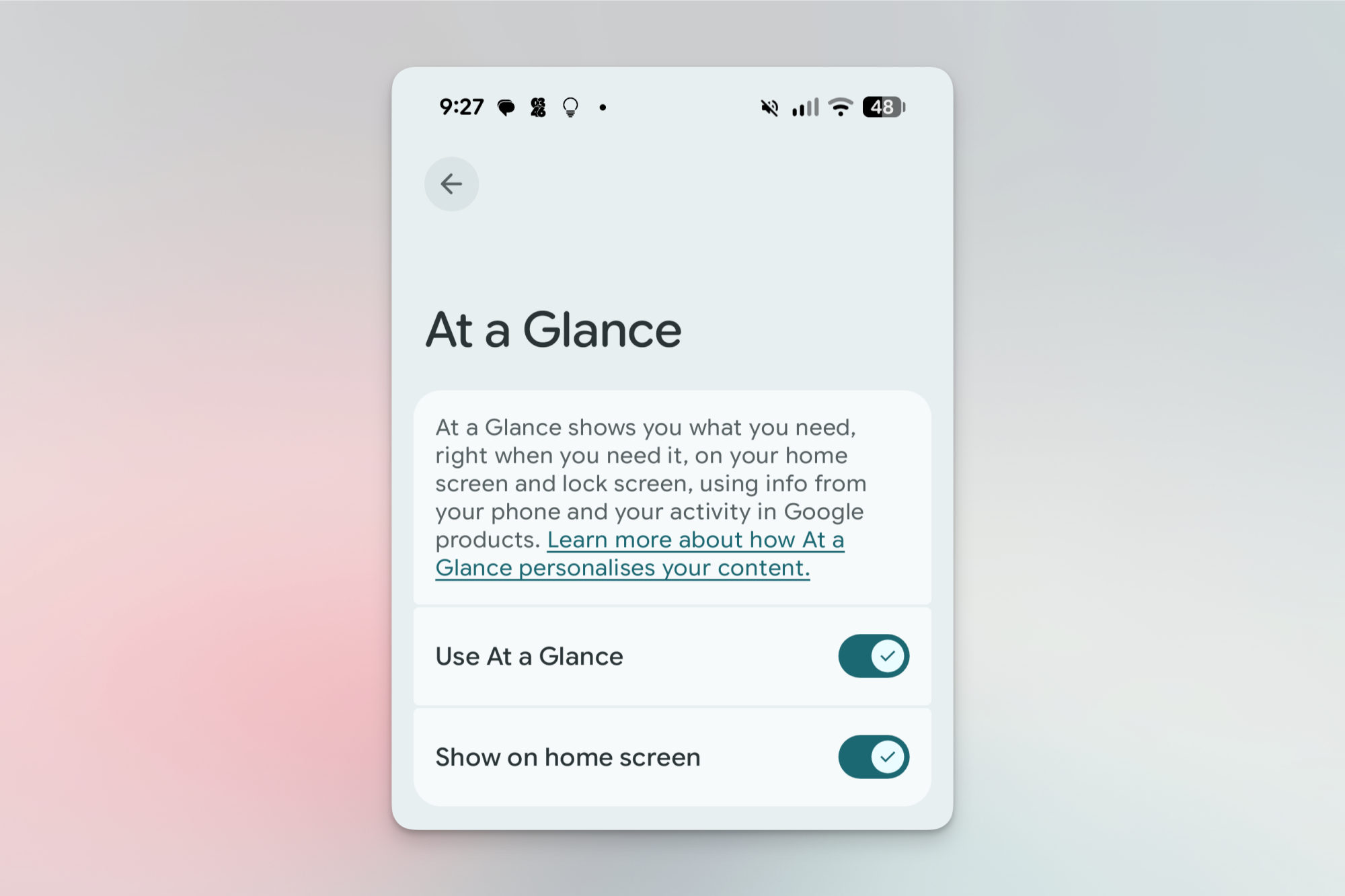
Here, disable the new Show on home screen option below the Use At a Glance toggle. This will disable the home screen widget instantly, but you’ll still have access to it on the lock screen. Disable the Use At a Glance toggle as well to get rid of it from everywhere.
Credit: Khamosh Pathak
And there you have it. Your home screen is free at last. You can leave the space empty if you wish, or, like me, you can add a big old clock right up there instead.
Credit: Khamosh Pathak
If you want to bring the At a Glance widget back, tap and hold on an empty part of the home screen and choose Home settings, then tap the Gear icon next to the At a Glance option. From here, you can re-enable the widget using the Show on home screen toggle.
The UK Met Office projects that 2026 will see global temperatures rise between 1.34C and 1.58C above preindustrial levels, placing it among the four hottest years since records began in 1850 and continuing a streak of extreme warming that has pushed the planet into unprecedented territory. The central forecast is slightly cooler than the 1.55C recorded in 2024, the warmest year on record. But climate scientist Adam Scaife, who led the forecast, noted that “the last three years are all likely to have exceeded 1.4C” and 2026 would be the fourth consecutive year to do so. “Prior to this surge, the previous global temperature had not exceeded 1.3C,” he said.
The forecast suggests another temporary exceedance of the 1.5C threshold set by the Paris Agreement is possible in 2026, following the first such breach in 2024. The 1.5C target is measured as a 30-year average, so it remains technically achievable even as individual years cross the line. EU scientists said last week that 2025 is “virtually certain” to rank as the second or third-hottest year on record.
NVIDIA has promoted their R590 driver series to stable with the release today of the NVIDIA 590.48.01 Linux driver as their latest new feature branch version…
Cycling and sponsors have a history almost as long as the sport itself.
In fact, the biggest events on the annual calendar were created as a form of advertisement, with newspapers L’Auto, La Gazzetta dello Sport and Informaciones responsible for founding the Tour de France, Giro d’Italia and La Vuelta a España, respectively.
Bike brands followed, setting up their own teams from the 1920s.
Companies from outside of cycling got in on the act in the 1950s, and today, the professional peloton’s team names are a smorgasbord of supermarket chains, bike brands, gambling companies and a couple of caffeine-filled concoctions (one of which you put on your hair…).
But, unlike most sports, team names change as sponsors come and go, with most big-money switches made during the off-season.
As big news as the signings of the transfer window, they determine the team-name tongue-twisters that fans and commentators will have to contend with the following season, while providing outfits with injections of cash that are more important to the future of a team than any rider.
From mergers and swaps to complete rebrands, here is a summary of the key sponsor swaps to get your head around before the 2026 road cycling season.
Every 2026 Men’s WorldTour team title sponsor swap
Alpecin–Deceuninck → Alpecin–Premier Tech
Decathlon–AG2R La Mondiale → Decathlon CMA CGM
Groupama–FDJ → Groupama–FDJ United
Intermarché–Wanty → Lotto Intermarché
Israel–Premier Tech → NSN Cycling Team
Alpecin – Deceuninck becomes Alpecin – Premier Tech
Premier Tech joins as co-sponsor of the team formerly known as Alpecin – Deceuninck. ON SACRE (Photo by TOON SACRE / BELGA MAG / Belga / AFP via Getty Images
The Belgian outfit behind Mathieu van der Poel and Jasper Philipsen embarks on its fourth WorldTour season with German caffeine-containing shampoo Alpecin joined by new co-title sponsor, Premier Tech.
It takes over from the Belgian window and door company, Deceuninck.
The Canadian machinery and equipment manufacturer had been a co-title sponsor of Israel – Premier Tech, but stepped away after the negative publicity surrounding the team’s Israeli identity, relentless protests at 2025’s La Vuelta, and the war in Gaza.
Decathlon AG2R La Mondiale Team becomes Decathlon CMA CGM Team
CMA CGM describes itself as “a global player in sea, land, air, and logistics solutions”. Gautier Demouveaux/NurPhoto via Getty Images
After almost three decades in the sport, insurance company AG2R La Mondiale is stepping down as co-title sponsor of France’s biggest team.
It’s set to be replaced by another French company – shipping and logistics specialist CMA CGM.
Decathlon remains the driving force behind the team, which has competed on the brand’s Van Rysel range since the retail-park behemoth came on board in 2024.
Groupama – FDJ becomes Groupama – FDJ United
Groupama – FDJ has a small name change for 2026. Groupama – FDJ United
The other big French team of the WorldTour peloton, Groupama – FDJ, gets a minor name change for 2026, adding ‘United’ to its title after France’s national lottery rebranded to FDJ United in 2025.
Israel – Premier Tech becomes NSN Cycling Team
Biniam Girmay is NSN Cycling’s big-name signing for 2026. Manaure Quintero / AFP via Getty Images
The beleaguered Israel – Premier Tech team has new title sponsors, a new registered location and a fresh look to its rider line-up for 2026, with Biniam Girmay the biggest signing of the off-season.
While you may have never heard of NSN Cycling, it’s the cycling arm of NSN (the ‘international sports and entertainment company’ co-founded by Spanish football World Cup winner, Andreas Iniesta).
The team is backed by Swiss-Spanish investment platform Stoneweg and will ride Scott bikes in the pro peloton.
The involvement of the controversial former team owner, Sylvan Adams, remains unclear.
Intermarché – Wanty and Lotto have merged. Dario Belingheri/Getty Images
Belgian team Lotto returns to the WorldTour in 2026 with a new co-title sponsor, the French supermarket chain Intermarché.
The company had previously sponsored Girmay’s old team, Intermarché – Wanty, but made the switch with the merging of the teams at the end of the 2025 season.
Q36.5 Pro Cycling Team becomes Pinarello – Q36.5 Pro Cycling
Although not in the WorldTour, Tom Pidcock’s Q36.5 Pro Cycling Team is getting an additional co-title sponsor for the 2026 season, with Italian bike manufacturer Pinarello stepping up as a key backer and replacing Scott as the team’s bike supplier.
Both Pinarello and Q36.5 are owned by South African billionaire and former mining firm boss Ivan Glasenberg, who co-owns the Swiss team alongside Q36.5 co-founder Luigi Bergamo and manager Doug Ryder.
With a raft of signings including Fred Wright, Sam Bennett and Thomas Gloag, expect the team to be knocking on the door of the WorldTour very soon.
We may earn a commission from links on this page. Deal pricing and availability subject to change after time of publication.
Meta has made virtual reality accessible to many more people, offering good VR headsets for much cheaper than the competition. Right now, the 128GB Meta Quest 3SGorilla Tag Bundle is on sale for $249.99 (originally $299.99) and comes with a $50 Amazon gift card by hitting the “redeem” button or using the code “QUEST3S50” at checkout. This is the lowest price it has been, according to price-tracking tools, and the gift card makes it an even better deal. You can also double the storage with the Meta Quest 3s Batman: Arkham Shadow bundle for $349 (originally $399.99), which comes with a $49.01 Amazon credit.
With a $50 gift card
Meta Quest 3S Gorilla Tag Bundle (128GB)
$249.99 at Amazon
$299.99 Save $50.00
$249.99 at Amazon
$299.99 Save $50.00
With a $49.01 Amazon credit
Meta Quest 3S 256GB VR Headset With Batman: Arkham Shadow and 3-Month Meta Quest+
$349.00 at Amazon
$399.99 Save $50.99
$349.00 at Amazon
$399.99 Save $50.99
The Meta Quest 3 has better graphics, but it costs substantially more (currently $499.99) than the 3S version. Lifehacker staff writer Stephen Johnson tested both VR headsets to decide which of the two is better, and the Meta Quest 3S was his winner—you can read a more in-depth review of the Quest 3S here. There isn’t enough of a difference between the two models to justify the additional cost, with the Quest 3S’s graphics looking very close to the 3 and running the same games and apps.
The Meta Quest 3S has a Snapdragon XR2 Gen 2 processor, 8GB of RAM, a display resolution of 1,832 by 1,920 (per eye), and a refresh rate of 120Hz. Once you put them on, the horizontal field of view is 96 degrees, and the vertical view is 90 degrees. The audio is stereo, which is nice, and the speakers are compatible with 3D spatial audio. When it comes to battery life, expect up to two and a half hours of juice before having to recharge (it takes about two hours for a full charge).
What makes the Meta Quest 3S special is how cheap it is to jump into the VR world, with other headsets going for much more (Apple’s Vision Pro is still $3,499). The bundle deal and gift cards make these deals even better.
Apple has announced a sweeping set of changes to iOS in Japan that will allow alternative app marketplaces, third-party payment processing, and non-WebKit browser engines — all to comply with Japan’s Mobile Software Competition Act, which takes effect December 18. The changes, now available in iOS 26.2, bear a strong resemblance to Apple’s compliance measures for the European Union’s Digital Markets Act but differ in key ways.
Japanese developers who want to offer alternative payment options must display them alongside Apple’s in-app purchase system, giving users a choice at checkout rather than replacing Apple’s option entirely. Apps cannot be distributed directly from websites as they can in the EU; they must go through an authorized marketplace.
Apple has established a tiered fee structure for the new arrangements. Apps distributed through the App Store using in-app purchase will pay between 15 and 26% depending on whether developers qualify for the Small Business Program. Alternative payment processing drops the 5% payment fee but keeps the base commission. Apps distributed outside the App Store pay a flat 5% Core Technology Commission on digital goods and services.
The company introduced several user-facing changes beyond app distribution. iPhone users in Japan will see browser and search engine choice screens during device setup, can assign third-party voice assistants to the side button, and can select alternative default navigation apps. Apple said it worked closely with Japanese regulators on protections for younger users. Apps in the Kids category cannot link to external websites for purchases, and users under 13 cannot access web links for transactions in any app.
An Apple spokesperson told Bloomberg that the company has no plans to extend these changes to other markets.
Stephen Rothwell, who has maintained the kernel’s linux-next integration
tree from its inception, has announced his
retirement from that role:
I will be stepping down as Linux-Next maintainer on Jan 16, 2026.
Mark Brown has generously volunteered to take up the challenge. He
has helped in the past filling in when I have been unavailable, so
hopefully knows what he is getting in to. I hope you will all
treat him with the same (or better) level of respect that I have
received.
It has been a long but mostly interesting task and I hope it has
been helpful to others. It seems a long time since I read Andrew
Morton’s “I have a dream” email and decided that I could help out
there – little did I know what I was heading for.
Over the last two decades or so, the kernel’s development process has evolved
from an unorganized mess with irregular releases to a smooth machine with a
new release every nine or ten weeks. That would not have happened without
linux-next; thanks are due to Stephen for helping to make the current
process possible.
Security boffins warn flaw is now being used for ransomware attacks against live networksMicrosoft says attackers have already compromised “several hundred machines across a diverse set of organizations” via the React2Shell flaw, using the access to execute code, deploy malware, and, in some cases, deliver ransomware.…
Amazon just introduced a new feature for Alexa+ called Greetings. This lets Alexa+ answer the doorbell and converse with visitors, which certainly sounds futuristic in a “gated community as dystopia” kind of way.
There are several caveats here. First of all, it only works with certain newer Ring video doorbell models. Customers also have to pony up for a Ring Premium Plan and have access to the Alexa+ early access build. It’s available in the US and Canada and only in English.
If you meet those criteria, this could be a fairly useful little feature. Amazon says it “transforms your Ring doorbell into an intelligent assistant capable of determining who’s at your door, understanding what they need and responding conversationally.” The company promises that the tool operates whether people or home or out doing errands.
How does this work? It’s an AI algorithm that “determines who’s there based on what they’re wearing, holding or their actions.” It will use “visual context, any information the visitor shares and the instructions it’s been given to help manage interactions on your behalf.”
Amazon says that it can, for instance, distinguish if a person is wearing a delivery uniform and tell them to leave the package at the back door. Most of my delivery drivers don’t come to the door in full uniforms because it’s winter and that would be ridiculous. I don’t even expect that during the summer. In other words, this is modern AI and mistakes will happen.
The company gives other examples of how this could be used, like gathering messages from friends who stop by and telling door-to-door salespeople to (politely) bug off. Amazon also says Alexa+ will be able to direct visitors to water and snacks that have previously been laid out. Finally, there’s a way to avoid those pesky cute kids on Halloween while still providing them with treats.
Everything can be reviewed later on via the Ring app, which should provide context as to who has been hanging around the porch. Alexa+ Greetings are rolling out today.
For the uninitiated, Alexa+ is Amazon’s updated chatbot. It’s more conversational than the old Alexa, which could be useful or annoying depending on what you use it for. I use Alexa primarily as an alarm, so I don’t necessarily want a gabfest.
This article originally appeared on Engadget at https://www.engadget.com/ai/alexa-can-now-answer-your-ring-doorbell-and-talk-to-people-162712774.html?src=rss
In the past few weeks on Phoronix we have explored a fresh look at the open-source Nouveau/NVK performance compared to the NVIDIA 580 packaged Linux driver as well as a multi-generation Nouveau vs. NVIDIA comparison from the GeForce GTX 980 to RTX 5080 since the forthcoming NVIDIA R590 driver series is ending the GTX 900/1000 series support. Today’s article provides another round of fresh open-source NVIDIA Linuc graphics performance data using the upstream open-source Nouveau and Mesa NVK/Zink drivers compared not only to the current NVIDIA packaged driver but also competitively for how the GeForce RTX 50 line-up compares to the current AMD Radeon RX 9000 series graphics cards.
Have you been naughty this year? Actually, don’t answer that, it’s none of our business. But if you have. or if you just don’t want to leave your holiday wish list to Santa’s scrutiny, then we have a bead on a couple of grooving gaming hardware deals that you should check out. Specifically, there are deals to be had on the ASUS ROG Xbox Ally
The world’s best-performing stock is turning into a cautionary tale for investors chasing outsized returns from the AI boom. From a report: Little-known until recently even within its home market of India, RRP Semiconductor Ltd. became a social-media obsession as its shares surged more than 55,000% in the 20 months through Dec. 17 — by far the biggest gain worldwide among companies with a market value above $1 billion.
That’s despite posting negative revenue in its latest financial results, reporting just two full-time employees in its latest annual report, and boasting only a tenuous link to the semiconductor spending boom after shifting away from real estate in early 2024. A mix of online hype, a tiny free float and India’s swelling base of retail investors drove 149 straight limit-up sessions, even as exchange officials and the company itself cautioned investors.
The rally is now showing signs of strain — and regulators are taking a closer look. The Securities and Exchange Board of India has begun examining the surge in RRP’s shares for potential wrongdoing, according to a person familiar with the matter who asked not to be identified discussing confidential information. The $1.7 billion stock, recently restricted by its exchange to trading just once a week, has fallen by 6% from its Nov. 7 peak.
Like most electronics, ebike motors are subject to fast-paced change and development, whether that’s power increases, reduction in battery size and weight, better integration or simply increased reliability.
But choosing the right eMTB motor – and the bike it’s fitted to – has become ever more difficult because tech leaps forward at such a pace.
After a 2021 software power update, taking peak figures to 85Nm and 600W, Bosch’s Performance Line CX motor enjoyed supremacy for several years.
In mid-2024, Chinese drone and camera manufacturer DJI disrupted the market with the Avinox drive unit. Peak power and torque figures – 1,000w and 120Nm respectively – dwarfed Bosch’s numbers, and the Avinox quickly became the must-have system.
At launch, it was only available on DJI’s own bike – the Amflow – but that’s now changed. Crestline, Forbidden and Unno, among others, are selling Aninox-equipped models, and there are rumours of more to come.
While the Avinox avalanche is in full flow, Bosch has responded with the Performance Line CX-R and a software update reserved for the latest Gen 5 CX motor.
The Avinox motor is way more powerful than the Bosch. Scott Windsor / Our Media
This upped torque and power to 100Nm and 750W, going some way to keeping the German manufacturer in touch with the Chinese behemoth.
Of course, power and torque figures aren’t the whole story. How that power is delivered is just as important, as are reliability, repairability and warranty, functionality, battery life and weight, along with how good any companion smartphone app may be.
Anyone considering buying a new eMTB is likely to be looking at bikes with one of these two motors fitted, so I set out to find out which is the best and most worthy of your cash.
DJI Avinox M1 vs Bosch Performance Line CX-R details and specifications
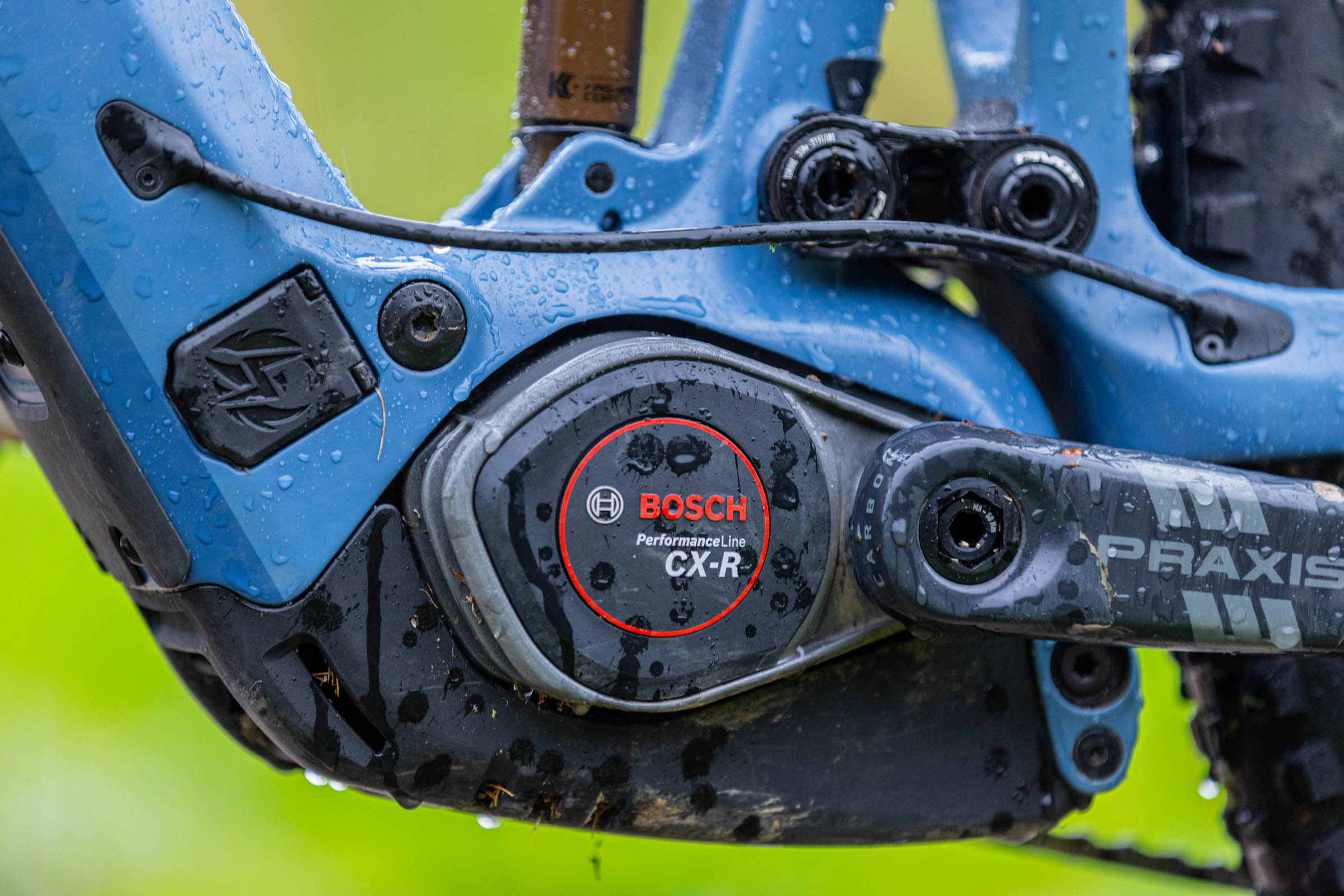
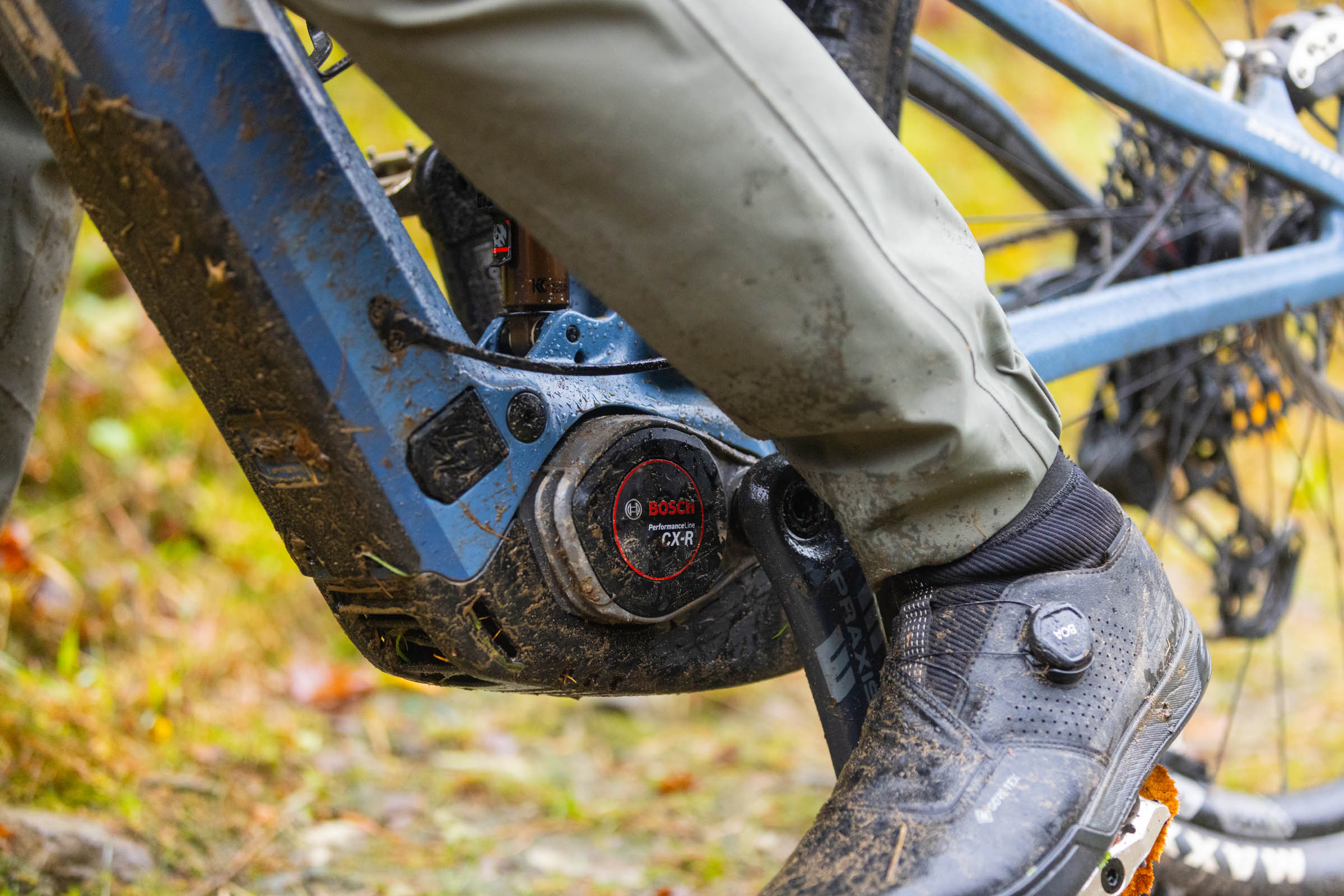
The Race motor is Bosch’s flagship, and sports a titanium casing and ceramic bearings. Scott Windsor / Our Media
Headline power and torque figures are the ebike’s equivalent to the cherry sitting atop a cake.
While the cherry is important, and the ingredient that’s most likely to tempt you, it shouldn’t be the biggest consideration – there’s plenty more to the cake, as there is an ebike motor.
DJI’s Avinox boasts the biggest figures on the market, maxing out at a whopping 800 per cent support ratio, 120Nm of max torque (and 105Nm of continuous torque) and 1,000W of peak power.
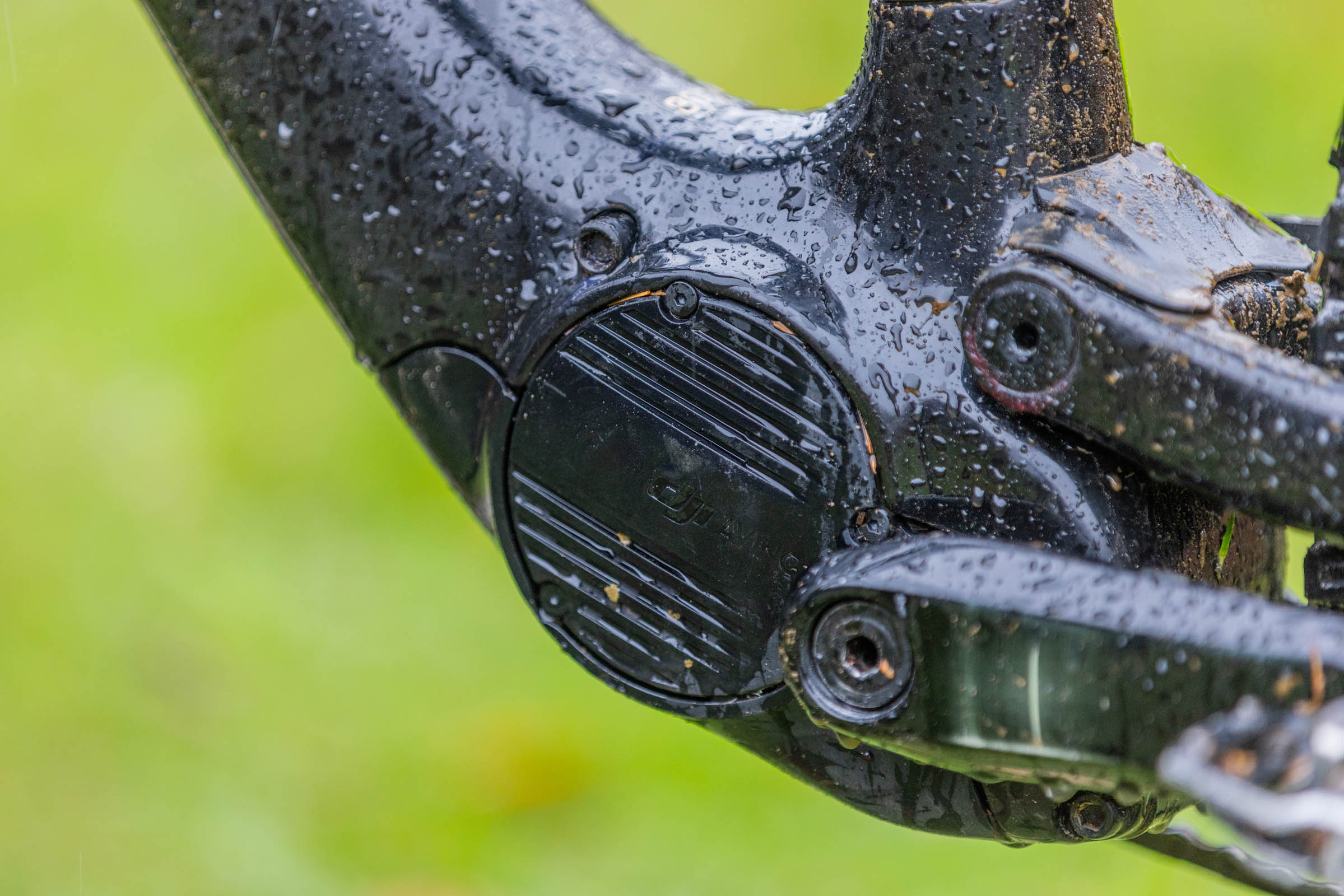
The Avinox motor is compact and light; impressive given how much power it has. Scott Windsor / Our Media
In the Avinox’s case, if the rider puts in 100W of power, the motor will supplement your power with an additional 800W.
The Bosch Performance Line CX-R – and the standard Gen 5 CX after its mid-2025 update – maxes out at a 400 per cent support ratio, 100Nm of torque and 750W of peak power.
In the Bosch’s case, if you put in 100W of power, the motor will contribute 400W.
Mixing modes
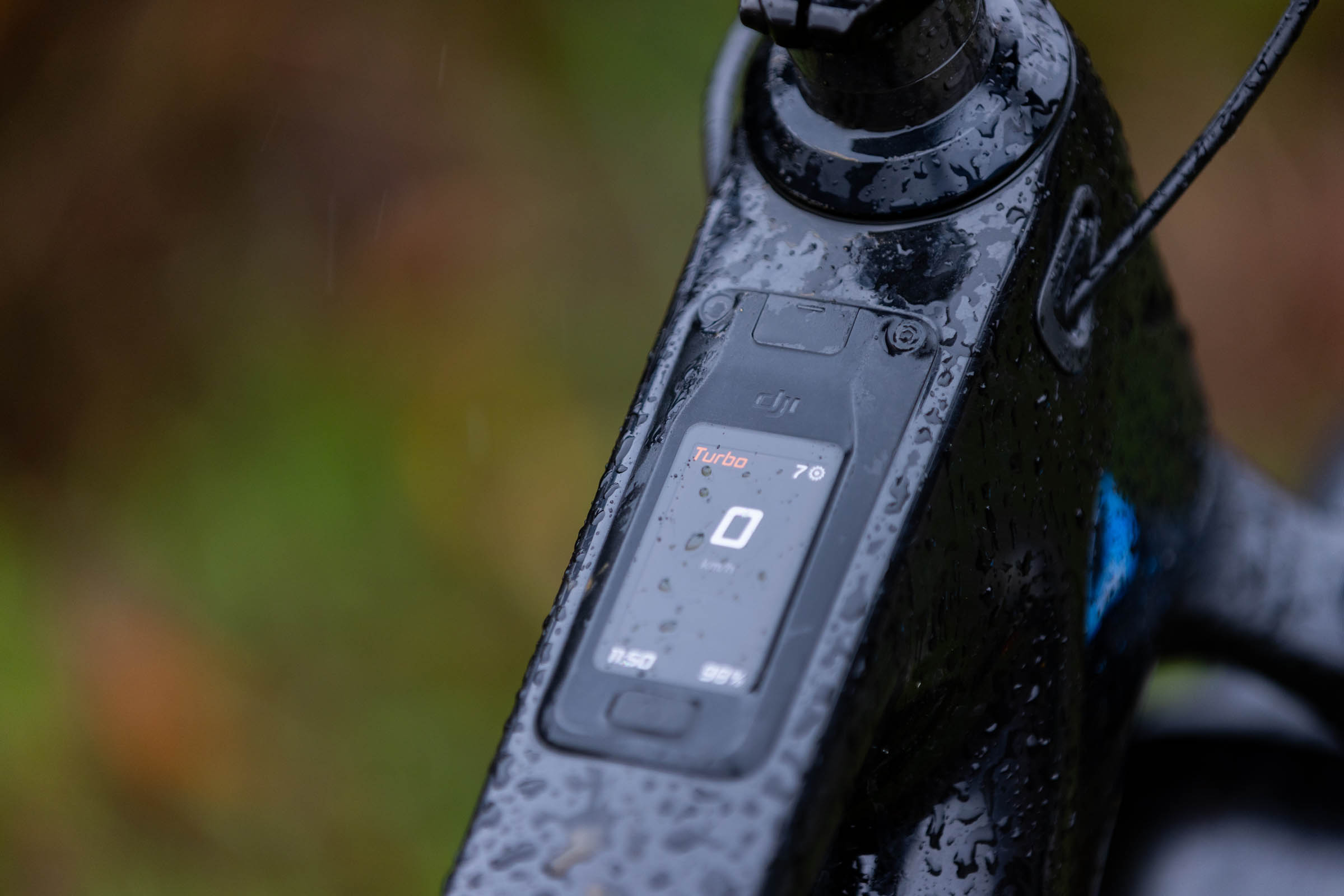
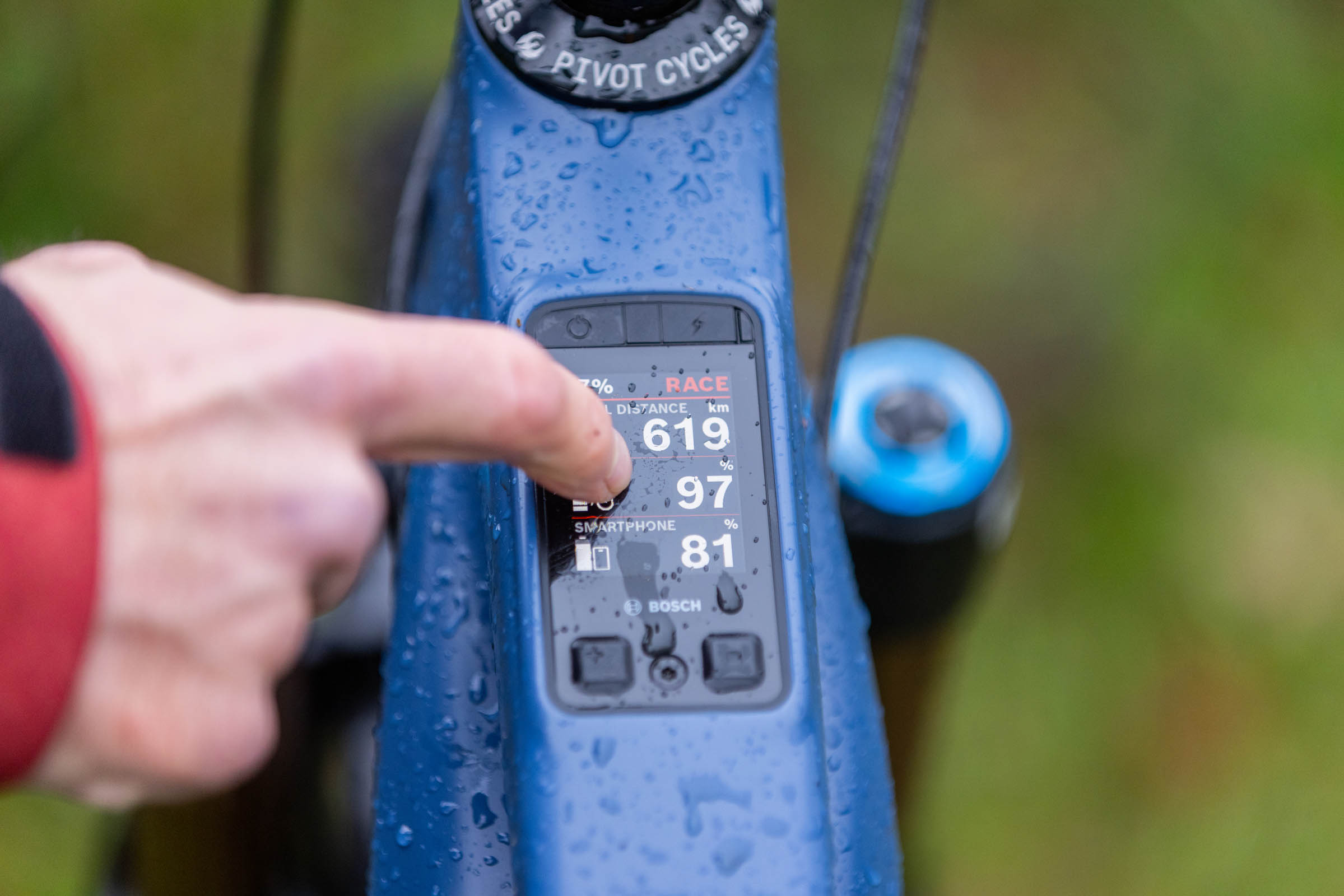
The Avinox touchscreen display is clear and works well, even when it’s wet. Scott Windsor / Our Media
Bosch’s different assistance modes give riders plenty to choose from.
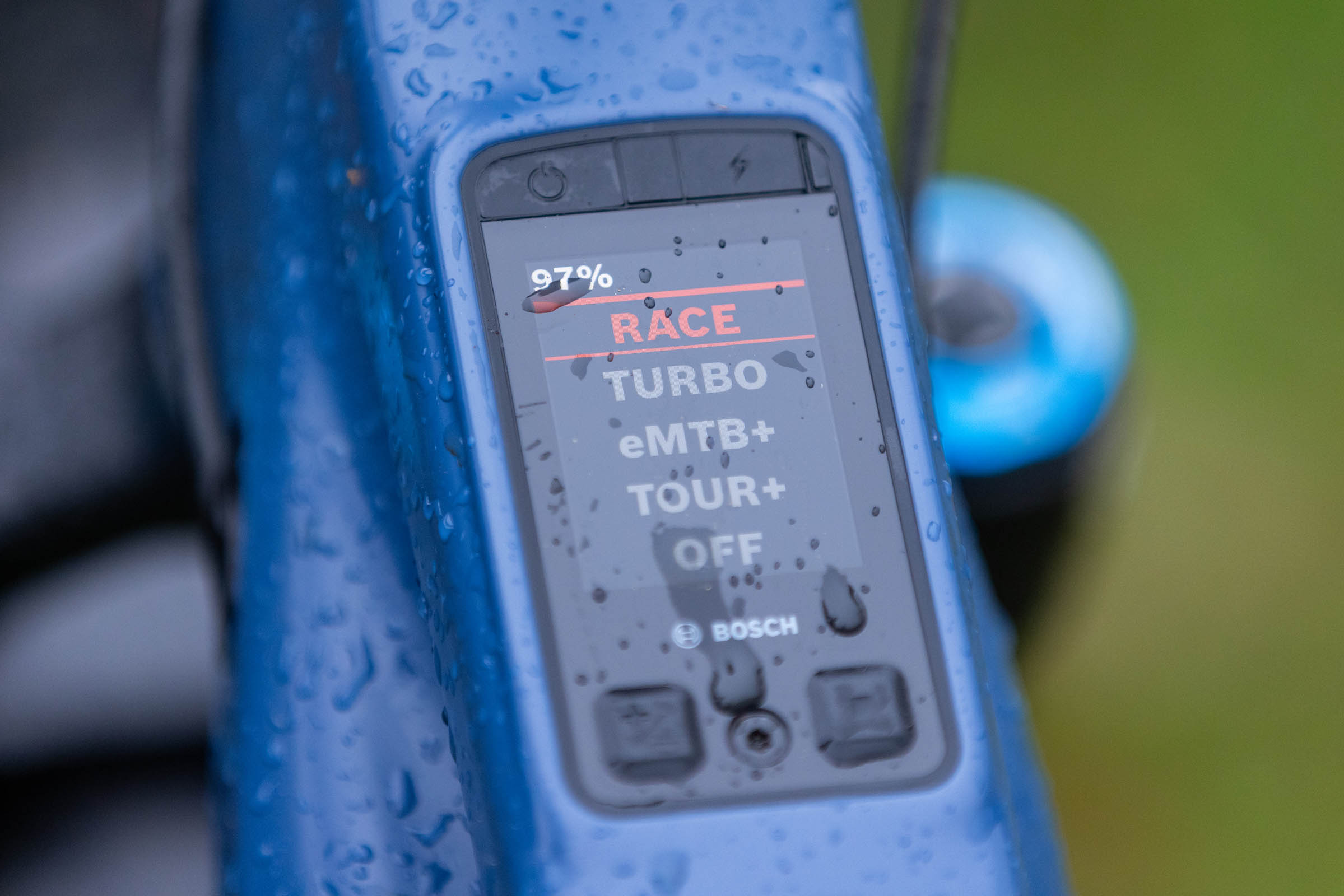
From the toned-down Eco up to newest, blazing eMTB+ setting, the Performance Line CX can be tuned to respond to rider input by reactively increasing or decreasing assistance or output power using in-built sensors. There are standard, non-adaptive modes, too, including Eco, Tour and Turbo.
Each mode’s characteristics can be tuned in the accompanying smartphone app, resulting in plenty of customisation and the ability to blend battery life and power according to your needs.
Bosch’s Race mode is the spiciest-feeling, but still has less power and torque than the Avinox M1. Scott Windsor / Our Media
The Avinox has four main modes. All except Eco can access 105Nm of torque and 1,000W of power.
There’s also an Auto mode that uses sensors to tune the motor’s output on the fly. A time-limited Boost function throws the entirety of the Avinox’s armoury at the trail, accessing 120Nm of torque for up to 60 seconds.
DJI Avinox M1 and Bosch Performance Line CX-R claimed motor power, torque and support ratios
While all the motor’s outputs can be adjusted within DJI’s smartphone app, the onboard touchscreen display enables you to do the same. But if you want to ride an Avinox-equipped bike further than an initial 100km, registering your bike for the first time via the smartphone app is mandatory.
Once that’s complete, you don’t have to keep your phone with you or keep the app installed.
High-tech sauce
The display is not a touchscreen. Scott Windsor / Our Media
While the two motors’ modes are similar in intent and functionality, switching from Bosch to DJI feels as if you’re going from a 56k dial-up modem to full-fibre broadband.
DJI has taken the slick ethos of its cameras and drones and ported it to ebikes. There are user-operated battery-health tools, rapid charging, bike-theft protection, customisable data screens, the deepest level of power, torque, overrun and drivetrain-protection features, freewheel gear shifting and motor-tilt angle power cut-off.
Battery range, health and charge can all be managed. Scott Windsor / Our Media
Bosch’s Smart System is hardly lacking in features, though, you just need to have your phone with you to make any meaningful changes.
Theft protection, data-screen customisation, ride recording and even navigation (on compatible screens), along with mode assistance tuning, are possible. However, the brand’s system feels more like something that’s been built and added to over iterative updates rather than redesigned from the ground up.
On the scales
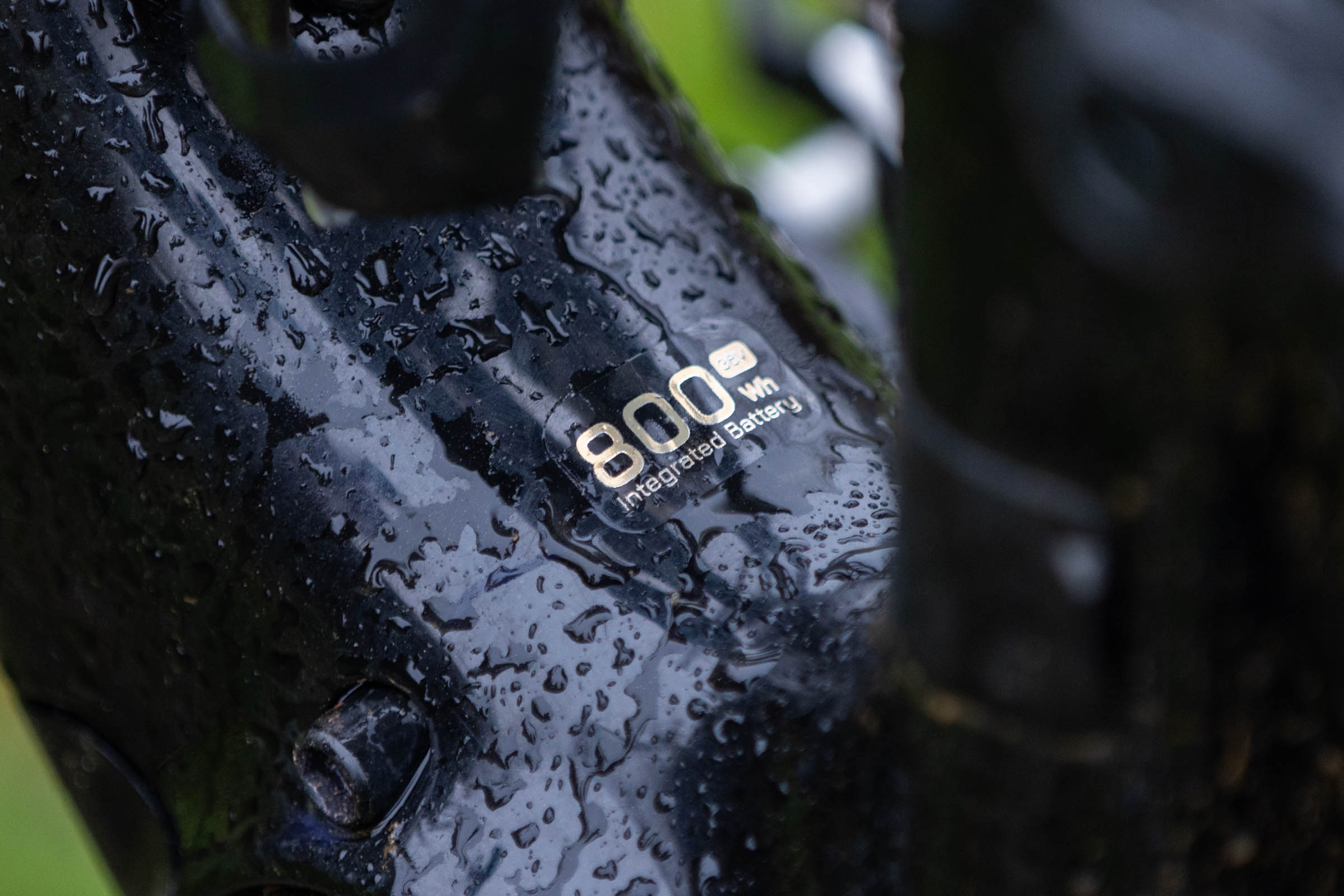
An 800Wh and a lighter 600Wh battery are available for the Avinox motor. Scott Windsor / Our Media
DJI’s motor and batteries are lighter than Bosch’s. Weighing a claimed 2.52kg, the Avinox M1 is 178g lighter than Bosch’s motor. For the same battery capacities – 600Wh and 800Wh – DJI comes in 130g and 160g lighter respectively. DJI’s batteries are also slimmer than Bosch’s, with Avionx-powered bikes having a much sleeker silhouette.
DJI Avinox M1 and Bosch Performance Line CX-R motor and battery claimed weights
Where DJI trumps Bosch in weight, Bosch offers significantly more battery-capacity options, including the 250Wh PowerMore range extender.
Our two bikes
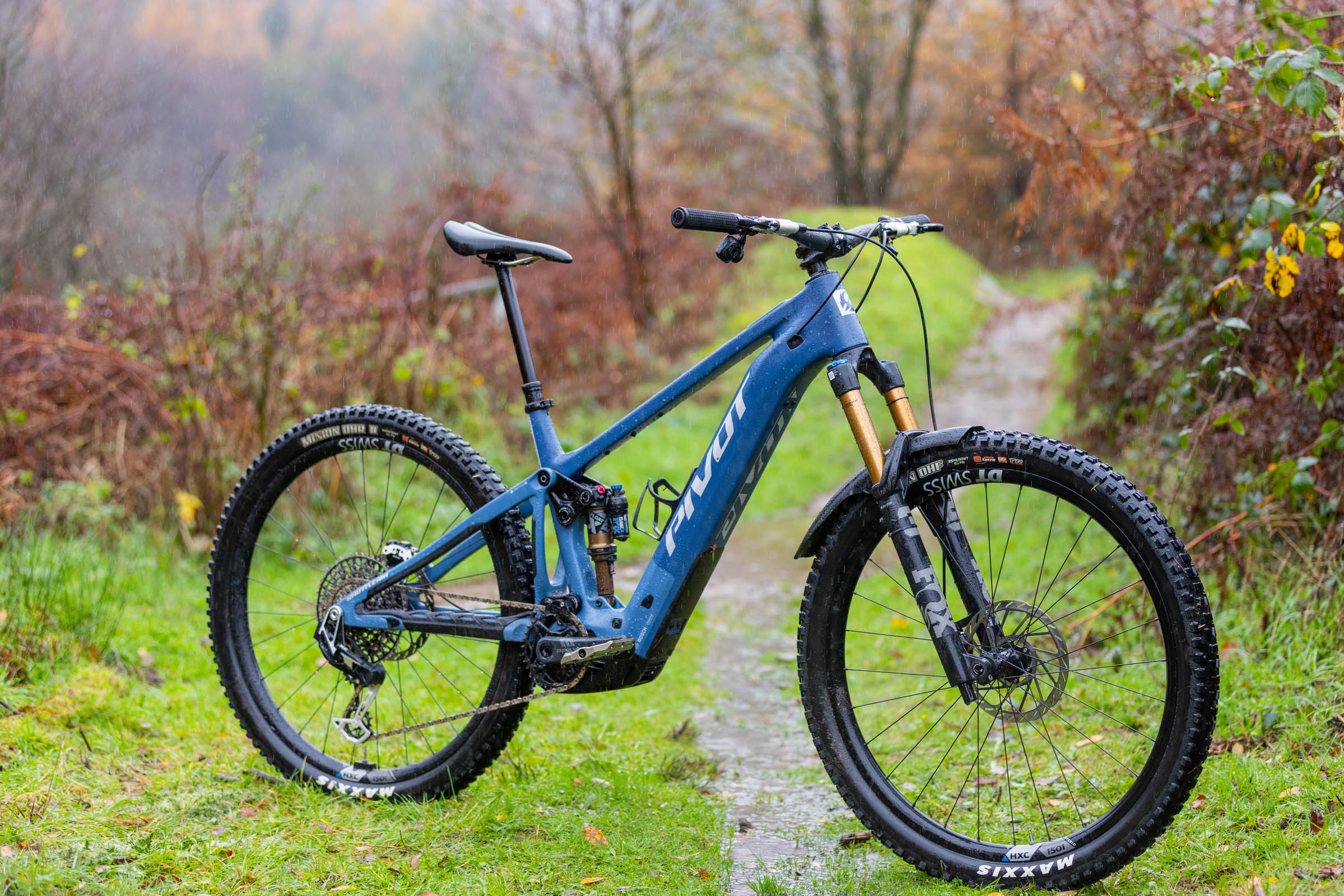
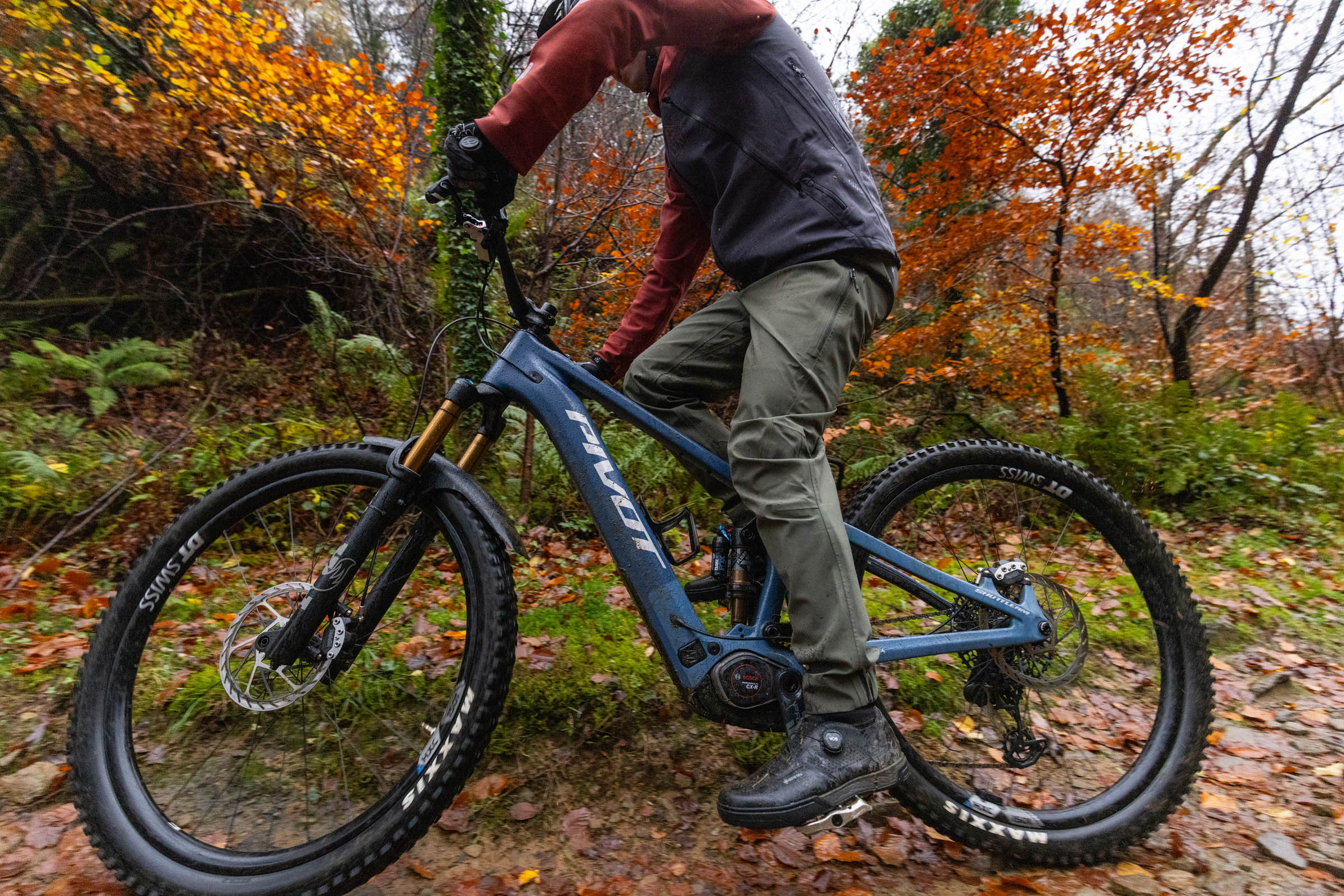
The Pivot Shuttle AM is a great bike, and having so many good bikes paired with the Bosch is one of the reasons why this motor is so popular. Scott Windsor / Our Media
It’s currently impossible to swap ebike motors and batteries between bikes – each model in a brand’s range is built around a specific motor, its mounting patterns and shape, and the same applies to the battery.
While I’d have loved to ride two identical bikes with the two motor systems, that’s not a practical possibility, so I’ve managed the next best thing.
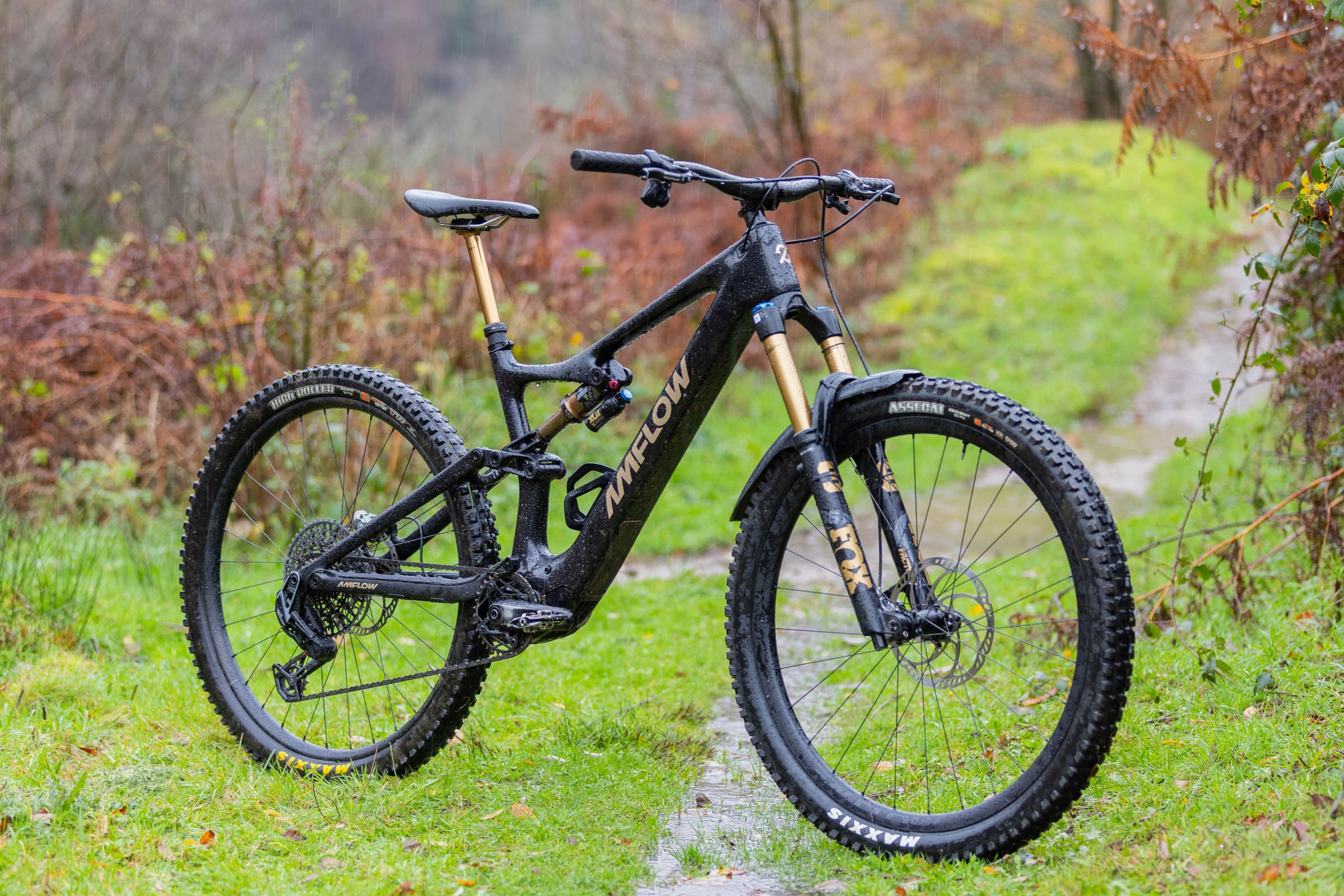
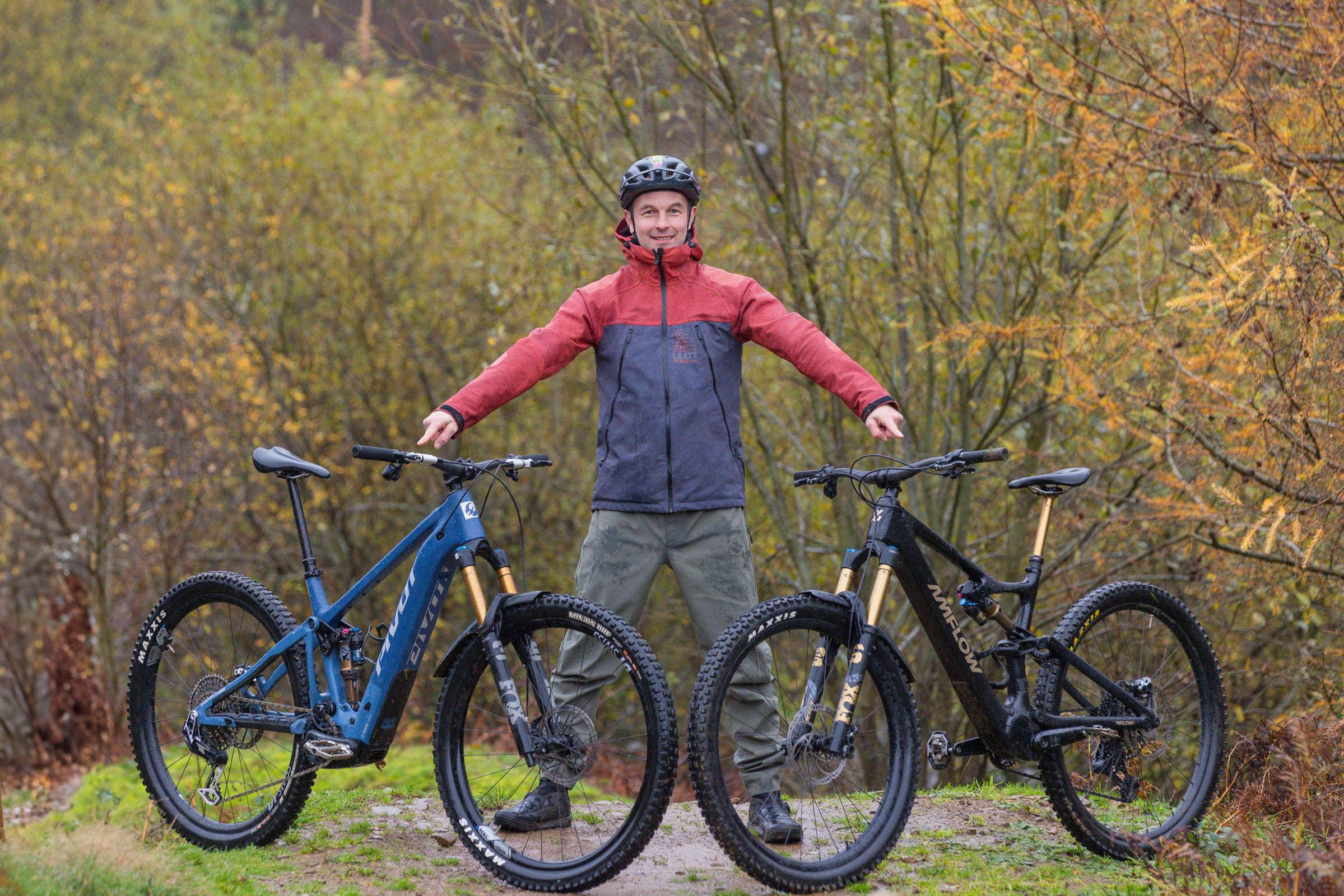
The two bikes – DJI’s own Avinox-equipped Amflow PL Carbon Pro and Pivot’s Shuttle AM Team XX Eagle Transmission – share the same trail-bike intentions, with a 160mm fork and 150mm-travel rear end.
Both also have an 800Wh battery and each brand’s range-topping motor. In the Amflow camp, there’s only one Avinox motor available, while the Pivot is fitted with Bosch’s Performance Line CX-R, which is the lightest and most powerful model.
DJI’s first bike, the Amflow, is good, but it’s the motor that really shines. Scott Windsor / Our Media
Elsewhere, the bikes are decked out with the usual kit – Fox dampers front and back, SRAM’s Transmission, carbon fibre wheels and Maxxis tyres all make an appearance.
On the scales, the Amflow PL Carbon Pro weighs 21.55kg (size large, without pedals), while the Pivot Shuttle AM Team XX Eagle Transmission is 22.62kg (size large, without pedals).
This makes the motor comparison about as fair as possible, all things considered.
How I tested
Alex in his happy place. Scott Windsor / Our Media
Both bikes were ridden back-to-back on the same trails, in the same conditions during the test period, to analyse everything from battery life and range through to usability, reliability and customisation.
However, without custom dyno equipment, it’s impossible to verify the claimed outputs of each brand’s motor.
It’s not only the figures that count, though – it’s out on the trails where it matters, and that’s what I’ve reported on.
DJI Avinox M1 vs Bosch Performance Line CX-R performance
Unsurprising dominance
The Bosch is still a market-leading motor, but the Avinox is better. Scott Windsor / Our Media
The hype around the Avinox motor is to be believed.
Its power and feel outshine other ebike systems in the same way a luxury car does its budget counterparts, feeling better in almost every way.
But there’s more to how it rides than the simple arms race of more, more, more.
There’s a refinement to the Avinox’s power-delivery algorithm that mimics how our bodies interact with a bike.
Even in the highest modes with all the settings turned up, there’s a preliminary softness to its power. It’s sensitive to the nuances of rider input, which is something other motors can struggle with.
Initial power delivery doesn’t spike with a full-torque disregard for rider control or rear-wheel traction.
The Avinox can be ‘detuned’ to feel identical to the Bosch. Scott Windsor / Our Media
Instead, support eases in progressively but quickly, up to its full output. This gives you time to gather your thoughts and gain control – instead of going all-out from your initial pedal stroke, you ramp up your effort.
It’s this sympathetic human/bike relationship that’s most striking when you first use an Avinox motor, and one you may end up taking for granted until you try a different system.
But, like any machine, it can be a handful if you operate it poorly. Pedalling hard at inopportune moments causes wheelspin or front-wheel lift, but even the least powerful ebikes can be ridden unsympathetically.
Man and machine
The Bosch Race motor’s overrun is pretty spicy, but it can help with blasting up technical sections. Scott Windsor / Our Media
Bosch’s Performance Line CX motors have always had a reputation for being the most ‘human’ like and the same is true of the latest CX-R.
It has a similarly controllable power delivery as the Avinox – it’s gentle at first, then builds with torque and watts as the rider does, but its crescendo of outright performance falls short of the Avinox’s lofty – and sustained – thump.
While the gentleness of the Bosch and Avinox are to be commended – delivering impressive initial and continuous grip – it’s the Avinox’s outright grunt that gives it a conquer-all feel.
The Anivox motor is smooth, fast and relatively efficient. Scott Windsor / Our Media
Steep technical climbs can be ridden faster and with more conviction on the Avinox. Lifting the bike up a step or over some dicey rocks or roots is easier, not only because you can carry more momentum into any given section, but because topping up the bike’s speed is easy.
In theory, Bosch’s Race mode – reserved exclusively for the Race motor – should edge that drive unit ahead in terms of response time and sensitivity, but its initial support is overwhelming.
The lightest tap of the cranks propels the bike forward with an all-or-nothing blast of speed. That’s fine when traction is good, but as soon as it’s slippery or the terrain is uneven, it makes it much harder to control.
Bosch’s Performance Line CX-R motor feels great and has plenty of power. Scott Windsor / Our Media
Dialling the Bosch back to Turbo or eMTB+ mode flattens this abrupt on-off feel, but neither Race, Turbo or eMTB+ modes have any more power than each other, or – importantly – the Avinox.
The Avinox’s taper to full chat, more power and generous support ratio culminates in a package that makes cleaning some of the wildest sections a visceral reality. And if the motor’s full-power setting is too much to handle, dropping it down to Auto makes it a more manageable beast.
Speed limits
The Avniox motor is one of the best-feeling on the market. Scott Windsor / Our Media
With that power comes great responsibility. Charging up a fireroad at the speed cut-off limit is fine, but add in some tech and you need to keep your wits about you.
Advanced techniques such as feathering the rear brake, lifting and placing the front wheel or using the rear wheel’s drive to jump and change line really take advantage of all that torque and power.
While the above is also true of the Bosch, the lower average speeds you ride at – simply because the motor’s giving you less assistance for any given rider input – make getting yourself into difficulty or having to rely on certain skills to keep you out of trouble less likely.
Plenty of overrun makes big moves way easier. Scott Windsor / Our Media
Overrun is good on both systems – short cranks provide meaningful, controllable sustained assistance. And if the stock levels of overrun are either too little or too much, it can be tuned to suit your needs in each respective app.
Thanks to the impressive support ratio, the Avinox can sit comfortably at the speed cut-off limit with very little rider input. Fireroad ascents – almost regardless of gradient – are dispatched at top speed, requiring only limited rider input when the motor’s set to its maximum mode.
The same isn’t true of the Bosch – on my test loops, average overall speeds were between 5 and 7km/h slower on the Performance Line compared to the Avinox.
My heart rate was between 10 and 20 beats per minute higher, too.
Of course, you can turn down the Avinox’s assistance levels or use a different mode to mimic the feel and output of the Bosch, but once you’ve had a taste of the Avinox, it’s hard switching back to a system with less assistance.
Plenty of juice
There’s plenty of power to pop wheelies or climb the hardest trails. Scott Windsor / Our Media
With both bikes set to maximum power, it’s unsurprising the Avniox motor runs out of battery quicker. It’s got more torque and watts, which are easier to access, depleting the 800Wh battery after 1,170m of ascending over 30.6km. This is pushed to 1,450m of ascent over 34.5km in Race mode in the Bosch camp before the battery is fully flat.
It’s possible to turn down the Avinox’s torque, power and support levels to match Bosch, to create a like-for-like battery runtime comparison.
Matching support ratios was hardest; Bosch’s is 400 per cent, but the DJI’s is on a scale of one to 15. Halving that would seem sensible given the bike should amplify your input by 800 per cent when set to 15. However, with torque set to 100Nm, power to 750W and the assistance level set to these figures, the bike felt closer to Bosch’s Tour+ or eMTB modes instead of Bosch’s Turbo or Race.
The motor has a quiet whine rather than a louder, fluctuating noise. Scott Windsor / Our Media
Upping the Amflow’s assistance level to 11, while keeping torque and power the same, gave it the closest feel to the Bosch motor in its maximum settings. Like this, the Avinox managed 1,357m of ascent over 30.34km before the battery was discharged.
In my testing, this is slightly less than Bosch’s range, but it’s within a reasonable margin to not cause concern. Different riders in different conditions may also get different results.
The large-capacity batteries mean neither bike is likely to leave you high and dry, and each displays the percentage of battery drain relatively accurately. This makes managing each motor’s battery easy.
Frustrations and foibles
The Bosch is fitted to a much wider range of bikes, making it a compelling choice. Scott Windsor / Our Media
Neither system is perfect, however.
Bosch’s Mini Remote is very fragile – I’ve broken several in crashes, while just riding, or storing bikes. Knock the underside of the rubberised button away from the controller and it snaps off, the spring launches itself and the whole remote needs replacing because it isn’t repairable.
Some may get frustrated at having to use Bosch’s smartphone app to make any changes to the motor’s settings, while others will probably lament the idea of having to register the Avinox on its smartphone app before riding further than 100km.
There’s very little noise when you’re descending. Scott Windsor / Our Media
Neither are deal breakers, though.
Once the Avinox system has run out of juice, there’s significant resistance through the cranks that you’ll have to overcome in order keep the pedals turning. Compared to the Bosch system, the difference is night and day, with the Performance Line motor’s resistance feeling like a regular bike when it’s off.
While this isn’t a serious issue, it serves as a warning that running out of battery on an Avinox bike a long way from home will be more punishing than one with the Bosch motor.
Turn up the volume
Whether you’re cruising or charging, Bosch has nailed the feel of its motor’s assistance. Scott Windsor / Our Media
Neither drive unit makes a racket; in fact, both are very quiet on the trails even when operating at full chat. The noise they make is relatively similar – it’s a higher-pitch steady whine rather than the fluctuating turkey gobble Shimano’s EP8 emits. At lower assistance levels, they barely make more noise than your tyres on dirt or banter between mates; they’re very discreet.
Downhill, Bosch has fixed the freewheel rattle that plagued the previous iterations of the Performance Line motor – the Gen 5 is entirely silent. The Avinox is also virtually silent when freewheeling, barely clacking, clunking or rattling even on the wildest descents.
More than the motors
The Amflow bike is good, but it’s far from excellent. Scott Windsor / Our Media
There’s more to it than just the motors, though.
The Avinox’s performance is virtually worthless if the bike it’s fitted to is lacklustre, and, currently, Bosch has the market sewn up in terms of choice. Bikes with Bosch CX motors span from lightweight trail eaters up to quasi-DH sleds, with a slew of others in between.
That’s brilliant for the consumer, and as it stands, you’re more likely to find a Bosch-powered bike – and an affordable one for that matter – that suits your specific needs rather than one with an Avinox drive unit.
That could all change, but the bike the motor’s fitted to has to be one of the biggest considerations when looking to make a purchase.
DJI Avinox M1 vs Bosch Performance Line CX-R verdict
DJI Avinox M1
The DJI Avinox motor is very impressive indeed. Scott Windsor / Our Media
The Avinox motor system is the one to beat in almost all respects – power, feel, tuneability and weight. Just make sure it’s fitted to a bike that’s as good.
Pros
Exceptional power, torque and assistance; unrivalled speed and uphill prowess; natural-feeling assistance; deep and usable on-bike customisation; light battery and motor; slick user interface; great battery life
Cons
Smartphone app is mandatory; motor creates pedalling resistance when it’s off; limited number of bikes with Avinox motors
Bosch Performance Line CX-R
The Bosch motor is the ‘best of the rest’. Scott Windsor / Our Media
Natural-feeling, with more than adequate power and long battery life, the fifth-generation Bosch is one of the best motors to date and comes on a wide range of bikes that should suit any rider.
Pros
Plenty of power and torque; intuitive and simple motor tuning; impressive battery life; natural-feeling support; loads of battery, controller and display options; no drivetrain or motor drag when pedalling with it off; widespread availability on bikes
Cons
Tuning modes reserved for the app; mini remote is fragile; less outright power, torque and support; heavier than the Avinox
Verdict
The Avniox is better in every respect, but the Bosch is far from bad. Scott Windsor / Our Media
Going on motor performance alone, it’s impossible to ignore the Avinox’s impact on the industry. There’s a palpable buzz about the system, and trailside chat is centred around how good the motor is.
If performance is the biggest factor for you, there are very few reasons not to plump for an Avinox-powered bike.
Unfortunately, it’s never that simple. Whether the smaller selection of Avinox bikes will suit your needs or budget is a personal matter.
But I’d happily go out on a limb and say that – currently at least – the sheer number of Bosch-powered bikes means you’re more likely to find your perfect match.
That’s likely to change in the future, however, and when it does, Bosch et al. are going to have to do something very special to beat DJI’s impending dominance.
In a fresh discovery that’s leaving astronomers awestruck, the James Webb Space Telescope (JWST) has confirmed the existence of a “runaway” supermassive black hole roughly 20 million times the mass of our sun, which is currently hurtling through space at a mind-boggling 2.2 million miles per hour. That’s approximately 3,000 times the speed