You can do a lot with Android Auto, but what you can’t do is install a web browser—at least not with the default, out-of-the-box configuration. It is actually possible to get a window on to the web with a little bit of tweaking, and the help of the open source AA Browser built especially for Android Auto.
Getting a web browser up on your car dashboard may not seem like much of an improvement over browsing on your phone screen, but it also enables another feature on your vehicle’s display: video playback. Through AA Browser you can get at pretty much any streaming site you want and load up some video.
Some serious safety warnings are required here, though. You should only load up videos on your car’s Android Auto screen when you’re parked, stationary, and not going anywhere. Watching anything on the move—whether it’s on your phone or on your vehicle dashboard—not only risks your life, it risks the lives of everyone else on the road with you.
In fact, AA Browser will disable itself while your vehicle is moving, but it’s worth giving out the warning in any case, for this and any other app. With that out of the way, here’s how you can load up a web browser on Android Auto, and make your parked-up time inside your car more entertaining.
Browser setup and installation
Like Android as a whole, Android Auto has a developer mode that gives you access to a selection of extra settings. From Settings on Android, tap Connected devices > Connection preferences > Android Auto (Pixels) or just Connected devices > Android Auto (Galaxy phones). Scroll down to the bottom of the screen, tap Version, then tap Version and permission info seven times.
You should then see a pop-up asking you if you’re sure you want to enable developer settings for Android Auto, so tap OK to confirm. You then need to open up the AAAD (Android Auto Apps Downloader) app APK in your phone’s browser, tapping through the security warnings about running non-Play Store apps on your device if they show up.
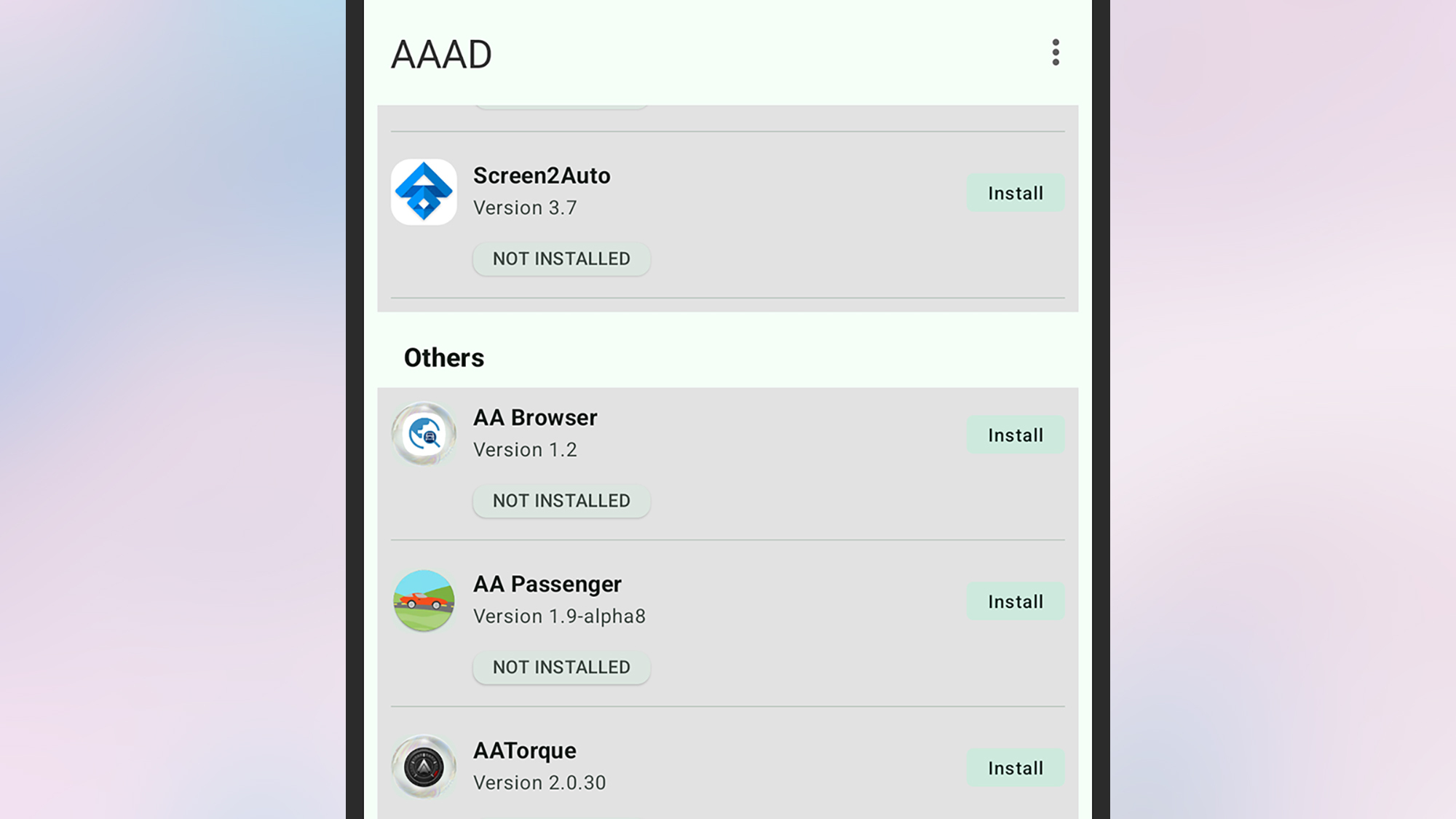
AAAD will give you access to the AA Browser. Credit: Lifehacker
AAAD gives you access to a selection of Android Auto apps that haven’t been specifically approved by Google, including AA Browser. Tap through the various introduction screens, give the app the permissions that it needs to install other apps, and then find AA Browser in the list of available apps. Tap Install and then tap through the confirmation pop-ups to get the app on your phone.
You’ll be asked if you want to open AA Browser straight away: You can use it as a normal web browser on your phone, though there’s not really much to look at. It’s designed to be used primarily on your Android Auto screen, and it should now show up as an available app when your phone is connected to your vehicle.
Using AA Browser in your car
Provided you’re safely stopped in your vehicle, you can launch AA Browser from the main apps list on the Android Auto interface (you may also get a prompt to launch it the first time you connect, after installing the app). You get taken to the Google Search homepage to begin with, and from there you can go anywhere you like.
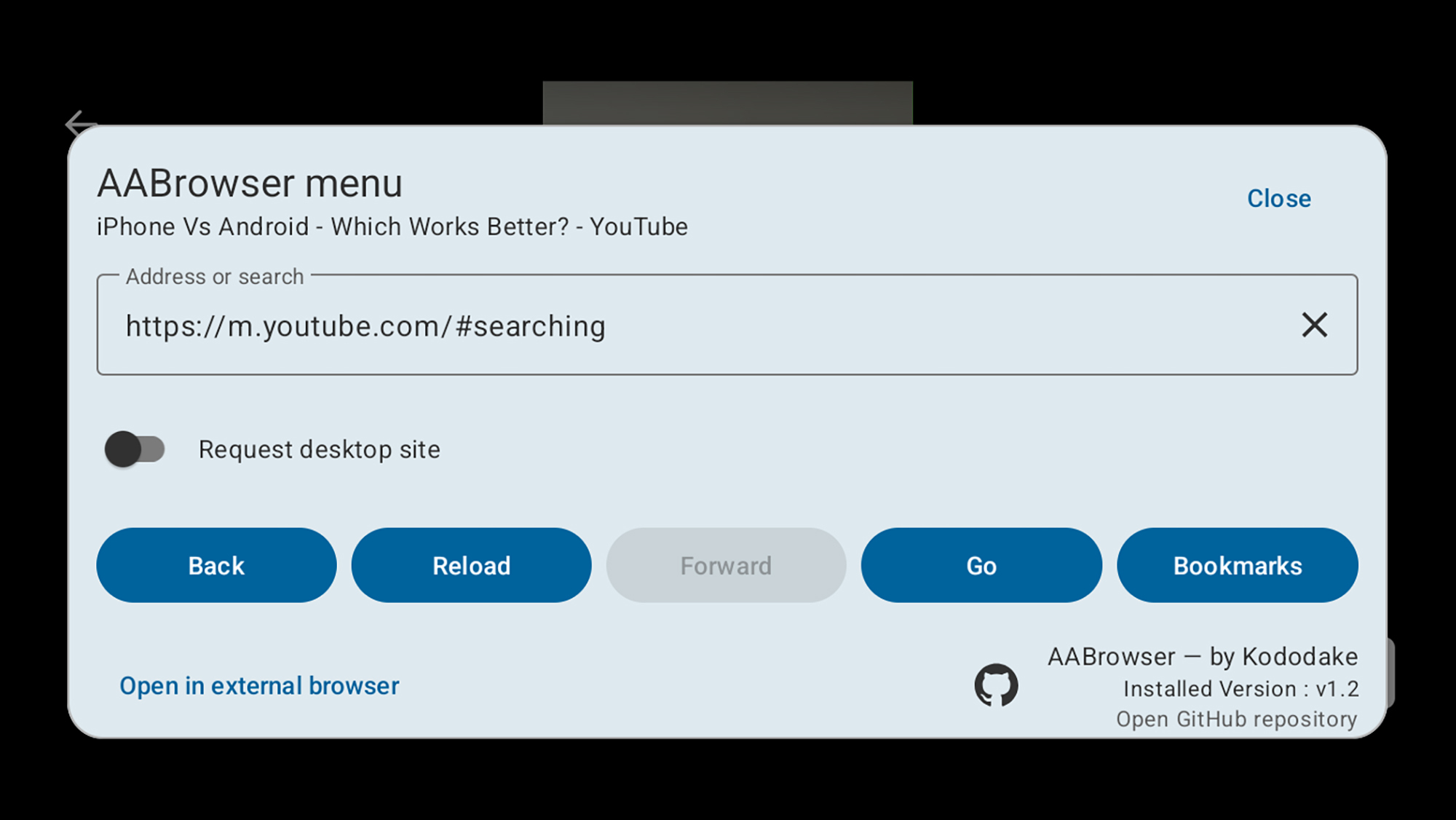
As with any other Android Auto app, if you tap inside an input field, you’ll see a keyboard pop up on screen that you can use to enter web addresses and login credentials, and you can use the touchscreen to navigate around. To get to the URL address bar, tap anywhere on screen, then tap the blue arrow in the lower left corner.
Entering and editing URLs in AA Browser. Credit: Lifehacker
The next screen also gives you options for going back through your browser history and accessing your bookmarks—a handy way of making sure you can jump back to the sites you need without having to tap our their URLs every time. There’s also the option to request the desktop versions of sites rather than the mobile versions.
While certain sites don’t seem to like the AA Browser, most of the pages I’ve visited work fine on Android Auto. To quit the browser, you can either tap the Exit button in the top right corner (if it’s visible), or swipe up or down from the top or bottom edges of the Android Auto screen to go back to your other apps.
Big workloads that lean on a GPU often require gobs of memory, especially when dealing with large language models (LLMs) and other AI workloads. Hence the reason why NVIDIA in October announced an upgraded version of its RTX Pro 5000 Blackwell with a generous 72GB of GDDR7 memory with ECC. Now two months later, NVIDIA says the beefer variant
Apple released an updated developer license agreement this week that gives the company permission to recoup unpaid funds, such as commissions or any other fees, by deducting them from in-app purchases it processes on developers’ behalf, among other methods. From a report: The change will impact developers in regions where local law allows them to link to external payment systems. In these cases, developers must report those payments back to Apple to pay the required commissions or fees.
The changed agreement seemingly gives Apple a way to collect what it believes is the correct fee if the company determines a developer has underreported their earnings. […] In its new developer agreement, Apple states it will “offset or recoup” what it believes it is owed, including “any amounts collected by Apple on your behalf from end-users.” This means Apple could recoup funds from developers’ in-app purchases — like those for digital goods, services, and subscriptions — or from one-time fees for paid applications.
This week, Engadget Managing Editor Cherlynn Low joins us to look back at some of the highlights (and lowlights) of 2025. We dive into our favorite gadgets of the year, the many ways Big Tech bowed to Trump, the disappointment of AI PCs and the rise of smart glasses. We also learn way too much about our skincare routines.
Our favorite gadgets of 2025: Kindle Scribe Colorsoft, Airpods Pro 3, bluetooth lav mics and more – 2:26
Favorite Media of 2025: Andor, self-improvement via podcast, and a shoutout to your library – 34:30
iRobot declares bankruptcy – 47:29
Warner Bros. Discovery board rejects Paramount’s hostile bid, shareholders yet to vote – 53:47
The Oscars will air on Youtube starting in 2029 – 56:05
Ford to turn its F-150 Lightining into a gas generator EV – 57:41
Around Engadget: smart glasses had a great run in 2025, against social media age verification – 58:20
Credits
Hosts: Devindra Hardawar and Cherlynn Low Producer: Ben Ellman Music: Dale North and Terrence O’Brien
This article originally appeared on Engadget at https://www.engadget.com/social-media/engadget-podcast-2025-was-the-year-of-ai-smartglasses-and-spineless-big-tech-143000338.html?src=rss
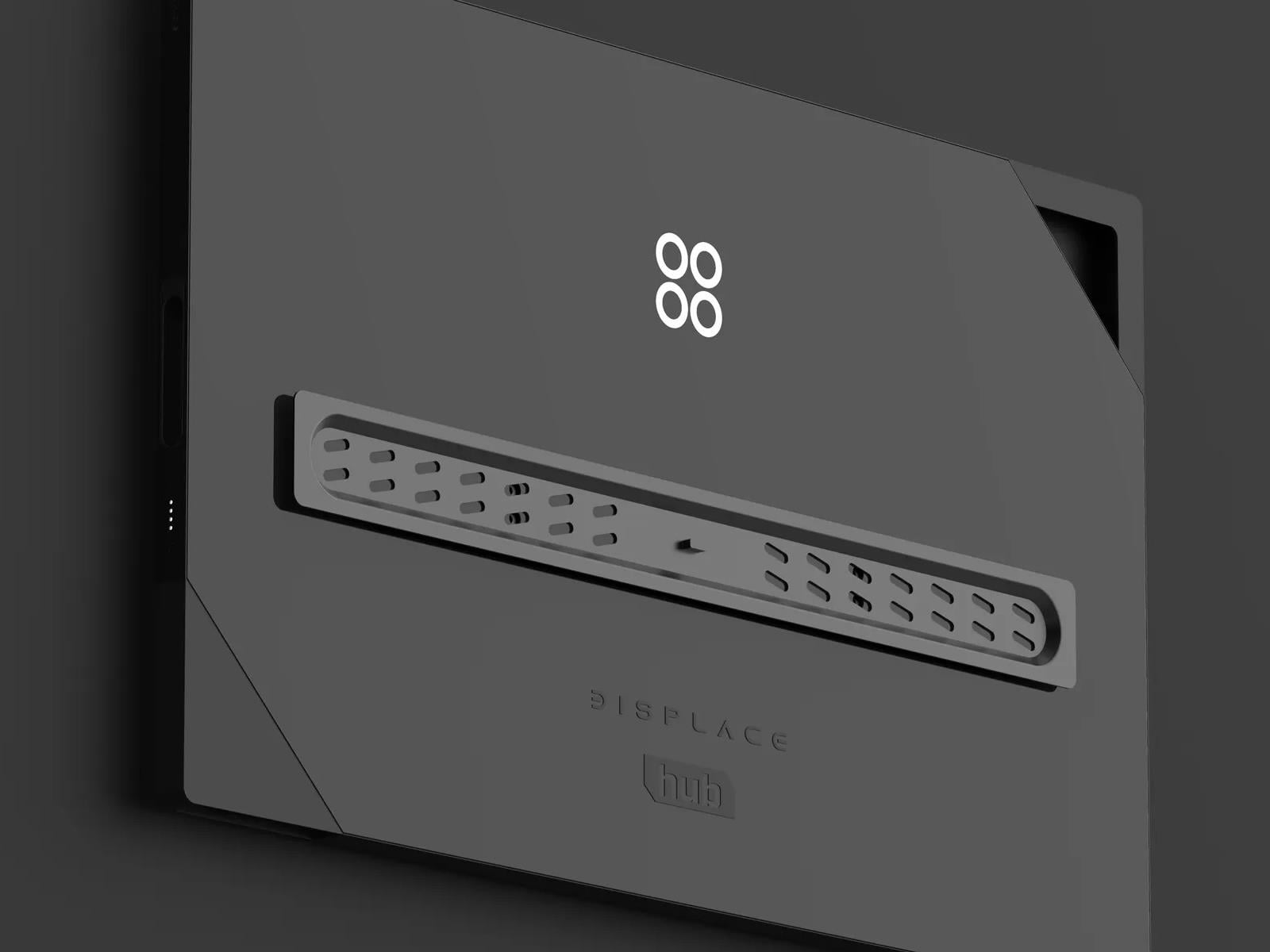
Companies are starting to tease what they have in store for the annual Consumer Electronics Show (CES) in Las Vegas next month, and one item that caught our eye is the Displace Hub, a battery-powered wall mounting system that transforms your TV into a “truly wireless, smart display.” It’s based on the same mechanism as the Display TV introduced
For X.Org Server users there is a new release of xorgproto for the holidays. Xorgproto as the set of headers and specifications for the X11 core protocols and extensions is out with its first new release since March 2024…
The Danish government has accused Russia of being behind two “destructive and disruptive” cyberattacks in what it describes as “very clear evidence” of a hybrid war. From a report: The Danish Defence Intelligence Service (DDIS) announced on Thursday that Moscow was behind a cyberattack on a Danish water utility in 2024 and a series of distributed denial-of-service (DDoS) attacks on Danish websites in the lead-up to the municipal and regional council elections in November.
The first, it said, was carried out by the pro-Russian group known as Z-Pentest and the second by NoName057(16), which has links to the Russian state. “The Russian state uses both groups as instruments of its hybrid war against the west,” DDIS said in a statement. “The aim is to create insecurity in the targeted countries and to punish those that support Ukraine. Russia’s cyber operations form part of a broader influence campaign intended to undermine western support for Ukraine.” It added: “The DDIS assesses that the Danish elections were used as a platform to attract public attention — a pattern that has been observed in several other European elections.”
After 10 years of testing and reviewing bikes for MBUK and BikeRadar, I’m going to be starting a new chapter in the mountain bike industry.
That decade of testing has taught me a thing or two about what to look for in bikes and products.
Whether that’s specific components that do their jobs very well or a bike that blows everything else out of the water, it’s exciting for me and consumers when something amazing comes along.
But there are a few things that you should pay particular attention to, whether that’s when you’re looking for a new steed or just thinking about how to improve your day-to-day life on bikes.
The Geometron famously has adjustable and progressive geometry. Geometron
Getting the right geometry for the bike’s intended use seems unbelievably obvious, but many manufacturers get it horribly wrong.
Slack seat tube angles, short reach figures, steep head angles or a stack figure to bottom bracket height that just feels wrong; these are some of the most obvious ways to ruin how a bike rides.
But dial in the magic formula of numbers and something transformative happens. It makes the bike easy and fun to ride, not awkward and unamenable.
The harder you’ve got to work to make a bike feel good, the worse it is.
It’s not a cookie-cutter recipe, though – different disciplines require varied approaches to frame design, blurring the lines for some brands.
The Orbea Wild’s geometry is seriously sorted. Scott Windsor / Our Media
Factor in multiple and overlapping categories, plus specific market needs, and it’s never going to be possible to please every customer.
But a theme has emerged; bikes that ride well have balanced front-to-rear ratios, reach figures within a certain bracket for each size, and head angles that make sense for its intended speed and capabilities.
The general trend here is bikes becoming longer, lower and slacker. While this might not please the few people who download (take the gondola down the mountain instead of riding), it benefits everyone else.
Geometry like this leads to calmer handling and easier-to-ride, faster bikes; even an XC race bike with a long reach figure, (relatively) slack head angle and long wheelbase is going to be better than a nervous, twitchy and hard-to-ride one.
As a consumer, you’ve got the power to influence change – vote with your wallets.
You want your bike to be as reliable as possible when riding terrain like this. Mountain Bike Connection Winter / Rupert Fowler
Most modern mountain bikes are seriously reliable, needing only routine maintenance; bearings barely ever slop out, pivots remain tight even when they’re neglected, suspension dampers rarely blow and brakes need infrequent bleeding.
Nothing beats putting your bike down after a ride, knowing it’ll be ready to go next time with no maintenance.
While things have come on in leaps and bounds since the old days – I remember changing pivot bearings more regularly than I would a gear cable, and having my multi-tool jammed permanently in certain bolt heads because they wouldn’t stay tight – it’s not always rosy.
Light weight isn’t everything – prioritise reliability. Alex Evans / Our Media
Derailleurs often break and I have a track record of ruining wheels and tyres, but there are exceptions to these rules.
If, like me, you’re hard on kit, it’s worth sacrificing other areas in the name of reliability.
Those things are always going to be weight and cost; heavy kit will be reliable, but most likely affordable. Light, reliable kit is more likely to be costly.
A few extra grams bolted to your bike isn’t going to make a massive difference to the system weight, so replacing your EXO tyres for weightier DoubleDown (or equivalent) models is going to lessen the chances of mishaps without really impacting the ride elsewhere.
The same can be applied to other parts and even frames – I’d take a weightier, more reliable frame over a lighter one with a penchant for misbehaving.
If you’re anything like me and want kit that doesn’t need fixing, changing or constantly fettling, you’ll be a much happier person.
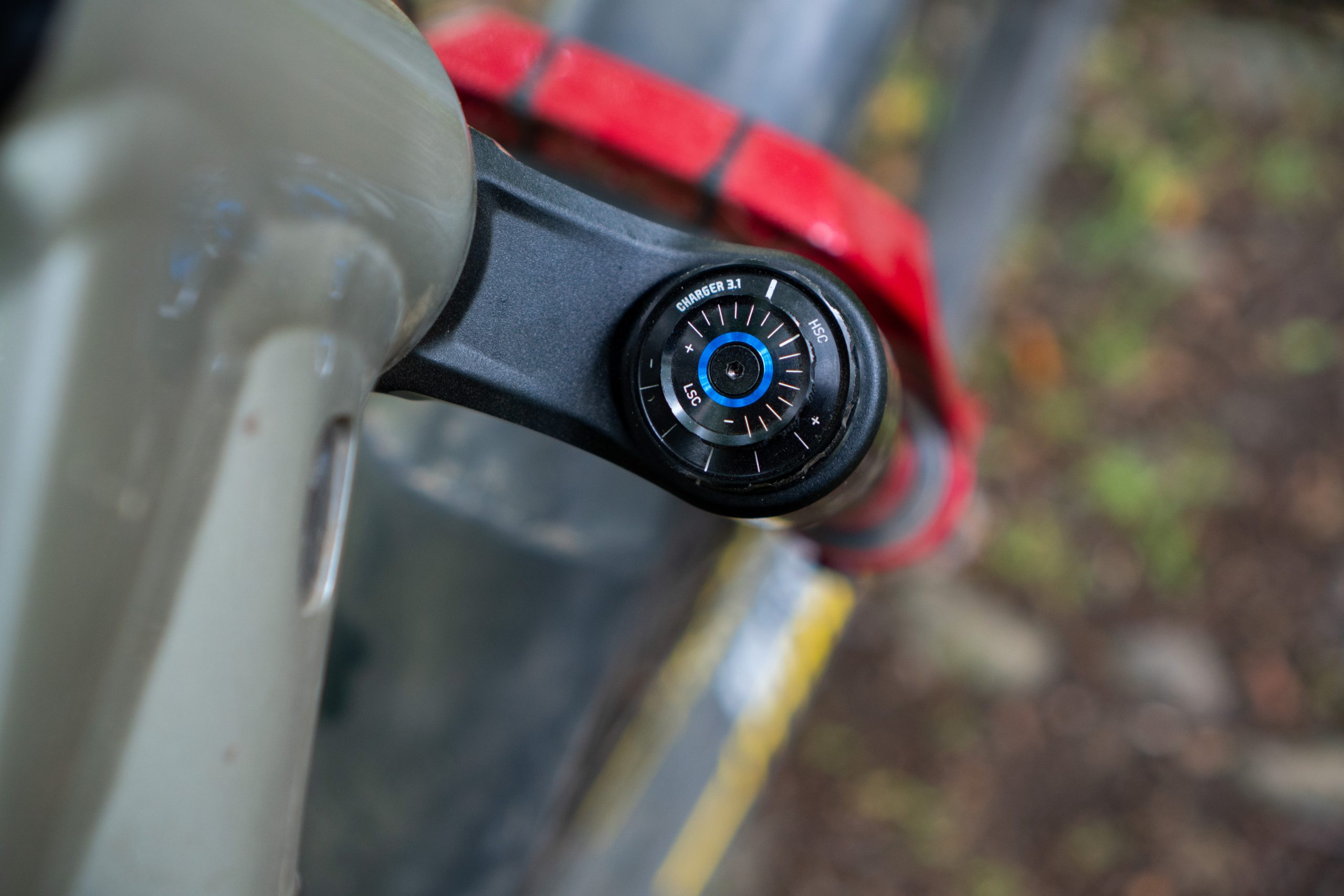
The range of adjustment on the Charger 3.1 damper is impressive. Alex Evans / Our Media
This is a potentially unpopular one with suspension manufacturers, but as an 80kg-ish kitted-up rider who is probably somewhere in the large, middle part of the skills bell curve, I shouldn’t have to run my fork and shock damper adjusters fully open to get them feeling good.
And if I’m having to run everything basically fully open before the bike feels good and not choked up, lighter riders and beginners are going to struggle to get their suspension feeling good.
RockShox has recently addressed this with its Charger 3.1 forks, offering different compression and rebound tunes that are installed post-purchase. The stock compression settings are much lighter, but I’m still running my rebound fully open and would like it to go faster.
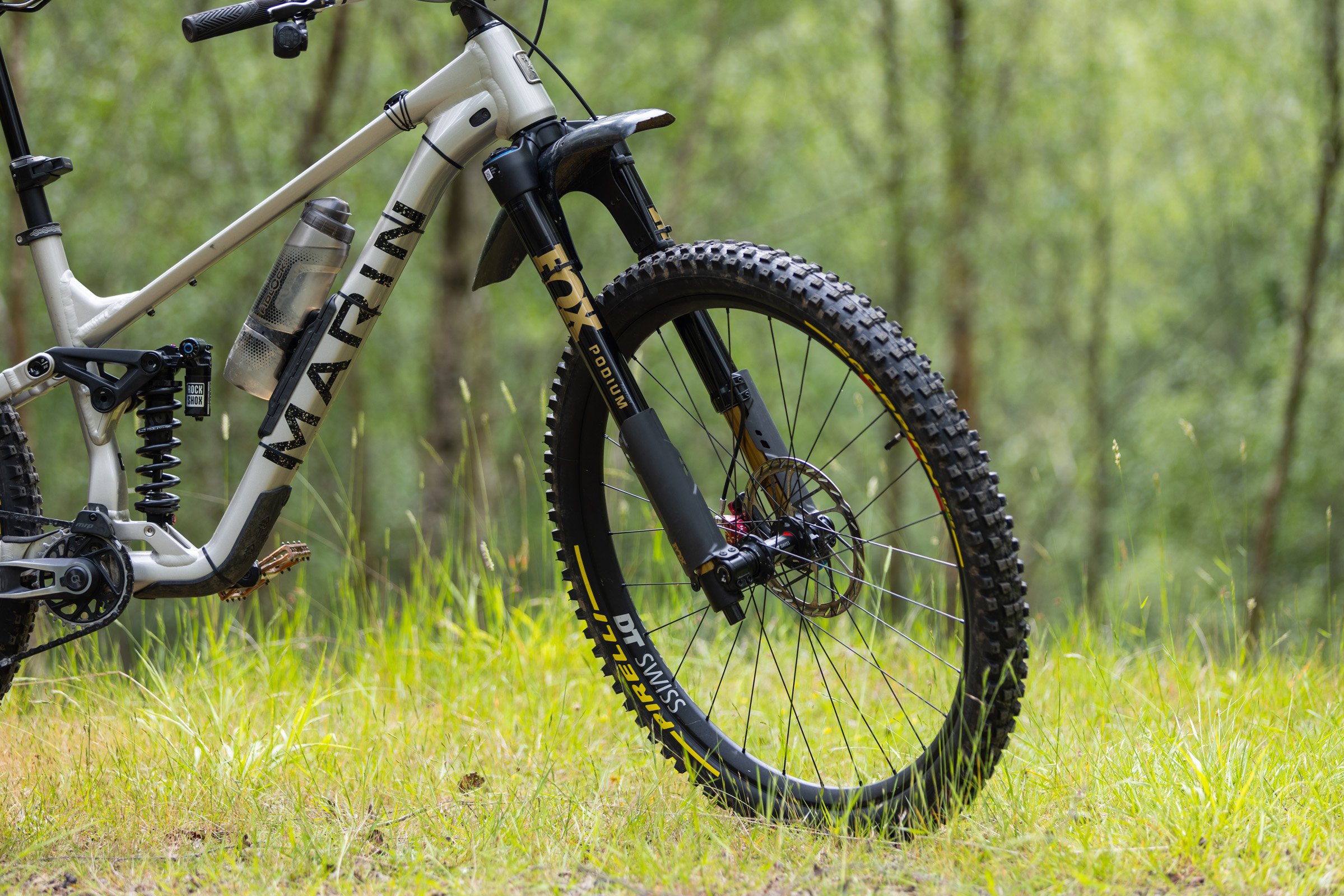
The Podium is an outlier in Fox’s GRIPX2 damper setup. Scott Windsor / Our Media
Fox forks can also be tuned, but there’s no a la carte option – you’ll have to speak to your local suspension tuner to find out what options are available. Generally speaking – bar the Podium inverted fork – Fox’s dampers, even the newest ones, need to be run fully open to feel good.
The situation could be better for rear shocks – because damper retunes are more common and bike brands claim they spend a long time perfecting custom tunes for their frames – but that’s not always the case.
On almost every test bike I’ve ridden in the last decade, bar a few exceptions, I’ve had to fully open the shock’s external rebound and high-speed compression adjusters. The low-speed adjuster position has been a mixed bag, with some needing to be fully open and others closer to halfway.
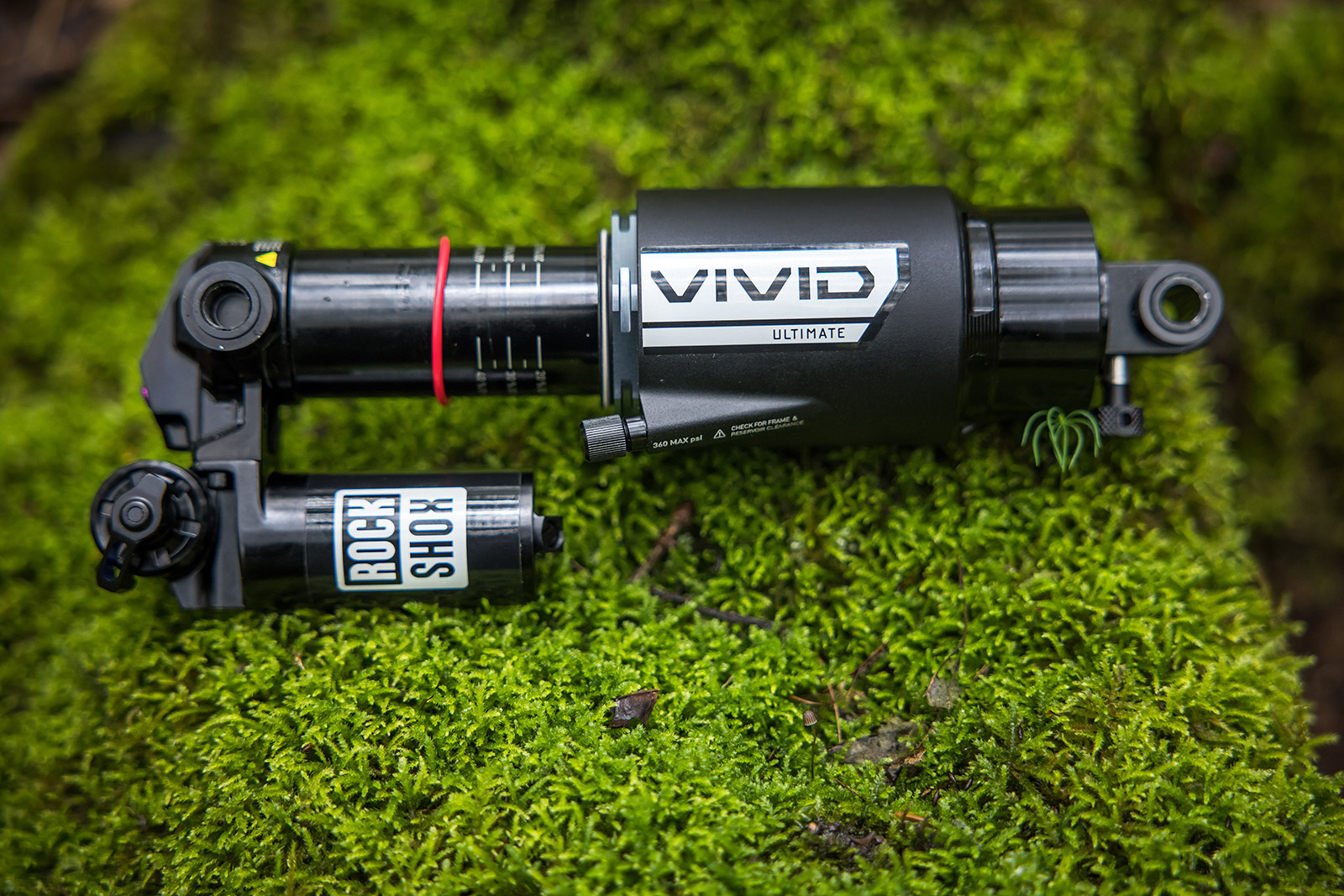
The Vivid is a gravity-focused air-sprung shock, but are even the lightest tunes too hard? Ian Linton / Our Media
And yes, before you ask, I am running the correct spring pressures/weight coil springs for the bike, my riding style and body weight.
But the point still stands; as an average-weight guy with average skills, to get the bike feeling good, I should be exactly in the middle of the shock’s damper tune rather than fully open.
I think everyone is running too much compression and rebound damping on their bikes and would benefit from lighter setups.
If you think this is something that blights you, speak to your local suspension tuner to get your bike’s dampers opened up – the difference in performance will be night and day.
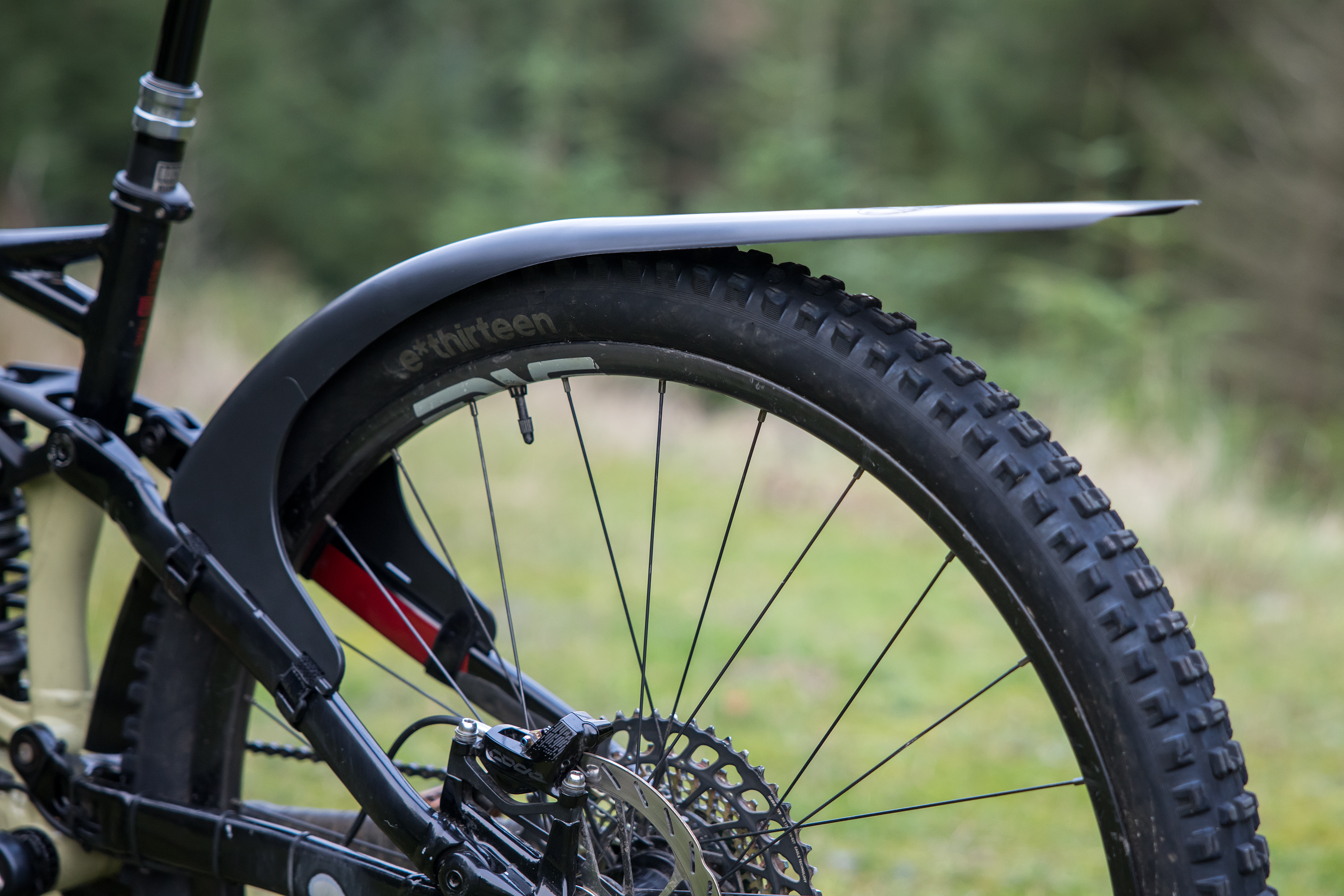
Try a rear mudguard – it’s a revelation
On the trail, other riders were quite vocal about its looks. Ian Linton / Our Media
It’s rare that a product does exactly what it’s claimed to and then receives a wave of negativity, both from reviewers and the general riding scene.
The rear MTB mudguard is one of those things.
They’re exceptional at keeping your backside, legs and back spotless, yet almost entirely disliked, smirked at and generally pooh-poohed.
Spot a rider with one on a trail, and no matter how hard they’re shredding – or not – it’s going to spark negative comments. I know this because I’ve taken the brunt of some of them when testing Mudhugger’s rear guard.
While the model I tested wasn’t perfect – there was a good chunk of loud tyre slap when riding fast – it kept me so clean and dry that any foibles were basically forgiven.
Atherton’s belt-drive enabled A.200.G. Scott Windsor / Our Media
There’s space in mountain biking for ultra-high-tech bikes such as Atherton’s A.200.G gearbox six-bar suspension DH bike, and lowly single-pivot suspension systems with derailleurs seen on bikes made by Orange and others.
Just because you like one doesn’t mean you need to dislike the other.
They’re going to ride in disparate ways, and each will have its benefits for a certain type of person.
This rang true when I tested Atherton’s A.150 and Starling’s Murmur back-to-back; the upshot of my testing was that both bikes are very good indeed, but they have different personalities.
The Murmur embraces simplicity to its benefit. Ian Linton / Our Media
Regardless of which camp you’re in, don’t discount the other – innovation and pushing the limits are the basis for moving our sport forwards, and simplicity forms the foundations that innovation is built on.
The best approach I’ve found is to keep your eyes and mind open to new ideas and innovation – don’t be afraid to try a bike with wild geometry or brand-new tech, because there’s a chance it’ll be awesome.
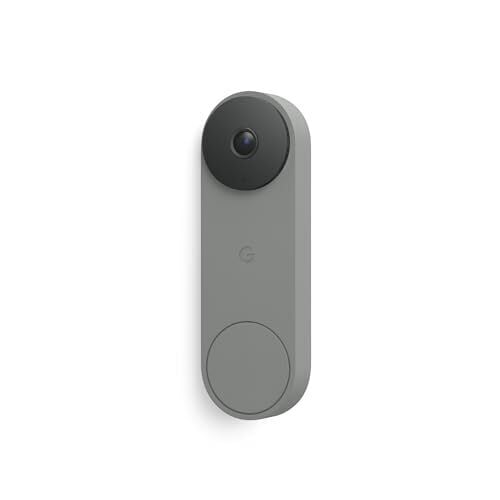
This is Google’s newest wired doorbell, and it’s clearly designed for people who already use Google Home. The hardware looks familiar if you’ve seen the battery-powered Nest Doorbell. It keeps the same slim, vertical shape but is a bit shorter, measuring about 5.1 inches tall. It’s rated IP65 for weather resistance and feels well-built, but this is a wired-only model. You’ll need existing doorbell wiring and a compatible transformer. Google includes the chime connector, mounting hardware, and a wedge mount, but there’s no getting around the fact that installation assumes your home is already set up for a wired doorbell.
Video quality is where this model makes its case. The camera records 2K HDR video at a 1:1 aspect ratio, which gives you a full head-to-toe view of your doorstep. That makes it easier to see packages on the ground and faces near the door in one frame. Daytime footage looks sharp and well-balanced, and night video holds detail using infrared LEDs, with color video kicking in when there’s enough ambient light. Motion alerts are quick, and the 166-degree field of view feels wide without heavy distortion, notes PCMag in its “excellent” review of this doorbell. It connects over dual-band wifi and Bluetooth, and it supports Google Assistant and Amazon Alexa for voice control. Two-way audio works reliably for quick conversations, though there’s no mechanical pan or tilt.
The software experience is very Google. The doorbell lives inside the Google Home app, where you get a clean live view, event clips, and clear controls. Gemini-powered features are the highlight. Event descriptions explain what triggered a recording, and video search lets you find things like package deliveries or familiar faces without scrubbing through footage. The downside is storage. Everything is cloud-based, and without a subscription, you only get short preview clips. The Standard plan costs $10 a month or $100 a year, while the Advanced plan doubles that. There’s no local storage option at all. It also skips Apple HomeKit and IFTTT support, so smart homes outside Google’s orbit might find it limiting. But for those already using Google Home and willing to pay for cloud features, this price drop makes the third-gen wired Nest Doorbell a strong pick for smarter doorstep monitoring.
Linux creator Linus Torvalds previously referred to file-systems in user-space as for toys and misguided people. But FUSE has shown a lot of interesting use-cases over the years and has grown more capable in the decade since Torvalds’ prior comments. Out today is FUSE 3.18 as the latest release for the FUSE library…
This weekend’s picks are all group rides, but they vary in length and pace. We’ve got a sweet spot ride from the inventor of sweet spot training, a kit unlock ride in NYC from Dadbod Cycling, two very different 100km rides, and the good ol’ BMTR Flat 100! See below for details…
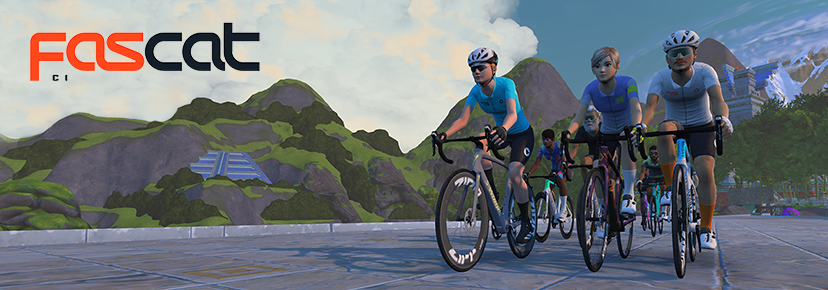
FasCat’s Sweet Spot Saturdays, #2 of 7
Sweet Spot Coach Frank Popular
Ever heard of “Sweet Spot” training? It’s a staple for many riders, since it lets you accumulate a lot of training stress in relatively little time without suffering at or above threshold.
The guy who created the sweet spot concept – coach Frank Overton of FasCat – is one of the leaders on these rides. There’s even a Discord channel so you can chat directly with him. Pretty cool!
Everyone will be on Big Foot Hills (69.9km, 712m) for this ride, doing “freestyle sweetspot,” and groups will naturally form around each rider’s sweet spot zone.
Makesi from DadBod Cycling is hosting a holiday ride on one of New York’s newer routes this Saturday. It’s your chance to hang with Makesi (super cool dude) and also unlock the exclusive DBC Jersey in Zwift- see it on his Insta post.
This is an open-paced group ride on Double Parked (42.2km, 329m).
I’m not sure what the folks at OUTLYR are up to, but this ride has more signups than any other heading into the weekend! For that reason alone, I’m including it in this list. They’ve earned it.
It’s a 100km event on Watopia’s Triple Flat Loops, led at a pace of 2.7 W/kg.
Want to accumulate lots of miles quickly? Join this growing group ride, which puts everyone on the fastest TT bike in game (Cadex Tri) with drafting enabled. It’s 100km, but it’ll be a fast 100km!
Riders are on Tempus Fugit, the flattest route in Zwift. Three different pace groups, released so the faster groups catch the slower groups over time.
Bike upgrading hack: on rides with forced bikes, whatever bike you’re on when you join the event is the bike that accumulates the distance/elevation/time. So, for example, you could accumulate lots of distance toward a road bike upgrade, while riding the Cadex Tri in this event.
Popular Ride Legacy Leader Endurance Challenge Kit Unlock
A regularly featured event here on Zwift Insider, the BMTR Flat 100 always gets lots of joiners because it’s well-led and run consistently week after week, year after year.
This week’s ride is on Watopia’s Big Flat 8, with three pace groups to choose from.
We choose each weekend’s Notable Events based on a variety of factors including:
Is the event unique/innovative in some way?
Are celebrities (pro riders, etc) attending/leading?
Are signup counts already high, meaning the event is extra-popular?
Does the ride include desirable unlocks or prizes?
Does the event appeal to ladies on Zwift? (We like to support this under-represented group!)
Is it for a good cause?
Is it just plain crazy (extra long races, world record attempts, etc)?
Is it a long-running, popular weekly event with a dedicated leader who deserves a shout out?
In the end, we want to call attention to events that are extra-special and therefore extra-appealing to Zwifters. If you think your event qualifies, comment below with a link/details and we may just include it in an upcoming post!
Riot Games has confirmed that it’s working on a massive update for League of Legends after Bloomberg published a report saying that the company has plans to remake the game. Back in November, a Chinese esports insider also reported that a League of Legends 2 is in development and is coming as early as the second half of 2026. In a video announcement discussing Riot’s plans for League after 2026, executive producer Paul Belleza denied that the developer is working on League 2 like rumors have been suggesting, but he admitted that it is working on a big update that will arrive in 2027.
Andrei van Roon, Head of League Studio, then enumerated some of the things his team is already working on, including a brand new around-game client that’s fully integrated with the in-game experience, a full visual overhaul of the Summoner’s Rift, changes to Runes and an overall improvement to the player experience. The update is looking to be as big as the one from back in the mid-2010s when Riot reworked League’s graphics and is meant to bring in new players.
Belleza and van Roon said they’ll share more details between MSI in the summer and Worlds in the fall of 2026. While the timeline is pretty vaugue, the window of release for a major update like this is most likely the end of November until early January when competitive league is on break.
This article originally appeared on Engadget at https://www.engadget.com/gaming/a-total-league-of-legends-revamp-is-coming-in-2027-130000644.html?src=rss
An anonymous reader quotes a report from KrebsOnSecurity: Direct navigation — the act of visiting a website by manually typing a domain name in a web browser — has never been riskier: A new study finds the vast majority of “parked” domains — mostly expired or dormant domain names, or common misspellings of popular websites — are now configured to redirect visitors to sites that foist scams and malware. When Internet users try to visit expired domain names or accidentally navigate to a lookalike “typosquatting” domain, they are typically brought to a placeholder page at a domain parking company that tries to monetize the wayward traffic by displaying links to a number of third-party websites that have paid to have their links shown.
A decade ago, ending up at one of these parked domains came with a relatively small chance of being redirected to a malicious destination: In 2014, researchers found (PDF) that parked domains redirected users to malicious sites less than five percent of the time — regardless of whether the visitor clicked on any links at the parked page. But in a series of experiments over the past few months, researchers at the security firm Infoblox say they discovered the situation is now reversed, and that malicious content is by far the norm now for parked websites. “In large scale experiments, we found that over 90% of the time, visitors to a parked domain would be directed to illegal content, scams, scareware and anti-virus software subscriptions, or malware, as the ‘click’ was sold from the parking company to advertisers, who often resold that traffic to yet another party,” Infoblox researchers wrote in a paper published today.
Even if Mozilla is going to add an AI kill switch, that may not be enough to reassure many.Waterfox, a popular fork of Firefox, is saying nay to AI. Considering how unpopular Mozilla’s plan to botify its browser has become, this could win the alternative some converts.…
The best phone of 2025: The iPhone 17 Pro, Pixel 10 Pro? Perhaps the Galaxy Z Fold 7? All three rank as some of the best tech we reviewed in 2025.
Engadget
We have compiled all the best gear with our highest review scores in each category, after thousands of hours of testing. We’ve got the Switch 2, AirPods Pro 3 and DJI’s top drone for most of you. Anecdotally, Anker’s Laptop Power Bank, with two built-in charging cables, has been the sleeper hit of the Engadget team, with four editors making it their power bank of choice. I think it’s the retractable cable.
Some use locally stored data, and others let you organize Apple Music songs.
OpenAI has introduced an app directory right inside ChatGPT. The new apps section (on iOS, Android and web) divides into Feature, Lifestyle and Productivity categories, letting you connect to commonly used apps and even websites like Booking.com, Spotify and Dropbox.
With Dropbox, for instance, you can “gather insights, prepare briefs and summarize reports or internal documents,” using ChatGPT’s smarts, according to the description. OpenAI says developers can only monetize apps by linking out from the ChatGPT app to a native app or website, but the company is exploring internal monetization options as well.
The T1 smartphone from Trump Mobile remains non-existent vaporware, but you can still give the company your money. If you want, you can buy a refurbished phone from Trump Mobile. The business’s website lists Samsung S24 and S23 and the iPhone 15 and 14. Gizmodo noted Trump Mobile is selling other brands’ phones at the same price as or higher than other retailers.
It’s the wildcard news story no one saw coming. Sony, of Walkman and PlayStation fame, is buying an 80 percent stake of Peanuts for a cool $460 million. Sony already bought 39 percent of the franchise back in 2018 — something most of us were entirely unaware of.
SpaceX said it experienced an anomaly with one if its Starlink satellites that was likely caused by a small explosion. “The anomaly led to venting of the propulsion tank, a rapid decay in semi-major axis by about 4 km [2.5 miles] and the release of a small number of trackable low relatively velocity objects,” Starlink wrote in a post on X. Orbital tracking company LeoLabs assessed that the issue was caused by an “internal energetic source rather than a collision with space debris or another object.”
SpaceX said it’s working with NASA and the US Space Force to track the remains of the object. “The satellite is largely intact, tumbling and will reenter the Earth’s atmosphere and fully demise within weeks,” the company said. It’s trajectory is well below the International Space Station (ISS) so it poses no risk to the lab or its crew. Starlink has yet to say how many pieces it’s tracking.
The incident happened just days after a Starlink satellite narrowly avoided a collision with a rival Chinese satellite from CAS Space last week. Starlink vice president Michael Nicholls said that the incident happened due to a lack of coordination between the two companies. “When satellite operators do not share emphemeris for their satellites, dangerously close approaches can occur in space,” he wrote on X.
Starlink’s constellation consists of almost 9,300 active satellites making up around 65 percent of all orbiting spacecraft, not including defunct units. That number grew by more than 3,000 this year alone, launched aboard 121 separate SpaceX missions — around one every three days.
This article originally appeared on Engadget at https://www.engadget.com/science/space/a-starlink-satellite-just-exploded-and-left-trackable-debris-120002814.html?src=rss
As we have been covering over the past year, major investments have been made to better the outlook for running FreeBSD on laptop hardware. From WiFi driver improvements to enhancing suspend/resume, power management, graphics drivers, and other features, it’s been a big undertaking to make FreeBSD work better on laptops. The FreeBSD Foundation calls 2025 as having brought “transformative changes” for the FreeBSD laptop experience…
Cloud Hypervisor 50.0 is out today for this cloud-minded, security-focused and Rust-based hypervisor. Cloud Hypervsior began as an open-source Intel project while in more recent times has shifted to being largely maintained by Microsoft, Crusoe, Cyberus Tech, Rivos, and others…
The Mageia development team recently met to solidify their plans for releasing Mageia 10 as the next major release of this LInux distribution with its roots that trace back to the days of Mandrake Linux…










 FasCat’s Sweet Spot Saturdays, #2 of 7
 Sweet Spot