GTR’s 12 Races of Christmas Series Announced

On the fifth day of Christmas, my true love gave to me: 2 laps of Innsbruckring…

This festive season is not just about family and feasting…. with GTR’s (Good Time Riders) 12 Races of Christmas series, it’s also about having some fast and furious racing fun during the holidays!

About the Series

Running from 26 December through to 6 January, the race series is loosely themed on the “12 days of Christmas” carol.

With routes ranging from 10-25km, it’s been designed to give racers something to get their teeth into whilst acknowledging it’s a busy time of year. While there we 12 races, the series rankings will be based on your best 9 results according to the points structure listed on ZwiftPower, with individual and team leaderboards available. So, if family, work, or social engagements crop up, you don’t have to worry about missing a day or two.

Race Times and Basic Rules

Three times are available for each race:

  • 12:30pm UTC/7:30am ET/4:30am PT
  • 6:30pm UTC/1:30pm ET/10:30am PT
  • 12:30am UTC/7:30pm ET/4:30pm PT

Entry into any of the race times will count as your result for the day. Races are mass start, but five categories are available, split by Zwift Racing Score. A ZwiftPower account and heart rate monitor will be required to appear on the leaderboard.

And best of all, there’s no complicated rules around the races – just a straight scratch race to the finish.

Route Schedule

  • 26th December: “And a Partridge in a Pear Tree” – Makuri, Spirit Forest – 1 lap, 12.6km
  • 27th December: “Two Turtle Doves” – Watopia, Two Bridges Loop – 2 laps, 14.2km
  • 28th December: “Three French Hens” – France, Roule Ma Poule – 1 lap, 26km
  • 29th December: “Four Calling Birds” – London, London Calling – 1 lap, 31.7km
  • 30th December: “Five Gold Rings” – Innsbruck, Innsbruckring – 2 laps, 17.6km
  • 31st December: “Six Geese A’ Laying” – New York, The 6 Train Reverse – 2 laps, 13km
  • 1st January: “Seven Swans A’ Swimming” – Scotland, Loch Loop – 2 laps, 16km
  • 2nd January: “Eight Maids A’ Milking” – Makuri, Countryside Tour – 1 lap, 16km
  • 3rd January: “Nine Ladies Dancing” – New York, Lady Liberty – 1 lap, 12.5km
  • 4th January: “Ten Lords A’ Leaping” – Makuri, Castle to Castle – 1 lap, 23.2km
  • 5th January: “Eleven Pipers Piping” – Scotland, Scotland Smash – 1 lap, 18km
  • 6th January: “Twelve Drummers Drumming” – Scotland, Dun Dash – 1 lap, 12.4km

Sign Up

To join in the fun, click the link below:

Sign up at zwift.com/events/tag/gtr12days >

The Roku Streaming Stick 4K With HDR Is Half Off Right Now

We may earn a commission from links on this page. Deal pricing and availability subject to change after time of publication.

Roku Sticks have useful features that can make your dumb TV smarter (or replace the interface on your smart TV), and they are seeing great discounts right now. In particular, the Roku Streaming Stick 4K with HDR and Dolby Vision is $24.99, the lowest price it has ever been after a 50% discount, according to price tracking tools. It’s also my personal favorite option, and the one I would recommend to most people.

There’s a lot to consider when choosing a streaming device for your TV. I’ve tried many, and Roku is one of the best. It’s user-friendly, responsive, organized, simple to navigate, and affordable. Out of all the Roku options, the Roku Streaming Stick 4K with HDR and Dolby Vision is the best bang for your buck—for just $5 more than the Roku Streaming Stick Plus, you’ll get support for Dolby Vision, which will deliver more dynamic HDR. It’s also much cheaper than the Roku Ultra, which offers WiFi 6, an Ethernet port, and Dolby Atmos for $50 more.

The Roku Streaming Stick 4K is compatible with Alexa smart devices, Apple AirPlay and HomeKit, Google Home, and with Roku Smart Home, meaning you can mirror your devices, use voice commands, or control them from these respective smart apps. If you have Bluetooth headphones, you can pair them with the Roku so you can watch your shows in silence, and the voice activated remote is a game-changer if you lose your clicker as often as I do.

Auvidea X242 Carrier Board Brings Dual 10GbE and PCIe Gen 5 to Jetson T5000

Auvidea has released the X242, a high-performance carrier board designed for NVIDIA Jetson T5000 (Jetson Thor) modules. The board targets edge systems that require high-bandwidth I/O, multi-display support, and upgrade paths from earlier Jetson AGX Xavier and Orin platforms. The X242 is designed as a scalable, industrial-grade carrier board intended for commercial deployment volumes. It […]

What the Linux Desktop Really Needs To Challenge Windows

Linux’s share of the desktop market has climbed to as much as 11% by one count, but that figure includes Chromebooks, and the traditional Linux desktop remains hamstrung by the same fragmentation that killed Unix decades ago. Steven J. Vaughan-Nichols, writing in The Register, argues that the proliferation of Linux desktops — more than a dozen significant interfaces exist today, and DistroWatch lists “upwards of a hundred” — makes it nearly impossible for ordinary users to know where to start.

Linus Torvalds has long agreed with this hypothesis. “We have way too many desktops,” Vaughan-Nichols notes, summarizing Torvalds’ position. The deeper issue lies in software delivery: traditional package managers like DEB and RPM “simply don’t scale for the desktop,” forcing distro builders to constantly rebuild programs for their specific environments. Containerized solutions like Flatpaks, Snaps and AppImages should solve this by bundling dependencies into universal packages, but the Linux community remains divided over which to adopt.

Linux Mint, for instance, refuses Snap because “Canonical has too much control over the Snap store.” Hardware support further complicates this challenges, the veteran journalist writes. While Dell sells Ubuntu machines and specialist vendors like System76 and TUXEDO Computers cater to enthusiasts, “none of them make it easy” for mainstream buyers, and no major OEM strongly backs Linux. Torvalds has pointed to Chromebooks and Android as the model: Linux won on smartphones because “there’s a single, unified platform with a unified way to install programs.”


Read more of this story at Slashdot.

A Cordless Blower Is the Overlooked Tool You Definitely Need

We may earn a commission from links on this page.

Once you start down the path of DIY, you’ll soon realize that any time you find yourself wishing someone had created a tool to serve a specific purpose, someone probably has—no matter how narrow the use case. Case in point: The cordless blower/inflator.

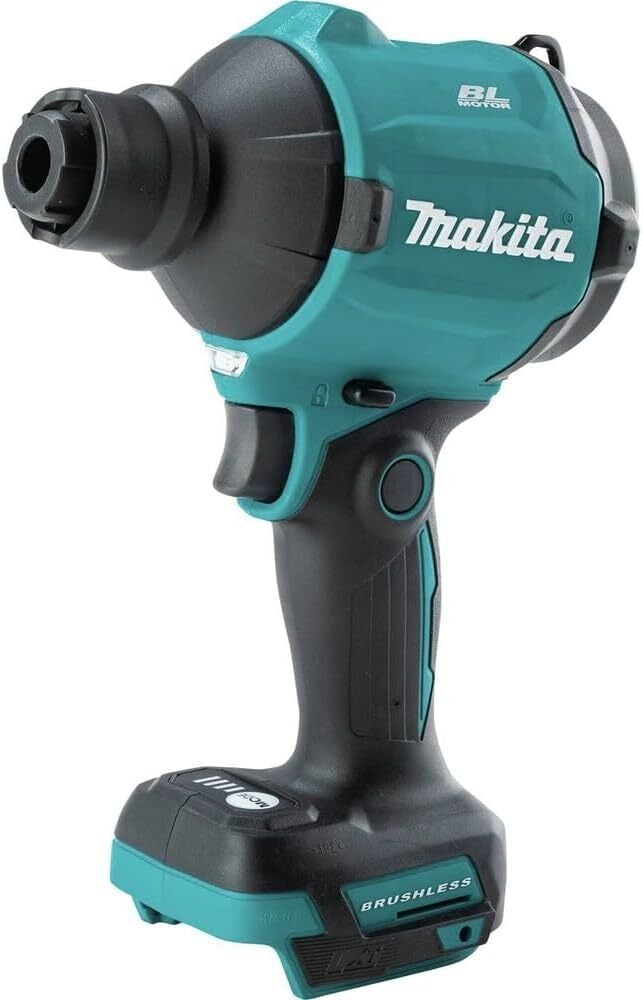
This tool is exactly what it sounds like. Shaped like a power drill, it simply…blows air (though sort of like a handheld leaf blower, these tools typically come with an array of nozzles to give you a bit of precision with the flow of your forced air). You might think this sounds like a tool you’ll never actually need, because you have lungs. But I’m here to convince you that you’re wrong: A cordless blower will absolutely be one of the most useful tools you ever acquire.

One tool, many uses

Handheld blowers have a lot of uses that make every DIY job you do a little bit easier and faster:

  • Cleaning. Probably the most common use case for a blower is to quickly clean a work area by blowing away dust, sawdust, clippings, shavings, and other small debris. You can use a blower to quickly clear off a workbench, blow dust out of keyboards, engines, or anywhere else. This is also really useful if you have a tight spot where you can’t fit a tool—the blower can clean it out in a jiffy. It’s also useful for a quick cleanup on outdoor furniture or even my deck—while you might want an actual leaf blower for full-scale yard cleanup, a handheld blower can do an adequate, quickie cleanup on demand.

  • Shortening drying times. If you’re waiting on something to dry out before you can move on to the next stage of your project, a blower can speed up that drying time considerably.

  • Cooling other tools down. There’s nothing more irritating than an overheating tool that forces you to stop and wait for it to return to a safe operating temperature. A blower can speed up that process, acting as a high-powered fan with a very precise, narrow blast of air to cool down hot components.

  • Redirecting dust and debris. When working inside, you often want to use a vacuum to collect dust as you work, but outside, a small, handheld blower can be more convenient. Using it to redirect dust and debris away from you as you work can keep grit out of your eyes and your workspace clean as you go.

  • Inflating stuff. These blowers come with attachments that not only allow you to be as narrow or wide with your airstream as needed, but also fit into standard nozzles. Need to inflate an air mattress, pool ball, or anything else? The blower will make short work of it.

Once I started using a blower while I worked, I found myself reaching for it constantly just to keep my workspace clear of dust, and then I started grabbing it literally any time a blast of air seemed helpful. You might not think you need a blower in your tool chest, but you probably do.

Choosing a blower

Most cordless blowers are similar in terms of shape and function. The two from major brands you’ll come across most are Milwaukee’s M18 18V Brushless Cordless Precision Blower and Makita’s 18V LXT Brushless Cordless High Speed Blower/Inflator. They’re both solid tools, but I prefer the Makita because, in my experience, its battery life is much better (the Milwaukee has a bit more power, but I’ve never had a scenario where I needed more power). The Makita tends to last 45 minutes to an hour on a single charge, but when I borrowed a Milwaukee it died about a half hour into the job. Obviously, this will depend on a lot of variables, including what you’re using it for, but the Makita wins for me because every time I grabbed it there was enough charge left to finish the job.

Instacart Kills AI Pricing Tests That Charged Some Customers More Than Others

Instacart has ended its AI-powered pricing tests after a study from Groundwork Collaborative, Consumer Reports and More Perfect Union revealed that the grocery delivery platform was showing different customers different prices for identical items at the same store. The company said Monday that retailers can no longer use Eversight, the AI pricing technology Instacart acquired in 2022, to run such tests.

“Now, if two families are shopping for the same items, at the same time, from the same store location on Instacart, they see the same prices — period,” the company wrote in a blog post. The study drew attention from lawmakers; Sen. Chuck Schumer wrote to the FTC that “consumers deserve to know when they are being placed into pricing tests,” and Reuters reported that the agency had opened an investigation. Instacart says the tests “were never based on supply or demand, personal data, demographics, or individual shopping behavior.”

The company also reached a $60 million settlement last week over separate allegations including falsely advertising free shipping.


Read more of this story at Slashdot.

10 Shows Like ‘Boots’ You Should Watch Next

We may earn a commission from links on this page.

Who knew that, here in the mid 2020s, a show involving gays in the military (even a relatively pro-army one) would prove its own relevance by drawing a fierce, angry denunciation from the current administration—a response strong enough that it maybe, just maybe, got the show cancelled in spite of high viewership and buzz.

But then again, given the precariousness of the streaming landscape, it’s best to treat everything like a miniseries these days. Based on a memoir from Greg Cope White, the Netflix series stars Miles Heizer as Cameron Cope, a closeted gay teen who follows his bestie into the Army in the era before “Don’t ask, don’t tell,” and well before serving in the open was a possibility.

With no second season coming, it might be tough to figure out what to watch next. I have some suggestions—though given that there aren’t a ton of “gay kid joins the army” shows out there, I’m focusing on queer coming-of-age stories in general, not strictly ones that are military-themed. (Growing up queer is kinda like a boot camp all its own.)

We Are Who We Are (2020)

Director Luca Guadagnino (Challengers, Queer) created this series about two American teenagers, Fraser (Jack Dylan Grazer) and Caitlin (Jordan Kristine Seamón), living with their families on a U.S. military base in Chioggia, Italy. Fraser’s two moms are both in the army (something that would have been impossible in the 1990 of Boots, and may be again before long), but he’s new to base life. Caitlin, on the other hand, has lived in Chioggia for years with her conservative father. Over the course of a summer, the two gradually bond over their mutual feelings of isolation, as well as their explorations of gender and sexuality. Stream We Are Who We Are on HBO Max.


Overcompensating (2025 – )

Comedian Benito Skinner plays himself, sort of, in this buzzy comedy that sees a former high school jock facing his freshman year in college while desperately trying to convince himself and everyone else that he’s as straight as they come (relatable, except for the jock part). Much of the appeal is in its deft blending of tones: It’s a frequently raunchy college comedy, but it’s simultaneously a sweet coming-of-age story about accepting yourself without worrying about what everyone else thinks. The cast includes Adam DiMarco (The White Lotus) and Rish Shah (Ms. Marvel) and, just as impressively, it’s a streaming show with queer characters that’s actually been renewed. Stream Overcompensating on Prime Video.


Heated Rivalry (2025 – )

Shane Hollander (Hudson Williams) and Ilya Rozanov (Connor Storrie) are professional ice hockey players who compete on rival teams, the Montreal Metros and the Boston Raiders. Even as their public relationship remains contentious over a period of years, the two develop a casual (at least at first) sexual relationship that grows increasingly sweaty, ice notwithstanding. Not to be outdone, this buzzy show also traces the similarly complicated relationship between an American team captain and a smoothie barista. Tonally, its sex-filled fun isn’t much of a match for Boots, but it’s of the increasingly few shows with gay lead characters to succeed on streaming. Oh, and it’s also been renewed for a second season. Stream Heated Rivalry on HBO Max.


Blood & Water (2020 – )

This top-tier teen drama stars Ama Qamata as Puleng Khumalo, a teenage girl who’s lived her entire life in the shadow of a sister that was taken as a baby by human traffickers; Puleng’s parents even hold a birthday celebration for the sister each year. When invited to a party by popular Fikile Bhele (Khosi Ngema), a student at an elite school in Cape Town, Puleng can’t help noticing their similarities. Steeped in the story of her sister, Puleng transfers to the school to get to the bottom of things. There’s plenty of juicy high school drama and family secrets, but the show is elevated by its unexpected dramatic heft and a multitude of queer characters and storylines. Stream Blood & Water on Netflix.


Young Royals (2021 – 2024)

Steamy soap Young Royals follows Wilhelm (Edvin Ryding), the fictional prince of Sweden, as he embarks on a romance with another student, Simon Eriksson (Omar Rudberg), at their elite boarding school (it’s not exactly boot camp, but it’s all relative). While possessed of all the addictive qualities of the teen drama genre, Young Royals takes itself a bit more seriously than some, and feels remarkably fresh in its commitment to casting age-appropriate actors in all the key roles. Stream Young Royals on Netflix.


Fellow Travelers (2023)

Though it’s about middle-aged men (Matt Bomer and Jonathan Bailey) in the 1950s, I’m comfortable calling this one a loose match since, like Boots, it’s a period piece set a against a backdrop of era-specific brands of queer existence, beginning amid the McCarthy-inspired Lavender Panic and runs through to the AIDS crisis of the 1980s. Bomer and Bailey generate real sparks (and offer up intense, if not particularly graphic, sex scenes) as they portray decades in the lives of a closeted couple—one a State Department official and the other an idealistic congressional staffer. Stream Fellow Travelers on Paramount+.


Elite (2018 – 2024)

Elite follows a group of working-class friends who wind up with scholarships to Las Encinas, a fictional private school that is, in the show’s universe, the most exclusive in Spain (again, not exactly boot camp, but here we are). What they find there is snobbery, for sure, but also mystery, murder, and lots and lots of sex (among character of various sexual orientations and numerical groupings). The smart but wonderfully trashy show ran for an impressive eight seasons, with Indian and South African variations (Class and Blood & Water, mentioned above) also streaming. Stream Elite on Netflix.


Heartstopper (2022 – )

The repressed, closeted yearning of Boots is all well and good, but Heartstopper is the affirming coming-of-age/queer teen love story that we all kinda need right about now. While it never soft-peddles the dangers of homophobia, it likewise doesn’t wallow in tragedy. Kit Connor and Joe Locke deliver sensitive (and often very funny) performances in a show that’s nearly all smiles without feeling treacly. Stream Heartstopper on Netflix.


First Day (2020 – 2022)

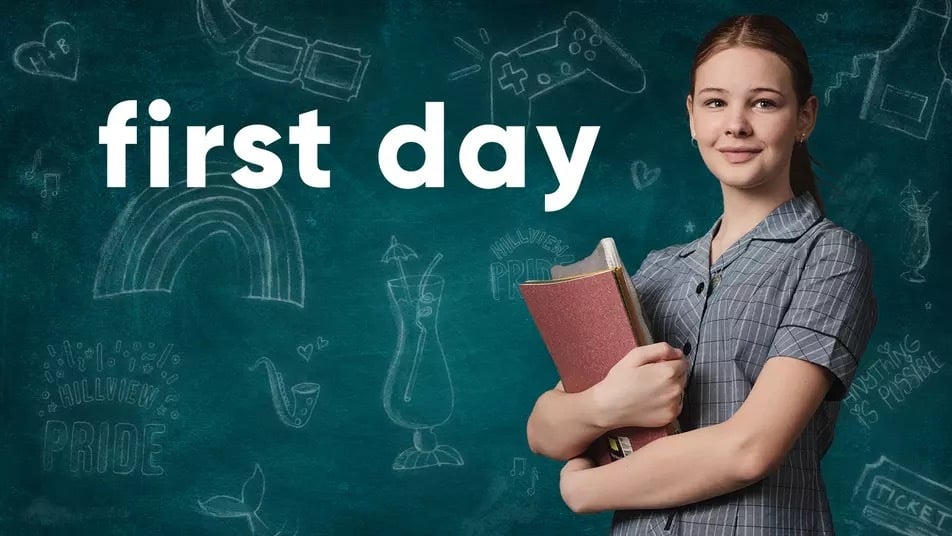
This Australian import stars Evie Macdonald as Hannah Bradford, a generally confident 12-year-old whose interests include school politics and taekwondo. She’s also, as the series begins, getting a fresh start at a new school while transitioning, presenting herself as female for the first time. She immediately makes new friends, but also faces a bully from her old school who holds her secret over her head just as Hannah is starting to come into her own identity. And if that doesn’t sound like a boot camp of its own. First Day skews quite a bit younger than other shows on this list, but it’s nevertheless a solid coming-of-age drama about finding meaning and identity. Stream First Day on Hulu.


It’s a Sin (2021)

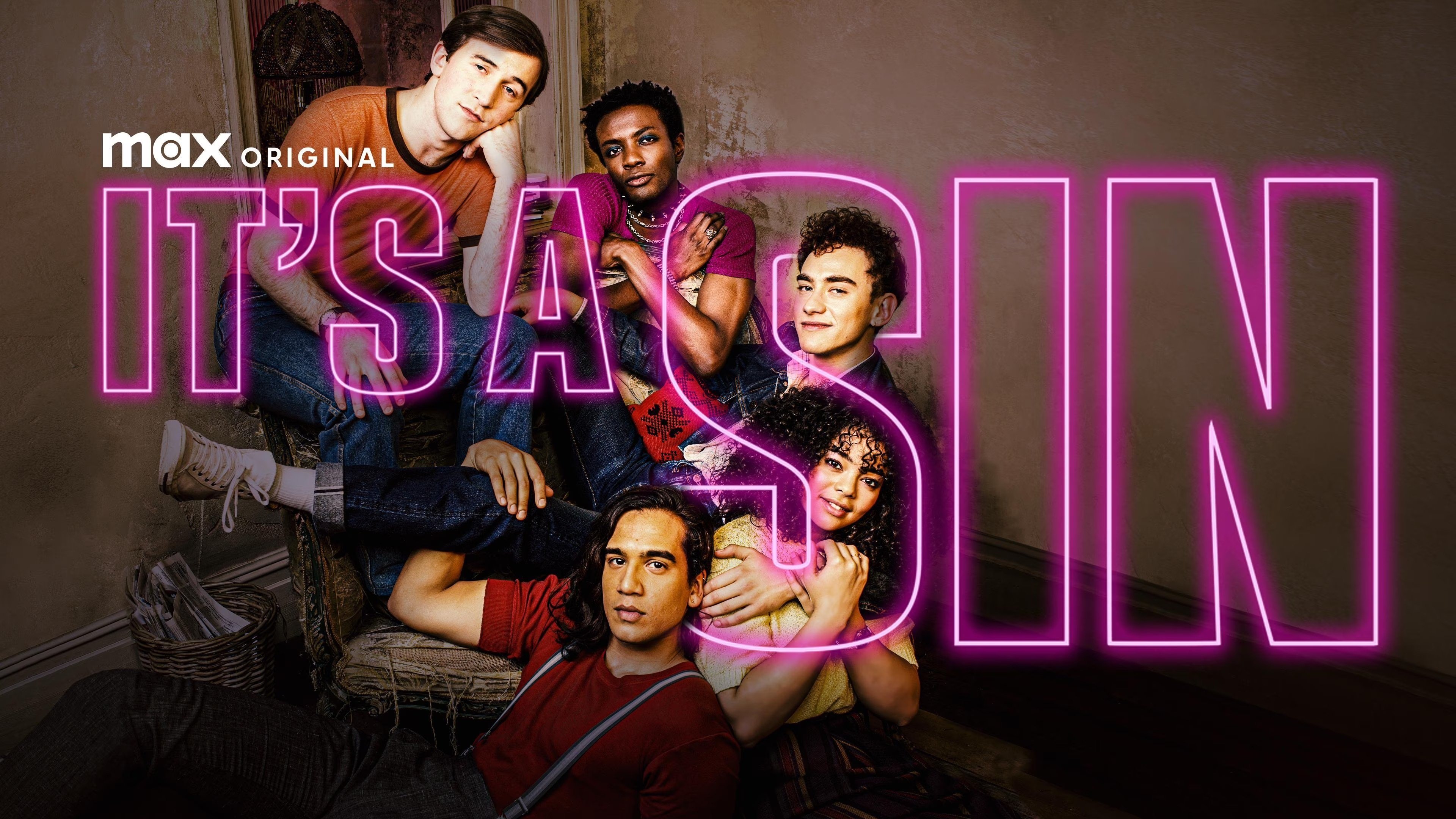
Another period drama set within relatively recent memory, Russell T. Davies’ It’s a Sin revisits the 1980s through the story of a group of friends living in London during the height of the HIV/AIDS crisis. The miniseries brings an impressive cast to bear on a story that tracks them through the early days of queer liberation through the developing menace of a disease that no one in the broader world was willing to talk about, much less do anything about. Davies (Queer as Folk, Doctor Who) has told queer stories before, but none quite so powerful or affecting. Stream It’s a Sin.


This Wallet-Sized E-Reader Is My Tech ‘Upgrade of the Year’

We may earn a commission from links on this page.

One of the often unspoken truths of being a tech reviewer is you get to test out, recommend—and sometimes even keep!—gadgets that you would never buy for yourself, because you can’t justify what they cost. This is why I tend to spend large portions of my reviews talking about price. I love a cutting edge device as much as the next nerd, but I have two kids and I live in the most expensive city in America; as much as I admire the Boox Palma 2 Pro, my budget doesn’t really have room for a niche $400 e-reader.

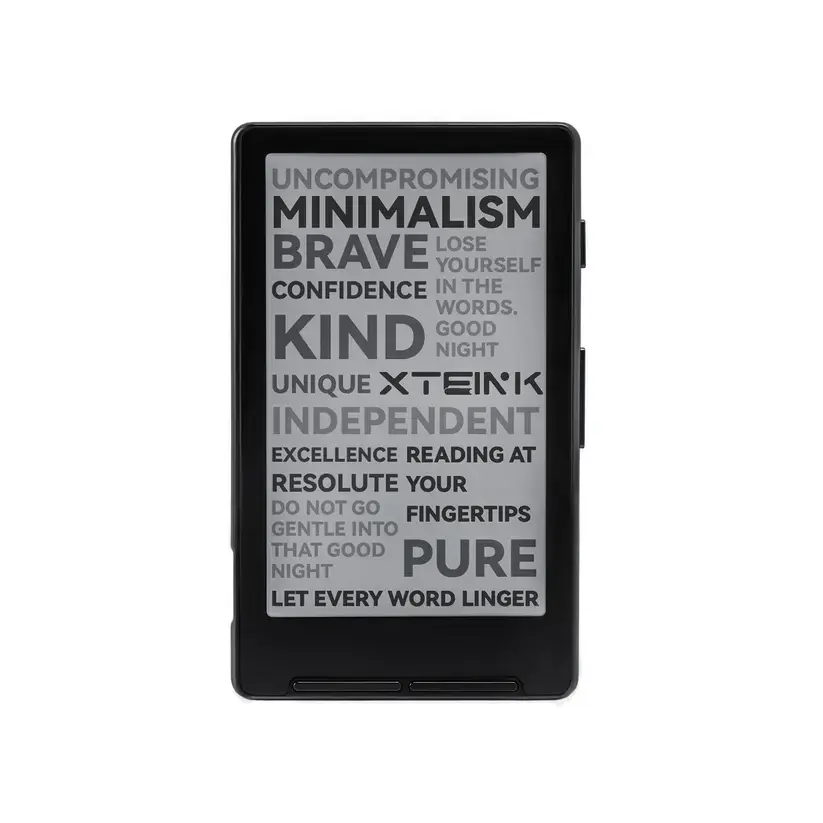
That’s why the Xteink X4, a minimalist 4.3-inch e-reader, is my tech upgrade of 2025: Here’s a device that has no delusions of grandeur. It doesn’t want to replace your phone. It doesn’t want to serve up the smoothest screen tech. It doesn’t want to run games or apps or seamlessly sync with you phone. It just wants to be a tiny, inexpensive e-reader that works just well enough, and is small enough to carry with you anywhere.

The simplicity is the point

As I make clear in my review, the Xteink X4 can in no way compete with the Palma 2 Pro (or your average Kindle, for that matter). It has an underpowered processor and no screen light. Due to digital rights management, you probably won’t be able to use it to read all the Kindle books you already own (though that’s really Amazon’s fault). It’s kind of a pain to load it up with e-books, and once you get them on there, they might not look great, as the current software can’t even display paragraph indents or italics.

But it also costs less than $70 (as little as $45 if you order from AliExpress, a sort of Chinese answer to Amazon Marketplace), and once it’s all set up, it fulfills the exact same function as a pricier device: It allows me to easily carry my library around with me so I can read a book instead of staring at my phone. But because it’s so very tiny—around 25% smaller and thinner than my iPhone 14—it does this better than any other device I’ve tried.

A great community

More than just functional, though, the Xteink X4 is fun—though admittedly, a lot of that comes from the vibrant community that has sprung up around it online. It has only been available for a few months, but it already has its own active subreddit, filled with geeky users helping each other out with FAQs, troubleshooting, and crowd-sourced galleries of screensaver images. They’ve developed tools and shortcuts to get around the device’s limited functionality, from a Calibre plugin that will optimize your EPUB files for the Xteink X4, to an online tool that will automatically convert them into much prettier image files. A few different folks are even working on entirely new firmware to replace the merely functional native software.

You don’t have to tinker with the Xteink X4—it’s perfectly usable out of the box, once you get used to quirks like navigating its slightly confusing menus with its slightly unintuitive physical buttons—but it’s fun to be engaged with a bunch of other people who are excited about making it work better. In their outsized devotion to a niche device, these folks are bringing back the spirit of the old internet, powered by a sense of excitement and community rather than an all-knowing algorithm. Like the current retro appeal of cassette tapes, the Xteink X4 makes everything better by being a little bit worse.

Visa Says AI Will Start Shopping and Paying For You In 2026

BrianFagioli writes: Visa says it has completed hundreds of secure, AI-initiated transactions with partners, arguing this proves agent driven shopping is ready to move beyond experiments. The company believes 2025 will be the last full year most consumers manually check out, with AI agents handling purchases at scale by the 2026 holiday season. Nearly half of US shoppers already use AI tools for product discovery, and Visa wants to extend that shift all the way through payment using its Intelligent Commerce framework.

The pilots are already live in controlled environments, powering consumer and business purchases through AI agents tied to Visa’s payment rails. To prevent abuse, Visa and partners have introduced a Trusted Agent Protocol to help merchants distinguish legitimate AI agents from bots, with Akamai adding fraud and identity controls. While the infrastructure may be ready, the bigger question is whether consumers fully understand the risks of letting software spend their money.


Read more of this story at Slashdot.

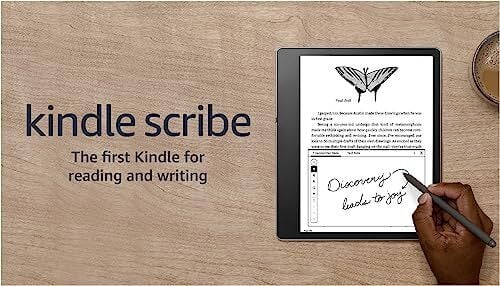
My Favorite Amazon Deal of the Day: The First Generation Amazon Kindle Scribe

We may earn a commission from links on this page. Deal pricing and availability subject to change after time of publication.

Though the Kindle Scribe is already on its third generation, the first-generation model still has a place for anyone looking to nab one of these note-taking e-readers for less. Released in 2022, the original Kindle Scribe is still relevant in 2025 simply for its price.

Right now, the 16GB version of the 2022 Scribe with the Premium Pen is discounted to $221.99 (originally $369.99), the lowest price this reader has seen since its release, according to price-tracking tools, and a great opportunity to snatch one for a bargain. The newer 2024 version is also seeing a decent discount, with the 32GB version of the 2024 Scribe going for $279.99 (originally $419.99).

That said, if you are considering the 2024 version, there’s not much reason to upgrade—the main difference is that the 2024 version tablet itself is shorter, narrower, and slimmer, but not by much (you can even still use the same case). The 2024 version’s new screen also has texture, which will add some resistance when you’re writing on it for a more natural feel. The gap between the screen and the outer casing is also smaller. But that’s where the differences end.

Otherwise, you’ll get the same book format compatibility, the same 15.3 oz weight, the same glare-free 300 ppi front-lit display screen, and the same 12-week battery life. Both tablets run the same software. Still, if you don’t own a Scribe at all and are considering getting one, the 2022 version is the most affordable option at the current price point—it’s over 50% cheaper than the new 2025 model.

The Indie Game Awards snatches back two trophies from Clair Obscur over its use of generative AI

The Indie Game Awards has stripped Clair Obscur: Expedition 33 of two major awards, including Game of the Year and Debut Game. This is due to developer Sandfall Interactive’s use of generative AI, as reported by Mashable.

This looks to be fairly cut and dry. The awards ceremony clearly states in its FAQ that any game that uses generative AI in the development process would be “strictly ineligible” for nominations. It was recently revealed that Sandfall did indeed use generative AI while making Clair Obscur.

Correct me if I’m wrong, but it appears as though Clair Obscure: Expedition 33 used generative AI for these textures. pic.twitter.com/V6mtdG8bUx

— Nyanomancer (@nyanomancer) April 26, 2025

The company says it was only for placeholder textures that were later removed, but a few squeezed past the QA process and made their way to the final game and, as such, the internet. The Indie Game Awards is clear about disallowing any use of generative AI and, so, here we are.

“In light of Sandfall Interactive confirming the use of gen AI art in production on the day of the Indie Game Awards 2025 premiere, this does disqualify Clair Obscur: Expedition 33 from its nomination,” the organization wrote. “While the assets in question were patched out and it is a wonderful game, it does go against the regulations we have in place.”

Six One Indie, the company behind the ceremony, deserves a smidge of the blame here. These awards were initially handed out last week and we’ve known about the whole Clair Obscur AI thing for months. It says it didn’t discover Sandfall’s use of AI until December 18, the day the winners were announced. A Google search on December 17 likely would’ve helped. It is worth noting, however, that Sandfall did previously agree that no generative AI was used during development as part of the submission process. 

In any event, the second-highest scoring titles in each category now gets the award. This means that Blue Prince is now Game of the Year and Sorry We’re Closed snags Debut Game.

Despite this AI controversy, Clair Obscur had a record-setting night at this month’s The Game Awards. It won just about everything it was put up for, including Game of the Year. It also made our list of the best games of 2025. The developer announced that it had sold 5 million copies back in October. That number is surely much higher by now.

This article originally appeared on Engadget at https://www.engadget.com/gaming/the-indie-game-awards-snatches-back-two-trophies-from-clair-obscur-over-its-use-of-generative-ai-164730842.html?src=rss

State of Play: Who Holds the Power in the Video Games Industry in 2025?

The video games industry in 2025 finds itself caught between the familiar forces of consolidation and job losses that have plagued creative industries, and a newer development: governments and the ultra-wealthy have begun treating games as tools of political influence. Saudi Arabia’s Public Investment Fund closed a $55 billion deal for EA this year and acquired Niantic, the makers of Pokemon Go, in March.

Microsoft’s 2023 acquisition of Activision already signaled the direction of travel. The workforce has borne the costs of this consolidation. More than 5,000 jobs have been lost in the industry this year, and several studios have shuttered, including Monolith Productions. The instability has pushed unions into greater prominence: United Videogame Workers formed in the US and Canada in March as part of the Communications Workers of America, and the firing of 30 staff from Rockstar Games in the UK brought the IWGB Game Workers Union into the spotlight.

Meanwhile, the Trump administration has posted AI-generated images of the president as Halo’s Master Chief and used Pokemon and Halo memes to recruit for ICE.


Read more of this story at Slashdot.

GDB 17.1 released

Version 17.1 of the GDB debugger is out. Changes include shadow-stack
support, info threads improvements, a number of Python API
improvements, and more, including: “Warnings and error messages now
start with an emoji (warning sign, or cross mark) if supported by the host
charset. Configurable.
” See the
NEWS file
for more information.

You Can Now Customize ChatGPT’s ‘Personality’ to Suit Your Tastes Even More

When Spike Jonze’s movie Her dropped back in 2013, I thought it was a great work of total fiction. Who would actually befriend an AI bot, let alone fall in love with them? Fast forward 12 years, and I couldn’t have been more wrong. Not only do people love chatting with AI bots, they are actually developing deep connections with them. I still don’t get it, but I can’t deny it: People like these chatbots a lot.

Part of what people like about conversations with generative AI is the “personality” of each bot—or, at least, its perceived personality. After all, ChatGPT isn’t a monolith: You can adjust the bot to sound wildly different than it does on someone else’s app, which raises some questions for me regarding these curated companions. But I digress: This article isn’t necessarily a critique of how people are attaching themselves to ChatGPT; rather, I’m sharing the news that OpenAI is now giving you more control over how the bot sounds and responds in your conversations.

Curate your perfect AI companion

On Friday, OpenAI announced new controls for ChaGPT’s “Personalization.” In a post on X, the company revealed that users can now adjust their chatbot’s “characteristics,” or, in other words, its overall personality. These are adjustments to the personality types that OpenAI has already let you choose from, which include one of eight options: “Default” (preset style and tone); “Professional” (polished and precise); “Friendly” (warm and chatty); “Candid” (direct and encouraging); “Quirky” (playful and imaginative); “Efficient” (concise and plain); “Nerdy” (exploratory and enthusiastic); and “Cynical” (critical and sarcastic).

But no matter which of these personalities you pick, you now have four “characteristics” to adjust to fine-tune the overall experience. There’s “Warm,” “Enthusiastic,” “Headers & Lists,” and “Emoji,” with the option to have more or less of each, or the default amount, as OpenAI sees fit. For Warm, you can either have ChatGPT be friendlier and more personable, or more professional and factual. With Enthusiastic, you can choose the bot to have more energy and excitement, or be calmer and more neutral. “Headers & Lists” lets you choose between clear formatting and lists, or more paragraphs. And, of course, you can control whether ChatGPT uses more emoji, or fewer, depending on your sense of fun and joy.

As usual, you can take advantage of custom instructions to guide ChatGPT’s personality in a direction you like, especially when the presets don’t give you those options. For example, if you’d like ChatGPT to talk to you like a pirate, or if you want it to end every response with a certain catchphrase, here’s your chance to influence the bot.

I’m really not someone who uses ChatGPT outside of testing it for coverage, so I can’t speak to whether these additional controls are useful. But if you want to try making your version of ChatGPT your ideal “AI companion,” the controls are at your disposal. You’ll find these options wherever you access ChatGPT. You can either access it from Settings > Personalization, or from the Personalization shortcut in the ChatGPT menu.

Uber allows violent felons to drive on its platform, investigation finds

An investigation by the New York Times into Uber’s background checks and safety procedures for its drivers found a patchwork approach that opens the door for violent felons to drive for the ride-hailing platform.

Uber outright rejects applicants convicted of murder, sexual assault, kidnapping and terrorism. However, in 22 states, the Times found Uber can approve applicants convicted of many other offenses including child abuse, assault and stalking, if the convictions are at least seven years old. The extensive investigation also found that in 35 states, these checks are based largely on where someone has lived in those seven years, meaning convictions from other locations could be missed.

In 2017, Massachusetts conducted an audit of ride-hailing drivers in the state and ended up banning more than 8,000 drivers (about 11 percent) who were previously approved. Lyft, for its part, does not allow drivers with previous violent felony convictions regardless of how long ago the conviction was.

In a document from 2015 reviewed by the Times, Uber executives discussed a strategy to “shift the conversation about safety from background checks to [less costly] initiatives proven to reduce incidents.” A 2018 email from Uber’s then head of safety communications described the company’s background check policy as “a bare minimum.”

The Times compiled half a dozen examples of serious cases where Uber drivers with past violent convictions were later accused by passengers of sexual assault or rape. Two of those cases resulted in criminal convictions.

Between 2017 and 2022, Uber’s US operations received a report of sexual assault or sexual misconduct among almost every eight minutes, according to the company’s own internal data. Uber said 75 percent of these reports were for “less serious” incidents such as flirting or making comments about a rider’s appearance, and claimed that 99.9 percent of its rides take place without incident.

This article originally appeared on Engadget at https://www.engadget.com/big-tech/uber-allows-violent-felons-to-drive-on-its-platform-investigation-finds-162721155.html?src=rss