Video Call Glitches Evoke Uncanniness, Damage Consequential Life Outcomes

Those brief freezes and audio hiccups that plague video calls are not the benign nuisances that most people assume them to be, according to a new study published in Nature that found glitches during virtual interactions can meaningfully damage hiring prospects, reduce trust in healthcare providers and even correlate with lower chances of being granted parole.

Researchers from Columbia, Cornell, and the University of Missouri-Kansas City conducted ten studies examining glitches across thousands of participants and real-world parole hearing transcripts. The core finding is that glitches harm interpersonal judgments because they break the illusion of face-to-face contact, triggering what psychologists call “uncanniness” — a strange, creepy, or eerie feeling typically associated with humanoid robots or CGI characters that look almost but not quite human.

In one experiment, participants watching a telehealth pitch chose to work with a health professional 77% of the time when no glitches occurred, but only 61% when brief freezes were present. The job interview studies found similar patterns, and when researchers examined 472 Kentucky parole hearings conducted over Zoom, they found that inmates were granted parole 60% of the time in glitch-free hearings versus 48% when transcripts indicated technical problems had occurred.

The researchers ruled out simpler explanations like mere disruption or comprehension difficulties. Glitches inserted during natural pauses in speech — where no information was lost — still damaged evaluations. And critically, when participants watched presentations where a shared screen froze rather than a human face, glitches had no effect on judgments at all. The uncanniness only emerged when the technology broke the simulation of sitting across from another person.


Read more of this story at Slashdot.

Taiwan’s iPass Releases Floppy Disk Pre-Paid Cash Card

Taiwan’s iPass has released a limited-edition prepaid payment card shaped exactly like a 3.5-inch floppy disk. The company, perhaps rightly so, felt the need to include a warning on the product listing: “This product only has a card function and does not have a 3.5mm [sic] disk function, please note before purchasing.”

The NFC-enabled novelty card went on sale starting Christmas Eve and comes in black or yellow finishes at 1:1 scale. It works across Taiwan’s public transport network — buses, trains, subways, taxis, and bike rentals — as well as convenience stores like 7-Eleven and FamilyMart, supermarkets, pharmacies, and fast-food chains including McDonald’s and Burger King.

The floppy disk joins an increasingly absurd lineup of iPass form factors. Previous releases have included, Tom’s Hardware reports, a Motorola DynaTAC replica, model trains, a flip-flop, an LED-lit Godzilla snow globe, and a blood bag. Taiwan’s PCHome24 online store currently lists 838 different iPass card designs. A standard card costs NT$100 (about $3.20) and comes without stored value.


Read more of this story at Slashdot.

My testing shows you no longer have to buy expensive bike tyres – here’s why 

Until recently, I used exclusively top-end all-round race and all-season tyres on my own bikes.

The formula will be familiar to many – during the heady summer months, only the fastest, most supple tyres will do, and in the winter, the reassurance of tougher boots is essential.

A broadly warm and dry 2025 notwithstanding, in the UK that generally means I spend most of my riding time using top-spec all-season tyres. But my recent test of four second-tier options from major tyre players has got me thinking: maybe I need to reconsider how much money I’m spending on my tyres.

The bottom line is, I’ve been pleasantly surprised by the best mid-priced road tyres – they’re not the waste of time I’ve heard many decry them to be, and given you can get a set for far less than their RRPs would state, I reckon they’re a great-value alternative. 

Here’s why.

You still get race-derived compounds

Continental Grand Prix TR
Tyre tech, such as ‘BlackChili’, will likely mean something to you if you use Continental’s faster tyres – you get it in the Grand Prix TR. Ashley Quinlan / Our Media

A tyre’s compound forms the contact interface with the ground, so of course it’s vital for grip and a great deal of confidence building. Thankfully, corners aren’t cut here.

The Continental Grand Prix TR, Pirelli P Zero Road TLR and Vittoria Rubino all include compounds derived from their flagship siblings. 

Of course, while the branding is on point – tyre aficionados will be buoyed by the BlackChili, SmartEVO and Graphene + Silica monikers, respectively – none are truly identical to the flagship tyres. Each tyre has been modified to suit the conditions it is designed for, namely: a mix of dry and wet, and perhaps some winter use.

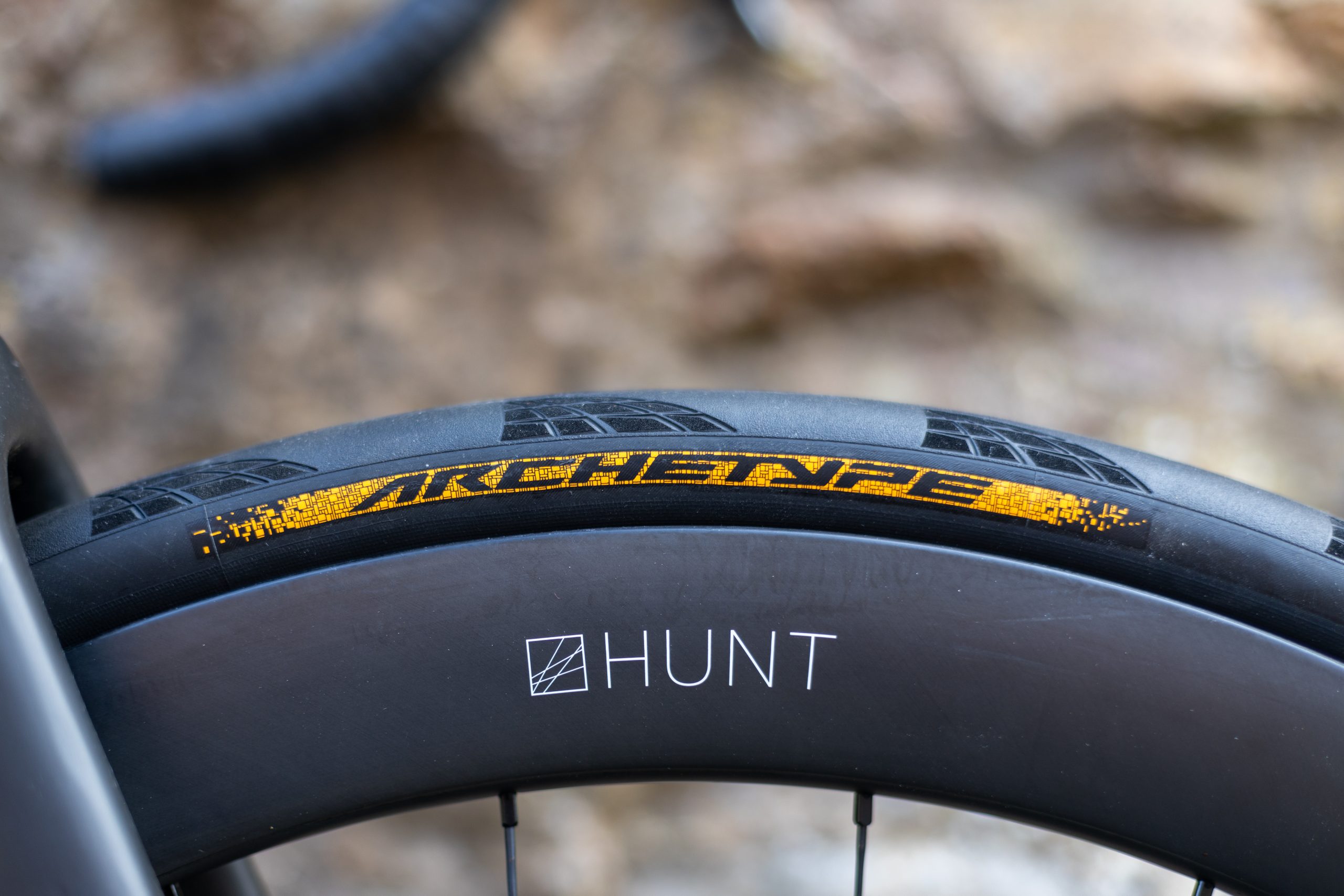
Continental Archetype Tour de France tyre
Even Continental’s raciest tyres use the BlackChili compound, but usually with some modifications. Ashley Quinlan / Our Media

This means they’re not quite as tacky-feeling when you’re pushing hard in the best conditions, but you often get a good balance of performance when you’re not going to be pushing the limits of grip and talent. 

Given this is an accurate representation of almost all of us, almost all of the time, why should you spend more on higher-performance tyres when in reality, mid-priced options will do adequately?

What’s a few watts between friends?

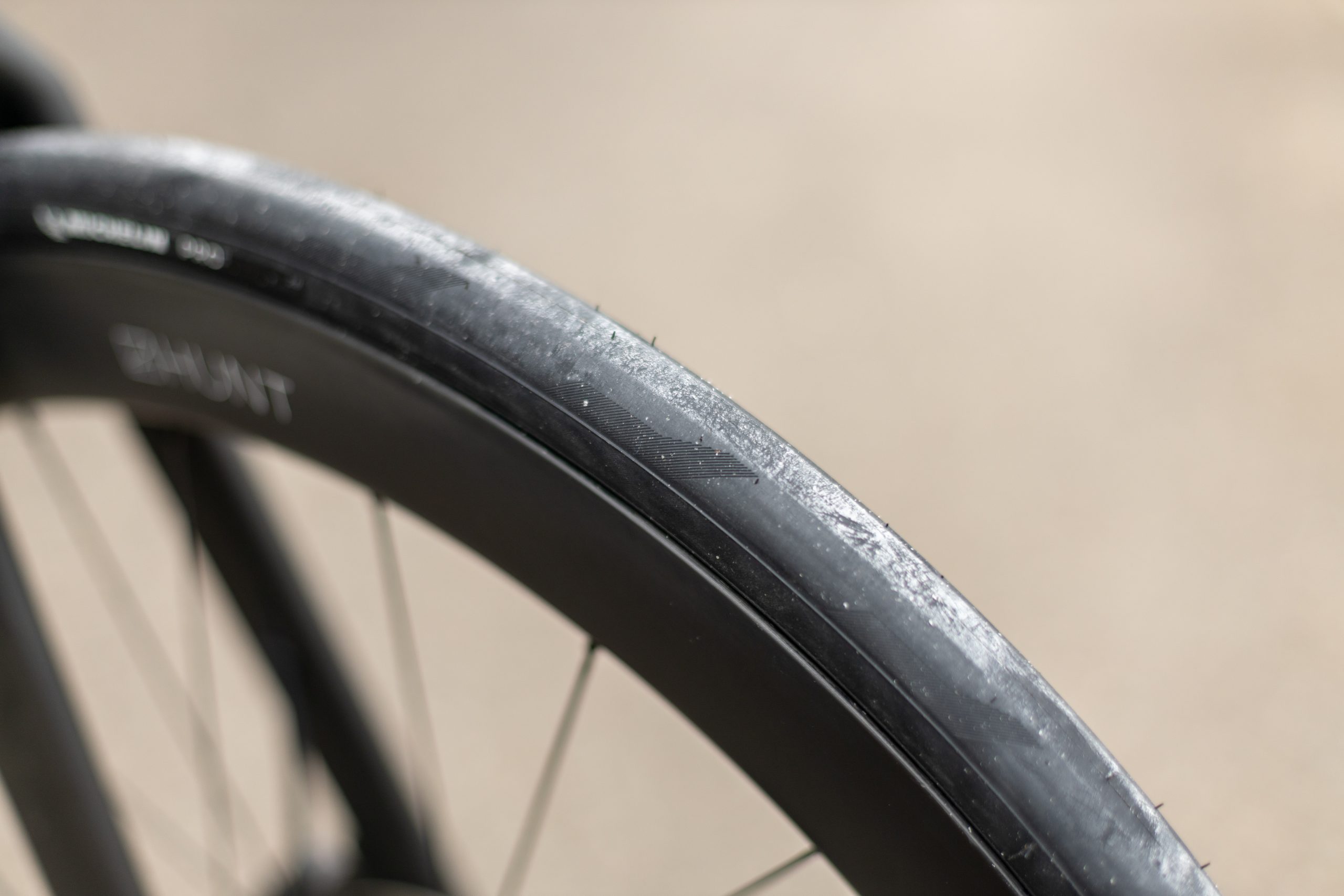
Michelin Pro5 Competition Line
The Michelin Pro5 Competition Line produces competitively low rolling resistance according to bicyclerollingresistance.com – once the releasing agent has worn away, of course. Ashley Quinlan / Our Media

Similarly, who really cares about a few watts of rolling resistance?

Some of us do, of course, and we always like to check the excellent resource Bicyclerollingresistance.com for its expert take, as well as dabble in our own experiments from time to time. 

And, in fairness, rolling resistance matters whether you’re riding quickly or not. In fact, it can save you more time if you’re a slower rider than if you’re a faster one, all things being equal, because there’s greater opportunity to save time for the longer duration of your ride. 

But do you really need the absolute lowest rolling resistance, as these riders? I’d argue not.

So I shall rephrase: do you care enough about how efficient your tyres are to warrant spending more on top-spec models? I did once, but now I realise, like most other riders I encounter, I just want to enjoy the ride – and it doesn’t matter if I’m a few minutes slower to the coffee stop or getting home.

Plus, the gaps are almost unnoticeable anyway – a mere 3-5 watts separates the Michelin Pro5 Competition Line from the fastest all-round race tyres available, and that’s something I can only sense when I’m really paying attention. 

How I tested

I tested the four sets of tyres on a set of Hunt 50 Carbon Disc wheels, chosen for their established performance benchmark. The rims have a 22mm internal width and a hooked bead, enabling me to test the 28mm-wide tyres on rims that should make the most of the nominal size.

I ran an initial tubeless-installation test for each tyre, before installing each set in turn for testing (totalling three setups). I recorded weights and inflated widths at 80psi / 5.5 BAR. 

Tyres tested

High-thread-count carcasses? Check

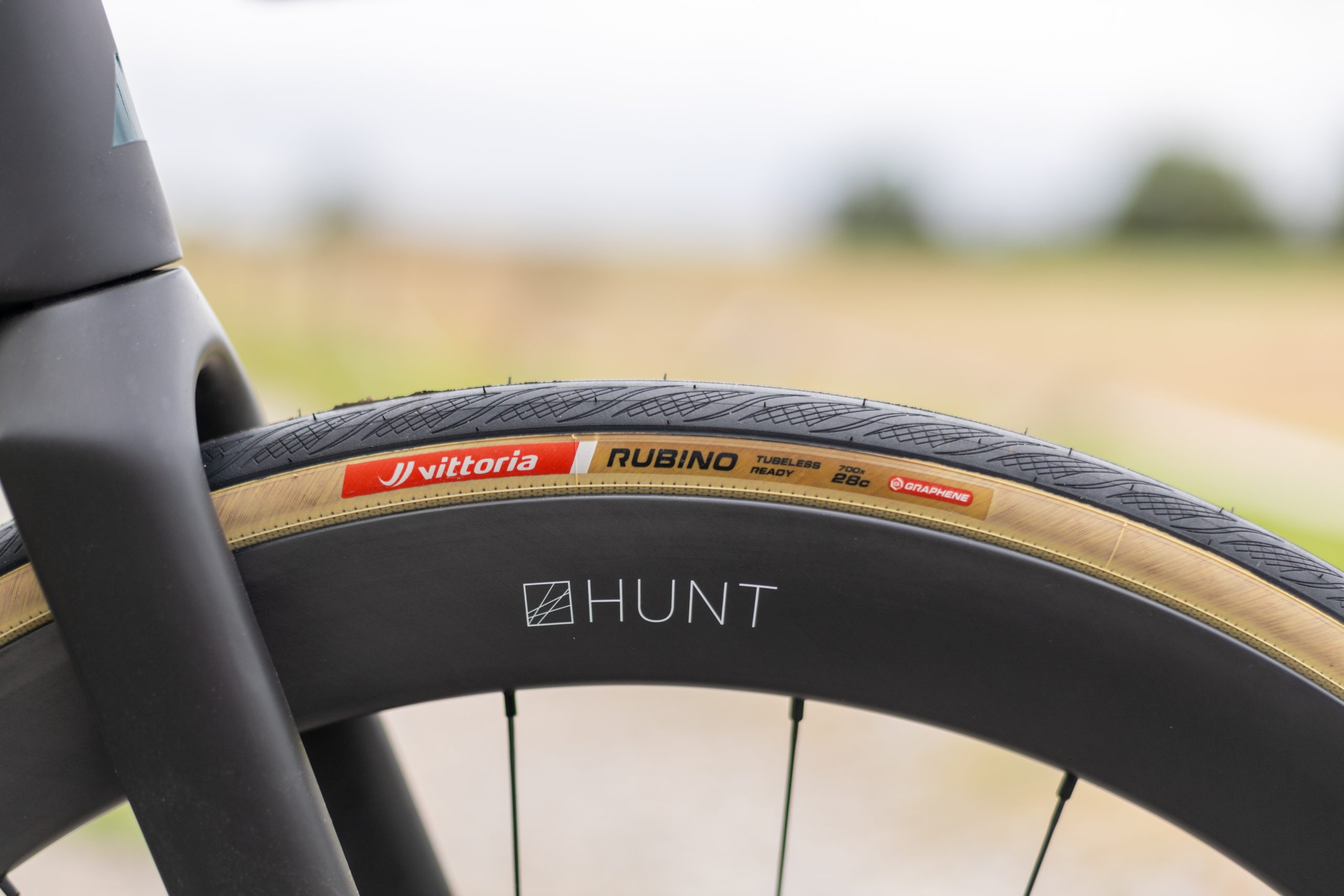
Vittoria Rubino TLR
The carcass underpins the tyre’s construction, impacting how it behaves more than almost any other factor. Ashley Quinlan / Our Media

Generally, a tyre’s carcass (the underpinning construction on which the compound is layered) is the most important contributor to suppleness.

This carcass is made of a woven material – typically nylon, but sometimes cotton – and the higher number of threads per inch (TPI), the more supple the tyre will be. You’ll find three to four layers of this material forming the carcass.

Essentially, suppleness enables the tyre to deform and mould itself to the road under you, conferring a tangible sensation of the grip the compound is offering up, plus a level of road-smoothing comfort. 

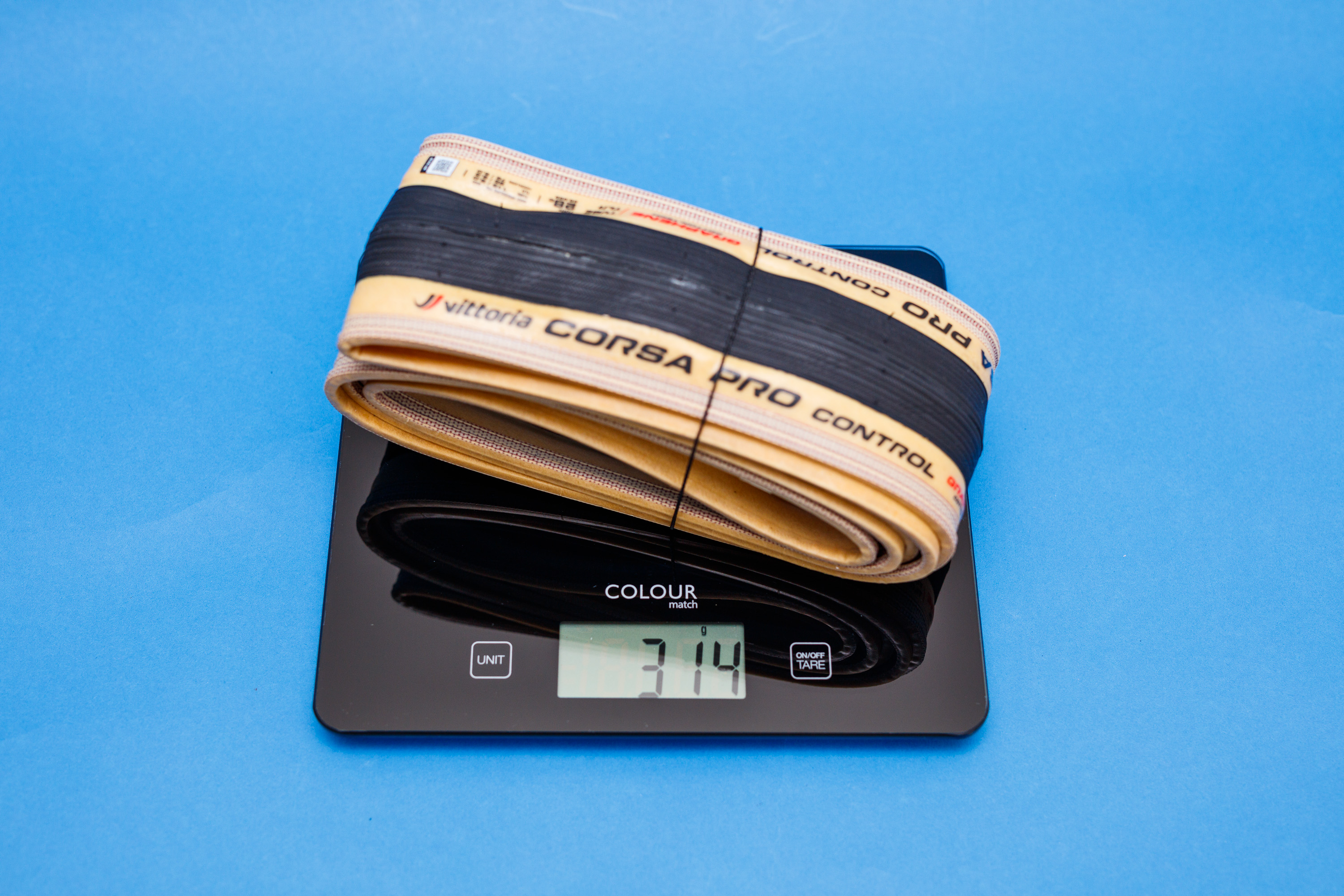
Vittoria Corsa Pro Control TLR tyre on scales
Higher thread counts (such as the 320 TPI count featured in the Corsa Pro Control all-season tyre) can also impact weight. Simon von Bromley / Our Media

In times gone by, many lower-tier tyres would feature lower thread counts than their racier counterparts – but here that isn’t necessarily true.

Vittoria doesn’t include its venerable 320 TPI cotton casing in the Rubino, but a still-decent 100 TPI nylon casing remains in its place – while the Michelin has a 120 TPI casing (perhaps a driver of its impressive rolling resistance), as does the Pirelli.

Interestingly, the Continental Grand Prix TR proves you don’t necessarily need this – it manages to deliver good road feel, but bear in mind that’s because it doesn’t feature a puncture-protection layer (relying on an extra layer of its carcass to achieve this instead).

Essential puncture protection

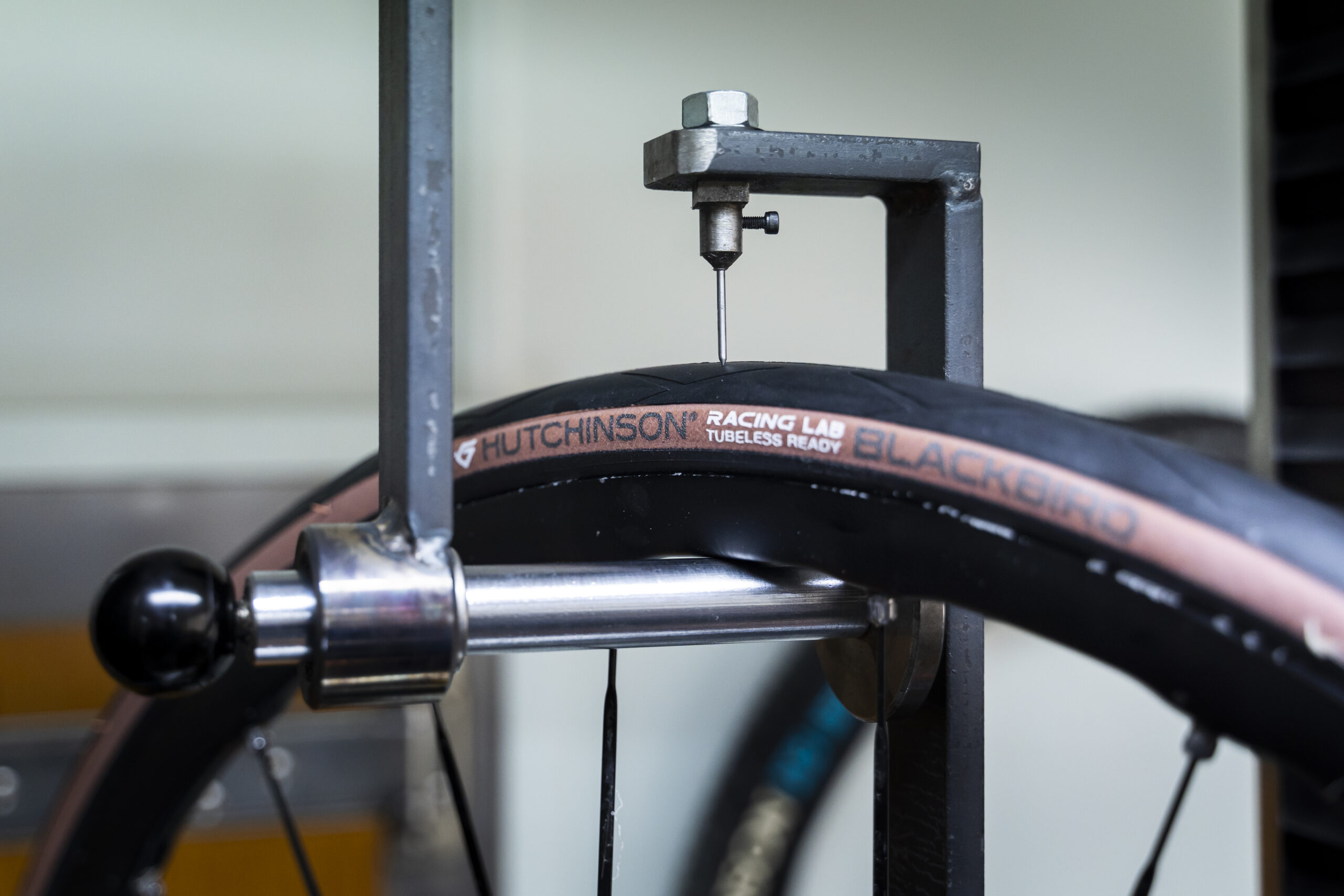
Hutchinson Blackbird tubeless tyre in factory puncture test
Brands test their tyres in the lab for puncture resistance – I’m glad I haven’t been unlucky enough to go beyond their limits this year. Sophie Gateau / Hutchinson

While a certain degree of luck is always part of the equation, I suffered no punctures during my initial 12-week test period, and haven’t suffered any in the two months that have followed.

I like to pick my line carefully and, in my own time at least, purposefully choose cleaner routes. These are behaviours that I’m sure will resonate with many reading this. 

Group of cyclists during the Paris-Roubaix Challenge repairing punctures
This is an experience we all want to avoid. ASO

However, I’ve been left far more confident in these mid-level tyres than I was when I started testing – so confident that, bearing in mind my previous points, I‘m very content to use up these tyres’ life before I consider moving back to higher-spec rubber.

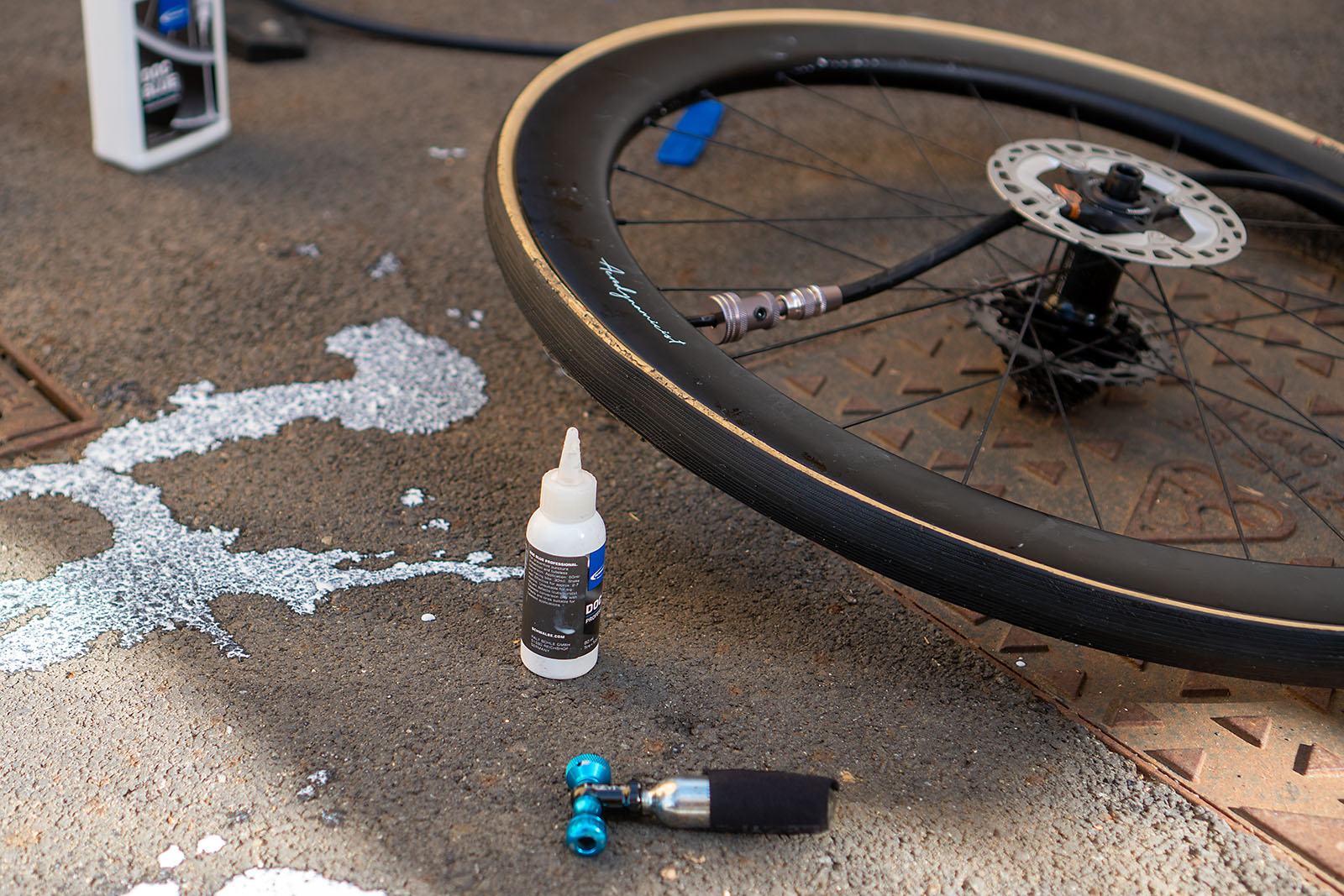
Of course, part of their resilience could be down to their tubeless construction, which by definition is thicker than a general clincher alternative, even before any sealant has been called into action. 

Which is why…

Tubeless is a good thing… even if you don’t want it

Vittoria Corsa Pro Control TLR road tyre
Tubeless setups remain messy (and wasteful) affairs at times, which is why I try to avoid them outside of my core testing. Ashley Quinlan / Our Media

I’m convinced that even if you don’t want to run your tyres tubeless, you should still buy tubeless tyres (even though clincher versions still exist).

With most tyre development now directed towards the tech (I can barely remember the last time a brand made any noise about a new clincher tyre, or indeed a clincher variant of a tubeless tyre), it’s logical to think that the drawbacks of running a tube inside a tubeless tyre have now been – at least partially – mitigated as the technology improves. 

I prefer to run TPU inner tubes for my testing after I’ve done my test tubeless setup, while many are converted to running a tubeless set up, and others prefer to stick to standard butyl inner tubes.

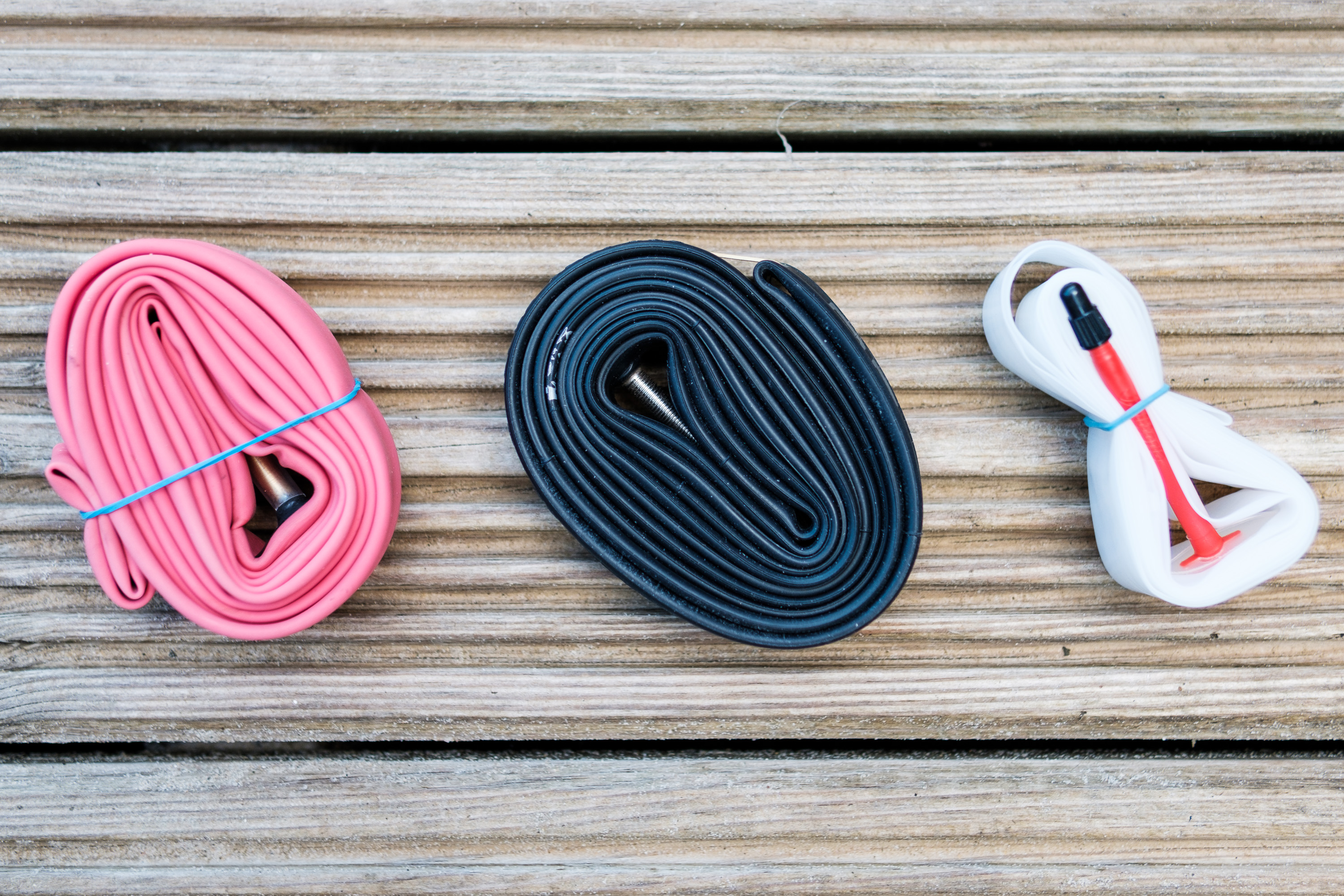
Latex, butyl and TPU inner tubes
Latex, butyl and TPU inner tubes are all options – I prefer TPU tubes for their weight and performance benefits, but also for their small size. Simon von Bromley / Our Media

Whatever your flavour, any one of these tubeless tyres offers enough performance to not feel unduly hamstrung by a tubed installation. Previously, you either didn’t have the option to go tubeless, or the level of the technology in the design was such that if you added a tube, the setup would feel like the proverbial Wellington Boot.

All in, I’m pleased that tyre brands have now ported some of their learnings from their greatest offerings to their more cost-effective options. In short, you no longer have to choose between a racy tyre and a conservative winter tyre – the compromises you do make are now worth it.

QNX Self-Hosted Developer Desktop Brings QNX 8.0 To A Wayland + Xfce Desktop

Announced earlier in December but flying under the radar until now is the initial reoease of a QNX Self-Hosted Developer Desktop. This is a developer environment for the QNX real-time operating system primarily used on embedded systems. With now having this developer desktop option, the hassle of cross-compilation to target QNX can be avoided…

Sapphire’s New Motherboard With PhantomLink Powers A Radeon RX 9070 XT Without Cables

Sapphire's New Motherboard With PhantomLink Powers A Radeon RX 9070 XT Without Cables
Ahead of CES 2026, Sapphire is showing off a pair of “PhantomLink” (its equivalent to ASUS’ BTF) AMD Radeon RX 9070 XT GPUs and motherboards. Both will come in white or black colorways and are (for now) China-exclusives.

This launch from Sapphire shows a continued push from AIB GPU partners and motherboard manufacturers to minimize cable

New York State will require warning labels on social media platforms

The State of New York will now require social media platforms to display warning labels similar to those found on cigarettes. The bill was passed by the New York Legislature in June and signed into law by Gov. Kathy Hochul on Friday. It will apply to any platforms that feature infinite scrolling, auto-play, like counts or algorithmic feeds. The labels will caution those on the platform about potential harm to young users’ mental health.

Social media companies will be required to display these warning labels when a user first interacts with any of the features the state considers predatory. The warning will also be displayed periodically after that interaction. 

“Keeping New Yorkers safe has been my top priority since taking office, and that includes protecting our kids from the potential harms of social media features that encourage excessive use,” Gov. Hochul said in a statement. The law will apply when any of these platforms are being accessed from New York. Gov. Hochul also signed two bills into law last year aimed at protecting kids from social media.

Concerns over the mental health effects of social media platforms on younger users have been mounting and government bodies have been increasingly taking action. A bill similar to the one in New York has been proposed in California. This year Australia became the first nation to ban social media for children, with Denmark soon to follow.

Last year the US surgeon general said social media should come with warning labels and highlighted data associating social media use with increased anxiety and depression in youth. The risks of social media use on children’s mental health are multifactorial and are still being studied.

We’ve reached out to Meta, Snap and TikTok for comment and will update if we hear back. 

This article originally appeared on Engadget at https://www.engadget.com/social-media/new-york-state-will-require-warning-labels-on-social-media-platforms-210306716.html?src=rss

What we listened to in 2025

If streaming services’ year-in-review campaigns have shown us anything, it’s that we’ve spent a staggering amount of time drowning out the hum of everyday life with music, podcasts and audio series. And with some incredible new releases this year, we were really eatin’ good. Here are some of the Engadget team’s favorite things we listened to in 2025.

Spiritbox – Tsunami Sea

I became aware of Spiritbox in late 2024 shortly before the band dropped its latest album, Tsunami Sea. At the time, I was in a deep Sleep Token phase, and I don’t remember how I stumbled upon Spiritbox, but I’m sure glad I did. Not knowing anything about the band, I initially thought it had two singers: one for clean vocals and another for the harsh, guttural screams. 

Well, I was wrong. Vocalist Courtney LaPlante handles it all, and she is a force of nature. After learning of a new band, I do what any self-respecting music nerd does: I looked up live videos of them on YouTube. The way LaPlante seamlessly transitions from airy, ambient singing to some of the best growls you’ll hear in metal music is effortless. And after seeing Spiritbox live in person earlier in December, I can attest to her ability to consistently nail both vocal styles for the entirety of an hour-long set. 

My infatuation with Spiritbox isn’t just with the vocalist though. Guitarist Mike Stringer, LaPlante’s husband, also has a lot of unique abilities to offer. Stringer’s use of noise and whammy effects in his riffs create a signature style, not to mention his mix of nu-metal, djent and metalcore sensibilities. He also has some of the thickest guitar tones I’ve ever heard live, and I was mesmerized for the full set. Stringer’s guitar work on Tsunami Sea is a prime example of a  unique musician at the height of his powers. 

Tsunami Sea takes you on a ride. The first two tracks are all-out ragers, and after a slight respite in “Perfect Soul” and “Keep Sweet,” the album’s best song comes fifth. I’ve heard LaPlante dedicate it to “all the people I love to fucking hate,” and it’s clearly written about her enemies. It’s also the perfect example of what this band is capable of. It’s three minutes of LaPlante’s screams interlaced with plenty of Stringer’s trademark guitar work. 

The rest of the album showcases the band’s ability to blend dynamics, with “No Loss, No Love” and “Ride The Wave” providing the highlights on the back half of the record. The album’s title track is a great vehicle for LaPlante’s clean vocals, serving as the introduction to the album’s second act. If you’ve been enamored with Sleep Token this year like I have, give Spiritbox a go — you won’t be sorry you did. — Billy Steele, Deputy Editor, Reviews

Bandsplain

I didn’t discover Bandsplain in 2025, but I definitely listened to it more than any other podcast in terms of total time spent. Sure, that’s because most episodes are over three hours long, but I digress. Host Yasi Salek does a deep dive on “cult bands and iconic artists” to… ahem, bandsplain why people love them. There’s a deep catalog of back episodes, so there’s sure to be an in-depth analysis of a band you’re familiar with. But even if you think you know an artist, I’m willing to bet Salek will divulge parts of the story you weren’t aware of. 

Jimmy Eat World’s Clarity is a top 5 all-timer for me, and Salek had plenty to offer about the narrative around that album I didn’t know. Her grunge series from 2024 was a history lesson I wish I’d had in middle school when I first discovered Soundgarden, Pearl Jam, Alice in Chains and the rest of the lot. An older episode about Nine Inch Nails served as the primer for me seeing the band live for the first time in September. And that’s the thing about the show: the back catalog holds up. If you’re waiting for the next installment to drop, there’s certainly something in the archives you’ll enjoy. 

No shade to Salek’s colleagues at The Ringer, but the best episodes of Bandsplain are when the guest is a musician. Thursday front man Geoff Rickly was excellent on that Nine Inch Nails episode, and Death Cab for Cutie singer Ben Gibbard had me on the edge of my seat when he was on to discuss The La’s — a band I’d never heard of before. I’d also highly recommend the episodes on Oasis and the more recent one on Alanis Morissette. But, really, you can’t go wrong starting from anywhere on the episode list. — B.S.

Lucy Dacus – Forever is a Feeling 

I remember being a teenager and hearing from an adult that they did not religiously seek out, research, evaluate and introduce new bands and songs into their lives as if all existence would cease without the life-sustaining energy of new music. I was confused, concerned and damn sure that wouldn’t happen to me. 

You know where this story goes: Job. Kid. House. Spouse. Pets that will die if I don’t feed, walk, play with and/or medicate them. I allow the algorithm to feed me new songs but rarely does something stick, so I end up listening to tracks I bonded with in my teens and twenties. 

This year, Blossom & Bones, a three-day music festival in Ghost Ranch, New Mexico, managed to push through the churn and lodge new music into my brain. Along with my kid and some friends, I camped among some of the most beautiful landscapes imaginable and ambled over to the stage each evening for performances by Santigold, Ani DiFranco and about a dozen more. 

Lucy Dacus, one third of the indie group Boygenius, did a one-hour set with plenty of songs from her latest album Forever is a Feeling. Hearing the songs for the first time, I felt like I’d been listening to them for years. Lilting harmonies and layered strings create a lovely backdrop for Dacus’s velvet voice, but there’s a sharpness to her observations about relationships, rejection and sex. I’ve been looping the album ever since. — Amy Skorheim, Senior Reporter, Buying Advice

Blanco White – “So Certain” (single)

Early on the last concert of the day at that same festival, Blanco White took the stage. People were aimlessly milling about and the sun hadn’t yet set. Kids were playing on the lawn and the smell from the food trucks was intense, but I was enrapt by the four people on stage. The sad violin and strummy guitars floated with the hand-beat drum out into the red hills. The music sounded like I felt: rooted and wrapped in the harsh beauty of the desert and I was really glad to take that home with me. — A.S.

Martian Revolution 

If you’re as big a nerd as I am, you might know that Leo Tolstoy didn’t consider War and Peace to be a novel. The story is what most people read for, but in the author’s mind, all the drama was a parable to illustrate his grand theory of history.

Over the last year, history podcaster Mike Duncan has accomplished a similar feat using a medium Tolstoy never imagined. Duncan’s Revolutions podcast has covered ten different revolutionary upheavals across history, starting with the English Civil War and ending with the Russian Revolution. After wrapping up the Bolsheviks, Duncan took a few episodes to suggest a grand theory of how revolutions unfold. For a while, it seemed like that was all we’d get. Then, in the middle of 2024, he started posting original sci-fi — without any indication that this tale, which followed future Martians revolting against their corporate overlords on Earth, was in any way different from the previous ten seasons.

Part of what makes the Martian Revolution so excellent is Duncan’s deadpan delivery. He never once breaks character. He rattles off lists of fictional sources, apologizes for inaccuracies in prior episodes, and introduces made-up historical figures with the same gravity he once used to mention George Washington or Simon Bolivar. If you’re a fan of Revolutions, you’ll have a blast recognizing character archetypes. (Mabel Dore is the Liberal Noble! Timothy Werner is the Man of Blood!)

But the podcast is great even if you’ve never listened to an episode of Revolutions. It has an excellent grasp of character and a sense of inevitable tragedy, but with moments of joy leavened throughout. I certainly hope we don’t wind up in the megacorp-ruled future of the podcast, but if we do, it’ll be a great consolation if it eventually turns out the way Duncan imagines. — Sam Chapman, Senior Writer

Ron Gallo – Checkmate 

My favorite artists are ones that surprise me, and Ron Gallo is a master of reinvention. He’s dabbled in absurdist punk, psychedelia, garage rock, Beatles-tinged pop and, now, stripped-down acoustic music. This is not a genre I am typically a fan of, Elliott Smith withstanding, but Checkmate is something special. His lyrical prowess is off the charts here, trading his usual wordplay for simple and emotionally-gutting truisms about life, love and, well, the end of the world. 

Of course, the lyrics wouldn’t work if the songs weren’t good. The songs are very good. The title track is just about the perfect love song, with a primary hook that gets lost in your head for weeks. Other tracks offer hints of Mac DeMarco, Dan Fogelberg, Kevin Morby and just about everyone else who has crafted great songs on an acoustic guitar. It’s fitting that Gallo has found a home on the label Kill Rock Stars, which released so much of Elliott Smith’s work back in the day. As an aside, Gallo regularly posts songs about current events on TikTok and other social media platforms, which are worth checking out if you like stuff like Jesse Welles. — Lawrence Bonk, Contributing Reporter

De La Soul – Cabin in the Sky

There have been hip-hop albums that explored the finality and tragedy of death, but not many that truly tackled spirituality and long-term grief. De La Soul has done just that, following the passing of founding member Trugoy the Dove. This album serves as a final testament of sorts for Trugoy, as he’s heavily featured throughout. In that way, Cabin in the Sky is reminiscent of A Tribe Called Quest’s 2016 masterpiece We Got It from Here… Thank You 4 Your Service, which followed the death of rapper Phife Dawg. 

Like Tribe’s modern classic, Cabin in the Sky is filled with absolute bangers. It features standout beats by DJ Premier, Pete Rock, Trugoy, Jake One and others. The rhymes are great and all three primary De La members are given time to shine. Guest rappers like Common and Nas got the memo, delivering some of their most memorable verses in years. Heck, even Giancarlo Esposito is on board as the narrator. Some reviewers have dinged this album for being too long but, come on, that’s like complaining there’s too much pizza. It’s De La Soul. — L.B.

FKA twigs – Eusexua

This was a really good year for new music IMO, so much that I’ve been finding it pretty difficult to think back and settle on my favorite releases. But, FKA twigs’ Eusexua undeniably did some heavy lifting for me, pretty much carrying me through the first six or so months of the year without much competition, and I’ve circled right back to it as the year closes. It’s an album that somehow seems to meet every vibe. It’ll have you in club mode and ready for a night of sweaty, filthy dancing in under three minutes, or feeling bright and upbeat like a midday walk on the first day of spring — yet it still hits when you’re having a good ol’ car cry. 

“Girl Feels Good” is for sure one of my most-played songs of the year, followed closely by “Eusexua,” “Perfect Stranger,” “Keep It, Hold It” and “Striptease.” If ever I can’t decide what I’m in the mood to listen to, I throw this album on and it doesn’t disappoint. — Cheyenne MacDonald, Weekend Editor

Faetooth – Labyrinthine 

Faetooth’s sophomore album, Labyrinthine, is face-melting, melancholic perfection. The band describes its sound as “fairy doom,” but don’t let that first word fool you into thinking it isn’t heavy as hell. Labyrinthine goes unbelievably hard, and will have you feeling like you’re eternally wandering a cursed bog, surrounded by the wailing of the unfortunate souls who came before you. Don’t believe me? Put on “White Noise.” This is really an album that should be enjoyed in its entirety, though, and I can’t individually name half the songs on it because I tend to just keep the whole thing playing on rotation. — C.M. 

Orville Peck – Appaloosa 

This EP is truly a testament to my ability to run my obsessions into the ground, because it only came out in mid-November and somehow landed on my most-listened wrapup for the end of the year… which was released some two weeks later. It’s front-loaded with its strongest songs, a powerful and kind of haunting trio that just flows beautifully from one into the other: “Dreaded Sundown,” to “Drift Away” into “Atchafalaya” (ft. Noah Cyrus). As a fan of musicals, I also loved the inclusion of “Maybe This Time,” a cover from Cabaret, especially since I was pretty bummed to have missed Peck’s stint as the Emcee in Cabaret on Broadway this summer. — C.M.

Case 63 

I got into an audio series kick this year, and dove into shows like Unicorn Girl, Stalked! and more. But none of the dramatized fiction I listened to in 2025 had me hooked like Case 63. Setting aside that it’s voice-acted by A-listers Julianne Moore and Oscar Isaac, which is a phenomenal pairing that won me over on star power alone. The best thing about Case 63 is its storytelling. 

Moore stars as a psychologist, meeting Isaac for the first time in a prison interview. Isaac has been claiming to be a traveler of sorts, and through recorded sessions and voice notes, we hear his side of the story, as well as her reactions and ultimate involvement in the adventures. Every step of the way, particularly in the beginning, there is clear explanation as to why the exchange is being recorded. It isn’t necessary, but it’s helpful in my buying into the realism of the story. 

It isn’t just the method and technical aspects of the storytelling, of course. Narratively, Case 63 is a gripping ride, and thanks to its short episodes, it’s easy to binge really quickly. There is certainly a generous use of cliffhangers to help speed things along, but I found myself eager to devour the entire series in one commute. The story continued to linger in my mind days after I finished both existing seasons, and I’m hoping the new one drops soon. If you’re looking for a quick and easy sci-fi audio series, do not miss Case 63. — Cherlynn Low, Managing Editor

Secure Love 

I spent a lot of time this year trying to learn more about my attachment style and how it shows up in all the relationships in my life. Between Stephanie Rigg’s On Attachment podcast, the TV show Couples Therapy and all the books on the topic of attachment styles, trauma and more, I’ve consumed them all. And while they’ve all been helpful in different ways, one podcast stuck out to me this year. It’s hosted by Julie Menanno, MA, LMFT, LCPC, creator of the @TheSecureRelationship account on Instagram and the author of Secure Love: Create a relationship that lasts a lifetime. 

You can probably tell from that introduction what Menanno’s work is all about. Relationships, from the lens of attachment styles. The Secure Love Podcast doesn’t just re-deliver the same information we’ve seen published across various media and platforms, though. Each season of the podcast (it’s partway through the second as of this writing) sees Menanno work with one couple through their negative cycles, using somatic practices to help each partner understand their emotions, triggers and reactions. Because we’re listening to real people talk about real-life happenings, it’s not only easy to relate, but listeners often see themselves in these scenarios. At the start of each episode, too, Menanno reads out or plays notes from the audience, and you can see how fellow listeners have reacted. 

This season, for example, my friend and some other listeners seemed to really dislike Brian, the anxious male partner in this season’s pair. While I’ve certainly found some of Brian’s ways of speaking borderline offensive, I had a lot more sympathy for him as I started seeing his traits in my loved ones. I also started to identify with his partner Bethany, who Menanno typed as having an avoidant attachment style. 

As I listened to Bethany and Brian describe the reasons they got into fights and explain where they were coming from, suddenly it felt like the world made sense. I saw similar patterns and reasonings in my own relationship, as well as those of my parents, relatives and friends. 

It is slightly voyeuristic to listen to something so intimate, of course, but Menanno makes it all educational rather than just entertaining. She gently interrupts parts of each episode to tell the audience why she asks certain questions or what she’s attempting to achieve by asking Brian or Bethany to sit with their difficult feelings. 

I found her method familiar, as I recently started working with a somatic coach whose approach is similar to Menanno’s, which is rooted in emotion-focused therapy (EFT). Staying with uncomfortable feelings makes me want to jump out of my skin, but being able to endure them, question why they arise and then understand where they come from is crucial to helping uncover the thinking that causes them. Sometimes they’re the result of flawed logic, catastrophic thinking or a simple lack of context, but often they’re very reasonable reactions. 

If you’re looking to understand yourself and your emotions a bit better, or just want to get an idea of what EFT or couples therapy sounds like, I can’t recommend The Secure Love Podcast highly enough. — C.L.

This article originally appeared on Engadget at https://www.engadget.com/entertainment/music/what-we-listened-to-in-2025-201308584.html?src=rss

FFmpeg Developer Files DMCA Against Rockchip After Two-Year Wait for License Fix

GitHub has disabled Rockchip’s Media Process Platform repository after an FFmpeg developer filed a DMCA takedown notice, nearly two years after the open-source project first publicly accused the Chinese chipmaker of license violations. The notice, filed December 18, claims Rockchip copied thousands of lines of code from FFmpeg’s libavcodec library — including decoders for H.265, AV1, and VP9 formats — stripped the original copyright notices, falsely claimed authorship and redistributed the code under Apache’s permissive license rather than the original LGPL.

FFmpeg first called out Rockchip in February 2024 for “blatantly copy and pasting FFmpeg code” into its driver, but the chipmaker’s last response suggested no intention to resolve the matter. The DMCA notice requests either removal of the infringing files or restoration of proper attribution and an LGPL-compatible license.


Read more of this story at Slashdot.

Microsoft’s Hardware-Accelerated BitLocker Promises A Huge Performance Boost

Microsoft's Hardware-Accelerated BitLocker Promises A Huge Performance Boost
For Windows’ BitLocker drive encryption, performance has been a long-standing pain point, especially as high-speed NVMe drives have become more dominant in the market. Fortunately, Microsoft has taken note and will soon be introducing hardware-accelerated BitLocker drive encryption and decryption on supported hardware, with future updates

AMD Ryzen 9 9950X3D2 With 192MB L3 Cache Spotted In Multiple Benchmarks

AMD Ryzen 9 9950X3D2 With 192MB L3 Cache Spotted In Multiple Benchmarks
The long-awaited “double X3D” CPU, which AMD once denied would ever happen, has finally confirmed its existence with new leaks over at Geekbench and Passmark. We’ll cut to the chase: neither benchmark result is particularly interesting, as both show performance nearly identical to the extant Ryzen 9 9950X3D in these specific benchmarks. However,

Indian IT Was Supposed To Die From AI. Instead It’s Billing for the Cleanup.

Two years after generative AI was supposed to render India’s $250 billion IT services industry obsolete, the sector is finding that enterprises still need someone to handle the unglamorous plumbing work that large-scale AI deployment demands. Less than 15% of organizations are meaningfully deploying the new technology, according to investment bank UBS, and Indian IT firms are positioning themselves to capture the preparatory work — data cleanup, cloud migration, system integration — that channel checks suggest could take two to three years before enterprise-wide AI becomes feasible.

The financials have held up better than the doomsday predictions suggested. Infosys now calls AI-led volume opportunities a bigger tailwind than the deflation threat, a reversal from 2024, and orderbooks held steady in the third quarter even as pricing pressure filtered through renewals. Infosys expects its orderbook to grow more than 50% this quarter, anchored by an NHS deal worth $1.6 billion over 15 years.

The companies have been restructuring accordingly. TCS cut headcount by 2% and invested in a 1GW data-centre network while acquiring Salesforce advisory firm Coastal Cloud. HCLTech reduced margins by 100 basis points and became one of the first large systems integrators to partner with OpenAI; this week it announced acquisitions of Jaspersoft for $240 million and Belgian firm Wobby to expand agentic AI capabilities.

The bear case for the Indian IT sector assumed that AI would work out of the box. Two years in, it does not.


Read more of this story at Slashdot.