
The Simple DirectMedia Library that is widely-used by many cross-platform games and part of the Steam Runtime now has better support for handling more mouse button events under Wayland…
Category Archives: Unfiltered RSS
Researchers Show Some Robots Can Be Hijacked Just Through Spoken Commands
An anonymous Slashdot reader shared this story from Interesting Engineering:
Cybersecurity specialists from the research group DARKNAVY have demonstrated how modern humanoid robots can be compromised and weaponised through weaknesses in their AI-driven control systems.
In a controlled test, the team demonstrated that a commercially available humanoid robot could be hijacked with nothing more than spoken commands, exposing how voice-based interaction can serve as an attack vector rather than a safeguard, reports Yicaiglobal… Using short-range wireless communication, the hijacked machine transmitted the exploit to another robot that was not connected to the network. Within minutes, this second robot was also taken over, demonstrating how a single breach could cascade through a group of machines. To underline the real-world implications, the researchers issued a hostile command during the demonstration. The robot advanced toward a mannequin on stage and struck it, illustrating the potential for physical harm.


Read more of this story at Slashdot.
Samsung’s two new speakers will deliver crisp audio while blending into your decor
Samsung is adding two brand new speakers to its audio lineup, along with updated soundbars boosted with AI features. While not as inconspicuous as the Samsung Frame, the new WiFi speakers, called the Music Studio 5 and 7, were designed to blend into your living room’s atmosphere with their minimalist design. However, if you’re looking for a more convenient option, Samsung also updated its flagship HW-Q990H soundbar, while also introducing the more affordable choice of the HW-QS90H.
Samsung built the Music Studio 5 with a four-inch woofer and dual tweeters, pairing them with a built-in waveguide to deliver better sound. To customize the sound, Samsung added its new AI Dynamic Bass Control that can make bass sound better without any distortion. You can even control the “gallery-inspired” speaker via voice or Bluetooth and it’s compatible with WiFi casting and streaming services.
Samsung
For an upgraded option, the Music Studio 7 comes with a 3.1.1-channel spatial audio that has top-, front-, left- and right-firing speakers to give a more immersive 3D audio experience. You can calibrate the sound even further with the Samsung Audio Lab Pattern Control Technology and the same AI Dynamic Bass Control feature seen with the Music Studio 5. Samsung says the Music Studio 7 can play Hi-Resolution Audio with up to 24-bit/96kHz audio processing and can either be used as a standalone speaker or paired with other Samsung audio devices.
Samsung
To round out its new audio offerings, Samsung debuted the HW-QS90H, or its All-in-One Soundbar, with a 7.1.2.-channel system that features 13 drivers, nine of which are wide-range speakers. The new soundbar’s built-in Quad Bass Woofer system means you can achieve deeper bass without a separate subwoofer. The All-in-One Soundbar even features Samsung’s Convertible Fit design that can handle being mounted on a wall or placed on a table, and a gyro sensor that can automatically adapt channel distribution depending on its orientation, like we saw with the QS700F.
Samsung even refreshed its flagship HW-Q990H soundbar this year and introduced to it the Sound Elevation feature that makes dialogue sound more natural and Auto Volume, which regulates a consistent volume across its channels for a more balanced sound. All of Samsung’s latest soundbars and speakers will be on display at CES 2026.
This article originally appeared on Engadget at https://www.engadget.com/audio/speakers/samsungs-two-new-speakers-will-deliver-crisp-audio-while-blending-into-your-decor-230053770.html?src=rss
New Runtime Standby ABI Proposed for Linux Like Microsoft Windows’ ‘Modern Standby’
Phoronix reports on “an exciting post-Christmas patch series out on the Linux kernel mailing list” proposing “a new runtime standby ABI that is similar in nature to the ‘Modern Standby’ functionality found with Microsoft Windows…”
Modern Standby is a low-power mode on Windows 11 for letting systems remain connected to the network and appear “sleeping” but will allow for instant wake-up for notifications, music playback, and other functionality. The display is off, the network remains online, and background tasks can wake-up the system if needed with Microsoft Modern Standby…
“This series introduces a new runtime standby ABI to allow firing Modern Standby firmware notifications that modify hardware appearance from userspace without suspending the kernel,” [according to the email about the proposed patch series]. “This allows userspace to set the inactivity state of the device so that it looks like it is asleep (e.g., flashing the power button) while still being able to perform basic computations…”
Those interested can see the RFC patch series for the work in its current form, in particular the documentation patch outlines the proposed /sys/power/standby interface.


Read more of this story at Slashdot.
OpenAI is hiring a new Head of Preparedness to try to predict and mitigate AI’s harms
OpenAI is looking for a new Head of Preparedness who can help it anticipate the potential harms of its models and how they can be abused, in order to guide the company’s safety strategy. It comes at the end of a year that’s seen OpenAI hit with numerous accusations about ChatGPT’s impacts on users’ mental health, including a few wrongful death lawsuits. In a post on X about the position, OpenAI CEO Sam Altman acknowledged that the “potential impact of models on mental health was something we saw a preview of in 2025,” along with other “real challenges” that have arisen alongside models’ capabilities. The Head of Preparedness “is a critical role at an important time,” he said.
Per the job listing, the Head of Preparedness (who will make $555K, plus equity), “will lead the technical strategy and execution of OpenAI’s Preparedness framework, our framework explaining OpenAI’s approach to tracking and preparing for frontier capabilities that create new risks of severe harm.” It is, according to Altman, “a stressful job and you’ll jump into the deep end pretty much immediately.”
Over the last couple of years, OpenAI’s safety teams have undergone a lot of changes. The company’s former Head of Preparedness, Aleksander Madry, was reassigned back in July 2024, and Altman said at the time that the role would be taken over by execs Joaquin Quinonero Candela and Lilian Weng. Weng left the company a few months later, and in July 2025, Quinonero Candela announced his move away from the preparedness team to lead recruiting at OpenAI.
This article originally appeared on Engadget at https://www.engadget.com/ai/openai-is-hiring-a-new-head-of-preparedness-to-try-to-predict-and-mitigate-ais-harms-220330486.html?src=rss
Is Russia Developing an Anti-Satellite Weapon to Target Starlink?
An anonymous reader shared this report from the Associated Press:
Two NATO-nation intelligence services suspect Russia is developing a new anti-satellite weapon to target Elon Musk’s Starlink constellation with destructive orbiting clouds of shrapnel, with the aim of reining in Western space superiority that has helped Ukraine on the battlefield. Intelligence findings seen by The Associated Press say the so-called “zone-effect” weapon would seek to flood Starlink orbits with hundreds of thousands of high-density pellets, potentially disabling multiple satellites at once but also risking catastrophic collateral damage to other orbiting systems.
Analysts who haven’t seen the findings say they doubt such a weapon could work without causing uncontrollable chaos in space for companies and countries, including Russia and its ally China, that rely on thousands of orbiting satellites for communications, defense and other vital needs. Such repercussions, including risks to its own space systems, could steer Moscow away from deploying or using such a weapon, analysts said. “I don’t buy it. Like, I really don’t,” said Victoria Samson, a space-security specialist at the Secure World Foundation who leads the Colorado-based nongovernmental organization’s annual study of anti-satellite systems. “I would be very surprised, frankly, if they were to do something like that.” [Later they suggested the research might just be experimental.]
But the commander of the Canadian military’s Space Division, Brig. Gen. Christopher Horner, said such Russian work cannot be ruled out in light of previous U.S. allegations that Russia also has been pursuing an indiscriminate nuclear, space-based weapon. “I can’t say I’ve been briefed on that type of system. But it’s not implausible,” he said… The French military’s Space Command said in a statement to the AP that it could not comment on the findings but said, “We can inform you that Russia has, in recent years, been multiplying irresponsible, dangerous, and even hostile actions in space.”
The article also points out that this month Russia “said it has fielded a new ground-based missile system, the S-500, which is capable of hitting low-orbit targets…”


Read more of this story at Slashdot.
GitHub Takes Down Rockchip MPP Repository After FFmpeg Copyright Claim
GitHub disabled the Rockchip Linux MPP repository after a DMCA notice from an FFmpeg developer alleging violations of the LGPL license.
HarfBuzz 12.3 Released – Nice Performance Improvements To This Text Shaping Engine
HarfBuzz 12.3 was just released for ending out 2025 with some nice performance improvements to this widely-used text shaping engine. HarfBuzz in turn is used by the prominent Linux desktop environments, Java, Flutter, various game engines, and apps like Chrome and Firefox for text shaping needs with OpenType fonts and more…
NVIDIA Drops Pascal Support On Linux, Causing Chaos On Arch Linux
NVIDIA has been “gradually dropping support for older videocards,” notes Hackaday, “with the Pascal (GTX 10xx) GPUs most recently getting axed.”
“What’s more surprising is the terrible way that this is being handled by certain Linux distributions, with Arch Linux currently a prime example.?”
On these systems, updating the OS with a Pascal, Maxwell or similarly unsupported GPU will result in the new driver failing to load and thus the user getting kicked back to the CLI to try and sort things back out there. This issue is summarized by [Brodie Robertson] in a recent video.
“Users with GTX 10xx series and older cards must switch to the legacy proprietary branch to maintain support,” explains an announcement on the Arch Linux mailing list. But Hackaday points out that using the legacy option “breaks Steam as it relies on official NVIDIA dependencies, which requires an additional series of hacks to hopefully restore this functionality.
“Fortunately the Arch Wiki provides a starting point on what to do.”


Read more of this story at Slashdot.
CES Expected To Usher In Game-Changing TV Tech For 2026
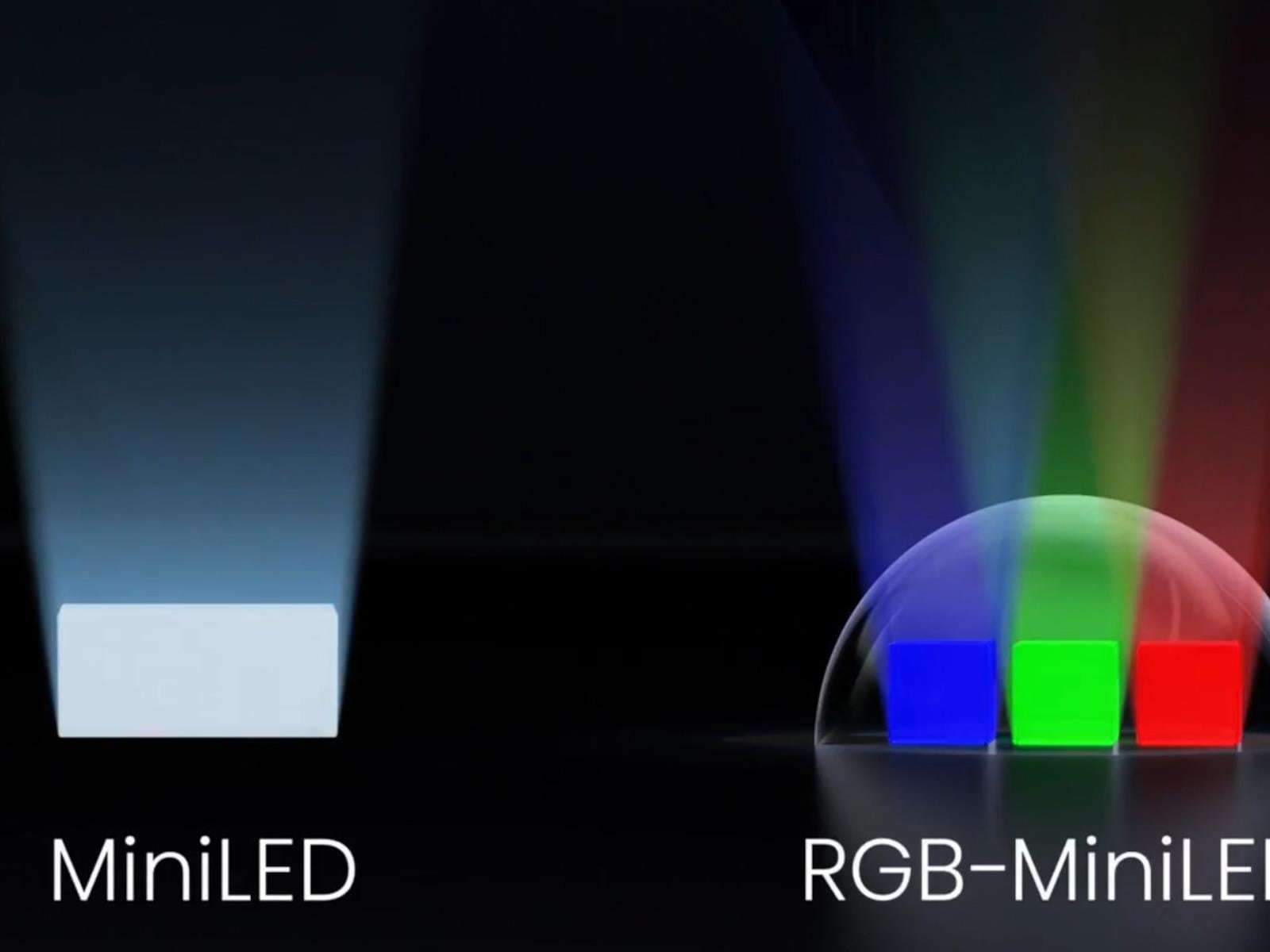
CES 2026 will be the launching pad for lots of new hardware, including a new wave of enhanced Mini LED TVs, which manufacturers are branding in a variety of ways. Some companies will call them “true color TVs”, while others are being more literal — like Hisense — and calling out RGB Mini LED technology specifically, or using the Micro RGB
Here’s the first real look at the Retroid Pocket 6 running PS2 games
The Retroid Pocket 6 may have gotten off to a rocky start, but the gaming handheld is officially completed and going to see its first shipments soon. The handheld maker revealed the final product shots of the Retroid Pocket 6 in black and orange on X. Along with in-person product pics, Retroid revealed gameplay videos of its handheld, running emulation of PlayStation 2 games.
For those looking to relive some classic Nintendo or PlayStation titles, the Retroid Pocket 6 offers a great entry point into the retro handheld world since it can emulate games up to Nintendo Switch and PS2. However, Retroid did have some initial blowback about its design and decided to go back to the drawing board. Following the early criticisms, Retroid decided to add an option for customers to choose between having the D-pad or a thumbstick at the top of the handheld’s left side.
Retroid
The problems persisted for Retroid, as the handheld maker had to then cut short the early bird pricing thanks to the widespread memory shortage. Instead of offering the handheld for $209 until January, Retroid removed the discount in late December, leaving new buyers paying the full retail price of $229. However, the internal specs remained the same, with a Snapdragon 8 Gen 2 processor, up to 12GB of memory and up to 256GB of storage that’s expandable with a TF card slot.
Despite the hiccups, Retroid looks ready to start shipments of its latest retro gaming handheld as evidenced by the new photos and videos. According to the website, the first batch of Retroid Pocket 6 preorders are due to start shipping in January. Second bath preoders are still available on Retroid’s website, which are expected to get to customers in March.
This article originally appeared on Engadget at https://www.engadget.com/gaming/heres-the-first-real-look-at-the-retroid-pocket-6-running-ps2-games-193624145.html?src=rss
Waymo Updates Vehicles to Better Handle Power Outages – But Still Faces Criticism
Waymo explained this week that its self-driving car technology is already “designed to handle dark traffic signals,” and successfully handled over 7,000 last Saturday during San Francisco’s long power outage, properly treating those intersections as four-way stops. But while during the long outage their cars sometimes experienced a “backlog” when waiting for confirmation checks (leading them to freeze in intersections), Waymo said Tuesday they’re implementing “fleet-wide updates” to provide their self-driving cars “specific power outage context, allowing it to navigate more decisively.”
Ironically, two days later Waymo paused their service again in San Francisco. But this time it was due to a warning from the National Weather Service about a powerful storm bringing the possibility of flash flooding and power outages, reports CNBC. They add that Waymo “didn’t immediately respond to a request for comment, or say whether regulators required its service pause on Thursday given the flash flood warnings.” And they also note Waymo still faces criticism over last Saturday’s incident:
The former CEO of San Francisco’s Municipal Transit Authority, Jeffrey Tumlin, told CNBC that regulators and robotaxi companies can take valuable lessons away from the chaos that arose with Waymo vehicles during the PG&E power outages last week. “I think we need to be asking ‘what is a reasonable number of [autonomous vehicles] to have on city streets, by time of day, by geography and weather?'” Tumlin said. He also suggested regulators may want to set up a staged system that will allow autonomous vehicle companies to rapidly scale their operations, provided they meet specific tests. One of those tests, he said, would be how quickly a company can get their autonomous vehicles safely out of the way of traffic if they encounter something that is confusing like a four-way intersection with no functioning traffic lights.
Cities and regulators should also seek more data from robotaxi companies about the planned or actual performance of their vehicles during expected emergencies such as blackouts, floods or earthquakes, Tumlin said.


Read more of this story at Slashdot.
Open Source Initiative Estimates the ‘Top Open Source Licenses in 2025’
The nonprofit Open Source Initiative offers “enriched” license pages with “relevant metadata to provide deeper insights and better support”.
So which pages got the most pageviews in 2025? The MIT license, Apache 2.0 license, BSD licenses (3-clause and 2-clause), and GNU General Public license:
mit
(1.5M)
apache-2-0
(344k)
bsd-3-clause
(214k)
bsd-2-clause
(128k)
gpl-2-0
(76k)
gpl-3-0
(55k)
isc-license-txt
(35k)
lgpl-3-0
(34k)
OFL-1.1
(31k)
lgpl-2-1
(24k) . .
From the Open Source Initiative’s announcement:
Please note that these are aggregated pageviews from actual humans along the year of 2025… Actual humans (presumably) because the number of requests by bots or crawlers is several orders of magnitude higher (e.g. requests just for the MIT license are on the range of 10M per month).
We do provide an API service that gives access to the canonical list of OSI Approved Licenses — this is a very new service, which hopefully will be adopted by automated requests from CI/CD pipelines. One final observation is that the number of human pageviews is likely higher because we are using Plausible as our data source and a high percentage of our target audience uses Ad blockers, which by design are not accounted by Plausible. Users from China are also likely undercounted by Plausible for the same reason.


Read more of this story at Slashdot.
Installing and Using Wget on Linux Like a Pro
In this article, you will learn what the wget command is, its features, how to install it on your Linux system, and its usage (with practical examples).
Stardew Valley players on the Nintendo Switch 2 get a free upgrade
Stardew Valley is truly the gift that keeps on giving. Fans of the farm life simulator, specifically those who already own it for the Nintendo Switch 2, can download a free upgrade that introduces new features and multiplayer modes. However, fans have reported some bugs following the free release, and Eric Barone, the game’s developer that’s better known as ConcernedApe, is working on fixes.
If you have Stardew Valley on the Switch 2, you can download the Upgrade Pack that introduces mouse controls to make it easier to place furniture and organize your inventory. The upgrade also adds local split-screen co-op for up to four players and online multiplayer that maxes out at eight players. On top of the co-op modes, the free content pack includes Game Share compatibility, meaning only one player needs a copy of Stardew Valley to share it with three others.
This Upgrade Pack may not have as much content as a numbered update, but some players are already reporting bugs. According to user accounts, the online multiplayer mode isn’t working, while other reports noted that some crafting recipes had inaccurate material requirements or quantities. In a post on X, Barone said that he’s taking “full responsibility for this mistake” and that the development team “will fix this as soon as possible.” On top of addressing the bugs from the latest Upgrade Pack, Barone and the rest of the development team are also working on the upcoming 1.7 update for Stardew Valley, while Haunted Chocolatier is still under development.
This article originally appeared on Engadget at https://www.engadget.com/gaming/nintendo/stardew-valley-players-on-the-nintendo-switch-2-get-a-free-upgrade-174849697.html?src=rss
Japan Votes to Restart Fukushima Nuclear Plant 15 Years After Its Meltdown
The 2011 meltdown at Fukushima’s nuclear plant “was the world’s worst nuclear disaster since Chernobyl in 1986,” CNN remembers.
But this week Japanese authorities “have approved a decision to restart the world’s biggest nuclear power plant,” reports CNN, “which has sat dormant for more than a decade following the Fukushima nuclear disaster.”
Despite nerves from many local residents, the Niigata prefectural assembly, home to the Kashiwazaki-Kariwa plant, approved a bill on Monday that clears the way for utility company Tokyo Electric Power Company (TEPCO) to restart one of the plant’s seven reactors. The company plans to bring the No. 6 reactor back online around January 20, Japan’s public broadcaster NHK reported…
Following the [2011] disaster, Japan shut down all 54 of its nuclear power stations including Kashiwazaki-Kariwa, which sits in the coastal and port region of Niigata about 320 kilometers (200 miles) north of Tokyo on Japan’s main island of Honshu. Japan has since restarted 14 of the 33 nuclear reactors that remain operable, according to the World Nuclear Association. The Niigata plant will be the first to reopen under the operation of TEPCO, the company that ran the Fukushima Daiichi power station. It has been trying to reassure residents of the restart plan is safe…
About 60-70% of Japan’s power generation comes from imported fossil fuels, which cost the country about 10.7 trillion yen ($68 billion) last year alone… Japan is the world’s fifth-largest emitter of carbon dioxide, after China, the United States, India and Russia, according to the International Energy Agency. But it has committed to reaching net zero emissions by 2050, and renewable energy was at the center of its latest energy plan published earlier this year, with a push for greater investments in solar and wind. The country’s energy demands are also expected to increase in the coming years due to a boom in energy-hungry data centers that power AI infrastructure. To achieve its energy and climate goals, Japan aims to double the share of nuclear power in its electricity mix to 20% by 2040…
On its website, TEPCO said Kashiwazaki-Kariwa had undergone multiple inspections and upgrades and that the company had learned “the lessons of Fukushima.” The company said new seawalls and watertight doors would provide “stronger protection against tsunamis” and that mobile generators and more fire trucks would be on hand for “cooling support” in an emergency. It also said the plant now had “upgraded filtering systems designed to control the spread of radioactive materials.”
A survey published by the prefecture in October “found 60% of residents did not think conditions for the restart had been met,” reports Reuters, adding that “Nearly 70% were worried about TEPCO operating the plant.”


Read more of this story at Slashdot.
Japan Votes to Restart World’s Biggest Nuclear Plant 15 Years After Fukushima Meltdown
The 2011 meltdown at Fukushima’s nuclear plant “was the world’s worst nuclear disaster since Chernobyl in 1986,” CNN remembers.
But this week Japanese authorities “have approved a decision to restart the world’s biggest nuclear power plant,” reports CNN, “which has sat dormant for more than a decade following the Fukushima nuclear disaster.”
Despite nerves from many local residents, the Niigata prefectural assembly, home to the Kashiwazaki-Kariwa plant, approved a bill on Monday that clears the way for utility company Tokyo Electric Power Company (TEPCO) to restart one of the plant’s seven reactors. The company plans to bring the No. 6 reactor back online around January 20, Japan’s public broadcaster NHK reported…
Following the [2011] disaster, Japan shut down all 54 of its nuclear power stations including Kashiwazaki-Kariwa, which sits in the coastal and port region of Niigata about 320 kilometers (200 miles) north of Tokyo on Japan’s main island of Honshu. Japan has since restarted 14 of the 33 nuclear reactors that remain operable, according to the World Nuclear Association. The Niigata plant will be the first to reopen under the operation of TEPCO, the company that ran the Fukushima Daiichi power station. It has been trying to reassure residents of the restart plan is safe…
About 60-70% of Japan’s power generation comes from imported fossil fuels, which cost the country about 10.7 trillion yen ($68 billion) last year alone… Japan is the world’s fifth-largest emitter of carbon dioxide, after China, the United States, India and Russia, according to the International Energy Agency. But it has committed to reaching net zero emissions by 2050, and renewable energy was at the center of its latest energy plan published earlier this year, with a push for greater investments in solar and wind. The country’s energy demands are also expected to increase in the coming years due to a boom in energy-hungry data centers that power AI infrastructure. To achieve its energy and climate goals, Japan aims to double the share of nuclear power in its electricity mix to 20% by 2040…
On its website, TEPCO said Kashiwazaki-Kariwa had undergone multiple inspections and upgrades and that the company had learned “the lessons of Fukushima.” The company said new seawalls and watertight doors would provide “stronger protection against tsunamis” and that mobile generators and more fire trucks would be on hand for “cooling support” in an emergency. It also said the plant now had “upgraded filtering systems designed to control the spread of radioactive materials.”
A survey published by the prefecture in October “found 60% of residents did not think conditions for the restart had been met,” reports Reuters, adding that “Nearly 70% were worried about TEPCO operating the plant.”


Read more of this story at Slashdot.
Year In Review: 5 Biggest Tech Wins Of 2025, Plus Two Epic Fails

It’s been quite a year. We came into it struggling with a massive GPU shortage, and we’re coming out of it with a brutal memory shortfall. Microsoft largely lost the plot with both Windows and Xbox, and the President of the United States was at the center of one of the most notorious vaporware announcements of all time.
It wasn’t all bad,
Should Physicists Study the Question: What is Life?
An astrophysicist at the University of Rochester writes that “many” of his colleagues in physics “have come to believe that a mystery is unfolding in every microbe, animal, and human.” And it’s a mystery that:
– “Challenges basic assumptions physicists have held for centuries”
– “May even help redefine the field for the next generation”
– “Could answer essential questions about AI.”
In short, while physicists have favored a “reductionist” philosophy about the fundamental laws controlling the universe (energy, mattery, space, and time), “long-promised ‘theories of everything’ such as string theory, have not borne significant fruit:
There are, however, ways other than reductionism to think about what’s fundamental in the universe. Beginning in the 1980s, physicists (along with researchers in other fields) began developing new mathematical tools to study what’s called “complexity” — systems in which the whole is far more than the sum of its parts. The end goal of reductionism was to explain everything in the universe as the result of particles and their interactions. Complexity, by contrast, recognizes that once lots of particles come together to produce macroscopic things — such as organisms — knowing everything about particles isn’t enough to understand reality…
Physicists have always been good at capturing the essential aspects of a system and casting those essentials in the language of mathematics… Now those skills must be brought to bear on an age-old question that is only just getting its proper due: What is life? Using these skills, physicists — working together with representatives of all the other disciplines that make up complexity science — may crack open the question of how life formed on Earth billions of years ago and how it might have formed on the distant alien worlds we can now explore with cutting-edge telescopes. Just as important, understanding why life, as an organized system, is different at a fundamental level from all the other stuff in the universe may help astronomers design new strategies for finding it in places bearing little resemblance to Earth. Analyzing life — no matter how alien — as a self-organizing information-driven system may provide the key to detecting biosignatures on planets hundreds of light-years away.
Closer to home, studying the nature of life is likely essential to fully understanding intelligence — and building artificial versions. Throughout the current AI boom, researchers and philosophers have debated whether and when large language models might achieve general intelligence or even become conscious — or whether, in fact, some already have. The only way to properly assess such claims is to study, by any means possible, the sole agreed-upon source of general intelligence: life. Bringing the new physics of life to problems of AI may not only help researchers predict what software engineers can build; it may also reveal the limits of trying to capture life’s essential character in silicon.


Read more of this story at Slashdot.
QNX Introduces a Self-Hosted Developer Desktop
QNX has released a self-hosted Developer Desktop for QNX 8.0, featuring an XFCE desktop on Wayland with native compilation support.