ASUS has informed its partners that prices on certain products will increase starting January 5, just days before the company is expected to unveil new hardware at CES. In a letter dated December 30 and obtained by Digitimes, the Taiwanese manufacturer pointed to rising costs for memory and storage components as the primary driver behind the adjustment.
The company specifically called out DRAM, NAND, and SSD pricing pressure stemming from what it described as “structural volatility” in the global supply chain tied to AI-driven demand. ASUS also cited shifts in capacity allocation by upstream suppliers and higher investment costs for advanced manufacturing processes.
Australia’s largest pension fund is planning to reduce its allocation to global equities this year, amid signs that the AI boom in the US stock market could be running out of steam. Financial Times: John Normand, head of investment strategy at the A$400bn (US$264bn) AustralianSuper, told the Financial Times that not only did valuations of big US tech companies look high relative to history, but the leverage being used to fund AI investment was increasing “very rapidly,” as was the pace of fundraising through mergers, venture capital and public listings.
“I can see some forces lining up that we are looking for less public equity allocation at some point next year. It’s the basic intersection of the maturing AI cycle with a shift towards Fed[eral Reserve] tightening in 2027,” Normand said in an interview.
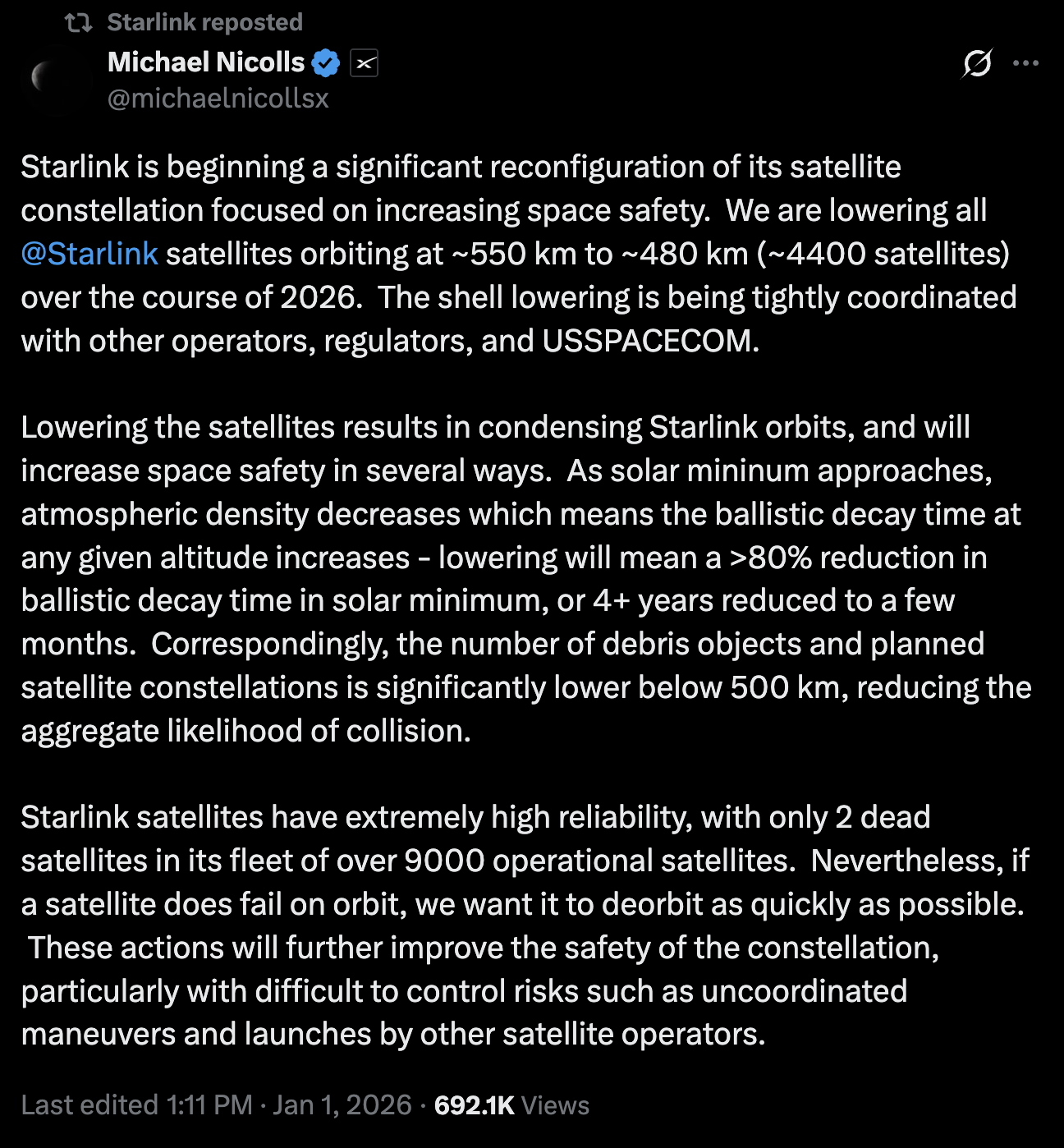
Starlink will lower the orbits of roughly 4,400 satellites this year as a safety measure, according to engineering VP, Michael Nicolls. In a post on X, Nicolls wrote that the company is “beginning a significant reconfiguration of its satellite constellation,” in which all satellites orbiting at around 550 kilometers (342 miles) will be lowered to around 480 km (298 miles). The move is intended to reduce the risk of collisions, putting the satellites in a region that’s less cluttered and will allow them to deorbit more quickly should an incident occur.
“Lowering the satellites results in condensing Starlink orbits, and will increase space safety in several ways,” Nicolls wrote, also pointing to the coming solar minimum — a period in the sun’s 11ish-year cycle when activity is lower — as one of the reasons for the move. The next solar minimum is expected to occur in the early 2030s. “As solar minimum approaches, atmospheric density decreases which means the ballistic decay time at any given altitude increases – lowering will mean a >80% reduction in ballistic decay time in solar minimum, or 4+ years reduced to a few months,” Nicolls wrote.
A screenshot of an X post by Starlink VP of engineering Michael Nicolls announcing that satellites orbiting at around 500 kilometers will be lowered to 480km
The announcement comes a few weeks after Starlink said one of its satellites had experienced an anomaly that created some debris and sent it tumbling. Just a few days earlier, Nicolls posted about a close call with a batch of satellites he said were launched from China seemingly without any attempt to coordinate with operators of existing satellites in the space. With his latest announcement, Nicolls added that lowering Starlink’s satellites “will further improve the safety of the constellation, particularly with difficult to control risks such as uncoordinated maneuvers and launches by other satellite operators.”
This article originally appeared on Engadget at https://www.engadget.com/science/space/starlink-is-lowering-thousands-of-satellites-orbits-to-reduce-risk-of-collisions-030509067.html?src=rss
MacRumors: Apple is not expected to release a standard iPhone 18 model this year, according to a growing number of reports that suggest the company is planning a significant change to its long-standing annual iPhone launch cycle.
Despite the immense success of the iPhone 17 in 2025, the iPhone 18 is not expected to arrive until the spring of 2027, leaving the iPhone 17 in the lineup as the latest standard model for over 18 months. This would mark the first time Apple skips an entire calendar year without releasing a new generation of its flagship non-Pro iPhone.
Samsung has upgraded its Freestyle portable projector for 2026. The company announced a new model, the Freestyle+, ahead of CES, touting twice the brightness of its predecessor at 430 ISO lumens, and AI-powered screen optimization features. As with Freestyles past, the Freestyle+ offers 180-degree rotation and 360-degree audio. This one also supports Q-Symphony so it’ll work with some Samsung soundbars. Samsung hasn’t revealed much else in the way of specs or pricing, but it’ll be showing off the Freestyle+ at CES 2026, so we’re likely to learn more details soon.
While previous iterations of Samsung’s compact projector offered automatic screen adjustment features, like auto focus and auto leveling, the Freestyle+ uses AI to take optimization a step further. With AI OptiScreen, as the company is calling it, the projector offers 3D auto keystone to fix distortion on uneven or non-flat surfaces, real-time focus when the projector is moved, automatic screen fit for compatible accessories and wall calibration to reduce visual distractions from the projection surface. It’ll also support Samsung’s Vision AI Companion.
The company hasn’t announced a specific release date yet for the new projector, but says it’s targeting the first half of the year. It’ll be released in phases globally.
This article originally appeared on Engadget at https://www.engadget.com/home/home-theater/samsungs-latest-freestyle-portable-projector-is-brighter-and-smarter-014026804.html?src=rss
Back in November Steam on Linux use hit an all-time high at 3.2%. With the still increasing popularity around the Steam Deck powered by the Arch Linux based SteamOS, Linux gaming continuing to grow thanks to Steam Play (Proton), and excitement around the upcoming Steam Frame and Steam Machine hardware, the Linux gaming outlook continues to be positive. The Steam Survey results for December 2025 are out tonight and with just a tiny dip to Linux use…
Released back in November was Devuan 6.0 for Debian 13 without systemd dependence in order to provide “init freedom” with letting users instead opt for SysVinit, OpenRC, or Runit as the init system. Devuan 6.1 is out today as the newest stable point release…
Not every great distro makes a splash on the front page of DistroWatch or in mainstream coverage. These are the five Linux distros from 2025 that we think merit a closer look.
Apple’s Chinese manufacturing partner Luxshare halted production of the Vision Pro headset at the start of 2025, according to market research firm IDC, after the device shipped 390,000 units during its 2024 launch year. The $3,499 headset has also seen its digital advertising budget cut by more than 95% year to date in the US and UK, according to market intelligence group Sensor Tower.
IDC expects Apple to ship just 45,000 new units in the fourth quarter of 2025. Apple launched an upgraded M5 version in October featuring a more powerful chip, extended battery life, and a redesigned headband. The company sells the device directly in 13 countries and did not expand availability in 2025.
Every human body contains a small population of cells that are not genetically its own — cells that crossed the placenta during pregnancy and that persist for decades after birth. These “microchimeric” cells, named after the lion-goat-serpent hybrid of Greek mythology, have been found in every organ studied so far, though they are exceedingly rare: one such cell exists for every 10,000 to 1 million of a person’s own cells.
The cells were first noticed in the late 1800s when pathologist Georg Schmorl described placenta-like “giant cells” in the lungs of people who had died from eclampsia. In 1969, researchers detected Y-chromosome-containing white blood cells in people who would later give birth to boys. For more than two decades, scientists presumed these cells were temporary. That changed in 1993 when geneticist Diana Bianchi found Y-chromosome cells in women who had given birth to sons up to 27 years earlier.
The cells appear to have regenerative properties, transforming into blood vessels or skin cells to promote wound healing. They also challenge a central assumption of immunology — that the immune system classifies cells as either “self” or “non-self” and rejects foreign material. Microchimeric cells should trigger rejection but do not. Higher-than-typical concentrations have been found in people with autoimmune conditions including diabetes, lupus, and scleroderma.
IceWM 4.0 lightweight window manager has been released today as a major update that introduces exciting new features, new options, new commands, as well as many improvements and bug fixes.
Costco’s consistency — from its $1.50 hot dog and drink combo to its functional shopping carts and satisfied employees — has produced what The Atlantic calls a “cultlike loyalty” among members at more than 600 locations across the U.S.
Its annual membership costs $65. The model traces back to Fedco, a nonprofit wholesale collective for federal employees founded in Los Angeles in the 1940s. Costco’s private label Kirkland Signature has become one of the world’s largest consumer packaged goods brands while maintaining deliberately understated branding. The company relies on word-of-mouth marketing from satisfied members rather than traditional advertising.
Atlantic staff writer Jake Lundberg, who shops at the Granger, Indiana location, describes the stores as spaces of “cooperation, courtesy, and grown-ups mostly acting like grown-ups.” Shoppers follow unwritten rules: move along, don’t block the way, step aside to check your phone. Checkout lines form orderly queues. The exceptions come near sample stations and before major holidays, when spatial awareness and common courtesy break down.
Marvel Studios decided to ring in the new year with a fresh trailer for Wonder Man, its eight-episode miniseries premiering later this month on Disney+. Part of the MCU’s Phase Six, the miniseries was created by Destin Daniel Cretton (Shang-Chi and the Legend of Five Rings) and Andrew Guest (Hawkeye), with Guest serving as showrunner.
As previously reported, Yahya Abdul-Mateen II stars as Simon Williams, aka Wonder Man, an actor and stunt person with actual superpowers who decides to audition for the lead role in a superhero TV series—a reboot of an earlier Wonder Man incarnation. Demetrius Grosse plays Simon’s brother, Eric, aka Grim Reaper; Ed Harris plays Simon’s agent, Neal Saroyan; and Arian Moayed plays P. Clearly, an agent with the Department of Damage Control. Lauren Glazier, Josh Gad, Byron Bowers, Bechir Sylvain, and Manny McCord will also appear in as-yet-undisclosed roles
Rounding out the cast is Ben Kingsley, reprising his MCU role as failed actor Trevor Slattery. You may recall Slattery from 2013’s Iron Man 3, hired by the villain of that film to pretend to be the leader of an international terrorist organization called the Ten Rings.Slattery showed up again in 2021’s Shang-Chi and the Legend of the Ten Rings,rehabilitated after a stint in prison; he helped the titular Shang-Chi (Simu Liu) on his journey to the mythical village of Ta Lo.
Iran is offering to sell advanced weapons systems including ballistic missiles, drones and warships to foreign governments for cryptocurrency, in a bid to use digital assets to bypass western financial controls. From a report: Iran’s Ministry of Defence Export Center, known as Mindex, says it is prepared to negotiate military contracts that allow payment in digital currencies, as well as through barter arrangements and Iranian rials, according to promotional documents and payment terms analysed by the Financial Times.
The offer, introduced during the past year, appears to mark one of the first known instances in which a nation state has publicly indicated its willingness to accept cryptocurrency as payment for the export of strategic military hardware. Mindex, a state-run body responsible for Iran’s overseas defence sales, says it has client relationships with 35 countries and advertises a catalogue of weapons that includes Emad ballistic missiles, Shahed drones, Shahid Soleimani-class warships and short-range air defence systems.
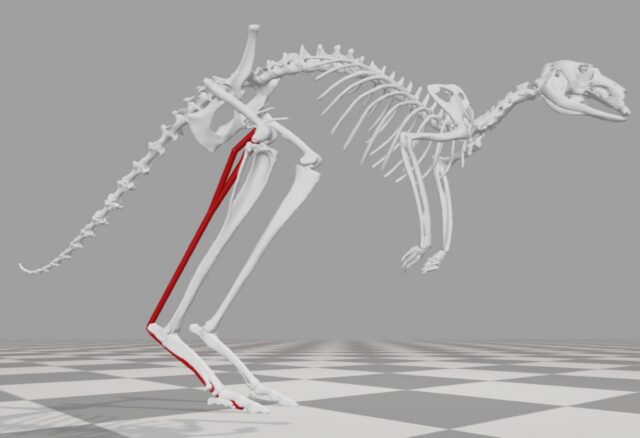
It’s a regrettable reality that there is never enough time to cover all the interesting scientific stories we come across each month. In the past, we’ve featured year-end roundups of cool science stories we (almost) missed. This year, we’ve experimented with a monthly collection. December’s list includes a fossilized bird that choked to death on rocks; a double-detonating “superkilonova”; recovering an ancient seafarer’s fingerprint; the biomechanics of kangaroo movement; and cracking a dark matter puzzle that stumped fictional physicists on The Big Bang Theory, among other tantalizing tidbits
Kangaroos and wallabies belong to a class of animals called macropods, with unique form and style of movement. Their four limbs and tail all contact the ground at slow speeds, while they use a hopping gait at higher speeds. Typically, high-speed movements are more energy-intensive than slow-speed motion, but the opposite is true for macropods like kangaroos; somehow the hopping speed and energy cost become uncoupled. According to a paper published in the journal eLife, this may be due to changes in a kangaroo’s posture at higher hopping speeds.
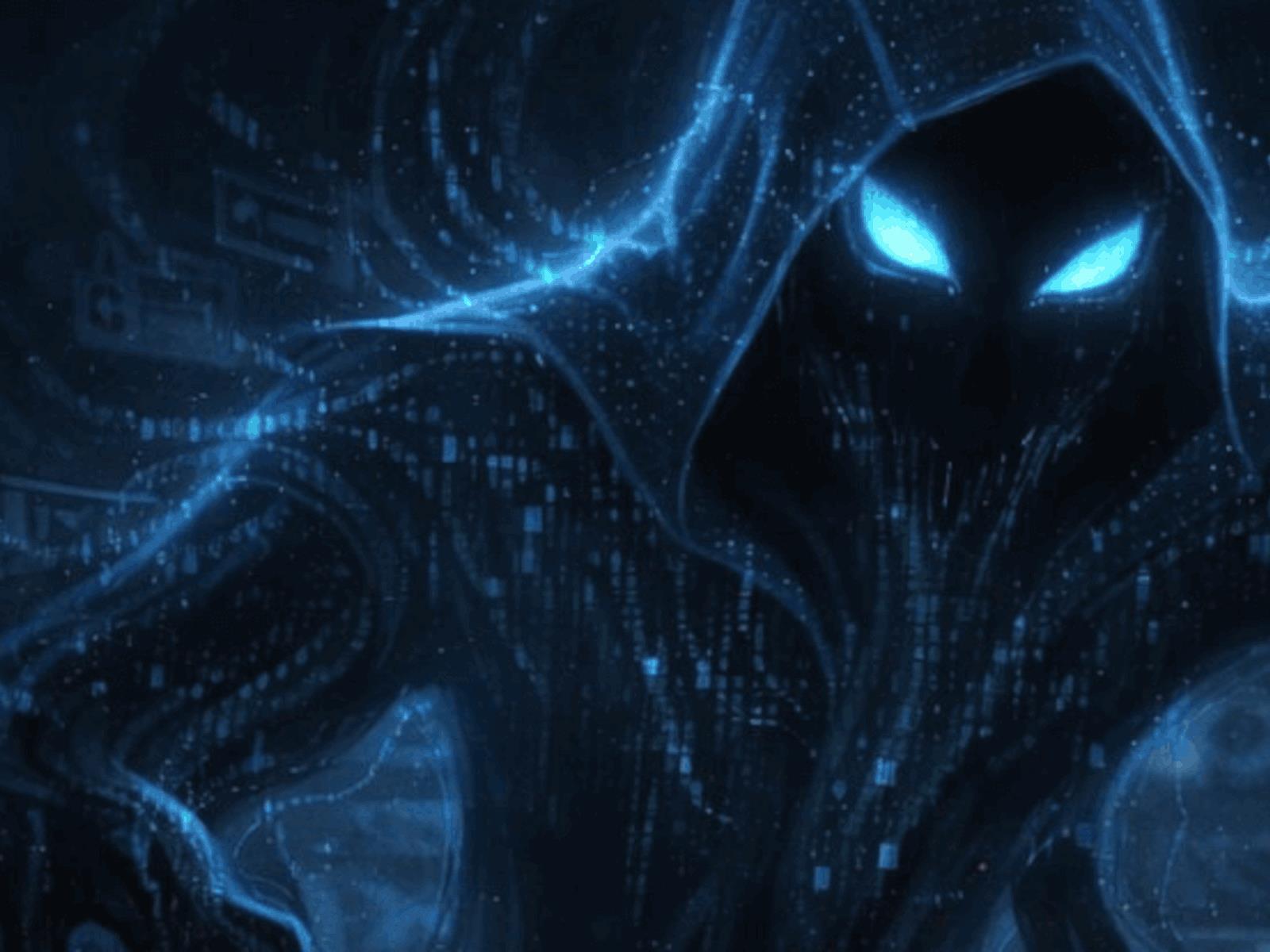
The security researchers at Koi have uncovered a bombshell—a coordinated spyware campaign across 100+ Google Chrome, Microsoft Edge, and Mozilla FireFox extensions, which function legitimately but (eventually) exhibit malicious behavior tied to a threat actor called DarkSpectre. This behavior includes stripping security protections, installing