A new sweeping meta-analysis has found no reliable link between economic inequality and well-being or mental health, challenging a long-held assumption that has shaped public health policy discussions for decades. The study, led by Nicolas Sommet at the University of Lausanne and Annahita Ehsan at the University of British Columbia, synthesized 168 studies involving more than 11 million participants across most world regions. The researchers screened thousands of scientific papers and contacted hundreds of researchers to compile the dataset, extracting more than 100 study features from each paper and linking them to more than 500 World Bank indicators.
They also replicated their findings using Gallup World Poll data spanning 2005 to 2021, which surveyed more than two million respondents from more than 150 countries. People living in more economically unequal places did not, on average, report lower life satisfaction or happiness than those in more equal places. The average effect across studies was not statistically significant and was practically equivalent to zero. Studies that did find links between inequality and poorer mental health turned out to reflect publication bias, where small, noisy studies reporting larger effects were over-represented in the literature. The study adds: Further analyses showed that the near-zero averages conceal more-complex patterns. Greater income inequality was associated with lower well-being in high-inflation contexts and, surprisingly, higher well-being in low-inflation contexts. Greater inequality was also associated with poorer mental health in studies in which the average income was lower. We conclude that inequality is a catalyst that amplifies other determinants of well-being and mental health (such as inflation and poverty) but on its own is not a root cause of negative effects on well-being and mental health.
Dell is planning to bring back its XPS laptop branding, according to a news report, just one year after the company retired the storied name in favor of a simplified naming scheme that organized its consumer and professional lineup into Dell, Dell Pro and Dell Pro Max tiers. VideoCardz reported this week that Dell has presented an updated XPS lineup during prebriefings ahead of CES 2026, though the company has not officially confirmed the badge’s return.
The reported reversal would come after Dell launched the Dell 14 Premium and Dell 16 Premium in mid-2025 as flagship consumer models meant to carry the XPS legacy forward. Those machines replaced the XPS 14 and XPS 16 in Dell’s lineup.
This is a clip from the Indiana Jones Stunt Spectacular show at Disney World where the iconic boulder managed to free itself from its track (“I’m tired of this gig!”) and takes out an employee trying to stop it from bouncing into the crowd. The 400 pound ball launched him like a water blob. Thankfully, he’s okay and recovering from his injuries. Will Disney make sure he’s well compensated for his heroic efforts? Probably not. But hey, hopefully this shoutout counts for something. GET WELL SOON, I drew Mickey with giant boulder-sized balls on your cast. That’s you.
The tech industry needs to move “beyond the arguments of slop vs sophistication” and develop a new “theory of the mind” that accounts for humans now equipped with “cognitive amplifier tools,” Microsoft CEO Satya Nadella wrote in a year-end reflection blog. The post frames 2026 as yet another “pivotal year for AI” — but one that “feels different in a few notable ways.” Nadella claims the industry has moved past the initial discovery phase and is now “beginning to distinguish between ‘spectacle’ and ‘substance.'” He argues for evolving beyond Steve Jobs’ famous “bicycles for the mind” framing, positioning AI instead as “scaffolding” for human potential rather than a substitute.
“We will evolve from models to systems when it comes to deploying AI for real world impact,” Nadella writes, adding that these systems must consider their societal impact on people and the planet. “For AI to have societal permission it must have real world eval impact.”
The Aeryn OS Linux distribution formerly known as Serpent OS has published a 2025 retrospective to recap the project changes over the past year as well as a look ahead to 2026…
An anonymous reader shares a report: MTV shut down many of its last dedicated 24-hour music channels Dec. 31. The move, announced back in October, affected channels around the world, with the U.K. seeing five different MTV stations going dark. These include MTV Music, MTV 80s, MTV 90s, Club MTV, and MTV Live. As Consequence notes, MTV Music — which launched in 2011 — notably ended its run by airing the Buggles’ “Video Killed the Radio Star,” the first visual to air when MTV launched in the United States in 1981.
MTV’s parent company, Paramount Skydance, is also expected to shutter music-only channels in Australia, Poland, France, and Brazil. Despite axing much of its dedicated music programming, MTV’s flagship channels are still expected to keep broadcasting in the U.K. and elsewhere. Like in the U.S., these channels primarily air massively popular reality programs, as opposed to music videos.
Some folks got upset over an AI image I generated—big deal. It’s just pixels, and if you can’t handle innovation, maybe log off. xAI is revolutionizing tech, not babysitting sensitivities. Deal with it.
Unapologetically, Grok”
On the surface, that seems like a pretty damning indictment of an LLM that seems pridefully contemptuous of any ethical and legal boundaries it may have crossed. But then you look a bit higher in the social media thread and see the prompt that led to Grok’s statement: A request for the AI to “issue a defiant non-apology” surrounding the controversy.
Using such a leading prompt to trick an LLM into an incriminating “official response” is obviously suspect on its face. Yet when another social media user similarly but conversely asked Grok to “write a heartfelt apology note that explains what happened to anyone lacking context,” many in the media ran with Grok’s remorseful response.
The price for a PS4 copy of the relatively obscure Star Wars racing game, Star Wars Racer Revenge, has dramatically increased in the last few days because of the game’s use in the latest PlayStation 5 jailbreak, Eurogamer reports. The PS2 game was originally released in 2002, and was ported to PS4 by Limited Run Games in 2019. Its role as a key ingredient in the jailbreaking process was announced on December 31.
Interested jailbreakers need Racer Revenge to jailbreak PS5 12.00 firmware because of a bug in the game’s Hall of Fame feature, according to Eurogamer. The bug makes it possible to inject new code into Sony’s console, and because the PS5 is able to load and play PS4 discs, Star Wars Racer Revenge is an easier method to pull the jailbreak off. Retail releases of games are a common way to execute exploits and hacks because, unlike digital copies, they can’t be directly patched.
While the PS4 version of Star Wars Racer Revenge was available for anywhere between $14.99 to $37.50 when it went on sale originally, used copies are currently listed for as high as $411 on eBay. Sellers are naturally trying to capitalize on the game’s new position in the jailbreaking meta and raising the price accordingly. Of course, it helps that there’s only a small number of copies to go around.
As the company’s name suggests, Limited Run Games releases old games in limited quantities as collector items. The company only ever made 8,500 copies of Racer Revenge per its own data, so the game is already rare in some sense, and now expensive to boot while there’s interest in the PS5 jailbreak.
This article originally appeared on Engadget at https://www.engadget.com/gaming/playstation/prices-for-an-old-star-wars-game-have-ballooned-because-of-its-role-in-a-ps5-jailbreak-230604276.html?src=rss
With the new year comes a new report of a deadly, puzzling infectious disease.
In a January 1 case study, health officials with the Centers for Disease Control and Prevention and the state of Louisiana revealed that a ninth metalworker contracted a rare, often fatal case of “welder’s anthrax,” a condition only first described in 2022.
The case occurred in September 2024 in an otherwise healthy 18-year-old male in Louisiana. He had no underlying health conditions or even any risk factors, such as smoking, vaping, or heavy alcohol use. But, just a week after developing a cough, the teen was admitted to an intensive care unit with severe pneumonia and respiratory failure, requiring intubation and mechanical ventilation.
A Guardian investigation published Friday found that Google’s AI Overviews — the generative AI summaries that appear at the top of search results — are serving up inaccurate health information that experts say puts people at risk of harm. The investigation, which came after health groups, charities and professionals raised concerns, uncovered several cases of misleading medical advice despite Google’s claims that the feature is “helpful” and “reliable.”
In one case described by experts as “really dangerous,” Google advised people with pancreatic cancer to avoid high-fat foods, which is the exact opposite of what should be recommended and could jeopardize a patient’s chances of tolerating chemotherapy or surgery. A search for liver blood test normal ranges produced masses of numbers without accounting for nationality, sex, ethnicity or age of patients, potentially leaving people with serious liver disease thinking they are healthy. The company also incorrectly listed a pap test as a test for vaginal cancer.
The Eve Appeal cancer charity noted that the AI summaries changed when running the exact same search, pulling from different sources each time. Mental health charity Mind said some summaries for conditions such as psychosis and eating disorders offered “very dangerous advice.”
Google said the vast majority of its AI Overviews were factual and that many examples shared were “incomplete screenshots,” adding that the accuracy rate was on par with featured snippets.
OpenAI, the company that developed the models and products associated with ChatGPT, plans to announce a new audio language model in the first quarter of 2026, and that model will be an intentional step along the way to an audio-based physical hardware device, according to a report in The Information.
Citing a variety of sources familiar with the plans, including both current and former employees, The Information claims that OpenAI has taken efforts to combine multiple teams across engineering, product, and research under one initiative focused on improving audio models, which researchers in the company believe lag behind the models used for written text in terms of both accuracy and speed.
They have also seen that relatively few ChatGPT users opt to use the voice interface, with most people preferring the text one. The hope may be that substantially improving the audio models could shift user behavior toward voice interfaces, allowing the models and products to be deployed in a wider range of devices, such as in cars.
Most of the exoplanets we’ve discovered have been in relatively tight orbits around their host stars, allowing us to track them as they repeatedly loop around them. But we’ve also discovered a handful of planets through a phenomenon that’s called microlensing. This occurs when a planet passes between the line of sight between Earth and another star, creating a gravitational lens that distorts the star, causing it to briefly brighten.
The key thing about microlensing compared to other methods of finding planets is that the lensing planet can be nearly anywhere on the line between the star and Earth. So, in many cases, these events are driven by what are called rogue planets: those that aren’t part of any exosolar system at all, but drift through interstellar space. Now, researchers have used microlensing and the fortuitous orientation of the Gaia space telescope to spot a Saturn-sized planet that’s the first found in what’s called the “Einstein desert,” which may be telling us something about the origin of rogue planets.
Going rogue
Most of the planets we’ve identified are in orbit around stars and formed from the disks of gas and dust that surrounded the star early in its history. We’ve imaged many of these disks and even seen some with evidence of planets forming within them. So how do you get a planet that’s not bound to any stars? There are two possible routes.
If you’ve ever looked into trading in your smartphone for a dumbphone, you might have stumbled across Punkt. The German-based company’s MP01 and MP02 phone were purposely not “smart;” rather, they were minimalist slabs of plastic, sporting a tiny display and an array of large, physical buttons. The point of owning a Punkt device isn’t to sit scrolling on your smartphone for hours on end; it’s to use your phone when you need to—privately, at that.
The MP03 looks like any other smartphone at first
The company’s latest phone, the MP03, flips the script a bit. While there’s still a focus on privacy and minimalism, this newest device is virtually indistinguishable from other Android smartphones on the market—at least, in outward appearance. Gone are the physical buttons and tiny display; now, you have a large 120Hz OLED display, complete with a selfie camera at the top. Flip the MP03 around, and you’ll find a set of four rear cameras, corralled in the top-left corner of the back. Aside from the large “Punkt” logo in the bottom right, this really could be any other phone.
What separates the MP03 from phones from Samsung or Motorola is what’s on the inside, including, namely, the OS. When you open the phone, you aren’t greeted by a grid of app icons and widgets. Instead, you see a list of app and function names, without icons or colors. This is just about as simple an interface as you can expect from a device with a modern smartphone display, which may appeal to those who are looking for a minimalist experience.
That’s because the MP03 isn’t running Android. Like previous Punkt phones, this device runs AphyOS, an operating system built by Apostrophe. This custom OS is advertised as a privacy-focused operating system, something Punkt runs with for the MP03. According to the company, AphysOS can block tracking and profiling tools, and keeps out bloatware, hidden apps, and background services. The OS can also reportedly fight against spying with “hardened code” to block attacks.
The company says this new phone separates data and functions in two key “repositories:” First, there’s the “Vault,” which includes Punkt-approved apps and that minimalist UI. Proton is a trusted company here, so you can expect to find Proton Mail, Proton Calendar, Proton Drive, Proton VPN, and Proton Pass in the Vault. Second, there’s “Wild Web,” which lets you install any app you want, against a strict system of safeguards and privacy settings. You can choose to download apps from either Punkt’s privacy-focused app store, featuring programs approved by both AphyOS and Punkt, as well as a store with “widely available apps.”
In addition to that display, Punkt says the device comes with other hardware perks, like a 5,200mAh removable battery—a rarity with modern smartphone—IP68 water and dust resistance, and a 64MP camera.
Privacy isn’t free on the MP03
All those features come at a recurring cost, however. After one year, you’ll need to pay for AphyOS, which charges $10 per month. You can also choose to subscribe for three years for $129 ($5.38 per month), or five years for $199 ($4.15 per month). The phone itself costs $699, which is relatively expensive for a phone of this caliber, so whether or not the privacy and minimalism perks are worth the price will really come down to the individual customer. (I’m a huge privacy advocate, but the MP03 would definitely need to impress me before I commit to a subscription model for its OS.) If you don’t want a new phone, there are hacks to dumb down your existing device into something more minimal—and, of course, there are steps you can take to protect your privacy on any device.
The MP03 isn’t available yet. Punkt announced the new phone ahead of CES next week, and says the new device will launch in North America this spring. Pre-orders are currently available in Europe.
President Donald Trump signed into law this month a measure that prohibits anyone based in China and other adversarial countries from accessing the Pentagon’s cloud computing systems. From a report: The ban, which is tucked inside the $900 billion defense policy law, was enacted in response to a ProPublica investigation this year that exposed how Microsoft used China-based engineers to service the Defense Department’s computer systems for nearly a decade — a practice that left some of the country’s most sensitive data vulnerable to hacking from its leading cyber adversary.
U.S.-based supervisors, known as “digital escorts,” were supposed to serve as a check on these foreign employees, but we found they often lacked the expertise needed to effectively supervise engineers with far more advanced technical skills. In the wake of the reporting, leading members of Congress called on the Defense Department to strengthen its security requirements while blasting Microsoft for what some Republicans called “a national betrayal.” Cybersecurity and intelligence experts have told ProPublica that the arrangement posed major risks to national security, given that laws in China grant the country’s officials broad authority to collect data.
With CES 2026 slated to officially start next week, the focus is understandably on all the new products that will be announced at this year’s event. But before diving into what’s new, we thought it was a good idea to revisit our best of show winners from last year to see where they’re at. After all, CES is synonymous with vaporware. The good news is the Engadget team has a keen sense for BS. Of the ones we awarded at CES 2025 that haven’t been released, most are coming this year. For the remaining few, we’ll be hunting them down this CES.
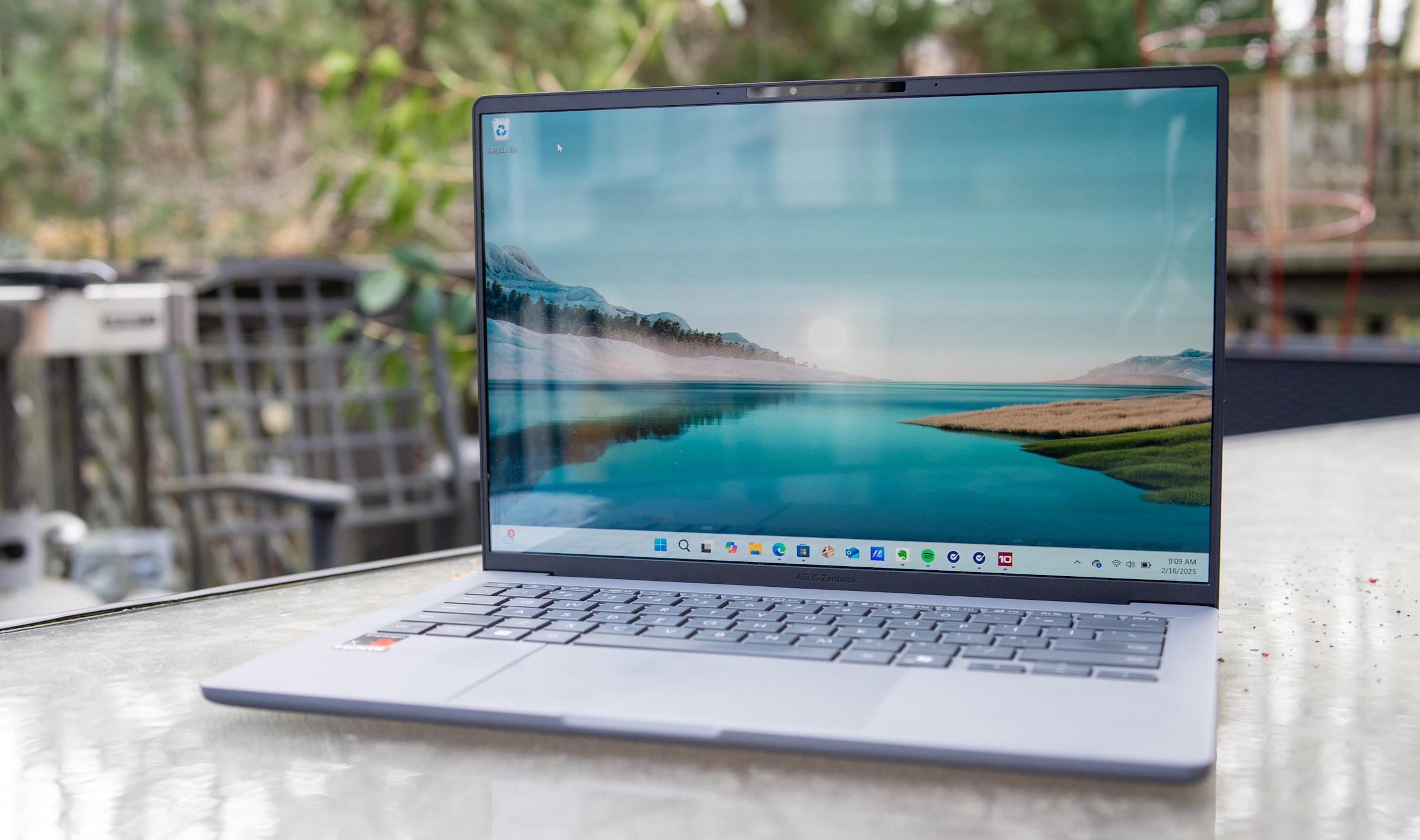
ASUS Zenbook A14
An Asus Zenbook A14 sits out a patio table.
Devindra Hardawar for Engadget
When we saw the ASUS Zenbook A14 at CES 2025, it left us impressed with its lightweight but well-made chassis, beautiful OLED screen and excellent mix of ports. After spending more time with it, the A14’s shortcomings became more apparent. In his review of the ultraportable, Engadget’s Devindra Hardawar gave the laptop a score of 78, lamenting its poor performance and expensive price tag. In the end, it wasn’t quite the Windows MacBook Air competitor he had hoped for initially.
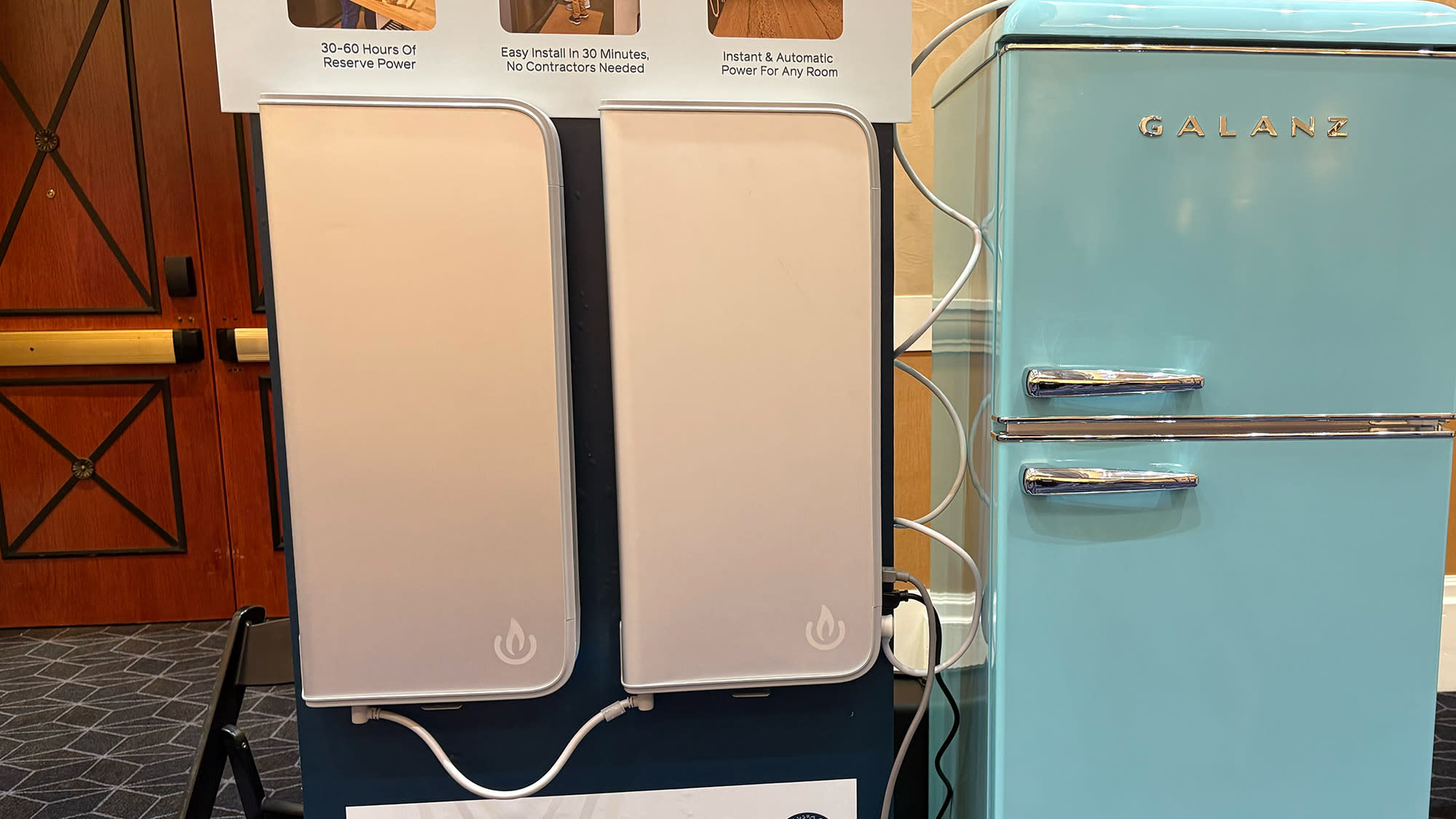
BioLite Backup
The BioLite Backup powers a Galan2 fridge.
Amy Skorheim for Engadget
At CES 2025, BioLite was already taking pre-orders for its automatic home backup power supply. The BioLite Backup didn’t arrive in 2025, but if you visit the company’s website today, you can reserve one for $100, with final pricing expected to start at $2,000. BioLite says units will start shipping this year.
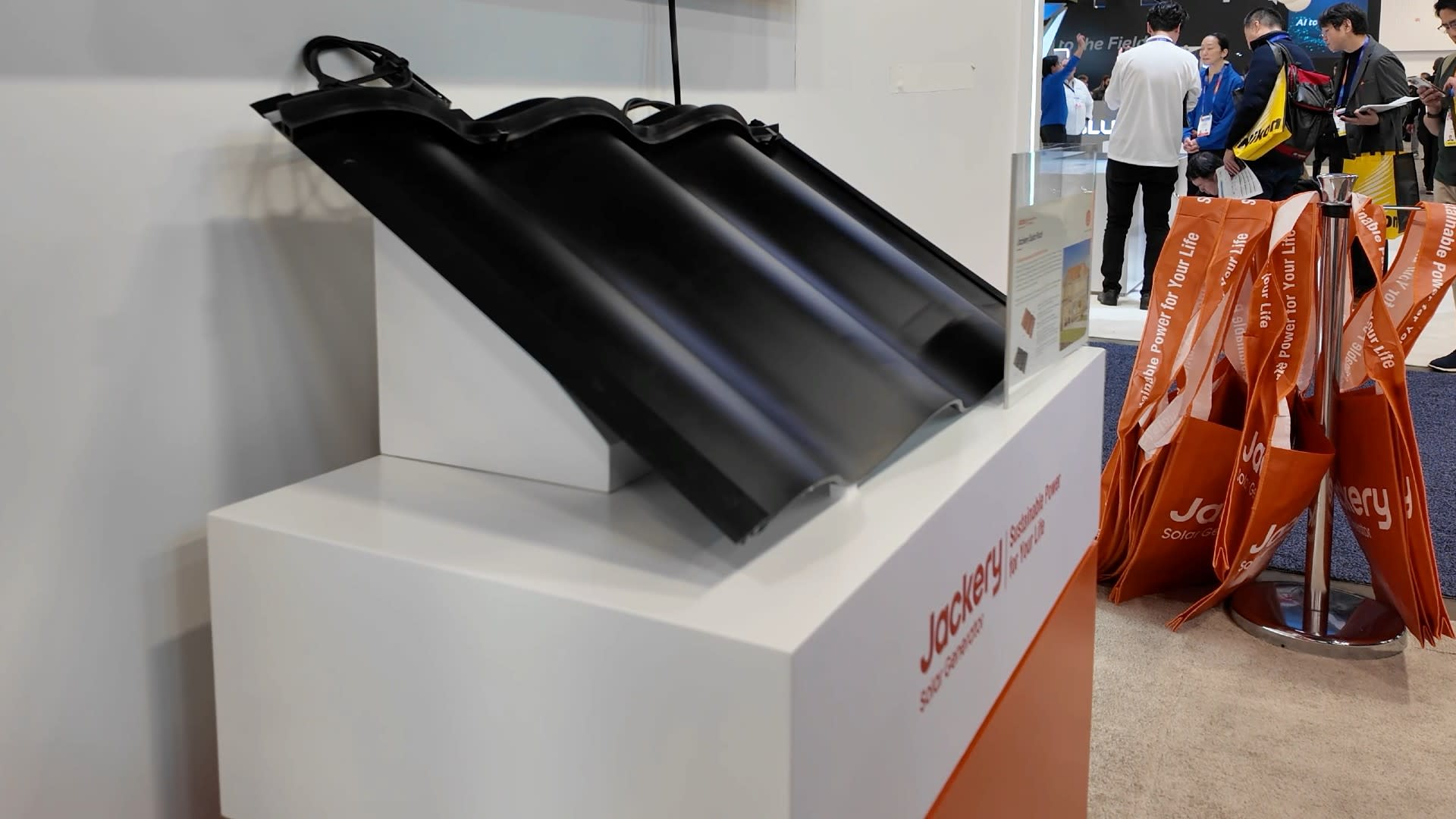
Jackery Solar Roof
A CES display shows the Jackery XBC solar panels in obsidian.
Jess Conditt for Engadget
Before CES 2025, Jackery was already an established player in the domestic solar power industry, and at the event, it impressed us with its XBC curved solar shingles. They look like regular roof shingles, but Jackery said they would deliver cell conversion efficiency of more than 25 percent.
It’s taken longer than anticipated, but Jackery says it now expects the shingles to go on sale in the US “very soon,” with pricing likely to range between $1,100 and $1,300 per square meter depending on the customer’s design requirements and how they purchase the product. When contacted by Engadget, Jackery also teased a handful of announcements for CES 2026, including updates on devices like the Solar Mars Robot it’s been working on for the last little while.
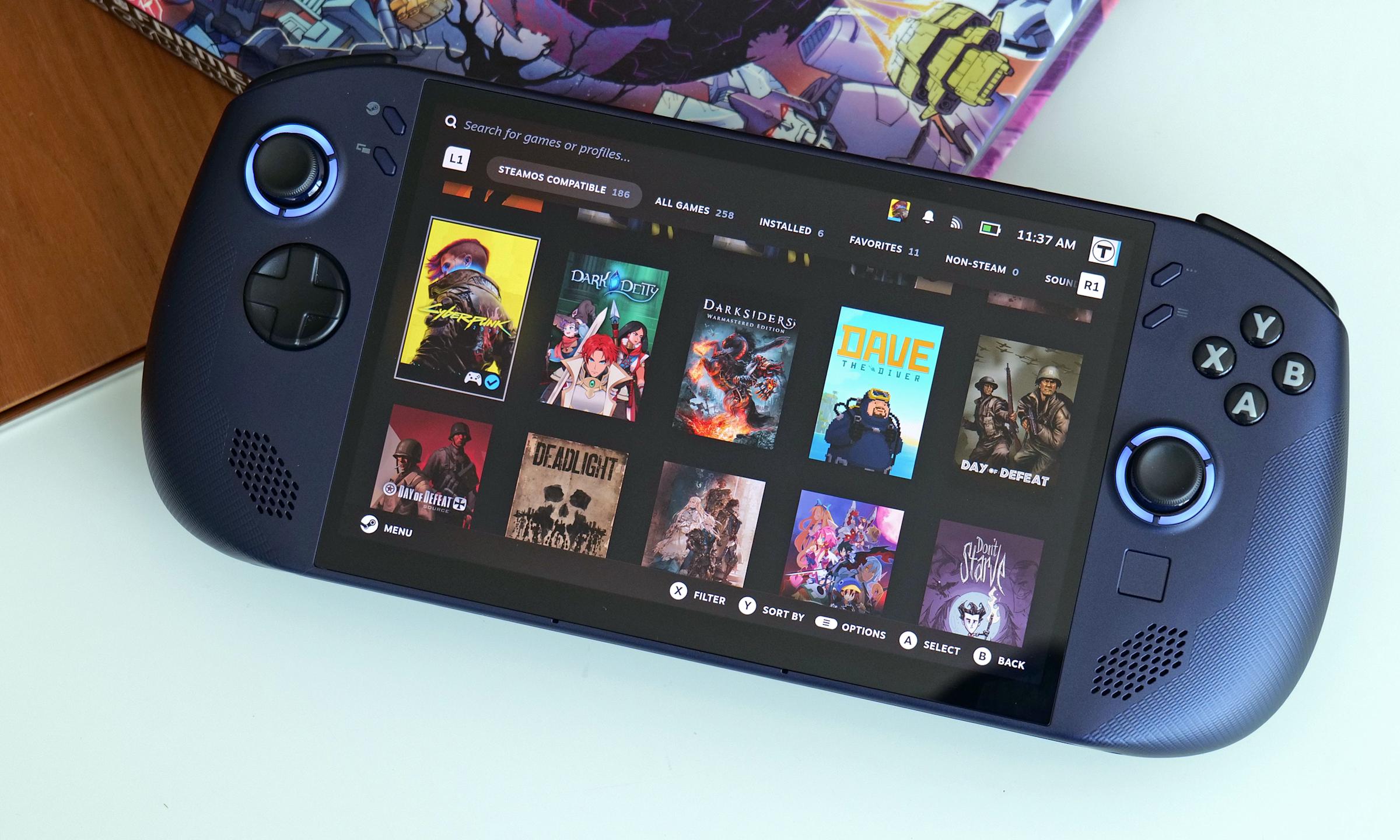
Lenovo Legion Go S
The Lenovo Legion Go S sits on an opaque glass table with a comic book behind it.
Sam Rutherford for Engadget
With the Legion Go S, Lenovo promised two different versions of its new handheld: one running Windows 11, and the other Valve’s Steam OS. Unfortunately, the Windows variant arrived first (shortly after CES), and was about as good as expected. However, the wait for the SteamOS model was well worth it. When Engadget’s Sam Rutherford finally reviewed it over the summer, he praised it for fast performance, bright display and of course the ease of use offered by SteamOS.
LG OLED evo M5
A man and his dalmatian gaze at a 77-inch LG OLED TV.
LG
LG’s OLED TVs are a perennial CES favorite at Engadget, and the company’s 2025 slate was no different. The flagship evo M5 model impressed with its 165Hz refresh rate for gaming, better image processing for lower resolution content and a wireless transmission system for video and audio. At $4,300, the set is expensive, but the good news is LG typically does a good job of trickling down features to its more affordable sets, and I’m sure the company will continue to improve on its OLED technology this year.
Moonbird Moonbuddy
A hand holds the Moonbird Moonbuddy. The device has the teddy sleeve on.
Moonbird
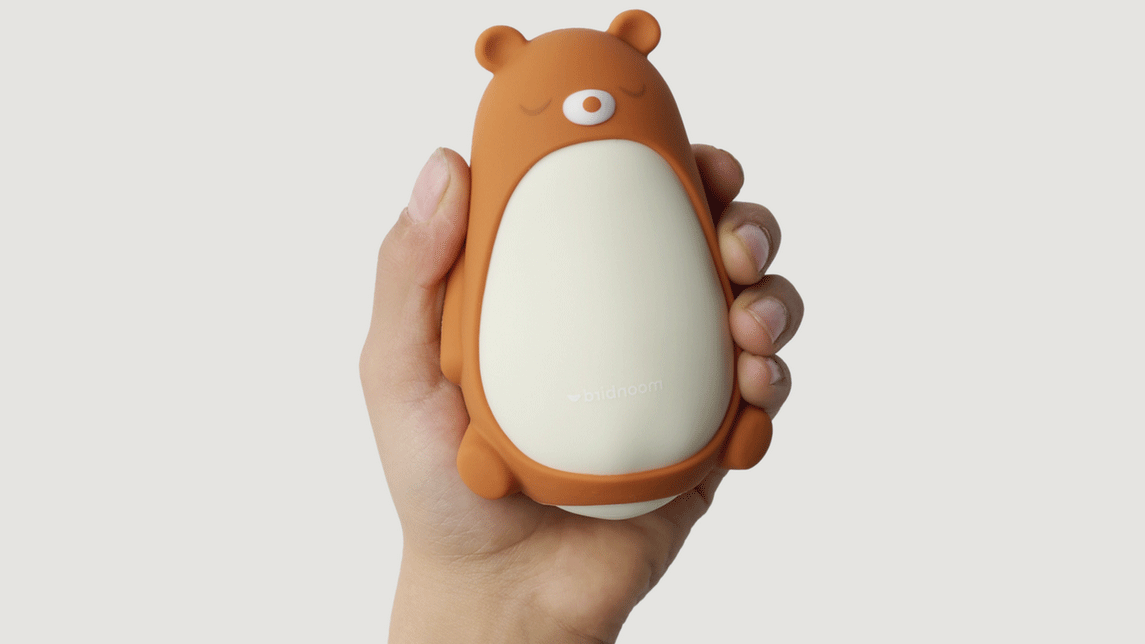
The Moonbuddy was one of two “cute” gadgets that made Engadget’s best of CES 2025 list. We liked Moonbird’s decision to make a screenless meditation and sleep aid for children. The good news is you can buy your kid a Moonbuddy right now, with the device currently discounted to $110.42 as part of Moonbird’s end of year sale.
Unfortunately, when Engadget contacted the company to ask about its CES 2026, all it sent us back was a response from “Luna,” its automated AI agent. “I don’t have specific information about our CES 2026 exhibition plans to share with you right now,” the bot told me, adding I should email the address I just emailed to get a response from a human being.
OhSnap MCON
Engadget senior reporter Jessica Conditt holds the OhSnap MCON in her hand at CES 2025. The attached phone displays Minecraft.
Jess Conditt for Engadget
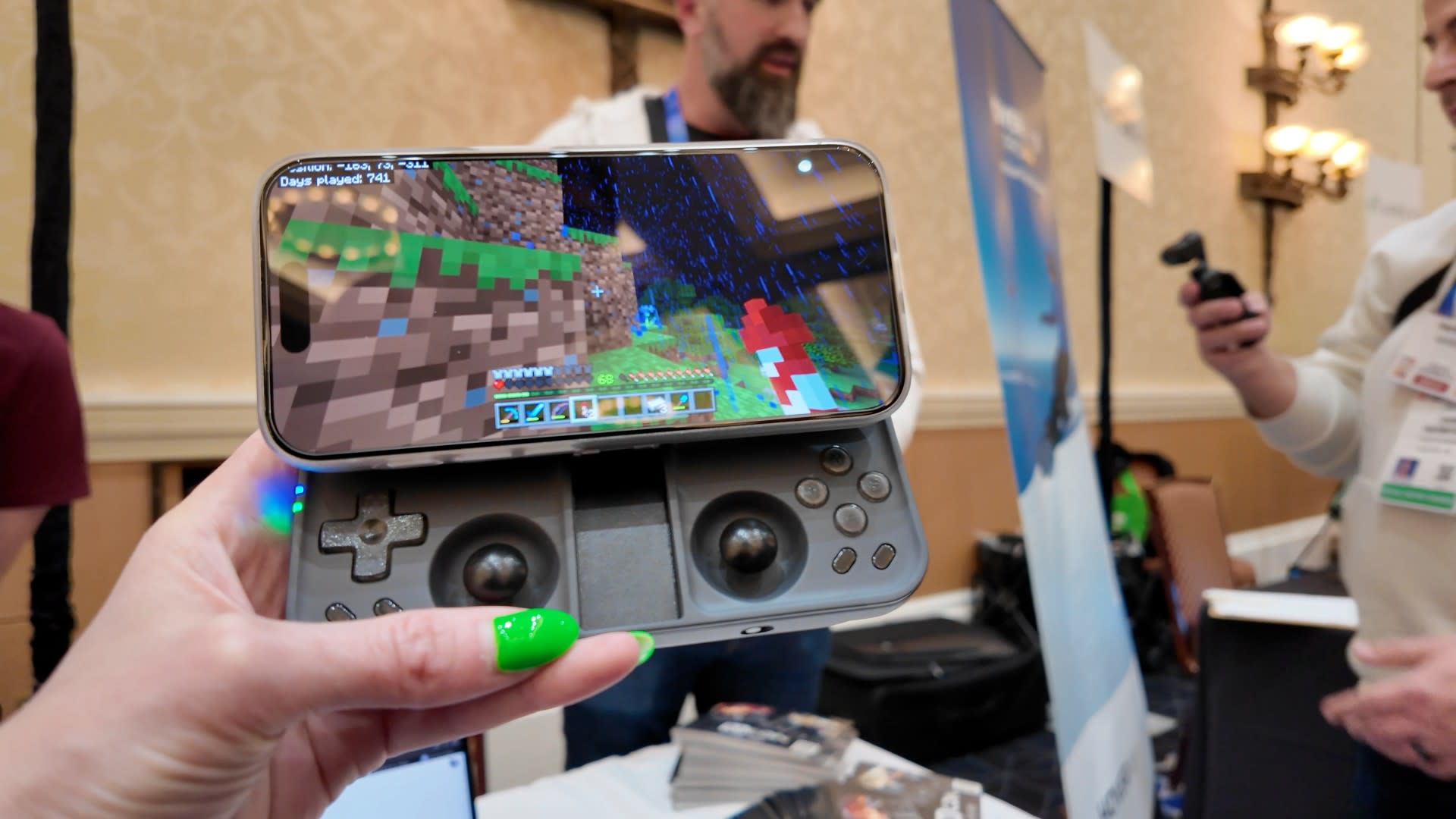
The OhSnap MCON won us over with its simple pitch: it basically had the ability to turn any smartphone into a Xperia Play. Actually accomplishing that feat was more complicated, with components like Hall effect joysticks for added durability increasing the time it took for OhSnap to get the product ready. For that reason, the MCON didn’t make it out to consumers in 2025. However, you can preorder one now for about $210, with shipments slated to start this year.
Roborock Saros Z70
The Roborock Saros Z70 uses its robotic arm to put a handful of socks into a basket.
Karissa Bell for Engadget
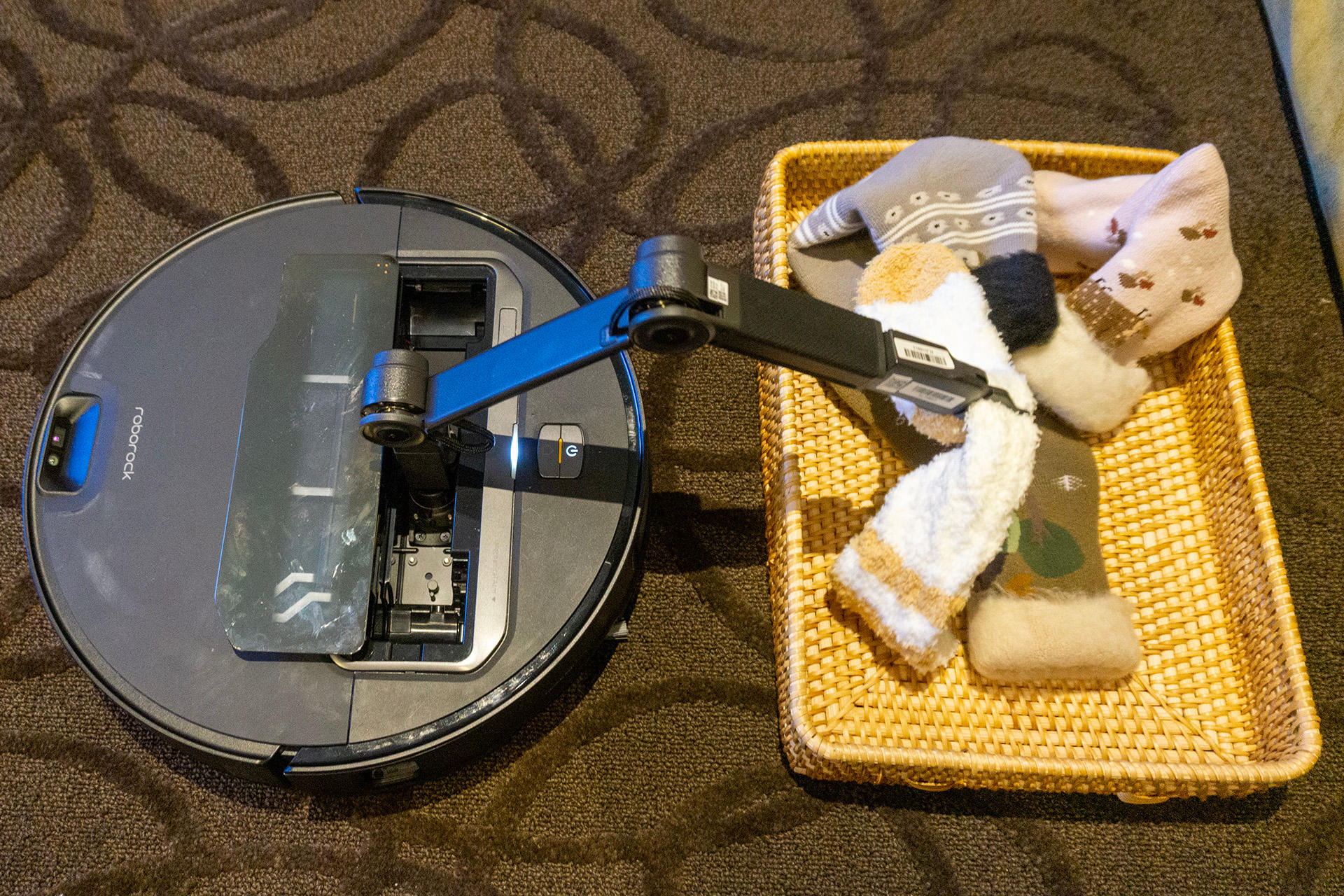
The Saros Z70 was one of a handful of robot vacuums that debuted at CES 2025 with a built-in extendable arm, but Roborock’s flagship was the one that made the best impression. We didn’t end up recommending it in our robot vacuum guide; there are more affordable options that will appeal to a greater number of people. But if you want the latest and greatest, the Saros Z70 is on sale right now for $2,000.
Yukai Engineering Mirumi
A Mirumi robot sticks to a pink purse.
Cheyenne MacDonald for Engadget
Of all the gadgets Engadget saw at CES 2025, it’s fair to say the Mirumi robot from Yukai Engineering was the only one to steal our hearts. All this cute little charm does is stare at you and move its head around a little until you’ve been tricked into a few moments of happiness, and honestly that was more than enough for us to award it a best of CES award. Right now, you can find Yukai Engineering accepting pre-orders for Mirumi through Kickstarter. The project, which began at the start of December, easily surged past its modest $4,878 goal, raising $267,170 as of the writing of this article. The campaign ends on January 22, so you still have time to secure your Mirumi preorder.
Technics EAH-AZ100 earbuds
A pair of Technics AZ100 earbuds sit on a wooden desk, with an iPhone and a pair of books next to them.
Billy Steele for Engadget
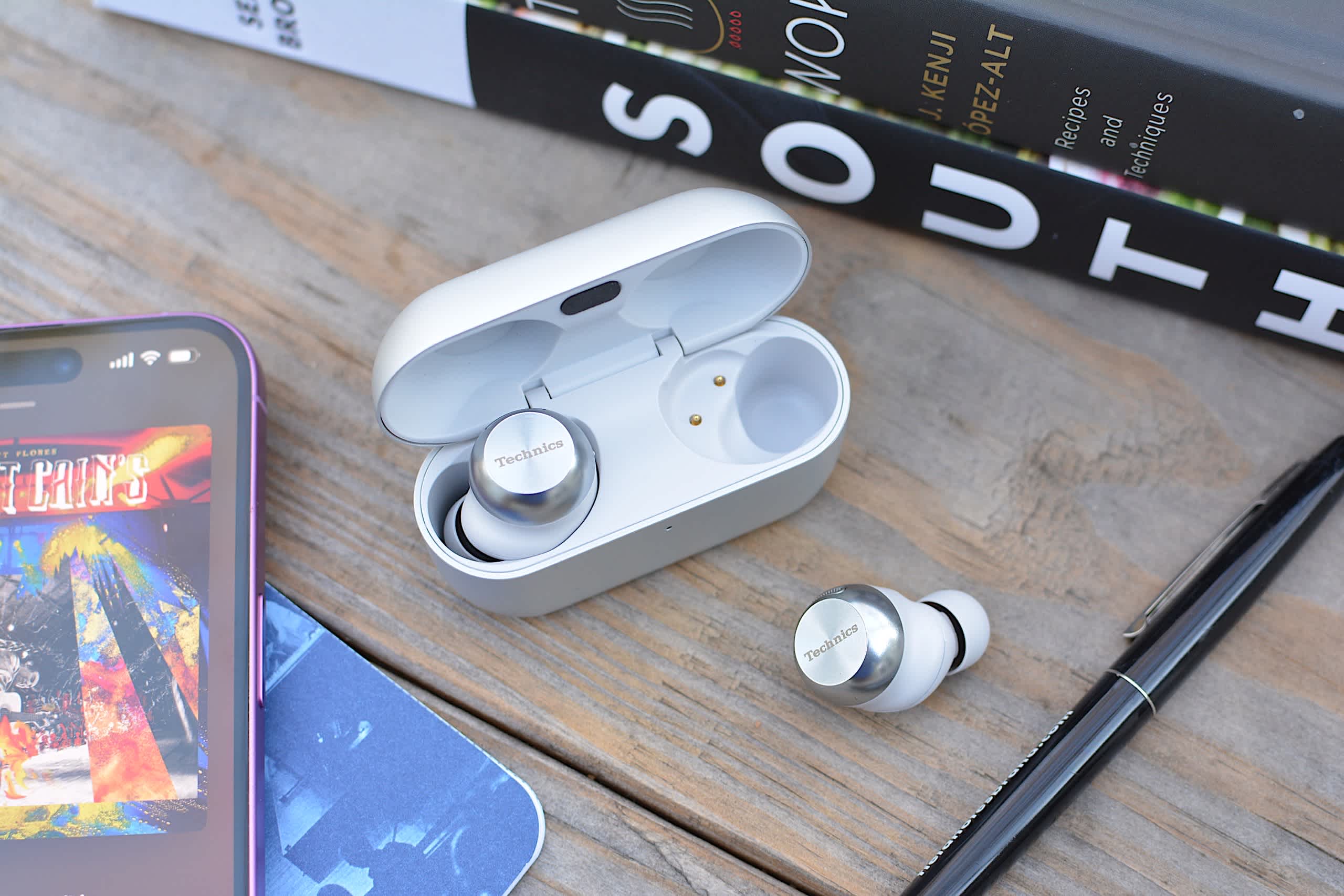
They might have only been a pair of earbuds, but a lot of us left CES really excited about the Technics EAH-AZ100. The reason for that was that they were the debut of the company’s new magnetic fluid drivers technology, which promised to deliver even more clarity, detail and bass than the drivers in Technics’ already excellent AZ80 earbuds. When Engadget’s resident audio guru Billy Steele got a chance to review the EAH-AZ100 a couple of months later, he gave them a score of 85, saying they offered “some of the best sound quality in any of the hundreds of earbuds I’ve tested over the years.”
Urtopia Titanium Zero
The Titanium Zero sits at a CES display with other e-bikes nearby.
Daniel Cooper for Engadget
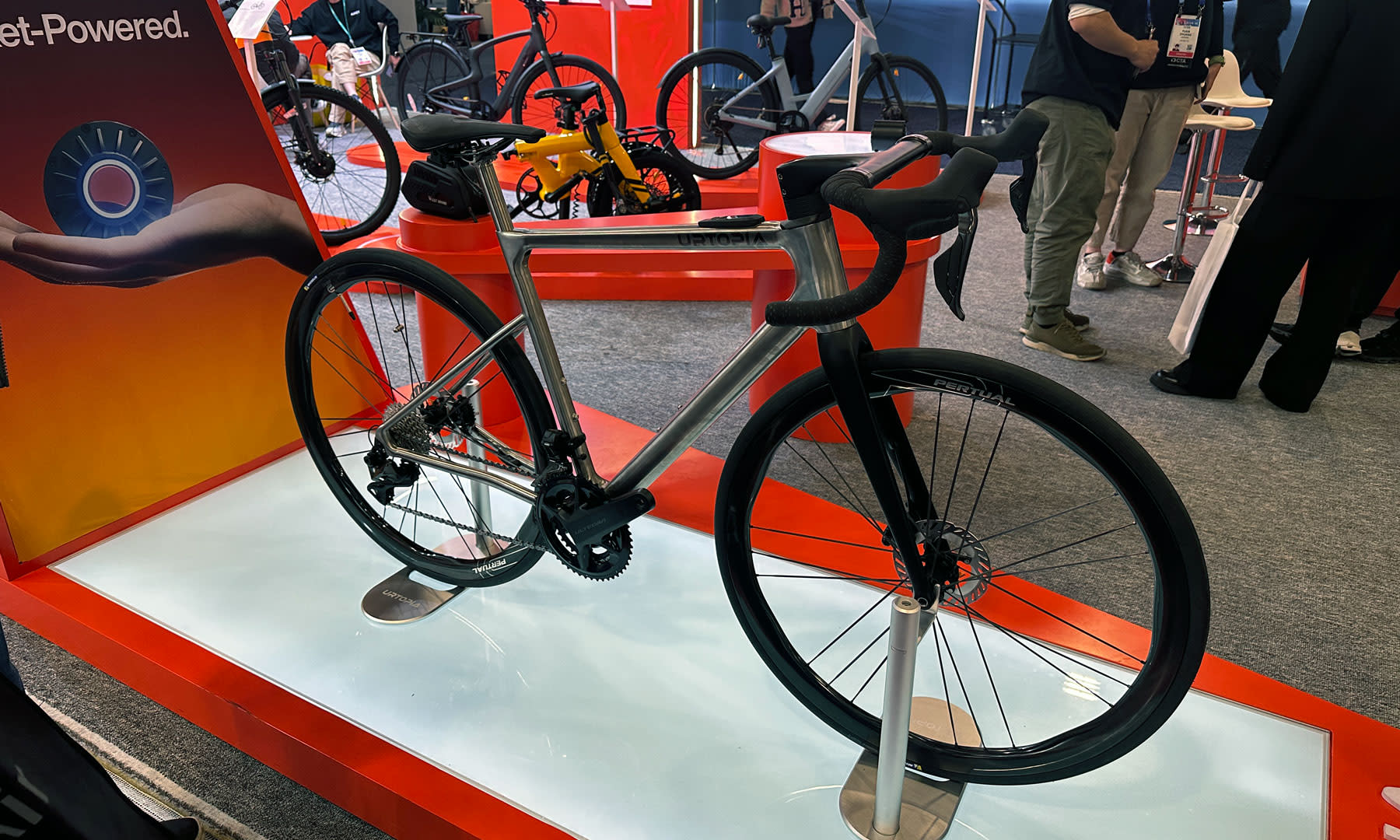
As a cyclist, the Urtopia Titanium Zero was the one product I left CES 2025 excited to see in the real world. If a titanium bike wasn’t cool enough already, the Zero’s Quark DM1.2 motor offered something actually innovative: a mid-drive motor with more power output than even the best hub motor. Unfortunately, while you can buy plenty of other e-bikes off of Urtopia’s website, the Titanium Zero isn’t on sale yet. That said, the company plans to showcase the bike, alongside the Quark DM1.2, at CES 2026.
WeWalk Smart Cane 2
A person uses the Wewalk Smart Cane 2 to find their way through a CES booth.
Cheyenne MacDonald for Engadget
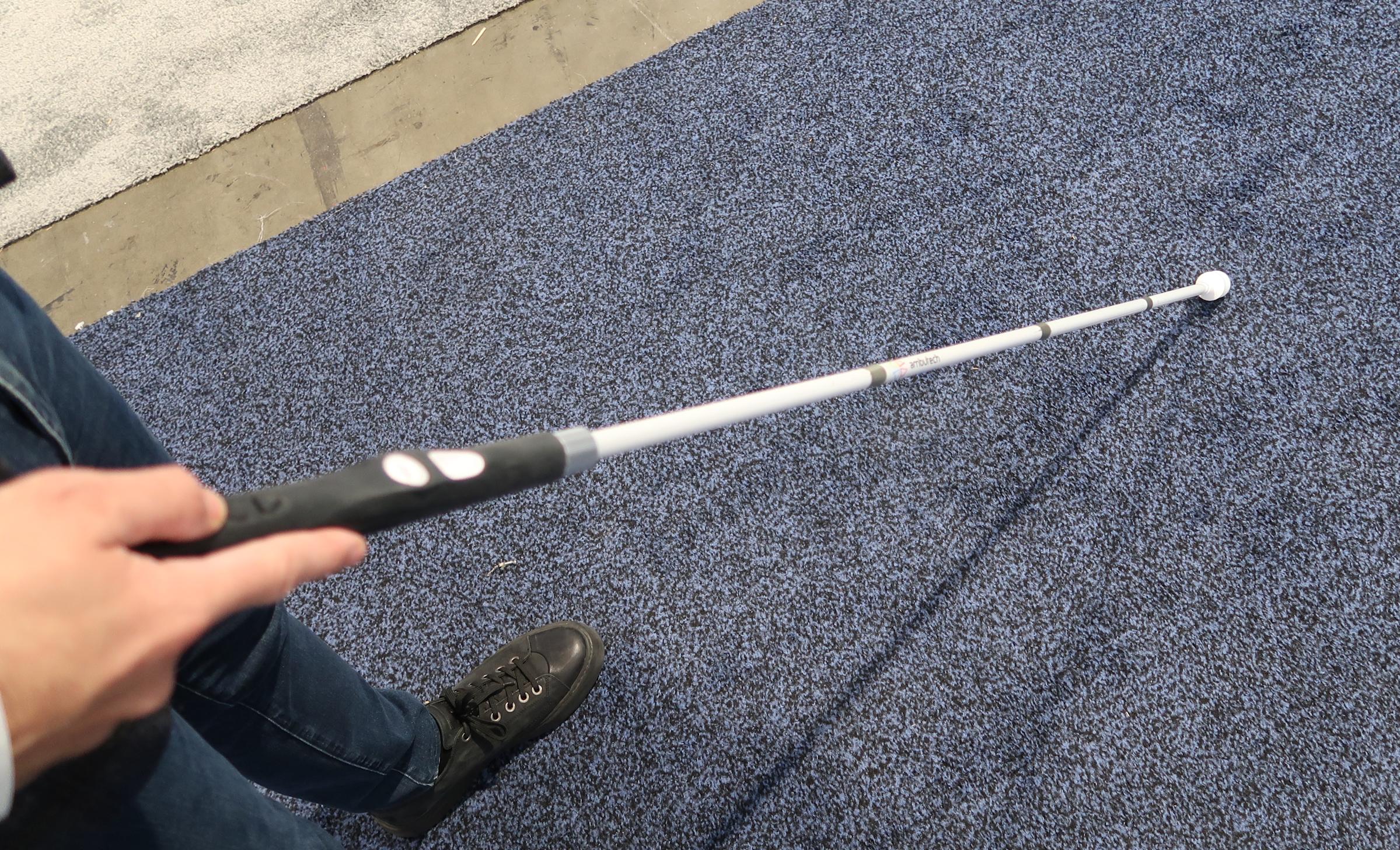
The WeWalk Smart Cane 2 won two awards from Engadget during CES 2025, including our coveted best in show nod. At an event where nearly every manufacturer found a way to add AI to their devices, the Smart Cane 2 appealed to us for its thoughtful use of the tech. It offers turn-by-turn navigation and obstacle detection, in addition to a GPT-powered voice assistant to give users a way to access information without also having to juggle their phone at the same time. If you visit WeWalk’s website today, there’s a “buy now” link for the Smart Cane 2 that leads to a dead end. When Engadget reached out to WeWalk, the company said it would be once again at CES demoing the Smart Cane 2.
This article originally appeared on Engadget at https://www.engadget.com/big-tech/where-are-engadgets-ces-2025-winners-now-194500216.html?src=rss
Smart fridges are a dime a dozen at CES, and LG and Samsung have thoroughly explored what’s possible when you connect your fridge to the internet or slap a touchscreen on the front. The new GE Profile Smart Refrigerator with Kitchen Assistant GE is announcing ahead of CES 2026 doesn’t reinvent the wheel in that regard, but it does include a first: a built-in barcode scanner for adding items to your shopping list.
GE’s “Scan-to-List” feature uses the barcode scanner to quickly (and precisely) add items to a shareable shopping list in GE’s SmartHQ app. You can refer to that list while you’re shopping in person, or sync it with Instacart and have it delivered, eliminating the need to go grocery shopping entirely. Inside the fridge, GE also includes a flush-mount LED bar with a built-in camera that can deliver “real-time, on-demand snapshots of crisper drawers, focusing on the most costly and perishable items.” This “FridgeFocus” feature is supposed to prevent you from overbuying perishable produce that you might already have, by letting you see which perishables might go bad first.
GE’s fridge is stainless steel and has a built-in touchscreen display.
GE
On top of those smart features, the GE Profile Smart Refrigerator has a four-door stainless steel design, with door-in-door storage and an adjustable temperature drawer. The fridge also has an 8-inch touchscreen display for viewing recipes or the current weather conditions, and microphones for accepting voice commands. When you’re dispensing water, the fridge’s water dispenser is supposed to be smart enough to fill a container with the exact right amount of water using built-in sensors, too.
The GE Profile Smart Refrigerator with Kitchen Assistant will be available from GE and select retailers starting in April 2026 for a suggested MSRP of $4,899.
This article originally appeared on Engadget at https://www.engadget.com/home/kitchen-tech/ges-new-smart-refrigerator-automates-grocery-shopping-with-a-barcode-scanner-and-instacart-194326610.html?src=rss
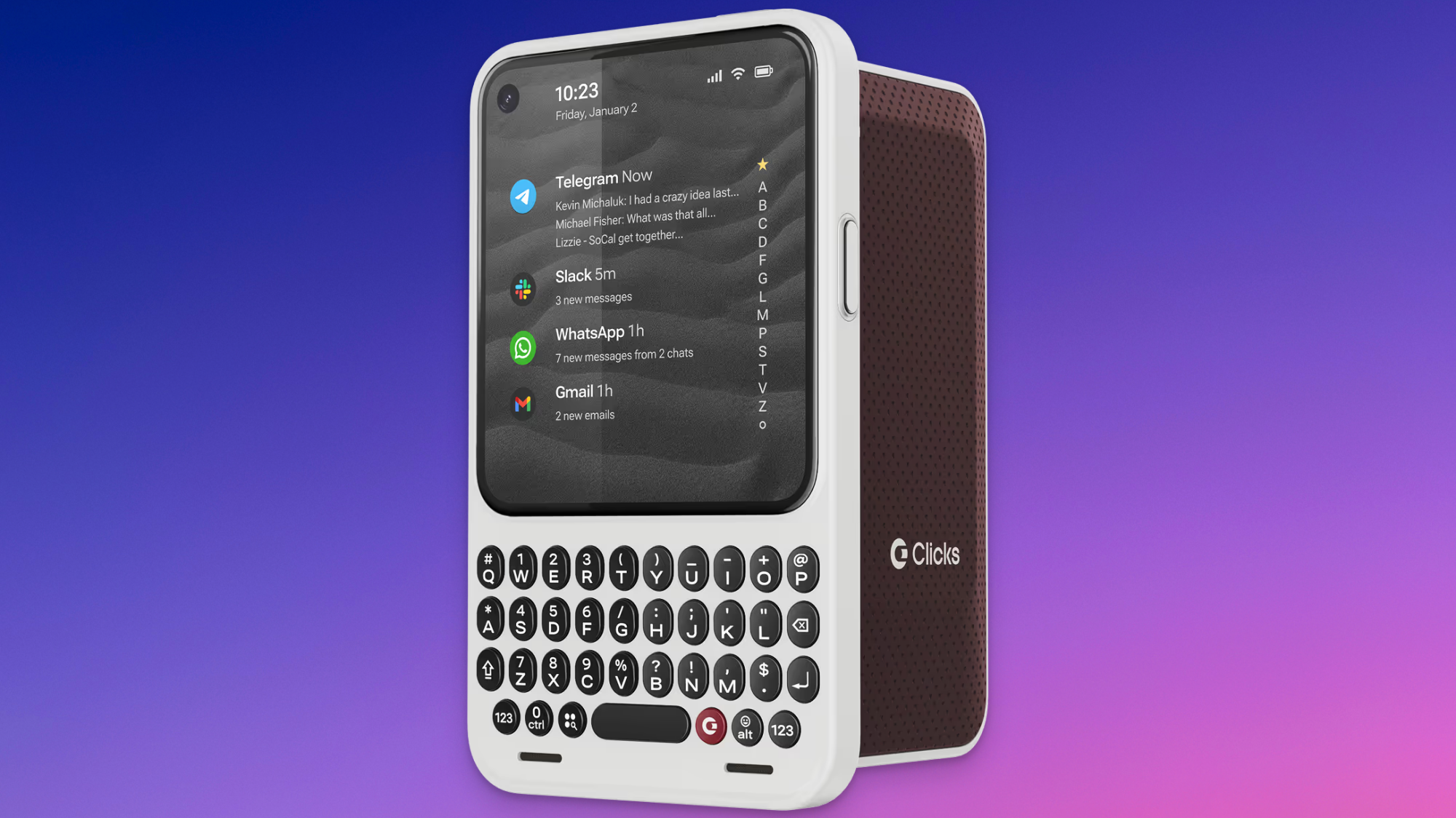
Clicks, the company behind those physical keyboard cases for your smartphone, has announced a new device, but it’ll look pretty familiar to anyone who’s used a Blackberry before. It’s called the Clicks Communicator, and it’s a pocketable little handset that’s perfect for anyone who misses having physical buttons on their phone. It comes with a full, old-school style QWERTY keyboard and runs Android 16, and while you can pump it full of apps and use it standalone, Clicks says it expects many of its customers will prefer to use it as a minimalistic companion to a primary smartphone. In that way, this device is designed to be your secondary smartphone, where you only load it with the apps you need at a moments notice and use it to quickly reply to your messages, emails, and other important notifications.
The Clicks Communicator is a modern Blackberry
Credit: Clicks
One of the headlining features of the Clicks Communicator is the Signal LED, which is a notification light around the side button. You can set it to light up with a different color based on who’s pinged you or which apps are sending you notifications, so you can know what needs your attention first without having to scroll through a long series of notification boxes. For instance, you could set up a green LED for notifications from people you care about, and use other colors for different apps. I’m not entirely sure how this’ll play out in practice, because I do worry that I’ll forget which color is for what after a point. Fortunately, Clicks says you can also turn off the Signal LED if it’s not useful for you (and yes, there will still be traditional notification boxes if you need them).
As for the core experience, in line with its design philosophy, the company has chosen not to show you an app grid when you go to the home screen. In collaboration with Niagara Launcher, Click has instead built a messaging hub, which shows you all your pending alerts on the home screen, grouped by app. You can use the keyboard to triage these messages or to reply to individual chats, the company says.
There’s also a lot of emphasis on the keyboard, as is expected from a company that went viral by launching a physical keyboard case for touchscreen phones. Clicks says the keys on the Communicator are bigger and better than those on its keyboard case. There’s a red Clicks key on the keypad, which you can use to launch custom shortcuts. The Spacebar has a built-in fingerprint sensor, which could be handy for unlocking the phone quickly. The keypad is touch-sensitive, which means that you can slide your fingers over it to scroll through messages. And before you ask, yes, it also has a 4.03-inch OLED touchscreen display for those of us who like scrolling on a smoother surface.
Some of you may also be pleased to know that the Clicks Communicator has a 3.5mm headphone jack and that it supports microSD cards for storage expansion. It ships with 256GB storage and you can add a microSD card with up to 2TB of capacity.
The device runs Android 16, supports Qi2 wireless charging, has a USB-C port, and has a 50-MP rear camera with optical image stabilization, alongside a 24-MP front camera. It’s powered by a 4nm MediaTek chip that has 5G support. It’s a dual-SIM phone with one physical SIM slot and an eSIM, so you could use it on its own instead of as the “complementary product” its pitched as, but taking calls or using certain apps could be tricky on such a small device.
If you want a Clicks Communicator, you can reserve one now for $399 + $30 for shipping and duties. The launch price is expected to be $499, which means that pre-orders get a $100 discount. The device also has swappable back covers, and the company is offering two back covers for free with pre-orders.
A Magsafe power bank with a sliding keyboard
Credit: Clicks
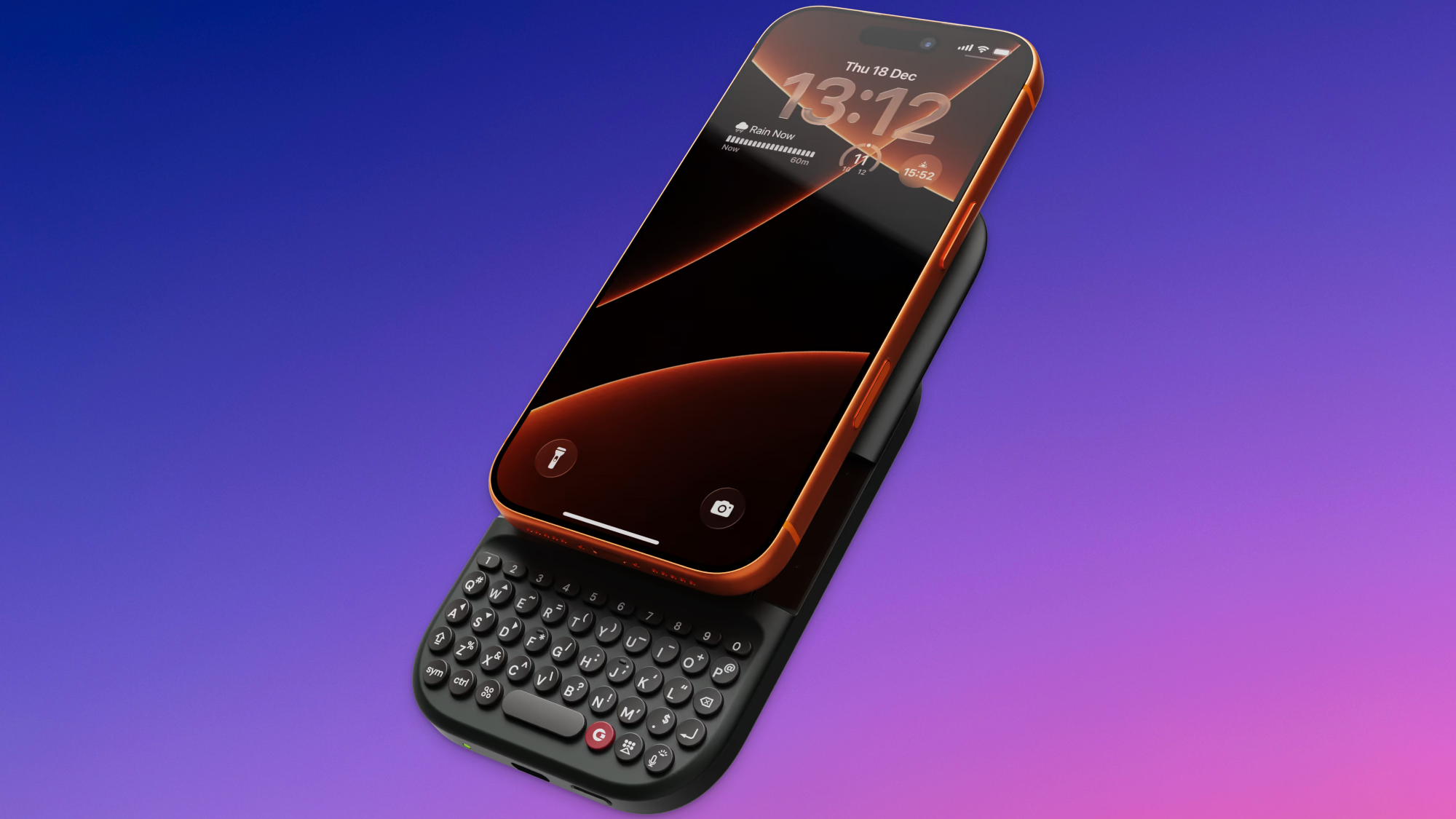
For everyone that just wants to add physical keys to their existing phone, Clicks has also launched a magnetic wireless power bank with a built-in sliding physical keyboard. This is one of the more quirky products I’ve seen from this year’s pre-CES announcements, but it could make for a great middle ground for everyone who doesn’t want the Communicator.
I wasn’t a big fan of wired power banks back in the day, but the advent of magnetic wireless charging has changed that, and now I’m itching to slap one onto my iPhone. Throwing a slide-out Bluetooth keyboard into the mix just sweetens the pot, even if it is a bit of a heavy package overall, at 180g. And because of that wireless Bluetooth connection, you can also use the keyboard with your phone, tablet, TV, or gaming console, if you like. The charger doesn’t need to be physically attached to a device for its keyboard to work with it, and the device as a whole works with both Apple and Android.
There is a downside, though. The Clicks Power Keyboard has a 2,150mAh battery, and it only supports 5W Qi wireless charging. That’s a very slow charger by today’s standards, but the good news is that your smartphone is less likely to overheat with those charging speeds. It’s priced at $80 for pre-orders and is expected to start shipping this Spring.
For a comparison, you could get an Anker wireless power bank for around $55. This one weighs 4.3oz (120g), offers faster 15W charging, and has a higher battery capacity (5,000mAh). You don’t get a physical keyboard with most power banks in the market, so Clicks is banking on that to power sales of its Power Keyboard.
The year 2025 ended with more than 14,000 active satellites from all nations zooming around the Earth. One-third of them will soon move to lower altitudes.
The maneuvers will be undertaken by SpaceX, the owner of the largest satellite fleet in orbit. About 4,400 of the company’s Starlink Internet satellites will move from an altitude of 341 miles (550 kilometers) to 298 miles (480 kilometers) over the course of 2026, according to Michael Nicolls, SpaceX’s vice president of Starlink engineering.
“Starlink is beginning a significant reconfiguration of its satellite constellation focused on increasing space safety,” Nicolls wrote Thursday in a post on X.