
M5Stack has expanded its lineup with the CoreS3 Thread BR, a compact Thread Border Router kit designed for Matter- and Thread-based IoT deployments. The platform combines the CoreS3 controller with a dedicated IEEE 802.15.4 radio module in a DIN-rail-mountable enclosure for smart home, building automation, and low-power sensor networks. The system uses an ESP32-S3 application […]
Category Archives: Unfiltered RSS
This Belkin charging case for the Switch 2 has a screen for checking battery life
Belkin just introduced the appropriately-named Charging Case Pro for Nintendo Switch 2 at CES. This is a high-end charging case specifically designed for Nintendo’s latest console.
The 10,000mAh power bank delivers up to 30W of fast charging, which is a decent enough metric. I’m more excited, however, about the bells and whistles. The Charging Case Pro boasts an LCD screen on the exterior, making it easy to keep track of remaining battery life. It also doubles as a tabletop stand, which is always nice. The built-in Switch 2 stand is better than what we got with the first Switch, but it’s still not the sturdiest thing in the world.
Belkin
It also includes a dedicated flap for game card storage and a hidden compartment for smart trackers. Take that, would-be Switch 2 thieves. Belkin promises this case has been made from premium materials and has been designed for “long-term durability.” The Charging Case Pro for Nintendo Switch 2 is available right now and costs $100.
The company also introduced a number of other charging accessories at CES. The UltraCharge Pro Power Bank juices up two devices at once and also costs $100, with availability in February. The BoostCharge power bank is an extremely slim unit that easily slides into pockets. That one starts at $60, but isn’t coming until later in the year.
This article originally appeared on Engadget at https://www.engadget.com/gaming/nintendo/this-belkin-charging-case-for-the-switch-2-has-a-screen-for-checking-battery-life-170029450.html?src=rss
Plaud’s latest AI wearable has a button for flagging key moments
Plaud is back with another conversation-recording AI wearable. This one, the NotePin S, is only a minor iteration on the original NotePin. This model adds… a button.
The recessed recording button replaces the squeeze-to-record mechanism on the 2024 original. A single long press starts recording. It also adds a new “press to highlight” feature. The idea is to flag what’s most important in a conversation, helping the AI learn what to emphasize in its summary.
Otherwise, you’re getting the same package as in the first NotePin. The capsule-sized “S” model still has two microphones, weighs 0.6 ounces and has an advertised reliable recording range of 9.8 feet. (Students may want to keep that last point in mind before considering one for classes in lecture halls.) It includes hardware to set it up as a pin / lapel, lanyard, wristband or clip.
The NotePin S is available today for $179. You can order it from Plaud’s website and Amazon. Just be sure to look out for your fellow humans and get their consent before recording them, okay?
This article originally appeared on Engadget at https://www.engadget.com/ai/plauds-latest-ai-wearable-has-a-button-for-flagging-key-moments-170000172.html?src=rss
GNU ddrescue 1.30 “Orders of Magnitude” Better In Recovery From Drives With A Dead Head
GNU ddrescue as the free software data recovery tool from files or block devices is out today with a big feature release. The new GNU ddrescue 1.30 is improved by “orders of magnitude” for the automatic recovery from drives with a dead head…
Manjaro Linux 26.0 Rolling Out – Xfce Edition Recommended If Wanting To Use X11
Package updates for the Arch Linux powered Manjaro Linux distribution have been pushed out for Manjaro 26.0 “Anh-Linh” while updated ISOs are expected to soon become available. The Manjaro 26.0 milestone brings KDE Plasma 6.5 and GNOME 49 but with both of those you may lose X11 session support so they are recommending their Xfce Edition for wanting wanting to continue using an X.Org desktop session…
Furiosa’s Energy-Efficient ‘NPU’ AI Chips Start Mass Production This Month, Challenging Nvidia
The Wall Street Journal profiles “the startup that is now one of a handful of chip makers nipping at the heels of Nvidia.”
Furiosa’s AI chip is dubbed “RNGD” — short for renegade — and slated to start mass production this month. Valued at nearly $700 million based on its most recent fundraising, Furiosa has attracted interest from big tech firms. Last year, Meta Platforms attempted to acquire it, though the startup declined the offer. OpenAI used a Furiosa chip for a recent demonstration in Seoul. LG’s AI research unit is testing the chip and said it offered “excellent real-world performance.” Furiosa said it is engaged in talks with potential customers.
Nvidia’s graphic processing units, or GPUs, dominated the initial push to train AI models. But companies like Furiosa are betting that for the next stage — referred to as “inference,” or using AI models after they’re trained — their specialty chips can be competitive. Furiosa makes chips called neural processing units, or NPUs, which are a rising class of chips designed specifically to handle the type of computing calculations underpinning AI and use less energy than GPUs. [Founder/CEO June] Paik said Furiosa’s chips can provide similar performance as Nvidia’s advanced GPUs with less electricity usage. That would drive down the total costs of deploying AI. The tech world, Paik says, shouldn’t be so reliant on one chip maker for AI computing. “A market dominated by a single player — that’s not a healthy ecosystem, is it?” Paik said…
In 2024, at Stanford’s prestigious Hot Chips conference, Paik debuted Furiosa’s RNGD chip as a solution for what he called “sustainable AI computing” in a keynote speech. Paik presented data showing how the chip could run the then-latest version of Meta’s Llama large language model with more than twice the power efficiency of Nvidia’s high-end chips. Furiosa’s booth was swarmed with engineers from big tech firms, including Google, Meta and Amazon.com, wanting to see a live demo of the chip. “It was a moment where we felt we could really move forward with our chip with confidence,” Paik said.


Read more of this story at Slashdot.
MYIR SoM Leverages Zynq UltraScale+ with Arm and FPGA Integration
MYIR has announced the MYC-CZU3EG-V3, an updated SoM built around the AMD Zynq UltraScale+ ZU3EG MPSoC. The module integrates application-class Arm processing, real-time control cores, and FPGA fabric in a compact form factor targeting industrial automation, machine vision, edge computing, aerospace, and telecommunications systems. The MYC-CZU3EG-V3 combines a quad-core Arm Cortex-A53 application processor running at […]
Xreal updates its entry-level personal cinema glasses at CES
If you’ve been on the fence about trying the sort of “AR glasses” that, until recently, were called “personal cinemas,” then check this out. Xreal has turned up to CES 2026 with an updated version of its entry level Xreal One glasses, first launched at the end of 2024. The new model, dubbed the 1S (yes, with a numeral rather than the word) gets marginally better specs and $50 knocked from the asking price.
If you’re unfamiliar, One is a wearable spatial display that connects over USB-C to any compatible device including smartphones, tablets, laptops and consoles. It has two teeny-tiny displays in the eyecups that, when worn close to the eyes, trick your brain into thinking you’re looking at a big screen. The average would measure in at around 171 inches, but it’s possible to push the view to a screen closer to 500 inches if your eyes are capable of focusing that far.
As for the changes, they’re all firmly in the welcome nip-and-tuck department, boosting many of the original’s key specs. For instance, the 1080p screens have been swapped out for 1200p full HD, while the field of view has gone from 50 degrees to 52. Brightness has been boosted from 600 nits on the old model to 700 nits here, while the aspect ratio has grown from 16×9 to 16×10. But the change Xreal is arguably most proud of is the drop in price, from $499 down to $449.
At the same time, the company is launching the Xreal Neo, an external battery-cum-DisplayPort hub for your glasses. Inside you’ll find a 10,000mAh power bank to keep your glasses going for longer and, more importantly, offers better connection for your Switch consoles. After all, before now, if you wanted to play with your Switch or Switch 2, you’d need to hook it up to its own dock. With the Neo, however, you can eliminate that from your bag when you’re playing out and about. That’s available as a standalone purchase for $99 which, like the new 1S, are ready to buy right now.
This article originally appeared on Engadget at https://www.engadget.com/wearables/xreal-updates-its-entry-level-personal-cinema-glasses-at-ces-140000544.html?src=rss
How to watch the Intel CES 2026 launch event
We’re just hours away from the start of CES 2026, and with that comes Intel’s launch event. The chip giant is expected to provide more details on its AI PC initiative and the new processors powering it: The Core Ultra Series 3 CPUs (aka Panther Lake) are made using an 18A process — that’s 18 angstroms, or just under 2nm — and designed for high-end laptops and gaming devices.
For Intel, the stakes at CES are higher than ever. In the past 12 months, both NVIDIA and the US government acquired ownership stakes in the company, helping nearly double the stock price by the end of the year. But that’s still down over more than 20 percent since 2021, as rivals like TSMC, Qualcomm, AMD and NVIDIA have taken the leadership mantle in chip fabrication and AI hardware.
How to watch Intel’s launch event
Senior VP of Intel’s Client Computing Group Jim Johnson will kick off the launch event on Monday, January 5 at 6PM ET. A livestream will be available on the Intel Newsroom YouTube channel, which we’ll post here when it’s live.
What to expect from Intel at CES 2026
As we noted above, Intel has publicly confirmed that it will be highlighting “the next generation of Intel-powered PCs, edge solution, and the AI experiences enabled by the new Intel Core Ultra Series 3 Processors.” We’ll be keen to hear if the company can address the profitability concerns that have surrounded those next-gen chips since at least last summer, when published reports indicated that yields were still under 50 percent. (In response, Intel told Engadget that it felt “very good” about its trajectory on Panther Lake, though it didn’t hit the late 2025 release date it had envisioned at the time.)
Will we get any updates on that NVIDIA partnership? It’s possible. But don’t expect to hear anything about Intel possibly fabricating the chips for that rumored new entry-level MacBook Air. If that comes to pass, the announcement will definitely be at a time and place of Apple’s choosing.
This article originally appeared on Engadget at https://www.engadget.com/computing/how-to-watch-the-intel-ces-2026-launch-event-130040089.html?src=rss
Govee’s CES lineup includes a ceiling lamp that simulates skylights
Govee, which makes some of the more unique and interesting smart lighting products, has a new batch at CES 2026. That includes two ceiling lights (one of which simulates a skylight) and a floor lamp that supports trillions of colors.
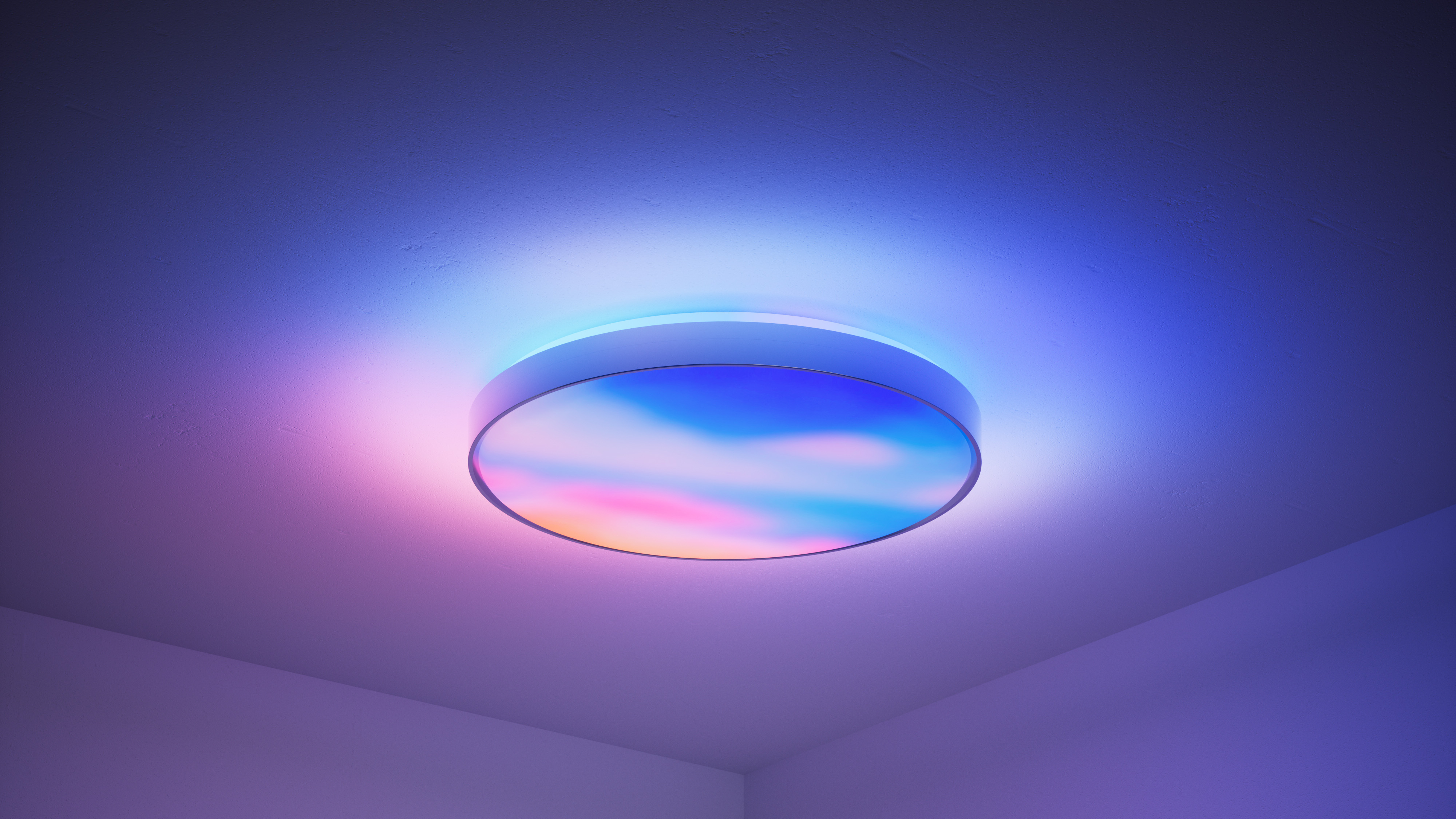
Govee describes the new Ceiling Light Ultra as “the industry’s first ceiling light designed as a true creative canvas.” It uses 616 individually controlled LEDs (the highest in its class, according to Govee) to provide that level of detail. Using the Govee app, you can design visuals for it “with up to eight distinct layers of motion, color and shapes.”
Govee
The product will support an upcoming AI Lighting Bot 2.0 update. The new version of the scene creation chatbot lets other compatible lights (including the Gaming Pixel Light) “generate dynamic GIF animations.”
If your ceiling lamp needs are as simple as “look like a skylight, please,” there’s the Govee Ceiling Light with Blue Sky Effect. The company says it emulates natural skylights “with high accuracy.” (However, it’s also less flexible than the Ultra, with far fewer individually controlled LEDs.) You can also use it as a more traditional white-light fixture, and Govee says it’s good for spaces are large as 300 square feet.
Govee
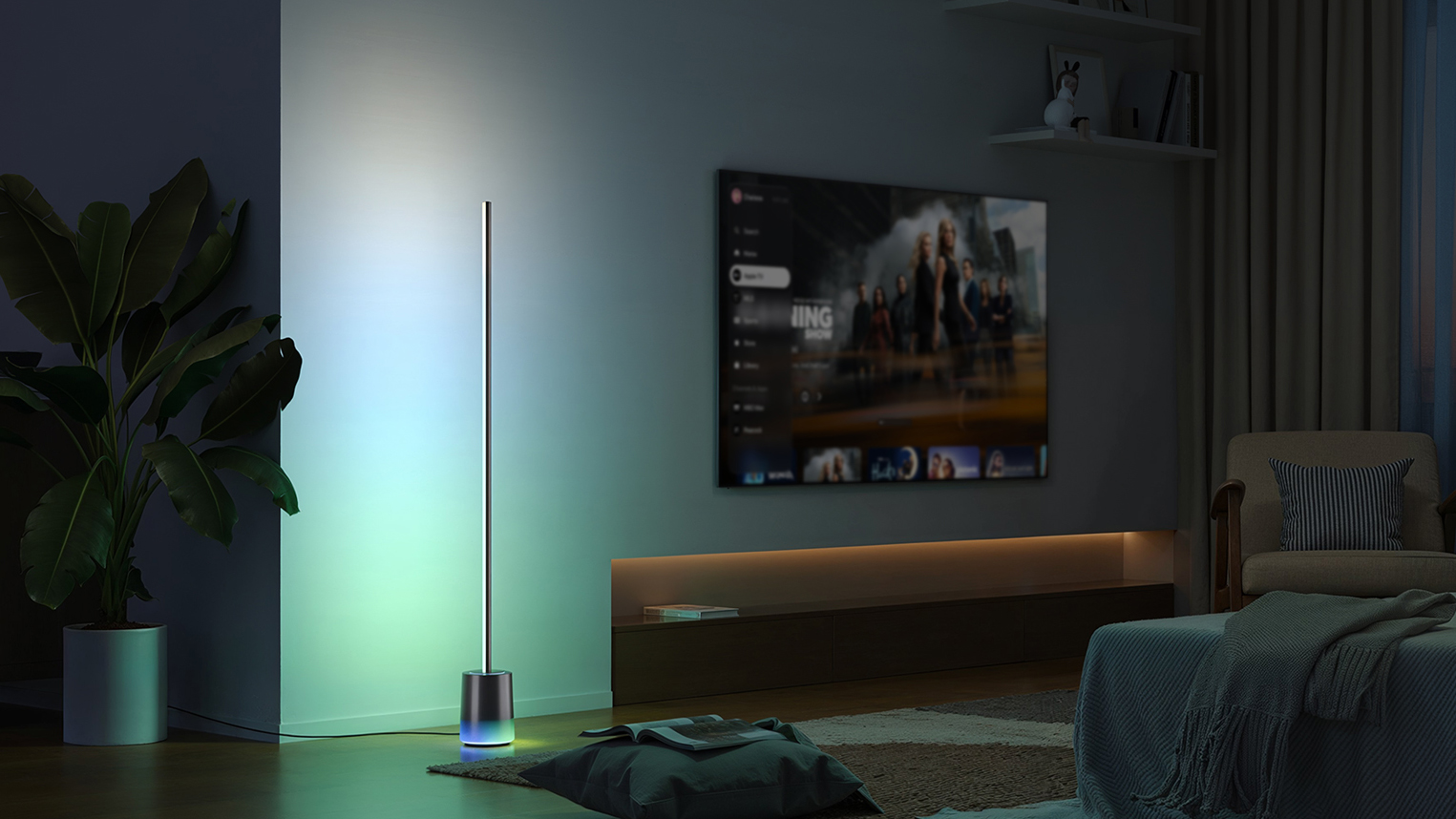
Finally, there’s the Govee Floor Lamp 3. The sleek light’s 16-bit RGBIC array allows it to reproduce over 281 trillion colors. Its white lighting capabilities range from 1000K to 10000K. It also supports a new DaySync system that can adjust lighting effects to match the time of day.
Unfortunately, we don’t yet know precisely when any of the new lights will be available — or how much they’ll cost. But we did learn that Govee lights will now work with Samsung SmartThings, joining their existing support for Matter, Alexa and Google Assistant.
This article originally appeared on Engadget at https://www.engadget.com/home/smart-home/govees-ces-lineup-includes-a-ceiling-lamp-that-simulates-skylights-130000611.html?src=rss
The US Effort to Break China’s Rare-Earth Monopoly
The New York Times checks in on U.S. university researchers and start-ups trying to create domestic rare-earth processing facility:
There is too little money to be made in rare earths for the elements to be of much interest to mining giants, so the challenge of reestablishing a domestic industry has fallen to small companies like Phoenix Tailings, a Boston-area startup that runs the metal-making plant in Exeter, New Hampshire. A handful of other companies in the United States are processing rare earths in small quantities, including MP Materials, which owns a mine in Mountain Pass, California, and recently began producing rare-earth metal in Fort Worth, Texas. Similar efforts are underway in Europe and Asia. “It’s small volumes of low-value materials that are very expensive to process,” said Elsa Olivetti, a materials science and engineering professor at the Massachusetts Institute of Technology. “Meaning it’s hard to make money.”
Phoenix Tailings’ New Hampshire operation is about 2 months old, housed in a converted medical device plant. The company buys metric-ton bags of powder — a mixture of neodymium and praseodymium bound with oxygen — from mining and refining companies in the United States, South America and Australia. It funnels that flour-like material into a drying oven and eventually into furnaces that heat it to the temperature of volcanic lava. This circuit takes up less than 15,000 square feet and is designed to generate no emissions other than those associated with the electricity Phoenix Tailings uses. The closed-loop design distinguishes this process from the more energy-intensive techniques used in China, where workers scoop up molten metal with ladles. That approach releases perfluorocarbons, potent greenhouse gases that do not break down easily.
In late 2024 the company was three weeks from bankruptcy — but it’s recently been valued at $189 million.


Read more of this story at Slashdot.
TrixiePup64 2601 Released For Debian 13 Powered Puppy Linux In Wayland & X11 Flavors
For those with fond memories of Puppy Linux as a very lightweight Linux distribution, released last month was a new TrixiePup64 for continuing the Puppy Linux spirit atop Debian. The new TrixiePup64 is based on Debian 13 components while shipping in both X11 and Wayland flavors. Out now is TrixiePup64 2601 as the latest iteration of this lightweight Linux distribution…
Linux’s Hung Task Detector Will Be Able To Be Reset For Easing System Administration
Worked on back in 2024 for the Linux kernel was a built-in counter to keep track of the number of hung tasks since boot. That feature for keeping track of the number of hung tasks since boot was merged in Linux 6.13 and exposed via /proc/sys/kernel/hung_task_detect_count. For helping ease use around it, new code working its way to the kernel will allow resetting that “hung_task_detect_count” counter…
Patches Posted For Bringing Rock Band 4 PS4 / PS5 Guitar Support To Linux
Following Linux 6.19 adding support for CRKD guitar controllers, new patches posted to the Linux kernel mailing list are bringing some additional guitar controllers to Linux. This latest work is around enabling the Rock Band 4 guitars for the PlayStation 4 and PS5 consoles to work under Linux…
New AMD Linux Driver Patches Posted For Batch Userptr Allocation Support
A new feature being worked on recently for the AMDKFD kernel compute driver is batch user pointer “userptr” allocation support. With this new user-space API it will become possible to support allocating multiple non-contiguous CPU virtual address ranges that map to a single contiguous GPU virtual address…
Claude is his copilot: Rust veteran designs new Rue programming language with help from AI bot
Rust veteran Steve Klabnik is using an LLM to explore memory safety without garbage collectionNaming a new programming language “Rue” sounds like an acknowledgment of doubt about the project’s prospects, if you take “Rue” to mean “regret.”…
Reddit Surges in Popularity to Overtake TikTok in the UK – Thanks to Google’s Algorithm?
Reddit “has overtaken TikTok as Britain’s fourth most-visited social media service,” reports the Guardian:
The platform has undergone huge growth over the last two years, with an 88% increase in the proportion of UK internet users it reaches. Three in five Brits online now encounter the site, up from a third in 2023, according to Ofcom. Its popularity is rising fastest with younger internet users. It is now the sixth most visited organisation of any kind by UK users aged between 18 and 24, up from 10th a year earlier. More than three-quarters of that cohort now visit it….
The UK is a boom market for the platform, with the second largest user base behind the US, according to company records. A series of factors are behind its rise. However, a change in Google’s search algorithms last year to prioritise helpful content from discussion forums appears to have been a significant driver. A recent deal with Google that allows the company to train its AI model on Reddit’s content also appears to have provided a boost. Reddit is the most-cited source for Google AI overviews, which is likely to see more people directed to its forums. It has a similar deal with OpenAI, which owns the most popular AI chatbot, ChatGPT.
According to the article, Reddit “believes it is also benefiting from shifting internet habits, as younger users seek out human-generated reviews and opinions.”


Read more of this story at Slashdot.
KDE Plasma 6.6 Improves Accessibility, Wayland Usability, and UI Polish
The upcoming Plasma 6.6 release will introduce new accessibility features and UI refinements, including Slow Keys for Wayland and improved notifications.
KDE Plasma 6.6 Fixes A Common Panel-Related Crash, Improves OpenBSD Support
KDE developer Nate Graham is out with the first issue of This Week in Plasma for 2026. Last week was a warning that This Week in Plasma could become less frequent without new volunteers to help takeover. Nate Graham announced that John Veness has stepped up to help co-author these weekly KDE development posts…
New Tesla Video Shows Tesla Semi Electric Truck Charging at 1.2 MW
An anonymous reader shared this report from Electrek:
Tesla has released a new video showing a Tesla Semi truck charging at a massive 1.2 megawatts (MW), finally giving us a clear look at the charging speeds that will enable long-haul electric trucking…>
Tesla claimed the Semi would be able to charge 70% of its range in 30 minutes. For a truck with a 500-mile range and an estimated battery pack of around 800-900 kWh, that requires an incredibly high power output, well beyond the 250 kW or even 350 kW we see on passenger EVs in North America. Today, the official Tesla Semi account on X released a video showing exactly that. In the video, Tesla engineers are seen monitoring a charging session where the power output climbs to a peak of 1.2 MW (1,206 kW).
This is consistent with the capabilities Tesla announced for its new V4 Cabinet architecture earlier this year. The V4 cabinets are designed to support 400V-1000V vehicle architectures and can deliver up to 500 kW for cars (like the Cybertruck) and up to 1.2 MW for the Semi. There is some information missing from the video. For example, we don’t see the state-of-charge of the truck, so we don’t at what battery percentage Tesla Semi can achieve and maintain this charge rate. Peak speed is one thing, but sustaining that power without overheating the pack or the cable is the real challenge. The liquid-cooled charging cable and the immersion-cooled connector (part of the Megawatt Charging System or a high-power proprietary Tesla solution, though Tesla has been leaning toward MCS compatibility) seem to be doing their job….
This comes just as Tesla is gearing up for volume production of the Semi at its new factory expansion near Gigafactory Nevada. The automaker is targeting a start of production in the first half of 2026 and a ramp up to volume production in the second half.


Read more of this story at Slashdot.