In a unanimous written determination, the Warner Bros. Discovery’s board is advising shareholders to once again reject Paramount Skydance’s “inadequate” hostile takeover bid. The letter to shareholders cites a number of concerns with the offer and reiterates its position that Netflix’s offer remains superior. Netflix and WBD have entered into a merger agreement in early December after the WBD board selected its offer over other bidders.
There are two key differences between the two options: Netflix is willing to pay $82 billion, but only for the Warner Bros., HBO and HBO Max divisions; Paramount Skydance’s latest offer came in at $108 billion and is for all of WBD’s assets, including CNN, HGTV, Food Network and many more. The Netflix deal leaves those assets in the hands of WBD shareholders, to be spun off as Discovery Global.
Paramount Skydance made three separate attempts to scoop up WBD before the company even opened the process up to other bidders. The third of those early offers was reportedly in the neighborhood of $24 per share, while this most recent hostile takeover stands at $30 per share.
But the WBD board has concerns. Among them, the extraordinary amount of debt required for Paramount, a studio with a market capitalization of just $14 billion, to take on an acquisition of this size. (Netflix’s market cap is over $400 billion.) This comes despite Larry Ellison, the father of Paramount CEO David Ellison, stepping in to guarantee $40 billion worth of the needed financing. The board also points out that Netflix’s offer is partially paid in the streaming giant’s shares, which it says have the potential to provide further value in the future.
At this stage in negotiations, the board also claims opting to go with Paramount Skydance’s offer would also result in WBD paying over $4 billion in termination fees.
“Your Board negotiated a merger with Netflix that maximizes value while mitigating downside risks, and we unanimously believe the Netflix merger is in your best interest,” the letter states. The merger with Netflix will still have to go before regulatory bodies in the United States and Europe.
This article originally appeared on Engadget at https://www.engadget.com/entertainment/streaming/warners-bros-discovery-board-urges-shareholders-to-reject-amended-paramount-bid-141513357.html?src=rss
Ketones have courted controversy since The Mail on Sunday disclosed that 91 athletes were used as guinea pigs in the run-up to the London 2012 Olympics to test the potential performance effects of this synthetic energy source.
Until the past few seasons, WorldTour teams and riders have remained stoically tight-lipped, whether they were using them or not – especially Team Sky, who publicly and repeatedly denied usage.
This stubborn silence fuelled scepticism in a sport still reeling from the Lance Armstrong saga, despite ketones never being on the WADA (World Anti-Doping Agency) prohibited list.
The Mouvement Pour un Cyclisme Crédible (MPCC) advised its members not to use them due to the unknown long-term health impact.
They also called on cycling’s governing body for clarity. “We’re awaiting the result of a UCI study into ketones,” the MPCC told me several years ago. And again last year. And earlier this year.
A UCI press release landed in October 2025 – finally, ketone clarity. Not quite. “There is no compelling evidence that ketone supplements enhance performance or recovery, so the UCI see no reason for them to be used. Therefore, the UCI do not recommend the inclusion of such supplements in riders’ nutritional plans.”
On the face of it, the UCI’s stance is plain. But it soon becomes clear that its summation of this substance, originally developed by scientists at Oxford University with $10 million of funding from the American Department of Defence so US Special Forces could operate for longer behind enemy lines with fewer rations, couldn’t have been more opaque – there was no comment on long-term health and no reference to their own study.
And who tasked the UCI with nutritional advice? We contacted the UCI for further detail, to speak to whoever conducted the study that it didn’t reference in the release.
The press officer replied: “Please be informed that this study is currently with a scientific journal and is expected to be published soon. While we do not have a confirmed publication date, we will share the article link and the author’s contact details with you once it becomes available.” We batted back with, “Understandably, there are many questions off the back of the press release.
Firstly, if the study is yet to be released, why are the UCI making a statement?” “We are awaiting the publication of the study, came the response. As soon as it is released, we will share the publication link along with relevant contact details for the authors.”
And so on.
So, despite the brevity and lack of evidence, the UCI feels taking ketones is a waste of time. Which must have had the likes of Ketone-IQ, used by Visma–Lease a Bike, and KetoneAid, used by Soudal Quick-Step, turning to their lawyers. Then again, the UCI does have a point that evidence for their use is far from equivocal.
But that can be said about everyday supplements used by cyclists all around the world – multi-vitamins for example – and the UCI hasn’t delivered a verdict on those.
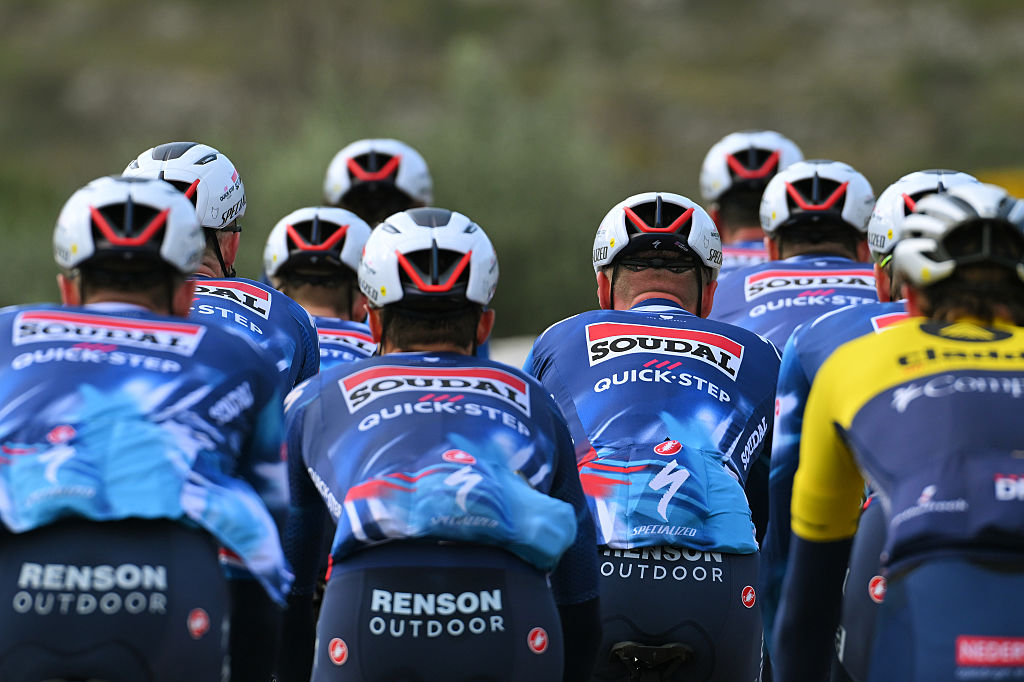
Soudal Quick-Step is among the teams to use ketones. Tim de Waele/Getty Images
That’s the politics, which we suspect will run and run. But what of the studies into ketones and cycling performance?
What is the general consensus from those? That’s where we turn to Sebastian Sitko, a sport scientist and lecturer at the University of Zaragoza in Spain.
In 2024, the journal Physiologia published Sitko’s work, ‘The role of exogenous ketones in road cycling: evidence, mechanisms and performance claims’. Within, his meta-analysis took a deep dive into the published literature.
“The potential benefits of ketone body supplementation in endurance sports like cycling are multifaceted, spanning metabolic, physiological and cognitive domains,” he concluded in his paper.
“However, despite the growing interest in ketone supplementation, the current science applied to the practical field is limited by inconsistent findings, individual variability and a lack of long-term data.”
In short, there’s an uncertainty around their benefits. But that doesn’t mean they don’t work. As Sitko highlights, it’s an individual thing and, like most facets of training and nutrition, comes down to whether someone is a ‘responder’ or ‘non-responder’.
Visma-Lease a Bike has a partnership with ketone supplier Ketone-IQ. Dario Belingheri/Getty Images
“Evidence for its use points to a mix of phenotype [observable characteristics of when nature meets nurture] and current metabolic state,” he says.
“A rider’s baseline metabolic health (insulin sensitivity, level of fat), recent diet (carbohydrate availability, keto- adaptation), gut absorption, gender and training status all matter.”
“The delivered BHB exposure (not just the dose) is a big determinant of response,” he adds. BHB is beta-hydroxybutyrate, a type of ketone. Its vessel tends to be either an ester or salt, with the evidence stronger for ester use because ketone content tends to be higher.
“Genetics likely plays a role, but robust genotype response links in athletes are still lacking,” says Sitko. “In short, who you are (metabolic phenotype) and what state you’re in (glycogen-heavy, fasted, recent training) are the main practical predictors.”
Mechanisms of improvement
If you respond, what does that mean? Potentially riding longer and stronger, fighting fatigue and delivering high-intensity moments when needed.
“The most plausible mechanism why is due to sparing glycogen,” says Sitko. “Ketone bodies can be oxidised efficiently by the working muscle and theoretically reduce reliance on carbohydrate, which could preserve muscle glycogen during very long efforts or in low-glycogen states.”
That physiological promise has clear mechanistic rationale, says Sitko, but enjoying consistent race benefits has proven tricky because cycling performance is the product of numerous interacting systems.
For instance, fuel availability, neuromuscular function, pacing, thermoregulation and gut tolerance to ketones.
There’s also an argument that ketones raise blood acidity, which is exactly what you don’t want when exercising hard. “The major problem is that small metabolic gains often disappear when translated into whole-race conditions,” Sitko continues.
“Laboratory protocols, participant feeding state, ketone dose and how it’s delivered, and whether carbohydrate is co-ingested all change the metabolic context, so the same ketone drink can produce different outcomes across studies and athletes.”
In essence, like any mooted performance-enhancer, while it might give a physiological boost in the controlled setting of a laboratory, which can be measured easily, the same can’t always be said once it’s in the dynamic amphitheatre of racing. And if it does, there are too many variables to pinpoint ketones as the game-changer.
After researching this area over several years, we’d presumed that the time it took the UCI to make a statement came down to delays while it pored over recent studies that show a rise in circulating erythropoietin (EPO) in the body.
EPO is a hormone that naturally produces red blood cells but, as Lance and co showed, can also be taken exogenously (primarily by injection) to raise levels artificially.
It’s why, under section S2.1 of WADA’s Prohibited List, entitled, ‘Erythropoietins and agents affecting erythropoiesis’, EPO and other drugs that elevate levels of EPO are banned. Then again, not every method of boosting red blood cells is outlawed. Altitude training, for instance.
“There isn’t solid evidence that these temporary EPO rises translate into sustained increases in red-cell mass or haematocrit (which would require repeated exposure and time for erythropoiesis),” says Sitko.
“In short, EPO signalling equals possible stimulus, but increased red blood cell mass and measurable performance gain is not established in humans with current data. That makes any anti-doping or performance claims premature.”
Will the UCI’s press release sound the death knell for ketone use in professional and recreational cycling? It’s doubtful, especially when recent research suggests its benefits stretch beyond the (still debated) physical.
Can ketones slow brain ageing?
Ketones may help slow cognitive decline in ageing cyclists – if taken at the right time. Getty Images
As Sitko mentioned earlier, studies show that ketones potentially have an impact on “cognitive domains”. Again, the evidence isn’t conclusive, but it is compelling, especially for those who are approaching their mid-40s.
According to research in the journal Proceedings of the National Academy of Sciences, our “brain-network stability” doesn’t follow a linear path of decline.
Instead, it’s non-linear with distinct landmarks of acceleration and plateauing, with the human brain ageing much faster from the age of 44 before levelling off at 67.
The researchers hypothesised that neuronal metabolic stress, such as increased insulin resistance and impaired glucose uptake, leads to a nudge in age-related cognitive decline.
Or it would without drinking a bottle or two of ketones, for they discovered that administering this ‘super- fuel’ delivered an extra energy source that sidestepped the issues caused by this metabolic stress to protect the brain from deterioration.
They warned that the intervention would only prove effective before the neurons fall off a cliff – in other words, start in your mid-40s – and stressed that further research was needed to confirm or disprove the mechanisms at play.
That said, it’s the latest study of many that suggests ketones could be a cognitive lifesaver because of their ability to deliver energy when the insulin system’s struggling.
Because the brain makes up 20% of your daily energy needs each day, the mechanism adds up.
Where does that leave us? Arguably, where we were before the UCI’s press release – in ergogenic limbo. Research shows that performance and recovery can benefit from ketones. It also shows that performance and recovery aren’t impacted by ketones.
As ever, it’s an individual thing whether it works – or you believe it works (placebo is a feature in itself).
But it’s clear that for most recreational cyclists, consistent riding and staying healthy via a wholesome diet are much higher up the performance ladder than any supplement.
Will we ever know if ketones work or not out in the field? Sitko thinks so. “Serial blood metabolomics can reveal individual metabolic fingerprints and identify who benefits from ketone exposure and under which conditions,” he says. “This supports precision nutrition but research is still in its early phase.”
Why buy a mechanical gaming keyboard and Stream Deck separately when you can have them both in the same package? The easy answer is because an integrated all-in-one solution was never a solution…until now. Announced at CES 2026, Corsair’s new Galleon SD 100 is a full-size mechanical deck for gamers with a built-in Stream Deck situated where
Even if you bring home as few bags as possible — using reusable bags, carrying purchases home with your own two hands — soft plastics sill accumulate. I certainly have a collection with one flimsy plastic sack filled with dozens or hundreds of others. I plan to do something with it… eventually.
Unfortunately, there aren’t a ton of options for what to do with those soft plastics, as most recycling facilities can’t accept them. But no one likes seeing them end up in oceans and rivers and stuck up in trees. So I was excited to see the Clear Drop Soft Plastic Compactor (CPC) at CES. It’s a pre-recycler for your home that turns hundreds of bags into a solid brick that’s easier to transport. Certain facilities can accept the bricks for recycling.
Clear Drop works with 95 percent of soft plastics, sucking up bags, bubble wrap, ziplocks, package wrap and cling film into its maw. It then compresses and heats the plastic to form a compact eight by twelve by four inch brick. I asked Matt Daly, Clear Drop’s head of product, what the compactor can’t take and I was told you can’t add ping pong balls, IV bags and camera film. Easy enough.
A compacted brick the Clear Drop CPC produced.
Amy Skorheim for Engadget
It was satisfying to see the little slot on the top gobble up the plastic bags Daly fed it. The Clear Drop wasn’t set to smash and heat at the show, but I was assured by another Clear Drop rep that any plastic smell produced during operation was minimal and the company performed safety tests to ensure the machine didn’t create any harmful emissions.
Daly said it would take about a month for most households to create a brick, which translates to around a 30 gallon trash bag full of other bags. Once that brick is created, it can be shipped to one of Clear Drop’s partner facilities and pre-paid USPS shipping envelops are included. They work with multiple US-based recycling facilities and do audits to ensure the bricks are actually being recycled.
Of course, I was a little disappointed the bricks couldn’t be tossed in my blue curbside bin, but Daly said they’re working to bring more recycling partners on board and the ultimate goal is to create an infrastructure that would eventually include municipal recycling. Shipping the bricks somewhere feels a little counterproductive, eco-wise. And the machine itself is not cheap. The price is split up over the course of two years, but it adds up to $1,400.
I’m happy to see someone somewhere is doing something to address a pretty clear problem. While it’s not perfect, this is probably the best household-level solution I’ve seen to that can ensure your bags don’t go down some sea turtle’s throat.
This article originally appeared on Engadget at https://www.engadget.com/home/smart-home/clear-drop-is-trying-to-do-something-about-all-those-plastic-bags-under-your-sink-140000254.html?src=rss
South Korea’s President Lee Jae Myung asked at a televised policy meeting last month whether the country’s state-run healthcare plan could cover hair-loss treatment, framing it as a question about whether hair loss qualifies as a disease. The health minister told Lee that baldness is generally considered an aesthetic problem and therefore covered out-of-pocket, but the 61-year-old president — who himself has a full head of hair — pushed back, arguing that young people experiencing thinning hair view their situation as a “matter of survival.”
The proposal has divided the country. South Korea is known for a cultural phenomenon called “lookism,” where physical appearance carries significant weight in professional and social settings. The expression “your appearance is also a credential” is common, and nearly all job applications require a photograph, including those for part-time barista positions.
Lee first made the pledge to cover hair-loss treatment during his unsuccessful 2022 presidential campaign but dropped it when he ran again. He won a snap election in June and has now resurrected the idea as a way to appeal to younger voters who have grown more dissatisfied with him. The Korean Medical Association has called the proposal “questionable” given the health system’s stretched finances. The health ministry is currently reviewing whether the treatments are appropriate for coverage. More than three in four South Koreans believe everyone has concerns about hair loss, according to a recent Embrain Trend Monitor poll.
It’s CES week, when the tech world gathers in Las Vegas to check out the latest gadgets, prototypes, and innovations that will shape the future. Lifehacker’s tech team is on the ground at the convention, tracking down big stories and cool gear.
What is CES?
Billing itself as “The Most Powerful Tech Event in the World,” CES (short for “Consumer Electronics Show”) is the Consumer Technology Association’s trade convention. It began in 1967 as a small showcase for televisions and radios, but over the decades CES has become a gathering of the tribes for tech culture. Everyone is there, from huge companies like Samsung and Sony, to scores of journalists, to scrappy startups with big dreams. From innovative AI tools to electric vehicles, laptops, e-readers, and robotic dogs, CES is where tech companies show off their wares, journalists dig up the next big story, and tech insiders network and sneak a look into the future.
Where and when is CES 2026?
CES is held in Las Vegas from Jan. 6-9. The Las Vegas Convention Center hosts the main show floor, but there are CES-related events at the Fontainebleau Las Vegas, Mandalay Bay, The Sphere, and other locations across Las Vegas.
The biggest stories of CES 2026 so far
Along with the expected innovations in televisions and laptops, CES 2026 is crammed with artificial intelligence, robots, and mobility devices, and health-focused wearables. Here are some of the biggest announcements at CES 2026 so far.
At its keynote, NVIDIA unveiled Alpamayo, “the world’s first thinking, reasoning autonomous vehicle AI.” This could be serious competition for Tesla.
HP showed off a new mini desktop computer, The Eliteboard G1a. You just plug the keyboard into any monitor and go to town. Only time will tell if this is a gimmick or a new form factor.
Hyundai and Boston Dynamics showed off humanoid robot Atlas. But Hyundai didn’t show off any new electric vehicles, suggesting a cautious outlook for the near future.
Broadcom showed off Wi-Fi 8 routers and chips, providing a practical look into the future.
CES 2026 Event Schedule
Below is a guide to some of the major events at CES 2026.
Sunday, January 4: Media Day 1 at Mandalay Bay
Monday, January 5: Media Day 2 at Mandalay Bay. C-Space: 9 AM – 5 PM
Tuesday, January 6: Show Floor Press Conferences, Exhibits: 10 AM-6 PM, C-Space: 9 AM – 5 PM
Wednesday, January 7: Show Floor Press Conferences, Exhibits: 9 AM-6 PM, C-Space: 9 AM – 5 PM
Thursday, January 8: Exhibits: 9 AM-6 PM, C-Space: 9 AM – 5 PM
Friday, January 9: Exhibits: 9 AM-4 PM
Can’t-miss keynotes and conferences at CES 2026
Sunday, January 4
CES Unveiled Las Vegas – The Official Media Event of CES 2026 with innovative product previews – 4:00-7:00 PM
Monday, January 5
AMD Chair and CEO Dr. Lisa Su, 6:30 PM, The Venetian
Tuesday, January 6
Siemens President and CEO Dr. Roland Busch, 8:30 AM, The Venetian
Lenovo Chairman and CEO Yuanqing Yang, 5:00 PM, Sphere
Lego’s new Smart Play system, announced at CES earlier this week, is an embrace of digital technology the likes of which we haven’t seen from the company before. And while the demonstration it gave on Monday was a good start towards showing just what Lego’s Smart Brick is capable of, there’s no substitute for seeing it in person. Fortunately, an extended demo answered a lot of my questions on how the system will work once kids and adults get their hands on the first round of sets with Smart Play.
As I detailed yesterday, the Smart Play system contains three elements. The Smart Brick is packed with technology like proximity sensors, an accelerometer, color sensors and a speaker, all powered by a tiny chip. It’s crucial to know that each Smart Brick is identical at this point; to really bring a set to life, you need to combine it with Smart Tags or Smart Minifigures. Both the Tags and Minifigures contain specific instructions that help the Brick understand the context that it is placed in.
The demo started out simply, with three small Lego builds: a car, a helicopter and a duck. Each of those builds had a unique Smart Tag that the Smart Brick uses to understand how it should respond to real-world stimulus. The car started making the sound of a revving engine, and when playing with it to drive it faster and more aggressively, the engine made more noise. Tilting the car would cause it to make some screeching sounds as if it was taking corners hard, and flipping it over would make the sound of a car wreck.
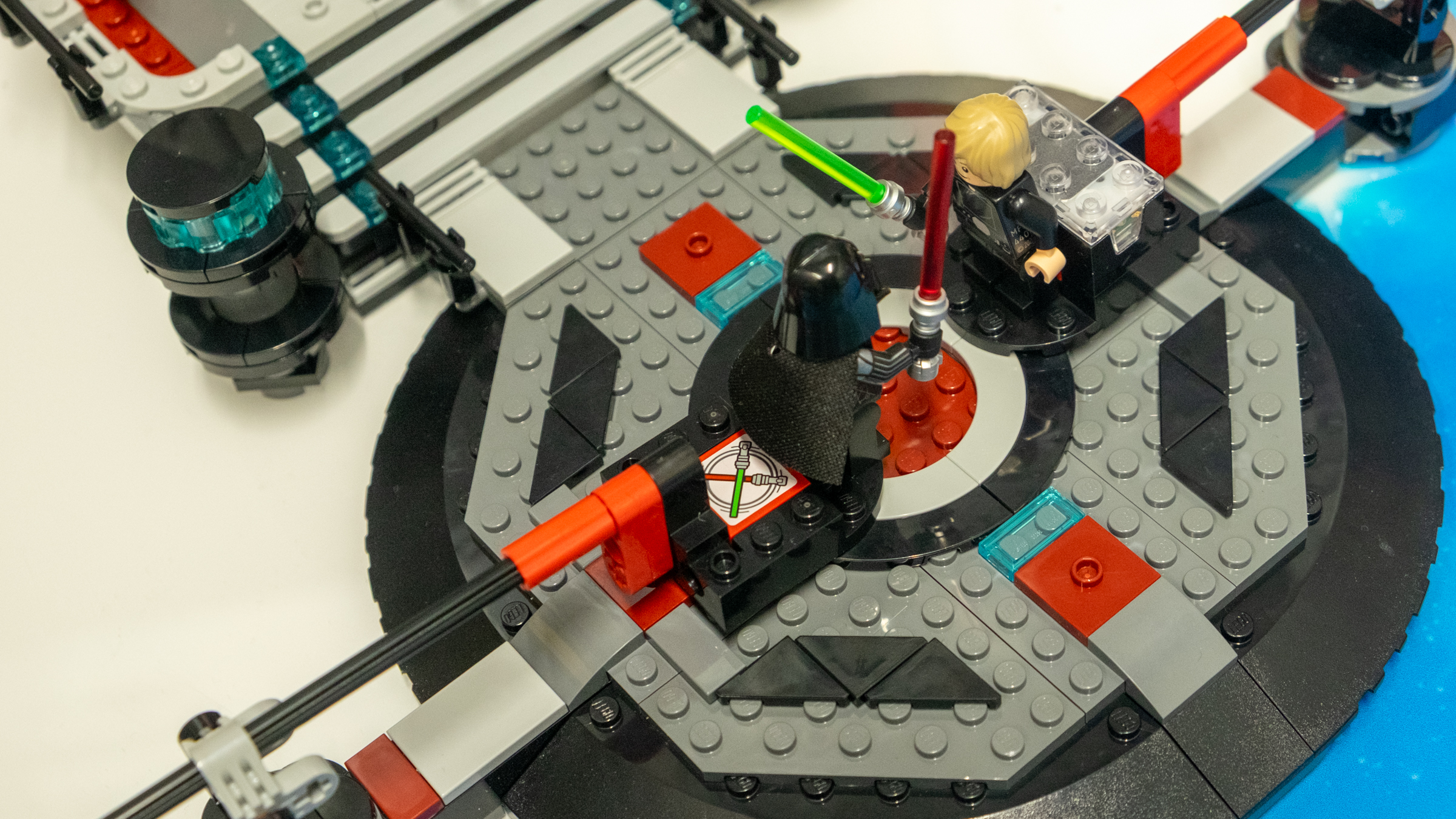
The Smart Brick can similarly sense what specific Smart Minifigures is near it and respond accordingly. Since the first three Smart Play sets are all based on Star Wars, it’s a little easier to explain how they interact with the Smart Brick. Take the Throne Room Duel & A-Wing set — it includes Smart Minifigs for Darth Vader, Luke Skywalker and Emperor Palpatine, and there are also Smart Tags that correspond to various actions the characters can take. If you place a Smart Brick behind Palpatine’s throne, the classic “Imperial March” theme will ring out and Palpatine himself will chatter a bit. The Minifigures don’t actually say real words, but they can still embody their characters well enough. Vader, for example, offers his classic breathing sound and exclaim if he’s defeated in a light saber duel.
Lego Smart Play Star Wars sets
Nathan Ingraham for Engadget
That duel is a clever part of this set. There are moveable mounts you can place Luke and Vader on, along with a Smart Brick. To complete the battle scene, a Smart Tag tells the brick to take on the characteristics necessary for a light saber battle. As such, when you place the Minifigures in the mount, you’ll hear the classic sound of a light saber humming to life. And if you move the characters around and crash them together, you’ll hear the sounds of battle. Finally, knocking a Minifigure off its spot will tell the brick associated with that character to make their trademark sound of defeat — in Vader’s case, that’s the iconic “noooooooo.”
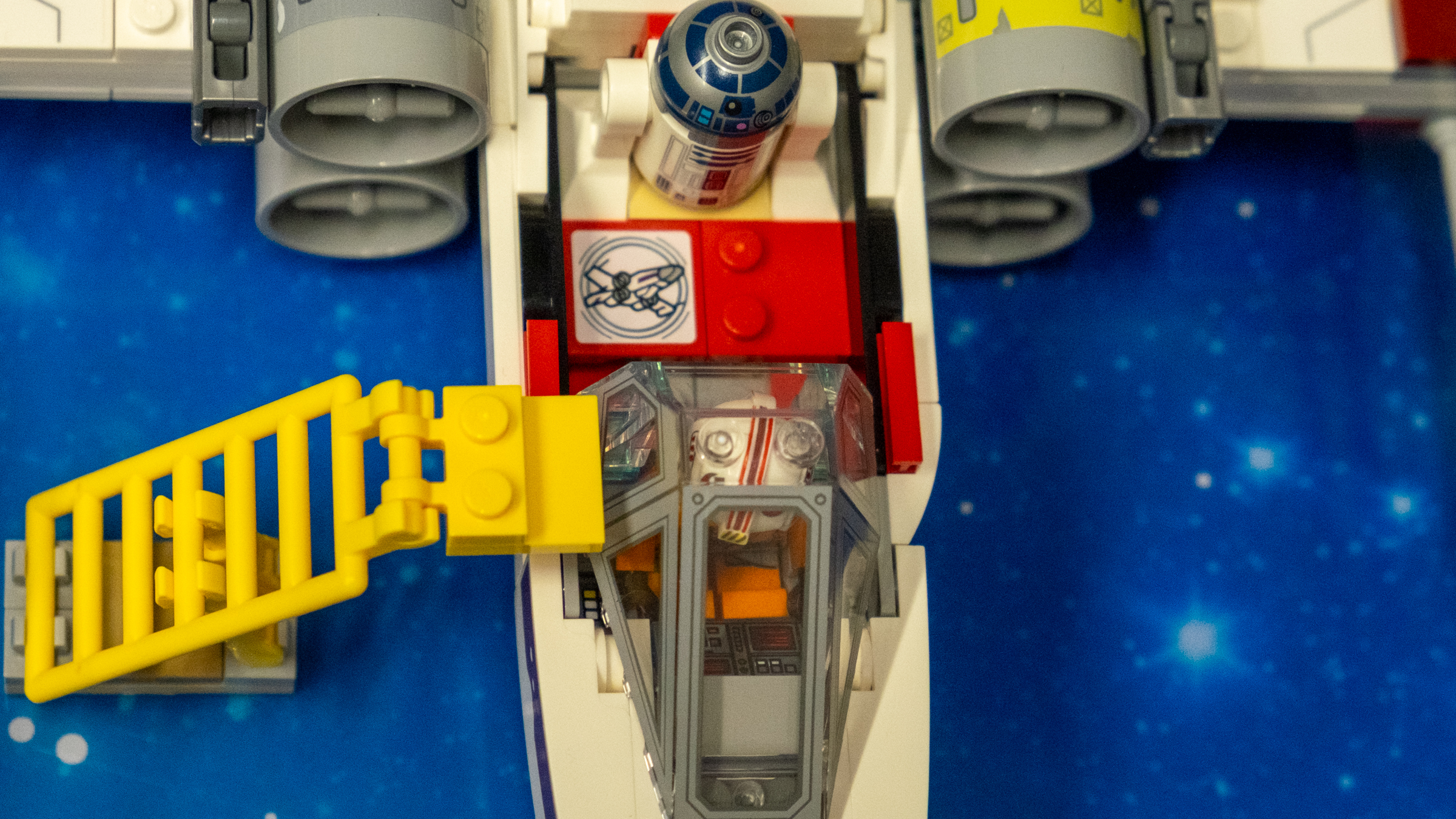
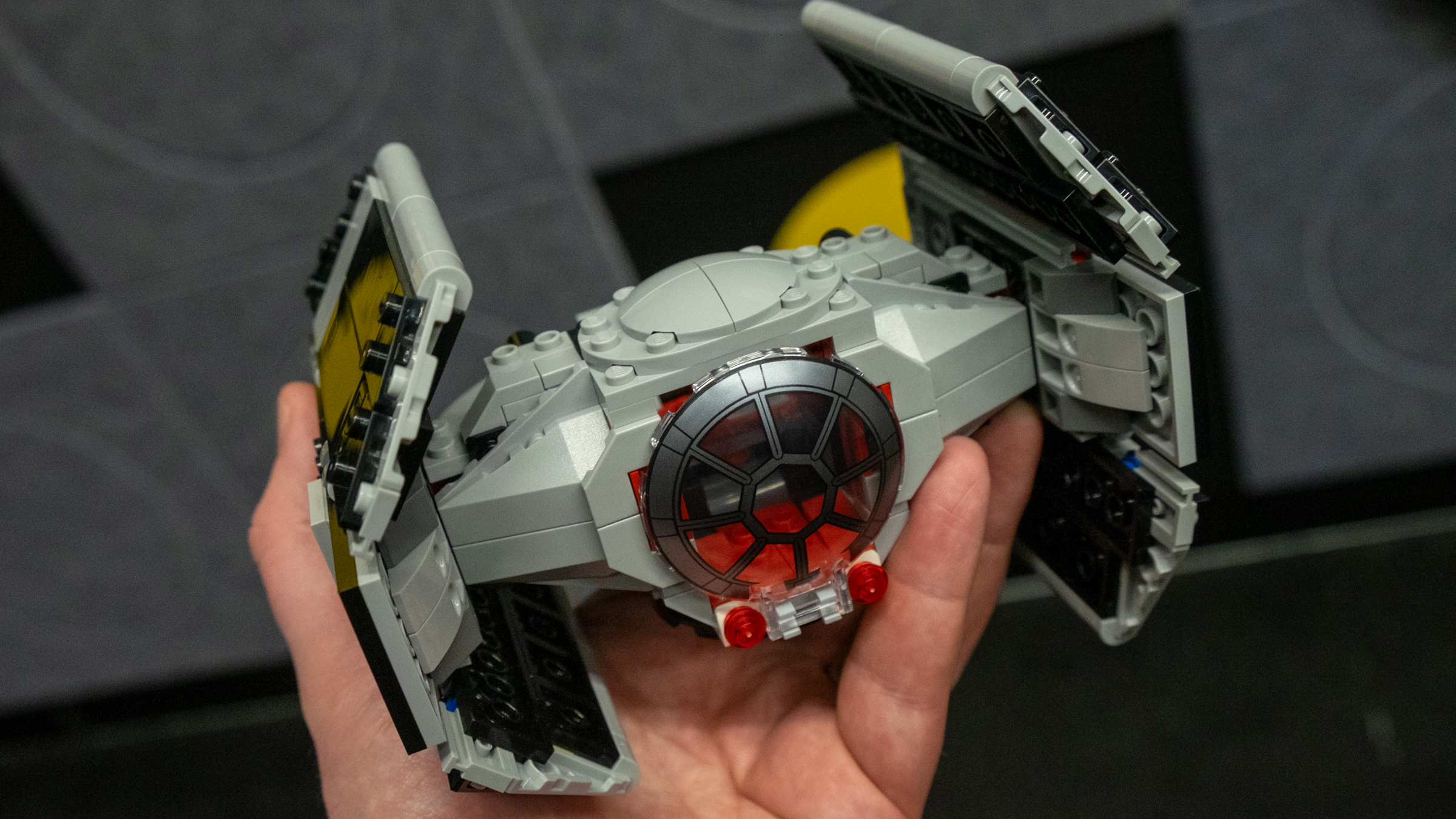
The other two new Smart Play sets are Darth Vader’s TIE Fighter and Luke’s Red Five X-Wing — an ideal pair for some space-based dogfighting. The X-Wing shows off how good the Smart Brick is at handling multiple inputs. Adding it to the X-Wing will make sounds of the ship humming to life, thanks to the X-Wing-specific Smart Tile. Sit Luke in the cockpit and you’ll hear the Jedi theme music play, and seating R2-D2 in the back will make the Droid chatter at you in its familiar tones.
The Smart Tile is how the Smart Brick identifies this set as an X-Wing figher.
Nathan Ingraham for Engadget
Pitting the two ships against each other shows off more of the Smart Brick’s capabilities. Grabbing the ships and whooshing them through the air will make the Smart Brick play sounds that aren’t just generic engine noises — you can definitely hear the difference between the X-Wing and the TIE fighter. Each ship also has lasers you can activate, and if two kids are in the same room flying ships around and firing off lasers, you’ll hear the ships taking “damage” as well. Firing enough shots while aiming at another ship will eventually cause it to play some exploding sounds to indicate that it has gone up in flames — the Minifigures associated with the ship will also make sounds of dismay, as well.
At first glance, the sets themselves don’t feel wildly different than other smaller-scale Star Wars sets, but the people from the Lego Group giving the demo pointed out a few notable characteristics. The TIE fighter and X-Wing are both specifically designed to withstand more abuse from active play scenarios than the average Lego set, and they’re also specifically designed to fit will in a kid’s hand so they can run around and propel them through the air. The Throne Room set, meanwhile, has a detachable area where Luke and Vader can battle — you can remove and re-attach it to the throne area easily enough, but it’s good to separate it out for more aggressive light saber battles.
Lego Smart Play Star Wars sets
Nathan Ingraham for Engadget
All told, I’m quite excited to see where Lego goes with its Smart Play system from here. Starting out with some simpler sets from a massive franchise like Star Wars is a logical way to introduce the system. There are obvious play scenarios that make perfect sense as a way to show off the Smart Brick. But I’m looking forward to a time when Lego starts selling tiles and Minifigures that can expand the capabilities of existing sets, whether they’re licensed or not. And the idea of smushing together Star Wars with some of the many other properties that Lego has access to (Jurassic World? DC or Marvel? Despicable Me or Bluey?) feels like just the kind of chaotic fun kids will love having.
That’s perhaps the most important point about Smart Play. While Lego has made major overtures for capturing the hearts and wallets of adult Lego fans, Smart Play is very clearly aimed at kids right now. There are no screens, apps or setup needed for Smart Play — it seems exceedingly easy to just pick up and start playing. Furthermore, Lego is using this technology to make Lego sets more interactive, something the company hopes will encourage more social play amongst kids. That’s a solid use of the technology packed into a Smart Brick if you ask me.
This article originally appeared on Engadget at https://www.engadget.com/entertainment/lego-smart-play-hands-on-using-technology-to-get-kids-to-play-together-133000436.html?src=rss
There’s much to discuss, including crucial course segments, powerup usage, bike decisions, and strategic options. Let’s go!
Looking at the Route
Yorkshire’s 2019 Worlds Harrogate Circuit is 13.9km long with 245m of elevation gained per lap. A and B teams will be racing three laps of the course for a total of 41.6km with 737m of elevation, while C and D teams will race two laps for 27.8 km with 492m of elevation. Here’s the lap profile:
As you can see, this route is never flat. Racing well on this course requires constant heads-up riding, and the ability to put in hard 1-3 minute efforts to maintain position on climbs.
Out of the start pen you’ll get a feather powerup at the lap arch, then the road turns a hard right, and the first climb begins. The Otley Road climb is 1.8km long and averages just 3.1%. Even though this isn’t a points segment, efforts will lift, and you can expect some riders to get dropped.
Tip: With a rather low average gradient, speeds will be high enough for drafting to play a significant role, so hold onto those wheels!
A few lumps and bumps bring us to the steepest descent on the route, down Pot Bank. Play this one right with momentum and/or powerups and you may be able to bridge up to riders ahead. Play it wrong, and you’ll get dropped!
Then we climb up a bit from Pot Bank, descend to the river, and begin the Yorkshire KOM, our first points segment. At 1.2km and 5.5% average, this is the second key selection point for the race, and the place where the biggest efforts will happen each lap:
You’ll get an aero powerup at the KOM arch, perfect for use on the upcoming sprint or perhaps the finishing sprint on the final lap.
Descend from there and turn a hard left onto Cornwall Road, AKA Millionaire’s Row. A short climb will sap the legs, then you’ll turn a hard right and hit the Yorkshire Sprint start line, the second points segment on each lap. The finish line isn’t even visible until the final ~10 seconds, so this is a tricky sprint for sure!
Grab a feather powerup at the sprint arch, then enjoy the short descent before proceeding over a couple of lumps and a quick climb back to the lap start/finish banner.
That’s one lap done. But you’ve got one or two more to go!
For this race, specific powerups will be given at each arch:
Feather at Lap banner
Aero at KOM banner
Feather at Sprint banner
Lightweight (feather): reduces your weight by 10% for 30 seconds. Use on climbs, when weight matters the most. These will be most helpful on the steepest parts of the Yorkshire KOM.
Aero Boost (helmet): makes you more aerodynamic (reduces your CdA by 25%) for 15 seconds. Use at higher speeds (flats and descents), especially when no draft is available (although it is still useful when drafting.) Useful if you’re contesting the sprint for points, or going all in for the finish.
Bike Recommendations
This race’s sawtooth profile definitely make us steer away from pure aero setups and look at climbing bikes and all-arounders instead. Because while a more aero setup has a pure time advantage on laps of the full course, that time advantage evaporates if you get dropped on the first climb!
Our recommendation, then, is to use the new ENVE SES 4.5 PRO wheels paired with one of these bikes:
Of course, your frame’s upgrade status should impact your decision. A fully upgraded Aethos will outclimb the other four frames, but that’s not the case when comparing un-upgraded versions.
Lots of recon events are scheduled on upcoming ZRL routes, led by various teams. See upcoming ZRL recons for this race at zwift.com/events/tag/zrlrecon.
Additionally, riders in the Zwift community do a great job every week creating recon videos that preview the courses and offer tips to help you perform your best on the day. Here are the recons I’ve found (comment if you find another!)
These charts show the maximum points a team of 6 could earn in a race with 60 participants. To learn how ZRL points races work, see this post.
Because the Harrogate Circuit is laid out the way it is, all the points are “hidden” behind challenging short climbs. If you get dropped before the top of the first Yorkshire KOM, you’re out of the running for significant KOM and Sprint points, as well as finishing points.
That said, this is the type of course where lots of riders will get dropped. If that includes you, remember: in ZRL, every point counts. The points you earn by continuing to push from the chase group may just be enough to put your team over the top.
What sort of strategic decisions will we see in this race?
I predict riders will fall into three groups:
Racing snakes: Riders with high ~3-minute power to weight would be well-served to attack the early climbs to thin the pack and drop sprinters. Once the big selection is made, the front pack will just need to keep the pace high enough to stay away and mop up all the big points. (It worked for MvdP in 2019… until he blew up!)
Puncheurs: If your VO2 power lets you hold your own on climbs, but you’ve also got some pure watts in your sprint legs, you may just be in the sweet spot to grab a lot of points in the race. (Alternatively, if the climbers rip your legs off on the KOMs, but you still survive in the front group, you can at least repay the favor by taking the sprint points.)
I’m a survivor: Not sure how you’ll fare on one KOM, let alone two or three, plus that blasted Otley Road climb? You’re not alone. At least ZRL’s FAL points structure gives everyone something to fight for. Remember: every point matters, and sometimes you can chase back on the descents!
Your Thoughts
Any insights or further thoughts on this race? Share below!
An anonymous reader quotes a report from TechCrunch: The founder of a U.S.-based spyware company, whose surveillance products allowed customers to spy on the phones and computers of unsuspecting victims, pleaded guilty to federal charges linked to his long-running operation. pcTattletale founder Bryan Fleming entered a guilty plea in a San Diego federal court on Tuesday to charges of computer hacking, the sale and advertising of surveillance software for unlawful uses, and conspiracy.
The plea follows a multi-year investigation by agents with Homeland Security Investigations (HSI), a unit within U.S. Immigration and Customs Enforcement. HSI began investigating pcTattletale in mid-2021 as part of a wider probe into the industry of consumer-grade surveillance software, also known as “stalkerware.”
This is the first successful U.S. federal prosecution of a stalkerware operator in more than a decade, following the 2014 indictment and subsequent guilty plea of the creator of a phone surveillance app called StealthGenie. Fleming’s conviction could pave the way for further federal investigations and prosecutions against those operating spyware, but also those who simply advertise and sell covert surveillance software. HSI said that pcTattletale is one of several stalkerware websites under investigation.
Klipsch hasn’t debuted new headphones in years, but that’s going to change in 2026. At CES, Klipsch announced the upcoming Atlas hi-fi series that includes wireless and both closed and semi-open back models. All three are expected to arrive this summer, but the company hasn’t announced pricing or many details on any of them just yet. However, I was able to listen to the Atlas HP-1, the wireless model with active noise cancelation (ANC).
Without going into specifics, Klipsch says the HP-1 is designed for both daily wear and travel. This is thanks to the combination of light weight, comfort and “standout” battery life. Inside, coaxial drivers provide the company’s warm signature sound profile. Third-party support for spatial audio and hearing compensation is also in the works. This concludes the info Klipsch announced this week.
After seeing the HP-1 in person at CES, I can tell you they look quite similar to Bowers & Wilkins recent headphones designs. Klipsch has opted for wood accents on the outside of the ear cups, likely as a nod to its speaker heritage. But the combination of leather and metal, as well as the headband and ear cups, remind me a lot of B&W’s Px7.
Klipsch Atlas HP-1
Billy Steele for Engadget
During my brief time with the HP-1, the excellent sound quality was the thing that stood out most. Klipsch is demoing the headphones with lossless audio over USB-C, so it will be interesting to see what the audio is like in wireless mode. However, the company’s trademark warmth and deft tuning is immediately apparent, giving preference to highs and mids without overbearing bass. There’s ample low-end tone, but it compliments everything else and didn’t overpower in the Rage Against The Machine songs and other tracks I listened to.
It’s difficult to paint a comprehensive picture here since I wasn’t only really able to observe sound quality — and only for a short time. But the HP-1 is certainly a premium set of headphones that are comfy to wear (at least for the few minutes I wore them) and definitely sound good. The biggest downside will likely be price, which I expect to be at least $500.
This article originally appeared on Engadget at https://www.engadget.com/audio/headphones/klipsch-atlas-hp-1-hands-on-a-return-to-hi-fi-headphones-at-ces-2026-130000415.html?src=rss
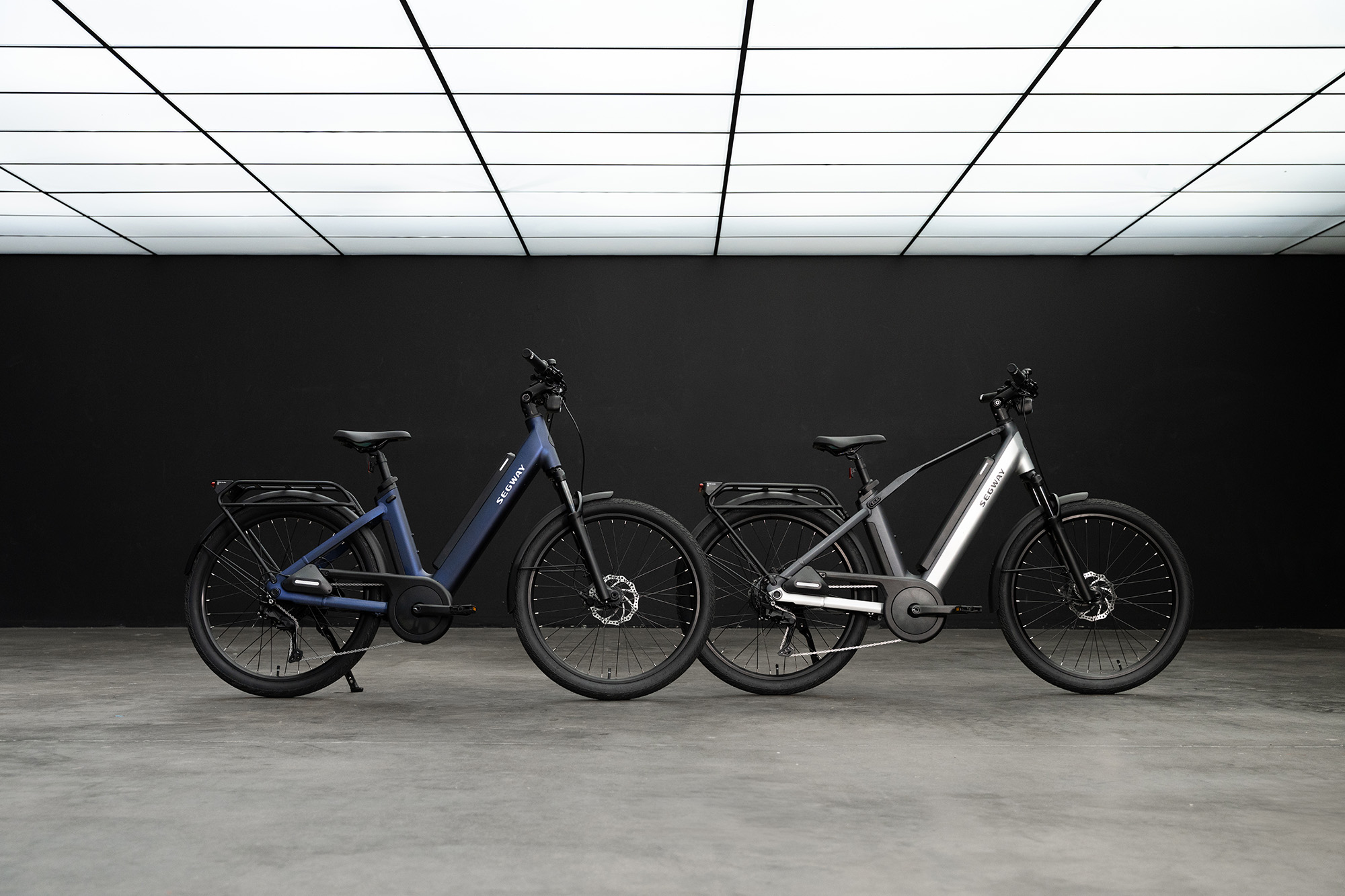
Segway has revealed two new electric bikes, the Myon and Muxi, promising to “lower the barrier to entry and make cycling genuinely accessible for everyone”.
Both bikes appear more conventional than the brand’s previous offerings, but use Segway’s Intelligent Ride System.
This system includes electronic shifting, automatic lights and advanced security features, including Apple Find My and AirLock, and a new Lost Mode that enables you to disable the ebikes remotely.
Alongside the bikes, Segway has announced a new range of accessories.
This includes the Xiro Dropper Post, which senses when riders are slowing to a stop and lowers automatically, as well as a rearview radar.
There is only one spec level per bike, with the Muxi priced at $1,699.99 and the Myon at $1,999.99.
The Myon features a step-through frame design that integrates some innovative features.
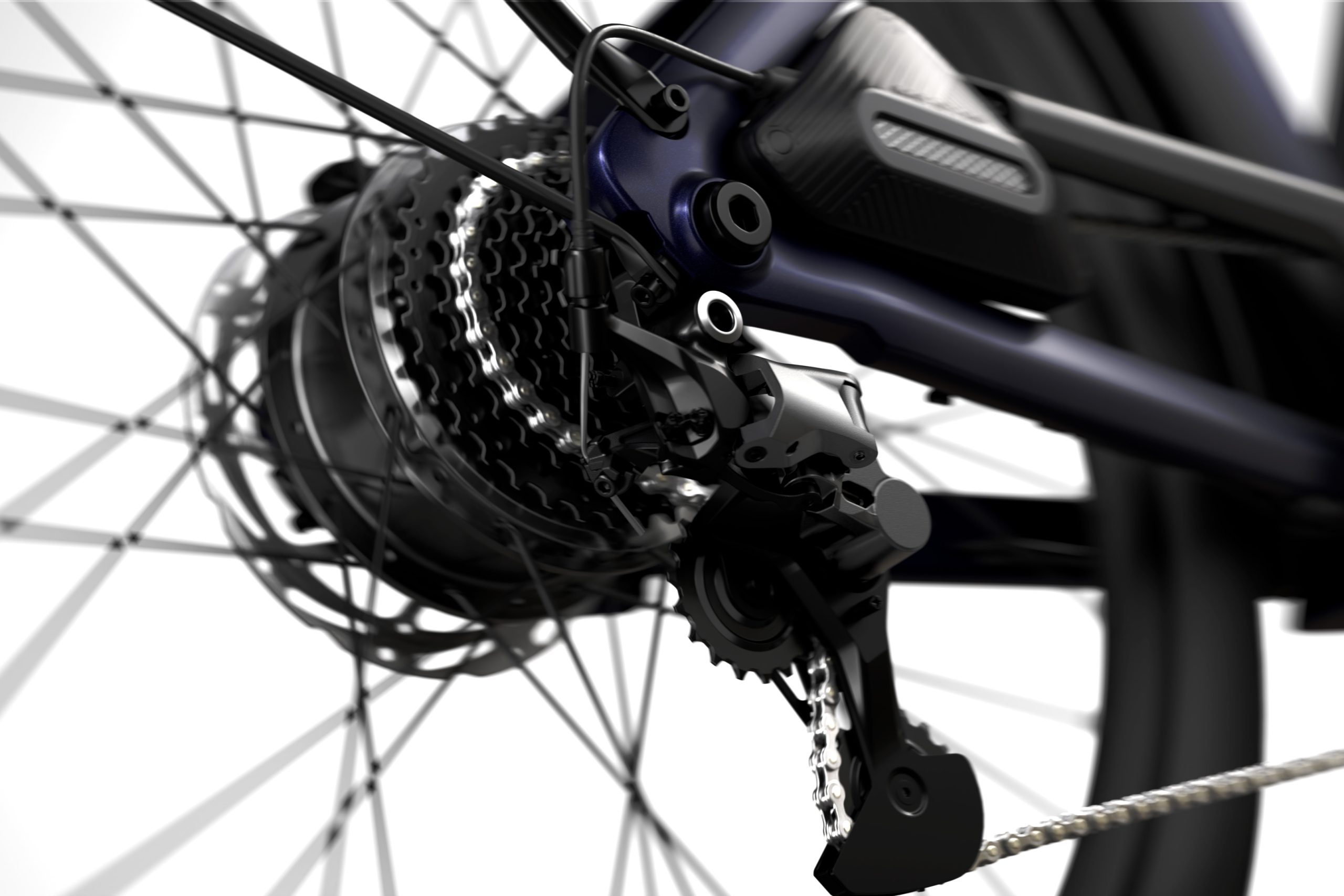
Segway has equipped the bike with electronic shifting, despite the low cost.
The system is powered by the bike’s battery. Segway
This sees easy-to-press +/- buttons on the handlebar, connected to a proprietary servo control unit mounted on the seatstay, which then operates a cable-actuated Shimano Cues derailleur.
The brand says this keeps the cable length minimal, reducing wear, and enables shifting to be fine-tuned in the app.
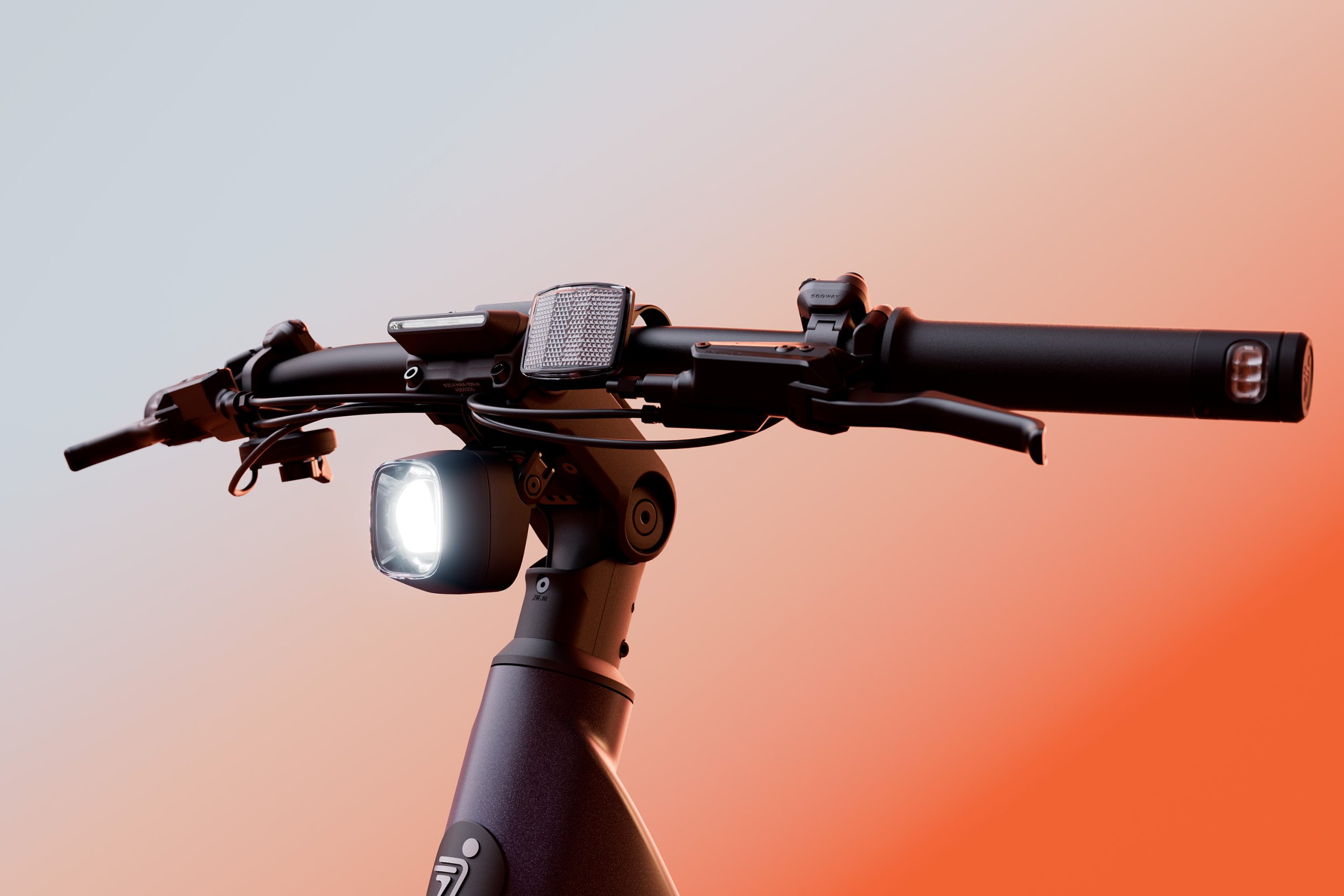
There’s a headlight on the front of the bike. Segway
The Myon also benefits from automatic lights, which increase or decrease output depending on the surrounding environment.
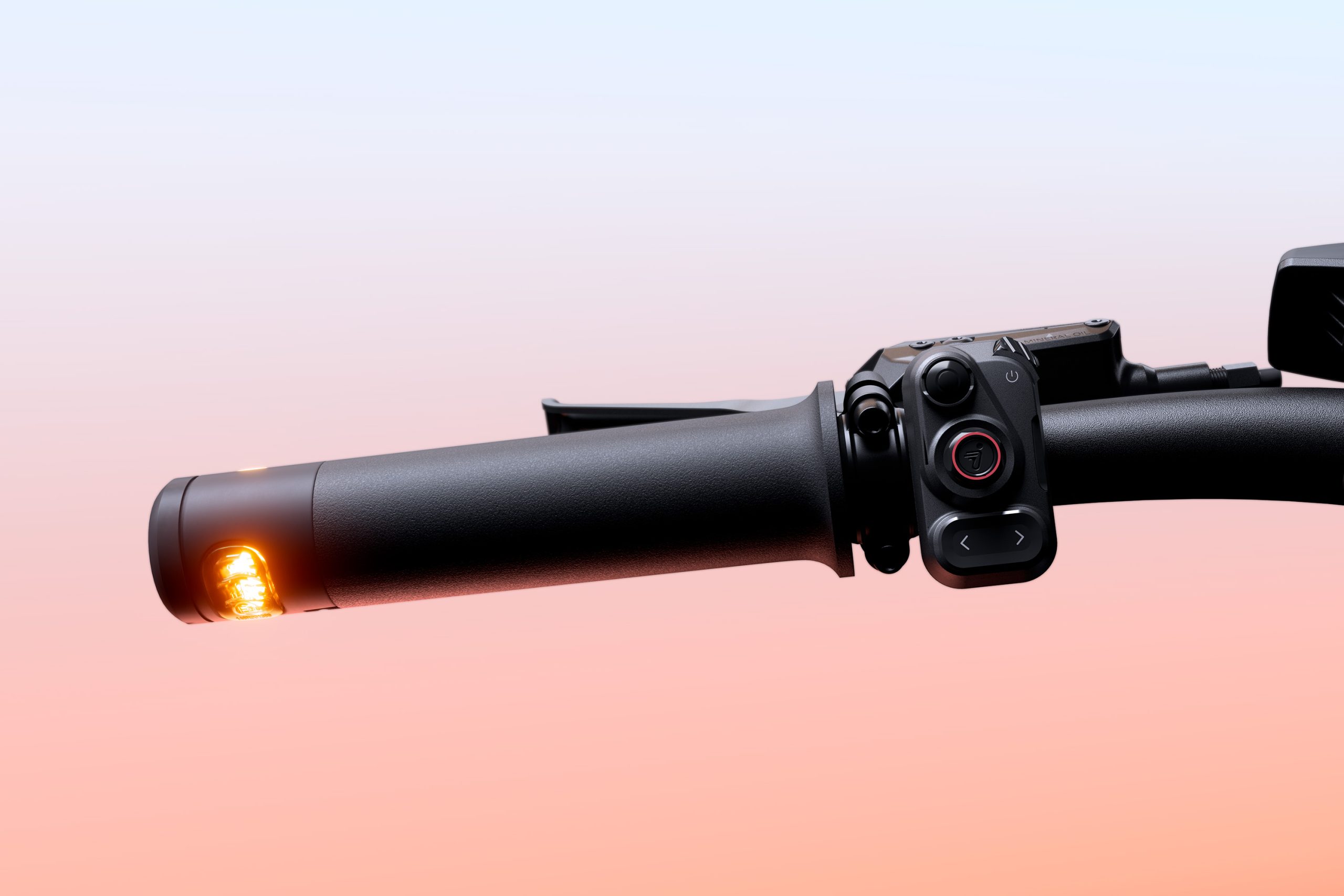
The indicators are incorporated into the handlebar. Segway
It also integrates indicators and brake lights to the rear of the bike, helping to keep other road users aware of your intentions.
A 500W hub motor, combined with a 722W battery, powers the bike, which is said to provide 85Nm of torque and an 80-mile range.
Segway Muxi
Simplicity is prioritised on the Muxi. Segway
The Muxi features a stylish, borderline retro design that is said to offer utility and versatility.
The bike features the same 500W hub motor and 722W battery as the Muxi, but replaces the derailleur with a simpler singlespeed, direct-drive setup.
Segway says the bike has good cargo-carrying capabilities, offering a Passenger Kit that includes a seat, foot pegs and wheel guards.
The Muxi is designed as a cargo bike. Segway
To help in this respect, the bike features a Hill Start Assist function to prevent rollback when starting on an incline, Hill Descent Control for confident descending and reduced brake wear, and Regenerative Braking for improved efficiency.
It also features a Traction Control System, which detects wheelspin and modulates power to help keep riders in control.
Last year delivered doses of drama and excitement in the space business, with a record number of launches, breathtaking vistas of other worlds, and a multitude of breakthroughs and setbacks. 2026 is shaping up to be another thrilling year in the cosmos.
For the first time in more than 54 years, astronauts are training to travel to the vicinity of the Moon, perhaps within the next couple of months. NASA, SpaceX, Blue Origin, and other companies are poised to take major steps toward actually landing humans on the Moon, perhaps within a few years.
New rockets are slated to debut in 2026, and scientists hope to open new windows on the Universe. Here, we list the most anticipated space missions scheduled for this year, ranked according to our own anticipation for them. We also assess the chances of these missions actually happening in the next 12 months. Unless specified, we don’t assess the chances of a successful outcome.
MTV shut down its remaining 24/7 music channels in several countries, including the UK and Australia, at the end of 2025. The main MTV network shifted its focus to reality shows long ago and it occasionally dips back into music with things like the Video Music Awards, but this shutdown felt like the end of an era. If you yearn for the days when MTV actually played music videos, though, you might be in luck. A developer who goes by the name of Flexasaurus Rex has paid tribute to the MTV of old with a web app that has several channels of non-stop streaming music.
MTV Rewind has 11 channels at the time of writing, including one that features videos from the original channel’s first day of existence in 1981. There’s a channel dedicated to MTV Unplugged performances, a rap-focused stream, one for each decade from the ‘70s to the ‘20s and (my personal faves) 120 Minutes and Headbangers Ball options. MTV Rewind has so far pulled in more than 33,000 music videos. That’s over two months worth of music, as Loudwire notes.
“MTV was a cultural institution that changed music, fashion and youth culture. Then they stopped showing music videos and became reality TV,” Flexasaurus Rex said. “I felt a wave of sadness when the announcement hit. Nothing felt like it could fill that void. So I started coding. Built it in 48 hours: MTV Rewind.”
Each channel plays videos in a random order and there’s a shuffle all option if you can’t decide which stream to watch. If a song isn’t hitting for you, just tap the skip button. There are some era-appropriate ads too. For instance, I hadn’t seen this one from the Got Milk? campaign before it popped up. It reminded me of the J. Walter Weatherman gag from Arrested Development:
The app’s database is powered by IMVDb (The Internet Music Video Database). The videos are all pulled from YouTube, one of the things that helped spell the demise of MTV’s 24/7 music channels. There wasn’t exactly a strong case for Total Request Live to stay on the air, for instance, when we have access to practically every music video ever at our fingertips.
One of my favorite things about MTV Rewind is that it has a hit counter like the Geocities of old. So very ‘90s. In fact, the whole thing is rad. Tubular, some might say.
MTV Rewind isn’t associated with MTV or its parent company. However, it does use MTV’s name. Here’s hoping Paramount’s lawyers don’t crack down on this. It’s nice to have fun things on the internet.
This article originally appeared on Engadget at https://www.engadget.com/entertainment/music/mtv-rewind-is-a-developers-tribute-to-247-music-video-channels-120000424.html?src=rss
Natalie Vock as one of the open-source developers on Valve’s Linux graphics team has been spearheading another big ray-tracing performance improvement for the AMD Radeon Vulkan driver. RADV ray-tracing performance improved a lot in 2025 but it’s looking like 2026 could be even more exciting…
A new feature in the queue for likely introduction with the next version of the Linux kernel (Linux 6.20~7.0) is compiler-based context and locking analysis. This kernel code depends on the yet-to-be-released LLVM Clang 22 compiler but can provide some powerful insights to kernel developers…
For those with Acer laptops running Linux on GitHub there has been an out-of-tree driver providing an experimental “acer-wmi-battery” kernel module to allow controlling battery-related features. Now a cleaned-up version of that driver is working on getting into the mainline Linux kernel…
Back in October was an initial proposal for a DRM splash screen client for the Linux kernel that would be primarily useful for embedded systems for rendering a simple “splash screen” when updating the system firmware/software, early display activation at boot, during system recovery, or similar processes. Sent out today was a second revision to the DRM splash screen code…
Philips Hue has introduced a new software feature called SpatialAware at CES 2026 designed to ensure that all the lights in a space are in harmony with each other. Available exclusively for the Hue Bridge Pro, it takes into account each light point in a room and tailors the colors to ensure a natural representation. “In a sunset scene, for example, the lights on one side of the room emit warm yellow tones to mimic the setting sun, while the ceiling lights on the opposite side reflect darker shades,” the company wrote on its blog. The new feature is set to launch in the spring of 2026.
To use the feature, you scan a room with your smartphone camera and use augmented reality to determine the positions of individual lights. A smart algorithm then ensures each light point is coordinated. Any lamps added after setup will be taken into account. Then, you use SpatialAware to select a scene like “Lake Mist” and activate the mode.
Philips Hue room without SpatialAware
Philips Hue
In the example at top, the company shows how all the lights in a room are “no linger mixed together in a colorful jumble [above] but are perfectly coordinated. The same applies, for example, to the gradient color transitions of corresponding products, where SpatialAware even takes the orientation into account.”
Philips Hue also introduced a few other features. To start with, the company is adding support for migrating multiple Hue Bridges to a single Bridge Pro during the setup process. In addition, the Hue Secure Camera, Hue Secure video doorbell and Hue contact sensors will soon work with Apple Home. Users will also see live video with picture-in-picture mode on Apple TV and get real-time alerts on the Apple Home app.
The Hue AI assistant has been updated so you can now creation automations based on natural language requests — for instance, “wake me up at 6:45 AM every day except on Wednesdays.” New AI assistant languages have been added (Dutch, German and Spanish) and the Hue app will start showing automations within the rooms and zones they’re set to control, so you won’t need to jump around in the app as much. All those new features are set to arrive in Q1 2026.
This article originally appeared on Engadget at https://www.engadget.com/home/smart-home/philips-hue-spatialaware-feature-harmonizes-all-the-lights-in-a-room-101843600.html?src=rss
Ritchie Torres has introduced a bill to ban government officials from using insider information to trade on political prediction markets like Polymarket. The bill was prompted by reports that traders on Polymarket made large profits betting on Nicolas Maduro’s removal, raising suspicions that some wagers were placed using material non-public information. “While such insider trading in capital markets is already illegal and often prosecuted by the Justice Department and Securities and Exchange Commission, online prediction markets are far less regulated,” notes Axios. From the report: Rep. Ritchie Torres’ (D-N.Y.) three-page bill, a copy of which was obtained by Axios, is called the Public Integrity in Financial Prediction Markets Act of 2026. It would ban federal elected officials, political appointees and bureaucrats from making insider trades on prediction sites sites such as Polymarket. Specifically, the bill prohibits such government officials from trading based on information that is not publicly available and that “a reasonable investor would consider important in making an investment decision.” […] It’s not clear if House Speaker Mike Johnson (R-La.) would put Torres’ bill to a vote in the House or if President Trump would sign it. “We’re looking at the specifics of the bill, but we already ban the activity it cites and are in support of means to prevent this type of activity,” said Elisabeth Diana, a spokesperson for the prediction website Kalshi.
Diana added that the “activity from the past few days” did not occur on their platform.
To mark the start of 2026, we’re releasing a special episode of our Hello World podcast, which reflects on the key developments in computing education during 2025 and considers the trends likely to shape the year ahead.
Hosted by James Robinson, the episode brings together a conversation between three Foundation team members — Rehana Al-Soltane, Dr Bobby Whyte, and Laura James — and perspectives from colleagues and partners in Kenya, South Africa, and Greece.
The podcast is framed around three major themes that defined 2025: data science, AI literacy, and digital literacy, all of which continue to play an increasingly important role in education systems worldwide.
From a research perspective, Bobby explains that 2025 was about pulling together what we already know and making sense of it, to better understand what good data science education should look like, including curriculum design, pedagogy, and appropriate tools.
Laura focuses on resilience and creativity in computing education, as well as the growing presence of more personalised forms of artificial intelligence, which present both significant opportunities and complex ethical challenges.
The episode also examines barriers to the adoption of computing and AI education, including teacher confidence, limited access to devices, restrictive school IT policies, and the need for translated and localised resources.
Contributions from our colleagues around the world highlight stark contrasts in educational contexts, with challenges such as funding constraints, connectivity issues, and teacher training needs, alongside examples of innovation where educators are adequately supported.
What’s ahead
Looking ahead to 2026, Rehana outlines the potential of interdisciplinary approaches to AI literacy, integrating AI concepts into subjects such as geography, history, languages, and the arts to increase relevance and engagement (look out for our upcoming research seminar series on the topic).
Bobby anticipates a gradual shift towards more data-informed approaches to computing education, with greater emphasis on classroom-based trials and research that directly informs practice.
Laura offers a strong call to renew focus on cybersecurity education, arguing that security and safety must remain central as digital systems and AI technologies continue to evolve.
In a series of concise predictions, the speakers point to increased attention on explainable AI, wider integration of AI literacy across the curriculum, and renewed concern for digital safety and security.
More from Hello World
You can subscribe to Hello World and listen to the full podcast episodes from wherever you get your podcasts. Or you can find this and previous Hello World podcasts on our podcast page.
Also check out Hello World magazine, our free digital and print magazine from computing educators for computing educators.