Another first-party Xbox game is making the leap to PlayStation 5. This time around, Obsidian’s Avowed — one of our favorite games of last year — is crossing the great divide. The fantasy action RPG will hit Sony’s console on February 17, one day shy of the game’s first anniversary.
As it happens, an anniversary update is set to go live on all platforms at the same time. This includes a new game+ mode (allowing those who have beaten the RPG to replay it with all their gear and upgrades from their previous run), a photo mode, a new weapon type and more.
Avowed is set in the same universe as Obsidian’s Pillars of Eternity games. It tasks you with investigating a fungal plague that has infested the world. “The writing is stellar throughout, though the sidequests that reveal your companions’ backstories are particularly poignant,” Engadget senior reporter Jessica Conditt wrote. “Avowed is gorgeous, its combat systems are fully customizable, its characters are intriguing and its encumbrance limit is generous. There’s a real sense of magic about the entire game — and no, that’s not just the mind-altering mushrooms talking.”
Microsoft has brought a string of first-party Xbox games to PS5 over the last couple of years, freeing them from console exclusivity. Forza Horizon 5, Indiana Jones and the Great Circle, Senua’s Saga: Hellblade II and Sea of Thieves are among the games that have crossed over to PlayStation. Later this year, you’ll even be able to play a Halo game on PS5, something that was utterly unthinkable not too long ago.
This article originally appeared on Engadget at https://www.engadget.com/gaming/playstation/xbox-is-bringing-avowed-to-ps5-120000035.html?src=rss
Sometimes a little guidance goes a long way when it comes to maintaining or improving your fitness, and Strava’s latest feature aims to provide just that.
Yesterday, the app rolled out its new Instant Workout feature globally. Instant Workouts will analyse your prior activities and provide recommendations on what you can do next.
The feature trialled with a subset of users in November and is now available for more than 40 sports, including cycling.
It’s another piece in Strava’s broader development, which has seen the fitness app eye up big moves in its future.
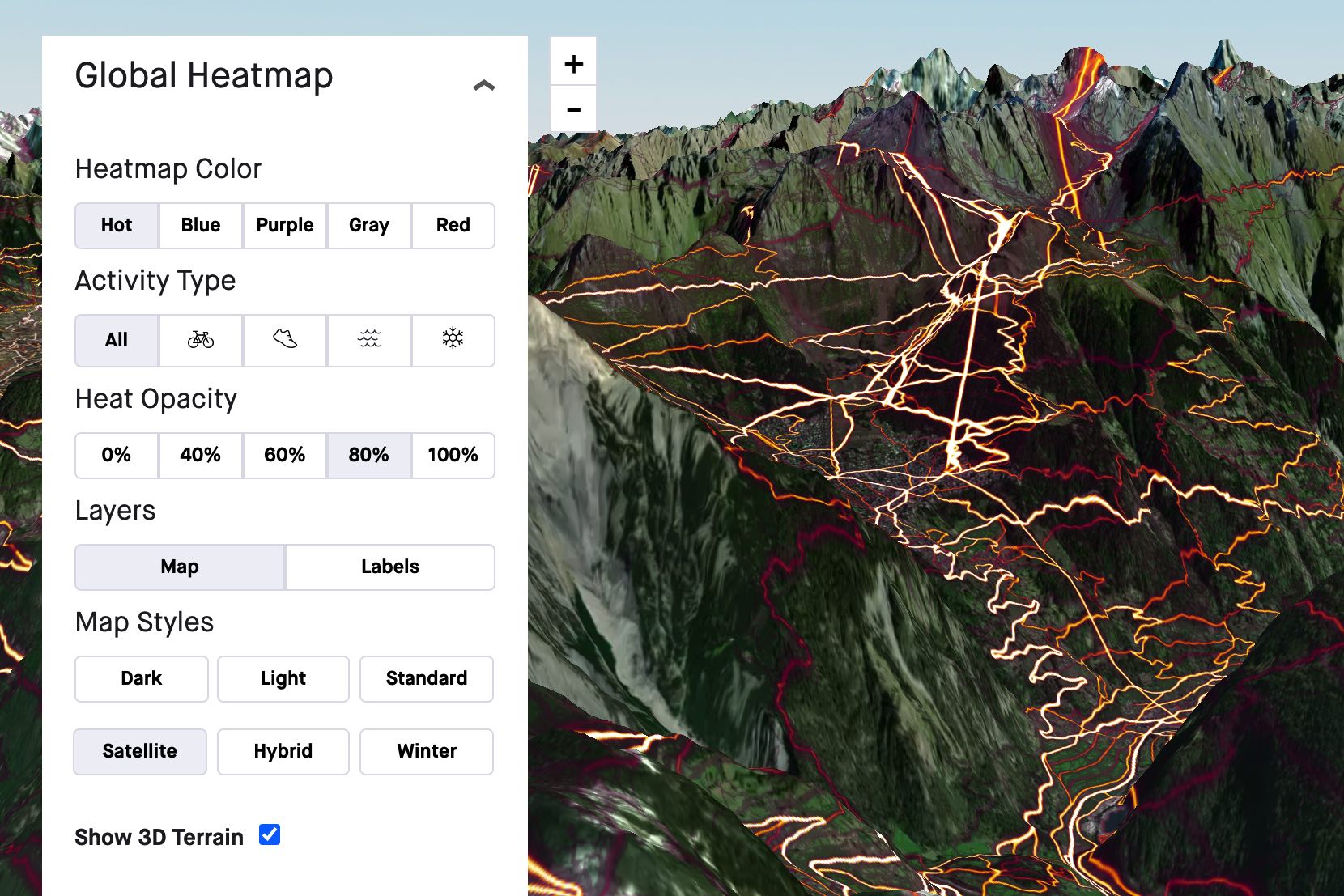
Strava’s latest feature uses its Heatmap data if a suggestion requires a route. Strava
Strava says Instant Workouts are “intended to provide inspiration for athletes to stay consistent, especially for those who are looking to build an exercise habit or get back into things after a break.
“For users who have a regular workout routine, Instant Workouts can bring variety and fresh ideas to keep movement fun. And, since the suggestions are based upon prior activity, the more users upload, the more personalized the recommendations become,” Strava says.
The snag is the feature is only available for paid subscribers, with Strava costing £8.99 per month or £54.99 per year.
If that’s you, you can see the Instant Workouts feature in the carousel at the top of the app’s feed.
Instant Workouts enable you to select from four intents – ‘maintain’, ‘ build’, ‘explore’ or ‘recover’ – and will then suggest a variety of workouts across your chosen sports.
Alongside personalised activity suggestions, Instant Workouts will generate a route for activities that require one powered by Strava’s Heatmap, which shows where users have been active.
Strava will also tell you why it’s recommending a particular activity to help you “learn a bit more about certain types of workouts and how that fits into their own activity history”.
Why has Strava released Instant Workouts?
Strava recently updated its Apple Watch app. Strava
Over the last year, we’ve seen Strava undertake a period of “accelerated growth”, which has seen the app develop into a more advanced training tool.
Last year, Strava acquired The Breakaway and Runna, two apps that provide personalised training recommendations for cycling and running, respectively.
Now its Instant Workouts feature seems to build on those acquisitions, and Strava says some users will even see workout recommendations from its partners, including Runna.
Instant Workouts will also evolve in the coming weeks and months, fitting into a growth area for the app: uploads from Apple Watches. Strava revealed in September that uploads to the app from Apple Watches increased by nearly 20 per cent in 2024, which prompted it to redesign its app for the smartwatch.
Strava says you will be able to send workout recommendations to your Apple or Garmin device.
All these developments reflect Strava’s ambition to motivate people to lead active lives, but also Strava’s bigger ambitions.
Since he became Strava’s CEO in 2024, Michael Martin has been on a mission to add tools to the app to boost users and paid subscribers.
This appears to be working. Strava had 50m users in 2025 and saw a huge spike in downloads. It also closed a massive $2.2 billion funding round in May 2025.
All this success and growth has led Strava to seek a public offering, even if the app remains tight-lipped on when that will happen.
The European Commission has opened a public consultation on a new Open Digital Ecosystems strategy focused on open source, security, and EU tech sovereignty.
There is another open-source Radeon Vulkan driver (RADV) improvement to look forward to in the upcoming Mesa 26.0 release that was worked on by one of Valve’s Linux graphics driver developers…
The QEMU emulator already deprecated 32-bit host CPU support while for the QEMU 11.0 release this year they could eliminate the 32-bit host support for good…
Now past the end-of-year holidays, this round of Direct Rendering Manager (DRM) fixes for the in-development Linux 6.19 are a bit more meaningful following those light holiday weeks. Sent out today were the DRM fixes for Linux 6.19-rc5 that includes a fix for broken support for newer NVIDIA GPUs on the Nouveau open-source driver…
Valve released the SteamOS 3.7.20 beta overnight and with it they are finally building the NTSYNC kernel driver for helping accelerate Windows NT synchronization primitives…
The latest work by Qualcomm on the RISC-V CPU architecture is sending out their first non-RFC patch series for enabling Reliability, Availability and Serviceability (RAS) support by making use of the RISC-V RERI specification. This RISC-V RAS support is useful for conveying hardware errors to users and will be especially important with future RISC-V Linux servers…
alternative_right shares a report from ScienceAlert: At the Experimental Advanced Superconducting Tokamak (EAST), physicists successfully exceeded what is known as the Greenwald limit, a practical density boundary beyond which plasmas tend to violently destabilize, often damaging reactor components. For a long time, the Greenwald limit was accepted as a given and incorporated into fusion reactor engineering. The new work shows that precise control over how the plasma is created and interacts with the reactor walls can push it beyond this limit into what physicists call a ‘density-free’ regime.
[…] A team led by physicists Ping Zhu of Huazhong University of Science and Technology and Ning Yan of the Chinese Academy of Sciences designed an experiment to take this theory further, based on a simple premise: that the density limit is strongly influenced by the initial plasma-wall interactions as the reactor starts up. In their experiment, the researchers wanted to see if they could deliberately steer the outcome of this interaction. They carefully controlled the pressure of the fuel gas during tokamak startup and added a burst of heating called electron cyclotron resonance heating.
These changes altered how the plasma interacts with the tokamak walls through a cooler plasma boundary, which dramatically reduced the degree to which wall impurities entered the plasma. Under this regime, the researchers were able to reach densities up to about 65 percent higher than the tokamak’s Greenwald limit. This doesn’t mean that magnetically confined plasmas can now operate with no density limits whatsoever. However, it does show that the Greenwald limit is not a fundamental barrier and that tweaking operational processes could lead to more effective fusion reactors. The findings have been published in Science Advances.
Brompton’s latest accounts reveal losses of £2m and a drop in sales, but the folding bike company says its outlook “remains optimistic”.
In its accounts for the 12 months to 31 March 2025, CEO Will Butler-Adams writes: “It was a year of balanced outcomes, marked by both significant achievements and setbacks.”
The company saw a 7.5 per cent drop in bicycle sales from 84,899 the previous year to 78,530. This was “driven by wider global economic uncertainty and continued challenges in the cycling industry”. But revenue fell by just under 1 per cent to £121.5m, and a shift towards more premium products in its range meant Brompton saw an increase in revenue per bike sold.
Butler-Adams says the investment in research and development, which led to the launch of the Brompton G Line, its first larger-wheeled folding bike, “bore fruit”. Launched in the UK and EU in September 2024, the G Line contributed approximately 9 per cent of sales by volume and 9.8 per cent of its turnover.
Brompton’s CEO Will Butler-Adams. Brompton
Brompton’s pre-tax profits increased from £4,602 in 2024 to £130,476, but after taxation the loss increased from £1,046,324 in 2024 to £2,080,303 in 2025.
When Brompton revealed its low 2024 profits, Butler-Adams said he remained positive about the company’s future – a sentiment that continues in the latest accounts.
“Looking forward, the outlook remains optimistic, with normalisation in the cycling industry after consecutive years of challenges, the impending launch of the G Line in new markets, and continued investment in new product lines, which the Brompton Group is excited to release soon,” Butler-Adams says in his strategic report.
Elsewhere, Brompton’s subscription service, where users can pay £35 per month to rent one of its folding bikes, grew by 45 per cent.
The accounts also reveal that APAC is Brompton’s largest market, where it had a turnover of £57.5m compared to £23m in the UK.
The accounts state that Brompton faces a risk of over-dependency on China, which is proving to be a lucrative market for the cycling industry. “China is a key strategic market for us across both supply and sales, but this concentration presents risks, particularly in the event of disruptions,” the accounts read.
Brompton expects further growth from the G Line’s recent Asian launch, plus its line of e-Motiq electric bikes that debuted in the UK in October and will go on sale in the USA soon.
‘Because the AI slop people aren’t going to document their patches as such’Today, it is hard to escape LLM bots and the endless slop they emit, but the Linux kernel might be largely safe … for now.…
Researchers at Stanford University have created a programmable synthetic “skin” that can independently change color and texture, “a feat previously only available within the animal kingdom,” reports the Register. From the report: The technique employs electron beams to write patterns and add optical layers that create color effects. When exposed to water, the film swells to reveal texture and colors independently, depending on which side of the material is exposed, according to a paper published in the scientific journal Nature this week. In an accompanying article, University of Stuttgart’s Benjamin Renz and Na Liu said the researchers’ “most striking achievement was a photonic skin in which color and texture could be independently controlled, mirroring the separate regulation… in octopuses.”
The research team used the polymer PEDOT:PSS, which can swell in water, as the basis for their material. Its reaction to water can be controlled by irradiating it with electrons, creating textures and patterns in the film. By adding thin layers of gold, the researchers turned surface texture into tunable optical effects. A single layer could be used to scatter light, giving the shiny metal a matte, textured appearance. To control color, a polymer film was sandwiched between two layers of gold, forming an optical cavity, which selectively reflects light.
NASA officials said Thursday they have decided to bring home four of the seven crew members on the International Space Station after one of them experienced a “medical situation” earlier this week.
The space agency has said little about the incident, and officials have not identified which crew member suffered the medical issue. James “JD” Polk, NASA’s chief health and medical officer, told reporters Thursday the crew member is “absolutely stable” but that the agency is “erring on the side of caution” with the decision to bring to return the astronaut to Earth.
The ailing astronaut is part of the Crew-11 mission, which launched to the station August 1 and was slated to come back to Earth around February 20. Instead, the Crew-11 astronauts will depart the International Space Station (ISS) in the coming days and head for reentry and a parachute-assisted splashdown in the Pacific Ocean off the coast of California.
An anonymous reader quotes a report from NPR: [I]t turns out that some genius dogs can learn a brand new word, like the name of an unfamiliar toy, by just overhearing brief interactions between two people. What’s more, these “gifted” dogs can learn the name of a new toy even if they first hear this word when the toy is out of sight — as long as their favorite human is looking at the spot where the toy is hidden. That’s according to a new study in the journal Science. “What we found in this study is that the dogs are using social communication. They’re using these social cues to understand what the owners are talking about,” says cognitive scientist Shany Dror of Eotvos Lorand University and the University of Veterinary Medicine, Vienna. “This tells us that the ability to use social information is actually something that humans probably had before they had language,” she says, “and language was kind of hitchhiking on these social abilities.”
[…] “There’s only a very small group of dogs that are able to learn this differentiation and then can learn that certain labels refer to specific objects,” she says. “It’s quite hard to train this and some dogs seem to just be able to do it.” […] To explore the various ways that these dogs are capable of learning new words, Dror and some colleagues conducted a study that involved two people interacting while their dog sat nearby and watched. One person would show the other a brand new toy and talk about it, with the toy’s name embedded into sentences, such as “This is your armadillo. It has armadillo ears, little armadillo feet. It has a tail, like an armadillo tail.” Even though none of this language was directed at the dogs, it turns out the super-learners registered the new toy’s name and were later able to pick it out of a pile, at the owner’s request.
To do this, the dogs had to go into a separate room where the pile was located, so the humans couldn’t give them any hints. Dror says that as she watched the dogs on camera from the other room, she was “honestly surprised” because they seemed to have so much confidence. “Sometimes they just immediately went to the new toy, knowing what they’re supposed to do,” she says. “Their performance was really, really high.” She and her colleagues wondered if what mattered was the dog being able to see the toy while its name was said aloud, even if the words weren’t explicitly directed at the dog. So they did another experiment that created a delay between the dog seeing a new toy and hearing its name. The dogs got to see the unfamiliar toy and then the owner dropped the toy in a bucket, so it was out of sight. Then the owner would talk to the dog, and mention the toy’s name, while glancing down at the bucket. While this was more difficult for dogs, overall they still could use this information to learn the name of the toy and later retrieve it when asked. “This shows us how flexible they are able to learn,” says Dror. “They can use different mechanisms and learn under different conditions.”
It’s been a while since running benchmarks of the Liquorix kernel as an enthusiast-tailored downstream version of the Linux kernel focused on responsiveness for gaming, audio/video production, and other creator/enthusiast workloads. In today’s article is a look at how the latest Liquorix kernel derived from Linux 6.18 is competing against the upstream Linux 6.18 LTS kernel on the same system.
YouTube is updating search filters so users can explicitly choose between Shorts and long-form videos. The change also replaces view-count sorting with a new “Popularity” filter and removes underperforming options like “Sort by Rating.” The Verge reports: Right now, a filter-less search shows a mix of longform and short form videos, which can be annoying if you just want to see videos in one format or the other. But in the new search filters, among other options, you can pick to see “Videos,” which in my testing has only showed a list of longform videos, or “Shorts,” which just shows Shorts.
YouTube is also removing the “Upload Date – Last Hour” and “Sort by Rating” filters because they “were not working as expected and had contributed to user complaints.” The company will still offer other “Upload Date” filters, like “Today,” “This week,” “This Month,” and “This Year,” and you can also find popular videos with the new “Popularity” filter, which is replacing the “View count” sort option. (With the new “Popularity” filter, YouTube says that “our systems assess a video’s view count and other relevance signals, such as watch time, to determine its popularity for that specific query.”)
Longtime Slashdot reader schwit1 shares a report from Reuters: Billionaire entrepreneur Elon Musk persuaded a judge on Wednesday to allow a jury trial on his allegations that ChatGPT maker OpenAI violated its founding mission in its high-profile restructuring to a for-profit entity. Musk was a cofounder of OpenAI in 2015 but left in 2018 and now runs an AI company that competes with it.
U.S. District Judge Yvonne Gonzalez Rogers in Oakland, California, said at a hearing that there was “plenty of evidence” suggesting OpenAI’s leaders made assurances that its original nonprofit structure was going to be maintained. The judge said there were enough disputed facts to let a jury consider the claims at a trial scheduled for March, rather than decide the issues herself. She said she would issue a written order after the hearing that addresses OpenAI’s bid to throw out the case.
[…] Musk contends he contributed about $38 million, roughly 60% of OpenAI’s early funding, along with strategic guidance and credibility, based on assurances that the organization would remain a nonprofit dedicated to the public benefit. The lawsuit accuses OpenAI co-founders Sam Altman and Greg Brockman of plotting a for-profit switch to enrich themselves, culminating in multibillion-dollar deals with Microsoft and a recent restructuring. OpenAI, Altman and Brockman have denied the claims, and they called Musk “a frustrated commercial competitor seeking to slow down a mission-driven market leader.”
Microsoft is also a defendant and has urged the judge to toss Musk’s lawsuit. A lawyer for Microsoft said there was no evidence that the company “aided and abetted” OpenAI.
OpenAI in a statement after the hearing said: “Mr Musk’s lawsuit continues to be baseless and a part of his ongoing pattern of harassment, and we look forward to demonstrating this at trial.”
Canonical is making it easier for ARM64 Ubuntu users like those on the NVIDIA DGX Spark to do a bit of gaming with Steam. Canonical engineers have assembled a Steam Snap for 64-bit ARM that comes complete with the FEX emulator for running Windows/Linux x86-based games on ARM64 Linux…