Autofocusing Smart Glasses With Eye Tracking Tech Could Make Bifocals Obsolete

Autofocusing Smart Glasses With Eye Tracking Tech Could Make Bifocals Obsolete
An eyewear breakthrough by an Amazon-backed Finnish startup, IXI, is promising to end the era of clunky bifocals and the “head-tilt” struggle of progressive lenses, replacing them with a pair of glasses that focus as naturally as the human eye.

Revealed in its latest prototype at CES 2026, the IXI autofocusing glasses specifically target

Why Care About Debt-to-GDP?

Abstract of a paper on NBER: We construct an international panel data set comprising three distinct yet plausible measures of government indebtedness: the debt-to-GDP, the interest-to-GDP, and the debt-to-equity ratios. Our analysis reveals that these measures yield differing conclusions about recent trends in government indebtedness. While the debt-to-GDP ratio has reached historically high levels, the other two indicators show either no clear trend or a declining pattern over recent decades. We argue for the development of stronger theoretical foundations for the measures employed in the literature, suggesting that, without such grounding, assertions about debt (un)sustainability may be premature.


Read more of this story at Slashdot.

“Ungentrified” Craigslist may be the last real place on the Internet

The writer and comedian Megan Koester got her first writing job, reviewing Internet pornography, from a Craigslist ad she responded to more than 15 years ago. Several years after that, she used the listings website to find the rent-controlled apartment where she still lives today. When she wanted to buy property, she scrolled through Craigslist and found a parcel of land in the Mojave Desert. She built a dwelling on it (never mind that she’d later discover it was unpermitted) and furnished it entirely with finds from Craigslist’s free section, right down to the laminate flooring, which had previously been used by a production company.

“There’s so many elements of my life that are suffused with Craigslist,” says Koester, 42, whose Instagram account is dedicated, at least in part, to cataloging screenshots of what she has dubbed “harrowing images” from the site’s free section; on the day we speak, she’s wearing a cashmere sweater that cost her nothing, besides the faith it took to respond to an ad with no pictures. “I’m ride or die.”

Koester is one of untold numbers of Craigslist aficionados, many of them in their thirties and forties, who not only still use the old-school classifieds site but also consider it an essential, if anachronistic, part of their everyday lives. It’s a place where anonymity is still possible, where money doesn’t have to be exchanged, and where strangers can make meaningful connections—for romantic pursuits, straightforward transactions, and even to cast unusual creative projects, including experimental TV shows like The Rehearsal on HBO and Amazon Freevee’s Jury Duty. Unlike flashier online marketplaces such as DePop and its parent company, Etsy, or Facebook Marketplace, Craigslist doesn’t use algorithms to track users’ moves and predict what they want to see next. It doesn’t offer public profiles, rating systems, or “likes” and “shares” to dole out like social currency; as a result, Craigslist effectively disincentivizes clout-chasing and virality-seeking—behaviors that are often rewarded on platforms like TikTok, Instagram, and X. It’s a utopian vision of a much earlier, far more earnest Internet.

Read full article

Comments

Is NVIDIA Still Planning A GeForce RTX 50 Super Refresh? Here’s The Latest

Is NVIDIA Still Planning A GeForce RTX 50 Super Refresh? Here's The Latest
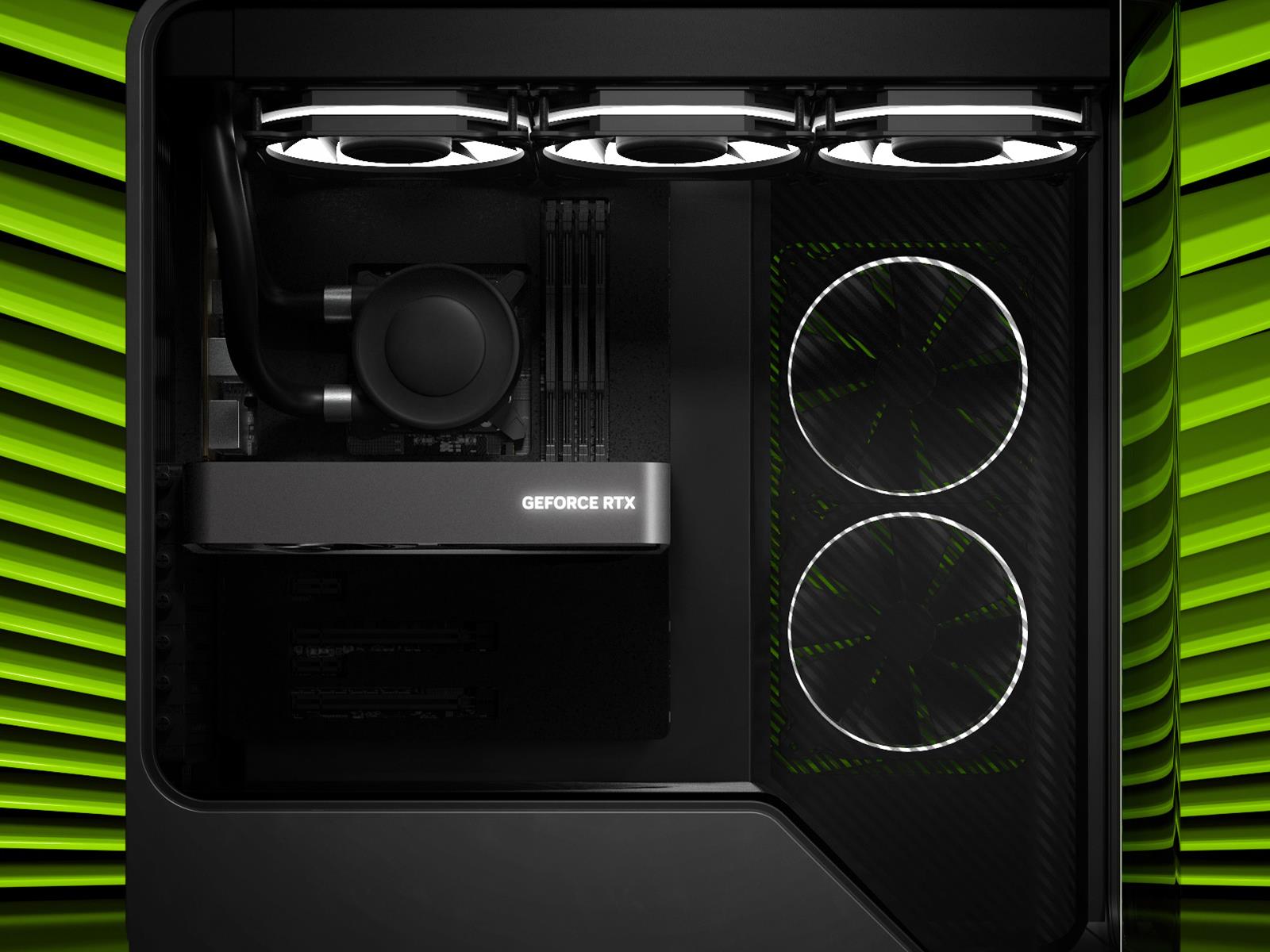
NVIDIA announced some cool tech at the Consumer Electronics Show this week, including upgrades to both its GeForce NOW cloud gaming service and DLSS upscaling with DLSS 4.5 bringing Dynamic Multi-Frame Generation and a newer transformer model. There was other stuff by NVIDIA as well, though no mention of a GeForce RTX 50 Super series refresh.

Why Tech Launches Stopped Feeling Magical

You can pinpoint the exact minute of the high-water mark for tech-based enthusiasm: January 9, 2007, 9:41 AM PST, the moment Apple CEO Steve Jobs introduced the iPhone to the world.

Cell phones weren’t new—neither were cellphones with touch screens—but this one was different: so high-tech it seemed like it couldn’t be real, but so perfectly designed, it felt inevitable. And people were hyped. Not just tech nerds: normal people. The crowd at the 2007 Macworld Conference & Expo broke into rapturous applause when Jobs showed off the iPhone’s multi-touch—an ovation for a software feature!—because it seemed like Jobs was touching a better future.

The iPhone, people said, was like something out of Star Trek. But unlike communicators or tri-corders, it was obtainable (if you had $500) evidence of a future where technology would finally free us from the drudgery of our lives so we could boldly go—wherever, it doesn’t matter.

The science fiction fathers of modern tech

Steve Jobs mentioned Star Trek as an inspiration for the iPhone all the time; apparently the show is quite popular among tech people. Gene Roddenberry created Star Trek, and thus was the spiritual father of the iPhone. He spent the 1960s lounging poolside in Los Angeles, dreaming of a post-scarcity tomorrow where the wise, brave men of The Federation kept the Romulans at bay and there were hot alien chicks on every Class-M planet. At the same time, the future’s real prophet, Philip K. Dick, was huddled in a dank Oakland apartment, a stone’s throw from Silicon Valley, popping amphetamines like breath mints and feverishly typing dystopian visions of corporate surveillance states and nightmare techno-realities into his Hermes Rocket typewriter.

Roddenberry’s Federation promised technology would help humanity evolve beyond its baser instincts. Dick saw technology amplifying our worst impulses.

So what happened? How did we go from a Roddenberry future where each new product release seemed like another step closer to collective utopia to our Dick-esque present, where the first question we ask of any new technology is “How is this going to hurt me?”

Where does tech excitement come from?

Visionary heads of start-ups like to blather about “paradigm shifts” and “world-changing technology” but people don’t get excited for tech products that are going to, say, cure cancer. Most of life (for pampered Westerners, anyway) is dealing with routine annoyances, and tech promises a way out. Remember printing MapQuest directions before leaving the house? It was a pain in the ass. People were excited for the iPhone because it solved the MapQuest problem and so many other small, intimate problems, like “I can’t instantly send a photo to my friend” or “I get bored while I’m riding the bus.” Products that do this flourish, and ones that fail are discarded like a Juicero.

It’s hard to overstate how great the iPhone was back in 2007 in terms of solving annoyances. Buying one meant you no longer had to carry a notepad, camera, laptop, MP3 player, GPS device, flashlight, or alarm clock. It was all crammed into a single black mirror. But speaking of black mirror …

Excitement turns to boredom

“We’re in an era of incremental updates, not industry-defining breakthroughs,” says Heather Sliwinski, founder of tech public relations firm Changemaker Communications. “Today’s new iPhone offers a slightly better camera, marginally different dimensions or AI features that no one is asking for. Those aren’t updates that go viral or justify consumers shelling out thousands of dollars for a device that’s only slightly better than what they already own.”

In economics, “marginal utility” is the additional satisfaction or benefit a consumer gets from consuming one more unit of a good or service. The marginal utility leap between a flip phone and the first iPhone was huge. But economics teaches us that marginal utility diminishes with each additional unit consumed. Each new iPhone release provided progressively less additional satisfaction compared to what users already had. Slightly faster chips, slightly better cameras, USB-C instead of Lightning, titanium instead of aluminum—who cares?

If we were merely bored with tech products, it would be one thing. But increasingly, devices that were desired because we want to make our lives easier or more enjoyable are making them harder and worse.

The great technological hassle

“When you buy a new tech product today, you’re not just buying one physical product. You’re committing to downloading another app, creating another account and managing another subscription,” Sliwinski says. “Consumers are exhausted by the endless management that comes with each new device.”

In economics, you’d call that “diseconomies of scale”: what happens when a business becomes so large its bureaucracy costs outweigh efficiency gains. In personal terms, it’s when the time and energy it takes to sync, charge, and coordinate your “time-saving” device makes you the middle manager of your own life.

Then there’s the kipple. In Do Androids Dream of Electric Sheep?, Philip K. Dick defines “kipple” as useless objects that accumulate: ”junk mail or match folders after you use the last match or gum wrappers or yesterday’s homeopape.” That drawer full of orphaned power cords and connectors, your broken earbuds, the extra game controllers, the Roku, Chomecast, and old Fitbit are physical kipple, but the virtual kipple is worse. “Personally, I have at least four different apps that I need to download and manage just to live in my apartment complex—smart lock system, community laundry, rent payments, maintenance requests,” Sliwinski says.

According to Dick, kipple doesn’t just accumulate; it metastasizes, growing constantly until the Star Trek lifestyle you envisioned becomes a Dick-esque swamp of dependencies, and The future goes from being a place you want to live to somewhere you’re trapped.

The enshittiffication of everything

The door refused to open. It said, “Five cents, please.”He searched his pockets. No more coins; nothing. “I’ll pay you tomorrow,” he told the door. ― Philip K. Dick, Ubik

“Corporations have spent years trying to manufacture excitement around relatively low-importance features instead of genuinely useful developments, and consumers have learned to recognize that pattern,” says Kaveh Vahdat, founder of RiseOpp, a Fractional CMO and SEO firm based in San Francisco.

Nowhere does this consumer indifference seem greater than with AI. “Consumers are testing Sora or testing Grok and all of that, but there’s really not been a single use case or product for AI that I think consumers are excited about,” says Sliwinski.

This will not stop tech companies. Even without excitement, artificial intelligence is everywhere in tech, from toothbrushes to baby strollers (I think PKD would have found the AI stroller darkly funny: it’s self-driving, but it won’t work if you put a baby in it.) “There’s a lot of buzz around AI but we’re missing the ‘so what?'”

Beyond indifference and toward dread

Beyond “so what?” consumers have started asking “How will this hurt me?” “Is AI going to encourage my child to take their own life? Is it going to steal my job? Is it destroying everything pure about humanity?”

Tech companies don’t seem like they’re scaling back on AI or doing an effective job of explaining its benefits, and if the recent past is an indicator, if they can’t make our lives easier, they’ll try to imprison us instead, employing psychologists, neuroscientists, and “growth hackers” specifically to make products harder to put down. The innovation isn’t in new products that make life easier, but in encouraging addiction through variable reward schedules, social validation metrics, parasocial relationships, and other dark arts until eventually we end up like the half-lifers in Ubik, husks in cryopods, living in a manufactured reality where we still have to pay for the doors to open. That’s the PKD take, anyway.

“Maybe 10 to 20 years down the road we will have another huge step change like the iPhone that can condense all these different devices that we’re using or apps that we’re using —but the tech isn’t there yet,” Sliwinski says.

In Star Trek, humanity doesn’t abandon scarcity. Technology eventually makes scarcity indefensible, and that’s only possible after a planet-wide war. From that Roddenberry-esque perspective, enshittification is what happens when old economic systems try to survive in a world where technology keeps eroding their justification, and each tiny “I don’t care” iteration to tech products is a small step closer to Star Trek‘s promised land of holodecks, abundance, and hot aliens.


Record Ocean Heat is Intensifying Climate Disasters, Data Shows

The world’s oceans absorbed yet another record-breaking amount of heat in 2025, continuing an almost unbroken streak of annual records since the start of the millennium and fueling increasingly extreme weather events around the globe. More than 90% of the heat trapped by humanity’s carbon emissions ends up in the oceans, making ocean heat content one of the clearest indicators of the climate crisis’s trajectory.

The analysis, published in the journal Advances in Atmospheric Sciences, drew on temperature data collected across the oceans and collated by three independent research teams. The measurements cover the top 2,000 meters of ocean depth, where most heat absorption occurs. The amount of heat absorbed is equivalent to more than 200 times the total electricity used by humans worldwide.

This extra thermal energy intensifies hurricanes and typhoons, produces heavier rainfall and greater flooding, and results in longer marine heatwaves that decimate ocean life. The oceans are likely at their hottest in at least 1,000 years and heating faster than at any point in the past 2,000 years.


Read more of this story at Slashdot.

General Motors writes down $6 billion as domestic EV sales plans change

American automakers who got overenthusiastic about electric vehicles continue to pay the price—literally. Yesterday, General Motors told investors that building and selling fewer EVs will cost the company $6 billion. Still, things could be worse—last month, rival Ford said it would write down $19.5 billion as a result of its failed EV bet.

GM is not actually abandoning its EV portfolio, even as it reduces shifts at some plants and repurposes others—like the one in Orion, Michigan—into assembling combustion-powered pickups and SUVs instead of EVs. The electric crossovers, SUVs, and pickups from Cadillac, Chevrolet, and GMC will remain on sale, with the rebatteried Chevy Bolt joining their ranks this year.

But GM says it expects to sell many fewer EVs than once planned. For one thing, the US government abolished the clean vehicle tax credit, which cut the price of an American-made EV by up to $7,500. That government has also told automakers it no longer cares if they sell plenty of inefficient vehicles. Add to that the extreme hostility shown by car dealers toward having to sell EVs in the first place and one can see why GM has decided to retreat, even if we might not sympathize.

Read full article

Comments

Acer’s Nitro Blaze Gaming Handhelds Are A No-Show At CES And Here’s Why

Acer's Nitro Blaze Gaming Handhelds Are A No-Show At CES And Here's Why
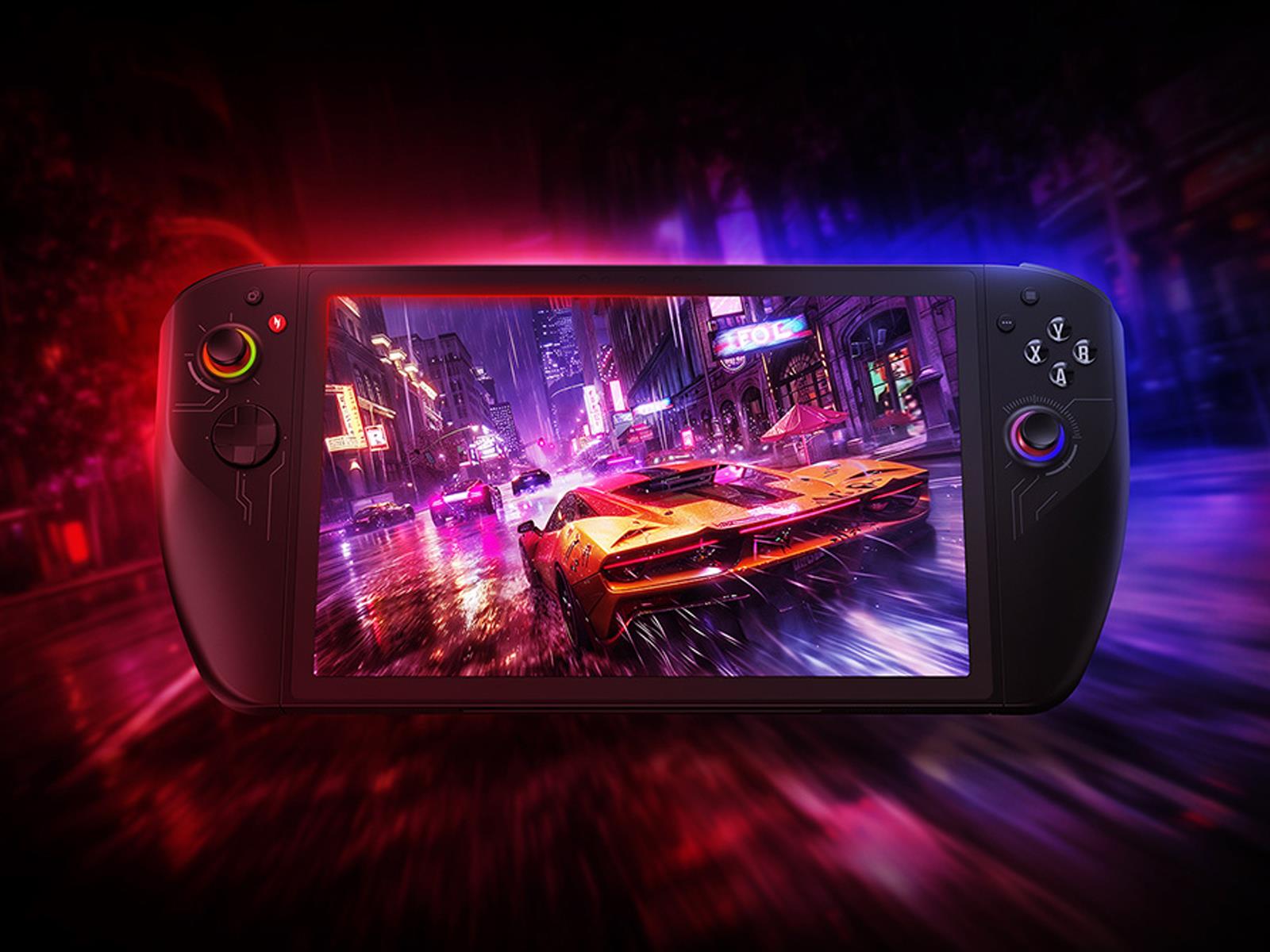
Acer is gearing up to launch several gaming handhelds under its Nitro banner, including a supersized Nitro Blaze 11 with a 10.95-inch IPS display and detachable controllers. Or is it? All of the handhelds Acer previously announced were a no-show at CES this week, raising the question of whether they’ve been delayed or outright canceled. So,

NASA is ending Crew-11 astronauts’ mission a month early

NASA has decided to bring the Crew-11 astronauts home a month earlier than originally planned due to a “medical concern” with one of them. This is the first time in its history that the space agency is cutting a mission short due to a medical issue, but it didn’t identify the crew member or divulge the exact situation and its severity. The astronauts will be heading back to Earth in the coming days. NASA Administrator Jared Isaacman said the agency will be releasing more details about their flight back home within 48 hours.

The agency previously postponed an International Space Station (ISS) spacewalk scheduled for January 8, citing a medical concern with a crew member that appeared the day before. NASA’s chief health and medical officer, James “JD” Polk, said the affected astronaut is “absolutely stable” and that this isn’t a case of an emergency evacuation. The ISS has a “robust suite of medical hardware” onboard, he said, but not enough for a complete workup to determine a diagnosis. Without a proper diagnosis, NASA doesn’t know if the astronaut’s health could be negatively affected by the environment aboard the ISS. That is why the agency is erring on the side of caution.

Crew-11 left for the space station on August 1 and was supposed to come back to Earth on or around February 20. After they leave the station, only three people will remain: Two cosmonauts and one astronauts who’ll be in charge of all the experiments currently being conducted on the orbiting lab. The team’s replacement, Crew-12, was supposed to head to the ISS mid-February, but NASA is considering sending the astronauts to the station earlier than that.

This article originally appeared on Engadget at https://www.engadget.com/science/space/nasa-is-ending-crew-11-astronauts-mission-a-month-early-140000750.html?src=rss

These Popular Chrome Extensions Are Stealing Your AI Chats

Hackers continue to find ways to sneak malicious extensions into the Chrome web store—this time, the two offenders are impersonating an add-on that allows users to have conversations with ChatGPT and DeepSeek while on other websites and exfiltrating the data to threat actors’ servers.

Beware these Chrome extensions

On the surface, the two extensions identified by Ox Security researchers look pretty benign. The first, named “Chat GPT for Chrome with GPT-5, Claude Sonnet & DeepSeek AI,” has a Featured badge and 2.7K ratings with over 600,000 users. “AI Sidebar with Deepseek, ChatGPT, Claude and more” appears verified and has 2.2K ratings with 300,000 users.

However, these add-ons are actually sending AI chatbot conversations and browsing data directly to threat actors’ servers. This means that hackers have access to plenty of sensitive information that users share with ChatGPT and DeepSeek as well as URLs from Chrome tabs, search queries, session tokens, user IDs, and authentication data. Any of this can be used to conduct identity theft, phishing campaigns, and even corporate espionage.

Researchers found that the extensions impersonate legitimate Chrome add-ons developed by AITOPIA that add a sidebar to any website with the ability to chat with popular LLMs. The malicious capabilities stem from a request for consent for “anonymous, non-identifiable analytics data.” Threat actors are using Lovable, a web development platform, to host privacy policies and infrastructure, obscuring their processes.

Researchers also found that if you uninstalled one of the extensions, the other would open in a new tab in an attempt to trick users into installing that one instead.

How to avoid malicious browser add-ons

If you’ve added AI-related extensions to Chrome, go to chrome://extensions/ and look for the malicious impersonators. Hit Remove if you find them. As of this writing, the extensions identified by Ox no longer appear in the Chrome Web Store.

As I’ve written about before, malicious extensions occasionally evade detection and gain approval from browser libraries by posing as legitimate add-ons, even earning “Featured” and “Verified” tags. Some threat actors playing the long game will convert extensions to malware several years after launch. This means you can’t blindly trust ratings and reviews, even if they’ve been accrued over time.

To minimize risk, you should always vet browser extensions carefully (even those that appear legit) for obvious red flags, like misspellings in the description and a large number of positive reviews accumulated in a short time. Head to Google or Reddit to see if anyone has identified the add-on as malicious or found any issues with the developer or source. Make sure you’re downloading the right extension—threat actors often try to confuse users with names that appear similar to popular add-ons.

Finally, you should regularly audit your extensions and remove those that aren’t essential. Go to chrome://extensions/ to see everything you have installed.

Dolby Vision 2 is coming this year, here’s what you need to know

Dolby may have announced Dolby Vision 2 a few months ago, but the company gave the new platform its first big reveal at CES 2026. I got the chance to see the improvements in person for the first time, thanks to a variety of demos and Q&A sessions. Dolby Vision 2 will be available this year, but initially, it will be limited. As such, I’ve compiled the info on where the image engine will be available first, and what’s likely to come next in terms of where and how you can use it. But first, let’s quickly summarize what Dolby Vision 2 will even do for your TV. 

What is Dolby Vision 2?

Dolby Vision 2 is Dolby’s next-generation image engine that the company announced in September. The new standard will do several things to improve picture quality on your TV, including content recognition that optimizes your TV based on what and where you’re watching. This first element will improve scenes that many viewers complain are too dark, compensate for ambient lighting and apply motion adjustments for live sports and gaming. 

Dolby Vision 2 will also deliver new tone mapping for improved color reproduction. I witnessed this first hand in various demos at CES, and this is the biggest difference between the current Dolby Vision and DV2 for me. 

There’s also a new Authentic Motion feature that will provide the optimal amount of smoothing so that content appears more “authentically cinematic,” according to Dolby. This means getting rid of unwanted judder, but stopping short of the so-called soap opera effect. 

Essentially, Dolby is taking advantage of all of the capabilities of today’s TVs, harnessing the improvements to display quality and processing power that companies have developed in the decade since Dolby Vision first arrived.

What TVs will support Dolby Vision 2?

Lifestyle photo of the TCL X11L SQD-Mini LED Series
TCL

The biggest Dolby Vision 2 news at CES was the first three TV makers that have pledged support for the new standard. Hisense is bringing it to its 2026 RGB MiniLED TVs — including UX, UR9 and UR8. The company also plans to add it to more MiniLED TVs with an OTA update. TCL’s 2026 X QD-Mini LED TV Series and C Series will support Dolby Vision 2 via a future update. It will be available on TP Vision’s Philips’ 2026 OLED TVs, including the 2026 Philips OLED811, and OLED911 series as well as the flagship OLED951.

There are sure to be other companies that announce Dolby Vision 2 support in 2026. Sony doesn’t announce its new TVs at CES anymore, so that’s just one of the bigger names that’s yet to reveal its hand. Any upcoming TVs that seek to leverage the full suite of tools that Dolby Vision 2 offers will need to have an ambient light sensor as that’s one of the key facets of Dolby’s upgrade.

What content will be available in Dolby Vision 2?

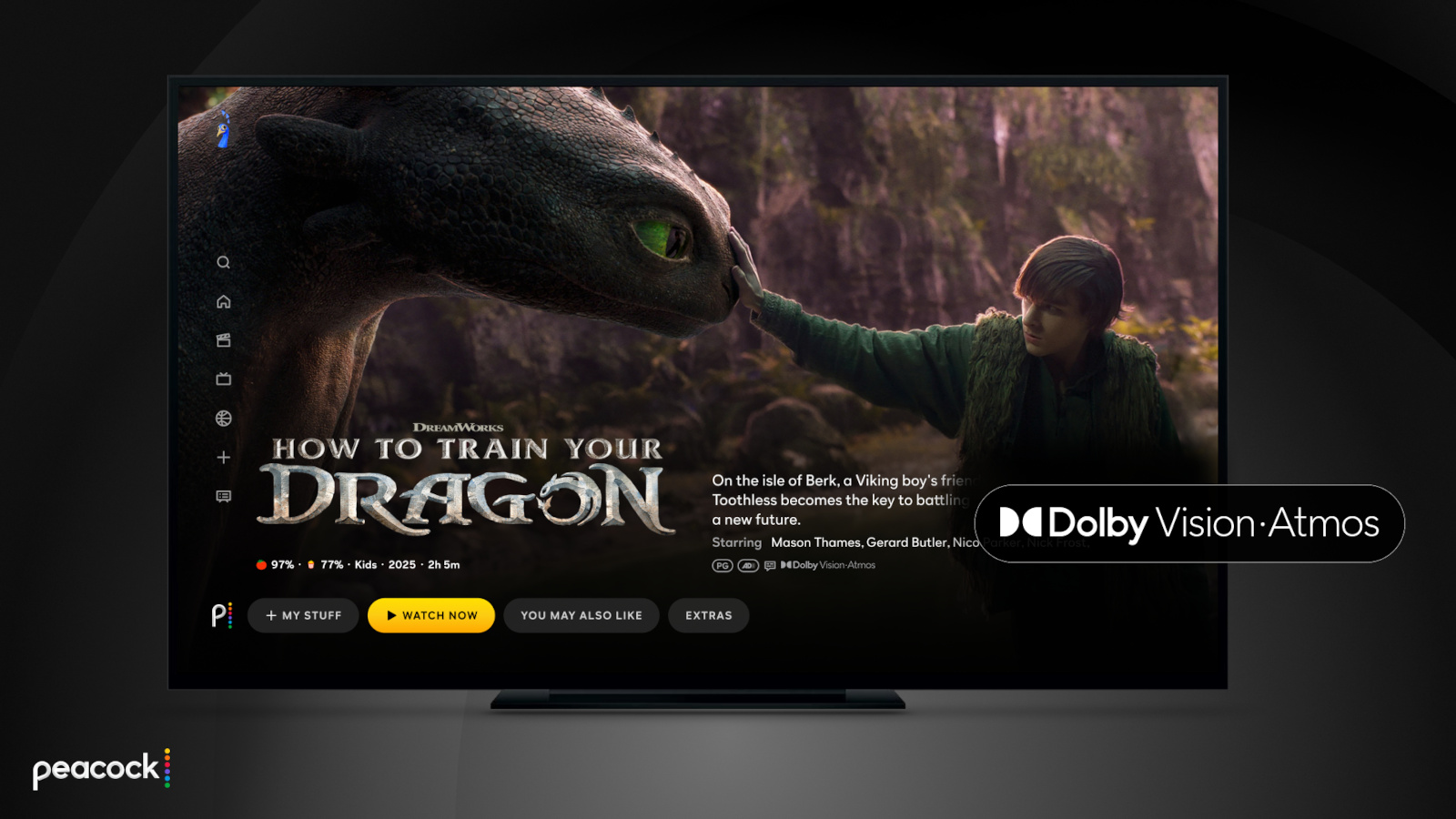
Peacock is bringing Dolby Vision and Atmos support to more live sports offerings.
Peacock

The other big piece of Dolby Vision 2 news at CES 2026 was the first streaming service that will support the platform. Peacock grabbed that honor, and so far it’s the only streamer to pledge support. However, several services support the current version of Dolby Vision, including Netflix, Disney+, Apple TV+, Amazon Prime Video, HBO Max and Paramount+. Like the additional TV support that’s sure to be announced throughout the year, I expect more streaming services will jump on board soon as well.

This article originally appeared on Engadget at https://www.engadget.com/home/home-theater/dolby-vision-2-is-coming-this-year-heres-what-you-need-to-know-140000034.html?src=rss

CES 2026 Day 3: The most interesting tech that’s still on the show floor

Even as CES 2026 wraps up soon, there’s no shortage of standout hardware hiding in plain sight. From genuinely quieter yard tools to ultra-light EVs and companion robots that want to remember your family, Day 3 was all about tech that felt a little more considered — and in some cases, refreshingly practical.

If you can’t get enough of CES, be sure to check out our picks for best of CES 2026, which highlights the most impressive new tech we’ve seen in Las Vegas. We’ve also rounded up the CES gadgets you can buy right now if you’re itching to place an order, along with a look at the weirdest tech at CES 2026, because it wouldn’t be CES without a few delightfully unhinged ideas.

Tone Outdoors T1 leaf blower

Tone Outdoors T1
Tone Outdoors T1
Billy Steele for Engadget

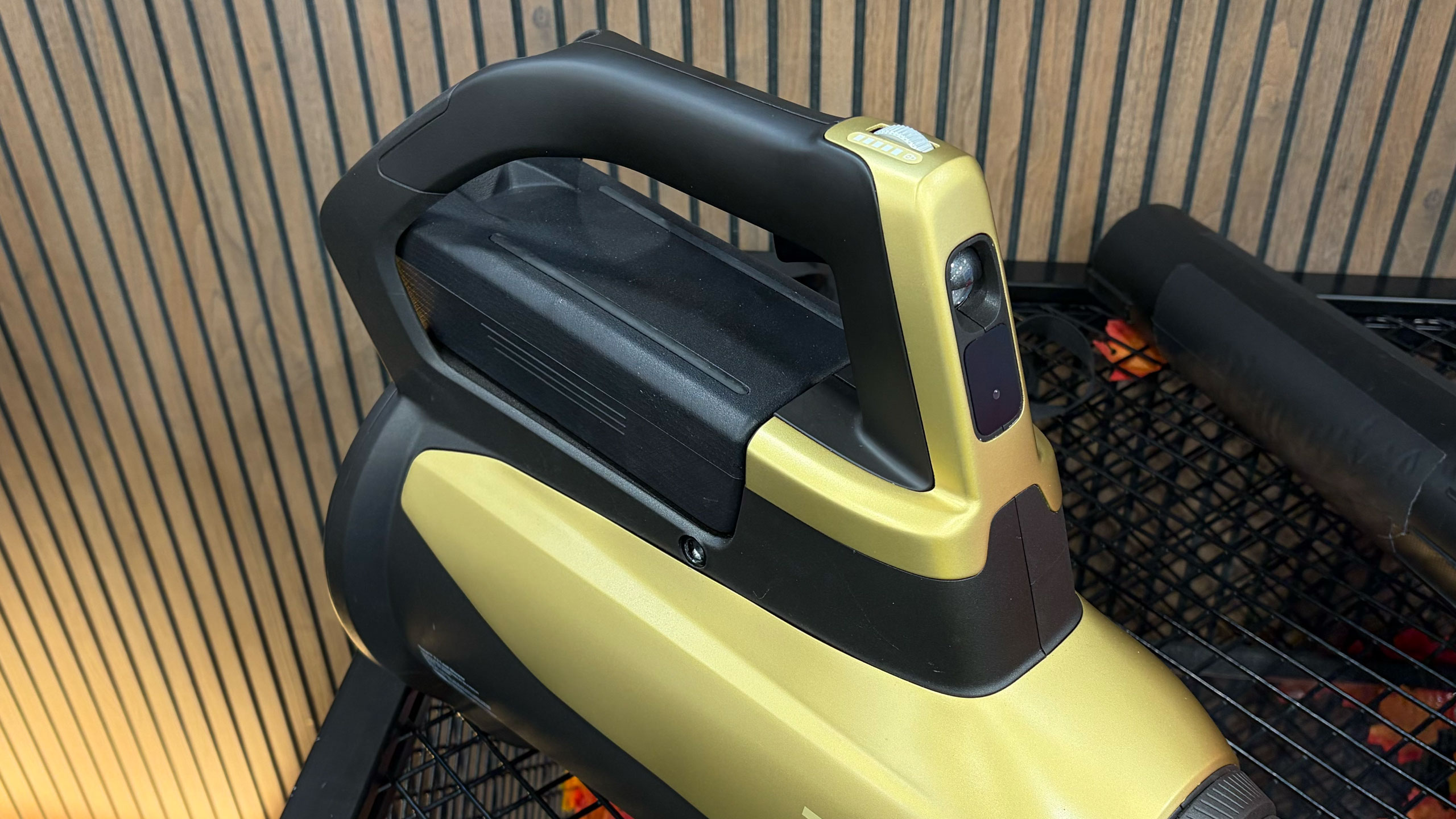
The Tone Outdoors T1 leaf blower is one of the rare CES gadgets that makes an immediate, obvious impression — mostly because it’s shockingly quiet. Whisper Aero’s aerospace-derived motor redesign delivers 880 CFM of airflow at around 52 decibels, which we could confirm even amid the noise of the show floor. It also runs up to 50 minutes in Eco mode, supports a forthcoming battery backpack and even includes an LED for nighttime cleanup. Pre-orders are open now for $599, with shipping expected in September.

GE Profile Smart Fridge

Finally! A reasonably sized fridge screen.
Sam Rutherford for Engadget

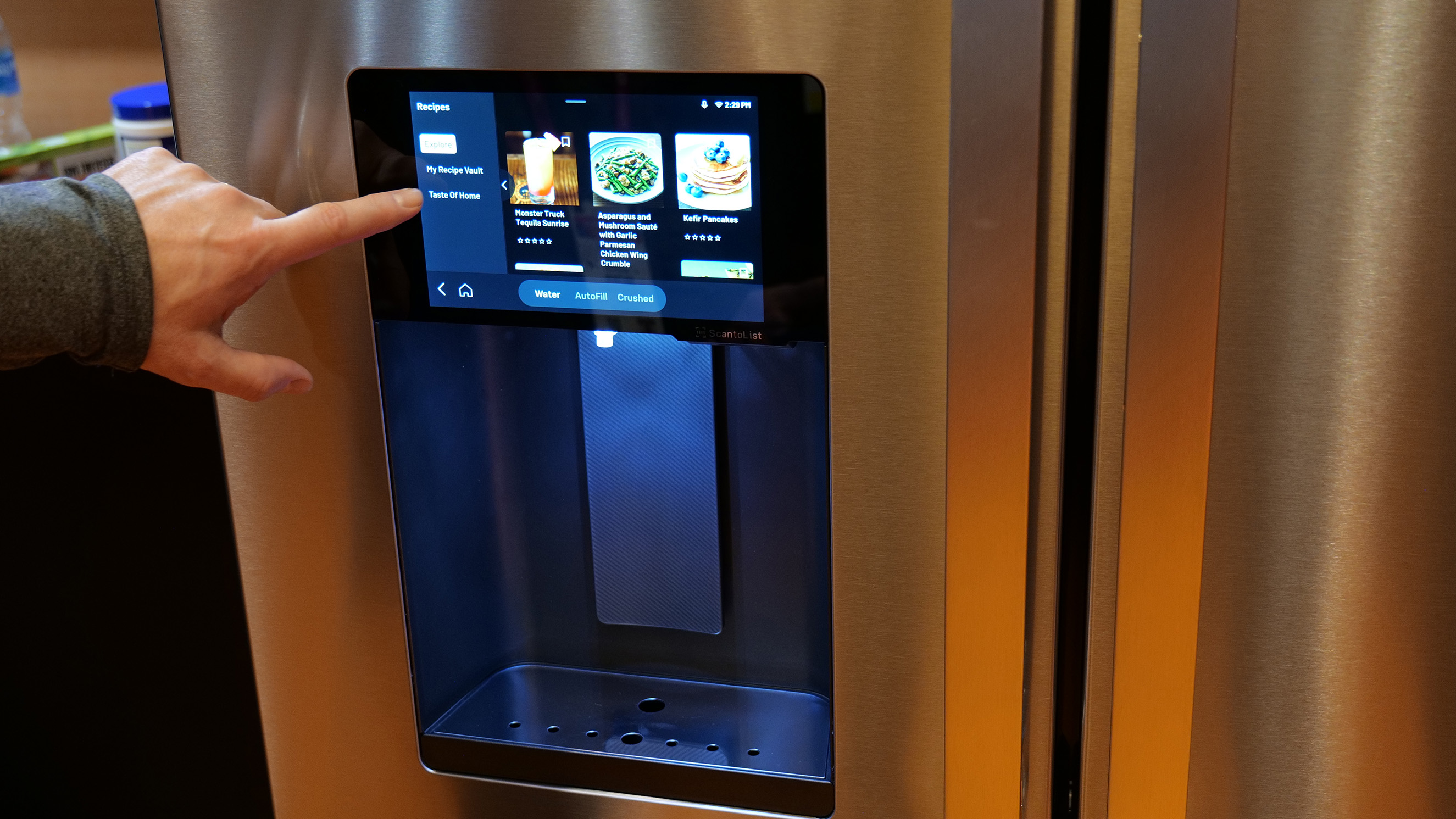
The GE Profile Smart Fridge is the first smart fridge we’ve seen that feels like it was designed around real problems instead of just slapping a massive screen on the door. GE’s AI assistant can answer practical questions like where your water filter is, scan groceries via a built-in barcode reader and keep tabs on produce with a crisper drawer camera. The eight-inch display feels refreshingly restrained, while integrations with Instacart and recipe suggestions add utility. It launches in March for $4,899, and for once, we’re genuinely curious what it would be like to live with it.

Longbow Motors Speedster EV

Longbow Motors Speedster
Billy Steele for Engadget

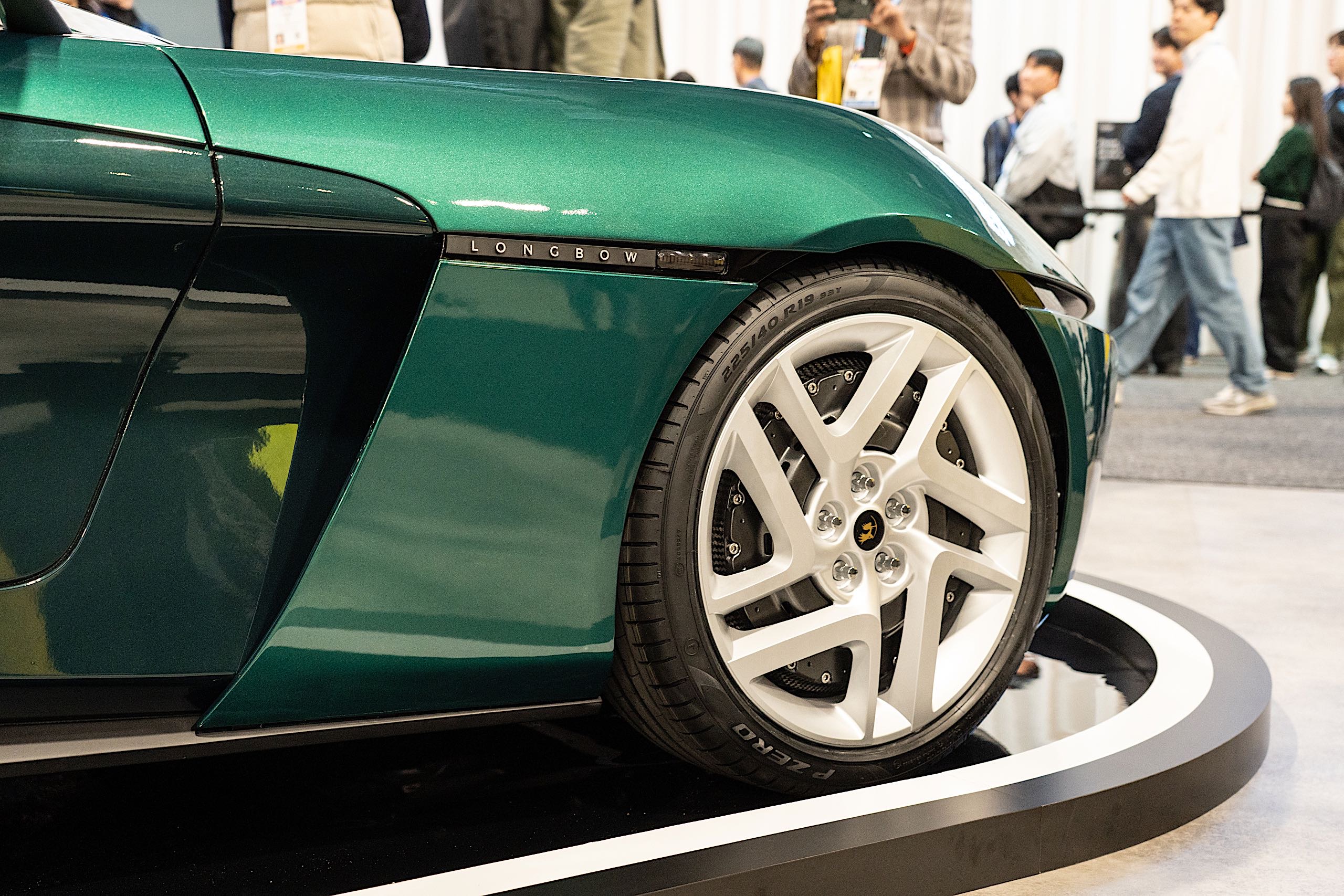
Longbow Motors brought one of the most emotionally compelling EVs we’ve seen to CES, and it’s unapologetically minimalist. The Speedster uses in-wheel motors from Donut Labs to hit a jaw-dropping curb weight of just 2,200 pounds, lighter than a Miata. Its stripped-back interior, mystery shift lever and exposed motors feel like a direct rejection of touchscreen-heavy modern cars. It’s wildly expensive at just under $100,000, but also one of the few EVs here that got us excited to drive.

OlloBot companion robot

A robot with eyes on top of a screen showing a smile.
Cheyenne MacDonald for Engadget

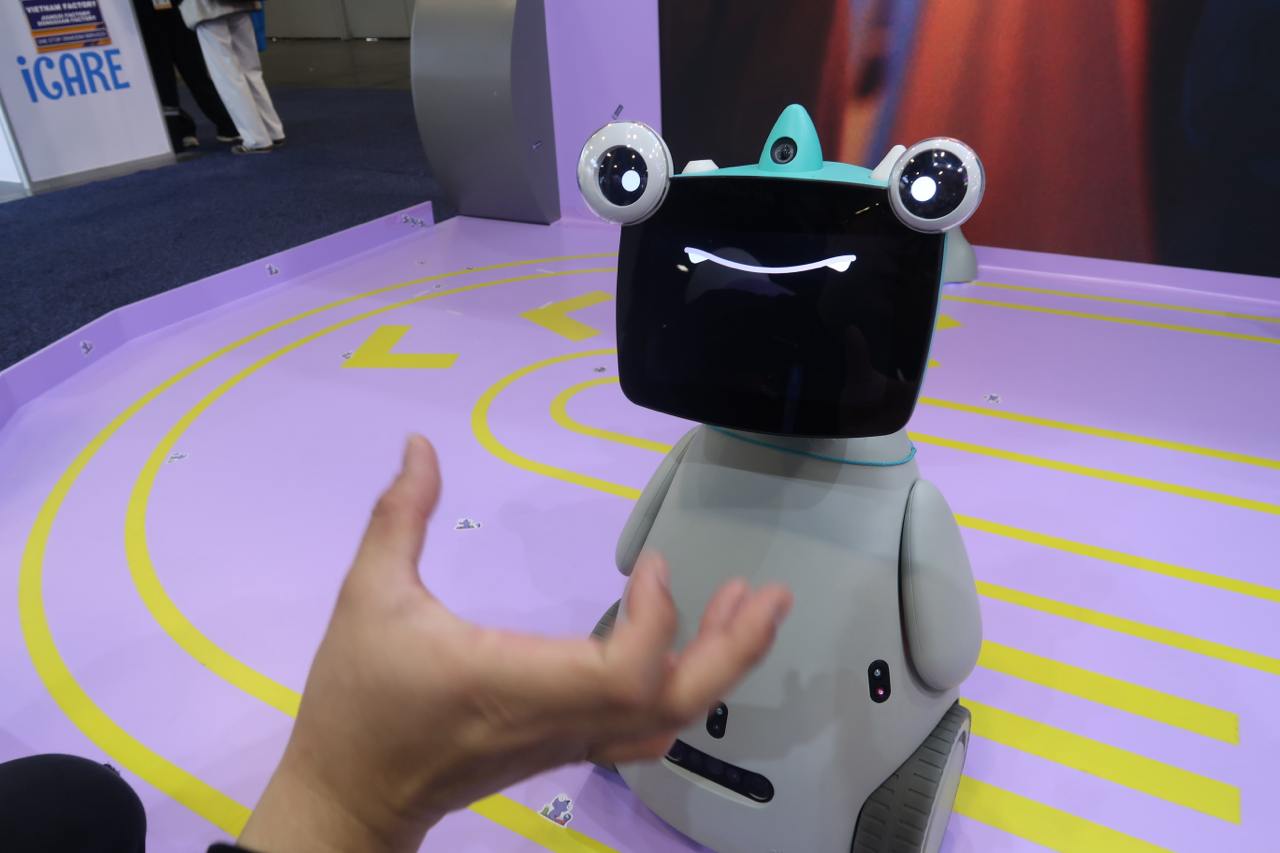
OlloBot might win the award for most charmingly strange robot on the show floor. Designed as a family “cyber pet,” it responds to voice and touch, develops a personality over time and stores all its memories locally in a removable heart-shaped module. The robot can help find lost items, make calls and eventually control Matter smart home devices. A Kickstarter is planned for summer, with pricing starting around $1,000.

Bluetti Charger 2

Image demonstrating the setup for Bluetti's Charger 2
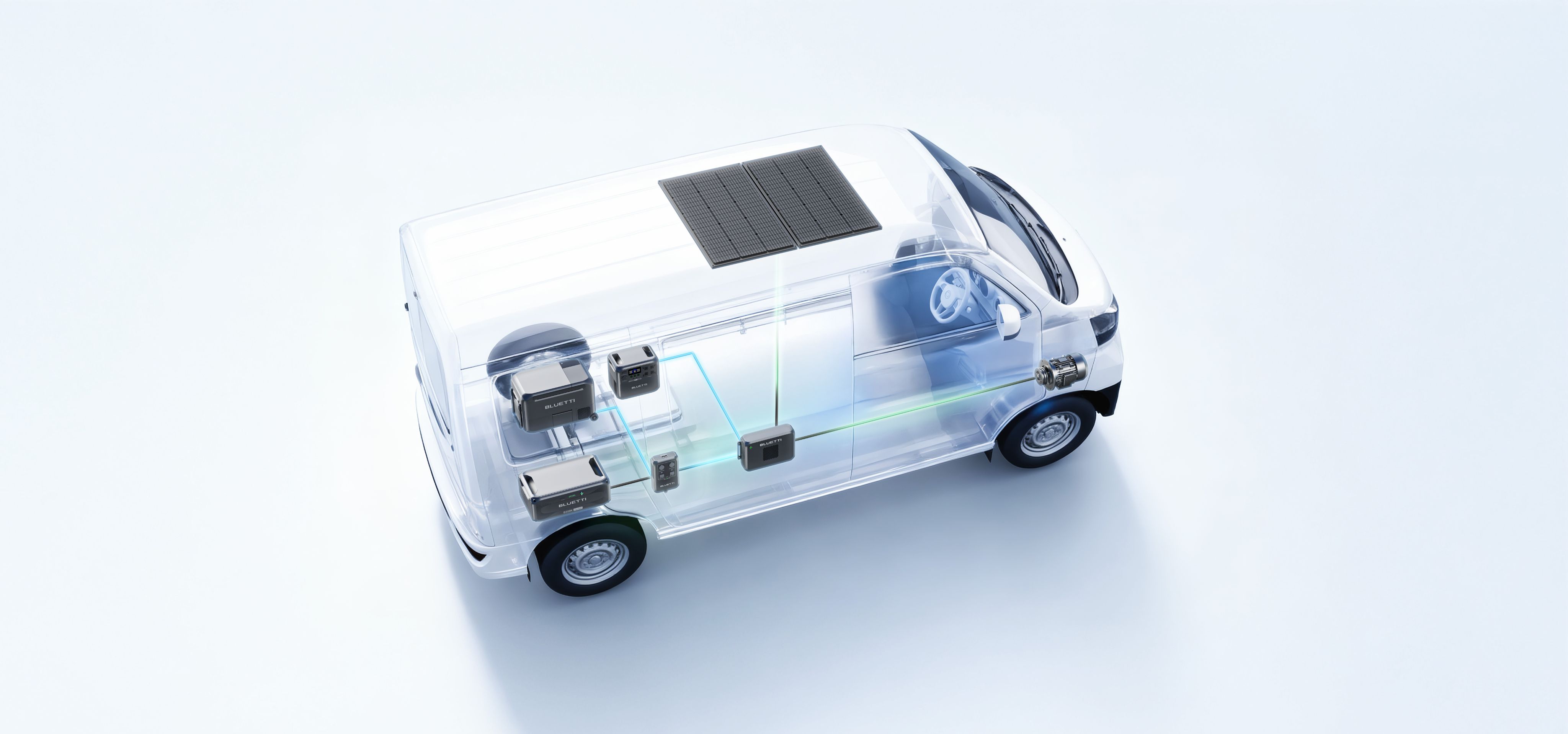
Here’s how the Bluetti Charger 2 would work with dual charging sources.
Bluetti

Bluetti’s Charger 2 fixes a very specific but real problem for off-grid users: charging from your engine and solar panels at the same time. The dual-input system supports up to 600W from solar and 800W from an alternator, dramatically speeding up battery top-ups. It also works with multiple Bluetti power stations and can even jump-start your vehicle in a pinch. Early pricing is $349 through February 7, after which it jumps to $499.

CES is ending, but we’ve got more stories to tell

The CES show floor will soon be closing down, but Engadget still has a lot of stories in our pipeline. As the crowds thin out, we’re continuing to surface the tech that actually stands out — whether it’s solving everyday annoyances or simply doing something bold and different. Stay tuned to our CES 2026 hub for more hands-ons, deep dives and final takeaways even after CES 2026 comes to a close at the end of this week.

This article originally appeared on Engadget at https://www.engadget.com/big-tech/ces-2026-day-3-the-most-interesting-tech-thats-still-on-the-show-floor-134724231.html?src=rss

This Samsung 65-Inch QLED TV Is $400 Off Right Now

We may earn a commission from links on this page. Deal pricing and availability subject to change after time of publication.

The 65-inch Samsung QN90F Neo QLED TV is currently $1,199.99 on Woot in “factory-reconditioned” condition. That undercuts a new unit, which sits around $1,600 on Amazon, and even slips below what some retailers ask for “like-new” stock. This deal runs for seven days or until it sells out. Shipping is free for Prime members, while everyone else pays a flat $6 fee. One thing to note before checkout: This item doesn’t ship to Alaska, Hawaii, or PO boxes, and you’ll need to provide a valid phone number and physical shipping address.

The QN90F isn’t a midrange panel dressed up with buzzwords. It’s Samsung’s current flagship mini-LED 4K TV, built to get extremely bright (over 2,500 nits) while still holding deep blacks and tight contrast. The screen uses Samsung’s glare-reducing coating, which won’t defeat direct sunlight but does take the edge off harsh overhead lighting. In daily use, the QN90F feels more polished than most LED TVs. The bezel-free design keeps attention on the screen, and the compact metal stand doesn’t dominate your media console. Around back, you get four HDMI ports, two USB ports, Ethernet, optical audio, and an antenna input, all tucked into a side-facing recess that keeps cables tidy. The included SolarCell Remote is refreshingly practical. It charges via USB-C or ambient light, so you’re not cycling through disposable batteries. Picture quality is where this TV earns its flagship status. Mini-LED backlighting delivers OLED-like blacks with minimal bloom, and colors stay balanced rather than oversaturated. That said, there’s no Dolby Vision support, which is still a sticking point for some buyers, but HDR10 and HDR10+ performance here is strong enough that many viewers won’t miss it.

This TV also leans hard into gaming and smart features. The panel runs at 120Hz natively and supports VRR up to 165Hz, along with AMD FreeSync Premium Pro. Input lag stays under 10ms, which is well within “good for gaming” territory, according to PCMag’s “excellent” review of this smart TV. PC gamers can even use ultrawide 21:9 or 32:9 modes. Sound is better than average, too, thanks to a 60W 4.2.2-channel system with Dolby Atmos and support for Samsung’s Q-Symphony if you add a compatible soundbar. Tizen OS covers every major streaming service and supports Alexa, Apple AirPlay, and Matter smart-home control, though the interface still feels busy and occasionally buried under layers of menus. At this price, the reconditioned QN90F makes sense for buyers who want top-tier brightness and gaming performance without paying the full flagship price.


Deals are selected by our commerce team

The ‘Now You See Me’ Franchise Explained in 10 Infographics

What if a team of super magicians used their talent and training to stage elaborate heists? That’s the high concept that drives the Now You See Me franchise. Critics were lukewarm when Now You See Me was released in 2013, categorizing the film as a heist flick with thin characters and a plot that fell apart as often as it twisted, but Now You See Me pulled off its own escape act—audiences loved the movie’s flashy style, whipsaw pace, and all-star cast featuring names like Jesse Eisenberg, Mark Ruffalo, Woody Harrelson, and Morgan Freeman. The result was box office magic: a movie with a $75M budget that returned over $300M worldwide. Now You See Me has since grown into an internationally successful, long-term franchise for distributor Lionsgate: The third installment was released on Nov. 14, and a fourth Now You See Me film is already in development.

Like any long-running franchises, the Now You See Me-verse can be confusing, so we put together 10 infographics to pull back the curtain on Now You See Me’s magic. First, a quick recap of each movie:

  • Now You See Me (2013): The initial entry in the series introduces us to the thieves/illusionists known as the “Four Horsemen.” These best-in-the-business magicians are recruited by a mysterious secret society called The Eye to pull off large-scale heists in front of live audiences, then distribute the money to the needy.

  • Now You See Me 2 (2016): The sequel expands the world of the first film, with bigger heists, deeper secrets, and funnier jokes. Having gone into hiding at the end of Now You See Me, The Horsemen resurface a year later and are coerced into a global heist by a tech mogul trying to steal all the privacy in the world. 

  • Now You See Me: Now You Don’t (2025): Set a decade after the last film, Now You See Me: Now You Don’t features all five Horsemen teaming up with three cocky young criminals/illusionists to pull off their most audacious caper yet: the theft of the world’s most valuable diamond.

The real-life magicians behind The Horsemen

The Now You See Me movies present stage magic in a semi-realistic (though highly stylized) way. To nail the realism, the films draw inspiration from some of the greatest magicians in history, including:

  • David Copperfield: The Horsemen’s larger-than-life illusions/heists like stealing the contents of a bank vault while performing a Vegas show seem inspired by the feats of magician David Copperfield, whose magical feats include flying over the Grand Canyon and vanishing the Statue of Liberty. 

  • David Blaine: Street magician David Blaine’s shadow is all over the Now You See Me Movies. Without the popularity of Blaine’s modern, gritty take on magic, the Now You See Me movies would likely not exist.

  • Harry Houdini: Anything about stage magic is ultimately inspired by Houdini, the greatest magician of all time. Houdini’s daring escape tricks inspired the series’ inciting incident, the death of magician Lionel Shrike, as well as the opening set piece where Henley Reeves escapes a water tank. 

  • Andrei Jikh: Jikh’s cardistry skills are evident in all the Horsemen, particularly in Jack Wilder. Jikh served as a consultant on Now You See Me.

  • Keith Barry: Another Now You See Me magic consultant, Irish mentalist Keith Barry pioneered and popularized many of the hypnosis and mentalism feats used by character Merritt McKinney.

The Horsemen’s greatest heists

The Horsemen are known as much for their larceny as their skills at illusion. Below are their most memorable heists, hold-ups, schemes, and burglaries.

The Paris-to-Vegas bank robbery

In the caper that introduces us to the Horsemen, the magicians rob a bank in Paris while performing before a crowd in Vegas. They choose a seemingly random person from the crowd and tell him he’s going to rob his own bank, the Crédit Républicain de Paris. Then they appear to teleport him to France, where he breaks into a bank vault, hits a button on a vacuum machine, and the money is seemingly sucked from Paris to Vegas where it rains down on the audience. 

The Tressler Insurance heist

At a show in New Orleans, the Horsemen introduce their benefactor, insurance magnate Arthur Tressler, then proceed to drain his personal bank account while they’re onstage, depositing the money in the accounts of audience members, who all turn out to be victims of Hurricane Katrina that Tressler’s insurance company stiffed on repayments. 

The Macau data chip theft

In Now You See Me 2, The Horsemen are coerced by evil tech magnate Walter Mabry to steal a cutting-edge computer chip that can decrypt and expose every system in the world. Housed in a highly secure research facility in Macau, China, the chip is conveniently the size of a playing card, allowing the Horsemen to use cardistry and sleight-of-hand skills to remove it from the building while being searched by guards. 

The Magic Castle: the real-life Château de Roussillon

In Now You See Me Now You Don’t, the Château de Roussillon is an ultimate magician’s playground. The Eye’s headquarters in a mansion in the French countryside is decked out with mind-bending large-scale illusions like rotating rooms and halls of mirrors. The Château de Roussillon is a real castle, but the filmmakers used Nádasdy Castle for the exterior shots in the movie. A main inspiration for the building is a real place: Los Angeles’ Magic Castle.

Opened in 1963, the Magic Castle is a restaurant/club/clubhouse for magicians housed in a stately Victorian mansion overlooking Hollywood. Not only is The Magic Castle credited as magic consultants on Now You See Me: Now You Don’t, much of the cast trained at the Castle to prepare for their roles.

If you’d like to visit, it won’t be easy: The Magic Castle is an invitation-only private club, so you have to be a member of the Academy of Magical Arts or be invited by a member. But if you aren’t friends with a magician, you can book a night at the nearby Magic Castle Hotel, where a stay comes with an invitation to the Castle.

“How do they do that?”

I analyzed the tricks in the movies with professional magician Dave Cox, and as over the top as the Horsemen’s heists are, all but two of the many magic tricks presented in the Now You See Me movies could technically be done in real life—but the word “technically” is doing a lot of work here. The tricks are possible within the context of a stylized blockbuster, but would be extremely unlikely to work as well in real life: an extended, impromptu cardistry routine involving four magicians passing a playing card between themselves while security guards thoroughly search them makes for exciting cinema, but almost definitely wouldn’t go that smoothly in reality. 

But, here is how three of the most iconic tricks from the franchise could be done in real life.

How to do Atlas’s “riffle force” card trick

Now You See Me opens with a unique piece of cinematic trickery. Street magician J. Daniel Atlas is performing for a crowd on a city street. He riffles quickly through a deck of cards and asks a spectator to “see one card.” When his subject has a card in mind, a nearby building is lit up revealing a giant seven of diamonds, the card the subject was thinking of.  

It’s amazing if you’re “playing along at home,” because the chances are very good that you chose the seven of diamonds too. The trick is done in real life the same way it’s done in the movies: The magician uses sleight of hand or a gimmicked deck to pause on the desired card imperceptibly longer than the other cards. The director of Now You See Me added a frame or two to “pause” on the seven of diamonds, making it more likely that you think of that card.

How Jack Wilder throws cards as weapons

While it’s probably not possible to throw a card as accurately or forcefully as the characters in Now You See Me, you can throw playing cards really fast with the right technique and a lot of practice. 

How Henley Reeves escaped the water tank

Henley Reeves’ introduction is a trick where she escapes from a water tank filled with piranhas, a variation of the kind of classic escape artist illusions popularized by Houdini. Water escapes are dangerous, but not as dangerous as they might seem because they’re rigged—no sane person is really going to try to escape from handcuffs and chains while underwater.

Real-life heists that seem right out of the Now You See Me movies

A group of thieves publicly “performing” large-scale robberies is strictly Hollywood, but the three real-life crimes below share some of the showmanship and audacity of the Horsemen’s heists:

  • Louvre heist (2025): A recent jewelry-jacking at the Louvre involved a highly professional and brazen plan executed in broad daylight. The thieves used a truck-mounted mechanical lift to break into a second-floor balcony window and were in and out in less than eight minutes. The robbers have all been caught, but won’t say where the jewels are.

  • Stockholm helicopter robbery (2009): This thrilling heist involved a gang using a stolen police helicopter to land on the roof of a G4S cash management service building in the Stockholm suburb of Västberga. The brazen thieves smashed through a skylight, lowered themselves into the building, and stole millions while police were stymied by fake bombs placed near the police helicopter. Seven men were sentenced to prison, but authorities suspect as many as ten more people may have gotten away with the crime, and the 39 million Swedish krona loot was never recovered.

  • Isabella Stewart Gardner Museum heist (1990): This heist involved two men who disguised themselves as Boston police officers to gain entry into the museum just before it opened. The pair convinced one security guard to let them in, then handcuffed the rest of the guards and stole 13 priceless works of art valued at over $500 million. Despite a $10 million dollar reward, the art has never been recovered and no one has been charged with the crime.

Seven more movies for fans of Now You See Me

If you’ve watched all three NYSM movies and you’re still craving magical entertainment, check out these seven, all-killer no-filler movies about magic and magicians:

  • The Prestige (2006): The Prestige is set in the late 19th century, before you could just google how any magic trick was done. Back then, the secret of sawing a lady in half was closely guarded, and The Prestige’s rival magicians–played by Hugh Jackman and Christian Bale–will go to any length to keep the hidden knowledge of their craft.

  • The Illusionist (2010): This animated, silent feature provides a complete contrast to the Now You See Me movies. There’s no glitz or flash, just a quietly devastating character study of a magician’s relationship with the last person in his world who still believes in magic. Adapted from a screenplay by French cinema legend Jacques Tati, The Illusionist tells its intimate story through the evocative animation of Sylvain Chomet. It will definitely make you cry.

  • The Incredible Burt Wonderstone (2013): The Now You See Me movies go to great lengths to deny it, but magic is cheesy and magicians are weirdoes. Burt Wonderstone leans into the goofiness by casting Steve Carell and Steve Buscemi as Burt Wonderstone and Anton Marvelson, past-their-prime Vegas magicians bedeviled by Jim Carrey’s Steve Gray, a Criss Angel-esque magic man who’s a different flavor of cheesy.

  • The Magician (1958): Max von Sydow plays the title character in The Magician, where everything is shot in black-and-white and no one gets away with a bunch of money or engages in any witty banter.

  • The Illusionist (2006): Yes, I’m recommending two movies with the same title. 2006’s The Illusionist is a moody, slow-burn mystery/romance that’s tonally a world away from Now You See Me’s glitz, but both films share a love of clever misdirection, intricate magic, “woah” reveals, and head-spinning plot twists. If you like the “magic as a means of social justice” theme of NYSM, you’ll like The Illusionist.

  • The Sorcerer’s Apprentice (2010): The Sorcerer’s Apprentice stars Nicolas Cage, who brings his own magic to every role, as a bonafide sorcerer who lives in modern New York City and fights a lonely war against dark magic on behalf of all mankind. Jay Baruchel plays his apprentice, and the pair use magical spells to battle a rival sorcerer.

  • Sleight (2016): This scrappy, low-budget flick provides a very different vision of an illusionist turning to crime. Jacob Latimore plays a young street magician who’s left to care for his sister after their parents die. Magic isn’t paying the bills, so he turns to drug dealing, and must use his skills at deception and sleight-of-hand to stay alive. 

Kia’s budget EV2 arrives with up to 240 miles of range

Kia has unveiled its new entry level electric vehicle, the EV2. The boxy model strongly resembles the company’s Soul (Kia did make an electric Soul at one point) and has very similar dimensions, though it’s slightly shorter in height and length. It’s not exactly a range monster and will charge a bit slower than the competition. The EV2 launched at the Brussels Motor Show and the company said it has no plans for US availability at this point. 

The EV2 uses Kia/Hyundai’s E-GMP platform and slots into the bottom of its EV lineup as an “entry point to electric mobility,” according to the automaker. Though nearly the same size, it certainly looks nicer than the dowdy Soul and has more room inside. Competition-wise, it’s going up against Volvo’s EX30 and may cost about the same, though Kia has yet to divulge pricing. 

Kia's budget EV2 arrives with up to 240 miles of range
Kia

The EV2 will be offered with two battery options: a 42kWh battery with 197 miles of WLTP range (likely around 170 miles by EPA standards) and 61kWh with 278 miles of WLPT range (around 240 EPA miles). That’s not a lot, especially compared to the 261 mile EPA max range of the EX30 — so Kia’s pricing for the EV2 will be key. As for charging speeds, Kia says the EV2 will charge from 10 to 80 percent in about 30 minutes — a bit slower than the 69 kWh EX30. Like other Kia vehicles, the EV2 supports vehicle-to-grid and vehicle-to-load (V2L/V2G) charging. 

Kia calls the vehicle’s interior a “Picnic Box” as a way to describe the small but useful space. Kia says its “comparable to larger vehicles” in terms of space, with generous rear legroom and rear cargo capacity up to 403 liters. It will come in four- and five-seat versions. 

Kia's budget EV2 arrives with up to 240 miles of range
Kia

As for tech inside, it offers a generous screen setup, with a 12.3-inch instrument cluster, 12.3-inch infotainment screen and a 5-inch climate display. Ambient lighting in the cabin syncs up with specific vehicle functions. At the same time, it offers a fully array of manual controls climate, volume control and more. It comes with multiple USB-C ports (three up front) that support up to 100W charging.

The company has yet to reveal performance figures other than range. Production is set to start in Q1, so deliveries should commence in Europe and other regions later in the year. It doesn’t look like the EV2 will arrive stateside any time soon, though, as the company said it “has not announced plans for the US market.” 

This article originally appeared on Engadget at https://www.engadget.com/transportation/evs/kias-budget-ev2-arrives-with-up-to-240-miles-of-range-130038144.html?src=rss

Notable Zwift Events for the Weekend of January 10-11

Peak Zwift season is underway, as evidenced by the number of riders jumping into Tour de Zwift events! That’s our headline event this week, but we’ve also got four other popular (and possibly crazy) rides to feature. See my picks below!

�� Tour de Zwift, Stage 1

✅ Popular  ✅ Unlocks  ✅ Race If You Want

Tour de Zwift is the biggest annual tour on the platform – a celebration of discovery across all Zwift worlds! It kicked off this week with stage 1, which runs through Sunday. Hundreds (sometimes thousands) of riders are joining each event, so you’ll always have some company.

Read all about Tour de Zwift 2026 >

Each stage has 3 route length options. For stage 1, those are Shisa Shakedown (53.3km, 557m), Chasing the Sun (35.1km, 316m), and Turf N Surf (24.7km 198m).

Hourly events all weekend!
Sign up at zwift.com/events/tag/tourdezwift2026

�Vatternrundan Group Ride Series #1

✅ Endurance Training  ✅ Progressive Series  

The Vätternrundan group ride series is back for another year, and it looks to be as popular as ever! The premise of the series is simple: rides increase in duration from January 11 to March 1, with the goal of preparing you to handle many hours on the bike when the IRL race day arrives in June. (The Vätternrundan Group Ride Series is part of Vätternrundan’s official training program.)

Of course, you can use this to train for any endurance ride you may have planned this Spring/Summer. This week’s kickoff ride is 90 minutes long, on Watopia’s Waistband, and there are two pace group options (1.8-2.2 and 1.5-1.8 W/kg).

Sunday, January 11 @ 8am UTC/3am ET/12am PT
Sign up at zwift.com/events/view/5203595

�January Resolution

✅ Strava Challenge ✅ Beginner Friendly 

Take on the January Resolution Challenge with the folks at Pas Normal Studios! To complete the challenge, ride a total of 1000 km during the month of January. Mix and match outdoor with indoor rides, make them long or short… all that matters is the total distance ridden.

Sign up for the Strava challenge > 

This particular ride is led by ambassador Amos Fun. It’s 75 minutes long and open-paced on Watopia’s Big Flat 8 route.

Sunday, January 11 @ 4pm UTC/11am ET/8am PT
Sign up at zwift.com/events/view/5290365

�MSR 300 Minutes of Happiness! MSR & ENJOYYOURBIKE

✅ Endurance Challenge ✅ Unique Event  

This is a rather crazy event, which is exactly why I picked it. 300 minutes on the Champs-Élysées loop in Paris! The nice thing about riding on a shorter circuit (it’s only 6.6km long) is that you can find a group at any time. But you can also try to challenge them! Or just challenge yourself!

How many km can you ride in 5 hours, or how many laps? Who will win the green jersey?

Saturday, January 10 @ 8am UTC/3am ET/12am PT
Sign up at zwift.com/events/view/5333176

�CTT Winter Series on Zwift

✅ Popular  ✅ Race of Truth

The popular new TT series from Cycling Time Trials (CTT) – the national governing body for time trials in England, Scotland, and Wales – is back after its holiday break.

Read all about the CTT series >

Saturday is your last chance to complete week 7’s race on three laps of Richmond’s The Fan Flats (19.5km, 36m), which is a repeat of the third week’s race. Set a course PB and you’ll earn series points to boost your overall ranking!

Multiple timeslots Saturday, January 10
Sign up at zwift.com/events/tag/cyclingtimetrials

How We Make Our Picks

We choose each weekend’s Notable Events based on a variety of factors including:

  • Is the event unique/innovative in some way?
  • Are celebrities (pro riders, etc) attending/leading?
  • Are signup counts already high, meaning the event is extra-popular?
  • Does the ride include desirable unlocks or prizes?
  • Does the event appeal to ladies on Zwift? (We like to support this under-represented group!)
  • Is it for a good cause?
  • Is it just plain crazy (extra long races, world record attempts, etc)?
  • Is it a long-running, popular weekly event with a dedicated leader who deserves a shout out?

In the end, we want to call attention to events that are extra-special and therefore extra-appealing to Zwifters. If you think your event qualifies, comment below with a link/details and we may just include it in an upcoming post!

Spotify is no longer running ads for ICE

There are no recruitment ads for Immigration and Customs Enforcement (ICE) running on Spotify at the moment, the streaming service has told Variety. A spokesperson has confirmed the news after an ICE agent fatally shot Renee Good in Minneapolis, but they also clarified that the ads stopped running in late 2025. “The advertisements mentioned were part of a US government recruitment campaign that ran across all major media and platforms,” they explained.

Spotify caught flak back in October for playing ICE ads, asking people to “join the mission to protect America,” in between songs for users on the ad-supported plan. The advertisements even promised $50,000 signing bonuses for new recruits. Campaigns were launched to urge users to cancel their subscriptions and to boycott the service, and even music labels called on the company to stop serving ICE advertisements. Spotify said back then that the ads don’t violate its policies and that users can simply mark them with a thumbs up or down to let the platform know their preferences.

The company reportedly received $74,000 from Homeland Security for the ICE ads, but that’s a tiny amount compared to what other companies received. According to a report by Rolling Stone, Google and YouTube were paid $3 million for Spanish-language ads that called for self-deportation, while Meta received $2.8 million.

This article originally appeared on Engadget at https://www.engadget.com/entertainment/streaming/spotify-is-no-longer-running-ads-for-ice-130000672.html?src=rss

Lego is trying to make tech invisible with Smart Play

Probably my favorite thing about the Lego Smart Play system unveiled this week at CES is that it was designed for kids, first and foremost. In the past 10 years or so, Lego has increasingly courted an older audience with more expensive and elaborate sets. But when it was time to bring more advanced technology to Lego, the idea right from the beginning was more social and interactive play. 

If you haven’t heard about Smart Play yet, its a way for Lego to make its sets more interactive. A Smart Brick filled with sensors makes it so sets can respond to each other, know when they’re moving, play sounds and know when the corresponding Smart Minifigures are near them. Tiny Smart Tags, meanwhile, help the Smart Brick know the context of how it’s being used — whether it’s in a helicopter, car or duck for example.

Tom Donaldson, senior VP and Head of Creative Play Lab at the LEGO Group, told Engadget that the company worked on Smart Play for about eight years before introducing it this week, and that social play was the starting point. “We started really looking at consumer needs, and this idea that kids really like social play,” said Donaldson “Kids really like the sort of things that change when they come back to them, and the kids really like agency. They want to be able to change things.” 

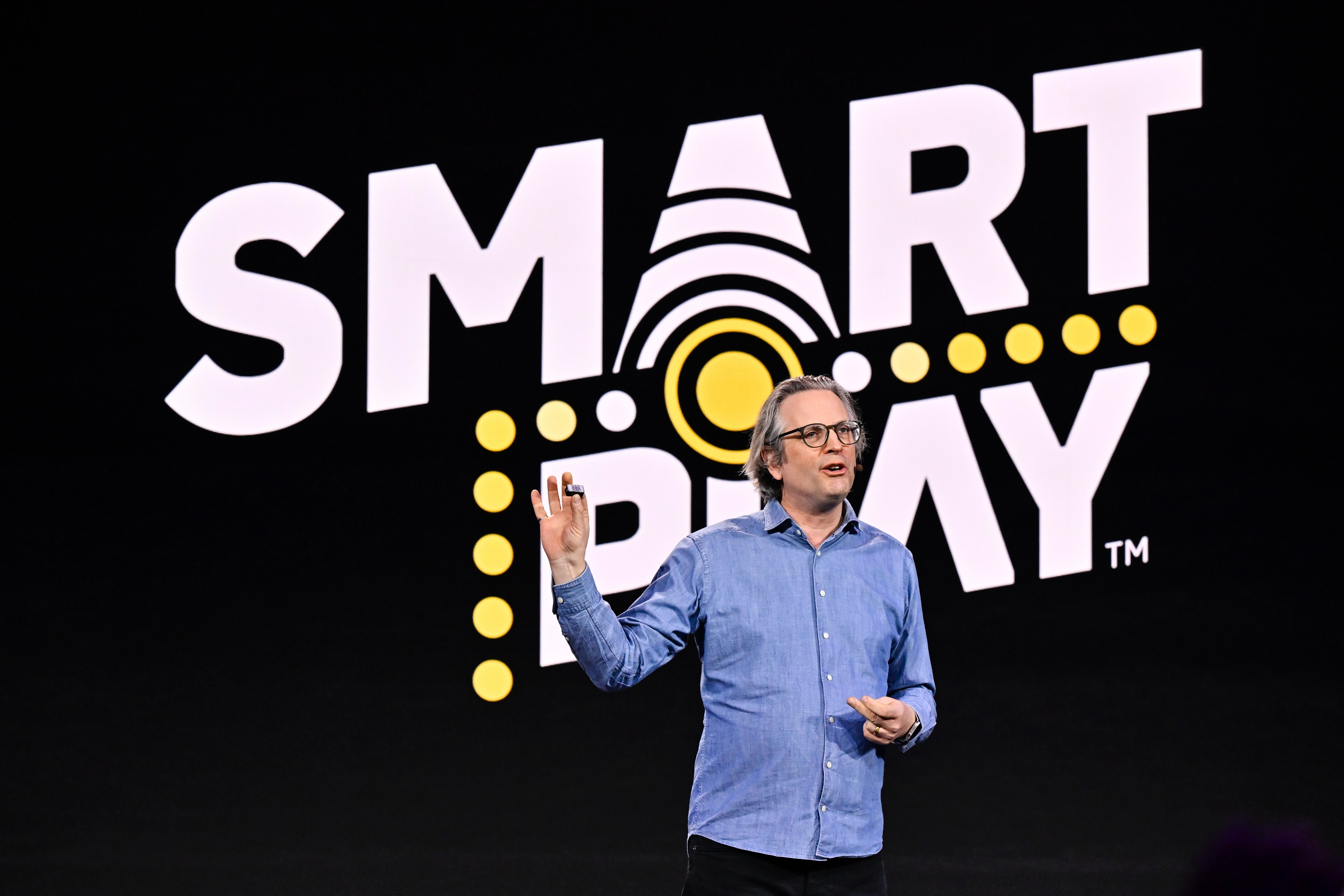
Lego's Tom Donaldson demoing Smart Play at CES.
Lego’s Tom Donaldson demoing Smart Play at CES.
LEGO

But a big part of the creation process was making the Smart Brick as flexible and powerful as possible and then seeing what scenarios could take advantage of it. “We wanted to build a really powerful platform,”  he said. “What we shouldn’t do is say, ‘this is what we think we’re gonna need.’ We needed to say, ‘let’s create something that has a lot of capabilities that we can then figure out how to use.’”

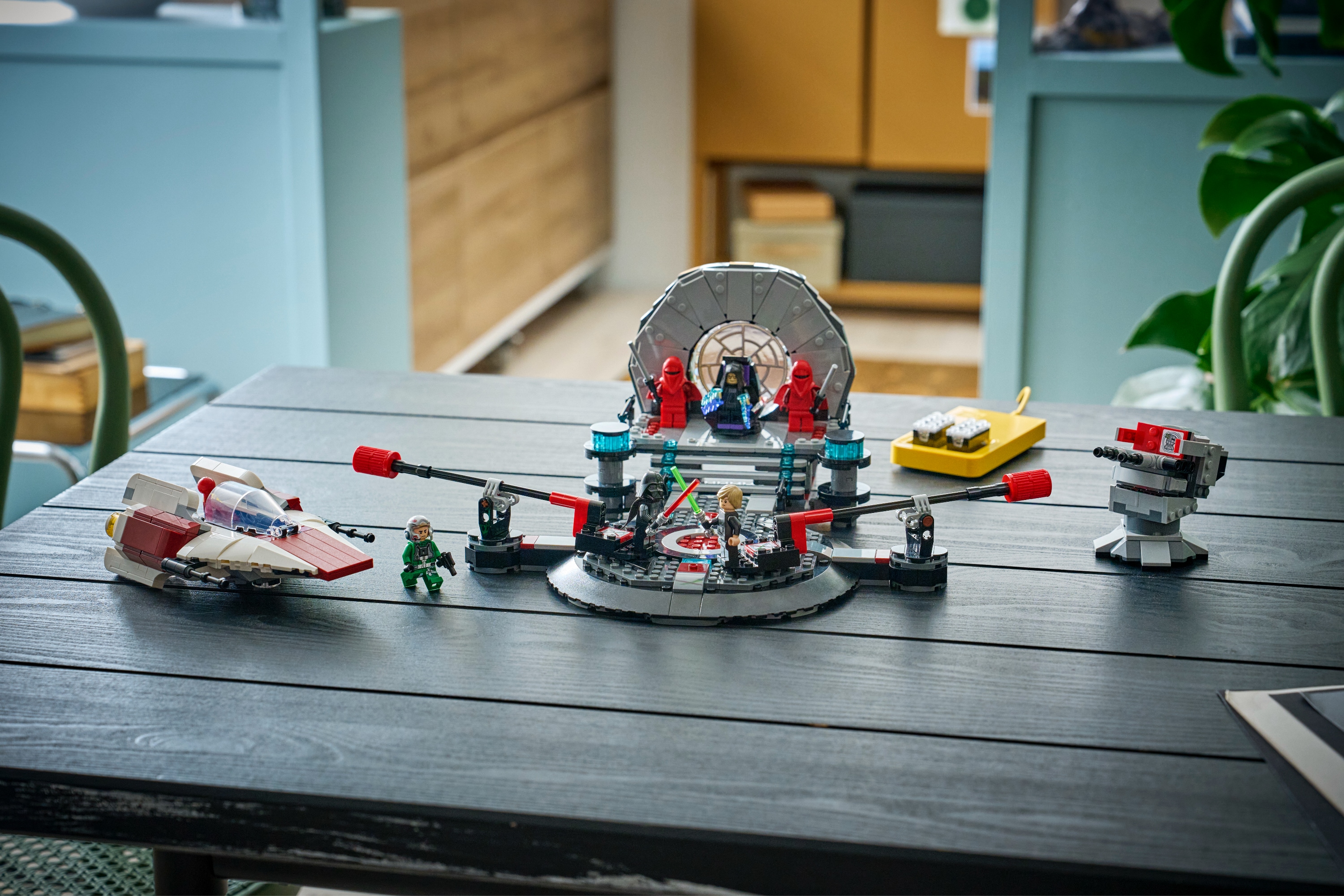
One of the conflicts with the tech-packed Smart Play system, though, might be the cost. Obviously, Lego has been successful at most ventures it has undertaken in recent years, but the pricing of Smart Play sets could make adoption a bit challenging. The biggest Smart Play set, Star Wars Throne Room Duel & A-Wing, for example, has almost 1,000 pieces and costs $160. That’s quite a bit more than comparably sized sets. The dual factors of the Star Wars license and Smart Play tech certainly impacted the cost. 

Lego Smart Play Star Wars set
LEGO

The set includes two Smart Bricks, five Smart Tags and three Smart Minifigures, the most “smart” gear included in any of the initial three Star Wars Smart Play sets. Will parents shell out for the more advanced capabilities that Smart Play offers, or will they stick with standard sets?

For now, Lego is betting the extremely broad appeal of Star Wars will help these new Smart Play sets find an audience. About three years ago, Lego got its team focused on the Star Wars franchise involved, as well as Lucasfilm, to figure out how to roll Smart Play out to the world. “Very early on, we all decided that starting with the original trilogy would be great,” said Derek Stothard, Disney’s Director of Global Licensing “These are such well-known scenes and characters, and they cross generations, so parents can introduce them to  their kids. All that works really well together.” 

Unsurprisingly, Lego is being coy about where things go beyond the initial three Star Wars sets, but it’s clear that after eight years of development, they’ll want to bring it to as many product lines as possible. “We’re announcing a platform that you can see has tremendous growth [potential], Donaldson said. “We made the analogy with the minifigure as something that you’ll see across the entire [Lego] system, maybe not in every single SKU but it’ll reappear in many different places. But ultimately we’re a company that really focuses on giving kids what they want, what they love, and we’ll have to see how it lives in a market.”

That last point about how it lives in the market is a good one, particularly given the pricing. We probably won’t know for sure until Lego moves beyond the safe confines of Star Wars and really shows us what Smart Play can do across more varied scenarios. And going to non-licensed sets might be where Smart Play really takes off — it’s easy to imagine a cheaper Smart Play add-on kit that can bring sets to life at a lower cost. But the idea of transforming anything kids create into something more interactive has a ton of potential if Lego can broaden its appeal beyond Star Wars fans. 

This article originally appeared on Engadget at https://www.engadget.com/entertainment/lego-is-trying-to-make-tech-invisible-with-smart-play-130000979.html?src=rss

Focus’ recyclable JAM² NEXT ebike shelved as carbon frame partner Rein4ced files for bankruptcy

Focus has announced its unreleased JAM² NEXT electric bike won’t feature a sustainable thermoplastic carbon fibre construction after its manufacturer, Rein4ced, filed for bankruptcy.

The brand had hoped to relocate carbon frame manufacturing to Europe with materials that can be fully recycled using Rein4ced’s innovative production method.

The JAM² NEXT is yet to break cover, with riders such as Olly Wilkins testing the concept bike over the past few months.

In a statement, Focus says the news is “extremely disappointing, as the bike is fully developed, tested, and ready to launch”.

Focus Jam2 frame
Focus had planned to bring the JAM² NEXT to market, but it now looks set to remain a concept. Focus

“This doesn’t mean the JAM² NEXT has lost its purpose,” according to the brand, with the bike showcasing the possibility of building a recyclable production-ready carbon bike, despite never being brought to market.

Focus Jam2 Next carbon
Thermoplastic carbon fibre can be recycled, reducing its environmental impact. Focus

Rein4ced’s technology pointed to a sustainable future for the bike industry, and it looked like a major move toward flexibility in the industry’s supply chain.

The company has been loss-making since the beginning of 2024, with the total value of its assets reducing from €8.4 million in 2021 to €58,000 in 2024, forcing it to file for bankruptcy in December 2025.

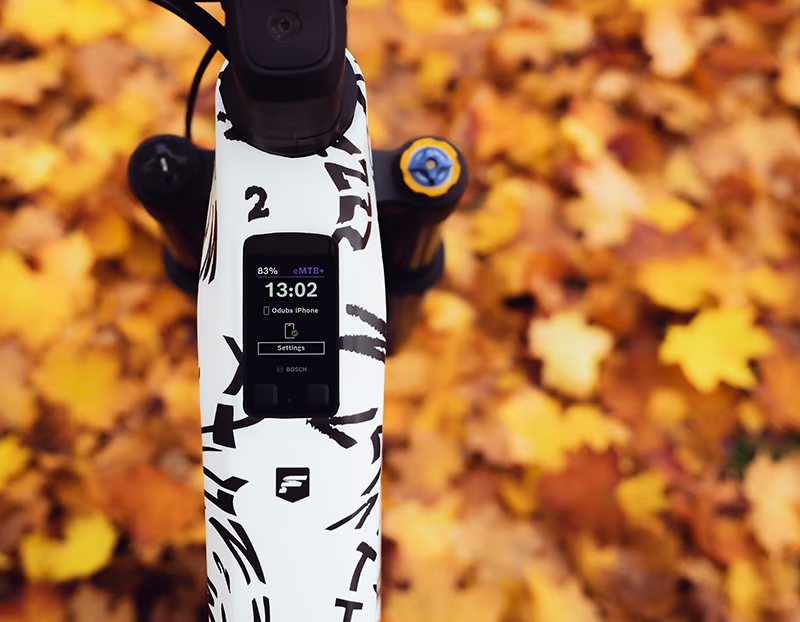
Focus Jam2 Next top tube display
Focus had hoped to bring manufacturing back to Europe with the JAM² NEXT. Focus

Focus says it “recognises even more that it requires the entire industry to further push the topic of sustainability and ensure the viability of future projects”.