It took a while, but a consensus has emerged in Europe that the continent’s space industry needs to develop reusable rockets. How to do it and how much to spend on it remain unresolved questions.
Much of the discourse around reusable rockets in Europe has focused on developing a brand new rocket that might eventually replace the Ariane 6, which debuted less than two years ago but still uses the use it and lose it model embraced by the launch industry for most of the Space Age.
The European Space Agency (ESA) is offering money to emerging rocket companies in Europe to prove their small satellite launchers can do the job. ESA is also making money available to incentivize rocket upgrades to haul heavier cargo into orbit. ESA, the European Commission, and national governments are funding rocket hoppers to demonstrate vertical takeoff and vertical landing technologies. While there is significant money behind these efforts, the projects are not unified, and progress has been slow.
Trixie plus a carefully configured MATE setup, and absolutely nothing elseThe Desktop Classic System is a rather unusual hand-built flavor of Debian featuring a meticulously configured spatial desktop layout and a pleasingly 20th-century look and feel.…
Longtime Slashdot reader chicksdaddy writes: CES, the Consumer Electronics Show, isn’t just about shiny new gadgets. As AP reports, this year brought back the fifth annual Worst in Show anti-awards, calling out the most harmful, wasteful, invasive, and unfixable tech at the Las Vegas show. The coalition behind the awards — including Repair.org, iFixit, EFF, PIRG, Secure Repairs, and others — put the spotlight on products that miss the point of innovation and make life worse for users.
2026 Worst in Show winners include:
Overall (and Repairability): Samsung’s AI-packed Family Hub Fridge — over-engineered, hard to fix, and trying to do everything but keep food cold.
Privacy: Amazon Ring AI — expanding surveillance with features like facial recognition and mobile towers.
Security: Merach UltraTread treadmill — an AI fitness coach that also hoovers up sensitive data with weak security guarantees, including a privacy policy that declares the company “cannot guarantee the security of your personal information” (!!).
Environmental Impact: Lollipop Star — a single-use, music-playing electronic lollipop that epitomizes needless e-waste.
Enshittification: Bosch eBike Flow App — pushing lock-in and digital restrictions that make gear worse over time.
“Who Asked For This?”: Bosch Personal AI Barista — a voice-assistant coffee maker that nobody really wanted.
People’s Choice: Lepro Ami AI Companion — an overhyped “soulmate” cam that creeps more than it comforts.
The message? Not all tech is progress. Some products add needless complexity, threaten privacy, or throw sustainability out the window — and the industry’s watchdogs are calling them out.
For situations where Samba (SMB) or NFS usage aren’t appropriate or desiring the convenience of accessing files from a web browser on any device, TrueNAS is introducing TrueNAS WebShare as an easy-to-use solution for enterprise-grade file sharing in the web browser…
A measles outbreak in South Carolina that began in October continues to rage, with the state health department reporting Friday that nearly 100 new cases have been identified just in the last three days.
In a regularly scheduled update this afternoon, the health department said 99 cases were identified since Tuesday, bringing the outbreak total to 310 cases. There are currently 200 people in quarantine and nine in isolation. However, the outbreak is expanding so quickly and with so many exposure sites that health officials are struggling to trace cases and identify people at risk.
“An increasing number of public exposure sites are being identified with likely hundreds more people exposed who are not aware they should be in quarantine if they are not immune to measles,” Dr. Linda Bell, state epidemiologist and the health department’s incident commander for the measles outbreak, said in the announcement. “Previous measles transmission studies have shown that one measles case can result in up to 20 new infections among unvaccinated contacts.”
If you’ve ever been intrigued by the mystery of a dusty cassette you found in a thrift shop—or if you’re just looking for a new time-sink—you have to check out Intertapes, a website that digitizes “found cassettes” sent in by users all over the world, then posts them in full for anyone to listen to.
I love how each cassette is treated like an important archeological object, because in a way, they are—discreet time capsules made more poignant by the hiss and warp that speaks to the time that’s passed since this audio was captured and the ephemeral nature of analogue recording. From musical snapshots to accidental field recordings, these tapes are fascinating for there mere existence in the modern day, where the question of who recorded them and why adds a layer of mystery to each one.
The ongoing cassette tape revival
Intertapes could be viewed as a reflection of the growing cassette tape revival, a movement that celebrates the outdated format. Since they hit the market in 1963, audiophiles have generally considered cassette tapes an inferior format to vinyl—tapes are more rugged than records, but the sound quality is markedly worse. The spread of CDs and streaming music pretty much killed off commercial cassette releases by the early 2000s, and it’s easy to see why: Digital music doesn’t hiss or degrade. Cassettes have a more narrow dynamic range. You can instantly select tracks on a CD or MP3 player, and it will never play at a slightly wrong speed, unspool, or melt on your car dashboard. Bonus: You never have to rewind them to hear a song again.
Most people didn’t see it at the time, but when tapes slipped into obsolescence, we lost something real and tangible. Dropouts, distortion, and warp are evidence of life. Cassette tape compression is a unique sonic aesthetic that conveys warmth and nostalgia. And then there’s the way they impart meaning into the act of “listening to music.” Starting a Spotify stream is frictionless, optimized, and weightless, while cassettes are physical objects with histories that defy the disconnection of the digital space. You own the music on tapes in a way you never own information being served to you by a tech company. A friend handing you a cassette of their favorite songs is meaningful in a way a link to playlist will never be, and your Spotify playlist will never be found by the side of the road near Heraklion, to be pondered over by future people.
Yes, by digitizing them, Intertapes is removing some of the qualities that make these recording special—but it’s also preserving them, at least for now (if you’ve ever tried following a decades-old weblink, you know the internet is ephemeral too).
How to submit your own tapes to Intertape
If you’re of a certain age, you probably have a dusty cassette or two hanging around somewhere. Don’t let it molder in a desk drawer. Describe the origin of your recording and a background story, scan a picture of your tape, and email connect@intertapes.net to arrange you submission to the site. This collection really deserves to grow.
The KDE Project released today KDE Frameworks 6.22 as the monthly update to this collection of more than 80 add-on libraries to Qt and a companion to the KDE Plasma desktop environment and KDE Gear software suite.
Amazon is making a return, of sorts, to physical retail via plans to build a big-box retail store in the Chicago suburbs, The Information reports. The 225,000-square foot retail space will open in Orland Park, Illinois, and give the company the opportunity to sell more than just groceries after it closed most of its physical bookstores and gift shops in 2022.
The new store will offer in-store shopping, but also act as a fulfillment center for online orders, which could make it similar to competitors like Target and Walmart, and some of Amazon’s existing Whole Foods and Amazon Fresh locations. “The proposed development will offer a wide selection of products, including groceries and general merchandise, with accessory services and potentially dining locations for prepared food sold onsite,” Amazon wrote in a planning document The Information viewed.
While best known as an online marketplace, Amazon has made multiple attempts to have a physical retail presence. Amazon Books sold books based on what was trending on the company’s website, Amazon 4-star sold a variety of products that were rated four or more stars in Amazon reviews and the company’s Amazon Go stores sold pre-made food and select groceries via its cashier-less “Just Walk Out” technology.
Amazon has abandoned basically all those experiments in favor of sticking with the grocery brand it bought in 2017, Whole Foods, and the new one it’s formed in the years since, Amazon Fresh. This new store could be an entirely new concept, or an evolution of Amazon Fresh, but whatever it is, it’ll have to be approved by the Orland Park Village Board to move forward, according to the Chicago Tribune.
This article originally appeared on Engadget at https://www.engadget.com/big-tech/amazon-is-apparently-planning-a-big-box-store-in-the-chicago-suburbs-213451978.html?src=rss
An anonymous reader shares a report: Microsoft is celebrating the resurgence of interest in physical media in the only way it knows how… by halting the Windows Media Player metadata service. Readers of a certain vintage will remember inserting a CD into their PC and watching Windows Media Player populate with track listings and album artwork. No more.
Sometime before Christmas, the metadata servers stopped working and on Windows 10 or 11, the result is the same: album not found. We tried this out at Vulture Central on some sacrificial Windows devices that had media drives and can confirm that a variety of compact discs were met with stony indifference. Some 90s cheese that was successfully ripped (for personal use, of course) decades ago? No longer recognized. A reissue of something achingly hip? Also not recognized.
With no Wine 11.0 release candidate last Friday due to the New Year festivities, Wine 11.0-rc5 is out today and it comes packing 32 bug fixes for the past two weeks…
A new year is the perfect time to get your spending in order, and if you’re not trying to build your own spreadsheet, budgeting apps are one of the best ways to do it. To save yourself some money in the process, you can pick up a year-long subscription to Monarch Money, one of Engadget’s favorite budgeting apps, for just $50 if you use code NEWYEAR2026 at checkout and you’re a new subscriber. That’s a 50 percent discount on the service’s normal $100 price.
Monarch Money makes for a capable and detailed budgeting companion. You can use the service via apps for iOS, Android, iPadOS or the web, and Monarch also offers a Chrome extension that can sync your Amazon and Target transactions and automatically categorize them. Like other budgeting apps, Monarch Money lets you connect multiple financial accounts and track your money based on where you spend it over time. Monarch offers two different approaches to tracking budgeting (flexible and category budgeting) depending on what fits your life best, and the ability to add a budget widget on your phone so you can know how you’re tracking that month.
How budgeting apps turn your raw transactions into visuals you can understand at a glance is one of the big things that differentiates one app from another, and Monarch Money offers multiple graphs and charts to look at for things like spending, investments or categories of your choice based on how you’ve labelled your expenses. The app can also monitor the spending of you and your partner all in one place, to make it easier to plan together.
The main drawbacks Engadget found in testing Monarch Money were the app’s learning curve, and the differences in features (and bugginess) between Monarch’s web and mobile versions. Still, for 50 percent off, the Monarch Money is well worth experimenting with if you’re trying to save money in 2026, especially if you want to do it collaboratively with a partner.
This article originally appeared on Engadget at https://www.engadget.com/apps/monarch-moneys-budgeting-app-is-50-percent-off-for-new-users-204507740.html?src=rss
The abstract of a paper on NBER: School boards have statutory authority over most elementary and secondary education policies, but receive little attention compared to other actors in education systems. A fundamental challenge to understanding the importance of boards is the absence of data on the policy goals of board members — i.e., their ideologies — forcing researchers to conduct tests based on demographic and professional characteristics — i.e., identities — with which ideology is presumed to correlate.
This paper uses new data on the viewpoints and policy actions of school board members, coupled with a regression discontinuity design that generates quasi-random variation in board composition, to establish two results. The first is that the priorities of board members have large causal effects across many domains. For example, the effect of electing an equity-focused board member on test scores for low-income students is roughly equivalent to assigning every such student a teacher who is 0.3 to 0.4 SDs higher in the distribution of teacher value-added. The second is that observing policy priorities is crucial. Identity turns out to be a poor proxy for ideology, with limited governance effects that are fully explained by differences in policy priorities. Our findings challenge the belief that school boards are unimportant, showing that who serves on the board and what they prioritize can have far-reaching consequences for students.
Most people haven’t actively managed a firewall in at least a decade, assuming they ever have. But keeping track of which applications are using the internet—and how much data they’re using—is still useful at times, as is blocking apps from accessing the net entirely.
While you’re traveling, for example, internet access might be limited, so it’s a good idea to cut off applications that constantly churn through data. But even while at home, it’s a good security practice to review which applications are connecting to the internet. And while macOS comes with a firewall, it’s not really a useful tool for that.
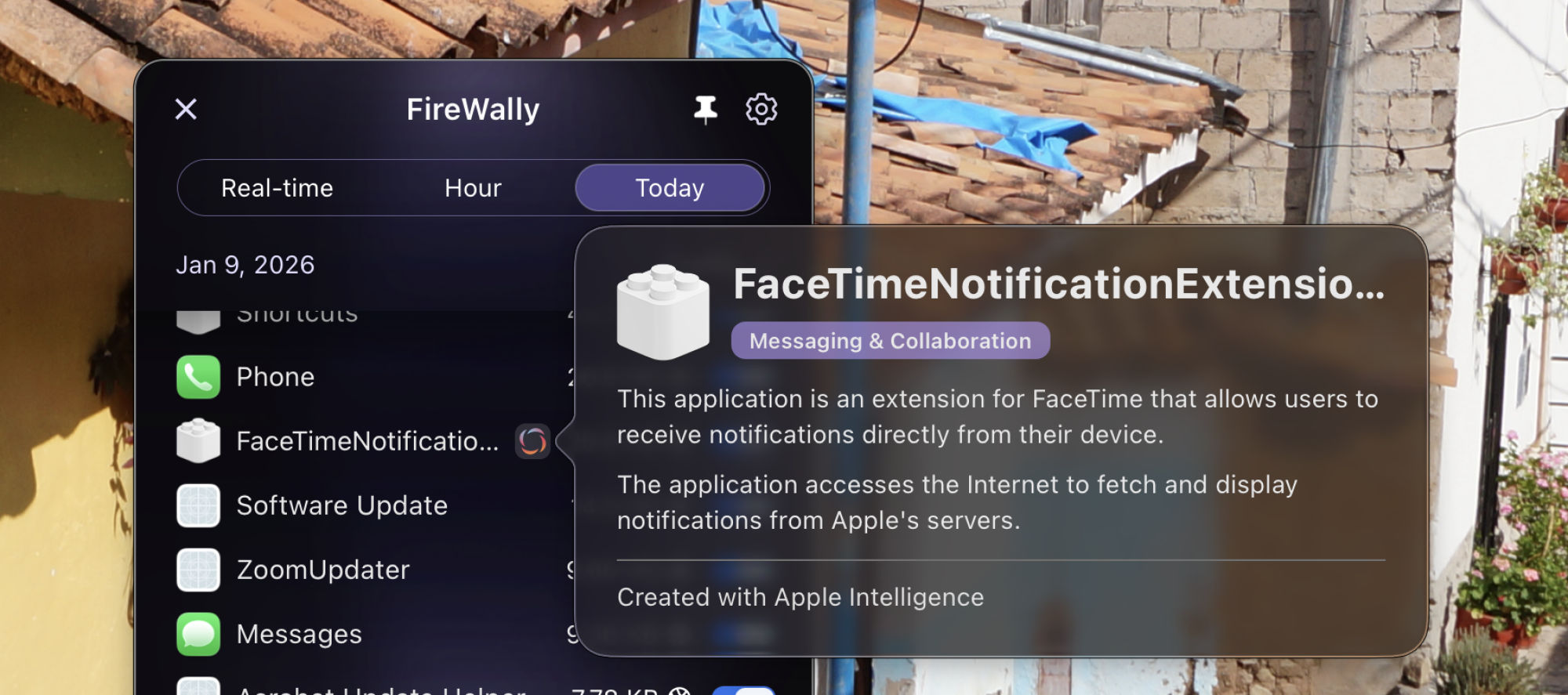
Which is why I like FireWally. This totally free application, offered by the Ukraine-based indie Mac developers Nektony, isn’t a tool for power users—it’s streamlined and user friendly. Click the menu bar icon and you’ll see a list of applications using the internet. You can see a summary of all traffic today, in the past hour, or monitor incoming traffic in real time.
Beside every application is its data usage. You can see a breakdown of inbound and outbound traffic for any application by hovering the mouse over it. You can block any application from accessing the internet by toggling the switch.
Credit: Justin Pot
What if you don’t recognize an application? I, traditionally, ended up copying the name of the application and pasting it into a search engine. FireWally tries to save you some time by providing AI-generated summaries of each application using Apple Intelligence (assuming your Mac supports that feature). It’s a useful way to quickly remind yourself what a particular application is, or to identify one you don’t recognize.
It’s a very streamlined application, but perfect for anyone hoping to understand a bit more about how much data their various Mac applications are using. Give it a spin if you’re looking for a simple firewall application.
Search engine optimization, or SEO, is a big business. While some SEO practices are useful, much of the day-to-day SEO wisdom you see online amounts to superstition. An increasingly popular approach geared toward LLMs called “content chunking” may fall into that category. In the latest installment of Google’s Search Off the Record podcast, John Mueller and Danny Sullivan say that breaking content down into bite-sized chunks for LLMs like Gemini is a bad idea.
You’ve probably seen websites engaging in content chunking and scratched your head, and for good reason—this content isn’t made for you. The idea is that if you split information into smaller paragraphs and sections, it is more likely to be ingested and cited by generative AI bots like Gemini. So you end up with short paragraphs, sometimes with just one or two sentences, and lots of subheds formatted like questions one might ask a chatbot.
According to Sullivan, this is a misconception, and Google doesn’t use such signals to improve ranking. “One of the things I keep seeing over and over in some of the advice and guidance and people are trying to figure out what do we do with the LLMs or whatever, is that turn your content into bite-sized chunks, because LLMs like things that are really bite size, right?” said Sullivan. “So… we don’t want you to do that.”
Microbiology had its golden age in the late nineteenth century, when researchers identified the bacterial causes of tuberculosis, cholera, typhoid, and a dozen other diseases in rapid succession. Antibiotics had theirs in the mid-twentieth century. Both booms eventually slowed. Vaccine development, by contrast, appears to be speeding up — and the most productive era may still lie ahead, Works in Progress writes in a story.
In the first half of the 2020s alone, researchers delivered the first effective vaccines against four different diseases: Covid-19, malaria, RSV and chikungunya. No previous decade matched that output. The acceleration rests on infrastructure that took two centuries to assemble. Edward Jenner’s 1796 smallpox vaccine was a lucky accident he didn’t understand. Louis Pasteur needed ninety years to turn that luck into systematic methods — attenuation and inactivation — that could be applied to other diseases. Generations of scientists then built the supporting machinery: Petri dishes for bacterial culture, techniques to keep animal cells alive outside the body, bioreactors for industrial production, sterilization and cold-chain logistics.
Those tools have now compounded. Cryo-electron microscopy reveals viral proteins atom by atom, a capability that directly enabled the RSV vaccine after earlier attempts failed. Genome sequencing costs collapsed from roughly $100 million per human genome in 2001 to under $1,000 by 2014, according to data from the National Human Genome Research Institute. The mRNA platform, refined through work by Katalin Kariko, Drew Weissman, and others, allows vaccines to be redesigned in weeks rather than years. The trajectory suggests more breakthroughs are possible. Whether they arrive depends on continued investment, however.
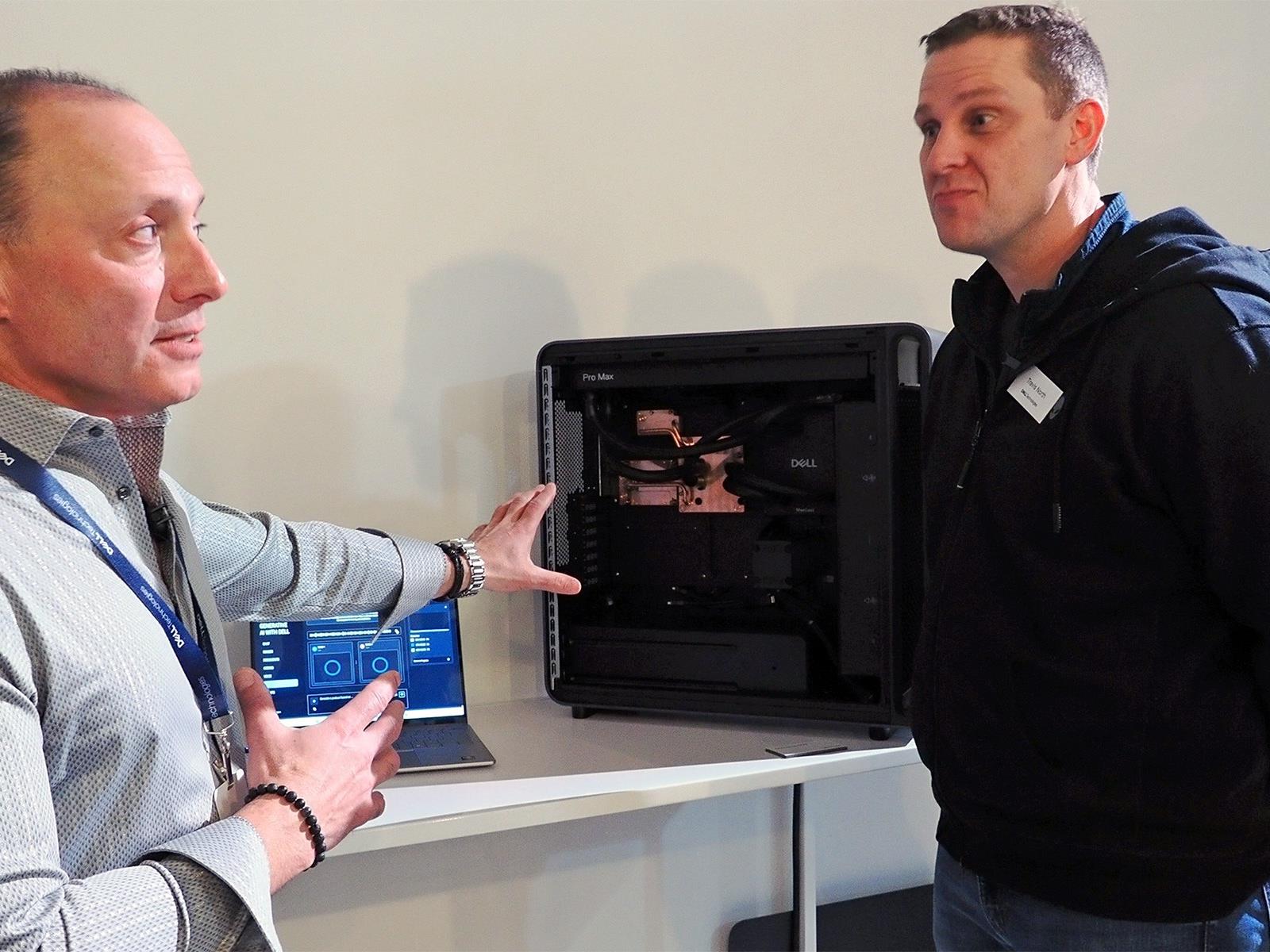
At CES 2026, we got to go hands on with the Dell Pro Max GB300 desktop. This is the big brother of the Dell Pro Max GB10, which as you could probably guess from the name, is essentially Dell’s take on the NVIDIA DGX Spark concept. The GB300 carries something far more potent inside: a Grace Blackwell Ultra Desktop Superchip.
We’re wrapping up coverage of the biggest tech show in the world. CES 2026 is almost over, and while we have more stories and wrap-ups to come, here are the most interesting products we’ve spotted, written about and critiqued/praised. That includes our picks for the best of CES. We gave out 15 awards as well as our best of show, and you might be surprised by some of our picks — I know I was.
Read on for some of the best things to come out of Las Vegas this week, but first up, our Best of the Best winner, which was Lego Smart Play. As Engadget’s editor-in-chief Aaron Souppouris put it, “Lego could almost be seen as the antithesis of the typical CES product.”
Regardless of trends, Lego has always persisted. And in 2026, it’s getting much smarter.
Lego
The system consists of a Smart Brick, Tags and Minifigures. They’re packed with modern technology, so they can respond to how you play with them or the sets you build. The Smart Brick has a 4.1mm ASIC chip, which Lego says is smaller than a standard Lego stud. It senses things like motion, orientation and magnetic fields, but also has a tiny built-in speaker, which produces audio “tied to live play actions,” not just canned clips.
It’s hard to explain it in only a few words (we’ve got a deep-dive hands-on right here), but what immediately drew me in was the lack of smartphone pairing and screens. The ability of each part to detect and interact with others can lead to some ridiculous setups, whether it’s ducks and police officers or a helicopter or an X-Wing.
Naturally, it’s a little pricier than basic Lego, but not out of the realm of being a special gift or birthday present. One of the first sets, with a smart Darth Vader Minifigure, one Smart Brick and one Smart Tag, is $70.
We’ll be back to our regularly scheduled newsletter next week. Have a great weekend!
NVIDIA has started production of its Vera Rubin supercomputer.
Engadget
On Monday, which feels like an age ago, Jensen Huang shared the latest from NVIDIA. While the presentation was more a refresher than a barrage of new announcements, it was a pretty low-key presentation, with lots of AI chat. One announcement was Alpamayo, a family of open-source reasoning models designed to guide autonomous vehicles through difficult driving situations. The centerpiece is Alpamayo 1, a 10-billion-parameter chain-of-thought system NVIDIA says can drive more like a human.
When it comes to tech we all might use, we had to wait for a separate event, when NVIDIA announced DLSS 4.5 and G-Sync Pulsar. For both features, you’ll need a 50-series GPU. You got one, right?
Any new phone almost certainly comes with a handful of preinstalled apps you’ll never use, regardless of which manufacturer you buy from or which operating system you’re on. Some devices are more bloated than others: Google Pixels have a relatively “clean” build compared to Samsung phones, for example, and don’t typically come with third-party apps and games.
But you may still want to eliminate apps and features that clutter your home screen, take up valuable space, and create a drag on performance, especially if you have alternatives you like more. On Android, that likely means uninstalling what you easily can and disabling everything else.
What you can (and can’t) uninstall on Android
Unfortunately, many preinstalled first-party apps can’t be easily removed. This varies by manufacturer and device—for example, Pixel users can uninstall Google Play Games and Books but are stuck with Chrome, Drive, Maps, and Calculator. As HowToGeek points out, you can delete other pre-selected Google apps added during initial setup, such as the Pixel Watch app and NotebookLM.
On Samsung Galaxy phones, again, some preinstalled bloatware is locked in, but ZDNET calls out five native apps that most users should delete right away: Global Goals, Samsung Free, Samsung TV Plus, Samsung Shop, and Samsung Kids.
To uninstall an app on your Pixel, go to the Google Play Store and tap the Profile icon. Tap Manage apps & devices > Manage, select the app you want to remove, and tap Uninstall. On Samsung, go to Settings > Apps, tap the app name, and tap Uninstall > OK. You can also touch and hold the app icon on your home screen and tap or drag to uninstall.
If you’re absolutely set on removing preinstalled apps that can’t be deleted using the above steps, you can use the Android Debug Bridge (ADB), but thesemethodsare more advanced.
How to disable preinstalled apps
Built-in apps that aren’t in use can be disabled, which hides the icon from your app drawer. They’ll still take up space, but at least they’ll be out of sight. Most preinstalled apps can be disabled if you don’t need them, with the exception of critical system apps.
On your Pixel, go to Settings > Apps > See all apps to select individual apps, and tap Disable at the top of the screen. You can hide preinstalled Samsung apps from your home screen settings: tap Hide apps and tap the icon of the apps you want to disable, the press Done.
The restaurant industry is trying to figure out whether America has hit peak pizza. From a report: Once the second-most common U.S. restaurant type, pizzerias are now outnumbered by coffee shops and Mexican food eateries, according to industry data. Sales growth at pizza restaurants has lagged behind the broader fast-food market for years, and the outlook ahead isn’t much brighter.
“Pizza is disrupted right now,” Ravi Thanawala, chief financial officer and North America president at Papa John’s International, said in an interview. “That’s what the consumer tells us.” The parent of the Pieology Pizzeria chain filed for chapter 11 bankruptcy protection in December. Others, including the parent of Anthony’s Coal Fired Pizza & Wings and Bertucci’s Brick Oven Pizza & Pasta, earlier filed for bankruptcy.
Pizza once was a novelty outside big U.S. cities, providing room for growth for independent shops and then chains such as Pizza Hut with its red roof dine-in restaurants. Purpose-made cardboard boxes and fleets of delivery drivers helped make pizza a takeout staple for those seeking low-stress meals. Today, pizza shops are engaged in price wars with one another and other kinds of fast food. Food-delivery apps have put a wider range of cuisines and options at Americans’ fingertips. And $20 a pie for a family can feel expensive compared with $5 fast-food deals, frozen pizzas or eating a home-cooked meal.
[…] Pizza’s dominance in American restaurant fare is declining, however. Among different cuisines, it ranked sixth in terms of U.S. sales in 2024 among restaurant chains, down from second place during the 1990s, Technomic said. The number of pizza restaurants in the U.S. hit a record high in 2019 and has declined since then, figures from the market-research firm Datassential show. Further reading, at WSJ: The Feds Need to Bail Out the Pizza Industry.