During CES 2026, Samsung unveiled plenty of new TVs, monitors and other hardware. However, the company is also looking to expand further into video games and has announced a significant refresh to its Gaming Hub on smartphones.
Engadget spoke with Samsung’s Jong Woo, VP of Game Services, who explained that the update will offer more personalized, faster ways to play and place greater emphasis on up-and-coming titles. Now available on Galaxy devices, with further updates planned, the new hub wants to be a more active space for the latest mobile games.
“We believe that gamers want to find new content that is personalized to them,” said the VP of Samsung Games Services. He continued: “We want to bring content to users and make it immediately available for them to play. We have instant plays where, through our cloud streaming technology, we can take Android-native games and put them in the cloud, so that when users want to try them, they don’t have to go through the friction of downloading them first.”
According to Samsung, the mobile Gaming Hub attracts over 160 million users across smartphones and other devices. However, the VP of Game Services at Samsung believes that, despite the vast library of games across many genres available to mobile users, “mobile game discovery is broken.”
Samsung
Initially, the mobile Gaming Hub was a supplemental app for all purchased games, allowing users to track their collection. With this update, all games purchased from both Google Play and the Galaxy Store are stored in the Gaming Hub. It’s designed to be a single place for players to view their owned games, find recommendations, access cloud streaming for select games and even watch highlights from content creators.
According to Woo, the larger goal of the new Samsung mobile Gaming Hub is to personalize and guide the mobile gaming experience for players, which has remained nebulous compared with gaming discovery experiences on PC and consoles.
“We’re getting a lot of feedback from the users, a lot of it from focus testing and beta testing, and what we’re finding is that we believe we are solving pain points for mobile gamers,” said Woo about rebuilding the Gaming Hub. “We’re getting an idea of gamer preferences at the individual, personalized level. Based on all of that, we’re able to provide different types of recommendations.”
Another reason for the new changes to the Samsung Gaming Hub was to help foster a community for mobile gamers, including players and developers. In addition to sharing YouTube videos and content from gaming creators and streamers, the company plans to add more social elements to the Gaming Hub to make mobile gaming feel more active and less isolating.
“Mobile is a very personal experience, right? It’s your personal device, and oftentimes when you play games on mobile, it feels like a solitary experience,” said Woo. Currently, the revamped Mobile Gaming Hub is only available for Galaxy smartphones and tablets. Users on non-Galaxy devices will still use the previous version of the Gaming Hub, for now.
Compared with PC and console online hubs like Steam and PlayStation Network, it’s clear that mobile platforms are still figuring out how to create an equally compelling space for engagement. Even with the vast user base, mobile game hubs tend to be a go-between for users to get to the products. There’s more work to do, but the new Gaming Hub could be the first step in the right direction.
This article originally appeared on Engadget at https://www.engadget.com/gaming/samsung-refreshed-mobile-gaming-hub-150010632.html?src=rss
If you have Verizon, yesterday might have been a bit chaotic. The wireless carrier’s coverage was down for large swaths of the country for much of the day, leading to confusion, frustration, and, for some, conspiracy theories. I saw some users on X post cryptic messages like “This is how it starts,” and “These are the end times.” It’s good to know in times of service disruption, we can all keep a level head.
But despite claims to the contrary, the world didn’t end yesterday, and Verizon fixed the issue. The company issued a statement at 10:20 p.m. ET, confirming the outage had been resolved, and that Verizon would contact affected customers directly to issue account credits. While that doesn’t necessarily make up for a full day of network downtime, at least Verizon users can get back online and make calls when not connected to wifi.
But some customers out there aren’t back to normal. In fact, they’re still seeing the same “SOS” alert on their phones they saw yesterday. For these users, the outage is very much still happening, as they cannot access the internet or communicate with others without either going through satellite connectivity, or finding a wifi connection. When you need to be out and about, especially on the road, that isn’t an option.
How to get your Verizon phone out of SOS mode
Luckily, there’s a simple solution here, one that Verizon shared in its post about the outage’s resolution: restart your phone. It doesn’t matter if you already restarted your phone yesterday during the outage: In order to see results, you’ll need to power off your phone and turn it back on after Verizon implemented its fix.
Different smartphones have different restart methods, but here are some tips for the most popular models:
Restarting an iPhone: Press and hold one of the volume buttons together with the side (power) button, until you see the power-off slider. Slide to power off, then wait for the screen to go totally black. After about 30 seconds, you can press and hold the side button to power it back on. Note: If your iPhone has a Home button, you can simply press and hold the side button to pull up the power-off slider.
Restarting a Samsung Galaxy: Press and hold the volume down button and side button until you see power options appear. Here, choose “Restart,” then tap “Restart” again.
Restarting a Pixel: If you have a Pixel 6 or newer, press and hold the volume up button and side button for a few seconds, then tap “Restart” when it appears. If you have a Pixel 5 or older, simply hold the side button until the phone restarts.
If your phone model isn’t listed here, you can search the internet for specific instructions on how to restart it. Typically, though, the process involves holding both the side button and one of the volume buttons.
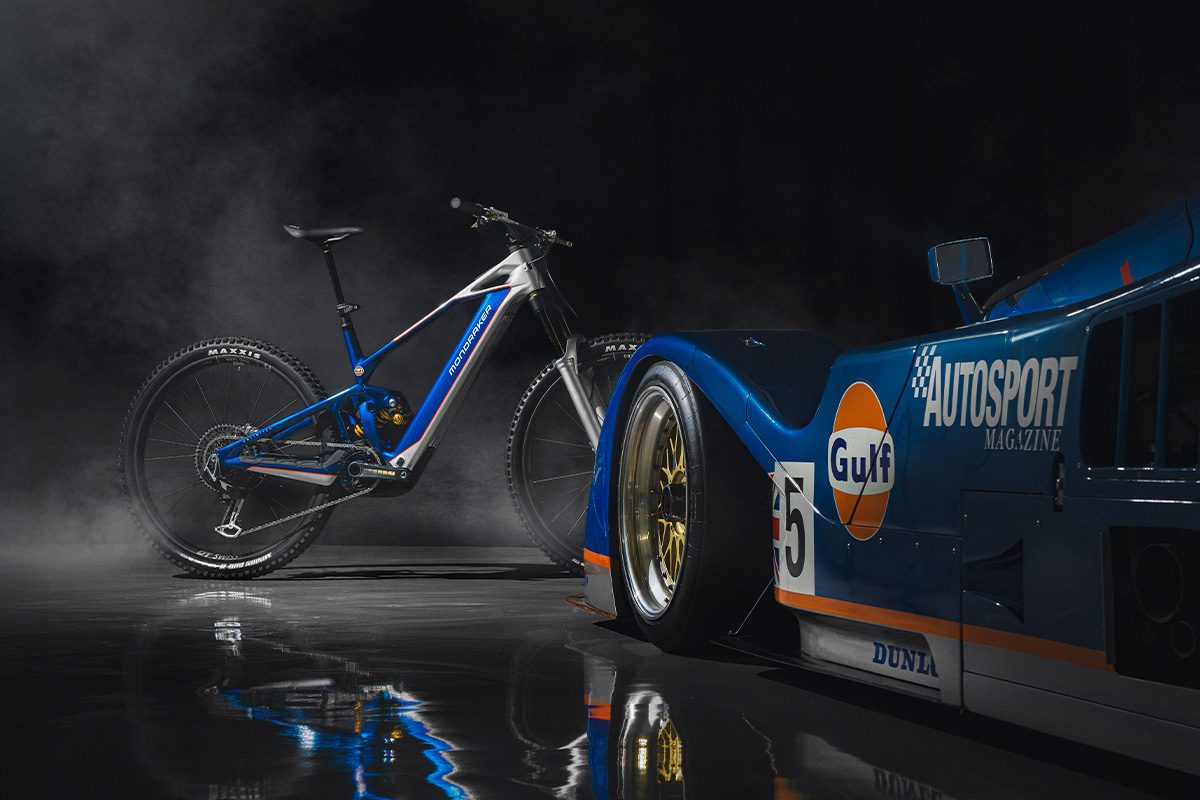
Mondraker has released the Crafty Unlimited Gulf Edition, with a lust-worthy spec and a paintjob that pays tribute to one of the most iconic liveries in motorsport.
Despite the name, the new electric bike is a limited edition and features a hand-painted finish that takes inspiration from the Gulf Oil Porsche Kremer K8.
It’s not the first time the Spanish brand has collaborated with Gulf, with models such as the Neat and Dusty X also featuring special-edition colourways.
The bike is priced at the very top-end, at £14,499 / $15,999 / €13,999, but the spec list goes some way to justifying the price.
The bike is a step away from the light blue colour scheme seen on the Ford GT40. Mondraker
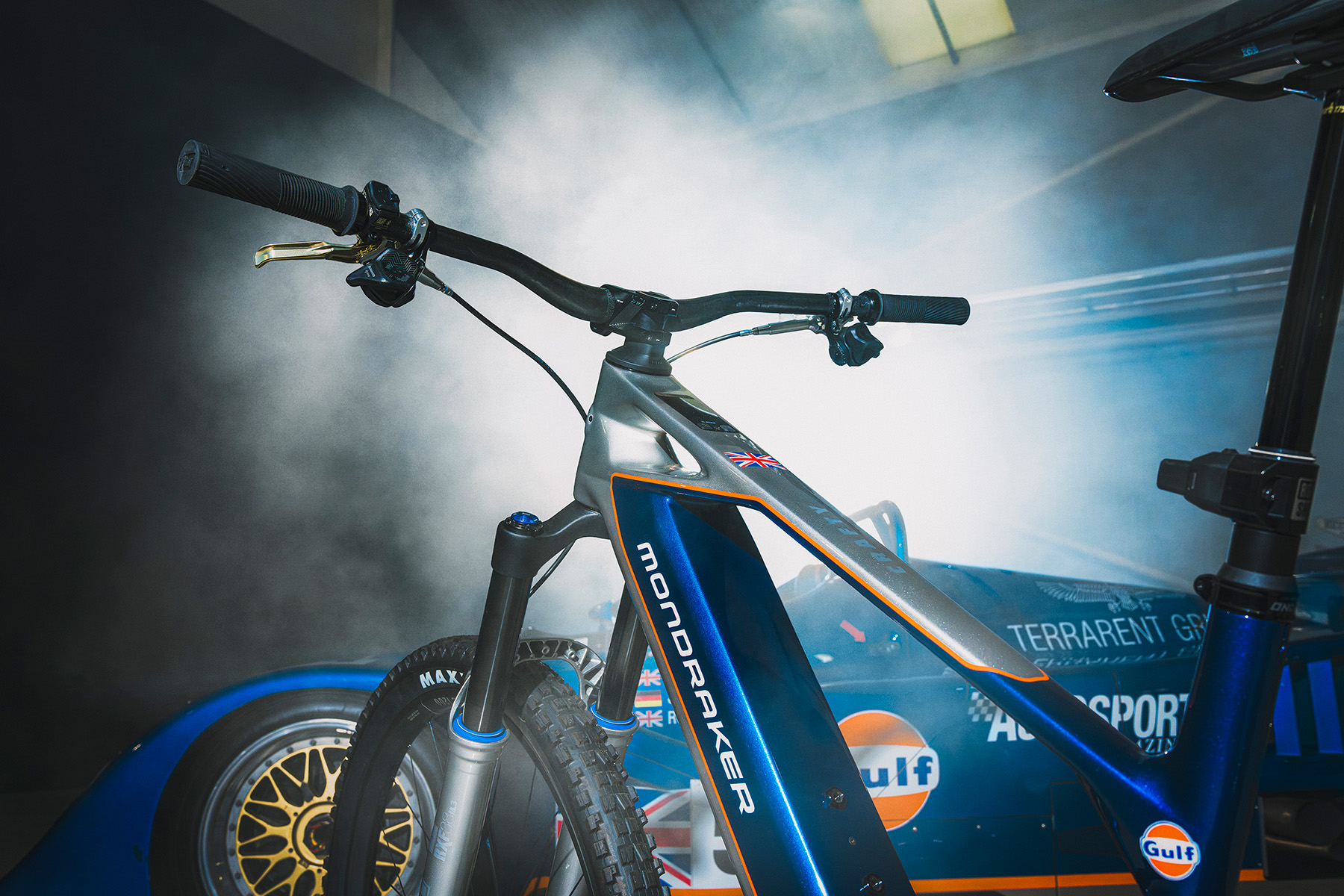
It becomes the only bike in the Crafty range to feature Öhlins suspension, with the RXF 38 M.3 fork featuring a silver finish that blends into the rest of the livery.
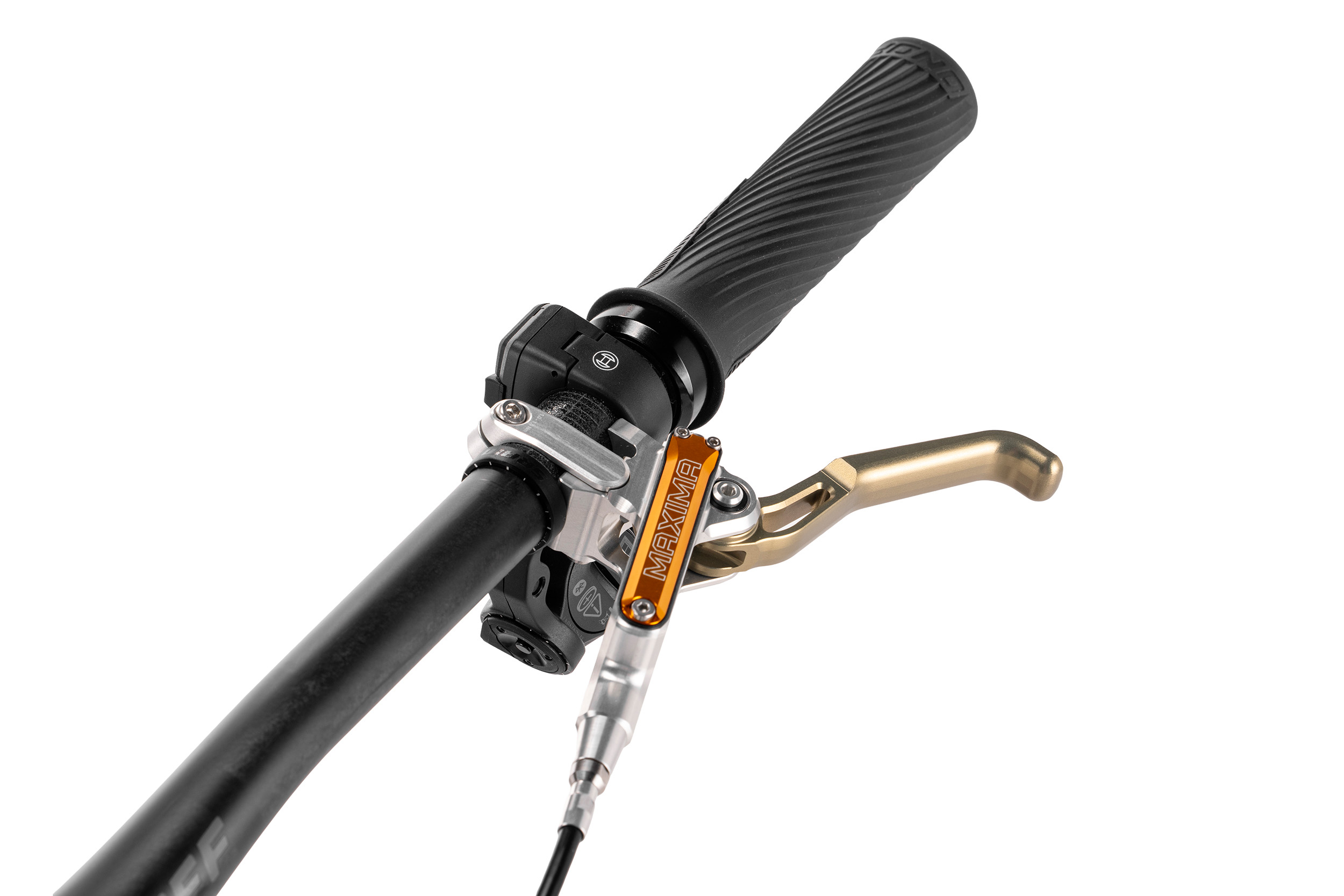
Trickstuff’s Maxima brakes are some of the most expensive on the market at £1,300. Mondraker
Elsewhere, the bike features DT Swiss HXC 1200 carbon wheels and Trickstuff’s Maxima brakes, signifying the premium build level of the bike.
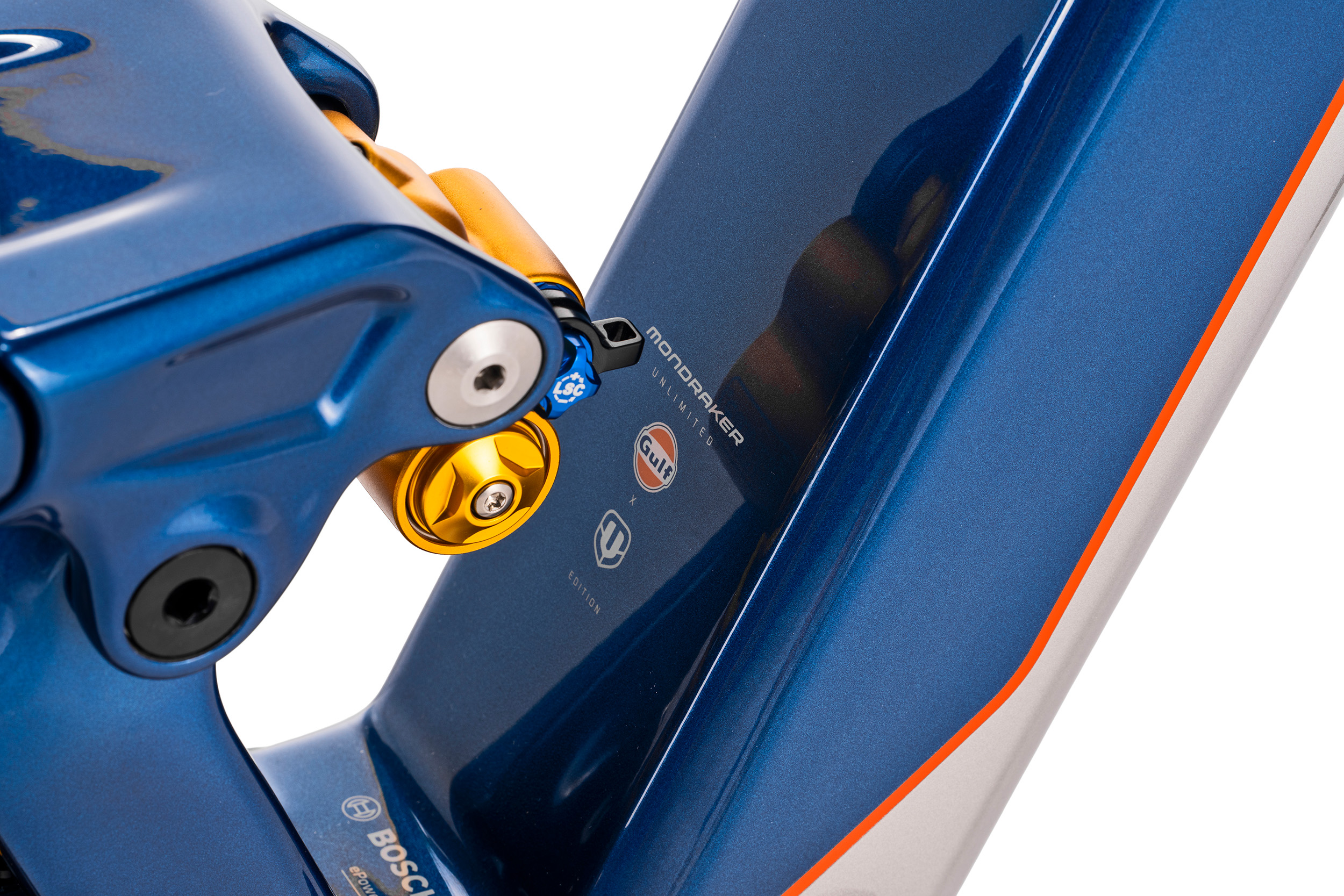
The Gulf logo features on the seat tube. Mondraker
This may be the last time we see a Mondraker wearing the Gulf paint scheme, with the brand saying the release of the bike “represents the final chapter in this partnership, embodied in our most advanced and sought-after eMTB”.
There’s only so much that can be said about this beauty, so we’ll let the pictures speak for themselves.
The accents of the Öhlins suspension match the car’s wheels. Mondraker The bike is based on the Porsche Kremer 8. Mondraker A matching Union Flag features on the top tube of the bike. Mondraker Mondraker says this is the final chapter in its partnership with Gulf. Mondraker
ENVE has announced the release of its new AR40 wheelset, the latest addition to the value-focused Foundation line-up.
Featuring 40mm-deep and 32.2mm-wide carbon rims, the Foundation AR40 wheelset features hookless rims and is designed to work across road, all-road and gravel bikes.
According to the American brand, the Foundation AR40 wheelset “borrows” from knowledge gleaned during the development of ENVE’s pricier wheelsets, and is claimed to be more aerodynamic than Reserve’s 42|49 wheelset with a 29mm tyre.
Priced at £1,800 / $1,500 / €1,649 and claimed to weigh 1,515g, ENVE says it “represents the highest quality wheelset on the market” at its price.
Rather than citing potential cost savings, ENVE says using a hookless profile “allows the rim’s critical tolerance at the bead seat diameter to be both consistent and accurate”, which helps “deliver a safer and more reliable tubeless system”.
As with other hookless rims, this means the Foundation AR40 wheels are only compatible with tubeless tyres between 27 and 50mm wide, and ENVE’s spec sheet notes that riders should only use models listed as “Approved/Recommended” on its website.
The AR40 wheels use a wide, hookless rim optimised for larger road bike tyres and beyond. ENVE
Beyond this, ENVE says the AR40 rims use its ‘wide hookless bead’ technology, which helps reduce the chance of pinch flats from rock strikes, and its patented moulded spoke holes.
These are said to create a lighter and stronger rim compared to drilled spoke holes because the carbon fibres remain intact and enable them to withstand higher spoke tensions with reduced risk of failure.
The Foundation AR40 wheels are specced with ENVE’s own alloy hubs, with steel bearings and an “oversized 42mm ratchet drive system”. The design prioritises “low maintenance and easy serviceability”, according to the brand.
Optimised for road, but off-road capable
Although aero-optimised for road tyres, ENVE says the AR40s are off-road capable. ENVE
Although the Foundation AR40 wheelset is optimised for use on road bikes first and foremost, and has been designed around road bike tyres, ENVE says it has been designed to withstand the rigours of riding and racing off-road.
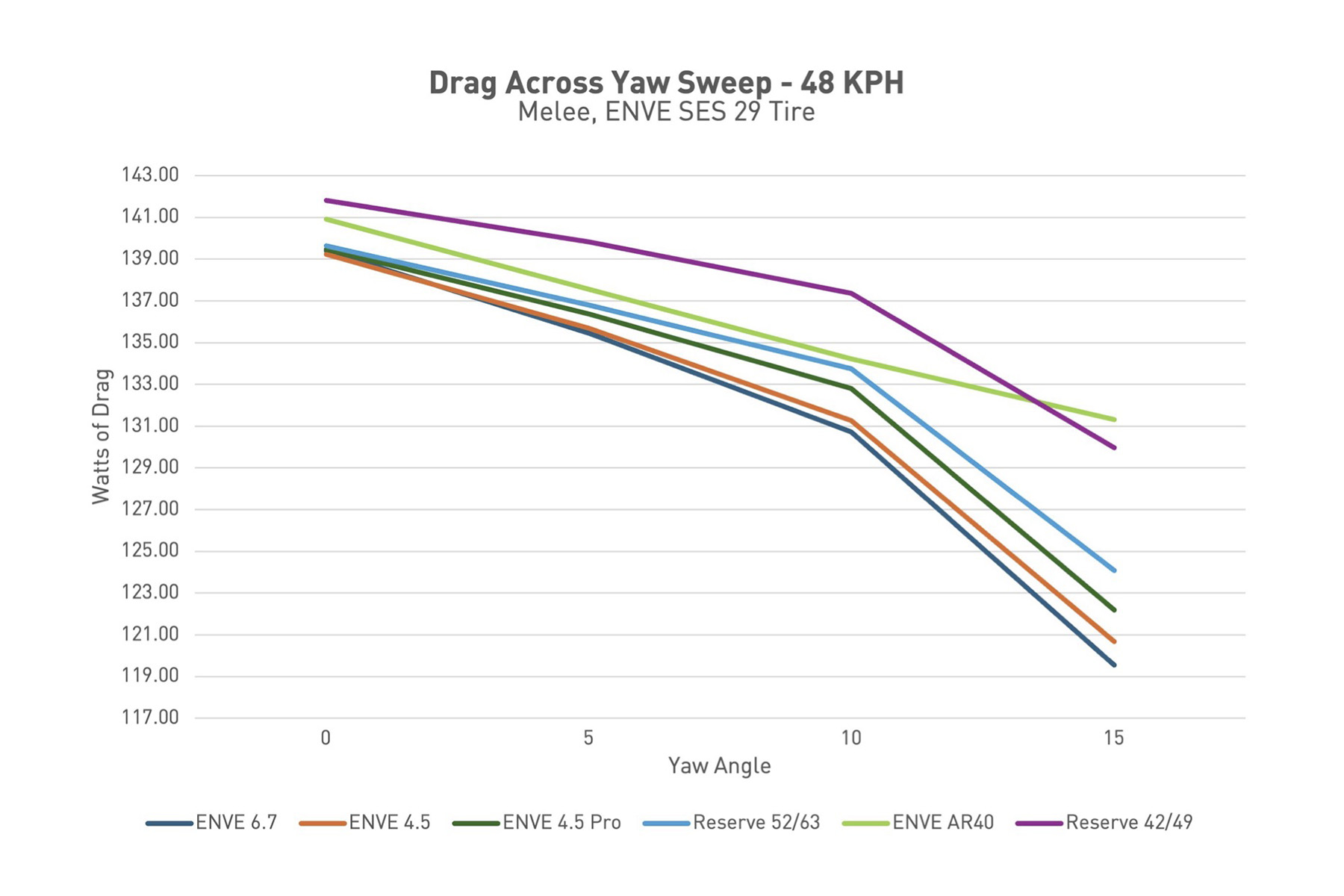
In terms of performance, ENVE says it pitted the Foundation AR40 wheels against its own SES 4.5, 4.5 Pro and 6.7 wheels, as well as Reserve’s 52|63 and 42|49 wheelsets, at the Mercedes-Benz Formula One wind tunnel.
ENVE performed aero testing for the AR40s at the Mercedes-Benz Formula One wind tunnel. ENVE The results show the AR40s are competitive with ENVE’s pricier wheelsets. ENVE
With a 29mm tyre, the results show the AR40 wheelset outperforms the pricier SES 4.5 Pro wheelset (£4,100 / $3,750 / €4,499) at 32kph / 20mph, and is competitive with the deeper-rimmed alternatives.
It’s fair to say the increased scale on the Y-axis exaggerates the difference significantly, though, given the actual difference appears to be less than 0.5 watts, and no margin of error is quoted for the figures.
ENVE’s Foundation AR40 wheelset is claimed to perform almost as well as wheelsets costing twice as much. ENVE
At 48kph / 30mph, the differences are a little clearer and the 4.5 Pro wheelset pulls ahead by around 2.5 watts. The data shows the AR40 wheelset outperforms the Reserve 42|49 (£1,599 with DT Swiss 350 hubs) by a little more than one watt, though.
All things considered, then, these are small margins, but it’s encouraging that the AR40s ought to offer competitive aero performance even when compared to options costing significantly more.
Al Viro does not often stray outside of the core virtual filesystem area;
when he does, it is usually worthy of note. Recently, he wandered into
memory management with this patch
series to the slab allocator and some of its users. Kernel developers
will often put considerable effort into small optimizations, but it is
still interesting to look at just how much effort has gone toward the purpose of
avoiding a single pointer dereference in some memory-allocation hot paths.
Anthropic’s fourth installment of its Economic Index, drawing on an anonymized sample of two million Claude conversations from November 2025, finds that AI is changing how people work rather than whether they work at all. The study tracked usage across the company’s consumer-facing Claude.ai platform and its API, categorizing interactions as either automation (where AI completes tasks entirely) or augmentation (where humans and AI collaborate). The split came out to 52% augmentation and 45% automation on Claude.ai, a slight shift from January 2025 when augmentation led 55% to 41%.
The share of jobs using AI for at least a quarter of their tasks has risen from 36% in January to 49% across pooled data from multiple reports. Anthropic’s researchers also found that AI delivers its largest productivity gains on complex work requiring college-level education, speeding up those tasks by a factor of 12 compared to 9 for high-school-level work.
Claude completes college-degree tasks successfully 66% of the time versus 70% for simpler work. Computer and mathematical tasks continue to dominate usage, accounting for roughly a third of Claude.ai conversations and nearly half of API traffic.
IO Interactive raised a few eyebrows last week when it announced the minimum and recommended PC specs for 007 First Light. To run the James Bond adventure at in 1080p at 60 fps, IOI initially said you’d need to have a rig with at least 32GB of RAM and a GPU with 12GB of VRAM. The studio has now revised those numbers and other elements of the specs after “the community flagged some inconsistencies in an earlier version of the listing.”
The developer blamed an “internal miscommunication” which led to it sharing an older version of the specs. One of the recommended GPUs in the original version was an NVIDIA GeForce RTX 3060 Ti, which has 8GB of VRAM — not enough to meet the supposed recommended VRAM settings.
It seems a little odd to think that it took IOI over a week and an enormous pile of negative press and online reaction before addressing the inconsistency (not to mention the demand for 32GB of RAM for relatively modest 1080p, 60 fps performance). The studio says it updated the specs after “a thorough re-examination and additional testing.”
We are providing today an update to the PC system requirements for 007 First Light after the community flagged some inconsistencies in an earlier version of the listing.
The earlier mistake was due to an internal miscommunication leading to an older version of the specs to be… pic.twitter.com/2M8BBoCjWX
In the recommended hardware section of the latest version, IOI revised down the VRAM from 12GB to 8GB and it halved the RAM requirement to 16GB. IOI also “fixed” the minimum CPU info. The original specs stipulated that gamers would need at least an Intel Core i5 9500K or AMD Ryzen 5 3500. The former has now been revised down to an Intel Core i5 9500K.
For the tape, then, the minimum PC specs to run 007 First Light with a performance target of 1080p at 30 fps are:
The required operating system is the same on both counts with a 64-bit version of Windows 10 or 11. The storage space needed is also the same at 80GB.
IOI apologized for “the confusion” it caused with the mixup. It promised to share more details about 007 First Light ahead of the game’s arrival on May 27 — including details of additional performance targets. Given the way RAM and GPU prices are going, here’s hoping IOI isn’t looking for too much more to run the game at 1440p or 4K at a decent framerate.
This article originally appeared on Engadget at https://www.engadget.com/gaming/007-first-light-dev-admits-it-messed-up-pc-specs-announcement-143000670.html?src=rss
We have recently noticed that email from LWN.net seems to be
blocked by MXroute. Unfortunately, the company also does not seem to
have a way for non-customers to report problems in mail delivery, so
we have no good way to get ourselves unblocked.
As a result, readers who have subscribed to an LWN mailing list
from a domain hosted with MXroute will probably not receive our
mailings. We have not yet unsubscribed addresses that are being
blocked by MXroute, but will soon if the problem persists. Please
accept our apologies for the inconvenience; it is unfortunate that it
is becoming so difficult to send legitimate email as a small
business.
Sent out today was the latest DRM-Misc-Next pull request of new material ahead of the next kernel cycle either Linux 6.20 or 7.0 depending upon what Linus Torvalds decides to call it…
US President Donald Trump has announced new tariffs on Nvidia and AMD as part of a novel scheme to enact a deal with the technology giants to take a 25 percent cut of sales of their AI processors to China.
In December, the White House said it would allow Nvidia to start shipping its H200 chips to China, reversing a policy that prohibited the export of advanced AI hardware. However, it demanded a 25 percent cut of the sales.
The new US tariffs on certain chips, announced on Wednesday, were designed to implement these payments and protect the unusual arrangement from legal challenges, according to several industry executives.
Verizon confirmed that it has resolved a frustrating service outage that left many wireless subscribers scrambling through posts on social media to see what was going on. Details are still light, but those who found their way to X (formerly Twitter) in search of answers on why their service suddenly went dark would have seen rivals AT&T and
White-collar workers stuck in a cycle of layoffs and stagnant wages might want to look past the traditional tech, finance and media job postings to an unexpected source of opportunity: the blue-collar sector, which faces a labor shortage and is seeing rapid transformation through private-equity investment. These jobs are generally less vulnerable to AI, and the earning trajectory can be steep, the WSJ writes.
At Crash Champions, a car-repair chain that has grown from 13 locations in 2019 to about 650 shops across 38 states, service advisers start at roughly $60,000 after a six-month apprenticeship and can double that within 18 months, according to CEO Matt Ebert. Directors overseeing multiple locations earn more than $200,000. Power Home Remodeling, a PE-backed construction company, says tech sales professionals earning $85,000 to $100,000 could make lateral moves after a 10-week training program.
The share of workers in their early 20s employed in blue-collar roles rose from 16.3% in 2019 to 18.4% in 2024, according to ADP — five times the increase among 35- to 39-year-olds.
After a widely hyped and successful Kickstarter campaign, Valerion’s 4K VisionMaster Max laser projector has finally arrived. It’s the company’s new flagship model in the VisionMaster series, offering better image quality and more convenience than its other models. However, it’s quite expensive and has some stiff competition from Anker’s Nebula X1 and XGIMI’s Horizon 20 Max.
I was eager to see how it compared to those models and if it delivers on Valerion’s promise of “pure cinema.” It does offer better image quality, but the difference isn’t quite enough to justify the big jump in price for most users.
Features and design
The VisionMaster Max has a classy squarish design with a glossy black finish up front and chrome fins on the side that house two 12W speakers. It’s smaller and fit my decor better than Nebula’s tall, plasticky X1, though to be fair the latter is also designed for outdoor use. The VisionMaster Max has a similar form factor to XGIMI’s Horizon 20 Max, but that model pivots on its stand, while the Valerion uses a kickstand-like support.
For setup, the VisionMaster Max is quite flexible. It comes with a 0.9-1.5x optical zoom, so it can be installed between 7.8 and 13 feet away for a 120-inch screen size, which covers a wide range of scenarios. It also features a +/- 105 percent vertical shift option that helps you get an optically perfect screen fit without moving the projector or employing digital “keystone” adjustments that affect picture quality.
If that still doesn’t work, you can swap out the included lens with a long-throw 0.9-2.0:1 option once it becomes available. The company has even promised an anamorphic lens for users with CinemaScope screens. Both of those items will be available for purchase separately with the prices yet to be disclosed.
Steve Dent for Engadget
For my space, I placed the VisionMaster Max on a table about 12 feet from my 120-inch screen and centered it horizontally as there’s no horizontal shift option (it can also be ceiling mounted, of course). Then, I went into the auto-alignment setting, made sure that the projected image was larger than my screen and hit “start alignment” to get a perfect fit to my screen. Though it lacks a motorized lens gimbal like the Nebula X1, the lens shift option provides the same flexibility, so setup was just as easy.
For inputs, the VisionMaster Max comes with three HDMI 2.1 ports, including one with eARC for a sound bar, along with S/PDIF optical and 3.5mm audio outputs. Impressively, it includes a gigabit ethernet connection so you can either hardwire it to the internet or connect via Wi-Fi.
The VisionMaster Max lacks liquid cooling like the Nebula X1, but Valerion claims a similar fan noise level of 28db. When I compared them side by side, it was only a touch louder than the X1 and not at all bothersome.
Google TV is built in for streaming and projector control via the high-quality, partially backlit remote. It provides a large library of apps via Google Play along with a familiar interface. You get certified versions of Netflix, YouTube, Prime Video, Disney+, Max and others, plus Chromecast and AirPlay support, and Google Assistant for voice control. With 4GB of RAM and 128GB of ROM, the software felt a bit more responsive than Google TV on the Nebula X1.
Image quality
Steve Dent for Engadget
The VisionMaster Max has a number of features designed to optimize image quality. It’s one of the few consumer projectors with a dynamic iris and a feature called Enhanced Black Level (EBL) for improved contrast. It uses an RGB triple-laser light source (rated for 25,000 hours) paired with a 0.47-inch DLP chip that projects 1080p natively or 4K video via pixel shifting. This same chip is used on almost every consumer-level 4K projector, but XGIMI’s upcoming Titan Noir Max projector will pack a much larger 0.78-inch DMD chip that should deliver a sharper picture.
The VisionMaster Max also supports every HDR format, including Dolby Vision and Samsung’s HDR10+, along with Valerion’s own tone-mapping HDR setting. You can choose from seven picture modes for SDR, eight for HDR, three for Dolby Vision and four for HDR10+. The projector handled most HDR content well, though it occasionally lost detail in extra-bright shots. However, that can largely be fixed using the extensive manual color controls.
With all those features, the VisionMaster Max can output 4K 60 fps video at up to 3,500 ANSI lumens with a 50,000:1 contrast ratio, easily besting its main rivals. On top of that, it promises an impressive 110 percent of the Rec.2020 HDR color spectrum, with a delta E (color accuracy) value of less than 0.8 straight out of the box (any delta E less than 2 is undetectable by the human eye). Another key feature is reduction of the rainbow effect that can occur with DLP projectors.
After some fine-tuning that’s typically required with new projectors, I was highly impressed with the image quality. Brightness was high enough in “standard” mode to watch content like sports or TV shows without lowering the blinds, and can be increased if you don’t mind compromising color accuracy.
When used in ideal conditions like a darkened room, the VisionMaster Max’s image quality is the best of any projector I’ve tested to date. In Filmmaker mode (with the EBL setting enabled), contrast levels are outstanding, with true blacks showing in dark-lit scenes instead of the washed-out greys seen on most projectors. However, I kept the EBL mode at the minimum setting as I noticed it caused some color shifting at the other levels. Dynamic iris projectors can cause excessive “pumping” or sudden changes in light levels, but after adjusting the iris to a medium setting, I saw no signs of that.
The famously dark Game of Thrones Night King battle scene was easy to see on the VisionMaster Max.
Steve Dent for Engadget
Color accuracy is outstanding straight out of the box both in HDR and non-HDR modes, particularly, again in Filmmaker mode. Visually, I couldn’t detect any anomalies when looking at color bars or other charts, though my Calibrite Color Checker told me that the gamut of hues was slightly less than what Valerion claims (under 100 percent of BT.2020).
Still, the Max’s high color accuracy allowed me to see TV series and movies exactly as the filmmakers intended for a range of HDR and non-HDR movies including White Lotus season 3, Once Upon a Time in Hollywood, Andor and Dune 2. The projector’s excellent dynamic range and contrast revealed shadow details in Game of Thrones’ Night King battle, which has famously dark scenes that are difficult to see on some TVs.
I have a slight amount of sensitivity to the “rainbow” effect, but the RBE Reduction feature effectively eliminated that visual artifact for me. However, it also introduced a slight amount of noise, so I disabled it. The feature might be a godsend for some users who are particularly susceptible, but it still needs a bit more refinement.
Audio and gaming
Of all the luxury projectors I’ve tested to date, the VisionMaster Max is the best for gaming — even compared to some dedicated models. It delivers latency as low as 4ms and a refresh rate up to 240Hz at 1080p, and 15ms for 4K at 60Hz. I tested a couple of PC titles including Cyberpunk 2077 and Hollow Knight: Silksong and found them to be as responsive as I’ve seen on any TV, but with far more immersion thanks to the huge, bright and color-accurate image.
Steve Dent for Engadget
You can output audio via the S/PDIF optical output, 3.5mm headphone jack, HDMI 2.1 ports and even USB 3.0 Type A ports. The built-in 12W stereo speakers work well and are fairly loud, so you can use them in a pinch. However, since it supports both DTS:X and Dolby Atmos, you’ll ideally want to connect it to a nice home theater audio system with support for at least 5.1 surround sound.
In comparison, the Nebula X1 doesn’t have Dolby Atmos support, but it does give you the option to purchase and easily connect stereo Bluetooth speakers at a relatively cheap price. For around the same cost as the Valerion Max, Anker is also offering the Nebula X1 Pro that comes with a giant outdoor sound system and does support Dolby Atmos.
Wrap-up
The Valerion VisionMaster Max is a highly capable indoor projector that offers the best image quality I’ve seen thanks to the dynamic iris and Enhanced Black Level features. However, it’s also a lot more expensive than rival models at $5,000. It’s pretty hard to justify that extra money, unless you’re really fussy about picture accuracy and gaming performance, or need other features like the 1Gbps ethernet port.
Most buyers would be better off spending a lot less on Valerion’s own $2,699 VisionMaster Pro2, Anker’s $2,999 Nebula X1 or the $2,999 XGIMI Horizon 20 Max. Again, the difference in picture quality is too slight to justify the huge price jump to the VisionMaster Max. You might also want to wait to see how much XGIMI’s incoming Titan Noir Max 4K costs, as it also offers a dynamic iris but has a much bigger DLP chip.
This article originally appeared on Engadget at https://www.engadget.com/home/home-theater/valerion-visionmaster-max-projector-review-near-perfect-image-quality-comes-at-a-price-140045939.html?src=rss
Boyd is looking to expand with USA manufacturing. Boyd
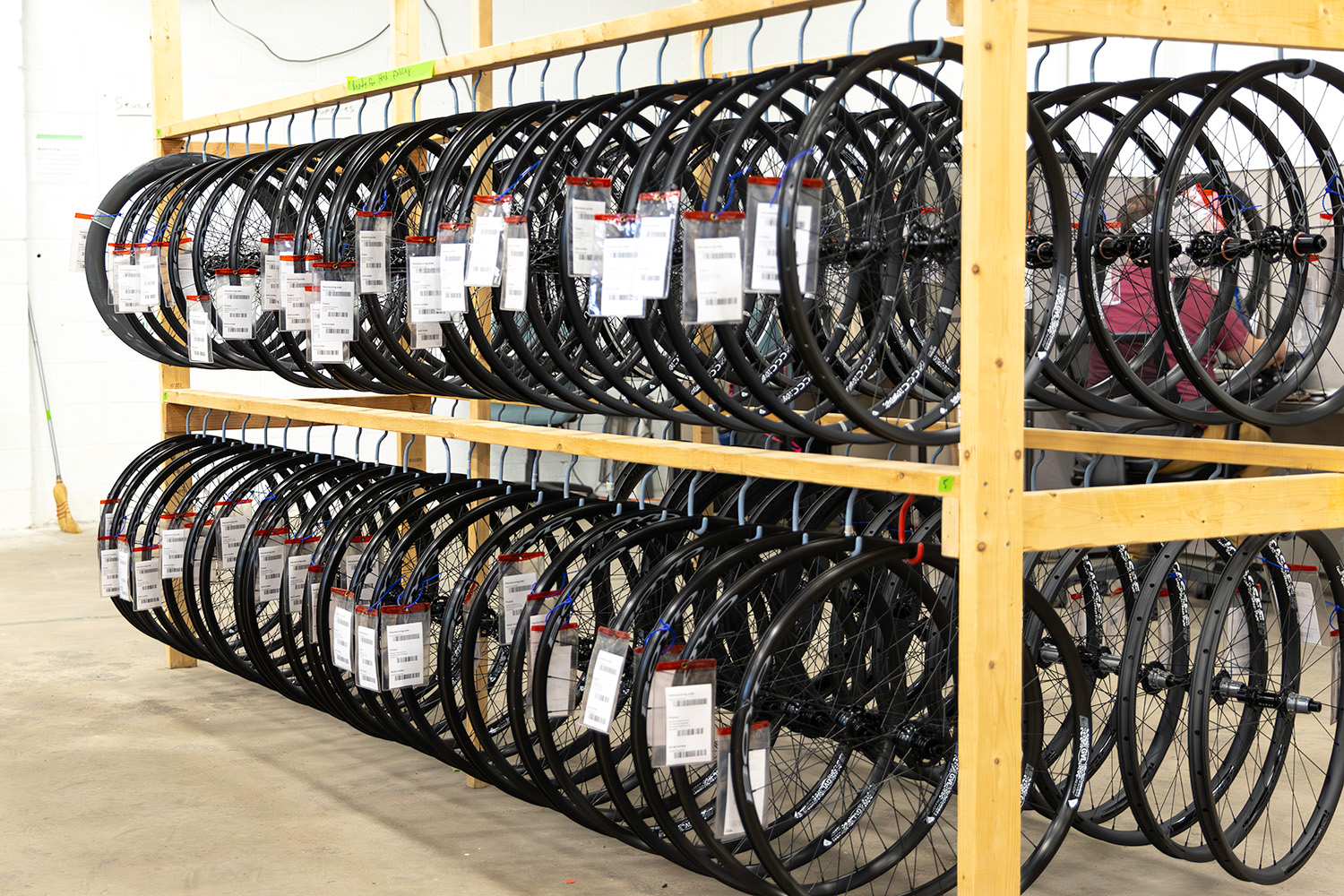
Alongside its established alloy rim facility, Boyd is introducing carbon fibre production, where its carbon fibre rims will be made.
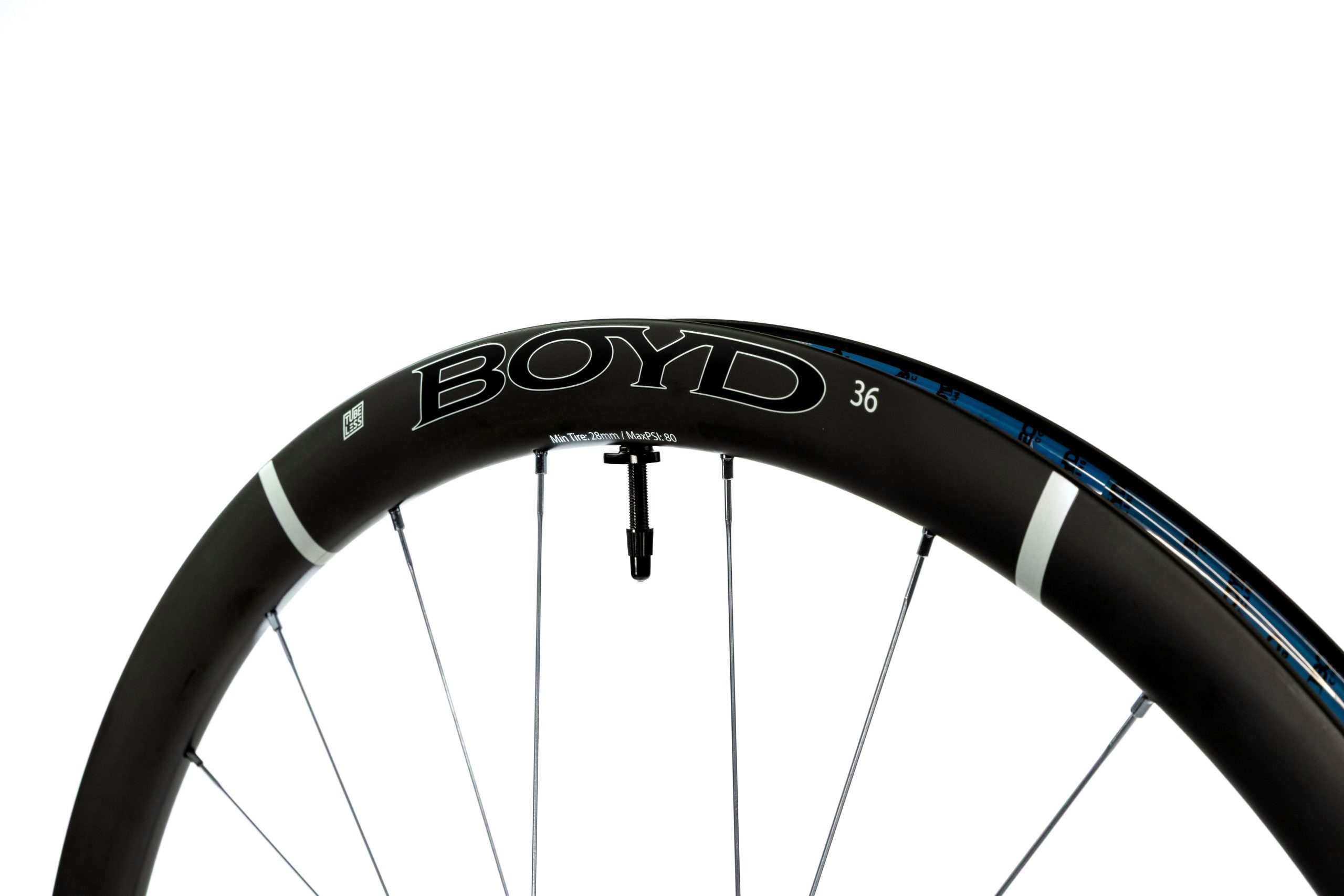
The Podium 36mm Carbon Disc SL features a carbon fibre rim construction with a 36mm rim depth and a 24mm internal width, optimised for 28-38mm tyres.
The rims are hooked carbon tubeless. Boyd
Boyd says the rim uses aerospace-grade T1000 carbon fibre in high-stress zones, with high-modulus carbon fibres placed at strategic cross angles in the layup.
Boyd says the wheels are hand-built for long-term durability. Boyd
This is said to result in an impact resistance exceeding 110 joules, more than 2.5 times the UCI’s requirement of 40 joules.
Multi-angle spoke hole reinforcement is used to distribute spoke tension forces across multiple directions.
This is said to enable higher, more stable spoke tension without adding unnecessary mass.
24 Pillar Wing 20 spokes pull the wheels together. Boyd
Alongside the new carbon rim, the brand has also released new Grade 36 and Grade 54 hub platforms, with the Podium 36mm Carbon Disc SL wheels using the later, which boasts 6.6° engagement.
The hubs weigh 85g for the front and 185g for the rear, and inside Enduro ABEC-5 bearings are used for rolling performance and longevity.
The wheels are priced at £1,860 / $2,100 / €2,150.
President Trump has signed a proclamation imposing a 25 percent tariff on “certain advanced computing chips,” the White House has announced. As The New York Times notes, the administration previously threatened much bigger and broader tariffs for chips. Trump even said that he was going to impose a 100 percent tariff on companies unless they invest on semiconductor manufacturing in the United States.
The new tariff will only affect advanced chips imported into the US and are meant to be re-exported to other countries to sell. In its announcement, the White House specifically named AMD MI325X and NVIDIA H200 as two products that will be affected by the tariff. The president recently approved H200 for export to China, saying that it isn’t NVIDIA’s most advanced AI chip anyway and that the company now has newer and more powerful products, such as its Blackwell semiconductors. “[W]e’re going to be making 25 percent on the sale of those chips, basically,” Trump said.
Semiconductors imported into the US for use in products to be sold in America or for use in data centers in the country, will not be affected by the new tariff. “This tariff will not apply to chips that are imported to support the buildout of the US technology supply chain and the strengthening of domestic manufacturing capacity for derivatives of semiconductors,” the White House wrote. But that could still change: The administration said that it may still impose broader tariffs on semiconductor imports and the products that use them in the near future.
This article originally appeared on Engadget at https://www.engadget.com/big-tech/trump-administration-imposes-a-25-percent-tariff-on-high-end-chips-140000138.html?src=rss
OpenAI has debuted a dedicated ChatGPT-powered translation tool. While folks have been using the main chatbot for translation for some time, you can now find ChatGPT Translate on its own webpage, as Android Authority spotted.
The tool can translate text, voice inputs and images into more than 50 languages in seconds, OpenAI says. There’s an automatic language detection function too.
Most interestingly, ChatGPT Translate can rewrite the output to take various contexts and tones into account, much in the same way that more general text-generating AI tools can do. With a single tap, it can rewrite the translation into something “more fluent,” for a business formal audience, to make it more child-friendly or for academic purposes. The tool’s webpage says ChatGPT Translate understands “tone, idioms and context.”
While those tone and context considerations are intriguing, ChatGPT Translate is a little underbaked compared with the likes of Google Translate — which has been around for decades and just got its own Gemini-based makeover with better support for understanding idioms and slang. The desktop version of ChatGPT Translate does not yet allow for voice inputs, though the mobile one does, as Android Authority notes. Despite claims that ChatGPT can translate text in an image, there’s currently no way to upload one to the tool. There’s no website, document or handwriting translation support as yet either.
Perhaps most crucially, ChatGPT Translate lives on a webpage right now and there’s no dedicated app. So using it offline appears to be out of the question as things stand. No app with on-device translation support could make ChatGPT Translate a no-go for travelers in rural areas with no Internet access. There’s no support for translating real-time conversations as yet either. Google’s Pixel 10, on the other hand, now supports voice translations for calls.
It’s not exactly clear when ChatGPT Translate debuted — it arrived with zero fanfare from OpenAI. There’s a snapshot of the webpage from November on The Internet Archive’s Wayback Machine that looks just like the current one, but that may have simply been a case of OpenAI testing a live version of the tool.
This article originally appeared on Engadget at https://www.engadget.com/ai/openai-quietly-rolls-out-a-dedicated-chatgpt-translation-tool-133000974.html?src=rss
Say what you will about AI (and I’ve said plenty) but the progress in transcription and speech-to-text software is genuinely impressive. Whereas before such software was either clumsy or expensive, there are now all kinds of great open source tools that work well.
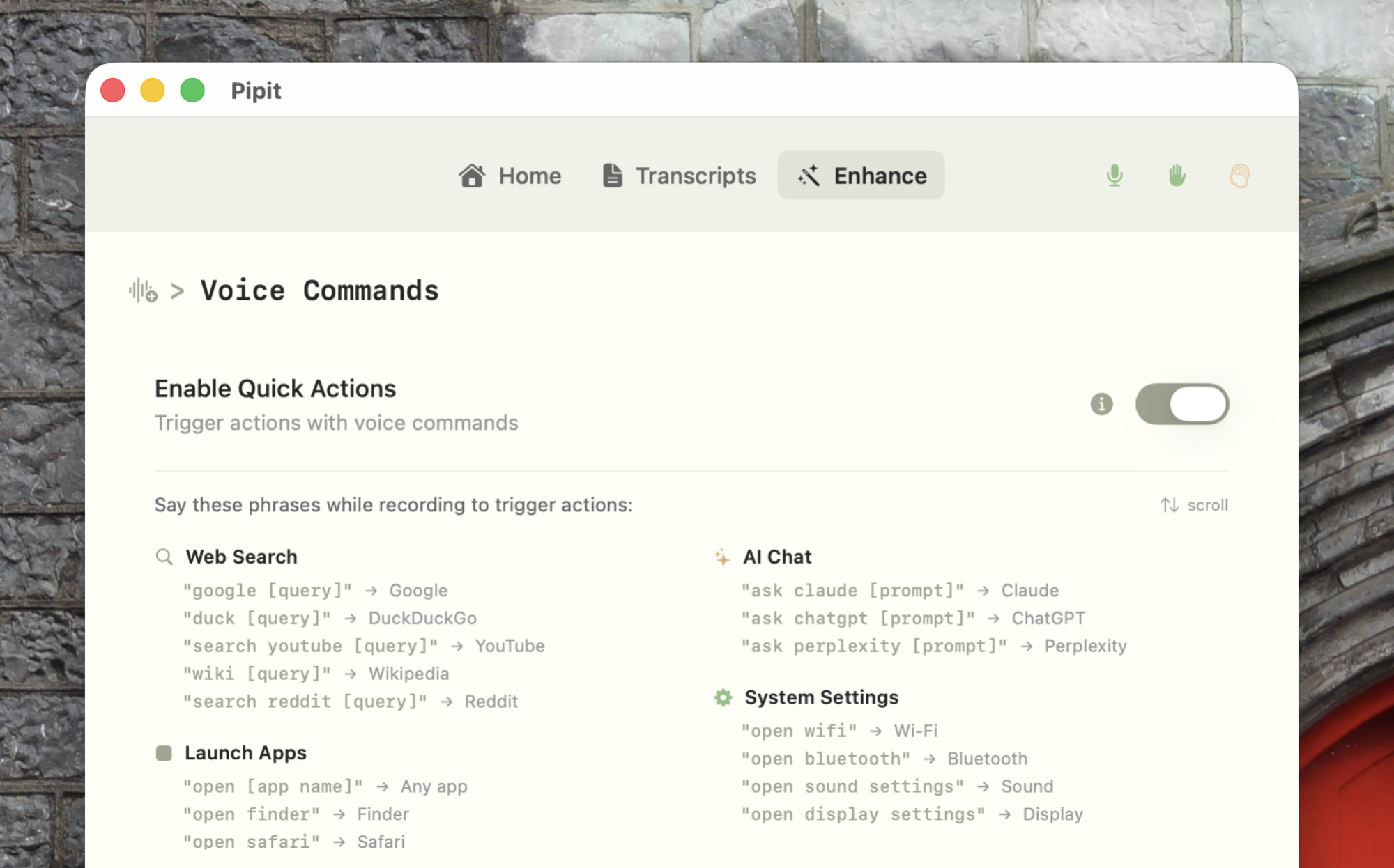
Which brings me to Pipit, a free Mac dictation app that works offline, meaning it’s totally private. Even more interesting, it can be used to do more than just transcribe speech—it can launch apps, toggle settings, and even launch a web search or query an AI service.
The first time you open the application, it will ask for permission to use your microphone before downloading the Parakeet model for offline transcription. Once everything is set up you can use the application by pressing and holding the Option key, then talking—the application will record what you say, turn that into text, and paste the text into the currently active text field.
I’ve been trying this for a couple of days and find that the transcriptions are generally pretty accurate, complete with punctuation. There is optional post-processing, which can turn unstructured speech into a properly formatted document, but using that requires an OpenRouter API key.
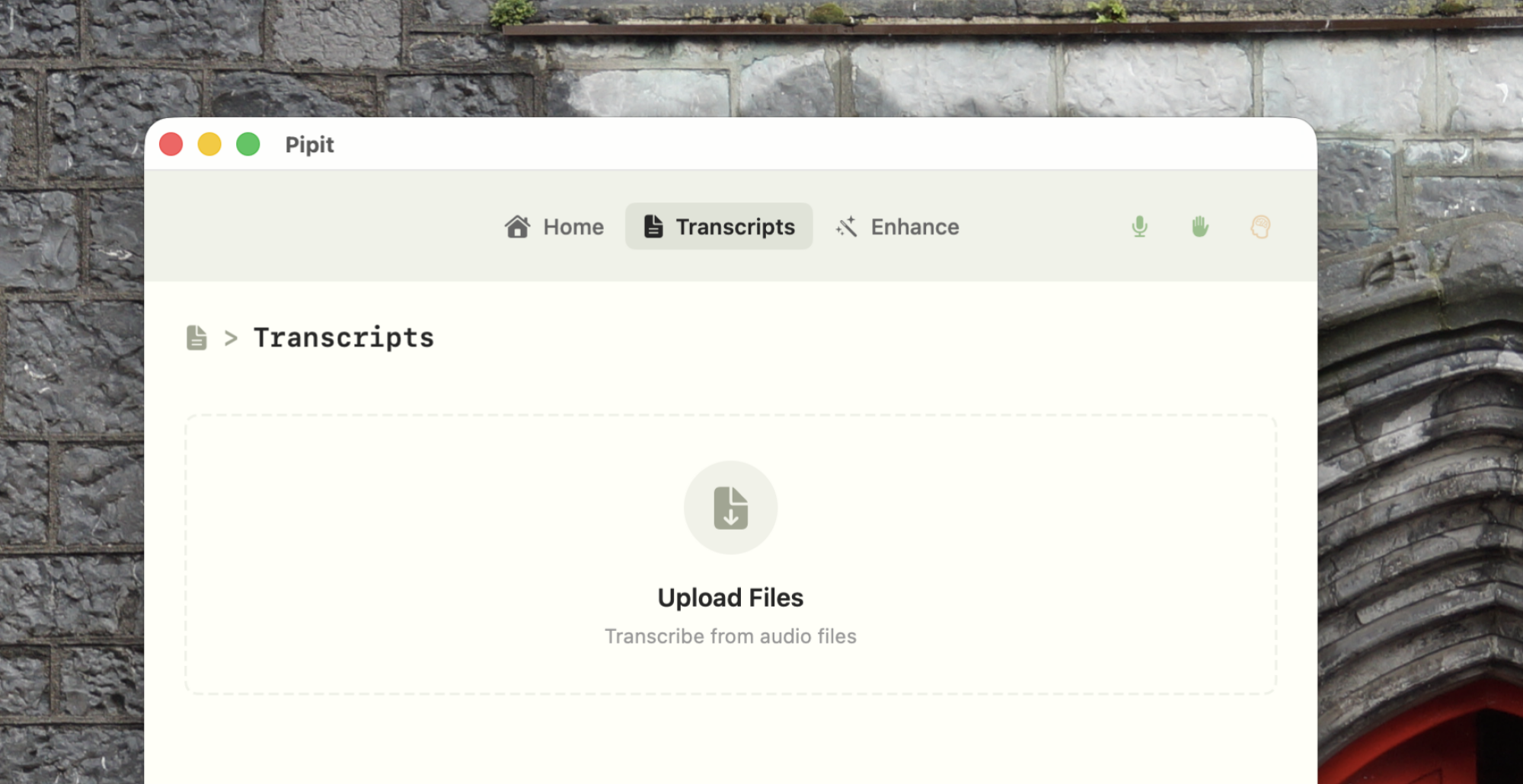
The settings window lets you change the trigger key, choose an input device, and toggle the menu bar icon. There’s also a tool for transcribing audio files, complete with speaker identification. Just drag over a file and you get a transcription.
The uploads screen for Pipit, allowing you to transcribe audio files. Credit: Justin Pot
Finally, on the Enhance tab, you can enable the Quick Actions feature. This allows you to verbally tell your computer what to do and see it happen. To use this, start transcription as normal, but say something like “open Safari” to open an app or “ask Claude” followed by a question to launch a conversation with that AI assistant in your browser. It’s a little gimmicky, granted, but I enjoyed using it.
The voice commands you can use with Pipit, as seen in the settings. Credit: Justin Pot
It’s excellent that tools like this are broadly free now, and Pipit has an interesting collection of features.
Spotify is raising the prices for its premium subscriptions by $1 to $2 across the board, starting this February. Those are similar figures to the company’s last price hike in 2024. Subscribers across the US, Estonia and Latvia will soon receive an email, notifying them that they’ll be paying a larger amount for their February bill.
The streaming service said it’s raising its prices occasionally to “reflect the value that Spotify delivers,” “to continue offering the best possible experience” and to “benefit artists.” It reported last year that it paid out $10 billion to music rights-holders in 2024. However, it’s worth noting that several Grammy-nominated songwriters boycotted an awards event it hosted to protest the supposed decreasing royalties songwriters are getting from Spotify plays.
Subscribers who choose to keep their accounts will now have to pay $13 instead of $12 a month for an individual plan or $7 instead of $6 for a student plan. The Duo plan will now cost users $19 a month instead of $17, while the Family plan will cost them $22, up $2 from its previous price of $20. Meanwhile, those who decide to cancel their plans can follow our guide right here.
Spotify came under fire late last year for running recruitment ads for ICE. It said the advertisements were part of a larger campaign by the US government that ran across platforms, including Meta and Google. The company also recently confirmed that the campaign has ended that there are no ICE ads currently running on the service.
This article originally appeared on Engadget at https://www.engadget.com/entertainment/music/spotifys-getting-a-buck-more-expensive-in-february-132300118.html?src=rss
After reaching a proposed settlement last year, the FTC has banned General Motors from sharing specific consumer data with third parties, TechCrunch reported. The finalized order wraps up one of the more egregious cases of a corporation collecting its customers’ data and then using it against them.
Two years ago, the New York Times report released a report detailing how GM’s OnStar “Smart Driver” program collected and sold detailed geolocation and driving behavior data to third parties, including data brokers. Those brokers in turn sold the data to insurance providers, which jacked up the rates for some drivers based on the data. “It felt like a betrayal,” said a Chevy Bolt owner that saw his insurance rise by 21 percent based on the data. “They’re taking information that I didn’t realize was going to be shared and screwing with our insurance.”
According to the terms of the settlement, GM is barred from sharing specific user data with consumer reporting agencies for a five year period. The automaker is also required to request user permission before collecting, using or sharing vehicle data with any third party. It must do that when a consumer purchases a car at a dealership, with the customer asked in person whether they agree or not with the data collection, GM said.
Some of the settlement is moot as GM stopped its Smart Driver program for all brands in April 2024. The company unenrolled all customers and stopped its third-party relationship with LexisNexis and Verisk, the brokers that sold driver data to insurance companies.
GM faced other actions over the data collection, including lawsuits from Texas, Nebraska and other states. “Our investigation revealed that General Motors has engaged in egregious business practices that violated Texans’ privacy and broke the law. We will hold them accountable,” said Texas AG Ken Paxton at the time.
In a statement to TechCrunch, GM said: “The Federal Trade Commission has formally approved the agreement reached last year with General Motors to address concerns. As vehicle connectivity becomes increasingly integral to the driving experience, GM remains committed to protecting customer privacy, maintaining trust, and ensuring customers have a clear understanding of our practices.”
This article originally appeared on Engadget at https://www.engadget.com/transportation/ftc-finalizes-gm-punishment-over-driver-data-sharing-scandal-130012313.html?src=rss