One of the greatest ever steel framesets is back – and it’s the only rim-brake bike I want

Cinelli’s Supercorsa was introduced 70 years ago. Now it’s back, still made in Italy to the same exacting standards.

That means the same elegant classic geometry, the iconic sloping fork crown, super-slender ‘fastback’ seatstays and one of the first examples of internal cable routing for the rear brake.

The new Supercorsa is handmade at Cinelli’s Milan-based facility. The tubing is from fellow Italian brand, Columbus, with its Spirit tubeset. Columbus is the literal neighbour of Cinelli, based within walking distance, giving the Supercorsa perhaps the shortest supply chain in the bike industry.

The Supercorsa legacy

Cinelli Supercorsa
The original Supercorsa evolved over many years as the pinnacle of the Cinelli range. Gruppo SRL

The first Supercorsa was introduced in 1951 by Cino Cinelli and frame builder Luigi Valsassina, built for Valsassina’s friend, Fausto Coppi.

Coppi, known as Il Campionissimo (champion of champions), was the first rider to win the Tour and Giro in the same year, twice. He also held the hour record, was a world champion, and won Paris-Roubaix, multiple Milan-San Remos, a Lombardia and many more honours.

The Supercorsa is one of the most iconic Italian framesets ever made, with a reputation based not only on its beauty but on its performance, too.

cinelli supercorsa track
The new Supercorsa in fixed-gear trim. Gruppo SRL

“The Supercorsa is Cinelli’s soul,” says chairman Victor Luis. “For over 70 years, it has embodied the timeless pursuit of performance through craft. This latest iteration stays true to its legacy and continues to pay homage to Italian steel tradition as an object of desire for riders and collectors alike.”

The 2026 Supercorsa
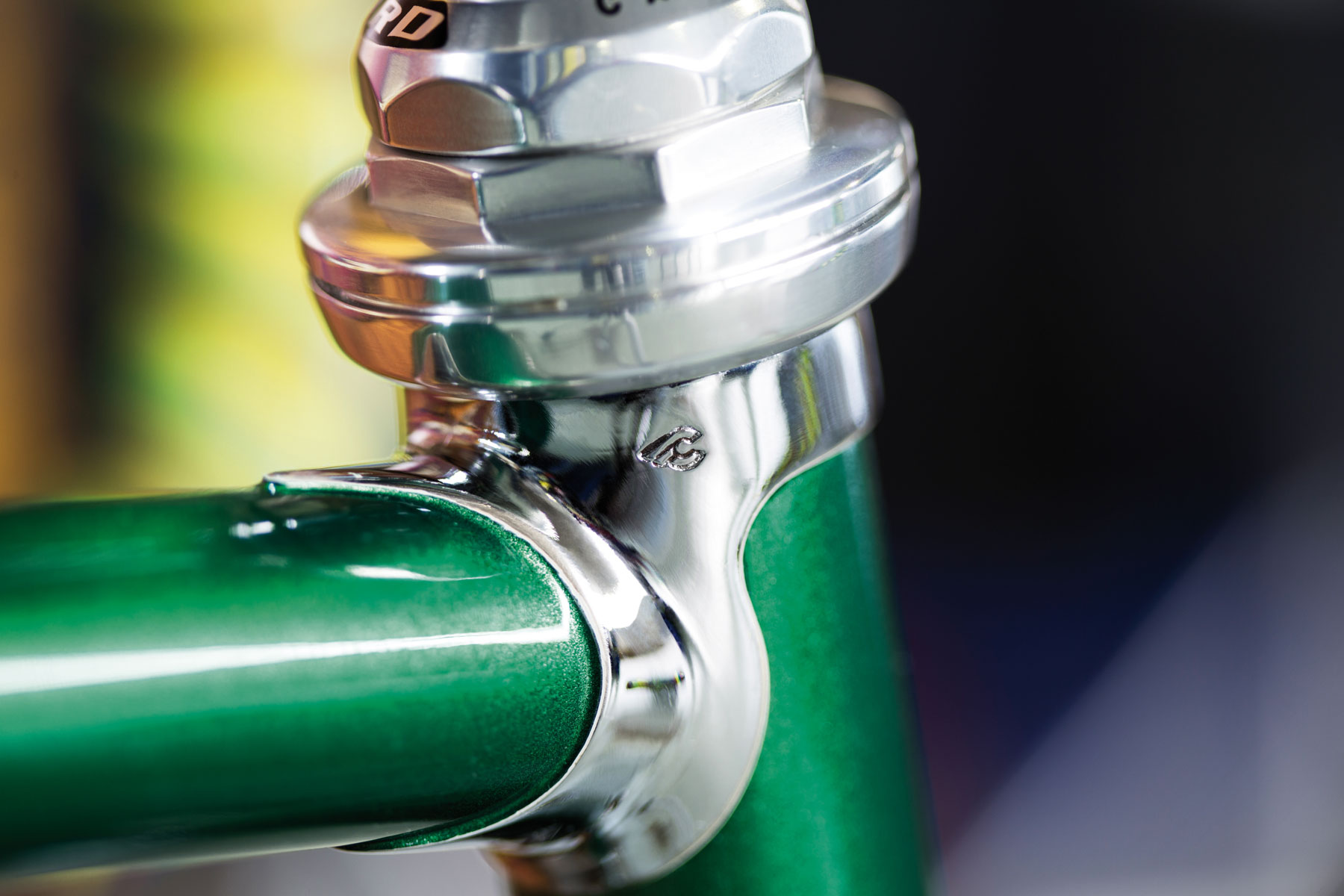
Cinelli Supercorsa headtube
The head tube lugs are chromed and stamped with the Cinelli logo. Gruppo SRL

The new Supercorsa is now part of the Cinelli range, building on the ultra-limited-edition Pink Supercorsa from 2025, when only 12 frames were produced.

The 2026 Supercorsa features double-butted Columbus SL tubing and original lugs, together with a matching Columbus SL 1in threaded sloping fork.

It’s compatible with standard rim brakes, and features an ITA 70mm bottom bracket shell, internal rear brake routing and down tube shifter bosses.
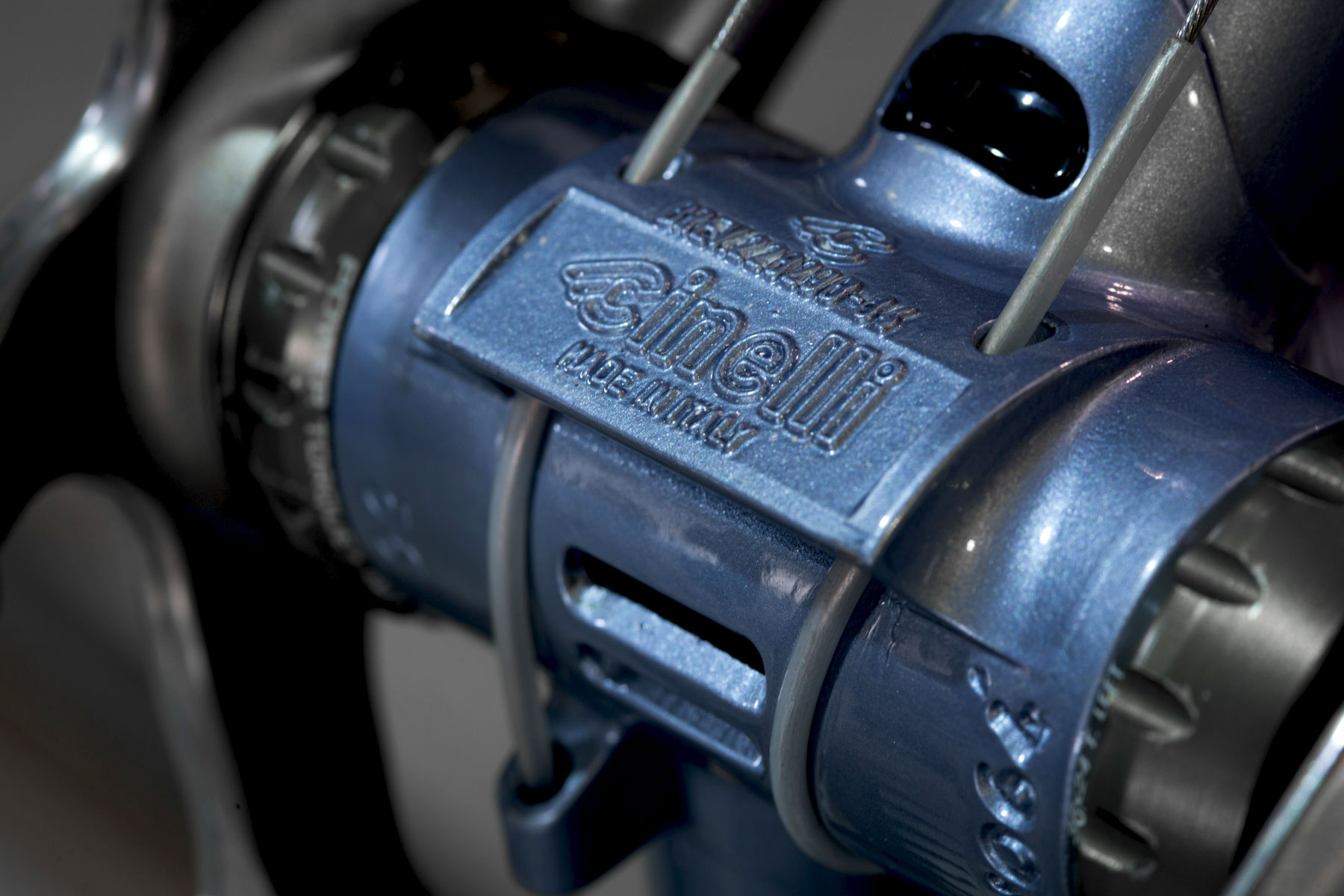
Cinelli Supercorsa cast bottom bracket
The Spoiler bottom bracket shell was patented back in 1984. Gruppo SRL

The bike incorporates details such as the ‘Spoiler’ bottom bracket shell, a patented design from 1984 that resolved the problem with condensation collecting in the bottom of traditional bottom brackets. 

The graphics are a reissue of Italo Lupi’s 1979 winged-C logo and the rear brake cable is routed through the top tube.
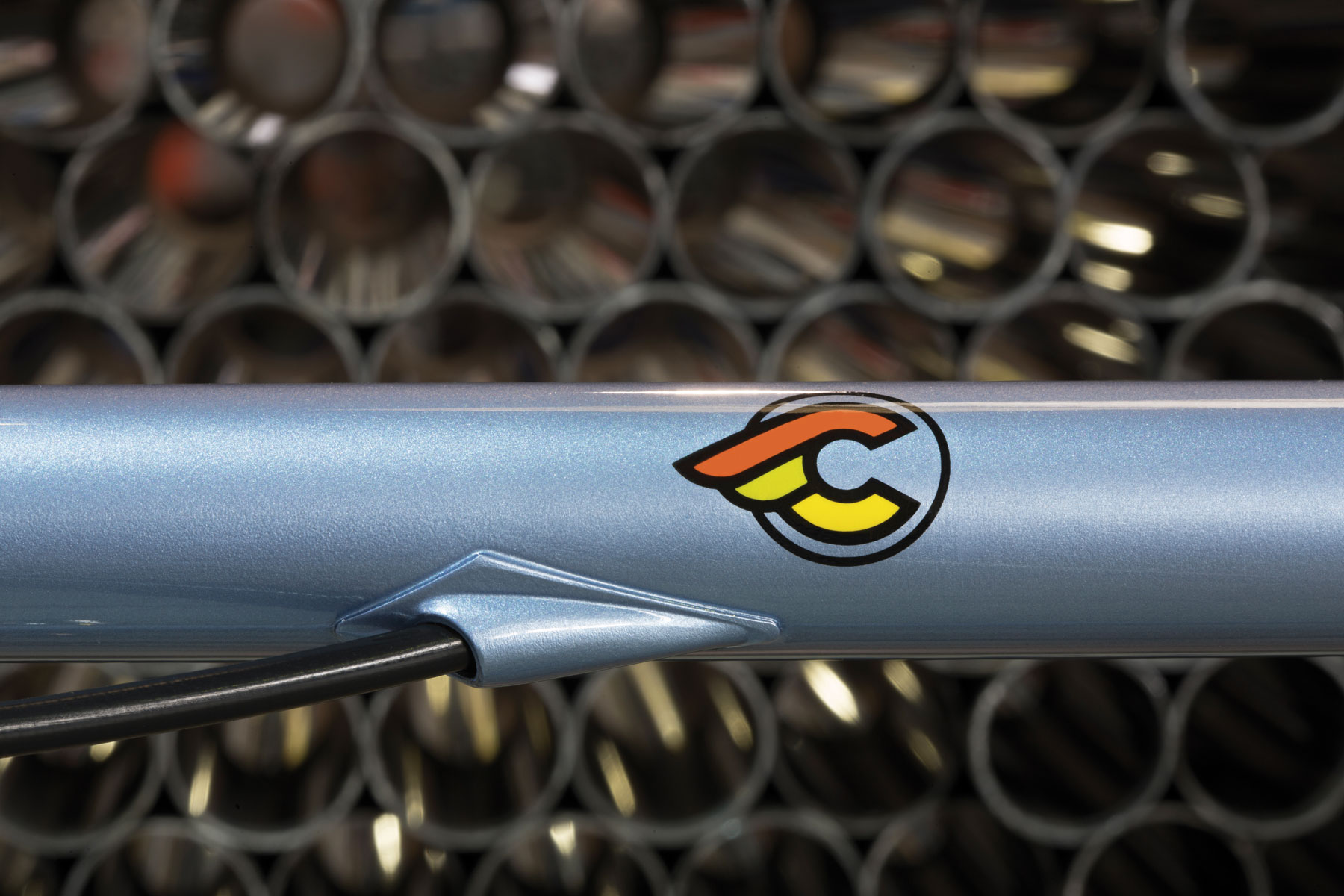
Cinelli Supercorsa top tube
Slender steel tubes and modern internal routing. Gruppo SRL

For those of us who think internal routing is a modern idea, this was a detail first introduced by Cinelli in the late 1970s.

Cinelli Supercorsa seat cluster
The lugs and chrome work show Cinelli hasn’t lost its ability to craft steel beautifully. Gruppo SRL

It looks to be the perfect retro reissue, encompassing the evolution of the Supercorsa over 70 years, and I’m somewhat smitten by the Supercorsa in classic Cinelli Azzurro Laser blue.

Size and colour options
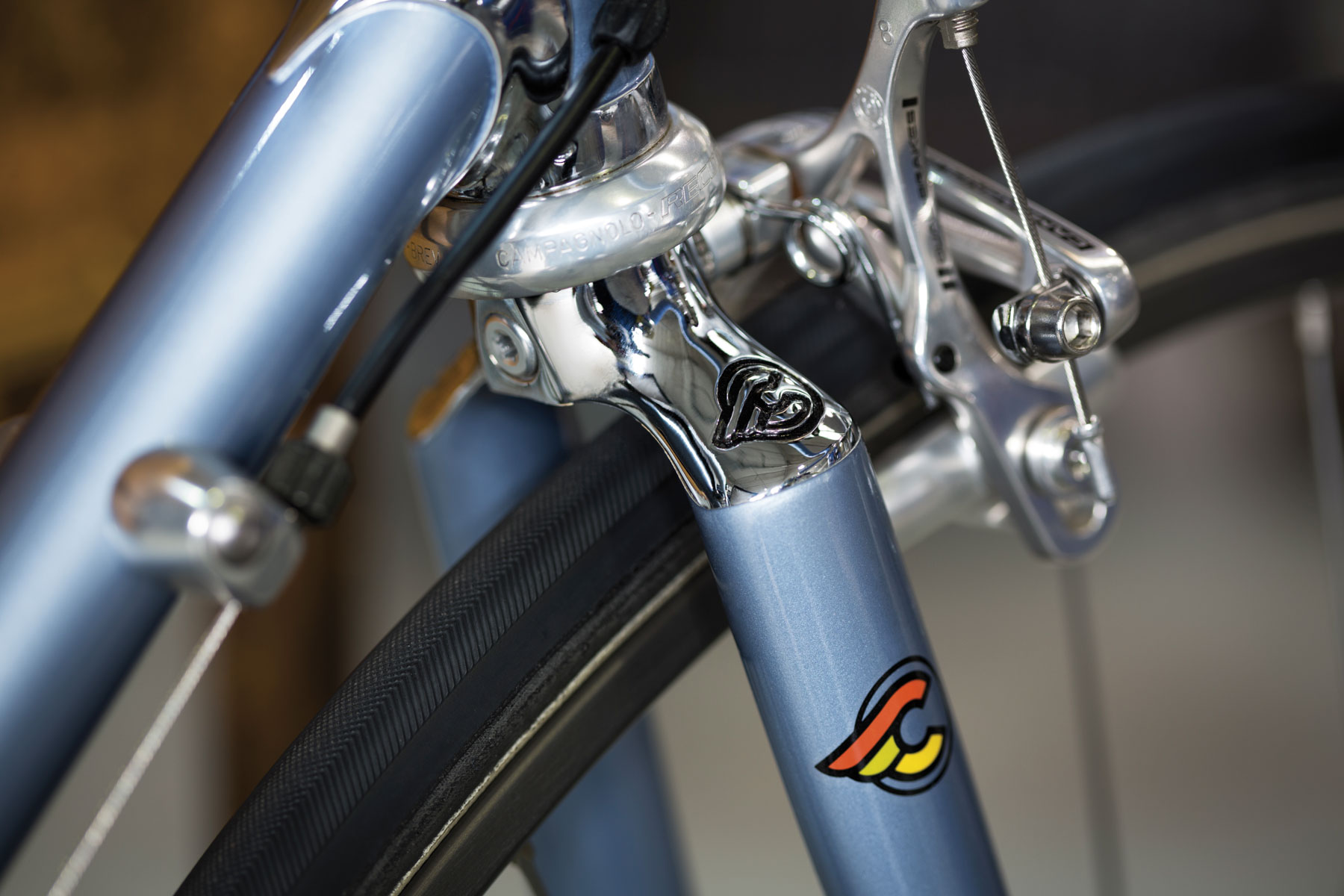
Cinelli Supercorsa fork crown
The sloping cast fork crown bears the Cinelli winged logo from 1979. Gruppo SRL

The Supercorsa will be available as a frameset in a massive range of 17 sizes, from 48cm through to 64cm. Each size can be had in eight colours. 

The frameset is priced at €3,150. International pricing is to be confirmed.

Frameset specs

  • Sizes: 17 available, 48cm to 64cm (1cm increments)
  • ​Colours: Rosso Ferrari, Bianco Perla, Azzurro Laser, Titanium Grey, Verde Jaguar, Black Tie, Blu China, Giallo Curry
  • ​Weight: frame 1,830g (M), fork 670g (uncut)
  • ​Headset: EC 30/25, 4-24TPI EC 30/26
  • ​Seatpost: 27.2mm
  • ​BB shell: ITA, 70mm
  • ​Tyre clearance: 700×25

2026 Lucid Air Touring review: This feels like a complete car now

Life as a startup carmaker is hard—just ask Lucid Motors.

When we met the brand and its prototype Lucid Air sedan in 2017, the company planned to put the first cars in customers’ hands within a couple of years. But you know what they say about plans. A lack of funding paused everything until late 2018, when Saudi Arabia’s sovereign wealth fund bought itself a stake. A billion dollars meant Lucid could build a factory—at the cost of alienating some former fans because of the source.

Then the pandemic happened, further pushing back timelines as supply shortages took hold. But the Air did go on sale, and it has more recently been joined by the Gravity SUV. There’s even a much more affordable midsize SUV in the works called the Earth. Sales more than doubled in 2025, and after spending a week with a model year 2026 Lucid Air Touring, I can understand why.

Read full article

Comments

This 67,800-year-old hand stencil is the world’s oldest human-made art

The world’s oldest surviving rock art is a faded outline of a hand on an Indonesian cave wall, left 67,800 years ago.

On a tiny island just off the coast of Sulawesi (a much larger island in Indonesia), a cave wall bears the stenciled outline of a person’s hand—and it’s at least 67,800 years old, according to a recent study. The hand stencil is now the world’s oldest work of art (at least until archaeologists find something even older), as well as the oldest evidence of our species on any of the islands that stretch between continental Asia and Australia.

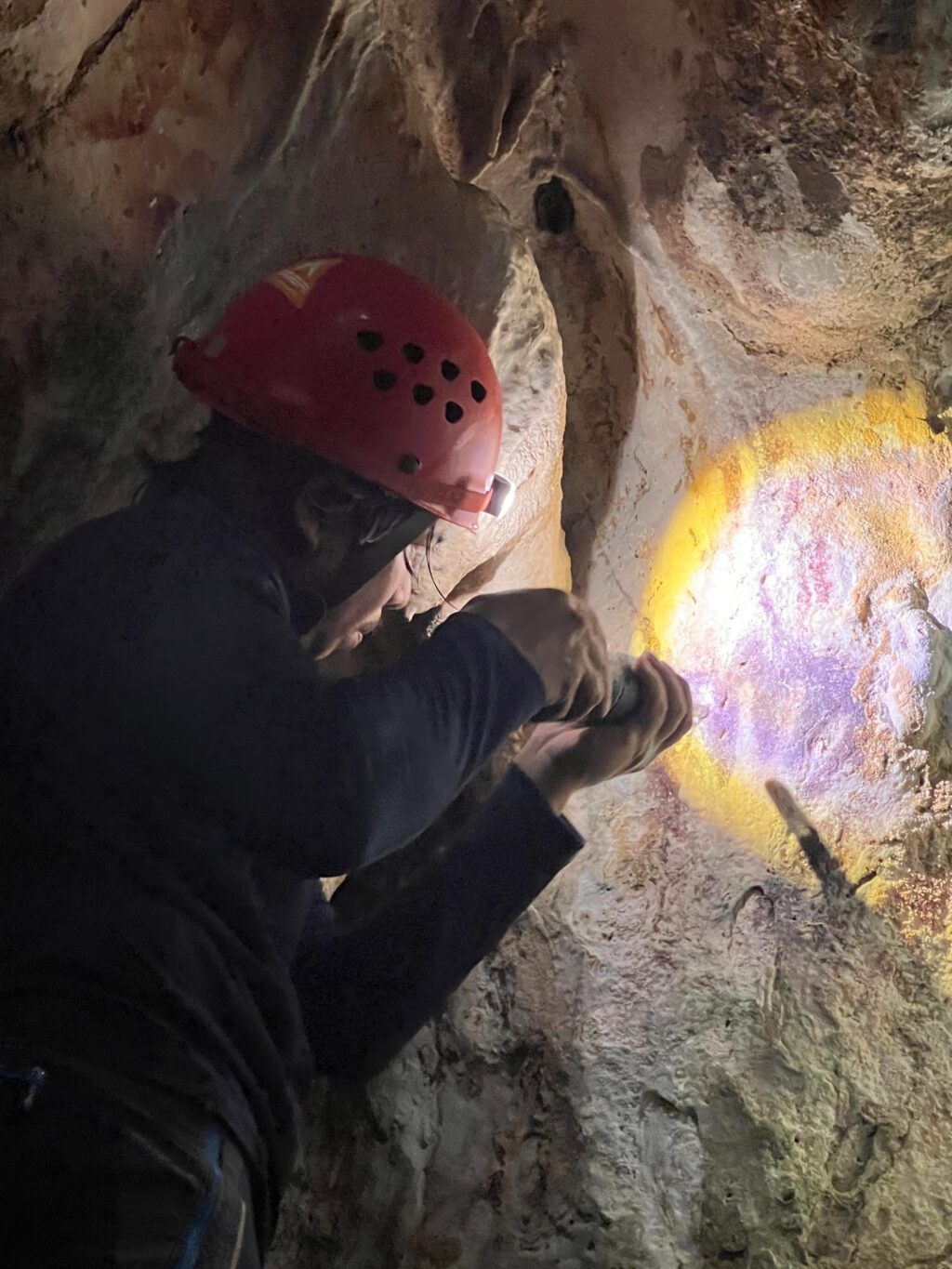
Photo of an archaeologists examining a hand stencil painted on a cave wall, using a flashlight
Adhi Oktaviana examines a slightly more recent hand stencil on the wall of Liang Metanduno.
Credit:
Oktaviana et al. 2026

Hands reaching out from the past

Archaeologist Adhi Agus Oktaviana, of Indonesia’s National Research and Innovation Agency, and his colleagues have spent the last six years surveying 44 rock art sites, mostly caves, on Sulawesi’s southeastern peninsula and the handful of tiny “satellite islands” off its coast. They found 14 previously undocumented sites and used rock formations to date 11 individual pieces of rock art in eight caves—including the oldest human artwork discovered so far.

Read full article

Comments

‘Active’ Sitting Is Better For Brain Health

alternative_right shares a report from ScienceAlert: A systematic review of 85 studies has now found good reason to differentiate between ‘active’ sitting, like playing cards or reading, and ‘passive’ sitting, like watching TV. […] “Total sitting time has been shown to be related to brain health; however, sitting is often treated as a single entity, without considering the specific type of activity,” explains public health researcher Paul Gardiner from the University of Queensland in Australia. “Most people spend many hours sitting each day, so the type of sitting really matters … These findings show that small everyday choices — like reading instead of watching television — may help keep your brain healthier as you age.”

Across numerous studies, Gardiner and colleagues found that active sitting activities, like reading, playing card games, and using a computer, showed “overwhelmingly positive associations with cognitive health, enhancing cognitive functions such as executive function, situational memory, and working memory.” Meanwhile, passive sitting was most consistently associated with negative cognitive outcomes, including increased risk of dementia. The study was published in the Journal of Alzheimer’s Disease.


Read more of this story at Slashdot.

AI Boosts Research Careers But Flattens Scientific Discovery

Ancient Slashdot reader erice shares the findings from a recent study showing that while AI helped researchers publish more often and boosted their careers, the resulting papers were, on average, less useful. “You have this conflict between individual incentives and science as a whole,” says James Evans, a sociologist at the University of Chicago who led the study. From a recent IEEE Spectrum article: To quantify the effect, Evans and collaborators from the Beijing National Research Center for Information Science and Technology trained a natural language processing model to identify AI-augmented research across six natural science disciplines. Their dataset included 41.3 million English-language papers published between 1980 and 2025 in biology, chemistry, physics, medicine, materials science, and geology. They excluded fields such as computer science and mathematics that focus on developing AI methods themselves. The researchers traced the careers of individual scientists, examined how their papers accumulated attention, and zoomed out to consider how entire fields clustered or dispersed intellectually over time. They compared roughly 311,000 papers that incorporated AI in some way — through the use of neural networks or large language models, for example — with millions of others that did not.

The results revealed a striking trade-off. Scientists who adopt AI gain productivity and visibility: On average, they publish three times as many papers, receive nearly five times as many citations, and become team leaders a year or two earlier than those who do not. But when those papers are mapped in a high-dimensional “knowledge space,” AI-heavy research occupies a smaller intellectual footprint, clusters more tightly around popular, data-rich problems, and generates weaker networks of follow-on engagement between studies. The pattern held across decades of AI development, spanning early machine learning, the rise of deep learning, and the current wave of generative AI. “If anything,” Evans notes, “it’s intensifying.” […] Aside from recent publishing distortions, Evans’s analysis suggests that AI is largely automating the most tractable parts of science rather than expanding its frontiers.


Read more of this story at Slashdot.

Linux Mint 22.3 Zena Delivers a Polished, Familiar Desktop Experience

The Linux Mint project has unveiled Linux Mint 22.3, carrying the codename “Zena”, the latest point release in the popular Mint 22 series. This new version continues Mint’s reputation for delivering a comfortable, user-friendly desktop experience while remaining stable and reliable. As a Long Term Support (LTS) release, Linux Mint 22.3 will receive updates and security patches through April 2029.

South Korea Launches Landmark Laws To Regulate AI

An anonymous reader quotes a report from the Korea Herald: South Korea will begin enforcing its Artificial Intelligence Act on Thursday, becoming the first country to formally establish safety requirements for high-performance, or so-called frontier, AI systems — a move that sets the country apart in the global regulatory landscape. According to the Ministry of Science and ICT, the new law is designed primarily to foster growth in the domestic AI sector, while also introducing baseline safeguards to address potential risks posed by increasingly powerful AI technologies. Officials described the inclusion of legal safety obligations for frontier AI as a world-first legislative step.

The act lays the groundwork for a national-level AI policy framework. It establishes a central decision-making body — the Presidential Council on National Artificial Intelligence Strategy — and creates a legal foundation for an AI Safety Institute that will oversee safety and trust-related assessments. The law also outlines wide-ranging support measures, including research and development, data infrastructure, talent training, startup assistance, and help with overseas expansion.

To reduce the initial burden on businesses, the government plans to implement a grace period of at least one year. During this time, it will not carry out fact-finding investigations or impose administrative sanctions. Instead, the focus will be on consultations and education. A dedicated AI Act support desk will help companies determine whether their systems fall within the law’s scope and how to respond accordingly. Officials noted that the grace period may be extended depending on how international standards and market conditions evolve. The law applies to three areas only: high-impact AI, safety obligations for high-performance AI and transparency requirements for generative AI.

Enforcement under the Korean law is intentionally light. It does not impose criminal penalties. Instead, it prioritizes corrective orders for noncompliance, with fines — capped at 30 million won ($20,300) — issued only if those orders are ignored. This, the government says, reflects a compliance-oriented approach rather than a punitive one. Transparency obligations for generative AI largely align with those in the EU, but Korea applies them more narrowly. Content that could be mistaken for real, such as deepfake images, video or audio, must clearly disclose its AI-generated origin. For other types of AI-generated content, invisible labeling via metadata is allowed. Personal or noncommercial use of generative AI is excluded from regulation. “This is not about boasting that we are the first in the world,” said Kim Kyeong-man, deputy minister of the office of artificial intelligence policy at the ICT ministry. “We’re approaching this from the most basic level of global consensus.”

Korea’s approach differs from the EU by defining “high-performance AI” using technical thresholds like cumulative training compute, rather than regulating based on how AI is used. As a result, Korea believes no current models meet the bar for regulation, while the EU is phasing in broader, use-based AI rules over several years.


Read more of this story at Slashdot.

Intel Struggles To Meet AI Data Center Demand

Intel says it struggled to satisfy demand for its AI data-center CPUs while new PC chips squeeze margins. CEO Lip-Bu Tan framed the turnaround as supply-constrained, not demand-constrained, with manufacturing yields (18A) improving but still below targets. Reuters reports: The forecast underscores the difficulties faced by Intel in predicting global chip markets, where the company’s current products are the result of decisions made years ago. The company, whose shares have risen 40% in the past month, recently launched a long-awaited laptop chip designed to reclaim its lead in personal computers just as a memory chip crunch is expected to depress sales across that industry.

Meanwhile, Intel executives said the company was caught off guard by surging demand for server central processors that accompany AI chips. Despite running its factories at capacity, Intel cannot keep up with demand for the chips, leaving profitable data center sales on the table while the new PC chip squeezes its margins.

“In the short term, I’m disappointed that we are not able “to fully meet the demand in our markets,” Chief Executive Officer Lip-Bu Tan told analysts on a conference call. The company forecast current-quarter revenue between $11.7 billion and $12.7 billion, compared with analysts’ average estimate of $12.51 billion, according to data compiled by LSEG. It expects adjusted earnings per share to break even in the first quarter, compared with expectations of adjusted earnings of 5 cents per share.


Read more of this story at Slashdot.

Epic and Google Have a Secret $800 Million Unreal Engine and Services Deal

A federal judge revealed a previously undisclosed ~$800 million, six-year partnership between Epic Games and Google tied to Unreal Engine services and joint marketing. It raises questions about whether the deal influenced Epic’s willingness to settle its antitrust case over Android. The Verge reports: [California District Judge James Donato] allowed Epic and Google to keep most of the details of the plan under wraps. But during the hearing, he quizzed witnesses, including Epic CEO Tim Sweeney and economics expert Doug Bernheim, on how it might impact settlement talks — revealing some hints in the process. “You’re going to be helping Google market Android, and they’re going to be helping you market Fortnite; that deal doesn’t exist today, right?” Donato asked Bernheim, who answered in the affirmative. He also described it as a “new business between Epic and Google.”

Sweeney’s testimony cracked the mystery a little further. He referred to the agreement as relating to the “metaverse,” a term Sweeney has used to refer to Epic’s game Fortnite. “Epic’s technology is used by many companies in the space Google is operating in to train their products, so the ability for Google to use the Unreal Engine more fullsome… sorry, I’m blowing this confidentiality,” Sweeney said. Donato then offered a hard dollar figure on one part of the deal: “An $800 million spend over six years, that’s a pretty healthy partnership,” he said. We soon learned that refers to Epic spending $800 million to purchase some sort of services from Google: “Every year we’ve decided against Google, in this year we’re deciding to use Google at market rates,” he said. Sweeney did throw cold water on the idea that Epic and Google are jointly building a single new product together, though. “This is Google and Epic each separately building product lines,” he clarified, when Judge Donato asked what the term sheet referred to with the line “Google and Epic will work together.”

Donato seemed potentially leery of the partnership, asking Bernheim whether it could constitute a “quid pro quo” that reduced Epic’s incentive to push for terms that would benefit other developers. Currently, Epic is backing a settlement that would see Google reduce its standard app store fees worldwide and allow alternative app stores to register for easy installation on Android. Sweeney disputed the notion that Epic might be getting paid off to soften its terms, when it’s the one paying out. “I don’t see anything crooked about Epic paying Google off to encourage much more robust competition than they’ve allowed in the past,” he said. “We view this as a significant transfer of value from Epic to Google.” He also says the Epic Games Store won’t get any special treatment from Android in the future under this deal. It appears that the settlement arrangement is tied to the business deal. Judge Donato suggested that Epic and Google would only make the deal if the settlement goes through. Sweeney says the specific terms of the deal have not yet been reached, but admitted that he expects them to. He told Judge Donato that yes, he considers the settlement and deal “an important part of Epic’s growth plan for the future.”


Read more of this story at Slashdot.

TikTok finalizes deal for its US entity

TikTok has finalized the deal for its US entity, with its parent company ByteDance selling majority of its stake to a group of non-Chinese investors. The deal was closed just before the Trump Administration’s latest deadline, banning the app in the US unless it was divested from ByteDance, which will only retain 20 percent of the new entity. TikTok’s investors will own 80 percent, with Oracle, Silver Lake and MGX, an Emirati-state owned investment firm, taking 15 percent each. Other investors include the investment firm of Dell’s CEO.

The terms of the deal were first leaked last month, after TikTok CEO Shou Chew reportedly told employees in a memo that TikTok and ByteDance had agreed to a group of investors. This ends a lengthy saga and months of slow progress as the agreement was being worked out, ensuring that the app will remain available in the US after years of being on the verge of a ban in the country.

According to TikTok’s announcement, the joint venture will protect American users’ data with Oracle’s secure US cloud environment. It will also retrain TikTok’s algorithm on US users’ data and will be in charge of content moderation in the US. The entity promises interoperability, as well, promising that users will still get international content and, if they’re a creator, viewers. “The safeguards provided by the Joint Venture will also cover CapCut, and Lemon8 and a portfolio of other apps and websites in the US,” TikTok said.

The new entity will be overseen by a seven-member board of directors, most of whom are Americans. It includes, Shou Chew, the Chief Executive Officer of TikTok, Silver Lake co-CEO Egon Durban, Oracle Executive Vice President Kenneth Glueck and MGX Chief Strategy and Safety Officer David Scott.

This article originally appeared on Engadget at https://www.engadget.com/big-tech/tiktok-finalizes-deal-for-its-us-entity-010543484.html?src=rss

EU Parliament Calls For Detachment From US Tech Giants

The European Parliament is calling on the European Commission to reduce dependence on U.S. tech giants by prioritizing EU-based cloud, AI, and open-source infrastructure. The report frames “European Tech First,” public procurement reform, and Public Money, Public Code as necessary self-defense against growing U.S. control over critical digital infrastructure. Heise reports: In terms of content, the report focuses on a strategic reorientation of public procurement and infrastructure. The compromise line adopted stipulates that member states can favor European tech providers in strategic sectors to systematically strengthen the technological capacity of the Community. The Greens even called for a stricter regulation here, where the use of products “Made in EU” should become the rule and exceptions would have to be explicitly justified. They also pushed for a definition for cloud infrastructure that provides for full EU jurisdiction without dependencies on third countries.

With the decision, the MEPs want to lay the foundation for a European digital public infrastructure based on open standards and interoperability. The principle of Public Money, Public Code is anchored as a strategic foundation to reduce dependence on individual providers. Software specifically developed for administration with tax money should therefore be made available to everyone under free licenses. For financing, the Parliament relies on the expansion of public-private investments. A “European Sovereign Tech Fund” endowed with ten billion euros was discussed beforehand, for example, to specifically build strategic infrastructures that the market does not provide on its own. The shadow rapporteur for the Greens, Alexandra Geese, sees Europe ready to take control of its digital future with the vote. As long as European data is held by US providers subject to laws such as the Cloud Act, security in Europe is not guaranteed.


Read more of this story at Slashdot.

New Jersey Law Requires E-Bike Drivers To Have License, Insurance

An anonymous reader quotes a report from CBS News: As one of his final acts in office, former New Jersey Gov. Phil Murphy signed into law new requirements for e-bikes in his state. The new legislation signed Monday requires that owners and operators of e-bikes have licenses, registration and insurance. Owners and operators of e-bikes must be at least 17 years old and have a valid driver’s license or be at least 15 years old with a motorized bicycle license under the law, which covers all types of electric bikes.

“We are in a new era of e-bike use that requires updated safety standards to help prevent accidents, injuries, and fatalities. Requiring registration and licensing will improve their safe use and having them insured will protect those injured in accidents,” said Senate President Nick Scutari, who co-sponsored the bill. The legislation follows an increase in crashes involving e-bikes, including multiple incidents that killed or injured young people in New Jersey in 2025. […] Registration and licensing fees for e-bikes will be waived for one year, and riders will have six months to get the registration, insurance and license that they need under the law.


Read more of this story at Slashdot.