
Following the release of TrueNAS 25.10 for this Linux-based, OpenZFS-running operating system focused on network appliances / storage devices, iX systems has shared some of their plans for TrueNAS 26 this year…
Category Archives: Unfiltered RSS
KDE Gear 25.12.2 Brings Improvements to Dolphin, NeoChat, Kate, and Other Apps
Today, the KDE Project released KDE Gear 25.12.2 as the second maintenance update to the latest KDE Gear 25.12 series of this collection of open-source applications for the KDE ecosystem and other platforms.
Ubuntu To Support The SpacemiT K3 As One Of The First RISC-V RVA23 SoCs
Canonical and SpacemiT announced today that Ubuntu Linux will be officially supported on SpacemiT’s new K3 RISC-V SoC. What makes the K3 interesting is being one of the first available RISC-V RVA23 designs…
A day with young creators at Coolest Projects Mzansi 2025
Coolest Projects is the world’s leading technology showcase for young people, a space where creativity, curiosity, and problem-solving come together through code. Last November, Coolest Projects returned to South Africa, providing another exciting opportunity to celebrate and amplify the voices of young digital creators across Mzansi, a local name for South Africa.

Coolest Projects brings young people together to share what excites them the most about creating with technology, whether that’s making a game, a website, a robot, or a simple Scratch animation. What matters most is not perfection, but participation.
A showcase for young makers
Coolest Projects, an initiative of the Raspberry Pi Foundation, is brought to South Africa by our long-standing partner Coder:LevelUp, giving young people the space to share how they get creative with technology.
I spent the day surrounded by young people explaining their ideas with a mix of excitement, nerves, and confidence — the kind of emotions you get when you build something yourself and someone is finally asking you about it.

The event brought together over 250 young people to share the projects they had been working on. Some had been preparing for months, while others had begun exploring their ideas more recently. All of them arrived ready to explain what they made, how it worked, and what they would do differently next time.
There wasn’t a single kind of project. There was a Scratch animation at one table, a game at the next, and a hardware project across the room. Some projects were polished, others rougher around the edges. But the event isn’t about perfection, it’s about learning and having the courage to show your work.
For a lot of participants, this was the first time they had presented their work to an audience, and you could see their confidence build as they spoke. By the end of the day, many were already talking about what they wanted to build next! From experience, we know that many of these young people will come back to Coolest Projects in the future, with our global impact data showing that over 1 in 10 participants in the Coolest Projects online showcase in 2025 had also taken part in Coolest Projects in 2024.
The coolest projects and the coolest people
One of my favourite things about Coolest Projects is that although you might come for the projects, what stays with you is often the people behind them. Coolest Projects celebrates both what young people build and who they are becoming.
The coolest projects
A project that really stood out to me was created by a group of girls who built a language app that translates words from isiZulu, one of South Africa’s official languages, into French and other languages — an ambitious and thoughtful idea.

What made this project especially meaningful to me was how well it reflected South Africa’s identity as a rainbow nation, with 12 official languages and countless cultures intersecting everyday. Their work wasn’t just technical, it was deeply relevant. It showed how young creators are already thinking about inclusion, communication, and using technology to bridge the gap between people in different parts of the country. Seeing these young girls confidently present such a culturally aware solution was incredibly inspiring.
And the coolest people
A group of boys arrived with a project that, honestly, fell apart on the day. Things didn’t work the way they had planned. But instead of shutting down or panicking, they laughed it off, explained what should have happened, and kept the energy positive. Their confidence, humour, and teamwork were great to see.

They showed that Coolest Projects is not about having everything work perfectly. It’s about showing up, trying something ambitious, and being willing to talk about what went wrong.
Why does Coolest Projects matter?
Coolest Projects goes beyond showcasing technical skills. It helps young people:
- Build confidence in presenting ideas
- Develop problem-solving and communication skills
- See themselves as creators, not just consumers, of technology
For many young creators in South Africa, participating in Coolest Projects is a powerful way to gain recognition and see that their ideas matter and that they belong in the world of technology.

We look forward to Coolest Projects South Africa returning in 2026 to once again showcase the incredible potential of young tech creators across the country.
Inspired to take part?
The Coolest Projects 2026 global online showcase is now open for entries. Find all the details on how to enter, as well as details of Coolest Projects in-person events you can look forward to throughout 2026, in our recent blog post.
To be the first to hear about events near you, sign up to the Coolest Projects newsletter.
The post A day with young creators at Coolest Projects Mzansi 2025 appeared first on Raspberry Pi Foundation.
How ‘Exercise Snacking’ Can Get You Into Working Out
I love a five-minute workout video. What I don’t love is when the clickbait YouTube title promises this video will “transform my body.” Can’t I work out for five minutes just for the sake of moving my body? Why is fitness culture always so “all-or-nothing?”
Before I started running marathons, I was someone who simply worked a few squats into my day here and there. These brief bursts of movement—call it “exercise snacking” or “micro-movement”—are a great way to get into more consistent physical activity. Even if you don’t have bigger fitness goals, performing exercise “snacks” are valuable in their own right. Because when it comes to physical activity, something is always better than nothing.
What is exercise snacking?
When I say “exercise snacking,” I’m referring to short bouts of physical activity scattered throughout your day, typically lasting anywhere from 30 seconds to 10 minutes. Unlike traditional workouts that require dedicated time, special equipment, or a trip to the gym, exercise snacks fit seamlessly into your existing routine. They might include a set of squats while your coffee brews, wall push-ups during a work break, or calf raises while standing in line.
The concept challenges the conventional wisdom that exercise must be sustained and structured to really “count.” Instead, it embraces the reality of modern life: Most people struggle to find 30 consecutive minutes for fitness, but nearly everyone has scattered pockets of time they’re already spending on routine tasks.
The science behind short bursts of activity
Research increasingly supports the effectiveness of these brief movement sessions. Studies have demonstrated that exercise snacks improve glucose control, helping regulate blood sugar levels throughout the day. They’ve also been shown to reduce blood pressure, enhance strength when performed consistently, and boost cognitive function across adult populations.
“Short bouts of movement throughout the day can improve energy, circulation, and blood sugar regulation, and they’re especially powerful when paired with habit stacking to build consistency, ” says Nora Minno, a registered dietitian and personal trainer.
Perhaps most importantly, these micro-workouts are highly accessible. Research shows they’re well-tolerated across different fitness levels and age groups, making them an inclusive approach to fitness. Participants in various studies consistently report improved mood and energy levels, even from sessions lasting just a few minutes.
Can micro-workouts deliver real results?
The honest answer depends on what you mean by “results.” Exercise snacking is a proven strategy for reducing sedentary behavior and improving overall health markers. If your goal is to feel better, move more, regulate blood sugar, or simply establish a foundation of physical activity, micro-workouts can absolutely deliver tangible results.
However, if you’re imagining a dramatic weight loss transformation, it’s important to adjust your expectations. “While micro-workouts alone won’t replace longer training sessions for specific performance goals,” Minno says, “they can deliver real health benefits and can create momentum toward a more active lifestyle.”
If you’re training for a marathon, building significant muscle mass, or pursuing sport-specific performance, you’ll still need dedicated, longer training sessions. But for general health—namely breaking the cycle of sedentary living—exercise snacks are a great way to approach your fitness journey.
How to use habit stacking with exercise snacking
“One of the biggest barriers I see is the belief that a workout requires a lot of time or preparation to be worthwhile,” Minno says. “As a result, people miss the short windows they already have because they don’t feel ready to start.” It’s a major mental barrier, the feeling like you wouldn’t even know how to start incorporating exercise snacks into your daily routine. One of the most effective strategies for making exercise snacking work is habit stacking, which boils down to attaching new behaviors to existing routines.
“Habit stacking is all about linking a new action with something you already do, making it easier to stay on track,” says Lannay Dale-Tooze, a personal trainer at Gymshark. “We all have daily habits, like brushing our teeth, putting on shoes before heading out, or watching TV after dinner. If you attach a new habit to something you’re already doing, it’s easier to make it stick.” I know that for me, habit stacking is like a sneaky workaround to always have endless willpower or motivation. Instead, you only need to create a little space for movement in your existing routines.
Practical exercise snacks you can start today
Whatever your fitness levels, there are plenty of ways movement can be woven into your life:
-
Stretch while watching TV. A mini-stretching routine is a great way to improve and protect your mobility. A few years ago my colleague Beth Skwarecki took us on her journey to get into stretching, and I highly recommend the routine she settled on here.
-
Posture work while listening to your favorite podcast. Roll your shoulders up and back five times, tuck your chin in and down, or rest your forearm on the doorframe at a 90-degree angle to stretch tight chest muscles against a doorframe.
-
Squat while your food heats up. Next time you boil the kettle or microwave leftovers, take the opportunity to fire up your glutes with a quick set of 10 body weight squats. This will activate your quads and hamstrings, boosting blood flow and reducing stiffness from sitting.
Pacing on work calls, following a five-minute pilates video, doing lunges on your way to the restroom—a little something is better than nothing.
Exercise snacking certainly can’t replace traditional workouts entirely. But for anyone intimated by the gym or struggling to find the time to work out, this is a way to make physical activity more accessible and sustainable. The research is clear: these brief bouts of activity can improve your strength, mood, and energy. They’re time-efficient, require minimal equipment, and can be performed almost anywhere. Most importantly, exercise snacking challenges the harmful narrative that fitness is all-or-nothing. It recognizes that movement exists on a spectrum, and every bit counts.
Wahoo KICKR CORE 2 End of Season Sale Announced
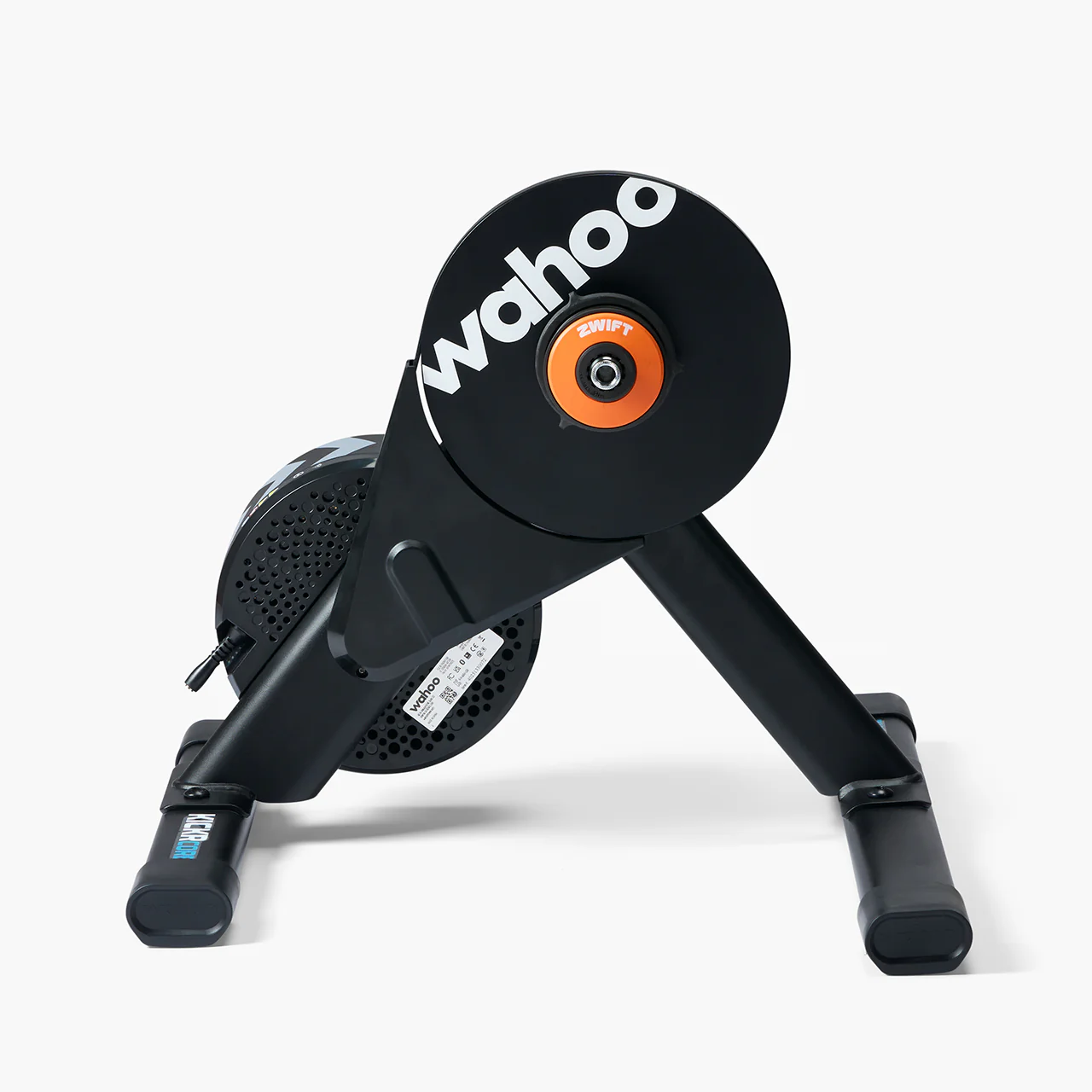
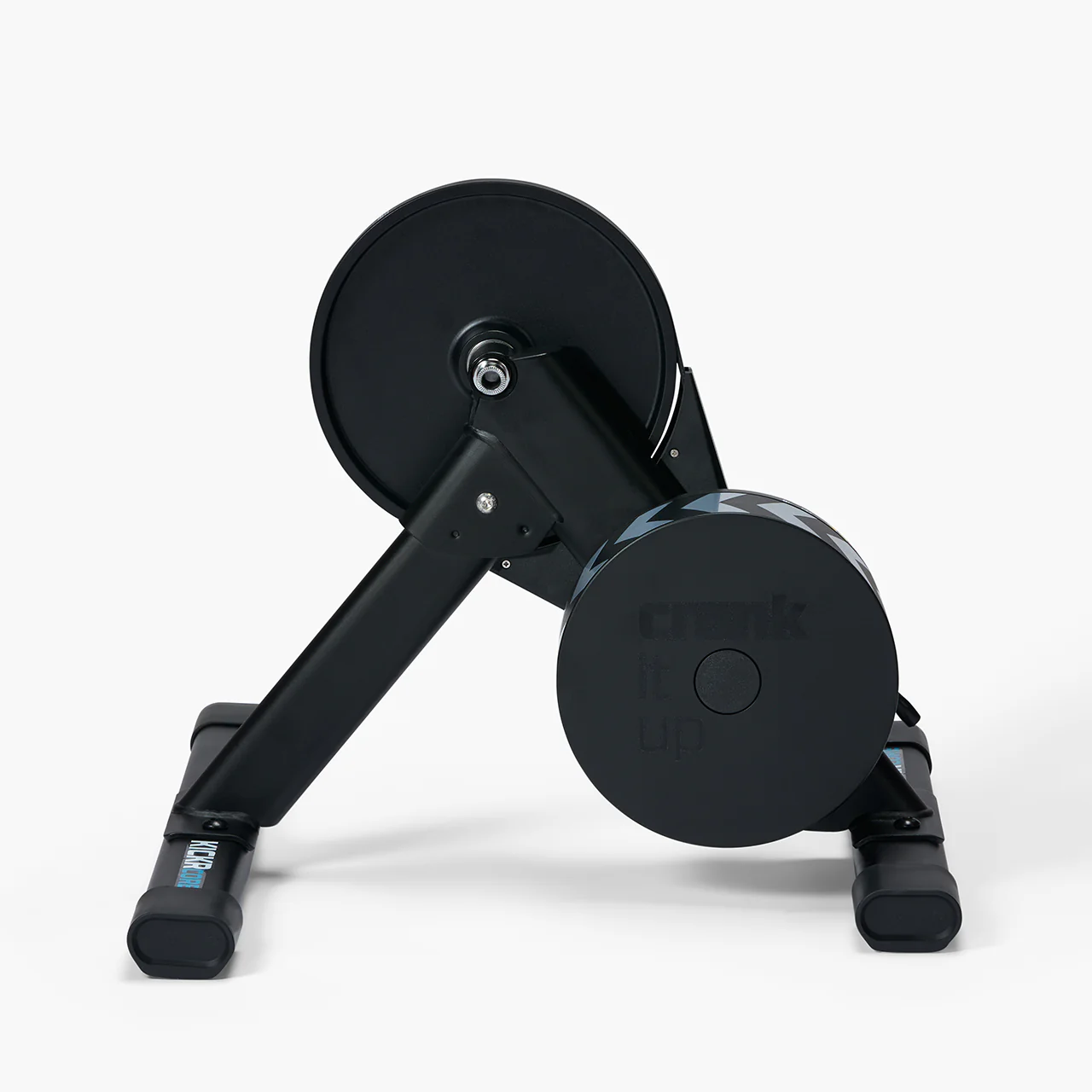
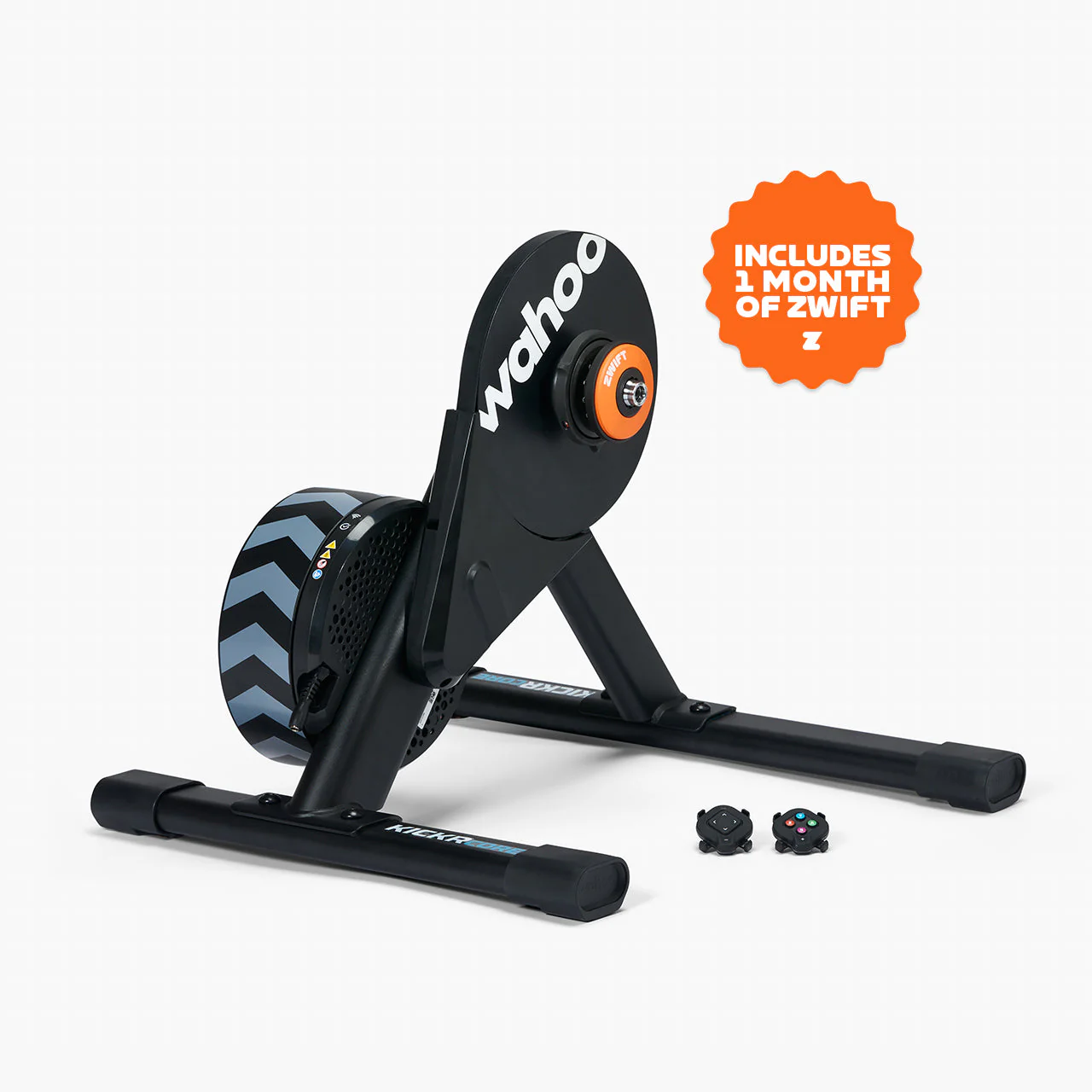
Zwift and Wahoo have just launched an “end of season” promotion on the Wahoo KICKR CORE 2 smart trainer. The deeply discounted price is as low as it’s ever been, matching Black Friday pricing. If you’re in the market for a full-featured smart trainer at a great price, backed by industry-leading support… this is it.
Promo Pricing
- US $399.99 ($150 discount)
- EU €399.99 (€150 discount)
- UK £399.99 (£100 discount)
The deal begins today (February 5) and runs through March 1 on Zwift and Wahoo’s websites.
While Zwift only sells the KICKR CORE 2 with Zwift Cog and Click, Wahoo sells that version as well as a version with a standard cassette. Here are links to shop at Wahoo:
Price includes 1 free month of Zwift ($20 value) for new subscribers only, and you can purchase the trainer with either the Zwift Cog or a standard cassette.
Premium Features
Wahoo’s release of the CORE 2 in September 2025 shook up the smart trainer world, because the new CORE 2 maintains the affordability and reliability of the original CORE while adding three premium features:
- WiFi connectivity for fast, reliable connections and automatic firmware updates
- Race mode for near instantaneous response
- Bluetooth bridging of heart rate monitors, Zwift Click v2, and the controllers on the Zwift Ride (great for Apple TV users, learn more here)

Key Trainer Specs
- Max Wattage: 1800W
- Max Incline: 16%
- Max Decline: -10%
- Power Accuracy: +/-2%
- Connectivity: WiFi, ANT+ FEC, ANT+ Power, Bluetooth FTMS, and Zwift Protocol
- Cassette: sold with 11-speed cassette or Zwift Cog
- Supported Hubs: 130/135mm QR, 12×142, and 12×148 Thru Axle
- KICKR CLIMB compatible
- Weight: 30 lbs / 13.6 kg
- Dimensions: 23.5×20.5×18.5 in / 59.7×52×47 cm
Learn more about Zwift’s new Click v2 controllers here >
Questions or Comments?
Share below!
Sony’s holiday PS5 sales dropped 16 percent compared to last year
Sony has now shipped 92.2 million PlayStation 5 consoles in total around the world, but sales were down sharply over the holiday season compared to last year. In its latest earnings report, the company said it shipped eight million PS5s during its key third quarter, 1.5 million (16 percent) lower than in the same period last year. The gaming division still made more profit, though, thanks to a boost in software sales and a low yen.
Sony’s first two quarters this fiscal year saw an increase in PS5s sold, so the holiday decline is a bit surprising. That said, sales during the same period the previous year were an outlier at 9.5 million units sold, far and away its best period since the console went on sale in November 2020.
Software sales, however, were exceptional in Q3 this year. Sony sold 97.2 million games compared to 95.9 million the year before, and boosted digital sales to 76 percent, up 2 percent year-over-year. Sony said it also saw a record 132 million monthly active users on the PlayStation Network. New games on the horizon for PS5 include Resident Evil Requiem (February 27), Avowed (February 17) and Bungie’s Marathon (March 5).
With PS5 sales down a bit, it does raise the question of when the company’s next console is coming. The PS4 went seven years before being replaced, but given continued strong sales, high RAM prices and recent hardware updates, analysts figure that the PS5 is likely to have a longer life cycle. When the PS6 does arrive, however, it could offer triple the performance of the PS5.
This article originally appeared on Engadget at https://www.engadget.com/gaming/playstation/sonys-holiday-ps5-sales-dropped-16-percent-compared-to-last-year-130000476.html?src=rss
How to stream the 2026 Super Bowl for free: Patriots vs. Seahawks time, where to watch and more
The 2026 Super Bowl between the New England Patriots and the Seattle Seahawks will air on NBC this Sunday, Feb. 8. The game will also stream on Peacock. If you don’t have NBC over the air and don’t subscribe to Peacock, there are still ways to watch Super Bowl LX — and Bad Bunny’s history-making halftime show — for free. Here’s how to tune in.
How to watch Super Bowl LX free:
Date: Sunday, Feb. 8
Time: 6:30 p.m. ET
Location: Levi’s Stadium in Santa Clara, Calif.
TV channel: NBC, Telemundo
Streaming: Peacock, DirecTV, NFL+ and more
2026 Super Bowl game channel
Super Bowl LX will air on NBC. A Spanish-language broadcast is available on Telemundo.
How to watch the 2026 Super Bowl for free
You can stream NBC and Telemundo on platforms like DirecTV and Hulu + Live TV; both offer free trials and are among Engadget’s choices for best streaming services for live TV. (Note that Fubo and NBC are currently in the midst of a contract dispute and NBC channels are not available on the platform.)
What time is the 2026 Super Bowl?
The 2026 Super Bowl kicks off at 6:30 p.m. ET/3:30 p.m. PT on Sunday, Feb. 8. Green Day will be performing a pre-game special starting at 6 p.m. ET.
Who is playing in the Super Bowl?
The AFC champions, the New England Patriots, will play the NFC champions, the Seattle Seahawks.
Where is the 2026 Super Bowl being played?
The 2026 Super Bowl will be held at Levi’s Stadium in Santa Clara, Calif., home of the San Francisco 49ers.
Who is performing at the 2026 Super Bowl halftime show?
Bad Bunny is headlining the 2026 Super Bowl halftime performance. You can expect that show to begin after the second quarter, likely between 8-8:30 p.m. ET. Green Day will perform a pre-game show starting at 6 p.m. ET. If you’re tuning in before the game, singer Charlie Puth will perform the National Anthem, Brandi Carlile is scheduled to sing “America the Beautiful,” and Grammy winner Coco Jones will perform “Lift Every Voice and Sing.”
More ways to watch Super Bowl LX
This article originally appeared on Engadget at https://www.engadget.com/entertainment/streaming/how-to-stream-the-2026-super-bowl-for-free-patriots-vs-seahawks-time-where-to-watch-and-more-124512202.html?src=rss
Kalshi Claims ‘Extortion,’ Then Recants in Feud Over User Losses
Kalshi, the largest U.S. prediction market, accused a small data startup called Juice Reel of “extortion” after a stock analyst used the company’s transaction-level data to argue that prediction market users lose money faster than gamblers on traditional betting apps — then walked the allegation back hours later.
The equity research analyst Jordan Bender at Citizens found that the bottom quarter of prediction market users lost about 28 cents of every dollar wagered in their first three months, compared to roughly 11 cents per dollar on sites like FanDuel and DraftKings. Kalshi’s head of communications told Bloomberg the report was “flat-out wrong” and called the data an extortion attempt. Juice Reel CEO Ricky Gold said Kalshi had actually pressured him to tell Bloomberg the data was inaccurate. Kalshi later issued an updated statement saying it continued to dispute the findings but “after further review, we don’t believe the intention was extortion.” The company did not provide any data to counter the analysis.


Read more of this story at Slashdot.
Surfshark VPN deal: Get up to 87 percent off two-year plans
Surfshark’s One plan is heavily discounted right now, with an 87-percent discount on the two-year package, plus three extra months. The promo price comes out to $2.29 per month, or $62 for the first 27 months.
We’ve generally liked Surfshark as a straightforward, speedy service for everyday use, and it’s one of the picks in our guide to the best VPNs. In our Surfshark review, we found it delivered excellent speeds overall and reliably unblocked Netflix across most of our test servers, which makes this long-term deal worth a look if you want a VPN deal that also includes extras like antivirus, breach alerts and private search.
In our Surfshark review, the VPN stood out for its excellent performance and approachable design, especially for people who want strong protection without constantly tweaking settings. During testing, it delivered some of the fastest speeds we’ve seen from a major VPN, with average download speeds dropping by just over five percent worldwide. Upload speeds also held up well, making it a solid option for streaming, browsing and everyday use. We gave Surfshark an overall score of 87 out of 100 and called it one of the best VPNs for casual users.
This deal focuses on the Surfshark One plan, which bundles the VPN with a suite of extra security tools. In addition to the VPN itself, you get Alternative ID for masking your email and personal details, antivirus protection, breach monitoring through Surfshark Alert and a private search engine. It also supports unlimited simultaneous device connections, so you can protect all of your devices with a single subscription.
Right now, the Surfshark One plan is discounted by 86 percent, bringing the price down to $67 total for two years plus three extra months. That works out to $2.49 per month for the first 27 months, billed upfront, with a 30-day money-back guarantee if you change your mind.
If you want to compare it against other top services before committing, you can also check out our full Surfshark VPN review and our best VPN guide to see how it stacks up. We’ll be keeping our best VPN deals roundup updated regularly, too.
This article originally appeared on Engadget at https://www.engadget.com/deals/surfshark-vpn-deal-get-up-to-87-percent-off-two-year-plans-123000066.html?src=rss
Spotify’s Page Match seamlessly swaps between real books and audiobooks
I have a love-hate relationship with Spotify that might just be leaning more towards love today. While I struggle with some of the company’s choices about the type of content it allows on its platform, I have always had a soft spot for its Wrapped roundups and the monthly audiobook hours included with my Premium subscription. For those like me, Spotify’s news today will likely enhance the appeal of its audiobook offerings. It’s announcing a partnership with Bookshop.org — which lets indie bookstores sell their wares online through a unified platform — allowing users to buy physical books from within its app, and launching a new Page Match feature that helps sync your progress across the physical books you read and the audiobooks in Spotify’s catalog. Also, the audiobook recap feature that summarizes the plot so far is expanding to Android this spring, following its iOS debut (in beta form) last fall.
Page Match is coming to all places where Spotify’s audiobooks are available, starting with the English language titles in its 500,000-strong library. Meanwhile, you can access Bookshop within the Spotify app in the US and the UK, where Bookshop operates.
Though I’m thrilled that this will mean easier and greater support of independent bookstores in those areas, I’m more excited by the prospect of Page Match, which I previewed at a recent launch event in the company’s offices in New York. I’m the sort of person who reads the same title in its ebook, physical and audio forms. (I often wish that a purchase of a physical book came with free ebook and audio versions, but that’s besides the point.)
While Kindles currently do a decent job of getting you to your latest page read across various devices, switching between, say, Martha Wells’ All Systems Red on Spotify and the paperback copy is not quite as easy. With Page Match, though, that should get a lot easier.
How does Spotify Page Match work?
When you get access to the feature (which is rolling out today), you’ll find the Page Match button under the title of each audiobook. You’ll have to first look up the book on Spotify and tap into its full chapter list to find this, which means the book you want to use has to be one of the hundreds of thousands in the company’s library. Then, tap the green “Scan to listen” button if you’re looking to move over to the audio version or “Scan to read” below it if you’re switching over to a hard copy instead.
Whichever you pick, you’ll need to enable access to your device’s camera and then scan the page of the book you’re on. This should work on ereaders as well, and appears to be using some form of optical character recognition to match the part of the book to its audio counterpart.
If you’re scanning to listen, the process is fairly straightforward. Once you’ve placed the page in the viewfinder, the app will quickly jump to that very spot in the chapter track. I’ll note that it was hard for me to confirm whether this actually worked during my first demo, since I never felt like I found the words being spoken on the page I was looking at. In this case, it was Lights Out: An Into Darkness novel by Navessa Allen, and I mostly felt like the narration had simply gone past the page I was on, rather than a complete failure. Subsequent attempts with other books, like Stephen King’s It, were more effective.
Things get a bit trickier when you’re trying to move from audio book to the paper (or ereader). After pressing “Scan to read,” you’ll need to place a page in front of the camera and wait for it to tell you to move forward or backward. Ideally, you’d already know more or less where you were, so you won’t have to flip too many pages.
In my demo, because we were a few chapters too far from where we paused in the early part of It, there was a lot more page-turning required to get to the right spot. What I found helpful was the progress bar at the bottom of the screen, which highlighted the correct location and how far away we were from it. The instructions “Move forward” and “Move back” were clear and came up in a timely manner. When we finally landed on the right page, the screen highlighted the specific lines on the page to start from, too.
I have to caveat this with the observation that there were a few starts and stops during my demo, which were resolved once I established a solid internet connection. And though “Scan to read” did eventually work as promised, there was a bit of flipping around that seemed to be part of the process, which might be tedious and not quite the magical experience some might expect.
The good news is that Spotify seems to already be working on even more features to make it easier to read physical books in tandem with listening to audiobooks. The company said it sees “the future of reading as one that’s personalized, flexible, and built to move fluidly across formats and moments. Page Match is an early example of how Spotify is helping shape that future at scale. “
This article originally appeared on Engadget at https://www.engadget.com/entertainment/spotifys-page-match-seamlessly-swaps-between-real-books-and-audiobooks-120000819.html?src=rss
System76 Lays Out Major COSMIC Desktop Changes Planned for Epoch 2 and 3
System76 has published a detailed roadmap outlining planned features and priorities for COSMIC Epoch 2 and 3, covering performance, UI, and workflow changes.
Krita 6.0 Beta Released – Using Qt6 & Wayland Color Management Support
The first beta release of Krita 6.0 is now available for this featureful digital painting program. Krita 6.0 is re-based against the Qt6 toolkit while Krita 5.3 Beta is also being released at the same time for those sticking to Qt5…
New Rose Shave aero bike weighs 6.6kg and comes in endurance build for extra comfort
Rose has announced the Shave – its new aero road bike platform, said to marry the best aspects of aero race and endurance road bike design.
Claimed to be 4.7 per cent more aerodynamic and up to 10 per cent lighter than its predecessor, the XLite, Rose has created three distinct versions of the Shave.
The standard Shave blends the aerodynamic performance of an aero road bike with the comfort-oriented geometry of an endurance bike, while the Shave FF and its lightweight variant, the Shave FFX, feature longer, lower riding positions.
As is typical of Rose – a direct-to-consumer brand – the prices look excellent value on paper, starting at €3,600 for a build equipped with Shimano 105 Di2.
The range tops out at €8,500 for the flagship Shave FFX, which is claimed to weigh only 6.6kg, with SRAM Red AXS and carbon spoked-wheels.
AergoConcept

According to Rose, the key idea behind the new Shave platform is ‘AergoConcept’ – which it says combines the low drag of a modern race bike with the “ergonomic advantages” of endurance bike geometry.
Although somewhat rare, we’ve seen a few aero bikes lean into this philosophy.
Factor launched its new Monza race bike last year, for example, which featured a more ‘democratic’ fit geometry compared to its pro-level race bikes, the Ostro VAM and One.
Likewise, when Cervélo launched the first iteration of its S5 aero bike way back in 2011, it added 14mm of stack height to the front end compared to the outgoing S3 – the idea being that fewer racers would need to run spacers above the headset (and that uncompromising pros demanding slammed setups could simply run -17-degree stems).

Some riders are now theorising that high-stack riding positions – as seen commonly on time trial bikes in recent years – may even be faster than the slammed ones, too.
Nevertheless, the Rose Shave takes things further than either of those bikes. It has clearance for tyres up to 36mm wide and a setback seatpost that slackens the effective seatpost angle and helps shift the rider’s weight back, and off the front end of the bike.
It also gets a fully integrated carbon handlebar with flared drops, as featured on plenty of modern gravel bikes, and a layup designed to dampen vibrations without compromising stiffness.
Shave FF and FFX

While the standard Shave uses an endurance-style geometry, the Shave FF and FFX get a more traditional race-bike style geometry.
This means a lower stack height and longer reach to the handlebar, and a steep set tube angle of 74.5 degrees (paired with a zero-offset seatpost) to put the rider more forward and over the bottom bracket.
Tyre clearance is also capped at 35mm – 1mm less than the Shave.

The Shave FFX is pitched as the “most exclusive” version of the bike, with a premium construction focused on minimising weight.
Built using Torayca M40X high-modulus carbon fibre, Rose says the Shave FFX is “almost 10 per cent” lighter than its predecessor, the Xlite, and that a complete bike weighs only 6.6kg in a size medium without pedals – less than the UCI’s infamous minimum bike weight limit.
The Shave FF and FFX builds feature all-new wheelsets developed by Rose, with an aero-focused 55mm-deep and 33.5mm-wide rim up front, and a “narrower and tapered rear wheel” designed to reduce weight.

These wheels are paired with Schwalbe’s Pro One Aero tyres, which are claimed to produce around 20 per cent less drag than the brand’s Pro One TT tyres at 45kph.
On the Shave FF, the RC55 wheelset is built with alloy Sapim CX Ray spokes, but carbon spokes are used on the Shave FFX in order to cut weight and improve stiffness.
Overall, Rose claims its wind-tunnel testing showed the Shave FFX, paired with the new RC55 wheels and Schwalbe Pro One Aero tyres, produced 205 watts of aerodynamic drag at 45kph, compared to 215 watts for the Xlite with Rose RC60 wheels and Continental GP5000 tyres.
Rose Shave range and prices

The Rose Shave is available in four models, starting with a 105 Di2-equipped build costing €3,600 and rising to €5,200 for a build with SRAM Force AXS. All models in this range come with single-sided power meters installed.
The Shave FF and FFX are available in two models each, with Shimano Ultegra Di2 (€5,600) or SRAM Force AXS (€5,900) groupsets, and Shimano Dura-Ace Di2 (€8,000) and SRAM Red AXS (€8,500) groupsets, respectively.


Shave FF builds also feature single-sided power meters, while FFX builds are upgraded to dual-sided models.
Hot on the heels of the news that it is re-entering the UK market for the first time since 2020, Rose also confirmed it plans to make the Shave platform available there, although the brand says it doesn’t yet have “a fixed date” for when this will happen.
NetBSD’s Kernel Supports Lua Scripting But Don’t Look For Rust In There Anytime Soon
For those not fond of the increasing use of the Rust programming language within the Linux kernel or FreeBSD’s considerations for Rust in its kernel, you can perhaps find refuge within NetBSD. One of the NetBSD developers has explained why you likely won’t be finding Rust code within the NetBSD kernel anytime soon…
China Has Seized Sony’s Television Halo
Sony announced last month that it plans to pass control of its home entertainment division — including the two-decade-old Bravia television brand — to Chinese electronics group TCL through a joint venture in which TCL would hold a 51% stake. The Japanese company was long ago overtaken in sales by South Korea’s Samsung and LG and now holds just 2% of the global television market. Sony stopped making its own LCD screens in 2011.
Chinese companies supplied 71% of television panels made in Asia last year, according to TCL, and less than 10% are now produced in Japan and Korea. TCL is close to overtaking Samsung as the world’s largest television maker. Sony retains valuable intellectual property in image rendering, and the Bravia brand still carries consumer recognition, but its OLED screens are already supplied by Samsung and LG. The company has been shifting toward premium cameras, professional audio, and its entertainment businesses in film, music, and games — areas where intellectual property is less exposed to Chinese manufacturing scale.


Read more of this story at Slashdot.
Chris King celebrates half a century with new drag-reducing lubricant
Chris King turns 50 this year, and to mark the occasion, it recently introduced a new matt gold colourway for its lauded hubs, headsets and other components.
But the cycling company, which was founded in the backroom of a Santa Barbara bike shop, has kept the celebrations going with its new Gold Grease.
Gold Grease is said to reduce bearing drag and extend a bearing’s lifetime. It is also said to be more stable than the company’s other lubricants, which increases the time between servicing your hubs.
The company’s president, Kirby Bedsaul, says: “Obviously, we put a lot of effort into making our components look good and last a long time, but at the end of the day, riders want components that perform, and that has always been one of our core tenets, too.”
The new lubricant is the result of an extended testing period, where Chris King tested several options. It found Gold Grease made hubs faster straight away and then enabled them to get faster over time, presumably as the lubricant disperses and the ball bearings settle into their races.

Chris King says its Gold Grease produces 25 per cent less drag right out of the box compared to its Silver Grease, which is now discontinued. King also says the new lubricant produces 16 per cent less drag after 1,000 miles versus the Silver Grease, and 18 per cent less drag than when it is first used.
“With hubs, but really with all components that use bearings, you’re looking at two characteristics, drag and durability. Gold Grease gives us a huge advantage in reducing drag, which is really about gaining speed,” Bedsaul says.

Chris King may have moved from Santa Barbara to its current home in Portland, Oregon, but the company’s mission remains remarkably close 50 years later: to create long-lasting, high-performance components for your bike. Gold Grease appears to further that mission.
“It’s funny to get so excited about grease, but honestly, these are the details that make all the difference,” says Bedsaul.
Chris King’s Gold Grease is priced at $15 (25g) or $29 (100g).
Intel ISPC 1.30 Released With AMX Support Added To The Standard Library
Intel ISPC 1.30 is now available as the latest feature update to their Implicit SPMD Program Compiler as a variant of the C programming language to easily target their array of CPUs and GPUs…
Munich Makes Digital Sovereignty Measurable With Its Own Score
alternative_right writes: The city of Munich has developed its own measurement instrument to assess the digital sovereignty of its IT infrastructure. The so-called Digital Sovereignty Score (SDS) visually resembles the Nutri-Score and identifies IT systems based on their independence from individual providers and ‘foreign’ legal spheres. The Technical University of Munich was involved in the development.
In September and October 2025, the IT Department already conducted a first comprehensive test. Out of a total of 2780 municipal application services, 194 particularly critical ones were selected and evaluated based on five categories. The analysis already showed a high degree of digital sovereignty: 66% of the 194 evaluated services reached the highest levels (SDS 1 and 2), only 5% reached the critical level 4, and 21% reached the most critical level 5. The SDS evaluates not only technical dependencies but also legal and organizational risks.


Read more of this story at Slashdot.
Ubuntu 24.04 LTS Users Get Linux 6.17 and Mesa 25.2 Ahead of Ubuntu 24.04.4 LTS
Canonical has pushed today new updates to Ubuntu 24.04 LTS (Noble Numbat) users, including the Linux 6.17 kernel and Mesa 25.2 graphics stacks from Ubuntu 25.10 (Questing Quokka).