
Microsoft overnight released Azure Linux 3.0.20260204 as the latest release of their in-house Linux distribution widely used within their Azure environment and elsewhere…
Category Archives: Unfiltered RSS
Your Encryption May Not Survive Quantum — But Rocky Linux from CIQ’s Might
CIQ brings NIST‑approved post‑quantum crypto into Rocky Linux, turning quantum risk into a practical planning issue for sysadmins and regulated Linux shops.
The post Your Encryption May Not Survive Quantum — But Rocky Linux from CIQ’s Might appeared first on FOSS Force.
Linux 7.0 Brings Support For “Slow” Workload Hints For Intel Panther Lake
The many power management, thermal, and ACPI updates have been merged for the Linux 7.0 kernel. As usual there are many changes coming from fixes to new hardware support and more expansive thermal control capabilities under Linux…
Helping young people stay safe online in the age of AI
The online world that young people navigate today is different from the one we encountered just a few years ago: the search engines, social media platforms and digital tools they use to find information, interact with friends and complete schoolwork are now deeply embedded with AI technologies.

While the core aims of online safety education remain the same, the scope must now expand to include AI literacy: the ability to use, question and navigate AI tools so young people can make responsible choices online.
This is a shared challenge for anyone who supports young people as they navigate the online world: parents and carers, youth leaders and volunteers, and educators across all subjects. Many young people use these AI tools independently, often without guidance, so having open and useful conversations about trust, risk and responsibility matter just as much in the classroom as they do at dinner tables and Code Clubs.
Why AI literacy is essential for staying safe online
At the Raspberry Pi Foundation, we have developed various AI literacy resources for educators, club leaders and parents to address this challenge in age-appropriate and practical ways. Our ‘AI safety’ resources, part of our Experience AI programme, are a set of free comprehensive teaching activities to support you in educating young people aged 11–14 in navigating key safety issues linked to AI, including privacy, misinformation, trust and responsibility. Delivered through videos, unplugged activities and discussions, the activities are adaptable to a range of learning settings, and reflect the real decisions young people are already making online.

For example, in the ‘Trusted Sources’ activity from the ‘Media literacy in the age of AI’ lesson, young people reflect on the ways they look for information related to schoolwork, news and in their free time. They consider which sources are likely to allow the use of generative AI and how that affects their trustworthiness. Rather than labelling sources as ‘good’ or ‘bad’, learners explore questions around responsibility, credibility and oversight, and build practical skills for fact-checking and staying safe online.
Supporting responsible use of generative AI through Experience AI
Alongside the ‘AI safety’ resources, we have also developed a new ‘Large Language Models (LLMs)’ unit for learners aged 11–13 and 14–17, currently being tested in classrooms. The unit focuses on another important aspect of online safety: how young people interact responsibly with AI tools that generate content. While helpful, learners’ uncritical use of these tools could lead to cognitive offloading and limit the development of their higher-order thinking skills. The confident, persuasive tone of LLMs can also make it harder for young people to judge accuracy, recognise bias or notice missing information in outputs.

To support the critical thinking skills that are essential for staying safe online, the new LLM unit includes research-informed lessons that explore how LLMs are created, why their outputs are not always accurate and how to evaluate AI-generated responses. The unit also encourages learners to reflect on when using an LLM is helpful to their learning, when it is not, and how they can remain in control of their own thinking, learning and skills development.
Starting the conversation this Safer Internet Day
Helping young people stay safe online in the age of AI doesn’t require having all the answers. Instead, it’s about creating the space to pause, question, and think critically about what they are encountering online. Through carefully designed, research-informed and pedagogically aligned AI literacy resources, we aim to help you start the conversations that empower young people to think critically, stay curious and remain in control of their learning and online lives.

This Safer Internet Day, we invite educators, parents and anyone who supports young people to explore our AI literacy resources and start the conversation. Visit the Experience AI website for more information.
The post Helping young people stay safe online in the age of AI appeared first on Raspberry Pi Foundation.
MythTV 36 Released With Web App Improvements & FFmpeg 8 Support
MythTV 36 is now available for this long-time open-source digital video recorder “DVR” software that has been around now for more than two decades as the leading choice for those wishing to watch and/or record live TV under Linux especially as an HTPC…
LLVM 22.1-rc3 Released – LLVM To Provide Windows ARM Release Binaries Moving Forward
We are nearing the stable release of LLVM 22 in hopefully two weeks. Out today is the third release candidate of LLVM 22.1 for soliciting more testing of this open-source compiler stack…
Linux 7.0 Brings An EFI Framebuffer Quirk For Valve’s Steam Deck
The EFI subsystem updates have been merged for the in-development Linux 7.0 kernel. Worth mentioning here is a new quirk for helping Valve’s Steam Deck handheld…
2 To 3 Cups of Coffee a Day May Reduce Dementia Risk. But Not if It’s Decaf.
If you think your daily doses of espresso or Earl Grey sharpen your mind, you just might be right, new science suggests. The New York Times: A large new study provides evidence of cognitive benefits from coffee and tea — if it’s caffeinated and consumed in moderation: two to three cups of coffee or one to two cups of tea daily.
People who drank that amount for decades had lower chances of developing dementia than people who drank little or no caffeine, the researchers reported. They followed 131,821 participants for up to 43 years. “This is a very large, rigorous study conducted long term among men and women that shows that drinking two or three cups of coffee per day is associated with reduced risk of dementia,” said Aladdin Shadyab, an associate professor of public health and medicine at the University of California, San Diego, who wasn’t involved in the study.
The findings, published Monday in JAMA, don’t prove caffeine causes these beneficial effects, and it’s possible other attributes protected caffeine drinkers’ brain health. But independent experts said the study adjusted for many other factors, including health conditions, medication, diet, education, socioeconomic status, family history of dementia, body mass index, smoking and mental illness.


Read more of this story at Slashdot.
Zwift Games returns for 2026 with drills to improve your racing and plenty of XP
The Zwift Games will return for 2026 with an additional sixth stage, drills to teach newcomers the basics of how to race on the platform and lots of XP (experience points) up for grabs.
Running from 16 February to 29 March, the online-racing competition will feature five main stages with brand new routes across Zwift’s worlds “to test the skills of every type of rider”.
You will have a week to complete each stage and the races will be categorised using Zwift’s Racing Score system with open, advanced and women’s only categories.
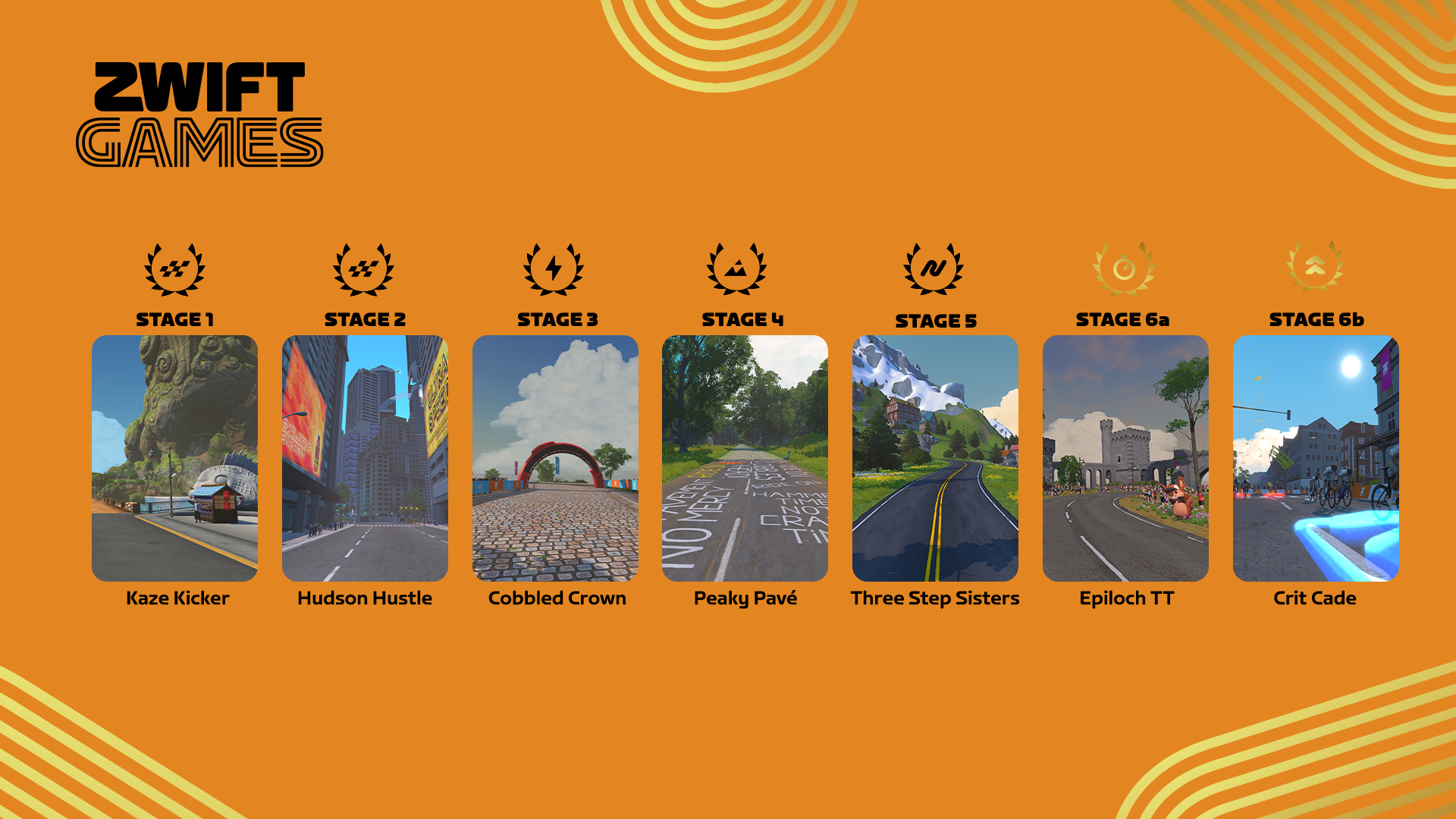
There will also be a bonus sixth stage for this year’s Zwift Games. This is divided into an A or B option, with a total of seven routes across the platform’s seven worlds:
- Stage 1: Kaze Kicker, Makuri – 16.8km, 134m
- Stage 2: Hudson Hustle, New York – 20.3km, 216m
- Stage 3: Cobbled Crown, Richmond – 24km, 288m
- Stage 4: Peaky Pavé, France – 30.6km, 368m
- Stage 5: Three Step Sisters, Watopia – 37.8km, 587m
- Bonus stage 6a: Epiloch TT, Scotland – 11.1km, 94m
- Bonus stage 6b: Crit Cade, Crit City – 15.7km, 136m
You’ll be able to track your progress on the Zwift Games website as well as your ranking in the General Classification for stage 1-5, alongside individual stage results, including for the bonus stages.
Zwift says the two bonus stages provide you with an opportunity to try two styles of racing. The Epiloch TT is a race against the clock, whereas the Crit Cade provides a ‘gamified’ experience with PowerUPs, boosts, hazard pads and steering. The pressure is off for these bonus stages too, with neither counting towards your GC ranking.
Despite there being one race a week for the Games, Zwift says for the first time this year you’ll be able to ride all the new routes on demand from 13 February, giving you the option to recce the routes, and earn badges, unlocks or XP.
Another change for the 2026 Zwift Games is the Zwift Games Road to Glory. This is a guided group ride that runs from 9 February to 20 February and teaches you the fundamentals of Zwift racing via drills – from when to use PowerUps to when to sprint.
While the racing ends on 29 March, Zwift says there will be a ‘make-up’ week from 30 March to 5 April to complete any you’ve missed or want to improve your time on.
The Games are also an opportunity to unlock virtual kit. This includes Oakley Sphaera sunglasses after stage 1, Zwift Games 2026 kits after stage three, and the Oakley Velo Stelvio helmet after you’ve ridden any five stages.
If you finish all six stages, you’ll earn 6,000 XP points, up from 1,000 XP points for completing last year’s five stages.
Kdenlive 25.12.2 Delivers Monitor Fixes and Dragging Refactor
Kdenlive 25.12.2 open-source video editor, is now available with new stability fixes, better monitor performance, and workflow improvements.
GNU Binutils 2.46 Adds Support for AMD Zen6 CPUs, SFrame v3, and More
The GNU Binutils project announced today the release and general availability of GNU Binutils 2.46 as the latest stable version of this collection of binary tools for GNU/Linux operating systems.
Deepfake Fraud Taking Place On an Industrial Scale, Study Finds
Deepfake fraud has gone “industrial,” an analysis published by AI experts has said. From a report: Tools to create tailored, even personalised, scams — leveraging, for example, deepfake videos of Swedish journalists or the president of Cyprus — are no longer niche, but inexpensive and easy to deploy at scale, said the analysis from the AI Incident Database.
It catalogued more than a dozen recent examples of “impersonation for profit,” including a deepfake video of Western Australia’s premier, Robert Cook, hawking an investment scheme, and deepfake doctors promoting skin creams. These examples are part of a trend in which scammers are using widely available AI tools to perpetuate increasingly targeted heists. Last year, a finance officer at a Singaporean multinational paid out nearly $500,000 to scammers during what he believed was a video call with company leadership. UK consumers are estimated to have lost $12.86bn to fraud in the nine months to November 2025.
“Capabilities have suddenly reached that level where fake content can be produced by pretty much anybody,” said Simon Mylius, an MIT researcher who works on a project linked to the AI Incident Database. He calculates that “frauds, scams and targeted manipulation” have made up the largest proportion of incidents reported to the database in 11 of the past 12 months. He said: “It’s become very accessible to a point where there is really effectively no barrier to entry.”


Read more of this story at Slashdot.
pearOS 26.2 Released with Liquid Gel Design, Wayland Session, and More
pearOS 26.2 has been released today as a major update to this up-and-coming GNU/Linux distribution featuring the KDE Plasma desktop environment and based on the popular Arch Linux distribution.
Electric Cars Are Making It Easier To Breathe, Study Finds
An anonymous reader shares a report: It turns out that when fewer cars spew exhaust as they drive along, air quality improves. That’s the conclusion of a new study published in The Lancet Planetary Health that looked at the effect of increased numbers of both EVs and plug-in hybrids on air pollution in California. The Golden State has by far the largest number of plug-in vehicles in the United States, and they’ve now reached significant numbers to have a positive impact on air quality.
Between 2019 and 2023, for every 200 EVs or plug-in hybrids added, nitrogen dioxide (NO2) levels dropped 1.1%, according to the study, which used satellite data to track those levels through the unique way NO2 absorbs and reflects sunlight. NO2 can trigger asthma attacks, cause bronchitis, and increase the risk of heart disease and stroke.


Read more of this story at Slashdot.
Kalshi Prediction Markets Match or Beat Traditional Forecasting Tools For Macro Indicators, NBER Study Finds
A new NBER working paper from researchers at the Federal Reserve, Northwestern’s Kellogg School and Johns Hopkins finds that Kalshi — the largest federally regulated prediction market in the U.S., overseen by the CFTC — produces macroeconomic forecasts that match or beat those of professional forecasters and traditional financial instruments like fed funds futures.
The study compared Kalshi-implied forecasts for the federal funds rate, CPI inflation and unemployment against the New York Fed’s Survey of Market Expectations and Bloomberg consensus. Kalshi’s modal forecast correctly predicted the federal funds rate on the day before every FOMC meeting since 2022, something neither the survey nor fed funds futures achieved. For headline CPI, Kalshi’s median and mode produced a statistically significant improvement over Bloomberg consensus.
Kalshi also fills a gap no other financial market covers: real-time probability distributions for GDP growth, core CPI, unemployment, and payrolls. The paper documented how these distributions shift in response to macro news — positive CPI surprises moved the mean of the fed funds rate distribution four times more than negative ones. Trading volumes on the platform have grown to nearly 100 million contracts for a single FOMC meeting, supported by liquidity from Susquehanna, Citadel, and Two Sigma.


Read more of this story at Slashdot.
GNU Linux-Libre 6.19 Kernel Is Now Available for Software Freedom Lovers
The GNU Linux-libre project announced today the release and general availability of the GNU Linux-libre 6.19 kernel for those who seek 100% freedom for their GNU/Linux computers and software freedom lovers.
Launching Guy At 50MPH From Back Of Truck Driving At 50MPH To Cancel Out The Speed
This is a video from the fun/danger-loving crew DD Squad (I’m part of a small B Squad myself) using a custom built rig to launch a human at 50MPH from the rear of a truck traveling at 50MPH so that he can just stand the landing, since 50MPH – 50MPH = 0MPH. It works surprisingly well, and, unlike if I’d been involved, nobody was accidentally launched into the side of a cliff at 200MPH then crushed by an anvil Wile E. Coyote style.
Just look at Ayaneo’s absolute unit of a Windows gaming “handheld”
In 2023, we marveled at the sheer mass of Lenovo’s Legion Go, a 1.88-pound, 11.8-inch-wide monstrosity of a Windows gaming handheld. In 2026, though, Ayaneo unveiled details of its Next II handheld, which puts Lenovo’s big boy to shame while also offering heftier specs and a higher price than most other Windows gaming handhelds.
Let’s focus on the bulk first. The Ayaneo Next II weighs in at a truly wrist-straining 3.14 pounds, making it more than twice as heavy in the hands as the Steam Deck OLED (not to mention 2022’s original Ayaneo Next, which weighed a much more reasonable 1.58 pounds). The absolute unit also measures 13.45 inches wide and 10.3 inches tall, according to Ayaneo’s spec sheet, giving it a footprint approximately 60 percent larger than the Switch 2 (with Joy-Cons attached).
Ayaneo packs some seriously powerful portable PC performance into all that bulk, though. The high-end version of the system sports a Ryzen AI Max+ 395 chipset with 16 Zen5 cores alongside a Radeon 8060S with 40 RDNA3.5 compute units. That should give this massive portable performance comparable to a desktop with an RTX 4060 or a gaming laptop like last year’s high-end ROG Flow Z13.
You Can Opt Out of Ads on ChatGPT, but It Might Not Be Worth It
It finally happened. After months of speculation, ChatGPT officially has ads. OpenAI revealed the news on Monday, announcing that ads would roll out in testing for logged-in adult users on Free and Go subscriptions. If you or your organization pays for ChatGPT, such as with a Plus, Pro, Business, Enterprise, or Education account, you won’t see ads with the bot.
OpenAI says that ads do not have an impact on the answers ChatGPT generates, and that these posts are always clearly separated from ChatGPT’s actual responses. In addition, ads are labeled as “Sponsored.” That being said, it’s not exactly a church-and-state situation here. OpenAI says that it decides which ads to show you based on your current and past chats, as well as your past interactions with ChatGPT ads. If you’re asking for help with a dinner recipe, you might get an ad for a meal kit or grocery service.
The company claims it keeps your chats away from advertisers. The idea, according to the company, is strictly funding-based so that OpenAI can expand ChatGPT access to more users. That’s reportedly why ads are starting as a test, not a hardcoded feature: OpenAI says it wants to “learn, listen, and make sure [it gets] the experience right.” As such, advertisers don’t have access to chats, chat histories, memories, or your personal details. They do have access to aggregate information about ad performance, including views and click metrics.
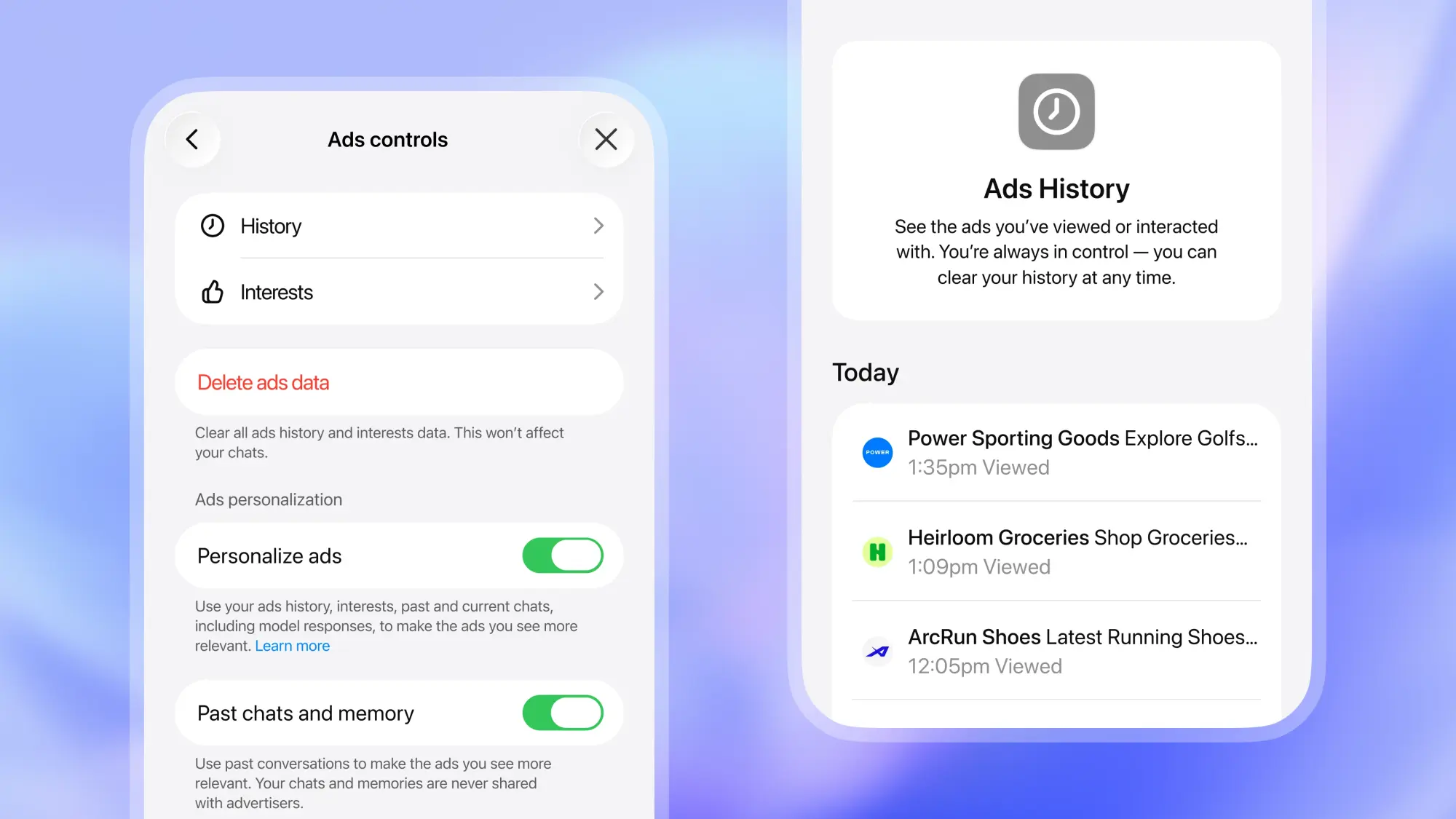
OpenAI will only show ads to adults. If the service detects that you are under 18, it will block ads from populating in your chats. Ads also will not appear if you’re talking to ChatGPT about something related to health, medicine, or politics. You can offer OpenAI feedback on the ads you do see, which should inform the ads you receive in the future. You can also delete your ad data and manage ad personalization, if you want to reset the information OpenAI is using to send you ads.
Credit: OpenAI
How to opt out of ChatGPT ads
The thing is, you don’t actually have to deal with ads, even if you use ChatGPT for free. That’s not just by upgrading to a paid ChatGPT plan, though OpenAI does suggest that option in its announcement. In addition, OpenAI is offering Free and Go users a dedicated choice to opt out of ads here. There is, of course, a pretty sizable catch: You have to agree to fewer daily free messages with ChatGPT. OpenAI doesn’t offer specifics here, so it’s not clear how limited the ad-free experience will be. But if you hate ads, or if you simply don’t want to see an ad for something irrelevant to your ChatGPT conversation, it’s an option.
If you like that trade-off, here’s how to opt out of ads. Open ChatGPT, then head to your profile, which opens your profile’s Settings page. Here, scroll down to “Ads controls,” then choose “Change plan to go ad-free.” Select “Reduce message limits,” and ChatGPT will confirm ads are off for your account. You can return to this page at any time to turn ads back on and restore your message limits.
Disclosure: Ziff Davis, Mashable’s parent company, in April 2025 filed a lawsuit against OpenAI, alleging it infringed Ziff Davis copyrights in training and operating its AI systems.
Decman Is a Declarative Package and Configuration Manager for Arch Linux
Decman provides a declarative way to manage Arch Linux systems, ensuring installed packages and configuration match a defined state.