The American economy’s most valuable companies are now worth trillions of dollars more than their predecessors were a generation ago, yet they employ a fraction of the workers — and a new analysis by the Wall Street Journal argues that this widening gap between capital and labor is the defining economic story of our time.
Labor received 58% of gross domestic income in 1980; by the third quarter of 2025, that figure had fallen to 51.4%. Corporate profits’ share rose from 7% to 11.7% over the same period. Nvidia, the most valuable US company in 2026, is nearly 20 times as valuable as IBM was in 1985 in inflation-adjusted terms and employs roughly a tenth as many people. Since the end of 2019, real average hourly wages have risen 3% while corporate profits have climbed 43%.
Household stock wealth now equals almost 300% of annual disposable income, up from 200% in 2019. Yale economist Pascual Restrepo predicted that AI integration will shrink labor’s share of revenue further, just as factory automation did for blue-collar workers in decades past.
Michiel Leenaars, director of strategy at the NLnet Foundation, used his keynote
at FOSDEM to sound warnings for
the community for free and open-source (FOSS) software; in particular, he
talked about the threats posed by geopolitical politics, dangerous
allies, and large language models (LLMs). His talk was a mix of
observations and suggestions that pertain to FOSS in general and to
Europe in particular as geopolitical tensions have mounted in recent
months.
Alphabet has lined up banks to sell a rare 100-year bond, stepping up a borrowing spree by Big Tech companies racing to fund their vast investments in AI this year.
The so-called century bond will form part of a debut sterling issuance this week by Google’s parent company, said people familiar with the matter.
Alphabet was also selling $20 billion of dollar bonds on Monday and lining up a Swiss franc bond sale, the people said. The dollar portion of the deal was upsized from $15 billion because of strong demand, they added.
G.Skill has agreed to pay $2.4 million to settle a class action lawsuit alleging it “deceptively advertised and labeled” the speed of its DDR5 and DDR4 desktop memory modules. The settlement allows G.Skill to put the matter to rest without admitting any wrongdoing, and it avoids having a court decide of G.Skill’s memory speed labels violated
The open-source Redis 8.6 release is now available and this GA release has brought “substantial” performance improvements and to memory reduction too. Plus various new features like TLS certificate-based automatic client authentication, time series enhancements, and new eviction policies…
In addition to the BPF filtering support for IO_uring that was merged on Monday, the other block device changes and IO_uring updates were also merged for the newly-opened Linux 7.0 merge window…
The top private schools in New York City plan to charge more than $70,000 this year for tuition, an amount exceeding that of many elite colleges, as they pass on the costs of soaring expenses including teacher salaries. From a report: Spence School, Dalton School and Nightingale-Bamford School on Manhattan’s Upper East Side are among at least seven schools where the fees now exceed that threshold, according to school disclosures and Bloomberg reporting
Fees among 15 private schools across the city rose a median of 4.7%, outpacing inflation. Sending a kid to New York private school has always been expensive, but the cost now is so high that even those with well-above-average salaries are feeling squeezed. Prices have risen dramatically in the past decade, up from a median of $39,900 in 2014.
It takes time for novel designs to catch on. But even so, I am still wondering why the Zenbook Duo hasn’t had a bigger impact on the market after ASUS released its first true dual-screen laptop two years ago. Notebooks like these provide the kind of screen space you’d typically only get from a dual monitor setup, but in a much more compact form factor that you can easily take on the road. It could be that people were wary of an unfamiliar design, shorter battery life or buying a first-gen product — all of which are understandable concerns. However, now that ASUS has given the ZenBook Duo a total redesign for 2026, the company has addressed practically all of those barriers to entry while making it an even more convincing machine for anyone who could use more display space. Which, in my experience, is pretty much everyone.
Editor’s note: The 2026 ASUS Zenbook Duo is expected to be available for pre-order sometime in late February, with general availability slated for March.
Design
For the new model, ASUS didn’t mess with the laptop’s basic layout too much. Instead, the company polished and tightened everything up, resulting in a system that weighs about the same (3.6 pounds) while reducing its overall size (12.1 x 8.2 x 0.77 to 0.92 inches) by five percent. Critically, you still get a built-in kickstand on the bottom and a detachable keyboard that you move wherever you want. There’s also a decent number of ports, including two USB-C with Thunderbolt 4, one USB-A 3.2 jack, HDMI 2.1 and a combo audio port. That said, I do wish ASUS had found room for an SD card reader of some kind, though given the Zenbook Duo’s unique design, I get why that didn’t make it.
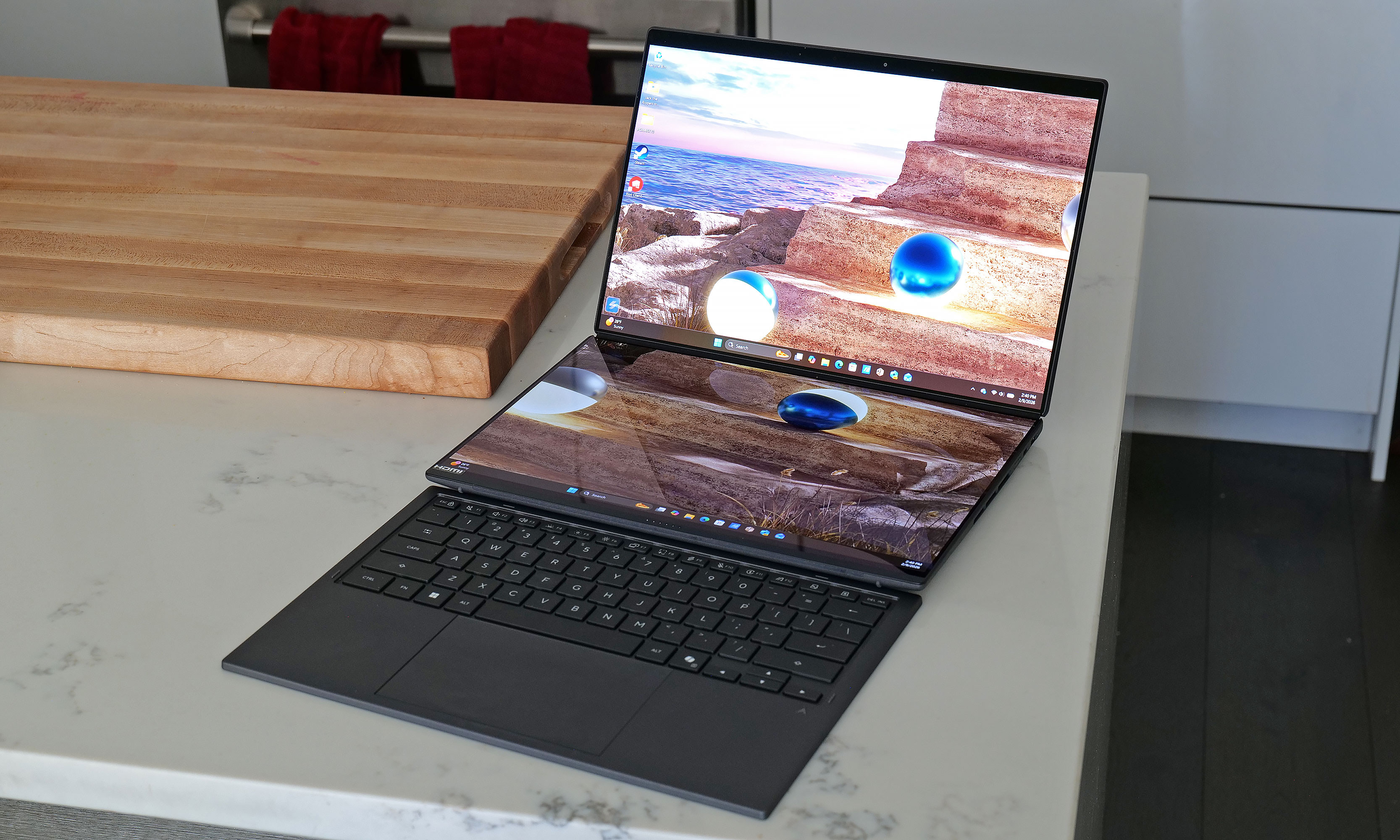
The Zenbook Duo’s detachable keyboard gives users a ton of flexibility when it comes to utilizing both of the laptop’s displays.
Sam Rutherford for Engadget
One of the Zenbook Duo’s most important design upgrades is a new “hideaway” hinge that reduces the gap between the laptop’s two screens. Not only does this make the laptop easier and more pleasant to use in dual-screen mode, it also allows the entire system to lay flat on a table, which is nice for drawing or sharing your screen with someone sitting opposite you. Unfortunately, while my review unit didn’t come with one, ASUS says its forthcoming Pen 3.0 will come bundled with the Zenbook Duo in the US, so you won’t need to pay extra for it.
Another small but appreciated improvement is the new pogo pins below the lower display, which provides a more secure and reliable way of keeping the laptop’s detachable keyboard topped up. In my experience, even after running multiple rundown tests that completely drained the Duo’s battery, I never had to charge up the keyboard on its own. It was always smart enough to sip electricity from the main system in the background, though it also has a built-in USB-C port for power just in case. On the flipside, if you’re not scared of typing on glass, you can still use the lower screen as a keyboard and touchpad, or as a place to display widgets for news, the weather, performance and more.
Displays
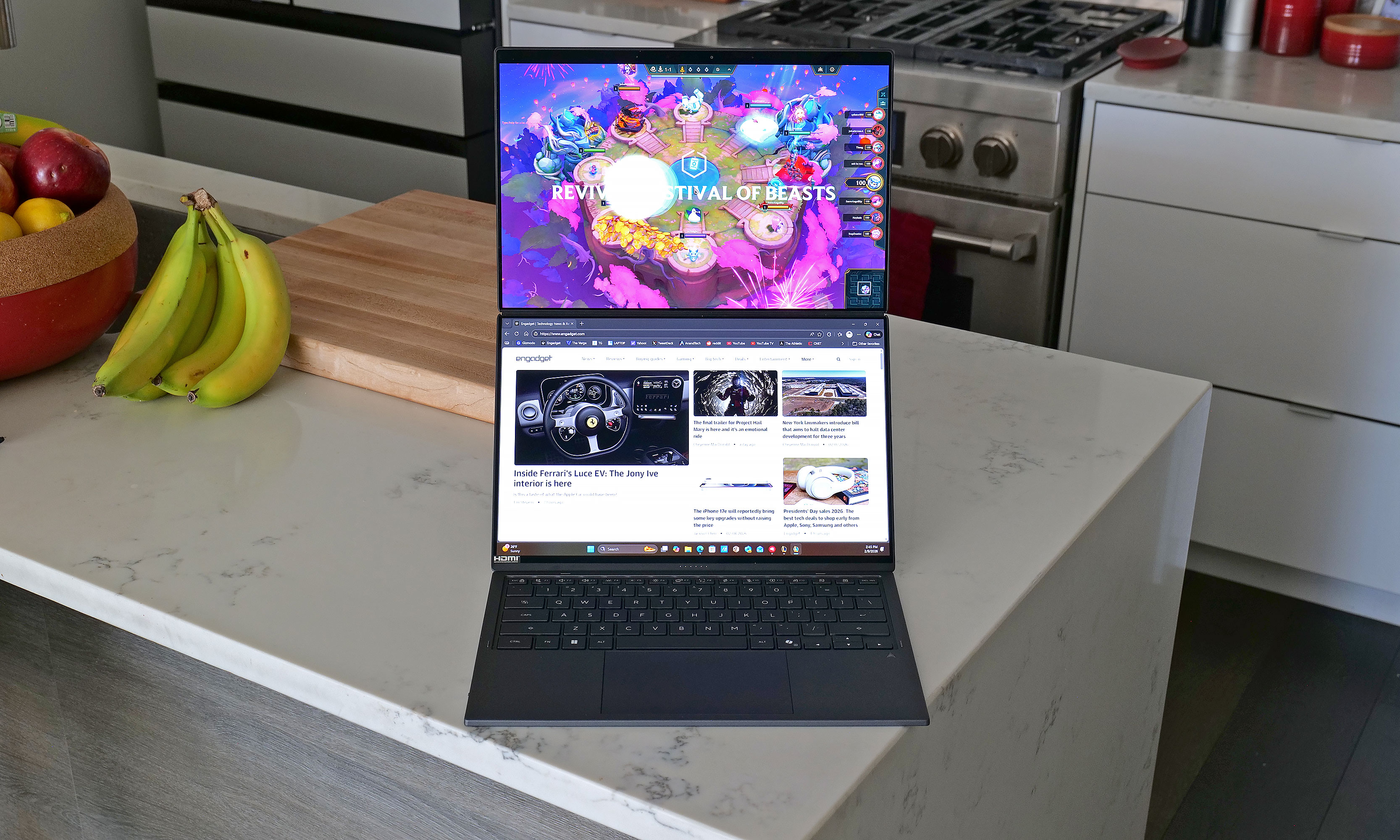
As someone who loves a desktop with dual monitors, I can’t overstate how nice it is to have similar built-in functionality on a laptop.
Sam Rutherford for Engadget
The standout feature on the Zenbook Duo continues to be its dual displays, and now for 2026, they look better than ever. Both OLED panels have a 144Hz refresh rate with a 2,880 x 1,800 resolution while also covering 100 percent of the DCI-P3 spectrum. And while its nominal brightness of 500 nits for SDR content is just OK, ASUS makes up for that with peaks of up to 1,000 nits in HDR. And to make both screens even more enjoyable, ASUS managed to shrink the size of their bezels down to just 8.28mm. That’s a reduction of 70 percent compared to the previous model, so now there’s even less getting in the way of you utilizing these screens to their fullest.
Performance
The Zenbook Duo can be configured with a range of new Intel Core Ultra 7 and Core Ultra 9 processors, including the X9 388H chip used on our review unit. For general use and productivity, the laptop is super smooth and responsive, though that shouldn’t be a surprise coming from Intel’s latest top-of-the-line mobile CPU. However, for those seeking max performance, some of the benchmark numbers aren’t quite as impressive as you might expect. That’s because ASUS has limited the Duo’s TDP (thermal design power) to 45 watts — which is shy of the chip’s 80-watt turbo power limit.
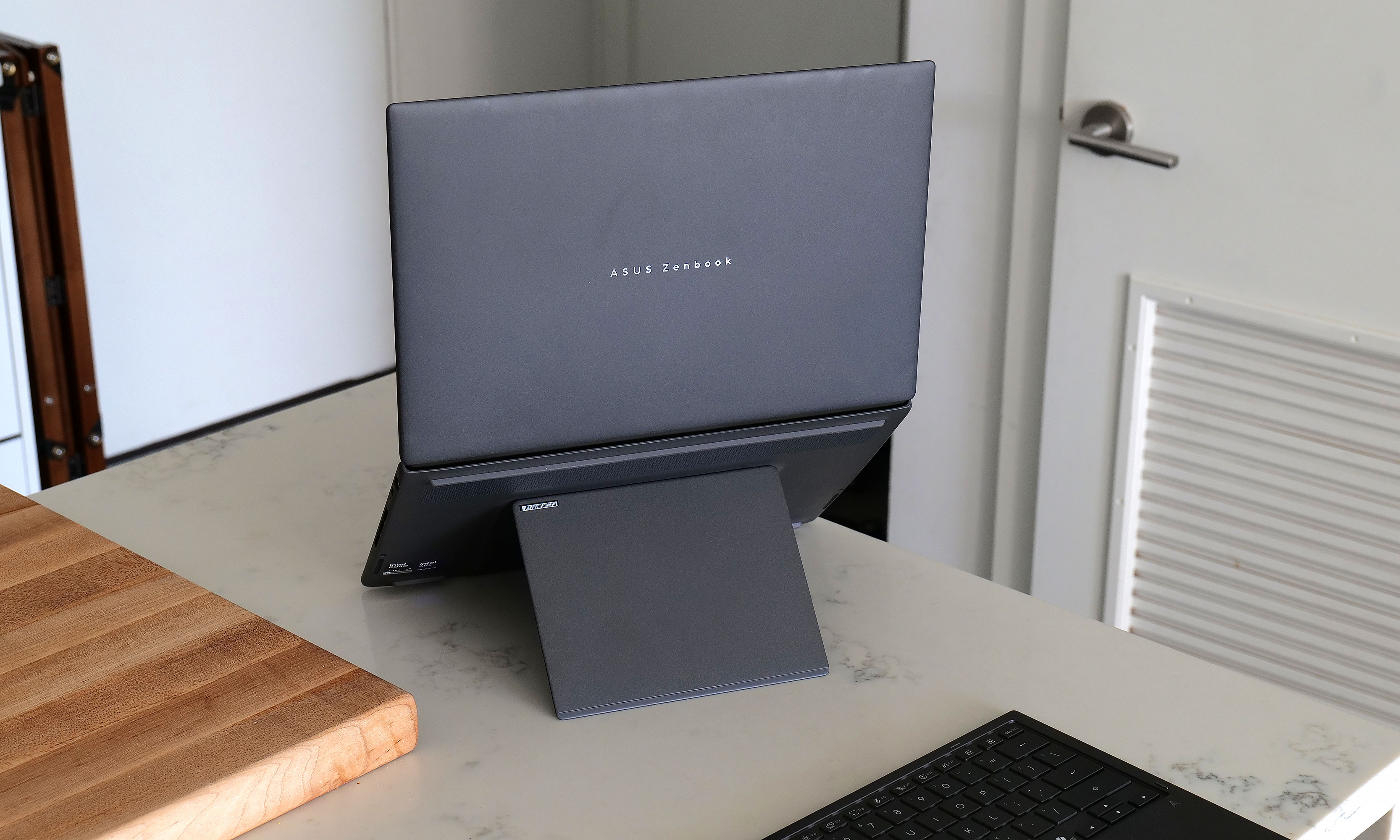
The kickstand in back adds a bit a bulk, but it’s better than not having one at all like with Lenovo’s Yoga Book.
Sam Rutherford for Engadget
In PCMark 10, the Zenbook Duo only managed a score of 7,153 compared to 9,651 from a Dell XPS 14, despite the latter having a lower-tier Intel Core Ultra X7 358H processor. That said, in other tests like Geekbench 6, the Duo had no trouble staying on top with a multicore score of 17,095 versus 9,651 for the Dell.
Another pleasant surprise is that because the Duo’s chip comes with Intel’s upgraded Arc B390 integrated GPU, this thing has plenty of oomph to game on, let alone edit videos or other similar tasks. In Elden Ring at 1,920 x 1,200, the Zenbook maintained a relatively stable framerate between 55 and 60 fps on high settings, which is great considering this thing doesn’t have discrete graphics. This means as long as you don’t mind fiddling with game options a bit, you should be able to play newer AAA games without too much trouble.
Battery life
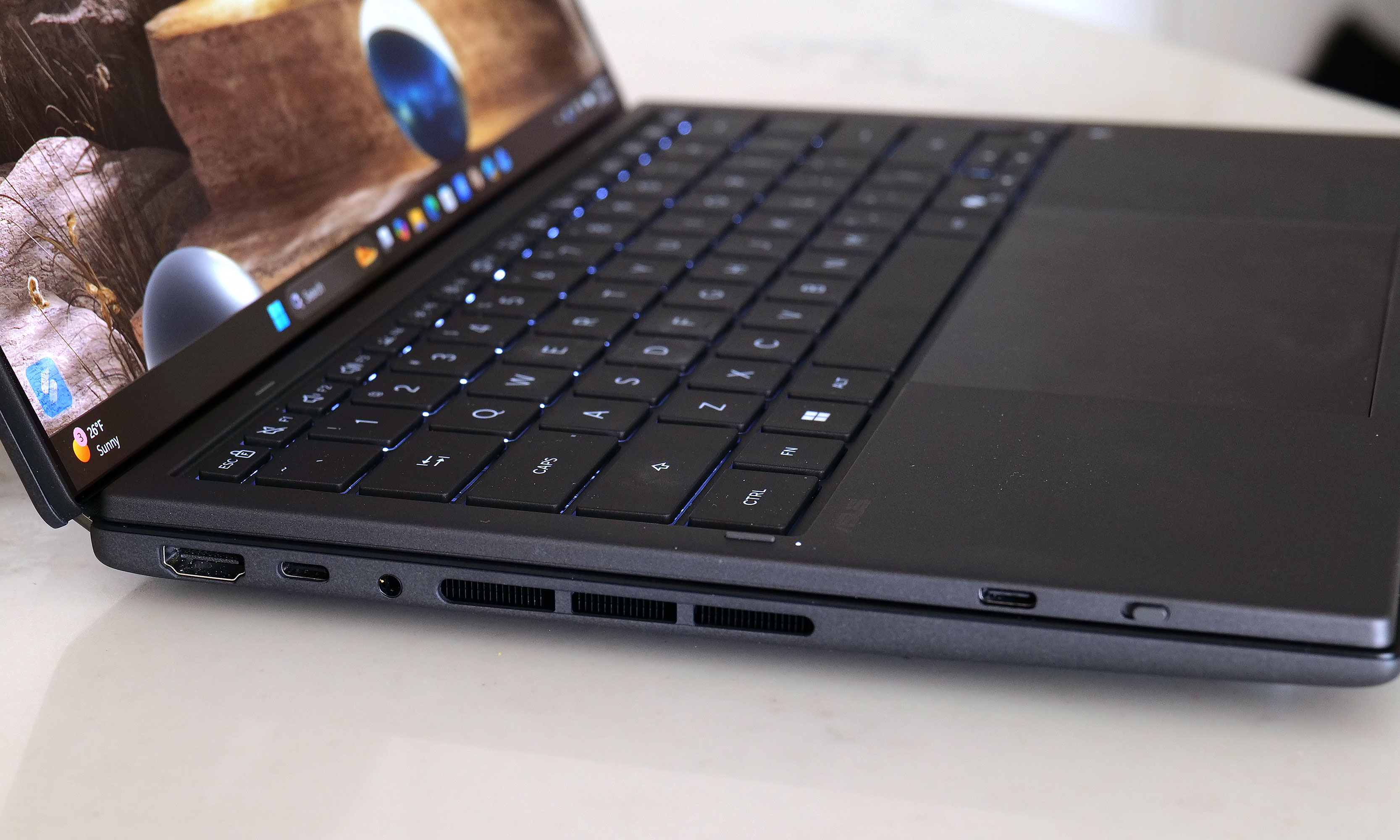
The left side of the Zenbook Duo features a full-size HDMI connector along with a USB-C port, plus a backup USB-C jack for charging the detachable keyboard.
Sam Rutherford for Engadget
You’d think a laptop with two displays would be super power hungry. However, by increasing the capacity of its cell from 75WHrs to 99WHrs, ASUS has made the Zenbook Duo’s endurance (or lack thereof) a complete non-issue. On PCMark 10’s Modern Office rundown test, the laptop lasted 18 hours and 33 minutes in single-screen mode. Granted, that’s nearly four hours less than what we got from MSI’s Prestige 14 Flip AI+, but considering that’s the longest-lasting notebook we’ve ever tested, I’m not bothered. When compared to ASUS’ own Zenbook A14 (18:16), things are basically a wash, which I think is a win for the Duo, as the A14 is meant to be an ultralight system with an emphasis on portability and longevity.
Obviously, battery life takes a hit when you’re using both displays. However, when I re-ran our battery test with its two displays turned on, the Duo still impressed with a time of 14:23. This is more than enough to give you the confidence to set this thing up in dual-screen mode even when an outlet isn’t close at hand. Thankfully, for times when you do need a power adapter, the charging brick on ASUS’ cable is rather compact, so it’s not a chore to lug it around.
Wrap-up
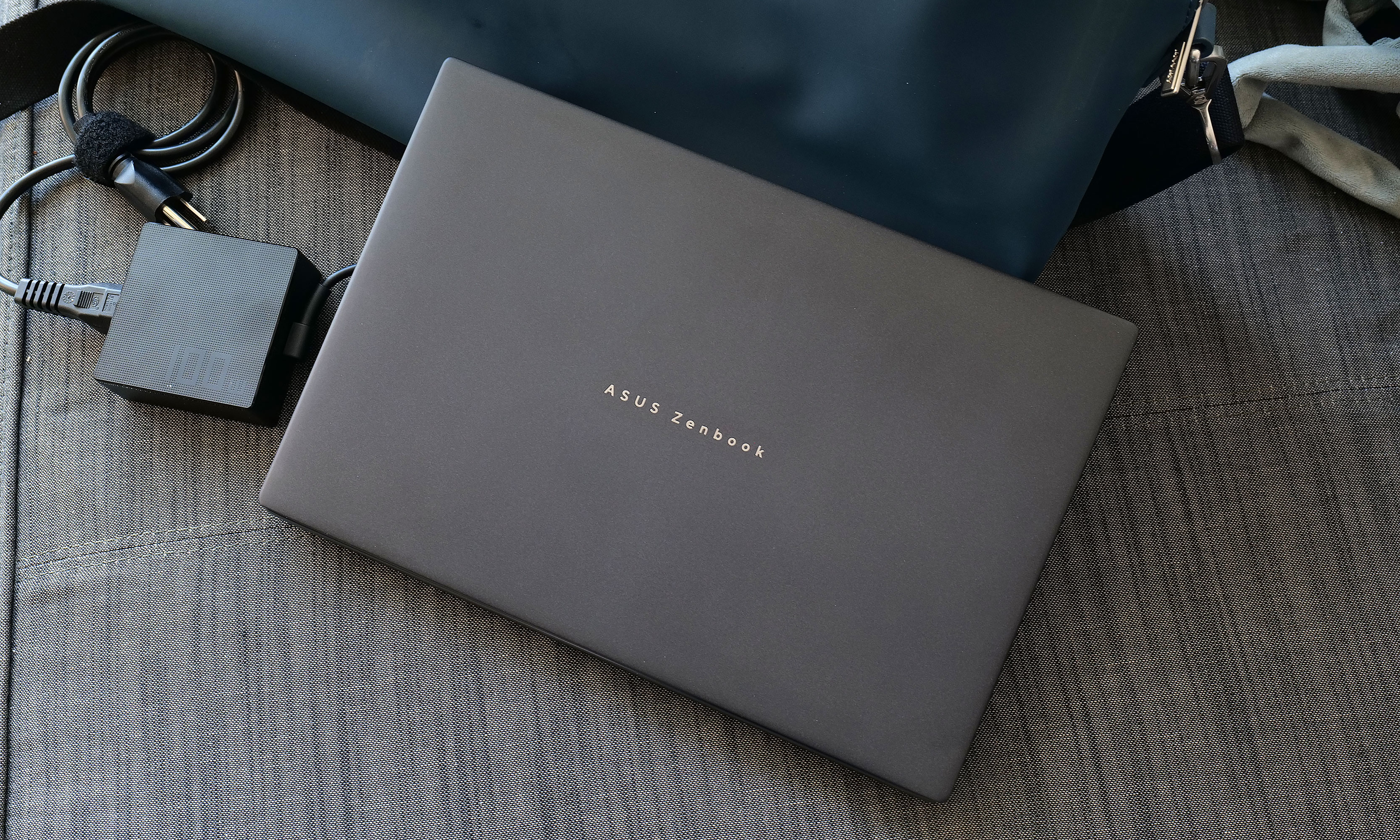
The Zenbook Duo’s battery life is good enough you won’t always need its power brick. Thankfully, when you do, ASUS’ 100-watt adapter is relatively compact.
Sam Rutherford for Engadget
I’m a believer that one day people will eventually embrace typing on screens with laptops just like they have for smartphones. However, even if you’re not willing to make that jump just yet, the Zenbook Duo still has all of its bases covered. Its detachable keyboard gives you a pleasant experience while freeing up the bottom of the notebook to be a second display. This allows you to have something similar to a traditional dual-monitor desktop but in a chassis that you can easily take on the road without any major compromises.
The 2026 Zenbook Duo combines a compact design with strong performance, plenty of ports and surprisingly good battery life. Sure, it’s a touch heavier than a typical 14-inch laptop, but its two screens more than make up for a little added weight and thickness. That leaves price as the Duo’s remaining drawback, and starting at $2,100 (or $2,300 as reviewed), it certainly isn’t cheap.
However, when you consider that a similarly equipped rival like a Dell XPS 14 costs just $50 less for a single screen, that price difference is rather negligible. Alternatively, if you opt for a more affordable ultraportable and then tack on a decent third-party portable monitor, you’re still likely looking at a package that costs between $1,500 and $1,800. Plus, that setup is significantly bulkier and more annoying to carry around. So while the Zenbook Duo might be an unconventional pick right now, it has all the tools to deliver unmatched portable productivity and I don’t think it will be too much longer until the masses catch on.
This article originally appeared on Engadget at https://www.engadget.com/computing/laptops/asus-zenbook-duo-2026-review-two-screens-really-are-better-than-one-140000982.html?src=rss
Google announced two new ways for users to remove their sensitive information from the web Tuesday morning—or, at least, remove that data from Google Search. The first lets users request that Google remove sensitive government ID information from Search, while the second gives users new tools to request the same for non-consensual explicit images.
Google’s “Results about you” tool is getting an update
Credit: Google
First, Google is updating its existing “Results about you” tool, which helps users scour the internet for their personal information. Before today, this tool could already locate data points like your name, phone number, email addresses, and home addresses. Following the update, you can now find and request the deletion of search results containing highly sensitive information, including your driver’s license, passport, or Social Security number.
To launch this tool, click here. If you’ve never used “Results about you” before, you’ll need to set it up to tell Google what to look out for. Once you do, you’ll be able to add government ID numbers, such as your driver’s license, passport, and Social Security number. If Google finds a match, the company will let you know. You can receive an alert from the Google app on your smartphone, which takes you to a summary of what data was found and where. From here, you can choose from “Request to remove,” or “Mark as reviewed.”
Unfortunately, this tool won’t remove the data from the websites that are hosting it, but it will eventually remove the search results—sharply reducing the chance that someone will find your data on their own.
Google says these changes will roll out in the U.S. over the “coming days,” while it is working on bringing them to other countries in the future.
Google’s simpler way to remove explicit images from Search
Credit: Google
In addition to these changes, Google is now rolling out a simpler tool for users to request the remove of non-consensual explicit images (NCEI) from Search. If you find such an image on Search, you can tap the three dots on that image, choose “remove result,” then “it shows a sexual image of me.” You’ll have the choice to report whether the photo is real, or is artificially generated, as well, and you can report multiple images at once, if needed. Your requests will all appear in the Results about you hub, so you can track the progress of each.
The tool lets you opt-in to an option that will filter additional explicit results in other searches. Google says it will also share links to “emotional and legal support” after you submit a request.
After the merge request was opened back in 2023 and after going through 628 comments/activity, merged now to Wayland Protocols is the experimental zones “xx-zones” implementation for area-limited window positioning…
Last year the UK declared that Apple and Google were a duopoly with “strategic market status” in the mobile platforms market, making them subject to special regulations. However, the UK’s Competition and Markets Authority (CMA) will not regulate Google and Apple’s app stores like the EU has done. Rather, government plans to enforce its own digital markets rules in a “pragmatic” way by accepting “commitments” from Apple and Google in areas like app rankings, the CMA announced.
Google and Apple agreed to work with the CMA to address concerns on the following matters: app review, app ranking, use of data and interoperability process. Effectively, regulators require the tech giants to treat developers fairly, particularly when they compete against Google and Apple’s own apps. However, the UK’s rules are more like suggestions and “not legally binding in any case,” former CMA director Tom Smith told the Financial Times.
This is in stark contrast to Europe’s Digital Markets Act, which forced Apple to make changes to open up iOS features and data to rivals, allow app installations from outside its Store and reduce fees collected on purchases.
That could change if the companies fail to comply with its measures, though. The CMA plans to check metrics like the number of apps approved or rejected, app review times and developer complaints received. New requirements could then be brought forward if deemed necessary. “For example, if we find Apple is routinely declining interoperability requests without good reason… we could bring forward specific interoperability requirements. Non-compliance would also mean we would be unlikely to consider commitments as a similar approach in [the] future.”
Google said in a blog today that it “welcomed the opportunity to resolve the CMA’s concerns collaboratively.” Apple, meanwhile, seemed similarly pleased with the deal. “The commitments announced today allow Apple to continue advancing important privacy and security innovations for users and great opportunities for developers,” an Apple spokesperson told Bloomberg.
The UK is possibly taking a light touch on app store rules to avoid antagonizing the Trump administration. Earlier today, French President Emmanuel Macron predicted that the US could go after the EU on areas like data privacy, digital taxation and the plan of multiple EU countries to ban children from social media. “The US will, in the coming months — that’s certain — attack us over digital regulation,” Macron said at a special summit yesterday.
This article originally appeared on Engadget at https://www.engadget.com/big-tech/uk-takes-light-touch-approach-to-regulating-apple-and-googles-app-stores-131119575.html?src=rss
The first Pony.ai bZ4X robotaxi, made in partnership with Toyota, has just rolled off the production line and is ready to be deployed. It’s the first of many, if the companies stick to their plan, which is to produce more than 1,000 bZ4X robotaxis this year. The bZ4X is one of the three autonomous vehicle models Pony.ai intends to use for commercial services in Tier 1 Chinese cities, including Beijing and Shanghai. The other two vehicles are already being used for Pony.ai’s ride-hailing service, while the bZ4X robotaxis will be gradually integrated into its fleet. Pony.ai’s goal is to operate 3,000 vehicles by the end of 2026.
Toyota introduced the new bZ4X last year, and the non-autonomous versions are available for purchase to the public. Pony.ai’s version comes equipped with the company’s Gen-7 autonomous driving system, which features Bluetooth-based automatic vehicle unlocking and in-cabin voice interaction. It also comes integrated with online music services and braking patterns that can help minimize motion sickness for passengers. Pony.ai was founded in 2016 and has been testing and operating self-driving vehicles since then. It received permission from Beijing to offer self-driving car services to the general public back in 2022. While It’s a Chinese company, it has headquarters in Silicon Valley and filed for an IPO in the US in 2024.
This article originally appeared on Engadget at https://www.engadget.com/transportation/evs/toyota-and-ponyai-start-mass-producing-robotaxis-for-china-130833065.html?src=rss
Cycling streaming is set to change once again in the UK and Ireland, as TNT Sports will be absorbed by HBO Max from 26 March.
This is the latest change to how you can watch cycling races, after GCN+ closed at the end of 2023, Eurosport UK was axed last year and coverage moved to TNT Sports.
TNT Sports will remain on the same linear channels, but anyone looking to stream races such as the Tour de France will have to use HBO Max.
If you already have a TNT Sports subscription, it will automatically move over to HBO Max, which you can access via the HBO Max app or from HBOMax.com with your existing Discover+ login details.
The price for a TNT Sports subscription will remain at £30.99. Otherwise, the UK and Ireland’s cheapest HBO Max entertainment tier, Basic with Ads, starts at £4.99 per month and Standard with Ads is £5.99. The standard tier without ads is £9.99 and the premium tier is £14.99.
TNT Sports is available as a standalone plan or can be purchased alongside the Standard with Ads, Standard or Premium plans.
The move is part of Warner Bros. Discovery’s continued plan to consolidate its global streaming service. HBO Max launched in the USA in 2020 and is now available in 110 territories worldwide.
Warner Bros. Discovery says the platform’s launch in the UK and Ireland will be the first time you can stream “the exclusive collection of unmissable stories” from HBO, Warner Bros. Pictures, DC Studios, Max Originals and more.
For cycling fans, the consolidation of platforms will bring some clarity to what has been a confusing situation.
Following cycling coverage moving from GCN+ to Eurosport and then TNT Sports, it was revealed that ITV’s long-standing coverage of the Tour de France would end in 2025, after Warner Bros Discovery Sports Europe secured the Tour’s exclusive live broadcast rights in 2024.
Ned Boulting and David Millar commentating on the 2023 Tour of Britain for ITV4. Simon Wilkinson / SWPix.com
The exclusive rights deal was described as “colossal” by TNT Sports, but prompted cycling fans to mourn the loss of free-to-air coverage.
Meanwhile, ITV cycling commentator Ned Boulting wrote on BikeRadar that coverage of the Tour de France had been in slow decline since its peak in 2012, and that viewership was “no longer big enough to merit its profitable inclusion in the schedules”.
Whether the Tour de France has found a place to be broadcast in the UK for the long term is another question.
In December it was announced that Netflix would acquire Warner Bros. Discovery’s film and streaming businesses, which was quickly followed by a hostile takeover bid by Paramount.
Warner Bros. Discovery has since urged shareholders to reject the offer from Paramount, but the bidding war has yet to be resolved.
It’s unclear what impact an acquisition by Netflix or Paramount would have for cycling streaming in the UK, but from next month the place to catch all the action will be HBO Max.
Spotify announced Tuesday that it hit 751 million total monthly active users (MAUs) for quarter-four of 2025. That record-high is an 11 percent jump from the year before and a significant bump from the third quarter’s 713 million MAUs.
The quarterly earnings report also showed a 10 percent jump year-over-year in Premium subscribers, from 263 million to 290 million. Europe makes up the greatest number of the Swedish company’s premium subscribers (36 percent), with North America coming second at 25 percent.
Spotify contributes a few factors to its growth, including AI. “We consider ourselves the R&D department for the music industry. Our job is to understand new technologies quickly and capture their potential, which we’ve done time and again,” Gustav Söderström, Co-CEO of Spotify, said in a statement. The entire industry stands to benefit from this [AI] paradigm shift but we believe those who embrace this change and move fast, will benefit the most.” In late 2025, Spotify announced it would get rid of some of the AI “slop” on its platform and have “artist-first AI music products” — though the specifics were very vague.
The company also claims that December’s Spotify Wrapped was bigger than ever, with over 300 million engaged users and 630 million shares across 56 languages.
This article originally appeared on Engadget at https://www.engadget.com/entertainment/music/spotify-now-has-more-than-750-million-monthly-users-124103630.html?src=rss
Genesis gave us a glimpse of two new drop-bar bikes at iceBike* 2026, which pull the brand in very different directions.
One prototype is Genesis’ interpretation of a modern steel all-road bike, blending handsome slim tubes with generous tyre clearance and do-it-all practicality.
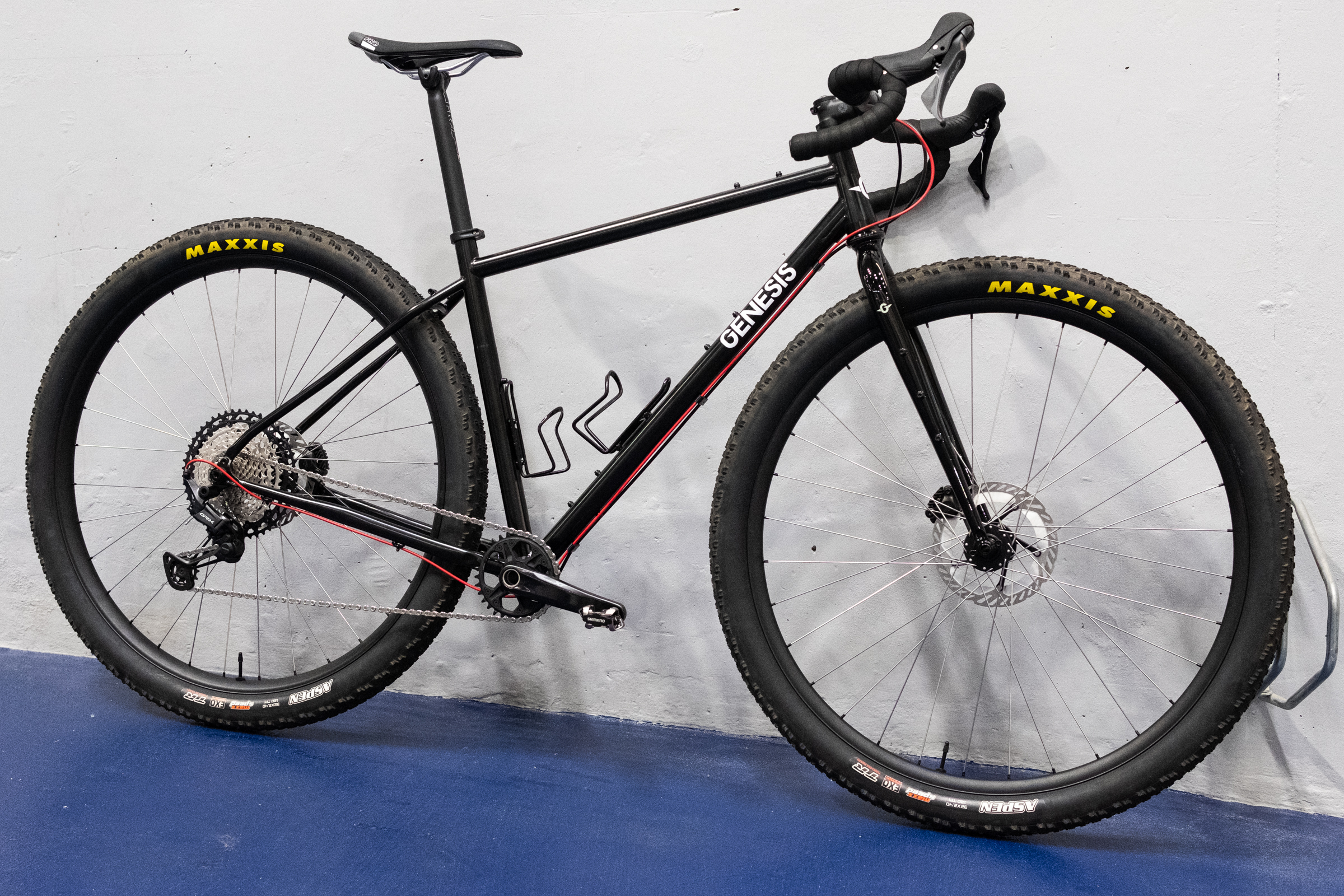
The other is far more experimental: a 32in-wheel gravel wagon aimed at long-distance efficiency rather than technical trail handling.
After a significant refocussing of the brand following the post-Covid boom years, these are the first new steel bikes to be shown by Genesis since the Croix- and Tour de Fer were updated in 2024.
The brand also showed off a range of mid-range alloy gravel bikes designed to hit “important” price points for Genesis dealers.
Slender, versatile, handsome
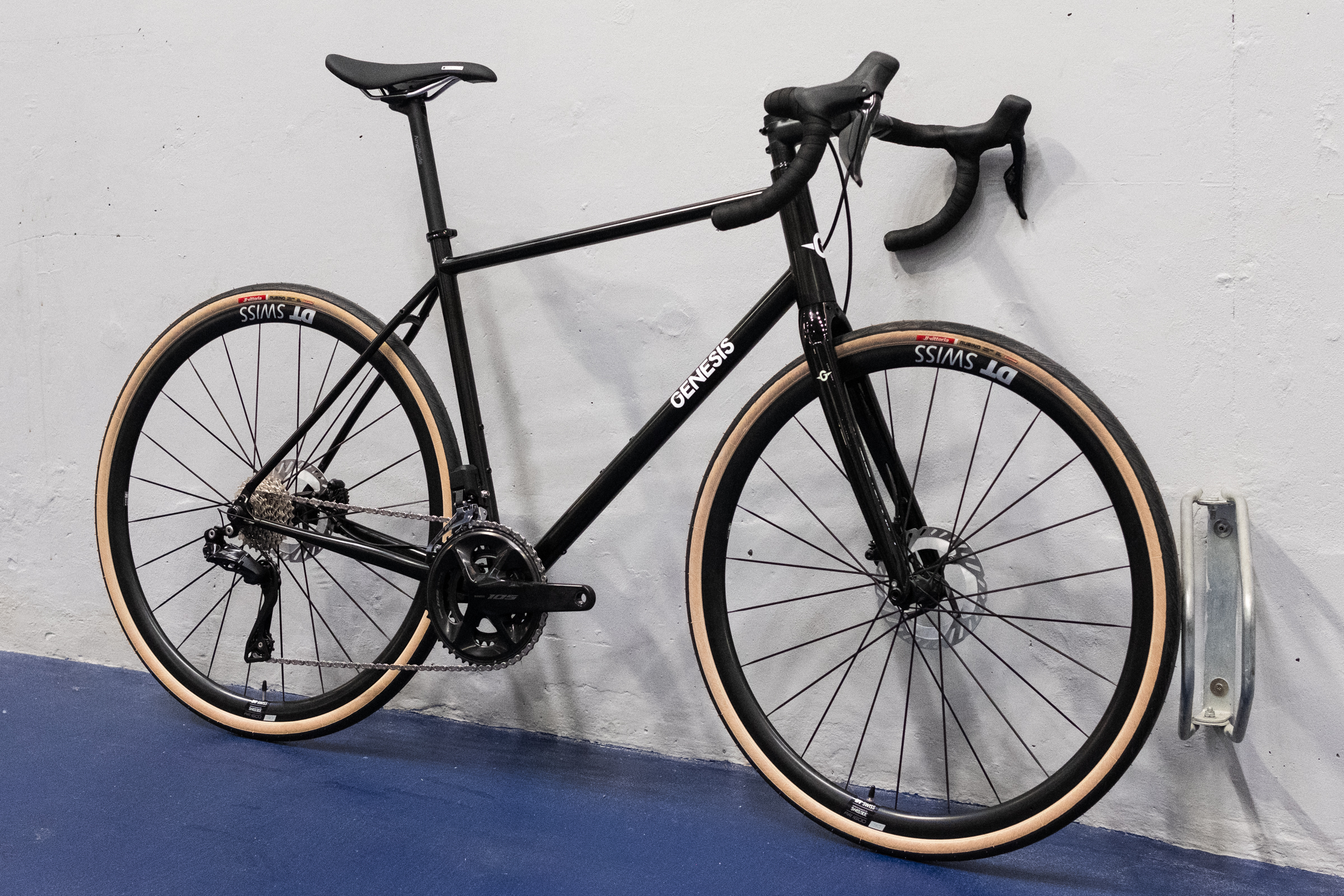
The unnamed prototype steel road bike follows in the tyre tracks of the Equilibrium. Jack Luke / Our Media
The unnamed steel prototype is Genesis’ work-in-progress interpretation of a contemporary steel road bike.
With clearance for 40mm tyres, brand manager Brodie Gardias says the bike’s geometry errs towards the endurance end of the spectrum: “It has road but relaxed geometry – it’s not meant to be a race bike.”
The bike aligns most closely with the discontinued Equilibrium – Genesis’ steel endurance road bike: “Effectively it’s something similar to an Equilibrium – so a little more all-road than the Volare, which though it was steel, was quite race-focussed in geometry.”
The tubeset has been custom drawn for Genesis. Jack Luke / Our Media
The bike uses a bespoke tubeset, which Gardias says goes beyond more commonly available tubesets. “The down tube is a little bit above what you’d find in Reynolds 853,” Gardias says.
This is paired with stiffer-than-average chainstays that, in spec terms, sit a touch above Reynolds 725.
Elsewhere, Gardias says the top tube and seatstays are more compliant to improve comfort.
The fork has routing for a dynamo light. Jack Luke / Our Media
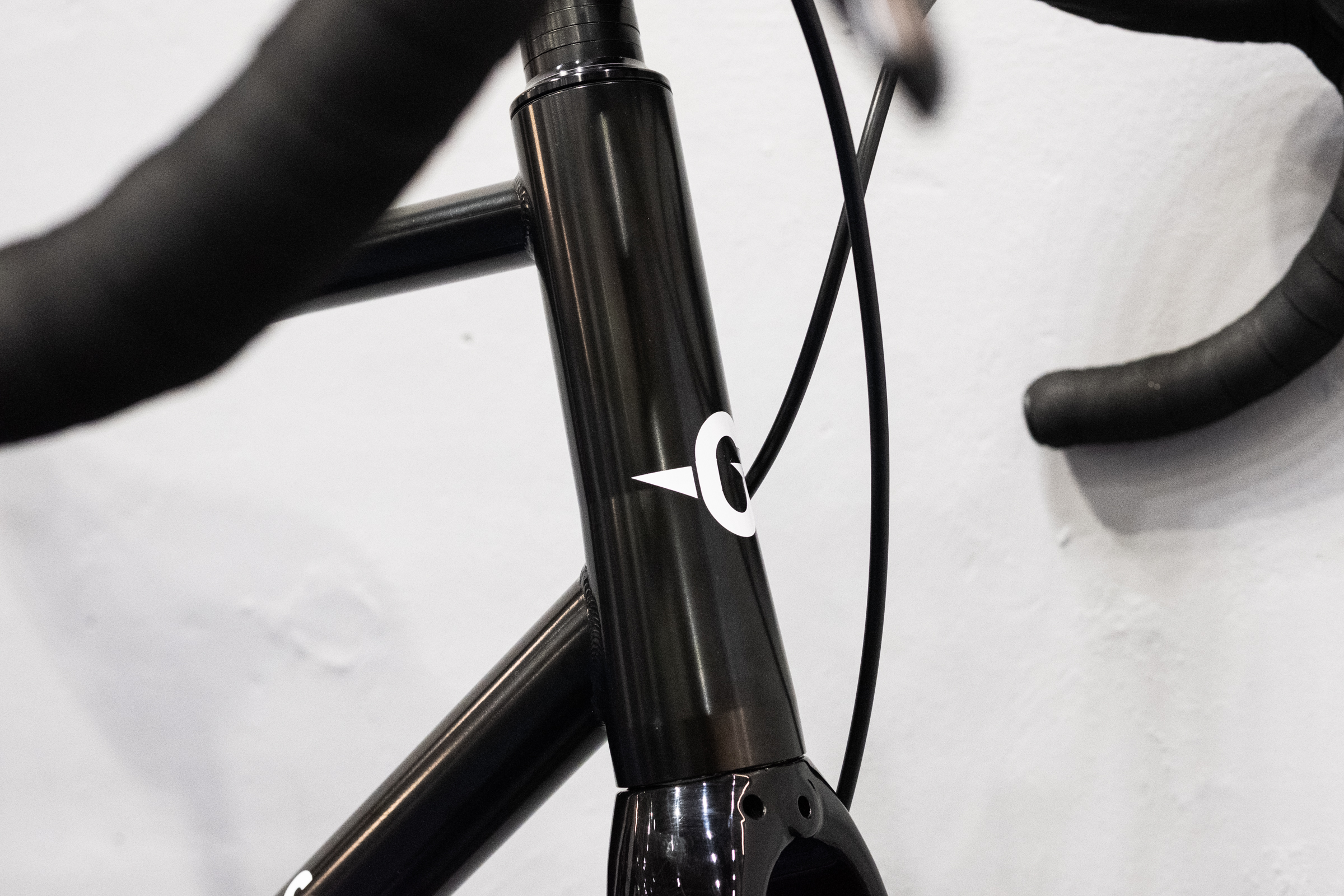
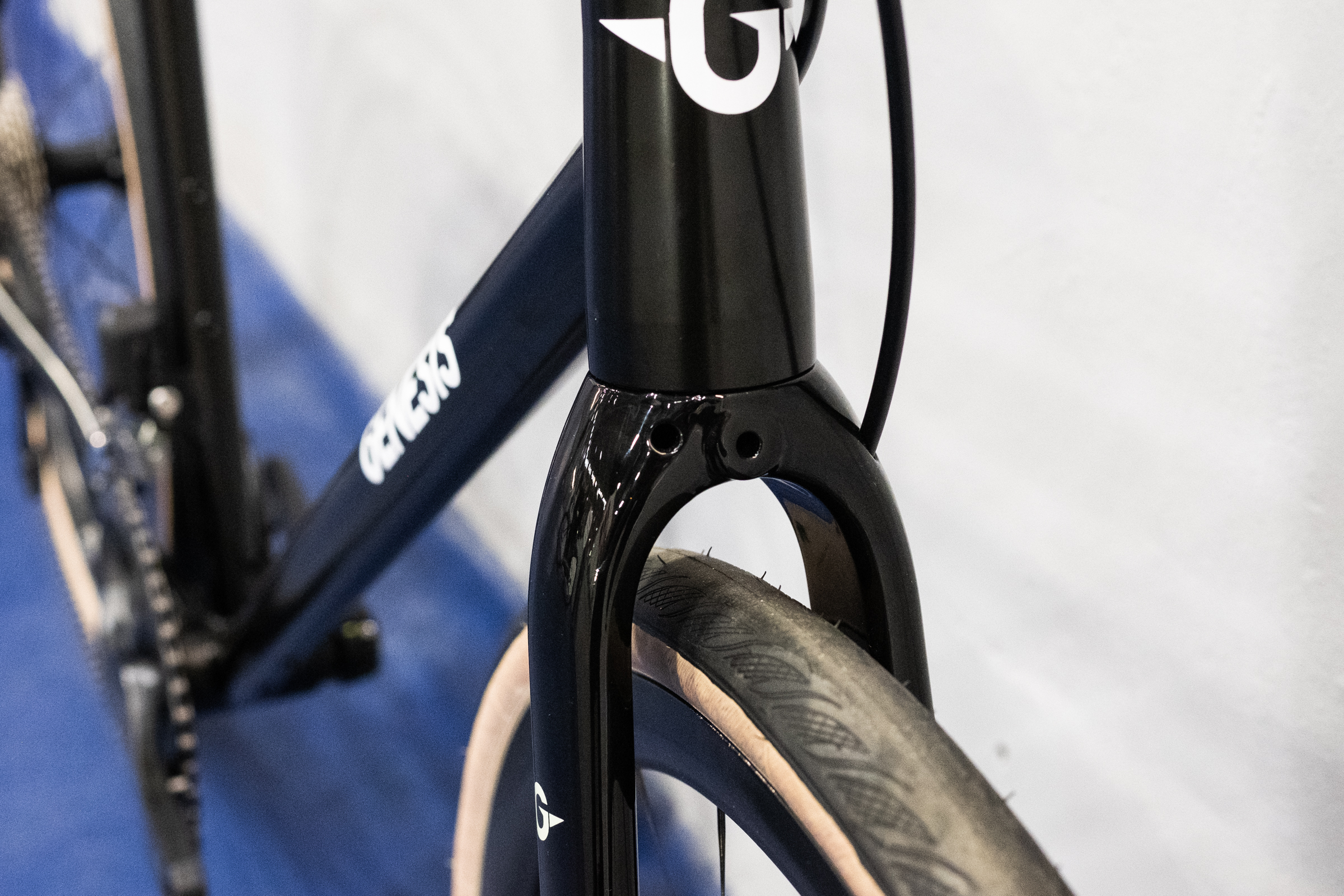
Rather than use a more typical 1 ½in tapered fork, the bike is designed around a 1 ¼in tapered fork. This enables Genesis to use a more slender head tube. “On a road bike, a wider steerer can look a bit overkill – we wanted to keep that really slim aesthetic of a steel bike,” Gardias explains.
The custom fork also features routing for a dynamo cable, and a full complement of mudguard and rack mounts, adding to its do-it-all appeal.
Unexpected compliance challenges for 32in bikes
Genesis is also working on a 32in gravel bike. Jack Luke / Our Media
32in wheels remain a niche choice, but one the cycling industry is taking increasingly seriously.
Genesis remains sceptical about the direction they’ll go in, although it’s a tech trend it wants to better understand, hence commissioning a small fleet of prototype bikes.
“We’re not convinced it’s necessarily something that will [sell in] big volume, but it has some potentials – it’s something we wanted to test,” says Gardias.
“A lot of the focus in the press and in the public sphere has been on 32in mountain bikes – there are some World Cup teams testing them. If they test them and it’s faster, they will ride it – end of.”
Genesis is uncertain if 32in bikes have mainstream appeal for mountain bikers. Jack Luke / Our Media
However, he remains sceptical as to how useful they will be for the majority of riders: “For most people, for a mountain bike, I don’t necessarily think it’s going to be very practical.
“The handling difference and the inertia that’s created with a 32in wheel – plus the weight due to the need to have thicker spokes – for a mountain bike on technical terrain, I think it’s quite potentially limited.”
He sees a more likely future for 32in wheels in gravel: “For something that’s just meant for steamroller-ing 200km in a straight line over rough terrain, actually, [32in wheels] could be something really interesting.”
The prototype bike bears greatest resemblance to Genesis’ Vagabond drop-bar monster cyclocross bike, or the long-discontinued Longitude in a drop-bar format.
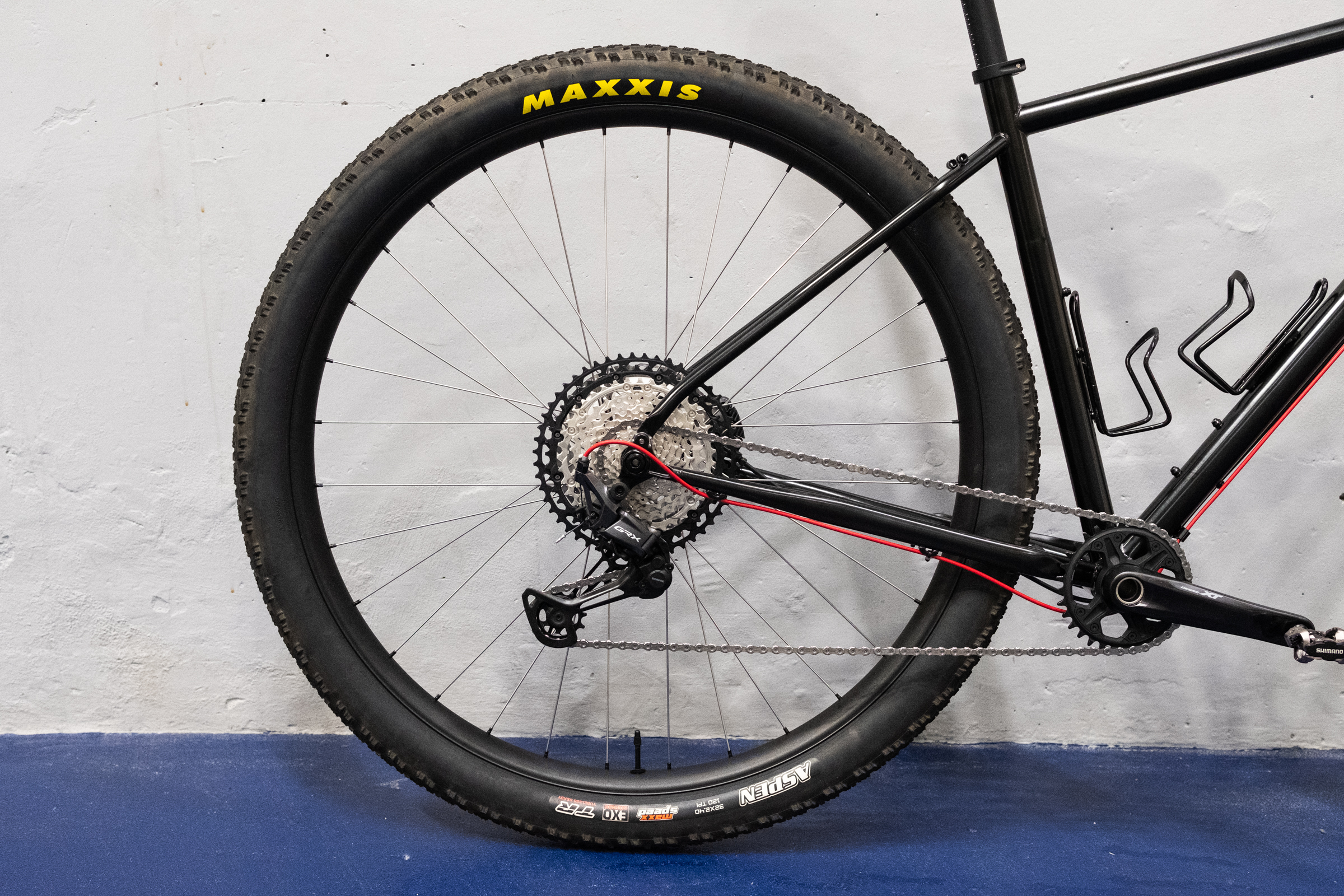
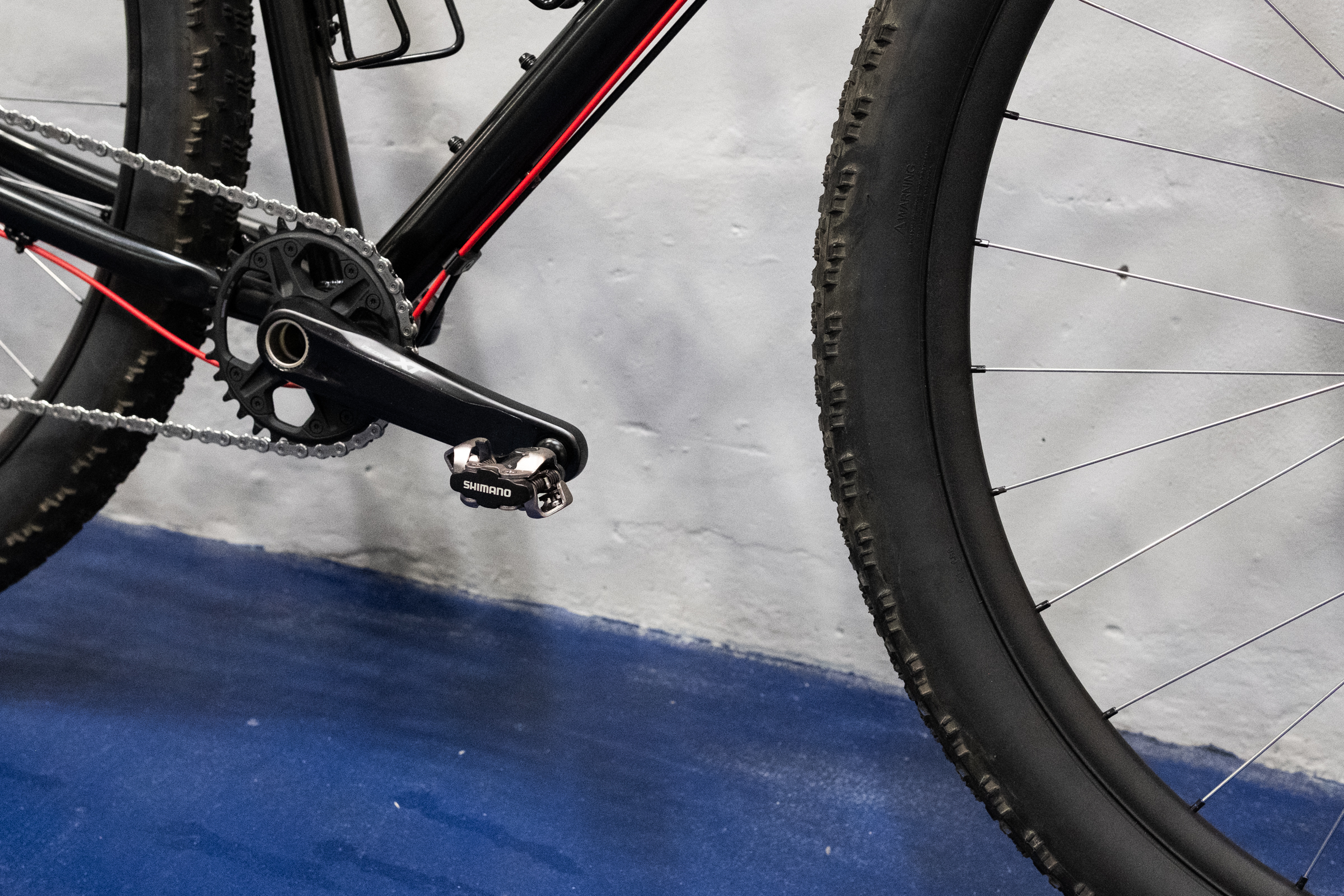
Built with 2.4in-wide Maxxis tyres, a wide-range GRX groupset paired with an XT crankset, and a wide drop bar, this really is a mountain biker’s gravel bike.
Toe overlap presents an issue for 32in bikes. Jack Luke / Our Media
Market trajectory aside, Gardias points to the difficulty in accommodating a wide size range with such big wheels: “The reality is it will never be something for shorter riders – you could maybe start at what we traditionally call a medium – maybe! – but in reality it’s large and extra-large only.”
It’s fair to assume standover height would be the biggest barrier to entry for 32in-curious riders, but front-centre – the distance from the bottom bracket to the front axle – is the bigger issue. “[With 32in wheels], you have to worry about the toe overlap,” Gardias says.
“There’s compliance and regulations for that – you can only make the front-centre so short. That’s one of the reasons that, while tyre size have gone up on regular [700c] gravel bikes, you’ve seen bikes get longer in the front end.
“To have a bigger tyre, you simply have to have that longer bike – you can’t squeeze it into the same space.”
Alloy gravel
Shown alongside the steel bikes was a range of alloy gravel bikes built with a range of GRX, Cues and mixed groupsets.
Gardias explains the prototype bikes, which make extensive use of Madison’s Amplitude components, are “commercially important for our partners”.
“We’ve found that the entry-point for hydraulic disc brakes on a drop-bar bike is really key,” he says.
“At the moment, we start with quite a high-end, high-quality steel frameset. We don’t currently have something that’s a bit more entry-level. That’s what these bikes will solve.”
Pricing, final specs and availability for the bikes are to be confirmed, with Genesis up-front about its desire to gather feedback from dealers and the public before committing them to production.
On Friday, a body that advises US judges revised the document it created to help judges grapple with scientific issues. The move came after a group of Republican state attorneys general wrote a letter to complain about the document’s chapter on climate change, with one of the letter’s criticisms being that it treated human influence on climate as a fact. In response to the letter, the Federal Judicial Center has now deleted the entire chapter.
The Federal Judicial Center has been established by statute as the “research and education agency of the judicial branch of the United States Government.” As part of that role, it prepares documents that can serve as reference material for judges unfamiliar with topics that find their way into the courtroom. Among those projects is the “Reference Manual on Scientific Evidence,” now in its fourth edition. Prepared in collaboration with the National Academies of Science, the document covers the process of science and specific topics that regularly appear before the courts, like statistical techniques, DNA-based identification, and chemical exposures.
When initially released in December, the fourth edition included material on climate change prepared by two authors at Columbia University. But a group of attorneys general from Republican-leaning states objected to this content. At the end of January, they sent a letter to the leadership of the Federal Judicial Center outlining their issues. Many of them focus on the text that accepts the reality of human-driven climate change as a fact.
The House Judiciary Committee wants the US Department of Justice to turn over all its communications with both Apple and Google regarding the companies’ decisions to remove apps that shared information about sightings of US Immigration and Customs Enforcement officers.
Several apps were removed from both Apple’s App Store and Google’s Play Store in October. Politico reported that Raskin has contacted Attorney General Pam Bondi.
“The coercion and censorship campaign, which ultimately targets the users of ICE-monitoring applications, is a clear effort to silence this Administration’s critics and suppress any evidence that would expose the Administration’s lies, including its Orwellian attempts to cover up the murders of Renee and Alex,” Raskin wrote to Bondi.
Say goodbye to AI-assisted mass surveillance… for now.
RING
Ring
Ring’s Super Bowl ad showcased its Search Party feature, scaring the pants off anyone concerned about a mass surveillance state and, well, the state of everything at the moment. Search Party turns individual Ring devices into a surveillance network. Each camera uses AI to detect pets running within its field of view, and feeds are pooled to help identify lost animals. If it can handle pups, why not people? Here’s how to disable it.
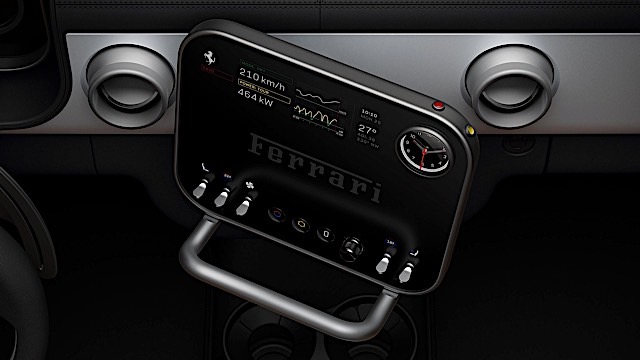
On a lighter note, consumer tech! Ferrari’s new car is no Apple Car. This is the Ferrari Luce (“light” in Italian), the actual name for the EV formerly known as Elettrica, and we (well, Tim Stevens) were lucky enough to get a walkthrough with Sir Jony Ive himself.
That’s because the interior was designed by LoveFrom, founded by Ive after leaving Apple in 2019. OpenAI acquired the design firm for $6.5 billion, and while the company has had numerous projects, the Luce could be its biggest yet. It’s filled with playful touches and a lot of, well, glass. If that tilting screen doesn’t shout iPhone design, what does?
This article originally appeared on Engadget at https://www.engadget.com/general/the-morning-after-doj-may-face-investigation-over-removal-of-ice-agent-tracking-apps-121500737.html?src=rss
Waymo has gotten a step closer to offering robotaxi rides to the public in Nashville, Tennessee. The company the city and making sure they can operate as fully autonomous rides before launching a paid service in the location. Waymo announced that it was planning to bring its robotaxis to Nashville in September 2025, with the intention opening up rides to the public sometime this year. The company has been testing its technology in Nashville since then, but it has yet say when it’ll start accepting bookings for rides.
The company conducts extensive testing in every new city before deploying its robotaxi service. It starts by having safety drivers map the area and then updating its software with information learned from those tests, since each city has its own driving rules and conditions. Despite its testing, Waymo has had to issue a software recall several times in the past after its vehicles malfunctioned when faced with real hazards on the road. Its vehicles were previously seeing hitting gates, chains, telephone poles and stationary vehicles. Most recently, it issued a recall because its robotaxis failed to stop for school buses.
At the moment, Waymo vehicles are already open to the public in Los Angeles, San Francisco, Miami and Phoenix, as well as in Atlanta and Austin through a partnership with Uber. It’s active in a lot more locations, including New York, New Orleans, Seattle and even Tokyo, Japan, but it’s not serving riders in those locations yet. Nashville is in the list of new locations where Waymo is conducting or planning to conduct driverless trials, along with Boston, Dallas, Denver, Detroit, Houston, Las Vegas, Orlando, Sacramento, San Antonio, San Diego, Washington and London, UK.
This article originally appeared on Engadget at https://www.engadget.com/transportation/waymos-vehicles-are-now-fully-driverless-in-nashville-120412343.html?src=rss
The software and technology sectors pose one of the all-time great concentration risks to the speculative-grade credit market, according to Deutsche Bank AG analysts. Bloomberg: They comprise $597 billion and $681 billion of the speculative-grade credit universe, or about 14% and 16% respectively, analysts led by Steve Caprio wrote in a Monday note. Speculative debt spans high-yield debt, leveraged loans and US private credit.
That’s “a meaningful chunk of debt outstanding that risks souring broader sentiment, if software defaults increase,” the analysts wrote, with “a potential impact that would rival that of the Energy sector in 2016.” Unlike in 2016, pressures would likely first emerge in private credit, business development companies and leveraged loans, with the high-yield market weakening later, the analysts added.
The rapid adoption of artificial intelligence tools risks further weighing down multiples and revenues for software-as-a-service firms, while the US Federal Reserve’s hawkish stance since 2022 has pressured cash flows, the analysts wrote. For instance, software payment-in-kind loan usage has risen to 11.3% in BDC portfolios, over 2.5 percentage points higher than the already elevated index average of 8.7%, according to Deutsche. PIK deals typically allow borrowers to pay interest in more debt rather than cash.