
Matthias Clasen shared an update today concerning the state of Scalable Vector Graphics (SVG) within GNOME’s GTK toolkit…
Category Archives: Unfiltered RSS
Alpecin-Premier Tech Team Camp Workout Series Announced
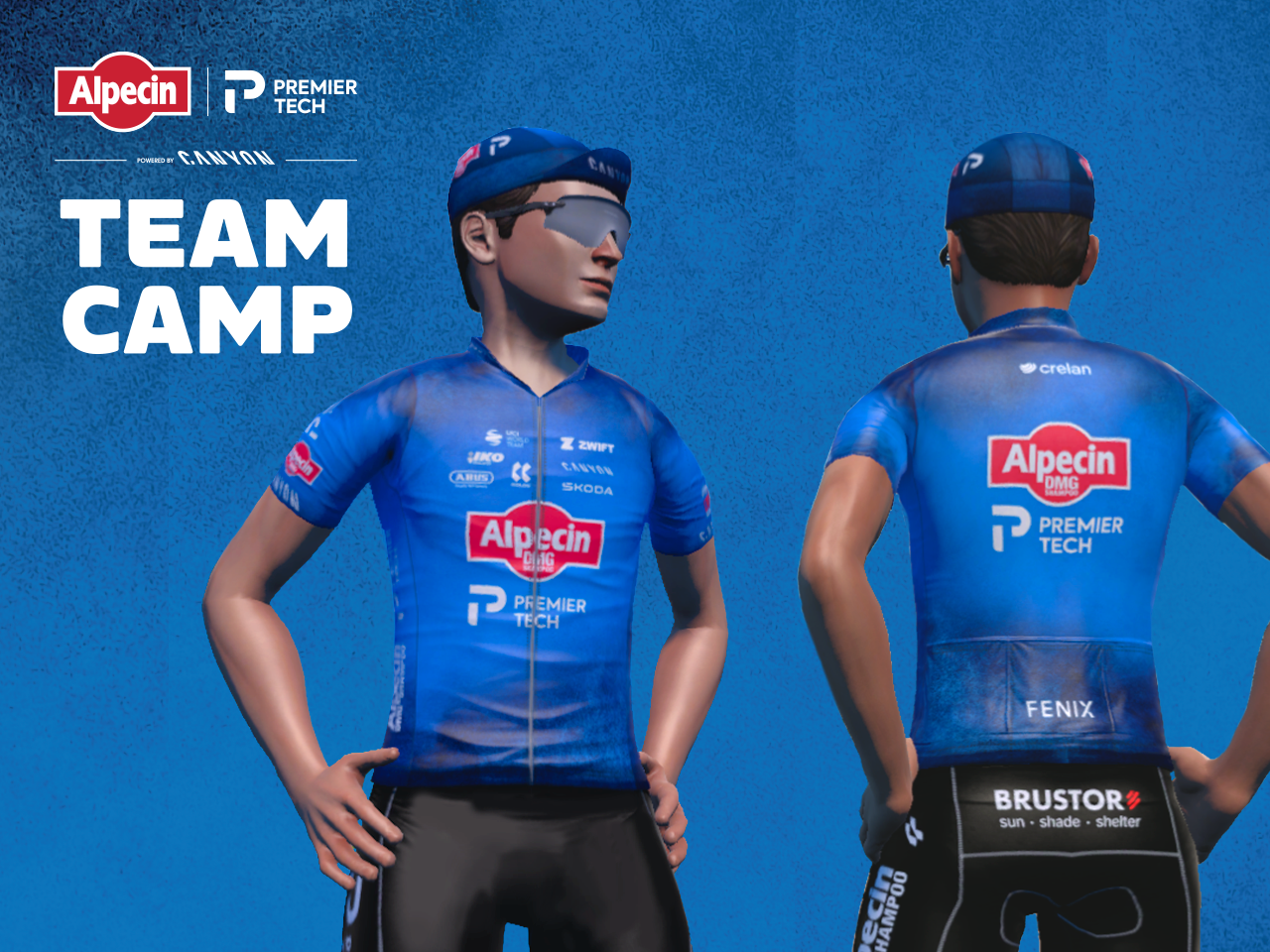
A new Zwift workout series begins on March 2, hosted by WorldTour pros Alpecin-Premier Tech. It’s a 5-week series, with a new workout featured each week to help you build speed and endurance. And you’ll unlock some fun team kit along the way!
Special events in the series feature some of the biggest names in cycling as guest riders, including Jasper Philipsen and Mathieu van der Poel (see event links below).
Workouts and Schedule
Workouts are scheduled every 2 hours daily for the duration of the series, with a make-up week in case you miss a workout.
Workout 1: March 2-8 on Tempus Fugit
This is where it all begins. Build the engine that carries you through every workout in this camp. Steady endurance efforts train your body to produce energy more efficiently, helping you ride longer, go farther, and feel stronger with every pedal stroke. Set the tone today—everything builds from here!
Length: 60 minutes

Special Guest Rider Events:
Join Jasper Philipsen on March 3 @ 2pm UTC/9am ET/6am PT >
Workout 2: March 9-March 15 on Gentil 8
Get ready for a power-focused session built around high-torque intervals and structured recovery. Each effort builds the strength you need for explosive moments, and every recovery helps you reset and go again. This is where raw power starts to show up!
Length: 52 minutes

Special Guest Rider Events:
Join Luca Vergallito on March 9 @ 6pm UTC/1pm ET/10am PT >
Join Noah Ramsay on March 16 @ 3pm UTC/10am ET/7am PT >
Workout 3: March 16-March 22 on Makuri 40
This session sharpens your ability to ride smoothly and confidently at tempo pace. You’ll practice holding a steady rhythm like the peloton, with short pushes toward FTP to prepare when the pace lifts. Calm, controlled—this is where flow meets fitness.
Length: 90 minutes

Special Guest Rider Events:
Join Kaden Groves on March 23 @ 10am UTC/5am ET/2am PT >
Workout 4: March 23-29 on Greatest London Flat
This session builds explosive power and increases anaerobic capacity. You’ll tackle short, high-intensity efforts above threshold, each followed by controlled recovery. The goal is simple: hit every interval with focus and intent. This is race-style power—sharp, repeatable, and decisive.
Length: 78 minutes

Special Guest Rider Events:
Join Mathieu van der Poel on March 30 @ 10am UTC/5am ET/2am PT >
Workout 5: March 30-April 5 on Spinfinity
This final session brings it all together. Two long tempo efforts build strong, sustainable endurance and reward the work you’ve done. Settle into a steady rhythm, stay composed, and finish the Alpecin–Premier Tech Training Camp strong!
Length: 65 minutes

Make-Up Week: April 6-12
How to Sign Up

Sign up at zwift.com/events/tag/alpecinpremiertechteamcamp >
Unlocks
Finish two workouts to unlock the Team Cap. Finish all five and unlock the Team Jersey!
Questions or comments?
Share below!
Uber previews its Dubai air taxi service
Uber is one step closer to going airborne. On Wednesday, the company previewed its air taxi booking service ahead of an expected launch in Dubai later this year. The inaugural Uber Air program will let travelers book Joby Aviation’s electric air taxis through a familiar process in the Uber app.
The experience of booking an air taxi will be much like reserving a four-wheeled Uber. In the app, after entering your destination, Uber Air will appear as an option for eligible routes. The Uber app will book a flight and an Uber Black to pick you up and drop you off at a Joby “vertiport.”

Uber
Joby’s air taxis, built exclusively for city travel, can accommodate up to four passengers and luggage. (Uber says size and weight guidelines will be announced closer to launch.) The interior is about the size of an SUV and has “comfortable seating” with panoramic windows. They can travel up to 200 mph and have a range of up to 100 miles. Four battery packs and a triple-redundant flight computer are onboard for safety purposes.
The air taxis aren’t (yet) autonomous and will each have a human pilot onboard. That would at least suggest high prices. After all, pilots aren’t nearly as cheap as Uber’s legion of independent-contractor drivers. But the company insists its air taxi rides will somehow be around as expensive as an Uber Black trip.

Joby
Dubai is only the beginning of the companies’ plans. The US-based Joby says it’s in the final stage of FAA type certification and hopes to launch service in New York and Los Angeles. Globally, it’s targeting the UK and Japan as well.
As for how realistic a US launch is anytime soon, well, that’s up for debate. On one hand, President Trump signed executive orders last year that would create a pilot program to test such aircraft. But safety and cost considerations may require a grounding of expectations.

Joby
In November, Robert Ditchey, a Los Angeles-based aviation expert and test pilot, told NBC News that he didn’t think air taxi service “was ever going to happen” in American cities. “They’re dangerous,” he warned. “We have had helicopters fail and crash on top of buildings in Los Angeles. We’ve had helicopters fail at takeoff and landing in airports. They’re dangerous not from a fire point of view but in terms of landing on top of people and buildings.” In addition, he warned that air taxis can’t be developed in sufficient numbers to make them economically viable “unless they are subsidized by a government.”
Uber and Joby have partnered since 2019. In 2021, Joby bought the Uber Elevate ride-hailing division, which essentially integrated the companies’ services. Last year, Joby acquired Blade Air Mobility’s passenger business, which could open the door to eventually electrifying Blade’s routes.
The video below shows one of Joby’s air taxis taking a test flight in Dubai.
This article originally appeared on Engadget at https://www.engadget.com/transportation/uber-previews-its-dubai-air-taxi-service-130000603.html?src=rss
Breaking the Monopoly How AMD’s Meta Partnership Reshapes the AI Arms Race
The silicon landscape shifted Tuesday as Meta Platforms announced a gargantuan, multi-year partnership with Advanced Micro Devices (AMD). For years, the artificial intelligence explosion has been synonymous with NVIDIA’s green logo, but the tide is turning. Meta’s commitment to deploy up to 6 gigawatts of AMD-powered infrastructure—a scale equivalent to the power output of six nuclear reactors—is more than just a purchase order; it is a declaration of independence. By weaving AMD’s upcoming MI450 architecture and 6th Gen “Venice” EPYC CPUs into the heart of its personal superintelligence roadmap, Meta is systematically dismantling the NVIDIA stranglehold.
The Strategic Divergence: AMD vs. NVIDIA in the Meta Ecosystem
To understand the magnitude of this deal, one must look at how it differs from Meta’s existing relationship with NVIDIA. Last week, Meta doubled down on NVIDIA’s Blackwell and Rubin platforms in a deal valued at approximately $50 billion. That partnership is a “full-stack” marriage, where Meta buys into NVIDIA’s proprietary vision, including the CUDA software layer and InfiniBand networking. It is the premium, “it just works” option for the most grueling frontier model training, like Llama 4.In contrast, the AMD deal is a co-engineering masterclass. Meta isn’t just buying off-the-shelf parts; they are collaborating on a customized MI450-based GPU optimized specifically for Meta’s unique inference workloads. While NVIDIA provides the “black box” of high-performance computing, AMD is providing the “open toolkit.” This deal centers on the Helios rack-scale architecture, an Open Compute Project (OCP) compliant design that emphasizes modularity and energy efficiency. Where NVIDIA offers a locked ecosystem, AMD offers a collaborative roadmap that allows Meta to vertically integrate its software stack, ROCm, directly into the silicon.

Advancing the AMD Roadmap: From Challenger to Peer
This partnership is the ultimate validation of Lisa Su’s “AI Everywhere” initiative. For years, the critique of AMD was that its hardware was capable, but its software ecosystem was immature. By securing Meta as a lead partner for the MI400 series, AMD has gained a massive live-fire testing ground to refine its software stack.
The deal effectively pulls forward AMD’s transition into the “Tier-1” hyperscaler group. It provides the necessary capital and telemetry data to accelerate the development of unreleased products. Specifically, the MI455X and the upcoming MI500 series will benefit from the architectural feedback generated by Meta’s gigawatt-scale deployment. By the time these chips reach the broader market, they will have been “hardened” by one of the world’s most demanding AI environments, making them far more attractive to other cloud providers who were previously hesitant to stray from the NVIDIA path.
The Art of the Squeeze: Why Two Giants Are Better Than One
The most brilliant aspect of Meta’s strategy is the creation of a perfectly competitive duopoly. By committing tens of billions of dollars to both camps, Mark Zuckerberg has turned the AI chip market into a buyer’s market.
When NVIDIA was the only game in town, they held all the cards—pricing power, allocation priority, and roadmap control. By bringing AMD to parity in its data centers, Meta can now play the two giants against each other. If NVIDIA tries to hike margins on Blackwell, Meta can shift more of its 6-gigawatt expansion toward AMD’s Helios racks. If AMD lags on software optimization, Meta can pivot back to NVIDIA’s “Vera” CPUs. This dual-sourcing strategy is estimated to give Meta the leverage to negotiate prices up to 30% lower than a single-source customer could ever dream of, effectively saving billions in capital expenditure over the next five years.

Unreleased Power: The Impact on MI450 and “Venice”
A significant portion of this deal hinges on hardware that the public hasn’t even touched yet. The AMD Instinct MI450, built on an advanced 3nm process, is the centerpiece. This chip is expected to offer a massive leap in HBM4 memory bandwidth and FP4/FP8 compute performance. Because Meta is a “definition customer,” the MI450 is being tuned to handle the massive transformer-based models that power Instagram and WhatsApp.
Furthermore, the deal secures Meta as the lead customer for the 6th Generation EPYC “Venice” CPUs. These processors are designed to eliminate the “CPU bottleneck” often found in AI clusters, ensuring that the GPUs are never waiting for data. The synergy between the Venice CPUs and the MI450 GPUs, linked by Infinity Fabric, creates a unified compute fabric that NVIDIA’s proprietary NVLink struggles to match in terms of open-standard flexibility.
The Responsiveness Gap: Why Meta is Looking Elsewhere
There is a growing sentiment in the industry that NVIDIA has become a victim of its own success. As the undisputed king of AI, NVIDIA has earned a reputation for being “difficult” to work with—dictating terms and forcing adoption of its entire hardware/software stack.
Meta, which prides itself on its Open Compute Project heritage, finds this “walled garden” approach restrictive. AMD, in its underdog role, has been far more willing to listen. AMD’s engineers have worked side-by-side with Meta to co-develop the Helios rack and optimize the ROCm stack for Meta’s environment. This partnership sends a clear signal to Santa Clara: if NVIDIA does not become more responsive to customer needs and more flexible with its licensing and integration, it faces total displacement in the world’s largest data centers. The threat of losing a 6-gigawatt customer is the only thing powerful enough to force NVIDIA to lower its barriers.

Wrapping Up
The AMD-Meta partnership is a watershed moment for the technology industry. It effectively ends the era of the AI monopoly and ushers in an age of strategic multi-sourcing. For AMD, it provides the scale and validation needed to compete at the absolute highest level of the data center. For Meta, it provides the economic leverage to fuel its “personal superintelligence” vision without being held hostage by a single supplier’s pricing. As the first gigawatts of MI450-powered servers go online, the industry will be watching closely. If AMD can match NVIDIA’s performance at scale, the green giant may finally have to start playing by someone else’s rules.
Does your freehub pickup leave you wanting? Halo has the answer
Halo’s new Mantadrive freehub offers almost instantaneous pickup.
Halo initially announced the Mantadrive last year, but the COREbike show this week was the first time we’ve seen it up-close.
It is being offered in an SS (singlespeed) version designed for dirt-jump bikes and BMX, although Halo says it is developing an option for road and gravel, too.
Near-instant engagement
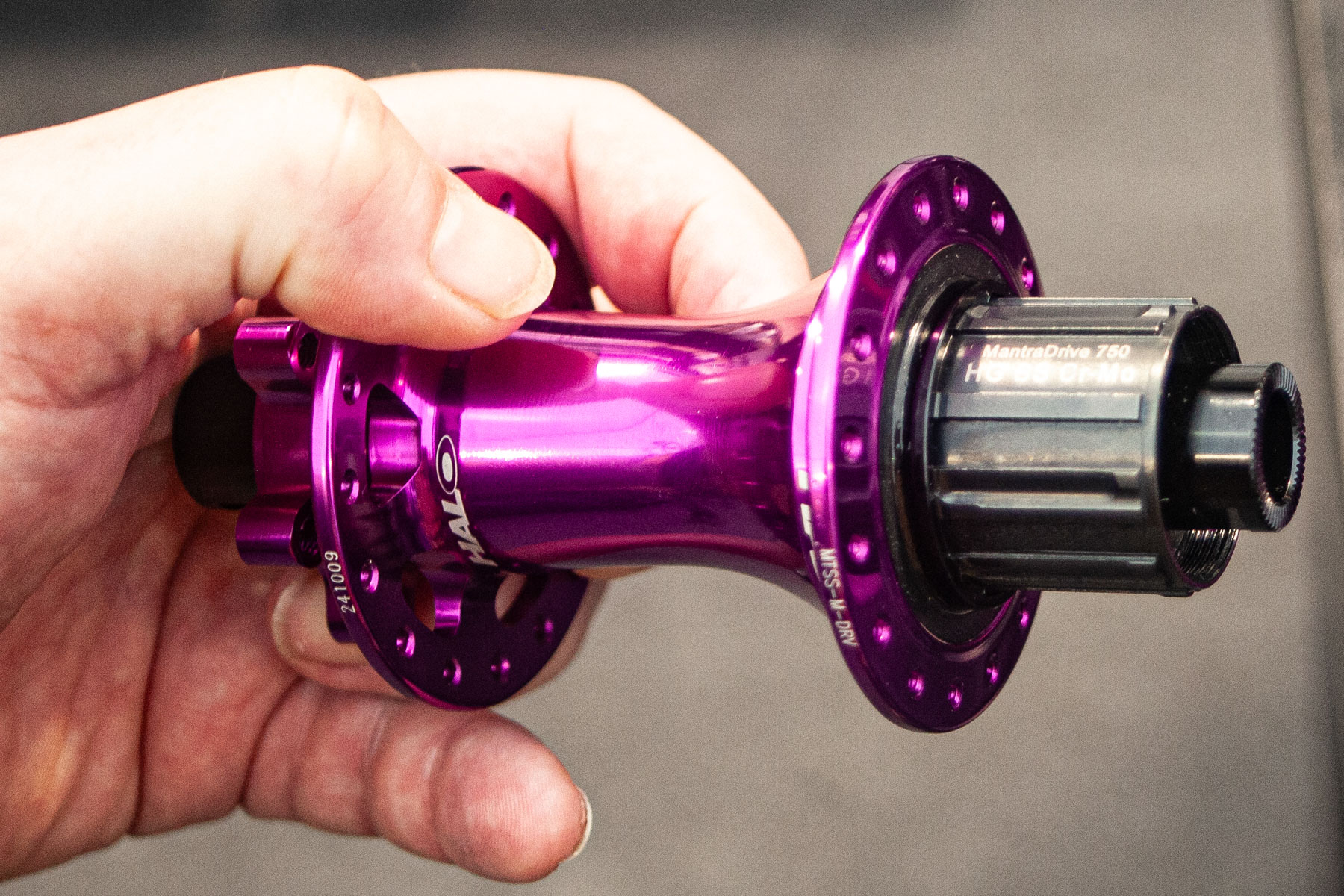
Halo already had one of the toughest and fastest freehubs on the market with the Supadrive. That hub’s combination of three pawls with 12 micro teeth on each pawl creates a fast engagement that Halo claims is more reliable and tougher than standard freehub designs.
Halo has upped the game with the new Mantadrive, though. The 750 Mantadrive uses five pawls on a 150-point engagement drive ring (5×150 = 750). The combination creates a near-instant 2.4-degree angle of engagement.
Halo tells us the new system differs from traditional freehubs in that the leaf-sprung ‘pawls’ have a different profile and feature seven machined ‘teeth’. Halo claims those, in combination with the 150-tooth ring, make missed engagements a thing of the past.
That said, if you’re not a fan of noisy freehubs, it’d be best to avoid the Mantadrive – its sound has been described as akin to a jet engine.
The engagement angle is one of the shortest we’ve seen on any hub system, only outdone by Industry Nine’s Hydra 2 with its 870 points of engagement and Onyx’s Vesper with its instant-engagement sprag clutch system.
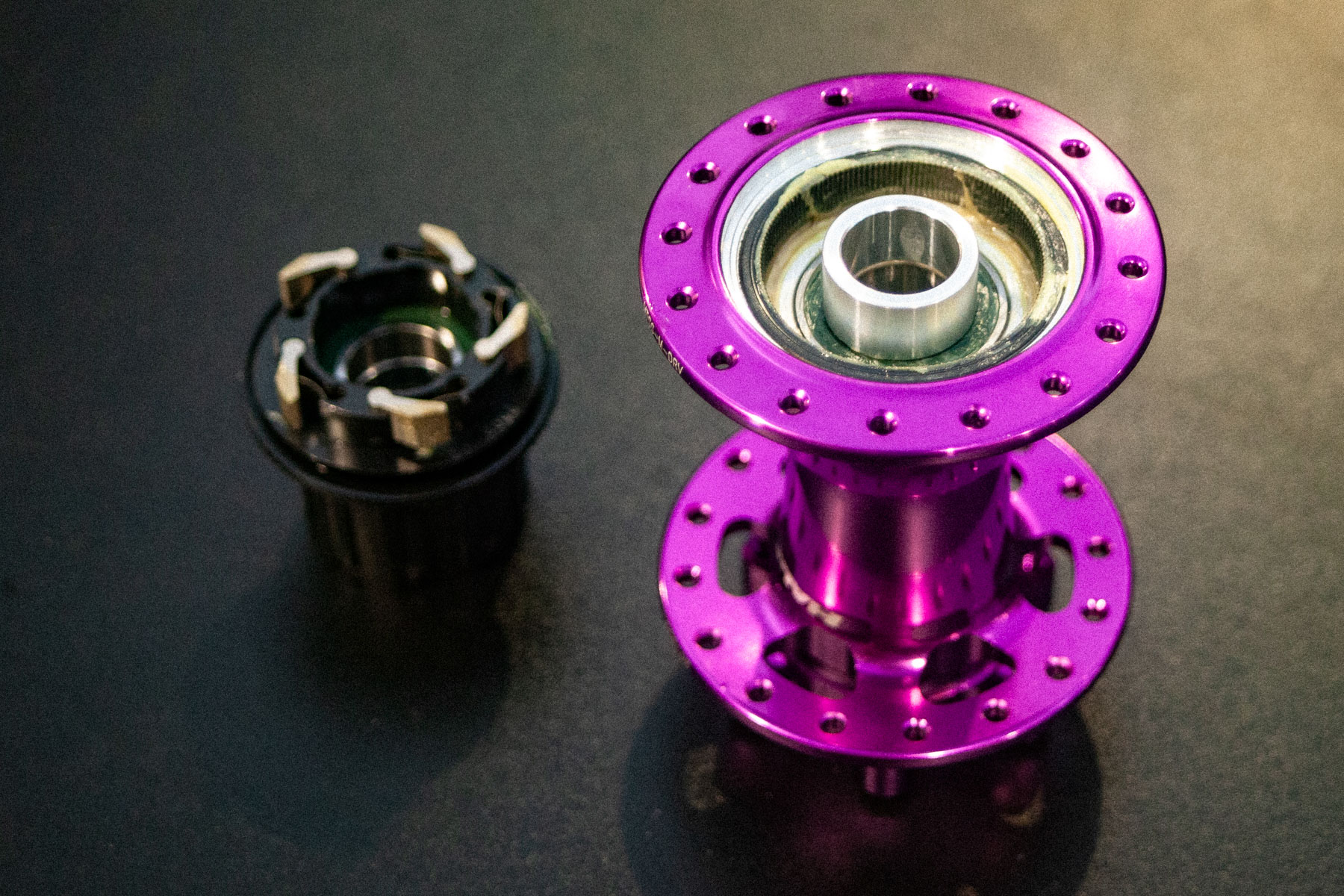
According to Halo, the Mantadrive also has higher durability, especially in high-torque situations.
The toughness is further enhanced by using a tough Cro-mo axle and freehub.
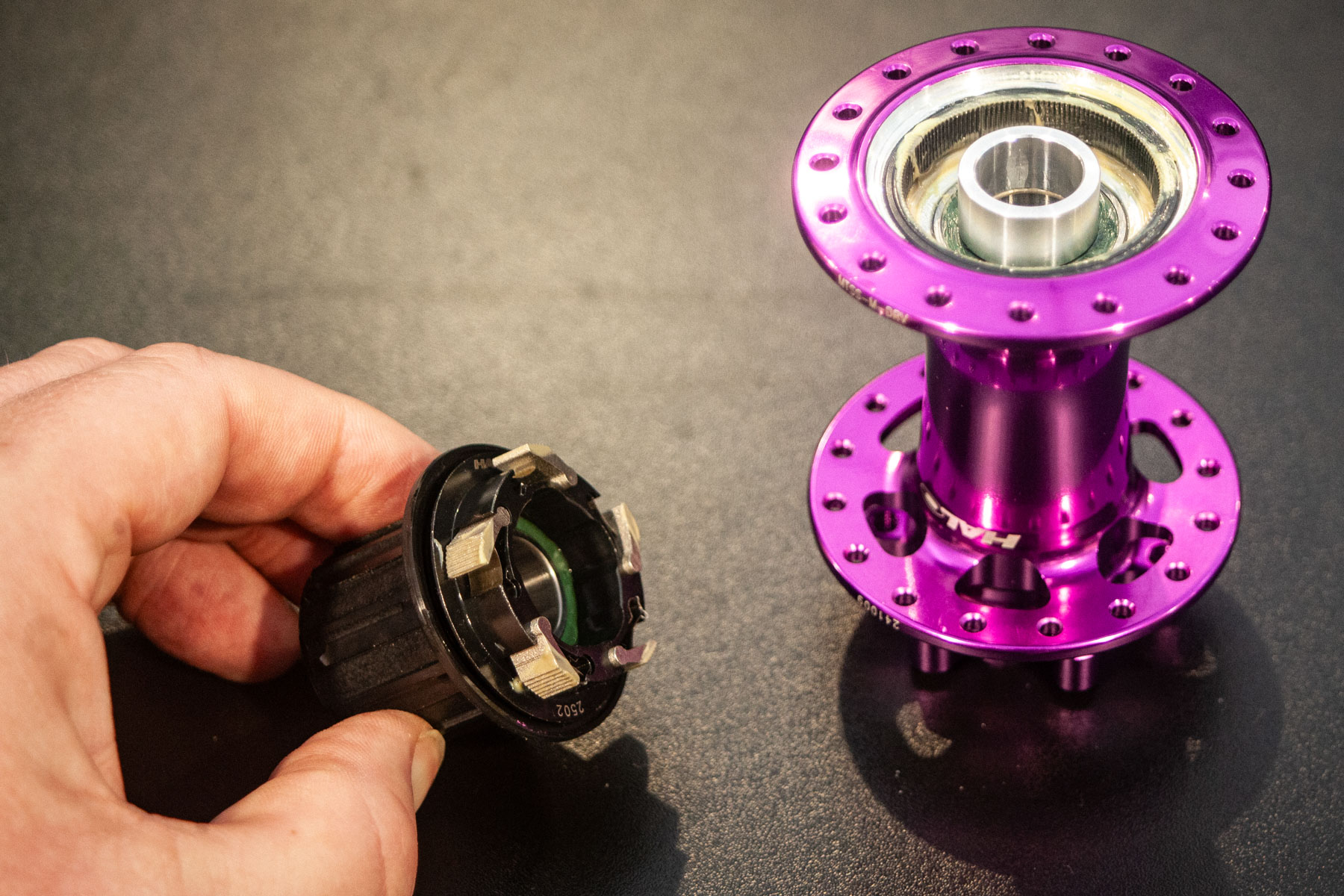
Halo claims the almost-instant engagement is perfect for testing mountain bike applications and dirt jumpers thanks to the near-immediate reaction to pedal inputs that’s ideal for navigating obstacles and quick accelerations.
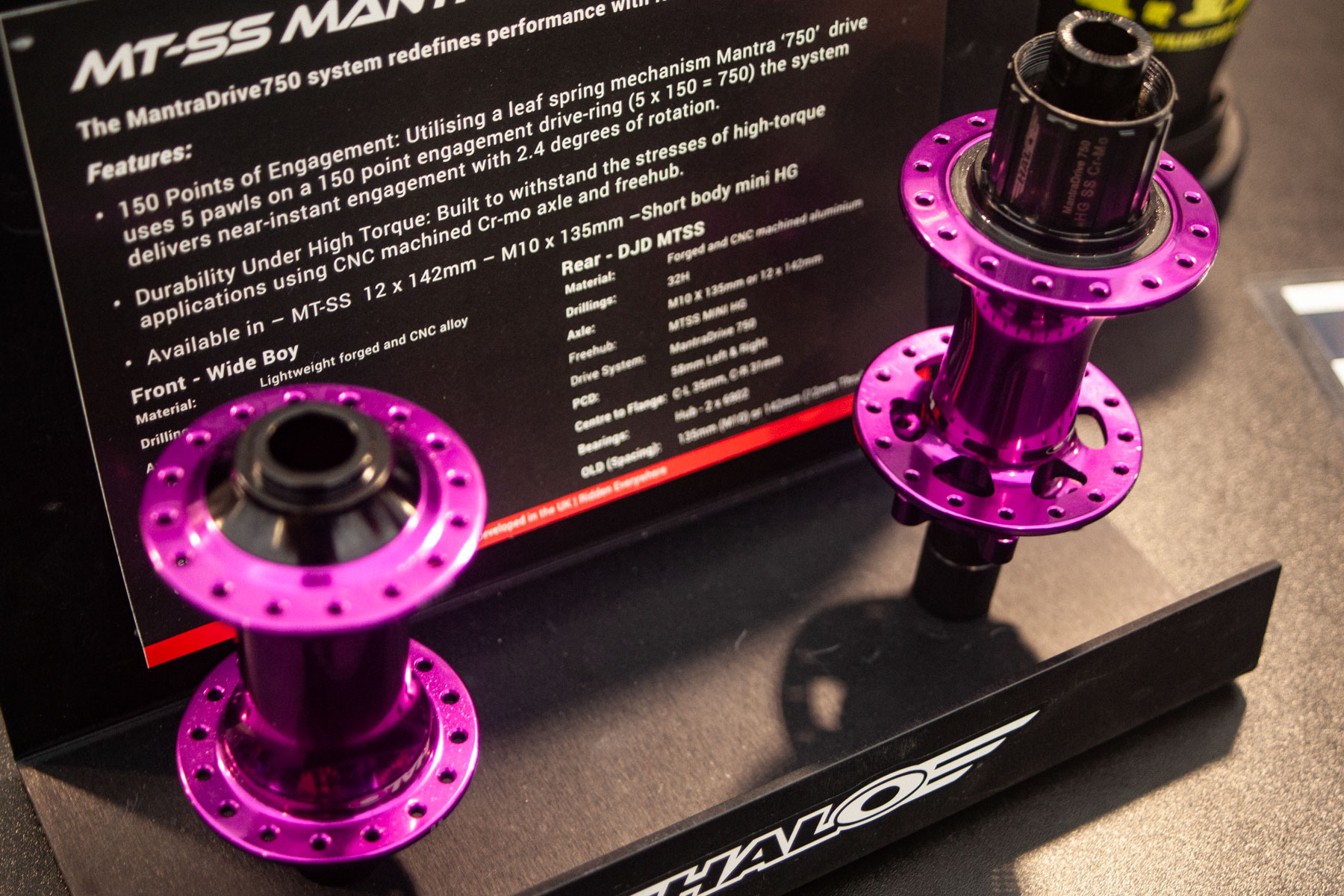
The rear hub comes in Boost, 12x142mm and M10x135mm versions, making it compatible with plenty of older frame standards. More options are on the way, including 148/150/157mm widths. There will be mountain bike versions with Boost in XD and HG, and microspline.
Halo says it will also offer lightened road and gravel versions.
The Mantadrive hubset is priced at £299.99 for this limited-edition purple pair, and from £190 to £220 for the rear hub only, depending on specification.
HP Says Memory’s Contribution To PC Costs Just Doubled To 35%
HP has revealed that memory now accounts for 35% of the cost of materials it needs to build a PC, up from between 15 and 18% last quarter. And the company expects RAM’s contribution will rise through the year. From a report: Speaking on the company’s Q1 2026 earnings call, interim CEO Bruce Broussard said the company has secured long-term supply agreements for the year and also “qualified new suppliers [and] built in strategic inventory positions for key platforms and cut the time to qualify new material in half to accelerate our product configuration changes.”
That sounds a lot like HP Inc is signing up new suppliers at a brisk pace. Broussard said the company has also “expanded lower-cost sourcing across our commodity basket, lowering logistics costs with agile end-to-end planning processes.” The company is using its internal AI initiatives to power those new processes. The company is also “configuring our products and shaping demand to align the supply we have with our customer needs” and “taking targeted pricing actions to offset the remaining cost impact in close partnership with both our channel and direct customers.”


Read more of this story at Slashdot.
Honor says its 4.8mm thick MagicPad 4 is the world’s slimmest Android tablet
Ahead of a full release at Mobile World Conference (MWC), Honor has teased the MagicPad 4 that it calls the world’s thinnest Android tablet. The new model is just 4.8mm thick (not counting that camera bump), a full millimeter thinner than the MagicPad 3 and slightly less than the 5.1mm iPad Pro and Samsung Galaxy Tab S11, the company revealed.
On top of being thinner, the MagicPad 4 has a new 12.3-inch 165Hz OLED display. While slightly smaller than before, it should be considerably better than the LCD display on the previous model. The new model weighs 145 grams less than before at 450g thanks to that screen and the slightly smaller 10,100 mAh battery (with a 66W fast charger in the box).
The new tablet is powered by Qualcomm’s Snapdragon 8 Gen 5 chipset and comes with up to 16GB of RAM and 512GB of storage. It’s equipped with 13MP rear and 9MP front cameras, along with eight speakers for spatial audio. The MagicPad 4 will run MagicOS 10, Honor’s flavor of Android 16. There’s no word on pricing or availability yet, but we’ll likely learn more at the company’s press conference on Sunday — along with the company’s weird robot revealed yesterday.
This article originally appeared on Engadget at https://www.engadget.com/mobile/tablets/honor-says-its-48mm-thick-magicpad-4-is-the-worlds-slimmest-android-tablet-114346615.html?src=rss
Systing 1.0 Released For Rust-Based eBPF-Based Tracing Tool Leveraging AI
Josef Bacik, of Btrfs notoriety before leaving Meta and stepping back from kernel development last year, announced the release of Systing 1.0. Systing is a newer eBPF-tracing tool for Linux complete with AI integration…
OpenZFS 2.4.1 Released With Linux 6.19 Compatibility, Many Fixes
Following the big OpenZFS 2.4 release back in December, OpenZFS 2.4.1 was released overnight to ship support for the latest Linux 6.19 stable kernel plus a variety of different bug fixes…
FreeRDP 3.23 Addresses 11 CVEs, Improved SDL Client
For those making use of the open-source FreeRDP project for your Remote Desktop Protocol (RDP) needs, FreeRDP 3.23 is out today with 11 CVEs addressed in taking care of various security-related issues that have been uncovered…
xAI’s trade secret lawsuit against OpenAI has been dismissed
OpenAI has successfully convinced the court to dismiss the lawsuit filed by Elon Musk’s xAI, accusing the company of stealing its trade secrets. In her decision, US District Judge Rita F. Lin wrote that xAI’s complaint “does not point to any misconduct by OpenAI” and instead attributes all listed misconducts to its eight former employees who “ left for OpenAI at around the same time.”
Lin said that xAI accused two of its former employees of stealing its source code before leaving at a time when they were already speaking to an OpenAI recruiter. However, the company didn’t say if the recruiter told those former employees to do so. xAI’s lawsuit also accuses two other former employees of keeping their work chats on their devices even after leaving, another of refusing to provide certifications related to confidential information after his departure, and another of unsuccessfully trying to access xAI hiring and datacenter optimization information when he was already working for OpenAI.
“Notably absent are allegations about the conduct of OpenAI itself,” the judge noted. xAI didn’t include any information that directly accuses OpenAI of making those employees steal its trade secrets. It also didn’t include allegations that those former employees used any stolen trade secrets after they were already working for OpenAI. To be precise, OpenAI’s motion for dismissal was granted with leave to amend, so the lawsuit may not be completely over just yet. That means xAI can still file an amended complaint addressing what the judge wrote in her decision until March 17, 2026.
OpenAI and xAI have a longstanding feud, and this is just one of the several lawsuits between the two companies. In fact, Musk has an ongoing complaint against OpenAI and Microsoft, accusing the former of violating its nonprofit status. Musk, who was an early funder of OpenAI, is now asking the company for $79 billion to $134 billion in damages from “wrongful gains.”
This article originally appeared on Engadget at https://www.engadget.com/ai/xais-trade-secret-lawsuit-against-openai-has-been-dismissed-101912599.html?src=rss
Free Software and Linux Foundation Veteran Named OIN Patent Ambassador
As OIN 2.0 changes its funding and governance model, Shane Coughlan steps in as global ambassador to sell the shift to enterprises without alienating free software critics.
The post Free Software and Linux Foundation Veteran Named OIN Patent Ambassador appeared first on FOSS Force.
‘Using PRIMM to teach programming’: A new short course for educators
At the Raspberry Pi Foundation, we believe that learning to program equips young people with the knowledge and skills they need to thrive in an increasingly digital world. For many educators, teaching programming effectively can be challenging, particularly when their learners are at different stages in their programming journey. Ask learners to write code too early, and they might struggle or feel intimidated. Rely too heavily on step-by-step instructions, and you limit learners’ chances to explore ideas or develop deeper understanding.

The PRIMM framework — Predict, Run, Investigate, Modify, Make — provides educators with a structure for teaching programming. This research-informed teaching approach balances support with independence and helps learners build their understanding before they write their own code, whatever their starting point.
To help educators use this approach confidently, we have launched a new short online course, Using PRIMM to teach programming, which is available on our new Training Hub platform for free.
What is the course about?
This practical, self-paced course gives educators the knowledge they need to use the PRIMM approach to design and adapt programming activities to suit their learners.
The course takes 1–2 hours to complete, and we have designed it for educators working in formal or non-formal learning environments around the world, using any block-based or text-based programming language. All you need is some experience of creating and adapting simple programs.
The course starts with considering the five stages of PRIMM, when and why to use each stage, and how they work together to support learning. It covers how PRIMM aligns with key teaching principles such as scaffolding, managing cognitive load, and progression, and examines how the approach supports formative assessment by making learners’ thinking — and any misunderstandings — more visible.
Active, social learning
Although pedagogy forms the core of this course, we have deliberately avoided a theory-heavy approach. Instead, the course is designed to help you learn through hands-on activities. By reflecting, taking part in discussions with other computing educators, and completing practical tasks, you will explore how PRIMM works in real teaching contexts.

After an introduction to the core ideas of PRIMM, you will design a new programming activity, or adapt an existing one, using the PRIMM structure. This will support you to think carefully about what your learners know and can do, likely misconceptions, and how each stage of PRIMM can be used effectively, including when your learners have varied learning needs and levels of programming experience.
With its emphasis on activity design, the course will support you to develop resources you can use and keep adapting in your own setting. By the end, you will have a complete PRIMM activity designed specifically for your learners, and a clear sense of how to teach programming in a structured and supportive way.
Join the course on the Training Hub
Using PRIMM to teach programming is available on our new Training Hub, where we offer all our professional development courses for free. The Training Hub offers flexible, reflective learning experiences across a range of topics, helping you build your subject knowledge and bring research-informed teaching approaches into your day-to-day practice.
Whether you are an experienced computing teacher, a volunteer educator, or a parent looking to support their child’s learning, we invite you to join us there.
The post ‘Using PRIMM to teach programming’: A new short course for educators appeared first on Raspberry Pi Foundation.
LLVM/Clang 22 Compiler Officially Released With Many Improvements
LLVM/Clang 22.1 was released overnight as the first stable release of the LLVM 22 series. This is a nice, feature-packaged half-year update to this prominent open-source compiler stack with many great refinements…
Apple introduces age verification for apps in Utah, Louisiana and Australia
Now that Apple has started blocking users under 18 in certain regions from downloading apps, the company has introduced new age verification tools. Those will help developers “meet their age assurance obligations under upcoming US and regional laws, including in Brazil, Australia, Singapore, Utah and Louisiana,” the company said in a news release on its Developer site.
As of February 24, 2026, users in Australia, Brazil and Singapore won’t be able to download apps rated 18+ unless their age is confirmed through “reasonable methods.” Apple noted that any apps distributed in Brazil that are declared to contain loot boxes will be updated to 18+. While the App Store can perform those checks automatically, “developers may have separate obligations to independently confirm that their users are adults,” Apple wrote. For that, developers can employ the company’s Declared Age Range API (on iOS, iPadOS and macOS) to get “helpful signals” about a user’s age.
In Utah as of May 6, 2026 and Louisiana on July 1, 2026, “age categories will be shared with the developer’s app when requested through the Declared Age Range API.” That API will also provide “new signals,” like whether age-related regulatory requirements apply to the user and if the user must share their age range. “The API will also let you know if you need to get a parent or guardian’s permission for significant app updates for a child,” Apple says.
Under Utah’s new law, users must be over 18 to make a new account with an app store, while underage uses will need to link their account to a parent’s in order to get permission to use certain apps. Louisiana and Texas also passed similar laws and California plans to enact age-based rules for app stores in 2027.
Those rules are designed to protect children from predators, financial harm and other problems. However, critics have described the laws as blunt tools that harm privacy and internet anonymity. “A poorly designed system might store this personal data, and even correlate it to the online content that we look at,” the Electronic Frontier Foundation notes. “In the hands of an adversary, and cross-referenced to other readily available information, this information can expose intimate details about us.”
This article originally appeared on Engadget at https://www.engadget.com/apps/apple-introduces-age-verification-for-apps-in-utah-louisiana-and-australia-080855449.html?src=rss
Apple’s Touch-Screen MacBook Pro To Have Dynamic Island, New Interface
Apple’s forthcoming touch-screen MacBook Pro models — the company’s first-ever laptops to support touch input — will feature the iPhone’s Dynamic Island at the center top of their OLED displays and a new interface that dynamically adjusts between touch and point-and-click controls, according to a Bloomberg report citing people familiar with the plans.
The 14-inch and 16-inch models, code-named K114 and K116, are slated for release toward the end of 2026 and won’t be part of Apple’s product announcements in the first week of March. The redesigned interface brings up a contextual menu surrounding a user’s finger when they touch a button or control, and enlarges menu bar items when tapped, adapting the available controls based on whether the input is touch or click.
Apple does not plan to position the machines as iPad replacements or describe them as touch-first; the physical design retains the full keyboard and large trackpad of the current MacBook Pro. Last year’s Liquid Glass redesign in macOS Tahoe, which added more padding around icons and touch-optimized sliders in the control center, was partly groundwork for this shift.


Read more of this story at Slashdot.
Atom E3950 Powers WINSYSTEMS SBC-ZETA-3950 Rugged Mini SBC
WINSYSTEMS’ SBC-ZETA-3950 is a rugged mini single board computer based on the Intel Atom Apollo Lake E3950, designed for industrial and space-constrained applications. It combines a COM Express Mini Type 10 module with a rugged carrier board in an 84 x 55 mm form factor. The SBC-ZETA-3950 uses the quad-core Intel Atom E3950 processor running […]
Wine 11.3 Released with Mono 11 and VKD3D 1.19 Upgrade
Wine 11.3 brings Mono 11.0, VKD3D 1.19, better DirectSound, and 30 bug fixes to improve how Windows apps and games run on Linux.
Rogue devs of sideloaded Android apps beg for freedom from Google’s verification regime
37 groups urge the company to drop ID checks for apps distributed outside PlaySoon, developers who just want to make Android apps for sideloading will have to register with Google. Thirty-seven technology companies, nonprofits, and civil society groups think that the Chocolate Factory should keep its nose out of third-party app stores and have asked its leadership to reconsider.…
The US Had a Big Battery Boom Last Year
The United States installed a record 57 gigawatt hours of new battery storage on its electric grids in 2025, a nearly 30% increase over the prior year that arrived even as the Trump administration cut tax credits for wind and solar in last summer’s One Big Beautiful Bill.
The figures come from a Solar Energy Industries Association report published Monday, which also projects the market will grow another 21% this year by adding 70 gigawatt hours in 2026 alone. Battery tax credits themselves survived the legislation largely intact, and the majority of last year’s new installations were stand-alone systems not tied to specific solar projects.
In Texas, solar met more than 15% of electricity demand throughout the summer and beat out coal for the first time, and the SEIA report predicts the state will overtake California this year in total deployed storage. Supply chain restrictions reinforced by the bill and project cancellations could slow the pipeline this year, the report cautions.


Read more of this story at Slashdot.