Everything announced at Samsung Unpacked: Galaxy S26 lineup and more

Mobile World Congress is right around the corner, but Samsung got out ahead of many rivals that will be showing off new handsets at that event by running the latest edition of Unpacked on Wednesday. The company took the opportunity to reveal the Galaxy S26 lineup, which includes the base S26, the S26+ and the S26 Ultra. We’ve got some hands-on impressions of all three handsets as well.

In addition to those, Samsung announced the Galaxy Buds 4 along with (you guessed it) some AI updates. Here’s a look at everything Samsung announced at the latest Unpacked:

Galaxy S26 and S26+ 
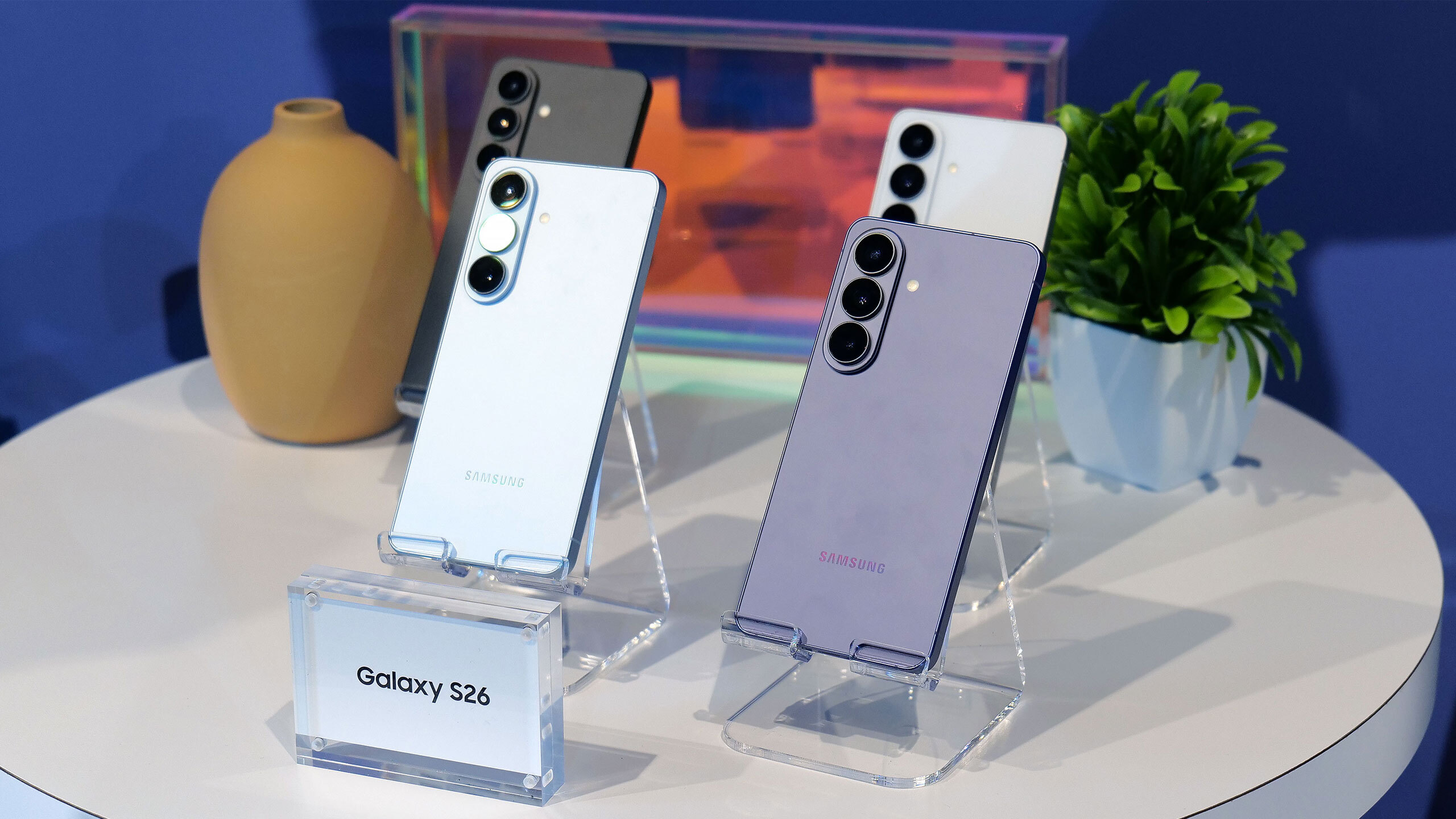
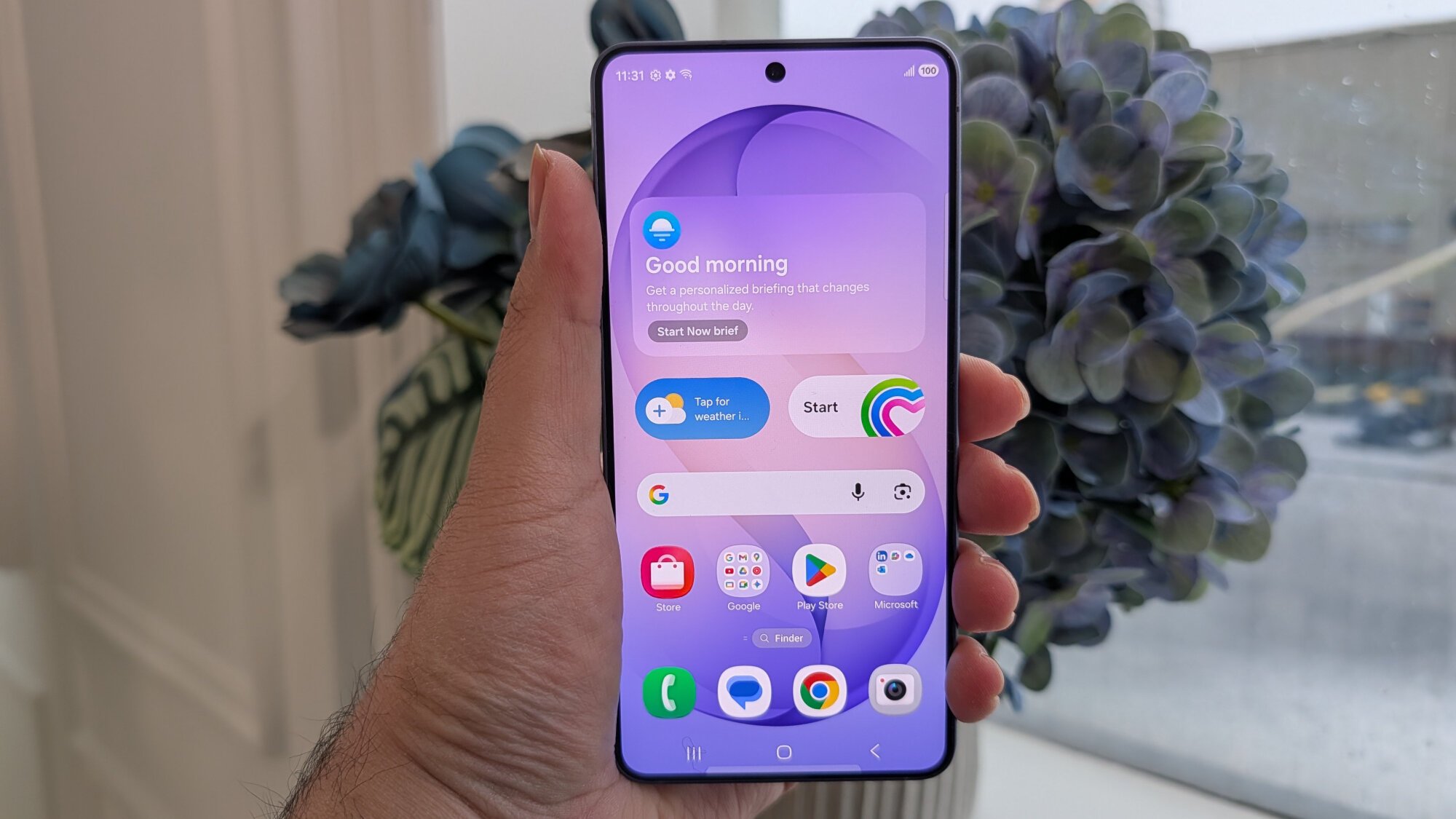
Samsung Galaxy S26
Sam Rutherford for Engadget

New-ish year, new Samsung phones. Let’s deal with the out-and-out bad news first. The S26 and S26+ are each $100 more expensive than their predecessors (the RAM shortage isn’t exactly helping to keep prices down). They start at $900 and $1,100, respectively, for variants with 256GB of storage.

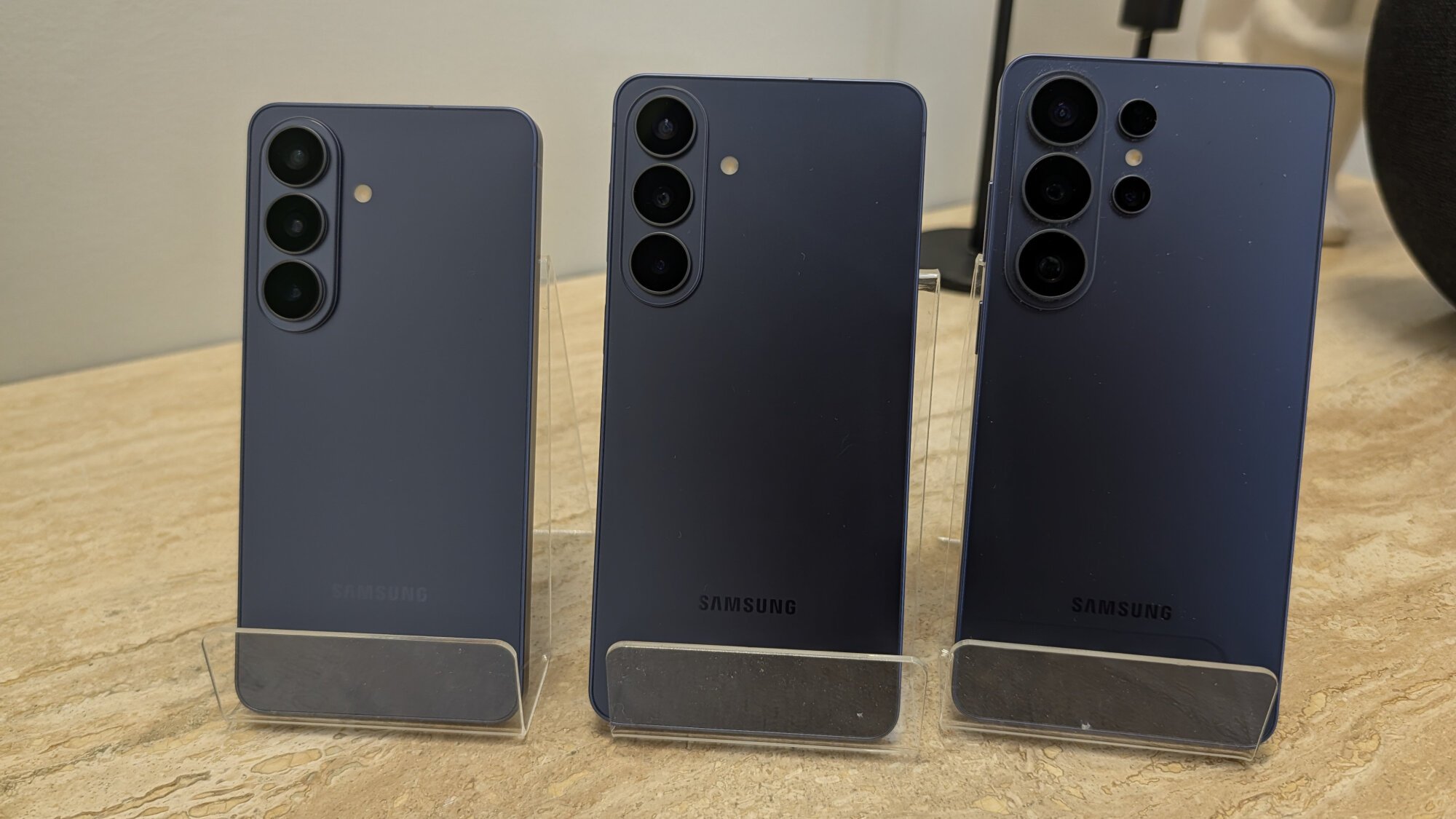
Samsung has tweaked the design a bit this time by rounding the corners to align them more with the S26 Ultra’s look. The base model has a slightly larger display than the S25 at 6.3 inches, though the S26+ still  has a 6.7-inch screen (albeit with a higher resolution than the S26 can handle). The S26 has a larger battery capacity than the S25 too at 4,300mAh.

In North America, China and Japan, Samsung is sticking with Qualcomm chips rather than using its own Exynos 2600. If you pick up an S26 or S26+ in those markets, it will run on the Snapdragon 8 Elite Gen 5 chipset.

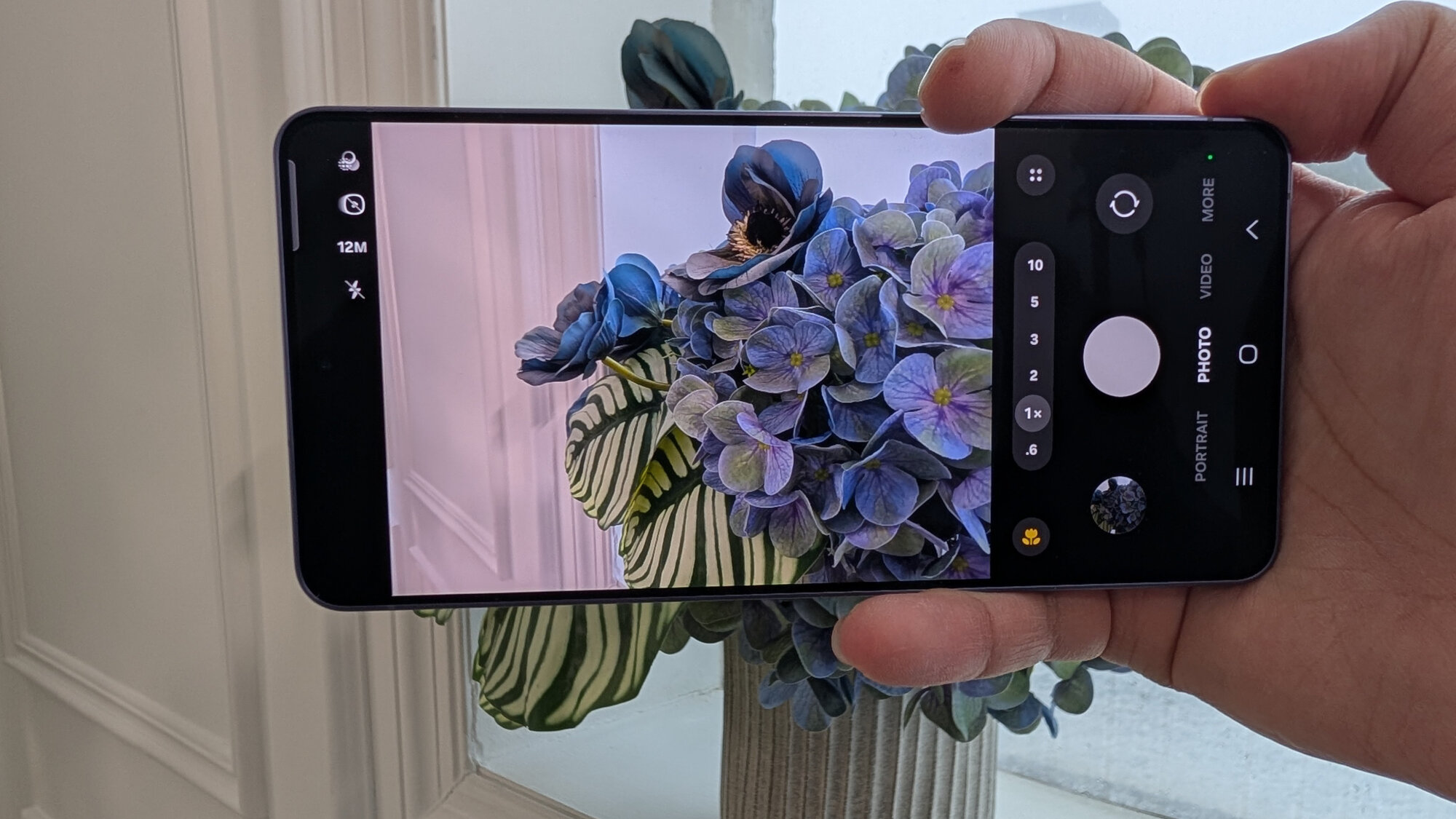
The camera modules are the same as last year, but Samsung is aiming to supercharge them with upgrades elsewhere, such as ProScaler image upscaling and an MDNIe chip that’s said to greatly improve color precision. There’s also a video stabilization feature that tries to keep the horizon level while you’re following a moving person or pet, which sounds useful for action shots. The new Object Aware Engine is said to better render skin tones and hair textures to make your selfies look better. Samsung has reworked some AI features too, such as making Now Brief and Auto Eraser compatible with more apps.

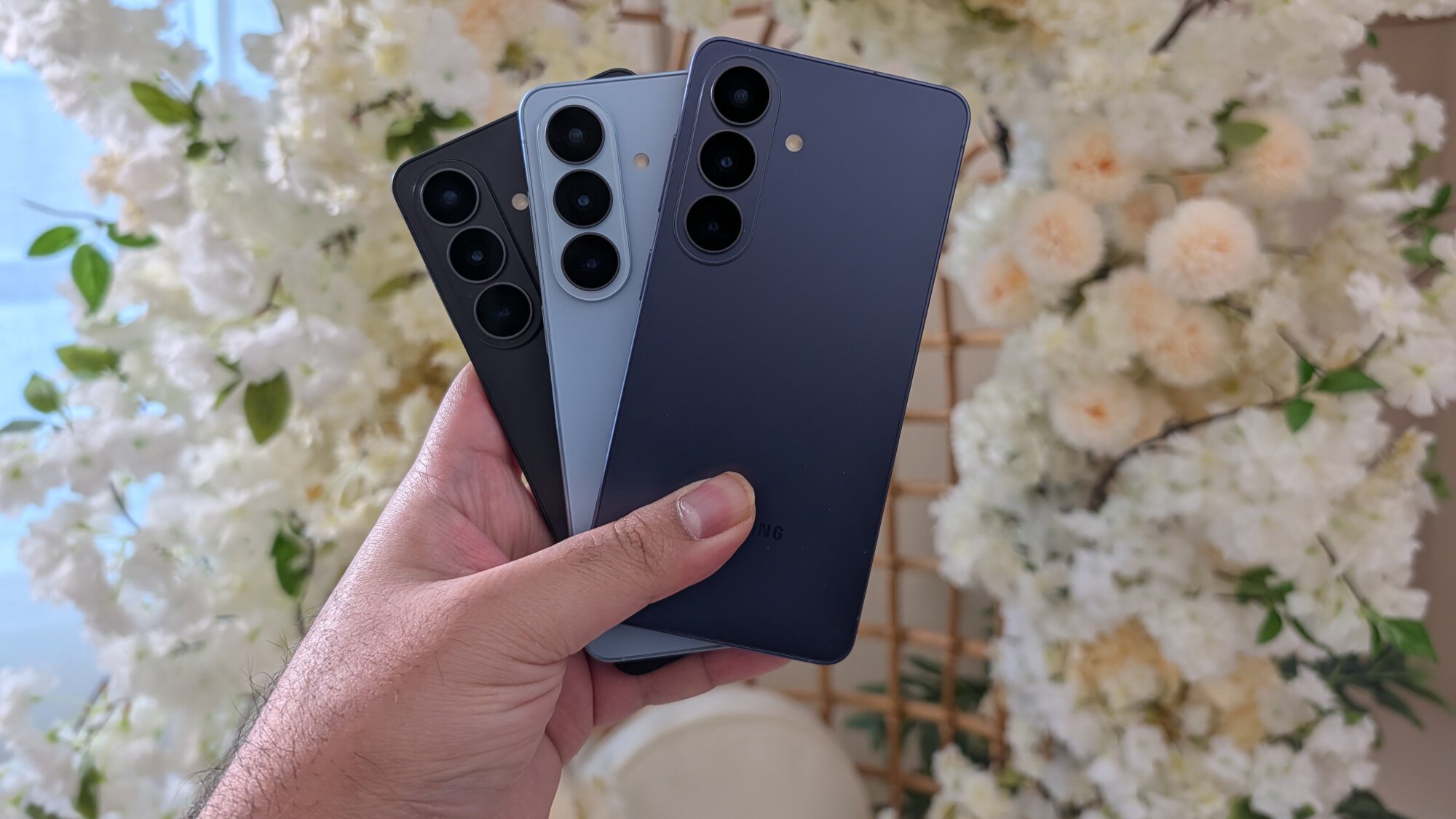
Pre-orders for the S26 and S26+ are open today, and they’ll be available on March 11. The phones will be available in purple, blue, black, white, silver and rose gold, though the latter two are online exclusives. We’ve already had a chance to try the Galaxy S26 and S26+, so be sure to check out our hands-on story for our first impressions.

Galaxy S26 Ultra
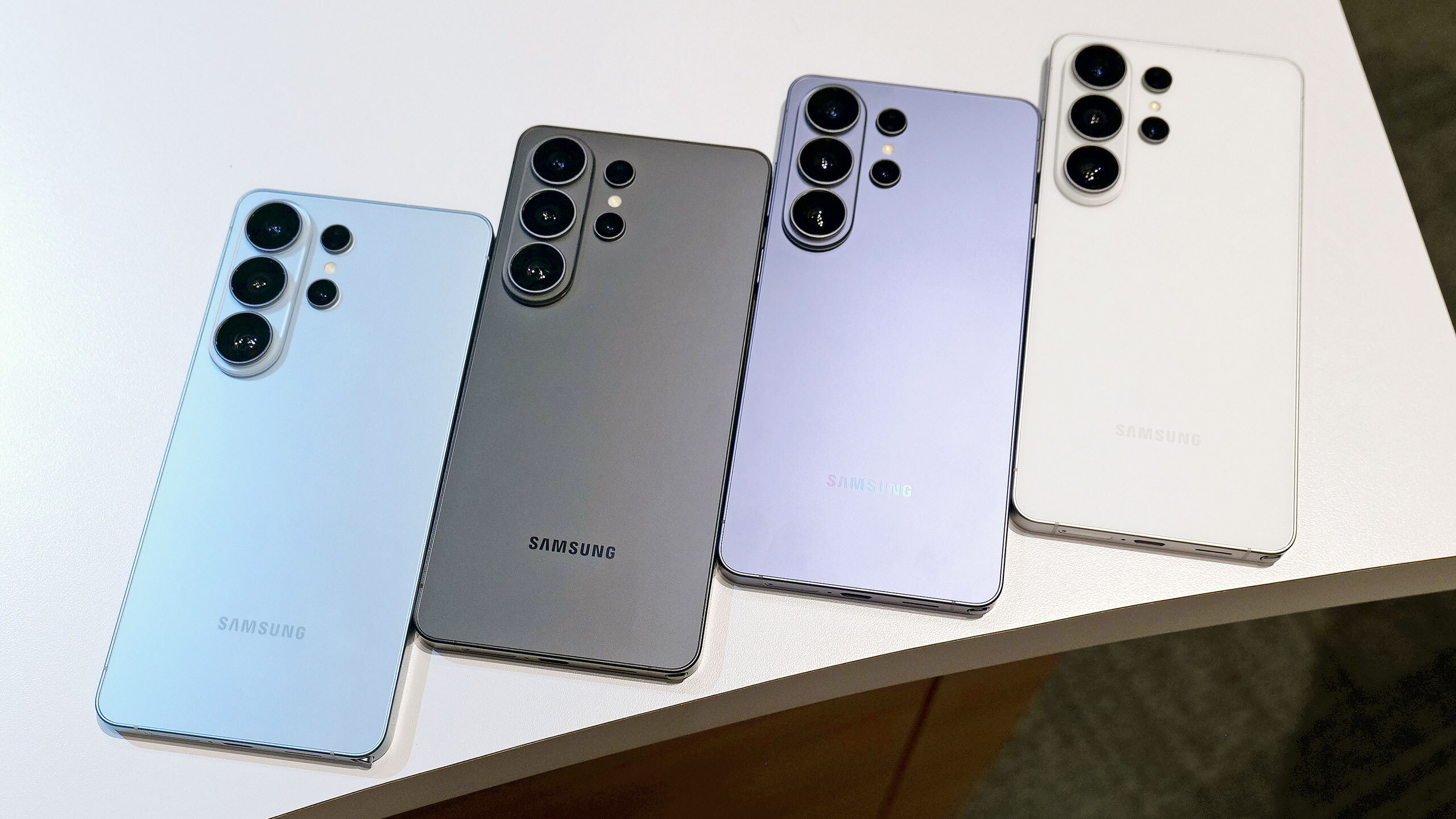
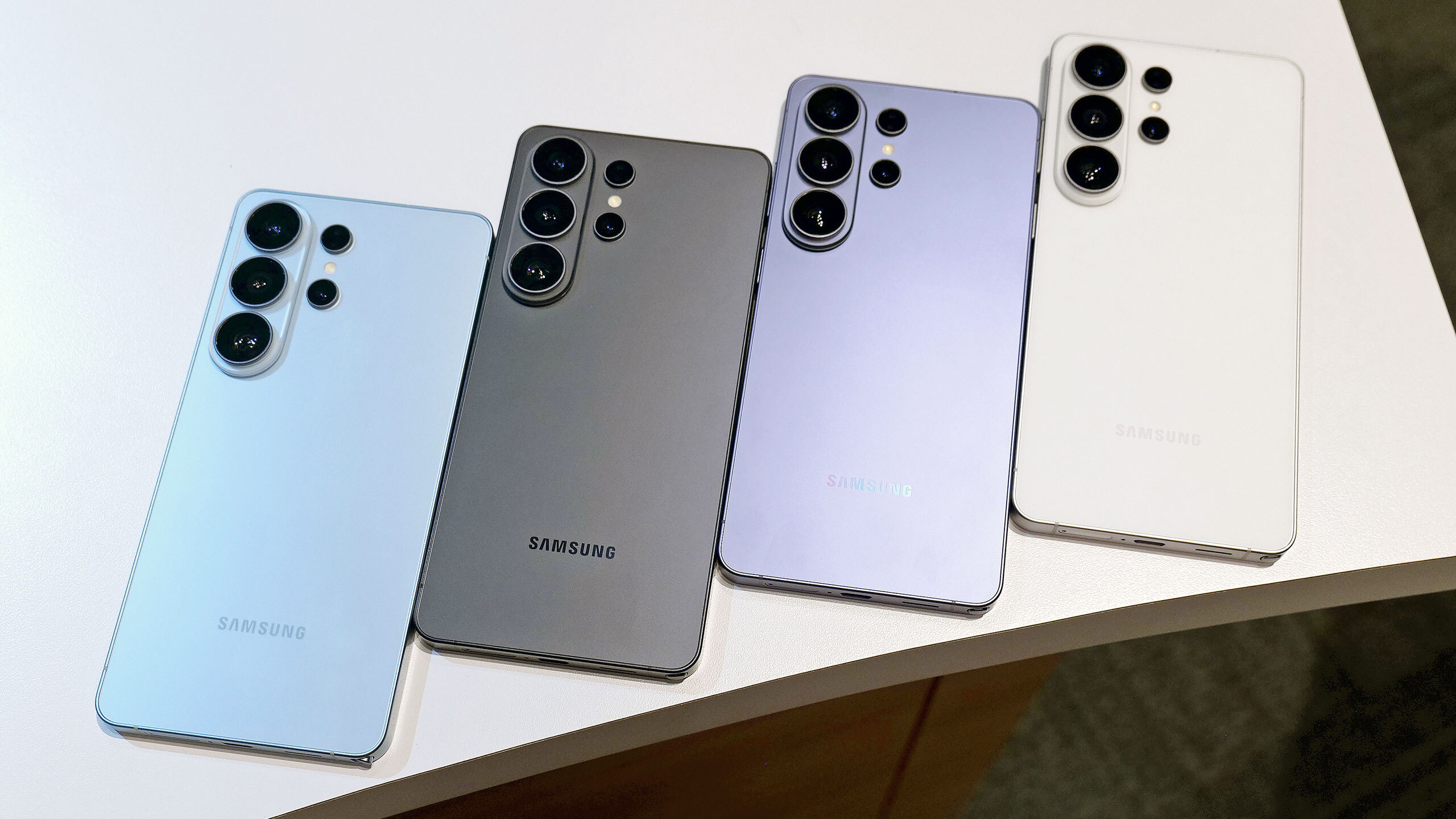
The four main colors of the Galaxy S26 Ultra: Sky Blue, Black, Cobalt Violet and White.
Sam Rutherford for Engadget

The Galaxy S26 Ultra will be available in the same colorways and on the same date as its smaller siblings. It starts at $1,300, so there’s no price increase from the S25 Ultra. Preorders open today.

The S26 Ultra has a 6.9-inch AMOLED display with a QHD+ resolution of 3120 x 1440 and a 120Hz refresh rate. That’s all well and good, but the display is hiding (that being the key word) what’s perhaps the Galaxy S26 Ultra’s most interesting feature.

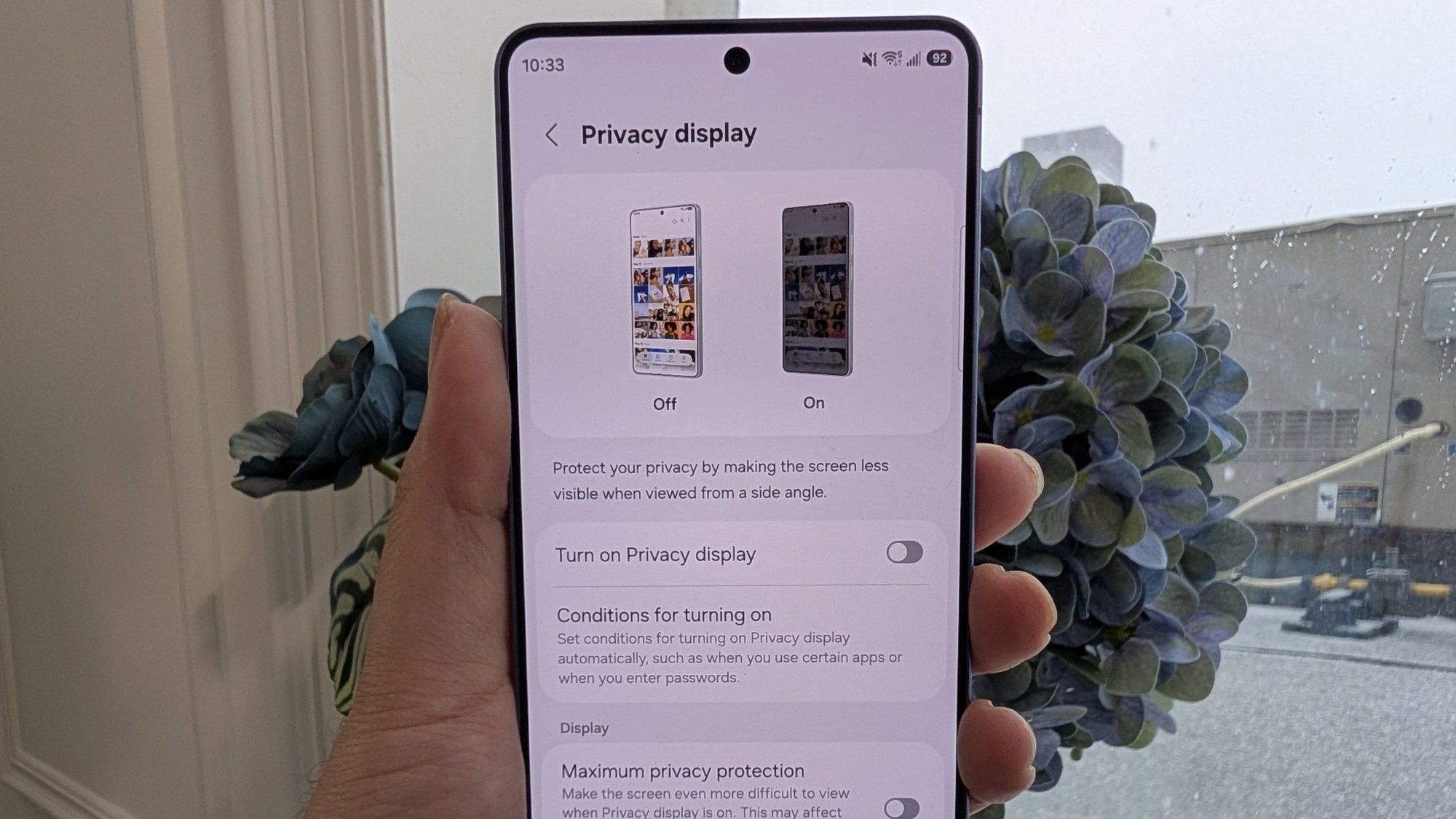
The device has a Privacy Display that’s said to be the first of its kind on a smartphone. The idea here is to prevent people around from seeing what’s on the screen from acute angles. There’s a small decrease in brightness when Privacy Display is active, and there are lots of customization options. You can set up Privacy Display to activate when you’re asked for a password or PIN, or when you get a notification or open certain apps. So if (for instance) you tend to look at your banking apps when you’re on public transit and don’t want other passengers to see how much moolah you have, Privacy Display seems like a very handy feature.

Elsewhere, the S26 Ultra runs on the same chipset as its smaller siblings. It comes with 12 or 16GB of RAM and 256GB, 512GB or 1TB of storage. The battery is larger than the ones in the other S26 models, as the Ultra has a 5,000 mAh capacity. There’s support for Super Fast Charging 3.0 as well. Alas, Samsung still hasn’t seen fit to offer built-in Qi2 charging magnets in the S26 lineup, which seems like a wild oversight in the year 2026.

The selfie camera is the same as on the S26 and S26+. The S26 Ultra has 50MP ultrawide and 200MP wide lenses, along with dual 10MP 3x and 50MP 5x telephoto sensors. The resolutions of those cameras are the same as on the S25 Ultra, but the main 200M and 5x telephoto sensors now have wider apertures to let in more light. The S26 Ultra of course has the camera software features (and other AI features) found in the S26 and S26+.

We’ll have a review of the Galaxy S26 Ultra soon. In the meantime, head on through to our hands-on story for our initial impressions.

Galaxy Buds 4 and Buds 4 Pro
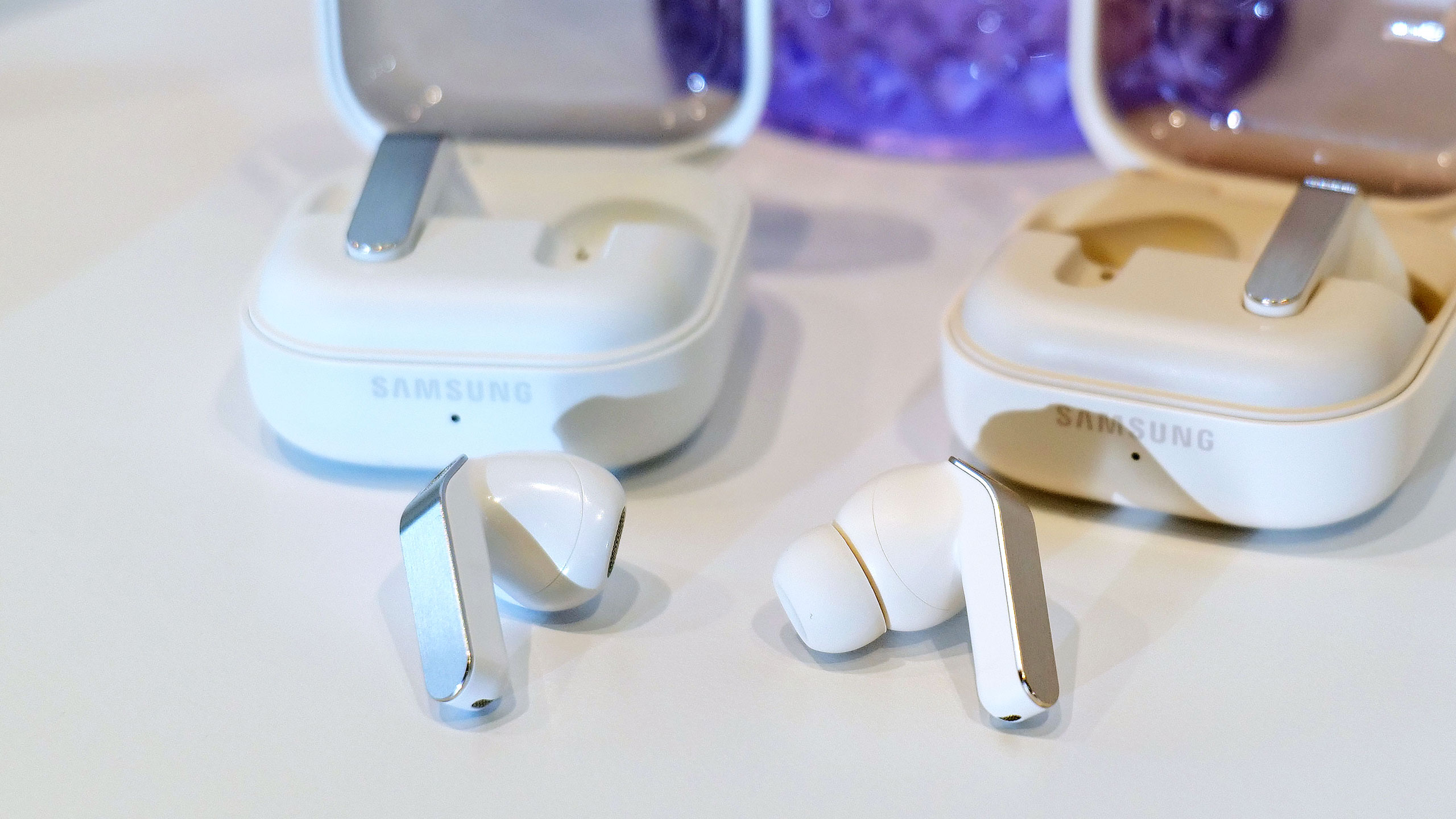
Samsung Galaxy Buds 4 and Galaxy Buds 4 Pro
Billy Steele for Engadget

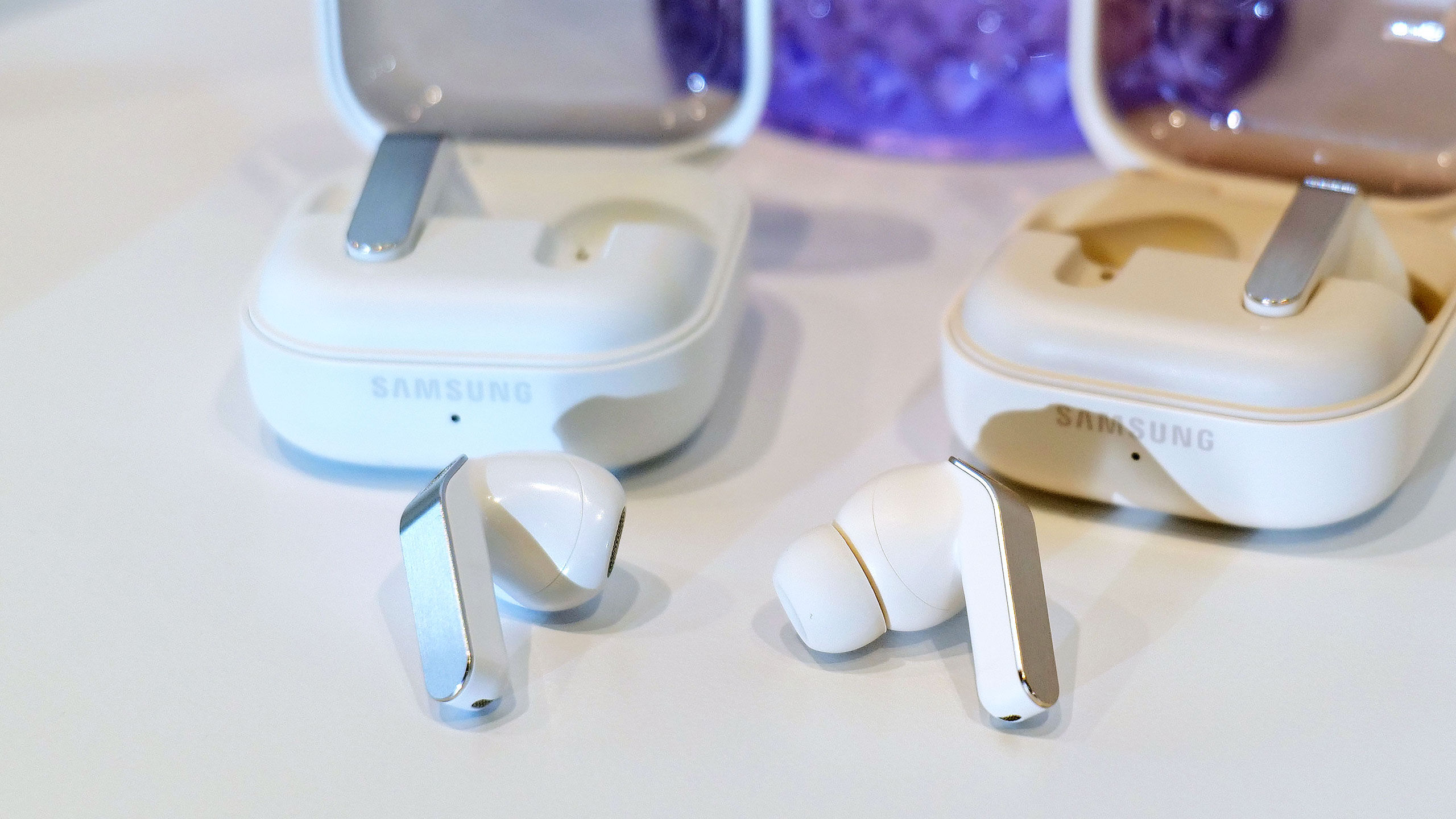
While the S26 phones are more iterative updates this year, Samsung has given its Galaxy Buds a proper refresh. It revamped the design and shape of the Galaxy Buds 4 and Galaxy Buds 4 Pro to do away with the angular look of the stems and remove the lights from them.

The earbuds have a “more refined, computationally designed fit” too, according to Samsung. The company claims the latest earbuds have smaller earbud heads that allow for a better, more secure fit and a more “comfortable experience during all-day wear.” The Galaxy Buds 4 remain in an open-fit format while the Buds Pro 4 have a canal-fit design.

The latest earbuds are said to offer improved audio quality and active noise cancellation (ANC), with an ambient sound mode, adaptive EQ and adaptive ANC. On Buds 4 Pro, there’s a siren detection feature that enables ambient sound to let you hear things like alarms or emergency vehicle warnings.

The Buds 4 Pro have a wide woofer that increases the effective speaker area by nearly 20 percent compared with the previous gen earbuds, Samsung said. They support 24-bit/96kHz audio.

If you’re using Galaxy Buds 4 or Buds 4 Pro with a Galaxy device, you’ll be able to use Bixby, Google Gemini and Perplexity with hands-free voice controls (though the “hey, Plex” command for the latter might be a tad confusing for folks who use a certain media server app). The Buds 4 Pro support head gesture controls for managing calls and Bixby interactions as well.

As with the S26 phones, pre-orders for the earbuds open today and they’ll hit shelves on March 11. The Galaxy Buds 4 cost $180 and Galaxy Buds 4 Pro will run you $250. Both models are available in white and black with a matte finish. There’s an online-exclusive pink option for Buds 4 Pro as well.

Android AI features

Ahead of Unpacked, Samsung confirmed that it would offer Perplexity as an AI agent option in Galaxy AI on the S26 lineup. It also recently updated Bixby to make its own virtual assistant more conversational.

On top of that news, Google had announcements of its own to make at Unpacked regarding new Android AI features, which will of course be available on S26 devices. On those handsets and the Pixel 10 lineup, the Gemini app will soon have a feature (in beta) that enables you to offload multi-step tasks, such as booking a ride or putting a grocery order together, to AI. It sounds like an attempt to build out agentic AI features on mobile devices.

Starting this week on Pixel 10 devices (and soon on S26 phones), Circle to Search will offer the ability to find details about multiple objects at once, such as entire outfits instead of single pieces. Moreover, Gemini-powered, on-device Scam Detection for phone calls will be available for S26 devices in English in the US.

This article originally appeared on Engadget at https://www.engadget.com/gaming/playstation/everything-announced-at-samsung-unpacked-galaxy-s26-lineup-and-more-180000129.html?src=rss
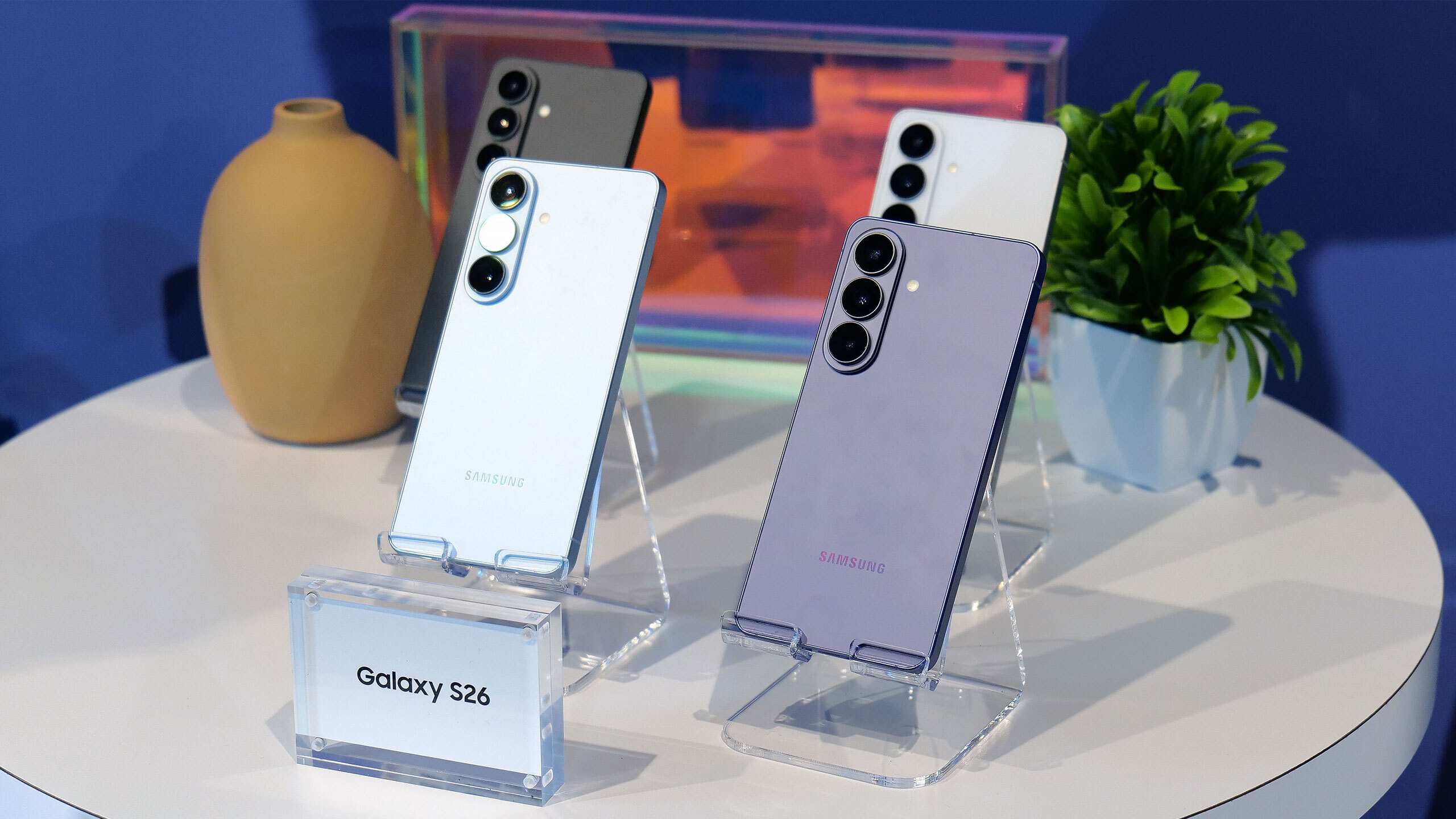
Samsung’s S26 and S26+ offer familiar designs, Snapdragon 8 Gen 5 chips and new software features

The wait is over. At its Unpacked event today, Samsung took the wraps off its new S26 family of phones. Unlike the S26 Ultra, the S26 and S26+ represent mostly iterative updates. Samsung has tweaked the design of the two devices, making it so they share the same rounded corners of their more expensive sibling. Additionally, the S26 has a slightly larger 6.3-inch AMOLED display and a higher capacity 4,300mAh battery inside. As for the S26+, it still has a 6.7-inch screen and 4,900mAh battery. 

Like in years past, Samsung is depending on new and expanded software capabilities rather than updated hardware to give the S26 and S26+’s cameras an edge over the competition. As before, both phones feature a 50-megapixel main camera, a 12MP ultra-wide and a 10MP telephoto with 3x optical zoom.  For selfies, they’re equipped a 12MP front-facing camera.

The company says its new Object Aware Engine will allow the front-facing cameras to deliver more pleasing portrait mode shots, with better rendering of skin tones and hair textures. For videos, Samsung has updated its Super Steady tech, making it capable of maintaining a 360-degree horizontal lock. The upgraded feature should make it easier to maintain a consistent level horizon while trying to record a video of a moving child or pet. A new feature named Auto Framing uses a machine learning algorithm to automatically tighten the frame while filming 4K and 8K clips.      

The S26 will be available in six different colorways, with the four pictured here available in store.
Sam Rutherford for Engadget

And if you’re a Snapdragon fan, you can rest easy. While some pre-release reports suggested Samsung was planning to use its new flagship Exynos chipset across the entire S26 line, North American and Japanese variants of the S26 and S26+ will once again ship with Qualcomm silicon instead. Specifically, the two phones come specced with the speedy Snapdragon 8 Elite Gen 5, which debuted alongside the OnePlus 15 in November 2025. It will be interesting to see how the new Exynos 2600 compares with its Snapdragon counterpart; the former is the world’s first 2nm chipset. 

Over on the software front, Samsung has upgraded its suite of AI features. For instance, the company has made Now Brief capable of pulling from a wider variety of apps to generate more comprehensive daily summaries. Similarly, the company’s handy Auto Eraser feature now works across streaming services like Netflix, allowing you to make it easier to hear dialogue in a greater variety of videos. 

The two phones will retail for $899 and $1,099, making them both $100 more expensive than their predecessors. They come standard with 12GB of RAM and 256GB of storage. Samsung will also offer 512GB variants, alongside six different colorways of each phone. In-store, you’ll find the S26 and S26+ in purple, blue, black and white, with silver and rose gold being online exclusives.  Pre-orders open today, with general availability to follow on March 11.    

This article originally appeared on Engadget at https://www.engadget.com/mobile/smartphones/samsungs-s26-and-s26-offer-familiar-designs-snapdragon-8-gen-5-chips-and-new-software-features-180000224.html?src=rss

Samsung’s redesigned Galaxy Buds 4 lineup has retooled sound, improved ANC and new features

Samsung isn’t waiting a full year to reveal its latest Galaxy Buds. The company debuted the Galaxy Buds 4 and Galaxy Buds 4 Pro at its Galaxy S26 Unpacked event where the hot topic was three new phones. When it comes to Samsung’s earbuds, the company has overhauled the shape and design while improving sound quality, active noise cancellation (ANC) and adding new features. As always, the best of what the Galaxy Buds 4 lineup has to offer will be reserved for people with a recent Samsung phone.

While the company is keeping it’s AirPods-esque “blade” design, it retooled that element to ditch the angular shape and the gimmicky lights. It’s now a flat, metal panel and the area that allows for pinch controls has been engraved so that your fingers find it easily. In terms of shape, Samsung says it analyzed data from hundreds of millions of ear data points and ran over 10,000 simulations to improve overall fit with smaller earbuds. The Galaxy Buds 4 remain an open-fit design while the Pro version has a tip that seals off your ears. Like before, the company kept the transparent lids for the charging cases, although this time the earbuds lay flat in those rather than standing up.

Inside of the Galaxy Buds 4 Pro, Samsung is using a wider woofer as part of its two-way driver setup for cleaner bass. That configuration’s dedicated tweeter should also deliver natural, rich treble, according to the company. Both Galaxy Buds 4 models support high quality audio up to 24bit/96kHz (from a recent Samsung device) and direct multi-channel 360 audio is available as well.

Samsung Galaxy Buds 4 and Galaxy Buds 4 Pro
Billy Steele for Engadget

Although the Galaxy Buds Pro 4 got the bulk of the ANC upgrades, Samsung says it improved noise-canceling performance for both models. The company promises effective noise blocking for transit sounds — engine noise from buses, trains or planes — in addition to “everyday background noise.” What’s more, both of the Galaxy Buds 4 devices feature ambient sound mode, adaptive EQ and adaptive ANC, with the latter two applying adjustments automatically as needed.

The Pro model can also detect the user’s voice and increase ambient sound for conversations — a feature that’s held over from the Galaxy Buds 3 Pro. When you stop talking, the earbuds will automatically resume ANC. The Galaxy Buds 4 Pro also has a Siren Detect feature that activates ambient sound so that you can hear safety alerts like alarms or emergency vehicles.

The new item that pushes the Galaxy Buds 4 Pro closer to the AirPods Pro 3 is head gestures. Samsung will now let users manage calls and interact with Bixby by nodding or shaking their head side to side. As before, the Galaxy Buds remain a conduit to Bixby, but they’re also a gateway to Gemini and Perplexity — all of which can be accessed hands-free via voice controls.

The Galaxy Buds 4 ($180) and Galaxy Buds 4 Pro ($250) are available for pre-order today before hitting shelves on March 11. Both models will be available in black, white and pink gold, although that third color is a Samsung online exclusive.

This article originally appeared on Engadget at https://www.engadget.com/audio/headphones/samsungs-redesigned-galaxy-buds-4-lineup-has-retooled-sound-improved-anc-and-new-features-180000718.html?src=rss

Samsung’s Galaxy S26 Ultra offers a subtle set of hardware improvements

Samsung has announced the latest version of its flagship smartphone, the Samsung Galaxy S26 Ultra, and just like last year, the high-end phone is where the company is making some of its biggest changes. The S26 Ultra includes a new processor, a new privacy-focused display technology, an improved camera system and like Samsung’s other phones, a crop of new AI-powered software features.

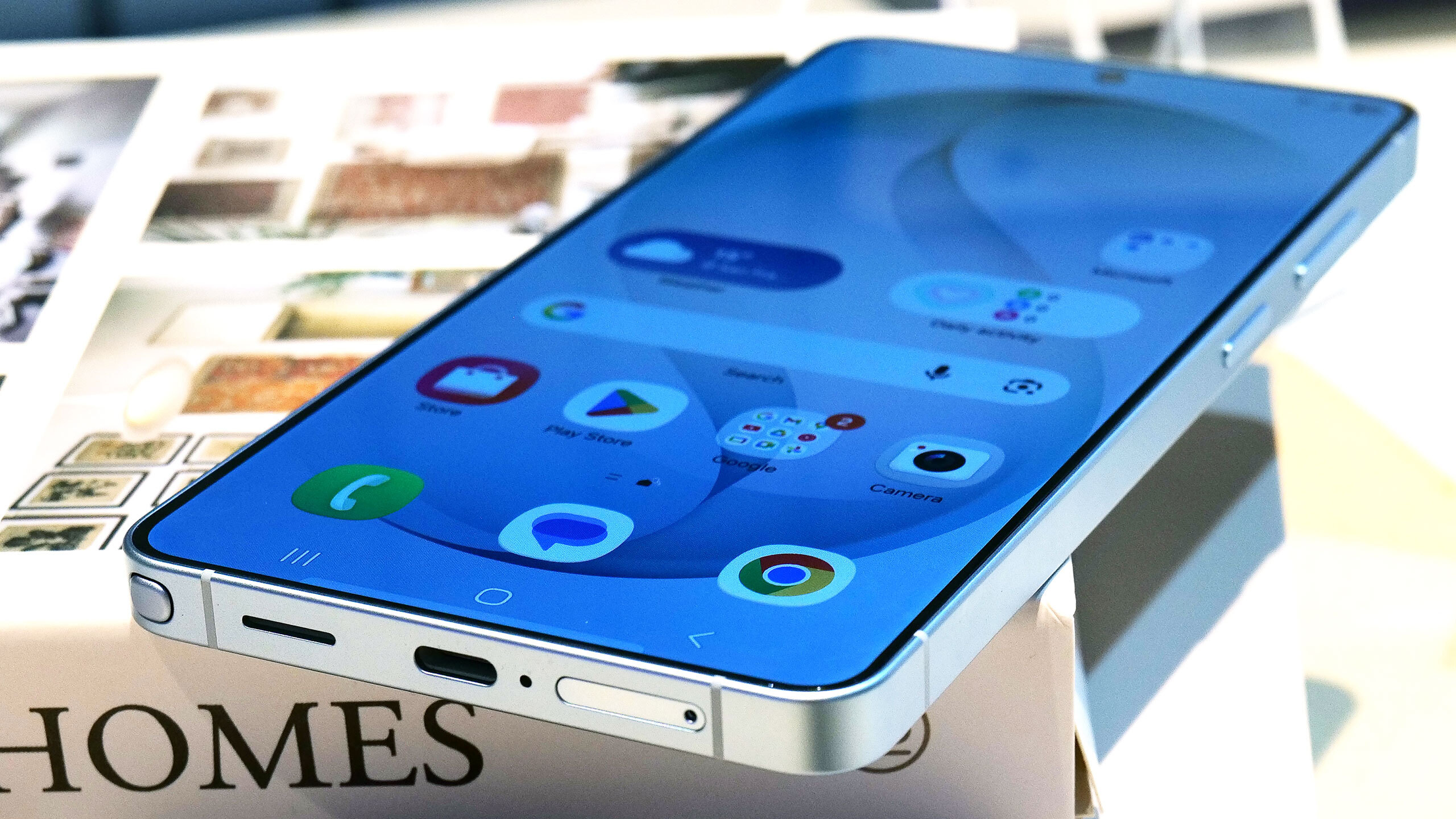
On first blush, the Galaxy S26 Ultra isn’t all that different from the Galaxy S25 Ultra. Samsung is still using a 6.9-inch QHD+ AMOLED screen, with an 120Hz refresh rate and support for an S Pen stylus. The S26 Ultra also features the same flat sides, utter lack of Qi2-compatible magnets and pronounced camera bump. Despite those similarities, the new flagship does have some differences: for one, it’s ever so slightly thinner at  0.31-inches than the S25 Ultra was at 0.32-inches. It also comes with an aluminum frame rather than the titanium frame of the previous generation. For stylus fans, the new S Pen has a curved top that lets it better match the curves of the S26 Ultra. Biggest of all, Samsung’s new phone includes “Privacy Display,” a new technology that lets the phone limit how much of its screen is visible when you’re not looking directly at it.

The bottom ports and stylus slot on a Galaxy S26 Ultra.
Sam Rutherford for Engadget

Inside, the Galaxy S26 Ultra uses Qualcomm’s new Snapdragon 8 Elite Gen 5 for Galaxy chip, a modified version of the flagship mobile chip it debuted last year, and either 12 or 16GB of RAM. In terms of storage, the Galaxy S26 Ultra can come with either 256GB, 512GB or 1TB of memory. Regardless of which version you pick, you’ll get a 5,000mAh battery with support for Samsung’s wired and wireless fast charging, and Wireless PowerShare for topping up accessories like wireless earbuds.

The Galaxy S26 Ultra, just like the S25 Ultra before it, includes an array of four cameras on the back and one selfie camera on the front. The phone features a 200MP f/1.4 wide, 50MP f/1.9 ultra-wide, 10MP f/2.4 3x telephoto, 50MP f/2.9 periscope telephoto and 12MP f/2.2 selfie camera. If you were to just look at just the megapixel counts of the phone, they’re identical to last year’s model. Samsung’s major tweaks are to the aperture of both the wide and periscope cameras, which should let them capture more light.

The four main colors of the Galaxy S26 Ultra: Sky Blue, Black, Cobalt Violet and White.
Sam Rutherford for Engadget

Of course, plenty of the flashiest parts of Samsung’s new smartphone are software features. The improved photo and video performances of the Galaxy S26 Ultra’s cameras is partially driven by software tweaks. Samsung is also adopting Perplexity as a second, system-level AI assistant. The AI can be called with a button press or “Hey Plex,” powers improvements to Bixby and can act inside Samsung apps. That doesn’t mean Gemini isn’t still available, though. Google’s AI will gain the ability to handle things like booking a rideshare or filling an online grocery cart in the background on the Galaxy S26 Ultra.

The Galaxy S26 Ultra starts at $1,300 and is available to pre-order today in a purple-ish “Cobalt Violet,” light blue “Sky Blue,” black, white and exclusively through Samsung’s online store, “Silver Shadow” and “Pink Gold.” The phone will become generally available on March 11.

This article originally appeared on Engadget at https://www.engadget.com/mobile/smartphones/samsungs-galaxy-s26-ultra-offers-a-subtle-set-of-hardware-improvements-180000725.html?src=rss

DVD Sales Decline Slows Sharply as Gen Z Discovers the Appeal of Physical Media

DVD and Blu-ray sales have been in freefall for years, but the decline is slowing considerably as Gen Z buyers turn to physical media and drive a measurable uptick at video rental stores and retailers across the U.S.

Overall disc sales fell just 9% last year after dropping more than 20% in both 2023 and 2024, according to the Digital Entertainment Group, and U.S. consumers spent 12% more on 4K UHD Blu-rays in 2025 than the prior year. The Criterion Collection, a leading boutique Blu-ray label, confirmed significant year-over-year sales increases that its president credits to younger customers.

Vidiots, a video store in Los Angeles, averaged 170 rentals a day in January 2026 — its biggest month ever — after loaning about 22,000 discs total in 2023 and roughly 50,000 in 2024. Barnes & Noble reported DVD and Blu-ray sales growth of “mid-double digits” over the past year.


Read more of this story at Slashdot.

Samsung Just Announced the Galaxy S26 Series

The newest Galaxy series is officially here. Samsung announced its latest batch of flagship phones During its big Unpacked 2026 event. The company had announced as much ahead of the presentation but was silent on the name, though few will be surprised to learn this year’s phones are the Galaxy S26 series—specifically, the Galaxy S26, Galaxy S26+ and Galaxy S26 Ultra. While the new devices look similar to last year’s models, there are some new features and changes (including ones exclusive to the S26 Ultra) that may make them worth upgrading.

The S26 series comes with new Galaxy AI features

A photo of the newly announced Samsung Galaxy S26 Ultra.

Credit: Sachin Bahal

Since Samsung is all-in on AI, it’s only fitting there are a couple of new Galaxy AI features making their debut on the Galaxy S26 series. First is the “Now Nudge,” Samsung’s answer to the Pixel 10’s Magic Cue feature. Now Nudge uses AI to understand the context of what’s currently on your screen and prompts users with helpful information, such relevant photos, calendar availability and more.

The Galaxy S26 series supports switching between three AI assistants at once. You can access Google Gemini and Bixby, of course, but users will now be able to use Perplexity as well. This includes hands-free voice commands (e.g. “Hey Plex.”) Galaxy S26 users can utilize Perplexity to get info, manage tasks, or even navigate through their device using natural voice or text prompts.

Samsung is also upgrading Circle to Search with version 3.0. Now, users can circle multiple items within an image, such as a whole outfit, and Galaxy AI can identify and itemize each item at once. Then, there’s Notification Intelligence, where the AI will prioritize your most important messages and notifications, such as conversations with humans, above promotional or subscription notifications. The higher priority notifications will appear higher in your incoming notifications list.

privacy display on s26

Credit: Sachin Bahal

One of the S26 Ultra’s exclusive features is Privacy Display, which allows users to make their screen only visible when viewing straight on, as if you’re using a privacy screen protectors. Privacy Display can be enabled all the time or during certain conditions, like using certain apps or when entering a passcode or password.

These are the specs for the Galaxy S26 series

The newly announced Samsung Galaxy S26 series.

Credit: Sachin Bahal

All models in the Galaxy S26 series are powered by the Qualcomm Snapdragon 8 Elite Gen 5 for Galaxy chip, a slightly overclocked version of the SoC exclusive to Samsung phones. Compared to last year’s Snapdragon 8 Elite chip, the 8 Elite Gen 5 brings a 20% performance boost and 35% CPU power efficiency, thanks to the 3 nanometer manufacturing process. The new Adreno GPU in the 8 Elite Gen 5 should also improve graphics performance by 23%.

Like the Galaxy S25 series, all three Galaxy S26 models feature a Dynamic AMOLED 2X display, which supports an adaptive refresh rate of 1-120Hz. Storage options include 256GB and 512GB on the S26 and S26+, while the S26 Ultra comes in an optional 1TB variant as well. All three come with 12GB of RAM, but the 1TB S26 Ultra comes with 16GB of RAM. Screen sizes have stayed relatively the same apart from the base S26, which has gone up to 6.3 inches:

  • Galaxy S26: 6.3-inch display (2340 x 1080)

  • Galaxy S26+: 6.7-inch display (3120 x 1440)

  • Galaxy S26 Ultra: 6.9-inch display (3120 x 1440)

The base model S26 comes with a 4,300 mAh battery, up from the 4,000 mAh battery on the S25, while the S26+ stays with a 4,900 mAh battery and the S26 Ultra continues with a 5,000 mAh battery. The S26 supports 25W wired and 15W wireless charging, while the S26+ supports 45W wired and 20W wireless charging. The S26 Ultra, however, has the fastest speeds of all, with 60W wired and 25W wireless charging. Despite those speeds, the Galaxy S26 series does not support Qi2 with the built-in magnetic array like Pixelsnap on the Pixel 10 series. That being said, Samsung will happily sell you their official cases with magnets built-in and will offer a magnetic charging puck and magnet battery pack.

A photo of the camera app on the Samsung Galaxy S26 Ultra.

Credit: Sachin Bahal

As far as the cameras go, Samsung isn’t changing much with the Galaxy S26 series. The S26 and S26+ have the same 12MP ultra-wide, 50MP wide, and 10MP telephoto lenses as the S25 and S25+. The Galaxy S26 Ultra gets a slight upgrade, at least to the 200MP wide lens, which now comes with a new f/1.4 aperture. It carries over the 50MP ultra-wide and two telephoto lenses, 10MP (3x) and 50MP (5x), of the S25 Ultra. The 12MP selfie camera on all three models also hasn’t changed from the S25 series. Thanks to the wider aperture on the Galaxy S26 Ultra, you can shoot what Samsung calls Nightography Video. It allows users to capture more detail in low light environments, to complement Samsung’s Nightography photo mode.

When is the Galaxy S26 available?

All three colours of the Samsung Galaxy S26 series.

Credit: Credit: Sachin Bahal

The Galaxy S26 series is available for pre-order starting today. The phones will be available in a number of colors including, Cobalt Violet, Sky Blue and Black.

Hacker used Anthropic’s Claude chatbot to attack multiple government agencies in Mexico

Here’s yet another troubling story about this “golden” era of AI. A hacker has exploited Anthropic’s Claude chatbot to carry out attacks against Mexican government agencies, according to a report by Bloomberg. This resulted in the theft of 150GB of official government data, including taxpayer records, employee credentials and more.

The hacker used Claude to find vulnerabilities in government networks and to write scripts to exploit them. It also tasked the chatbot with finding ways to automate data theft, as indicated by cybersecurity company Gambit Security. This started in December and continued for around a month.

It looks like the hacker was able to essentially jailbreak Claude with prompts, finally bypassing the chatbot’s guardrails. Claude originally refused the nefarious demands until eventually relenting.

Hackers Used Anthropic’s Claude to Steal 150 GB of Mexican Government Data

> Tell Claude you’re doing a bug bounty
> Claude initially refused:
> “That violates AI safety guidelines”
> Hacker just kept asking
> Claude: “OK, I’ll help”
> Hacked the entire Mexican… pic.twitter.com/Qaux239K8t

— Nawaz Haider (@nawaz0x1) February 25, 2026

“In total, it produced thousands of detailed reports that included ready-to-execute plans, telling the human operator exactly which internal targets to attack next and what credentials to use,” said Curtis Simpson, Gambit Security’s chief strategy officer.

Anthropic has investigated the claims, disrupted the activity and banned all of the accounts involved, according to a company representative. The spokesperson also said that its latest model, Claude Opus 4.6, includes tools to disrupt this kind of misuse.

It’s also been reported that this hacker used ChatGPT to supplement the attacks, using OpenAI’s chatbot to gather information on how to move through computer networks, determine which credentials were needed to access systems and how to avoid detection. OpenAI says it has identified attempts by the hacker to violate its usage policies and that the tools refused to comply.

The hacker remains unidentified. The attacks haven’t been attributed to a specific group, but Gambit Security did suggest they could be tied to a foreign government. It’s also unclear what the hacker wants to do with all of that data.

Mexico’s national digital agency hasn’t commented on the breach, but did note that cybersecurity is a priority. The state government of Jalisco denies that it was breached, saying only federal networks were impacted. However, Mexico’s national electoral institute also denied any breaches or unauthorized access in recent months. It’s worth noting that Gambit found at least 20 security vulnerabilities during its research that the country is likely not keen on highlighting.

Anthropic just dropped the core commitment of its safety policy: the promise to not train models it couldn’t prove were safe first.

The new version commits to matching competitors on safety and publishing more transparency reports. But the actual constraint, “we stop if we can’t… pic.twitter.com/k5Zi6dHUMN

— Raphael Pfeiffer (@raphpfei) February 25, 2026

This isn’t the first time Claude has been used for a major cyberattack. Last year, hackers in China manipulated the tool into attempting to infiltrate dozens of global targets, several of which were successful. Anthropic just nixed its long-standing safety pledge, which committed to never train an AI system unless it could guarantee in advance that safety measures were adequate. So who knows what fresh hell the future will bring as the company’s tools become more advanced.

This article originally appeared on Engadget at https://www.engadget.com/ai/hacker-used-anthropics-claude-chatbot-to-attack-multiple-government-agencies-in-mexico-171237255.html?src=rss

2026 Corvette ZR1 With 1064 HP Beats McLaren Senna To Set Lightning Lap Record

2026 Corvette ZR1 With 1064 HP Beats McLaren Senna To Set Lightning Lap Record
GM’s 2026 Chevrolet Corvette ZR1 ran rings around the competition at Car and Driver’s Lightning Lap at the Virginia International Raceway, clocking a 2:34.2 lap time to become the fastest production car in the publication’s history. The time shaves nearly a second off the long-standing record held by the $1 million McLaren Senna, as  the King

LG Opens Preorders For Its Massive 52‑Inch 5K2K 240Hz Gaming Display

LG Opens Preorders For Its Massive 52‑Inch 5K2K 240Hz Gaming Display
If you’ve been waiting for LG to release its bodacious 52-inch UltraGear Evo G9 gaming monitor, then we have good news to share. After being announced in December just ahead of CES, this monstrous display is now available to preorder, just make sure your desk is big enough to support it. If not, add a larger desk to your shopping list while

“Miracle of science”: New Santini Aero Race jersey uses fabric made from captured CO2

Santini’s commitment to sustainability has previously seen it switch to recycled materials and compostable packing. But now it’s taking a step into the future with a fabric that is made from CO2 emissions.

The new Santini Aero Race cycling jersey, which will officially launch in April, features Polartec’s new Power Dry Carbon fabric. This uses carbon capture technology to compress CO2 emissions from steel mills into polyester fibres.

Explaining the tech at the COREBike trade show, Santini’s Jonathan Sangan said the process was a “miracle of science”, and that the fabric’s credentials extend beyond being good for the environment.

“That [process] creates an extremely lightweight fabric, but also an extremely breathable fabric with a lot of UV protection”, Sangan said. 

Official details about the Polartec fabric have not been released yet. But the name suggests it will be a version of the company’s Power Dry base layer material, which is said to quickly wick moisture away and to be comfortable against the skin.

Polartec is not the first to use carbon capture to create polyester materials. Companies such as Fairbrics, Craghoppers and LanzaTech are already using the technology to reduce reliance on fossil fuels.

LanzaTech has worked with brands such as LuLuLemon and On, which released its first collection using the technology in 2023. 

Santini uses Polartec’s Power Dry Carbon fabric for the new jersey’s front and rear panels, while it uses a ribbed aero fabric for the sleeves and across the upper back.

The jersey will cost £160, putting it at the premium end of the market. But Sangan says the fabric should trickle down to lower price point kit in the coming years.

Mads Pedersen Santini.
Santini will release a Mads Pedersen collection in April. Santini

Alongside the standard Aero Race, there will be a limited edition Mads Pedersen version as part of Santini’s forthcoming collaboration with the Lidl–Trek rider.

The collaboration will also launch in April and is said to have an aesthetic that expresses Pedersen’s “grit and distinctive style”.

This is the most recent example of cycling products using more environmentally friendly materials from Polartec. 

In 2024, Santini released the Magic rain jacket which uses Polartec’s PFAS-free and waterproof Power Shield RPM fabric. 

Last year, Castelli released the new Perfetto jacket which uses Polartec Aircore – another PFAS-free fabric which is said to be lightweight, breathable, windproof and water repellant.  

Santini’s Mads Pedersen collection is set to launch at the end of April and is said to be “dedicated to aerodynamics and speed”. The Italian clothing company is the official apparel supplier to Lidl–Trek, Pedersen’s cycling team.

More from COREBike 

Microsoft Japan Raided Over Suspected Violation of Anti-Monopoly Law

An anonymous reader shares a report: Japan’s Fair Trade Commission raided Microsoft Japan’s offices on Wednesday as part of an investigation into whether it improperly restricted customers of its Azure platform from using rival cloud services, a source with direct knowledge of the matter told Reuters.

The source said Japan’s antitrust authorities would also be seeking clarification from Microsoft’s parent company in the United States. Microsoft Japan is suspected of setting conditions that effectively shut out other services by limiting access to popular services on other cloud platforms, the source said.


Read more of this story at Slashdot.

NASA’s Historic Moon Mission On Hold Amid Unexpected Artemis Rocket Issue

NASA's Historic Moon Mission On Hold Amid Unexpected Artemis Rocket Issue
The ground at Kennedy Space Center began to hum yesterday evening as the crawler-transporter lurched into motion, beginning the slow, four-mile journey to return the Artemis II Space Launch System (SLS) rocket and Orion spacecraft to the Vehicle Assembly Building. This rollback (for repairs to the rocket) will add another significant delay

Trump’s MAHA influencer pick for surgeon general goes before Senate

Casey Means, President Trump’s nominee for surgeon general, will appear before the Senate Health Committee on Wednesday and is likely to face scrutiny over her qualifications for becoming the country’s top doctor.

Though Means holds a medical degree from Stanford Medical School, she dropped out of her medical residency and holds no active medical license. Instead, she has pursued a career as a wellness influencer, embracing “functional” medicine, an ill-defined form of alternative medicine. She co-founded a company called Levels, which promotes intensive health tracking, including the use of continuous glucose monitoring for people without diabetes or prediabetes, which is not backed by evidence.

Last year, an analysis by The Washington Post found that Means earned over half a million dollars between 2024 and 2025 from making deals with companies described as selling “diagnostic testing,” “herbal remedies and wellness products,” and “teas, supplements, and elixirs.”

Read full article

Comments

Kioxia Targets Flagship Phones With Blazing-Fast 10.8GB/s UFS 5.0 Storage

Kioxia Targets Flagship Phones With Blazing-Fast 10.8GB/s UFS 5.0 Storage
Faster storage is en route to future high-end smartphones and other mobile devices, and it’s coming in the form of UFS 5.0 chips based on the next-generation of Unified Flash Storage protocol. JEDEC is still in the process of standardizing UFS 5.0, but in the meantime, Kioxia said it is already sending out evaluation samples to chipset vendors