Do you have some rope? Then let’s teach about AI concepts

Teaching about AI concepts in schools is a tricky business as there are complicated ideas to be taught.

To teach complex concepts, in computer science, we often use an instructional approach called ‘unplugged’. We use the unplugged approach to teach computing concepts without a computer. Often unplugged activities include using an everyday analogy or a physical fun activity. For example, to teach about algorithms, students might learn how to make a jam sandwich where the recipe and following instructions accurately are similar to an algorithm and the steps within it used to write a program. The jam sandwich activity has now become a popular and key teaching experience for young students across the world, as it teaches a complex but fundamental idea in a simple and fun way.

Salomey Afua Addo is a third-year PhD student at the Raspberry Pi Computing Education Research Centre, University of Cambridge.
Salomey Afua Addo, third-year PhD student at the Raspberry Pi Computing Education Research Centre, University of Cambridge

At the January 2026 Raspberry Pi Foundation Research Seminar, Salomey Afua Addo, a researcher at the University of Cambridge, presented her work about how to teach about AI. She has specifically looked at this in the context of high school students in Ghana, where AI is now part of the mandatory curriculum. In Ghana, most schools do not have access to computers, therefore an unplugged approach to teach about AI is a good idea. Therefore, Salomey developed a set of unplugged activities to teach about a range of AI concepts.

Here, I focus on one of the activities that she presented — one that I think will become another ‘jam sandwich’ experience for students. So if you might teach about AI at some point, then read on.

Neural networks and rope: An unplugged activity

Salomey has designed an unplugged role-play activity to teach about neural networks and how they are trained to solve a problem. She focused on finding a familiar problem context for Ghanaian teachers and their students, and selected farming and crop disease. Students are asked to figure out what features about a farm are relevant for detecting diseases on cocoa trees. To solve the problem, students are given data about the farms (see Table 1). Giving students data, rather than preconceived rules about the context is key to the learning activity. Neural networks are data-driven — they provide a way to model given data so that we can make predictions. Here the features of farms, and importantly whether disease is or is not found in their cocoa trees, is the data that is used to train a model. The model is used to make predictions, which can then be used to improve farming by reducing crop disease. 

Students using ropes to signify the strength of connections between nodes.

Using farm data, students can learn how neural networks work, and they can do this through an unplugged role play — using ropes!

Here’s how Salomey’s classroom activity works. Sets of students act out the processes of training a neural network, including forward propagation, evaluation, and backpropagation. They take on the “roles’’ of some of the concepts of a neural network. One student acts as the supervisor, six students act as the input layer, two as the hidden layer, and one as the output layer.

Keeping it simple: Concepts and data

Key concepts are simplified for students:

  • Forward propagation: The hidden layer players randomly select a set of farms (three of the six sets of input values), which reflects how weights are often set to random values at the start.
  • Evaluation: The student acting as the output layer compares the prediction (whether crop disease is present or not) to the actual value for the farm to assess the error, similar to a loss function.
  • Backpropagation: Inspired by MIT’s RAISE curriculum, this stage is modelled on establishing trust. Players in the hidden and output layers modify their trust in the previous layers (by adding or removing ropes) based on the accuracy of the prediction (if the farm has disease).

Simple numerical data about the features of the problem are given to the students, such as whether the “Temperature” is suitable (0=No, 1=Yes), if there are “Spots” on the plant (0=No, 1=Yes), if “Fertilizer’’ has been used, whether the “Leaf colour’’ is green or not (see Table 1). Importantly, each of the six features given are represented by the six “input layer” students. So each student can ‘process’ each feature as the data for a given farm is used to train the model. Cards are used to represent the data values passed between layers. And this is where the ropes come into play, as they are used to represent the connections between the nodes in the layers.
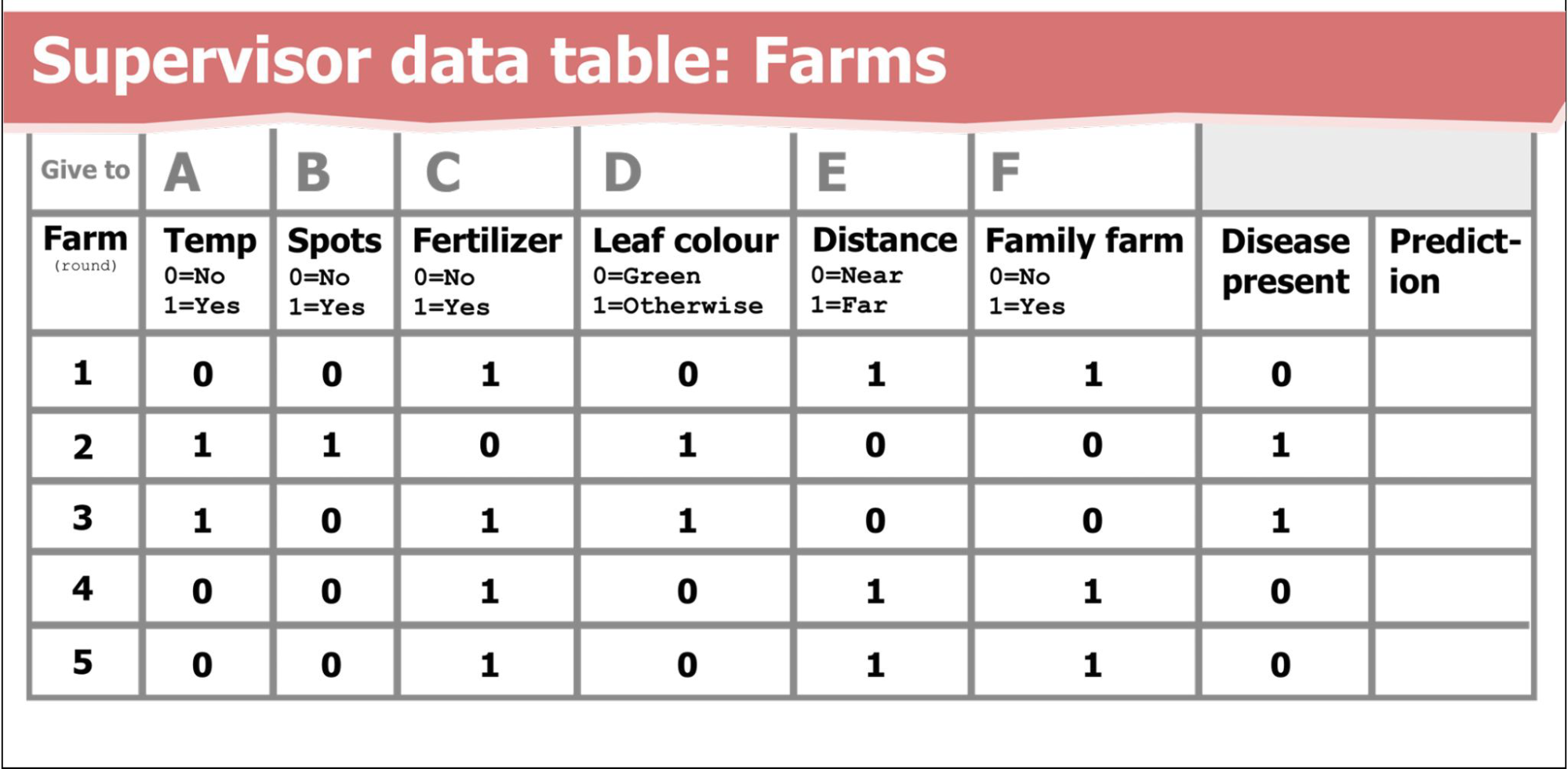
Table 1: This data table was given to the student assigned the “Supervisor” role in each group and contains both relevant and irrelevant data to “train” their neural network.

Instructions for each role

Written role-specific instructions are provided for the students to follow, for example, the Supervisor is given three steps to follow for the forward propagation stage, and the Input Layer students receive a different set of instructions and so on. The detail of the role play is shown in the instruction sheets (see Figure 1).
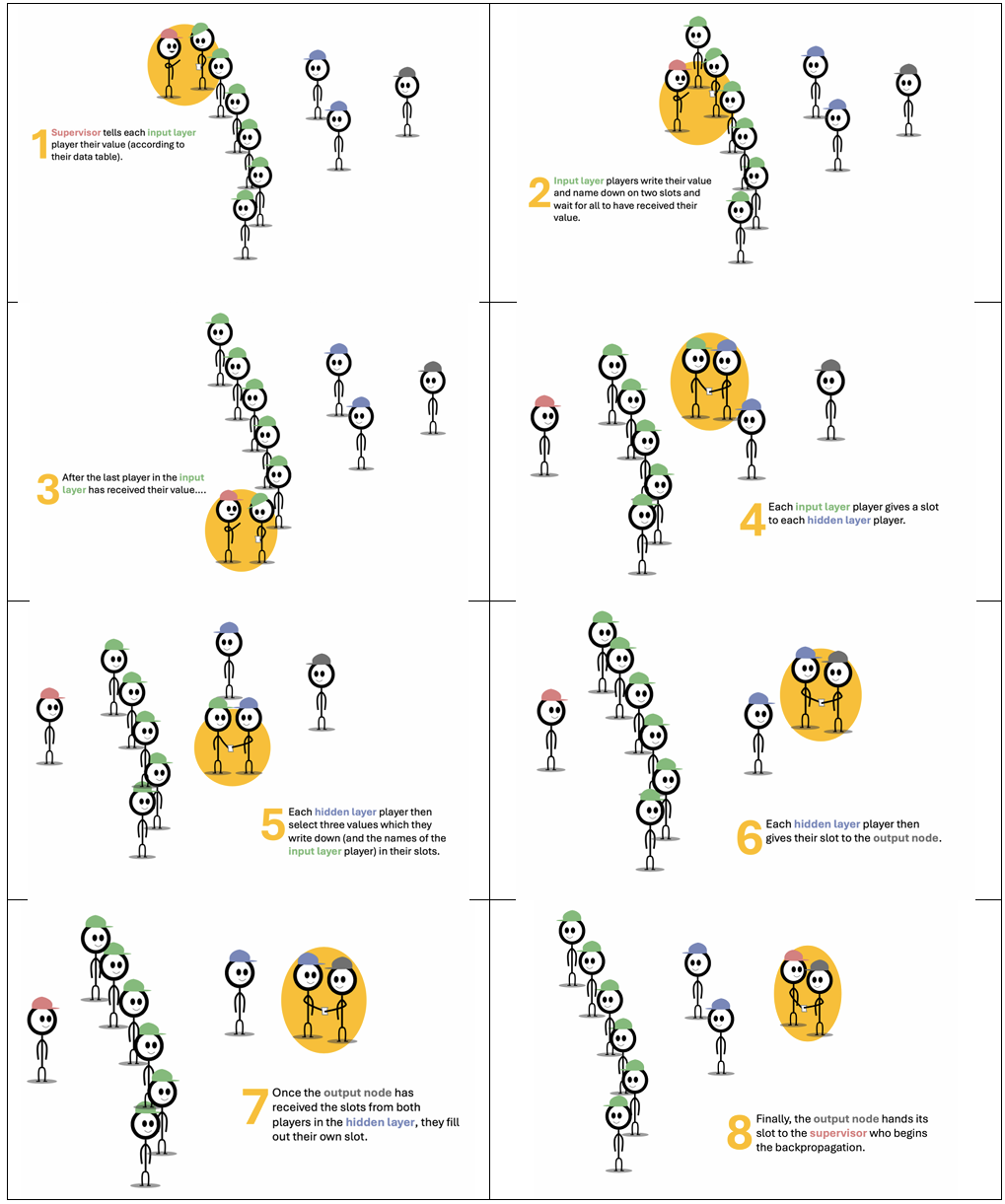
Figure 1: Detailed explanation of the eight steps of the role-play activity that Salomey developed. Click to enlarge.

Why the ropes are important

Using ropes to connect the nodes becomes most important at the reverse propagation stage. The clever part of this is that we can show an increase or decrease in the strength of connection by adding or removing ropes. For me, this is the ‘jam sandwich’ effect. This, I think, is probably the most significant learning point. Here, the number of ropes that connect the nodes in the layers are changed based on the strength of evidence that a particular feature is indicated, by the data, to be relevant to the output. In this case, whether “Temperature”, for example, has an implied effect on cocoa disease or not — based on the data, not on any preconceived rule. Simply put, if a farm did have disease then a rope is added, if a farm did not then a rope is removed. Or at a more abstracted level, if a particular neuron contributes towards the correct prediction, a rope is added, otherwise a rope is removed. In a real neural network, backpropagation involves complex maths, such as calculus that would not be accessible to students of this age. Therefore, the rope is an analogy that replaces something that would be impossible for these students to grasp if it was taught using the real-world implementation. 


Problem to be solved in the unplugged activity: Identify features that are relevant for detecting diseases

At the end of the activity, features (temperature, leaf color, family farm, etc.) with many rope connections are considered to be relevant for crop disease detection on the farm, whereas features with fewer rope connections are considered to be irrelevant for crop disease detection. The more ropes attached to a particular feature, e.g., temperature, represent its higher relevance in identifying crop disease on the farm. 


Activity design, follow-on and evaluation

As part of the design of this activity, Salomey has simplified technical language so that throughout the role play students use everyday terms and she has chosen a context that is relatable for the students. For example, she uses the language of trust, and the new thickness of a rope connection, rather than using technical terms such as weight, loss function, and the error of the network.

Salomey also designed a follow-on activity that uses pen and paper. In this version of the activity, which she calls a board game, the students draw lines to connect the nodes in the layers. The thickness of the lines connecting the nodes represent the strength of the trust (see Figure 2). 
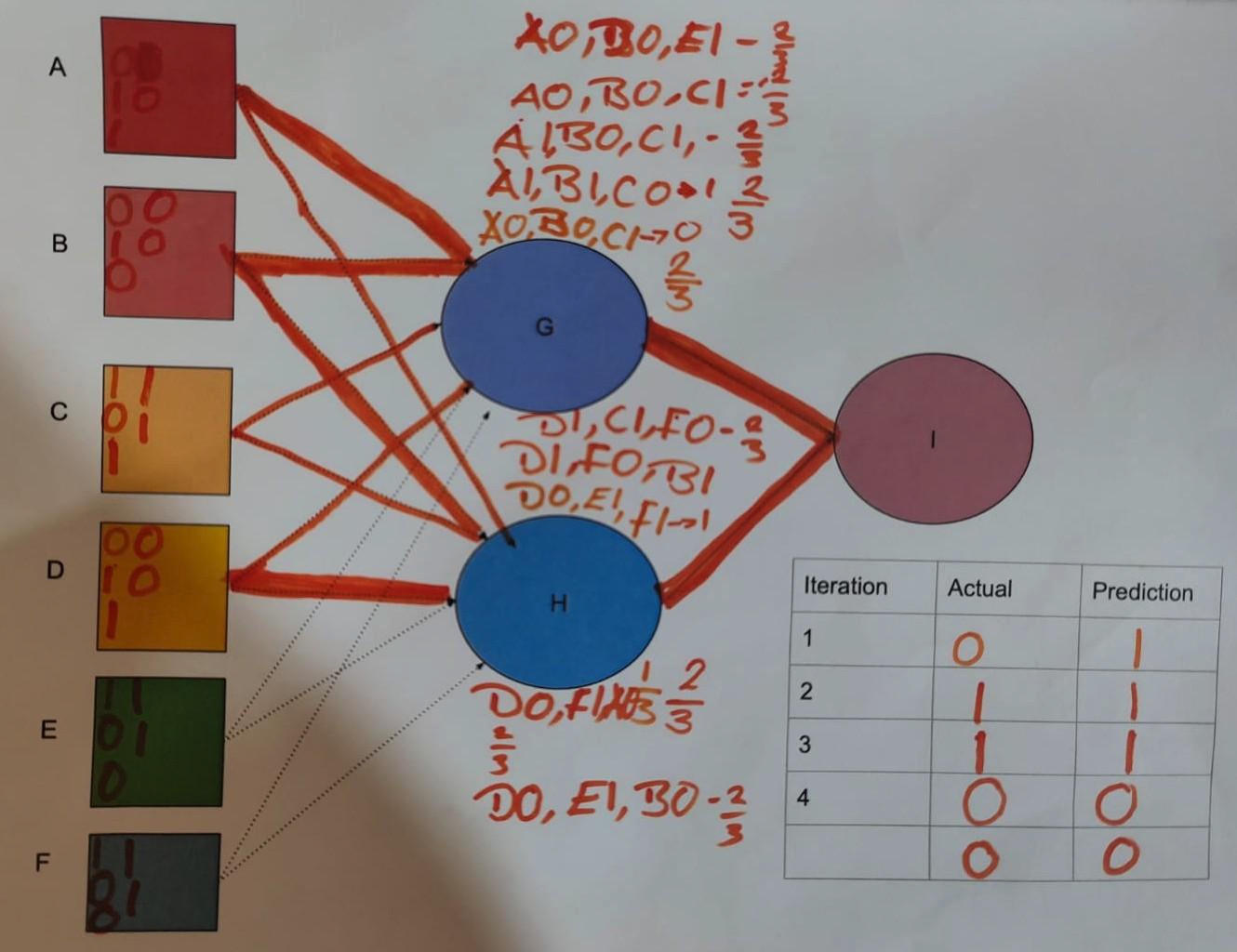
Figure 2: An example of how students use the board game that Salomey designed to teach about neural networks, where the thickness of the lines between nodes represents the strength of trust.

Salomey also shared her evaluation of the resources. She conducted pre‑ and post‑intervention surveys with 39 teachers as part of the professional development on the AI teaching materials, and ten of those teachers implemented the unplugged activities in their classrooms. She reported that the teachers found the role-play activity was effective to demonstrate neural networks, that children worked independently to learn, and that some students who did not take part usually in class were engaged.

As well as sharing about her unplugged neural network activity, Salomey also talked about a set of AI stories that she has developed to teach about other aspects of AI applications. For example, the importance of fact-checking is demonstrated through a story about a young girl who fact-checked information she received from her friends about life in a city. 
If you would like to find out more about Salomey’s work, you can find related materials on our seminar website.

Join our next seminar

Join us at our next seminar on Tuesday 17 March from 17:00 to 18:30 GMT to hear Rebecca Fiebrink (University of the Arts London) speak about teaching AI for creative practitioners. This will be the second seminar in our new series on how to teach about AI across disciplines. We hope to see you there!

To sign up and take part in our research seminars, click below:

You can also view the schedule of our upcoming seminars, and catch up on past seminars on our previous seminars page.

The post Do you have some rope? Then let’s teach about AI concepts appeared first on Raspberry Pi Foundation.
ARCTIC Cooling Publishes ARCTIC Fan Controller Driver For Linux

A Linux driver has been published for the ARCTIC Fan Controller to be able to read fan speeds under Linux as well as setting the PWM fan speed for each of the ten fans supported by this controller. Making this driver all the more exciting is that ARCTIC Cooling is directly working on this driver rather than just being a community/third-party creation. Furthermore, ARCTIC Cooling is working on getting this driver to the upstream Linux kernel…

Cadex says hooked rims not to blame for Amaury Capiot’s Omloop het Nieuwsblad wheel failure

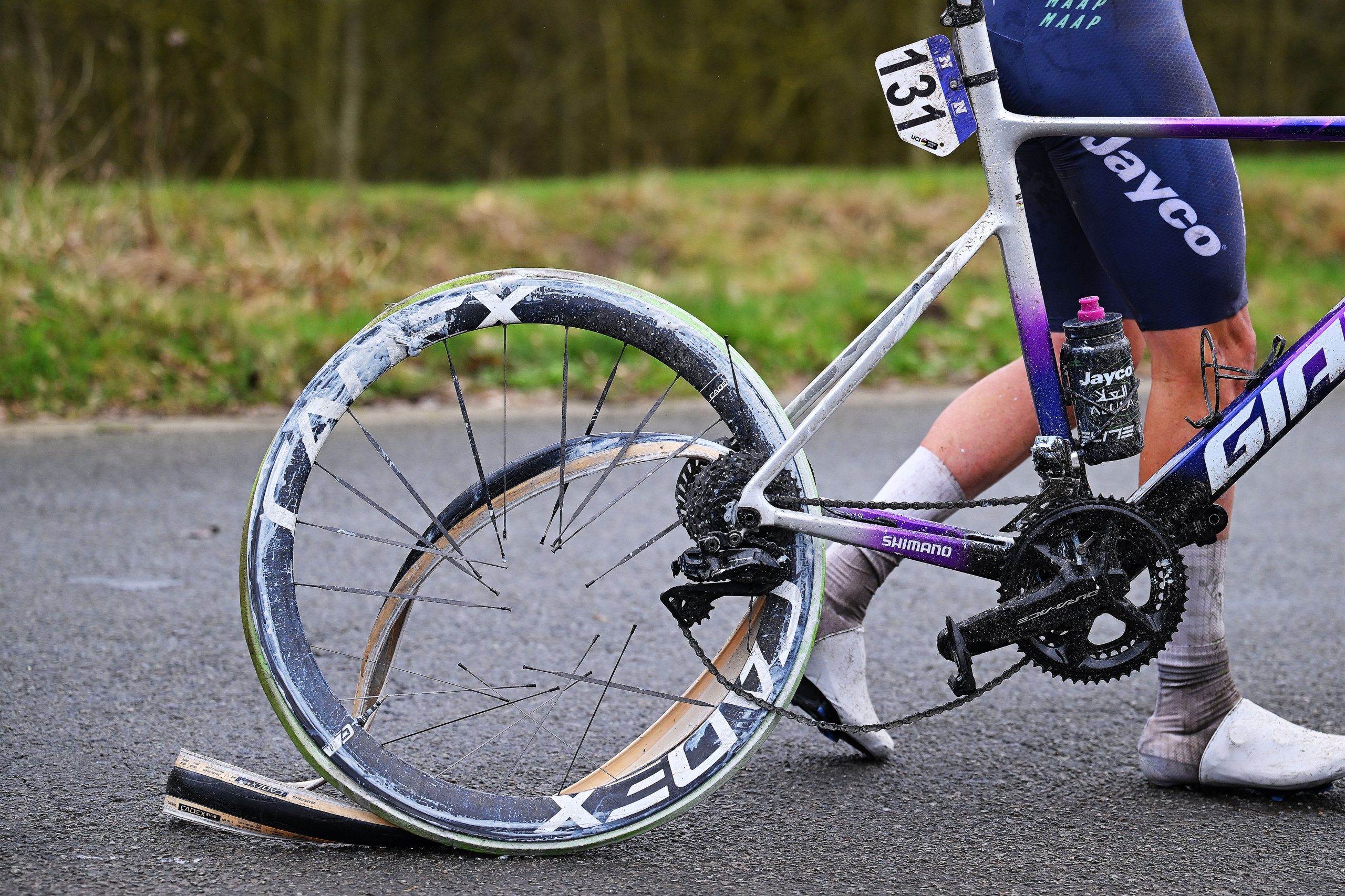
Cadex has released a statement in response to Team Jayco-AlUla rider Amaury Capiot’s wheel-tyre system failure at Omloop het Nieuwsblad, suggesting the cause was a result of repeated use over the cobbles after the initial deflation.

The Giant-owned brand, which has for a number of years produced hookless rims, says the “tire separation in this incident was not caused by hookless rim design”, with its assessment carried out with the team revealing that “prolonged riding” over cobblestones with a flat and damaged rear Cadex Aero Cotton tyre caused the rim to crack.

This structural rim failure is suggested to be the cause of the spokes displacing from the hub, and the resulting “collapse” of the wheel, leading to the tyre being unseated completely from the rim.

The statement comes following a team spokesperson claiming the failure occurred as “the result of riding for too long on the cobbles with a flat tyre after puncturing”, as reported initially by Cyclingnews.

Tyre liner disconnect, but not to blame

NIVONE, BELGIUM - FEBRUARY 28: Detail of the exploded tire of Amaury Capiot of Belgium and Team Jayco AlUla during the 21st Omloop Het Nieuwsblad 2026, Men's Elite a 207.2km one day race from Ghent to Ninove / #UCIWT / on February 28, 2026 in Ninove, Belgium. (Photo by Tim de Waele/Getty Images)
After Capiot continued to ride on the rim, the system suffered a complete structural failure with the hub still fitted to the frame. Tim de Waele/Getty Images

Images from the incident clearly show a tyre liner being used by the Jayco-AlUla rider, still in place around the Cadex Ultra 50 rim. This is a common addition to a tubeless tyre setup for teams, especially during the cobbled classics, in theory offering improved ‘run-flat’ riding in the event of a deflation, with a degree of protection for the rim.

Capiot presumably attempted to take advantage of this, with Cadex claiming the “team support car was far behind” in its statement.

However, while tyre liners are designed to protect a rim in this context (in the event of a deflation, the liner foam will expand into the unpressurised space and cushion the rim edge from impacts), it wasn’t enough to stop the rim failing in this instance.

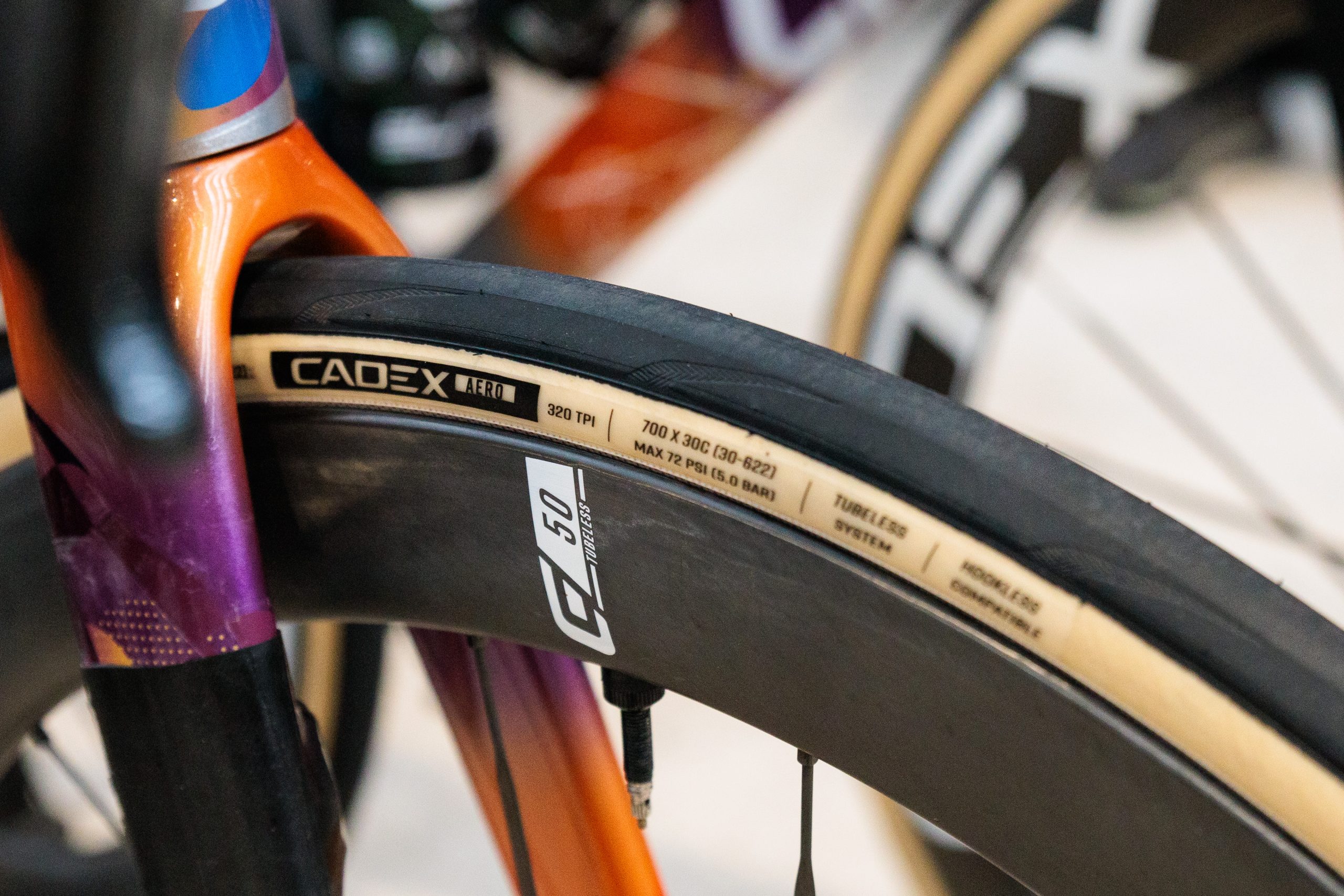
Cadex Aero Cotton tyre and Ultra 50 wheel at 2026 Omloop Het Nieuwsblad
Cadex doesn’t recommend the use of tyre liners, albeit this wasn’t suggested as a contributing factor to the failure. Simon von Bromley / Our Media

It’s worth noting that, according to a brand representative, neither Giant or Cadex recommend the use of tyre liners with their products and, in this instance, the team was operating outside these guidelines. However, there’s no suggestion that the liner was a contributing factor to the failure.

Cadex says the initial impact occurred at “approximately 47-48kph”. Capiot then continued riding on cobbled sections of the race course until the wheel collapsed. The brand says that “even when the wheel ultimately yielded to the extreme forces, it remained stable enough to prevent a crash”. 

MWC 2026’s most bizarre phone can start fires (on purpose)

This isn’t a Galaxy Note 7 debacle. Oukitel’s WP63 is a ruggedized smartphone that’s meant to set things alight. It has a built-in electric igniter, aimed at emergency response and camping, helping to start fires when you forgot matches, but you brought this beastly phone along for the adventure. It’s got several other notable features, like a 20,000mAH battery, a loudspeaker, and even its own built-in USB-C cable for charging other devices.

Still, the igniter was why I was here. The WP63 has an electric coil that heats up, similar to cigarette lighters in cars circa 1987. This is hidden away behind a protective cover at the top of the device, and once it pops out, you activate it using an app. An Oukitel spokesperson was able to light some rolled-up paper, and I was surprised how gentle and seemingly in control it was. (The paper looked like a cigarette, too.)

Unfortunately, another spokesperson told me that it can’t be used to light candles, although I can’t understand why. I don’t start campfires, but I do light candles.

Oukitel WP63 at MWC 2026
Image by Mat Smith for Engadget

The phone will be priced around $500, and completely ignoring the tendency for thinner and thinner phones, it’s 27mm thick. Another outdoor use? If a bear decided to attack you in the woods, you might be able to concuss it with the WP63.

This article originally appeared on Engadget at https://www.engadget.com/mobile/smartphones/oukitel-wp630-mwc-2026-smartphone-igniter-101046023.html?src=rss

The 19th Century Silent Film That First Captured a Robot Attack

The Library of Congress has restored Gugusse et l’Automate, an 1897 short by Georges Melies that likely features the first robot ever shown on film. Long thought lost, the reel was discovered in a box of decaying nitrate films donated from a Michigan family collection. NPR reports: The film, which can be viewed on the Library of Congress’ website, depicts a child-sized robot clown who grows to the size of an adult and then attacks a human clown with a stick. The human then decimates the machine with a hammer.

In an Instagram post, Library of Congress moving image curator Jason Evans Groth said the film represents, “probably the first instance of a robot ever captured in a moving image.” (The word “robot” didn’t appear until 1921, when Czech dramatist Karel Capek coined it in his science fiction play R.U.R..)

“Today, many of us are worried about AI and robots,” said archivist and filmmaker Rick Prelinger, in an email to NPR. “Well, people were thinking about robots in 1897. Very little is new.”


Read more of this story at Slashdot.

New Kona LBF gravel bike features suspension fork and dropper post – but don’t call it a drop-bar MTB 

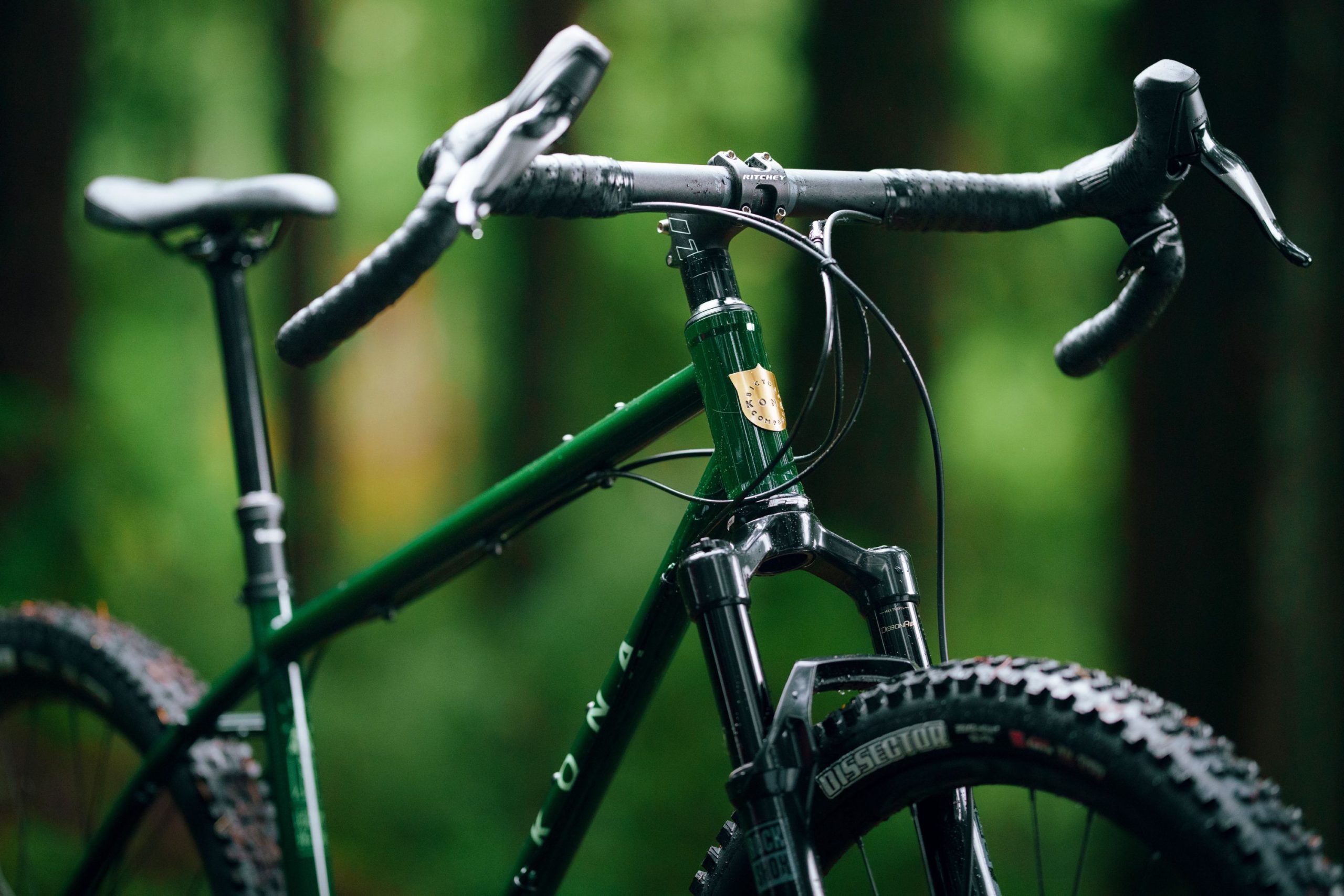
Kona has launched a monster steel gravel bike with a 100mm-travel RockShox SID suspension fork lifted from XC mountain bikes. The LBF is not an MTB with a drop bar, though, with the frame geometry set up specifically for a drop bar.

The Reynolds 520 butted-steel frame bike’s LBF name stands for Legend of the Big Fork, a play on the Big Foot monster native to Kona’s Pacific Northwest home (allegedly). 

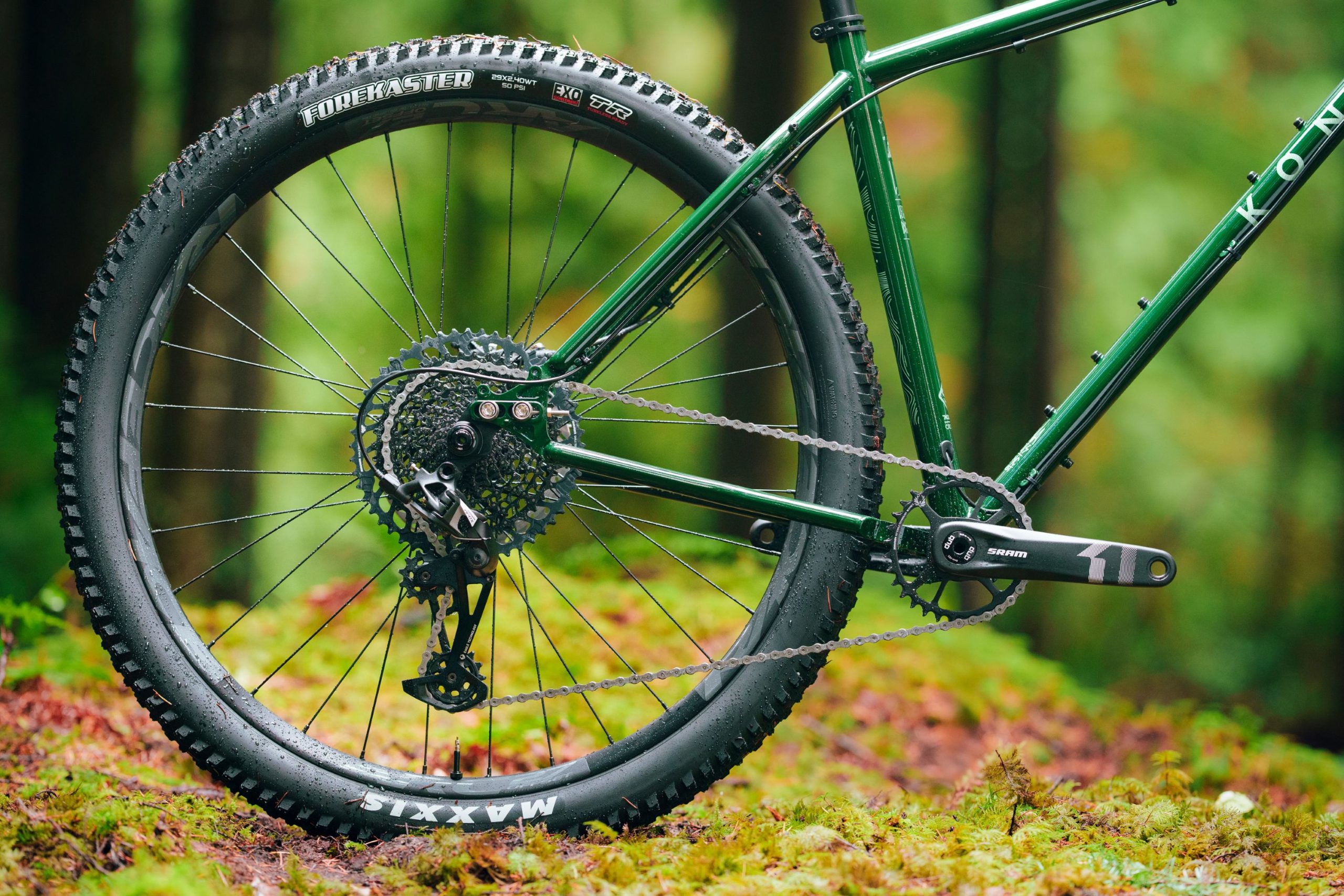
As with the fork, the tyres and wheels are MTB-level, with a 2.4in Maxxis Dissector tyre at the front and a 2.4-inch Maxxis Forekaster at the rear on Race Face ARC Asymmetric 27mm rims built on Formula hubs with Boost spacing. 

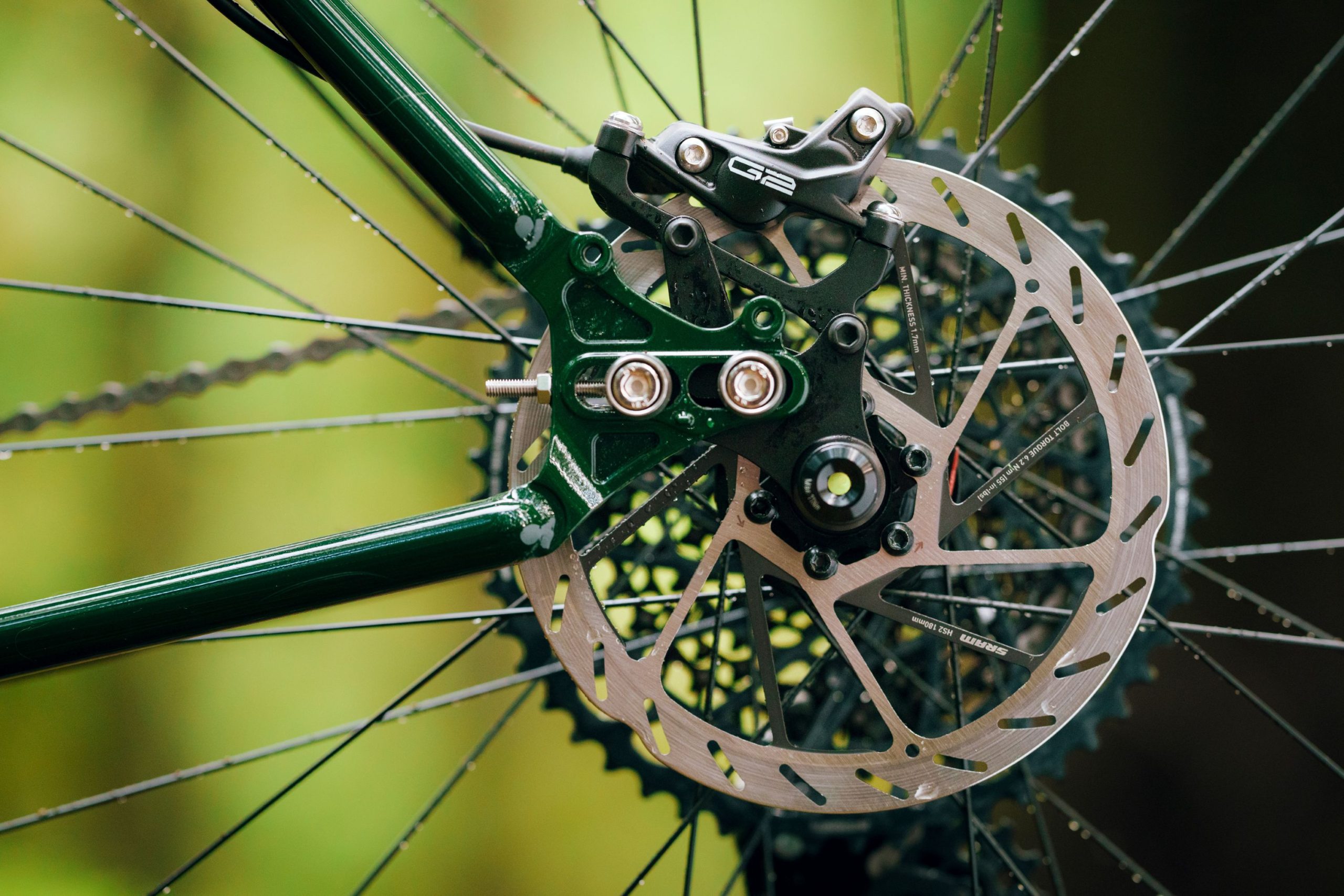
Kona fits SRAM G2 four-pot brake calipers to the LBF, which includes a sliding UDH dropout.

If you’re heading into territory where you need the big tyres and hardtail-adjacent suspension, you’ll want appropriate stopping power, too, so Kona has paired the LBF’s SRAM Apex levers with SRAM’s G2 four-piston MTB brake calipers in what it says is a unique but SRAM-approved configuration.

The bike is specced with 180mm SRAM HS2 brake rotors, but you can fit 200mm rotors should you choose.

SRAM Eagle components supply MTB-adjacent gearing.

There’s a SRAM Eagle crankset with a 32-tooth chainring on a 73mm threaded bottom bracket and a SRAM Eagle 10-52t cassette, with a SRAM Apex Eagle derailleur. You can fit a maximum 34-tooth chainring if you want to gear up.

Drop-bar geometry

MTB-like geometry is correct for the Ritchey drop bar.

Kona’s headline geometry numbers mirror those of its mountain bikes, with a 67-degree head tube angle that’s very slack in the gravel world but, it says, lends the bike stability at speed.

The seat tube is MTB-steep, too, at 75 degrees, which Kona claims leads to predictable handling and seats the rider more centrally between the wheels. 

The fit of hardtails and gravel bikes is different, though, with drop bars typically extending the reach. So Kona has adjusted the LBF’s geometry to account for the drop-bar configuration, rather than simply clamping a gravel bar to an MTB frameset. The LBF is kitted out with a Ritchey Comp Beacon flared gravel handlebar. 

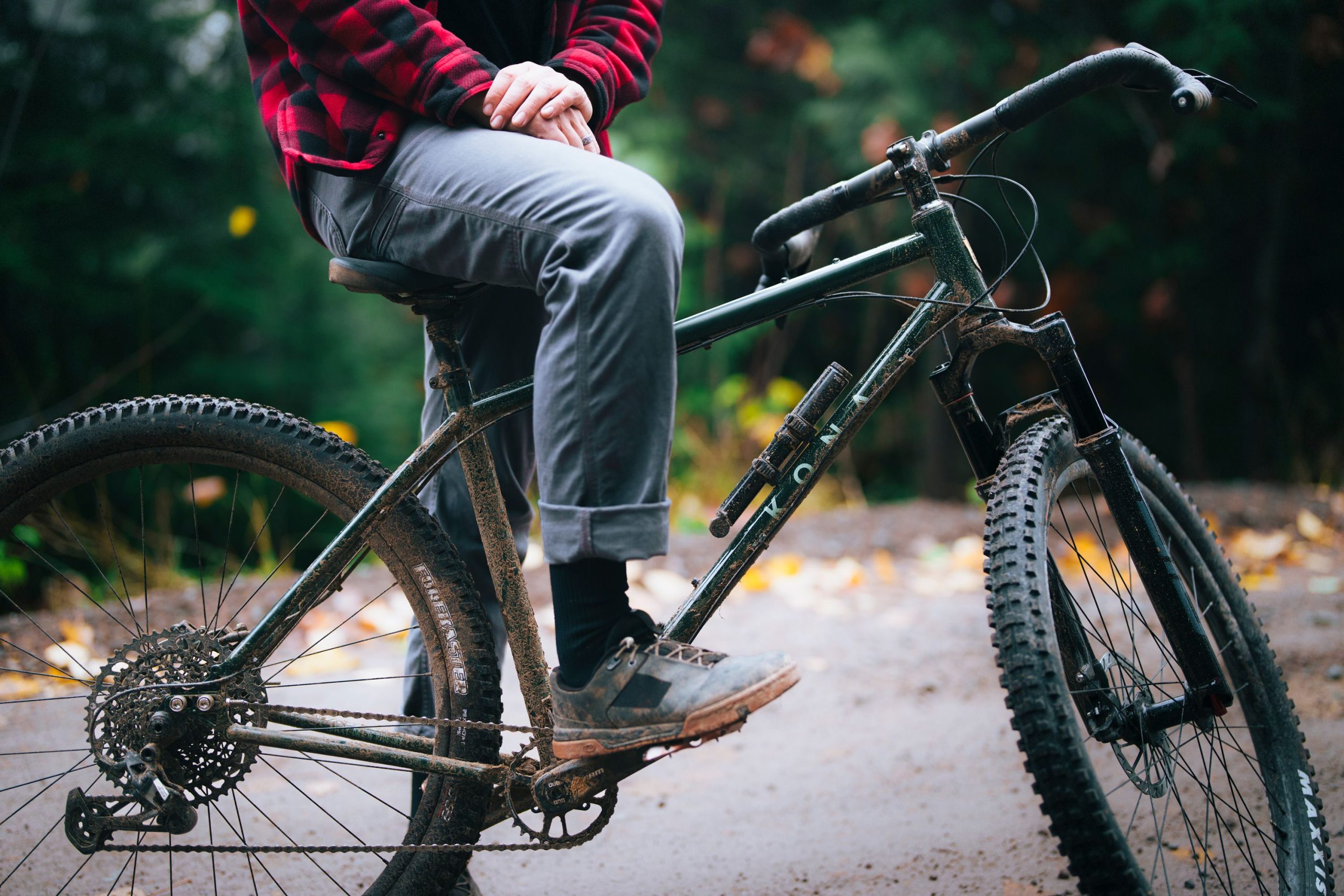
The Kona LBF is designed for rowdy gravel riding. Kona

Another feature of the frame is sliding UDH dropouts at the rear, enabling you to set up singlespeed or tweak the rear-end configuration. There’s a full set of mounts, so you could fit mudguards (although probably not with the 2.4in tyres) and a rack, as well as bags above and below the top tube.

An MTB-adjacent gravel bike needs a dropper post, too – in this case, a TransX RAD+. 

Kona claims a 14kg / 31lb weight for the LBF, which is available in S, M, L and XL sizes. It’s priced at £3,299 in the UK, $3,699 in the US and €3,999 in Europe.

Shimano’s new Tiagra groupset answers questions CUES could not

Shimano has announced the launch of a new Tiagra groupset after stating in 2023 that the all-encompassing CUES family would replace all Shimano groups up to and including Tiagra.

The new group of components looks to answer the questions CUES has failed to address in the eyes of product managers and bike buyers.

New Tiagra R4000 offers 2x 11-speed with two chainring options, accessible gearing and a new more ergonomic lever design to suit a wider range of riders. The emphasis on adjustment could make new Tiagra a great option for juniors.

Shimano also claims like-for-like configurations of the new R4000 with the current-generation Tiagra are more than 200g lighter.

Why return to Tiagra?

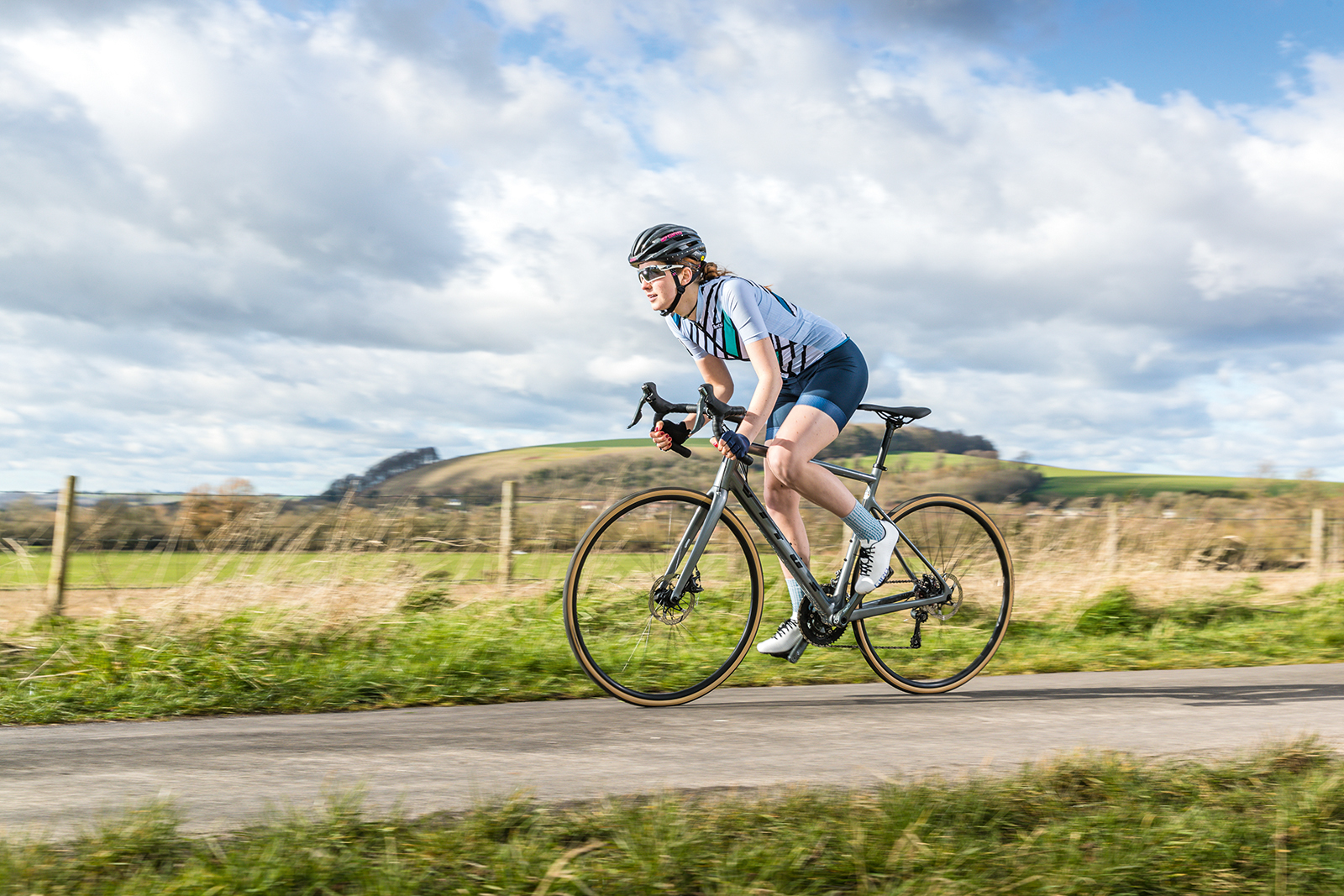
Female cyclist riding the Vitus Zenium Tiagra road bike
Tiagra provides, for many, the first taste of true performance bikes. Russell Burton / Immediate Media

As I reported last last year, the reaction to Shimano’s push with CUES into the entry-level road bike market was lukewarm at best. I found very few examples of CUES-equipped bikes.

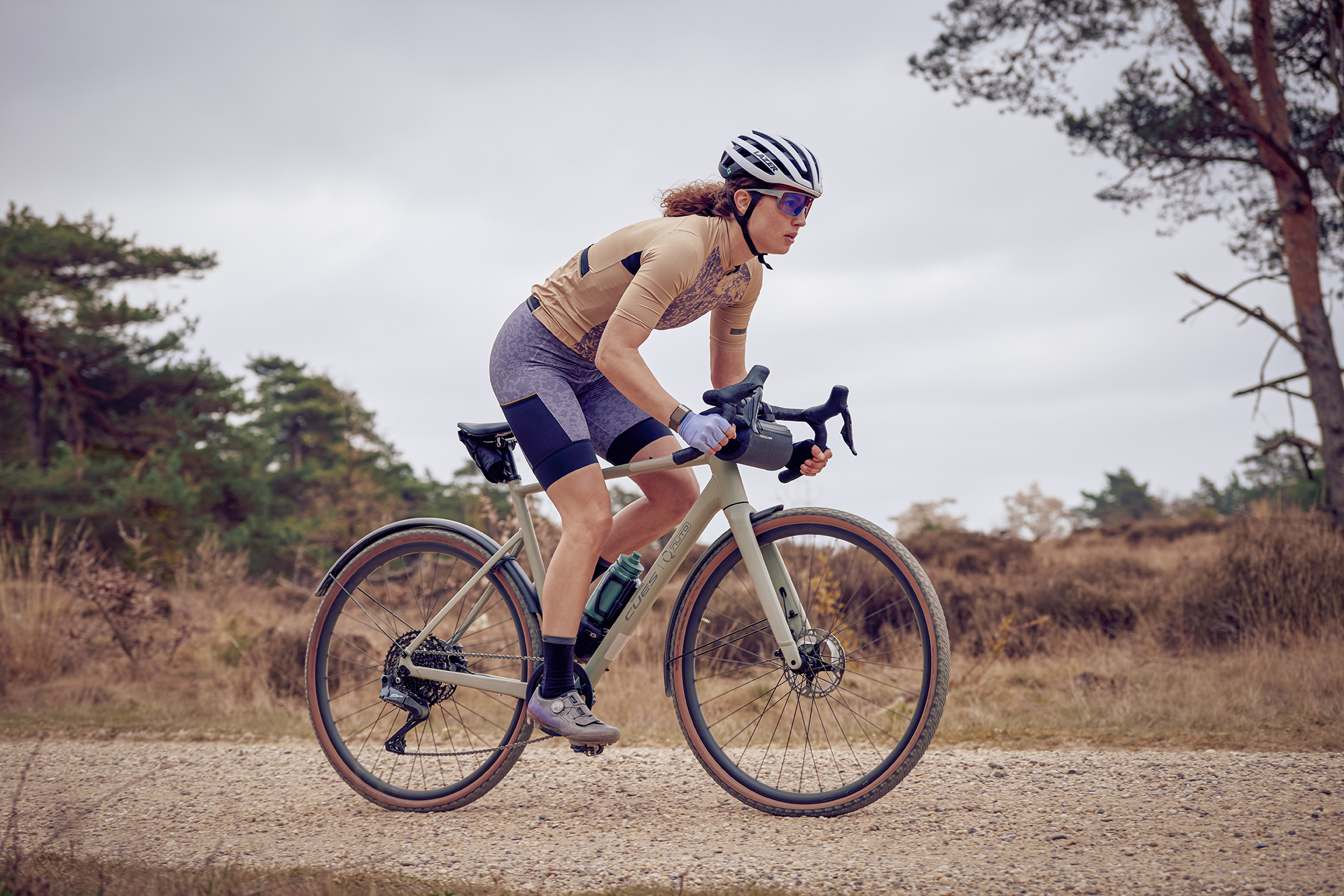
Shimano Q'Auto hub and Cues on gravel bike
CUES always looks far more at home on urban and gravel bikes. Shimano

Instead, product and brand managers were happier to continue with the soon-to-be-phased-out 10-speed Tiagra rather than switch to the robust all-road styled CUES.

New Tiagra looks like what we’ve been asking for

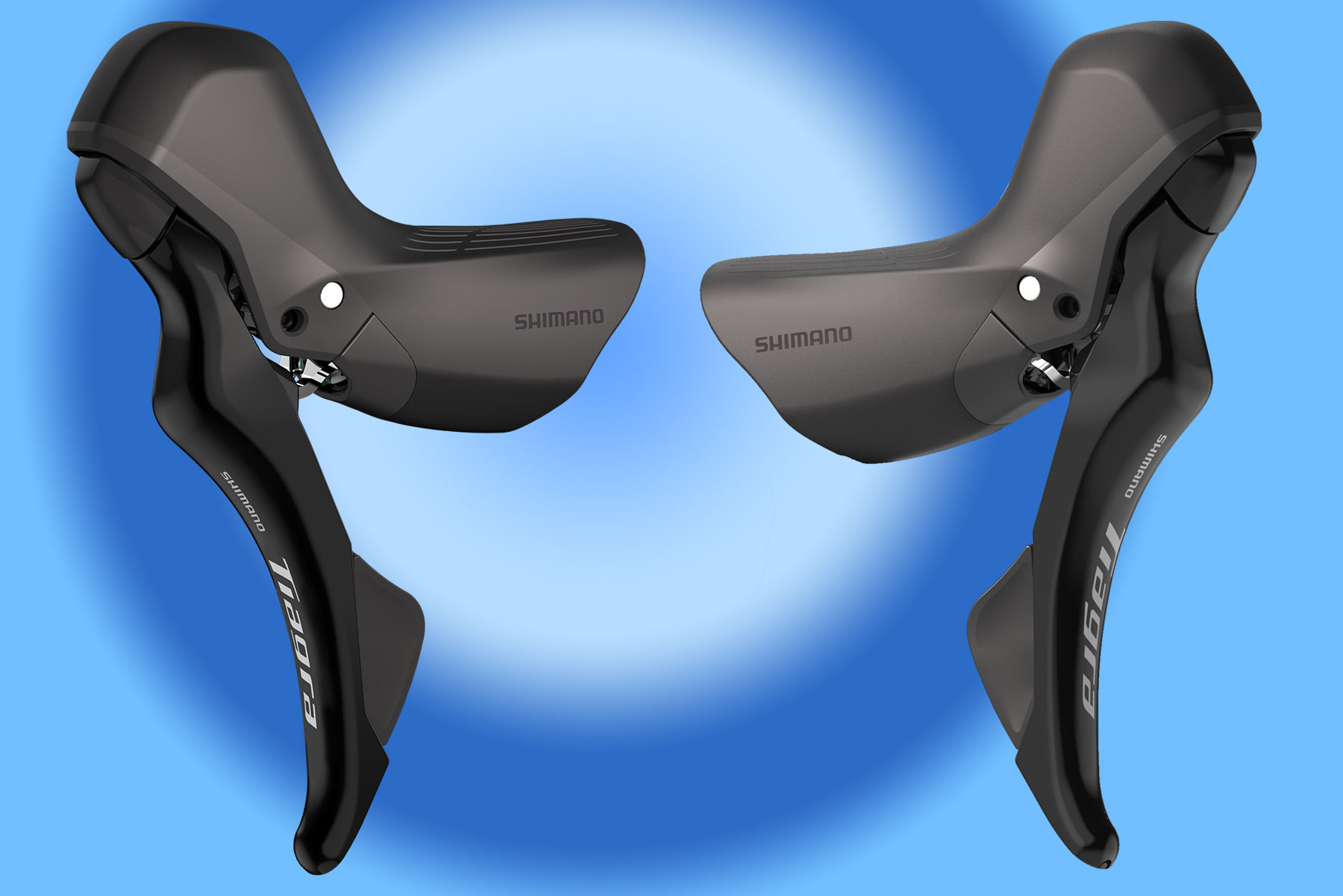
Tiagra ST R4020
The new shifters have the same ergonomics as the latest mechanical 105 shifters. Shimano

Only a few weeks ago, I wrote how I wanted to see a new performance-oriented, entry-level option from Shimano. That was based on what I saw as the lack of innovation for the huge market of affordable road bikes, and from talking to key industry figures.

Well, Shimano obviously thought the same. We now have a range of components with both looks and key specifications to meet the needs of this broad, large range of bikes.

The biggest change from previous Tiagra, and indeed CUES, is the shifters. Shimano says the ergonomic profile means easier reach across a wide range of hand sizes. The design has the same ergonomics as the latest 105, using the same redesigned lever and bracket positioning.

The 2x 11 options include only a single 11-36 cassette, although it’s joined by both a 52/36 pro compact pairing and a more traditional compact 50/34 option.

Styled for the road

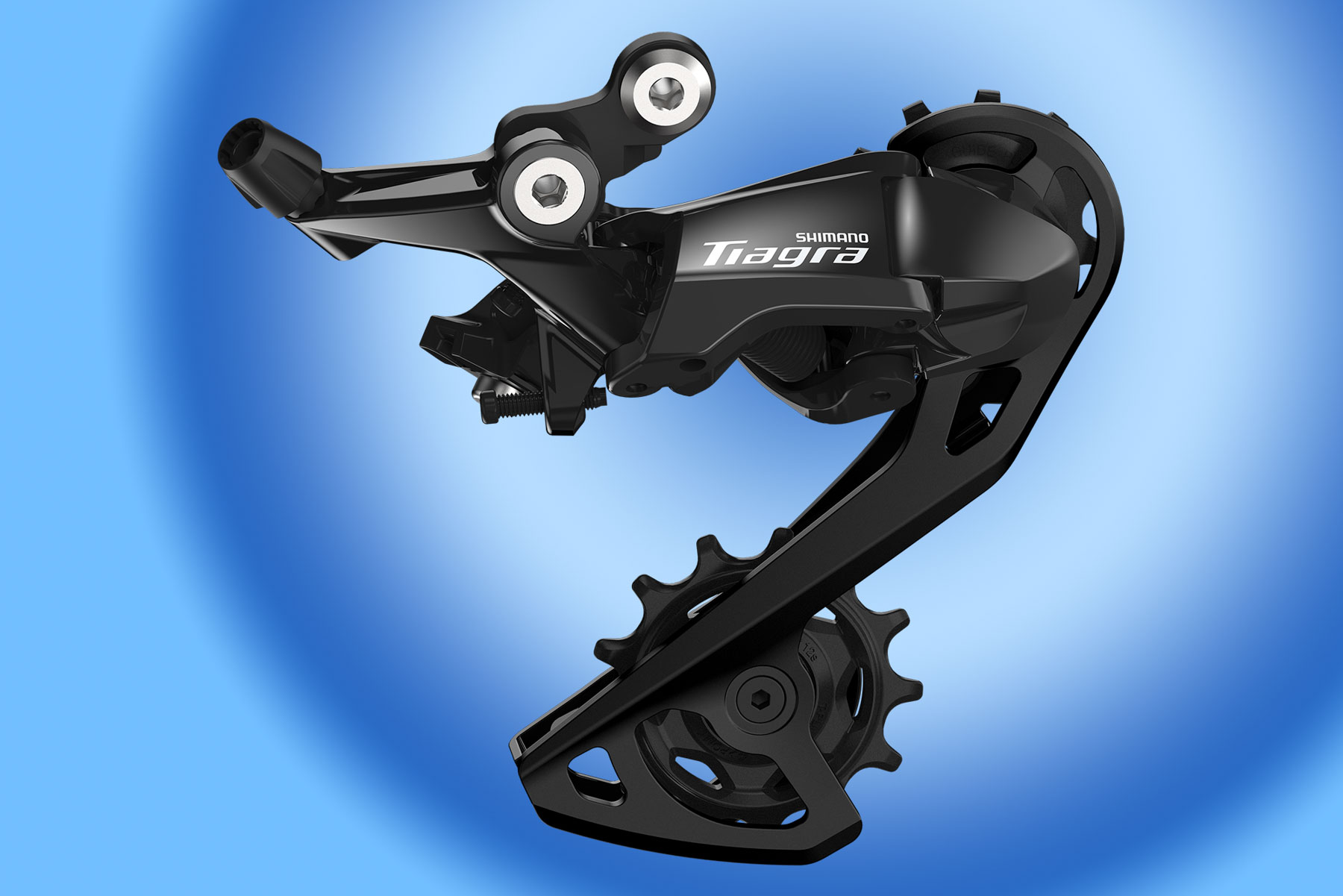
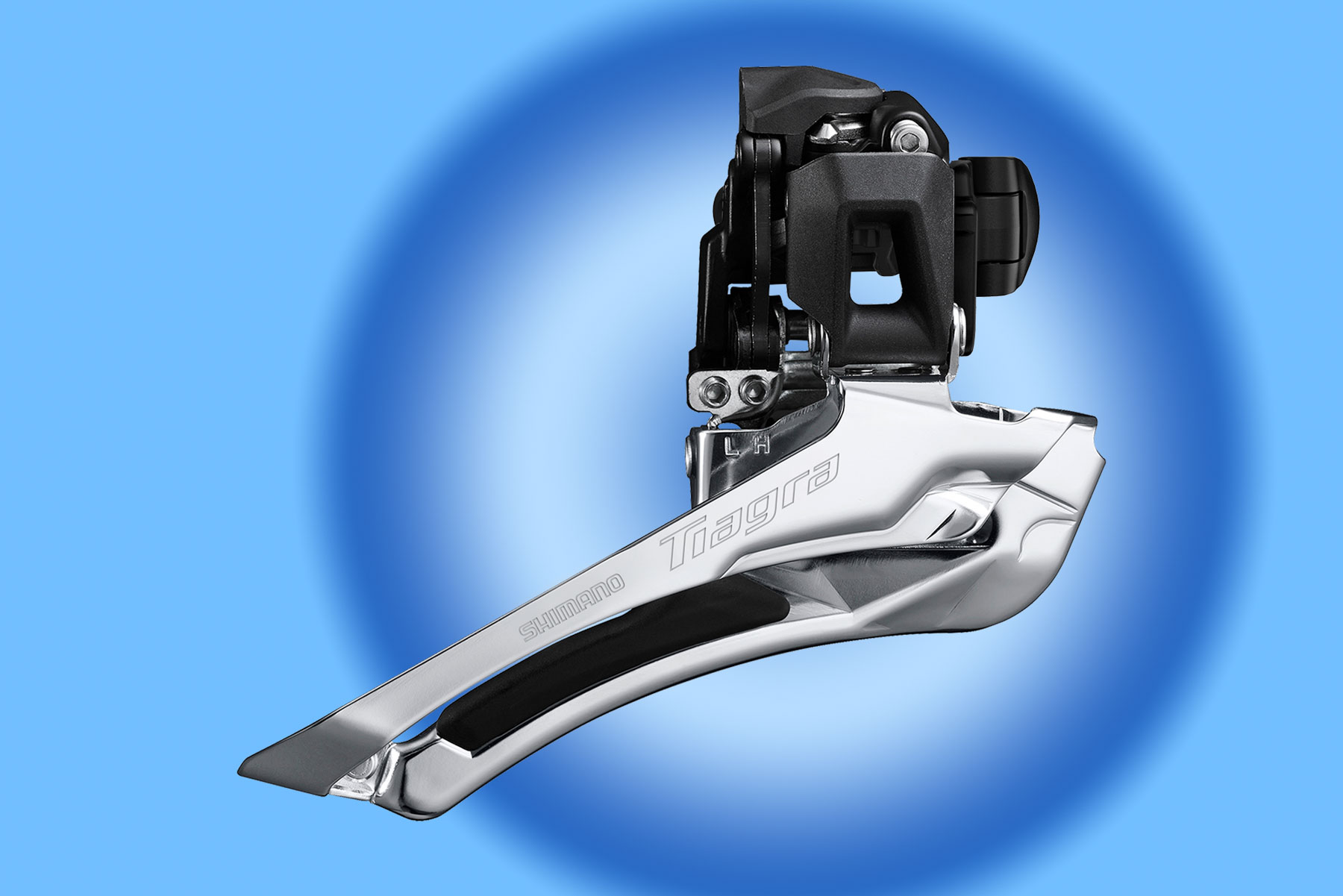
Tiagra RD R4000.
The new Tiagra derailleur has similar styling to the latest 105. Shimano

Where the new Tiagra scores in my eyes is its styling. Unlike the chunky, robust-looking CUES, Tiagra R4000 carries the same styling and DNA as Shimano’s high-end groups. The 105-alike levers are smoothly styled, while the integrated look of the crankset shares design cues with 105, Ultegra and the flagship Dura-Ace.

The low-profile and compact rear derailleur has classic road-component vibes, especially when viewed alongside electronic derailleurs with built-in batteries, as we now have from Campagnolo, SRAM and Shimano.

The downside is that, although Shimano has announced a new Tiagra today, the existing Tiagra is not set to be phased out until early 2027. So, while we can be excited at the advancements on offer, we won’t see bikes with the new components until the 2027 model year.

I’ve quizzed representatives from many major bike brands and, although all have expressed excitement about Tiagra R4000, none have confirmed models or price ranges we’ll see the groupset featuring on. Understandably, their focus is on current ranges rather than what comes next.

New Shimano Tiagra spec, price and weight details

Rear derailleur: RD-R4000

Tiagra FD R4000 B
The new front derailleur uses the compact cam action debuted on Dura-Ace 9100. Shimano

The new RD-R4000 rear derailleur looks very similar to 12-speed 105, with what looks to be a more compact cage, and the main body having elements of the 105’s low-profile shadow shape.

Rather than it being a full low-profile shadow design, the main cable port on Tiagra is more exposed. At a claimed 275g, it’s only 2g lighter than the current Tiagra.

Front derailleur: FD-R4000

The new front derailleur is available in both band-on and braze-on versions, with Shimano’s toggle link action first introduced on mechanical Dura-Ace 9100.

It uses a compact cam-driven mechanism that results in lighter action and reduced lever throw – another improvement for small hands, asserting Tiagra as a great option for kids’ road bikes. The new front unit is marginally heavier than its predecessor (95g compared to 91g).

Crankset: FC-R4000 (52-36 and 50-34t options)

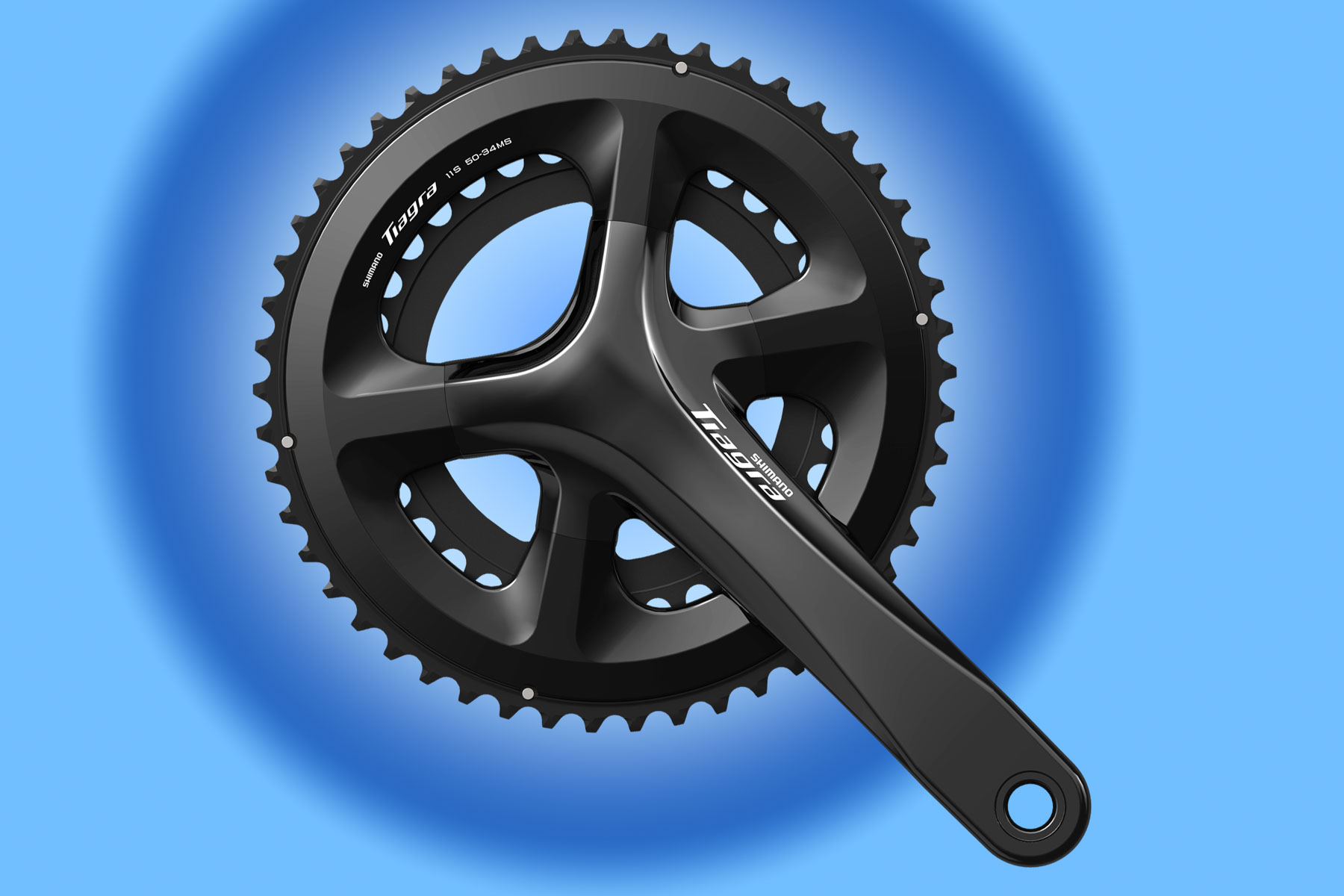
Tiagra FC R4000 50 34
The new FC-R4000 crankset is the star looker of the new Tiagra – seen here in 50/34. Shimano

The crankset looks much like the latest 12-speed 105 with the smooth flow of the crank spider into the outer ring. I think this is the single biggest improvement over both its predecessor and CUES.

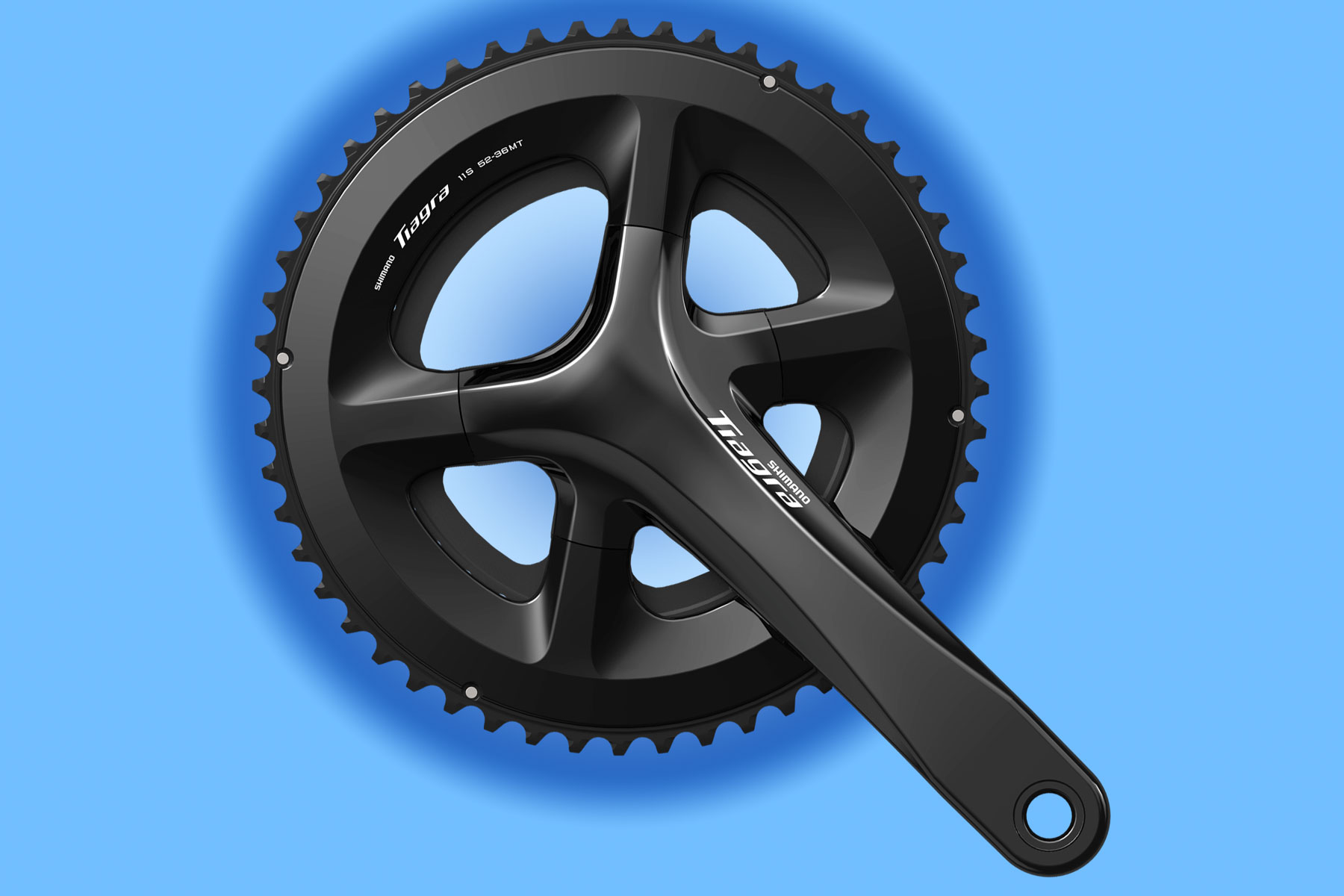
With 52-36 and 50-34 options, it shows Shimano views the new Tiagra as a true performance option, too. It’s available in 165, 170, 172.5 and 175mm length options. The 907g weight (50-34, 172.5mm) is lighter than the outgoing version’s 926g.

Shifters: ST-R4020-L (left), ST-R4020-R (right)

Tiagra ST R4020
The new shifters borrow the ergonomics from the latest mechanical 105 shifters. Shimano

The new shifters share the same ergonomics and profile as mechanical 12-speed 105 and are hydraulic disc brakes only. The weight is a claimed 622g a pair – a significant saving over the previous generation’s 740g.

The brakes are the existing BR-RS405 hydraulic caliper.

Cassette: CS-RS400-11

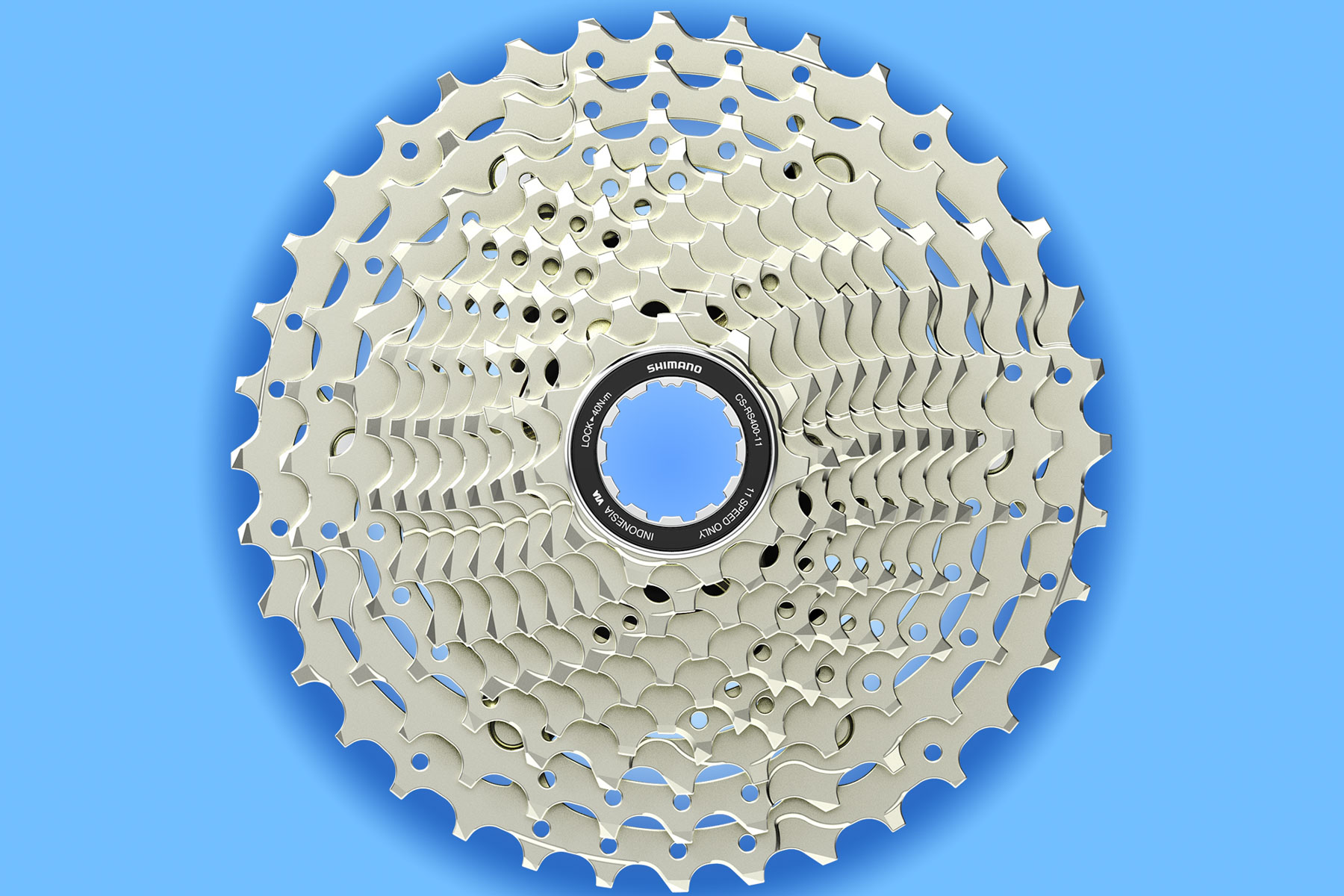
Tiagra CS RS400 11 cassette
The new 11-speed 11-36 cassette is the single option for new Tiagra. Shimano

The final new component is the 11-36-tooth cassette. Obviously, this is now 11-speed rather than 10-speed – hence a slight increase in weight to 398g from 384g. The compatible chain is the current CN-HG601-11 – a directional super-narrow HG-X11 unit with Shimano’s SIL-TEC treatment on the plate surfaces.

  • Rear derailleur, RD-R4000. Weight: 275g. Price: £64.99 / €59.99
  • Front derailleur, FD-R4000-F. Weight: 95g. Price: £39.99 / €37.99
  • Front derailleur, FD-R4000-B. Weight: 111g. Price: £39.99 / €37.99
  • Crankset, FC-R4000, 52-36T. Weight: 917g. Price: £139.99 / €134.99
  • Crankset, FC-R4000, 50-34T. Weight: 907g. Price: £139.99 / €134.99
  • Shifters ST-R4020-L, ST-R4020-R. Weight: 622g (pair). Price (each): £174.99 / €169.99
  • Cassette, CS-RS400-11. Weight: 398g. Price: £64.99 / €59.99

What does Shimano say?

Tiagra FC R4000 52 36
The 52/36 crankset option shows Shimano sees Tiagra as a proper performance option. Shimano

We originally reported on CUES in February 2023, with Shimano’s radical new approach seeing it replace Alivio, Acera and Altus, alongside select Deore components for flat-bar/mountain bike use, and the drop-bar iteration replacing Tiagra, Sora and Claris.

The apparent U-turn on the CUES idea shows Shimano has listened.

I asked about the new Tiagra and it stated: “We developed Tiagra R4000 to meet a clear demand from riders and OEMs (bike brands: original equipment manufacturers) for an accessible, 2×11 mechanical groupset that delivers a true road cycling experience.

“While CUES is highly versatile – designed for All-Road, Gravel, and bikes with wider tires – TIAGRA R4000 remains a dedicated “Pure Road” groupset. This distinction is reflected in its technical specifications, such as optimized chain stay lengths and front derailleur tyre clearance, which are specifically tailored for classic road bike geometry, aesthetics, and performance.”

However new Tiagra has come about, I’m very glad it has. Now it’s over to Shimano’s rivals, SRAM and Campagnolo, to offer an alternative to Shimano’s return to value performance road components.

You need 32mm+ tyres on your road bike, according to independent testing of new Hutchinson Blackbird

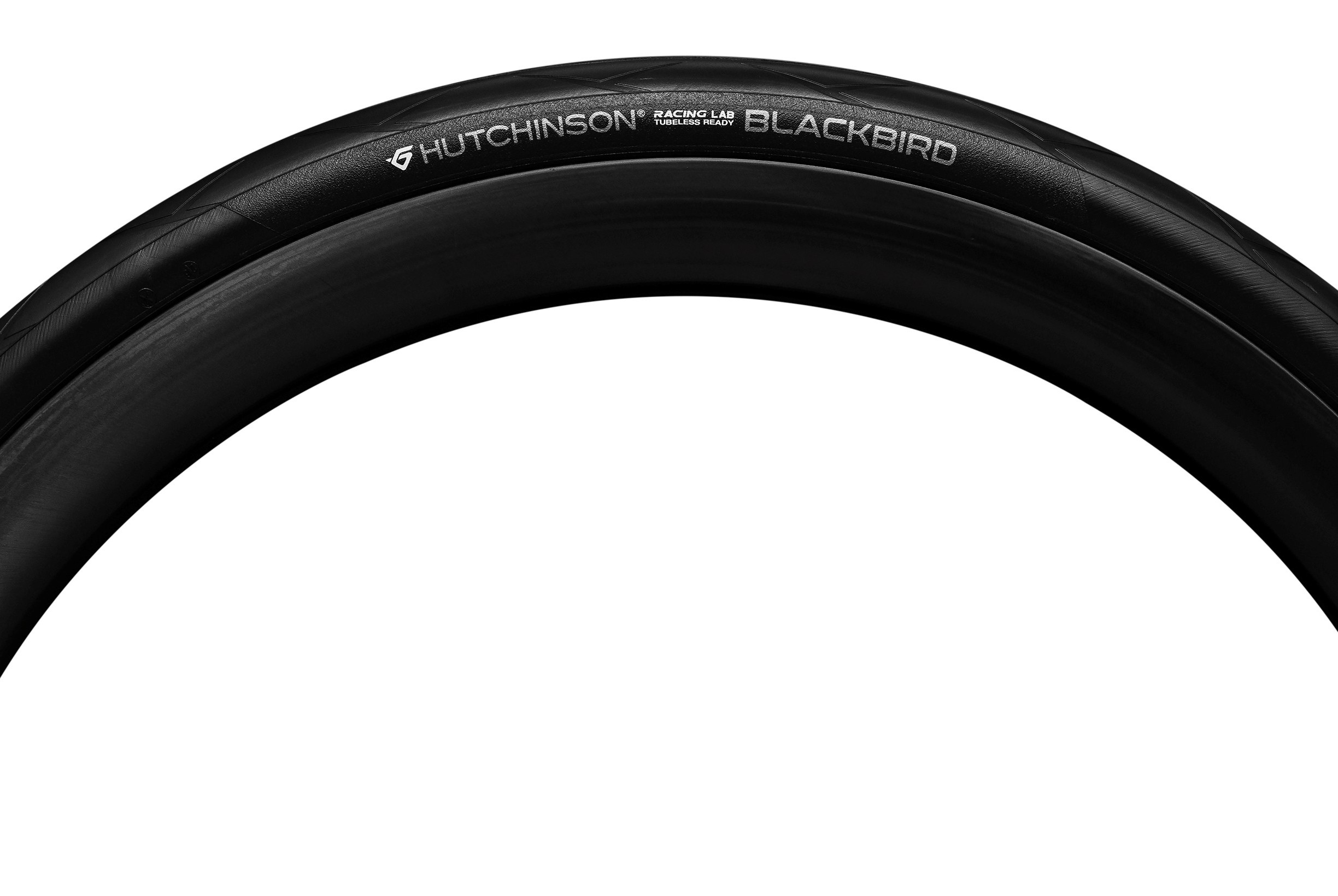
Hutchinson has added new wider tyres to its Blackbird range, with 32mm and 34mm widths now available for all Blackbird variants: the Blackbird Race, standard Blackbird and Blackbird All Season.

There are two pieces of good news. First, the wider tyres are the same price as narrower options and, second, Hutchinson says independent testing shows the 32mm tyres roll 5% faster than the same tyre in a 30mm width.

According to Hutchinson product manager, Martin Chuchu: “The industry believed that wider tyres would hinder performance. We wanted to challenge that. With the 32mm and 34mm Blackbirds, we want to demonstrate precisely that this vision is outdated. 

“A wider tyre performs better: it filters vibrations, provides damping, and, above all, delivers a level of stability you feel immediately, especially in high-speed corners.“

Faster than a 30mm tyre

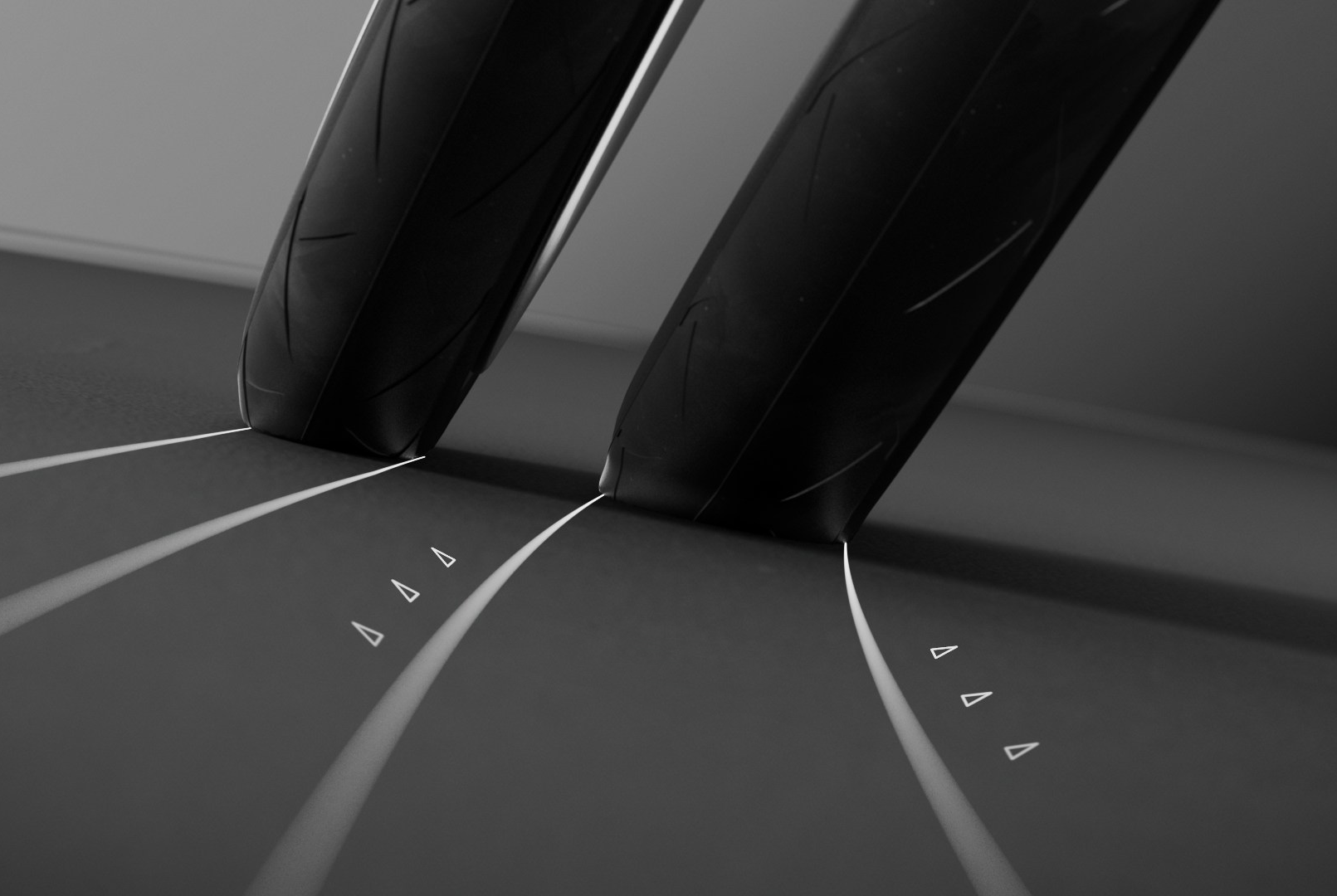
Hutchinson cites added cornering grip and stability from the added width.

Wider tyres are increasingly taking over, not just for amateur riders but for the pros, too. However, rather than launching a me-too product, Hutchinson wanted to prove its new widths offer an advantage over narrower tyres.

So, it sent its 30mm and 32mm tyres for independent testing, which found a 5% gain in efficiency for the wider tyre. There were also measured improvements in comfort and grip, as you might expect.

Hutchinson highlights three benefits of its new wider tyres: rolling resistance, grip and stability, and ride comfort. It says the energy saved from the lower rolling resistance and reduced fatigue far outweigh any aerodynamic penalty from the increased tyre width. It’s also a proponent of wider rims to enable you to lower your tyre pressure further.

It suggests riders should choose a 32mm tyre for performance or a 34mm tyre for training or racing on damaged or cobbled roads.

That ties in with our opinion here at BikeRadar. Only last weekend, Warren Rossiter documented his move to tyres of 30mm or more, with his newest bike fitted with 32mm rubber. 

For him, it’s not about rolling resistance though, but the abysmal state of UK roads, where a wider tyre can help with ride comfort and stability.  

It’s not only Hutchinson that’s going wider, with Continental launching a 35mm option for the GP5000 S TR in February and Pirelli puffing up its P Zero Race TLR to 40mm at the end of 2024.

Blackbird tyre widths and prices

The new 32mm and 34mm widths are available across the Blackbird range.

The new tyre widths are available across Hutchinson’s three Blackbird tyre types. Hutchinson was a pioneer of tubeless and all three are tubeless-ready.

The Blackbird Race tyre is now available in 28, 30, 32 and 34mm widths, priced at £69.99 / €79.99.

The Blackbird all-rounder tyre adds a 26mm width if you’re still old-school or your bike lacks the clearance to go wider, as well as black and tan sidewall options, and is priced at £61.99 / €69.99.

The Blackbird All Season tyre, aimed at wet and cold conditions, has the same 28, 30, 32 and 34mm widths as the Blackbird Race and is priced at £61.99 / €69.99.

Superagers’ ‘Secret Ingredient’ May Be the Growth of New Brain Cells

alternative_right shares a report from ScienceAlert: According to a study of 38 adult human brains donated to science, superagers — people who retain exceptional memory as they age — have roughly twice as many immature neurons as their peers who age more typically. Moreover, people with Alzheimer’s disease show a marked reduction in neurogenesis compared to a normal baseline. […]

Led by researchers at the University of Illinois Chicago, the team set out to examine a variety of postmortem hippocampal tissue samples to see if they could identify markers of neurogenesis — and if different groups had any notable differences. The brain samples were donated from five groups: eight healthy young adults, aged between 20 and 40; eight healthy agers, aged between 60 and 93; six superagers, aged between 86 and 100; six individuals with preclinical Alzheimer’s pathology, aged between 80 and 94; and 10 individuals with an Alzheimer’s diagnosis, aged between 70 and 93. The young healthy adult brain tissue was first analyzed to establish the neurogenesis pathways in the adult brain. Then, they analyzed 355,997 individual cell nuclei isolated from the hippocampus, searching for three different stages of cell development: Stem cells, which can develop into neurons; neuroblasts, which are stem cells in the process of that development; and immature neurons, on the verge of functionality. The results were striking.

“Superagers had twice the neurogenesis of the other healthy older adults,” [says neuroscientist Orly Lazarov of the University of Illinois Chicago]. “Something in their brains enables them to maintain a superior memory. I believe hippocampal neurogenesis is the secret ingredient, and the data support that.” That’s an interesting result on its own, but the data from the individuals with preclinical Alzheimer’s pathology and Alzheimer’s diagnoses is where the real meat of the study sits. In the preclinical group, subtle molecular changes hinted that the system supporting new neuron growth was beginning to falter. In the Alzheimer’s group, a clear drop in immature neurons was evident. A genetic analysis of the nuclei also showed that superager neural cells have increased gene activity linked to stronger synaptic connections, greater plasticity, and brain-derived neurotrophic factor, a critical protein for neural survival, growth, and maintenance. Taken together, these three things can be interpreted as resilience. The research has been published in the journal Nature.


Read more of this story at Slashdot.

OpenAI will amend Defense Department deal to prevent mass surveillance in the US

OpenAI’s Sam Altman said the company will amend its deal with the Defense Department (or the Department of War) to explicitly prohibit the use of its AI system on mass surveillance against Americans. Altman has published an internal memo previously sent to employees on X, telling them that the company will tweak the agreement to add language to make that point especially clear. Specifically, it says:

“Consistent with applicable laws, including the Fourth Amendment to the United States Constitution, National Security Act of 1947, FISA Act of 1978, the AI system shall not be intentionally used for domestic surveillance of U.S. persons and nationals.

For the avoidance of doubt, the Department understands this limitation to prohibit deliberate tracking, surveillance, or monitoring of U.S. persons or nationals, including through the procurement or use of commercially acquired personal or identifiable information.”

Altman has also claimed in the memo that the agency affirmed that its services will not be used by its intelligence agencies, including the NSA, without a modification to their contract. He added that if he received what he believed was an unconstitutional order, he would rather go to jail than follow it.

In addition, the OpenAI CEO has admitted in the memo that the company shouldn’t have rushed to get the deal out on Friday, February 27, since the issues were “super complex and demand clear communication.” Altman explained that the company was “trying to de-escalate things and avoid a much worse outcome” but it “looked opportunistic” in the end. If you’ll recall, OpenAI announced the partnership shortly after President Trump ordered all US government agencies to stop using Claude and any other Anthropic services. To note, Anthropic started working with the US government in 2024.

The Defense Department and Secretary Pete Hegseth had been pressuring Anthropic with to remove its AI’s guardrails so that it can be used for all “lawful” purposes. Those include mass surveillance and the development of fully autonomous weapons. Anthropic refused to bow down to Hegseth’s demands and in a statement said that “no amount of intimidation or punishment” will change its “position on mass domestic surveillance or fully autonomous weapons.” Trump issued the order as a result. The Defense Department had also taken the first steps to designate Anthropic as a “supply chain risk,” which is typically reserved for Chinese companies believed to be working with their country’s government.

Altman said that in his conversations with US officials, he reiterated that Anthropic shouldn’t be designated as a supply chain risk and that he hoped the Defense Department would offer it the same deal OpenAI agreed to. In an AMA session on X over the weekend, Altman clarified that he didn’t know the details of Anthropic’s agreement and how it differed from the one OpenAI signed. But if it had been the same, he thought Anthropic should have agreed to it.

After the news broke out about OpenAI’s deal, Anthropic climbed its way to the number one spot of the App Store’s Top Free Apps leaderboard, beating out both ChatGPT and Google Gemini. Anthropic, capitalizing on Claude’s sudden popularity, launched a memory import tool to make switching to its chatbot from another company’s easier. Meanwhile, uninstalls for ChatGPT’s jumped by 295 percent day-over-day, according to Sensor Tower.

Here is re-post of an internal post:

We have been working with the DoW to make some additions in our agreement to make our principles very clear.

1. We are going to amend our deal to add this language, in addition to everything else:

“• Consistent with applicable laws,…

— Sam Altman (@sama) March 3, 2026

This article originally appeared on Engadget at https://www.engadget.com/ai/openai-will-amend-defense-department-deal-to-prevent-mass-surveillance-in-the-us-050637400.html?src=rss

DFI IRN556 3.5-inch SBC supports Atom x7000RE and Twin Lake CPUs

DFI has introduced the IRN556, a 3.5-inch single board computer supporting Intel Atom x7000RE “Amston Lake” processors and Intel Processor N-series “Twin Lake” parts. The board targets industrial and embedded deployments requiring extended temperature operation and flexible I/O expansion. The IRN556 supports Intel Atom x7211RE, x7433RE, and x7835RE processors with up to eight cores and […]

Iowa County Rolls Out Extensive Zoning Rules For Data Centers

Linn County, Iowa has adopted what may be one of the nation’s strictest local zoning ordinances for data centers, requiring detailed water studies, formal water-use agreements, 1,000-foot residential setbacks, noise and light limits, and infrastructure compensation. “But seated beneath a van-sized American flag hanging from the rafters of the drafty Palo Community Center gymnasium, residents asked for even stronger protections,” reports Inside Climate News. “One by one, they approached the microphone at the front of the gym to voice concerns about water use, electricity rates, light pollution, the impacts of low-frequency noise on livestock, and the county’s ability to enforce the terms of the ordinance. Some, including Dorothy Landt of Palo, called for a complete moratorium on new data center development.”

Landt asked: “Why has Linn County, Iowa, become a dumping ground for soon-to-be obsolete technology that spoils our landscape and robs us of our resources? While I admire the efforts of the Board of Supervisors to propose a data center ordinance, I would prefer to see all future data centers banned from Linn County.” From the report: The county is already home to two major data center projects, operated by Google and QTS. Both are located in Cedar Rapids, Iowa’s second-largest city, and are therefore subject to its laws. The new ordinance would apply only to unincorporated areas of the county, which make up more than two-thirds of its geographic footprint. […] In drafting the ordinance, [Charlie Nichols, director of planning and development for Linn County] and his staff drew on the experiences of communities nationwide, meeting with local government officials in regions that have seen massive booms in data center development, including several counties in northern Virginia, the “data center capital of the world.”

As data center development balloons, many communities that initially zoned the operations as warehouses or standard commercial users are abandoning that practice, Nichols noted. The extreme energy and water demands of data centers simply cannot be accounted for by existing zoning frameworks, he said. “These are generational uses with generational infrastructure impacts, and treating them as a normal warehouse or normal commercial user is just not working.” […] The Linn County, Iowa, ordinance goes one step further than tightening existing zoning rules. Instead, it creates a new, exclusive-use zoning district for data centers, granting county officials the power to set specific application requirements and development standards for projects. No other counties in the state have introduced similar zoning requirements, said Nichols. In fact, few jurisdictions nationwide have. […]

From its first reading to final adoption, the ordinance has expanded to include language setting light pollution standards, requiring a waste management plan, including the Iowa DNR in the water-use agreement to address potential well interference issues and requiring an applicant-led public meeting before any zoning commission meetings. “I am very confident that no ordinance for data centers in Iowa is asking for more information or asking for more requirements to be met than our ordinance right now,” said Nichols at the final reading. The Cedar Rapids Metro Economic Alliance has said that it strongly supports current and future data center development in the area. The new ordinance is not an effective moratorium, Nichols said. He said he “strongly believes” that a data center can be built within the adopted framework.


Read more of this story at Slashdot.

British Columbia To End Time Changes, Adopt Year-Round Daylight Time

An anonymous reader quotes a report from CBC.ca: The B.C. government says this Sunday will be the last time British Columbians have to change their clocks. The province will be permanently adopting daylight time and the March 8 “spring forward” will be the last time change, Premier David Eby announced Monday. “We are done waiting. British Columbia is going to change our clocks just one more time — and then never again,” Eby said. Residents will have eight months to prepare for Nov. 1, 2026, when the clocks would have been turned back one hour, but will now remain the same. B.C.’s new time zone will be called “Pacific Time,” according to the province. Further reading: Permanent Standard Time Could Cut Strokes, Obesity Among Americans


Read more of this story at Slashdot.

Chris King releases new MTB hub for 6-bolt rotors after request from downhill world champion Jackson Goldstone

High-end component maker Chris King, which has just celebrated its 50th anniversary, has launched a new SuperBoost mountain bike hubset, along with a newly designed 36-tooth freehub ratchet with 10-degree engagement. 

While Centerlock is now the dominant standard to attach a disc brake rotor, Chris King’s new hub is designed for six-bolt rotors. 

According to Chris King president Kirby Bedsaul, the new hubs fill a gap in the brand’s line-up: “Now we offer 6-Bolt compatibility across all of our mountain hubs. It really completes the picture for riders across the spectrum. All Chris King mountain hubsets are now available in either brake standard.”

New slower-engaging ratchet

The new 36-tooth ratchet is engineered to be quieter.

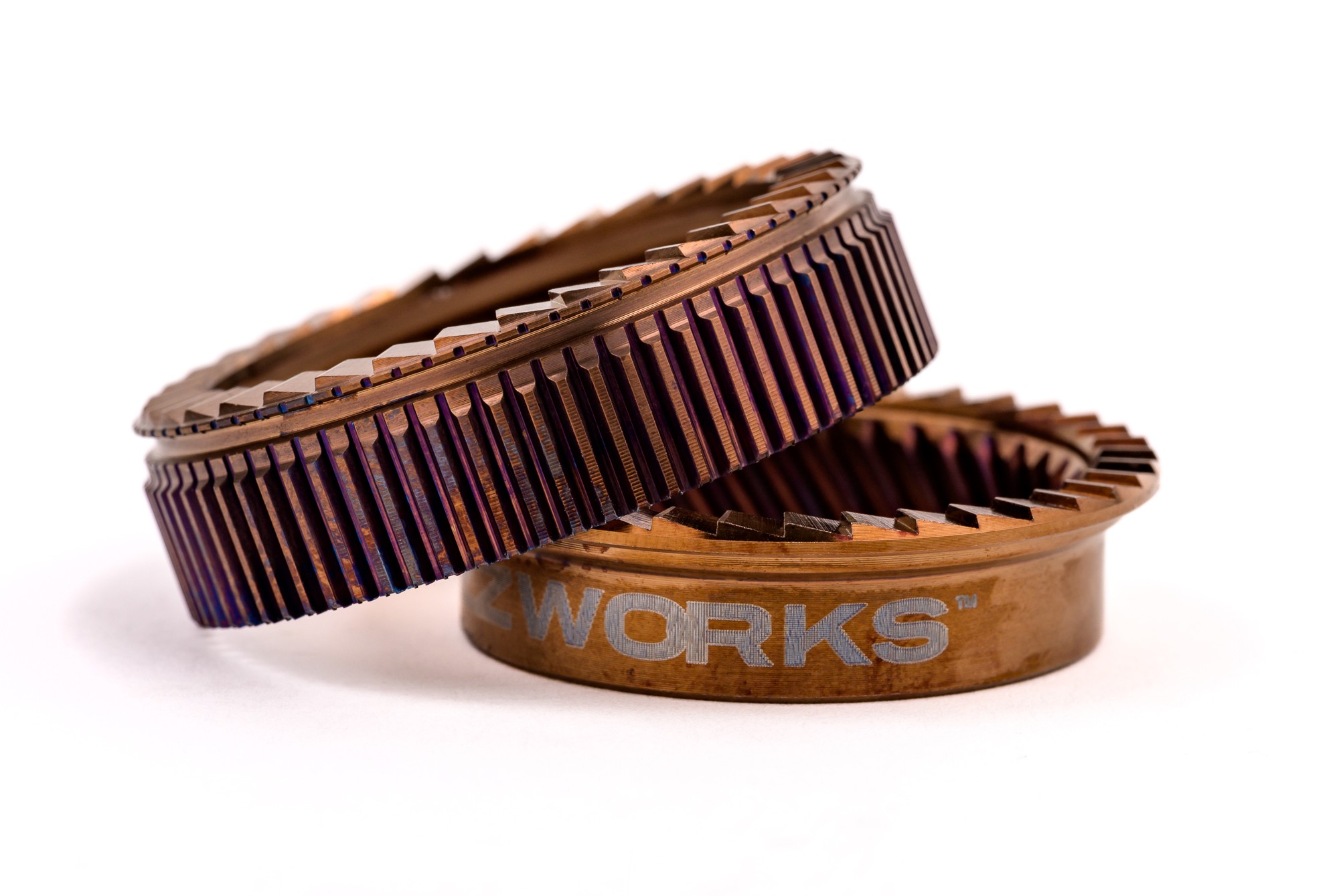
The new hubs can be fitted with either a 72-tooth freehub ratchet or a new 36-tooth ratchet with 10-degree engagement, enabling riders to tune their engagement angle. 

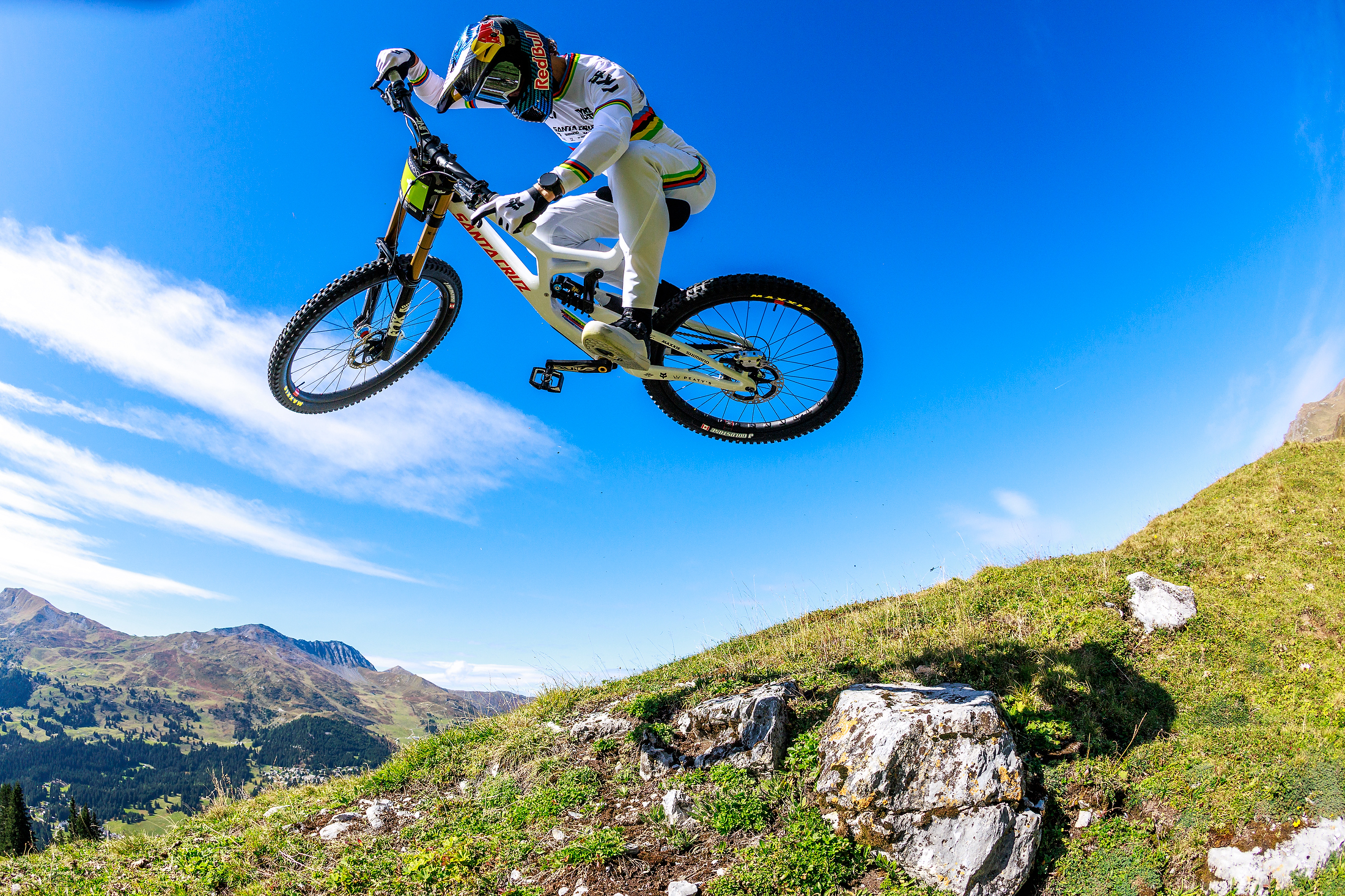
Chris King’s hubs have usually come fitted with the 72-tooth ratchet. But the new 36-tooth option is a response to a request from Santa Cruz Syndicate team rider and downhill world champion Jackson Goldstone for a hub with fewer points of engagement, which the brand says enables the hub to spin faster.

Bedsaul continues: “At this level, they’re searching for milliseconds, and they see this as a meaningful contribution toward that goal. Jackson won the key races last season on the prototype 36T hub, which reduces hub drag and noise significantly.”

Lower freehub noise enables downhillers to hear other bike sounds better.

The lower freehub noise from the 36-tooth ratchet compared to its buzzy 72-tooth ratchet is significant for downhill racers, according to Bedsaul, because it enables them to hear noise from tyres, brakes, chain and suspension better, to provide feedback on the bike’s performance. 

The 36-tooth ratchet doesn’t only have fewer teeth, they’re re-engineered to reduce the contact area, which further reduces drag and enables the brand’s RingDrive 2.0 lubricant to penetrate the ratchets better.

The new hub is available in the usual wide range of colours.

Chris King’s RingDrive ratchet lube includes nanoparticles and is claimed to reduce friction, improve cold-weather performance and add to ratchet longevity. It also sells its newly launched Gold Grease for bearings, designed to help them spin faster, with a claimed 25% reduction in drag over its previous silver grease.  

Chris King says you can retrofit the 36-tooth ratchet ring to any of its hubs made since the 1990s. It recommends the 72-tooth ring for most riders on most terrain, though, and says even its team riders still use it if there’s significant pedalling needed. 

A Dust Devil Full Of Tumbleweeds

This is a video captured by Douglas Barillas of a dust devil blowing a bunch of tumbleweeds around in the sky of Lake Los Angeles, California. I guess they’re not tumbleweeds anymore, they’re *putting on cool guy shades* flyweeds. Damn, I haven’t put on those cool guy shades on in a while, that felt good. “Well it shouldn’t have, now take them off.” But– “TAKE THEM OFF AND STEP ON THEM.” Mom!

� Driver spots a tumbleweed dust devil, Los Angeles County
by
u/solateor in
NatureIsFuckingLit