
OpenRazer 3.10 was just released as the newest update to this set of community-maintained, open-source out-of-tree driver packages for enabling Razer device support on Linux…
Category Archives: Unfiltered RSS
Escape Simulator VR is a great way to experience escape rooms with friends

Escape Simulator VR is a rewarding port of the popular escape room title, offering plenty of content and variety for VR standards.
The post Escape Simulator VR is a great way to experience escape rooms with friends appeared first on MIXED Reality News.
Rust 1.85.0 released
Version
1.85.0 of the Rust language has been released. Changes in the release
include support for async closures, some convenience iterators for tuples,
and a number of stabilized APIs. The headline feature, though, is that
this release stabilizes the Rust 2024
edition, described as “
The 2024
edition guide has a detailed listing of all the changes that were
incorporated this time around.
1.85.0 of the Rust language has been released. Changes in the release
include support for async closures, some convenience iterators for tuples,
and a number of stabilized APIs. The headline feature, though, is that
this release stabilizes the Rust 2024
edition, described as “
the largest edition we have released“.
The 2024
edition guide has a detailed listing of all the changes that were
incorporated this time around.
Amazon will take full creative control of the James Bond franchise
Time (and perhaps a large check or two) heals all wounds. Amazon and the longtime producers and custodians of the James Bond movies have finally agreed on a way forward for the series. Amazon MGM Studios will form a joint venture with Michael G. Wilson and Barbara Broccoli that will hold the intellectual property rights and ensure they remain co-owners of the franchise. However, Wilson and Broccoli will be stepping back to focus on other projects, with Amazon gaining full creative control.
The company bought MGM in 2022 for $8.45 billion to get its hands on a renowned film studio with a vast library of film and TV episodes. Co-ownership of the Bond series was a big part of that. However, production of Bond movies had been on hold amid reports of a power struggle between Amazon and Broccoli, who is said to have felt that an ecommerce giant was not the right fit for her family’s franchise (she inherited the series from her father, Albert “Cubby” Broccoli, who died in 1996).
Until now, Broccoli and her half-brother Wilson had retained creative control. She and her family have been very protective of the series and its legacy. Broccoli reportedly rebuffed most of Amazon’s attempts to develop spinoffs, save for the reality competition series 007: Road to a Million. But that’s about to change with Amazon seemingly eager to propel the series forward before Ian Fleming’s Bond novels fully enter the public domain in a decade — allowing anyone to publish their own adaptations of them.
“My life has been dedicated to maintaining and building upon the extraordinary legacy that was handed to Michael and me by our father, producer Cubby Broccoli,” Broccoli said in a statement. “I have had the honor of working closely with four of the tremendously talented actors who have played 007 and thousands of wonderful artists within the industry. With the conclusion of No Time to Die and Michael retiring from the films, I feel it is time to focus on my other projects.”
On one hand, the series will be exiting the limbo it’s been in since Daniel Craig stepped away from the role after 2021’s No Time To Die. We might finally learn who the next James Bond is in the near future. On the other, there’s no telling how Amazon might dilute the prestige quality of the franchise with spinoffs and more projects like the game show Brian Cox didn’t realize he was signing up to host.
The movies have a tradition of product placement from luxury brands, and we could see Amazon replacing the likes of LG monitors with, say, Echo Show displays. And if ever there was an opportunity for Amazon to create and market its own smartwatch…
This article originally appeared on Engadget at https://www.engadget.com/entertainment/amazon-will-take-full-creative-control-of-the-james-bond-franchise-174255959.html?src=rss
Archaeologists Unearth the First Pharaoh’s Tomb Since Tutankhamun

The first royal tomb discovered in over a century is shedding new light on the pharaoh who ruled before Hatshepsut.
Amazon remembers it has an Android app store, kills it
After 14 years of trying and failing to gain a smartphone foothold, Amazon has announced it will discontinue its app store. Anyone who has content in Amazon’s store will be able to access it for now, but all bets are off beginning on August 20, 2025. As part of the pull-back, the company is also discontinuing the Amazon Coins digital currency.
The Amazon Appstore made waves when it launched in 2011, offering an alternative to what at the time was known as the Android Market. Amazon even scored some early exclusives and gave away a plethora of premium content and Coins to anyone willing to do the legwork of installing the storefront on their Android phone.
That level of attention didn’t last, though, and the Appstore today has hardly evolved from its humble beginnings, lacking most of the content and features people have come to expect from a mobile app store. If you want to check out the store on your phone before it goes away, you’ll have to sideload the client by downloading an APK from Amazon. This process isn’t hard, but it proved to be a significant barrier to entry for getting people into the Amazon ecosystem.
America Hates Mark Zuckerberg

It’s still learning to hate Elon Musk.
Ubuntu 24.04.2 LTS Released
The Ubuntu team is pleased to announce the release of Ubuntu 24.04.2 LTS(Long-Term Support) for its Desktop, Server, and Cloud products, as wellas other flavours of Ubuntu with long-term support.
How to Do Fartlek Runs (and Seven Different Kinds to Try)
Fartleks are a well-known and popular running workout—or at least they’re something runners talk about all the time. But how many of us have gone out and said “I’m doing a fartlek today” and actually followed through with it? The original idea is that the workout is unstructured (the name means “speed play”) so it’s hard to plan one. Here’s what you need to know about fartleks, and some guidelines to setting yourself up for a fun and productive one.
What counts as a fartlek run?
“Fartlek” comes from a Swedish term meaning “speed play,” and it’s usually described as something you just go out and do for funsies. You choose a landmark—say, a mailbox up ahead—and decide to run faster until you get to it. Then you slow down again.
Most runners and coaches would agree on that description, but when you try to nail down a definition of the fartlek run, things start to fall apart. If you run fast for one minute and slow for four, is that a fartlek, or just a time-based interval? Can you run fartleks at a specific pace, or just off vibes? I even saw one post on Reddit that claimed it’s not a real farlek if you know how long you’ll be running each segment—you need a coach to blow a whistle when you least expect it.
Still, these are some commonalities among the descriptions I’ve read, and we can use them to guide us:
-
A fartlek run includes short segments of faster and slower running.
-
The slower running is still running, usually around your easy pace. So this isn’t a sprint-and-walk situation, more like jog-and-surge. (If you need to walk those recoveries, keep your pace strong and powerful.)
-
Precise paces and times are not required.
-
The faster segments should be short, and the easy segments should be longer.
-
Your cues to speed up and slow down may come from your environment, your training partners, your whims, or a loose plan you had when you set out.
-
A fartlek run should feel harder than an easy run.
Why run a fartlek?
The benefits of fartlek runs will depend on how you do them. Some fartleks are basically a threshold run, some end up being long runs with some marathon-pace work in the middle, and some are just standard speedwork with a different name. These will all have different benefits. If a coach or written program tells you to do a “fartlek run,” make sure to get clarification on what that’s supposed to mean.
Here are some of the reasons commonly given for including fartlek runs in a program:
-
If the runner chooses their own intervals, it can be fun and playful, sort of a mental break from structured training.
-
Since there are no strict pace targets, it can serve as a transition between easy running and introducing more structured speedwork (for example, as you finish your off-season and start training for a race).
-
The variety in the run can make it a little less boring than a standard threshold or long run.
-
You can’t compare your times or paces to what you’ve done previously, since every fartlek is different. This can help if you get anxious about whether you’re “improving” enough.
Examples of fartlek runs you can try today
So we have some guidelines, and we know when and why we might try a fartlek run. With that, you can pretty much put together your own version—but I’d like to give a few examples to start you off. There are no wrong answers, so feel free to add your own!
For any of these, plan to start and end your run with at least five to 10 minutes of easy jogging (or however you like to warm up and cool down).
The music fartlek
You’ll need a good playlist for this one. (Fortunately, we have a guide from our resident spinning instructor on how to craft a great one.) When the song is slow, jog easy. When the chorus picks up the energy a bit, you can too. And if it hits a big, emotional bridge—you know what to do.
You can also do this same idea song by song. Alternate chill songs with higher energy ones, and match that energy to your running speed. Remember, it’s a fartlek, so you can always skip or repeat a song as you see fit.
The hill fartlek
Do you have a route with some little hills or challenging parts here and there? Jog easy, but when you hit one of those special spots, put on a little extra speed and surge up that hill. Or, if the hills are too steep for that to be realistic, choose flat straightaways or downhills where you can really open it up and get your legs moving.
The lightpole fartlek
This one is good for some distance-based guidelines if you run in a place with lightpoles, mailboxes, or some similar repetitive structure. Starting at one pole, run fast until you hit the next one, then jog easy until you pass two or three more.
“Haul ass” triggers
I love this idea, which came from an old Reddit comment. The redditor says: “I learned about fartlek runs in the US Army, and still to this day I have certain spots in my routes that I consider ‘haul ass’ segments. I also have a rule that if certain songs come up in my play list when set to shuffle, that’s sprint mode or skip the song.”
This is like a speedwork version of the “run until” challenge. The “haul ass” segments could be a favorite hill or straightaway, as we discussed above, but you could come up with more creative options as well. Here are a few: If you pass a picnic with a boom box blasting, run faster for as long as it’s in earshot. If you see a cute dog or a cool-looking bird, run faster for 30 seconds. And of course, every park runner’s favorite, “pass that person in front of me.” They don’t have to know you think it’s a race.
The partner fartlek
This one is like the “pick a mailbox” type of fartlek, but the catch is that you and your running buddy get to take turns. This can be playful, vicious, or anything in between, depending on how you and your buddy get along. (He made me run a real long one? OK, I’ll make him sprint up this hill!)
Time-based fartleks
Some will say these aren’t true fartleks, but sorry—plenty of people run time-based intervals with loose pace targets and call them fartleks. Here are a few I’ve seen:
-
1 minute fast/4 minutes easy
-
Pyramid up and down: 1 minute fast, 1 minute easy, then 2 of each, 3 of each, then 2, then 1. Jog easy for a bit before starting the next pyramid.
-
Descending only: 5 minutes fast, 5 easy, then 4, 3, 2, and 1.
The treadmill fartlek
I’m now realizing that some of my ways to make the treadmill less boring are, in fact, fartleks. My favorite is the simple rule to “change something every quarter-mile.” That could mean an increase in speed, or a decrease in speed. A little bump to the incline. Maybe I just try to get this last quarter-mile over with as fast as possible.
Again, make up your own rules. You could do time-based intervals as above, or choose triggers like sprinting for 30 seconds whenever a number 7 comes up on any of the readouts in front of you.
5 Security Cameras for the Price of One? Blink Outdoor 4 Now Discounted to $200, Only $40 Each

5 cameras, 2-year battery, 1 low price—Blink Outdoor 4 Security Cam (5-pack) is now $200.
Amazon To Shut Down Chime Communications Platform in 2026
Amazon will discontinue its workplace communications platform Chime in February 2026 and has stopped accepting new customers, the company’s cloud division AWS said in a blog post. The service, which Amazon employees widely used for video calls, messaging and business communications, is among several products being phased out. The company also recently shuttered Inspire, its TikTok-style video feed feature in its mobile app, and announced plans to shut down its Android app store earlier today.


Read more of this story at Slashdot.
There’s a Pokémon Presents livestream scheduled for February 27
The Pokémon Company is hosting a morning livestream on February 27 at 9AM ET to share the “latest news and updates” from Pikachu and pals. You can stream it via the official YouTube channel. This is the yearly Pokémon Presents event that typically provides info on what’s coming to empty our wallets throughout the year (and beyond.)
So what can we expect this year? Both The Pokémon Company and Nintendo remain tight-lipped, but we can make some educated guesses. Pokemon Legends: Z-A, the follow-up to the open-world Pokémon Legends: Arceus, was announced in early 2024. It’s high time we got some more details on the upcoming game.
The title was originally advertised as a Switch exclusive, but now that the Switch 2 is on our radar, maybe it’ll be a dual-release or something. We could get that information, along with an announcement regarding the game’s trio of starter Pokémon.
There’s a new Pokémon TGC set arriving in May. It’s called Destined Rivals, so we can expect a detailed look at this update. We might even get a tease for another set down the line. Pokémon cards, both digital and physical, are still very much a big deal. To that end, we could get details regarding new features for TGC Pocket.
Pokémon GO’s next season starts on March 4, which is just a few days after the stream. We’ll most definitely get a trailer for that, along with some updates on any new features. Beyond that, it’s a guessing game. Hope springs eternal that we’ll finally get those remakes of Pokémon Black and White. In any event, February 27 is right around the corner.
This article originally appeared on Engadget at https://www.engadget.com/gaming/nintendo/theres-a-pokemon-presents-livestream-scheduled-for-february-27-171813096.html?src=rss
How To Make The Most Of Avowed’s Fast Travel
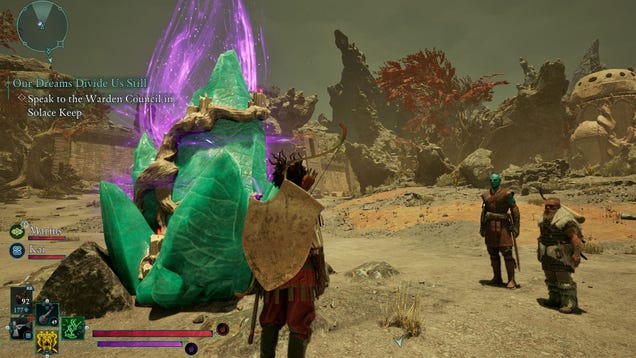
Many role-playing games are well-known for their sprawling worlds filled with points of interest to discover, and simply walking between all these locations over and over again can be a pretty exhausting affair. Avowed is one such massive RPG, offering dozens of hours of exploration through the gorgeous (though…
Apple Just Shared a First Glimpse of Its Murderbot TV Show

Martha Wells’ award-winning sci-fi book series will soon be a streaming series, co-created by Chris and Paul Weitz and starring Alexander Skarsgård.
Siri’s Apple Intelligence Upgrades Are Still a Couple of Months Away (at Least)
When Apple first revealed Apple Intelligence, its slate of generative AI features, a huge part of that announcement was a super-charged Siri. No longer would Apple’s digital assistant be lagging behind competitors like Google: With the power of AI, the new Siri might actually be useful.
When Apple Intelligence drops in full, Siri will reportedly be much more contextually aware, and be able to scan what’s on your phone to understand and answer questions you ask. If your friend sends you their new address, you can ask Siri “add this address to their contact card.” You don’t need to specify which address or which contact, because the assistant will, according to Apple, be able to understand that by what’s currently on-screen. Another huge feature is the ability to ask Siri to take action for you: You can ask Siri to send an email you have in your drafts, edit an image on your behalf, or add a photo to a specific note.
If your iPhone is compatible with Apple Intelligence, you might have assumed it supports this new Siri. iOS 18 has been out for a bit, after all, and Apple has been pushing Apple Intelligence (and the new Siri) hard, including with a campaign featuring Bella Ramsey. Some Apple Store employees even started a chant about AI during the iPhone 16 launch.
A waiting game
The thing is, the new Siri isn’t here yet. Apple did upgrade Siri a bit with iOS 18.1, and its the first wave of new AI features: That includes Siri’s new design, which glows around the edges of the display; the ability to type to Siri by double-tapping on the bottom of the screen; Siri’s ability to understand requests even when you misspeak; and a new feature that turns Siri into impromptu tech support (e.g., “How do I turn off Do Not Disturb?”).
But iOS 18.1 came and went without any further updates to Siri. iOS 18.2 added more Apple Intelligence features, including ChatGPT integration, but no major Siri changes. iOS 18.3 was a smaller update (Apple even disabled notification summaries for certain alert types), but, again, skipped any upgrades for Siri.
It’s not clear when Siri’s full form will arrive
Anyone hotly anticipating Siri’s AI promise might need to keep waiting. For the longest time, it seemed like these upgrades would come as part of either iOS 18.3 or iOS 18.4. Following 18.3’s absence of Siri updates, of course, those predictions turned to iOS 18.4.
Bloomberg’s Mark Gurman reported back in September that Apple was planning on rolling out most of Siri’s big features by this update. However, last week, Gurman said issues and bugs are plaguing the engineering team, and, as a result, Siri may be delayed even further.
We’ll find out soon enough, it seems. Apple now says in fine print that additional Apple Intelligence features (as well as additional language support) are coming in early April. The company doesn’t specify, but those features are likely a part of iOS 18.4. Before the company releases that update in early April, they’ll need to beta test it, which means we should see 18.4’s first beta sooner rather than later. When it arrives, we’ll know whether Apple plans to roll out big Siri changes now, or whether they’ve put those upgrades on the back-burner once again.
Not all iPhones will get new Siri features
While Apple supports iPhone as old as the XS with iOS 18, not many iPhones will actually get these new Siri features. That’s because Apple Intelligence is limited to iPhone 15 Pro, iPhone 15 Pro Max, and the iPhone 16 series—including the new iPhone 16e. If you have an iPhone 15 or older, you won’t see these new upgrades, even when you update to iOS 18.4, or whichever update contains the AI-overhauled Siri.
Google AI Co-Scientist Arrives To Turbocharge Scientific Research
Despite recent concerns over junk AI-generated science on Google Scholar, Google seems confident in AI’s involvement in scientific research. As such, the tech giant unveiled plans regarding an ‘AI co-scientist’ tool built on Gemini 2.0 that is capable of conducting scientific research and making discoveries. Google claims this AI tool can
Mere weeks after Starship’s breakup, the vehicle may soon fly again
A little over a month after SpaceX’s large Starship launch ended in an explosion over several Caribbean islands, the company is preparing its next rocket for a test flight.
According to a notice posted by the Federal Aviation Administration, the eighth test flight of the Starship vehicle could take place as early as February 26 from the Starbase launch site in South Texas. The launch window extends from 5:30 pm local time (23:30 UTC) to 7:09 pm (01:09 UTC).
Company sources confirmed that this launch date is plausible, but it’s also possible that the launch could slip a day or two to Thursday or Friday of next week.
Growing Mozilla — and evolving our leadership
Since 2022, Mozilla has been in an active process evolving what we do – and renewing our leadership. Today we announced several updates on the leadership piece of this ongoing work.
A Lifetime of the World’s Best Learning in Bite-Sized Chunks With Headway Is Only $48 (Over 80% Off)

Get smarter faster with unlimited lifetime access to over 1,500 book summaries and save 80% at StackSocial, plus an extra 20% with the code LEVELUP20.
Research Reveals Data on Which Institutions Are Retraction Hotspots
Chinese hospitals dominate a first-ever analysis of scientific paper retractions worldwide, with some institutions having retraction rates 50 times higher than the global average, according to data published in Nature.


Jining First People’s Hospital in Shandong leads with more than 5% of its research output from 2014-2024 being retracted — over 100 papers. The hospital had disciplined 35 researchers for publication fraud in late 2021 amid a broader Chinese government crackdown on paper mills selling fake manuscripts.
The analysis, based on data from three research integrity firms, found that about 60% of retracted articles over the past decade had authors affiliated with Chinese institutions. Other retraction hotspots include universities in Saudi Arabia, India, Pakistan and Ethiopia.
While retractions remain rare globally, affecting fewer than 0.1% of published papers, rates have tripled over the past decade. In 2023, over 10,000 papers were retracted, mostly from journals owned by publisher Wiley’s now-closed Hindawi subsidiary following widespread peer review fraud. The surge in retractions partly reflects increased scrutiny from research integrity experts who spot problematic papers, rather than definitively indicating which institutions produce fraudulent work, according to Ivan Oransky, co-founder of Retraction Watch.
Read more of this story at Slashdot.