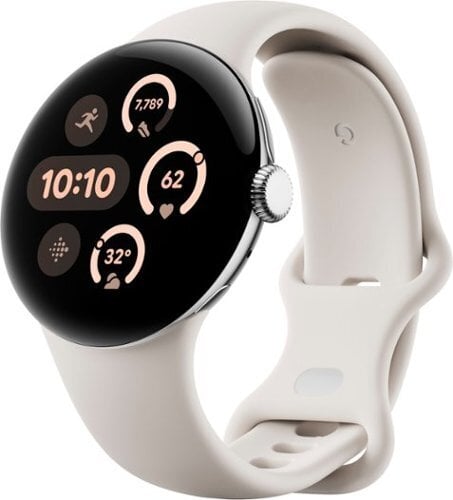
Google just announced that its “loss of pulse dectection” feature for the Pixel Watch 3 has received FDA clearance and will be available to U.S. users by the end of March. Read on for more on what this feature does, how well it works (according to one early study), and how you’ll be able to enable it.
The feature has been available in several European countries since late 2024. According to a Google help page on the feature, it’s currently available in “Austria, Belgium, Denmark, France, Germany, Ireland, Italy, Netherlands, Norway, Portugal, Spain, Sweden, Switzerland, and the United Kingdom.”
According to documents from Google, the feature is meant to sound an alarm and contact emergency services whenever the person wearing the watch loses their pulse. This could be from a heart attack, poisoning, overdose, or other cause of respiratory or circulatory failure, according to Google’s documents on what they had in mind when developing the feature.
When the watch detects a “loss of pulse event” (it thinks you are wearing the watch but cannot detect a pulse with the regular heart rate sensor), the watch is programmed to do the following, in order:
Perform additional checks (taking about 20 seconds) to be sure that it’s not detecting movement or a pulse. For example, it can use brighter lights in the optical heart rate sensor, and check for movement from accelerometers.
Buzz your wrist and ask if you are OK. You can tap an “I’m OK” button to clear the alert. This phase lasts for 15 seconds.
Play an audible alarm while displaying a 20-second countdown stating that it will place an emergency call (“No pulse detected / Calling 911 in…”)
Call 911 through the watch’s LTE connection, or through a connected phone, and play a recorded message to them (not audible to you or to bystanders). The message states that your watch detected a loss of pulse and that you are unresponsive, and it gives your approximate location.
While the call is ongoing, there is a “talk to 911” button displayed on the watch. You (or a bystander) can tap that button to interrupt the recorded message and speak to emergency services as a regular phone call.
What is (and isn’t) loss of pulse detection good for?
The loss of pulse detection feature is promising for what are sometimes called “unwitnessed” cardiac arrests, as a group of Italian healthcare professionals wrote in the journal Resuscitation. I wasn’t able to find any real-world accounts of this feature saving someone’s life, but to be fair it’s only been available for a few months.
Google emphasizes that the feature is not intended to provide any treatment or be expected to save your life, and definitely cannot replace medical monitoring devices that may have been prescribed or recommended to you by your provider. It can’t prevent a loss of pulse, or determine the cause of a loss of pulse, and it can’t even be sure that its emergency calls will go through.
Importantly, the loss of pulse detection process has not been tested in a variety of real-world situations that may increase the risk of false alarms, or of missing a real event. These are some of the people who might be most interested in this feature, so it’s worth noting that the feature has not been tested for people identified as high risk for sudden cardiac death, or for people who are pregnant, under 22 years of age, who have chronic pain, poor blood flow to the wrist, peripheral nerve conditions, cognitive impairment, sickle cell disease, or who have a tattoo on their wrist that may interfere with the sensor.
How well does loss of pulse detection work on the Pixel Watch 3?
Google has published a brief summary of the results of their testing from the watch, as part of this document that gives instructions for use. They tested the feature on 135 volunteers, including—according to a press release—stunt actors who simulated falls while wearing a tourniquet.
The sensitivity in a clinical trial was 69.3%, meaning that the feature was activated 69.3% of the time that a person had an actual loss of pulse. The other 30.7% of the time, it didn’t activate. That’s not great, but the idea seems to be that it’s a lot better than nothing.
The other metric of accuracy, specificity, Google described as amounting to “1 false positive call over 7.75 user-years” with 131 of their users. (That would be compatible with 131 users wearing the watch for about three weeks each, resulting in one person getting a false positive, but Google didn’t release the full results so we can’t say whether that’s exactly how the study went, or how their use compared to what you might be doing with your watch over the next 7.75 years.)
If you do get a false positive, you’ll have a few chances to cancel the alert before it gets as far as calling emergency services. If you tap that “I’m OK” button, the watch will ask if you were doing anything innocuous that may have triggered it. Sleeping on your arm is one of the options; so are a loose fit on the watch band, and not wearing the watch at all. Google also notes that other factors like ambient light, or pressure on the skin, may sometimes result in false positives.
How to enable (or disable) loss of pulse detection on the Pixel Watch 3
Once the feature is available here, it will be an option when you’re setting up a new watch. (So far it hasn’t been announced for any Fitbit models or older Pixel watches, just the Pixel Watch 3 in both sizes.) To turn on loss of pulse detection for the Pixel Watch 3 that you already have, go into the Pixel Watch app, tap Safety & Emergency, and look for Loss of Pulse Detection. There is a switch that allows you to turn the feature on or off.
Google has updated its Results About You tool with a redesigned hub, easier removal requests directly from Search, and the ability to refresh outdated results. Engadget reports: Today, the tech giant is announcing the latest changes, including a redesigned hub and the ability to update outdated search results to reflect the latest changes.
The redesign isn’t only for show. You can now submit removal requests directly from Search with fewer actions by clicking or tapping the three dots beside a search result. If you manage to have content about you deleted or changed from a website but Google Search hasn’t caught up, you can refresh the search, which will “recrawl the page and obtain the latest information.” In other words, you can always see the most up-to-date results about you.
NEW YORK—After teasing it in September 2023 and reportedly suffering delays, Amazon today announced that its more capable and conversational version of Alexa will start rolling out to US Prime members for free in the next few weeks.
Those who aren’t Prime subscribers will be able to get Alexa+ for $20 a month. Amazon didn’t provide a specific release date but said availability would start with the Echo Show 8, 10, 15, and 21 smart displays.
Amazon is hoping Alexa+ will be a lifeline for its fledgling voice assistant business that has failed to turn a profit. Alexa has reportedly cost Amazon tens of billions of dollars over the years. Although Alexa is on 600 million purchased devices, per remarks CEO Andy Jassy made at a press conference on Wednesday, it’s primarily used for simple tasks that don’t generate much money, like checking the weather. Exacerbating the problem, generative AI chatbots are a new, shinier approach to AI assistants that have quickly outperformed what people could do with today’s Alexa.
This is a song and music video from Youtuber ai am a jedi featuring Emperor Palpatine performing ‘The Tragedy of Darth Plaegus The Wise’. I’m honestly not sure how I feel about it, but I am convinced you could probably still get off to it if you summon enough midi-chlorians. Just try to work the cantina band into your fantasy and it should be no problem.
We may earn a commission from links on this page. Deal pricing and availability subject to change after time of publication.
The market for earbuds can be hectic if you’re not on top of it, with many brands and new models coming out regularly. I do keep up with them, though, and can tell you which ones are worth your money. The Sennheiser Accentum earbuds are a great value right now, after a 50% discount that lowers their price to $99.95 (originally $199.95), the lowest price they’ve ever been, according to price-tracking tools.
The Sennheiser Accentum earbuds came out in the summer of 2024 with an “excellent” review from PCMag. They stand out in their bass frequency and sound quality as well as their ANC performance, and they use tap controls that are fully customizable in their companion app.
There is also a customizable EQ in case you like your sound signature to sound a certain way. If you’re not sure how to choose your EQ, there is a feature that lets you choose while you listen to different media or genres of music so you can have a set EQ profile for every scenario (like a preset for podcasts, the gym, running outdoors, etc). Combine that with the Sound Zone feature, which automatically chooses an EQ preset depending on your location, and you have yourself a sound set just for you no matter where you go (picture walking into your office and automatically blocking out noise with ANC and setting your preferred EQ automatically).
The earbuds have an IP54 rating for water- and dust-resistance, so you can take them outdoors. Just be aware that these earbuds are bigger than most (some people might find that uncomfortable). The earbuds automatically pause when you take them out of your ears, which is always a nice feature. They have Bluetooth 5.3 with Appex, AAC, and SBC codecs and you can expect about six hours of battery life and 20 hours from the carrying case.
For $100, these earbuds are a great value, and perfect for people who value ANC and like bass.
The late February update of DietPi v9.11 introduces support for Pi-hole v6 while improving system stability, first-boot automation, and network reliability during initial setup, along with resolving kernel selection issues on Raspberry Pi.
Apple’s text-to-speech tool seems to beleive the words “racist” and “Trump” are similar. Users across social media have recently shared videos from their iPhones, which show the word “racist” being transcribed as “Trump”. It didn’t happen in every instance — sometimes it’s transcribed properly, and at other times it’s shown as “Trump” initially
ZDNet’s Steven Vaughan-Nichols shares some of the latest improvements to ExpressVPN following its codebase transition from C to Rust. An anonymous reader quotes an excerpt from the report: ExpressVPN is one of ZDNET’s favorite Virtual Private Networks (VPNs). The popular VPN’s transformation of its Lightway codebase from C to Rust promises to make the service faster and more secure. For now, the updated Lightway 2.0 is only available via ExpressVPN’s Aircove router with the February 4 AircoveOS v5 update. The Aircove, which we rate as the best VPN router, costs $189. With this device, you can protect your tech from unwanted snoopers without installing a VPN on each gadget. So, how much faster is the updated ExpressVPN? In my tests, I connected to the internet via my updated router over my 2 Gigabit per second (Gbps) AT&T Internet using a 2.5 Gbps Ethernet-connected Linux Mint desktop with a Wi-Fi 6 connection over my Samsung Galaxy 25 Plus smartphone.
Without the VPN engaged, I saw 1.6 Gbps speeds, which is about par. With the VPN switched on and using Lightway 2.0, I saw speeds in the 290 to 330 Megabit per second (Mbps) range to Toronto and London, England. Farther afield, I saw speeds around 250 to 280Mbps to Hong Kong and Seoul. That’s about 20% faster than I had seen with earlier Lightway versions. I was impressed. This version of the VPN should also be more secure. As Pete Membrey, ExpressVPN’s chief research officer, said in a statement: “At ExpressVPN, we innovate to solve the challenges of tomorrow. Upgrading Lightway from its previous C code to Rust was a strategic and straightforward decision to enhance performance and security while ensuring longevity.”
The updated Lightway VPN protocol also uses ML-KEM, the newly finalized NIST standard for post-quantum encryption. This feature, wrote Membray in a blog post, “ensures your connection is secured by encryption designed not just for today’s threats but for the quantum-powered challenges of the future.” To ensure the integrity of the recoded Lightway protocol, ExpressVPN commissioned two independent security audits from cybersecurity firms Cure53 and Praetorian. Both audits yielded positive results, with only minor vulnerabilities identified and promptly addressed by ExpressVPN. In short, ExpressVPN is technically about as safe a VPN as they come.
What is a role-playing game? You probably have your own definition and exceptions. And as you might expect, nearly everyone at Kotaku has thoughts and opinions on what is and isn’t an RPG. For example, some think Elden Ring is an RPG. Others disagree strongly. And then some think the idea of categorizing games via…
Google released the Pixel Watch 3 last fall alongside the Pixel 9 family, sporting the same curvy look as the last two versions. The Pixel Watch 3 came with a new feature called Loss of Pulse Detection, which can detect impending death due to a stopped heart. Google wasn’t allowed to unlock that feature in the US until it got regulatory approval, but the Food and Drug Administration has finally given Google the go-ahead to activate Loss of Pulse Detection.
Numerous smartwatches can use health sensors to monitor for sudden health events. For example, the Pixel Watch, Apple Watch, and others can detect atrial fibrillation (AFib), a type of irregular heartbeat that could indicate an impending stroke or heart attack. Google claims Loss of Pulse Detection goes further, offering new functionality on a consumer wearable.
Like the EKG features that became standard a few years back, Loss of Pulse Detection requires regulatory approval. Google was able to get clearance to ship the Pixel Watch 3 with Loss of Pulse Detection in a few European countries, eventually expanding to 14 nations: Austria, Belgium, Denmark, France, Germany, Ireland, Italy, Netherlands, Norway, Portugal, Spain, Sweden, Switzerland, and the United Kingdom. It noted at the time more countries would get access as regulators approved the feature, and the FDA was apparently the first to come through outside of Europe, boosting support to 15 countries.
“Don’t Google yourself” is terrible advice. If there’s personal information about you floating around on the web, you should be aware of it—because, despite common misconceptions, the internet is not written in ink. If your info is popping up on Google Search, you might be able to get rid of it.
On Wednesday, Google announced its redesigned “Results about you” tool. This feature, first rolled out in 2023, looks out for your personal information on Google Search, including your name, phone number, email addresses, and home addresses. The tool then tries to remove any information it does find. Note that this doesn’t necessarily delete that information from the website in question; rather, it affects outdated info that appears in Search. For example, you requested a site take down your address, or you edited a webpage to reflect your new phone number, but that deleted data still shows up when people search your name.
Using Google’s “Results about you” tool
Here’s how the tool works. First, head to the “Results about you” website. If this is your initial experience with Results about you, click Get started. You’ll be presented with a series of pop-ups, walking you through what to expect: You share your personal info, and Google scans the web looking for that info. If Google finds that info, you can ask the company to remove it.
Click Next through each pop-up, then punch in your personal information, which includes your full name, nicknames, home address, phone number, and email. For example, I included my full name, a nickname, two recent addresses, my phone number, and three email addresses. Confirm you are indeed the person who this contact info belongs to, then hit Continue.
From here, you’ll have the option to choose how you want to receive alerts if Google finds your information on the web. You can have Google email you, send you push notifications through the Google app, or both. Once these settings are confirmed, you’re done! Google says the process usually takes a few hours, and the company will notify you when it is finished—presumably via the alert method you previously chose.
Heading back to the Results about you dashboard, you’ll find a “Results found” section, which will list any personal information Google happened to find in its search. There are two categories: “Results to review,” which lists any data Google returns, and “Reviewed,” which stores any results you’ve already checked out. Under Settings, you can change how Google notifies you with its results, as well as any of the data you want Google looking for.
When you do ask Google to remove a piece of personal information from Search, you’ll find that inquiry is added to a section beneath “Results found” called “Removal requests.” Here, you’ll see whether your requests are in progress, approved, denied, or undone (if you decide to undo a request).
You can also send a request to remove a result from the search page itself. Just click the three dots next to any given search result, and choose “Remove this result.” Then, select the reason why—likely, “It shows my personal info and I don’t want it there.”
Imagine heading out for a run on a cold winter day clad in athletic gear with sensors and microelectronics woven into the very fiber to constantly monitor your vital signs, even running the occasional app. MIT scientists have manufactured a single fiber computer embedded with all the components to do just that, according to a new paper published in the journal Nature.
“Our bodies broadcast gigabytes of data through the skin every second in the form of heat, sound, biochemicals, electrical potentials, and light, all of which carry information about our activities, emotions, and health,” said co-author Yoel Fink, a materials scientist and engineer at MIT. “Unfortunately, most if not all of it gets absorbed and then lost in the clothes we wear. Wouldn’t it be great if we could teach clothes to capture, analyze, store, and communicate this important information in the form of valuable health and activity insights?”
As previously reported, consumers scooped up more than 100 million units of such wearable devices as smartwatches, fitness trackers, augmented reality glasses, and similar tech in the first quarter of 2021 alone. Sales in the category increased 34.4 percent in the second quarter from Q2 2020, making it one of the fastest-growing categories of personal electronics. But while these devices do produce useful data, there are drawbacks. They can be heavy, uncomfortable when worn for long periods, and inaccurate since they usually only measure bodily signals from one spot (e.g., the wrist, chest, or finger).
While the XR industry’s major hubs are concentrated on the West Coast of the US, the MIT Reality Hack hackathon has become a focal point for XR developers and entrepreneurs on the East Coast of the US. Now in its eight year, the event has expanded with new opportunities for industry discussion and networking thanks to the concurrently held EXPERIENTIAL Conference. Executive Director Maria Rice offers an overview of this year’s hackathon and winners.
Image courtesy Maria Rice
Guest Article by Maria Rice
Maria is the Executive Director of MIT Reality Hack. For the last eight years, she has been instrumental in positioning the Hack as the world’s leading experiential technology community through the development of programs like the EXPERIENTIAL Innovation Conference, the Reality Scholars diversity fund, and the startup-focused Reality Hack Founders Lab.
From January 23–27, hundreds of top hackers-for-good—along with a roster of tech OGs and startup founders—descended on the MIT campus to attend the eighth annual MIT Reality Hack, the premiere hackathon for experiential technology.
The Hack was sponsored by a range of international players at the intersection of XR, AI, and deeptech. With AI development support from Lambda Labs, participants built functional prototypes using Meta Quest 3, Snap Spectacles, Qualcomm’s RB3g2 robotics kits, ShapesXR, Cognitive 3D, and STYLY.
Image courtesy Sean Chee
One of the most notable characteristics of this year’s MIT Reality Hack was the introduction of new hardware kits, including MEMS-based AR lenses from Maradin, a haptic exoskeleton from Haptikos, and an array of neurosensing gear from OpenBCI, including the Galea biosensing headset.
Image courtesy Sean Chee
With an unapologetic mission of hacking for good, MIT Reality Hack is most memorably distinguished by the dynamic energy generated by its participants and organizers. The five-day event stretched the hacking talents of some 600 participants to the limit, producing 78 innovative use cases and applications in XR and adjacent tech.
Image courtesy Sean Chee
Winning projects included YEIGO, an AR tool for ensuring that mobility aids (like walkers) are used with correct posture; CAREGIVR, an immersive platform for preparing families and caregivers for end-of-life care; and Tac-Man, a haptic input device for sculpting in VR.
EXPERIENTIAL Conference Expands MIT Reality with New Opportunities for Industry Discussion and Networking
Image courtesy Sean Chee
Held alongside the MIT Reality Hack event, global attendees presented at the first-ever EXPERIENTIAL Innovation Conference at MIT; a one-day event envisioned as a ‘Davos of the spatial tech industry’. Cutting-edge research into the most challenging deeptech was demonstrated and debated within the context of learning innovation, vertical applications, and global development.
In part to support the ‘hack-to-market’ initiative of the Founders Lab (one of Reality Hack’s community subprograms), EXPERIENTIAL featured two exciting company launches:
Limit Labs, founded by the leaders of VR/AR MIT, launched RoomSeed, a groundbreaking genAI tool informed by rigorous research.
Haptics company Haptikos launched with a new hand exoskeleton that brings a sense of touch to XR apps at a dramatically low price point with twice the precision of previous solutions.
EXPERIENTIAL is shaped by the mandate set forth to extend Reality Hack’s inclusive technology focus beyond hacking and into the zeitgeist towards the promotion of creator economies. The program journeyed deep into the realms of both academic research and the business marketplace.
The conference kicked off with a fireside chat between two well known names in the industry: Tim Bajarin, founding analyst and Chairman of Creative Strategies and Anshel Sag, principal analyst at Moor Insights & Strategy, who expounded over the course of an hour on the state of the XR industry, as moderated by AR pioneer Dan Cui.
Image courtesy Sean Chee
Bajarin also participated as a first-time judge at the Hack and wrote up his thoughts on Forbes, calling his experience “one of the highlights of my career”, after 40+ years in the tech industry.
The EXPERIENTIAL keynote was give by Qualcomm’s Senior VP & GM of XR, Ziad Asghar who explored the growing synergy of AI capabilities in XR devices, and the importance of events like MIT Reality hack in incubating the ideas and talent that drive rapidly evolving industries.
Image courtesy Sean Chee
Later in the conference a panel covering Global Initiatives Towards a Sustainable Future, saw MIT Senior Lecturer Ken Zolot moderate a conversation between keyholders representing the United Nations (UNICC), The World Bank Group, Inclusive AI Lab, and Qualcomm, and futurist & Global VP at HTC, Alvin Wang Graylin.
Panelists shared how they leverage experiential technology and hackathon initiatives to empower creator communities, drive economic growth, and enable new, more inclusive human experiences across industries and regions.
As noted by AWE co-founder and Reality Hack partner Ori Inbar: “XR is going mainstream, but to fully achieve this goal we need more seasoned XR builders and newcomers of all kinds to create diverse spatial experiences that matter to every single person on the planet. That’s how you conquer the mainstream!”
Companies interested in participating in the 2026 MIT Reality Hack and the EXPERIENTIAL Innovation Conference may reach out to the conference by contacting me here.
There’s a new M4 MacBook Air reportedly on the way soon, but if you can’t wait or don’t need the extra power of Apple’s M4 chip, you can get a M3 MacBook Air for $200 off on Amazon right now. That lowers the current MacBook Air’s price from $1,099 to $899 — not the $850 low we’ve seen before for the Air, but pretty close.
Engadget picked the M3 MacBook Air as the best MacBook overall because of its lightweight design, bright screen and the reliable performance of the M3 chip. Besides support for Wi-Fi 6E, Apple’s custom silicon allows the MacBook Air to power two external displays at once, something sorely missing from the previous generation Air.
The current deal only covers the Air model with 16GB of RAM and 256GB of storage in Apple’s “Midnight” blue finish, but that should be more than enough storage and memory for most people. If you’d still like a deal but with a few more colors to choose from, several other MacBooks are also on sale.
For example, you can get an M2 MacBook Air for $200 off when you use a coupon, lowering the price from an already discounted $950 to $800. That deal applies to the Air with 16GB of RAM and 256GB of storage and covers multiple different colors. The M2 chip is technically less powerful than the M3, but for day-to-day computer tasks you’ll get more than enough performance and battery life from an M2 MacBook Air.
If you’re willing to pay more and you want one of the most capable laptops Apple currently sells, you can could instead opt for a new M4 MacBook Pro for $1,399, $200 off its usual $1,599 price. Apple introduced the M4 MacBook Pros near the end of 2024 with a focus on improving graphical performance. The new MacBook Pro is the closest Apple has gotten to a gaming laptop, and it includes other upgrades, like a brighter screen and an improved webcam.
The model on sale includes 16GB of RAM and 512GB of storage, a healthy amount to start with if you plan on using the MacBook Pro for work. All of the MacBooks on sale on Amazon also support Apple Intelligence, if you’re interested in exploring Apple’s approach to AI features like summarization and text generation.
Follow @EngadgetDeals on Twitter and subscribe to the Engadget Deals newsletter for the latest tech deals and buying advice.
This article originally appeared on Engadget at https://www.engadget.com/deals/the-m3-macbook-air-is-200-off-at-amazon-right-now-210927500.html?src=rss