
Merged today for Mesa 25.1 is introducing a new previously AMD-internal library to the open-source RadeonSI Gallium3D driver dubbed GMLIB. This GMLIB code is being used by RadeonSI in conjunction with Radeon GPUs having the Video Processing Engine (VPE) hardware to deal with HDR video on Linux…
Category Archives: Unfiltered RSS
Save $100 Off OnePlus 13 And Score A Free Bonus, Plus More Great Deals
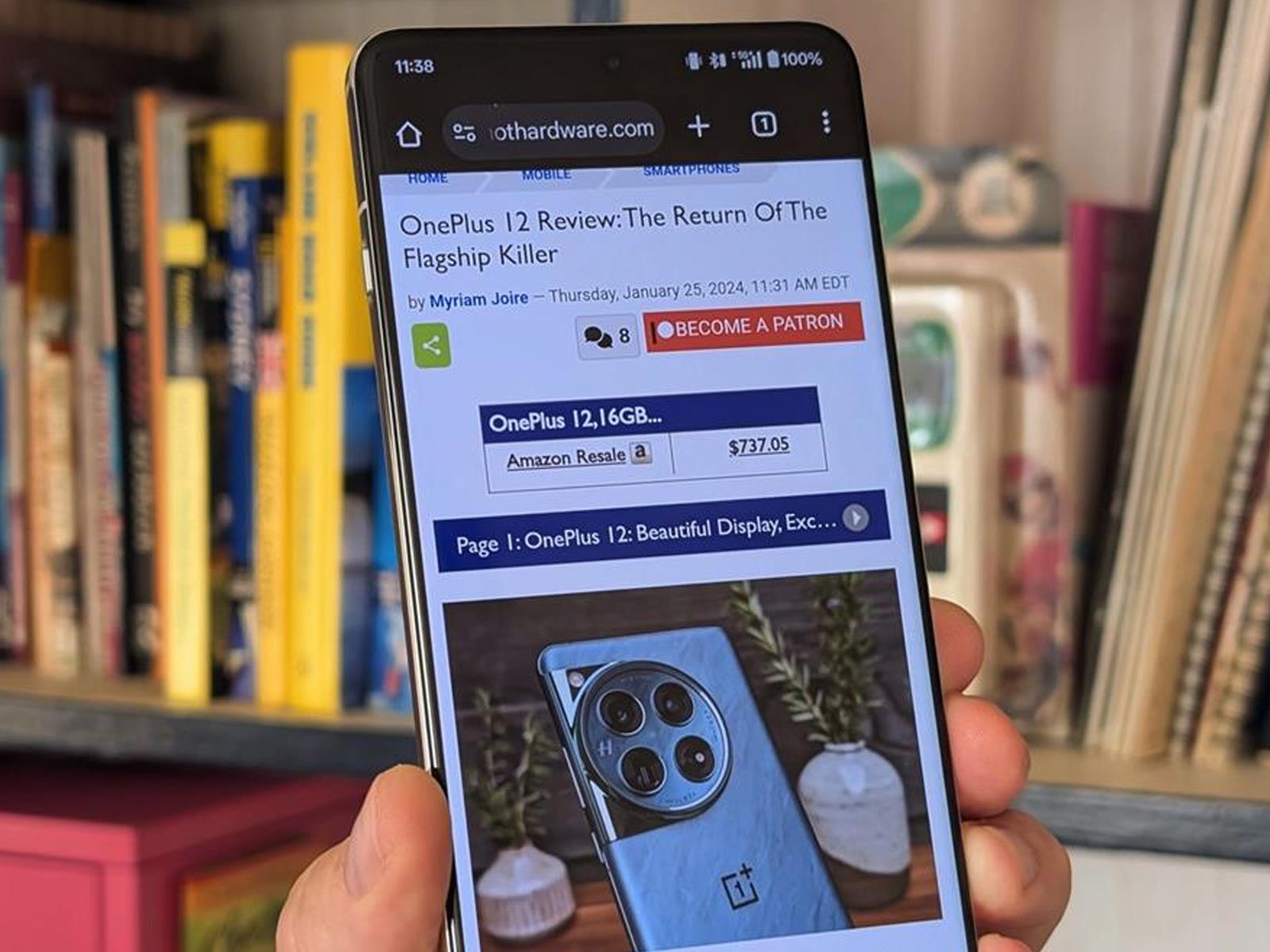
It’s almost springtime but you don’t have to wait around to spring into some nifty savings on various OnePlus smartphones and other devices. That’s because OnePlus is running promotions on several of its products, including trade-in discounts (any device, any condition), coupon codes, and free bonus offers, depending on which gadget you’re
x86 32-bit Changes Look To Be Ready For Linux 6.15 – Drops Support For More Than 4GB RAM
Over the past few months there’s been an in-progress patch series by Arnd Bergmann for cleaning up the x86 32-bit kernel support for running on x86_64 CPUs. After the third iteration of the patches were posted this week, these x86 32-bit CPU clean-ups were shuffled into the tip/tip.git “x86/cpu” Git branch ahead of the upcoming Linux 6.15 merge window…
Murena kicks Google out of the Pixel Tablet
Privacy-centric Android makes more sense on this form factor than a phone. We had a play with Murena’s first tablet, a Google Pixel running /e/OS, its in-house de-Googled Android 13 with additional privacy features.
Zink Working On A “Nice Performance Boost” For OpenCL / DaVinci Resolve
Mike Blumenkrantz as the lead developer of Mesa’s Zink OpenGL-on-Vulkan driver implementation and working for Valve as part of their Linux graphics team has been spending much time recently optimizing for OpenCL with the Rusticl Gallium3D driver…
Amazon Unveils Its First Quantum Computing Chip
Amazon has introduced its first-ever quantum processor, dubbed Ocelot, designed specifically to reduce quantum error correction costs by up to 90% compared to existing approaches. The prototype chip uses “cat qubits” — named after Schrodinger’s cat thought experiment — which intrinsically suppress certain types of quantum errors.


Unlike conventional approaches that add error correction after designing the architecture, AWS built Ocelot with quantum error correction as the primary requirement. The chip consists of two stacked 1cm2 silicon microchips containing 14 core components: five data qubits, five buffer circuits for stabilization, and four qubits dedicated to error detection.
Quantum computers are notoriously sensitive to environmental noise — including vibrations, heat, and electromagnetic interference — which disturbs qubits and generates computational errors. These errors multiply as quantum systems scale up, creating a significant barrier to practical quantum computing. Ocelot’s high-quality oscillators, made from a thin film of superconducting Tantalum processed using specialized techniques developed by AWS material scientists, generate the repetitive electrical signals that maintain quantum states.
“We’re just getting started and we believe we have several more stages of scaling to go through,” said Oskar Painter, AWS director of Quantum Hardware, whose team published their findings in Nature. Industry analyst Heather West of IDC was more measured, categorizing Ocelot as “much more of an advancement and less of a breakthrough,” noting that superconducting qubits designed to resist certain error types aren’t completely novel.
Read more of this story at Slashdot.
Experience AI: The story so far
In April 2023, we launched our first Experience AI resources, developed in partnership with Google DeepMind to support educators to engage their students in learning about the topic of AI. Since then, the Experience AI programme has grown rapidly, reaching thousands of educators all over the world. Read on to find out more about the impact of our resources, and what we are learning.
The Experience AI resources

The Experience AI resources are designed to help educators introduce AI and AI safety to 11- to 14-year-olds. They consist of:
- Foundations of AI: a comprehensive unit of six lessons including lesson plans, slide decks, activities, videos, and more to support educators to introduce AI and machine learning to young people
- Two standalone lessons:
- Large language models (LLMs): a lesson designed to help young people discover how large language models work, their benefits, and why their outputs are not always reliable
- Ecosystems and AI — Biology: a lesson providing an opportunity for young people to explore how AI applications are supporting animal conservation
- AI safety: a set of resources with a flexible design to support educators in a range of settings to equip young people with the knowledge and skills to responsibly and safely navigate the challenges associated with AI
We also offer a free online course, Understanding AI for educators, to help educators prepare to teach about AI.
International expansion
The launch of Experience AI came at an important time: AI technologies are playing an ever-growing role in our everyday lives, so it is crucial for young people to gain the understanding and skills they need to critically engage with these technologies. While the resources were initially designed for use by educators in the UK, they immediately attracted interest from educators across the world, as well as individuals wanting to learn about AI. The resources have now been downloaded over 325,000 times by people from over 160 countries. This includes downloads from over 7000 educators worldwide, who will collectively reach an estimated 1.2 million young people.

Thanks to funding from Google DeepMind and Google.org, we have also been working with partners from across the globe to localise and translate the resources for learners and educators in their countries, and provide training to support local educators to deliver the lessons. The educational resources are now available in up to 15 languages, and to date, we have trained over 100 representatives from 20 international partner organisations, who will go on to train local educators. Five of these organisations have begun onward training already, collectively training over 1500 local educators so far.
The impact of Experience AI
The Experience AI resources have been well received by students and educators. Based on responses to our follow-up surveys, in countries where we have partners:
- 95% of educators agreed that the Experience AI sessions have increased their students’ knowledge of AI concepts
- 90% of young people (including young people in formal and non-formal education settings and learning independently) indicated that they better understand what AI and machine learning are

This is backed up by qualitative feedback from surveys and interviews.
“Students’ perception and understanding of AI has improved and corrected. They realised they can contribute and be a part of the [development], instead of only users.” – Noorlaila, educator, SMK Cyberjaya, Malaysia
“[Students] found it interesting in the sense that it’s relevant information and they didn’t know what information was used for training models.” – Teacher, Liceul Tehnologic “Crisan” Criscior, Romania
“Based on my knowledge and learning about AI, I now appreciate the definition of AI as well as its implementation.” – Student, Changamwe JSS, Kenya
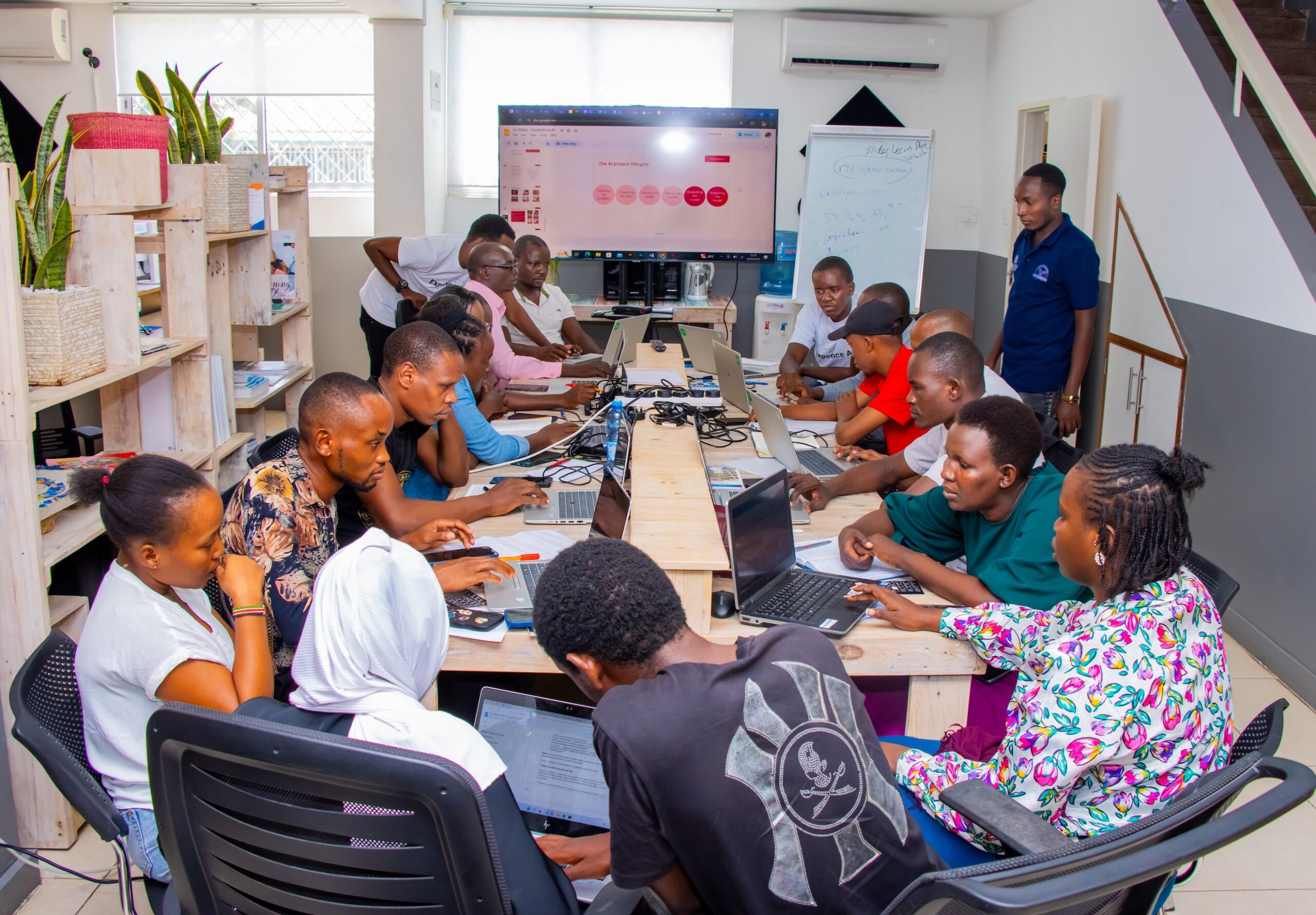
The training and resources also support educators to feel more confident to teach about AI:
- 93% of international partner representatives who participated in our training agreed that the training increased their knowledge of AI concepts
- 88% of educators receiving onward training by our international partners agreed that the training increased their confidence to teach AI concepts
- 87% of educator respondents from our ‘Understanding AI for educators’ online course agreed that the course was useful for supporting young people
“It was a wonderful experience for me to join this workshop. Truly I was able to learn a lot about AI and I feel more confident now to teach the kids back at school about this new knowledge.” – Nur, educator, SMK Bandar Tasek Mutiara, trained by our partner Penang Science Cluster, Malaysia
“This was one of the best information sessions I’ve been to! So, so helpful!” – Meagan, educator, University of Alberta, trained by our partner Digital Moment, Canada
“The layout of the course in terms of content structuring is amazing. I love the discussion forum and the insightful yet empathetic responses by the course moderators on the discussion board. Honestly, I am really glad I started my AI in education journey with you.” – Priyanka, head teacher (primary level), United Arab Emirates, online course participant
What are we learning?
We are committed to continually improving our resources based on feedback from users. A recent review of feedback from educators highlighted key aspects of the resources that educators value most, as well as some challenges educators are facing and possible areas for improvement. For example, educators particularly like the interactive aspects, the clear structure and explanations, and the videos featuring professionals from the AI industry. We are continuing to look for ways we can better support educators to adapt the content and language to better support students in their context, fit Experience AI into their school timetables, and overcome technical barriers.
We value feedback on our resources and will continue to highlight the importance of AI education in schools and work with partners across the globe to adapt our resources for different contexts.
Get involved
If you would like to try out our Experience AI resources, head to experience-ai.org, where you can find our free resources and online course, as well as information about local partners in your area.
The post Experience AI: The story so far appeared first on Raspberry Pi Foundation.
The best SSDs in 2025
If your computer is starting to feel a little sluggish, or you’re tired of waiting for games and apps to load, upgrading to one of the best SSD options out there can be a game-changer. Solid-state drives (SSDs) are much faster than traditional hard drives, helping your system boot up in seconds, load large files instantly and make everyday tasks feel snappier. Whether you’re upgrading a laptop, building a gaming PC or just want extra storage for work or creative projects, the right SSD can seriously improve performance.
But with so many specs to consider — PCIe Gen 4, Gen 5, SATA, NVMe — it’s easy to get lost in the jargon. That’s where we come in! We’ve rounded up the best SSD options to help you find the right balance of speed, capacity and price, so you can get the upgrade you need without overpaying for features you won’t use.
Best SSDs in 2025
How we test SSDs
I’ve either tested or personally use daily every SSD recommended on this list. Out of our top picks, I bought four with my own money after doing about a dozen hours of research. Separately, Engadget Senior Reporter Jeff Dunn has also tested a handful of our recommendations, including the Crucial X9 Pro listed above.
What to look for in a PC SSD
The most affordable way to add fast storage space to a computer is with a 2.5-inch SATA drive. It’s also one of the easiest if you don’t want to worry about compatibility since almost every computer made in the last two decades will include a motherboard with Serial ATA connections. For that reason, the best SATA SSDs are an excellent choice if you want to extend the life of an older PC build. Installation is straightforward, too. Once you’ve secured the internal SSD in a drive cage, all you need to do is to connect it to your motherboard and power supply.
The one downside of SATA drives is that, in terms of responsiveness, they’re slower than their high-performance NVMe counterparts, with SATA III limiting data transfers to 600MB/s. But even the slowest SSD will be significantly faster than the best mechanical drives. And with high-capacity, 1TB SATA SSDs costing about $100, they’re a good bulk-storage option.
If your PC is newer, there’s a good chance it includes space for one or more M.2 SSDs. The form factor represents your ticket to the fastest SSDs on the market, but the tricky part is navigating all the different standards and specs involved.
M.2 drives can feature either a SATA or PCIe connection. SSDs with the latter are known as Non-Volatile Memory or NVMe drives and are significantly faster than their SATA counterparts, with Gen3 models offering sequential write speeds of up to 3,000MB/s. These drives rely on NVMe NAND technology for their superior performance and durability. You can get twice the performance with a Gen4 SSD, but you’ll need a motherboard and processor that supports the standard.
If you’re running an AMD system, that means at least a Ryzen 3000 or 5000 CPU and an X570 or B550 motherboard. With Intel, meanwhile, you’ll need at least an 11th or 12th Gen processor and a Z490, Z590 or Z690 motherboard. Keep in mind that Gen4 SSDs typically cost more than their Gen3 counterparts as well.
More expensive still are the latest Gen5 models, which offer sequential read speeds of up to 16,000MB/s. However, even if your computer supports the standard, you’re better off buying a more affordable Gen4 or Gen3 drive. At the moment, very few games and applications can take advantage of Gen3 NVMe speeds, let alone Gen4 and Gen5 speeds. What’s more, Gen5 NVMe drives can run hot, which can lead to performance and longevity issues. Your money is better spent on other components, like upgrading your GPU, for now.
As for why you would buy an M.2 SATA drive over a similarly specced 2.5-inch drive, it comes down to ease of installation. You add M.2 storage to your computer by installing the SSD directly onto the motherboard. That may sound intimidating, but in practice the process involves a single screw that you first remove to connect the drive to your computer and then retighten to secure the SSD in place. As an added bonus, there aren’t any wires involved, making cable management easier.
Note that you can install a SATA M.2 SSD into an M.2 slot with a PCIe connection, but you can’t insert an NVMe M.2 SSD into a M.2 slot with a SATA connection. Unless you want to continue using an old M.2 drive, there’s little reason to take advantage of that feature. Speaking of backward compatibility, it’s also possible to use a Gen4 drive through a PCIe 3 connection, but you won’t get any of the speed benefits of the faster NVMe.
One last thing to consider is that M.2 drives come in different physical sizes. From shortest to longest, the common options are 2230, 2242, 2260, 2280 and 22110. (The first two numbers represent width in millimeters and the latter denote the length.) For the most part, you don’t have to worry about that since 2280 is the default for many motherboards and manufacturers. Some boards can accommodate more than one size of NVMe SSD thanks to multiple standoffs. That said, check your computer’s documentation before buying a drive to ensure you’re picking up a compatible size.
If you’re buying a replacement SSD for the Steam Deck or Steam Deck OLED, things are less complicated. For Valve’s handheld, you will need a 2230 size NVMe. Simple. If you don’t want to open your Steam Deck, it’s also possible to expand its storage by installing a microSD card. Engadget has a separate guide dedicated to SD card storage, so check that out for additional buying advice.
I alluded to this earlier, but the best buying advice I can offer is don’t get too caught up about being on the bleeding edge of storage tech. The sequential read and write speeds you see manufacturers list on their drives are theoretical and real-world performance benchmark tests vary less than you think.
If your budget forces you to choose between a 1TB Gen3 NVMe and a 512GB Gen4 model, go for the higher-capacity one. From a practical standpoint, the worst thing you can do is buy a type of SSD that’s too small for needs. Drives can slow dramatically as they approach capacity, and you will probably end up purchasing one with a larger storage capacity in the future.
What to look for in portable and USB flash drives
Portable SSDs are a somewhat different beast to their internal siblings. While read and write speeds are important, they are almost secondary to how an external drive connects to your PC. You won’t get the most out of a model like the SanDisk Extreme Pro V2 without a USB 3.2 Gen 2 x 2 connection. Even among newer PCs, that’s something of a premium feature. For that reason, most people are best off buying a portable drive with a USB 3.2 Gen 2 or Thunderbolt connection. The former offers transfer speeds of up to 10Gbps. The best external hard drives also allow you to transfer data from your Windows PC to a Mac, or other device, if compatible. Be sure to consider this beforehand if you plan to use your portable drive across multiple devices.
Additionally, if you plan to take your drive on trips and commutes, it’s worthwhile to buy a model with IP-certified water and dust proofing. Some companies like Samsung offer rugged versions of their most popular drives with a high endurance rating. For additional peace of mind, 256-bit AES hardware encryption will help prevent someone from accessing your data if you ever lose or misplace your external SSD.
Some of the same features contribute to a great thumbstick drive. Our favorite picks for best budget external SSD models feature USB 3.0 connections and some form of hardware encryption.
A note on console storage
Seagate
If PC gaming isn’t your thing and you own an Xbox Series X|S or PS5, outfitting your fancy new console with the fastest possible storage is far more straightforward than doing the same on PC. With a Series X or Series S, your options are limited to options from Seagate and Western Digital. The former offers 512GB, 1TB and 2TB models, with the most affordable starting at a not-so-trivial $90. Western Digital’s Expansion Cards are less expensive, with pricing starting at $80 for the 512GB model. The good news is that both options are frequently on sale. Your best bet is to set an alert for the model you want by using a price tracker like CamelCamelCamel.
With Sony’s PlayStation 5, upgrading the console’s internal storage is slightly more involved. Instead of employing a proprietary solution, the PS5 uses NVMe storage. Thankfully, there aren’t as many potential configurations as you would find on a PC. Engadget maintains a comprehensive guide to the best SSDs for PS5; in short, your best bet is a high-capacity Gen4 drive with a built-in heatsink. Check out that guide for a full list of gaming SSD recommendations, but for a quick go-to, consider the Corsair MP600 Pro LPX I recommend above. It meets all the memory specifications for Sony’s latest console and you won’t run into any clearance issues with the heatsink. Corsair offers 500GB, 1TB, 2TB, 4TB and 8TB versions of the drive. Expect to pay about $110 for the 1TB variant and about $200 for 2TB.
For those still playing on a previous generation console, you can get slightly faster game load times from a PlayStation 4 by swapping the included hard drive to a 2.5-inch SSD, but going out of your way to do so probably isn’t worth it at this point and you’re better off saving your money for one of the new consoles.
SSD FAQs
What size SSD is best?
There is no one size fits all rule for SSDs, but we generally recommend getting at least a 1TB SSD if you’re looking to upgrade PC or game console storage, or looking to add an external drive to your toolkit. A 1TB drive will be plenty for most people who need extra storage space for photos, documents and programs. If you’re a hardcore gamer, you may want to invest in even more storage considering many high-profile titles today can take up a ton of space.
Is a 256GB SSD better than a 1TB hard drive?
The short answer is that it depends on what you need your drive for. In general, SSDs are faster and more efficient than HDDs, but HDDs are usually cheaper. We recommend springing for an SSD for most use cases today — upgrading a PC, saving important photos and documents, storing games long term, etc. But if you’re focused on getting the most amount of extra space possible (and sticking to a budget), an HDD could be a good option for you.
Does bigger SSD mean faster?
Getting a bigger SSD doesn’t always translate into a faster drive overall. A bigger SSD will provide a higher storage capacity, which means more space for storing digital files and programs. To understand how fast an SSD will be, you’ll want to look at its read/write speeds: read speeds measure how fast a drive can access information, while write speeds measure how fast the drive can save information. Most SSDs list their approximate read/write speeds in their specs, so be sure to check out those numbers before you make a purchase.
This article originally appeared on Engadget at https://www.engadget.com/computing/accessories/best-ssds-140014262.html?src=rss
Jensen Huang: AI Has To Do ‘100 Times More’ Computation Now Than When ChatGPT Was Released
In an interview with CNBC’s Jon Fortt on Wednesday, Nvidia CEO Jensen Huang said next-gen AI will need 100 times more compute than older models as a result of new reasoning approaches that think “about how best to answer” questions step by step. From a report: “The amount of computation necessary to do that reasoning process is 100 times more than what we used to do,” Huang told CNBC’s Jon Fortt in an interview on Wednesday following the chipmaker’s fourth-quarter earnings report. He cited models including DeepSeek’s R1, OpenAI’s GPT-4 and xAI’s Grok 3 as models that use a reasoning process.


Huang pushed back on that idea in the interview on Wednesday, saying DeepSeek popularized reasoning models that will need more chips. “DeepSeek was fantastic,” Huang said. “It was fantastic because it open sourced a reasoning model that’s absolutely world class.” Huang said that company’s percentage of revenue in China has fallen by about half due to the export restrictions, adding that there are other competitive pressures in the country, including from Huawei.
Developers will likely search for ways around export controls through software, whether it be for a supercomputer, a personal computer, a phone or a game console, Huang said. “Ultimately, software finds a way,” he said. “You ultimately make that software work on whatever system that you’re targeting, and you create great software.” Huang said that Nvidia’s GB200, which is sold in the United States, can generate AI content 60 times faster than the versions of the company’s chips that it sells to China under export controls.
Read more of this story at Slashdot.
Rust In Linux Kernel: Christoph Hellwig Steps Down As DMA Maintainer
Christoph Hellwig has stepped down as the maintainer of the DMA mapping subsystem in Linux Kernel, with Marek Szyprowski taking over.
Meta for Education has launched: Here’s how much Quest 3 and 3S cost

Meta wants to establish Meta Quest as a learning tool. A beta program is currently underway with more than a dozen colleges and universities participating.
The post Meta for Education has launched: Here’s how much Quest 3 and 3S cost appeared first on MIXED Reality News.
Haasoscope Pro Open Source USB Oscilloscope with 2 GHz Bandwidth and 3.2 GS/s Sampling
Crowd Supply recently launched Haasoscope Pro, an upgraded version of the original open-source USB oscilloscope introduced in 2018. It features a 2 GHz bandwidth, 12-bit resolution, and a 3.2 GS/s sampling rate, providing an open-hardware solution for high-speed signal analysis.
Golf+ is a bestseller on Meta Quest and is now even more beautiful

Golf+ has graphically upgraded the game’s first golf course, Cliffs. Look forward to more realistic greens, fairways and views.
The post Golf+ is a bestseller on Meta Quest and is now even more beautiful appeared first on MIXED Reality News.
The best noise-canceling headphones for 2025
If you’ve ever tried listening to your favorite playlist only to have it drowned out by chatty commuters, airplane engines or other distracting noises, you might want to consider some headphones with active noise cancelation (ANC). Whether you’re working in a bustling coffee shop, catching a flight, or just trying to focus at home, a good pair of headphones with ANC will block out those distracting outside sounds so you can fully immerse yourself in your music, podcasts, or that new audiobook you’ve been dying to finish.
Noise-canceling headphones are designed for all kinds of situations, and each model will be a little different. Some feature plush memory foam ear cushions and an adjustable headband for all-day comfort, ideal for long listening sessions. It’s also worth considering a pair of headphones that offer hours of battery life that will keep the music going from morning meetings to evening workouts. If you’re after high-end sound quality and smart features like customizable ANC, there’s a pair out there that will suit your needs.
Table of contents
Best noise-canceling headphones of 2025
How to choose the best noise-canceling headphones for you
Design
When you’re shopping for the best wireless headphones, the first thing you’ll need to decide on is wear style. Do you prefer on-ear or over-ear headphones? For the purposes of this guide, I focus on the over-ear style as that’s what most noise-canceling headphones are nowadays. Sure, you can find on-ear models with ANC, but over-ear, active noise-canceling headphones are much more effective at blocking outside sounds since your ears are completely covered.
For gamers, there are also gaming headsets that feature noise cancellation — some even have detachable microphones, so they can double as over-ear headphones. However, for the purpose of this article, we’re only going to be focusing on noise-canceling headphones rather than headsets. Look for models with a comfortable headband and memory foam ear cups to ensure you can wear them for long periods without discomfort.
Many headphones also come with a range of color options, so if aesthetics matter to you, you’ll find plenty of choices beyond just black or white. Whether you’re looking for something neutral or a bold pop of color, brands now offer a variety of styles to match your personal taste.
Finally, if you’re planning to wear your headphones for long periods of time, it’s important to pick a model with a comfortable fit. Memory foam ear cups, an adjustable headband, and lightweight materials can make all the difference during extended listening sessions. After all, great sound is only part of the equation; comfort matters just as much.
Type of noise cancellation
Next, you’ll want to look at the type of ANC a set of headphones offers. You’ll come across terms like “hybrid active noise cancellation” or “hybrid adaptive active noise cancellation,” and there are key differences between the two. A hybrid ANC setup uses microphones on the inside and on the outside of the device to detect outside noise and cancel it out. By analyzing input from both mics, a hybrid system can combat more sounds than “regular” ANC, but it does so at a constant level that doesn’t change.
Adaptive ANC takes the hybrid configuration a step further by continuously adjusting the noise cancellation for changes in your environment and any leakage around the padding of the ear cups. Adaptive noise-canceling also does a better job with wind noise, which can really kill your vibe while using headphones outdoors. Some high-end headphones also support Dolby Atmos, which enhances spatial audio and makes everything from music to movies sound more immersive. For the purposes of this best headphones list, I’m only considering products with hybrid ANC or adaptive ANC setups because those are the most effective at blocking noise and improving your overall listening experience.
Customization
You’ll also want to check to see if the ANC system on a prospective set of headphones offers adjustable levels of noise cancellation or presets. These can help you dial in the amount of ANC you need for various environments, but it can also help you save battery life. Master & Dynamic, for example, has ANC presets that provide both maximum noise blocking and more efficient cancellation that is more energy efficient. Other companies may include a slider in their companion apps that let you adjust the ANC level to your liking. Some high-end models even allow you to fine-tune the ANC for specific types of environments.
How we test noise-canceling headphones
The primary way we test headphones is to wear them as much as possible. I prefer to do this over a one-to-two-week period, but sometimes deadlines don’t allow it. During this time, I listen to a mix of music and podcasts, while also using the headphones to take both voice and video calls.
Since battery life for headphones can be 30 hours or more, I drain the battery with looping music and the volume set at a comfortable level (usually around 75 percent). Due to the longer battery estimates, I’ll typically power the headphones off several times and leave them that way during a review. This simulates real-world use and keeps me from having to constantly monitor the process for over 24 straight hours.
To test ANC performance specifically, I use headphones in a variety of environments, from noisy coffee shops to quiet home offices. When my schedule allows, I use them during air travel since plane noise is a massive distraction to both work and relaxation. Even if I can’t hop on a flight, I’ll simulate a constant roar with white noise machines, bathroom fans, vacuums and more. I also make note of how well each device blocks human voices, which are a key stumbling block for a lot of ANC headphones.
ANC-related features are something else to consider. Here, I do a thorough review of companion apps, testing each feature as I work through the software. Any holdovers from previous models are double checked for improvements or regression. If the headphones I’m testing are an updated version of a previous model, I’ll spend time getting reacquainted with the older set. Ditto for the closest competition for each new set of headphones that I review.
Other noise-canceling headphones we tested
AirPods Max
Apple’s AirPods Max are premium, well-designed headphones that incorporate all of the best features you find on standard AirPods: solid noise cancelation, spatial audio and easy Siri access. However, their $550 starting price makes them almost prohibitively expensive, even for those with Apple devices. There are better options available at lower prices.
Sonos Ace
The Sonos Ace is an excellent debut for the company’s first headphones. The combination of refined design, great sound quality and home theater tricks creates a unique formula. However, ANC performance is just okay and key functionality is still in the works for many users.
Beats Studio Pro
The Studio Pro lacks basic features like automatic pausing, and multipoint connectivity is only available on Android. Moreover, they’re not very comfortable for people with larger heads. Overall sound quality is improved, though, and voice performance on calls is well above average.
Noise-canceling headphones FAQs
Does noise cancellation block all noise?
Noise cancellation doesn’t block out all noise, though it does drastically reduce the volume of most external sounds.
Is there a difference between wired vs wireless noise-canceling headphones?
In terms of sound quality, if you have two headphones — one wired and one wireless — with similar specs, the difference is going to be very minimal. However, wireless headphones offer more convenience, allowing you to move around more freely with your headphones on, which is why they often feature noise cancellation to minimize external sounds.
Does noise cancellation impact sound quality?
ANC does bear some weight on sound quality, but the impact of this often doesn’t outweigh the benefits. Noise cancellation reduces ambient noise, allowing a greater focus on audio detail. For audiophiles, however, there may be a small difference in sound fidelity when ANC is turned on.
This article originally appeared on Engadget at https://www.engadget.com/audio/headphones/best-noise-canceling-headphones-130029881.html?src=rss
Kia’s EV strategy: Smaller, cheaper cars like the EV3 hatch and EV4 sedan
TARRAGONA, Spain—Ninety minutes south of Barcelona, Kia celebrated its 2025 EV day by unveiling the EV4, PV5, and Concept EV2 this week. While we knew the Kia EV4 was coming, first unveiled as a concept at the brand’s EV Day Korea two years ago, the automaker just now confirmed that the all-electric sedan will be sold in the US. While Kia will make both traditional and hatchback body styles of the EV4, only the former is coming our way.
As Kia’s first electrified sedan, the EV4 has a tall order to fill as sedans wane in the North American market. All the brands in the Hyundai Motor Group have signaled a commitment to the four-door family car; Genesis, Hyundai, and Kia now all offer all-electric sedans. With a low center of gravity, lighter-weight bodies than their SUV cousins, and solid aerodynamics, sedans appear to be far from dead at Kia.
The super-compact EV2 concept has a lot going for it: city dimensions, coach doors, and high-tech seats. However, the EV2 is not headed to America, at least for now. The same goes for the modular PV5, which is part of Kia’s PBV (platform beyond vehicle) platform. Kia boss Ho Sung Song offered some hints that this could change in the future.
Immich 1.127 Introduces Face Tagging & Memory Enhancements
Immich 1.127, a self-hosted photo and video backup solution, enhances the memories feature, adds manual face tagging, and introduces star rating search.
German Startup Wins Accolade For Its Fusion Reactor Design
A German nuclear fusion startup called Proxima Fusion has unveiled its “Stellaris” fusion power plant designed to operate reliably and continuously without the instabilities of tokamaks. It’s backed by $65 million in funding, with plans to build a fully operational fusion reactor by 2031. TechCrunch reports: Tokamaks and stellarators are types of fusion reactors that use electromagnets to contain fusion plasma. Tokamaks rely on external magnets and an induced plasma current but are known for instability. Stellarators, by contrast, use only external magnets, which, in theory, enable better stability and continuous operation. However, according to Dr. Francesco Sciortino, co-founder and CEO of Proxima Fusion, Proxima’s “Stellaris” design is the first peer-reviewed fusion power plant concept that demonstrates it can operate reliably and continuously, without the instabilities and disruptions seen in tokamaks and other approaches.


Proxima published its findings in Fusion Engineering and Design, choosing to share this information publicly to support open-source science. “Our American friends can see it. Our Chinese friends can see it. Our claim is that we can execute on this faster than anyone else, and we do that by creating a framework for integrated physics, engineering, and economics. So we’re not a science project anymore,” Sciortino told TechCrunch over a call. “We started out as a group of founders saying it’s going to take us two years to get to the Stellaris design … We actually finished after one year. So we’ve accelerated by a year,” he added.
Read more of this story at Slashdot.
6 Best Free and Open Source Syntax Highlighters
It’s not only text editors that offer syntax highlighting. We explore specialised tools that offer syntax highlighting for a whole raft of programming languages.
Introducing a terms of use and updated privacy notice for Firefox
We’re introducing a Terms of Use for Firefox for the first time, along with an updated Privacy Notice. Why now? Although we’ve historically relied on our open source license for Firefox and public commitments to you, we are building in a much different technology landscape today. We want to make these commitments abundantly clear and accessible.
Meta confirms Instagram issue that’s flooding users with violent and sexual Reels
Meta has admitted to CNBC that Instagram is experiencing an error that’s flooding users’ accounts with Reels videos that aren’t typically surfaced by its algorithms. “We are fixing an error that caused some users to see content in their Instagram Reels feed that should not have been recommended,” the company told news organization. “We apologize for the mistake.” Users have taken to social media platforms to ask other people whether they’ve also recently been flooded with Reels that contain violent and sexual themes. One user on Reddit said that their Reels pages was inundated with school shootings and murder.
Others said they’re getting back-to-back gore videos, such as stabbings, beheadings and castration, nudity, uncensored porn and straight-up rape. Some said they still see similar videos even if they had enabled their Sensitive Content Control. Social media algorithms are designed to show you videos and other content similar to ones you usually watch, read, like or interact with. In this case, though, Instagram has been showing graphic videos even to those who haven’t been interacting with similar Reels, and sometimes even after the user has taken the time to click “Not Interested” on a Reel with violent or sexual content.
The Meta spokesperson didn’t tell CNBC what exactly the error was, but some of the videos people have reported seeing shouldn’t have been on Instagram in the first place, based on the company’s own policies. “To protect users… we remove the most graphic content and add warning labels to other graphic content so that people are aware it may be sensitive or disturbing before they click through,” the company’s policy reads. Meta’s rules also state that it removes “real photographs and videos of nudity and sexual activity.”
This article originally appeared on Engadget at https://www.engadget.com/apps/meta-confirms-instagram-issue-thats-flooding-users-with-violent-and-sexual-reels-051631670.html?src=rss