Right off the back of the iPhone 17e, new iPads and MacBook Airs, Apple also announced a keenly priced new laptop. The MacBook Neo is a multi-colored low-cost Mac ($599), running on an iPhone chipset with most but not all of the hardware features you find on the MacBook Air and Pro. All models of the MacBook Neo ship with an extremely scant 8GB of RAM, which might be the main productivity bottleneck for demanding tasks.
The Neo has a 13-inch Retina display, a 1080p webcam, two USB-C ports, a headphone jack and optional Touch ID, if you’re willing to pay a little more. A lot has been said about whether this is Apple marching to the beat of its own drum again, in a year of RAM shortages and AI obsessions. This is a direct attack on cheap Windows laptops and underperforming Chromebooks. Tempted? Check out our initial impressions from Apple’s event earlier this week, right here. Oh, and for everything Apple announced – we’ve pulled all the news together here.
Design-wise, it seems a little safer than the company’s usual.
Engadget
There’s no flagship Nothing Phone 4 this year, but the company has put a lot of effort into making its A-series almost flagship, including a notable design pivot with the Phone 4a Pro. The transparent back is now aluminum, and the trademark Nothing aesthetic has been boxed into the camera unit. It looks more grown-up, perhaps, but a little less fun? That said, the egregious camera bump on the Nothing 3a Pro last year is no more. Both 4a phones are sleek slabs of smartphones. The company has also substantially upgraded the devices, with better cameras, more batteryand improved screens. Only the 4a Pro will be coming to the US later this month.
While MWC 2026 offered us plenty of Chinese smartphones ready to wow us, established player Samsung managed to surprise us with its S26 Ultra the week before. Sure, it doesn’t have a ton of major improvements, but it brings subtle upgrades across the board, along with a standout new display for anyone who cares about privacy.
The Privacy Display is the standout new feature – one we’ve never seen before on a smartphone. When you turn the Privacy Display on and view the phone from less than head-on, everything fades to black, like those privacy-sticker screen protectors, but at the hardware level.
The S26 ultra can even selectively activate Privacy Display under specific situations, turning on when you get notifications or open certain apps (like for banking or authenticators). The phone can also enable the feature when you need to enter a PIN, pattern, or password, though this is only for system-level prompts, such as your lock screen.
Hayden AI, a San Francisco startup that makes spatial analytics tools for cities worldwide, has sued its co-founder and former CEO, alleging that he stole a large quantity of proprietary information in the days leading up to his ouster from the company in September 2024.
In a lawsuit filed late last month in San Francisco Superior Court but only made public this week, Hayden AI claims that former CEO Chris Carson undertook what it called “numerous fraudulent actions,” which include “forged board signatures, unauthorized stock sales, and improper allocation of personal expenses.” (Ars covered Hayden AI’s recent product expansion in Santa Monica, Calif.)
Carson, who has since founded a rival company called EchoTwin AI, did not respond to Ars’ request on Wednesday for comment sent via LinkedIn, email, and text message.
Welcome to Edition 8.32 of the Rocket Report! The big news this week is NASA’s shake-up of the Artemis program. On paper, at least, the changes appear to be quite sensible. Canceling the big new upper stage for the Space Launch System rocket and replacing it with a commercial upper stage, almost certainly United Launch Alliance’s Centaur stage, should result in cost savings. The changes also relieve some of the pressure for SpaceX and Blue Origin to rapidly demonstrate cryogenic refueling in low-Earth orbit. The Artemis III mission is now a low-Earth orbit mission, using SLS and the Orion spacecraft to dock with one or both of the Artemis program’s human-rated lunar landers just a few hundred miles above the Earth—no refueling required. Artemis IV will now be the first lunar landing attempt.
As always, we welcome reader submissions. If you don’t want to miss an issue, please subscribe using the box below (the form will not appear on AMP-enabled versions of the site). Each report will include information on small-, medium-, and heavy-lift rockets, as well as a quick look ahead at the next three launches on the calendar.
Sentinel missile nears first flight. The US Air Force’s new Sentinel intercontinental ballistic missile is on track for its first test flight next year, military officials reaffirmed last week. The LGM-35A Sentinel will replace the Air Force’s Minuteman III fleet, in service since 1970, with the first of the new missiles due to become operational in the early 2030s. But it will take longer than that to build and activate the full complement of Sentinel missiles and the 450 hardened underground silos to house them, Ars reports.
In New Hampshire, just off the western shore of the vacation destination Lake Winnipesaukee, there’s a town called Laconia. With a population somewhere south of 17,000, it’s barely a blip on a map—except on Bike Week, when around 300,000 motorcyclists swarm the place. On the other, quieter weeks of the year, Laconia is best known as the unlikely home of Funspot, the world’s largest arcade.
Meanwhile, in Brookfield, Illinois, about 45 minutes west of Chicago and the shores of Lake Michigan, you’ll find Galloping Ghost Arcade, a sprawling suburban palace with a nondescript exterior hiding a mind-blowing collection. With over 1,000 arcade cabinets (plus a further 46 pinball machines), Galloping Ghost is the world’s largest arcade.
Yes, there are two arcades in the US labeled as the world’s largest, and while that may seem a bit paradoxical, a visit to both proves that while only one can be the biggest, both are the greatest.
The UK government is working on a controversial data bill that would allow AI companies like Google and OpenAI to train their models on copyrighted materials without consent. However, following a two month consultation, it looks like passage of the law will be delayed. “Copyright is going to be kicked down the road,” a person with knowledge of the matter told The Financial Times.
Responses by stakeholders during the consultation period weren’t favorable to any of the government’s proposed ideas for use of copyrighted materials, the FT‘s sources said. There’s no expectation now that an AI bill will be part of the King’s Speech set for May this year.
As a result, Ministers have decided to go back to the drawing board and spend more time exploring other options. The House of Lords Communications and Digital Committee called on the government to develop a licensing-first regime “underpinned by robust transparency that safeguards creators’ livelihoods while supporting sustainable AI growth.”
The UK parliament’s preferred position on the bill (also argued by tech giants like Google) has been that copyright holders need to formally opt-out if they don’t want their materials used to train AI models. However, publishers, filmmakers, musicians and others have said that this would be impractical and an existential threat to the UK’s creative industries.
The House of Lords took the side of artists and introduced an amendment that would require tech companies to disclose which copyright-protected works were used to train AI models. That addition, however, was blocked by the UK’s House of Commons in May last year.
The UK’s majority Labour government — already under fire for its handling of the economy — has taken hits from publishers, musicians, authors and other creative groups over the proposed law. Elton John called the government “absolute losers” while Paul McCartney said that AI has its uses but “it shouldn’t rip creative people off.” McCartney and others artists were part of a “silent album” meant to show the impact of IP theft by AI.
Baroness Beeban Kidron from the House of Lords has also ripped the government over the AI bill. “Creators do not deny the creative and economic value of AI, but we do deny the assertion that we should have to build AI for free with our work, and then rent it back from those who stole it,” she said last year. “It’s astonishing that a Labour government would abandon the labor force of an entire section.”
This article originally appeared on Engadget at https://www.engadget.com/ai/uk-government-delays-ai-copyright-rules-amid-artist-outcry-113937154.html?src=rss
Four years ago Oracle announced Solaris CBE as the “Common Build Environment” version of Solaris 11.4. Oracle Solaris CBE is made available as free for open-source developers and other non-production use. Oracle this week released a new version of Solaris CBE for those wanting this free* version of Solaris…
The BeOS-inspired Haiku open-source operating system project had an eventful February with a number of driver improvements and a variety of other enhancements…
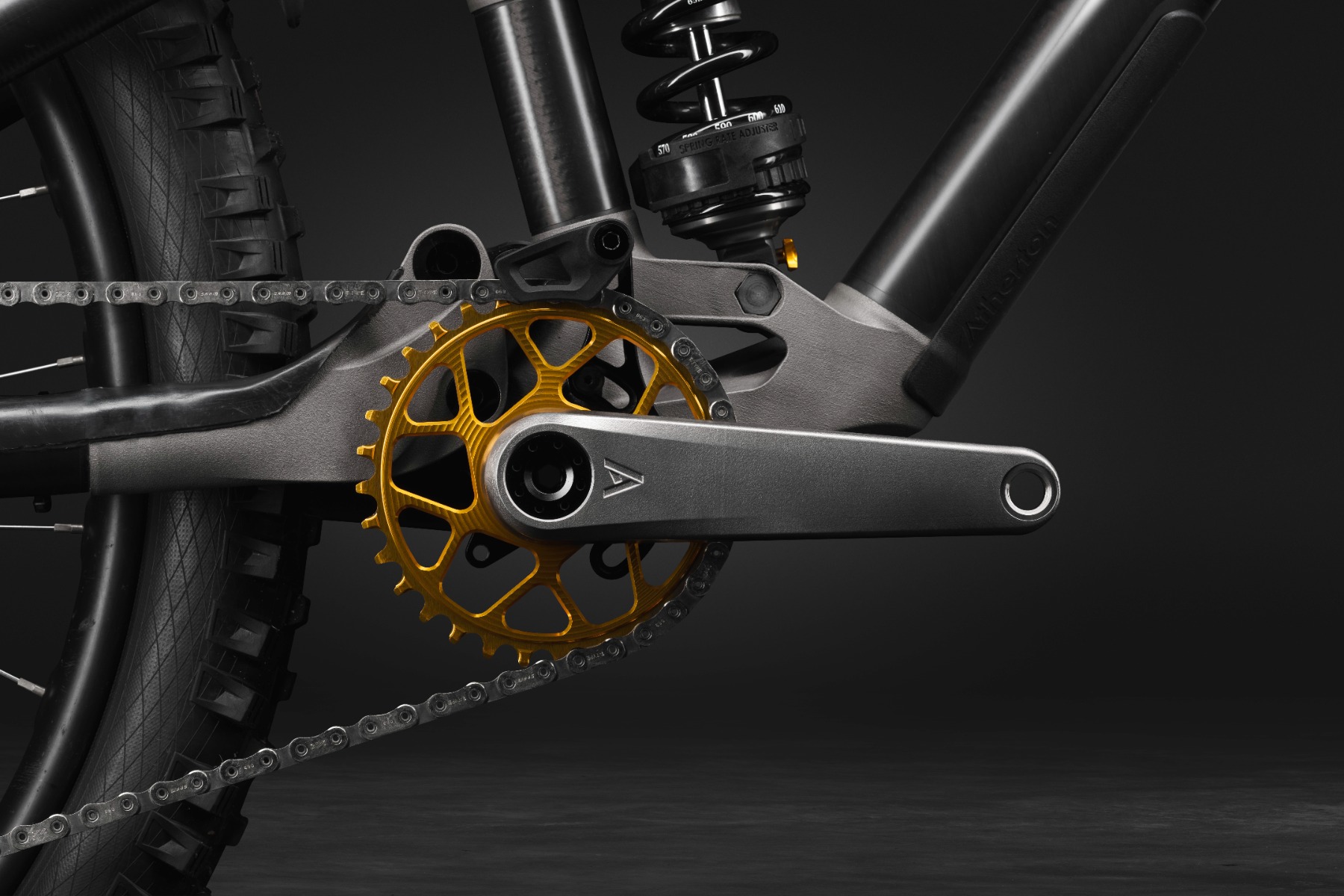
Atherton Bikes has announced details of its new GR titanium crankset – with prices starting at £845.
The new crankset is additive manufactured in Atherton’s Renishaw 3D printer, like the British brand’s top-end AM-series frames.
The GR cranks are available in 11 lengths, and Atherton says they’re not only tough enough for downhill mountain biking, but also light enough for trail riding.
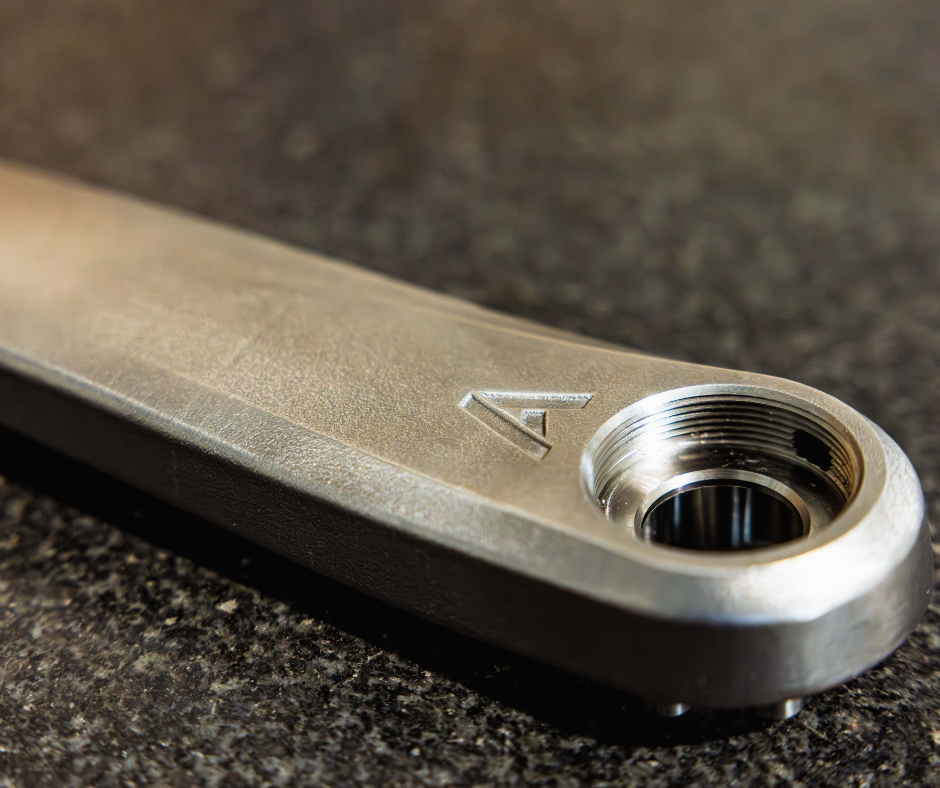
They have an ultra-low profile pedal end for maximum ground clearance – thinner than is possible with an aluminium or carbon crank because titanium is stronger and so less material is required.
11 lengths, three offsets, two axle standards and three finish options mean these cranks are highly customisable. Atherton Bikes
The lengths on offer range from 150mm to 175mm in 2.5mm increments, and the chainring offset choices are Trail (52mm), Trail Wide (55mm) and DH (56.5mm).
You can chose between 28.99mm (SRAM DUB) and 30mm (Hope, 5DEV, etc) axle diameters.
The GR Ti cranks are additive-manufactured in Atherton’s in-house Renishaw 3D printer. Atherton Bikes
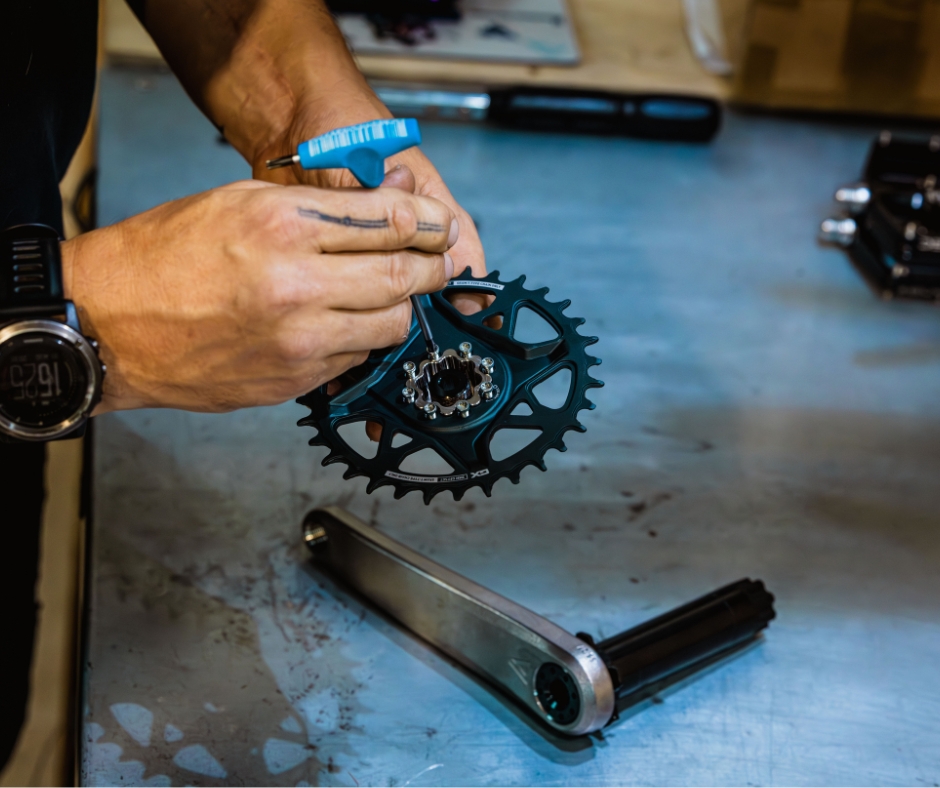
They run the latest SRAM standard eight-bolt chainring interface, so finding compatible chainrings shouldn’t be difficult.
Atherton Bikes sells Works Components’ Staffordshire-made chainrings alongside the cranks if you want to order them as a package.
The GR cranks all use the SRAM standard eight-bolt direct-mount chainring interface. Atherton Bikes
Titanium is highly abrasion-resistant and Atherton is confident these cranks will last a long time. They come with a lifetime warranty for any use and are EFBE and ISO cat-5 certified for DH use.
Atherton claims a weight of only 506g for a bare 165mm crank, which is not ultra-light for trail cranks, but it’s competitive for a downhill crank.
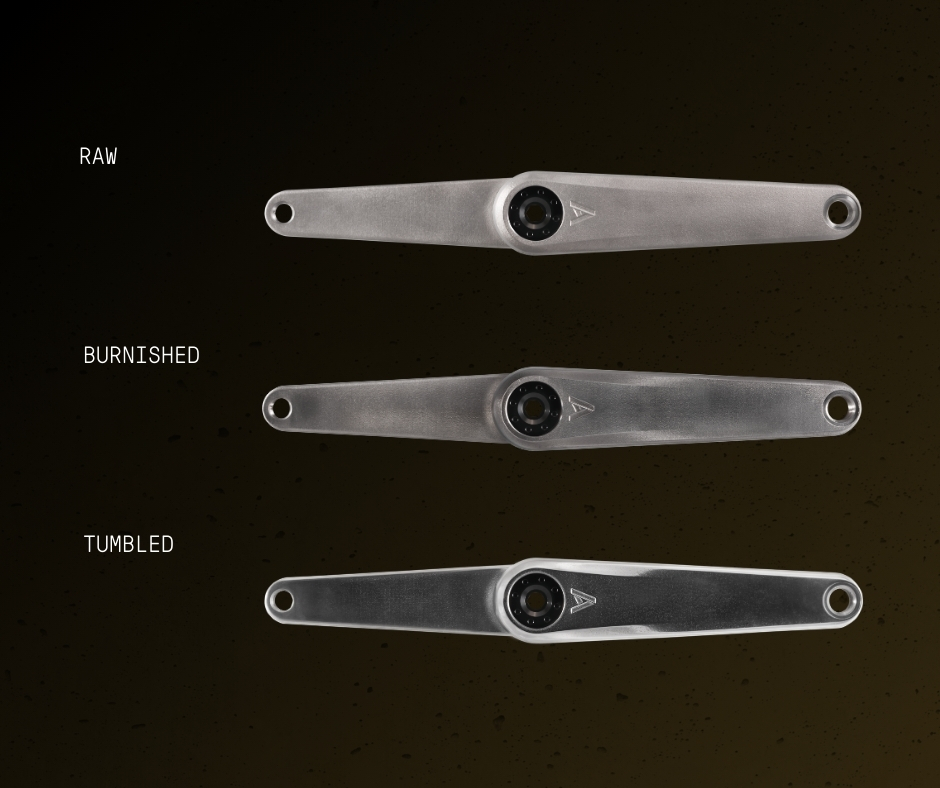
Three finishes enable you to choose the roughness of the raw titanium on show. Atherton Bikes
There are three finishes available: raw (the roughest), burnished (slightly finished) and tumbled (shiny and smooth).
They will take four to eight weeks to arrive after ordering the specific length, chainring offset, spindle diameter and finish you require.
The cranks are available now, direct from Atherton Bikes’ website.
Vulkan 1.4.345 released overnight as the latest routine spec update to this graphics and compute API. There is one new extension besides a handful of different clarifications and corrections to various elements of the spec…
BrianFagioli shares a report from NERDS.xyz: An international team of scientists has done something chemistry has never seen before. IBM, working alongside researchers from the University of Manchester, Oxford University, ETH Zurich, EPFL, and the University of Regensburg, has created and characterized a molecule whose electrons travel through its structure in a corkscrew-like pattern, fundamentally altering its chemical behavior. The findings were published today in Science. The molecule, known as C13Cl2, is the first experimental observation of what scientists call a half-Mobius electronic topology in a single molecule. To the researchers’ knowledge, nothing like it has ever been synthesized, observed, or even formally predicted. And proving why it behaves the way it does required something equally extraordinary — a quantum computer.
The whole thing started at IBM, where the molecule was assembled atom by atom from a custom precursor synthesized at Oxford. Working under ultra-high vacuum at near-absolute-zero temperatures, researchers used precisely calibrated voltage pulses to remove individual atoms one at a time. The result is an electronic structure that undergoes a 90-degree twist with each circuit through the molecule, requiring four complete loops to return to its starting phase. That is a topological property that has no counterpart anywhere in chemistry’s existing record. What makes it even more interesting to folks who follow materials science is that this topology can be switched. The molecule can move reversibly between clockwise-twisted, counterclockwise-twisted, and untwisted states. That means electronic topology is not just a curiosity to be stumbled upon in nature — it can be deliberately engineered. That is a big deal.
The quantum computing angle here is not just a supporting role. Electrons within C13Cl2 interact in deeply entangled ways, each influencing the others simultaneously. Modeling that requires tracking every possible configuration of those interactions at once — something that causes computational demands to grow exponentially and can quickly overwhelm classical machines. A decade ago, researchers could exactly model 16 electrons classically. Today that number has crept to 18. Using IBM’s quantum computer, the team was able to explore 32 electrons. Quantum computers can represent these systems directly rather than approximate them, because they operate according to the same quantum mechanical laws that govern electrons in molecules. In this case, that capability helped reveal helical molecular orbitals for electron attachment — a fingerprint of the half-Mobius topology — and exposed the mechanism behind the unusual structure: a helical pseudo-Jahn-Teller effect.
Alarm bells are ringing in the open source community, but commercial licensing is also at riskEarlier this week, Dan Blanchard, maintainer of a Python character encoding detection library called chardet, released a new version of the library under a new software license.…
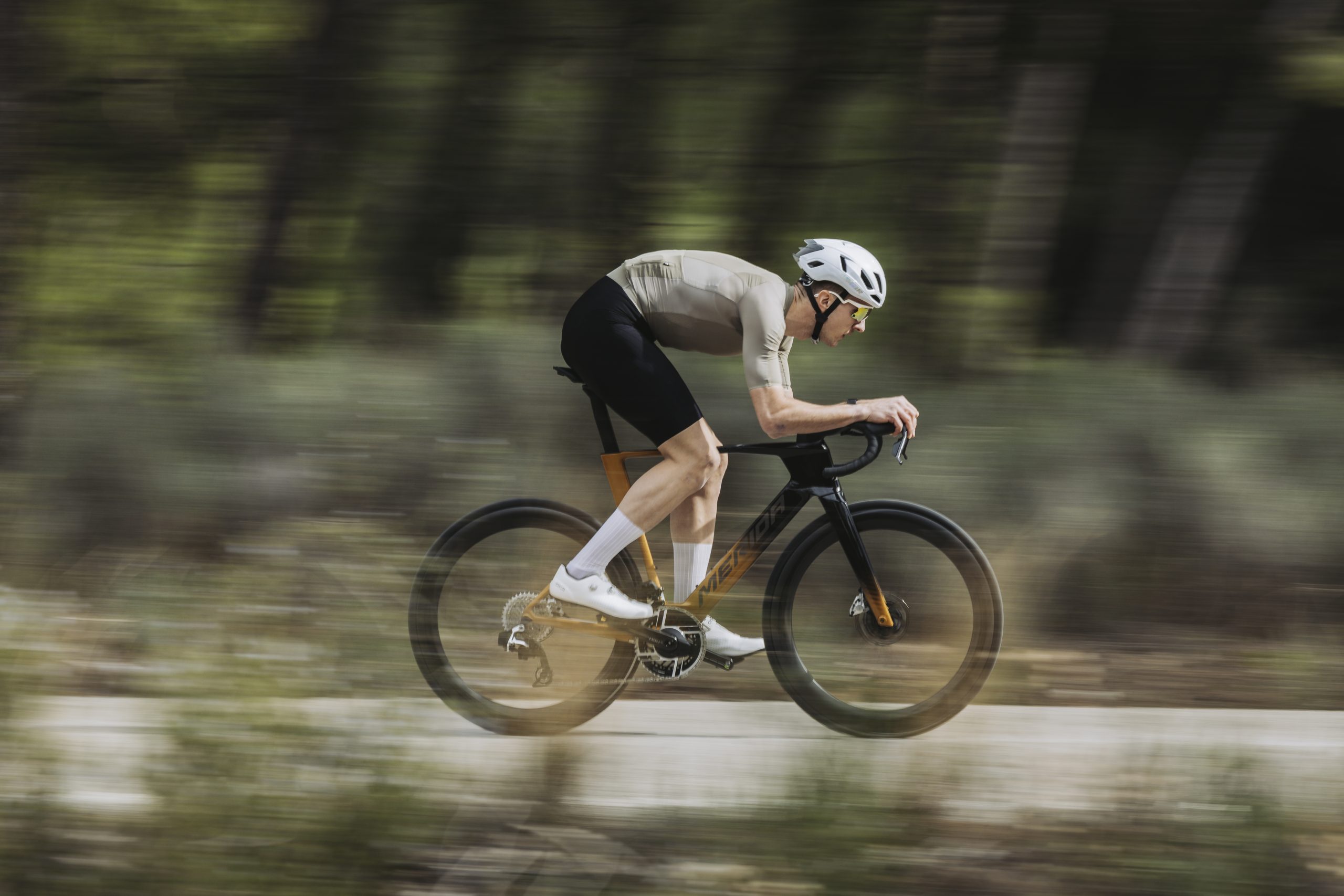
When Merida set out to design the new Reacto, it had one major goal in mind: to create a bike fast enough to break the 200-watt barrier, as measured by Tour Magazine in its wind-tunnel tests.
The German cycling publication’s independent wind-tunnel tests have become a benchmark in the industry for how well road bikes perform. The 200-watt barrier refers to the pedalling power required to overcome drag at 45km/h, which only two bikes have surpassed.
According to Tour Magazine, the 2022 Simplon Pride II had an aero drag of 199W and the Storck Aerfast.5 Pro achieved 198W.
Merida says the new Reacto is 2.5 per cent quicker than the previous generation of the bike. Merida
Merida says the previous-generation Reacto IV, which was one of the best-value aero bikes, and was released back in 2021, required 211W to overcome its own drag.
For its latest aero bike, Merida has managed to shave that figure down to 206W for the top-spec Reacto One (£10,000 / €11,500), according to a Tour Magazine test.
However, there are some caveats to this figure. Merida says the Reacto IV and the new Reacto One were both fitted with the brand’s SL 1P cockpit and 60mm-deep wheels.
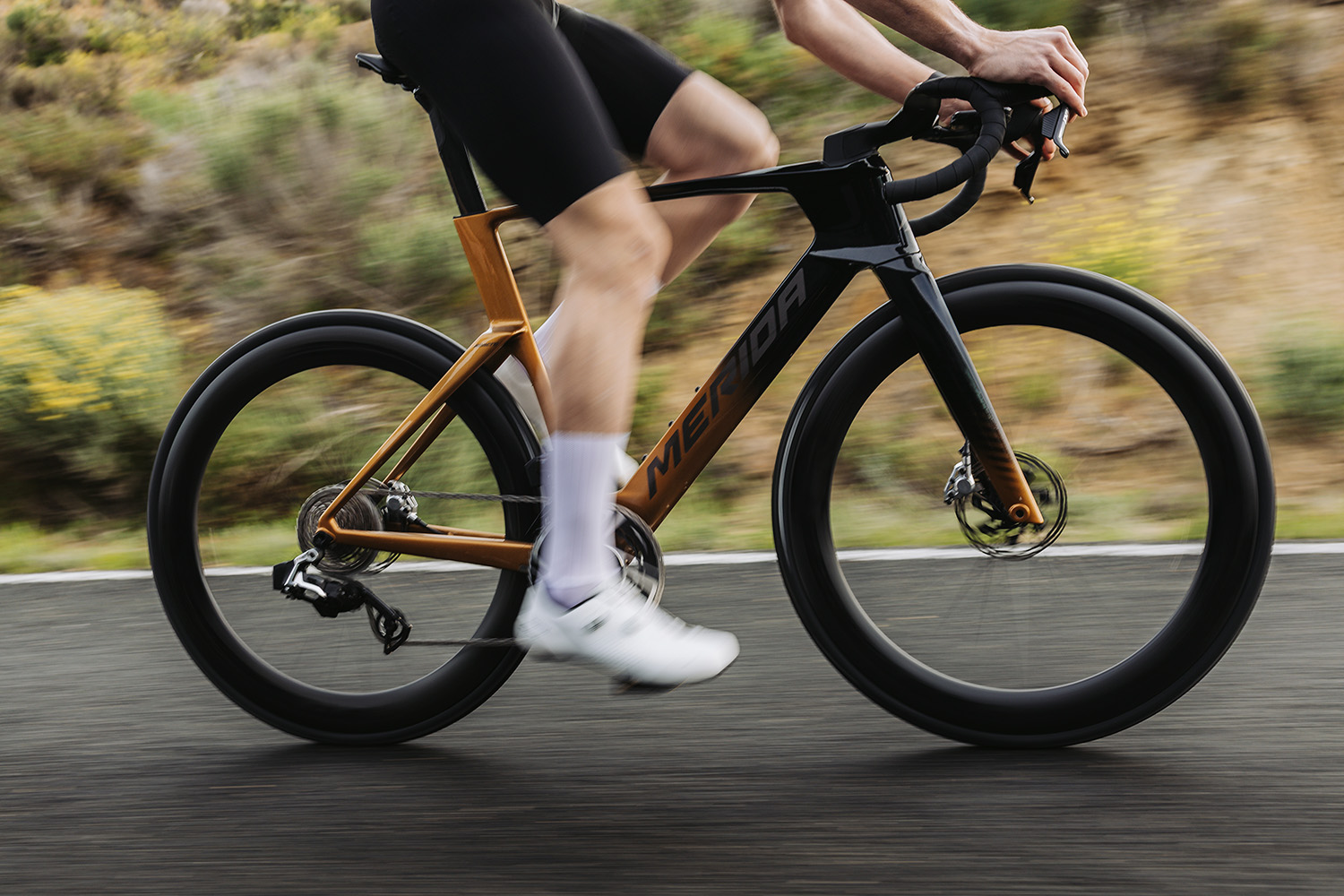
But the newest version was fitted with a wider 30mm tyre, because the clearance of the bike has increased from 28mm to 32mm, which Hutchinson recently suggested could be faster than 30mm.
The new Reacto One is also fitted with a Classified Powershift hub and 1x drivetrain, which would help reduce aero drag compared to a more conventional 2x setup.
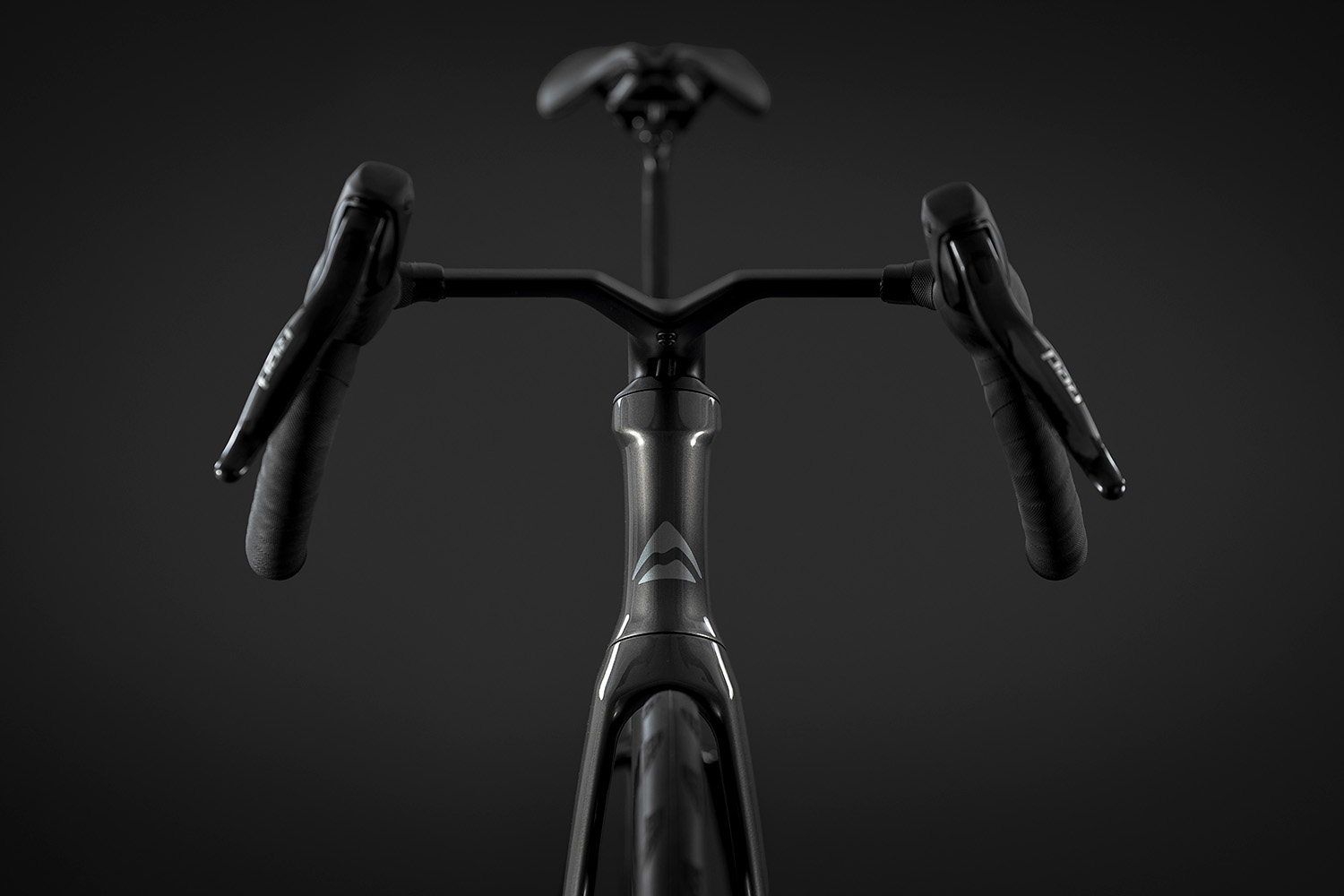
Yet, Merida adds that if you switch the SL 1P cockpit for its new CW 1P design, the Reacto One drops below 200W and achieves 196W.
The bike can be fitted with the new CW 1P, a gull-shaped cockpit. Merida The CW 1P is similar to the cockpit found on the Colnago Y1Rs. Merida
The CW 1P cockpit is a ‘gull wing’ design similar to that found on the Colnago Y1Rs. Merida says the “V-shape and foil profile maximise efficiency in all wind conditions, and its ergonomic shape ensures comfort and relief during even the most demanding rides”.
The bar is available for the top Reacto One and the Reacto 10k (£9,500 / €11,000), which features a 2x SRAM Red AXS groupset, and still achieves a score of 202W, according to Tour Magazine and Merida.
This means the new Merida Reacto is faster than the Simplon and Storck bikes tested by Tour Magazine and faster than aero bikes from bigger brands. Tour Magazine said the 2021 Canyon Aeroad scored 202W and the latest Cervélo S5 scored 204W.
Aerodynamic shapes
Merida has refined the Reacto’s tube shapes following a change in UCI regulations. Merida
Alongside the new bar, Merida has made use of changes in UCI regulations to make the Reacto faster.
Merida says the bike utilises the “aerodynamic boundaries set by the UCI”, which we can take to mean the change in tube ratios. In 2022, cycling’s governing body said bicycle tubes could be eight times longer than they were wide, whereas the ratio had previously been 3:1.
The previous Reacto was released just before this change, and therefore couldn’t make use of it, but the latest version has.
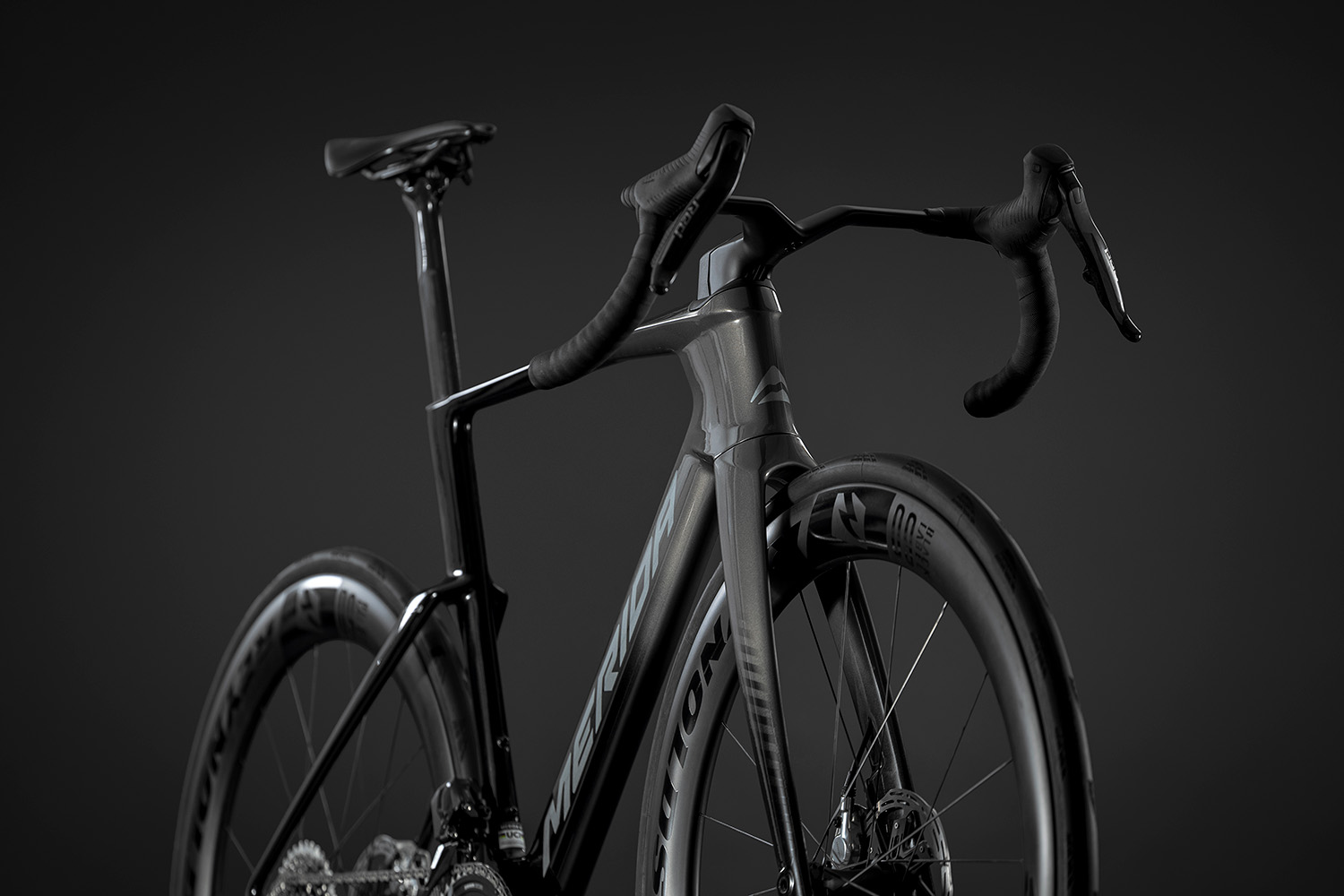
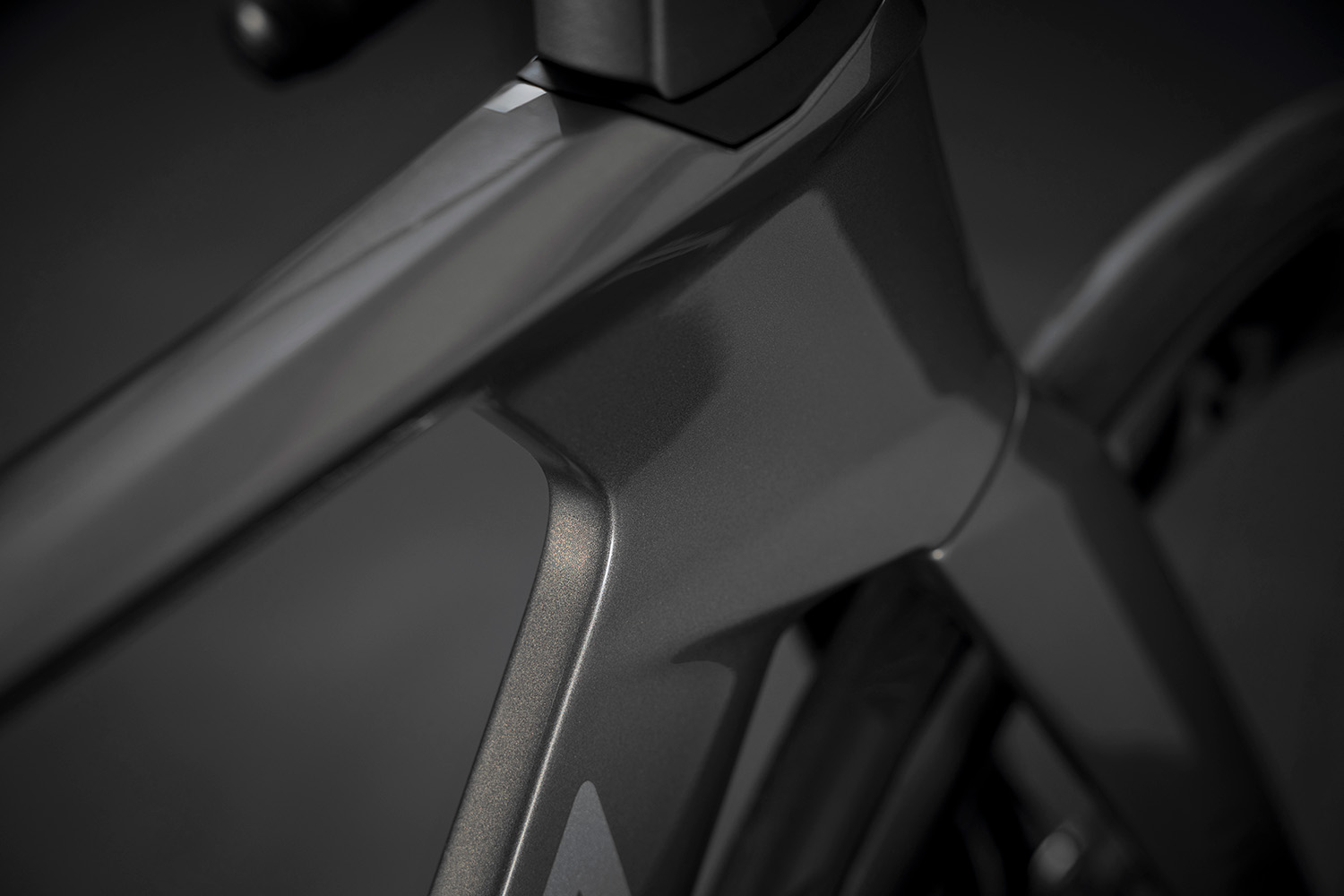
As we remarked when we spotted the unreleased bike at last year’s Tour de France, the new Reacto’s head tube is far deeper than the previous version. This is one of the latest trends in road bike design and is particularly notable on the latest Ridley Noah.
The Reacto now has a deep head tube, following one of the biggest trends in current road bike design. Merida
Merida says it has also updated the Reacto’s fork shape, “which now features deeper and thinner fork legs to reduce air drag at the fork/tyre intersection”.
“Updates have also been made to the head tube, especially in terms of integrating the cockpit and stem areas into the frame. The downtube has been positioned further away from the front wheel to improve aerodynamics and reduce weight,” Merida explains.
The Taiwanese company also paid attention to the position and integration of water bottles.
“We maintained a more conventional aero downtube profile, but are very close to releasing our own aero bottle and cage combination, which, when used on the new Reacto, easily outperforms the often-seen cradle-shaped downtubes that hide a classic bottle and cage combination,” it says.
Speed isn’t everything
Merida says it has ensured the new Reacto is comfortable and lighter than before to make it an “all-rounder”. Merida
Just as Tour Magazine doesn’t only consider aerodynamic performance in its overall ranking of road bikes, Merida says it has balanced the Reacto’s speed with comfort.
“We also wanted to create one of the most aerodynamic bikes that still maintains impressive comfort and control attributes,” Merida says.
Merida says it has managed to achieve a comfortable ride quality comparable to a “classic, thin-tubed road bike,” by combining the compliance of the S-Flex seatpost with the clearance for 32mm tyres. But it should be noted that none of the 10 models available at launch come with tyres this wide.
Merida adds that the carbon layup of the bike achieves a balance of stiffness and flex: “Balancing the contrasting needs of comfort and efficiency is no easy task, but by using knowledge gained over years of carbon fibre manufacture and the efforts of our in-house testers and world-class athletes, we’ve found what we feel is the correct balance in each area of the bike.”
Merida says it could be possible to get the top Reacto models under the UCI weight limit. Merida
Merida says it has also reduced the weight of the Reacto. The Reacto 10k is the lightest version in the new range with a claimed weight of 7.1kg, but Merida says it could be possible to get the bike under the UCI weight limit of 6.8kg.
It claims this combination of aerodynamics, comfort and low weight makes the Reacto a “more versatile ‘aero all-roudner’” and that this makes it “hugely significant amongst road racing professionals as well as speed loving enthusiasts”.
The Reacto is available with two carbon levels. The top five models in the range use the lighter CF5 frame, which is 11g lighter than the previous generation, while the complete frameset weighs 108g less at 1,616.2g in a size medium.
Meanwhile, the CF3 frameset – available on bikes ranging from £2,400 / €2,800 to £5,000 / €5,750 – weighs 1,704g in the same size.
The framesets have the same geometry and offer “identical aerodynamic performance”.
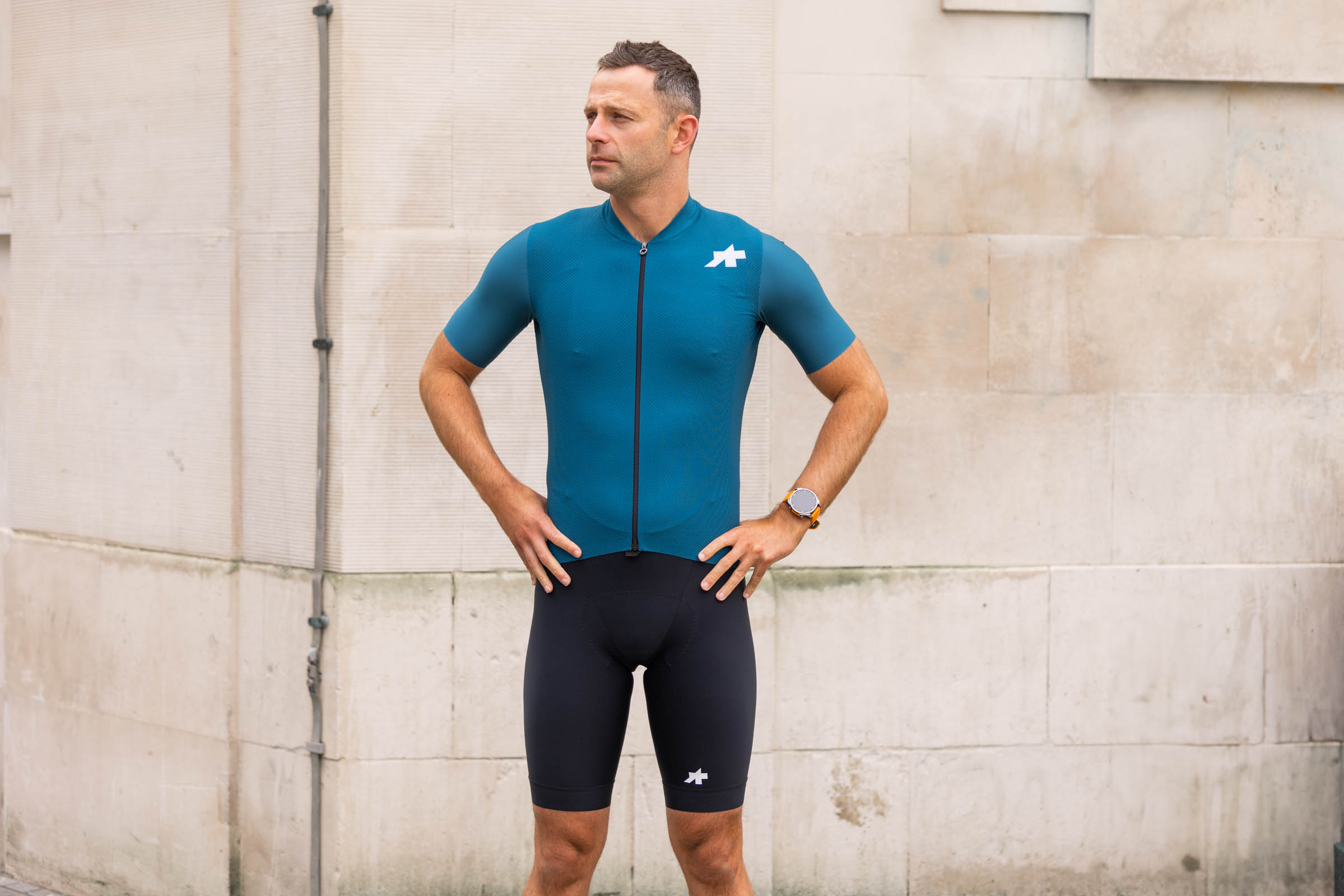
I’ve got my hands on the latest Assos Mille GT jersey and bib shorts, and I can’t believe how comfortable the ensemble is.
Comfort is always subjective, but consider the context. I’m a wide-built, 188cm-tall 36-year-old, who weighs close to 87kg.
Most kit I wear is compromised in some way, with spare fabric here and there, where I’ve had to go up a size to accommodate my broad-for-a-cyclist chest and shoulders. Likewise, when I stick to a size for desirable compression levels, I might find it’s a bit… snug.
But the latest Mille GT kit has some refined features geared towards making it more comfortable for endurance riding, with an accommodating cut suitable for more than just racing whippets.
Bearing in mind a reasonable total price tag of £250, don’t dismiss it on Assos’ premium-price reputation alone.
For the longest days: Assos Mille GT jersey
SQUIRREL_TEXT_13821002
The Mille GT jersey features a lightweight and breathable main fabric. Scott Windsor / Our Media
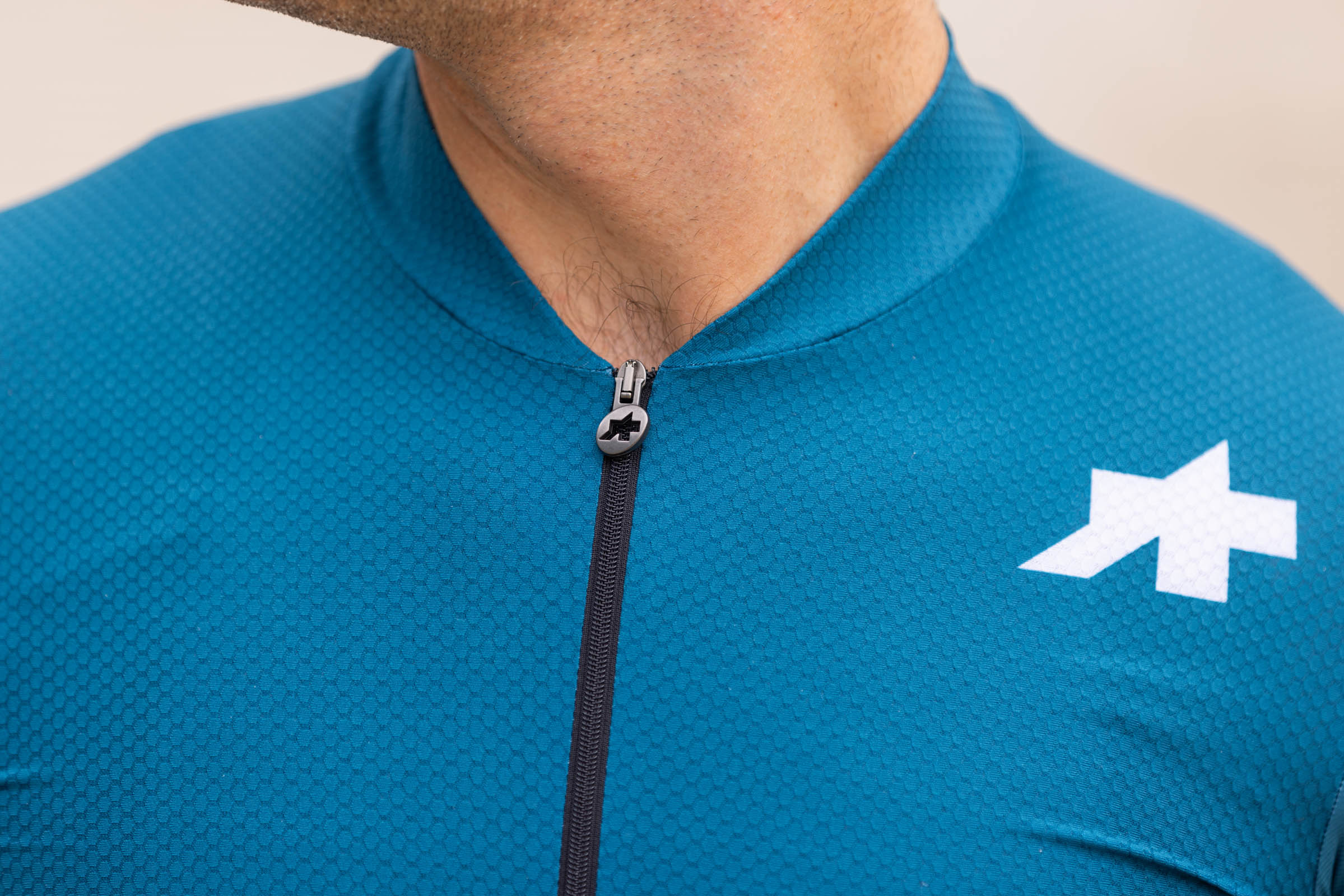
Up top, the Mille GT jersey makes use of Assos’ lightweight AirCell fabric. Its hexagonal structure is engineered to promote airflow while remaining stretchy.
This helps it feel light and breathable, while avoiding the tell-tale flap of excess material or an overly tight feel.
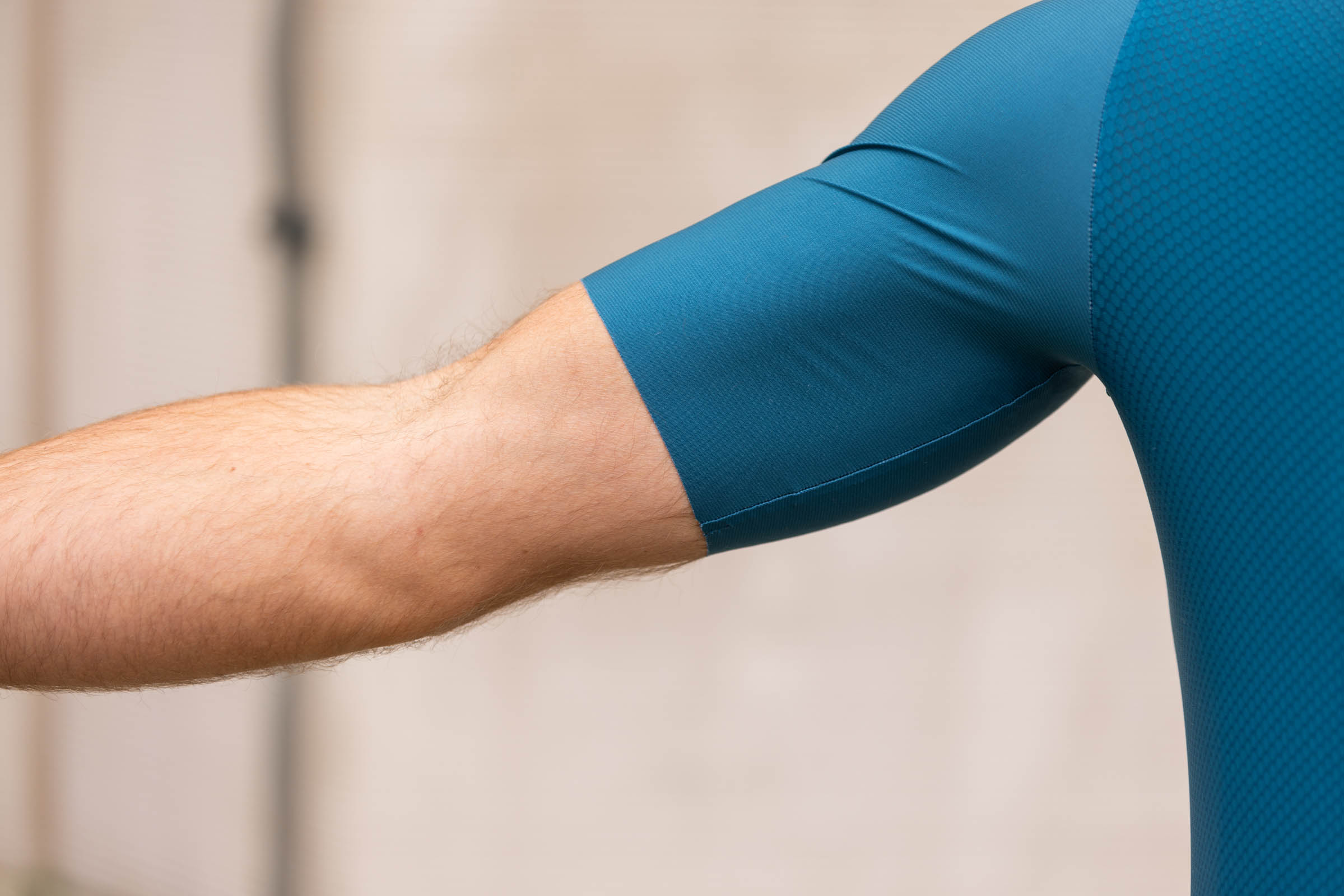
The sleeves have been reworked using a new lightweight ‘Eclipse’ fabric and finished with a raw-cut hem. Even with my broader shoulders, the sleeves settle naturally around the mid-point of my arm without digging in or pulling on the neckline. It’s a subtle update, but one I suspect will prove comfortable on the long rides this kit is designed for.
The sleeves are raw-cut, which should increase comfort. Scott Windsor / Our Media
Round the back, Assos’ familiar ‘Triple Ramp’ pockets are designed to help prevent sagging when you’ve packed in the supplies for an all-day ride. Fully loaded, I’ve found the jersey doesn’t feel too weighed down.
The overall cut is excellent, though, with generous enough proportions that it will accommodate riders like me who don’t conform to the snake-thin cycling stereotype, but still manage to flatter.
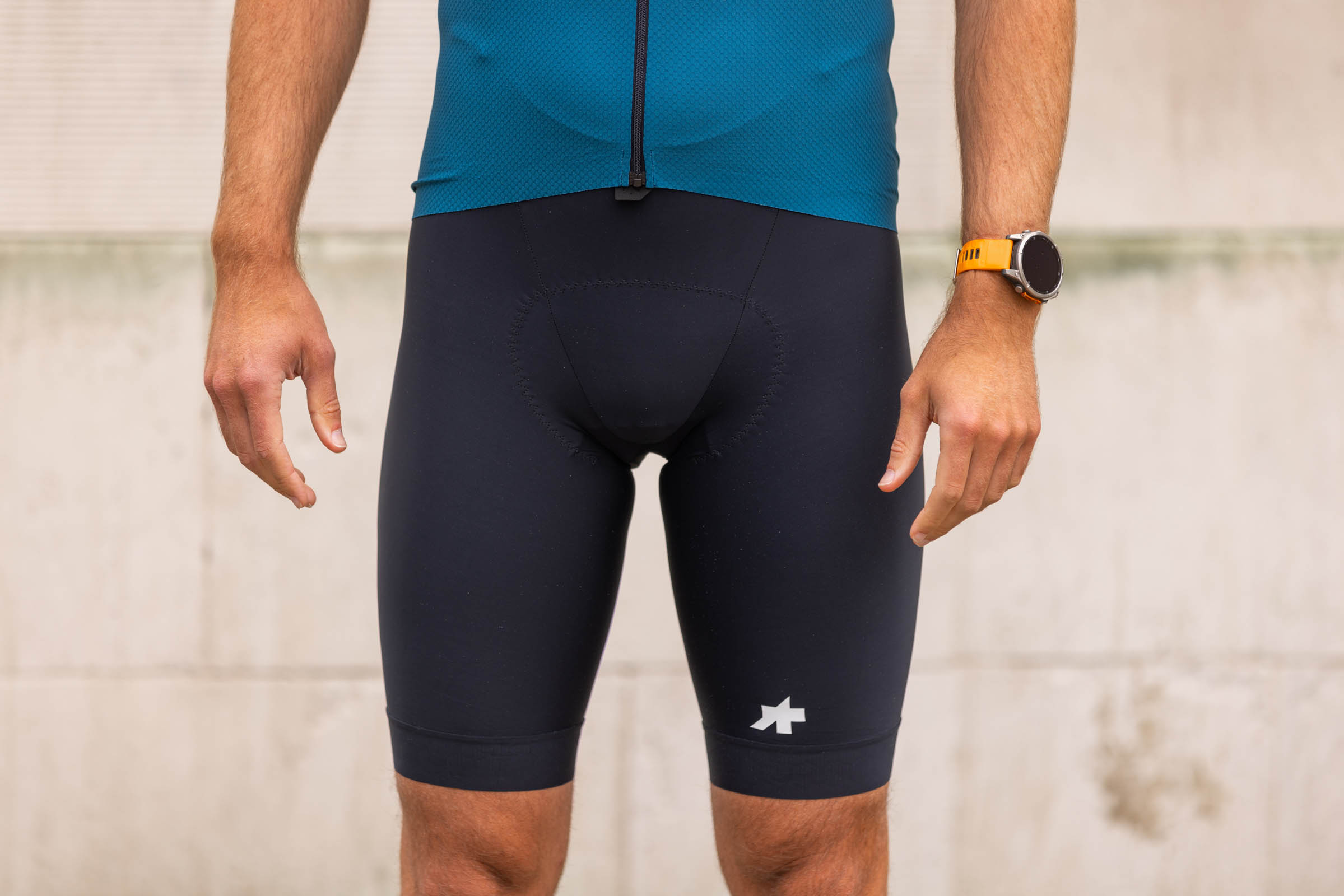
The shorts feel like remarkably good value at £135, including a version of Assos’ excellent S11 chamois. Scott Windsor / Our Media
The matching Mille GT Bib Shorts S11 retain Assos’ slightly awkward naming convention, but the focus on endurance riding is clear.
Assos says the slightly longer leg offers a modern silhouette, and while I’m not a fan of shorts that extend right down to the back of the knee, this design seems to strike a happy medium.
The legs are made from Assos’ Quartz fabric, which is said to be permanently odour-free (ideal if you wanted to use the shorts on a light bikepacking trip).
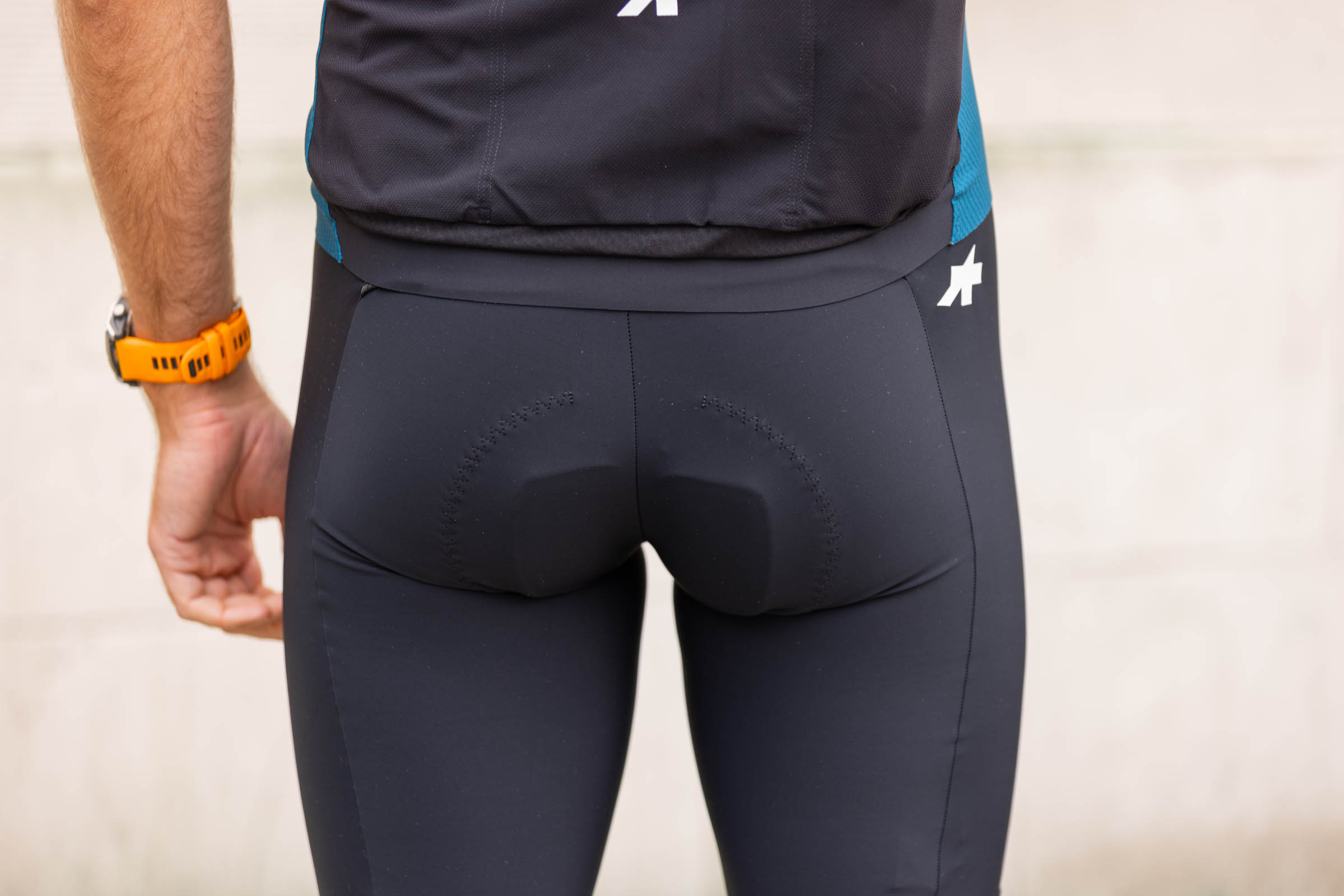
Assos has prioritised a low-profile pad design, cutting away unnecessary cushioning. Scott Windsor / Our Media
80 per cent of the material is made from recycled polyamide, a welcome move for the eco-conscious, yet it feels tough-wearing and compressive. Assos says the fabric is engineered to remain a deep black even when stretched, saving potential blushes and retaining a premium look.
The GT chamois is based on highly regarded ‘S11’ tech shared with the brand’s top-level shorts, and is 12mm thick but designed to be as minimalist and breathable as possible to avoid the dreaded hot puffy-pillow sensation.
Assos’ Rollbar bib-strap design is said to keep the insert securely in place during hard efforts, by anchoring lower down the backside. It’s this that gives a real supportive, locked-in sensation when riding.
The updated Assos Mille GT kit seems to offer an enticing blend of premium performance and a mid-range price tag. Scott Windsor / Our Media
The brand’s Golden Gate 2.0 tech, whereby the pad is only partially stitched in, enables it to settle into the optimum position more easily before the bib-strap design does its work to hold everything in place.
I’m also a fan of the leg grippers, which use a textured design that I find slightly reminiscent of the first-generation Rapha Pro team bib shorts, offering a definitive feel to the end of the shorts. These are less tight-feeling, though, which helps to mitigate a sausage-leg look or unsightly marks on the skin.
The Assos Mille GT kit is available now, priced at £115 for the jersey and £135 for the bib shorts, both in multiple colourways.
A recently-revised Senate authorization bill (PDF), co-sponsored by Senate Commerce Committee Chair Ted Cruz, would extend the International Space Station’s lifespan from 2030 to 2032 while pushing NASA to accelerate plans for commercial space stations to replace it. Ars Technica’s Eric Berger reports: Regarding NASA’s support for the development of commercial space stations, the bill mandates the following, within specified periods, of passage of the law:
– Within 60 days, publicly release the requirements for commercial space stations in low-Earth orbit
– Within 90 days, release the final “request for proposals” to solicit industry responses
– Within 180 days, enter into contracts with “two or more” commercial providers for such stations
Cruz is trying to inject urgency into NASA as several private companies — including Axiom Space, Blue Origin, Vast, and Voyager — are finalizing designs for space stations. All have expressed a desire for clarity from NASA on how long the space agency would like its astronauts to stay on board, the types of scientific equipment needed, and much more. These are known as “requirements” in NASA parlance.
[…] Cruz and other senators on the committee appear to share those concerns, as their legislation extends the International Space Station’s lifespan from 2030 to 2032 (an extension must still be approved by international partners, including Russia). Moreover, the authorization bill states, “The Administrator shall not initiate the de-orbit of the ISS until the date on which a commercial low-Earth orbit destination has reached an initial operational capability.” With this legislation, the U.S. Senate is making clear that it views a permanent human presence in low-Earth orbit as a high priority. This version of the authorization legislation must still be passed by the full Senate and work its way through the House of Representatives.
In a new blog post, Anthropic CEO Dario Amodei has admitted that it received a letter from the Defense Department, officially labeling it a supply chain risk. He said he doesn’t “believe this action is legally sound,” and that his company sees “no choice” but to challenge it in court. Hours before Amodei published the post, the Pentagon announced that it notified the company that its “products are deemed a supply chain risk, effective immediately.”
If you’ll recall, the Defense Department (called the Department of War under the current administration) threatened to give the company the designation typically reserved for firms from adversaries like China if it didn’t agree to remove its safeguards over mass surveillance and autonomous weapons. President Trump then ordered federal agencies to stop using Anthropic’s tech.
Amodei explained that the designation has a narrow scope, because it only exists to protect the government. That is why the general public, and even Defense Department contractors, can still use Anthropic’s Claude chatbot and its AI technologies. Microsoft told CNBC that it will continue using Claude after its lawyers had concluded that it can keep on working with Anthropic on non-defense related projects.
The CEO has also admitted that his company had “productive conversations” with the department over the past few days. He said that they were looking at ways to serve the Pentagon that adheres to its two exceptions, namely that its technology not be used for mass surveillance and the development of fully autonomous weapons, and at ways to “ensure a smooth transition if that is not possible.” That confirms reports that Anthropic is back in talks with the agency in an effort to reach a new deal. In addition, he apologized for a leaked internal memo, wherein he reportedly said that OpenAI’s messaging about its own deal with the department is “just straight up lies.”
This article originally appeared on Engadget at https://www.engadget.com/ai/anthropic-says-it-will-challenge-defense-departments-supply-chain-risk-designation-in-court-054459618.html?src=rss
An anonymous reader quotes a report from 80 Level: Microsoft has officially confirmed development of its next-generation Xbox console, currently known internally as Project Helix. While concrete details remain limited, early information suggests the company is positioning the device as a hybrid between a traditional console and a gaming PC, capable of running both Xbox titles and PC games. The codename was revealed recently by new Xbox CEO Asha Sharma, who reaffirmed Microsoft’s continued commitment to dedicated gaming hardware despite speculation that the company might shift entirely toward cloud or platform-based ecosystems. According to Sharma, Project Helix represents the next step in Xbox’s console strategy.
Although official specifications have not yet been announced, early reports indicate the system will likely rely on a new AMD system-on-chip combining Xbox hardware with PC-style architecture. The device is expected to emphasize high performance while maintaining compatibility with existing Xbox game libraries. […] If the concept holds, Project Helix could mark a significant shift in how console ecosystems are structured, moving away from tightly closed hardware platforms toward something closer to a unified PC-console environment. Sharma wrote in a post on X: “Great start to the morning with Team Xbox, where we talked about our commitment to the return of Xbox, including Project Helix, the code name for our next generation console. Project Helix will lead in performance and play your Xbox and PC games. Looking forward to chatting about this more with partners and studios at my first GDC next week!”