Use TikTok’s ‘Rage Cleaning’ Trend to Get Your Place Spotless

Creating and sticking to a cleaning schedule is difficult, but only because life is difficult. Finding time to clean can feel impossible sometimes, especially when you’ve had a stressful day at work, with your family, or just in general. But what if you could harness that negative energy and turn it into cleaning power? That’s the idea behind TikTok’s “angry cleaning” trend—also known as “rage cleaning“—and if you’re as grumpy as I am, you mind find it helps you get your home a lot cleaner.

What is TikTok’s rage cleaning trend about?

I see the terms “angry cleaning” and “rage cleaning” all over TikTok, but quickly realized they describe something I already do: When I’m annoyed or upset, I start to clean—usually something that requires a little oomph, like scrubbing or vacuuming. It turns out I’m not alone.

There are a few benefits at work here. Pouring your negative energy into cleaning can distract you from whatever is annoying you, providing a menial task you can accomplish without a lot of active thinking. It lets you physically work out your negativity, especially if you’re really putting some muscle into whatever you’re doing (cleaning the oven is a good option here). It also gives you a positive end result that can lift your spirits and make you feel motivated: After cleaning for a while, your head will feel clearer and you’ll have a cleaner home to show for it.

How to incorporate angry cleaning into your routine

I’ll stop short of recommending that you wait to clean until you’re upset; you should still try to follow a cleaning schedule and stay consistent with your efforts to tidy up. Additionally, I don’t recommend intentionally pissing yourself off so you can work up the motivation to scrub all those dirty pans.

When the opportunity to rage clean arises naturally, however, it pays to find the right outlet. Choose an arduous task like cleaning the bathroom grout so you can really put your back into it and physically work out your anger. It needn’t be something truly strenuous. For instance, I like folding laundry when I’m mad because I get to slap the folded garments down on the pile with a bang. Whatever works!

This isn’t really the time for something that takes brainpower, like decluttering. Angry cleaning is most effective when you can focus on feelings over thoughts, so stick to mopping the floor extra hard. I’m generally a proponent of cleaning your home in small bursts, so tap into that thinking to bust through one annoying, laborious cleaning task while you’re good and pissed.

I’m not saying rage cleaning will fix whatever is bothering you, but it can help you let off some steam and will allow you to think a little more clearly afterward—and in a neater space to boot. Challenge yourself to work quietly on one task, see it through with no distractions, and reevaluate how you feel afterward. Think about what’s bothering you, or just focus on cleaning, but don’t take any steps to address what’s wrong until you’ve finished your project and given yourself a little time alone and a bonus jolt of accomplishment. Your problems, and your to-do list, might both feel a bit more manageable afterward.

What to keep in mind when rage cleaning

I’ll add a few more notes here, as someone who’s now watched what feels like a million of these TikTok videos and who also does enjoy cleaning up when negative emotions are afoot. First, don’t just channel your rage into cleaning to make it more effective, but make sure you’re also using that time to yourself to calm down the anger. That looks different for everyone, sure, but on TikTok, you’ll see examples of people lighting candles or putting on some music they enjoy. Ideally, by the end of an angry cleaning session, you’ll feel better—which will help you address the cause of your annoyance more effectively, too.

Second, if you’re feeling mad all the time, it’s really not good, whether you’re able to turn that into productive rage cleaning or not. Obviously, it’s more important to deal with the root cause of your problems than constantly use them to clean. Just wanted to put that out there. In the meantime, though, make sure you’re taking note of when you’re feeling the inspiration to angry clean. If, say, you hang up every phone call with your mom in a bad mood or consistently get frustrated after a weekly meeting at work, reorient your cleaning schedule to make sure you’re harnessing that energy. If one of the parents at your kid’s 6 p.m., Tuesday dance class enrages you, 8 p.m. on Tuesday sounds like a great time to give the kitchen its weekly cleaning, right? Let it work for you, not against you, and your home and emotions will thank you.

Graduates From Top MBA Programs Are Struggling To Land Jobs

Job placement rates have declined at all top U.S. business schools [non-paywalled source] since 2021, leaving MBA graduates anxious about their expensive degrees’ return on investment. Harvard Business School, which produced Wall Street titans like Bill Ackman and Ray Dalio, saw the percentage of graduates without job offers three months post-graduation rise from 4% in 2021 to 15% currently.

Similar trends are evident at Stanford, Chicago Booth, MIT Sloan, and Wharton, where 7% of 2024 graduates lacked offers within three months of completing their programs. Industry experts cited in a Bloomberg report attribute the downturn to tepid white-collar job growth, declining private-sector wages, and high-profile layoffs at companies including Meta and JPMorgan.

Read more of this story at Slashdot.

These hot oil droplets can bounce off any surface

Burning droplets bounce back. Credit: Zulu et al., 2025

Droplets bouncing off surfaces are an everyday phenomenon, like raindrops bouncing off lotus leaves or water drops sizzling in a hot pan, levitating and sliding around—aka the Leidenfrost effect. There is also an inverse Leidenfrost effect, first described in 1969, that involves a hot object such as a droplet levitating above a cold surface. Understanding the mechanisms behind these phenomena is crucial to a broad range of practical applications, such as self-cleaning, anti-icing, anti-fogging, surface charge printing, or droplet-based logic systems.

Droplets usually only bounce if the surface is superheated or engineered in some way to reduce stickiness. Physicists from the City University of Hong Kong have figured out how to achieve this bouncing behavior of hot oil droplets off almost any surface, according to a new paper published in the journal Newton.

As we’ve reported previously, in 1756, a German scientist named Johann Gottlob Leidenfrost reported his observation of the unusual phenomenon. Normally, he noted, water splashed onto a very hot pan sizzles and evaporates very quickly. But if the pan’s temperature is well above water’s boiling point, “gleaming drops resembling quicksilver” will form and skitter across the surface. It’s called the “Leidenfrost effect” in his honor.

Read full article

Comments

AMD Radeon RX 9070 XT And 9070 Leaked Stock Status Will Make Gamers Grin

AMD Radeon RX 9070 XT And 9070 Leaked Stock Status Will Make Gamers Grin
The GPU season is heating up with mid-range products finally starting to near their launch dates. NVIDIA’s GeForce RTX 50 series GPUs have already launched in mid-range and high-end form with the GeForce RTX 5070 Ti, GeForce RTX 5080, and GeForce RTX 5090 out in the wild (soon to be joined by the GeForce RTX 5070 without the Ti designation).

Warhammer 40K: Space Marine 2 Promises It’s Not Going Full Live-Service Game After Latest Botched Event

Warhammer 40,000: Space Marine 2 is very much not a live-service game. That’s one of the things that felt so refreshing about the sci-fi shooter when players flocked to it last fall. But it felt eerily like one late last month when an in-game reward was locked behind a busted community event. “We are not looking to…

Read more…

Declutter Your Home With TikTok’s Viral ‘Core 4’ Method

We may earn a commission from links on this page.

There’s a difference between cleaning and decluttering. If you have too much stuff (clutter), you’ll have a much harder time sweeping, dusting, sanitizing, and actually cleaning, plus your house will never look clean. But decluttering is harder than cleaning, by far. It’s overwhelming, even, which is why clutter can get out of hand, making cleaning a nearly impossible task. That’s also why we’re always on the hunt for new ways to declutter: Surely, someone out there has cracked the code, right? As it turns out, organizer Kayleen Kelly may have. Her method, Core 4, is wildly popular on TikTok and could be the one that works for you. (Check out all these other pro decluttering methods, too, for more inspiration.)

What is Core 4?

Kelly’s Core 4 cleaning method is a big hit on CleanTok, with one analysis I was sent by Upmove showing videos on the technique have amassed over 23 million views. Here’s the video that launched it all:

When decluttering, Kelly suggests moving through each room in four stages: Clear out, categorize, cut out, and contain. 

How to use Core 4 to declutter

If you want to try Core 4 on your own, Kelly advises starting with small areas to avoid getting overwhelmed. Instead of trying to do each stage through your entire home at once, do all four stages in one room, then repeat that process in each room. If a single room has a ton of stuff in it, you can divvy that up even more, focusing first on a closet or the counter space, for example.

Clear out

Start the first phase, which is clear out, by just removing everything and putting it in a pile. Throw out trash if you see it, but focus on getting your cupboards, table space, and other storage areas completely clear, so they can be filled in a more organized way later.

Categorize

Next, categorize. You’ll need sorting bins for this (more on that later), so designate a bin for each different category of stuff you’re moving through, like your clothes, a family member’s clothes, makeup, knick-knacks, pet products, etc. Start sorting your pile by putting every item into its associated bin. 

Cut out

The third phase is “cut out.” This one is difficult because you’ll be tasked with going through each bin and determining what can be thrown away or donated. This is a good time to practice putting your clutter in “purgatory”—moving things you’re unsure about getting rid of to a special bin that you’ll hide away somewhere, like an attic, for a month to determine if you can live without it. Otherwise, be decisive and do your best to shrink the amount of stuff in each bin. Here’s a list of questions I recommend asking yourself as you declutter so you can focus on making objective, reasonable choices.

Contain

Finally, contain. Reassess your bin situation. If you threw out a bunch of old kitchen tools, you might be able to put the remaining ones in a smaller container, for instance. The bins are key here—you’ll be using them for storage and organizing going forward, not just for sorting and decluttering when you’re working through the steps. 

What to keep in mind while utilizing Core 4

Core 4 relies on principles you’ll also find echoed throughout the wider landscape of organizing and decluttering techniques. Specifically, it works well because it falls back on the principles that make up the Organizational Triangle, namely, that similar items should be stored together and everything you own must have a designated space. The containers are crucial because they keep everything categorized and stored together, but also because they give you a sense of volume. If all of your skincare products are stored in a bin, for instance, you’ll notice if you run out of space to add more, which can signal to you that you need to declutter and pare down your collection. If they’re scattered all over your bathroom and vanity, you’ll have a much tougher time noticing you have too much.

While the containers are important and valuable, they also pose a bit of a problem: With everything boxed up and hidden away, the containers themselves can become cluttered. You’ll still need to repeat the Core 4 technique periodically over time, focusing on that “clear out” step and dumping the bins, so you don’t end up with a bunch of smaller, invisible messes inside your cabinets and closets. Another approach you can use is the “out in the open” method, which is pretty similar, but involves dumping every item in every closet or cupboard in a room right into the center of the space, then going through it. The scale at which you tackle the “clear out” stage as you continue to employ Core 4 is really up to you, but I recommend moving in smaller chunks to avoid getting overwhelmed.

What bins you’ll need

It might seem counterintuitive to buy more stuff to declutter, but to use this method, you really do need the bins. They make sorting easy, plus give you a place to store the things you decide to keep, helping you stay organized so you don’t have to keep repeating the Core 4 all the time. Here are a few bin options to consider: 

Classic storage bins

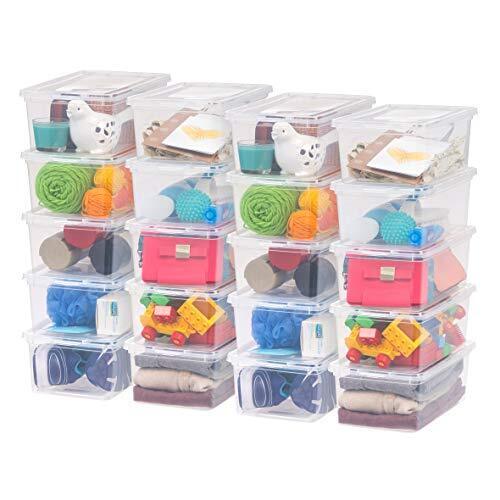
If you’re focusing on pure functionality, nothing is better for this job than clear, plastic containers with lids. They nest and stack, so whether they’re empty or full, storing them is easy and intuitive. Try the IRIS bins from Amazon, which come in a six-pack of 53-quart bins ($69.99) for larger items or categories and a 20-pack of 5.9-quart bins ($28.99) for smaller needs. 

Decorative storage bins

If you live in a small space where the bins are more likely to be visible or you just prioritize aesthetics, you’ll want more decorative bins. Your best bet is to buy sets of matching boxes, like this small and large box set on Wayfair for $58.99, which comes in a bunch of colors and designs. Collapsible fabric boxes, like this set of three from Amazon ($29.95) are good options, too, since they can be folded up when not in use and fit well onto shelving units.

GeForce RTX 5080 Availability Update: Prebuilt Gaming PCs You Can Buy Right Now

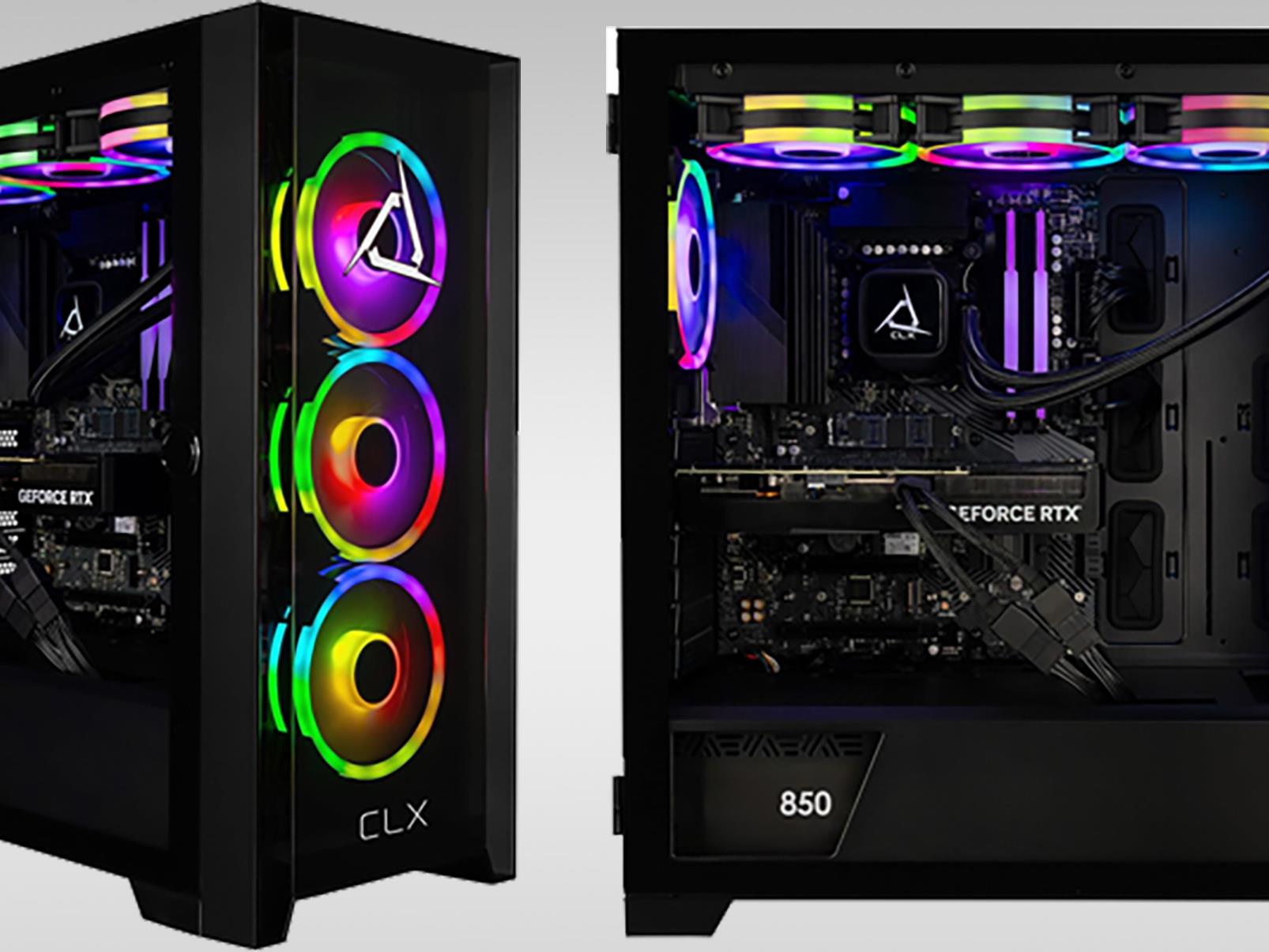
GeForce RTX 5080 Availability Update: Prebuilt Gaming PCs You Can Buy Right Now
The only ‘vendors’ with a standalone GeForce RTX 5080 graphics card in stock are greedy marketplace sellers and scalpers at places like eBay. Looking at some of the recently sold listings on eBay, we’re seeing card go for $1,600 to $2,150, and several of them don’t even include shipping. Pshaw! Only time will soothe the situation, but until

TCL’s 60 XE Nxtpaper 5G Phone Can Mimic An E-Ink Display For Easy Reading

TCL's 60 XE Nxtpaper 5G Phone Can Mimic An E-Ink Display For Easy Reading
TCL has announced a slew of new phones and a tablet at the 2025 Mobile World Congress (MWC) tech convention in Barcelona, Spain. While the devices won’t exactly set the world on fire, a few models do raise some curious eyebrows, such as TCL’s later iteration of its e-ink-like Nxtpaper display technology and a $200 5G phone with a monster 108-megapixel

How The Ubuntu Linux Performance Has Evolved For SiFive RISC-V Over The Last Four Years

SiFive recently sent over their new HiFive Premier P550 developer board and as part of that fresh RISC-V CPU testing I’ve also been re-testing the prior SiFive HiFive Unmatched developer board from 2020~2021 for reference. Out of curiosity, I’ve carried out some tests using the HiFive Unmatched to look at how the Ubuntu Linus RISC-V performance has evolved from Ubuntu 21.04 when I first tested that RISC-V quad-core developer board, Ubuntu 22.04 LTS, and now the latest Ubuntu 24.04 LTS packages.

Mozilla reverses course on its terms of use

Mozilla has issued
an update
to its terms of use (TOU) that were announced
on February 26. It has removed a reference in the TOU to
Mozilla’s Acceptable Use Policy “because it seems to be causing
more confusion than clarity
“, and has revised the TOU “to more
clearly reflect the limited scope of how Mozilla interacts with user
data
“. The new language says:

You give Mozilla the rights necessary to operate Firefox. This
includes processing your data as we describe in the Firefox Privacy
Notice. It also includes a nonexclusive, royalty-free, worldwide
license for the purpose of doing as you request with the content you
input in Firefox. This does not give Mozilla any ownership in that
content.

Mozilla has also updated its Privacy FAQ to provide
more detail about its reasons for the changes.

Automaton Delicately Spins Globe In Its Five Talons

This is a video of Fingerbirgit, an automaton built by Hknssn, who describes himself as “creator, inventor and slightly insane.” I trust him. The automaton is powered via hand crank or lowering weight, and uses 1,170 pieces to delicately spin a globe in its five talons while the fingers take turns returning to their starting positions. That’s remarkable. I don’t know why, but automatons have always fascinated me. Maybe if I spent some time really thinking about it I could figure out what it is about me that makes me likes them so much, but I’ve always been fine just watching them thinking, “Holy sh!t that’s rad.” Why ruin a perfectly good thing?

Elvis’s Personal Cook Recalls Making His Favorite Sandwich

This is a video of Elvis’s longtime personal cook Mary Jenkins reminiscing about The King (including how she once snuck him some hot dogs with sauerkraut into the hospital) and his favorite sandwich — a fried peanut butter and banana sandwich. It’s basically a peanut butter and banana sandwich made on toasted bread that, after assembled, is fried in a pool (like, the deep end) of butter. It looks delicious. Per Mary, “He said that’s the only thing he got any enjoyment out of was, was eatin’.” And after watching the Oscars last night I thought I didn’t have anything in common with celebrities!

Nvidia and Broadcom Testing Chips on Intel Manufacturing Process

Nvidia and Broadcom are conducting manufacturing tests using Intel’s advanced 18A chip production process, according to Reuters, signaling potential confidence in the struggling chipmaker’s contract manufacturing ambitions. The previously unreported tests could lead to significant manufacturing contracts for Intel, whose foundry business has suffered delays and lacks major chip designer customers.

AMD is also evaluating Intel’s 18A technology, which competes with Taiwan’s dominant TSMC, according to the report. The current tests focus on determining capabilities of Intel’s process rather than running complete chip designs. Intel faces additional setbacks, with qualification of critical intellectual property for 18A taking longer than expected, potentially delaying some customer chip production until mid-2026.

Read more of this story at Slashdot.