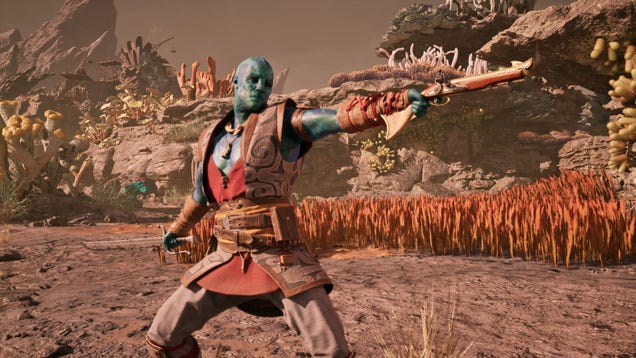
Picture this: You’ve just capsized and crashlanded on a remote island with a fort looming overhead. You’re defenseless, and a strange blue being is sifting through your ship’s remnants. You need a weapon, and in the moment, anything will suffice, like the dagger or wand on the ground before you. That’s all good, but a…
A recent outbreak of measles in West Texas has resulted in 159 cases of the disease in the state so far; 22 victims required hospitalization, and one has died. In response to the deadly outbreak, some Texas parents seem to be considering hosting “measles parties” instead of vaccinating their kids. Misinformation about measles can have deadly consequences, so here’s a look at some ways people are getting measles wrong.
Myth: Measles vaccines are potentially dangerous
While a small percentage of people suffer side effects from the measles, mumps, and rubella (MMR) vaccine, they are almost always mild. The most common is a fever that hits between 5% and 10% of those vaccinated. About 2% to 5% develop a mild rash, and about 1 in 4,000 develop something more serious. The “side effects” of contracting the disease itself, on the other hand, are much worse: Nearly 100% of people who contract the disease develop symptoms that include fever, red eyes, a sore throat, and a blotchy rash. About one in 300 people who get measles will die.
Myth: The measles vaccine gives people measles
The belief that measles outbreaks are causedby the measles vaccine is growing in certain circles, helped along by advocates like Children’s Health Defense, the anti-vaccine advocacy group founded by Secretary of Health and Human Services Robert F. Kennedy, Jr.
The measles vaccine works by introducing a weakened form of the measles virus into the body to trigger an immune response. So the theory goes, people who have been injected with the measles vaccine are infecting others with the disease. But while the measles virus can potentially be detected in people for up to four weeks after a shot, it is extremely unlikely for the virus to be be transmitted to anyone in that weakened form—which is significant, given measles itself is among the most contagious diseases. As for the Texas outbreak specifically, to make sure, all cases have been tested, and they’ve all been declared to be the result of “wild” measles. No one got it from vaccine “shedding,” because that doesn’t really happen with the measles vaccine.
Myth: The measles vaccine is linked to autism
The vaccine for measles has been around since 1963. It has prevented countless cases of the diseases and has long been proven safe and effective. But people are still hesitant to take it and/or give it to their children. The belief that the measles vaccine, or any vaccine, can cause autism is one of the reasons. A recent survey conducted by the University of Pennsylvania’s Annenberg Public Policy Center, found that 24% of Americans believe there is a link between vaccines and autism, and 3% aren’t sure.
The supposed link between autism and vaccination is based on two flawed studies that have been thoroughly and overwhelmingly debunked. To put it simply, if you listen to the science, there’s no there there. Vaccines for measles are safe and effective, and they prevent the disease and thus save lives. If enough people get vaccinated, we can eliminate measles from our country (in fact, the World Health Organization did declare it eradicated in the U.S. back in 2000, though as lower vaccination rates have recently resulted in more frequent outbreaks, that designation is at risk). It’s really as simple as that.
Myth: Measles can be cured or prevented with vitamin A
The idea that vitamin A can be used to treat measles has a grain of truth of it, but it’s a small grain. Studies conducted in developing nations indicate vitamin A can help prevent complications in severe measles cases, and that children with low amounts of vitamin A tend to develop more severe cases of measles. But in the United States, where few children have such nutritional deficiencies, it’s unclear whether there’s any benefit to giving vitamin A for measles. Some doctors’ position is “why not?” but vitamin A is not part of the measles treatment protocol in the U.S., let alone a recognized cure or preventative measure. It’s definitely not a substitute for vaccination.
To prevent measles cases in the current outbreak, public health officials are encouraging people to get vaccinated. One cool thing about the measles vaccine: As the Texas health department points out, a dose can still be given within 72 hours after you are exposed to the virus to lessen the severity of the disease if you do get sick.
Myth: Measles can be prevented by “natural means”
The only “natural” way you can prevent the spread of measles is by staying away from other people if you are infected with it. Measles doesn’t care if you eat healthy food and work out. It’s extremely contagious—according to the CDC, “if one person has it, up to 9 out of 10 people who are nearby will become infected if they are not protected.” Being a generally healthy may result in a better outcome if you are infected, but not getting infected in the first place (by being vaccinated) is an infinitely healthier choice.
Myth: Measles parties can help kids gain “natural immunity”
While surviving measles will protect you from reinfection, this “natural” immunity offers no more protection from the disease than vaccination, and, again, it’s much riskier: About three out of every 1,000 people who get measles die (a tally that sadly included a child in Texas amid the current outbreak) and more suffer life-changing complications. As Dr. Ron Cook, chief health officer for the Texas Tech University Health Sciences Center in Lubbock, put it in a press conference, “We can’t predict who is going to do poorly with measles, being hospitalized, potentially get pneumonia or encephalitis, or potentially pass away.
“It’s a foolish thing to go have measles parties,” he added, I imagine with a pained sigh.
Myth: The current measles outbreak is normal
Deadly measles outbreaks are unusual in the U.S. Until this year, we hadn’t had a child die from measles since 2015. Heck, measles has been considered eliminated from both North and South America since 2000. Since 2000, our measles outbreaks have been small and sporadic, started by travelers who brought a case in from overseas. Quick action from the CDC and from local health authorities has usually managed to get things back under control. But low rates of measles vaccination make it easier for these small outbreaks to spread to larger areas, and we may be looking at a new and growing problem.
Along with Texas, this year measles cases have been reported in Kentucky,California, New Mexico, Georgia, Alaska, New Jersey, and Pennsylvania, but there are less than 200 cases total, so it’s unclear if the current wave is the beginning of a larger problem. But it isn’t good. The fear is that the current climate of vaccine hesitancy and reduced vaccination rates will lower the percentage of immunized people enough that measles will reestablish a foothold in the U.S. According to the CDC a vaccination rate of 95% is needed for “herd immunity” but we’re slipping below that magic number. Fourteen states have fallen under 90 percent.
Myth: You can’t get measles if you’ve been vaccinated
The vaccine for measles is extremely effective (and safe) but it’s not 100% effective. It’s “only” 97% effective. No one knows why a small number of people get measles even though they’ve had shots. On the bright side, vaccinated people who suffer from “breakout” measles tend to have milder cases.
Myth: There’s nothing we can do about rising rates of measles
The sudden spike in measles cases is alarming, but it’s nothing compared to a measles outbreak that occurred in the early 1990s. That one was much worse, but it also provides historical evidence of how to combat a measles outbreak.
Even though the vaccine was nearly 30 years old at that point, there were 27,000 cases of measles in the U.S. in 1990. Low-income communities in New York City were hit hardest, although outbreaks were also reported in Philadelphia, Chicago, Los Angeles, and Houston. The root cause was the same as with the current rash of the disease: Not enough people were being vaccinated. In 1990, the CDC estimated that about half of all inner-city toddlers in New York City had not been vaccinated by their second birthday, mostly because the vaccine was difficult to get or difficult to afford.
The response from city, state, and federal government included wide-ranging public outreach programs, mobile immunization centers, the creation of the federal, congressionally approved Vaccines for Children Program, pro vaccine messages flashed in Times Square, and even Michelangelo from the Teenage Mutant Ninja Turtles emerging from a sewer to encourage kids to get vaccinated. In short, we really threw everything we had at pro-vaccine, anti-measles messaging. And it worked: Vaccination rates climbed above 90% in New York. Whether a similar effort would work in today’s climate of distrust and misinformation is an open question, but at least there’s evidence vaccination has worked to contain an outbreak once before.
The Adafruit Metro RP2350 is designed for projects that require Arduino form-factor compatibility, multiple GPIO options, and debugging capabilities. Built around the Raspberry Pi RP2350 microcontroller, this board provides various connectivity features and programming support, making it a flexible choice for embedded development.
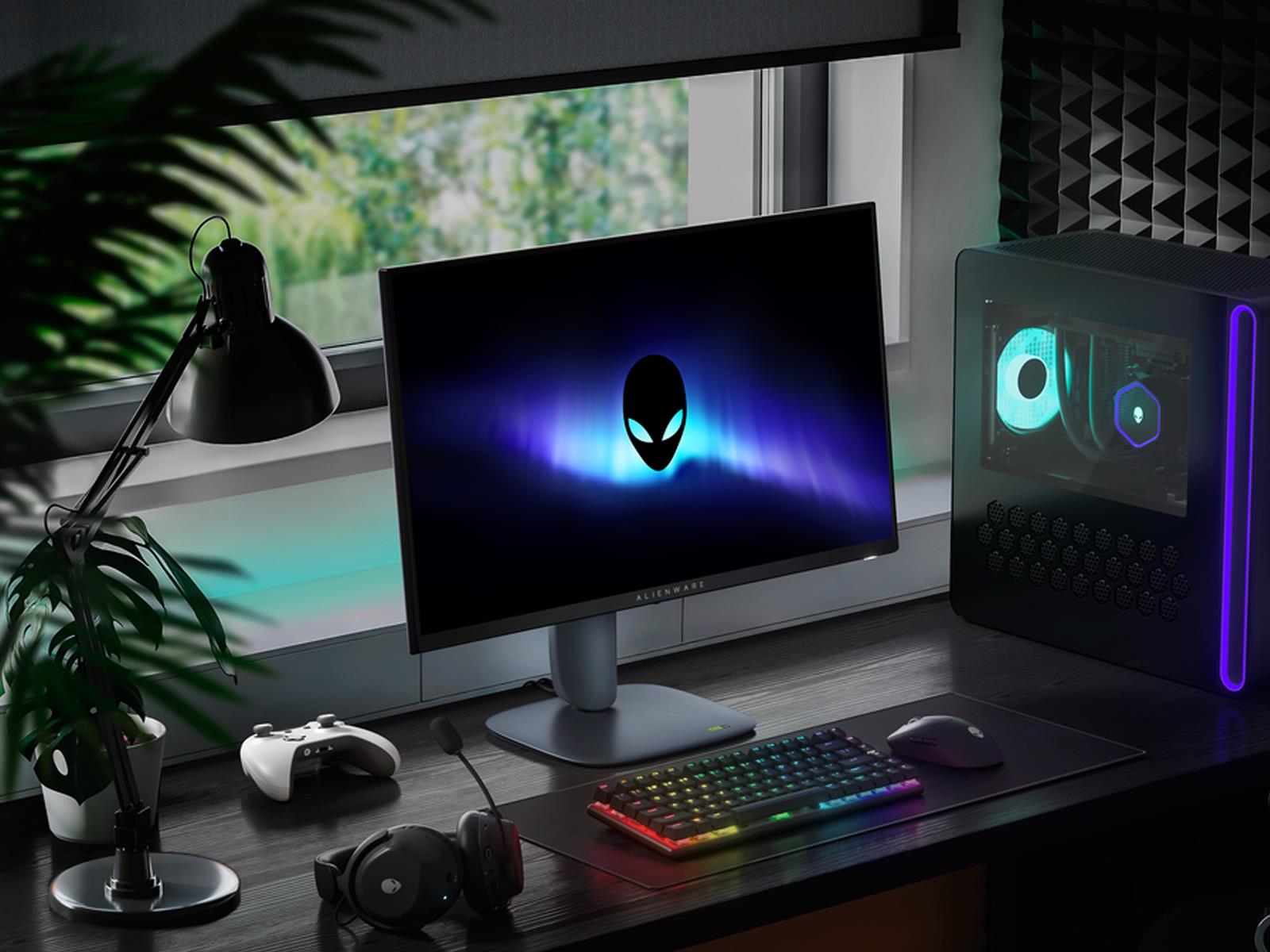
We’ve been praising continued price drops on OLED displays for quite some time now, mostly in the TV arena but more recently in the realm of gaming monitors, too. Almost overnight (it felt that way, anyway), monitor makers began embracing OLED. Now we’re starting to see an influx of newer quantum dot OLED (QD-OLED), one of which is the highlight
Apple’s new MacBook Air doesn’t try to reinvent the wheel: It still comes in 13- and 15-inch sizes, starts with 16GB of RAM and offers up to 18 hours of battery life. But a few spec bumps — headlined by the faster M4 chip — paired with a cheaper price tag could still make it worth a look if your older model is starting to show its age. Here’s everything you need to know about the M4 MacBook Air.
The 13-inch MacBook Air now starts at $999, while its 15-inch counterpart begins at $1,199. (Both cost $100 less than last year’s model.) They’re available for pre-order now, ahead of their March 12 ship date.
Apart from the new pricing, the marquee upgrade is the M4 chip. Although it isn’t a massive leap over the M3, it still makes the 2025 MacBook Air up to twice as fast as the M1 model. (You know it’s less than a generational breakthrough if Apple’s comparing it to its first in-house silicon from 2020.) The M4 silicon in this model has a 10-core CPU and up to a 10-core CPU.
The MacBook Air still starts with 16GB of RAM, but the top-tier configurations support up to 32GB — an increase from a maximum of 24GB in the M3 model. When combined with the faster processor, you should see a noticeable speed boost when upgrading from an M1 or (especially) an older Intel MacBook.
Apple
In a welcome change for those whose laptop does double duty as a desktop PC, you can now connect it to two external displays while still using the built-in one. Last year’s model only supported two with the MacBook lid closed or one with it open.
The new MacBook Air also adds Center Stage, Apple’s auto-centering camera feature, for the first time in the lineup. It’s paired with a 12MP camera, which should make your video calls and selfies look much sharper.
The last big upgrade is a cosmetic one. It now ships in sky blue, a light metallic color also found in the iPad Air and AirPods Max. It joins the carryovers midnight, starlight and silver.
Elsewhere, it still supports Apple Intelligence (if you’re into that), runs macOS Sequoia and has a pair of Thunderbolt / USB 4 ports.
This article originally appeared on Engadget at https://www.engadget.com/computing/laptops/heres-how-to-pre-order-the-new-apple-macbook-air-m4-140559824.html?src=rss
Roku is continuing its relationship with Phillips, with the launch of a new cross-branded television. The Phillips OLED Roku TV is available starting today and retails starting at $1,299 online and in stores at Sam’s Club.
The 65-inch screen has a 4K UHD display and OLED technology, which has become pretty standard for a premium TV model. It’s also equipped with Dolby Vision IQ, which adjusts picture quality settings based on the current lighting setup. And this Phillips OLED Roku TV includes a potential audio upgrade with the addition of a built-in Dolby Atmos 2.1 speaker system. The announcement highlighted the screen’s gaming potential, with a native 120Hz refresh rate and AMD FreeSync Premium to prevent screen-tearing.
Roku started making its own brand of televisions last year with the Pro Series, but it’s also still maintaining collaborations with more established hardware manufacturers. The Phillips model will support all the latest Roku features, such as Backdrops.
This article originally appeared on Engadget at https://www.engadget.com/home/home-theater/phillips-expands-its-roku-tv-range-with-a-1300-65-inch-oled-140047071.html?src=rss
Apple’s first Mac Studio refresh in nearly two years is a welcome update, injecting fresh life into two computers that were still getting by with M2 chips. But the company took a bit of a strange approach to the update, giving an M4-series Max chip to the lower-end Studio but an M3 Ultra chip to the high-end model.
These processors are both performance upgrades from the M2 Max and M2 Ultra, and the M3 Ultra is so huge that it should have no trouble outrunning the M4 Max despite its slightly older CPU and GPU architecture. But it’s still a departure from past practice, where Apple would keep the Studio’s chip generation in lockstep.
CPU P/E-cores
GPU cores
RAM options
Memory bandwidth
Apple M3 Ultra (low)
20/8
60
96/256GB
819.2GB/s
Apple M3 Ultra (high)
24/8
80
128GB/256GB/512GB
819.2GB/s
Apple M2 Ultra (high)
16/8
76
Up to 192GB
819.2GB/s
Apple M1 Ultra (high)
16/4
32
Up to 128GB
819.2GB/s
When asked why the high-end Mac Studio was getting an M3 Ultra chip instead of an M4 Ultra, Apple told us that not every chip generation will get an “Ultra” tier. This is, as far as I can recall, the first time that Apple has said anything like this in public.
AMD has finally done it. For years it’s tried to undercut NVIDIA with slightly cheaper, but less capable, video cards like the Radeon 6700 XT and 7900 XT. And sure, it’s still following that same strategy with the new Radeon 9070 and 9070 XT. This time around, though, AMD has produced far more capable hardware, especially when it comes to 4K and ray tracing performance. And there’s hope that it could finally catch up to NVIDIA’s DLSS AI upscaling with its new FidelityFX Super Resolution 4 (FSR4) technology.
These aren’t perfect video cards, to be clear. But for $549 and $599, the Radeon 9070 and 9070 XT are far more compelling than AMD’s previous lineup. That’s particularly true since the 9070 XT is $150 less than NVIDIA’s RTX 5070 Ti, and in our testing it’s sometimes faster than that card.
AMD still has to prove that it can catch up to NVIDIA’s DLSS, which has had several years to steadily improve its AI upscaling capabilities. In particular, AMD needs to match the performance of NVIDIA’s multi-frame generation in DLSS 4, which has led to some surprisingly high fps figures while testing the RTX 50-series GPUs. AMD’s Fluid Motion Frames technology is a start, but it’s not nearly enough at this point.
Hardware
The Radeon RX 9070 and 9070 XT are AMD’s first RDNA 4 GPUs, a new platform sporting more powerful and efficient compute units, third-generation ray tracing accelerators and second-generation AI accelerators. There isn’t a huge technical difference between the two cards: The RX 9070 features 56 compute units, 56 ray accelerators and 112 AI accelerators, whereas the 9070 XT has eight more compute accelerators and 16 additional AI processors. The XT model is clocked slightly higher, as you’d expect, and it also draws more power (304W vs 220W). Notably, both cards also ship with 16GB of GDDR6 VRAM, whereas NVIDIA skimped a bit and only put 12GB of RAM in the $549 RTX 5070.
Devindra Hardawar for Engadget
As I was comparing our XFX-built review units, though, it was practically impossible to tell the RX 9070 and 9070 XT apart without reading the fine print on their labels. This is fairly typical for AMD cards with XT variants, and it makes sense since they’re technically so similar. The XFX Swift GPUs I tested came in an elegant frost white case, with three large fans and surprisingly massive heatsinks. They’re both 3.5-slot cards, so they also take up more room than the RTX 5090, which is a dense two-slot beast.
Thanks to AMD’s efficient RDNA design, you also don’t need to rely on complex power dongles to drive these cards. They both take two PSU connections directly, and XFX recommends 800-watt power supplies at a minimum. That’s significantly higher than AMD’s minimum 650W spec though, so it could be that XFX is just trying to play it safe with its massive cooling setup. (If you’re planning to overclock these cards, though, you’ll likely want more than a mere 650W PSU.)
Devindra Hardawar for Engadget
In use: A big step up for AMD
I knew AMD was onto something special when I learned the Radeon RX 9070 averaged 60 fps in Cyberpunk 2077 in 4K Ray Tracing Overdrive mode. Sure, it needed FSR 3 upscaling to get there, but it was still better than the 50 fps I saw on the Radeon 7900XT a few years ago. The game occasionally dipped below 60 fps, but it was still very playable. 1440p was much smoother overall, averaging 117 fps. The Radeon 9070 XT, meanwhile, averaged 68 fps in 4K and 130 fps in 1440p.
Sure, these numbers are far behind the raw figures from NVIDIA’s RTX 5070, which used the magic of multi-frame generation to deliver 115 fps in 4K with ray tracing and maxed out graphics. That card also hit 205 fps in 1440p. But as impressed as I was by the 5070, most of those frames were just meant to deliver the illusion of smoothness. During actual gameplay, I had a hard time seeing much slowdown with either Radeon card in 4K, and the difference between the NVIDIA card was practically erased in 1440p. Remember, fps figures aren’t the entire story, even though NVIDIA wants you to believe otherwise.
I kept that idea in mind as I tested FSR 4, which surprised me when it averaged around 20 fps less than FSR 3 in Call of Duty: Warzone on both GPUs. The Radeon 9070 XT reached 250 fps in 4K with FSR 3, cranked up graphics and frame generation, whereas it hit 229 fps in FSR 4. AMD tells me that’s no error, it’s to be expected since FSR 4’s AI upscaling is more focused on delivering higher quality graphics rather than a pure frame boost. I couldn’t really see a huge difference while dodging bullets in CoD, but I did notice that finer textures like chain-link fences looked a bit clearer in FSR 4. (I also saw a few random glitched textures, something that was common in DLSS upscaled games early on. They weren’t a major problem, but AMD clearly has to refine its upscaling model further.)
At the moment, enabling FSR 4 is a bit counter-intuitive as well. You have to turn it on in AMD’s driver software, and then flip on FSR 3.1 in a compatible game. Warzone also required a reboot to fully enable the feature, but the game didn’t prompt me to do so. And if you want frame generation, that’s another option that has to be toggled on outside of the game. Hopefully this process will be smoothed out over time, along with wider availability for FSR 4. In addition to Black Ops 6, it’s supported in the newly launched FragPunk, Civilization 7, Marvel Rivals and a handful of PlayStation 5 ports like the Spider-Man games. But it’s nowhere to be found in Avowed or Dragon Age: The Veilguard, where you’ll be stuck with FSR 3.
Devindra Hardawar for Engadget
For games that don’t work with FSR at all, AMD’s Adrenaline software also has a “HYPR-RX” mode that enables features like Radeon Super Resolution upscaling (a separate driver-level technology) and AMD’s Fluid Motion Frames generation. Altogether, they led to me seeing 200 fps in Forza Horizon 5 using the RX 9070 XT in 4K with maxed out graphics settings, up from 85 fps natively. But again, those are just fps figures – AMD points out Radeon Super Resolution may not look as clear as FSR alternatives. (I didn’t notice any weirdness in Forza, but I may have been distracted by the beautiful racing vistas in Mexico.)
GPU
3DMark TimeSpy Extreme
Geekbench 6 GPU
Cyberpunk (4K RT Overdrive DLSS)
Port Royal ray tracing
AMD Radeon 9070
10,997
113,012
60 fps (DLSS 3 w/ frame gen)
15,888
AMD Radeon 9070 XT
13,060
130,474
68fps (DLSS 3 w/ frame gen)
17,959
NVIDIA RTX 5070
10,343
178,795
115 fps (4x frame gen)
13,920
NVIDIA RTX 5070 Ti
12,675
238,417
153 fps (4X frame gen)
19,309
AMD Radeon 7900XTX
12,969
N/A
55 fps (DLSS 3)
14,696
When it comes to benchmarks, the Radeon RX 9070 and 9070 XT hold their own against NVIDIA’s 5070 and 5070 Ti in most of 3DMark’s tests. In the Steel Nomad benchmark, the 9070 scored 1,100 points higher than the 5070, and the 9070 XT beat out the more expensive 5070 Ti by almost 3,000 points in Timespy Extreme. I was also surprised to see the RX 9070 scoring almost 2,000 points higher than the RTX 5070 in the Port Royal ray tracing benchmark. Previously, ray tracing of any kind was AMD’s Achilles heel.
Both of our XFX cards also stayed surprisingly cool during benchmarks and extended gaming sessions. They never went beyond 65C under load, and they typically idled below 40C. And since they never got very hot, I could barely hear their fans spinning up.
Devindra Hardawar for Engadget
Should you buy the Radeon RX 9070 or RX 9070 XT?
On paper, both of AMD’s new GPUs are compelling alternatives to NVIDIA’s midrange cards for 1440p gamers who occasionally dabble in 4K. The RX 9070 XT is particularly interesting, since it’s noticeably faster and still comes in $150 less than the RTX 5070 Ti. But we’re also dealing with a chaotic time in the PC gaming world, where GPU stock can disappear quickly and prices can rocket up quickly.
If you can nab either Radeon card at their listed prices, they’ll be good deals. But it’s not worth overpaying by too much for now. It also remains to be seen how the Trump administration’s combative tariffs will affect pricing for PC hardware and electronics. Prices could easily jump by 20 percent or more to cover those costs.
While NVIDIA’s DLSS 4 technology is more mature and leads to higher interpolated frame rates, there’s also a good argument for going with AMD’s cards since they have 16GB of VRAM. They’ll be better suited to handling larger textures in games down the line, and there’s also the potential for FSR 4 to improve as well.
Devindra Hardawar for Engadget
Wrap-up
It’s clear now why AMD was focused on upgrading its mid-range Radeon cards first. There’s not much point competing with NVIDIA at the extreme high end, like it did with Radeon RX 7900 XT and XTX. It makes more sense to focus on cards people can actually buy. The Radeon 9070 and 9070 XT also solve many of the problems I’ve had with AMD’s GPUs in the past. They can go toe-to-toe with NVIDIA’s cards, they have better ray tracing support and finally, they have AI upscaling. It remains to be seen if AMD will actually build on the promise of those features, but these cards are a hopeful start.
This article originally appeared on Engadget at https://www.engadget.com/gaming/pc/amd-radeon-rx-9070-and-9070-xt-review-hitting-nvidia-where-it-hurts-140014376.html?src=rss
Apple has introduced its latest update to the MacBook Air, bringing the M4 chip to its lightweight laptops at long last. Even though the Air lineup is getting more powerful, it’s also getting cheaper. The smaller base model of the M4 MacBook Air will retail at $999, down $100 from the previous starting price. Pre-orders begin today, and the machines will be available starting on March 12.
Last year’s Air models were quite good but didn’t do anything revolutionary, and the same seems true for the 2025 versions. There are still two size choices, 13-inch and 15-inch. RAM for the M2 and M3 laptops is 16GB by default, and the M4 model matches that standard. Apple is promising up to 18 hours of battery life, and the Airs will have support for Apple Intelligence. There’s also a new look in the lineup, with the addition of a sky blue color to the now-familiar choices of silver, midnight and starlight.
The company’s current chip has been available in MacBook Pros, the Mac mini and the iMac for awhile now, so the power levels of the M4 have been pretty well established. But the boost for Apple’s ultralights is still welcome. Apple says the new chip can make the latest Airs up to twice as fast as the M1 versions. The M4 is kitted out with a 10-core CPU and a GPU with up to 10 cores. It supports up to 32GB of unified memory.
The new prices might be the most exciting part of today’s Air announcements. The 13-inch M4 Air starts at $999, or $899 for buyers in education, while the 15-inch model starts at $1,199, or $1,099 for education.
This article originally appeared on Engadget at https://www.engadget.com/computing/laptops/apple-unveils-the-m4-macbook-air-with-a-price-drop-140012109.html?src=rss
Apple announced its first Mac Studio updates in nearly two years today, a few months after bringing the M4 and M4 Pro chips to the Mac mini.
As before, Apple offers a lower-end and a higher-end configuration of the Mac Studio. The lower-end model is pretty much what you expect: It gives you the same M4 Max processor Apple introduced in the high-end MacBook Pro last year. It has up to 16 CPU cores (10 P-cores, 4 E-cores), up to 40 GPU cores, and a 16-core Neural Engine.
The $1,999 base model comes with 14 CPU cores (10 P-cores, 4 E-cores), 32 GPU cores, 36GB of RAM, and 512GB of storage. That model’s RAM can’t be upgraded until you step up to the fully-enabled M4 Max, which also gets you 48GB of RAM for $300. From there, the desktop can be upgraded with either 64GB or 128GB of RAM, same as the MacBook Pro.
Apple just unveiled its latest Mac Studio desktop PC promising improved performance over the previous model thanks to the long awaited M3 Ultra, the company’s highest performing processor to date. The new machine is primarily aimed at content creators, so on top of the faster chips, it offers the latest high-speed SSD storage, Thunderbolt 5 technology and an updated Neural Engine.
It’s been a bit of a wait for a new Mac Studio as the last one came out at WWDC 2023, nearly two years ago. As before, you can think of it as like a “Mac mini Pro,” a bigger and significantly more powerful version of Apple’s budget desktop. Like the last two models, it comes in two configurations with either the M3 Ultra or M4 Max chips and physically looks the same as the previous M2 model.
Apple
The M4 Max version is aimed at “video editors, colorists, developers, engineers, photographers and creative pros,” according to Apple. To that end, it comes with up to a 16-core CPU and 40-core GPU, from 36GB to 128GB of RAM, four Thunderbolt 5 ports with 15 GB/s throughput (triple the previous model’s speed) and over 500 GB/s of unified memory bandwidth. It also includes Two USB-A ports (up to 5Gb/s), an HDMI port, 10Gb ethernet and a 3.5mm headphone jack.
All that makes it up to 3.5 times faster than the original Mac Studio M1 Max. Apple noted that with the M4 Max chip, the latest Mac Studio is the first with Apple’s advanced graphics architecture that allows features like hardware-accelerated mesh rendering and a second-generation ray-tracing engine to boost content creation and gaming. For AI processing, it offers triple the speed of the M1 Max version.
The M3 Ultra model ups the ante considerably with a 32-core CPU with 24 performance cores, “50 percent more than any previous Ultra chip and the most CPU cores ever in a Mac,” Apple said. Meanwhile, the GPU packs up to 80 cores, another record for Apple silicon, along with a 32-core Neural Engine for on-device AI and machine learning. It also supports from 96GB to a record 512GB of unified memory, plus up to 16TB of SSD storage.
Apple
You may be wondering why Apple is just now releasing the M3 Ultra chip when every other Mac (including the all-new MacBook Air) has some kind of M4 processor. The answer is that it’s apparently not easy to design and build the Ultra processors because they’re effectively two chips mated together using Apple’s “Ultrafusion” bridge technology. Despite not having “M4” in the name, though, the M3 Ultra is still approximately twice as fast as the best M4 Max processor under taxing workloads and 2.5 times quicker than the Mac Ultra M1, according to Apple.
Considering its power, the Mac Studio with an M4 Max chip is reasonably priced starting at $1,999 with 32GB of memory and 512GB of storage. The Mac Studio with M3 Ultra is another story, though, doubling that to $3,999 base, with 96GB of unified memory (up from 64GB before) and 1TB of storage. Orders are now open with shipping set to start on March 12th.
This article originally appeared on Engadget at https://www.engadget.com/computing/apples-new-mac-studio-comes-with-the-long-awaited-m3-ultra-chip-140005216.html?src=rss
As expected, Apple has officially refreshed its MacBook Air lineup with its M4 chip, the same silicon we’ve already seen in products like the MacBook Pro, the iMac, and the Mac mini. And in most ways, it’s a straightforward update, with no major changes to the laptop’s physical design, screen specs, keyboard, or ports.
The most important update is the price. The 13-inch M4 MacBook Air will start at $999, a $100 price cut compared to the M3 Air and the same price that Apple set for the M2 Air last year when the M3 models came out. The 15-inch model will also get a $100 cut, from $1,299 to $1,199. These baseline configurations still come with 16GB of RAM and 256GB of storage.
The M2 version will continue to be sold as a budget model in some countries, but the US isn’t one of them. Apple will also continue to sell a cheaper version of the M1 MacBook Air through Walmart, which it has been doing since March 2024.
Last week AMD formally announced the Radeon RX 9070 series graphics cards that will begin shipping tomorrow at $549 for the Radeon RX 9070 and $599 for the RX 9070 XT. Today the review embargo is lifted so we can now share Linux performance benchmarks and more details on the open-source Linux driver support for these first AMD RDNA4 graphics cards.
No one embodies the soul of the Fantastic Four like The Thing, so it only makes sense that lovable lug would join Marvel Rivals after the rest of his family was added to the game. I’m here to tell you how to best use Ben Grimm to stop that pesky Yancy Street Gang, once and for all.
In addition to the Radeon RX 9070 series Linux gaming/graphics benchmarks with today’s embargo lift, I’ve also spent some time working on some GPU compute benchmarks for these first RDNA4 graphics cards. Here is a look at some initial GPU compute benchmarks of the Radeon RX 9070 and Radeon RX 9070 XT graphics cards, mostly on cross-vendor OpenCL benchmarks, and a few words on the GPU compute stack support for the Radeon RX 9070.
Reinforcement learning pioneers Andrew Barto and Richard Sutton have warned against the unsafe deployment of AI systems [alternative source] after winning computing’s prestigious $1 million Turing Award Wednesday. “Releasing software to millions of people without safeguards is not good engineering practice,” said Barto, professor emeritus at the University of Massachusetts, comparing it to testing a bridge by having people use it.
Barto and Sutton developed reinforcement learning in the 1980s, inspired by psychological studies of human learning. The technique, which rewards AI systems for desired behaviors, has become fundamental to advances at OpenAI and Google. Sutton, a University of Alberta professor and former DeepMind researcher, dismissed tech companies’ artificial general intelligence narrative as “hype.”
Both laureates also criticized President Trump’s proposed cuts to federal research funding, with Barto calling it “wrong and a tragedy” that would eliminate opportunities for exploratory research like their early work.