iPhone 17e review: The economical choice

By introducing the iPhone 17e just a year after the iPhone 16e, Apple is closing some gaps. Before, the company would only roll out a new entry-level iPhone every few years, with the iPhone 5c (2013), iPhone XR (2018) and iPhone SE (2016, 2020, 2022) all having two to four years between their releases. But Apple is getting into an annual groove now, and having renamed the device to integrate better with the rest of the iPhone lineup, Apple is making a clear statement: It cares about the midrange now. 

With the current state of global economics, Apple’s focus on lower cost devices like the iPhone 17e and newly launched MacBook Neo is timely. Most people probably don’t make full use of the high-powered machines in their pockets and on their laps, and might be reconsidering whether they need to spend as much money on the Pros and the Airs of Apple’s product lineup. At $599, the iPhone 17e is about half the price of an iPhone 17 Pro or the iPhone Air. It’s $200 cheaper than the base iPhone 17, too.

Since I reviewed the iPhone 16e last year, I’ve been using it as a work phone, mostly for Slack, email and light editing in Docs. The way I see it, most people considering the iPhone 17e are likely in a similar situation — either thinking of getting a supplementary device or looking for a good enough phone for a child or other dependent. For this review, I’ve tried to cover most of those scenarios whether it be a person that would spend most of their phone time on social media and games like a teenager or someone that’s largely using it for administrative work purposes. I mostly want to answer this question: If you’re getting your first iPhone or buying one for someone else, should you get the iPhone 17e or the iPhone 17?

iPhone 17e vs iPhone 16e, for testing’s sake

It’s very clear from Apple’s website that it doesn’t want you comparing the iPhone 17e to the iPhone 16e. The company doesn’t allow you to do so in the comparison tool on the iPhone 17e product page, limiting you to the iPhone 11, iPhone 12 and the iPhone SE (second and third generations). Sure, I understand that no one is really thinking about getting an iPhone 17e after just buying the 16e last year. But for the purposes of this review, it makes sense for me to shout out what’s new from the previous generation. The most significant additions this year are the A19 chip, double the storage, improved Portrait photography and MagSafe with faster wireless charging. Oh, and a new pink color option, adding an ever so subtle splash of color to the previously monochromatic lineup. 

The A19 chip is supposed to make AI processes faster, thanks to the neural accelerators in its GPU. In my testing so far, the difference has been negligible at best. Initially I was seeing the iPhone 17e perform slower than the 16e, but after a software update, the iPhone 17e caught up. In Apple Intelligence-powered tools like Cleanup, the iPhone 17e was a split second faster at identifying unwanted objects in photos and erasing them than the 16e. If you’ve just received your iPhone 17e and run into issues where image generation or cleanup is slow or stalling, give it a day or so for the software to stabilize. 

Oddly, in some side-by-side Image Playground testing, the iPhone 17e and iPhone 16e were neck and neck. Sometimes, the iPhone 16e was faster. Occasionally, the iPhone 17e was ahead. I’ll continue to keep an eye on how both phones do here, as it could still be due to some early software issues, but for now the improvements from the A19’s GPU seem to be hit or miss.
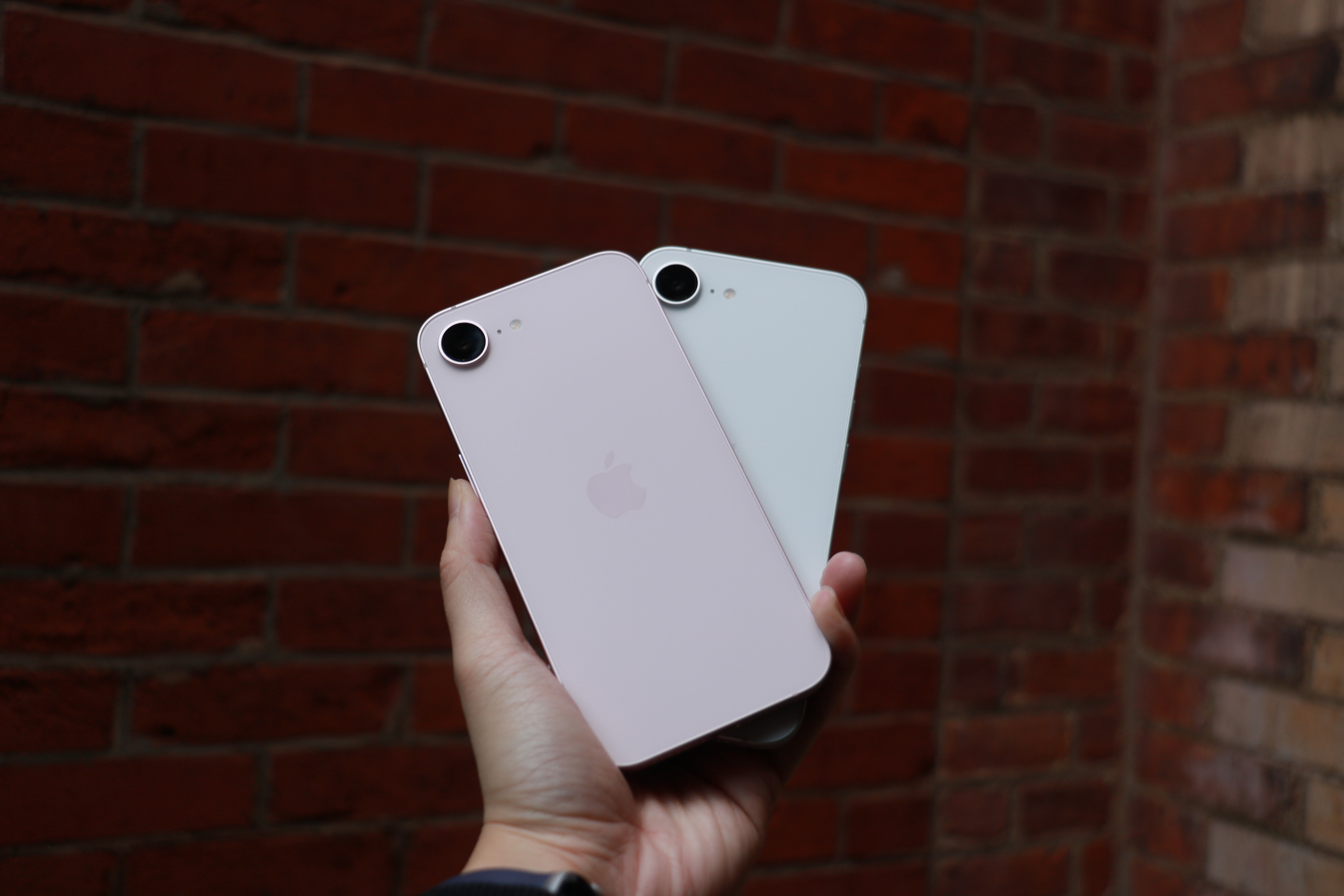
The pink iPhone 17e and the white iPhone 16e held up in one palm in front of a red brick wall.
Cherlynn Low for Engadget

Improved portraits on the iPhone 17e

Of all the improvements to the iPhone 17e, to me, one of the most important is in portraits. In my review of the iPhone 16e, I said that the majority of my grievances with the single camera setup was the fact that Apple ended up using an older version of Portrait mode.

That version was much more limited and didn’t allow for applying a background blur to pictures of non-human subjects. This time, Apple borrowed the algorithms it developed for the iPhone Air for the iPhone 17e’s rear and front cameras. This not only delivers a general improvement to portraits, with better segmentation and a more natural-looking bokeh effect, but also allows for depth information to be captured when applicable. For instance, when a person, cat or dog is detected, the iPhone 17e will automatically capture depth information so you can apply a blur after the picture is taken, even if you didn’t use Portrait mode initially. 

Importantly, these “next-gen portraits” also allow you to edit the level of blur and change up the focal point of the picture after you’ve taken the shot. In some photos of my neighbor’s grumpy shih-poo, I was shocked that my colleagues actually preferred the samples I shared from the iPhone 16e over the ones from the iPhone 17e. But their critique was fair: the newer phone blurred out Oreo’s tail, keeping only his face in focus. I was able to address this by going into the editing tools and dragging the slider for aperture to bring more of the dog into focus. I also played around and tapped on Oreo’s tail to make it clear, and the iPhone 17e blurred up his face instead. 

Two photo samples side by side, featuring a dog on a blue leash staring up into the camera.
Cherlynn Low for Engadget

When using Portrait mode to photograph people, the iPhone 17e did indeed deliver more pleasant bokeh than its predecessor. In pictures of my friend Brenda Stolyar, with the “depth” or aperture set to f/4.5 across both devices, there was more softness in the brick wall behind her on the new phone. I was slightly confused since it seemed like the older iPhone actually delivered a sharper picture, until I realized it was actually just softer bokeh. 

For those coming from older phones like the iPhone 11, 12 or SE, the addition of next-gen portraits should feel like a major step up. Even when compared to the iPhone 16e, the fact that I was now able to apply the effect on photos of food and other inanimate objects with no faces made me happier. It makes the camera more versatile, and feels like a noteworthy update that makes your photos feel more modern. 

But that is definitely because I like pictures with the artificial depth of field effect. If you don’t care for bokeh and really only want a phone’s cameras to be good enough to snap pictures of menus or receipts, for instance, the 17e’s improvements here won’t mean much.

MagSafe and wireless charging
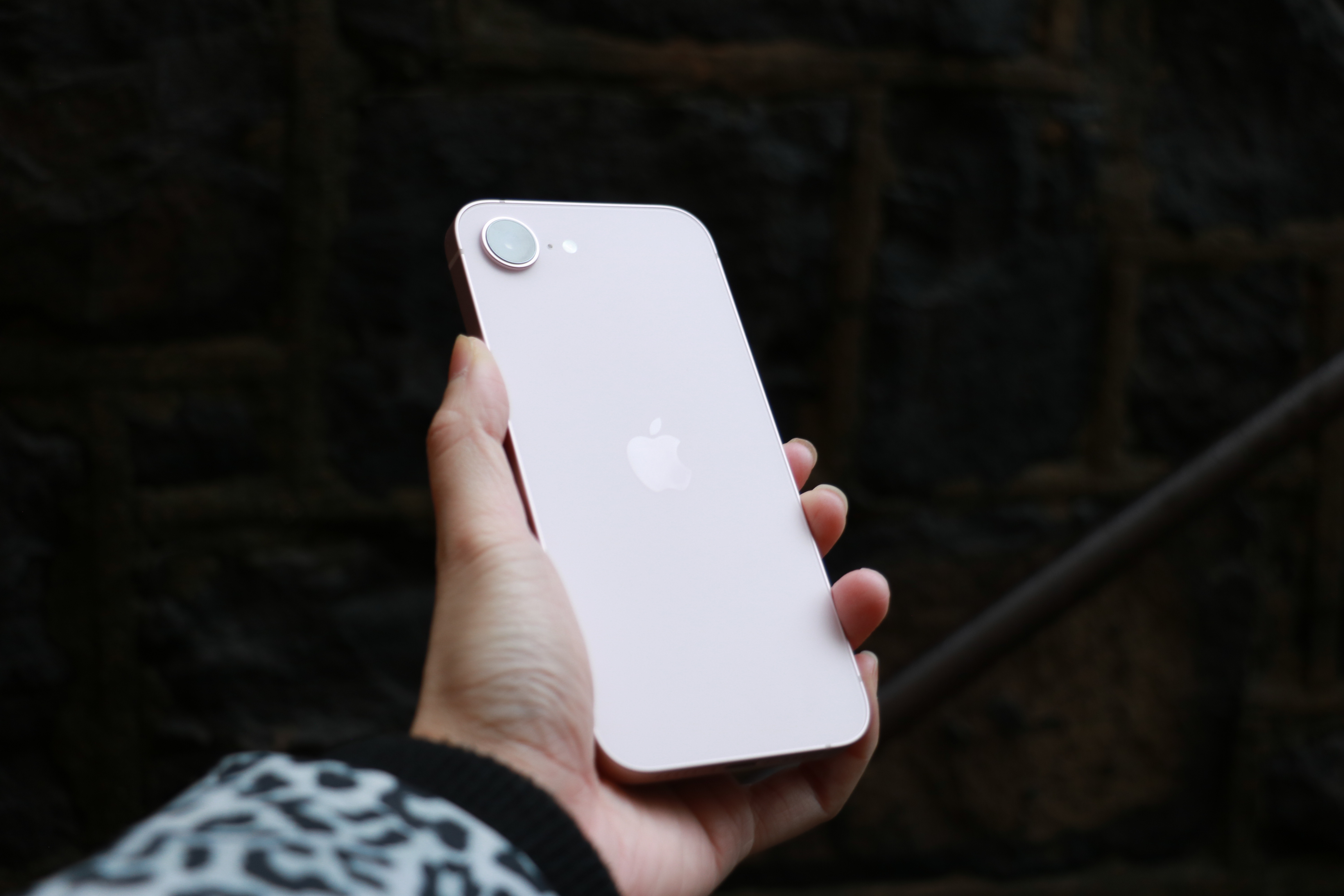
The rear of the iPhone 17e catches the light in front of a stone wall.
Cherlynn Low for Engadget

What might matter more, then, is this generation’s wireless charging speeds. While the iPhone 16e could only support up to 7.5W, the iPhone 17e goes up to 15W (with adapters of 20W or higher) and also works with MagSafe accessories. I can’t imagine anyone considering a new iPhone 17e already has magnetic cases or stands, but if you decide to invest in those accessories, you’ll find them convenient and satisfying. 

I placed both models on my wireless charging stand — the 17e snapped on and started charging, while the 16e clattered helplessly off the stand. I placed it on the charging pad at the base instead and noted how much power each of them gained in 15 minutes. The improvement is clear: the iPhone 17e went up by 16 percent (30 percent to 46 percent), while the 16e only gained 3 percent (69 percent to just 72 percent).

Beyond the numbers, what this means is that when you’re in a pinch and trying to quickly top up your phone on, say, a wireless charger you found at a cafe, you won’t need to sit around as long with the iPhone 17e. For those of you that simply leave your phone on a stand overnight, this is less likely to meaningfully impact you. 

There are a few other updates that I haven’t really tested in this review, like the improved durability with Ceramic Shield 2 on the iPhone 17e’s screen. The new display also has a treatment that is supposed to reduce glare, and considering the week of wonderfully gloomy weather we’ve had here in New York, this isn’t something I’ve truly had a chance to evaluate. Also, while I do appreciate the doubled storage, which is sure to please the media hoarders among us, I will say I’ve already been served warnings about my iCloud storage running out. It still feels like something else Apple might need to address, but for newcomers to the iOS world, the higher base storage is absolutely a positive.

Elsewhere, there are virtually no differences between the iPhone 17e and iPhone 16e. They have the same size displays with the same resolution, brightness, refresh rate, contrast ratio and color gamuts. Both are rated IP68 for dust and water resistance, and have similar battery lives (up to 26 hours of video playback, according to Apple). They also have the exact same dimensions of 5.78 x 2.82 x 0.31 inches, although the iPhone 17e does weigh a whole 2 grams (0.8 ounces) more than the 16e, which is almost definitely attributable to the addition of MagSafe. Unless you have weighing scales for hands, though, this difference is negligible.
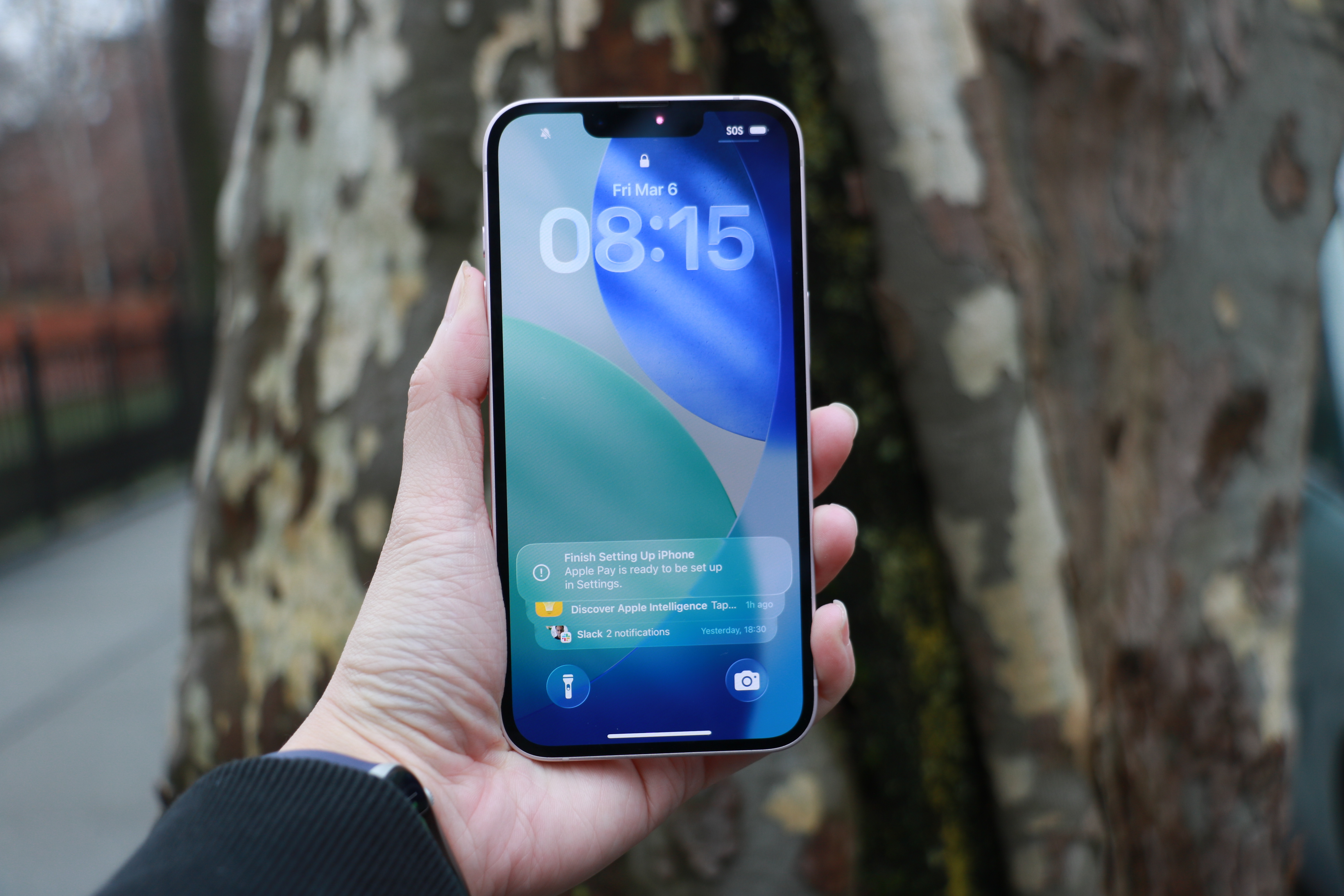
An iPhone 17e held up in front of a tree trunk.
Cherlynn Low for Engadget

Should you get the iPhone 17e or the iPhone 17?

Where you might find more meaningful distinctions is when comparing the iPhone 17e to the iPhone 17. For $200 more, you’ll get longer battery life and slightly better performance thanks to one more GPU core. The iPhone 17 also has a larger, sharper and brighter display that’s 6.3-inches, with higher refresh rates and a full-screen design incorporating the Dynamic Island. It also supports the Always On Display and has an 18MP front camera with the Center Stage feature that allows for easy switching between landscape and vertical orientations in your selfies without having to rotate your phone. 

In fact, the camera upgrades alone on the iPhone 17 might be worth the money. On top of getting the additional ultrawide camera, you’ll also gain the dedicated camera control button on the right edge, the latest generation of Photographic Styles, support for macro photography, Cinematic mode and Dual Capture in videos as well as spatial and macro recording capabilities. It also comes with sensor-shift optical image stabilization, which is more advanced than the OIS on the iPhone 17e. Rounding out that long list of differences is higher recharge speeds (with compatible chargers) and Apple’s second-generation Ultra Wideband chip for more precise Find My support. The iPhone 17 also offers dual-frequency GPS and works with the latest standards in connectivity, like Thread, Wi-Fi 7 and Bluetooth 6 (whereas the iPhone 17e only gets to Wi-Fi 6 and Bluetooth 5.3). 

Sure, the iPhone 17 is slightly taller and heavier, but considering all the bonuses and the extra camera, that feels like a tradeoff that is more than fair. It’s a lot more advanced for $200, and feels like a better starter phone than the iPhone 17e. But if your budget is tight and camera performance isn’t a priority, you’ll get a great experience from Apple’s latest.
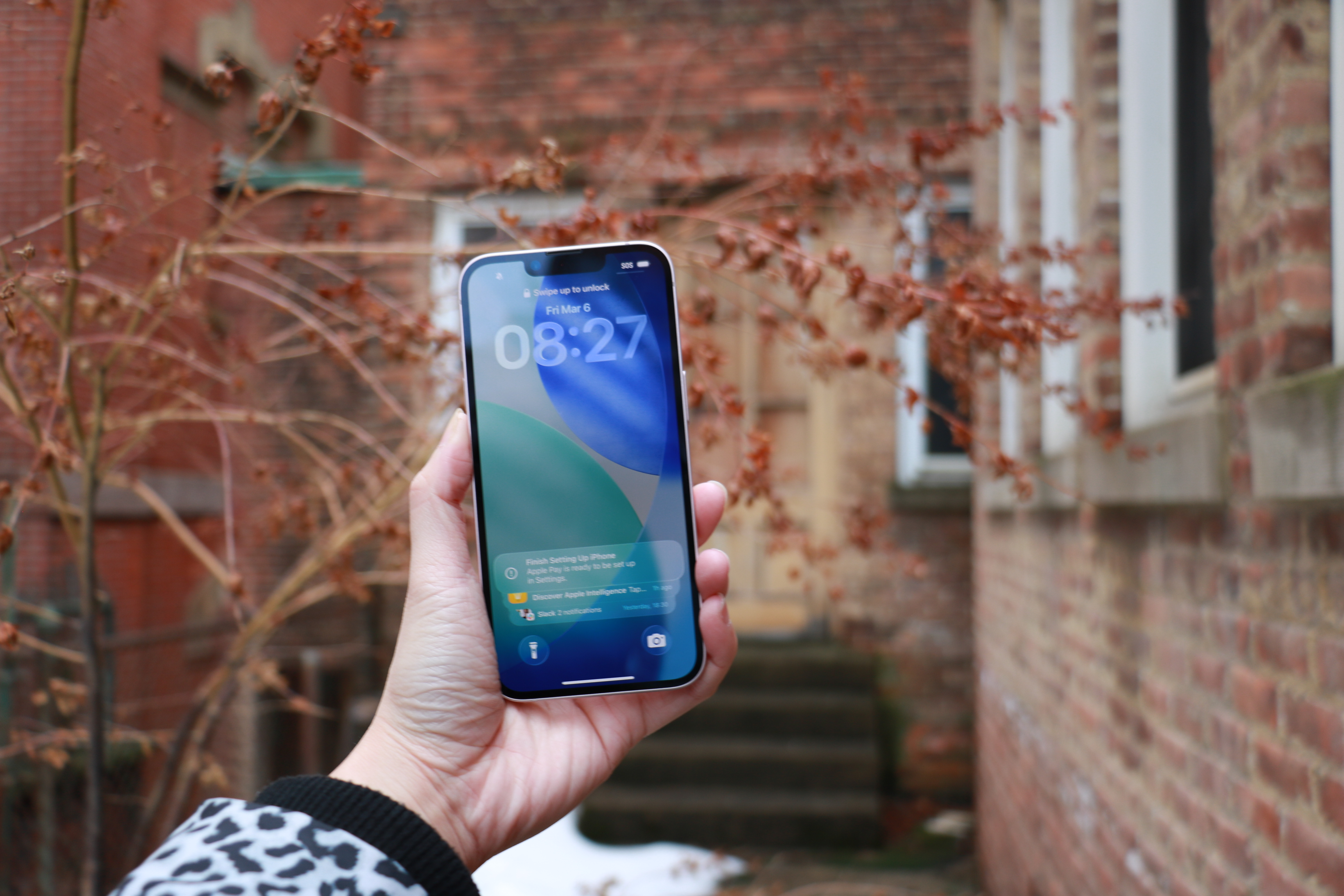
The iPhone 17e held up in mid-air in front of some red foliage.
Cherlynn Low for Engadget

Wrap-up

In 2026, it feels like Apple has done the impossible. It’s managed to serve up multiple iPhones at various price points with enough meaningful differentiations to justify each tier. Meanwhile, each iPhone 17 in the full lineup is a capable and satisfying device for its price. Upgrading to the iPhone 17e from the iPhone 11, 12 or SE will certainly feel significant, although getting almost any current-gen phone will feel modern compared to those. 

In fact, if you’re platform agnostic and wouldn’t mind an Android device, there are options out there with significantly superior screens and cameras. The Pixel 10a, for instance, offers a larger display with a 120Hz refresh rate and a dual-camera system all for $100 less. With Apple seeming to be setting its sights on the midrange market, it should seriously consider stepping up in those two areas in the next e-series iPhone.

But of course, the name “iPhone” carries its own premium, and the iPhone 17e is a solid entry-level handset for those who need a basic, no-frills path into the Apple ecosystem.

This article originally appeared on Engadget at https://www.engadget.com/mobile/smartphones/iphone-17e-review-the-economical-choice-130000647.html?src=rss
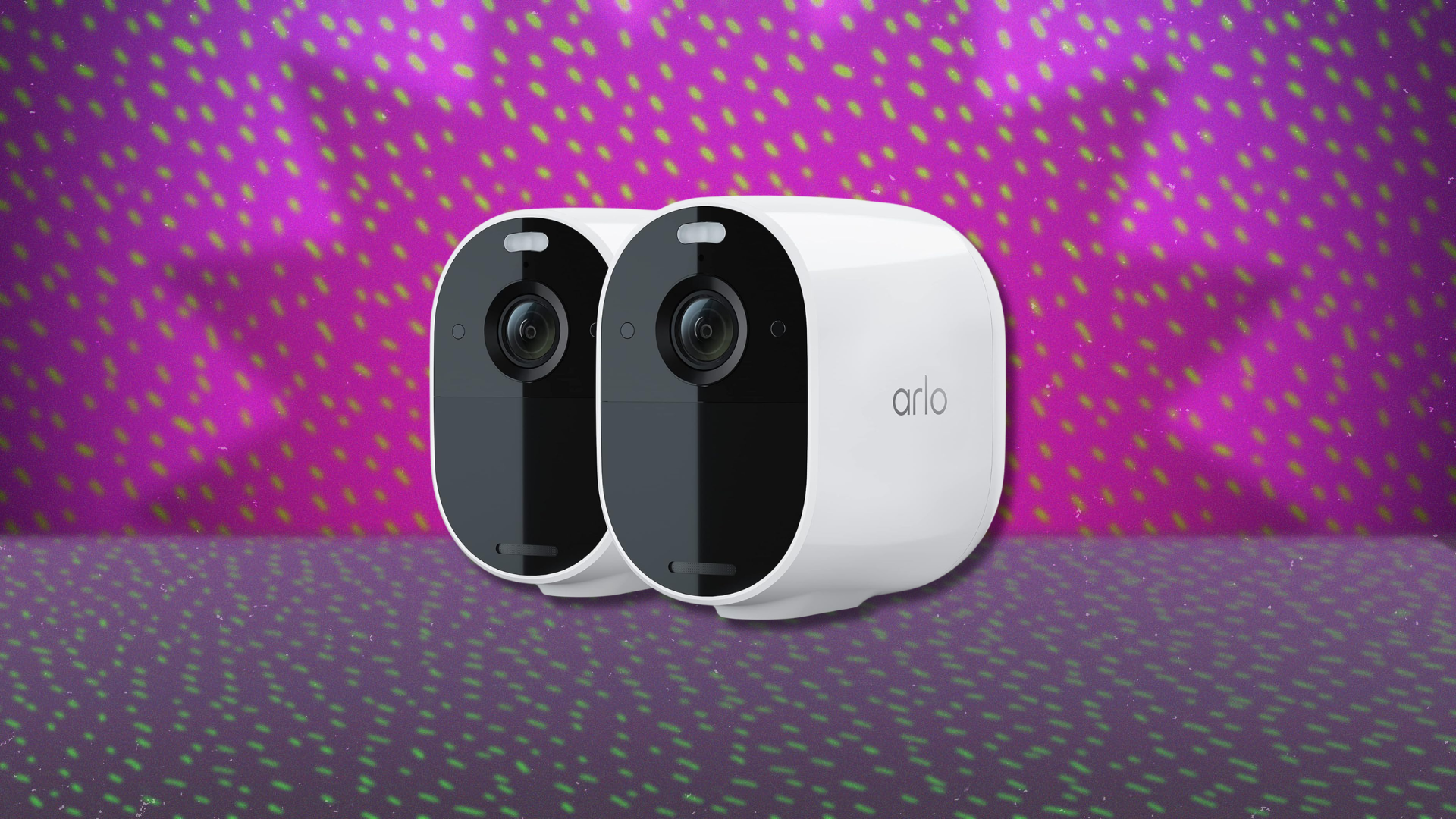
This Arlo Outdoor Camera Two-Pack Is Over $100 Off Right Now

We may earn a commission from links on this page. Deal pricing and availability subject to change after time of publication.

Outdoor security cameras have become common, but the ones that balance good video quality with simple setup still tend to cost a fair bit. That’s why this deal is worth a look. Right now, a two-pack of Arlo Essential Spotlight Cameras is $151.29 at Woot, compared with $259.99 on Amazon for the same bundle. If you have Amazon Prime, you’ll get free standard shipping; otherwise, shipping costs $6. Woot doesn’t ship to Alaska, Hawaii, PO Boxes, or APO addresses. The deal is scheduled to run for a week, though it could end earlier if the cameras sell out.

Physically, the cameras are small and designed for outdoor use, with an IP65 weather-resistant body that can handle rain and dust. They run on a rechargeable battery rated for up to six months, although the exact lifespan depends on how often motion events occur. Also, the battery isn’t removable, so you’ll need to take the whole camera down and bring it inside when it’s time to recharge, notes this PCMag review.

The camera records 1080p video with a 130-degree field of view, which gives you a wide look at driveways, yards, or entryways without needing multiple cameras. Daytime footage looks crisp and detailed, and the camera includes 12× digital zoom if you want to inspect something in the frame more closely. As for its nighttime footage, when motion is detected, a built-in LED spotlight can turn on and light up the scene so the camera records color night video instead of the usual black-and-white view. It also works with Amazon Alexa, Google Assistant, and IFTTT, which means you can view the feed on a smart display or trigger other smart home devices when motion is detected. This camera does not support Apple HomeKit.

Motion alerts show up quickly on your phone, and the system can identify people, animals, and vehicles with Arlo’s advanced detection features. The catch is that those smarter alerts and recorded clips require an Arlo Secure subscription. Without it, you still get live viewing and basic alerts, but saved video and some detection tools are locked behind a monthly plan starting at $7.99 per month for one camera.


Our Best Editor-Vetted Tech Deals Right Now

Deals are selected by our commerce team

Surviving a Terrorist Attack – Stephen and Cara Lockwood

It was March 2017, and Cara and Stephen Lockwood had been married six months. Stephen’s 40th birthday was coming up on the 22nd, and Cara wanted to do something special for him. “I wanted to plan something fun to do.”

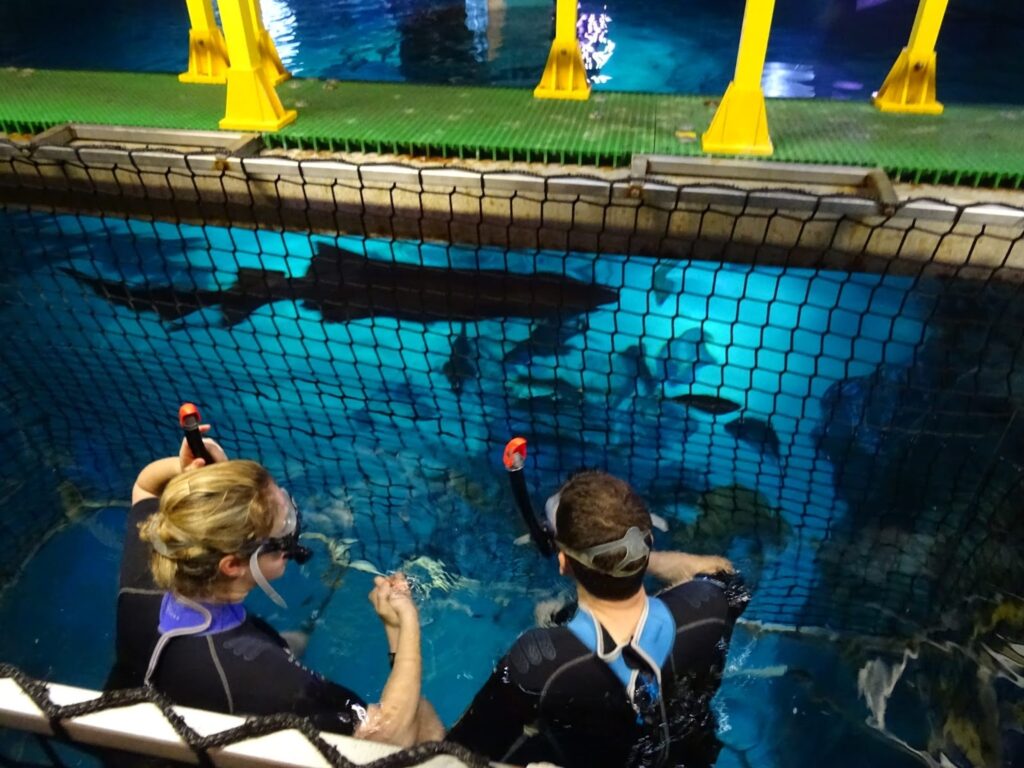
What could be more fun than swimming with sharks at the London Aquarium? “You basically get into a shark cage made of string and have sharks swim at you,” she says. Stephen quickly corrects her, “Rope! Not string. It was something we always wanted to do.” 

They both laugh. It’s a subdued laugh, though, because that special day would turn into a nightmare. 

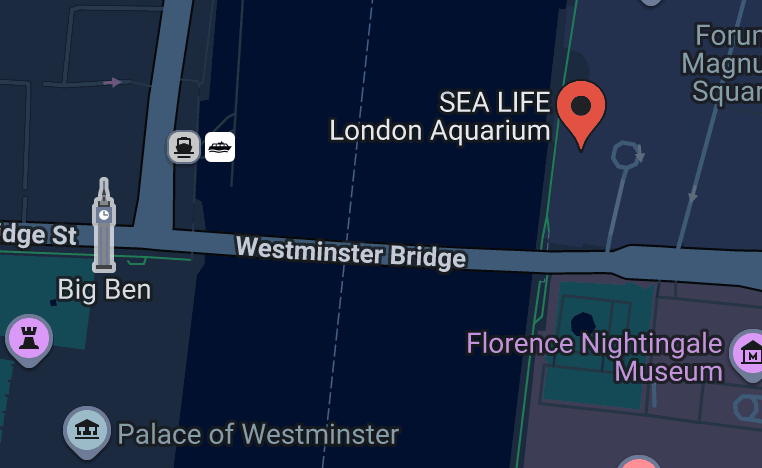
After swimming with sharks, they planned to go to The Berkeley, a high-end hotel with an amazing restaurant. Cara, who has always been a bit sociophobic, was nervous about taking the London Tube because of all the people. Plus, there had been terrorist scares recently, so the city was on high alert, which really ramped up her anxiety. They decided to take a stroll across Westminster Bridge and get a taxi on the Big Ben side. 

She remembers walking with Stephen up the steps onto the bridge, feeling a bit off. It was a fairly nice day, and there were a few other people farther across the bridge, and four or five behind them. She and Stephen were halfway across the bridge when she heard a vehicle accelerating behind her. At first, she thought it was one of the smaller maintenance vehicles that buzz across the bridge occasionally. But why was it accelerating? 

Suddenly, both she and Stephen were hit from behind by an SUV. She flew up into the air and fell to the ground. She was stunned, but realized she was okay; she could still walk and run. But where was Stephen? She scanned the bridge. He was lying in the road, not moving. She ran to him. 

Stephen has no memory of what happened. 

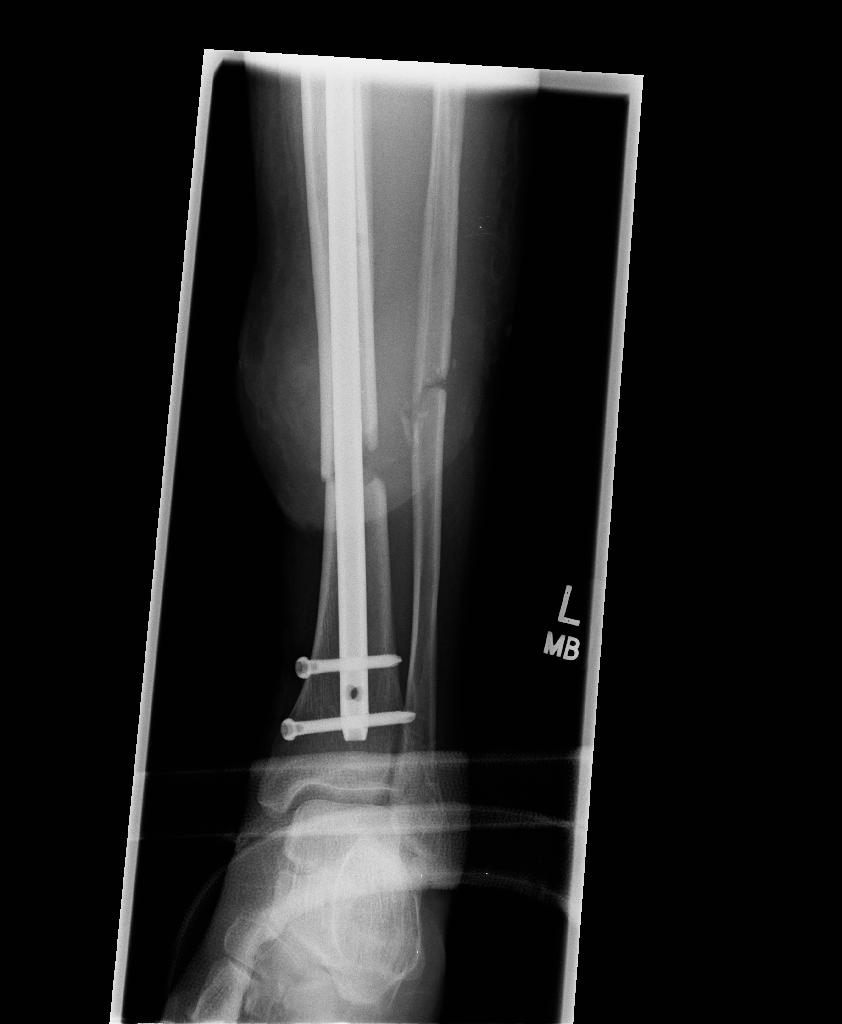
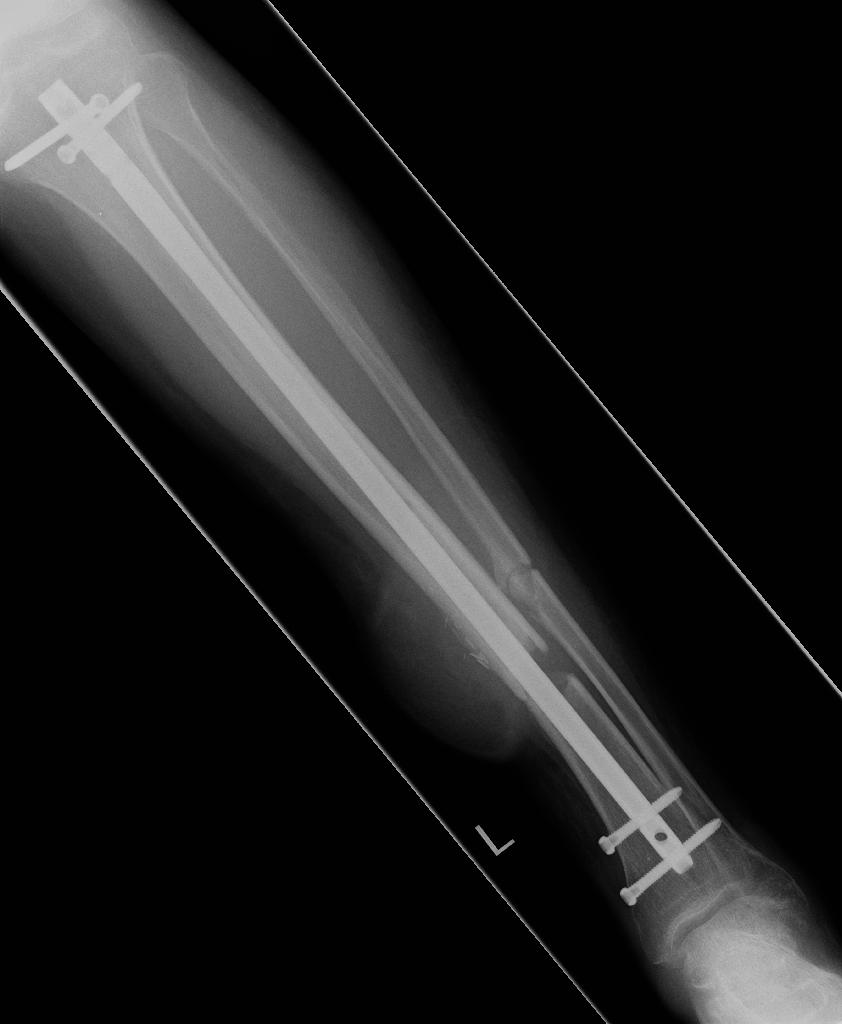
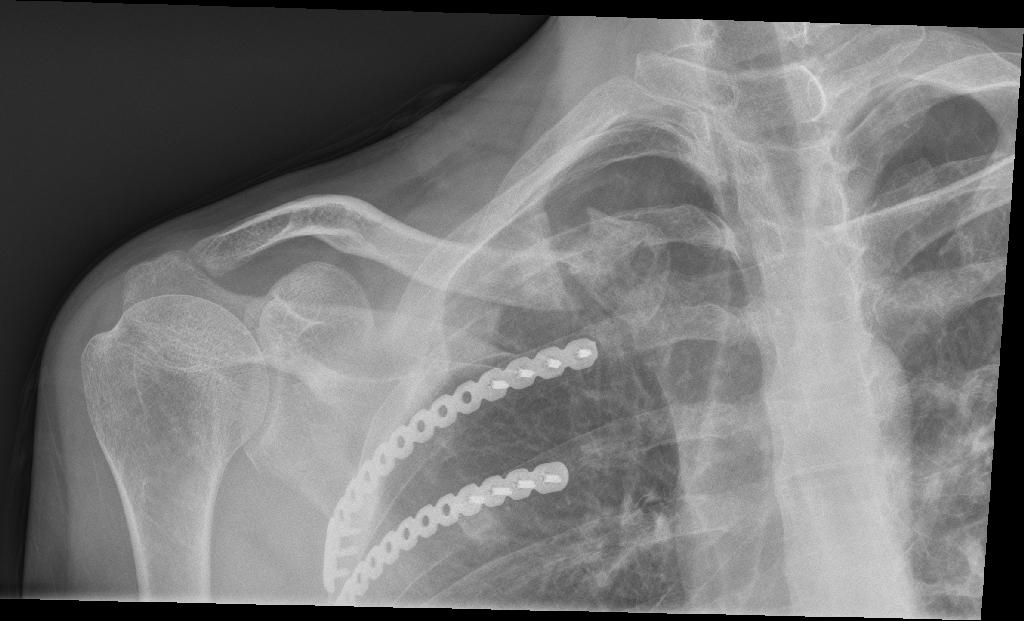
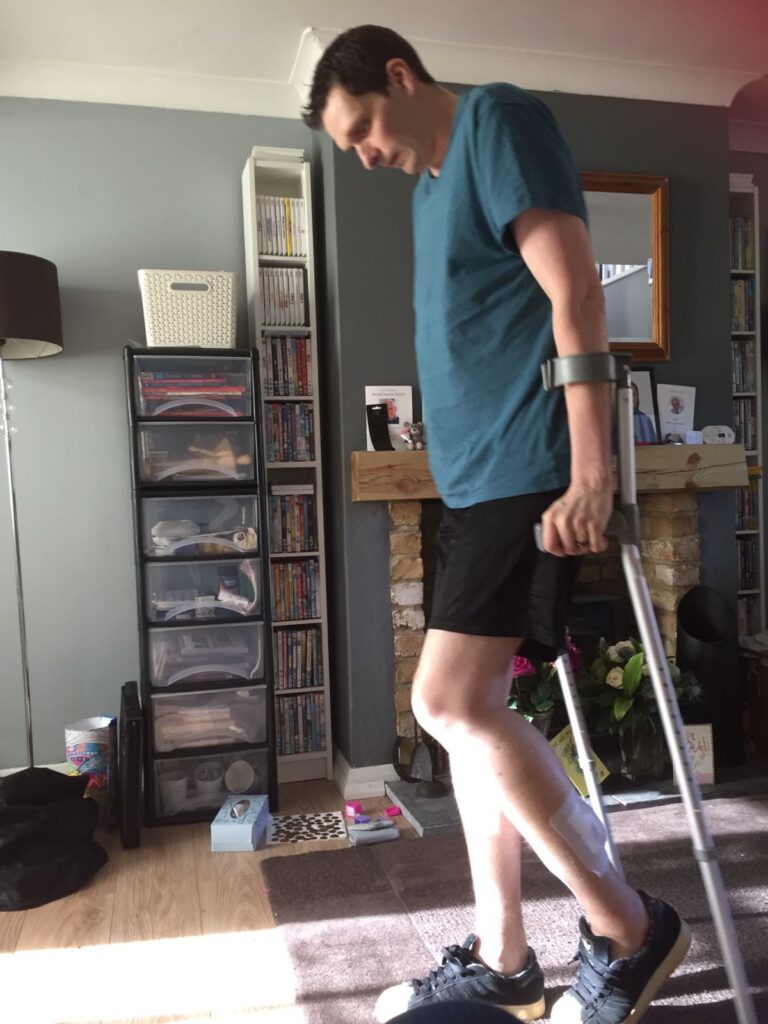
From news reports, Stephen was scooped up onto the hood of an SUV that was barreling down the bridge, flew into the air, thrown into the back end of a bus, and was dumped onto the road, hitting his head, fracturing his skull, neck, back, ribs, puncturing his lung – and shattering bones in his left leg, ripping part of his calf open. 

This was the Westminster Bridge terrorist attack. The aftermath of the attack is well-documented in a BBC series called Hospital as the victims, including Stephen and Cara, arrive at St. Mary’s Hospital. You can watch it here.

Recovery: “It was heartbreaking.”

Recovery was long and slow, taking years of physical therapy for Stephen to be able to walk again. He had seven operations on his leg. They had to keep repeating the surgery in order to get the bone to grow properly. A skin flap had to be taken from his right thigh to reconstruct his calf, which was completely ripped open.“The repetition was heartbreaking,” says Stephen. “We’d get our hopes up and then have to go back into surgery over and over again.”

That was just the physical side. “The mental side was torture,” says Cara. “We were completely unprepared for this, both individually and as a couple. Trying to move back to normalcy. You feel different in the world. How do you reconnect?” 

“Watching people pass away and your husband nearly dying,” says Cara. “Steve would sometimes say that he had it better than me. All he’s got to do is lie there, medicated, and get operated on.” 

Husband and wife became Patient and Nurse. Cara had to lift, carry, and wash Stephen during his long recovery. She had no background in this. To add to the immense pressure, within a few months of the attack, Cara’s father was diagnosed with cancer and was slowly dying. He sadly lost his battle in February 2018.

“We lost our identity. We went to therapy to help deal with the ordeal. To understand this new normal. And to try to realize there is a future.”

Finding Zwift

In September of 2021, after Stephen’s last operation and recovery, they decided to move to the French countryside.

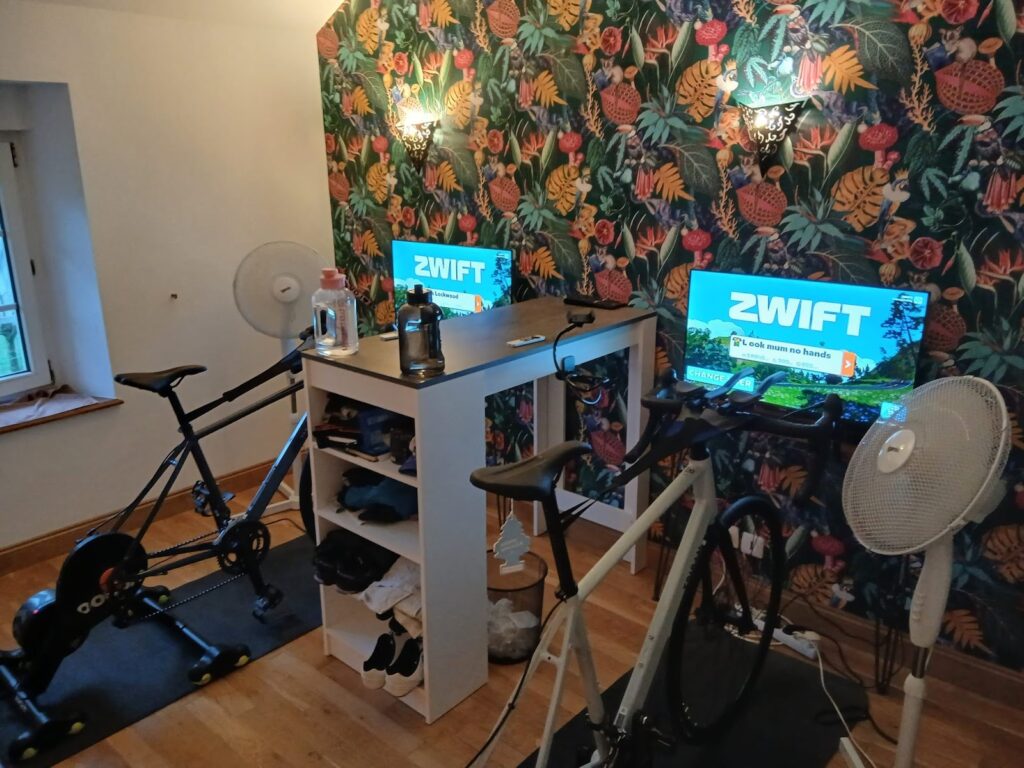
One day in France, Stephen was watching YouTube and Zwift popped up. Because of the incident, they both struggled to be in crowded places. They had tried running, but with the high impact on Stephen’s leg and the increasing anxiety of hearing vehicles coming from behind, they felt it wasn’t the right fit. But Zwift looked interesting to him. He investigated it a bit more and thought it looked safe. He started watching Zwift streamers. He asked Cara if it was okay for him to invest some money into it. Cara checked it out and said, “Only if I can do it too!” So, in January 2024, they went to the local bike shop, got the cheapest bikes they could afford, and started Zwifting. 

“Zwift is a big part of our lives now,” says Stephen.

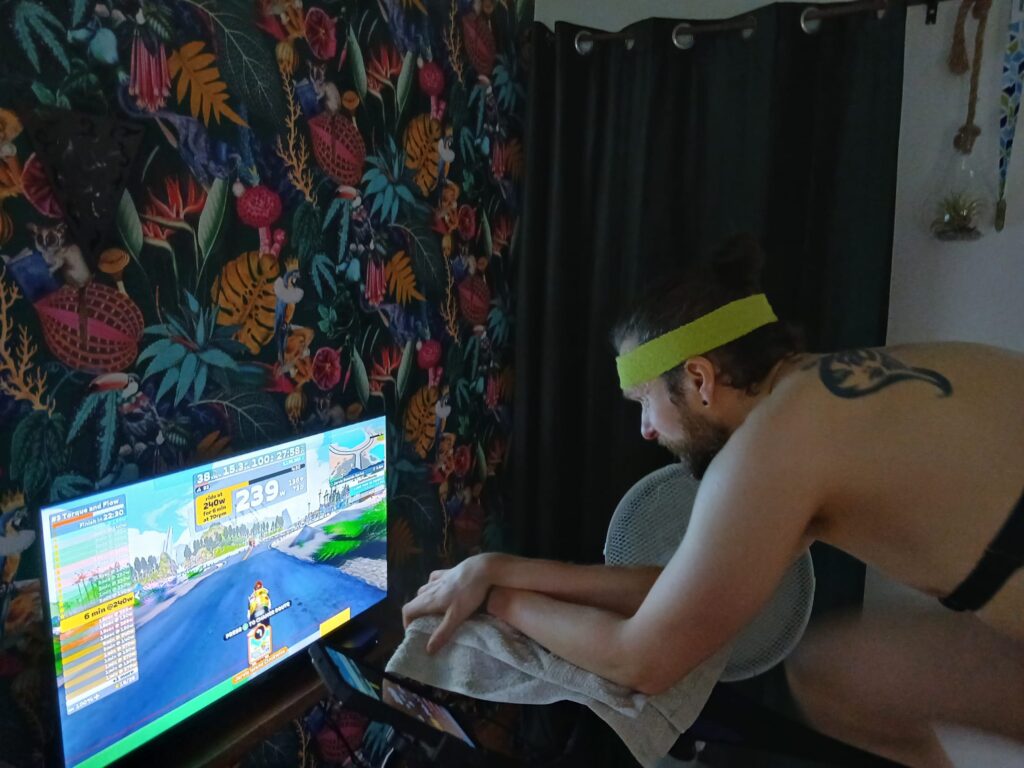
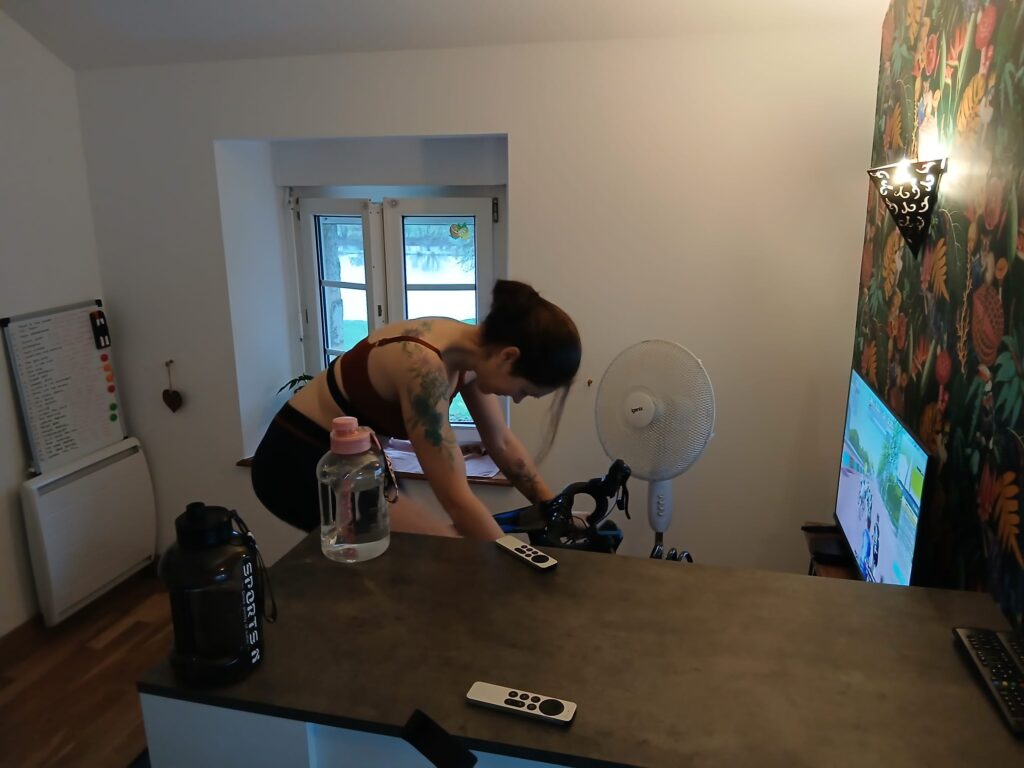
They Zwift together five to six times a week. “We love it! Especially the epic races. It feels so good to work your butt off and finish – and maybe have a bit of a cry when you achieve a big goal.”

Over Christmas 2025, Cara joined Christoffer Wikman’s charity ride for cancer and helped raise funds by riding 100 km a day. The ride was also a personal connection for Cara to remember her father who had passed away from cancer. 

They love racing and doing the long rides and challenges, like riding Zwift’s 30 longest routes in 30 days.

“It’s helped build up strength in my legs,” says Stephen. “It gives me a mental lift – a sense of fulfillment. I’ve lost weight and I’m eating right. We haven’t had a drink of alcohol in over a year.”

They have dark days. “Zwift and the wonderful community give you a sense of goodness, camaraderie. If I drop out of a group, people come back and help me get back in. That’s kindness. It’s encouraging,” says Cara.

“We can’t tell you how important Zwift is to us. We are so grateful. So full of gratitude. It has helped us reconnect and have hope again.”

Ride on, Stephen and Cara! We are grateful for you two as well. 

You can follow them on Zwift at:

  • Cara: CaraLockwood
  • Stephen: LookMumNoHands

New SETI Study: Why We Might Have Been Missing Alien Signals

After decades of searching for extraterrestrial intelligence, the nonprofit SETI Foundation has an announcement. “A new study by researchers at the SETI Institute suggests stellar ‘space weather’ could make radio signals from extraterrestrial intelligence harder to detect.”
Stellar activity and plasma turbulence near a transmitting planet can broaden an otherwise ultra-narrow signal, spreading its power across more frequencies and making it more difficult to detect in traditional narrowband searches. For decades, many SETI experiments have focused on identifying spikes in frequency — signals unlikely to be produced by natural astrophysical processes. But the new research highlights an overlooked complication: even if an extraterrestrial transmitter produces a perfectly narrow signal, it may not remain narrow by the time it leaves its home system… “If a signal gets broadened by its own star’s environment, it can slip below our detection thresholds, even if it’s there, potentially helping explain some of the radio silence we’ve seen in technosignature searches,” said Dr. Vishal Gajjar, Astronomer at the SETI Institute and lead author of the paper.

The researchers created “a practical framework for estimating how much broadening could occur for different types of stars” — and accounting for space weather — by “using radio transmissions from spacecraft in our own solar system, then extrapolated to other stellar environments.”

The study’s co-author (a SETI Institute research assistant) suggests this coud lead to better-targetted SETI searches. (M-dwarf stars — about 75% of stars in the Milky Way — actually have the highest likelihood that narrowband signals would get broadened before leaving their system…)


Read more of this story at Slashdot.

Qualcomm’s new Arduino Ventuno Q is an AI-focused computer designed for robotics

Qualcomm, which purchased microcontroller board manufacturer Arduino last year, just announced a new single-board computer that marries AI with robotics. Called the Arduino Ventuno Q, it uses Qualcomm’s Dragonwing IQ8 processor along with a dedicated STM32H5 low-latency microcontroller (MCU). “Ventuno Q is engineered specifically for systems that move, manipulate and respond to the physical world with precision and reliability,” the company wrote on the product page. 

The Ventuno Q is more sophisticated (and expensive) than Arduinio’s usual AIO boards, thanks to the Dragonwing IQ8 processor that includes an 8-core ARM Cortex CPU, Adreno Arm Cortex A623 GPU and Hexagon Tensor NPU that can hit up ot 40 TOPs. It also comes with 16GB of LPDDR5 RAM, along with 64GB of eMMC storage and an M.2 NVME Gen.4 slot to expand that. Other features include Wi-Fi 6, Bluetooth 5.3, 2.5Gbps ethernet and USB camera support. 

The Ventuno Q includes Arudino App Lab, with pre-trained AI models including LLMs, VLMs, ASR, gesture recognition, pose estimation and object tracking, all running offline. It’s designed for AI systems that run entirely offline like smart kiosks, healthcare assistants and traffic flow analysis, along with Edge AI vision and sensing systems. It also supports a full robotics stack including vision processing combined with deterministic motor control for precise vision and manipulation. It’s also ideal for education and research in areas like computer vision, generative AI and prototyping at the edge, according to Arduino. 

“With Ventuno Q, AI can finally move from the cloud into the physical world,” Qualcomm wrote. “This platform enables building machines that perceive, decide, and act — all on a single board. Our goal is to make advanced robotics and edge AI accessible to every developer, educator, and innovator.” The Arduino Ventuno Q will be available in Q2 2026 from the Arduino Store and elsewhere and is expected to cost under $300. 

This article originally appeared on Engadget at https://www.engadget.com/ai/qualcomms-new-arduino-ventuno-q-is-an-ai-focused-computer-designed-for-robotics-113047697.html?src=rss

“It doesn’t feel safe”—Many international game developers plan to skip GDC in US

This week, tens of thousands of game developers and producers will once again gather in San Francisco, as they have since 1988, for the weeklong Game Developers Conference. But this year’s show will be missing many international developers who say they no longer feel comfortable traveling to the United States to attend, no matter how relevant the show is to their work and careers.

Dozens of those developers who spoke to Ars in recent months say they’re wary of traveling to a country that has shown a callous disregard for—or outright hostility toward—the safety of international travelers. That’s especially true for developers from various minority groups, those with transgender identities, and those who feel they could be targeted for outspoken political beliefs.

“I honestly don’t know anyone who is not from the US who is planning on going to the next GDC,” Godot Foundation Executive Director Emilio Coppola, who’s based in Spain, told Ars. “We never felt super safe, but now we are not willing to risk it.”

Read full article

Comments

Stan’s motorised keg should make setting up tubeless tyres easier – just don’t mistake it for a coffee urn

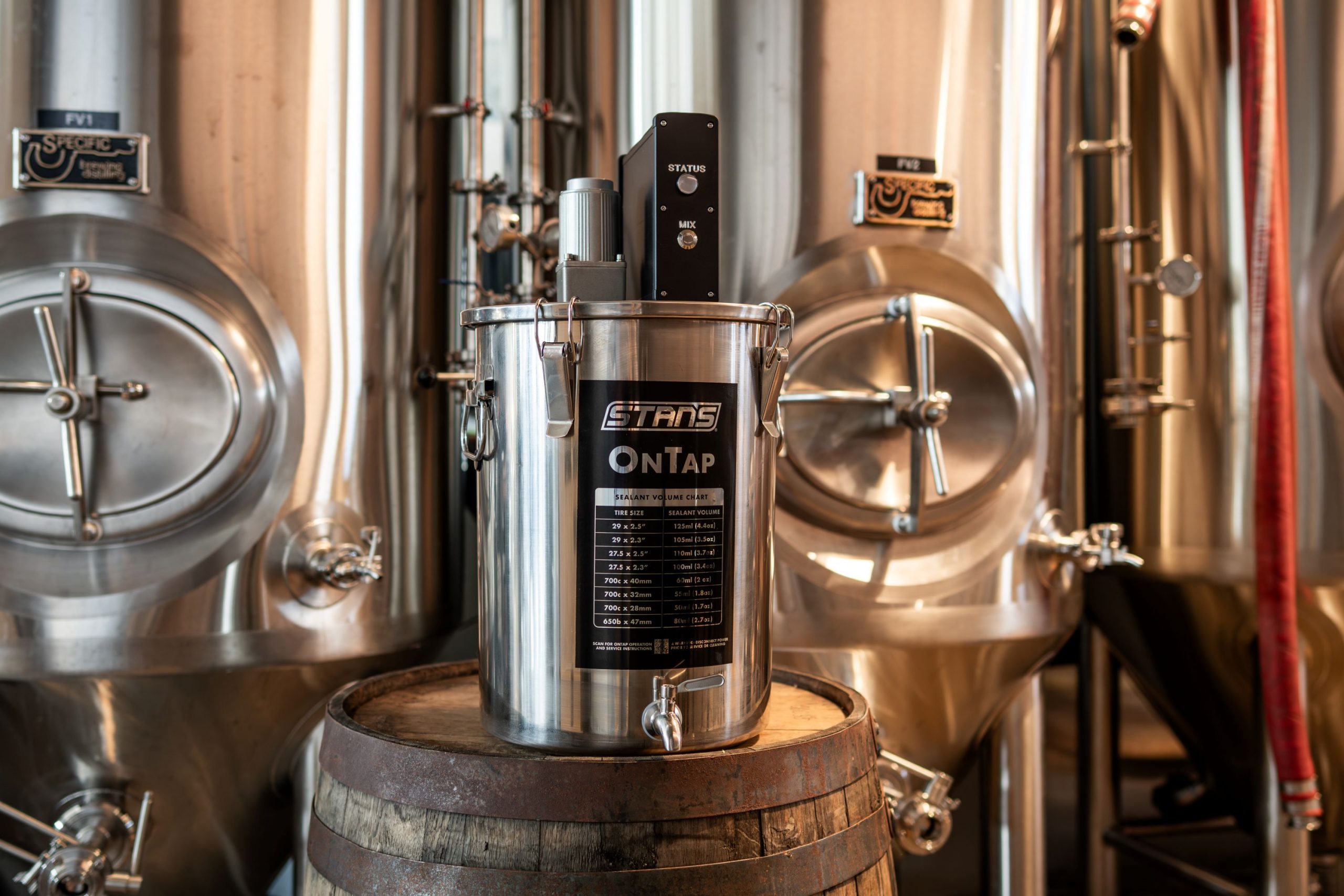
Bike retailers go through a lot of sealant, as tubeless tyres increasingly take over the bike world. Stan’s has just launched its OnTap sealant urn that stores and mixes a large volume of sealant to make the task of dispensing easier.

Stan’s OnTap looks suspiciously like a coffee urn, with a tap at the base to dispense tubeless sealant into an injector or measuring cup to add the sealant to tyres. But rather than coffee, it’s designed for efficient mixing and dispensing of tyre sealant for bike workshops.

Because the particles in sealant have a tendency to settle out over time, there’s a motorised stirrer built into the dispenser, with a mix button that Stan’s says takes 10 seconds to get the sealant ready to dispense.

“A positive rider experience depends on evenly dispersed puncture-sealing particles throughout the sealant, which becomes difficult to maintain in containers larger than one litre,” says Mike Bush, Stan’s chief product officer.

A computer-controlled mixer distributes sealant particles in 10 seconds, so the sealant is ready to dispense.

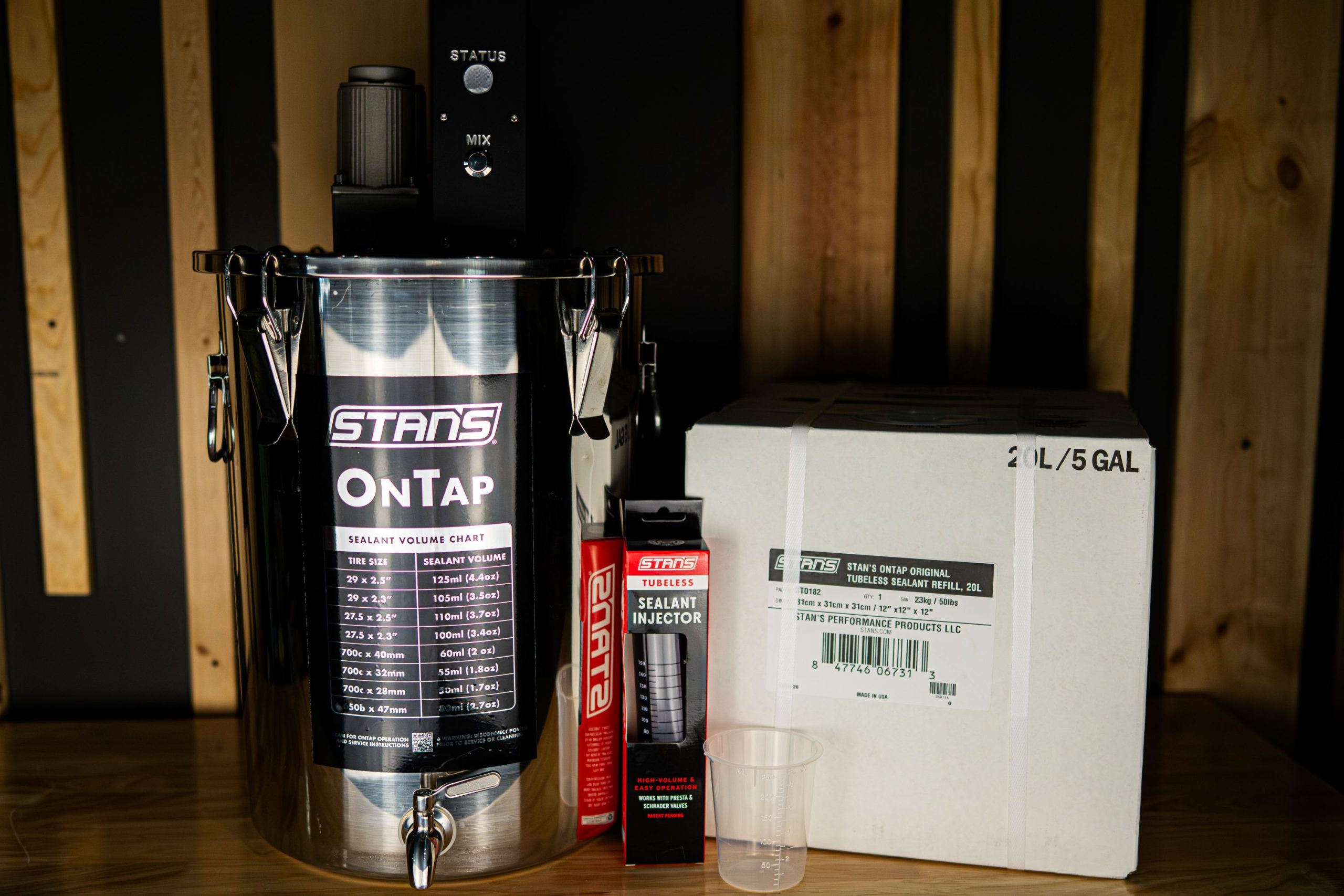
The OnTap dispenser has the capacity for enough sealant for 80 mountain bikes or 160 road bikes. There’s a list of recommended volumes for different tyre sizes on the front of the urn.

Stan’s cites more precise sealant dispensing, better tracking of sealant usage and improved shop service margins as key benefits of the system for bike workshops.

The 20-litre refill saves 75% of the packaging of one-litre bottles.

Stan’s sells 20-litre refills for the OnTap dispenser, which it says reduce plastic use by 75% over individual one-litre sealant bottles, as well as being a lot cheaper. It reckons the price of the OnTap dispenser is paid back after only 10 refills.

The OnTap dispenser is for sale to registered Stan’s dealers only, so you can’t buy one to put in your shed. Stan’s hasn’t advertised the price either.

F&S FSSM8MP SMARC Module Features NXP i.MX 8M Plus with Dual GbE and Edge AI

The FSSM8MP from F&S Elektronik Systeme is a SMARC 2.2 computer-on-module built around the NXP i.MX 8M Plus processor. The module is designed for embedded and industrial systems requiring multimedia processing, machine vision capability, and edge inference support. The platform integrates four Arm Cortex-A53 cores operating up to 1.8 GHz alongside a Cortex-M7 real-time core […]

EFF, Ubuntu and Other Distros Discuss How to Respond to Age-Verification Laws

System76 isn’t the only one criticizing new age-verification laws. The blog 9to5Linux published an “informal” look at other discussions in various Linux communities.

Earlier this week, Ubuntu developer Aaron Rainbolt proposed on the Ubuntu mailing list an optional D-Bus interface (org.freedesktop.AgeVerification1) that can be implemented by arbitrary applications as a distro sees fit, but Canonical responded that the company does not yet have a solution to announce for age declaration in Ubuntu. “Canonical is aware of the legislation and is reviewing it internally with legal counsel, but there are currently no concrete plans on how, or even whether, Ubuntu will change in response,” said Jon Seager, VP Engineering at Canonical. “The recent mailing list post is an informal conversation among Ubuntu community members, not an announcement. While the discussion contains potentially useful ideas, none have been adopted or committed to by Canonical.”

Similar talks are underway in the Fedora and Linux Mint communities about this issue in case the California Digital Age Assurance Act law and similar laws from other states and countries are to be enforced. At the same time, other OS developers, like MidnightBSD, have decided to exclude California from desktop use entirely.

Slashdot contacted Hayley Tsukayama, Director of State Affairs at EFF, who says their organization “has long warned against age-gating the internet. Such mandates strike at the foundation of the free and open internet.”

And there’s another problem. “Many of these mandates imagine technology that does not currently exist.”
Such poorly thought-out mandates, in truth, cannot achieve the purported goal of age verification. Often, they are easy to circumvent and many also expose consumers to real data breach risk.

These burdens fall particularly heavily on developers who aren’t at large, well-resourced companies, such as those developing open-source software. Not recognizing the diversity of software development when thinking about liability in these proposals effectively limits software choices — and at a time when computational power is being rapidly concentrated in the hands of the few. That harms users’ and developers’ right to free expression, their digital liberties, privacy, and ability to create and use open platforms…

Rather than creating age gates, a well-crafted privacy law that empowers all of us — young people and adults alike — to control how our data is collected and used would be a crucial step in the right direction.


Read more of this story at Slashdot.

MSI MS-C936 Ultra-Thin Fanless Box PC Combines Intel Raptor Lake-P U-Series CPUs with Quad Displays and Dual 2.5GbE

MSI’s MS-C936 is a slim fanless box PC built around Intel Raptor Lake-P U-series processors. The system is designed for embedded deployments such as digital signage, automation platforms, and edge computing systems that require multiple display outputs and high-speed networking. The system supports processors including the Intel Core 5 120U, a 15 W chip that […]

Understanding Linux and Unix Environmental Variables

Variables are an important part of shell scripting, just as they are for every programming language. Simply put, a variable defines a location in system memory that holds a value for later use. This value can be a text string, a number, a filename, or the output of a command. The nice thing about variables is that you can assign a value to one once, and then re-use that value as many times as you like by simply referencing the name of the variable. There are several types of variables, and in this post we’ll look at environmental variables.

Scientists Just Doubled Our Catalog of Black Hole and Neutron Star Collisions

Colliding black holes were detected through spacetime ripples for the first time in 2015 by the Laser Interferometer Gravitational-Wave Observatory (LIGO), notes Space.com:

Since then, LIGO and its partner gravitational wave detectors Virgo in Italy and KAGRA (Kamioka Gravitational Wave Detector) in Japan have detected a multitude of gravitational waves from colliding black holes, merging neutron stars, and even the odd “mixed merger” between a black hole and a neutron star… During the first three observing runs of LIGO, Virgo and KAGRA, scientists had only “heard” 90 potential gravitational wave sources.

But now they’ve published new data from the LIGO-Virgo-KAGRA (LVK) Collaboration that includes 128 more gravitatational wave sources — some incredibly distant:

[Gravitational-Wave Transient Catalog-4.0, or GWTC-4] was collected during the fourth observational run of these gravitational wave detectors, which was conducted between May 2023 and Jan. 2024… Excitingly, GWTC-4 could technically have been even larger, as around 170 other gravitational wave detections made by LIGO, Virgo and KAGRA haven’t yet made their way into the catalog.

One aspect of GWTC-4 that really stands out is the variety of events that created these signals. Within this catalog are gravitational waves from mergers between the heaviest black hole binaries yet, each about 130 times as massive as the sun, lopsided mergers between black holes with seriously mismatched masses, and black holes that are spinning at incredible speeds of around 40% the speed of light. In these cases, scientists think the extreme characteristics of the black holes involved in these mergers are the result of prior collisions, providing evidence of merger chains that explain how some black holes grow to masses billions of times that of the sun… GWTC-4 also includes two new mixed mergers involving black holes and neutron stars.

[LVK member Daniel Williams, of the University of Glasgow in the U.K., said in their statement] “We are really pushing the edges, and are seeing things that are more massive, spinning faster, and are more astrophysically interesting and unusual.” The catalog also demonstrates just how sensitive the LVK detectors have become. Some of the neutron star mergers occurred up to 1 billion light-years away, while some of the black hole mergers occurred up to 10 billion light-years away.
Einstein’s theory of general relativity can be tested with these detections, and “So far, the theory is passing all our tests,” says LVK member Aaron Zimmerman, of the University of Texas at Austin. “But we’re also learning that we have to make even more accurate predictions to keep up with all the data the universe is giving us.” And LVK member Rachel Gray, a lecturer at the University of Glasgow, says “every merging black hole gives us a measurement of the Hubble constant, and by combining all of the gravitational wave sources together, we can vastly improve how accurate this measurement is.”

In short, says LVK member Lucy Thomas of the California Institute of Technology (Caltech), “Each new gravitational-wave detection allows us to unlock another piece of the universe’s puzzle in ways we couldn’t just a decade ago.”


Read more of this story at Slashdot.

Building Cursor for LibreOffice: A Week-Long Journey

I wanted that same “AI in the doc” feel that I have with my coding IDE: chat in a sidebar, multi-turn conversations, and the AI actually doing things, reading and changing the document, and web searches as necessary to answer questions. I wanted this for Writer but I figured Calc and the others could happen eventually. Exposing the full Writer API to an agent is not an easy problem, especially since it can create very complicated documents, including embedded spreadsheets.

Judges Find AI Doesn’t Have Human Intelligence in Two New Court Cases

Within the last month two U.S> judges have effectively declared AI bots are not human, writes Los Angeles Times columnist Michael Hiltzik:

On Monday, the Supreme Court declined to take up a lawsuit in which artist and computer scientist Stephen Thaler tried to copyright an artwork that he acknowledged had been created by an AI bot of his own invention. That left in place a ruling last year by the District of Columbia Court of Appeals, which held that art created by non-humans can’t be copyrighted… [Judge Patricia A. Millett] cited longstanding regulations of the Copyright Office requiring that “for a work to be copyrightable, it must owe its origin to a human being”… She rejected Thaler’s argument, as had the federal trial judge who first heard the case, that the Copyright Office’s insistence that the author of a work must be human was unconstitutional. The Supreme Court evidently agreed…

[Another AI-related case] involved one Bradley Heppner, who was indicted by a federal grand jury for allegedly looting $150 million from a financial services company he chaired. Heppner pleaded innocent and was released on $25-million bail. The case is pending…. Knowing that an indictment was in the offing, Heppner had consulted Claude for help on a defense strategy. His lawyers asserted that those exchanges, which were set forth in written memos, were tantamount to consultations with Heppner’s lawyers; therefore, his lawyers said, they were confidential according to attorney-client privilege and couldn’t be used against Heppner in court. (They also cited the related attorney work product doctrine, which grants confidentiality to lawyers’ notes and other similar material.) That was a nontrivial point. Heppner had given Claude information he had learned from his lawyers, and shared Claude’s responses with his lawyers.

[Federal Judge Jed S.] Rakoff made short work of this argument. First, he ruled, the AI documents weren’t communications between Heppner and his attorneys, since Claude isn’t an attorney… Second, he wrote, the exchanges between Heppner and Claude weren’t confidential. In its terms of use, Anthropic claims the right to collect both a user’s queries and Claude’s responses, use them to “train” Claude, and disclose them to others. Finally, he wasn’t asking Claude for legal advice, but for information he could pass on to his own lawyers, or not. Indeed, when prosecutors tested Claude by asking whether it could give legal advice, the bot advised them to “consult with a qualified attorney.”

The columnist agrees AI-generated results shouldn’t receive the same protections as human-generated material. “The AI bots are machines, and portraying them as though they’re thinking creatures like artists or attorneys doesn’t change that, and shouldn’t.”
He also seems to think their output is at best second-hand regurgitation. “Everything an AI bot spews out is, at more than a fundamental level, the product of human creativity.”


Read more of this story at Slashdot.