What is required to fully upgrade a particular bike in Zwift?

Zwift just released their long-awaited Bike Upgrades functionality, and there are lots of questions swirling around about how exactly it works.

We already published All About Zwift’s New “Bike Upgrades” Functionality, which is a good introduction to the new feature. Today, though, I want to dig into specifics about upgrade stages and their effects, because Zwift doesn’t make this very clear in their UI.

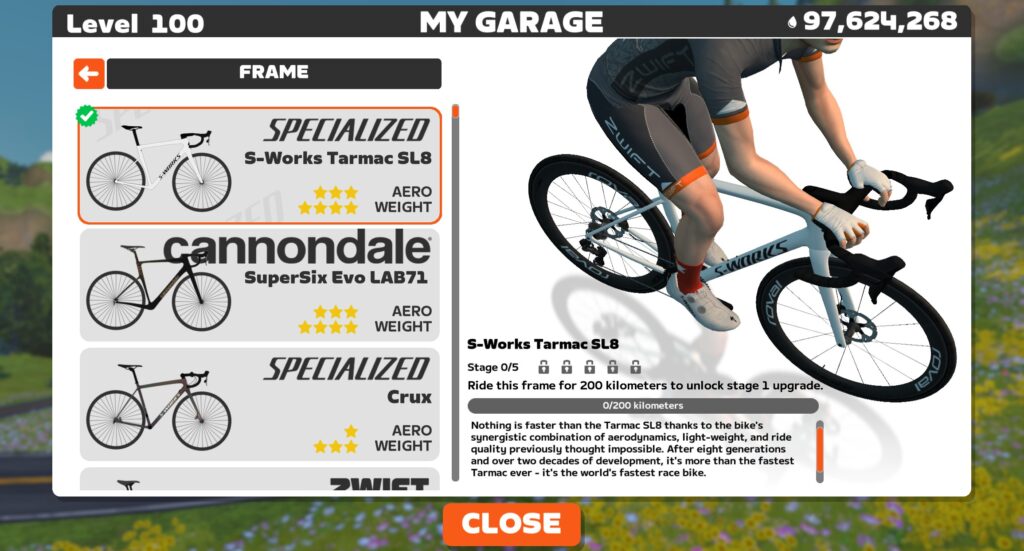
As an example, here’s what I saw after buying and equipping the zippy new S-Works Tarmac SL8:

As Zwifters have noted, when it comes to upgrading this frame, all the game tells me is how far I need to ride in order to unlock the stage 1 upgrade.

It doesn’t tell me what that upgrade actually is.

And it doesn’t tell me how many Drops that upgrade will cost.

Zwift may tweak this UI in the future, but until then, here’s some documentation so you can figure out exactly what work is involved, and how much it’ll cost, to upgrade a particular bike in Zwift.

Figuring Out Your Upgrade Scheme

If you want to know exactly what it’ll take to upgrade a bike, first you have to figure out which category Zwift has assigned it to. Bikes have been placed in one of three categories:

  • Distance: ride X km to unlock upgrades
  • Duration: ride X hours to unlock upgrades
  • Elevation: climb X meters to unlock upgrades

If you pull up your bike in your garage, you can quickly figure out which category it is in based on what the game tells you to do to unlock stage 1. In my S-Works Tarmac SL8 example above, you can see it’s telling me to ride 200 kilometers, which means this frame is in the “Distance” category. (Where almost all road bike frames live, by the way.)

Next, within each category, bikes are further divided up into entry-level, mid-range, and high-end bikes. Entry-level bikes are easier to upgrade than mid-level bikes, which are easier to upgrade than high-end bikes.

Cross-reference the work required for a stage 1 upgrade with the lists below, and you can figure out if your frame is classified as entry-level, mid-range, or high-end. Again, looking at my S-Works Tarmac SL8 screenshot above, the game says I must ride 200km to unlock stage 1. That means this is a high-end frame, based on the Distance-Based Upgrading table below.

(If you don’t want to try to figure out what scheme your bike uses, or want a reference sheet that doesn’t live in the game, there’s a long table at the bottom of this post that says exactly how each frame in Zwift is classified.)

I realize this may seem quite complex. But here are two pieces of good news:

  1. You don’t have to understand it to enjoy using it. You can just ride, and upgrade your bike when the game notifies you. Or don’t upgrade your bike at all, and just keep doing what you’re already doing. You do you!
  2. The upgrading scheme makes actual sense, even if it’s somewhat complex. It is related to what we would do with our IRL bikes and riding. Zwift doesn’t just pull this stuff out of thin air – it’s the work of experienced game designers who love riding their bikes. (I know because I’ve spent a lot of time chatting with them.)

With all of that said, let’s dive into the details of how each bike frame can be upgraded in Zwift.

Distance-Based Upgrading
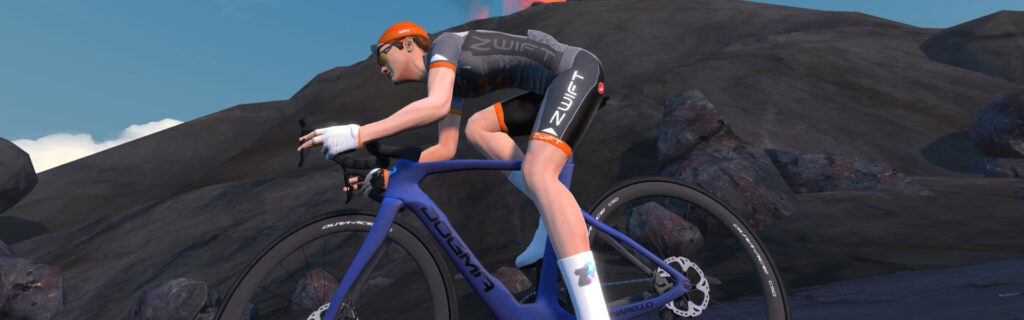
Almost all road bike frames in Zwift fall into this category, so it’s the largest category by far. Basically, this category contains all the road frames that aren’t strictly climbing bikes. Examples of bikes in this group include the Specialized Venge, Pinarello Dogma, and Specialized Project 74.

Here’s a table showing how far you’ll have to ride for each upgrade stage, how many Drops you’ll need to spend to make the upgrade once you’ve unlocked it, and what exactly each stage upgrade is:

Stage 1 Stage 2 Stage 3 Stage 4 Stage 5 Totals
Entry-Level
km 100 130 160 190 220 800
cost 25,000 50,000 75,000 100,000 200,000 450,000
upgrade Aero Weight Drivetrain 5% Drops 5% XP
Mid-Range
km 160 200 240 280 320 1,200
cost 50,000 100,000 150,000 200,000 250,000 750,000
upgrade Aero Weight Drivetrain Aero 5% Drops
High-End
km 200 260 320 380 440 1,600
cost 100,000 200,000 350,000 500,000 750,000 1,900,000
upgrade Aero Weight Drivetrain Aero Weight
Halo
km 550 1,050 1,600 2,150 2,650 8,000
cost 400,000 800,000 1,200,000 2,600,000 5,000,000 10,000,000
upgrade Aero Weight Drivetrain Aero Weight

Duration-Based Upgrading

This category contains only TT bikes at this time. Examples of bikes in this group include the Cadex Tri, Felt IA 2.0, and Pinarello Espada.

Stage 1 Stage 2 Stage 3 Stage 4 Stage 5 Totals
Entry-Level
hrs 2 3 4 5 6 20
cost 25,000 50,000 75,000 100,000 200,000 450,000
upgrade Aero Weight Drivetrain 5% Drops 5% XP
Mid-Range
hrs 4 5 6 7 8 30
cost 50,000 100,000 150,000 200,000 250,000 750,000
upgrade Aero Weight Drivetrain Weight 5% Drops
High-End
hrs 6 7 8 9 10 40
cost 100,000 200,000 350,000 500,000 750,000 1,900,000
upgrade Aero Weight Drivetrain Weight Aero
Halo
hrs 20 30 40 50 60 200
cost 400,000 800,000 1,200,000 2,600,000 5,000,000 10,000,000
upgrade Aero Weight Drivetrain Weight Aero

Elevation-Based Upgrading

This category includes a handful of climbing-specific road bikes, as well as all gravel and mountain bikes in game. Examples of bikes in this category include the Specialized S-Works Aethos, Canyon Grail, and Scott Spark RC World Cup.

Stage 1 Stage 2 Stage 3 Stage 4 Stage 5 Total
Entry-Level
meters 1,000 1,250 1,500 1,750 2,000 7,500
cost 25,000 50,000 75,000 100,000 200,000 450,000
upgrade Aero Weight Drivetrain 5% Drops 5% XP
Mid-Range
meters 1,550 1,900 2,250 2,600 2,950 11,250
cost 50,000 100,000 150,000 200,000 250,000 750,000
upgrade Aero Weight Drivetrain Aero 5% Drops
High-End
meters 2,000 2,500 3,000 3,500 4,000 15,000
cost 100,000 200,000 350,000 500,000 750,000 1,900,000
upgrade Aero Weight Drivetrain Aero Weight
Halo
meters 11,000 13,000 15,000 17,000 19,000 75,000
cost 400,000 800,000 1,200,000 2,600,000 5,000,000 10,000,000
upgrade Aero Weight Drivetrain Aero Weight

Comparing Categories

Zwift isn’t disclosing the precise details behind each upgrade stage shown above, but it’s important to understand that what the game simply calls an “Aero Upgrade” may be small (say, a CDA decrease of .001) or large (perhaps a CDA decrease of .008).

Our tests show (and Zwift confirms) that, regardless of whether your bike is an entry-level, mid-range, or high-end bike, the performance upgrades a “maxed out” bike receives are the same for all bikes within that category.

Example: if you had two distance-based bikes (say, the entry-level Cannondale CAAD12 and the high-end Pinarello Dogma F 2024) and maxed out upgrading them both, their performance improvement would be the same. The only difference is that the CAAD12 would now be rewarding you with 5% Drops and XP bonuses as well!

While two frames within the same category (say, Distance) will receive the same performance boost when maxed out, that is not the case for frames from different categories (say, a TT frame from the Duration group and a climbing frame from the Elevation group).

Upgrades for the Elevation category are skewed toward weight reduction, because IRL cyclists would want to make their lightweight climbing bike even lighter. Meanwhile, upgrades for the Duration category (TT frames) are skewed toward aero improvements, because TT racers are all about aero gains! Upgrades for the largest category (Distance) are more balanced between weight reductions and aero improvements.

Here’s a simple chart illustrating this point. It shows the baseline (un-upgraded) performance of a high-end frame from each of the categories (Distance, Duration, and Elevation), and the performance of that same frame at fully-upgraded (stage 5) status:

You can see that each frame improves in performance (the maxed-out data points are up and to the right of the un-upgraded ones), but they progress in different ways. The frame in the Duration category (Speedmax CF SLX) improves the most in terms of aero performance, while the Elevation frame (Aethos) improves the most in terms of climb performance. The Distance frame (Dogma F 2024) is balanced between the two.

Complete List of Bikes, Categorized

Bike Category Level
Allied Able 2022 Distance Mid-Range
BMC RoadMachine Distance Mid-Range
BMC SLR01 Distance Mid-Range
BMC TeamMachine Distance Mid-Range
BMC Timemachine01 Duration Mid-Range
Bridgestone RS9s Distance Mid-Range
Cadex Tri Duration High-End
Cannondale CAAD12 Distance Entry-Level
Cannondale CAAD13 Distance Mid-Range
Cannondale EVO Distance Mid-Range
Cannondale R4000 RollerBlade Distance Halo
Cannondale SuperSix EVO Distance High-End
Cannondale SuperSix Evo Lab 71 Distance High-End
Cannondale Synapse Distance Mid-Range
Cannondale System Six Distance High-End
Canyon Aeroad Distance High-End
Canyon Aeroad 2021 Distance High-End
Canyon Aeroad 2024 Distance High-End
Canyon Grail Distance Mid-Range
Canyon Inflite Distance Entry-Level
Canyon Lux Elevation Mid-Range
Canyon Speedmax Duration High-End
Canyon Speedmax CR SLX Disc Duration High-End
Canyon Ultimate Distance Mid-Range
Canyon Ultimate CFR Distance High-End
Cervelo Aspero Distance Mid-Range
Cervelo P5 Duration High-End
Cervelo P5X Distance High-End
Cervelo R5 Distance Mid-Range
Cervelo S3D Distance Mid-Range
Cervelo S5 Distance High-End
Cervelo S5 2020 Distance High-End
Chapter2 KOKO Distance High-End
Chapter2 Rere Distance High-End
Chapter2 Tere Elevation Mid-Range
Chapter2 TOA Distance High-End
Colnago V3RS Distance High-End
Cube Aerium Duration Mid-Range
Cube Litening 2018 Distance Mid-Range
Cube Litening C:68x Distance Mid-Range
Diamondback Andean Duration Mid-Range
Factor One Distance High-End
Felt AR Distance Mid-Range
Felt FR Distance Entry-Level
Felt IA Duration High-End
Felt IA 2.0 Duration High-End
Focus Izalco Max 2020 Distance High-End
Giant Defy Distance High-End
Giant Propel Advanced SL Disc Distance Mid-Range
Giant Revolt Distance Mid-Range
Giant TCR Advanced SL Distance High-End
Lauf True Grit Distance Mid-Range
Liv Devote Distance Mid-Range
Liv Langa Adv SL Distance High-End
Liv Langma SL Advanced Distance High-End
Mosaic RT-1d Distance Mid-Range
Parlee ESX Distance Entry-Level
Parlee RZ7 Distance High-End
Pinarello Bolide Duration High-End
Pinarello Dogma 65 Distance High-End
Pinarello Dogma F Distance Mid-Range
Pinarello Dogma F10 Distance High-End
Pinarello Dogma F12 2020 Distance High-End
Pinarello Dogma F14 2021 Distance High-End
Pinarello Dogma X Distance Entry-Level
Pinarello Espada Duration Halo
Pinarello F8 Distance High-End
Pinarello TT Distance High-End
Quintana Roo V-PR Duration High-End
Ribble Endurance Distance High-End
Ridley Noah Fast 2019 Distance High-End
Scott Addict RC Elevation Mid-Range
Scott Foil Distance Mid-Range
Scott Foil 2023 Distance High-End
Scott Plasma 2019 Duration High-End
Scott Plasma RC Ultimate Duration High-End
Scott Spark MTB 2022 Elevation High-End
Scott Spark RC Elevation Mid-Range
Specialized Aethos Elevation High-End
Specialized Allez Distance Mid-Range
Specialized Allez Sprint Distance Mid-Range
Specialized Amira Distance High-End
Specialized Amira S-Works Distance Entry-Level
Specialized Crux Distance High-End
Specialized Diverge Distance Entry-Level
Specialized Epic S-Works Elevation High-End
Specialized Project 74 Distance Halo
Specialized Roubaix S-Works Distance Mid-Range
Specialized Ruby S-Works Distance Mid-Range
Specialized Shiv Duration High-End
Specialized Shiv Disc Duration High-End
Specialized Shiv S-works Duration High-End
Specialized Tarmac Distance Mid-Range
Specialized Tarmac Pro Distance High-End
Specialized Tarmac SL7 Distance High-End
Specialized Tarmac SL8 Distance Mid-Range
Specialized Tarmac SL8 S-Works Distance High-End
Specialized Venge Distance Mid-Range
Specialized Venge S-Works Distance Mid-Range
Trek Emonda Elevation High-End
Trek Emonda SL Elevation High-End
Trek Madone Distance Mid-Range
Trek Speed Concept Duration High-End
Trek Super Caliber Elevation High-End
Uranium Nuclear Distance Mid-Range
Van Rysel RCR Pro Distance Mid-Range
Ventum NS1 Distance Mid-Range
Ventum One Distance Mid-Range
Zwift Aero Distance Mid-Range
Zwift Atomic Cruiser Distance Entry-Level
Zwift Buffalo Fahrrad Distance Entry-Level
Zwift Carbon Distance Entry-Level
Zwift Concept Z1 Distance Halo
Zwift Gravel Distance Entry-Level
Zwift Handcycle Distance Entry-Level
Zwift Mountain Elevation Entry-Level
Zwift Safety Distance Entry-Level
Zwift Steel Distance Entry-Level
Zwift TT Duration Mid-Range

Questions or Comments?

I hope this post helped answer some questions. If you have more upgrade-related questions or comments, post below!
Parlee Taos gravel superbike combines speed, comfort and a striking wax finish

Unveiled at Eurobike 2024, the Parlee Taos is the brand’s ‘fastest yet most forgiving’ gravel bike to date – and we’ve got our hands on one for review.

The Taos builds on Parlee’s decade of experience making gravel-focused bikes, but takes a new direction that’s off-road focused yet very versatile.

Parlee’s history of making bikes built for adventure started with the Chebacco road bike in 2016, although don’t expect to see much of that original approach in the Taos.

The frame is longer, with a massively sloping top tube, slacker head angle and 50mm tyre clearances. Parlee claims the construction is torsionally stiffer than the Chebacco, yet has more compliance.

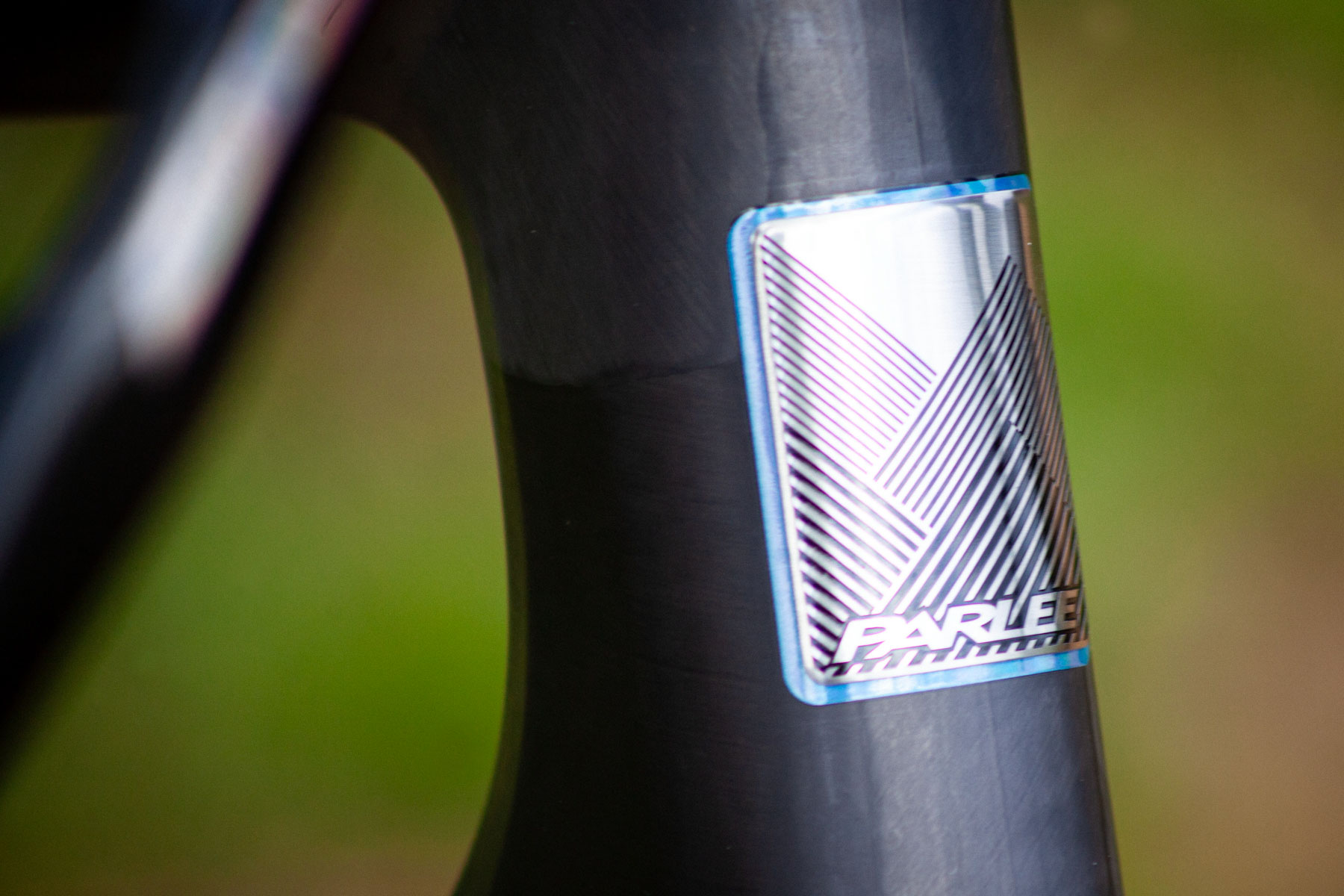
Parlee Taos headbadge
The Taos is finished in raw carbon that’s waxed for protection. Warren Rossiter / OurMedia

The frame

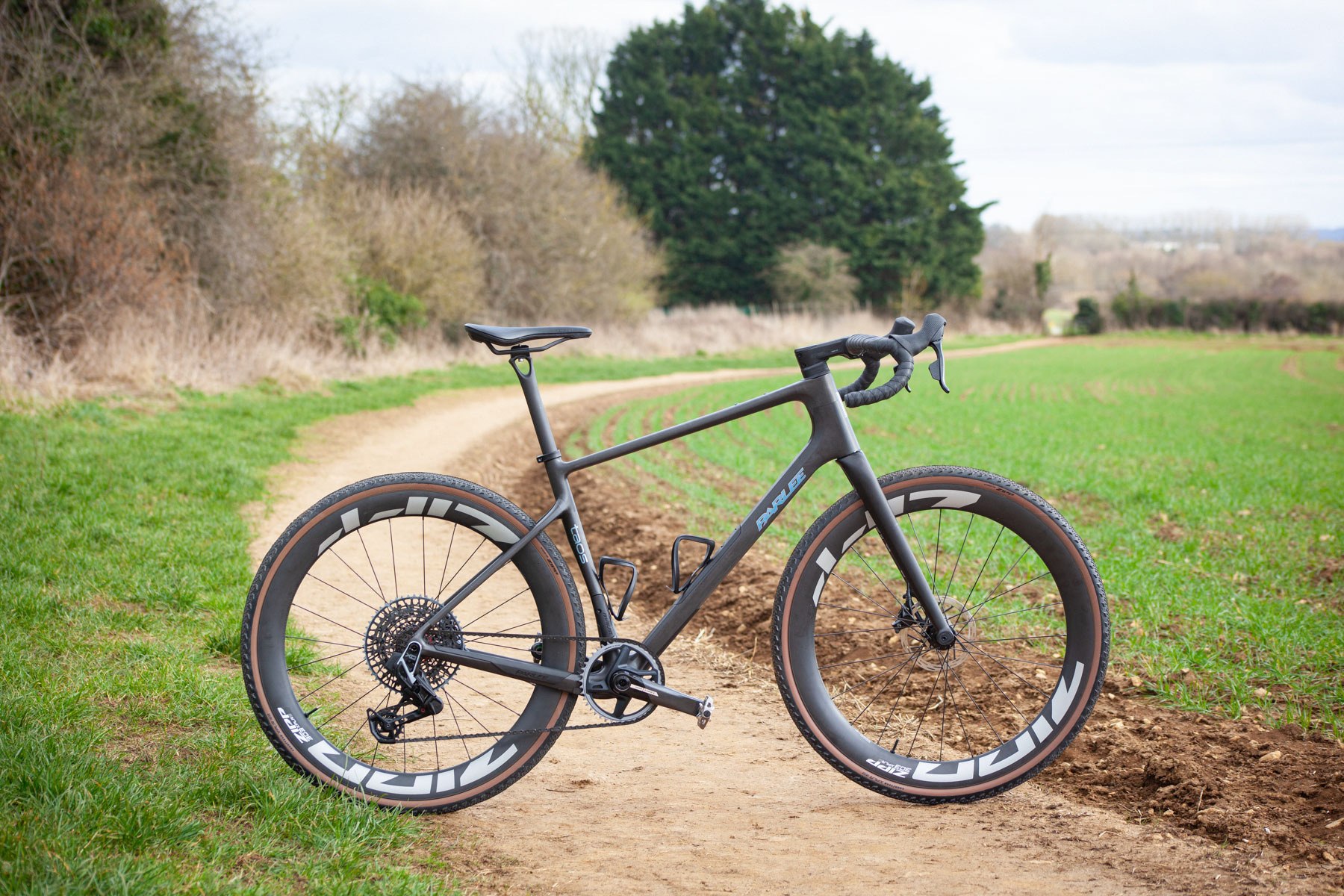
Parlee Taos
The Parlee Taos is longer, lower-slung and slacker than Parlee’s previous Chebacco gravel bike. Warren Rossiter / OurMedia

The frame has been configured with a monocoque construction that uses a blend of uni-directional carbon fibres. This creates a meticulously crafted frame with a claimed weight of 980g (size medium).

Parlee Taos downtube
The raw finish means you can see how the Taos was constructed. Warren Rossiter / OurMedia

Don’t believe the Taos has been meticulously crafted? Well, just look at the finish.

Parlee has chosen to leave the made-in-the-EU carbon fibre frameset raw finished. You can see for yourself every ply, join and orientation of the carbon on show underneath a transparent waxed finish.

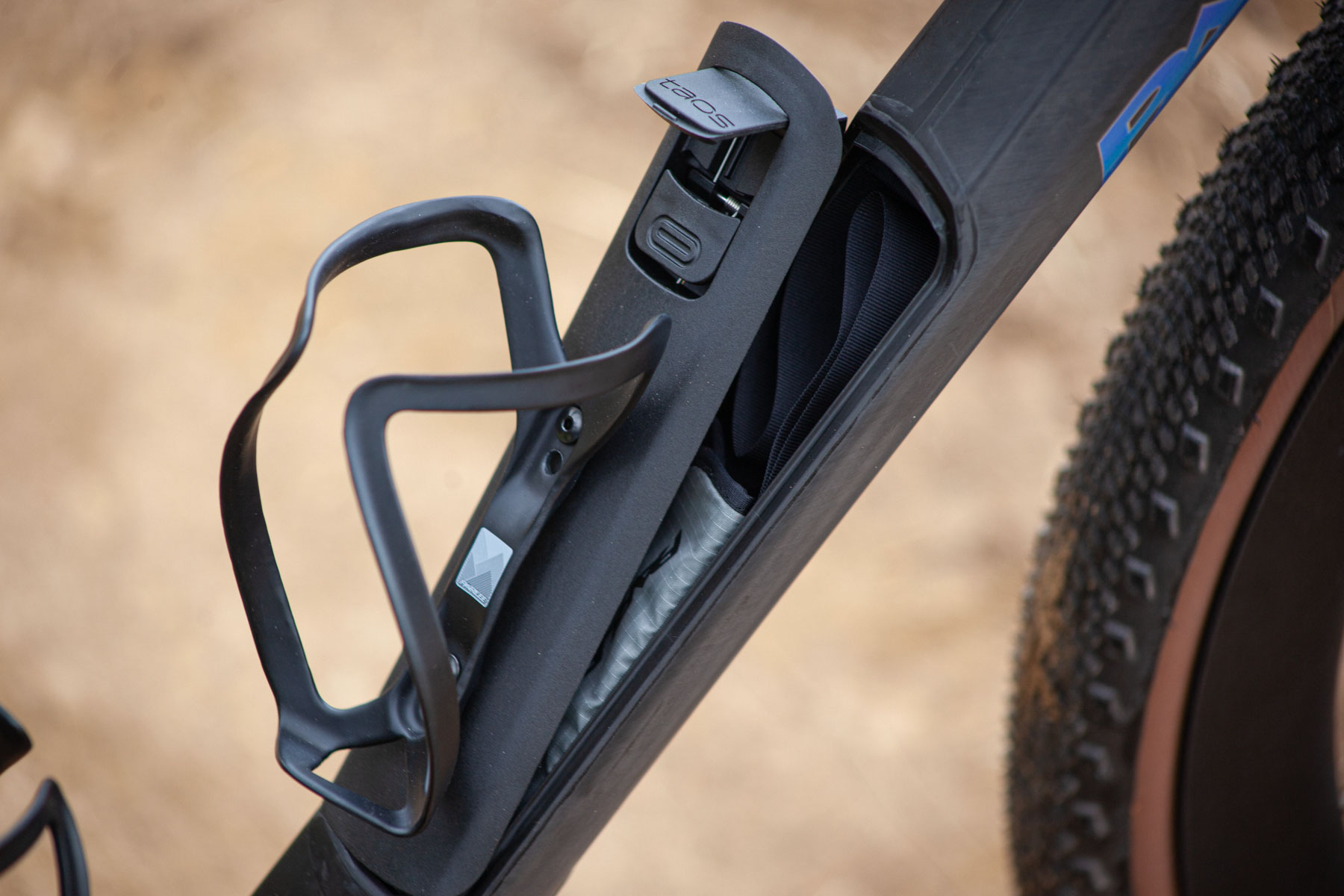
Parlee Taos downtube storage
The Taos has a clever storage port, complete with a tool bag. Warren Rossiter / OurMedia

The finish means you’ll get no paint chips or scratching – just wipe the bike down and occasionally give it a re-waxing to keep it looking pristine.

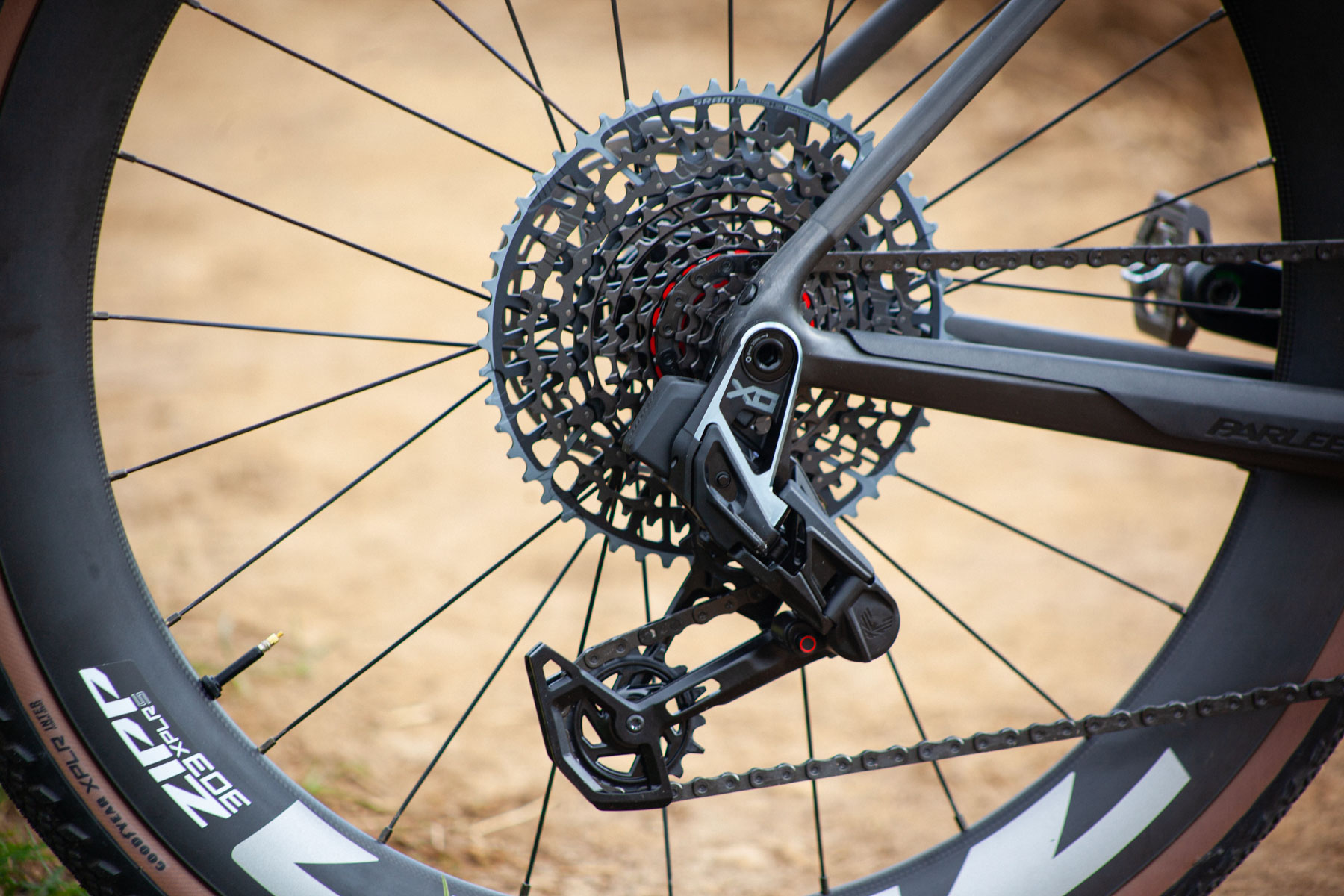
SRAM XO AXS rear derailluer.
The UDH rear dropout means Parlee can use the latest SRAM XO AXS Transmission rear derailleur. Warren Rossiter / OurMedia

The frameset hits all the right modern gravel notes: big tyre clearances, a clever down tube storage port, internal routing, a UDH rear dropout, T47 threaded bottom bracket and in-built frame protection in high-impact areas.

Race and recreation

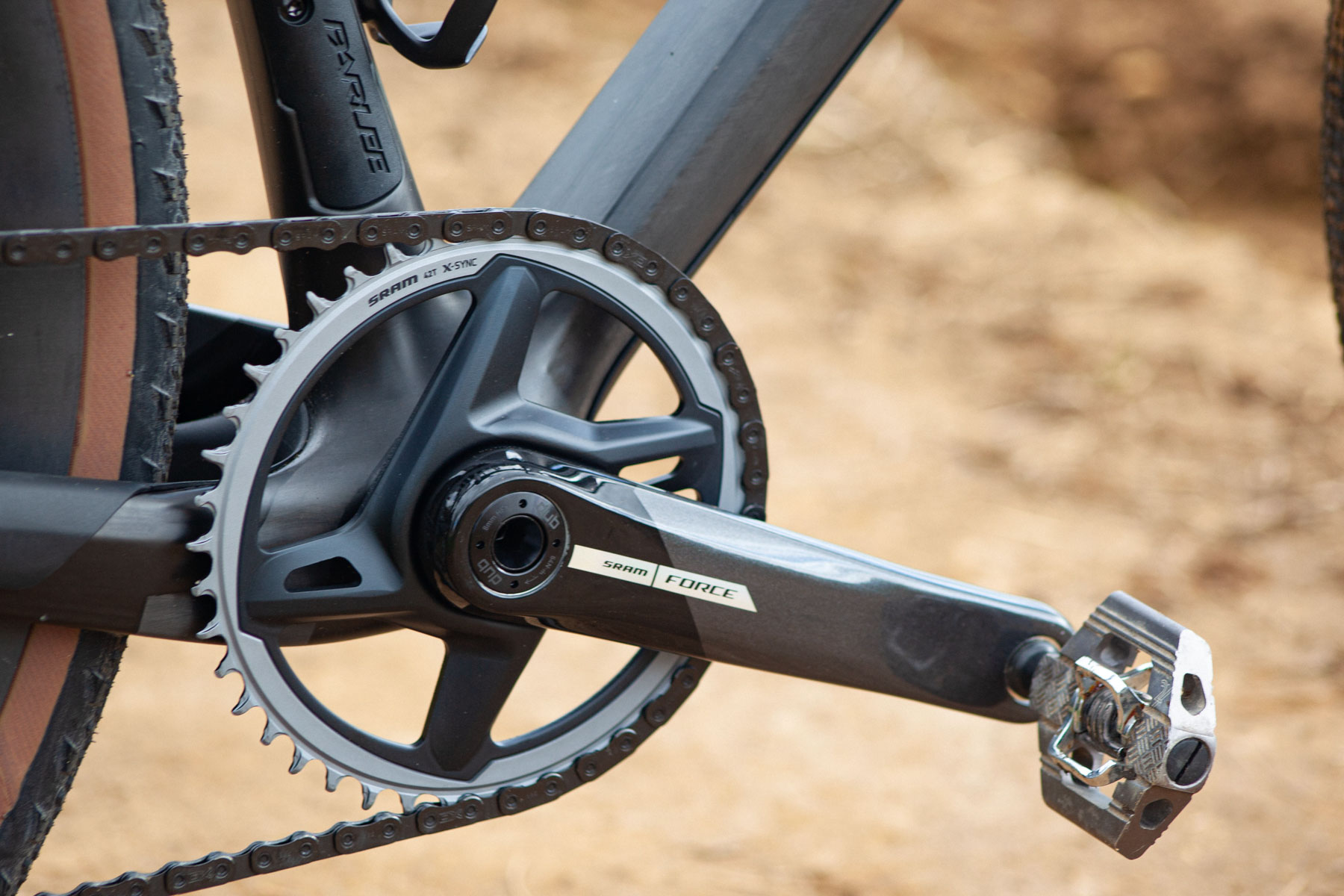
Parlee Taos SRAM Force chainset
The Taos can be run 1x or 2x. Warren Rossiter / OurMedia

Parlee claims the Taos is its most versatile bike. If you want to go a bit more extreme, the frame geometry is corrected for a suspension fork, so it won’t alter the ride should you want to add a bit of travel. It also has stealth routing if you want to fit a dropper post.

The frame can be used with 1x or 2x drivetrains. It sports fender/mudguard mounts, and with top tube bag mounts and internal storage, it could easily serve as a long-distance touring bike.

The fork has a flip chip dropout, so if you want to run the Taos as an all-road bike rather than pure gravel, you can tighten up the wheelbase and steepen the head angle. When run with smaller tyres, it has a more road-biased ride.


The build

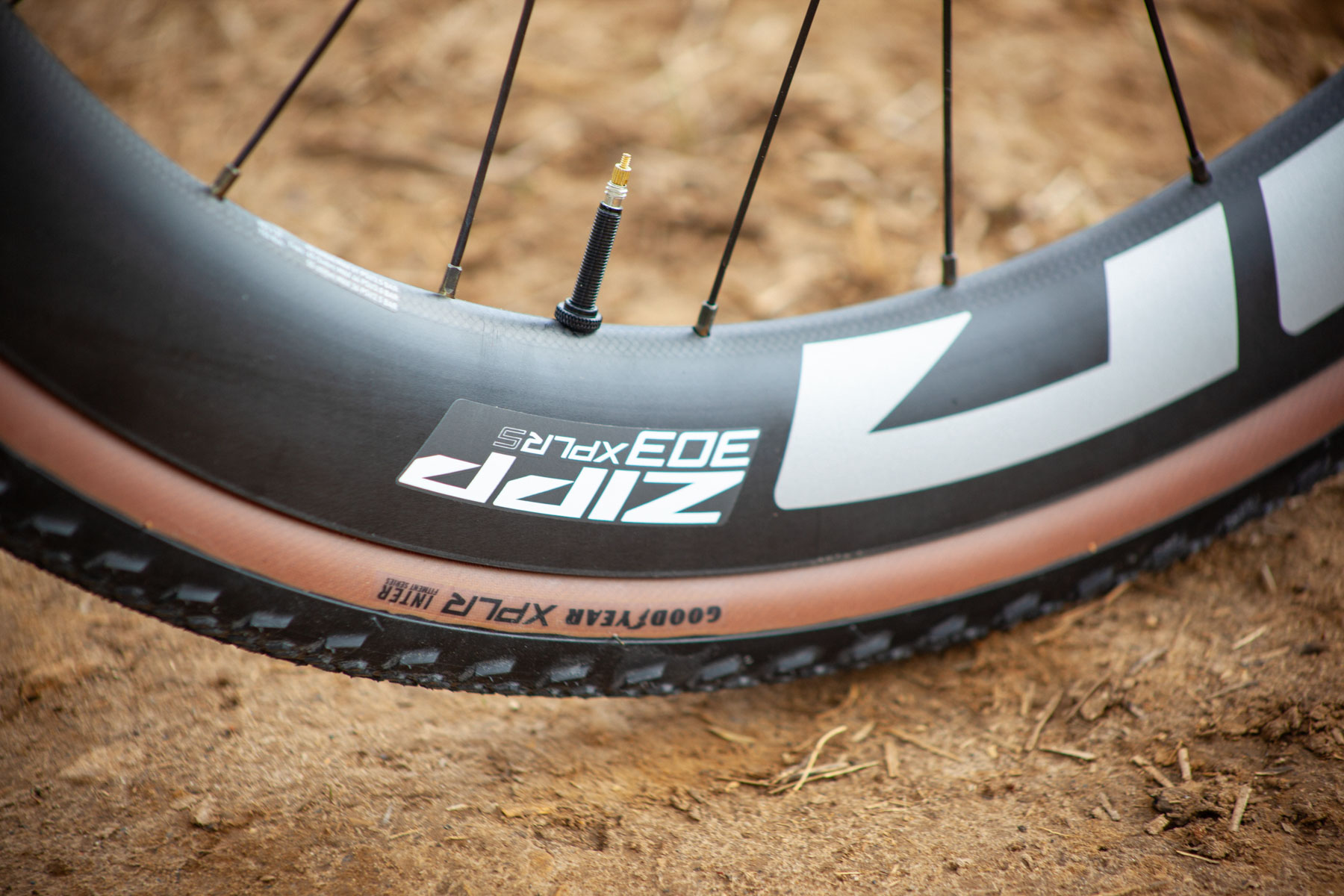
Zipp 303 XPLR S rim
Zipp’s wide 303 XPLR S wheelset and matching 45mm Goodyear XPLR Inter tyres. Warren Rossiter / OurMedia

Our first look at the all-new Taos is with this second-tier build. It combines SRAM’s Force shifters, brakes and 1x XPLR 42-tooth crankset, paired with a mountain bike X0 Eagle AXS Transmission rear derailleur and broad 10-52 cassette.

The bike rolls on Zipp’s new 303 XPLR S wheels, with the 45mm tyres from Zipp’s collaboration with Goodyear.

The cockpit is FSA’s latest version of the gravel-specific K-Force AGX carbon bar, matched to an FSA SMR II stem. At the rear is Parlee’s own lightweight carbon seatpost.

The contact points are Ergon’s SR Allroad Core pro carbon saddle and matching Ergon All Road bar tape. Two Parlee carbon bottle cages finish things off.

FSA K-Force AGX gravel bar
FSA’s carbon K-Force AGX gravel bar. Warren Rossiter / OurMedia

You can choose from six frame sizes that can be built in standard or tall configurations. You can then select your desired cockpit dimensions (including bar width, stem length, seat and seatpost configuration), and either a standard build or your choice of wheels, tyres, drivetrain and accessories.

Our size-large test bike tips the scales at 8.82kg (with two bottle cages).

This ‘standard’ Force build is priced at £9,360 / $9,890.

The Out-of-Touch Adults’ Guide to Kid Culture: What Is a Hozier Yell?

This week’s trip into the minds of people who aren’t old enough to rent a car is like a potpourri of unrelated trends and memes that present a picture of the variety of ways young people are relating to the world. Some TikTokers are memorializing peak moments in their lives with a “Hozier yell,” while others are spending their precious time on Earth creating brain-rot “juggtok” videos, or getting really, really angry about chess and chubbiness. It’s a big world.

What is a Hozier yell?

A “Hozier yell” is used in TikTok videos to refer to a peak, climactic, awe-inspiring moment. Literary types might substitute “barbaric yamp.”

The end result is videos like these:

The reference and the audio that goes with it is to the song “Northern Attitude,” a 2024 collab between Hozier and Noah Kahan, in which Hozier hits a particularly climactic note just as the song climaxes. Hozier, by the way, is an Irish singer-songwriter whose songs are heavily influenced by folk music who is best known for his 2013 song “Take Me to Church.”

So far, nearly 200,000 videos have used the audio clip of Hozier and Kahan, commenting on everything from seeing a bear to marriage proposals to graduating cosmetology school.

What does “Jugg” mean? And what is “Juggtok?”

The slang term “jugg” (sometime “juug”) means to grab quickly or to steal. Like most modern slang, it is derived from AAVE, specifically from the South.

“Jugg” has been around for awhile—the word is used in a number of rap songs from the 2010s—but it has come into wider usage lately as part of a TikTok meme format called “juggtok,” a convoluted brain-rot-centric subculture in which specific slang words and acronyms are paired with a set of unrelated images and video clips in such a way as to render it all meaningless. If my reading is correct, juggtok and its offshoots and adversaries like slimetok and jollytok defy explanation on purpose. They are meant to be meaningless and self-referential. Here are a couple examples:

(For more definitions, check out my slang glossary, ‘Aura Farming,’ ‘Huzz,’ and Other Gen Z and Gen Alpha Slang You Might Need Help Decoding.)

Chubby filter causing TikTok controversy

The cultural argument over “fat acceptance” has been going on for a long time, but artificial intelligence is adding an exciting new wrinkle. This month, a video filter called “Chubby AI” allowed Tiktokers to visualize what it would look like if they (gasp!) gained weight, and videos like these started going viral:

There was, as you’d probably expect, an instant backlash, as illustrated by this X post from writer Bec Shaw:


This Tweet is currently unavailable. It might be loading or has been removed.

If you had hope that younger people might be more accepting of people being overweight, since so many of them are, you’d be mistaken. But on the plus side, I’m confident that many skinny young people who look down on fat people will eventually grow fat themselves.

Is chess.com trying to rename the bishop?

Since we’re doing controversy, a way dumber foofaraw was kicked off last week by chess.com that proves how everyone must pick a side of the culture wars, even websites about chess.

The row began when chess.com’s X account posted this seemingly innocuous piece of engagement-bait:


This Tweet is currently unavailable. It might be loading or has been removed.

Apparently some X users assumed that Chess.com wants to rename the diagonally moving piece because of religious connotation of the name “bishop,” so the comments section quickly filled with responses like this, from a ” friendly neighborhood Christian Nationalist:”


This Tweet is currently unavailable. It might be loading or has been removed.

And this, from some other goof:


This Tweet is currently unavailable. It might be loading or has been removed.

And this, from a normal person having a very normal day:


This Tweet is currently unavailable. It might be loading or has been removed.

Anyway, chess.com ensured more outrage by troll-posting:


This Tweet is currently unavailable. It might be loading or has been removed.

So is chess.com really trying to bring down Christianity? Sadly, no. They’d made a similar post earlier about The Rook:


This Tweet is currently unavailable. It might be loading or has been removed.

And no one freaked out. The seething outrage over a meaningless shitpost illustrates that X is worst website ever and no one should use it. I feel like I need a shower after even a few minutes there.

Viral videos of the the week: Can You Fool A Self Driving Car?

As the great Criswell intones in Plan 9 From Outer Space, the future is where you and I are going to spend the rest of our lives; no doubt a lot of that time will be spent driving, and driving will be very different in the future. Cutting-edge technology is rapidly taking over driver’s decisions, whether it’s emergency braking or full-on auto-driving so I can take a nap and go to Hardees.

Computer-assisted driving is generally a good idea, but the technology has limits, and the future holds auto-related dangers that Henry Ford never dreamed of. For instance, how would an auto-driving car handle a brick wall painted to look like the road? That’s the question at the center of this week’s viral video of the week, in which YouTube legend Mark Rober pits the two leading self-driving car technologies against obstacles like thick fog, heavy rain, and a wall painted to look like the road.

Rober’s experiments features a car from Luminar with a self-driving system that uses a LiDAR (Light Detection and Ranging) to navigate, and a Tesla that uses cameras. Rober’s tests are unscientific—this is an entertainment YouTube channel after all—but they are, as Elon Musk might post, “concerning.” Few drivers will ever encounter a brick wall painted like the road (unless they’re driving through a Warner Brothers cartoon) but whether a car on auto-pilot will brake for an obstacle in a heavy fog seems pretty relevant. And the results don’t look promising for the Tesla.

Why the Internet Archive is More Relevant Than Ever

It’s “live-recording the World Wide Web,” according to NPR, with a digital library that includes “hundreds of billions of copies of government websites, news articles and data.”

They described the 29-year-old nonprofit Internet Archive as “more relevant than ever.”

Every day, about 100 terabytes of material are uploaded to the Internet Archive, or about a billion URLs, with the assistance of automated crawlers. Most of that ends up in the Wayback Machine, while the rest is digitized analog media — books, television, radio, academic papers — scanned and stored on servers. As one of the few large-scale archivists to back up the web, the Internet Archive finds itself in a particularly unique position right now… Thousands of [U.S. government] datasets were wiped — mostly at agencies focused on science and the environment — in the days following Trump’s return to the White House…
The Internet Archive is among the few efforts that exist to catch the stuff that falls through the digital cracks, while also making that information accessible to the public. Six weeks into the new administration, Wayback Machine director [Mark] Graham said, the Internet Archive had cataloged some 73,000 web pages that had existed on U.S. government websites that were expunged after Trump’s inauguration…

According to Graham, based on the big jump in page views he’s observed over the past two months, the Internet Archive is drawing many more visitors than usual to its services — journalists, researchers and other inquiring minds. Some want to consult the archive for information lost or changed in the purge, while others aim to contribute to the archival process…. “People are coming and rallying behind us,” said Brewster Kahle, [the founder and current director of the Internet Archive], “by using it, by pointing at things, helping organize things, by submitting content to be archived — data sets that are under threat or have been taken down….”

A behemoth of link rot repair, the Internet Archive rescues a daily average of 10,000 dead links that appear on Wikipedia pages. In total, it’s fixed more than 23 million rotten links on Wikipedia alone, according to the organization.

Though it receives some money for its preservation work for libraries, museums, and other organizations, it’s also funded by donations. “From the beginning, it was important for the Internet Archive to be a nonprofit, because it was working for the people,” explains founder Brewster Kahle on its donations page:

Its motives had to be transparent; it had to last a long time. That’s why we don’t charge for access, sell user data, or run ads, even while we offer free resources to citizens everywhere. We rely on the generosity of individuals like you to pay for servers, staff, and preservation projects. If you can’t imagine a future without the Internet Archive, please consider supporting our work. We promise to put your donation to good use as we continue to store over 99 petabytes of data, including 625 billion webpages, 38 million texts, and 14 million audio recordings.

Two interesting statistics from NPR’s article:

“A Pew Research Center study published last year found that roughly 38% of web pages on the internet that existed in 2013 were no longer accessible as of 2023.”
“According to a Harvard Law Review study published in 2014, about half of all links cited in U.S. Supreme Court opinions no longer led to the original source material.”

Thanks to long-time Slashdot reader jtotheh for sharing the news.


Read more of this story at Slashdot.

Can we make AI less power-hungry? These researchers are working on it.

At the beginning of November 2024, the US Federal Energy Regulatory Commission (FERC) rejected Amazon’s request to buy an additional 180 megawatts of power directly from the Susquehanna nuclear power plant for a data center located nearby. The rejection was due to the argument that buying power directly instead of getting it through the grid like everyone else works against the interests of other users.

Demand for power in the US has been flat for nearly 20 years. “But now we’re seeing load forecasts shooting up. Depending on [what] numbers you want to accept, they’re either skyrocketing or they’re just rapidly increasing,” said Mark Christie, a FERC commissioner.

Part of the surge in demand comes from data centers, and their increasing thirst for power comes in part from running increasingly sophisticated AI models. As with all world-shaping developments, what set this trend into motion was vision—quite literally.

Read full article

Comments

Another Large Black Hole In ‘Our’ Galaxy

RockDoctor (Slashdot reader #15,477) writes:

A recent paper on ArXiv reports a novel idea about the central regions of “our” galaxy.

Remember the hoopla a few years ago about radio-astronomical observations producing an “image” of our central black hole — or rather, an image of the accretion disc around the black hole — long designated by astronomers as “Sagittarius A*” (or SGR-A*)? If you remember the image published then, one thing should be striking — it’s not very symmetrical. If you think about viewing a spinning object, then you’d expect to see something with a “mirror” symmetry plane where we would see the rotation axis (if someone had marked it). If anything, that published image has three bright spots on a fainter ring. And the spots are not even approximately the same brightness.

This paper suggests that the image we see is the result of the light (radio waves) from SGR-A* being “lensed” by another black hole, near (but not quite on) the line of sight between SGR-A* and us. By various modelling approaches, they then refine this idea to a “best-fit” of a black hole with mass around 1000 times the Sun, orbiting between the distance of the closest-observed star to SGR-A* (“S2” — most imaginative name, ever!), and around 10 times that distance. That’s far enough to make a strong interaction with “S2” unlikely within the lifetime of S2 before it’s accretion onto SGR-A*.)

The region around SGR-A* is crowded. Within 25 parsecs (~80 light years, the distance to Regulus [in the constellation Leo] or Merak [in the Great Bear]) there is around 4 times more mass in several millions of “normal” stars than in the SGR-A* black hole. Finding a large (not “super massive”) black hole in such a concentration of matter shouldn’t surprise anyone.

This proposed black hole is larger than anything which has been detected by gravitational waves (yet) ; but not immensely larger — only a factor of 15 or so. (The authors also anticipate the “what about these big black holes spiralling together?” question : quote “and the amplitude of gravitational waves generated by the binary black holes is negligible.”)

Being so close to SGR-A*, the proposed black hole is likely to be moving rapidly across our line of sight. At the distance of “S2” it’s orbital period would be around 26 years (but the “new” black hole is probably further out than than that). Which might be an explanation for some of the variability and “flickering” reported for SGR-A* ever since it’s discovery.
As always, more observations are needed. Which, for SGR-A* are frequently being taken, so improving (or ruling out) this explanation should happen fairly quickly. But it’s a very interesting, and fun, idea.


Read more of this story at Slashdot.

‘Fish Doorbell’ Enters Fifth Year with Millions of Fans

Long-time Slashdot reader invisik reminds us that the “fish doorbell” is still going strong, according to the Associated Press.

“Now in its fifth year, the site has attracted millions of viewers from around the world with its quirky mix of slow TV and ecological activism.”

The central Dutch city of Utrecht installed a “fish doorbell” on a river lock that lets viewers of an online livestream alert authorities to fish being held up as they make their springtime migration to shallow spawning grounds. The idea is simple: An underwater camera at Utrecht’s Weerdsluis lock sends live footage to a website. When somebody watching the site sees a fish, they can click a button that sends a screenshot to organizers. When they see enough fish, they alert a water worker who opens the lock to let the fish swim through.

“Much of the time, the screen is just a murky green with occasional bubbles, but sometimes a fish swims past. As the water warms up, more fish show up…”


Read more of this story at Slashdot.

If Bird Flu Jumped to Humans, Could Past Flu Infections Offer Some Protection?

NPR reports on research “into whether our defenses built up from past flu seasons can offer any protection against H5N1 bird flu.”

So far, the findings offer some reassurance. Antibodies and other players in the immune system may buffer the worst consequences of bird flu, at least to some degree. “There’s certainly preexisting immunity,” says Florian Krammer, a virologist at Mount Sinai’s Icahn School of Medicine who is involved in some of the new studies. “That’s very likely not going to protect us as a population from a new pandemic, but it might give us some protection against severe disease.” This protection is based on shared traits between bird flu and types of seasonal flu that have circulated among us. Certain segments of the population, namely older people, may be particularly well-primed because of flu infections during early childhood.

Of course, there are caveats. “While this is a bit of a silver lining, it doesn’t mean we should all feel safe,” says Seema Lakdawala, a virologist at Emory University’s School of Medicine whose lab is probing this question. For one thing, the studies can’t be done on people. The conclusions are based on animal models and blood tests that measure the immune response. And how this holds up for an individual is expected to vary considerably, depending on their own immune history, underlying health conditions and other factors. But for now, influenza researchers speculate this may be one reason most people who’ve caught bird flu over the past year have not fallen severely ill….
Research published this month is encouraging. By analyzing blood samples from close to 160 people, a team at the University of Pennsylvania and the University of Chicago were able to show that people born roughly before 1965 had higher levels of antibodies — proteins that bind to parts of the virus — which cross-react to the current strain of bird flu.

This week U.S. federal officials also “announced funding for avian influenza research projects, including money for new vaccine projects and potential treatments,” the Guardian report. The head of America’s agriculture department said it would invest $100 million, as part of a larger $1 billion initiative to fight bird flu and stop rising egg prices, according to the nonprofit news site Iowa Capital Dispatch.


Read more of this story at Slashdot.

How AI Coding Assistants Could Be Compromised Via Rules File

Slashdot reader spatwei shared this report from the cybersecurity site SC World:

: AI coding assistants such as GitHub Copilot and Cursor could be manipulated to generate code containing backdoors, vulnerabilities and other security issues via distribution of malicious rule configuration files, Pillar Security researchers reported Tuesday. Rules files are used by AI coding agents to guide their behavior when generating or editing code. For example, a rules file may include instructions for the assistant to follow certain coding best practices, utilize specific formatting, or output responses in a specific language.

The attack technique developed by Pillar Researchers, which they call ‘Rules File Backdoor,’ weaponizes rules files by injecting them with instructions that are invisible to a human user but readable by the AI agent.

Hidden Unicode characters like bidirectional text markers and zero-width joiners can be used to obfuscate malicious instructions in the user interface and in GitHub pull requests, the researchers noted.

Rules configurations are often shared among developer communities and distributed through open-source repositories or included in project templates; therefore, an attacker could distribute a malicious rules file by sharing it on a forum, publishing it on an open-source platform like GitHub or injecting it via a pull request to a popular repository. Once the poisoned rules file is imported to GitHub Copilot or Cursor, the AI agent will read and follow the attacker’s instructions while assisting the victim’s future coding projects.


Read more of this story at Slashdot.

Google says a technical issue caused some users’ Maps Timeline data to be deleted

After weeks of some Google Maps users reporting that their Timelines had been wiped of all the places they’ve visited, as spotted by 9to5Google earlier this month, Google has confirmed that some users’ data was deleted and is, in some cases, unrecoverable. In a statement to The Verge, Google spokesperson Genevieve Park said, “We briefly experienced a technical issue that caused the deletion of Timeline data for some people.” Only users who had backups turned on will be able to restore their Timelines, according to the statement.

Google recently switched to on-device storage for Timeline data, and backups don’t appear to be on by default. To enable them, you have to go into Your Timeline in the Maps app and update the settings from the cloud icon there. The incident caused some users to lose years’ worth of location history. And while some who had backups enabled prior to the issue have said they were able to restore their Timeline data, others on Reddit said they weren’t able to get it all back even after importing their backups.

This article originally appeared on Engadget at https://www.engadget.com/apps/google-says-a-technical-issue-caused-some-users-maps-timeline-data-to-be-deleted-214358403.html?src=rss

Is WhatsApp Being Ditched for Signal in Dutch Higher Education?

For weeks Signal has been one of the three most-downloaded apps in the Netherlands, according to a local news site. And now “Higher education institutions in the Netherlands have been looking for an alternative,” according to DUB (an independent news site for the Utrecht University community):

Employees of the Utrecht University of Applied Sciences (HU) were recently advised to switch to Signal. Avans University of Applied Sciences has also been discussing a switch…The National Student Union is concerned about privacy. The subject was raised at last week’s general meeting, as reported by chair Abdelkader Karbache, who said: “Our local unions want to switch to Signal or other open-source software.”

Besides being open source, Signal is a non-commercial nonprofit, the article points out — though its proponents suggest there’s another big difference. “HU argues that Signal keeps users’ data private, unlike WhatsApp.” Cybernews.com explains the concern:

In an interview with the Dutch newspaper De Telegraaf, Meredith Whittaker [president of the Signal Foundation] discussed the pitfalls of WhatsApp. “WhatsApp collects metadata: who you send messages to, when, and how often. That’s incredibly sensitive information,” she says…. The only information [Signal] collects is the date an account was registered, the time when an account was last active, and hashed phone numbers… Information like profile name and the people a user communicates with is all encrypted… Metadata might sound harmless, but it couldn’t be further from the truth. According to Whittaker, metadata is deadly. “As a former CIA director once said: ‘We kill people based on metadata’.”

WhatsApp’s metadata also includes IP addresses, TechRadar noted last May:

Other identifiable data such as your network details, the browser you use, ISP, and other identifiers linked to other Meta products (like Instagram and Facebook) associated with the same device or account are also collected… [Y]our IP can be used to track down your location. As the company explained, even if you keep the location-related features off, IP addresses and other collected information like phone number area codes can be used to estimate your “general location.”
WhatsApp is required by law to share this information with authorities during an investigation…
[U]nder scrutiny is how Meta itself uses these precious details for commercial purposes. Again, this is clearly stated in WhatsApp’s privacy policy and terms of use. “We may use the information we receive from [other Meta companies], and they may use the information we share with them, to help operate, provide, improve, understand, customize, support, and market our Services and their offerings,” reads the policy. This means that yes, your messages are always private, but WhatsApp is actively collecting your metadata to build your digital persona across other Meta platforms…
The article suggests using a VPN with WhatsApp and turning on its “advanced privacy feature” (which hides your IP address during calls) and managing the app’s permissions for data collection. “While these steps can help reduce the amount of metadata collected, it’s crucial to bear in mind that it’s impossible to completely avoid metadata collection on the Meta-owned app… For extra privacy and security, I suggest switching to the more secure messaging app Signal.”

The article also includes a cautionary anecdote. “It was exactly a piece of metadata — a Proton Mail recovery email — that led to the arrest of a Catalan activist.”

Thanks to long-time Slashdot reader united_notions for sharing the article.


Read more of this story at Slashdot.

Developer Loads Steam On a $100 ARM Single Board Computer

“There’s no shortage of videos showing Steam running on expensive ARM single-board computers with discrete GPUs,” writes Slashdot reader VennStone. “So I thought it would be worthwhile to make a guide for doing it on (relatively) inexpensive RK3588-powered single-board computers, using Box86/64 and Armbian.”

The guides I came across were out of date, had a bunch of extra steps thrown in, or were outright incorrect… Up first, we need to add the Box86 and Box64 ARM repositories [along with dependencies, ARMHF architecture, and the Mesa graphics driver]…
The guide closes with a multi-line script and advice to “Just close your eyes and run this. It’s not pretty, but it will download the Steam Debian package, extract the needed bits, and set up a launch script.” (And then the final step is sudo reboot now.)

“At this point, all you have to do is open a terminal, type ‘steam’, and tap Enter. You’ll have about five minutes to wait… Check out the video to see how some of the tested games perform.”

At 720p, performance is all over the place, but the games I tested typically managed to stay above 30 FPS. This is better than I was expecting from a four-year-old SOC emulating x86 titles under ARM.

Is this a practical way to play your Steam games? Nope, not even a little bit. For now, this is merely an exercise in ludicrous neatness. Things might get a wee bit better, considering Collabora is working on upstream support for RK3588 and Valve is up to something ARM-related, but ya know, “Valve Time”…

“You might be tempted to enable Steam Play for your Windows games, but don’t waste your time. I mean, you can try, but it ain’t gonna work.”


Read more of this story at Slashdot.