If you, faithful Edge, Safari, or Firefox users have finally decided to give up your futile resistance and be assimilated into the all-consuming swarm of Google Chrome users today, only to be met with this message on your Windows 11 PC:
Don’t panic! It’s not that Google has implemented onerous system requirements or found your lack of faith
Apple has suffered a blow in its efforts to salvage its lucrative search placement deal with Google. A new ruling from the DC Circuit Court of Appeals affirms that Apple cannot participate in Google’s upcoming antitrust hearing, which could leave a multibillion-dollar hole in Apple’s balance sheet. The judges in the case say Apple simply waited too long to get involved.
Just a few years ago, a high-stakes court case involving Apple and Google would have found the companies on opposing sides, but not today. Apple’s and Google’s interests are strongly aligned here, to the tune of $20 billion. Google forks over that cash every year, and it’s happy to do so to secure placement as the default search provider in the Safari desktop and mobile browser.
The antitrust penalties pending against Google would make that deal impermissible. Throughout the case, the government made the value of defaults clear—most people never change them. That effectively delivers Google a captive audience on Apple devices.
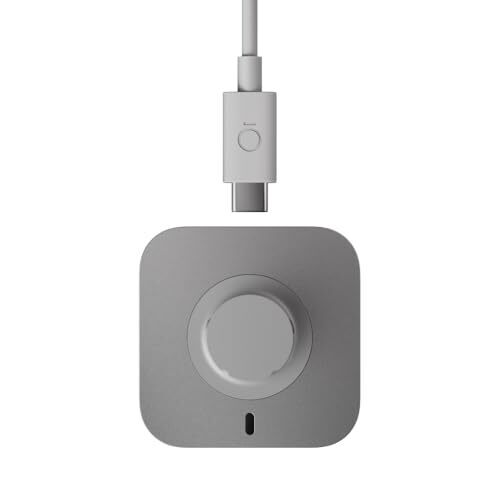
Oh, but you’re probably going to need a new dongle too.
Why another dongle in 2025?
Lossless audio only works when connected to an Apple device using a USB-C cable. With the update, AirPods Max users will be able to enjoy more than 100 million songs on Apple Music that are processed in 24-bit, 48 kHz lossless audio—provided the device they are listening on has a USB-C port.
Here’s where that dongle comes in: Apple is now selling a $39.99 USB-C to 3.5mm audio cable that goes both ways (bidirectional). This itself isn’t new; Apple also sold an equally expensive Lighting to 3.5 mm audio cable that’s no longer available. But that cable did not enable lossless or low latency mode in the older AirPods Max, and the new one does.
The new dongle is designed to work with Beats Studio Pro too, and it enables ultra low-latency audio for any device that’s connected. This means that finally, the AirPods Max can work with any media player that has a traditional audio-out, like a hip cassette player, turntable, or even in-flight entertainment systems.
Other uses for the dongle
The bidirectional part is also interesting: Using this cable, you can also use any old speaker as an iPhone or iPad speaker. Let’s say you wanted to use your home theater’s system as an iPhone output, like the good old days, well, that is now possible. If you’ve never been a fan of Bluetooth, or you just don’t like the latency of wireless audio, Apple has just given you an official way to turn back time, and for just $40.
Speaking of latency, the AirPods Max with the USB-C cable, or the 3.5mm dongle, enable the ultra-low latency audio by default. Apple is positioning this as a win for creators, live streamers, and gamers, as low latency audio can help professionals working in Logic Pro and other professional apps. And AirPods Max can also be helpful in creating and mixing audio in Personalized Spacial Audio with head tracking.
An anonymous reader shares a report: Sometime earlier this month, Apple updated a section of its website that discloses how it collects and uses imagery for Apple Maps’ Look Around feature, which is similar to Google Maps’ Street View, as spotted by 9to5Mac. A newly added paragraph reveals that, beginning in March 2025, Apple will be using imagery and data collected during Look Around surveys to “train models powering Apple products and services, including models related to image recognition, creation, and enhancement.”
Apple collects images and 3D data to enhance and improve Apple Maps using vehicles and backpacks (for pedestrian-only areas) equipped with cameras, sensors, and other equipment including iPhones and iPads. The company says that as part of its commitment to privacy, any images it captures that are published in the Look Around feature have faces and license plates blurred. Apple also says it will only use imagery with those details blurred out for training models. It does accept requests for those wanting their houses to also be blurred, but by default they are not.
World of Warcraft Classic‘s Hardcore mode has set itself apart from the average MMO experience simply by making character death permanent across the entire in-game realm. For years, Blizzard has not allowed any appeals or rollbacks for these Hardcore mode character deaths, even when such deaths came as the direct result of a server disconnection or gameplay bug.
Now, Blizzard says it’s modifying that policy somewhat in response to a series of “unprecedented distributed-denial-of-service (DDOS) attacks” undertaken “with the singular goal of disrupting players’ experiences.” The World of Warcraft developer says it may now resurrect Classic Hardcore characters “at our sole discretion” when those deaths come “in a mass event which we deem inconsistent with the integrity of the game.”
RIP OnlyFangs?
The high stakes inherent to WoW‘s Classic Hardcore mode have made it an appealing target for streamers and other online content creators looking to build an audience. Dozens of the most popular Hardcore WoW streamers have been gathering together as part of the OnlyFangs Guild, a group dedicated to the idea that “every decision matters and one mistake can mean the end of a character’s journey.”
Boeing is trying to withdraw a plea agreement and obtain more lenient treatment from the Trump administration in a case involving two deadly 737 Max crashes, The Wall Street Journal reported today.
Boeing previously agreed to plead guilty to conspiracy to defraud the United States. Boeing could still plead guilty but face weaker penalties than it agreed to last year if the Justice Department and a federal judge agree.
Trump’s Department of Justice “is reviewing numerous pending criminal cases that haven’t yet gone to trial or been approved by courts,” and “Boeing stands to benefit from fresh eyes at Trump’s Justice Department, which is inclined to at least modify parts of the agreement,” the WSJ wrote, citing people familiar with the matter. “Allowing Boeing to rescind its plea agreement, or lightening the company’s punishment, would mark one of the most prominent examples of the Trump administration’s lighter-touch approach to some white-collar enforcement.”
The answer to the ultimate question of Linux, the Universe, and Everything? Fedora 42 is now in beta testing, with more desktops and editions than ever.…
Boudhayan Bhattcharya has posted a lengthy article
about the announcement
that the Freedesktop project is dropping OpenH264 from the Freedesktop SDK for Flatpak
applications and runtimes.
Some Flatpak applications that depend on the Freedesktop runtime
version 23.08 will lose H.264 playback support starting with the
release scheduled for April, unless application developers replace it
with the ffmpeg-full extension. The 24.08 runtime is
unaffected, and future releases will include a new codecs-extra extension to replace OpenH264 that includes FFmpeg with support for a number of
patented codecs.
Considering all things, I think and hope we made the correct decision
and hopefully the new org.freedesktop.Platform.codecs-extra works
out. libx264, libx265 and others are built from source and there are
no binaries or extra-data involved. So we should theoretically be able
to patch and fix any issues that come up in the future.
Apart from all this, I’m slightly worried at the prospects of legal
issues cropping up with this setup and also that the new extension
contains “too much”, but we will have to see where things flow.
Netflix announced today that it has started offering HDR movies and shows in the HDR10+ format.
Since December 2014, when season 1 of Marco Polo debuted, Netflix has supported the HDR10 and Dolby Vision formats. Like Dolby Vision, HDR10+ is a more advanced form of HDR that uses dynamic metadata fine-tuned to specific content. HDR10+ and Dolby Vision let creatives set how each frame looks, enabling a final result that should have more detail and look closer to how the content’s creators intended. HDR10+ and Dolby Vision are especially impactful when watching HDR content on lower-priced HDR TVs that could suffer from poor black levels and other performance gaps.
You have to subscribe to Netflix’s Premium ad-free plan to stream content in HDR and 4K resolution. The plan is $25 per month, compared to $18 per month for the Standard ad-free plan that limits users to 1080p resolution.
Waymo is continuing to expand its foothold across the US, having recently started offering paid robotaxi services in more parts of the San Francisco Bay Area. Next up are Atlanta and Miami, and now the company has revealed plans to offer its driverless Waymo One service in the nation’s capital in 2026.
Before that can happen, though, Waymo will need to get approval from regulators. The company says it will “continue to work closely with policymakers to formalize the regulations needed to operate without a human behind the wheel in the District.” DC currently requires autonomous vehicles to have a human at the wheel, ready to take control if necessary.
“Our priority remains ensuring that any company operating in the District — such as Waymo — does so in a manner that prioritizes safety, aligns with our regulatory framework, and integrates seamlessly into DC’s unique transportation ecosystem,” German Vigil, a spokesman for the District Department of Transportation, told The Washington Post. He noted that the agency is refining its approach to regulation “based on public input, emerging best practices and lessons learned” from other jurisdictions.
Waymo has tested its vehicles in DC for several years and it plans to “continue introducing ourselves to DC’s communities and emergency responders over the coming months.” Per the Post, if and when Waymo One does become available in the District, the robotaxis would not take riders to any of the region’s airports, as they wouldn’t (at least at the outset) have a permit to cross into Maryland or Virginia.
This article originally appeared on Engadget at https://www.engadget.com/transportation/waymo-aims-to-offer-paid-robotaxi-rides-in-washington-dc-next-year-161523916.html?src=rss
An anonymous reader shares a report: The UK’s Consumer Markets Authority (CMA) has provided an update into its investigation of Ticketmaster after the sale of Oasis reunion tour tickets resulted in grossly inflated ticket prices and numerous consumer complaints. The CMA said that the results of the investigation warranted, “consulting with the ticketing platform on changes to ensure fans receive the right information, at the right time.”
Of concern to the CMA was Ticketmaster’s labeling and information practices. In its update, the CMA stated that Ticketmaster designated certain tickets as “platinum,” selling them at more than twice the standard price without adequately informing consumers that the increased price did not correspond to better seats or other perks. The CMA also took issue with Ticketmaster’s handling of standing room tickets. It explained that the company sold off a cheaper category of standing ticket first then surprised buyers waiting in extensive online queues with a more expensive ticket.
Instagram is adding another tool to its arsenal of anti-bullying measures. This time, however, Meta is enlisting school officials directly in an effort to speed up its response to safety issues affecting young teens. The company is introducing a new “Schools Partnership Program” that aims to give teachers and school administrators a way to intervene when students experience bullying on Instagram.
The program offers schools something that many parents have long said they wanted: a way to fast-track in-app reports that directly affect young students. Meta is promising that schools who join the program will have their reports “prioritized” in its moderation queue, and that it will respond to these reports within 48 hours. Schools that sign up will also get a “school partner” badge appended to their Instagram account, along with in-app information about how to use its reporting tools and other resources.
Notably though, it doesn’t sound like Meta is hiring additional content moderators to aid with these new fast-tracked reports. When asked about increasing headcount to support the program, an Instagram spokesperson told Engadget only that reports from schools will be “expedited” via its existing reporting channels, and that schools will be able to add “additional context” to their reports.
Meta says it’s already tested the program with 60 schools and that early results have been “promising.” Now, middle schools and high schools in the United States can sign up to join a waitlist for the program.
The pilot program is far from the first time Instagram has tried to address bullying. The app introduced comment limiting features in 2021, and added a tougher “restrict” feature last year. But while these features can help teens avoid certain types of negative interactions, they still required teens (or their parents) to tweak their settings. By now giving schools more authority to report specific instances of bullying or other bad behavior, Meta is offering some hope that it will be easier for schools to address the underlying behavior.
This article originally appeared on Engadget at https://www.engadget.com/social-media/instagram-has-a-new-program-for-school-officials-to-report-bullying-160027748.html?src=rss
When Sony’s wireless earbuds come to mind, the flagship-quality WF-1000XM5 is probably the first product that jumps out. However, the company is also adept at building budget models, blending features and tech to give users a solid value for a lot less money. That was the proposition when the WF-C700N arrived in 2023, offering active noise cancellation (ANC), solid battery life and other features for $120. Now, Sony is back with the successor to those earbuds, the WF-C710N, that packs a host of improvements but keeps the price the same.
First, Sony says it improved ANC performance by employing dual mics on each earbud on the C710N. The C700N only had one on each side. The company is also using AI Noise Reduction this time around to improve call quality. On the outside, Sony replaced the physical button for the onboard controls with a touch panel, and the company added wear detection for added convenience.
You can also expect longer battery life on the C710N. At 8.5 hours with ANC enabled, that’s an hour longer than the C700N. With ANC off, you can expect up to two hours more than the previous model. Additionally, total battery life including the case is doubled, with up to 30 hours of noise-canceling use available (up to 40 hours with ANC off). Sony improved the quick charge feature as well, giving you an hour of play time in five minutes instead of the previous 10-minute window.
The WF-C710N is available for preorder today in black, white, pink and a transparent Glass Blue for $120. I guess Sony’s confusing product names aren’t entirely going away after all.
This article originally appeared on Engadget at https://www.engadget.com/audio/headphones/sony-overhauls-its-budget-earbuds-while-keeping-the-price-the-same-010025194.html?src=rss
Discord has begun rolling out a redesigned desktop app that adds more customization to the client. To start, the new app increases the number of free themes to four. Where previously you could choose between two skins — light and dark — if you weren’t a Nitro subscriber, now your options are light, ash, dark and onyx. In short, everyone gets access to more dark themes. Discord has also added three new UI density options — default, spacious and compact. These are separate from the app’s existing message layout options, so it’s another way to tweak the look and feel of the interface.
With this redesign, the company is also finally giving users the option to resize the channel list. Discord has also redesigned the controls that appear when you’re on a voice or video call. Now, more of the buttons you may want to press during a call will appear in the center bar along the bottom of the screen. At the same time, the mic and camera buttons feature more color, so you have a better indicator if you’re muted or your camera is active.
“All of these updates are meant to enhance legibility, reduce the feeling of being overwhelmed by visual noise, and maintain consistency across desktop and mobile devices,” Discord explains.
Discord
Separately, the redesigned app ships with a new overlay that Discord says is faster and won’t impact game performance. Taking a page Valve’s recent redesign of Steam, Discord has reworked the interface around widgets, meaning you can move around each individual element as you wish. The company has also re-engineered the overlay so that it doesn’t “hook” itself into games. As a result, it’s less likely to trigger anti-cheat systems like BattleEye. In turn, that means the new overlay is compatible with “a larger portion of the most-played games on Discord.” It’s even possible to watch a friend’s stream directly from the new overlay.
The redesigned app and overlay arrive after Discord CEO Jason Citron announced last May the company would refocus on building the best possible communications tool for gamers. In 2020, Discord briefly rebranded itself as a general purpose chat app after many young people turned to the platform to stay in touch with their friends during lockdown.
“After taking stock of the world now that the pandemic is largely behind us, and learning directly from you about how Discord can be even more useful, we’ve recognized the need to narrow our focus from broadly being a community-centric chat app to being a place that helps people deepen their friendships around games and shared interests,” Citron wrote last year.
The update also arrives at what could be a pivotal moment for Discord. According to a recent New York Times report, the company could go public as early as later this year. With 72 percent of Discord users regularly gaming on PC, ensuring those people are taken care of ahead of a potential IPO takes on a sense of urgency.
This article originally appeared on Engadget at https://www.engadget.com/gaming/pc/discords-redesigned-pc-app-has-multiple-dark-modes-a-new-overlay-and-more-160019822.html?src=rss
We may earn a commission from links on this page. Deal pricing and availability subject to change after time of publication.
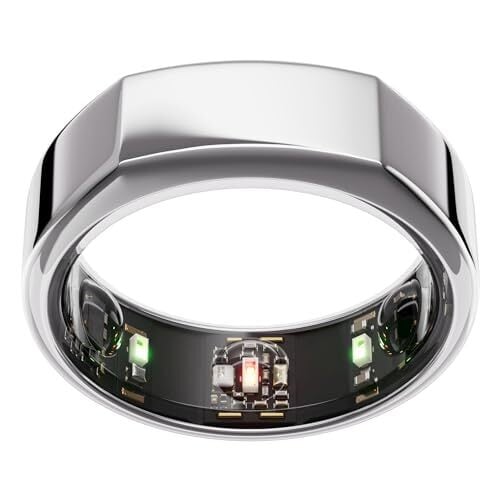
One of my biggest pet peeves about the Oura ring platform is getting some temporary relief, thanks to Amazon’s spring sale. Chargers for the gen 4 ring (the newest model) are available for $35.40 today, so you can pick up a spare for close to half the usual price.
And, yep, the usual price for an Oura charger is a whopping 59 bucks. The old gen 3 chargers don’t fit the new gen 4 rings, and the chargers are also sized: If you have a size 8 ring, you need a size 8 charger. And there aren’t third-party chargers for the gen 4 rings, so the official Oura ones are your only option. Hence my griping about the price.
But now, at $35.40? That’s still not cheap, but it’s a lot better than full price. Your ring will have come with one charger, but it’s handy to have a spare so you can keep one at your work desk and one on your nightstand, or to keep an extra in your travel drawer. The Oura ring lasts most of a week on each charge—up to eight days, according to the company, although I found I only got about five days between charges with blood oxygen sensing turned on. That also accounts for charging the ring when it falls to 20% battery, which is the app’s recommendation to be sure it won’t run out of juice while you sleep.
The fourth generation Oura ring has a good reason for not fitting the old chargers, by the way—the old rings had three sensor bumps on the inside, where the gen 4 has finally managed to fit its technology into a smooth interior that fits like a normal ring. So the ring is a different shape on the interior, and the sizing has also changed. For more on the differences between the gen 3 and gen 4 Oura rings, I have a detailed comparison here. I’ve also worn three different generations of the ring over the past four years, and I wrote a retrospective here with all my thoughts on how I’ve used my ring over the years, and where it has and hasn’t lived up to my expectations.
Shopping for tech? Lifehacker can help you make the right decision. Browse our tech reviews and head-to-head comparisons for everything from laptops and smartwatches to e-bikes and home gyms. Subscribe to our deals newsletter, Add to Cart, for the best sales sent to your inbox, or browse our best-of lists directly on Amazon, including:
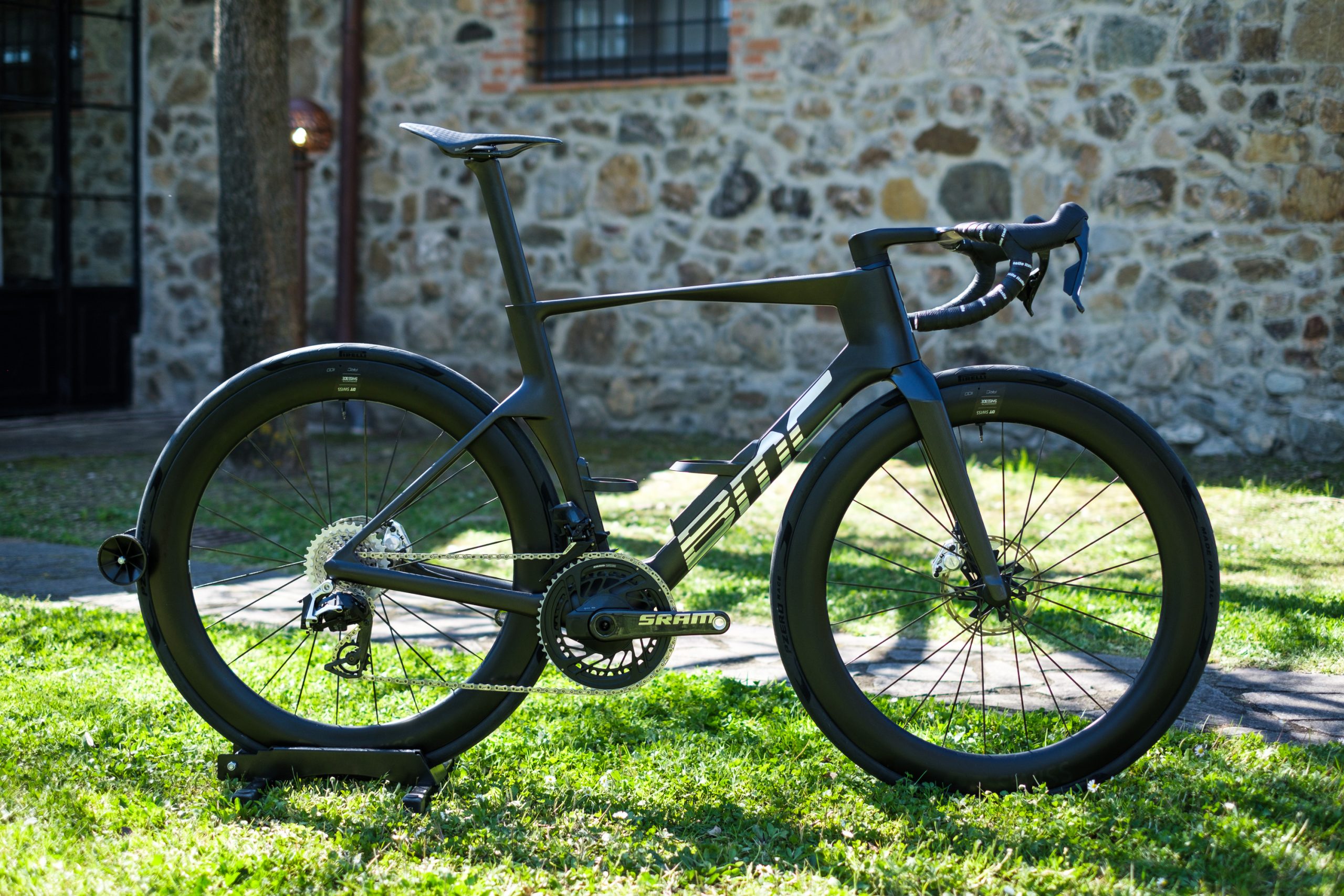
Never a brand to shy away from superlatives, BMC announced the Teammachine R Mpc. last autumn, and now we’ve finally had a chance to see what all the fuss was about.
Priced at a whopping €8,999 / $8,999 for the frameset and seatpost alone, the Teammachine R Mpc., which stands for ‘Masterpiece’, is claimed to set “a new standard in speed, precision, and performance”.
It is, BMC says, “more than just a perfect bicycle” – it’s “a work of art… brought to life by the hands of the world’s leading carbon fiber artisans” and “eager to be ridden on some of the world’s most scenic and challenging terrains.”
Heady stuff…
Last week, at Bike Connection’s spring 2025 road and gravel event (look out for a full round-up of new tech from that event coming soon, and check out our coverage from the mountain bike-focused winter event), I got a chance to get up close and personal with both the Teammachine R Mpc. and the Swiss brand’s updated gravel race bike.
Pushing the limits of carbon fibre tech
The Teammachine R Mpc. is the latest addition to BMC’s ‘artisan’ Masterpiece collection. Simon von Bromley / Our Media
At a glance, though, you could be forgiven for thinking it doesn’t look all that different from the ‘standard’ Teammachine R – a bike that was developed in partnership with Red Bull Advanced Technologies (a “high-performance vehicle engineering division” of the Red Bull Racing Formula 1 team) and costs a far more reasonable €4,999 / $4,999.
And in terms of aerodynamics, stiffness and geometry, you’d be right – in respect of those characteristics, it is the same bike.
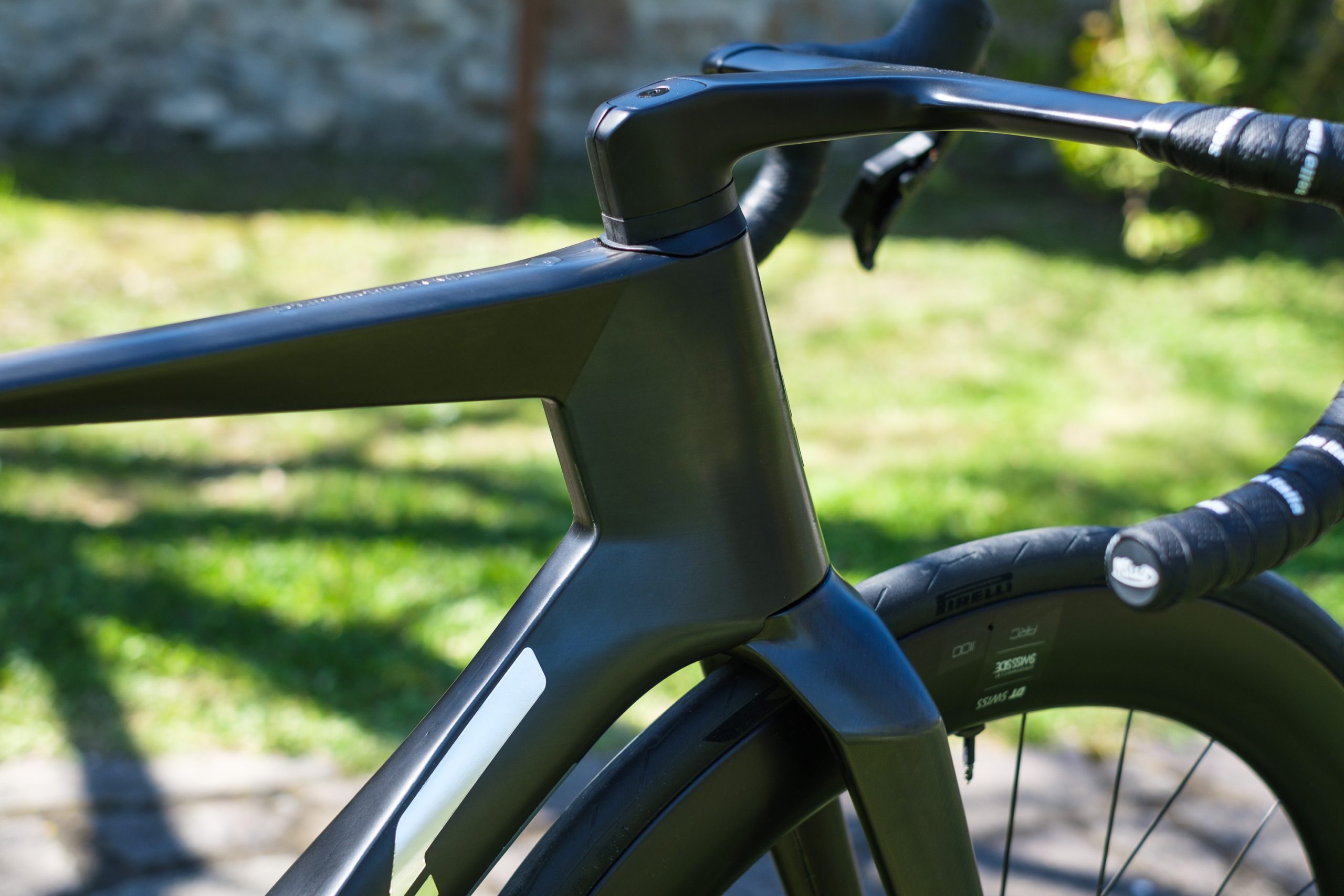
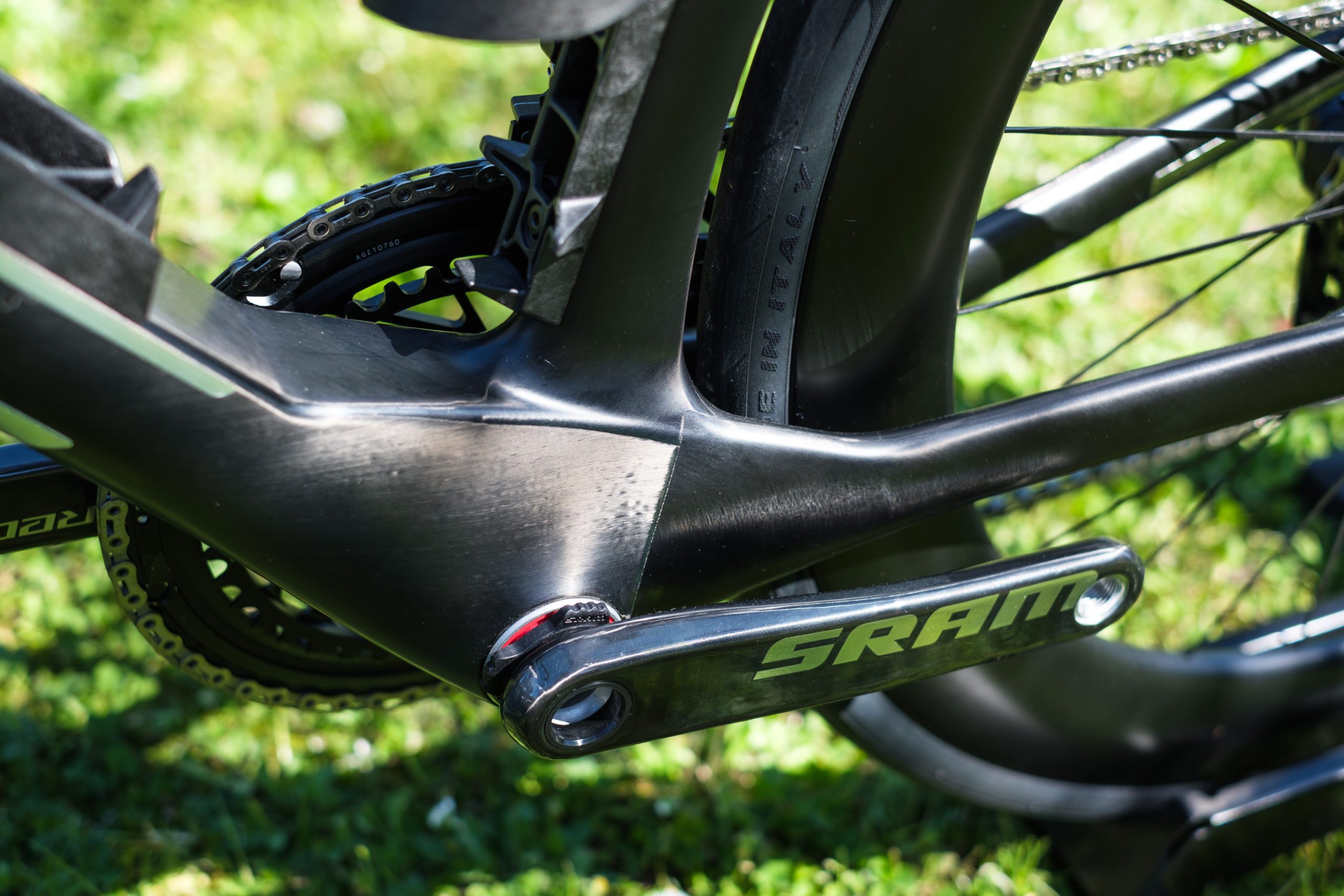
The Teammachine R Mpc. features an optimised layup and raw carbon finish. Simon von Bromley / Our Media
BMC, though, says the Teammachine R Mpc. pushes the limits of carbon fibre bike construction, with no overlapping fibres and a “perfect finish out of the mould”.
The latter also means there’s no clear coat or paint needed here, allowing the carbon layup to be shown off proudly.
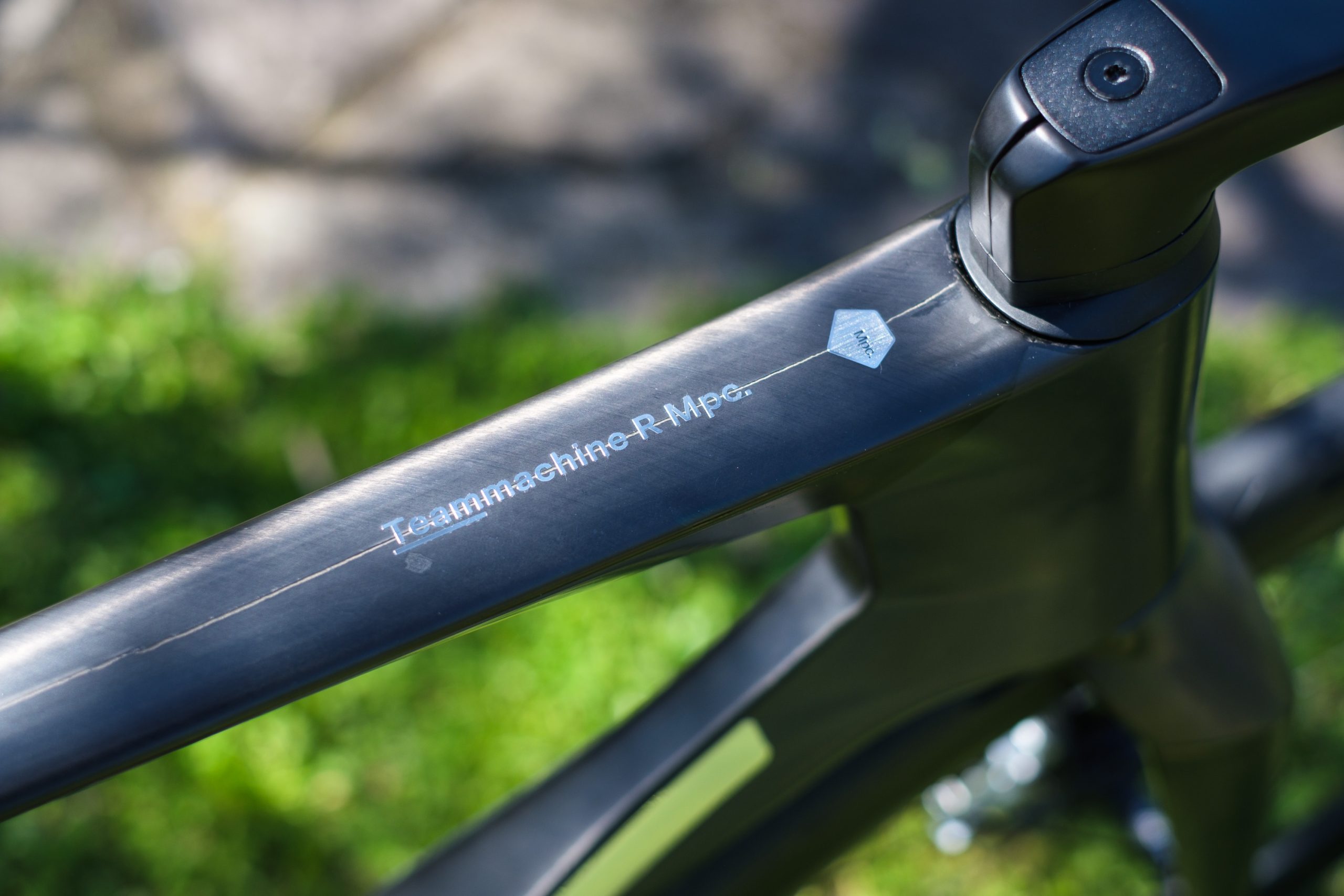
The branding is extremely subtle. Simon von Bromley / Our Media
The result, the brand claims, is a weight reduction of 130g on the Teammachine R 01 frameset (which carries a claimed weight of 1.8kg for the frame, fork, seatpost, aero bottle cages and hardware).
In fairness to BMC, the finish of the frameset is – when you’re up close and the light catches it just so – stunning.
It’s understated in a way custom paintjobs often aren’t, but all the more elegant for it.
The precision of the carbon layup is revealed when light hits the frame in the right way. Simon von Bromley / Our Media
The man on the Clapham omnibus might not recognise it as anything special, but anyone’s who’s into carbon bikes will.
And, in case the frameset alone didn’t make its owners feel special enough, BMC says each one will be “identified by a unique number plate to emphasize its exclusivity”.
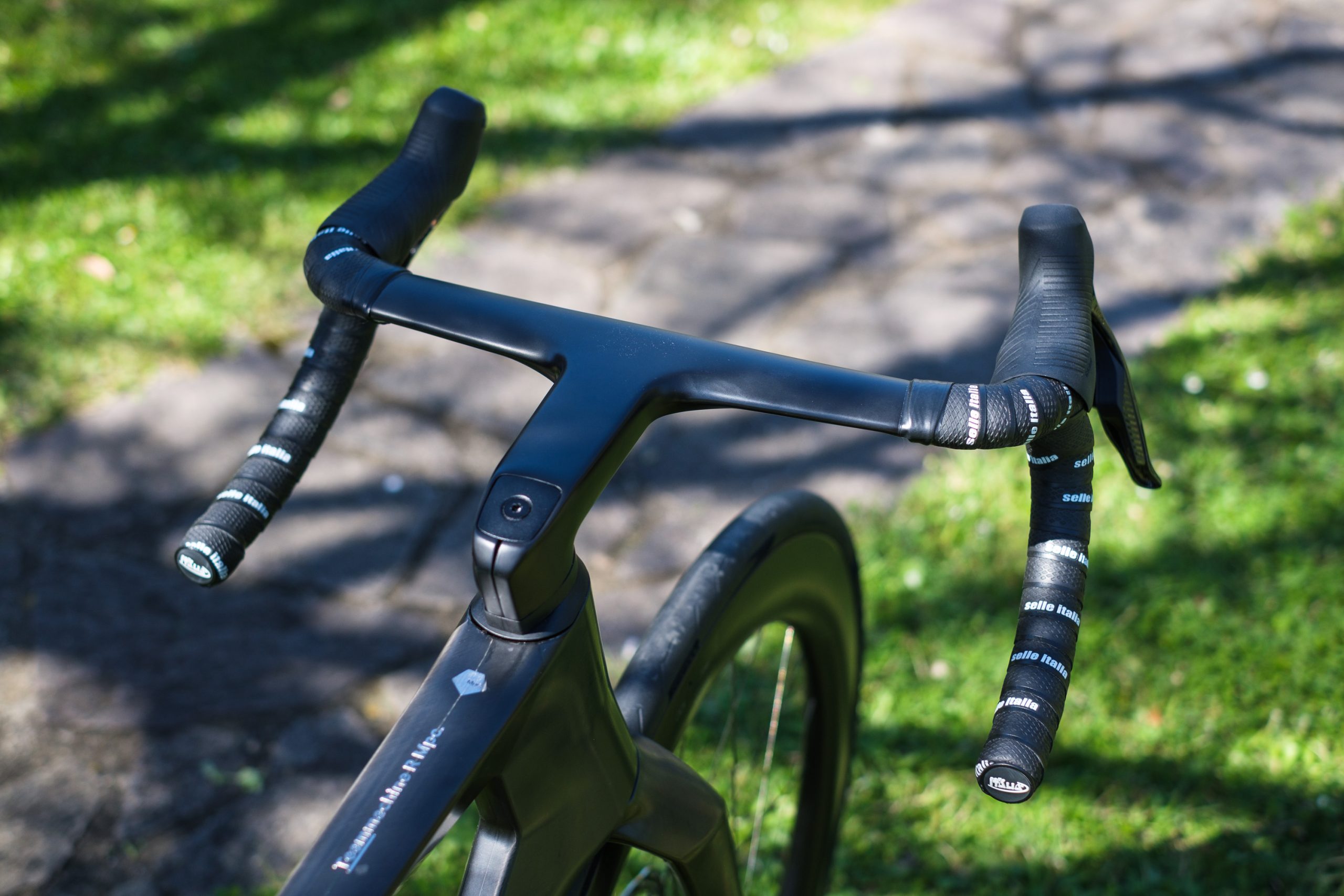
Because the Teammachine R Mpc. is only available as a frameset, owners will be able to spec the cockpit of their choice (from BMC’s range). Simon von Bromley / Our Media
Due to its handmade construction – BMC says it partnered with a German brand to apply carbon layup methods typically reserved for one-offs to a production bike – only 200 framesets will ever be made.
The brand says it has already supplied two framesets to Tudor Pro Cycling Team riders Julian Alaphilippe and Marc Hirschi, leaving only 198 framesets for the rest of us.
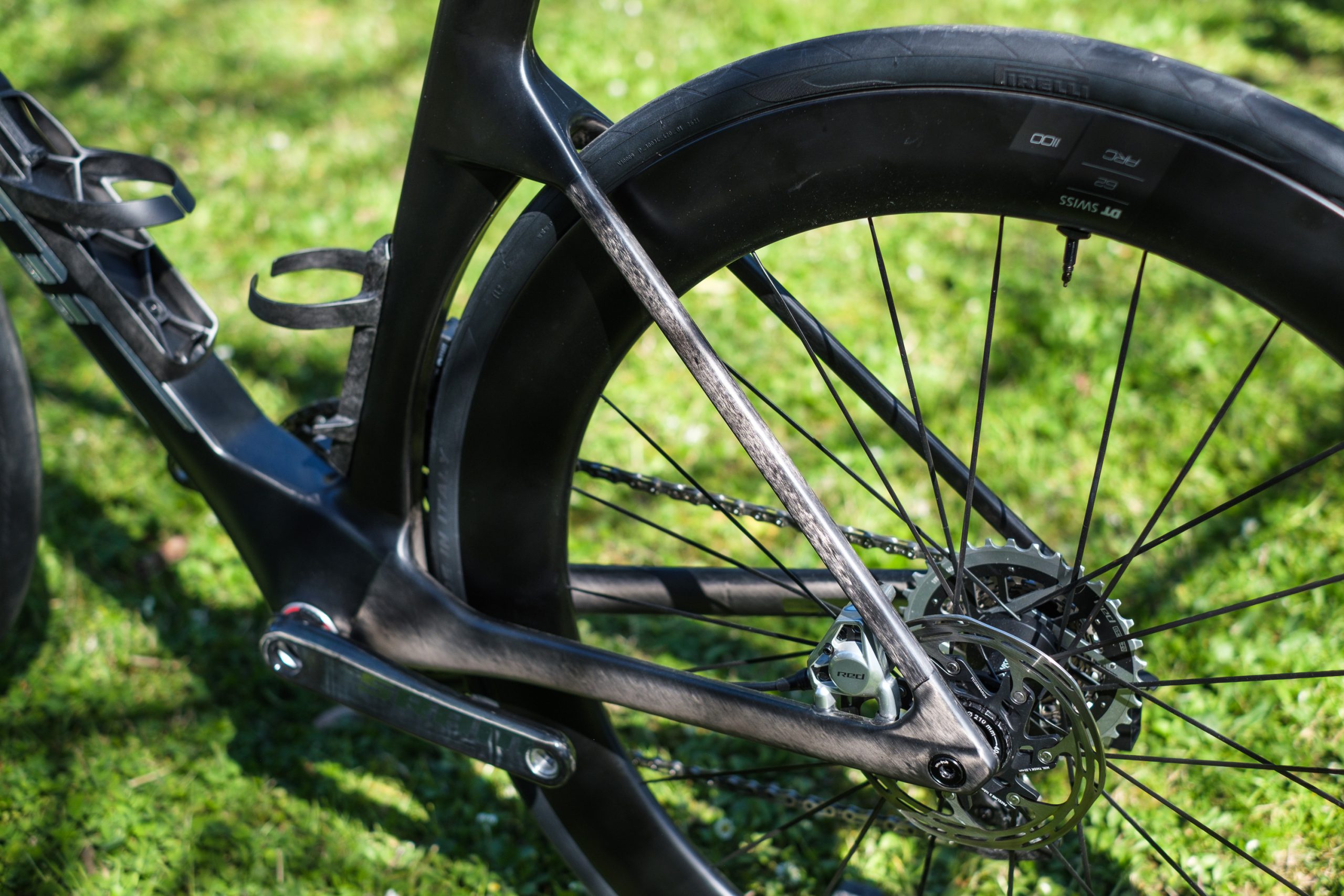
The slender rear end of the bike maintains the same comfort levels as ‘standard’ Teammachine R bikes, according to BMC. Simon von Bromley / Our Media
If you’d like to join the exclusive Teammachine R Mpc. owners club, BMC says the frameset can be pre-ordered now, in six sizes from 47 to 61cm.
Framesets should be dispatched within 60 days, with BMC saying lead times are longer than normal because its Masterpiece collection bikes are essentially made to order.
From this point, you’ll be free to spec the frameset according to your preferences (and remaining budget).
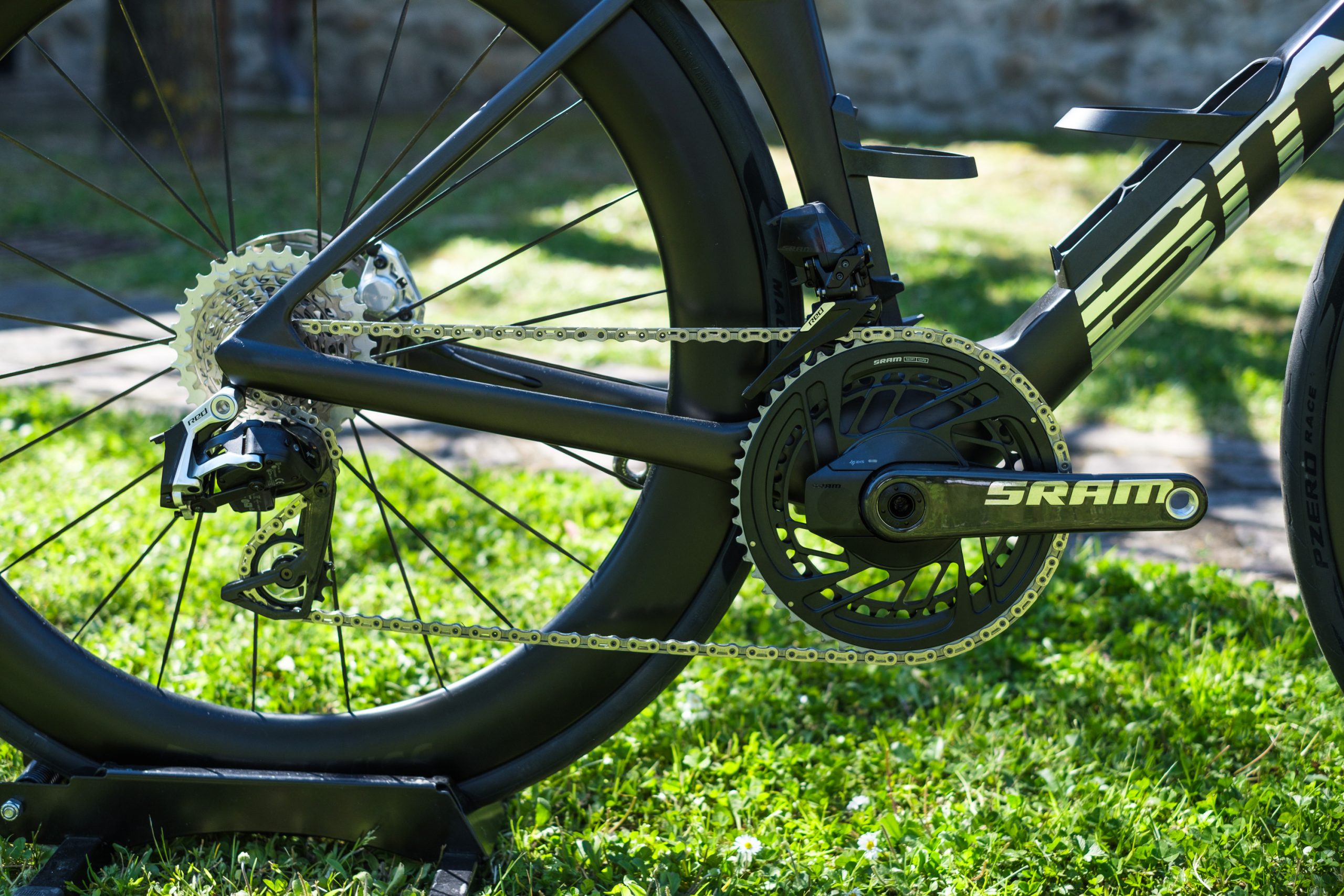
The bike we had a close look at was specced with SRAM Red AXS. Simon von Bromley / Our Media
This Teammachine R Mpc. was set up like a Tudor Pro Cycling Team bike, with SRAM’s latest Red AXS groupset.
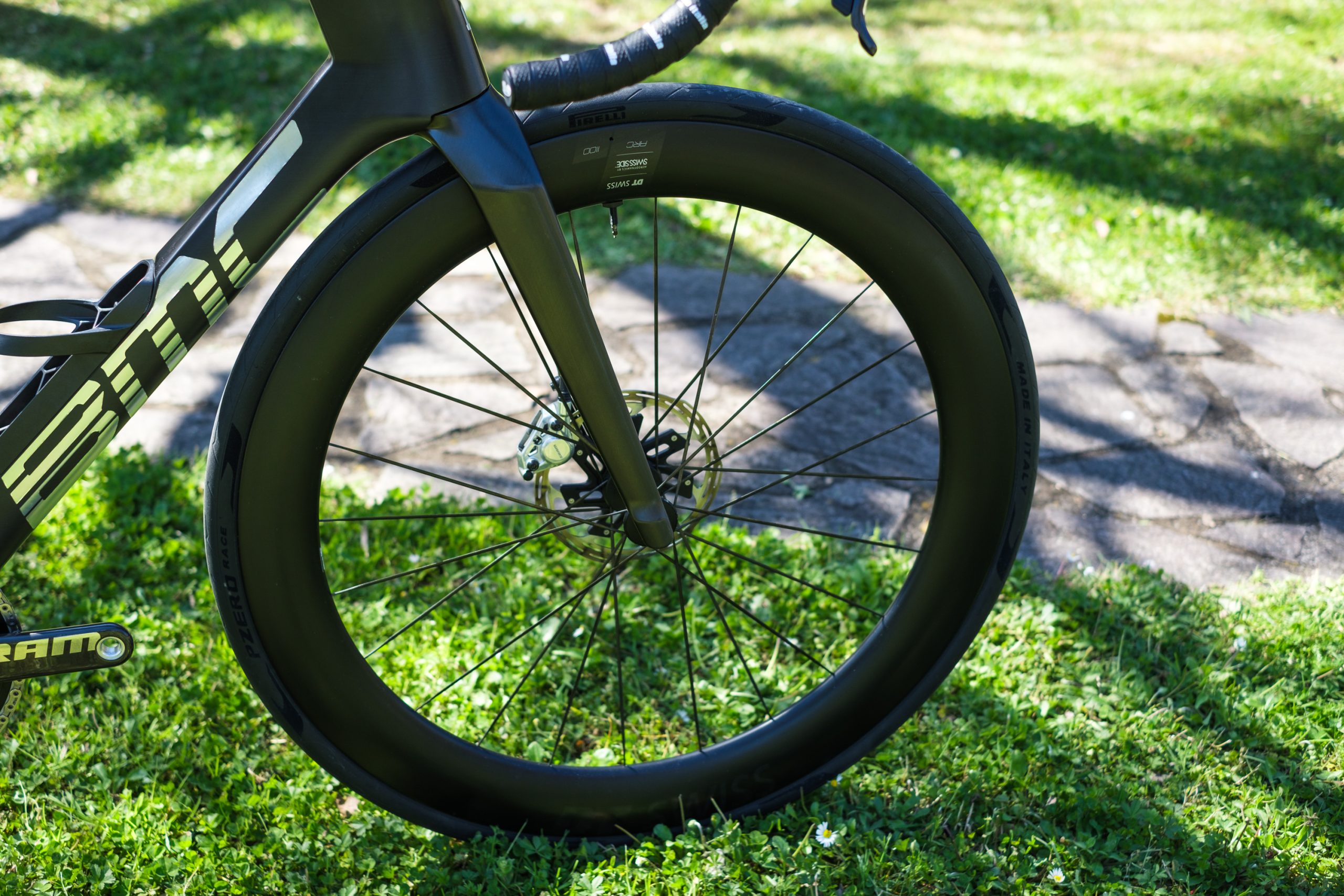
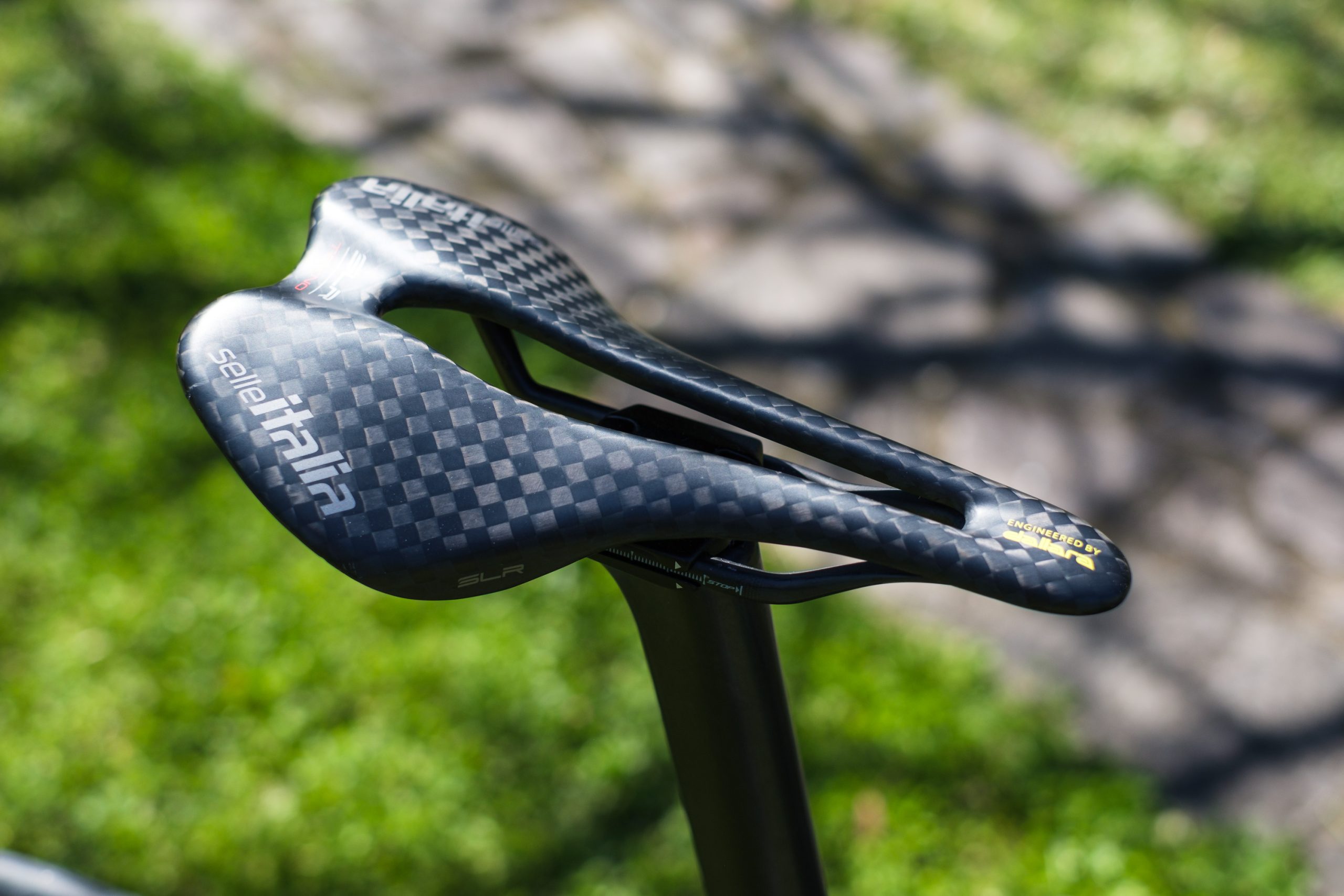
It features DT Swiss ARC 1100 carbon wheels. Simon von Bromley / Our Media A raw carbon bike wouldn’t be complete without a raw carbon saddle – although BMC’s representatives at Bike Connection lamented the yellow and red Selle Italia logos didn’t fit perfectly with the bike’s monotone aesthetic. Simon von Bromley / Our Media
Updated BMC Kaius with UDH and carbon-spoked gravel wheels
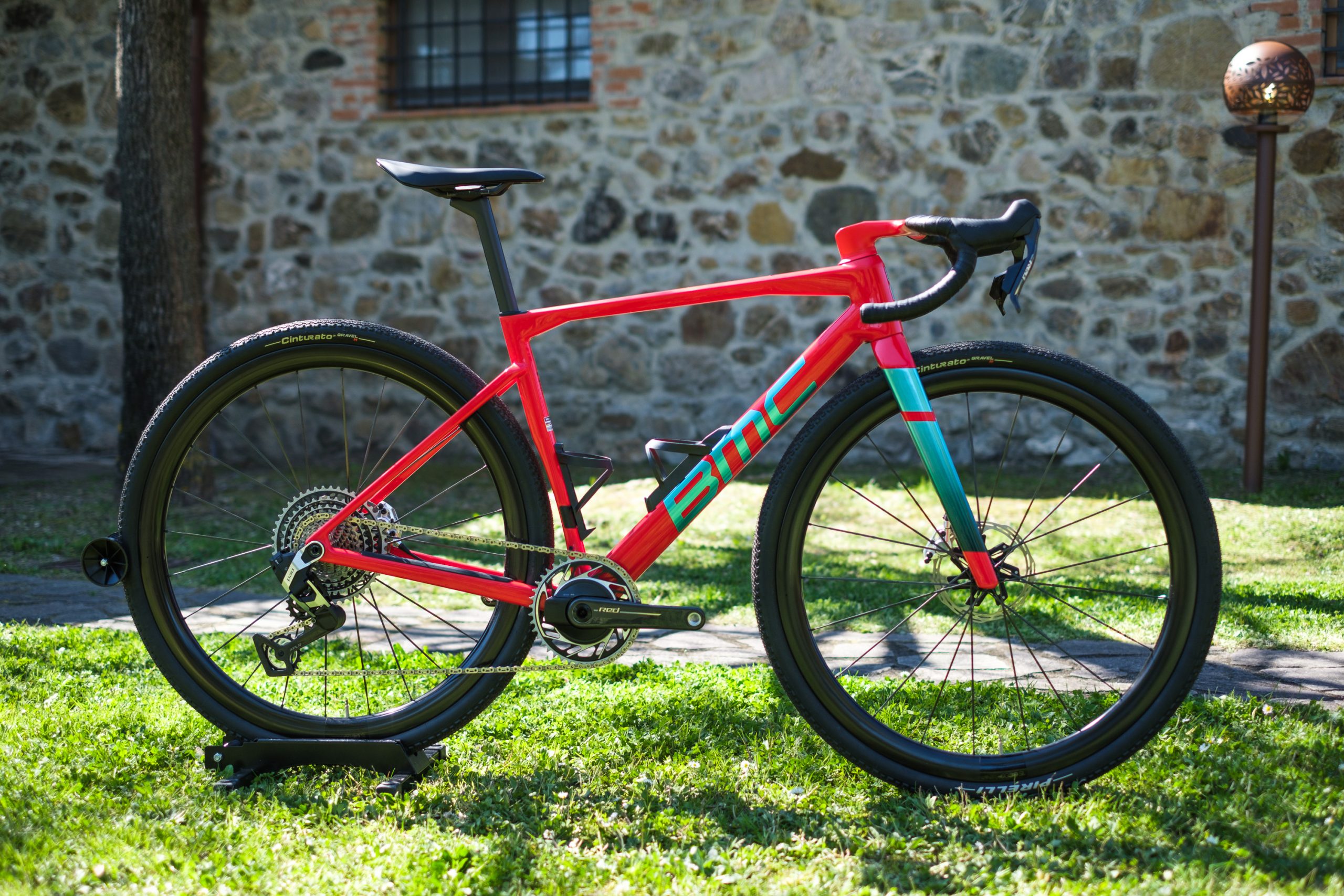
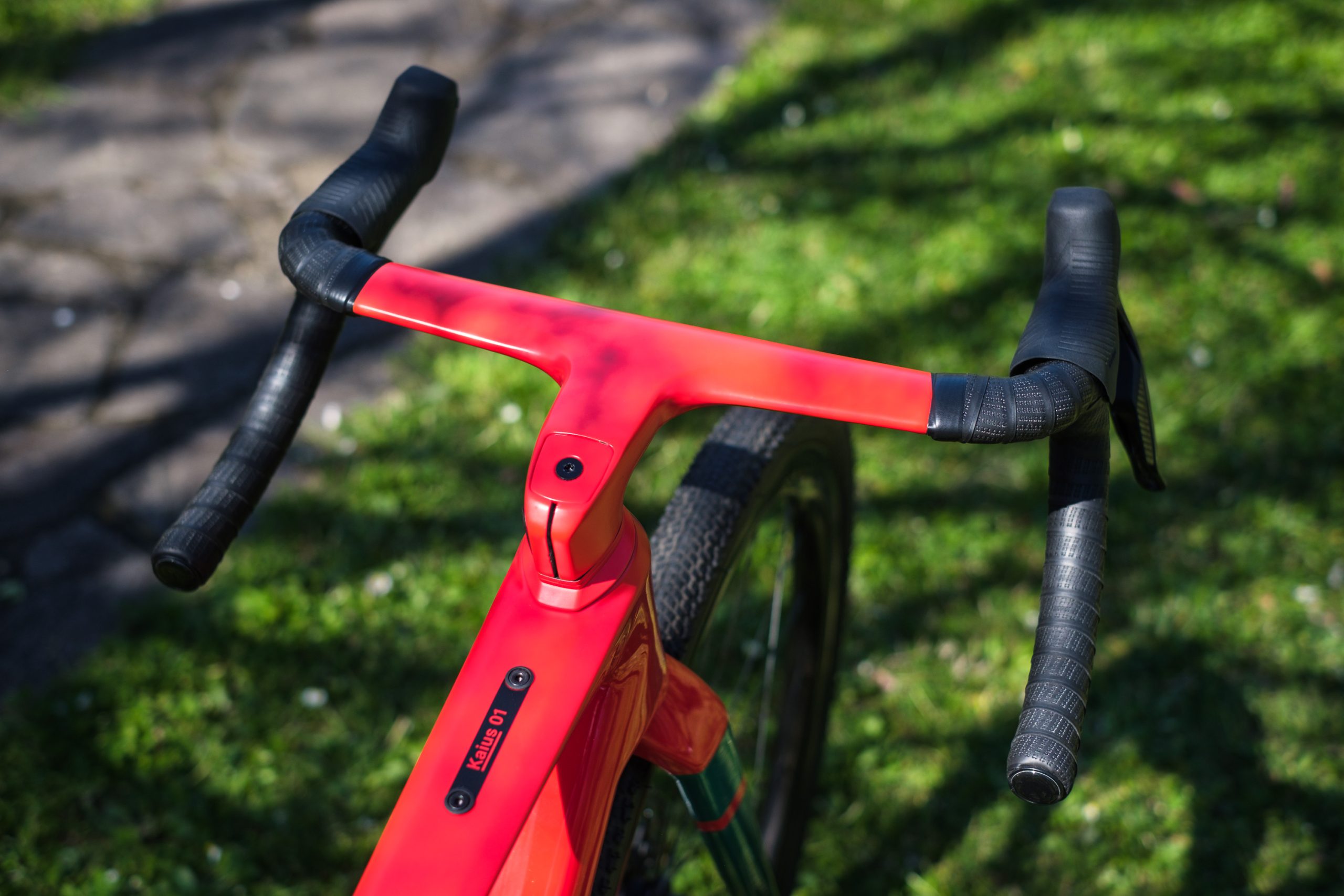
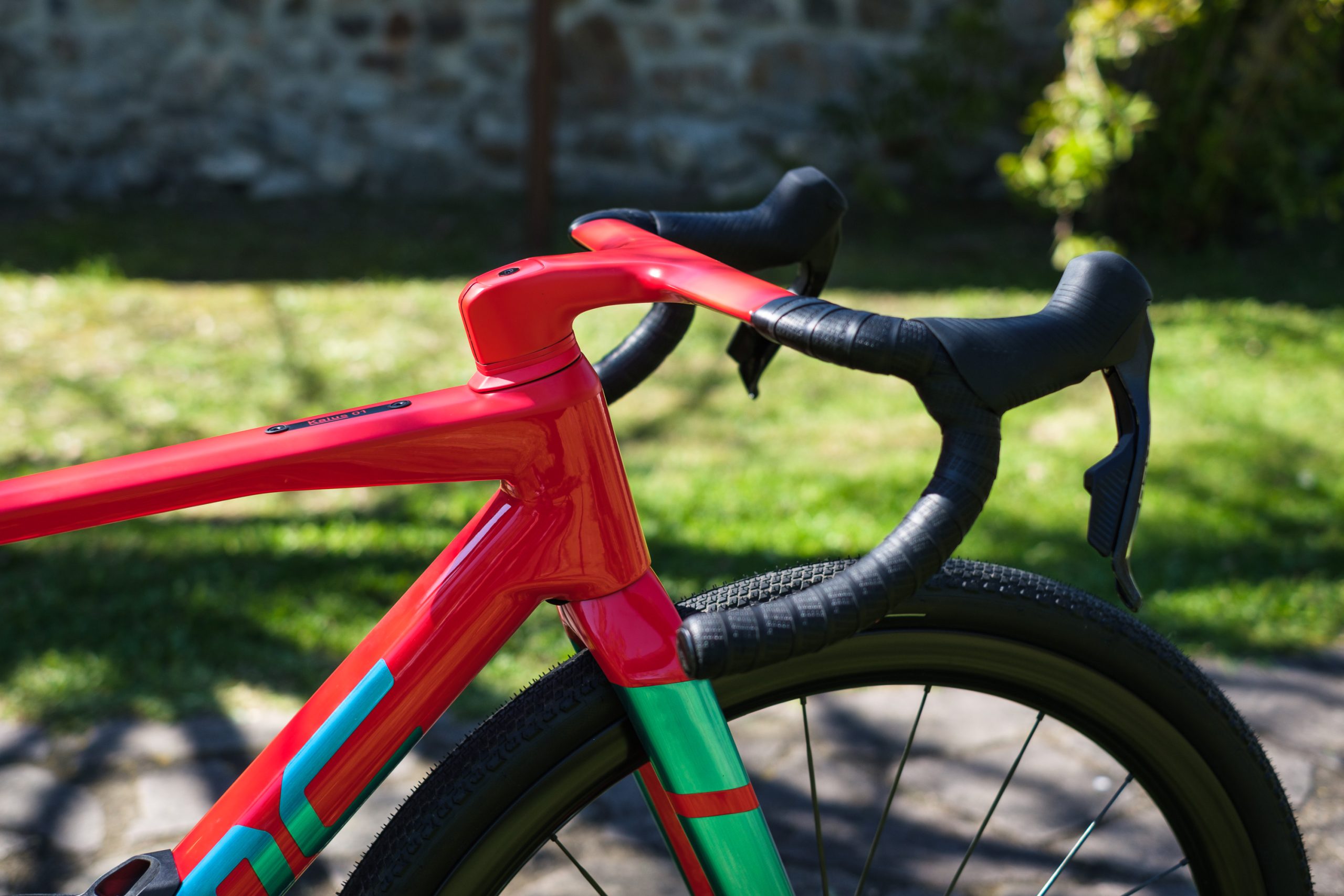
BMC has updated its Kaius 01 gravel race bike for 2025. Simon von Bromley / Our Media
Like the Teammachine R, the Kaius isn’t technically a ‘new’ bike, but BMC has treated it to a running update in recent months.
The overall design and geometry of the latest Kaius 01 ONE is almost identical to the gravel race bike launched in 2022 (and BMC’s fondness for slightly confusing naming conventions continues unabated). However, this year’s model sees the adoption of SRAM’s Universal Derailleur Hanger standard.
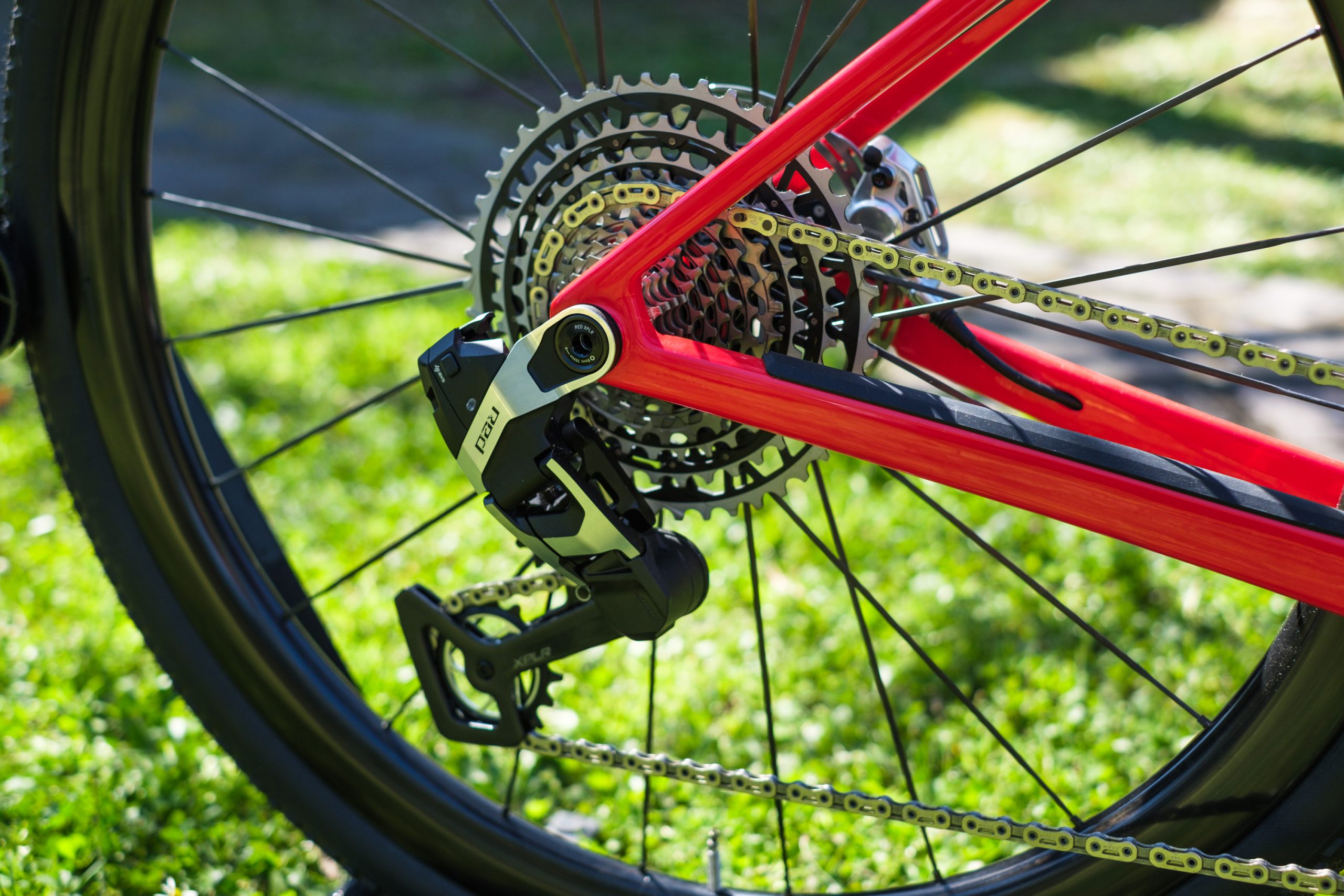
The headline change is the adoption of SRAM’s UDH standard at the rear of the frame. Simon von Bromley / Our Media
This means the bike is compatible with SRAM’s latest 13-speed 1x gravel groupset, Red XPLR AXS (and potentially any future lower-tier versions, given it looks as if we might soon get a new Force AXS groupset too).
Aptly, the bike we saw at Bike Connection was set up in full race trim with Red XPLR AXS and its integrated power meter, plus the brand’s aggressively narrow ICS Carbon Aero cockpit, which measures just 360mm centre-to-centre at the hoods.
The narrow ICS aerocockpit retains its place on the spec. Simon von Bromley / Our Media
Like many gravel bike handlebars, the drops flared out to a more standard 420mm, but it’s fair to say not everyone is convinced such a narrow bar belongs on a bike designed primarily for riding off-road.
Our tester, Warren Rossiter, wrote: “When things were more technical and tricky, I felt the road-derived geometry and the narrow bars hampered me at every stage” in his review of the BMC Kaius 01 ONE back in 2023, for example.
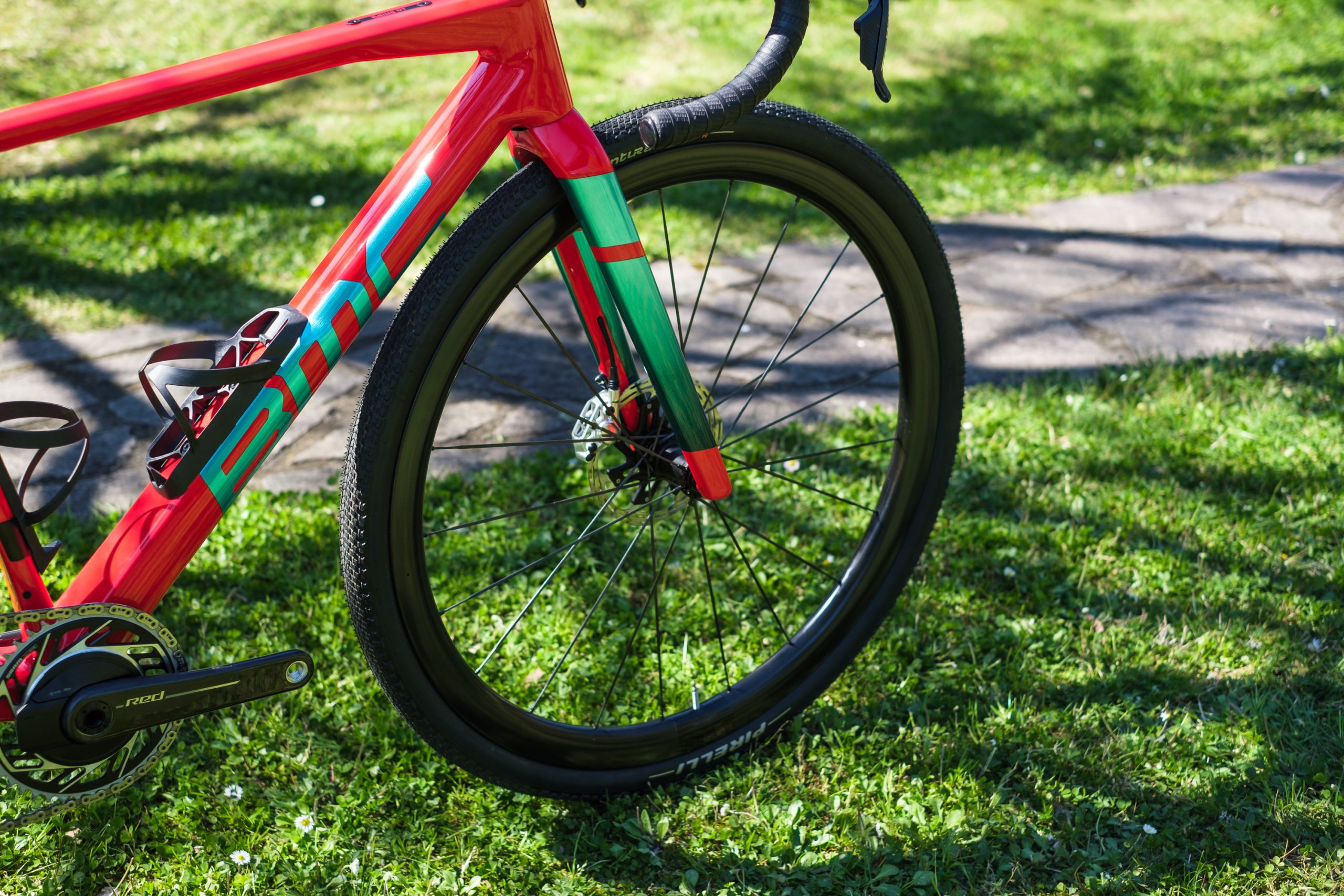
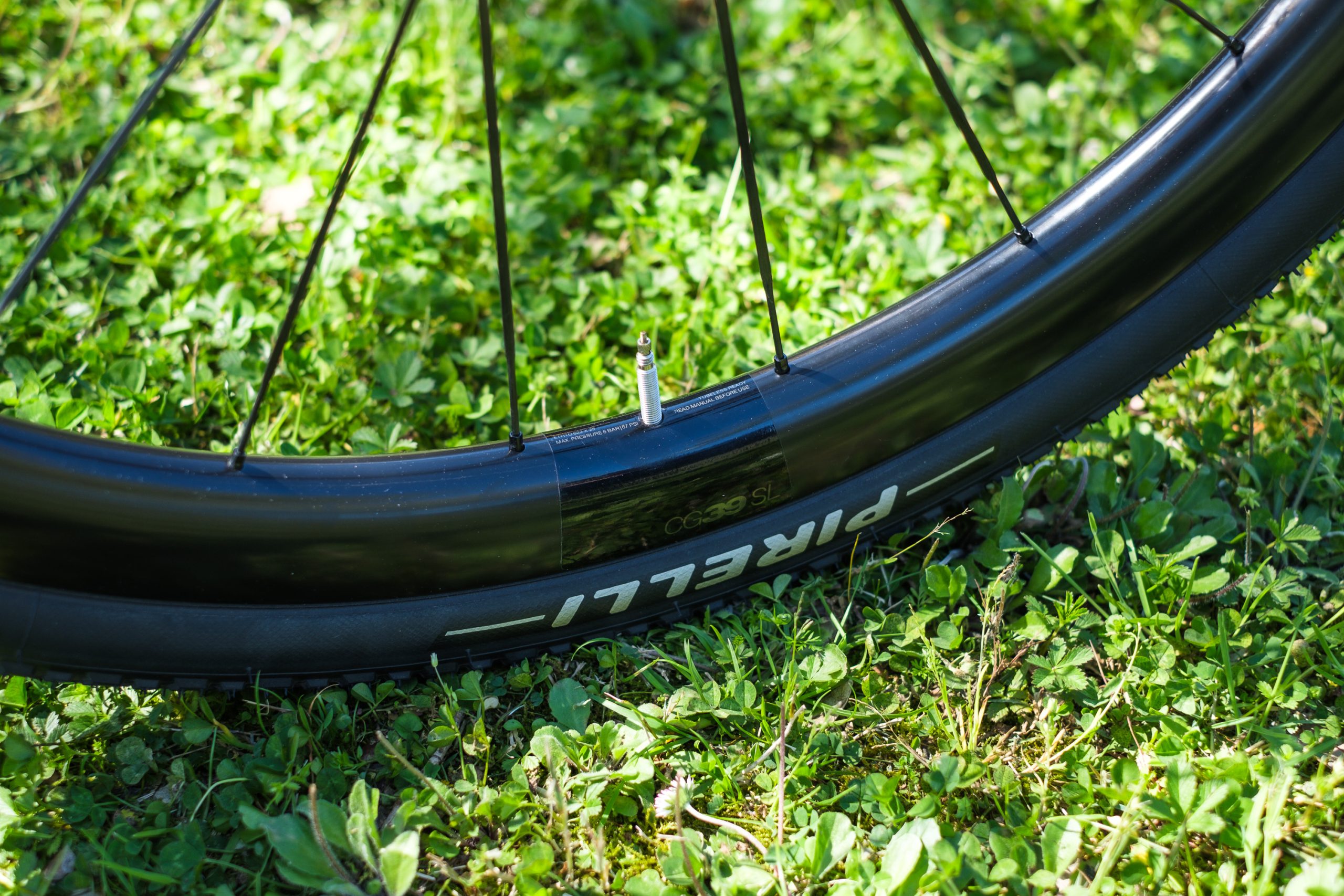
Did you know BMC made carbon gravel wheels? We didn’t… Simon von Bromley / Our Media
The bike was also specced with BMC’s own CG 39 SL Carbon gravel wheels, which we’ll admit to not realising existed.
Compared to the hot red frameset and matching handlebar, the CG 39 SL Carbon wheels feature a far more subdued design, with subtle logos and branding.
BMC’s CG 39 SL Carbon wheels have a subtle appearance that compliments the rowdy frameset effectively. Simon von Bromley / Our Media
The headline specs are impressive on paper, though, with 39mm-deep rims and a modern 25mm internal width.
Built with bladed carbon spokes, BMC claims the wheelset weighs only 1,380g, contributing to the Kaius 01 ONE’s low overall weight of 7.6kg in a size 54.
If you’re interested in getting your hands on this red racer, the Kaius 01 ONE costs €11,999 / $11,999 – but you do at least get a complete bike for your money in this case.
Overall weight is a claimed 7.6kg (size 54). Simon von Bromley / Our Media
If it weren’t for the chunky tyres, you could easily mistake the Kaius for a road racing bike.
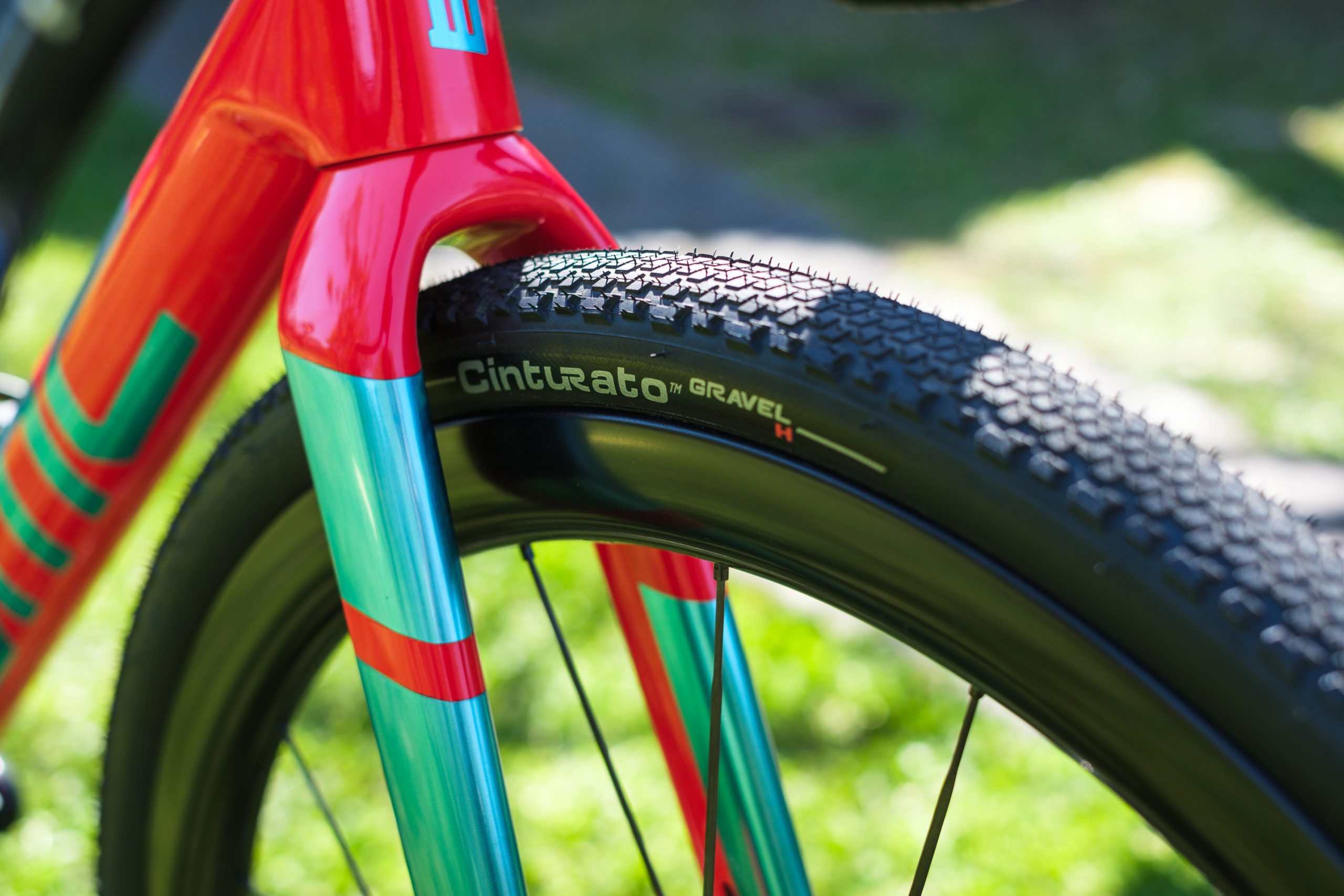
Pirelli supplies its Cinturato Gravel H tyres. Simon von Bromley / Our Media
BMC specs its flagship gravel race bike with Pirelli’s Cinturato Gravel H tyres, which are designed for fast rolling on hardpack gravel.
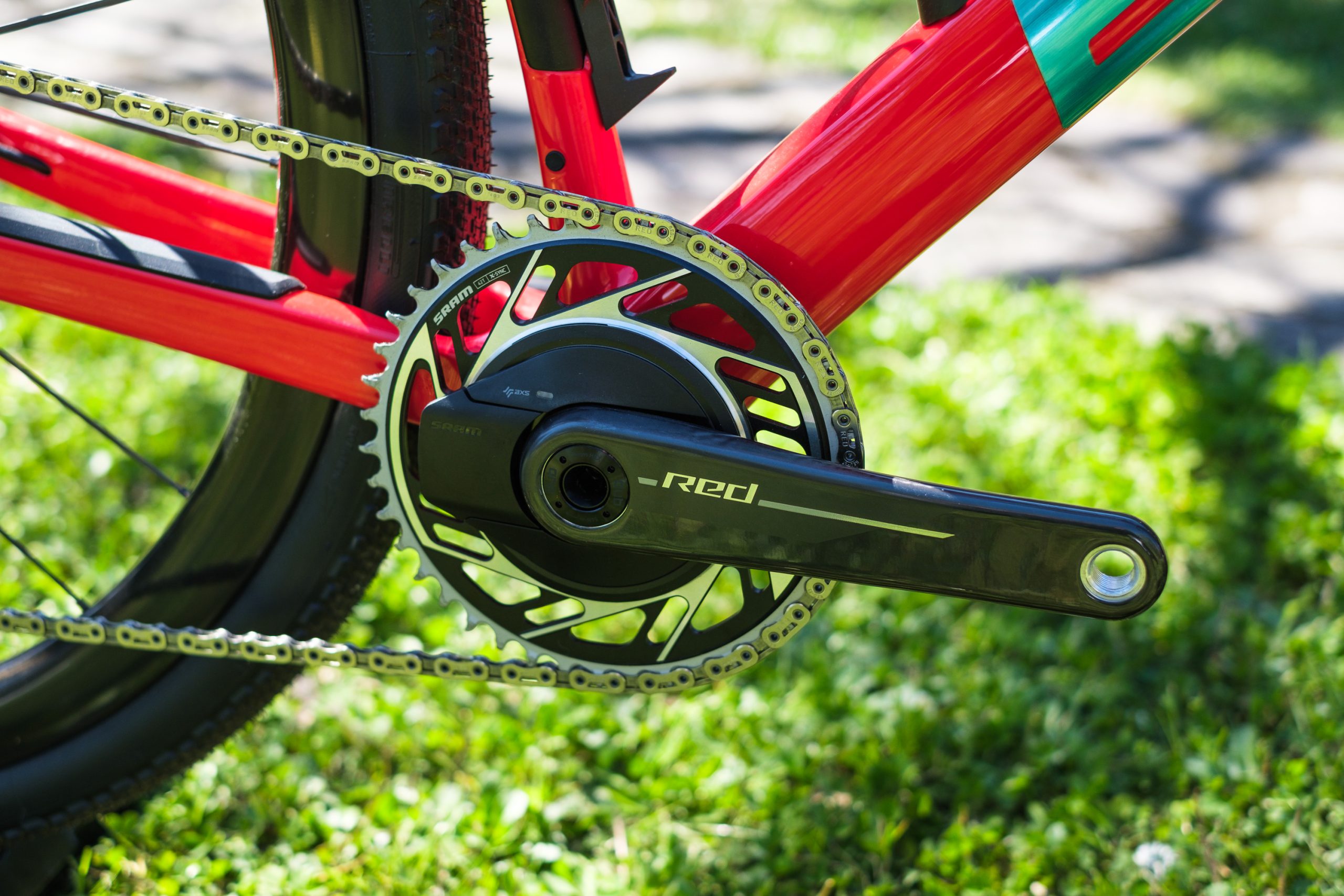
The new Kaius also sports SRAM’s Red AXS power meter. Simon von Bromley / Our Media
For almost €12,000, you do at least get a truly high-end build, plus the latest SRAM Red AXS power meter – which enables you to swap chainrings using the brand’s Thread Mount standard.
While computers are great and all, there is something so satisfying about physically writing something down. Digital notebooks kind of provide the best of both worlds, allowing you to handwrite as much as you want on just one device.
One of the newest options on the market is Amazon’s 2024 Kindle Scribe with a redesigned display and uniform borders. Right now, the 16GB version is on sale for $325, down from $399 — a 19 percent discount. Our pick for best e-reader E Ink tablet is marked down as part of Amazon’s Spring Sale, a site-wide event.
The new Amazon Kindle Scribe received an 86 in our review thanks to its nice design, AI enhancements and excellent reading and writing experience. It also comes with a Premium Pen that has a rubberized top to symbolize an eraser. Our biggest quip was its cost, but that’s somewhat less concerning thanks to this discount.
This article originally appeared on Engadget at https://www.engadget.com/deals/the-second-gen-kindle-scribe-drops-to-a-record-low-price-for-the-amazon-spring-sale-153010005.html?src=rss
Hurricane Helene, which slammed into Florida’s Big Bend in late September, caused the deaths of nearly 250 people—a number only dwarfed by the infamous 2005 storm.
We may earn a commission from links on this page. Deal pricing and availability subject to change after time of publication.
Act fast if you want to pick up an Oura ring on a steep discount—some of them are available today for just $199 in Amazon’s spring sale. I’m seeing this deal on gen 3 rings in the Heritage shape, and silver or black colors.
This ring is a third-generation, or gen 3, ring. It’s not Oura’s newest, but it is still a solid pick with all the same core features as the newer gen 4. I have a comparison here of the gen 3 and gen 4 rings, if you’d like to know what you’re missing. The gen 4 gathers the same data but is sometimes more accurate, comes in a wider range of sizes, and has a smooth interior rather than the sensor bumps of the gen 3. Personally, I’ve worn both, but as I’m typing this I have a gen 3 ring on my finger—it’s absolutely fine. (You can read more about my long-term experiences with the Oura rings here.)
The $199 rings are the flat-topped Heritage style, in silver or black. (Other colors cost more.) As of the time I’m writing this, the deal is available for all sizes, from 6 to 13. If you want the smooth Horizon model, those are available for $249, which is also a good price. Ever since the gen 4 rings launched in late 2024, the gen 3 rings have been at least $50 off their original price (which was $299 and up, with Heritage being the cheapest). Sometimes they have been $100 off. This price of $199 is the lowest I’ve ever seen for any Oura ring—it’s $150 off the ring’s original price for that style and color.
The Oura ring still requires a $5.99/month subscription to use its best features, so make sure you figure that into your budget. Also, note that you’ll need to know your ring size to order, and that the gen 3 rings are not sized the same as the gen 4. Your best bet is to find a gen 3 sizing kit to try on in-person before you order.
Shopping for tech? Lifehacker can help you make the right decision. Browse our tech reviews and head-to-head comparisons for everything from laptops and smartwatches to e-bikes and home gyms. Subscribe to our deals newsletter, Add to Cart, for the best sales sent to your inbox, or browse our best-of lists directly on Amazon, including:
The once-iconic music-sharing platform Napster just sold for $207 million, according to reporting by CNBC. A company called Infinite Reality ponied up the cash. What could Napster offer in 2025 to warrant such a price tag? Infinite Reality CEO John Acunto says it’ll be used for marketing in the metaverse. In other words, a platform from 1999 will be used as part of a technology that seemingly peaked in 2021. That sounds about right.
More specifically, the company plans on creating virtual 3D spaces for music fans to attend concerts and listening parties, in addition to creating a sales platform for musicians and labels to sell merch. This isn’t the worst idea in the world, as attending these kinds of shared events is probably my favorite aspect of VR.
“The most legendary collab?! Infinite Reality has acquired iconic online music brand @Napster.
With this acquisition, we’re expanding and reimagining Napster, empowering artists with new audience monetization and engagement capabilities, underpinned by iR’s #immersive… pic.twitter.com/L4Fig7QFct
“When we think about clients who have audiences — influencers, creators — I think it’s very important that they have a connected space that’s around music and musical communities,” Acunto said. “We just don’t see anybody in the streaming space creating spaces for music.”
Napster holds numerous licenses to stream millions of songs, which is what made it an attractive prospect to Infinite Reality. The company says its version of Napster will “disrupt legally.”
Current Napster CEO Jon Vlassopulos says that the purchase will allow artists to create “crazy environments that are really only limited by their imaginations.” As an example, he described a reggae artist who might enjoy a virtual beach environment. Acunto adds that it’ll be like “Clubhouse times a trillion.” He’s referring to the virtual events app that became popular during COVID, but eventually petered out.
Infinite Reality has been on a buying spree the last couple of years. In addition to Napster, it purchased the Drone Racing League, the metaverse marketing platform Landvault and the VR shopping platform Obsess.
As for Napster, it started in 1999 and took the world by storm, creating an easy-peasy way to steal music. It only took a couple of years for mounting legal battles to catch up to the platform and it declared bankruptcy in 2001.
However, that was just the beginning. The software company Roxio purchased the platform in 2002 and relaunched it as a legitimate e-commerce venture that sold digital music files. In 2008, Best Buy came calling and scooped it up. The retail giant only held on to Napster for a few years before selling to Rhapsody in 2011.
Rhapsody tried to make Napster a household name in Europe for the next decade before a consortium of blockchain companies, led by Hivemind and Algorand, bought it in 2022. These companies had plans to do some kind of NFT-based nonsense, because “music x web3 is one of the most exciting spaces.” That didn’t work and, well, here we are. Here’s to another 25 years of being passed around like a hot potato.
This article originally appeared on Engadget at https://www.engadget.com/entertainment/music/napster-just-sold-for-207-million-154432315.html?src=rss