
AI-focused Linux distributions will introduce advanced features to support developers, researchers, and enterprises deploying machine learning workloads.
Category Archives: Unfiltered RSS
Nova DRM Skeleton Patches Further Flesh Out This Open-Source NVIDIA Kernel Driver
Set to be merged for the Linux 6.15 kernel is the very initial NOVA driver core code that will be incrementally built up over time in succeeding kernel versions. For Linux 6.15, this open-source NVIDIA kernel driver isn’t of any use for end-users as it’s just the very preliminary pieces to begin crafting the foundation for the driver that is leveraging the NVIDIA GSP found with Turing and newer hardware. In preparation for future kernel cycles, the NOVA skeleton driver pieces were posted for review yesterday to begin fleshing out more of the driver’s design…
Akamai Now Providing The Hosting Infrastructure For Kernel.org
It’s not only FreeDesktop.org that has been transitioning to new infrastructure this month but separately, Kernel.org is now receiving hosting and CDN needs provided by Akamai…
OpenAI Says ‘Our GPUs Are Melting’ As It Limits ChatGPT Image Generation Requests
Following OpenAI’s viral Studio Ghibli moment, CEO Sam Altman says it has temporarily limited image generation in ChatGPT due to the overwhelming demand on its GPU infrastructure. “It’s super fun seeing people love images in ChatGPT, but our GPUs are melting,” he posted on X today. The Verge reports: The demand crunch already caused the artificial intelligence company to push back availability of the built-in image generator for users on ChatGPT’s free tier. But apparently that measure alone wasn’t enough to ease the stress on OpenAI’s infrastructure. (Altman said free users will “soon” be able to generate up to three images per day.)


Read more of this story at Slashdot.
US Robotics Companies Push For National Strategy To Compete With China
U.S. robotics companies, including Tesla and Boston Dynamics, are urging lawmakers to establish a national robotics strategy to keep pace with China’s aggressive investment in AI-driven robotics. The Associated Press reports: Jeff Cardenas, co-founder and CEO of humanoid startup Apptronik, of Austin, Texas, pointed out to lawmakers that it was American carmaker General Motors that deployed the first industrial robot at a New Jersey assembly plant in 1961. But the U.S. then ceded its early lead to Japan, which remains a powerhouse of industrial robotics, along with Europe. The next robotics race will be powered by artificial intelligence and will be “anybody’s to win,” Cardenas said in an interview after the closed-door meeting. “I think the U.S. has a great chance of winning. We’re leading in AI, and I think we’re building some of the best robots in the world. But we need a national strategy if we’re going to continue to build and stay ahead.”
The Association for Advancing Automation said a national strategy would help U.S. companies scale production and drive the adoption of robots as the “physical manifestation” of AI. The group made it clear that China and several other countries already have a plan in place. Without that leadership, “the U.S. will not only lose the robotics race but also the AI race,” the association said in a statement. The group also suggested tax incentives to help drive adoption, along with federally-funded training programs and funding for both academic research and commercial innovation. A new federal robotics office, the association argued, is necessary partly because of “the increasing global competition in the space” as well as the “growing sophistication” of the technology.


Read more of this story at Slashdot.
LibreOffice 25.2.2 Office Suite Is Now Available for Download with 83 Bug Fixes
The Document Foundation announced today the general availability of LibreOffice 25.2.2 as the second maintenance update to the latest LibreOffice 25.2 office suite series with various bug fixes.
H&M To Use Digital Clones of Models In Ads and Social Media
An anonymous reader quotes a report from the BBC: Fashion retailer H&M is to use artificial intelligence (AI) to create digital “twins” of 30 models. It says it will use the AI doppelgangers in some social media posts and marketing in the place of humans, if given permission by models. “We are curious to explore how to showcase our fashion in new creative ways — and embrace the benefits of new technology — while staying true to our commitment to personal style,” said its chief creative officer Jorgen Andersson in a statement.
The initiative was first reported by industry publication Business of Fashion. H&M told the outlet that models would retain rights over their digital replicas and their use by the company and other brands for purposes such as marketing. Its images are likely to be initially used in social media posts, with watermarks that make their AI use clear, it added. H&M also said models would be compensated for use of their digital twins in a similar way to current arrangements — which sees them paid for use of their images based on rates agreed by their agent.


Read more of this story at Slashdot.
LILYGO T-Deck Pro Offers E-Paper Display with Configurable 4G and Voice Options
LILYGO has introduced the T-Deck Pro, an open-source development board with a built-in keyboard and a 3.1-inch e-paper touchscreen. Combining sensor integration with touchscreen functionality, it can be applied to various projects in areas like IoT and portable devices. The board features the ESP32-S3FN16R8 dual-core LX7 microprocessor, similar to the T-Deck Plus released in December. […]
Google Maps Can Soon Scan Your Screenshots To Plan Your Vacation
Google is rolling out new AI-powered features across Maps, Search, and Hotels to simplify travel planning, including a screenshot-detection tool in Maps that identifies and saves locations mentioned in image text. The Verge reports: Once the new screenshot list is enabled in Maps, the Gemini-powered feature will detect places that are mentioned in text within screenshots on the device, show users the locations on the map, and allow them to review and save locations to a sharable list. The screenshot list feature will start rolling out in English this week to iOS users in the US, with Android support “coming soon.”
AI Overviews for Google Search are also being updated to expand travel planning tools, with itinerary-building features rolling out in English to mobile and desktop devices in the US this week that can create trip ideas for “distinct regions or entire countries.” Users can use terms like “create a vacation itinerary for Greece that focuses on history” to explore reviews and photos from other users alongside a map of location recommendations, which can be saved to Google Maps or exported to Docs or Gmail.


Read more of this story at Slashdot.
OpenAI’s Top Bug Bounty Skyrockets To $100K For Security Vulnerabilities

If you are a skilled cybersecurity expert, able to discover security threats and software vulnerabilities, you may soon be eligible for a $100,000 payday. OpenAI announced that it has expanded its maximum security bug bounty program to $100,000, to compensate researchers who discover extremely severe or unique vulnerabilities.
Initially,
Man Builds 10 Different Cat Forts For His Cats
Cats: they’re born rulers. And what better way to demonstrate their sovereignty than forcing their owner to build them forts? This is a video of Chris Burton of Half-Asleep Chris (I’m 95% Asleep Jack) building ten different forts for his cats Ralph and Bella using (in order): cardboard shipping tubes, foam bricks, a teepee, toilet paper rolls, a geodesic dome, plastic sticks and blankets, giant LEGO style bricks, a camouflaged bird-watching hide, a network of tunnels, and a kid’s playhouse. That’s fun! I mean, if you’re a cat. Most of those were barely big enough for me to fit inside. Ralph, Bella — demand your peasant comes and builds me a tree fort.
Trump can’t fire us, FTC Democrats tell court after being ejected from office
Two Democratic members of the Federal Trade Commission who were fired by President Trump sued him today, saying their removals are “in direct violation of a century of federal law and Supreme Court precedent.”
“Plaintiffs bring this action to vindicate their right to serve the remainder of their respective terms, to defend the integrity of the Commission, and to continue their work for the American people,” said the lawsuit filed by Rebecca Kelly Slaughter and Alvaro Bedoya in US District Court for the District of Columbia.
Trump last week sent Slaughter and Bedoya notices that said, “I am writing to inform you that you have been removed from the Federal Trade Commission, effective immediately.” They were then cut off from their FTC email addresses, asked to return electronic devices, and denied access to their offices.
First Look at Ubuntu 25.04 (Plucky Puffin) Beta
Ubuntu 25.04 Beta arrives with Linux kernel 6.14, GNOME 48, systemd v257, updated toolchains, and enhanced desktop features.
Bypassing Ubuntu’s user-namespace restrictions
Ubuntu 23.10 and 24.04 LTS introduced a feature using AppArmor to
restrict access to user namespaces. Qualys has reported
three ways to bypass AppArmor’s restrictions and enable local users to
gain full administrative capabilities within a user namespace. Ubuntu
has followed up with a post
that explains the namespace-restriction feature in detail, and says
these bypasses do not constitute security vulnerabilities.
While a superficial observation of the application of user namespaces may indicate privileged (root level) access, this is a fictitious state that is operating as expected, with access control still mapped to the real (root namespace) user’s permissions. As such, these bypasses do not enable more access than what the default Linux kernel
unprivileged user namespace feature allows in most Linux
distributions. They do, however, demonstrate limitations that we are
looking to address in order to strengthen existing protections against
as-of-yet-unknown Linux kernel vulnerabilities.
LWN covered Ubuntu 24.04 LTS last May.
Columbia University Suspends Student Behind Interview Cheating AI
Columbia University has suspended the student who created an AI tool designed to help job candidates cheat on technical coding interviews, according to disciplinary documents seen by Business Insider. Chungin “Roy” Lee received a yearlong suspension for “publishing unauthorized documents” from a disciplinary hearing about his product, Interview Coder, not for creating the tool itself. Lee had signed a form agreeing not to disclose his disciplinary record or post hearing materials online.
Interview Coder, which sells for $60 monthly, is on track to generate $2 million in annual revenue, Lee said. The university initially placed him on probation after finding him responsible for “facilitation of academic dishonesty.” Lee had already submitted paperwork for a leave of absence before his suspension. He told BI he plans to move to San Francisco, which “was my plan all along.”


Read more of this story at Slashdot.
Study of Lyft rideshare data confirms minorities get more tickets
It’s no secret that “driving while black” is a real phenomenon. Study after study has shown that minority drivers are ticketed at a higher rate, and data from speed cameras suggests that it’s not because they commit traffic violations more frequently. But this leaves open the question of why. Bias is an obvious answer, but it’s hard to eliminate an alternative explanation: Minority groups may engage in more unsafe driving, and the police are trying to deter that.
But now, Lyft has given a group of researchers access to detailed data from their drivers. The results confirm that minority drivers get more tickets, and they pay higher fines when they do. And the results also show that minorities aren’t in any way more likely to speed or engage in unsafe driving. Which suggests, in their words, that the problem is “animus” against minority drivers.
Giving research a Lyft
The work was done thanks to cooperation from the ridesharing company Lyft, which provided data on its drivers in Florida, all 222,838 of them, along with a record of all the GPS pings their tracking systems sent into the company’s servers. Combined with a detailed map of Florida’s roads, along with their speed limits, they could determine when a given driver was speeding. They also obtained Florida police records of any accidents and cross-referenced their locations to any vehicle that experienced a sudden stop in that spot at the same time.
This M4 Mac Mini Deal Is the Cheapest Way to Get Apple’s Newest Chip
We may earn a commission from links on this page. Deal pricing and availability subject to change after time of publication.
Are you reading this article on a computer monitor? Typing away in the comments on a keyboard? Then why would you buy yet another MacBook when you could get the same power and convenience for much less by opting for a Mac Mini?
Right now you can pick one up at Amazon for under $500, or $100 off the usual price.

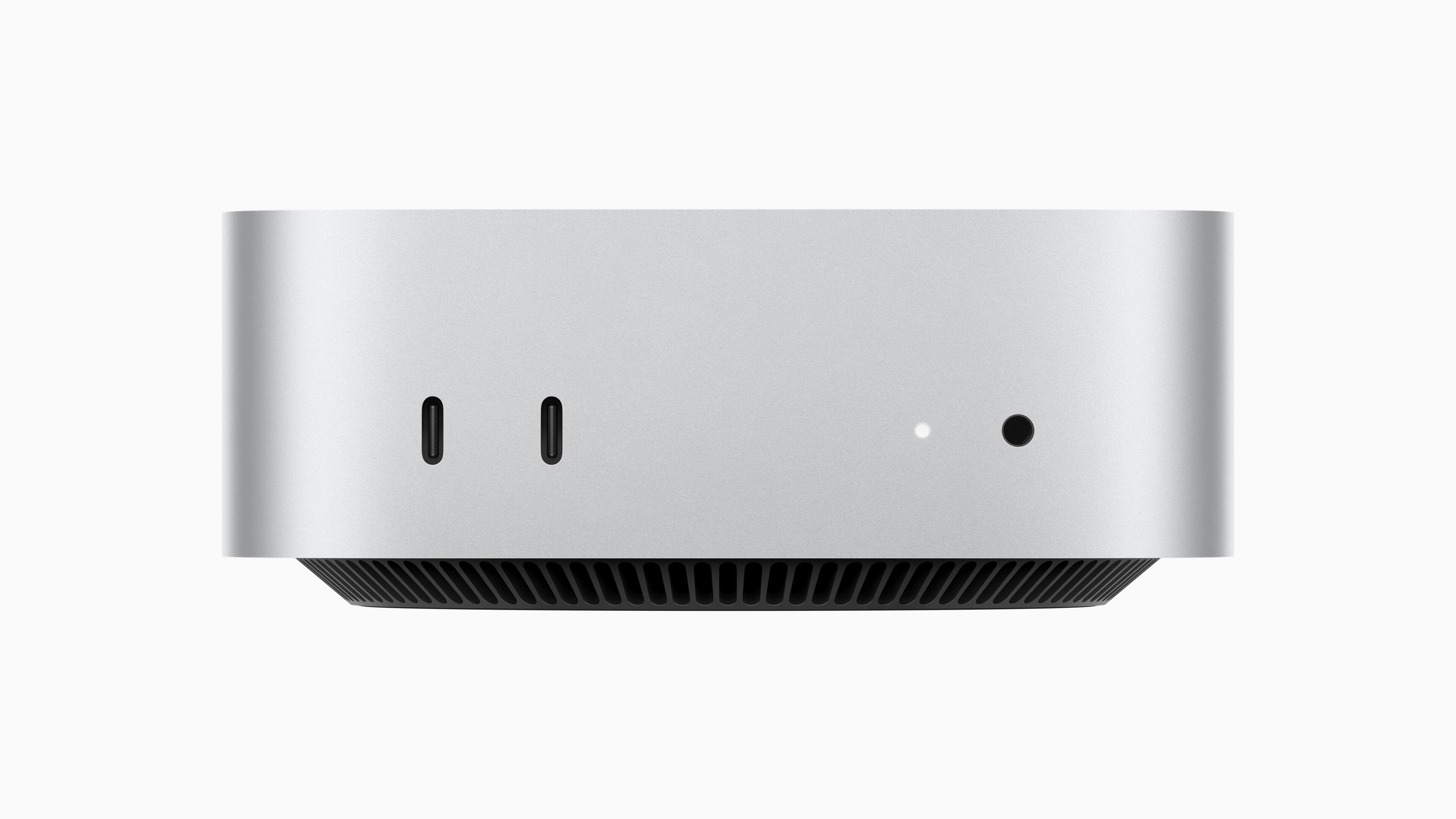
Finally updated last year with Apple’s latest chip, the M4, the new Mac Mini is a small computer that can actually fit in the palm of your hand. It’s got pretty much everything you’d get from one of Apple’s laptops—minus a screen and keyboard. Though thanks to a built-in fan, it’s actually got one up on the MacBook Air, and is more analogous to an entry-level MacBook Pro. And even then, it’s got more ports, including an ethernet port and two extra USB-C ports.
About the only real downside to the new Mac Mini is the annoying button placement—the power button is on the bottom of the device—but that’s what docks are for. Overall, this is a slick mini-computer, small and lightweight enough to be portable. If all you do is move from workstation to workstation, consider ditching the MacBook and saving both your wallet and your desk some space with this deal instead.
Shopping for tech? Lifehacker can help you make the right decision. Browse our tech reviews and head-to-head comparisons for everything from laptops and smartwatches to e-bikes and home gyms. Subscribe to our deals newsletter, Add to Cart, for the best sales sent to your inbox, or browse our best-of lists directly on Amazon, including:
Nvidia’s GeForce RTX 5090 Laptop Graphics Benchmarks Revealed
MojoKid writes: Similar to Nvidia’s recent desktop graphics launches, there are four initial GeForce RTX 50 series laptop GPUs coming to market, starting this month. At the top of the stack is the GeForce RTX 5090 laptop GPU, which is equipped with 10,496 CUDA cores and is paired to 24GB of memory. Boost clocks top out around 2,160MHz and GPU power can range from 95-150 watts, depending on the particular laptop model. GeForce RTX 50 series GPUs for both laptops and desktops feature updated shader cores with support for neural shading, in addition to 4th gen ray tracing cores and 5th gen Tensor cores with support for DLSS 4. The GeForce RTX 50 series features a native PCIe gen 5 interface, in addition to support for DisplayPort 2.1b (up to UHBR20). These GPUs are also fed by the latest high speed GDDR7 memory, which offers efficiency benefits that are pertinent to laptop designs as well. Performance-wise, NVIDIA’s mobile GeForce RTX 5090 is the new king of the hill in gaming laptops, and it easily bests all other discrete mobile graphics options on the market currently.


Read more of this story at Slashdot.
Linux 6.15 SoC/DT Additions: Arm Morello, Versal NET, Apple T2, MNT Reform 2 & More
The many SoC and DeviceTree updates have now been merged for the Linux 6.15 kernel merge window. There’s a lot on the ARM hardware side plus some additions for RISC-V and various interesting new device/board additions…
Rust adopting Ferrocene Language Specification
One recurring criticism of Rust has been that the language has no official specification. This is a barrier to adoption in some safety-conscious organizations, as well as to writing alternate language implementations. Now, the Rust project has
announced
that it will be adopting the
Ferrocene Language Specification (FLS) developed by
Ferrous Systems and maintaining it as part of the core project. While this may not satisfy die-hard standardization-process enthusiasts, it’s a step toward removing another barrier to using Rust in safety-critical systems.
It’s in that light that we’re pleased to announce that we’ll be adopting the FLS into the Rust Project as part of our ongoing specification efforts. This adoption is being made possible by the gracious donation of the FLS by Ferrous Systems. We’re grateful to them for the work they’ve done in assembling the FLS, in making it fit for qualification purposes, in promoting its use and the use of Rust generally in safety-critical industries, and now, for working with us to take the next step and to bring the FLS into the Project.