Apple’s Latest Update May Be Installing Previously Deleted Apps on iPhones

It’s not difficult to delete an app off your iPhone. In fact, it only takes a few taps at most. If you’re so inclined, you can even remove purchases from your Apple Account entirely. So it might come as a bit of a surprise if you see that app randomly reappear. As it happens, some users are seeing just that.

MacRumors spotted multiple threads across both Reddit and Apple’s Community Support site, all featuring the same complaint: users noticing apps they did not choose to download appearing on their iPhones. Some of these affected users had previously deleted these apps months or years ago, and didn’t understand why they were back. Others, however, had no memory of ever downloading the app in question in the first place.

The account Someandroiduser started a Community Support thread, claiming a previously deleted app “Last War Survival” ended up on their iPhone again. Redditor dURDENN7 posted the same, without naming the app in question. It’s worth noting some of the commenters on that thread said their iPhones had downloaded “Last War Survival” as well, including one who said they had never downloaded the app before.

Reddit user illyyas posted that they had discovered the game “Ingress” installed on their iPhone, despite the fact they don’t play games at all on their phone. Another commenter said their iPhone downloaded “Cooking Mama” to their Home screen, even though the App Store still showed the option to “Get” the app—implying the user had never actually installed the app before. Another user shared a similar story with the game “Bit City.”

Is iOS 18.4 responsible?

While it isn’t totally clear what is behind these app downloads, one through line does appear to be iOS 18.4. The update officially dropped on Monday, adding new features and security patches for compatible iPhones. Unfortunately, Apple might’ve missed a bug in beta testing, since many of these user complaints note these apps mysteriously appeared after installing the latest iOS update.

MacRumors notes that Automatic Downloads—the feature that installs previously downloaded apps on other connected Apple devices—doesn’t seem to be at fault here, since many of the affected users only have iPhones. In addition, the outlet identified that these devices were not jailbroken and were not using a third-party app marketplace.

To Apple’s credit, this hasn’t been my experience with the newest update. I installed iOS 18.4 on my iPhone, and, as far as I can tell, no new or previously downloaded apps found their way into my App Library. However, it is a problem: You shouldn’t expect to see apps you previously deleted reappear on your device, and you definitely shouldn’t see apps you never downloaded to begin with.

Apple has not made a public statement about this issue, nor is there really much you can do to prevent it. If you happen to notice an app you previously deleted—or never actually downloaded in the first place—your best bet is to simple delete it, and hope it doesn’t show up again.

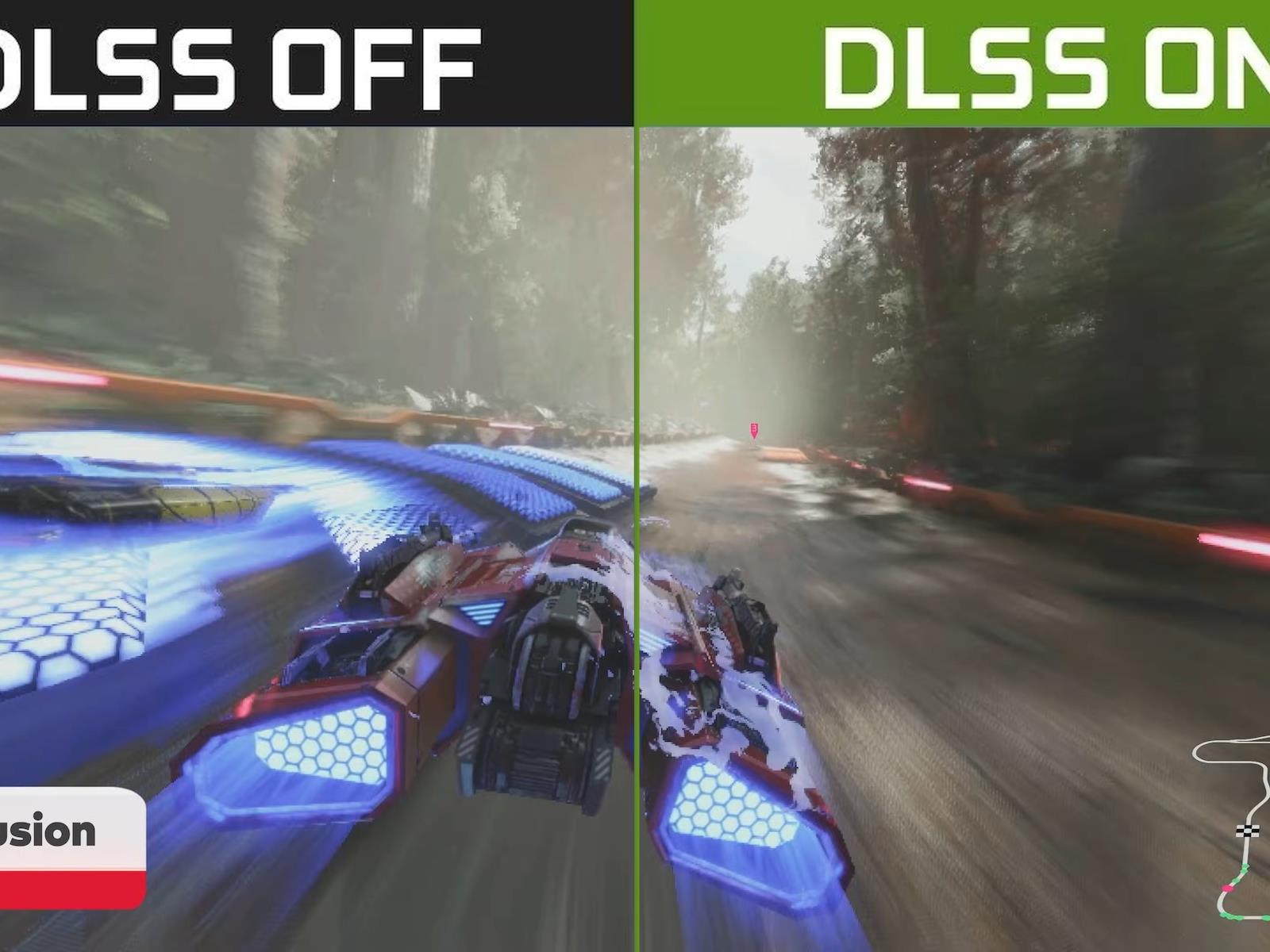
NVIDIA Confirms 4K And DLSS Support For Nintendo Switch 2 Games

NVIDIA Confirms 4K And DLSS Support For Nintendo Switch 2 Games
Nintendo’s Switch console is based on a now-aged NVIDIA Tegra X1 SoC, and it has been rumored for more than a year that the Switch 2 would make use of an updated NVIDIA chip, likely based on the Tegra processor code-named “Orin”. We still don’t have 100% firm confirmation of that, but there’s a new detail that reinforces that impression: NVIDIA

Nine Ways to Make Your DIY Paint Job Look Professional

Paint is the cheapest, easiest renovation you can do: it makes everything fresh and new, it covers defects, and it’s something almost anyone can do to a reasonable level of quality.

If you just read that last part and started shaking your head because your paint projects always turn out terribly—patchy, or with visible sheen or brush strokes, or a final color that doesn’t seem to match what you chose in the store at all—the cause probably isn’t your work ethic, or an evil spirit inhabiting your house. The problem probably lies in your prep work. If all you’re doing before you start slapping paint on the walls is applying some painter’s tape and covering the furniture, the chances that the final paint job will look terrible are actually pretty high. Here are all the things you should take into account before you dip that brush.

Consider temperature and humidity

The weather can affect the quality of your paint job. Extreme temperature or humidity can have an adverse impact on the drying time. At colder temperatures, paint can thicken, extending its drying time. At hotter temperatures, it can dry too quickly, affecting adhesion. High humidity that leaves moisture on the walls will also result in a sub-par paint job.

Your home is probably climate controlled, so painting inside even during extreme weather is certainly possible—just make sure the temperature is between 50 and 90 degrees and the humidity levels are between 40 and 60%.

Prep the walls

It’s usually a good idea to wash your walls before painting them to ensure there is no dust or dirt that could adversely affect adhesion. While you’re at it, look for cracks, dents, peeling tape, or other defects and patch everything up (including crayon or grease stains that will probably show through your paint unless they’re scrubbed off). A small flaw that isn’t noticeable now might become a glaring problem when a fresh coat of paint brings it to the forefront.

Cleaning walls with a dry microfiber cloth followed by warm water and a sponge is usually sufficient, unless your walls are really dirty. If you’re worried about it, add a small amount of dish washing liquid or trisodium phosphate (if your walls are greasy and very dirty)—but avoid colored soaps that might leave a tint behind.

Choose the right rollers

One big reason paint jobs look like crap? The nap on your roller cover. The nap of your roller describes the thickness of the fibers. Generally speaking, the smoother your wall surface is, the smaller the nap of your roller cover should be. Painting kitchen cabinets? Go with a 1/4-inch nap. Painting a brick wall? An inch or even a 1 1/4-inch nap is best. Smaller fibers pick up less paint, while thicker fibers hold more paint—a too-short nap can result in a patchy finish on rough surfaces, while a too-long nap can add unwanted texture to smooth surfaces. Most interior paint jobs will call for a nap between 3/8 inch (very smooth walls) and 3/4 inch (textured walls, like stucco).

Apply a separate primer coat

These days you can buy paint and primer together, which is a terrific time saver. But if your walls aren’t in great shape, even after cleaning and patching, you will usually get a much better result with a separate primer coat. This step might not be 100% necessary on your walls, but taking the extra time to prime properly will guarantee the best possible outcome.

Identify the paint’s undertones

Almost all paint has an undertone (its base color )and a masstone (its overall hue). The undertone can be subtle and difficult to suss out, which is why it’s so important to paint a few samples on the wall before you commit. The paint’s undertone will interact with everything else in the room in ways that aren’t always obvious in the store. You brought home a beige paint, for example, but it has a green undertone, and suddenly it looks all wrong on your walls because your wood floors have yellow undertones.

You can ask about the paint’s undertone at the store where you’re buying it. You can also use a color wheel to compare it to primary colors to get a sense of the undertones involved.

Combine multiple buckets of paint

If you’re painting a small room and using just one can of paint, you’re good to go. If your project is larger and you’ll be using multiple cans of the same color, you should combine all your paint into a larger bucket and mix it up—a process called “boxing.” This is a good idea because even if you bought your paint from the same store at the same time, there can be subtle variations between cans. Maybe the pigments dispersed incorrectly, or the mixing process was slightly off. Whatever the reason, even the tiniest variation between cans will be incredibly obvious when you switch to the new can. Boxing it eliminates the danger.

Check out your window tint

Your windows can throw a wrench into your paint colors. This is because many windows have a very subtle green tint due to the presence of iron oxide in the glass. This isn’t noticeable in any way to the naked eye, as a rule, but it can cast a greenish tint on your paint that’s just strong enough to make it look inexplicably wrong in the daylight. Putting samples on the wall to judge the color is a great idea—but make sure you paint those samples in a spot where the light from your windows will hit them. Samples that look perfect in a more shadowed area may suddenly look weird when light hits it through the window.

Figure out the color temperature of your lights

Another lighting issue is your light bulbs. All the bulbs you’re using in your light fixtures have a color temperature, and that can affect how your paint looks. Generally speaking, bulbs with higher color temperatures will brighten darker paint and mute lighter colors and vice versa. This means that a paint color that looks terrific in daylight can suddenly look grim or faded at night when the lights come on. It’s best to check your samples in all kinds of light to make sure you’ve chosen wisely—and change your bulbs to support your paint if necessary.

You should also check the color rendering index (CRI) of your bulbs. This is a rating between 50 and 100 that indicates how accurate the color rendering of the bulb will be. A CRI of 90 to 100 will show your paint as accurately as possible, reducing the chances that it will look worse when the sun goes down.

Load your roller up

Finally, when actually painting, don’t be shy with your roller. When initially “loading” paint onto a dry cover, take your time and work paint deep into the nap. This can take a few minutes, so don’t rush—you want a nice, wet roller when you hit the wall. When painting, don’t roll until the roller is exhausted—reload frequently and keep the nap damp. Exhausting your roller will just leave streaks and faint spots that may or may not get covered by a second coat—and may or may not haunt you for years afterward.

YouTube is updating the Shorts video editor to make it a better alternative to TikTok

YouTube is updating the video editor for Shorts to better compete with the likes of TikTok and Instagram Reels, and teasing some AI-powered features that are coming later this year that might make it stand out.

The new and improve editor will let users “make precise adjustments and edits to the timing of each clip with zooming and snapping,” along with the usual option to rearrange and delete your footage. YouTube says you’ll also be able to add music and timed text, and preview your video at any point while you’re editing.

At some point in the future, the editor will gain the ability to automatically sync clips to a song. And “later this spring,” YouTube says the editor will be able to create stickers from photos in your image gallery or with a built-in AI image generator. As part of this update, the process of using templates is also getting simplified. Creators of templates will now be automatically credited when anyone uses their work, and templates themselves can now include things like image overlays and filter effects.

YouTube is clearly trying to reach some kind of parity with the creative tools offered by TikTok and Instagram. TikTok’s editing tools and the standalone CapCut video editor have long been the gold standard for creating videos on your phone. Given the uncertain future of TikTok in the US, making YouTube Shorts a more appealing alternative makes sense. It’s also not the first time YouTube has drawn inspiration from TikTok. YouTube added a robotic, text-to-speech narration feature to Shorts, clearly inspired by TikTok’s popular version, in 2024.

This article originally appeared on Engadget at https://www.engadget.com/apps/youtube-is-updating-the-shorts-video-editor-to-make-it-a-better-alternative-to-tiktok-182932945.html?src=rss

Verizon just announced a three-year price lock plan, but there are caveats

Verizon just revealed a new price lock policy that guarantees certain plans won’t go up in cost for three years. This is for both new and existing customers. It was announced the day after President Trump decided to tariff the entire world, which put markets into a tailspin. Verizon didn’t specifically mention this policy, but did say that the move was intended to give “predictability” to its customer base.
However, there are some caveats. Customers have to be enrolled in one of the company’s newer myPlan subscriptions to be eligible. Also, the guarantee only covers the base charge for the rate plan. It doesn’t do anything regarding those mysterious little fees that carriers use to raise prices on the down low. 

� BIG NEWS! � Verizon is introducing a 3-Year Price Guarantee for ALL new and existing customers on myPlan & myHome, PLUS a FREE phone with trade-in and free satellite messaging!

Learn how to save big:https://t.co/tabDgx5jgZ

— Verizon News (@VerizonNews) April 3, 2025

There’s also nothing in the fine print regarding autopay discounts, so those aren’t locked in. This could force a rate hike if Verizon decides alter the discount. Of course, the company will likely try to persuade consumers to increase the monthly bill of their own accord. This carrot usually takes the shape of a “free” phone.

To that end, Verizon announced it will be giving free phones to new and existing customers. This requires a suitable trade-in device and enrollment in a myPlan subscription. The three-year price lock also covers the company’s myHome 5G internet plans. Current myPlan members don’t have to do anything to start this price lock process. The enrollment is automatic.

This is just the latest promotion to lure customers to its myPlan subscriptions. The company recently started offering cheaper subscriptions for Netflix and Max to members. It did something similar for Google One AI Premium subscriptions. Verizon owns a minority stake in Engadget’s parent company, but this didn’t impact our coverage. 

This article originally appeared on Engadget at https://www.engadget.com/mobile/smartphones/verizon-just-announced-a-three-year-price-lock-plan-but-there-are-caveats-182320983.html?src=rss

Climate Crisis On Track To Destroy Capitalism, Warns Top Insurer

The climate crisis is on track to destroy capitalism, a top insurer has warned, with the vast cost of extreme weather impacts leaving the financial sector unable to operate. From a report: The world is fast approaching temperature levels where insurers will no longer be able to offer cover for many climate risks, said Günther Thallinger, on the board of Allianz SE, one of the world’s biggest insurance companies. He said that without insurance, which is already being pulled in some places, many other financial services become unviable, from mortgages to investments.

Global carbon emissions are still rising and current policies will result in a rise in global temperature between 2.2C and 3.4C above pre-industrial levels. The damage at 3C will be so great that governments will be unable to provide financial bailouts and it will be impossible to adapt to many climate impacts, said Thallinger, who is also the chair of the German company’s investment board and was previously CEO of Allianz Investment Management. The core business of the insurance industry is risk management and it has long taken the dangers of global heating very seriously. In recent reports, Aviva said extreme weather damages for the decade to 2023 hit $2tn, while GallagherRE said the figure was $400bn in 2024. Zurich said it was “essential” to hit net zero by 2050.


Read more of this story at Slashdot.

AMD Ryzen 9 9900X3D Impact Of The 3D V-Cache Optimizer Linux Driver

Last month I posted benchmarks showing the performance when using the new 3D V-Cache Optimizer driver on Linux using the flagship Ryzen 9 9950X3D. This optimizer driver allows tuning the “amd_x3d_mode” for indicating your prefereoce for the CCD with the higher frequency or larger cache size. For some additional insight into the 3D V-Cache Optimizer driver performance impact on Linux, here are benchmarks looking at the difference while using the AMD Ryzen 9 9900X3D.

Microsoft’s Affordable Mini PC To Stream Windows From The Cloud Is Now Available

Microsoft's Affordable Mini PC To Stream Windows From The Cloud Is Now Available
Microsoft is now accepting orders for the Windows 365 Link device it announced at its Ignite conference back in November. The thin client system is Microsoft’s first cloud PC device built specifically to securely connect to Windows 365 in a matter of “seconds,” the company says. It’s also been through a preview period with testing by over

The world’s smallest pacemaker is injectable and powered by light

Engineers at Northwestern University have developed the world’s smallest pacemaker. It’s so small, as a matter of fact, that it fits inside the tip of a syringe. This means that it’s injectable, so patients could potentially avoid a painful surgery.

It safely dissolves into the bloodstream after a time, so it’s a temporary solution. It’s designed for folks who need heart help on a short-term basis, like newborn babies with congenital defects. However, it can work with hearts of all sizes.

It’s also powered by light, which is pretty darned cool. The pacemaker is paired with a wireless wearable device that mounts to a patient’s chest. When that small device detects an irregular heartbeat, it shines a light that activates the pacemaker. These light pulses can penetrate a patient’s skin, bones and muscles.

Even though the pacemaker is tiny, measuring one millimeter in thickness, it still delivers as much stimulation as a full-sized unit. The engineers published their findings in Nature and noted that the device works with both animal and human hearts. The team also reiterated that pediatric care is the primary use case here.

“About one percent of children are born with congenital heart defects,” said Northwestern experimental cardiologist Igor Efimov, who co-led the study. “The good news is that these children only need temporary pacing after a surgery. In about seven days or so, most patients’ hearts will self-repair. But those seven days are absolutely critical. Now, we can place this tiny pacemaker on a child’s heart and stimulate it with a soft, gentle, wearable device. And no additional surgery is necessary to remove it.”

The development of this medical device was co-led by John Rogers, which is a familiar name in biomedical circles. Rogers has been behind a number of astounding innovations throughout the years. He’s advanced technology that could eventually give us invisibility cloaks and health-tracking tattoos. He also built a thumbnail-sized UV sensor and a circuit that dissolves in the body. That last one eventually led to this innovative pacemaker.

Rogers imagines a world in which physicians inject a number of these pacemakers simultaneously, to enable sophisticated synchronization. This could help terminate arrhythmias, as different parts of the heart could be paced at unique rhythms.

“Because it’s so small, this pacemaker can be integrated with almost any kind of implantable device,” Rogers said. “Here, the tiny pacemakers can be activated as necessary to address complications that can occur during a patient’s recovery process.”

This versatility could eventually open up a diverse array of medical possibilities. The tech could be used to help nerves heal, treat wounds and block pain.

This article originally appeared on Engadget at https://www.engadget.com/science/the-worlds-smallest-pacemaker-is-injectable-and-powered-by-light-153302491.html?src=rss

AV1 is Supposed To Make Streaming Better, So Why Isn’t Everyone Using It?

Despite promises of more efficient streaming, the AV1 video codec hasn’t achieved widespread adoption seven years after its 2018 debut, even with backing from tech giants Netflix, Microsoft, Google, Amazon, and Meta. The Alliance for Open Media (AOMedia) claims AV1 is 30% more efficient than standards like HEVC, delivering higher-quality video at lower bandwidth while remaining royalty-free.

Major services including YouTube, Netflix, and Amazon Prime Video have embraced the technology, with Netflix encoding approximately 95% of its content using AV1. However, adoption faces significant hurdles. Many streaming platforms including Max, Peacock, and Paramount Plus haven’t implemented AV1, partly due to hardware limitations. Devices require specific decoders to properly support AV1, though recent products from Apple, Nvidia, AMD, and Intel have begun including them. “In order to get its best features, you have to accept a much higher encoding complexity,” Larry Pearlstein, associate professor at the College of New Jersey, told The Verge. “But there is also higher decoding complexity, and that is on the consumer end.”


Read more of this story at Slashdot.

ESA’s New Documentary Paints Worrying Picture of Earth’s Orbital Junk Problem

The European Space Agency’s short film Space Debris: Is it a Crisis? highlights the growing danger of orbital clutter, warning that “70% of the 20,000 satellites ever launched remain in space today, orbiting alongside hundreds of millions of fragments left behind by collisions, explosions and intentional destruction.” Inkl reports: The approximately eight-minute-long film “Space Debris: Is it a Crisis?” attempts to answer its conjecture with supportive statistics and orbital projections. […] The film also mentions that the kind of Earth orbit matters when discussing whether we’re in a space junk “crisis” — though unfortunately, orbits at risk appear to be those with satellites that help with communication and navigation, as well as our fight against another primarily human-driven crisis: global warming. Still, the film emphasizes that solutions ought to be thought of carefully: “True sustainability is complex, and rushed solutions risk creating the problem of burden-shifting.” You can watch the film on ESA’s website.


Read more of this story at Slashdot.

Retro looks meet wireless tech – this 40th anniversary Yeti is a 90s mountain biker’s dream bike

Yeti has unveiled a new special edition of its ASR cross-country bike as part of the brand’s 40th anniversary celebrations.

The bike features a forgotten historic livery of turquoise and grey, which adorned the bikes of Jimmy Deaton and Juli Furtado in the 90s.

The brand has celebrated previous anniversaries with bike releases, most recently its 35th with the ARC.

The new limited-edition frame is fully wireless, unlike the standard ASR, which features cable ports for use with mechanical groupsets.

Yeti has worked alongside other brands to give the 40th Anniversary ASR a fully custom spec list, resulting in plenty of nostalgic details.

Yeti 40th Anniversary ASR
Yeti has decided to take a break from its iconic turquoise and yellow colourway. Yeti

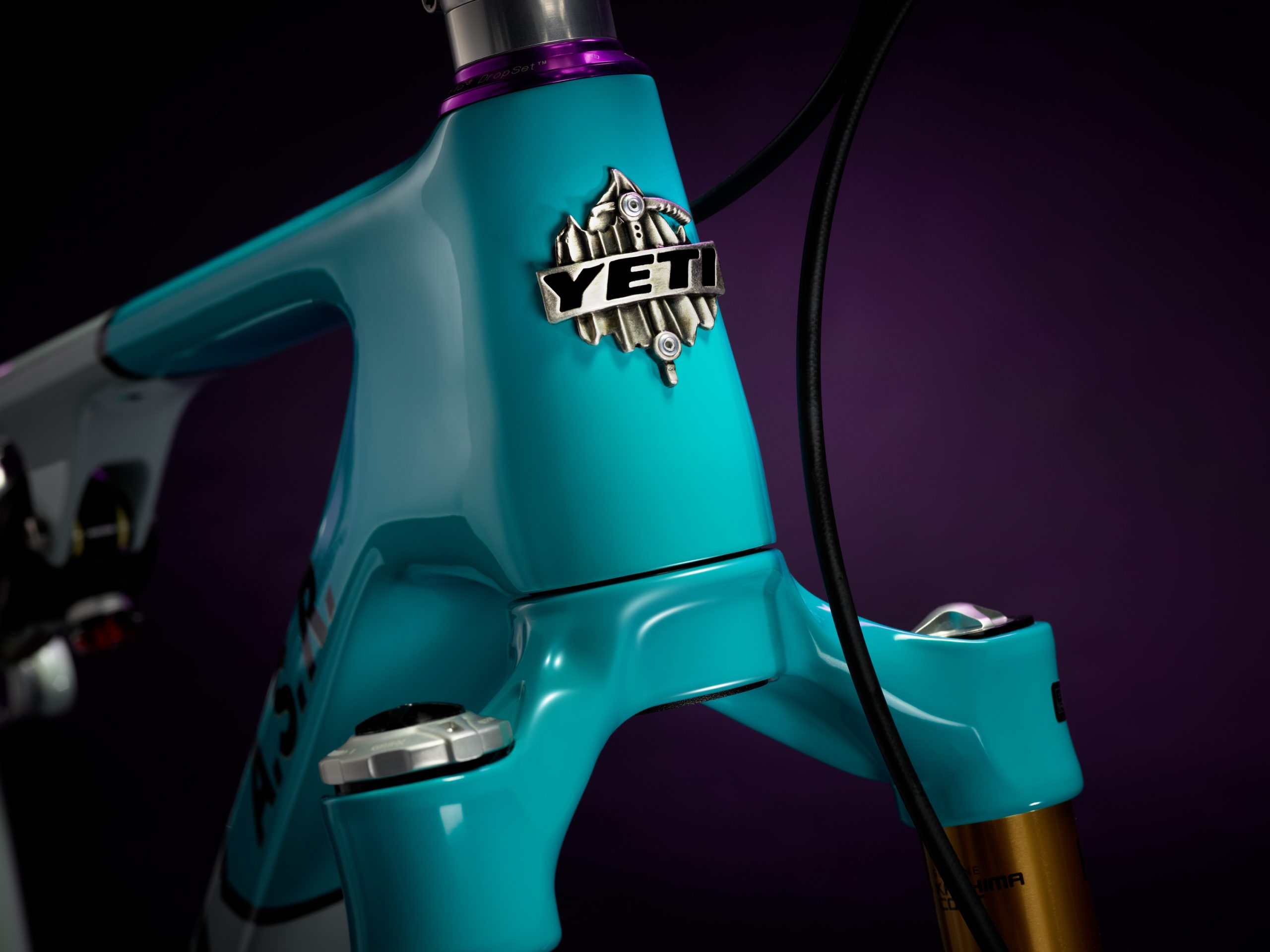
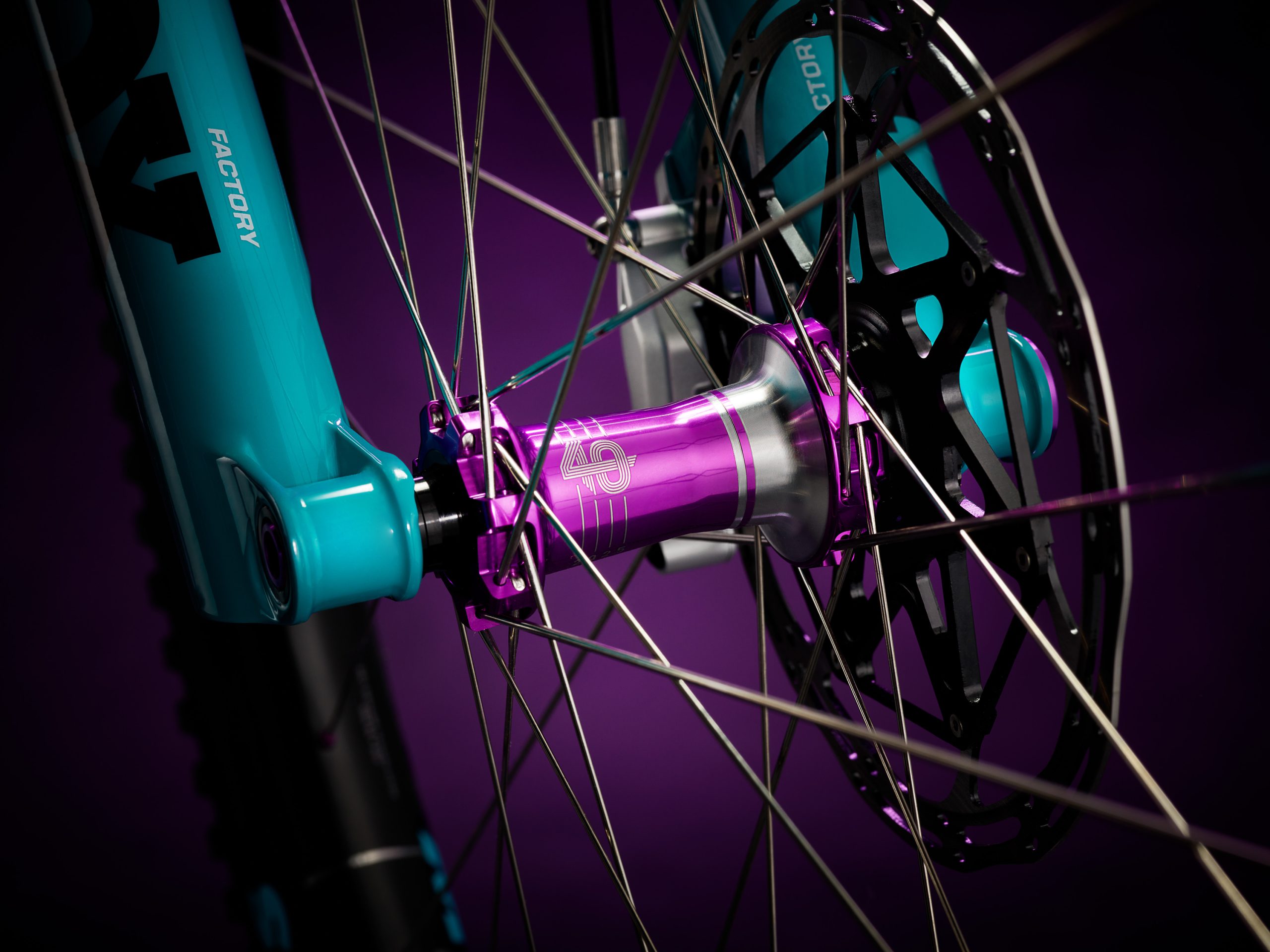
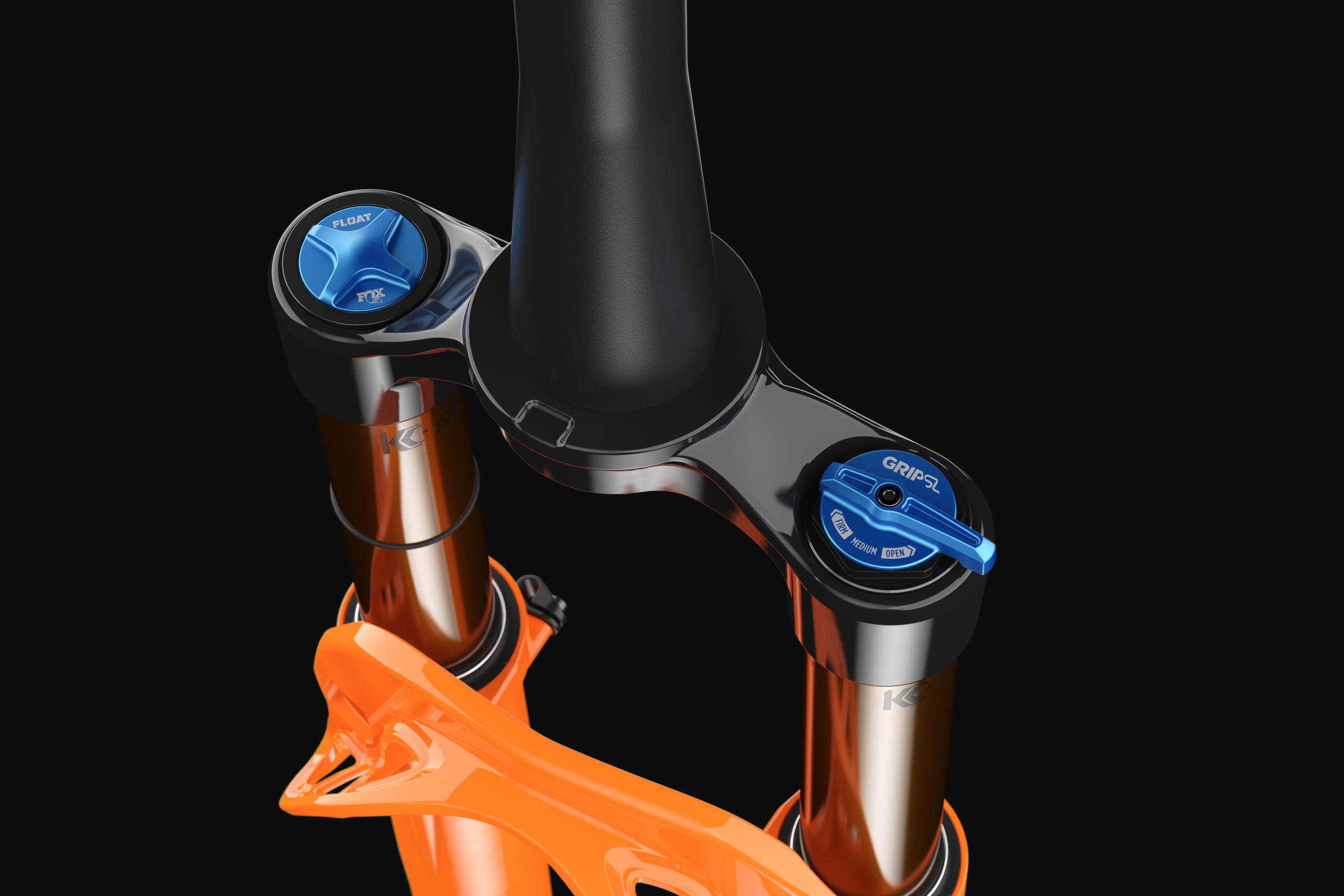
A notable mention goes to the Fox 34 SL fork, which is painted to match the brand’s famous turquoise colourway and features silver hardware.

Yeti 40th Anniversary ASR head badge
The crown of the Fox 34 SL has also been matched to Yeti’s turquoise colourway. Yeti

The fork has also been bumped up by 10mm compared to the standard ASR, now providing 130mm of travel.

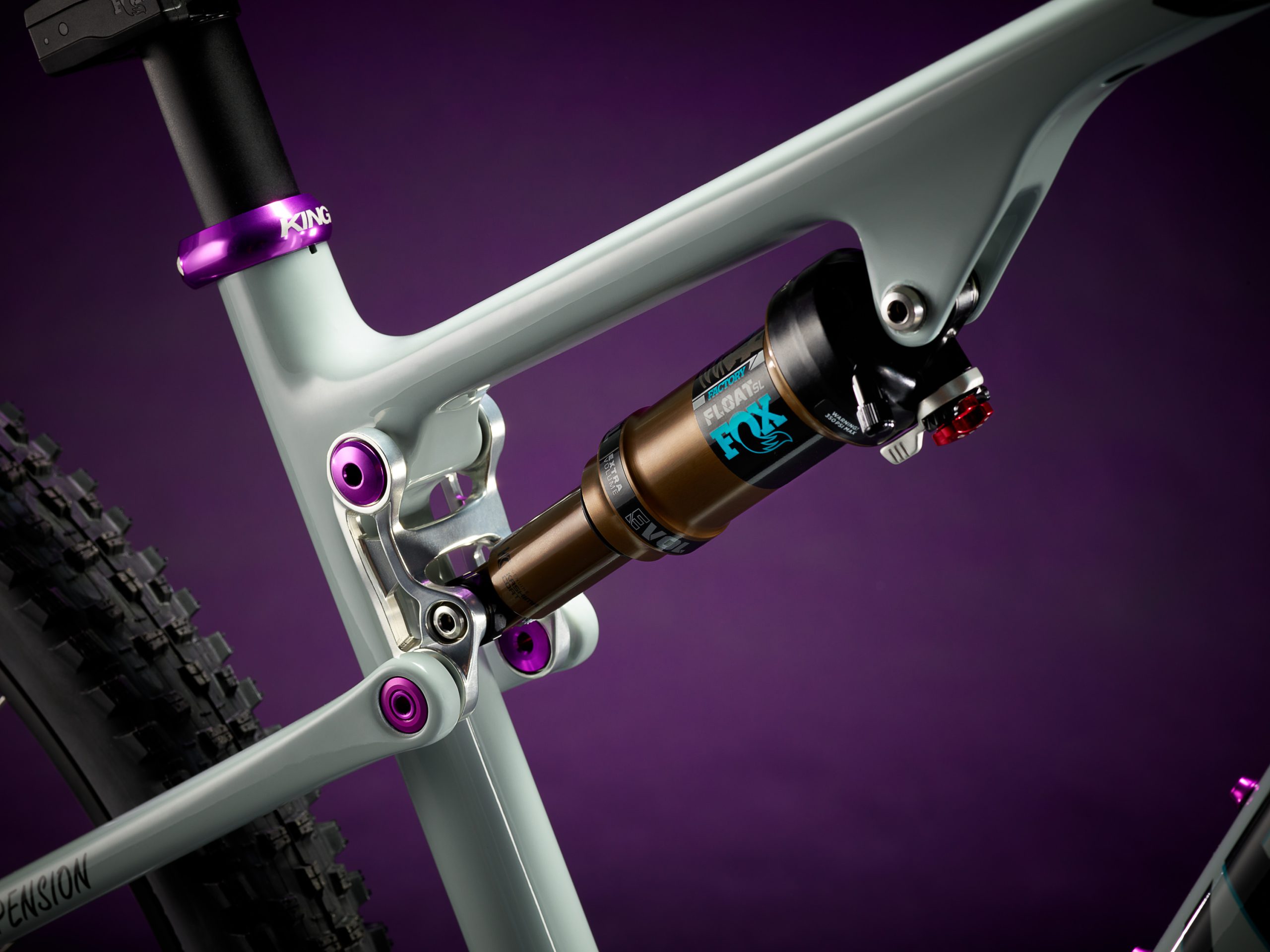
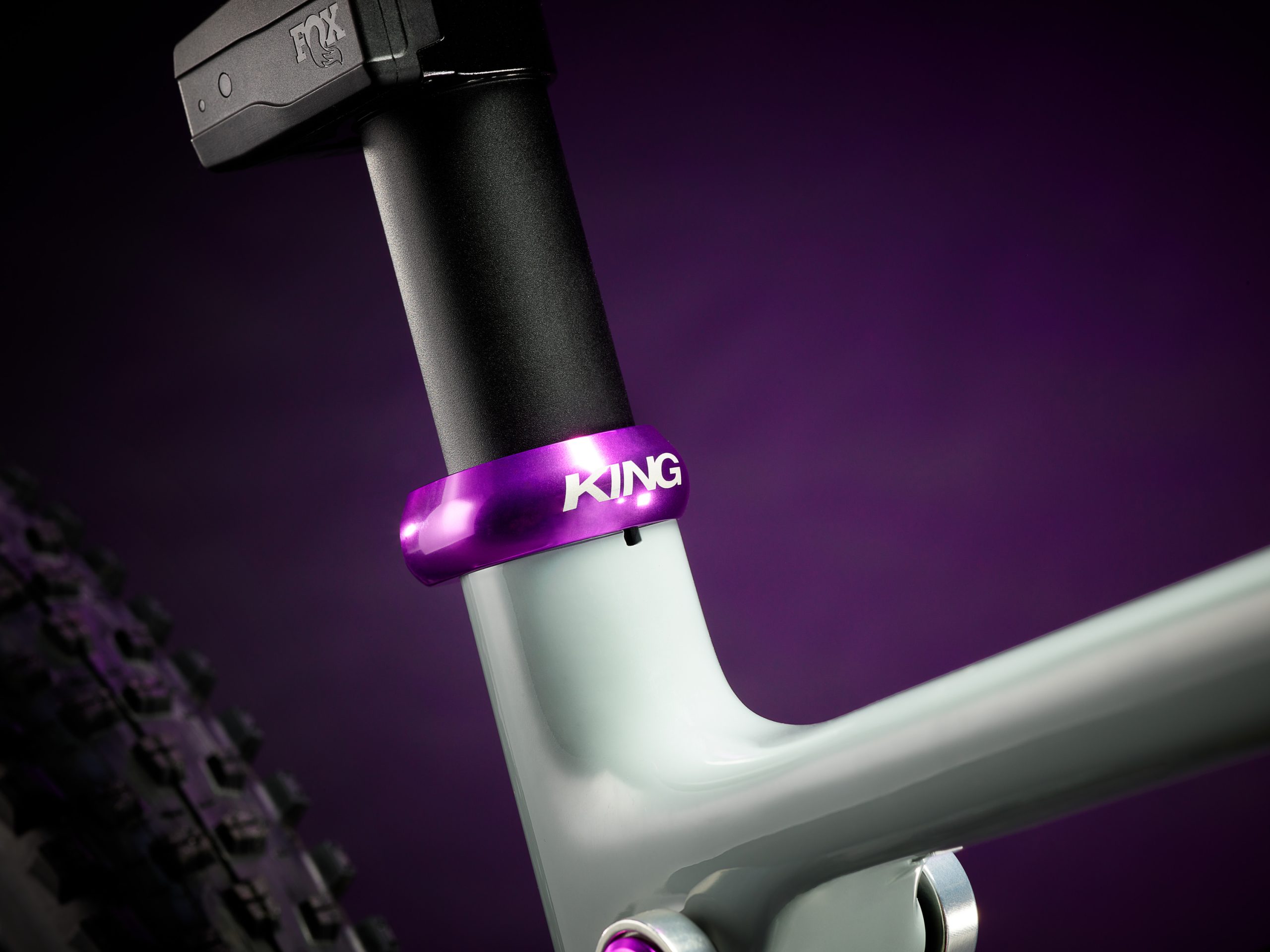
Elsewhere, the Chris King and SRAM parts feature a 3D Violet theme, adding a retro feel to the bike.

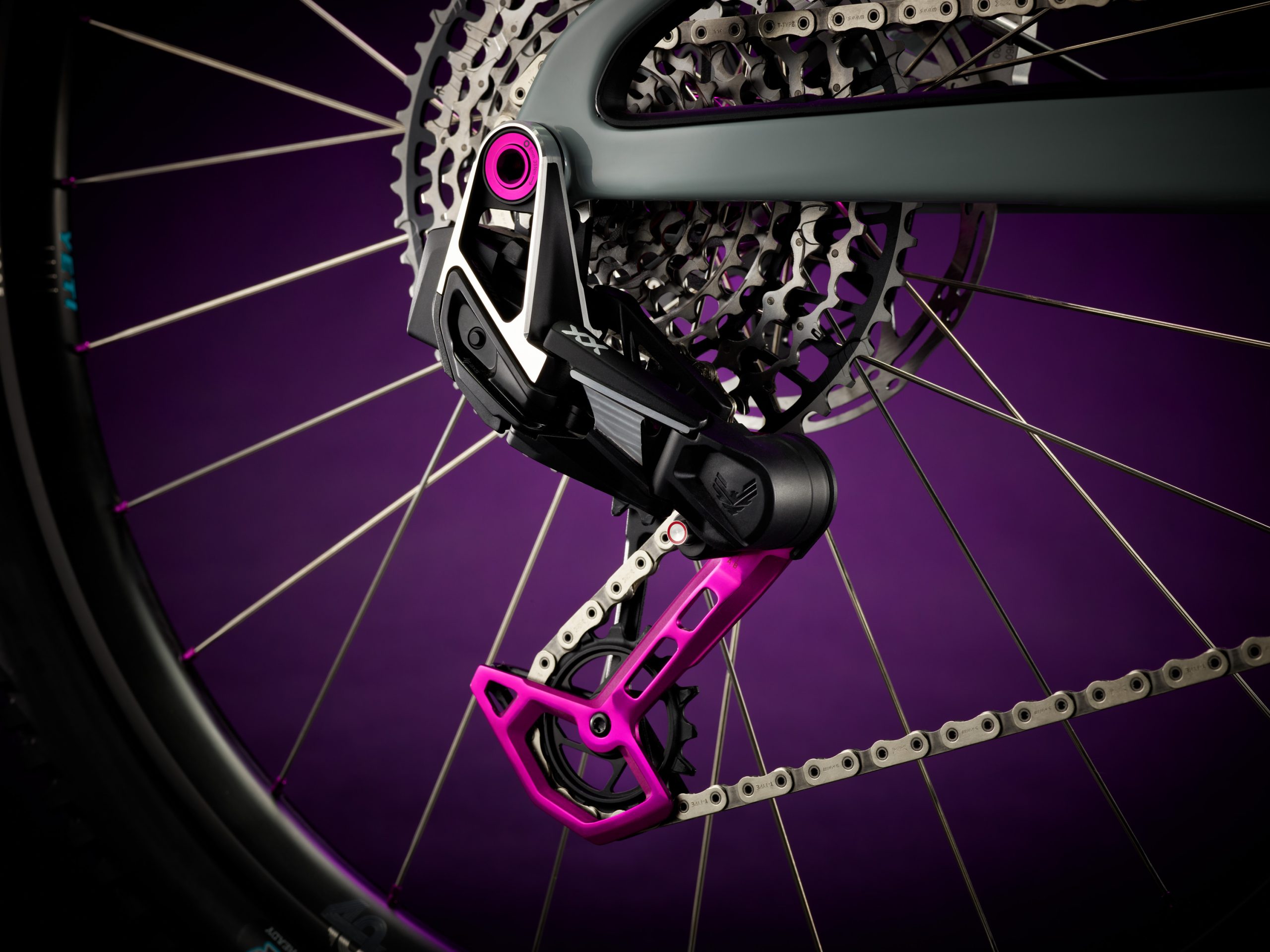
Yeti 40th Anniversary ASR with custom SRAM XX Transmission
SRAM has supplied a 3D Violet derailleur cage for its XX Transmission. Yeti
Yeti 40th Anniversary ASR with DT Swiss wheelset
Silver spokes should catch sun rays nicely. Yeti

Polished DT Swiss Revolite spokes are used in the wheelset, alongside 3D Violet hubs that will bring a sparkle to sunny days. Maxxis Forekaster tyres with turquoise hot patches are wrapped around the wheels.

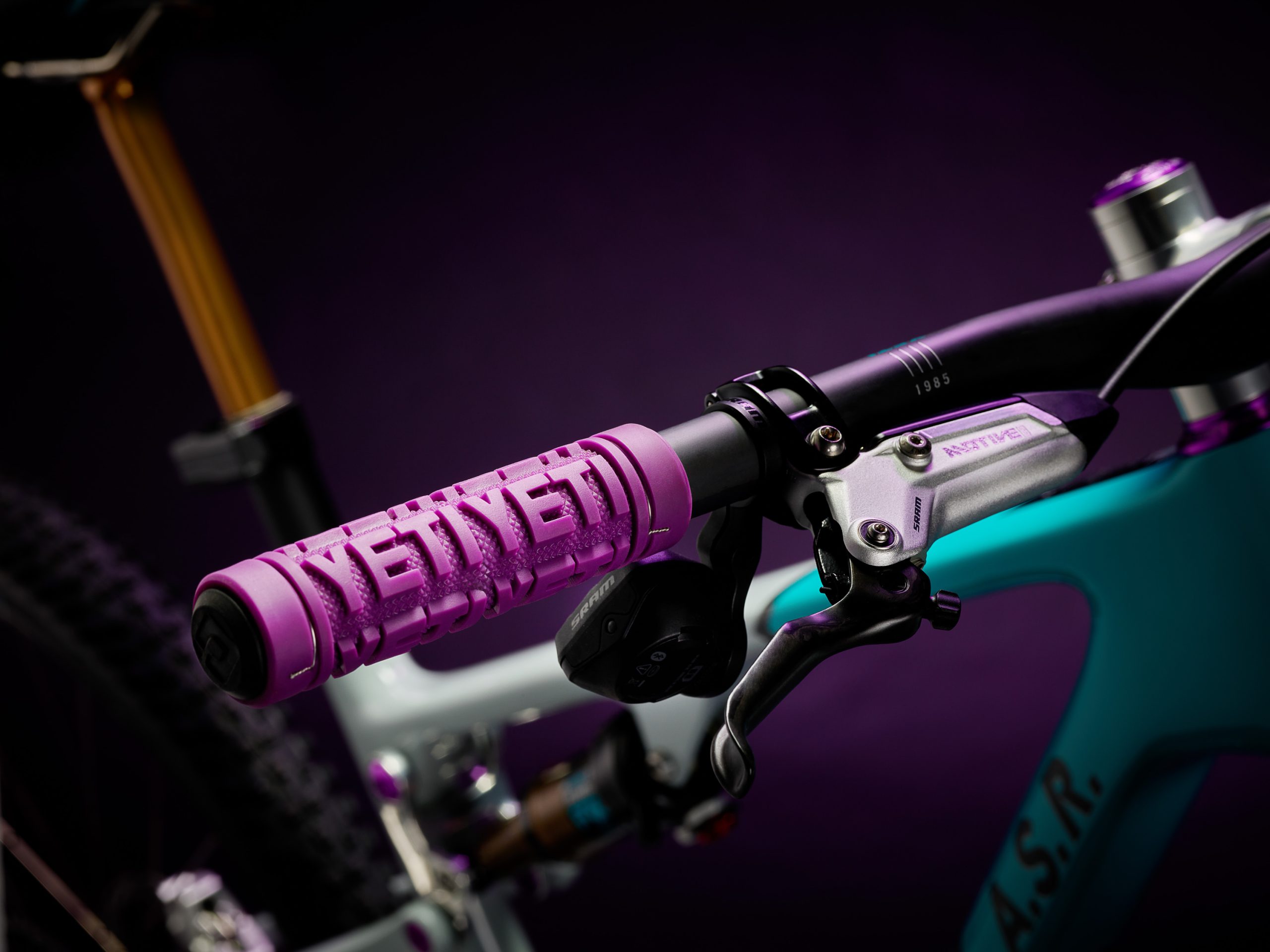
Yeti 40th Anniversary ASR with ODI Yeti grips
Wire has long been used to secure grips, but the invention of lock-on grips has made the practice less common. Yeti

Original moulds were located to revive the ODI Yeti grips, with metal wire neatly attached to keep them from wandering out of place.

Yeti 40th Anniversary ASR limited badge
Each bike will be numbered. Yeti

The bike is available for purchase, with Yeti making only 200 examples, priced at £13,999 / $13,900.

There’s little else to say about the bike other than we’re big fans of this retro-inspired special edition, so we’ll let the photos below do the rest.

Yeti 40th Anniversary ASR
Fox’s Transfer Neo dropper post features. Yeti
Yeti 40th Anniversary ASR with 3D Violet DT Swiss hubs
The number 40 is etched into the DT Swiss hubs. Yeti
Yeti 40th Anniversary ASR with custom SRAM XX Transmission crank
3D Violet can be spotted all over the bike. Yeti
Yeti 40th Anniversary ASR with custom Fox Float DPS
The silver linkage adds to the retro vibes. Yeti
Yeti 40th Anniversary ASR with Chris King seat collar
Chris King supplies the seatpost collar and headset. Yeti
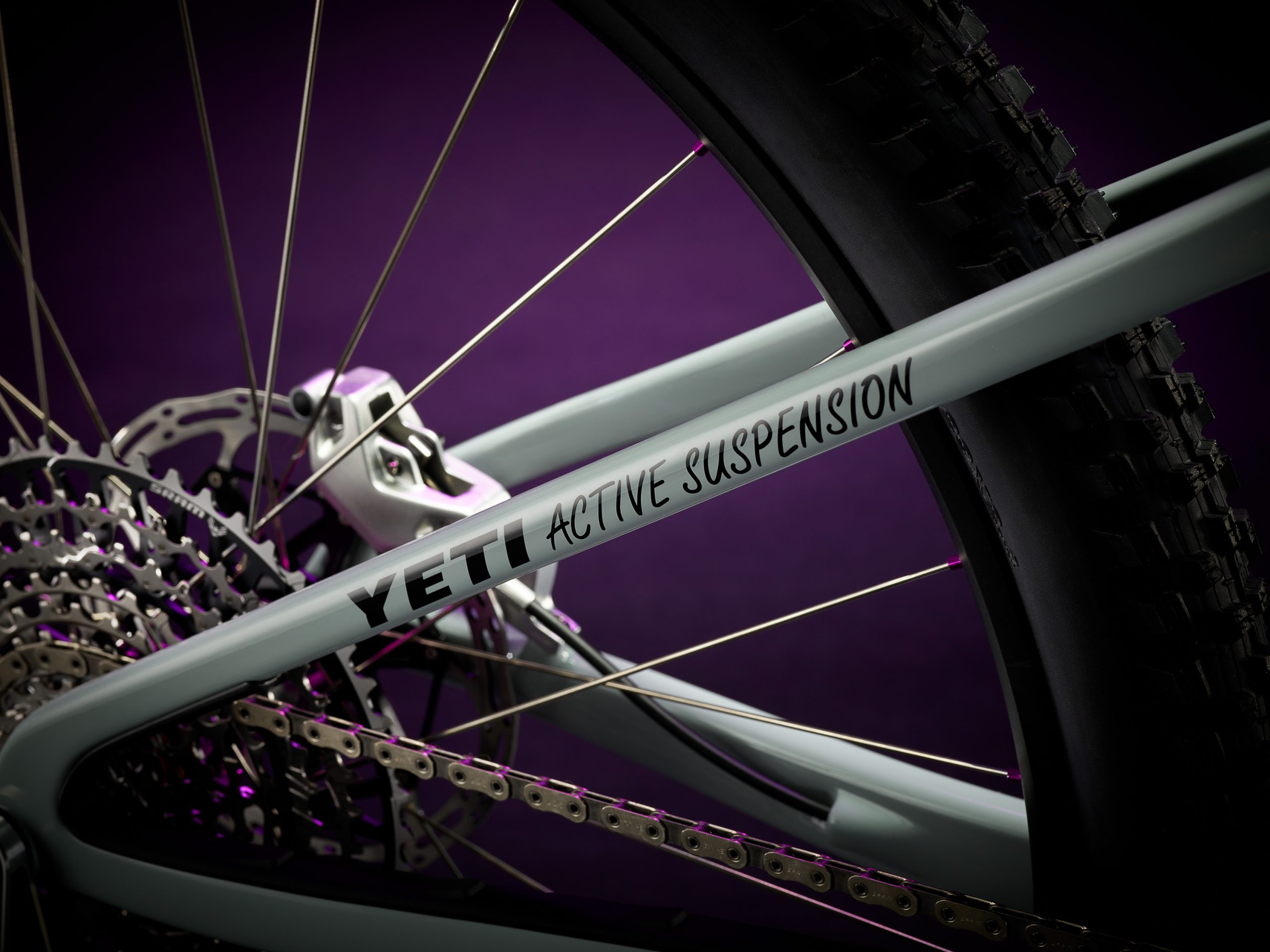
Yeti 40th Anniversary ASR active suspension livery
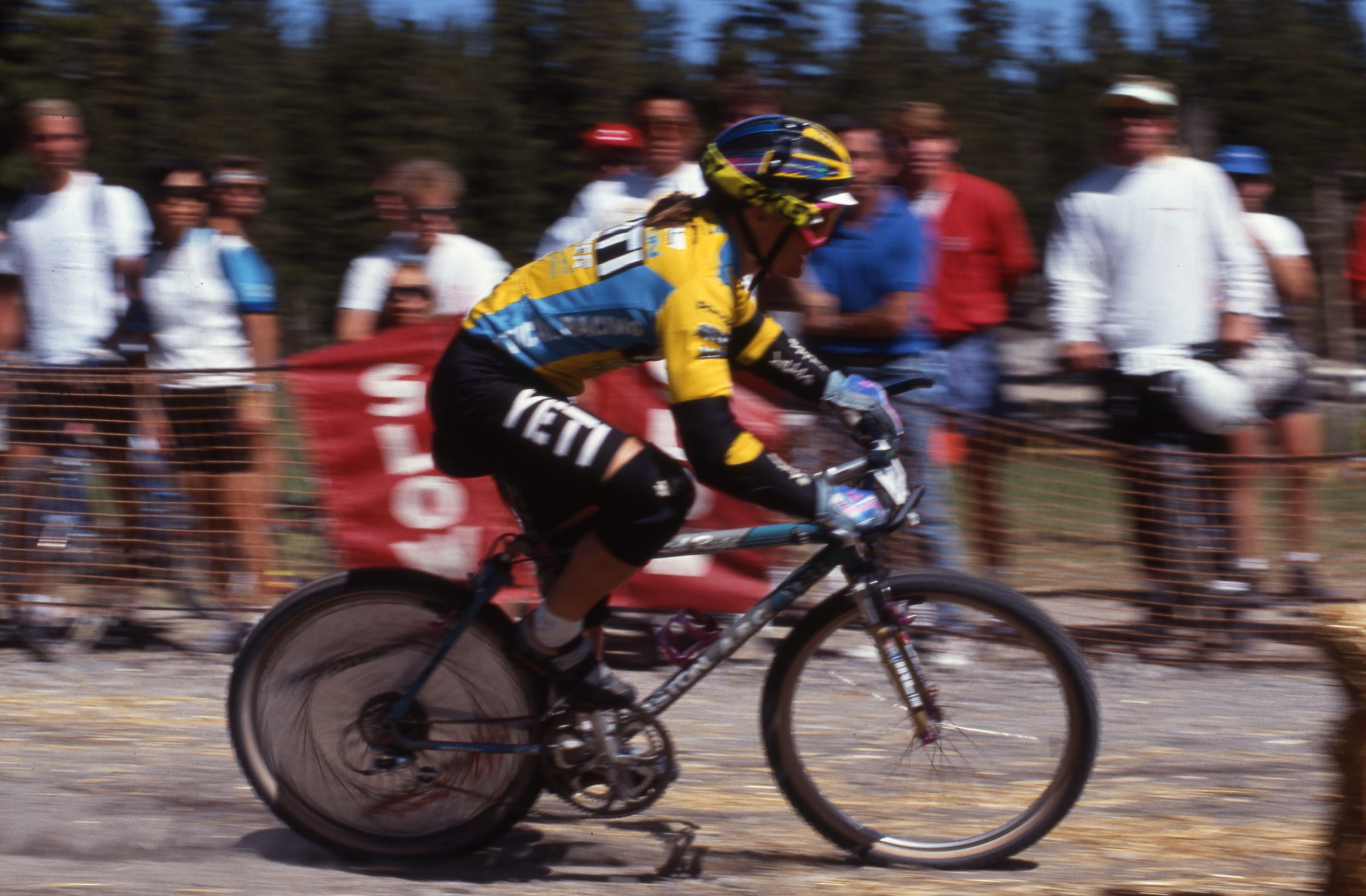
“Active suspension” harks back to Yeti’s first full-suspension bikes. Yeti
Yeti DH rider 1990's
Yeti is one of the longest-running teams in mountain biking. Yeti

Lee Cougan lays out a vision for the future of gravel bikes with full-suspension Innova Super Gravel

Shockless rear suspension, a 100mm suspension fork, 2.4-inch tyre clearance and geometry you might find on a hardtail mountain bike – could the new Lee Cougan Innova Super Gravel point the way for cutting-edge gravel bike design?

Well, the bike’s designers seem to think so. The questions behind the development of the Innova Super Gravel were: ‘Has your gravel bike ever held you back from going further?’, ‘What is a wrong trail if your bike can handle anything?’ and ‘Why not choose a bike that can do it all?’.

The new Lee Cougan Innova Super Gravel comes as a full build priced at €5,299 / $5,899 or a frame kit for €2,799 / $3,299.

Suspension without a shock

Innova Super Gravel
Does the Innova Super Gravel give an indication of where ultra-distance gravel bike design is heading?

The Innova’s back end follows soft-tail designs such as the Cannondale Topstone, Basso Tera and Specialized Diverge STR by utilising suspension without a shock unit.

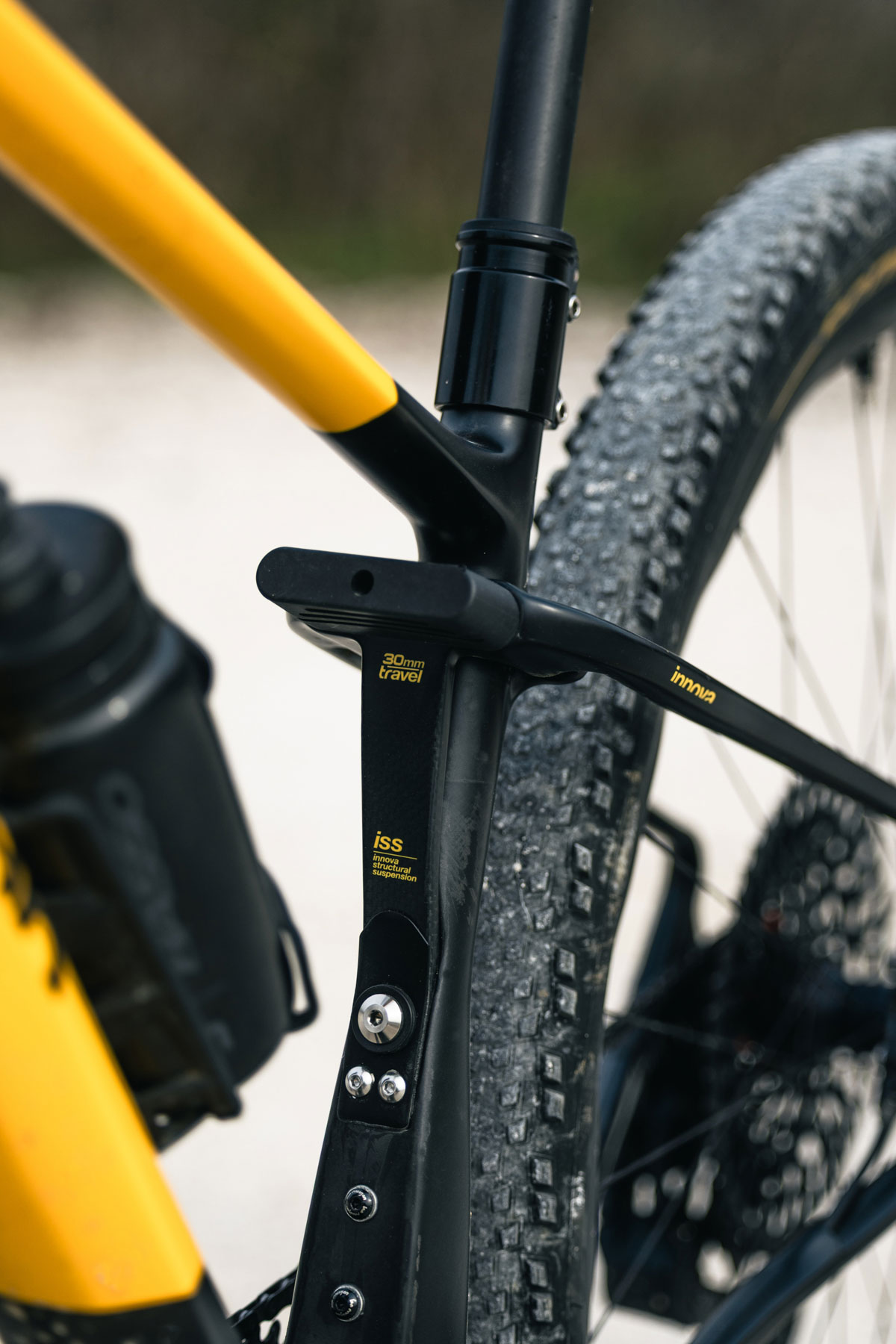
Instead, the Innova combines tapered carbon chainstays that are designed to flex, with a pair of oil-filled pistons to dampen the energy acting on the frame over rough ground.

The patent-pending system, named ISS, is claimed to offer the smoothness of a shock unit without the weight penalty. The frameset is said to weigh 1.2kg in a medium size, including the ISS damping system.

ISS suspension
The ISS suspension system has no shock, but contains twin hydraulic dampers to smooth out the trail.

Lee Cougan first used the ISS system on its marathon-focused Rampage Innova mountain bike, although that version relies more on its carbon leaf spring as opposed to the addition of flexible stays on the Innova Super Gravel.

Frame details

The Apro Ranger from 2017. Warren Rossiter / Immediate Media

The Innova has full internal routing via an Acros headset, two bottle cage mounts, further mounts on the top tube and under the down tube, a steerer lock system by Acros, and most tellingly a 148mm Boost rear triangle.

Making the Innova Super Gravel geared up for a wide range of 29-inch wheels opens a whole world of race-ready mountain bike tyre choices.

Full-suspension gravel

Full-suspension in gravel isn’t a new concept. I first reported on Taiwanese brand A-Pro’s full-sus gravel machine back in 2017.

Since then, we’ve had the Niner MCR and the Cannondale Topstone Lefty. The Innova Super Gravel, however, is the first to embrace a full-length travel mountain bike fork instead of a short-travel gravel-specific fork.

• Best gravel suspension forks

Go-anywhere geometry

Innova Super Gravel
Lee Cougan says the Innova Super Gravel can go anywhere, fast. Lee Cougan

The Innova Super Gravel’s geometry follows on from that of the Ridley Ignite GTX, Nukeproof Digger RS and Santa Cruz Stigmata in taking its inspiration from mountain bikes.

It has a 69-degree head angle matched to a 73-degree seat angle, long 428mm chainstays, a long reach, tall stack and short stem. The front end is designed to work with a 100mm mountain bike XC suspension fork.

Fox 32 Step Cast Factory straight crown
The 100mm-travel Fox Factory Kashima 32 is installed on the Innova Super Gravel complete bike. Mike James

The tyre clearance of up to 2.4in matches the current trend among gravel racers of using larger-volume (mountain bike) tyres.

This takes us back to the early days of gravel, when monstercross bikes with huge 650b clearances found favour. It’s having this sort of clearance on larger 700c or 29in wheels that sets the new Lee Cougan bikes apart.

Racing pedigree

Innova Super Gravel
The Innova Super Gravel has already been used in competition. Lee Cougan

The Innova Super Gravel has been trialled by multiple-Traka winner, fifth-place finisher at Unbound 2024 and current Life Time Grand Prix rider Mattia De Marchi, who rode the Innova in the 2024 Atlas Mountain Race.

Is it just a mountain bike with drop bars?

Innova Super gravel bar
The Innova Super Gravel comes with a 12-degree flare, 120mm-drop carbon gravel bar designed to match the Innova’s geometry. Lee Cougan

You could certainly argue that’s the case, much like the new Ridley Ignite GTX or the Scott Scale GR, which even goes so far as keeping a flat bar (although it has a rigid fork). Perhaps this is a fad, or it could show the future of gravel bikes, at least for ultra-distance gravel event racers.

Could we be witnessing yet another division in gravel bike design that sees lightweight racers for UCI gravel, burly bikepacking bikes and suspension-equipped do-it-all bikes such as this?

lee cougan innova super gravel
The Lee Cougan Innova Super Gravel Mullet build with SRAM Eagle AXS/Rival and Fox Factory Kashima 32 fork. Lee Cougan


Lee Cougan Innova Super Gravel spec and price details

Full build

  • Frame: Toray T700 carbon fibre 1K+3K+Ud, integrated cable routing, press-fit 92x41mm, DI2-compatible, tapered head tube, Boost 148mm
  • Fork: Fox Factory Kashima 32, 100mm with lockout
  • Groupset: SRAM GX Eagle Transmission, SRAM Rival levers
  • Brakes: 160mm Galfer
  • Stem: Woz Alpha -20°, 80 mm
  • Handlebar: Basso Carbon Gravel 440 c/c
  • Wheels: Microtech RK25
  • Seatpost: FSA KFX 27.2, 0mm offset
  • Saddle: San Marco Ground

Frame kit

  • Frame: Toray T700 carbon fibre 1K+3K+Ud, integrated cable routing, press-fit 92x41mm, DI2-compatible, tapered head
  • Headset: Acros internal routing headset
  • Stem: Woz Alpha -20°, 80 mm

These Bose Ultra Open Earbuds Are $179 Right Now

We may earn a commission from links on this page. Deal pricing and availability subject to change after time of publication.

If you’ve ever wanted to wear earbuds that don’t actually go in your ears, the Bose Ultra Open Earbuds might be the oddball pick you’ve been looking for. These open-style earbuds clip on and hook around your ear instead of sitting inside it, letting ambient noise in by design. That makes them great for runs, walks, or commuting—basically, situations where you want to hear your music but also that car barreling around the corner. And for the next six days or until it sells out, Woot’s offering refurbished models of these earbuds, in black, moonstone blue, and white smoke for $179—much cheaper than Amazon’s current $261.99 price.

Since these are refurbished, they might show a bit of wear, but they’ve been tested and cleared to function properly. You also get a 90-day Woot limited warranty, which is shorter than Bose’s standard, but fair for the price cut, and if you’re an Amazon Prime member, shipping is free (otherwise it’s $6). Just a heads-up: Woot ships only within the 48 contiguous states.

Bose doesn’t skimp on audio quality here: Despite the open design, they deliver solid sound with real punch and clarity. The bass won’t rumble like in-ear buds, but you still get that signature Bose balance. They also have Immersive Audio support, which adds spatial depth—though it’s a little inconsistent depending on what you’re listening to and can feel gimmicky, according to this PCMag review. They also support Snapdragon Sound with aptX Adaptive and work especially well with podcasts and mellow playlists. That said, the biggest downside is that they don’t have any noise cancellation, which, again, is kind of the point, but still worth noting if you’re used to ANC earbuds. Battery life clocks in around 7.5 hours on a single charge (with Immersive Audio off), and the charging case gives you almost two full charges, which is decent enough. If you’re someone who prioritizes awareness and comfort over total sound isolation—and doesn’t mind a pre-loved gadget—this deal makes a pretty compelling case. If you’re more of a noise-canceling, zone-out-on-the-plane kind of listener, these probably won’t cut it for you.
Amazon’s Top-Selling CPUs: AMD Ryzen Dominates Intel But There Are Caveats

Amazon's Top-Selling CPUs: AMD Ryzen Dominates Intel But There Are Caveats
It should come as no surprise that the best-selling CPU on Amazon is AMD’s Ryzen 7 9800X3D, a fantastic chip for gaming and one that managed to earn our Editor’s Choice award when we reviewed it last November. And maybe you wouldn’t be shocked to discover that the Ryzen 7 7800X3D—another Editor’s Choice recipient, which we don’t hand out lightly—is

Schrodinger’s Economics

databasecowgirl writes: Commenting in The Times on the absurdity of Meta’s copyright infringement claims, Caitlin Moran defines Schrodinger’s economics: where a company is both [one of] the most valuable on the planet yet also too poor to pay for the materials it profits from.

Ultimately “move fast and break things” means breaking other people’s things. Or, possibly worse, going full ‘The Talented Mr Ripley’: slowly feeling so entitled to the things you are enamored of that you end up clubbing out the brains of your beloved in a boat.


Read more of this story at Slashdot.

A bonus from the shingles vaccine: Dementia protection?

A study released on Wednesday finds that a live-virus vaccine that limits shingles symptoms was associated with a drop in the risk for dementia when it was introduced. The work took advantage of the fact that the National Health Service Wales made the vaccine available with a very specific age limit, essentially creating two populations, vaccinated and unvaccinated, separated by a single date. And these populations showed a sharp divide in how often they were diagnosed with dementia, despite having little in the way of other differences in health issues or treatments.

What a day

This study didn’t come out of nowhere. There have been a number of hints recently that members of the herpesvirus family that can infect nerve cells are associated with dementia. That group includes Varicella zoster, the virus that causes both chicken pox and—potentially many years after— shingles, an extremely painful rash. And over the past couple of years, observational studies have suggested that the vaccine against shingles may have a protective effect.

But it’s extremely difficult to do a clinical trial given that the onset of dementia may happen decades after most people first receive the shingles vaccine. That’s why the use of NHS Wales data was critical. When the first attenuated virus vaccine for shingles became available, it was offered to a subset of the Welsh population. Those who were born on or after September 2, 1933, were eligible to receive the vaccine. Anyone older than that was permanently ineligible.

Read full article

Comments

All the Gardening Tasks to Tackle in April

The vernal equinox, marking the first day of spring, occurs in late March every year. Sometime around then, most planting zones encounter what is known as the last frost date, which is the experts’ best guess, based on averages, of when your last hard freeze will be. The cherry, plum, and peach blossoms are exploding on trees all around us and tulips are popping up from the ground. There are all kinds of markers that gardening season has arrived, but the most prominent one is the return of people to working on their front yards on sunny days, which should be happening now with some regularity. It is finally full steam ahead for this year, and there are tons of things you can be doing outside.

Cherry blossoms
Cherry blossoms
Credit: Amanda Blum

Document the spring bloom

There’s an order to the way plants bloom in early spring: the crocus, the daffodils, then the tulips, the irises, and the peonies. Each year I try to take pictures every few days from the same angles in the yard so I can document where I might need more bulbs. You’ll forget by the time fall rolls around and it’s time to plant more. This pictorial documentation can help you visualize any bulb losses you have year to year, as well.

My tulips in bloom
Tulips in bloom
Credit: Amanda Blum

Get your trellises clean and ready

Based on the plans I made for the garden over the winter, I now know where I’ll need plant supports for my tomatoes, peppers, beans, and cucumbers. I begin getting those trellises I have out of storage and sterilizing them, and I make plans to build or order any new trellises I’ll need.

Weed and dress with compost

With the nighttime temperatures starting to remain over 40 degrees, it’s time to clean out your beds and get them ready for planting. This means doing a thorough weeding, as best you can, and then top with compost. Clean away debris in the paths and beds, because that is slug food and an invitation for disease and pests. Check in on your own compost bins; they could probably use a good turn.

Check in on your flower perennials

Irises that need dividing
Credit: Amanda Blum

First, take an inventory of the perennials you have, and see if any need dividing. Plants grow into the space around them, but if they’ve run out of space, you can break them up, and either relocate these new plants or trade them for others. Irises and daylilies are an excellent example; hostas are another. This is also how you’ll take inventory of what did not survive this year. With the weather becoming more extreme year to year, even perennials can succumb to weather events.

Perennials have started to come out of hibernation in the greenhouses at your local nursery, so you can begin to replace any that will need it. Buying now, when plants are still small, will help save money.

Grab some early flowering annuals

It’s still early for most varieties of flowers, but pansies love the cold. At this point, begin checking the nurseries for snapdragons, sweet peas, petunias, and other early flowering plants. It’s a good time to get your hanging baskets and window boxes filled, too, so they’ll be in full bloom come May. In fact, many groceries and nurseries will help you fill your planters if you bring them in; some even plan events around doing so. 

Don’t forget edibles

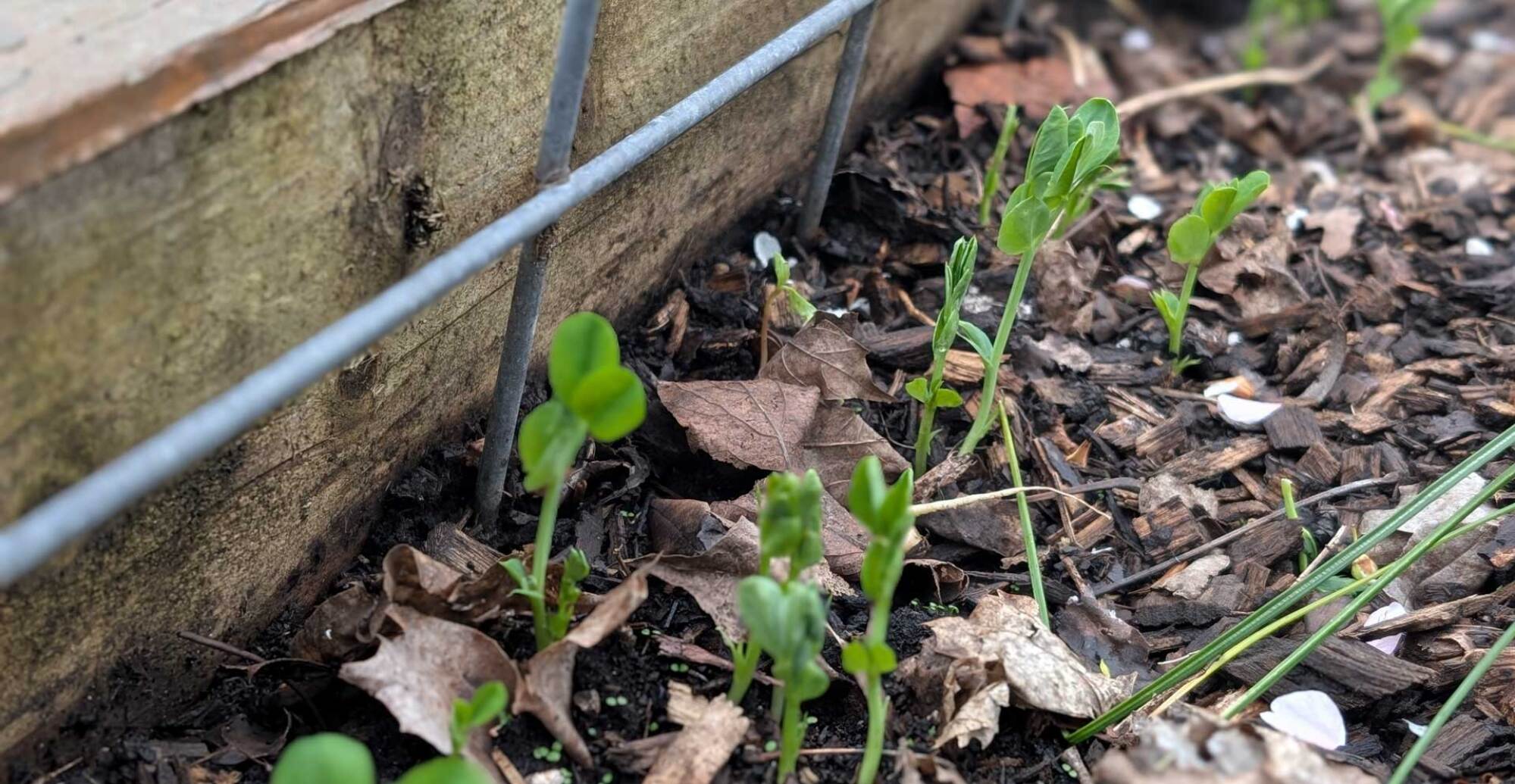
Peas coming up from seed
Credit: Amanda Blum

If you’ve not yet planted peas, it’s go time. They can be direct sown outside and need to be grown against some support. This time of year, I grow shelling pea and sugar snaps on tall vines that climb arches in my yard. I also take stock of my strawberry plants, thinning them so they’re spaced at least six inches apart. Give away extras, or ask your neighbors for their extras if you need them.

I look for my perennial edibles to make sure they’ve survived the winter. The horseradish has been staking it’s claim, poking up leaves from its usual plot. I’ve already replaced a few artichokes that didn’t make it through the last ice storm. The first tiny stalks of asparagus made an appearance this week, which means in a few weeks we’ll be drowning in spears. Now is the time to plant more asparagus crowns, too. I try to add a few crowns each year—they’re usually a dollar or two at the nursery, and in this way, you can establish them in more places. I’ve been waiting with bated breath to see if all the rhubarb I planted last year will return, since last year I lost my fifteen-year-old specimen, but I saw the first leaves begin to poke out of the ground this week. If you need to replace yours, you’ll find rhubarb at your nursery.

Fiddleheads and ramps (which, as a reminder, you can grow at home) should be emerging. It’s also the time to plant your summer potatoes: Your nursery has potato starts, but if you’ve got grocery store potatoes that have sprouted at home, those can go right into the ground.

Spring vegetables planted
carrots, radishes, beets and lettuce planted two weeks ago
Credit: Amanda Blum

I’ve already planted a few rounds of radishes, beets, carrots, and lettuce in the garden, and will continue doing so every few weeks through summer. The spring rain is excellent for helping these seeds I direct sow to germinate.

You can continue to plant spring edibles like spinach, kale, chard, and mustard greens, but if you don’t get broccoli and cauliflower early in the month, you’ll miss your window. These are short crops, but you want them to finish and harvest before you need the room for summer crops like tomatoes. 

You also want to get three long crops in now, starting with parsnips, which need 180 days to grow. Plant them from seed now, and you’ll have enough of this root vegetable to cook all fall. Brussels sprouts also need that long summer to grow if they’re going to be ready for Thanksgiving. Finally, your nursery will have all your onion sets to get into the ground. Keeper onions and leeks need the season to be ready for harvest in late summer or early fall.

Inspect your systems

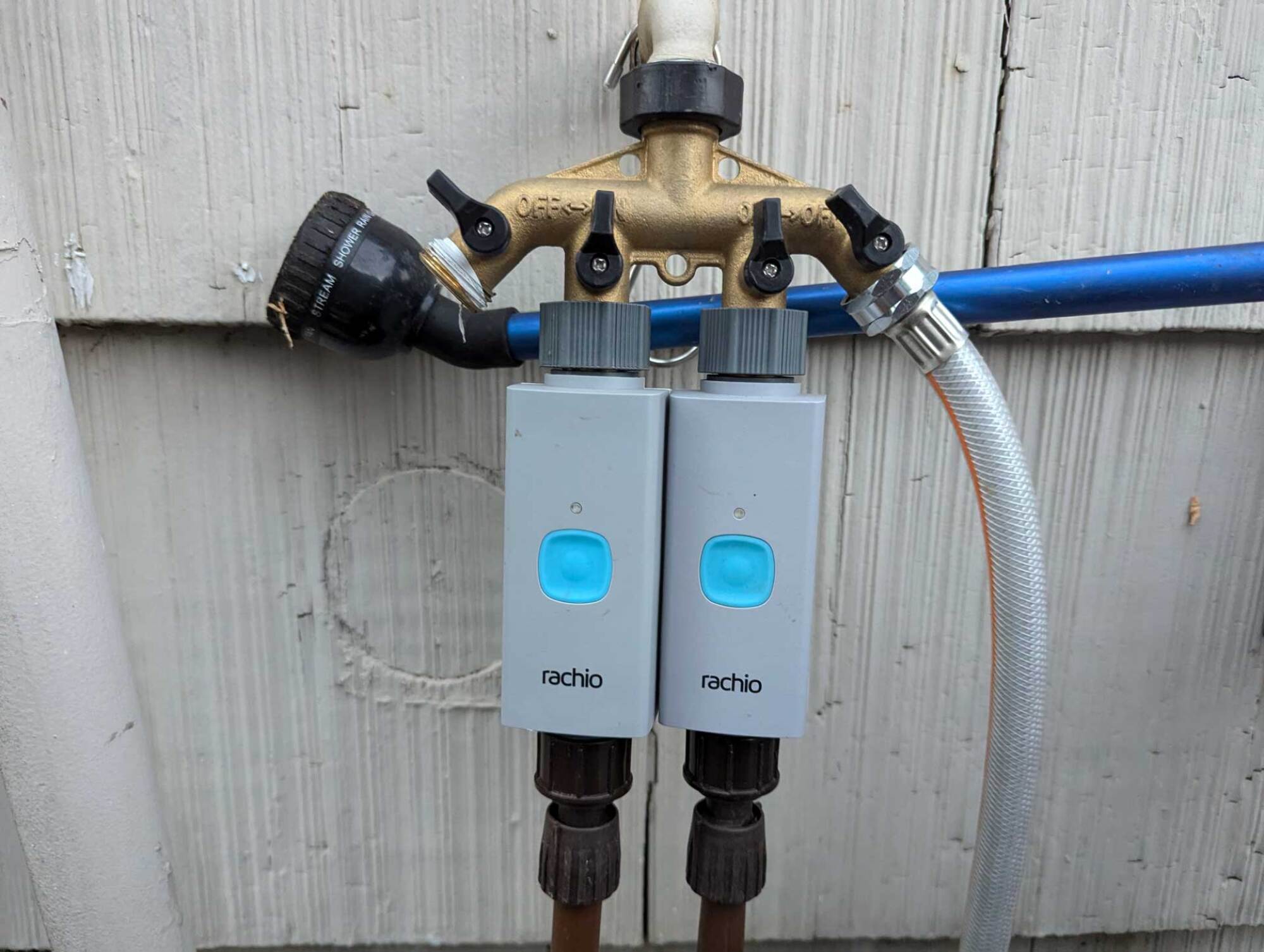
Irrigation system
Check your water systems
Credit: Amanda Blum

It’s also time to turn the irrigation and sprinkler systems back on for the year, so schedule any inspections like backflow testing. Once the water is on, test your controller and look for signs of any leaks in the lines. You can safely reconnect hoses, and put out manual timers if you use them. Be sure to give all your tools a good spray down with vinegar or bleach to sterilize them, and remember to keep a spray bottle with the same on hand for your pruning shears as you move about the garden. Spray them between plants so you are not transferring disease.