Amazon’s new feature could make it easier to get into the latest release in a series, especially if it’s been some time since you’ve read the previous books. The new Recaps feature is part of the latest software update for the Kindle, and the company compares it to “Previously on…” segments you can watch for TV shows. Amazon announced Recaps in a blog post, where it said that you can get access to it once you receive the software update over the air or after you download and install it from Amazon’s website. Amazon didn’t talk about the technology behind the feature in its post, but a spokesperson has confirmed to TechCrunch that the recaps will be AI generated.
Shortly after the feature rolled out, users talked about it on social media, wondering if Amazon is using generative AI to write series summaries. They expressed concerns about the use of generative AI, especially about the possibility of the technology hallucinating plot elements that aren’t actually in the books. “We use technology, including GenAI and Amazon moderators, to create short recaps of books that accurately reflect book content,” Amazon spokesperson Ale Iraheta told the publication. Iraheta assured TechCrunch that Amazon’s recaps are accurate, but of course, use it at your own risk.
At the moment, the Recaps feature is available for best-selling English-language book series on all Kindle devices in the US. To know if your favorite series has one, look for the “View Recaps” button within the series page in your Kindle library. It will soon be available for the Kindle app on iOS, as well.
This article originally appeared on Engadget at https://www.engadget.com/ai/amazon-will-use-ai-to-generate-recaps-for-book-series-on-the-kindle-170018503.html?src=rss
The advent of LLMs and machine learning-based applications “opened the door to a new wave of security threats,” argues Google’s security blog. (Including model and data poisoning, prompt injection, prompt leaking and prompt evasion.)
So as part of the Linux Foundation’s nonprofit Open Source Security Foundation, and in partnership with NVIDIA and HiddenLayer, Google’s Open Source Security Team on Friday announced the first stable model-signing library (hosted at PyPI.org), with digital signatures letting users verify that the model used by their application “is exactly the model that was created by the developers,” according to a post on Google’s security blog.
[S]ince models are an uninspectable collection of weights (sometimes also with arbitrary code), an attacker can tamper with them and achieve significant impact to those using the models. Users, developers, and practitioners need to examine an important question during their risk assessment process: “can I trust this model?”
Since its launch, Google’s Secure AI Framework (SAIF) has created guidance and technical solutions for creating AI applications that users can trust. A first step in achieving trust in the model is to permit users to verify its integrity and provenance, to prevent tampering across all processes from training to usage, via cryptographic signing… [T]he signature would have to be verified when the model gets uploaded to a model hub, when the model gets selected to be deployed into an application (embedded or via remote APIs) and when the model is used as an intermediary during another training run. Assuming the training infrastructure is trustworthy and not compromised, this approach guarantees that each model user can trust the model…
The average developer, however, would not want to manage keys and rotate them on compromise. These challenges are addressed by using Sigstore, a collection of tools and services that make code signing secure and easy. By binding an OpenID Connect token to a workload or developer identity, Sigstore alleviates the need to manage or rotate long-lived secrets. Furthermore, signing is made transparent so signatures over malicious artifacts could be audited in a public transparency log, by anyone. This ensures that split-view attacks are not possible, so any user would get the exact same model. These features are why we recommend Sigstore’s signing mechanism as the default approach for signing ML models.
Today the OSS community is releasing the v1.0 stable version of our model signing library as a Python package supporting Sigstore and traditional signing methods. This model signing library is specialized to handle the sheer scale of ML models (which are usually much larger than traditional software components), and handles signing models represented as a directory tree. The package provides CLI utilities so that users can sign and verify model signatures for individual models. The package can also be used as a library which we plan to incorporate directly into model hub upload flows as well as into ML frameworks.
“We can view model signing as establishing the foundation of trust in the ML ecosystem…” the post concludes (adding “We envision extending this approach to also include datasets and other ML-related artifacts.”)
Then, we plan to build on top of signatures, towards fully tamper-proof metadata records, that can be read by both humans and machines. This has the potential to automate a significant fraction of the work needed to perform incident response in case of a compromise in the ML world…
To shape the future of building tamper-proof ML, join the Coalition for Secure AI, where we are planning to work on building the entire trust ecosystem together with the open source community. In collaboration with multiple industry partners, we are starting up a special interest group under CoSAI for defining the future of ML signing and including tamper-proof ML metadata, such as model cards and evaluation results.
UK-based Jaguar Land Rover says it’s pausing shipments to the US after President Donald Trump imposed a 25 percent tariff on passenger vehicles and other auto imports. The pause will be in effect this month, the Associated Press reports. While the full impact of the tariffs remains to be seen, analysts have said the move could ultimately drive up the cost of new and even used cars.
“The USA is an important market for JLR’s luxury brands,” Jaguar Land Rover said in a statement to AP. “As we work to address the new trading terms with our business partners, we are taking some short-term actions including a shipment pause in April, as we develop our mid- to longer-term plans.”
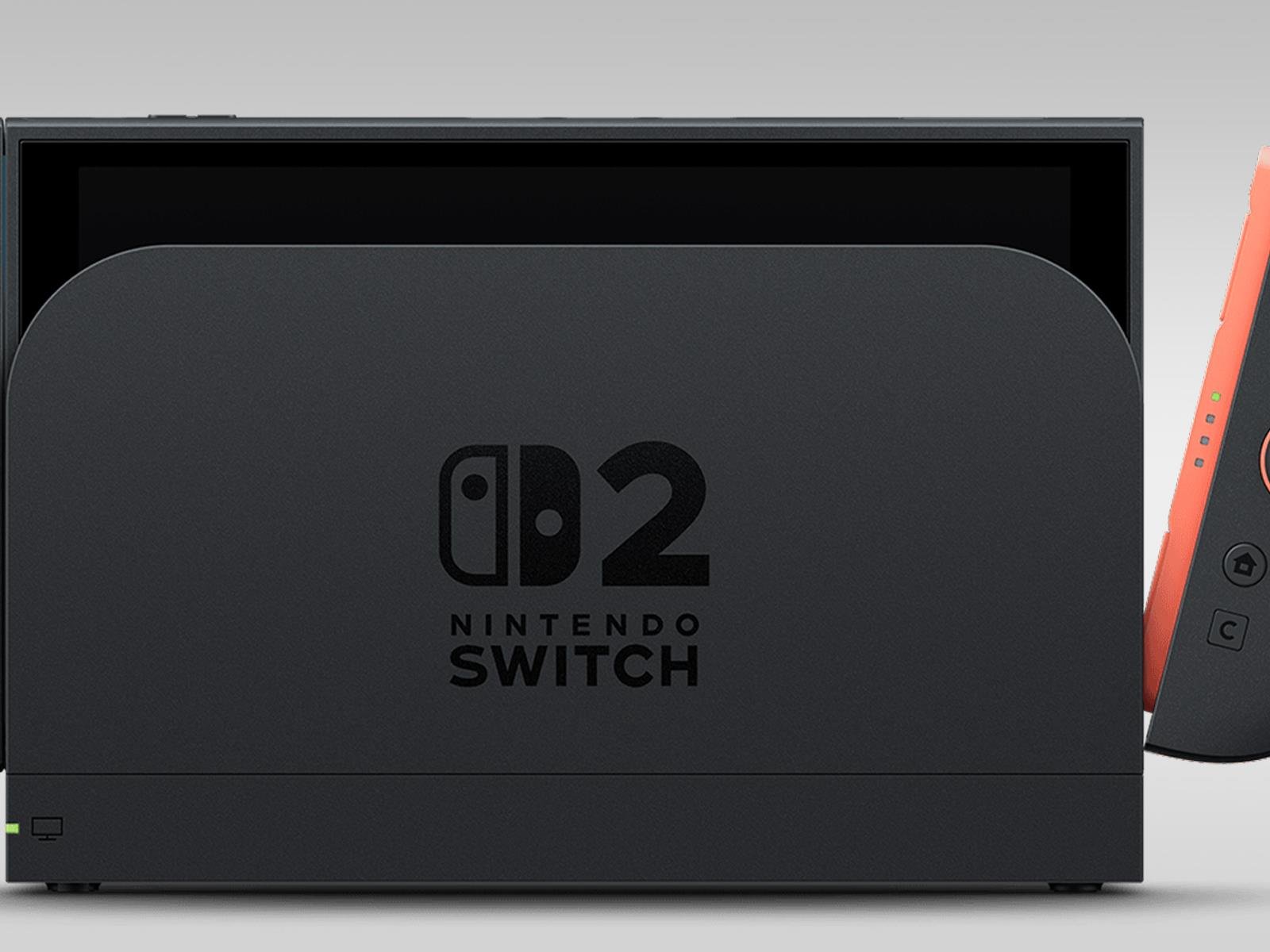
Trump’s tariffs go well beyond the auto industry, and we’re only seeing the beginning of how the US’ trading partners will respond. The president announced a 10 percent baseline tariff on “all countries” this week, and some will face even higher “reciprocal” tariffs. Among the immediate effects, Nintendo has delayed pre-orders of the new Switch 2 in the US.
This article originally appeared on Engadget at https://www.engadget.com/transportation/jaguar-land-rover-pauses-us-shipments-while-it-figures-out-a-plan-for-trumps-tariffs-172512506.html?src=rss
Wouldn’t you know it, just days after Nintendo revealed more details about its Switch 2 console and hot on the heels of us posting a preorder guide to give you a leg up over scalpers and bots, Nintendo and its retail partners are putting the word out that the preorder date in the United States has been delayed indefinitely. The reason? Uncertainty
For individuals that read lots of weblogs, a news aggregator makes keeping track of them effortless, and particularly useful if the weblogs are only updated occasionally.
APT 3.0 has been officially released as the first stable version following an interesting development cycle. APT 3.0 has been dedicated to the late Steve Langasek with his many Debian and Ubuntu contributions over the years…
In addition to all the KDE Plasma activity this week, GNOME developers have also been quiet busy working on a variety of improvements to the open-source desktop on their side of the pond…
LACT 0.7.3 is out this weekend as the newest feature update to this Linux GPU configuration and monitoring tool. LACT helps make up for the lack of any official GUI-based GPU configuration tool on Linux provided by AMD or Intel. It also works on NVIDIA GPUs too for providing a nice unified app for GPU configuration from all three major GPU vendors…
FEX 2504 is out with its newest monthly feature update for this open-source emulator that allows running x86/x86_64 binaries on AArch64 Linux hosts. This alternative to QEMU and Box64 continues focusing on new performance optimizations to further enhance the appeal and speedy potential of this x86_64-on-ARM64 emulator…
Intel’s Open Image Denoise library that is part of their oneAPI Rendering Toolkit as a set of open-source, high performance denoising filters for ray-traced images is out with a new release. Open Image Denoise is used by applications like Blender and with this version 2.3.3 release is expanded GPU support…
It’s been a busy start to April for KDE Plasma developers as they continue working toward the Plasma 6.4 feature release. There have been yet more crash fixes along with other polishing and stability enhancements to kick off the new month…
This tutorial will explain everything about the HTTP 406 Not Acceptable status code. The HTTP 406 Not Acceptable is an HTTP response or status code belonging to 4xx client errors. This means that the page cannot be reached, is unavailable, or the request has bad syntax.
Indonesian President Prabowo Subianto’s ambitious plan to create 1 million hectares of new rice farms in eastern Merauke Regency faces strong criticism from scientists who have warned it will fail due to unsuitable soils and climate. Military “food brigades” are currently guarding bulldozers clearing swampy forests in Indonesian New Guinea for the project, which aims to boost food self-sufficiency for the nation’s 281 million people.
Soil scientists warn that Merauke’s conditions could lead to acidic soils unable to support economically viable rice farming, potentially resulting in abandoned fields vulnerable to wildfires. “Farmers will get no profit at all,” said Dwi Andreas, a soil scientist at Bogor Agricultural University who tested 12 rice varieties in similar soils with poor results.
The initiative mirrors past failed megaprojects, including a 1990s attempt to convert 1 million hectares of Borneo peatlands to rice paddies and a 2020 onion and potato farming expansion in North Sumatra that saw 90% of fields abandoned. A previous 2010 attempt to expand rice farming in Merauke also failed, destroying forests that Indigenous Papuans relied on and increasing childhood malnutrition, according to anthropologist Laksmi Adriani.
Celluloid 0.28 open-source video player is out with a refreshed interface, playlist duration display, and playlist navigation via next/previous buttons.
The US Space Force announced Friday it selected SpaceX, United Launch Alliance, and Blue Origin for $13.7 billion in contracts to deliver the Pentagon’s most critical military to orbit into the early 2030s.
These missions will launch the government’s heaviest national security satellites, like the National Reconnaissance Office’s large bus-sized spy platforms, and deploy them into bespoke orbits. These types of launches often demand heavy-lift rockets with long-duration upper stages that can cruise through space for six or more hours.
The contracts awarded Friday are part of the next phase of the military’s space launch program once dominated by United Launch Alliance, the 50-50 joint venture between legacy defense contractors Boeing and Lockheed Martin.
An anonymous reader quotes a report from TechCrunch: In a world filled with “vibe coding,” Zach Yadegari, teen founder of Cal AI, stands in ironic, old-fashioned contrast. Ironic because Yadegari and his co-founder, Henry Langmack, are both just 18 years old and still in high school. Yet their story, so far, is a classic. Launched in May, Cal AI has generated over 5 million downloads in eight months, Yadegari says. Better still, he tells TechCrunch that the customer retention rate is over 30% and that the app generated over $2 million in revenue last month. […]
The concept is simple: Take a picture of the food you are about to consume, and let the app log calories and macros for you. It’s not a unique idea. For instance, the big dog in calorie counting, MyFitnessPal, has its Meal Scan feature. Then there are apps like SnapCalorie, which was released in 2023 and created by the founder of Google Lens. Cal AI’s advantage, perhaps, is that it was built wholly in the age of large image models. It uses models from Anthropic and OpenAI and RAG to improve accuracy and is trained on open source food calorie and image databases from sites like GitHub.
“We have found that different models are better with different foods,” Yadegari tells TechCrunch. Along the way, the founders coded through technical problems like recognizing ingredients from food packages or in jumbled bowls. The result is an app that the creators say is 90% accurate, which appears to be good enough for many dieters. The report says Yadegari began mastering Python and C# in middle school and went on to build his first business in ninth grade — a website called Totally Science that gave students access to unblocked games (cleverly named to evade school filters). He sold the company at age 16 to FreezeNova for $100,000.
Following the sale, Yadegari immersed himself in the startup scene, watching Y Combinator videos and networking on X, where he met co-founder Blake Anderson, known for creating ChatGPT-powered apps like RizzGPT. Together, they launched Cal AI and moved to a hacker house in San Francisco to develop their prototype.
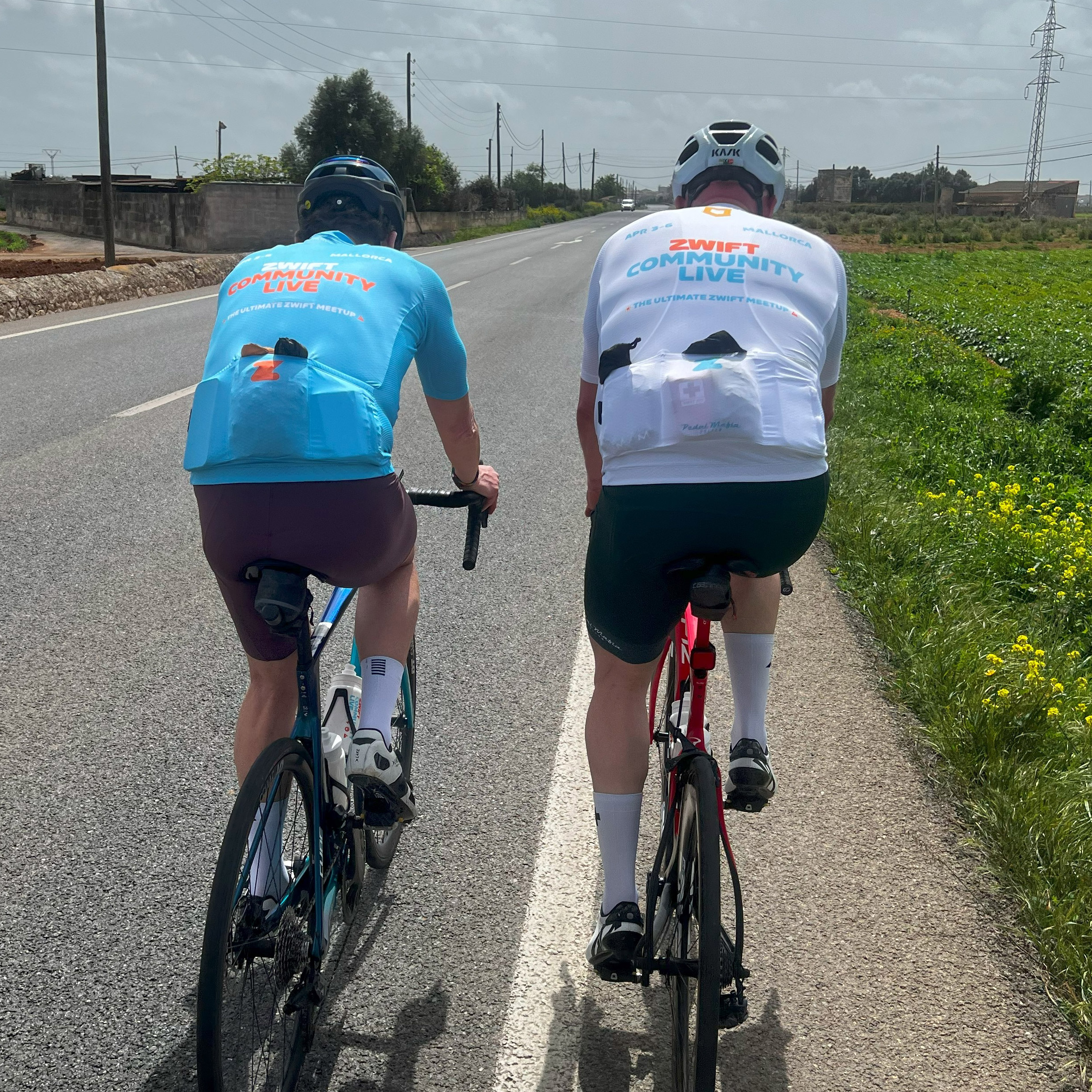
Hundreds of Zwifters have arrived here in Mallorca for a few days of quality riding and IRL hangouts at Zwift Community Live 2025. With so many people to meet and new roads to ride, each person’s daily experience at this event will be unique and personal…. but here’s mine.
The Warmup
Before diving into Day 1, let me give you a few highlights from the days leading up to it:
My wife Monica and I spent two lovely nights at the home of Simon Schofield (creator of the Zwiftcast), just south of Girona. Simon and his wife Jennie were, of course, incredible hosts, and I even got a ride in with Simon in which he put me to work chasing his ebike’s wheel up the local climb! See it on Strava >
We arrived in Mallorca a few days before the official first day of ZCL, because Zwift had invited members of the media out for a “This Season on Zwift” presentation (read the details of what was announced here.) New roads, Zwift Ride crank length options, more HUD data, fitness metrics and outdoor rides giving us XP… it was a lot of good news!
I rode out to Cap de Formentor (the lighthouse!) along with Nathan Guerra, Shane Miller, DC Rainmaker, DesFit, Eric Min, and other media and Zwift HQ folks. It was a great ride with incredible views and just enough climbing, wind, and goats to make it interesting. See it on Strava >
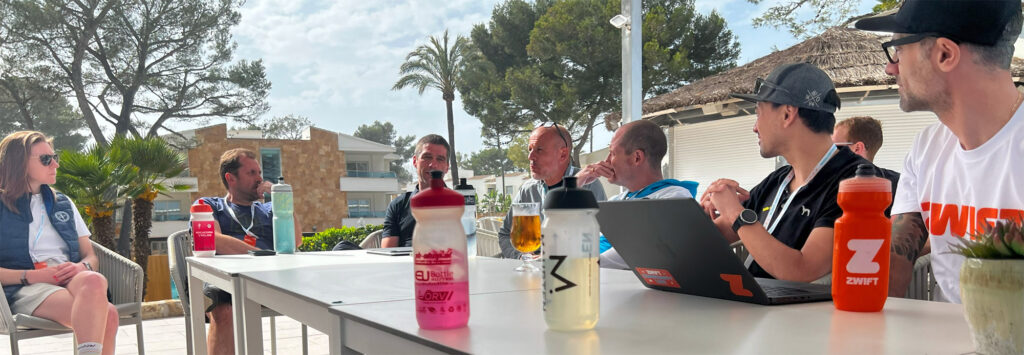
The day before Day 1 (Thursday), Zwift held a meeting with key Club leaders to discuss upcoming features and here from leaders about how Zwift could help them build their communities even more. It was a really fun conversation, and the chattiness in the room made it easy to see why all these folks were good at building communities on Zwift.
The night of Day 0 featured the first of our fireside chats, hosted by Matt Stephens. It was a sort of kickoff chat that featured Zwift CEO Eric Min plus the VP of Product at Zwift, Mark Cote. They spoke of the importance of community at Zwift, some goals for ZCL, and generally set the tone for the event.
Pride Goes Before a Fall
On the flight into Mallorca, I had joked with Monica, “How long into this event will we go before the first Zwift crashes their bike?” (Because the joke is, of course, that Zwifters can’t handle their bikes outside.)
It turns out, not long at all.
Before the epic Cap de Formentor outing on Wednesday afternoon, I was 20 minutes into my first ride in Mallorca, testing the rental bike and shaking out my legs with Nathan Guerra.
It started to rain just a bit… then a bit more… and soon enough, it was a full-on downpour. As we went through a roundabout I felt my rear wheel lose traction, and I quickly hit the deck, body and bike sliding across the entire lane.
So I got the honor of being Zwift’s first “incident report” for the event. Happily, a few scrapes and some soreness weren’t enough to hamper any ride plans. The bibs weren’t even torn through. Ride on!
Breakfast
Now, let’s get into Day 1.
It began with breakfast. Without giving a full review of all the food we eat at ZCL, let me just say that the folks at Iberostar Playa de Muro Village do it right! The food is amazing. A huge variety of high-quality, tasty options are served for breakfast and dinner in a massive buffet style aided by attentive and courteous waitstaff.
I made a granola bowl with fruit and yogurt, and also had a beet-based smoothie, two small pastries, and a cappuccino. Fuel for the fight.
In the dining room everyone was chatting about their ride plans for the day: are you doing the Uber? The Mega? The Pretzel? Which pace group? (Each of ZCL’s three days centers on a bike ride, and attendees have the option of three different ride lengths, aptly named the Uber Pretzel, Mega Pretzel, and The Pretzel. Each ride also has three pace options, and all the groups are led by qualified ride leaders.)
The Mega Pretzel
I went with the Mega Pretzel – the medium-length ride – for two reasons:
It went out to the Cap de Formentor lighthouse again, and I had really enjoyed the ride two days earlier. I wanted to tackle it again now that I had knowledge of how the roads (climbs) layed out.
My left wrist was sore and swollen from the crash, and I wasn’t sure how it would hold up on the longer Uber Pretzel.
Here’s the route we had planned:
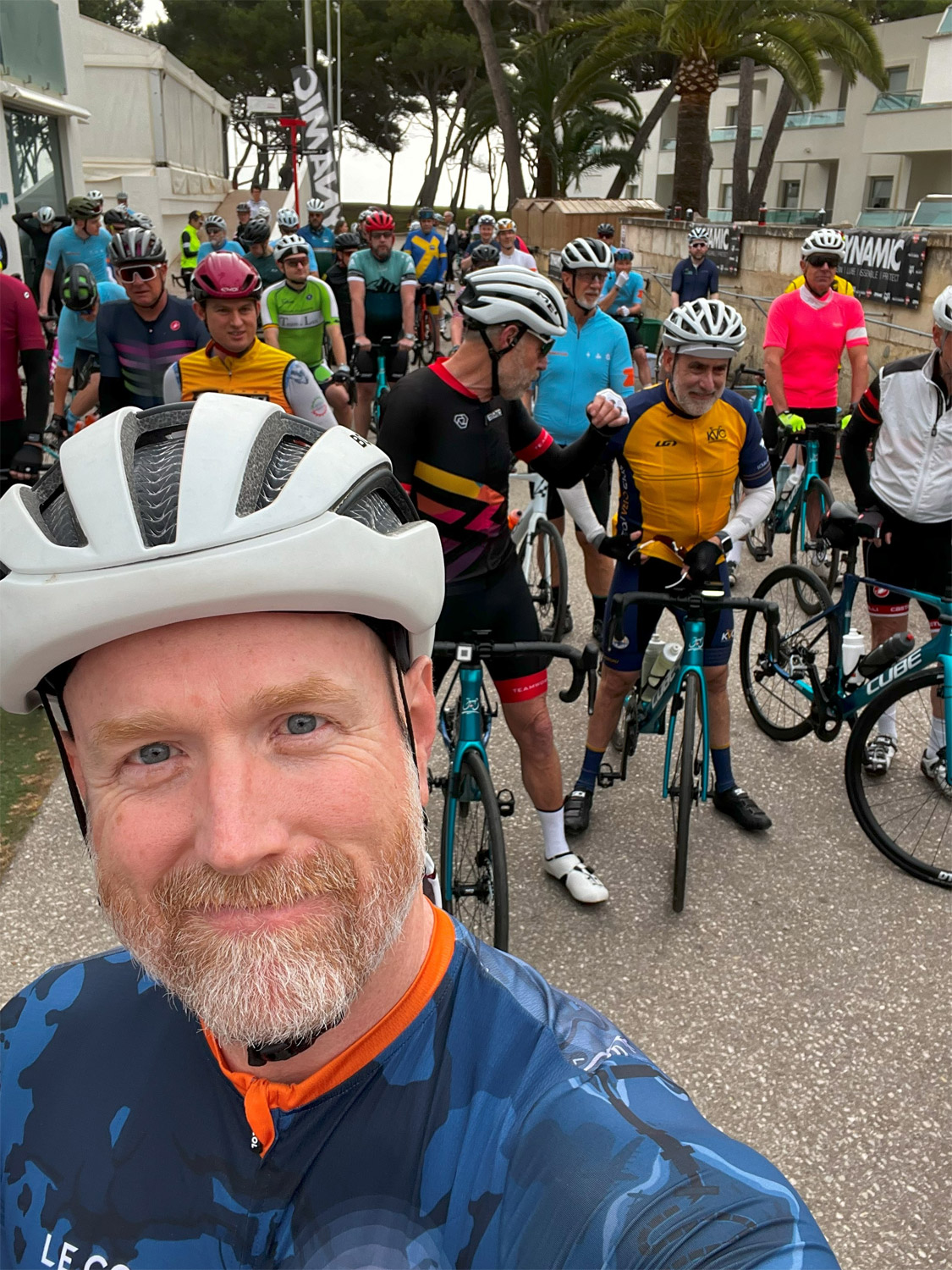
The Uber riders had left an hour earlier, and the Mega riders (the largest group) were slated to leave at 9:30am. We started by breaking into groups of ~12 riders, each with a leader. Dave Towle was on hand to send each group out, and soon enough we were off!
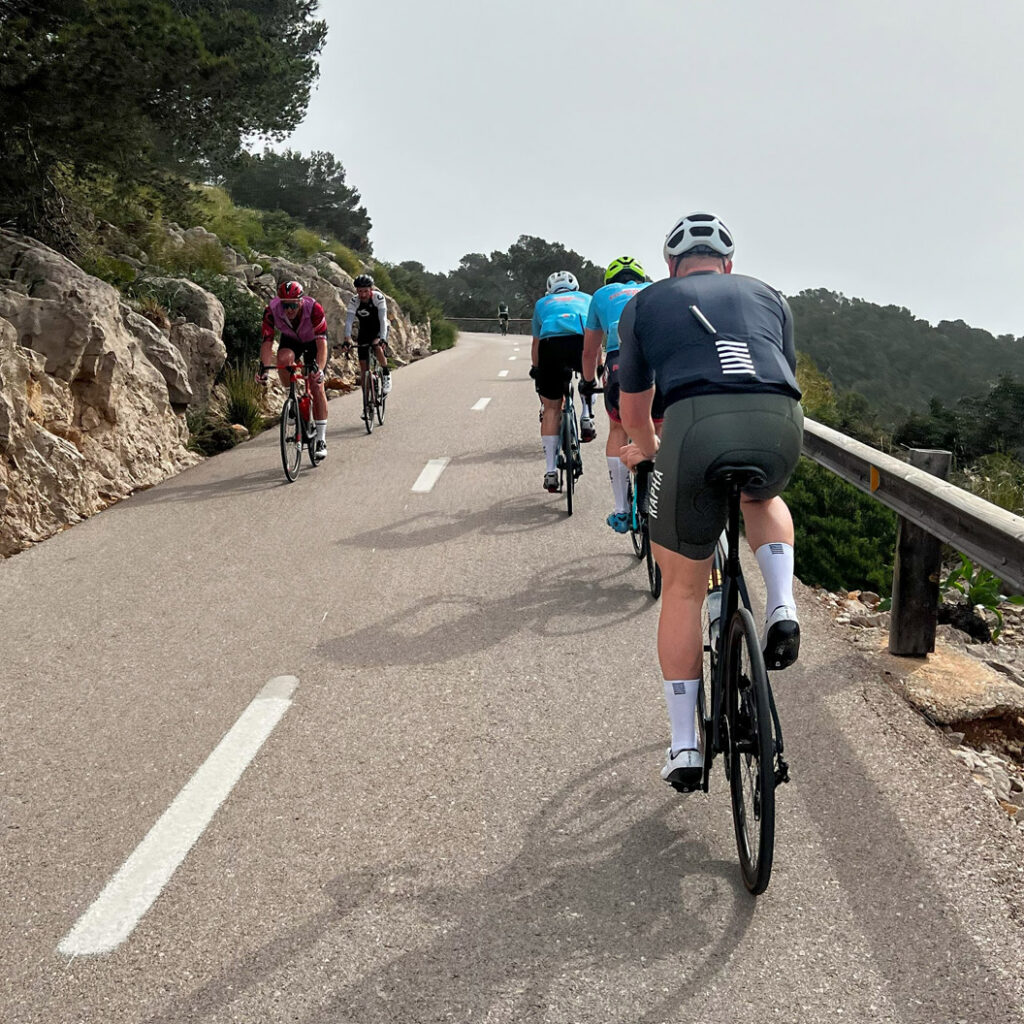
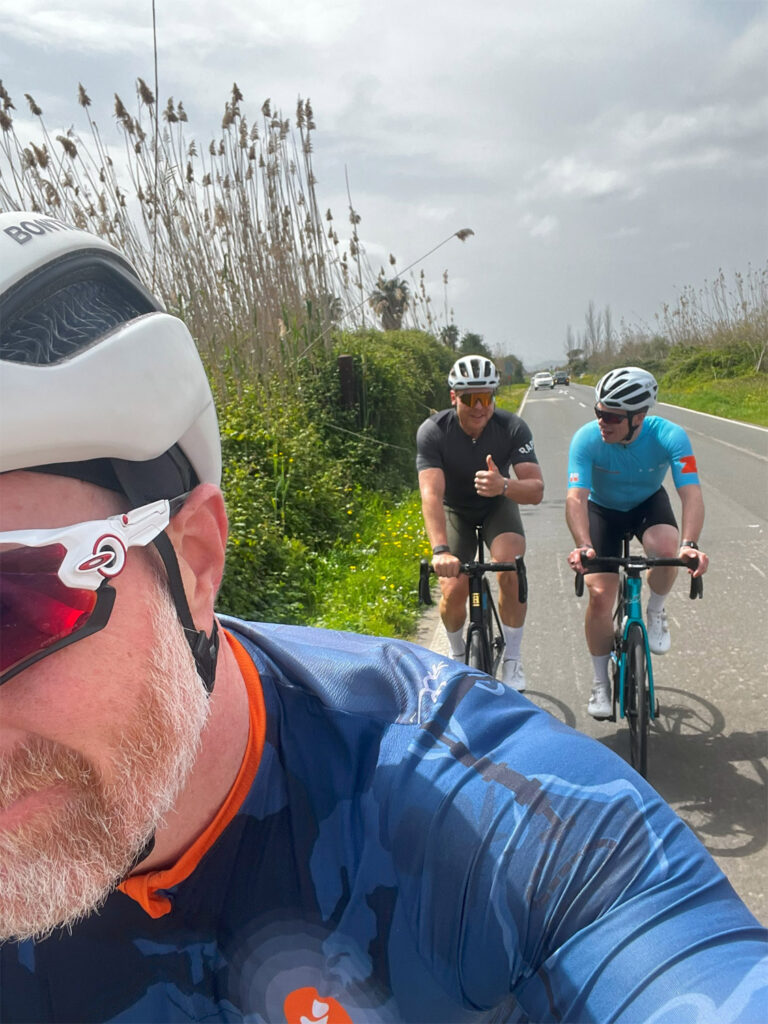
The ride begins with a flat lead-in to the pitchy road that takes you out to the lighthouse. We rode two abreast, keeping an easy speed of ~30kph, then turned onto the first climb of the day: Coll De Sa Creueta. This is the biggest climb on the route, and I had already decided I wanted to hammer it a bit and beat my time from two days prior. And I did! 325W for 11:18 got me to the top, the “first lookout”, around 70 seconds faster than before.
I was pushing fairly hard up one climb, passing lots of riders on my right, when a big guy flew past me on my left. He was in the saddle, undoubtedly churning out big watts, but looked beautiful doing it with ease and perfect form. “Who is this cycling Adonis?” I said to myself. I hammered a bit to catch his wheel, and soon discovered it was Sir Chris Hoy himself, here to deliver a fireside chat later in the week.
That’s Sir Chris Hoy’s wheel I’m struggling to hold!In this shot: Leah Thorvilson, Maddie Le Roux (2023 Zwift Academy winner), Rick Zabel, Chris Hoy, and others…
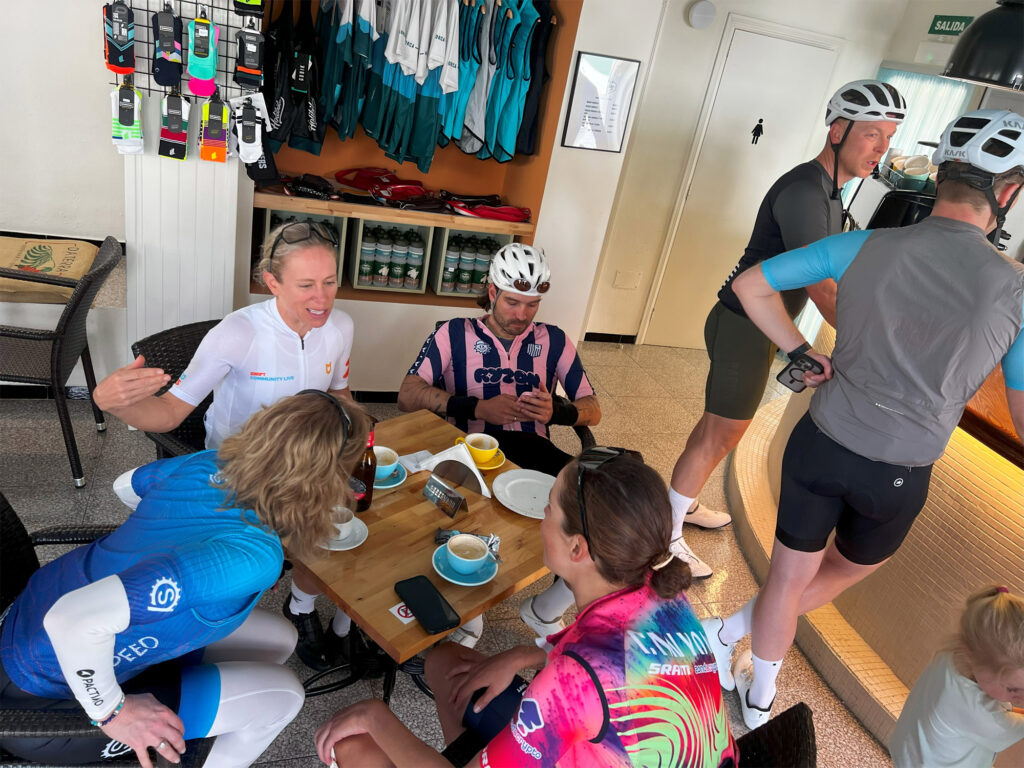
Near the end of the ride, we made our scheduled coffee stop at a cafe along with a few other 12-member ZCL groups. As I stood in line, I looked around and marveled at everyone in the room: Matt Stephens, Leah Thorvilson, two Canyon/SRAM riders, Rick Zabel, Sir Chris… and lots of “ordinary” Zwifters too. What a crowd!
The road out to the lighthouse is twisty, with epic views around every corner, and (at least in my experience) stiff winds as you near the turnaround point at the lighthouse. Once you’re on the more exposed final few kilometers of tarmac leading up to the point, the views are wild, the winds are high, and all the senses are firing. Amazing. Highly recommended.
Wrapping Up the Ride
Once we came back from the lighthouse on the same road we’d gone out, it was time to finish up with ~30k of rolling/flat roads back to our base in Platja de Muro. Easy peasy.
Matt Stephens (left) and ride leader Andy pulling us home on the flats
We heard that Chris Hoy was behind our group along with Zwift’s Chris Snook, as Sir Chris had suffered a bit of a mechanical. We were getting close to home and our group didn’t want to wait around for the Chrises to close the 10-minute gap, but I decided I did.
It turned out to be a good call. Riding and chatting with those two was more interesting than sitting in the larger group and cruising home. Sir Chris shared stories of his early years, riding in Mallorca as an 18-year-old. And before we knew it, were were back at the hotel. 84km with 1028 meters of elevation done and dusted! See it on Strava >
I arrived back at the hotel around 3 in the afternoon, meeting Monica who had finished her ride a bit earlier.
The day ended with:
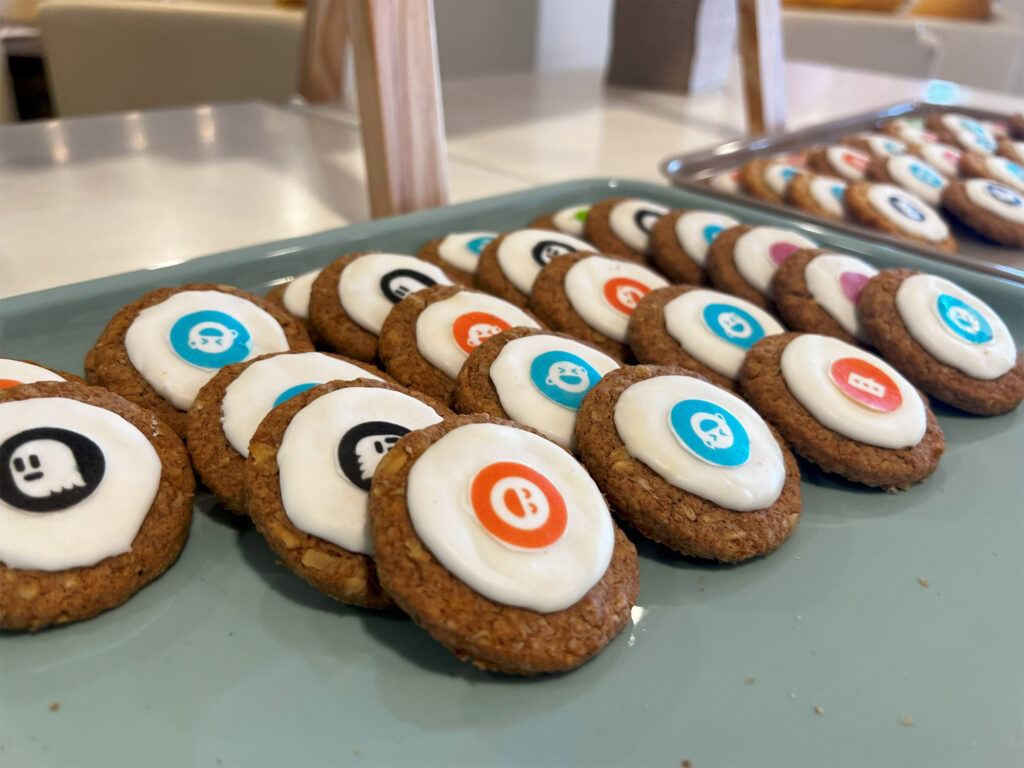
Kickstarting our recovery with powerup cookies and Normatec boots
A brainstorming session with ~15 of the top race organizers on Zwift and members of Zwift HQ
An amazing dinner
Everyone gathering for a hilarious and inspiring fireside chat with Kristin Armstrong (3x Olympic gold medalist and level 51 Zwifter) hosted by Dave Towle and Matt Stephens. Kristin talked about coming to Mallorca where everyone trains, and how now… we’re everyone.
Coming Up Tomorrow
Today’s ride was lovely, and it was great to sit in and chat with lots of Zwift community members. My wrist felt good, too, so I’m looking for something a bit more challenging tomorrow. It’s time to jump into the Uber Pretzel group! Here’s the planned route:
Watch this space to learn how it goes…
Zwift even has pro photographers taking shots throughout the event… here’s me descending from the lighthouse.