Python’s PyPI Finally Gets Closer to Adding ‘Organization Accounts’ and SBOMs

Back in 2023 Python’s infrastructure director called it “the first step in our plan to build financial support and long-term sustainability of PyPI” while giving users “one of our most requested features: organization accounts.” (That is, “self-managed teams with their own exclusive branded web addresses” to make their massive Python Package Index repository “easier to use for large community projects, organizations, or companies who manage multiple sub-teams and multiple packages.”)
Nearly two years later, they’ve announced that they’re “making progress” on its rollout…
Over the last month, we have taken some more baby steps to onboard new Organizations, welcoming 61 new Community Organizations and our first 18 Company Organizations. We’re still working to improve the review and approval process and hope to improve our processing speed over time. To date, we have 3,562 Community and 6,424 Company Organization requests to process in our backlog.
They’ve also onboarded a PyPI Support Specialist to provide “critical bandwidth to review the backlog of requests” and “free up staff engineering time to develop features to assist in that review.” (And “we were finally able to finalize our Terms of Service document for PyPI,” build the tooling necessary to notify users, and initiate the Terms of Service rollout. [Since launching 20 years ago PyPi’s terms of service have only been updated twice.]

In other news the security developer-in-residence at the Python Software Foundation has been continuing work on a Software Bill-of-Materials (SBOM) as described in Python Enhancement Proposal #770. The feature “would designate a specific directory inside of Python package metadata (“.dist-info/sboms”) as a directory where build backends and other tools can store SBOM documents that describe components within the package beyond the top-level component.”

The goal of this project is to make bundled dependencies measurable by software analysis tools like vulnerability scanning, license compliance, and static analysis tools. Bundled dependencies are common for scientific computing and AI packages, but also generally in packages that use multiple programming languages like C, C++, Rust, and JavaScript. The PEP has been moved to Provisional Status, meaning the PEP sponsor is doing a final review before tools can begin implementing the PEP ahead of its final acceptance into changing Python packaging standards. Seth has begun implementing code that tools can use when adopting the PEP, such as a project which abstracts different Linux system package managers functionality to reverse a file path into the providing package metadata.

Security developer-in-residence Seth Larson will be speaking about this project at PyCon US 2025 in Pittsburgh, PA in a talk titled “Phantom Dependencies: is your requirements.txt haunted?”

Meanwhile InfoWorld reports that newly approved Python Enhancement Proposal 751 will also give Python a standard lock file format.


Read more of this story at Slashdot.

Eric Raymond, John Carmack Mourn Death of ‘Bufferbloat’ Fighter Dave Taut

Wikipedia remembers Dave Täht as “an American network engineer, musician, lecturer, asteroid exploration advocate, and Internet activist. He was the chief executive officer of TekLibre.”

But on X.com Eric S. Raymond called him “one of the unsung heroes of the Internet, and a close friend of mine who I will miss very badly.”

Dave, known on X as @mtaht because his birth name was Michael, was a true hacker of the old school who touched the lives of everybody using X. His work on mitigating bufferbloat improved practical TCP/IP performance tremendously, especially around video streaming and other applications requiring low latency. Without him, Netflix and similar services might still be plagued by glitches and stutters.

Also on X, legendary game developer John Carmack remembered that Täht “did a great service for online gamers with his long campaign against bufferbloat in routers and access points. There is a very good chance your packets flow through some code he wrote.” (Carmack also says he and Täht “corresponded for years”.)

Raymond remembered first meeting Täht in 2001 “near the peak of my Mr. Famous Guy years. Once, sometimes twice a year he’d come visit, carrying his guitar, and crash out in my basement for a week or so hacking on stuff. A lot of the central work on bufferbloat got done while I was figuratively looking over his shoulder…”

Raymond said Täht “lived for the work he did” and “bore deteriorating health stoically. While I know him he went blind in one eye and was diagnosed with multiple sclerosis.”
He barely let it slow him down. Despite constantly griping in later years about being burned out on programming, he kept not only doing excellent work but bringing good work out of others, assembling teams of amazing collaborators to tackle problems lesser men would have considered intractable… Dave should have been famous, and he should have been rich. If he had a cent for every dollar of value he generated in the world he probably could have bought the entire country of Nicaragua and had enough left over to finance a space program. He joked about wanting to do the latter, and I don’t think he was actually joking…

In the invisible college of people who made the Internet run, he was among the best of us. He said I inspired him, but I often thought he was a better and more selfless man than me. Ave atque vale, Dave.

Weeks before his death Täht was still active on X.com, retweeting LWN’s article about “The AI scraperbot scourge”, an announcement from Texas Instruments, and even a Slashdot headline.

Täht was also Slashdot reader #603,670, submitting stories about network latency, leaving comments about AI, and making announcements about the Bufferbloat project.


Read more of this story at Slashdot.

OpenAI’s Motion to Dismiss Copyright Claims Rejected by Judge

Is OpenAI’s ChatGPT violating copyrights? The New York Times sued OpenAI in December 2023. But Ars Technica summarizes OpenAI’s response. The New York Times (or NYT) “should have known that ChatGPT was being trained on its articles… partly because of the newspaper’s own reporting…”

OpenAI pointed to a single November 2020 article, where the NYT reported that OpenAI was analyzing a trillion words on the Internet.

But on Friday, U.S. district judge Sidney Stein disagreed, denying OpenAI’s motion to dismiss the NYT’s copyright claims partly based on one NYT journalist’s reporting. In his opinion, Stein confirmed that it’s OpenAI’s burden to prove that the NYT knew that ChatGPT would potentially violate its copyrights two years prior to its release in November 2022… And OpenAI’s other argument — that it was “common knowledge” that ChatGPT was trained on NYT articles in 2020 based on other reporting — also failed for similar reasons…

OpenAI may still be able to prove through discovery that the NYT knew that ChatGPT would have infringing outputs in 2020, Stein said. But at this early stage, dismissal is not appropriate, the judge concluded. The same logic follows in a related case from The Daily News, Stein ruled. Davida Brook, co-lead counsel for the NYT, suggested in a statement to Ars that the NYT counts Friday’s ruling as a win. “We appreciate Judge Stein’s careful consideration of these issues,” Brook said. “As the opinion indicates, all of our copyright claims will continue against Microsoft and OpenAI for their widespread theft of millions of The Times’s works, and we look forward to continuing to pursue them.”

The New York Times is also arguing that OpenAI contributes to ChatGPT users’ infringement of its articles, and OpenAI lost its bid to dismiss that claim, too. The NYT argued that by training AI models on NYT works and training ChatGPT to deliver certain outputs, without the NYT’s consent, OpenAI should be liable for users who manipulate ChatGPT to regurgitate content in order to skirt the NYT’s paywalls… At this stage, Stein said that the NYT has “plausibly” alleged contributory infringement, showing through more than 100 pages of examples of ChatGPT outputs and media reports showing that ChatGPT could regurgitate portions of paywalled news articles that OpenAI “possessed constructive, if not actual, knowledge of end-user infringement.” Perhaps more troubling to OpenAI, the judge noted that “The Times even informed defendants ‘that their tools infringed its copyrighted works,’ supporting the inference that defendants possessed actual knowledge of infringement by end users.”


Read more of this story at Slashdot.

Ring founder Jamie Siminoff is back at Amazon to run its video doorbell unit

Jamie Siminoff, who founded Ring and started the company in his garage, is back at Amazon after leaving the company as its CEO in 2023. Siminoff joined Amazon when the e-commerce website acquired Ring in 2018, but he left in 2023 and founded another startup that he sold to lock maker Latch Inc. When he left Amazon two years ago, he said that invention was his true passion. Now, he’s taking on the role as the vice president in charge of not just Ring, but also Amazon’s smart home camera unit Blink, the company’s in-garage delivery operations called Key and the Amazon Sidewalk low-bandwith, long-range shared network. 

Siminoff is replacing Elizabeth Hamren, who took over his role two years ago. Hamren used to be the COO of Discord and was also an executive at Microsoft and at Meta. According to Bloomberg, she’s still looking for new opportunities from inside and outside the company. 

In a post welcoming him back posted on the Amazon website, Siminoff briefly and broadly talked about his plans for the divisions he’s heading. He plans to focus on security, on making people feel their “homes are safe, even when they’re thousands of miles away.” Siminoff also wants to make sure Amazon’s experiences related to home security “work seamlessly across different types of devices.” In addition, he talked about how he’s going to explore the use of artificial intelligence in Amazon’s products and services in the future. “The AI transformation happening right now is a once-in-a-generation opportunity, and I think we’re super well positioned with helpful and practical AI features like Smart Video Search,” he said. “It’s just the start here — we’re just scratching the surface of what we can do with AI — and I look forward to digging into this with the team even more.”

This article originally appeared on Engadget at https://www.engadget.com/big-tech/ring-founder-jamie-siminoff-is-back-at-amazon-to-run-its-video-doorbell-unit-130009731.html?src=rss

A Busy Hurricane Season is Expected. Here’s How It Will Be Different From the Last

An anonymous reader shares a report: Yet another busy hurricane season is likely across the Atlantic this year — but some of the conditions that supercharged storms like Hurricanes Helene and Milton in 2024 have waned, according to a key forecast issued Thursday.

A warm — yet no longer record-hot — strip of waters across the Atlantic Ocean is forecast to help fuel development of 17 named tropical cyclones during the season that runs from June 1 through Nov. 30, according to Colorado State University researchers. Of those tropical cyclones, nine are forecast to become hurricanes, with four of those expected to reach “major” hurricane strength.

That would mean a few more tropical storms and hurricanes than in an average year, yet slightly quieter conditions than those observed across the Atlantic basin last year. This time last year, researchers from CSU were warning of an “extremely active” hurricane season with nearly two dozen named tropical storms. The next month, the National Oceanic and Atmospheric Administration released an aggressive forecast, warning the United States could face one of its worst hurricane seasons in two decades.

The forecast out Thursday underscores how warming oceans and cyclical patterns in storm activity have primed the Atlantic basin for what is now a decades-long string of frequent, above-normal — but not necessarily hyperactive — seasons, said Philip Klotzbach, a senior research scientist at Colorado State and the forecast’s lead author.


Read more of this story at Slashdot.

How to customize your iPhone’s home screen in iOS 18

The official launch of Apple’s iOS 18 brought with it some fresh ways to customize your iPhone’s home screen. Rather than leaving unwanted apps hanging around like a bad smell in places you don’t want them, users can now take full control of app placement and make their home screen their own. Whether you’re looking to add useful widgets, reorganize your apps or get rid of the ones you never use, customizing your iPhone home screen can help your device feel a little more unique. Here’s a simple step-by-step guide to everything you can do to make your iOS 18 home screen look better and work the way you want.

How to add, edit and remove widgets

Widgets provide a convenient at-a-glance view of an app’s data or functionality, giving you quick access to information and reducing the need to open the app itself. A well-placed widget allows you to check the weather, view your calendar or access music controls, all without opening an app, giving your thumb a well-earned rest. Everybody loves a good shortcut, and with iOS 18, you can add, edit, or remove widgets easily, letting you jump straight to the information that matters.

To add a widget:

  1. Touch and hold an empty area on your home screen until the app icons start to jiggle.

  2. Tap the Edit button in the top-left corner and select Add Widget.

  3. Scroll or search for the widget you want, then tap it.

  4. Swipe left or right to choose a size (some offer different layouts).

  5. Tap Add Widget to place it on your screen.

  6. Drag it to your preferred spot, then tap Done (top right).

To edit a widget:

  1. Press and hold the widget you want to change.

  2. Tap Edit Widget (if available). If Edit Widget isn’t available, you can cycle through the icons for different placement and layout options.

  3. Adjust settings like what calendar it shows, which location for the weather, etc. These options will be unique to each app’s widget.

To remove a widget:

  1. Press and hold the widget.

  2. Tap Remove Widget, then confirm.

How to add and edit widgets in iOS 18
Rob Webb for Engadget

How to move apps and widgets on the home screen

Shuffling your home screen apps and widgets is also a cinch thanks to iOS 18’s customization overhaul. It’s a simple but useful way to personalize your iPhone’s home screen and declutter your wallpaper, so your loved ones’ faces don’t become buried underneath a wall of app icons.

  1. Tap and hold on any app to reveal a menu.

  2. Select Edit Home Screen, where you can move the apps across pages by dragging them to the edge of the screen.

  3. Tap Done when you’re finished.

You can also stack one app on top of another to automatically create a folder (more on that below).

How to customize apps and widgets on the home screen

Moving your most-used apps into prime position is all well and good, but if you’re going for a particular aesthetic with your home screen, the default appearance of an app icon can sometimes spoil the overall look. Luckily, in iOS 18, you can exert more control over how your apps look, including the option to change app icon colors and how widgets are displayed.

To customize your app icon colors:

  1. Press and hold on the home screen and tap Edit at the top.

  2. Choose Customize to change background colors (like dark, light or a custom color) or apply a different layout.

However, bear in mind that not all app icons can change color. If these steps don’t work for you, you may be left with the odd rogue app icon, sticking out like a sore thumb. In which case, you can hide the app icon from view, while still being able to access it easily from the app library.

How to lock or hide an app

Security is a top priority, particularly when it comes to your smartphone. You might have certain apps you want to keep private and for your eyes only. If so, you’ll be happy to know that there are two ways in which you can prevent unwanted eyes on your apps. You can hide or lock an app behind a passcode or Face ID; this prevents unauthorized access and keeps your apps in a Hidden folder. Similarly, you can remove apps entirely from the home screen, still allowing you (and others if they have access) to view them in your App Library.

To lock an app:

  1. Long-press the icon of the app you want to lock on the home screen.

  2. Select Require Face ID (or Touch ID or Passcode).

  3. Confirm your selection by pressing Require Face ID (or Touch ID or Passcode).

To hide an app:

  1. Long-press the icon of the app you want to lock on the home screen.

  2. Select Require Face ID (or Touch ID or Passcode).

  3. Confirm your selection by pressing Require Face ID (or Touch ID or Passcode)

  4. Tap Hide and Require Face ID (or Touch ID or Passcode), then tap Hide App.

How to organize your apps in folders

Folders are a great way to declutter your home screen and keep similar apps grouped together. If you’re the type of person who likes to keep things tidy and organized, storing your apps in folders is a good way to do it.

To create a folder:

  1. Drag one app icon over another, and iOS 18 will automatically create a folder with both.

  2. Tap the name to rename the folder (e.g., “Social” or “Work”).

  3. Drag in additional apps if you want.

To remove a folder:

  1. Move all the apps out of the folder, and it will disappear once it’s empty.

How to remove or delete apps

The struggle is real when it comes to app bloat, and sometimes a bit of a spring clean is needed. If your home screen needs a bit of freshening up, you can kick a seldom-used app to the curb, or at least kick it off your home screen.

To remove an app from the home screen (without deleting it):

  1. Tap and hold the app icon.

  2. Tap Remove App.

  3. Select Remove from Home Screen.

  4. When you want to use that app, navigate to the App Library (swipe left past your last home page) or swipe down from the top of your home screen to search for it.

To delete an app completely:

  1. Tap and hold the app icon.

  2. Tap Remove App.

  3. Select Delete App, then confirm.

To re-download a deleted app:

  1. Open the App Store, search for the app and tap the download icon.

How to remove apps from your home screen in iOS 18
Rob Webb for Engadget

A few more tips to personalize your home screen space

Widgets Smart Stacks: Using this feature, you can combine multiple widgets into a stack you can swipe through. To do this, just drag one widget on top of another of the same size.

App Library shortcuts: If you want a cleaner home screen, you can remove most apps and rely on the App Library (swipe all the way left) or the search tool to launch what you need.

Focus mode customization: Each Focus mode can have its own custom home screen. This is a useful tool for separating your work life from your personal life.

This article originally appeared on Engadget at https://www.engadget.com/mobile/smartphones/how-to-customize-your-iphones-home-screen-in-ios-18-120100872.html?src=rss

Dustland Delivery plays like a funny, tough, post-apocalyptic Oregon Trail

Road trips with just two people always have their awkward silences. In Dustland Delivery, my character, a sharpshooter, has tried to break the ice with the blacksmith he hired a few towns back, with only intermittent success.

Remember that bodyguard, the one I unsuccessfully tried to flirt with at that bar? The blacksmith was uninterested. What about that wily junk dealer, or the creepy cemetery? Silence. She only wanted to discuss “Abandoned train” and “Abandoned factory,” even though, in this post-apocalypse, abandonment was not that rare. But I made a note to look out for any rusted remains; stress and mood are far trickier to fix than hunger and thirst.

Dustland Delivery release trailer.

Dustland Delivery, available through Steam for Windows (and Proton/Steam Deck), puts you in the role typically taken up by NPCs in other post-apocalyptic RPGs. You’re a trader, buying cheap goods in one place to sell at a profit elsewhere, and working the costs of fuel, maintenance, and raider attacks into your margins. You’re in charge of everything on your trip: how fast you drive, when to rest and set up camp, whether to approach that caravan of pickups or give them a wide berth.

Read full article

Comments

Editorial: Mammoth de-extinction is bad conservation

The start-up Colossal Biosciences aims to use gene-editing technology to bring back the woolly mammoth and other extinct species. Recently, the company achieved major milestones: last year, they generated stem cells for the Asian elephant, the mammoth’s closest living relative, and this month they published photos of genetically modified mice with long, mammoth-like coats. According to the company’s founders, including Harvard and MIT professor George Church, these advances take Colossal a big step closer to their goal of using mammoths to combat climate change by restoring Arctic grassland ecosystems. Church also claims that Colossal’s woolly mammoth program will help protect endangered species like the Asian elephant, saying “we’re injecting money into conservation efforts.”

In other words, the scientific advances Colossal makes in their lab will result in positive changes from the tropics to the Arctic, from the soil to the atmosphere.

Colossal’s Jurassic Park-like ambitions have captured the imagination of the public and investors, bringing its latest valuation to $10 billion. And the company’s research does seem to be resulting in some technical advances. But I’d argue that the broader effort to de-extinct the mammoth is—as far as conservation efforts go—incredibly misguided. Ultimately, Colossal’s efforts won’t end up being about helping wild elephants or saving the climate. They’ll be about creating creatures for human spectacle, with insufficient attention to the costs and opportunity costs to human and animal life.

Read full article

Comments

Bonobos May Combine Words In Ways Previously Thought Unique To Humans

A new study shows bonobos can combine vocal calls in ways that mirror human language, producing phrases with meanings beyond the sum of individual sounds. “Human language is not as unique as we thought,” said Dr Melissa Berthet, the first author of the research from the University of Zurich. Another author, Dr Simon Townsend, said: “The cognitive building blocks that facilitate this capacity is at least 7m years old. And I think that is a really cool finding.”
The Guardian reports: Writing in the journal Science, Berthet and colleagues said that in the human language, words were often combined to produce phrases that either had a meaning that was simply the sum of its parts, or a meaning that was related to, but differed from, those of the constituent words. “‘Blond dancer’ — it’s a person that is both blond and a dancer, you just have to add the meanings. But a ‘bad dancer’ is not a person that is bad and a dancer,” said Berthet. “So bad is really modifying the meaning of dancer here.” It was previously thought animals such as birds and chimpanzees were only able to produce the former type of combination, but scientists have found bonobos can create both.

The team recorded 700 vocalizations from 30 adult bonobos in the Democratic Republic of the Congo, checking the context of each against a list of 300 possible situations or descriptions. The results reveal bonobos have seven different types of call, used in 19 different combinations. Of these, 15 require further analysis, but four appear to follow the rules of human sentences. Yelps — thought to mean “‘et’s do that” — followed by grunts — thought to mean “look at what I am doing,” were combined to make “yelp-grunt,” which appeared to mean “let’s do what I’m doing.” The combination, the team said, reflected the sum of its parts and was used by bonobos to encourage others to build their night nests.

The other three combinations had a meaning apparently related to, but different from, their constituent calls. For example, the team found a peep — which roughly means “I would like to …” — followed by a whistle — appeared to mean “let’s stay together” — could be combined to create “peep-whistle.” This combination was used to smooth over tense social situations, such as during mating or displays of prowess. The team speculated its meaning was akin to “let’s find peace.” The team said the findings in bonobos, together with the previous work in chimps, had implications for the evolution of language in humans, given all three species showed the ability to combine words or vocalizations to create phrases.


Read more of this story at Slashdot.

Fram2 Crew Returns To Earth After Polar Orbit Mission

SpaceX’s Fram2 mission returned safely after becoming the first crewed spaceflight to orbit directly over Earth’s poles. From a report: Led by cryptocurrency billionaire Chun Wang, who is the financier of this mission, the Fram2 crew has been free-flying through orbit since Monday. The group splashed down at 9:19 a.m. PT, or 12:19 p.m. ET, off the coast of California — the first West Coast landing in SpaceX’s five-year history of human spaceflight missions. The company livestreamed the splashdown and recovery of the capsule on its website.

During the journey, the Fram2 crew members were slated to carry out various research projects, including capturing images of auroras from space and documenting their experiences with motion sickness. […] This trip is privately funded, and such missions allow for SpaceX’s customers to spend their time in space as they see fit. For Fram2, the crew traveled to orbit prepared to carry out 22 research and science experiments, some of which were designed and overseen by SpaceX. Most of the research involves evaluating crew health.


Read more of this story at Slashdot.

Meta introduces Llama 4 with two new AI models available now, and two more on the way

Meta has released the first two models from its multimodal Llama 4 suite: LLama 4 Scout and Llama 4 Maverick. Maverick is “the workhorse” of the two and excels at image and text understanding for “general assistant and chat use cases,” the company said in a blog post, while the smaller model Scout could tackle things like “multi-document summarization, parsing extensive user activity for personalized tasks, and reasoning over vast codebases.” The company also introduced Llama 4 Behemoth, an upcoming model it says is “among the world’s smartest LLMs” — and CEO Mark Zuckerberg said we’ll be hearing about a fourth model, LLama 4 Reasoning, “in the next month.” 

Both Maverick and Scout are available to download now from the LLama website and Hugging Face, and they’ve been added to Meta AI, including for WhatsApp, Messenger and Instagram DMs. 

A text slide describing three models from the Llama 4 family: Llama 4 Behemoth, Llama 4 Maverick and Llama 4 Scout
Meta

Scout has 17 billion active parameters with 16 experts, Meta says. According to Zuckerberg, “It’s extremely fast, natively multimodal, and has an industry leading, nearly infinite 10 million token context length, and it is designed to run on a single GPU.” Maverick on the other hand has 17 billion active parameters with 128 experts. The company says it beats competitors like GPT-4o and Gemini 2.0 on coding, reasoning, multilingual, long-context and image benchmarks, and stacks up against DeepSeek v3.1 on reasoning and coding.

Zuckerberg is already calling the upcoming Behemoth model, which is still training, “the highest performing base model in the world,” with 288 billion active parameters, according to the company. It may not be here yet, but it’s likely we’ll be hearing a lot more about that and the Reasoning model soon; Meta’s big AI developer conference, LlamaCon, is just a few weeks away.

This article originally appeared on Engadget at https://www.engadget.com/ai/meta-introduces-llama-4-with-two-new-models-available-now-and-two-more-on-the-way-214524295.html?src=rss

‘Landrun’: Lightweight Linux Sandboxing With Landlock, No Root Required

Over on Reddit’s “selfhosted” subreddit for alternatives to popular services, long-time Slashdot reader Zoup described a pain point:

– Landlock is a Linux Security Module (LSM) that lets unprivileged processes restrict themselves.

– It’s been in the kernel since 5.13, but the API is awkward to use directly.

– It always annoyed the hell out of me to run random binaries from the internet without any real control over what they can access.

So they’ve rolled their own solution, according to Thursday’s submission to Slashdot:

I just released Landrun, a Go-based CLI tool that wraps Linux Landlock (5.13+) to sandbox any process without root, containers, or seccomp. Think firejail, but minimal and kernel-native. Supports fine-grained file access (ro/rw/exec) and TCP port restrictions (6.7+). No daemons, no YAML, just flags.

Example (where –rox allows read-only access with execution to specified path):

# landrun –rox /usr touch /tmp/filetouch: cannot touch ‘/tmp/file’: Permission denied# landrun –rox /usr –rw /tmp touch /tmp/file#

It’s MIT-licensed, easy to audit, and now supports systemd services.


Read more of this story at Slashdot.

Zwifters in Mallorca, Day 2: Sant Salvador (The Uber Pretzel)

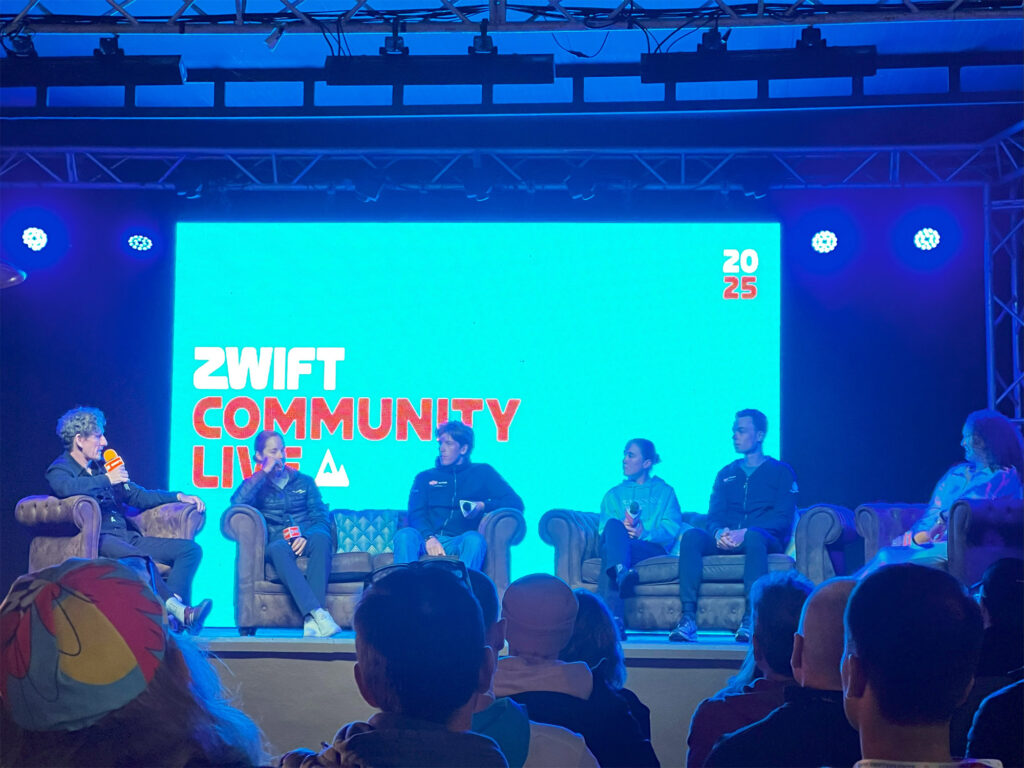
With day 1 of Zwift Community Live 2025 done and dusted (read about it here), I was looking forward to day 2 and the prospects of a longer, harder group ride. The weather looked to be beautiful in Mallorca, the ZCL vibes were good, and I was excited to roll on new roads. Here’s how the day unfolded for me…

Ride Plan

Today’s ride was called the Uber Pretzel as it was the longest of the three ride options. We would ride from our resort in Platja de Muro to the top of Sant Salvador, then loop back for a total distance of 115km and a bit over 1000 meters of elevation:

I was looking for a ride group that would push a bit harder than the previous day’s, with fewer and shorter stops along the way. And I was looking for some epic roads. This route looked like it would tick all the boxes.

Getting Started

The dining room was buzzing when I arrived around 7:15am. Clearly, lots of riders were planning on doing the Uber Pretzel as well (which wasn’t a surprise given how the week’s routes were planned), and everyone was eating early since we would be starting at 8:30.

After another tasty granola bowl, some fruit, and a smoothie, I headed back to my room to kit up and meet Monica at the starting area. (She’s a stupendous sidekick, by the way: fetching bikes and forgotten gloves and filling bottles to help make my experience even better.)

Riders are grouped into packs of 12 which leave a few minutes apart. (The goal is that the faster packs leave sooner, so packs stay separated and large groups of cyclists don’t clog up the roads.) I looked around for a group to join, and saw that the first group would definitely be too spicy for my taste. It contained the likes of Nathan Guerra, Jeff from NorCal Cycling, Zwift Academy 2024 winners Noah Ramsay and Emily Dixon, and Freddy Ovett… among others.

But just behind them a group was forming up that included Zwift CEO Eric Min, VP of Marketing Steve Beckett, and the great Kristin Armstrong. This looked like the group for me, so I hopped in, along with Zwift Academy 2023 winner Louis Kitzki and a few others.

Soon enough, we were off. Two abreast, we quickly got up to a nice cruising pace on the flattish lead-in to the centerpiece climb of the day. Chugging along at ~35 kph, we quickly spun our way toward Sant Salvador, upping the power on the inclines to keep our speed rolling without going so hard that our legs would burn out early. A sensible tempo pace.

Riding two abreast gives you the chance to get to know your ridemates. Along with those already mentioned we had an Olympic runner, a coach/triathlete from the UK, a man who was an early investor in Zwift, a woman who helps lead Rocacorba Cycling, the guy who heads up the CORE sensor team, Tim Perkin from Mountain Massif, and others!

It didn’t take long for us to arrive at the big climb of the day. As the road ramped up, around half the group fell off while the other half pushed on ahead at a higher pace. I was one who fell off – no surprise there – and I was perfectly fine with it. With another 60km left to ride, I wasn’t interested in blowing up on the slopes of Sant Salvador. I wanted to enjoy the ride and take in this beautiful climb, hairpin by hairpin. And that’s what I did!

It really is a nice climb, with lots of shade, smooth pavement, and gorgeous views over the edge as you negotiate the turns. I love climbs like this that alternate between a sort of walled-in tunnel of trees and wide open vistas that let you see all the way to the ground and be surprised again and again at how high you’ve climbed.

Soon enough, I was at the top, having averaged 308W for 21:53. (This rocketed me to 29,209th out of 69,900 on the Strava segment. The best time on the day? ZCL attendee Beast On A Bike | Louis Hatchwell at 14:30. His average power? 432W.)

View from the top!
My ride crew atop Sant Salvador

We took some photos at the top, admired the near-360-degree views, refilled bidons from the support van, and headed downhill knowing our coffee stop was 30km ahead. (Eric Min was hungry, so we weren’t waiting around!)

The way home was a nice mix of flats and slight downhills, many of which were narrow country roads with very little traffic. Once again we churned through the kilometers, stopping only for a bit of coffee and cake in Sineau before winding our way home.

After just over 4 hours of riding we were back at the hotel, enjoying a beer and a snack in comfortable couches overlooking the Mediterranean beach. 118km, 1000m of elevation, and an average speed of 28.8 kph. Another good day out on the bike in beautiful Mallorca!

See today’s ride on Strava >

Finishing the Day: Recovery, Dinner, and a Fireside Chat

Today ended much like yesterday: kickstarting recovery with good nutrition and Normatec boots, eating a tasty dinner with some new Zwift friends from Austria and Germany, then sitting on the night’s fireside chats. (Monica and I also took some time to cool our feet in the ocean and enjoy the beautiful beach just outside our door.)

The first chat was hosted by Matt Stephens and featured Zwift’s Director of Women’s Strategy Kate Veronneau along with the 4 winners of Zwift Academy from 2023 and 2024. The discussion centered around the Academy winners’ experiences, and what Zwift Academy is doing to change how riders get into the sport.

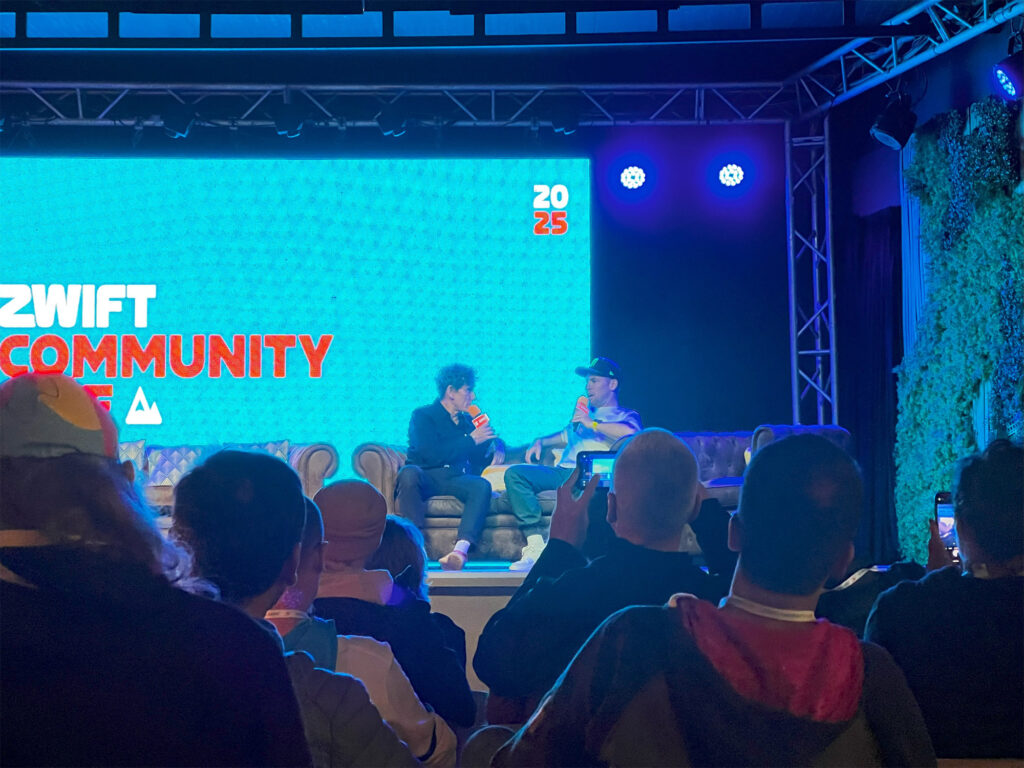
The night ended with Matt calling a surprise guest to the stage: Mark Cavendish! He and Matt chatted about Cav’s life now that he’s retired, along with obscure topics like how eating cheese late at night can affect one’s dreams. I’m sure many Zwifters were just as starstruck as I was to see Cav in person. What a legend!

Coming Up Tomorrow

Tomorrow’s ride will be the biggest of ZCL: the Uber Pretzel featuring Sa Calobra! It’s essentially the same distance as today’s ride, but twice the elevation. Here’s the route:

Watch this space to learn how it goes…

Ian Fleming Published the James Bond Novel ‘Moonraker’ 70 Years Ago Today

“The third James Bond novel was published on this day in 1955,” writes long-time Slashdot reader sandbagger.

Film buff Christian Petrozza shares some history:
In 1979, the market was hot amid the studios to make the next big space opera. Star Wars blew up the box office in 1977 with Alien soon following and while audiences eagerly awaited the next installment of George Lucas’ The Empire Strikes Back, Hollywood was buzzing with spacesuits, lasers, and ships that cruised the stars. Politically, the Cold War between the United States and Russia was still a hot topic, with the James Bond franchise fanning the flames in the media entertainment sector. Moon missions had just finished their run in the early 70s and the space race was still generationally fresh. With all this in mind, as well as the successful run of Roger Moore’s fun and campy Bond, the time seemed ripe to boldly take the globe-trotting Bond where no spy has gone before.

Thus, 1979’s Moonraker blasted off to theatres, full of chrome space-suits, laser guns, and jetpacks, the franchise went full-boar science fiction to keep up with the Joneses of current Hollywood’s hottest genre. The film was a commercial smash hit, grossing 210 million worldwide. Despite some mixed reviews from critics, audiences seemed jazzed about seeing James Bond in space.

When it comes to adaptations of the novella that Ian Flemming wrote of the same name, Moonraker couldn’t be farther from its source material, and may as well be renamed completely to avoid any association… Ian Flemming’s original Moonraker was more of a post-war commentary on the domestic fears of modern weapons being turned on Europe by enemies who were hired for science by newer foes. With Nazi scientists being hired by both the U.S. and Russia to build weapons of mass destruction after World War II, this was less of a Sci-Fi and much more of a cautionary tale.

They argue that filming a new version of Moonraker “to find a happy medium between the glamor and the grit of the James Bond franchise…”


Read more of this story at Slashdot.

NASA Seeks Proposals for Two More Private Astronaut Space Station Visits

This week NASA “issued a solicitation for the next two private astronaut missions to the International Space Station,” reports Space News. Scheduled after May of 2026 and then mid-2027, “These will be the fifth and sixth such missions to the ISS, part of a broader low Earth orbit commercialization effort by NASA with the ultimate goal of replacing the International Space Station with one or more commercial stations.”

NASA’s Space Station program manager calls the missions “a key part” of helping industry partners “gain the experience needed to train and manage crews, conduct research, and develop future destinations.” In short, they see the missions “providing companies with hands-on opportunities to refine their capabilities and build partnerships that will shape the future of low Earth orbit.”

[NASA’s call for proposals] offers an opportunity to have future missions commanded by someone other than a former NASA astronaut. While companies must propose a commander who meets current requirements, it can also propose an alternate commander who is a former astronaut from the Canadian Space Agency, European Space Agency or Japan Aerospace Exploration Agency with similar ISS experience requirements… [“Broadening of this requirement is not guaranteed,” NASA warns.]

That could allow some former astronauts already working with commercial spaceflight companies an opportunity to command private astronaut missions. Axiom Space, for example, announced in July 2024 that former ESA astronaut Tim Peake had joined its astronaut team. That came after Axiom and the U.K. Space Agency signed a memorandum of understanding in October 2023 to study the feasibility of a private astronaut mission crewed exclusively by U.K. astronauts.

So far Axiom Space has been awarded all four private astronaut missions, according to the article, “flying one mission each in 2022, 2023 and 2024. Its next mission, Ax-4, is scheduled for no earlier than May.”

But “While Axiom has little or no competition for previous PAM awards, it will likely face stiffer competition this time. Vast, a company also planning to develop commercial space stations, has previously stated its intent to submit proposals…”


Read more of this story at Slashdot.

Here’s Nintendo’s Switch 2 Backwards Compatibility Game Plan

Here's Nintendo's Switch 2 Backwards Compatibility Game Plan
All the hubbub the last couple of days has been about the Switch 2’s preorder date, and how that’s been delayed due to Trump’s tariffs, but something else caught our ear during Nintendo Direct this past week. The company talked about “compatible” original Switch games working with the new system, in addition to the paid upgrades for certain

Microsoft Uses AI To Find Flaws In GRUB2, U-Boot, Barebox Bootloaders

Slashdot reader zlives shared this report from BleepingComputer:

Microsoft used its AI-powered Security Copilot to discover 20 previously unknown vulnerabilities in the GRUB2, U-Boot, and Barebox open-source bootloaders.

GRUB2 (GRand Unified Bootloader) is the default boot loader for most Linux distributions, including Ubuntu, while U-Boot and Barebox are commonly used in embedded and IoT devices. Microsoft discovered eleven vulnerabilities in GRUB2, including integer and buffer overflows in filesystem parsers, command flaws, and a side-channel in cryptographic comparison. Additionally, 9 buffer overflows in parsing SquashFS, EXT4, CramFS, JFFS2, and symlinks were discovered in U-Boot and Barebox, which require physical access to exploit.

The newly discovered flaws impact devices relying on UEFI Secure Boot, and if the right conditions are met, attackers can bypass security protections to execute arbitrary code on the device. While exploiting these flaws would likely need local access to devices, previous bootkit attacks like BlackLotus achieved this through malware infections.

Miccrosoft titled its blog post “Analyzing open-source bootloaders: Finding vulnerabilities faster with AI.” (And they do note that Micxrosoft disclosed the discovered vulnerabilities to the GRUB2, U-boot, and Barebox maintainers and “worked with the GRUB2 maintainers to contribute fixes… GRUB2 maintainers released security updates on February 18, 2025, and both the U-boot and Barebox maintainers released updates on February 19, 2025.”)

They add that performing their initial research, using Security Copilot “saved our team approximately a week’s worth of time,” Microsoft writes, “that would have otherwise been spent manually reviewing the content.”
Through a series of prompts, we identified and refined security issues, ultimately uncovering an exploitable integer overflow vulnerability. Copilot also assisted in finding similar patterns in other files, ensuring comprehensive coverage and validation of our findings…

As AI continues to emerge as a key tool in the cybersecurity community, Microsoft emphasizes the importance of vendors and researchers maintaining their focus on information sharing. This approach ensures that AI’s advantages in rapid vulnerability discovery, remediation, and accelerated security operations can effectively counter malicious actors’ attempts to use AI to scale common attack tactics, techniques, and procedures (TTPs).

This week Google also announced Sec-Gemini v1, “a new experimental AI model focused on advancing cybersecurity AI frontiers.”


Read more of this story at Slashdot.

Go back to the Grid in TRON: Ares trailer

An AI program enters the real world in TRON: Ares.

It’s difficult to underestimate the massive influence that Disney’s 1982 cult science fiction film, TRON, had on both the film industry—thanks to combining live action with what were then groundbreaking visual effects, rife with computer-generated imagery—and on nerd culture at large.  Over the ensuing decades there has been one sequel, an animated TV series, a comic book miniseries, video games, and theme park attractions, all modeled on director Steve Lisberg’s original fictional world.

Now we’re getting a third installment in the film franchise: TRON: Ares, directed by Joachim Rønning (Pirates of the Caribbean: Dead Men Tell No Tales, Maleficent: Mistress of Evil), that serves as a standalone sequel to 2010’s TRON: Legacy. Disney just released the first trailer and poster art, and while the footage is short on plot, it’s got the show-stopping visuals we’ve come to expect from all things TRON.

(Spoilers for ending of TRON: Legacy below.)

Read full article

Comments

Amazon will use AI to generate recaps for book series on the Kindle

Amazon’s new feature could make it easier to get into the latest release in a series, especially if it’s been some time since you’ve read the previous books. The new Recaps feature is part of the latest software update for the Kindle, and the company compares it to “Previously on…” segments you can watch for TV shows. Amazon announced Recaps in a blog post, where it said that you can get access to it once you receive the software update over the air or after you download and install it from Amazon’s website. Amazon didn’t talk about the technology behind the feature in its post, but a spokesperson has confirmed to TechCrunch that the recaps will be AI generated. 

Shortly after the feature rolled out, users talked about it on social media, wondering if Amazon is using generative AI to write series summaries. They expressed concerns about the use of generative AI, especially about the possibility of the technology hallucinating plot elements that aren’t actually in the books. “We use technology, including GenAI and Amazon moderators, to create short recaps of books that accurately reflect book content,” Amazon spokesperson Ale Iraheta told the publication. Iraheta assured TechCrunch that Amazon’s recaps are accurate, but of course, use it at your own risk. 

At the moment, the Recaps feature is available for best-selling English-language book series on all Kindle devices in the US. To know if your favorite series has one, look for the “View Recaps” button within the series page in your Kindle library. It will soon be available for the Kindle app on iOS, as well. 

This article originally appeared on Engadget at https://www.engadget.com/ai/amazon-will-use-ai-to-generate-recaps-for-book-series-on-the-kindle-170018503.html?src=rss