
Tiered-memory systems feature multiple types of memory with varying
performance characteristics; on such systems, good performance depends on
keeping the most frequently used data in the fastest memory. Identifying
that data and placing it properly is a challenge that has kept developers
busy for years. Bharata Rao, presenting remotely during a
memory-management-track session at the 2025 Linux Storage, Filesystem,
Memory-Management, and BPF Summit, led a discussion on a potential solution he has recently
posted; Raghavendra K T was also named on the
session proposal. It seems likely, based on the discussion, that
developers working in this area will not run out of problems anytime soon.
Category Archives: Unfiltered RSS
[$] Two approaches to better kernel samepage merging
The kernel
samepage merging (KSM) subsystem works by finding pages in memory with
the same contents, then replacing the duplicated copies with a single,
shared copy. KSM can improve memory utilization in a system, but has some
problems as well. In two memory-management-track sessions at the 2025
Linux Storage, Filesystem, Memory-Management, and BPF Summit, Mathieu
Desnoyers and Sourav Panda proposed improvements to KSM to
make it work better for specific use cases.
Razer Pulls Blade Gaming Laptops From Its US Store, Can You Guess Why?

Razer has sheathed its line of Blade gaming laptops at its online store in the US and we have a pretty good idea of the reason why. It starts with the letter ‘t’ and—*spoiler*—spells the world ‘tariffs’. That’s the as-yet unofficial reason, anyway. Officially, Razer is not saying why its Blade laptops suddenly have ‘Notify Me’ buttons in place
Rushing Toward Rewrite
Former CEO I worked under used to love saying: “Be fast or be perfect. And since no one’s perfect, you better be fast.” Sounds cool until you realize it was just a free pass to skip code reviews, bypass security controls, and YOLO prod deployments. “Speed” became a shield to ignore due diligence. PRs got rushed, on-call was a tire fire, and postmortems turned into recurring meetings with new names.
My favorite part was engineers asking for admin access “to move faster.” (Spoiler: they didn’t need it)
The real issue was that we weren’t a scrappy startup anymore. We were playing enterprise dress-up with a startup mindset. Speed was costing us everything from tech debt to fragility, rework, and burnout. Then I changed jobs and landed back in actual startup mode. Heard the same “move fast” mantra again. But this time, it clicked differently. Because here’s the thing: you can move fast without lighting your future self on fire. Good teams know when to slam the brakes, take a breath, and make decisions that won’t age like milk. Move fast, sure—but maybe don’t bulldoze the foundation while you’re at it.
The post Rushing Toward Rewrite appeared first on Linux Today.
You can now show off your Strava rides on Instagram with ‘Sticker Stats’
Strava has launched new ‘Sticker Stats’ that can be shared on social media to show off your activities in greater detail.
The announcement comes alongside a host of other updates to the popular ride-sharing app, including the integration of FATMAP’s ‘advanced mapping technology’, refinements to its routing capabilities and a refresh of the Activity Details page.
With AI-powered insights coming to Garmin Connect and Zwift announcing users can track outdoor rides through its app, Strava’s competition has been hotting up in recent weeks.
It seems the team behind the world’s largest fitness app isn’t resting on its laurels, though.
Sticker Stats

Strava’s new Sticker Stats feature is designed to enhance the way activities can be shared on social media platforms, such as Instagram.
Accessed via the share button on Strava’s app, the feature creates a transparent ‘sticker’ that can be copied to your clipboard and overlaid onto photos, or imported directly into Instagram as a story.
Each sticker features distance, elevation gain and ride time, plus a line drawing of the route map, followed by Strava’s logo.
The only thing to note is that an activity’s ‘visibility’ must be set to ‘everyone’ or ‘followers’ – private activities can’t be shared.
Mapping updates

Having acquired FATMAP – a company that produced detailed 3D maps designed for outdoor enthusiasts – in 2022, Strava has announced its capabilities have now been integrated into its platform.
In what the brand is calling a “major upgrade” to its mapping features, Strava says the technology delivers “lifelike 3D terrain, detailed satellite imagery, and new maps layers for planning winter and trail activities”.

Focused primarily on winter activities, such as skiing and snowboarding, Strava says its ‘proprietary Map Rendering Engine’ will provide users with new insights such as:
- Avalanche gradient – shows steep gradients (between 25 and 45+ degrees) where avalanches are likely to occur
- Gradient – displays slope angles between 0 and 90 degrees
- Aspect – shows which direction a slope faces “to help users find the best snow and understand how much sun a particular face of the mountain might receive”
- Winter Map Style – a winter-specific map optimised for planning “snow activities”
Strava says these new features are available now in the Maps tab on its app or in the map sections of activities.
Route search and filtering
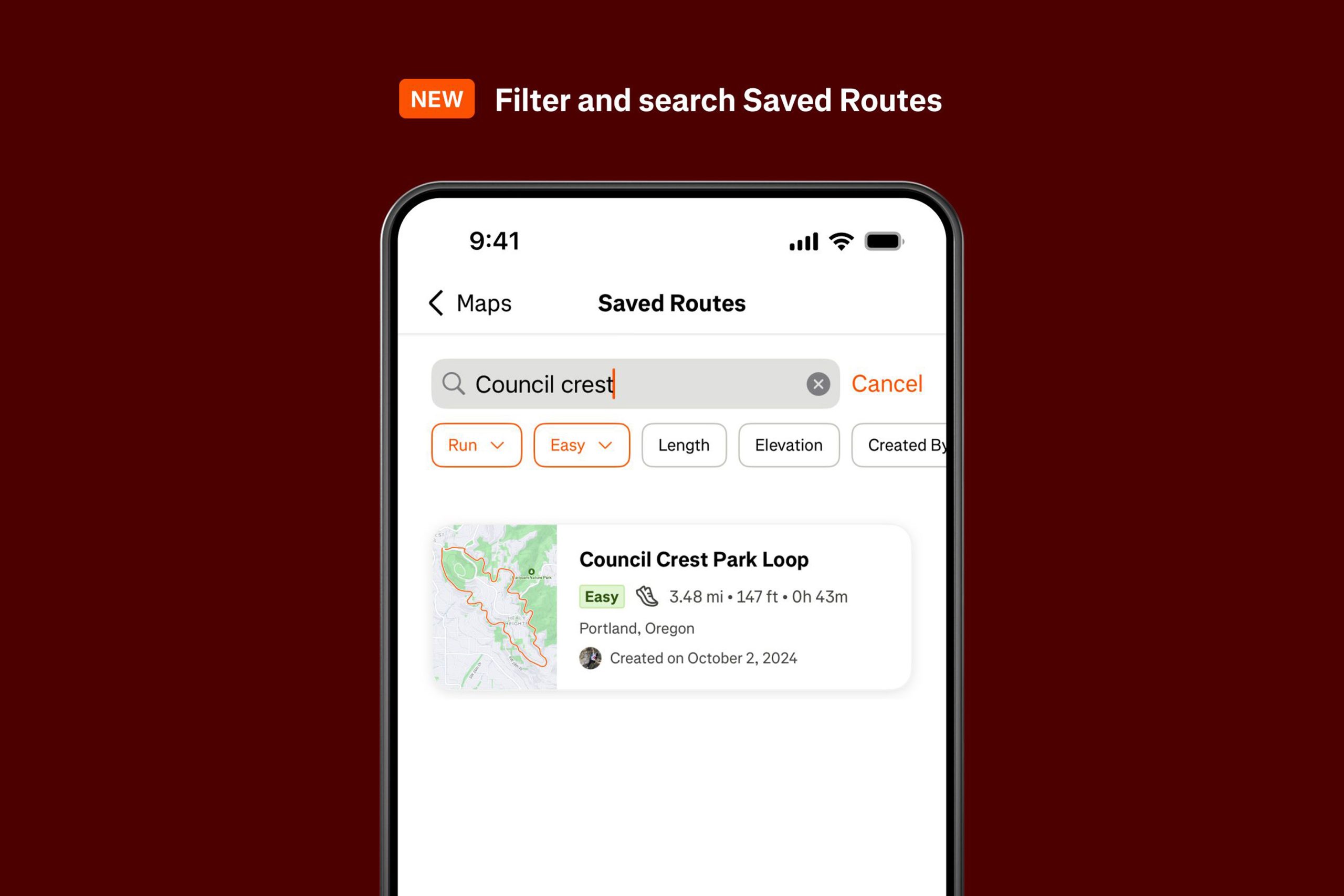
In addition to these new mapping tools, Strava says users can now use keywords and/or filters to search through saved routes.
The goal, as you might expect, is to help users find saved routes more easily – and prevent users with lots of saved routes having to scroll through everything manually.
Available now, users will be able to filter routes by length, elevation, difficulty, who created them “and more”.
It’s worth noting, however, these features are only available to paid subscribers.
Redesigned Activity Details

Something that applies to all Strava users, however, is the redesigned Activity Details page.
Strava says this update brings “a new look” to this page, alongside fresh insights and highlights from each activity.
This update consists of two headline features:
- All-in-one view – the map, route and any photos or videos from an activity can now be seen on a single page, with users able to toggle quickly between maps and stats
- Relive your wins – medals and/or trophies for personal records and KOM/QOMs will now appear on the map, helping you more quickly locate any notable efforts or achievements from an activity
These features are live now on Strava for all users.
All About the New Cannondale CAAD13 on Zwift
Zwift’s latest update included the welcome addition of several new bike frames, including two bikes from US-based Cannondale. We’ve already written about the speedy SuperSix Evo LAB71, so today we’ll cover the more budget-friendly CAAD13, which Cannondale calls “the speediest, smoothest, best handling, finest performing aluminum race bike on the planet”:

You’ll need to be updated to game version 1.86+ to see the CAAD13 in Zwift’s Drop Shop. You’ll also need to be at level 14+ with 500,000 Drops to buy it. Here’s how it’s described in the Drop Shop:
“Experience the Cannondale CAAD13, a bike that embodies Cannondale’s legacy in aluminum frame design. Its lightweight, aerodynamic structure offers exceptional speed and agility, ensuring you conquer every virtual climb and sprint. With a tapered head tube and wider tires for enhanced stability and handling, the CAAD13 is perfect for both spirited rides and competitive races. Elevate your cycling experience with a bike built for performance and comfort, ready to tackle any challenge.
See our master list of all frames in Zwift >
It’s rated 3 stars for aero and 3 stars for weight, so we know it’s not the lightest bike. But a 4-star system isn’t the most granular of performance measurements, so we ran this frame through our precise tests to measure performance at nerd-level detail. Let’s dive in!
Note: test results below are from a 75kg, 183cm rider holding 300W steady using Zwift’s stock 32mm Carbon wheelset.
Aero (Flat/Rolling) Performance

The CAAD13 is surprisingly fast, given its cost and unlock level. It trims 58.4s off our baseline Zwift Carbon frame over an hour of flat riding, putting it less than 5 seconds behind the game’s fastest frame.
Climb Performance

The CAAD13 performs worse climbs than it does on the flats, coming in at the 47the percentile in our rankings.
This bike shaves 28.8 seconds off of our baseline Zwift Carbon’s time on an hourlong climb, which means it’s ~27 seconds slower across an hourlong climb compared to the fastest climbing bike (S-Works Tarmac SL8).
Upgrading Your Cannondale CAAD13

Like all frames in Zwift, the CAAD13 can be upgraded in five stages. As a high-end race bike, each of the five stages results in a performance improvement. The Cannondale CAAD13 upgrade stages are as follows:
- Ride 200km, pay 100,000 Drops for an aero upgrade
- Ride 260km, pay 200,000 Drops for a weight reduction
- Ride 320km, pay 350,000 Drops for a drivetrain efficiency improvement
- Ride 380km, pay 500,000 Drops for an aero upgrade
- Ride 440km, pay 750,000 Drops for a weight reduction
You can expect a fully upgraded CAAD13 to be approximately 28 seconds faster on a flat hour and 36 seconds faster on an hourlong climb vs the “stock” CAAD13.
Conclusions
Cannondale’s CAAD13 is the worst performer of the four new frames added in Zwift’s latest update… but that doesn’t make it a bad bike. If you’re a Cannondale fan looking for a different frame, this may be the ticket.
It doesn’t have a color slider, but it is more affordable and unlocked at a lower level than the other three new frames.
Questions or Comments?
Got questions or comments about this frame? Share below…
Important note: this post contains speed test results for Zwift frames or wheels. These results may change over time, and a bike’s performance relative to others may also change. We don’t always revise posts when performance rankings change, but we do keep current, master versions of our speed test results which are always available. See the frame charts, wheel charts, and Tron vs Top Performers for current performance data.
The Garmin Varia Vue headlight records incidents and near-misses in 4K resolution
Garmin has launched its new Varia Vue camera headlight system, with the ability to record footage in 4K resolution.
The Varia Vue syncs with Garmin Connect and Garmin Vault (its subscription-based online storage for recorded videos), and the brand’s dedicated Varia app, plus the RCT715 rear-view radar and camera light.
The Varia Vue costs £459.99 / $549.99 / €549.99, plus £9.99 / $9.99 / €11.99 per month for the Vault subscription (or £99.99 / $99.99 / €119.99 per year).
Digital image stabilisation
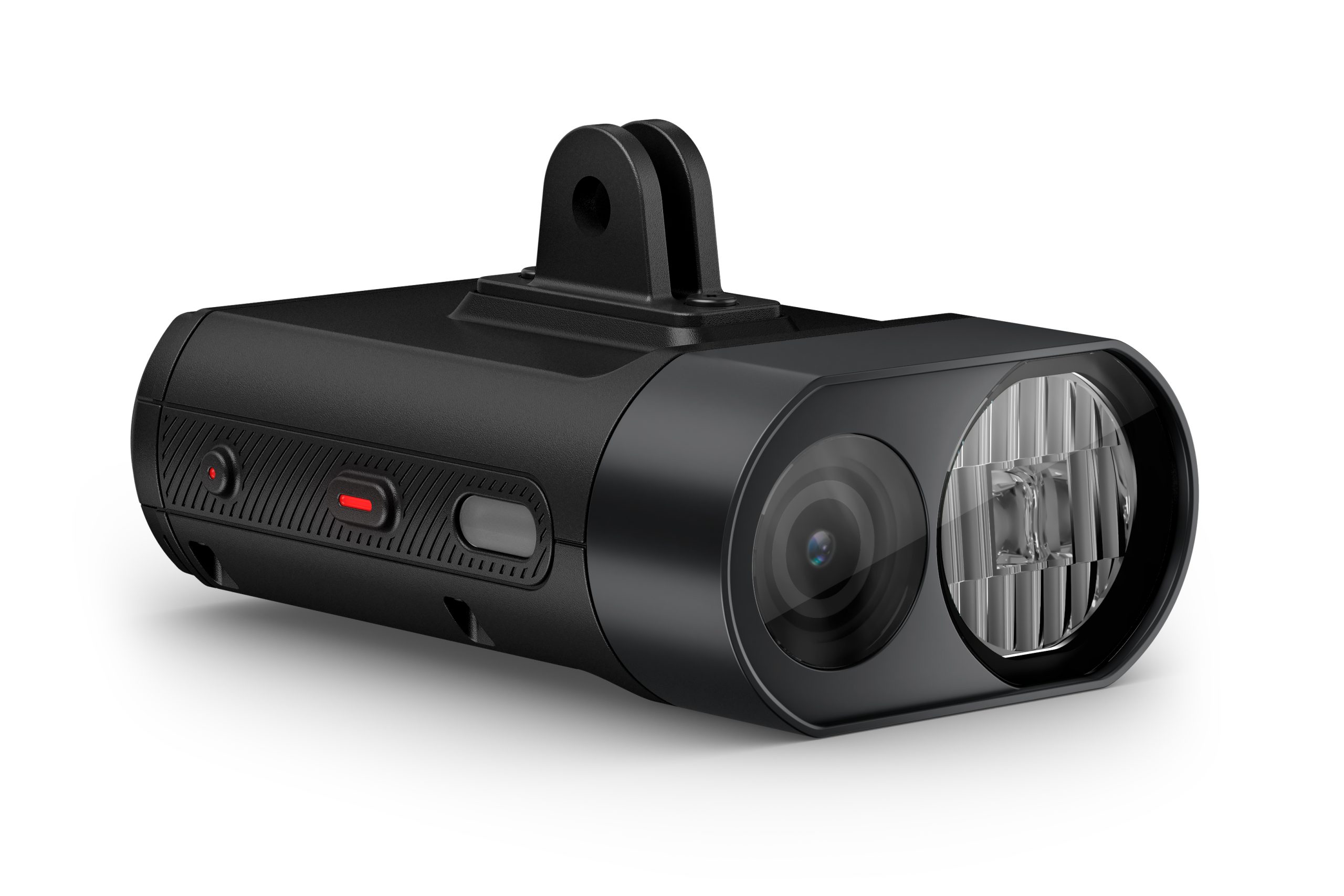
According to Garmin, the Varia Vue can record footage in 4K resolution and benefits from the brand’s digital image stabilisation technology.
Digital image stabilisation effectively crops raw recorded images – by cutting off the edge of the frames, the camera processes a smoothed-out version of the footage.
As a result, in general use, it’s unlikely the processed footage will be output in true 4K resolution, but it should be more than enough to capture details such as vehicle registration plates and faces. There’s also a microphone, which has been concealed from the wind to aid ‘clean’ audio capture.

All data is stored in Garmin’s Vault online data bank, which is encrypted. That said, it’s worth noting that some territories don’t allow the use of camera technology in this way.
Garmin says the Varia Vue will automatically detect ‘incidents’ and save them to Vault via WiFi. It can also sync with the brand’s RCT715 rear-facing camera-light device to create a two-view account of an incident.
The device has a claimed battery life of up to nine hours with the light switched off. With the light switched on in ‘day flash’ mode, Garmin says the battery life dips to around seven hours.
That said, bikepackers and multi-day riders are catered for, given that the device can be charged on the go (via a battery pack or dynamo setup, for example) while the camera function is switched on.
Adaptable lighting with a cropped beam
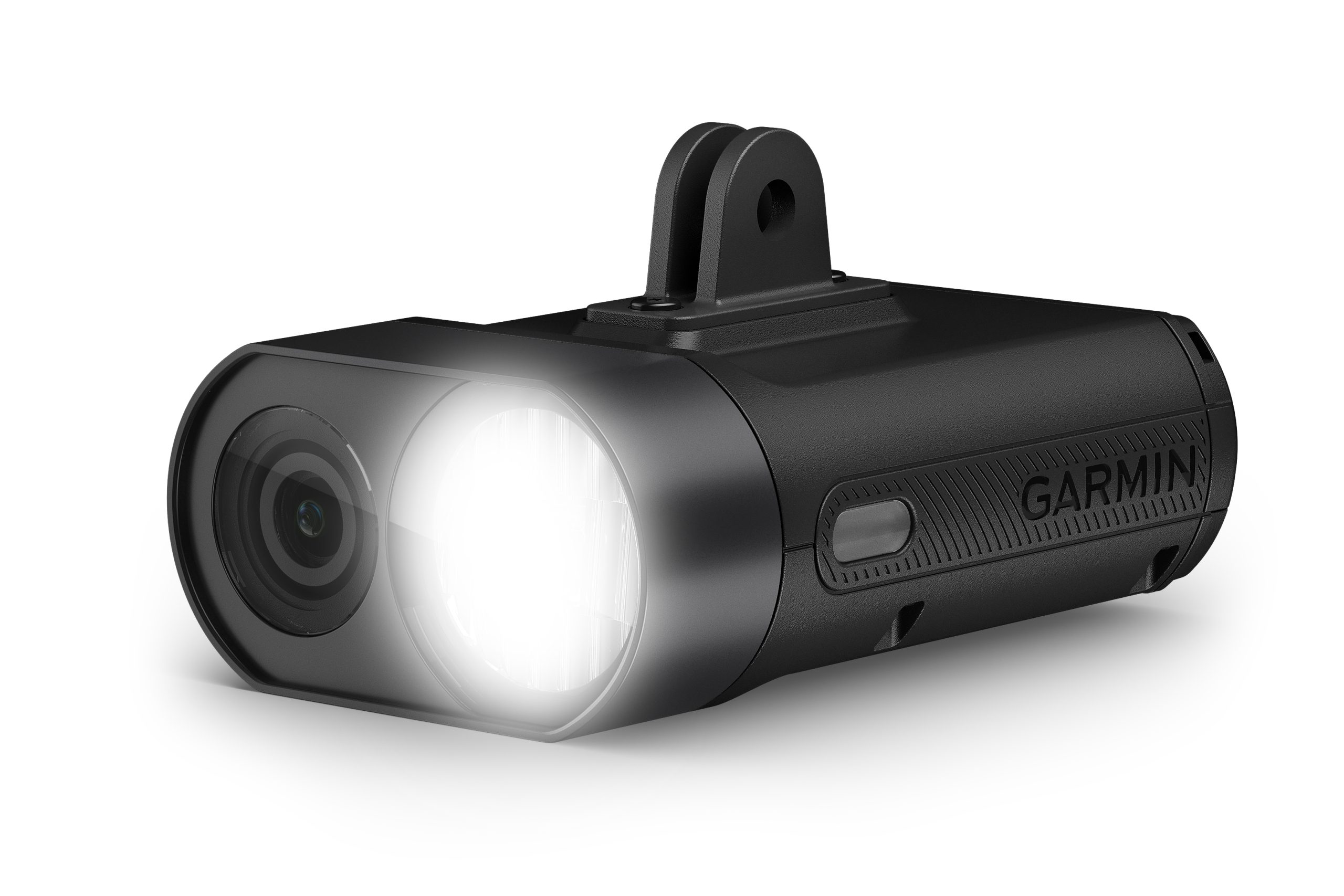
The light can emit up to 600 lumens – generally considered enough for visibility in a built-up area with ambient street lighting – across five modes, including the day flash setting.
This means the light isn’t StVZO-compliant, but the beam is cut off to reduce glare for oncoming road users.
A dedicated StVZO version is available in Germany and the the Nordic countries, which produces up to 165 lumens and up to four hours’ battery life – lower due to the lack of flashing modes, which are less power-hungry.
Similarly, Garmin claims the light is adaptable to riding speed and ambient light, but only when the unit is paired with a Garmin Edge bike computer.
The Varia Vue can also be controlled from a Garmin Edge device, or via the brand’s Varia app.
Garmin Varia Vue prices and availability

The Garmin Varia Vue is available now, priced at £459.99 / $549.99 / €549.99.
The Varia Vue requires a Garmin Vault subscription at £9.99 / $9.99 / €11.99 per month (or £99.99 / $99.99 / €119.99 per year).
The Varia Vue isn’t supplied with a memory card, so you’ll need to factor that into the overall cost.
OpenSSL 3.5 Brings Major Cryptographic Shifts
OpenSSL 3.5 introduces major crypto updates, including PQC support, server-side QUIC, and new TLS defaults.
Tough luck, Windows 10 users. No fix yet for ransomware-exploited OS bug
A novel way to encourage upgrades? Microsoft would never stoop so lowPatch Tuesday Patch Tuesday has arrived, and Microsoft has revealed one flaw in its products under active exploitation and 11 critical issues in its code to fix.…
This Samsung 55-Inch OLED TV Is at Its Lowest Price Right Now
We may earn a commission from links on this page. Deal pricing and availability subject to change after time of publication.
If you’ve been holding off on buying an OLED TV, this Samsung S90D deal on Woot might catch your eye. It’s the 55-inch 2024 model, currently priced at $1,147.99 (for three days or until it sells out), which is about $650 off its list price and roughly $50 cheaper than Amazon right now—a solid discount, especially since you get the full one-year Samsung warranty, plus free shipping if you’re a Prime member. This is also its lowest price, according to price-trackers. Just keep in mind that Woot only ships to the lower 48 states, and if you’re not a Prime member, there’s a $6 shipping fee tacked on.

This S90D model uses a WOLED panel (basically Samsung’s slightly more affordable take on OLED), which means it doesn’t hit the same brightness levels as Samsung’s priciest OLED, the S95D. The main thing you’re missing here is the fancy glare-free coating, so reflections might be an issue in sunlit rooms. But for most setups—especially dimmer spaces or nighttime streaming—you’ll still get that rich contrast and color accuracy OLEDs are known for. Reviewers at CNET mentioned it handles darker scenes really well, and it’s Pantone-validated, which means skin tones and colors should look more natural. It runs on Samsung’s Tizen OS, which has a clean interface and works with all the major apps.
You also get 4K AI upscaling that can clean up older content (though the results usually depend on the source), and a 120Hz refresh rate with four HDMI ports, including at least one with HDMI 2.1, so next-gen console owners are covered—that’s good news if you’ve got a PS5 or Xbox Series X and want low input lag with smooth motion. That said, the built-in Gaming Hub is more of a niche feature—you can stream games without a console, but you’ll still need a good internet connection and a compatible controller. Audio gets a bit of a lift with Dolby Atmos and Samsung’s virtual audio tech that follows movement on screen, but it’s still a TV—if you care about sound, you’ll still need a separate soundbar or system to get the most out of it.
Tuesday Telescope: Does this Milky Way image remind you of Powers of 10?
When I was a kid, I was fascinated by the Powers of 10 video, which came out in the 1970s. Perhaps you remember it, with the narrator taking us both outward toward the fathomless end of the Universe and then, reversing course, guiding us back to Earth and inside a proton. The film gave a younger me a good sense of just how large the Universe around us really is.
What I did not know until much later is that the short film was made by the Eames Office, which was founded by the noted designers Charles Eames and Ray Kaiser. It’s the same organization that produced the Eames Lounge Chair. It goes to show you the value of good design across genres (shoutout to Ars’ resident designer, Aurich Lawson).
Anyway, I say all that because the Power of 10 film continues to live in my head, rent-free, decades later. It was the first thing I thought of when looking at today’s image of the Milky Way Galaxy’s center. The main image showcases huge vertical filaments, with the supermassive black hole at the galaxy’s core clearly visible. This image, captured by a South African radio telescope named MeerKAT, also shows the ghostly, bubble-like remnants of supernovas that exploded over millennia.
Google brings in-call scam notifications to Pixel watches
Anyone else feel like half the time their phone rings these days it’s spam? Sometimes there’s an alert before you even pick up, but other times it takes being in the call to know. Well, Google is now making it easier to do the latter, adding in-call scam detection to the Pixel Watch.
The new AI-powered feature gives a loud beep at the start of the call and every couple minutes afterward. It will give a notification, beep and vibration in cases where a scam is very likely. You can dismiss the notification from the watch if you know it’s not a scam. Try it out by turning on scam detection in settings.
There’s a few caveats, as the in-call scam detection works only on the Pixel watch 2 or 3. They also need to be connected by Bluetooth to a Pixel 9 or newer phone. It’s also only available right now in the US and for English-language calls.
Google first introduced the feature to select phones in beta last November. It’s now available on the Pixel 9 and newer devices, but this addition lets you see the notification without ever taking out your phone.
This article originally appeared on Engadget at https://www.engadget.com/wearables/google-brings-in-call-scam-notifications-to-pixel-watches-120008825.html?src=rss
India’s ‘Frankenstein’ Laptop Economy Thrives Against Planned Obsolescence
In Delhi’s Nehru Place and Mumbai’s Lamington Road, technicians are creating functional laptops from salvaged parts of multiple discarded devices. These “Frankenstein” machines sell for approximately $110 USD — a fraction of the $800 price tag for new models. Technicians extract usable components — motherboards, capacitors, screens, and batteries — from e-waste sourced locally and from countries like Dubai and China.
“Most people don’t care about having the latest model; they just want something that works and won’t break the bank,” a technician told Verge. This repair ecosystem operates within a larger battle against tech giants pushing planned obsolescence through proprietary designs and restricted parts access. Many technicians source components from Seelampur, India’s largest e-waste hub processing 30,000 tonnes daily, though workers there handle toxic materials with minimal protection. “India has always had a repair culture,” says Satish Sinha of Toxics Link, “but companies are pushing planned obsolescence, making repairs harder and forcing people to buy new devices.”


Read more of this story at Slashdot.
The Morning After: Trump’s tariffs are disrupting Nintendo’s Switch 2 plans
Timing is everything. Hours after I published our Friday newsletter, debating the price of Nintendo’s new console, the company announced it would delay US pre-orders for the Switch 2 as it wrestled with a new set of tariffs introduced by President Trump.
“Pre-orders for Nintendo Switch 2 in the US will not start April 9, 2025, in order to assess the potential impact of tariffs and evolving market conditions,” Nintendo told Engadget. It added that the console is still set to launch on June 5, however.
Last week, the Trump administration announced a set of new tariffs on a swath of countries, including Japan (Nintendo’s base of operations), China and Vietnam. Those last two countries, where Nintendo manufactures much of its hardware, will be subject to import duties of 54 percent and 46 percent.
Nintendo said the Switch 2 would cost $450 at launch — and we’ve discussed the rises enough — but there’s no word yet on whether that price will get readjusted, or whether the company will just distribute fewer consoles to the US.
It’s not the only one reassessing things in the wake of the recent tariffs. Jaguar Land Rover is pausing shipments to the US. Vehicle imports face a 25 percent tariff, and the company told the AP it was “taking some short-term actions including a shipment pause in April, as we develop our mid- to longer-term plans.”
Relatively smaller companies are also figuring things out: Framework, best known for its modular, repairable laptop series, announced it was also suspending US sales for some of its laptops.
— Mat Smith
Get Engadget’s newsletter delivered direct to your inbox. Subscribe right here!
The biggest stories you might have missed
-
Only Tom Cruise can save us from AI in latest Mission Impossible trailer
-
Nintendo says the Switch 2 Joy-Con controllers don’t have Hall effect thumbsticks
-
The Last of Us season two review: Amplified action and crushing drama
-
It’s been six years since I played Silksong, and I’m OK waiting a little longer
Eufy’s new robot mowers use smart vision to trim your grass
No GPS needed.
Engadget
Anker’s lifestyle brand, Eufy, is expanding from its successful move into robot vacuums and going outdoors. The company has been sharing details of its first two robot mowers for a few months, but now the pricey robo-gardeners are on sale: The Eufy E15 ($1,599) can cover up to 800 square meters (sqm) and the E18 ($1,999) can handle 1,200 sqm, and they’re available to order today from Eufy and Amazon. We’ve been testing them, and we’re impressed. They’re also surprisingly quiet. Read on for our full verdict.
Amazon’s new AI feature will buy stuff for you
Brands still need websites in the Amazon app for it to work.
Amazon’s latest AI-powered feature to make you buy more things is called Buy for Me, where the company can make purchases for you from other websites. The feature is built into the Amazon app. When you search for an item from a particular brand, you may see results labeled Shop brand sites directly, separate from your usual results. Amazon will purchase the item for you, using agentic AI, a type of AI that doesn’t need human intervention, to provide your name, address and payment details for the checkout process. Amazon says it’s not getting a cut from these sales, at least at this experimental stage, but there must be something in it for Amazon.
Miso from space
It’s apparently nuttier than terrestrial miso.
Jimmy Day
In a study published in the journal iScience, researchers from the US and Denmark say they were able to make decent-tasting miso on the International Space Station — but the flavor and smell was different from similar miso made on Earth. The team suggests the findings reflect a sort of space terroir, playing off the term used in relation to wine grapes to describe unique, location-specific flavor characteristics.
“There are some features of the space environment in low earth orbit — in particular microgravity and increased radiation — that could have impacts on how microbes grow and metabolize and thus how fermentation works,” co-lead author Joshua D. Evans of Technical University of Denmark said in a press release.
This article originally appeared on Engadget at https://www.engadget.com/general/the-morning-after-engadget-newsletter-111618899.html?src=rss
Meta brings ‘teen accounts’ to Facebook and Messenger
Meta is bringing its “teen accounts” to Facebook and Messenger. Like on Instagram, the company will begin automatically moving younger teens to the new accounts, which come with mandatory parental control features and restrictions on who they can message and interact with.
The company first introduced the feature on Instagram last fall and now has 54 million teens with the more locked-down accounts. (Instagram requires teens between the ages of 13 and 15 to use a teen account and has in-app tools meant to catch those lying about their ages.) Teen accounts on Facebook and Messenger will operate similarly. Teens won’t be able to interact with unknown contacts or change certain privacy settings unless a parent approves the action. Parents will also be able to monitor their child’s screen time metrics and friends list.
Meta is also adding new safety features to teen accounts on Instagram. With the change, teens under 16 will need parental permission to start a live broadcast. The app will also prevent younger teens from turning off nudity protection — the feature that automatically blurs images in direct messages that contain “suspected nudity” — unless they get parental approval.
Those may seem like obvious safeguards (they are) but they at least show that Meta is closing obvious gaps in its teen-focused safety features. The company has come under intense scrutiny over the effect its apps, particularly Instagram, have on teens in recent years. Dozens of states are currently suing Meta over alleged harms to younger users.
This article originally appeared on Engadget at https://www.engadget.com/social-media/meta-brings-teen-accounts-to-facebook-and-messenger-100042497.html?src=rss
The best AirPods for 2025
You don’t need a set of AirPods to get wireless audio from your iPhone, iPad or Mac, but Apple’s earbuds and headphones offer a lot of convenient integrations with its other products that you won’t find anywhere else. After helping popularize true wireless earbuds with its original AirPods, the company has expanded its lineup to include noise-canceling models and a set of over-ear headphones. Here’s what you need to know about AirPods in general, along with the best overall, budget and over-ear picks from Apple’s current slate of products.
Table of contents
What you need to know about AirPods
When it comes to Apple’s earbuds and headphones, there are several things you’ll want to keep in mind before making your final decision. First, the standard AirPods are the open-design earbuds with no tip that allow some environmental noise to come into your ears at all times. The Apple AirPods Pro are the model with the soft ear tips that completely close off your ear canal, which enables features like more powerful noise cancellation and the hearing test. Lastly, the Apple AirPods Max are the company’s over-ear noise-canceling headphones preferred by audiophiles, and currently the company’s only option for wireless headphones at all that aren’t made by Beats.
There are a few features that are available across all models as they’ve become inherent to the AirPods experience. First, you can expect connectivity perks like Automatic Switching between Apple devices that are synced with your iCloud account. This means that a pair of AirPods will automatically change to your phone when you get a call while you’re listening to music on a MacBook, for example. It’s functionally similar to multipoint Bluetooth, but the feature isn’t limited to two devices like most earbuds and headphones. Second, hands-free access to Siri is the default, allowing you to ask the assistant for help without touching your AirPods. And lastly, Personalized Spatial Audio with dynamic head tracking is available across the entire lineup, even on the most affordable version and the AirPods 4 with active noise cancellation.
If you don’t think any of the AirPods options are right for you, consult our recommendations on the best wireless earbuds and best wireless headphones for some alternatives.
Best AirPods for 2025
Best AirPods specs comparison chart
|
AirPods 4 |
AirPods Pro 2 |
AirPods Max |
|
|
Price |
$129 |
$249 |
$549 |
|
Design |
In-ear |
In-ear |
Over-ear |
|
H2 chip |
Yes |
Yes |
Yes |
|
ANC |
No |
Yes |
Yes |
|
Spatial audio with dynamic head tracking |
Yes |
Yes |
Yes |
|
Hearing test |
No |
Yes |
No |
|
Rated battery life |
5 hours |
6 hours |
20 hours |
|
Durability |
Dust, sweat, and water resistant (IP54) |
Dust, sweat, and water resistant (IP54) |
N/A |
Other AirPods we tested
AirPods 4 with ANC
The AirPods 4 with ANC represent the first time active noise cancellation has been available on the open-wear, “regular” AirPods. Design-wise, they’re the same as the non-ANC model, so the difference is entirely in the features list. This more expensive version adds Adaptive Audio, Transparency mode, Conversation Awareness and a wireless charging case. The ANC isn’t as powerful as the AirPods Pro 2, partially due to the fact that the AirPods 4 doesn’t completely seal off your ears. The noise-canceling performance is definitely useful though, working best with constant, low-frequency annoyances like fans and white noise machines. Lastly, you won’t get access to Apple’s hearing test and hearing aid features, partially due to the fact that the AirPods 4 with ANC doesn’t seal off your ears, which would affect accuracy and effectiveness.
This article originally appeared on Engadget at https://www.engadget.com/audio/headphones/best-airpods-100041810.html?src=rss
Bluesky Can’t Take a Joke
On Bluesky, the joke’s on you if you don’t get the joke. The social network has become a “refuge” for those fleeing X and Threads, but its growing pains include a serious case of humor-impairment. When Amy Brown jokingly posted she was “screaming, crying, and throwing up” about price differences between Ohio and California Walgreens, literal-minded users scolded her for exaggerating. Brown, a former Wendy’s social media manager who got banned from X after impersonating Elon Musk, puts it simply: “We’re both speaking English, but I’m speaking internet.”
This clash stems from Bluesky’s oddly mixed population: irony-steeped Twitter refugees mingling with earnest Facebook transplants and MSNBC viewers who took the plunge after seeing the platform mentioned on shows like Morning Joe. “It’s riff collapse,” says cartoonist Mattie Lubchansky, describing how her obviously absurd Oscar post triggered sincere movie recommendations.


Read more of this story at Slashdot.
US’s AI Lead Over China Rapidly Shrinking, Stanford Report Says
The U.S. is still the global leader in state-of-the-art AI, but China has closed the gap considerably, according to a new report from Stanford. Axios: Institutions based in the U.S. produced 40 AI models of note in 2024, compared with 15 from China and three from Europe, according to the eighth edition of Stanford’s Artificial Intelligence Index, released on Monday.
However, the report found that Chinese models have rapidly caught up in quality, noting that Chinese models reached near parity on two key benchmarks after being behind leading U.S. models by double digit percentages a year earlier. Plus, it said, China is now leading the U.S. in AI publications and patents.


Read more of this story at Slashdot.
No, the Dire Wolf Has Not Been Brought Back From Extinction
Colossal Biosciences has claimed it “successfully restored” the extinct dire wolf after a “10,000+ year absence,” but scientists clarify these are actually genetically modified grey wolves. The U.S. company announced three pups — males Remus and Romulus born in October, and female Khaleesi born in January — as dire wolves, but made only 20 genetic edits to grey wolves.
Beth Shapiro of Colossal told New Scientist that just 15 modifications were based on dire wolf DNA, primarily targeting size, musculature and ear shape. Five other changes involve mutations known to produce light coats in grey wolves. A 2021 DNA study revealed dire wolves and grey wolves last shared a common ancestor about 6 million years ago, with jackals and African wild dogs more closely related to grey wolves.


Read more of this story at Slashdot.
States Are Banning Forever Chemicals. Industry Is Fighting Back
New Mexico’s legislature passed bills last week that would ban consumer products containing PFAS, joining a small but growing number of states taking action against these persistent “forever chemicals.” If signed by the governor, the legislation would prohibit the sale of many products with added per- and polyfluorinated alkyl substances (PFAS) in New Mexico, making it the third state after Maine and Minnesota to enact such comprehensive restrictions.
At least 29 states have PFAS-related bills before state legislatures this year, according to Safer States, a network of advocacy organizations. Research shows PFAS accumulate in the environment and human bodies, potentially causing health problems from high cholesterol to cancer. EPA figures indicate almost half of Americans are exposed to PFAS in their drinking water.
Wired reports that chemical and consumer products industries are aggressively fighting state-level bans on “forever chemicals” through lobbying and legal action as regulations spread across the United States. The Cookware Sustainability Alliance, formed in 2024 by major cookware manufacturers, has testified in 10 statehouses against PFAS restrictions and sued Minnesota in January, claiming its ban is unconstitutional. (The New Mexico bills include notable exemptions, particularly for fluoropolymers used in nonstick cookware, following successful lobbying by industry groups.)
Industry groups are also targeting federal regulators, with the American Chemistry Council and others recommending the EPA adopt a narrower definition of PFAS. “The federal regulatory approach is preferable to a patchwork of different and potentially conflicting state approaches,” said Erich Shea from the American Chemistry Council.


Read more of this story at Slashdot.