Pentagon Axes $5.1 Billion in IT and Consulting Contracts With Accenture, Deloitte

Defense Secretary Pete Hegseth has ordered the termination of multiple IT and consulting contracts with firms including Accenture, Deloitte, and Booz Allen Hamilton, describing them as “wasteful spending.”

A Department of Defense memo indicates the cuts target the Defense Health Agency’s consulting services contract and the Air Force’s agreement with Accenture to “re-sell third-party Enterprise Cloud IT Services,” services the government can “already fulfill directly with existing procurement resources.”

The terminations also include 11 other contracts supporting “non-essential” activities like DEI programs, climate initiatives, and COVID-19 response efforts. The cuts represent $5.1 billion in spending and will yield nearly $4 billion in savings, according to Hegseth. The funds will be redirected toward “critical priorities to Revive the Warrior Ethos, Rebuild the Military, and Reestablish Deterrence,” with Hegseth noting the money would better serve “healthcare for our warfighters and their families, instead of $500 an hour business process consultant.”


Read more of this story at Slashdot.

10 Warning Signs That Someone Incompetent (or Unethical) Is Flipping a House

If you’re in the market for a new home, there’s a pretty good chance you’ve toured a few “flipped” houses—properties that were recently purchased, quickly renovated, and just as quickly put back on the market. Even amid the current real estate crunch, house flipping remains a popular business model: In the first quarter of 2024, 67,817 houses were flipped, which amounted to nearly 9% of all the houses sold during that period.

Flipping is popular because it can be highly profitable, generating an average return of $73,492 per project. But those profits rely on a fast, efficient renovation—and some flippers may get in over their heads and end up cutting corners, while others might simply set out to rip you off by attempting to hide downright shoddy work.

In either scenario, there are some common aspects of any renovation that can clue you in to incompetent or unethical work. When inspecting a house you suspect was a flip, check for these red flags.

Glued-in sinks

Typically, an undermount kitchen sink will be installed using a combination of adhesive and metal clips to hold it in place. Sometimes a sink will be installed with just adhesive if the clips aren’t absolutely necessary and the installer is worried about cracking the countertop or lacks the space to properly attach the clips, but they’ll generally use a powerful, professional-grade adhesive regardless.

An unethical house flipper, on the other hand, might use any old silicone-based adhesive to slap a sink into place, skipping the clips simply to save on time and labor costs. The sink will hang on for a while, then fall without warning—probably when it’s full of dirty dishes. When checking out a flipped kitchen, open the cabinet under the sink and look for metal support clips. If you don’t see them, it could be a sign that the flipper either didn’t know what was needed—or intentionally skipped a step.

Ventilation fans that don’t vent anywhere

Ventilation and exhaust fans are usually found in bathrooms, over ovens, and in other places where ventilation is required, and they need to be vented outside—but can simply be slapped into the ceiling and wired up, with no outside ventilation connection at all. In other words, they’ll vent the steam from your shower into your ceiling, where it can slowly foster mold and damage your home’s wood framing. It’s worth checking that any exhaust fans are vented properly, and not just run into the cavities behind your drywall.

Painted tubs

If the house being flipped has a unique classic bathtub—or the flipper is looking to save a few bucks on the renovation—they might decide to refinish the tub instead of replacing it. This is fine in theory, as tubs can certainly be refinished and hold up to years of use—provided the job done by a professional. It’s actually not easy to refinish a tub, as they must endure near-constant water exposure. Even a successful DIY refinish job will typically only last a few years.

Refinishing a tub requires it be properly cleaned, etched, and prepped. If the flipper just paints the tub, it might look fine during a walk-through, but it will peel almost immediately once you start using it. In a flipped house, take a very close look at the tubs. Look for fine cracks, spotty coverage around drains and fixtures, and bubbling in the finish. Ask questions if you see any indication of an undisclosed refinishing job.

Updated outlets hiding old wiring

The easiest way to save money on a house flip is to leave all the hidden stuff—the plumbing and electrical—untouched, and just cover it up with new fixtures. An unethical flipper might swap out old, ungrounded outlets with new, modern ones and simply not connect the ground—or, worse, jump the ground to the neutral wire (known as a “bootleg” ground). That can be dangerous, but it won’t trigger an error when the outlet is tested. It’s worth it to unscrew a few outlets and take a quick look at what’s going on in the walls—if the outlets are new but the wiring is old, be suspicious, and consider having an electrician come in to take a look during the inspection process.

Hidden floor damage

One trick desperate flippers will try is simply covering up problems with a new floor. Flooring is expensive, and it’s possible to put carpet or vinyl flooring over damaged hardwood, cracking tile, or other problems. Fresh carpet or planks will look good, and you might not spend enough time walking on them to notice deeper problems until well after you’ve closed. Another trick flippers will sometimes play is to tear off a bad floor and throw a cheap floor over a damaged subfloor in order to save a little time and money.

You can look for a few tells that a cheap new floor is covering up a big old problem:

  • Varying floor heights. If you’re constantly stepping up and down as you pass from room to room, it could be a sign that old floors were just covered over.

  • Sags and soft spots. If the new tile is already showing cracks, or if you can feel parts of the floor are soft when you step on them, this could indicate the new flooring was either laid over a damaged floor, or that the subfloor is rotten.

  • Gaps. If new vinyl planks are separating, it probably means a sub-par installation, and it could also be a sign that the floor under the vinyl is damaged and uneven.

  • Unexpected carpet. Is there just one room in the house with brand-new carpet or other flooring? Be suspicious, and see if you can get a peek underneath.

Loose trim

When a flip runs out of time, it’s usually the trim work that suffers, because it’s the last step in a remodel. If you walk into a kitchen and notice the toe-kicks are missing, or the house lacks door trim, you’d immediately be worried, so some flippers will stick that trim on in fast, cheap ways—like with double-sided tape, caulk, or any old glue. It will all look fine for a while, but the moisture of a kitchen or bathroom will eventually cause it to just pop off. When looking at a remodeled kitchen in a flipped house, it’s worth it to give the trim a gentle tug. If it was installed properly, there’s no way you should be able to budge it without a lot of effort.

Missing caulk

Similarly, take a close look at the kitchen and bathrooms. Specifically, look for caulk—or a lack of it. Caulk is usually one of the final steps when finishing up a bath or kitchen remodel, and you might not notice it was skipped if you’re not looking for it. Any “change of plane” (where horizontal and vertical surfaces meet) or gaps should be caulked with an appropriate caulk. Otherwise moisture, crumbs, and other debris will get between and inside things, leading to rot, mold, and other problems.

Unconnected HVAC vents

Just like ventilation fans, one way an unethical (or rushing, inexperienced) house flipper might try to skate by is by skipping a crucial step with the home’s central heating and cooling: They might install the vents and returns for the system, and never connect them. Everything looks right, and when you turn on the air conditioning it fires up, but the air never actually gets into your rooms. During your walkthrough or inspection, test the system to ensure the air is flowing.

Poorly placed gutters

If your flipped house has a new roof, pay attention to the placement of the gutters. A flipper DIYing a roof installation or spot-hiring subcontractors instead of going with a reputable roofing company might rush through gutter installation, resulting in situations where gutters drain water against the house or directly onto windows and doors. That’s obviously the exact opposite of the whole purpose of gutters, but the mistake won’t jump out at you unless it’s actively raining, so try to tour the house under varying weather conditions.

Hidden pests

You can imagine the horror a desperate house flipper experiences when they uncover termite or carpenter ant damage in the house they just bought, and they have no budget for a thorough treatment. Signs of termites and other pests can be easy to hide—often paint is all you need to cover up some light termite damage for a few weeks, which is enough time to get through an inspection—and home inspectors aren’t always thorough, and may not look behind a fresh paint job, or moving heavy furniture to see what might be hidden.

If just one area of the home has been recently painted, take a closer look. If the area under the paint is rough and damaged, it might be an attempt to hide a civilization of critters the flipper didn’t know how to evict. You can also look for insect droppings (some termites leave droppings that look like grains of rice or sesame seeds), sawdust piles, shed skins or eggs—and traps and poisons hiding in cabinets or under appliances.

The Morning After: Our verdict on the Pixel 9a

Google is back with another entry-level smartphone, the Pixel 9a. With more AI smarts, a new hardware design, and the biggest battery on any Pixel yet, on paper, it sounds good. Especially the sub-$500 price tag.

In our full Pixel 9a review, Sam Rutherford breaks down where corners have been cut compared to the rest of the Pixel 9 family, namely screen (which is still nice!) and sluggish charging.

TMA
Engadget

While there is support for nearly all of Google’s AI features, the $499 Pixel 9a doesn’t get access to Google’s Screenshots app, which is an odd oversight. Especially when the phone has the Tensor G4 chip.

With ‘only’ two cameras, once again the Pixel 9 offers accurate images and enough versatility for most of us, including a macro focus mode for pin-sharp close-ups. In short, it’s likely to elbow out last year’s Pixel 8a as the best mid-range smartphone.

— Mat Smith

Get Engadget’s newsletter delivered direct to your inbox. Subscribe right here!

The biggest stories you might have missed


Samsung’s robot ball arrives this summer

Ballie is happening.

TMA
Samsung

Samsung’s Ballie will go on sale in the US and South Korea this summer and will now pack Google’s Gemini AI model. Samsung says it can manage your smart home devices and even offer health and styling recommendations, for some reason. Having said that, we don’t know what kind of OS is running on the device, but it will process voice, audio and visual data. And struggle… with stairs. Samsung has yet to announce pricing for the robot ball, however. Probably for good reason.

Continue reading.


Get three months of Apple TV+ for only $9

Understand the Severance obsession.

Apple TV+ is on sale right now for $3 per month for the first three months, bringing the total cost to just $9 for the entire period. That saves you $21 off the standard $10 monthly cost of the subscription. The deal is available through April 24, and the good news is that both new and qualified returning subscribers (those who haven’t been subscribed for the past 30 days) are eligible.

Continue reading.


The best drone for 2025

DJI still dominates, but HoverAir and Autel have some interesting alternatives.

TMA
Engadget

In the market for a drone? We break down the best options at different budgets, including some impressive budget models, like DJI’s Neo and Flip drones, along with the HoverAir X1 Pro lineup, all under $500. If you want the best flight experience (or camera quality), expect the budget to circle $1,000.

Continue reading.

This article originally appeared on Engadget at https://www.engadget.com/general/the-morning-after-engadget-newsletter-114531238.html?src=rss

Engadget Podcast: Pixel 9a review and bracing for tariffs

This week, Engadget’s Sam Rutherford dives into his experience with Google’s new $499 mid-range smartphone, the Pixel 9a. Is it really the new mid-range king, as we previously predicted? Or is it worth spending more for the Pixel 9? Also, we chat about how the Trump administration’s volatile tariff strategy will affect consumer technology (not to mention everything else you buy).

Subscribe!

Topics

  • Sam Rutherford’s Pixel 9a Review: Basic in just the right way – 1:16

  • Tariff Watch: Switch 2 preorders delayed, Razer pauses laptop sales in the U.S. – 30:27

  • TikTok ban deadline extended for another 75 days – 42:40

  • Samsung’s Ballie robot with Google Gemini arrives this Summer (allegedly) – 43:31

  • Listener Mail – 46:53

  • Working on – 57:41

  • Pop Culture picks – 59:23

Credits 

Hosts: Devindra Hardawar and Sam Rutherford
Producer: Ben Ellman
Music: Dale North and Terrence O’Brien

This article originally appeared on Engadget at https://www.engadget.com/mobile/smartphones/engadget-podcast-pixel-9a-review-and-bracing-for-tariffs-113049119.html?src=rss

Researcher uncovers dozens of sketchy Chrome extensions with 4 million installs

Google is hosting dozens of extensions in its Chrome Web Store that perform suspicious actions on the more than 4 million devices that have installed them and that their developers have taken pains to carefully conceal.

The extensions, which so far number at least 35, use the same code patterns, connect to some of the same servers, and require the same list of sensitive systems permissions, including the ability to interact with web traffic on all URLs visited, access cookies, manage browser tabs, and execute scripts. In more detail, the permissions are:

  • Tabs: manage and interact with browser windows
  • Cookies: set and access stored browser cookies based on cookie or domain names (ex., “Authorization” or “all cookies for GitHub.com”)
  • WebRequest: intercept and modify web requests the browser makes
  • Storage: ability to store small amounts of information persistently in the browser (these extensions store their command & control configuration here)
  • Scripting: the ability to inject new JavaScript into webpages and manipulate the DOM
  • Alarms: an internal messaging service to trigger events. The extension uses this to trigger events like a cron job, as it can allow for scheduling the heartbeat callbacks by the extension
  • Management API: This works in tandem with other permissions like webRequest, but allows for the extension to functionally interact with all browsing activity (completely unnecessary for an extension that should just look at your installed extensions)

These sorts of permissions give extensions the ability to do all sorts of potentially abusive things and, as such, should be judiciously granted only to trusted extensions that can’t perform core functions without them.

Read full article

Comments

“What the hell are you doing?” How I learned to interview astronauts, scientists, and billionaires

I recently wrote a story about the wild ride of the Starliner spacecraft to the International Space Station last summer. It was based largely on an interview with the commander of the mission, NASA astronaut Butch Wilmore.

His account of Starliner’s thruster failures—and his desperate efforts to keep the vehicle flying on course—was riveting. In the aftermath of the story, many readers, people on social media, and real-life friends congratulated me on conducting a great interview. But truth be told, it was pretty much all Wilmore.

Essentially, when I came into the room, he was primed to talk. I’m not sure if Wilmore was waiting for me specifically to talk to, but he pretty clearly wanted to speak with someone about his experiences aboard the Starliner spacecraft. And he chose me.

Read full article

Comments

Rocket Report: “No man’s land” in rocket wars; Isaacman lukewarm on SLS

Welcome to Edition 7.39 of the Rocket Report! Not getting your launch fix? Buckle up. We’re on the cusp of a boom in rocket launches as three new megaconstellations have either just begun or will soon begin deploying thousands of satellites to enable broadband connectivity from space. If the megaconstellations come to fruition, this will require more than a thousand launches in the next few years, on top of SpaceX’s blistering Starlink launch cadence. We discuss the topic of megaconstellations in this week’s Rocket Report.

As always, we welcome reader submissions. If you don’t want to miss an issue, please subscribe using the box below (the form will not appear on AMP-enabled versions of the site). Each report will include information on small-, medium-, and heavy-lift rockets as well as a quick look ahead at the next three launches on the calendar.

So, what is SpinLaunch doing now? Ars Technica has mentioned SpinLaunch, the company that literally wants to yeet satellites into space, in previous Rocket Report newsletters. This company enjoyed some success in raising money for its so-crazy-it-just-might-work idea of catapulting rockets and satellites into the sky, a concept SpinLaunch calls “kinetic launch.” But SpinLaunch is now making a hard pivot to small satellites, a move that, on its face, seems puzzling after going all-in on kinetic launch and even performing several impressive hardware tests, throwing a projectile to altitudes of up to 30,000 feet. Ars got the scoop, with the company’s CEO detailing why and how it plans to build a low-Earth orbit telecommunications constellation with 280 satellites.

Read full article

Comments

How to watch Paris-Roubaix 2025 | Global options for live TV and streaming

The women’s Paris-Roubaix rolls out on Saturday 12 April 2025, while the men’s race follows on Sunday 13 April 2025.

Paris-Roubaix is the culmination of the cobbled Classics before the one-day racing heads to smoother ground for the Amstel Gold race, La Flèche Wallonne and Liège-Bastogne-Liège.

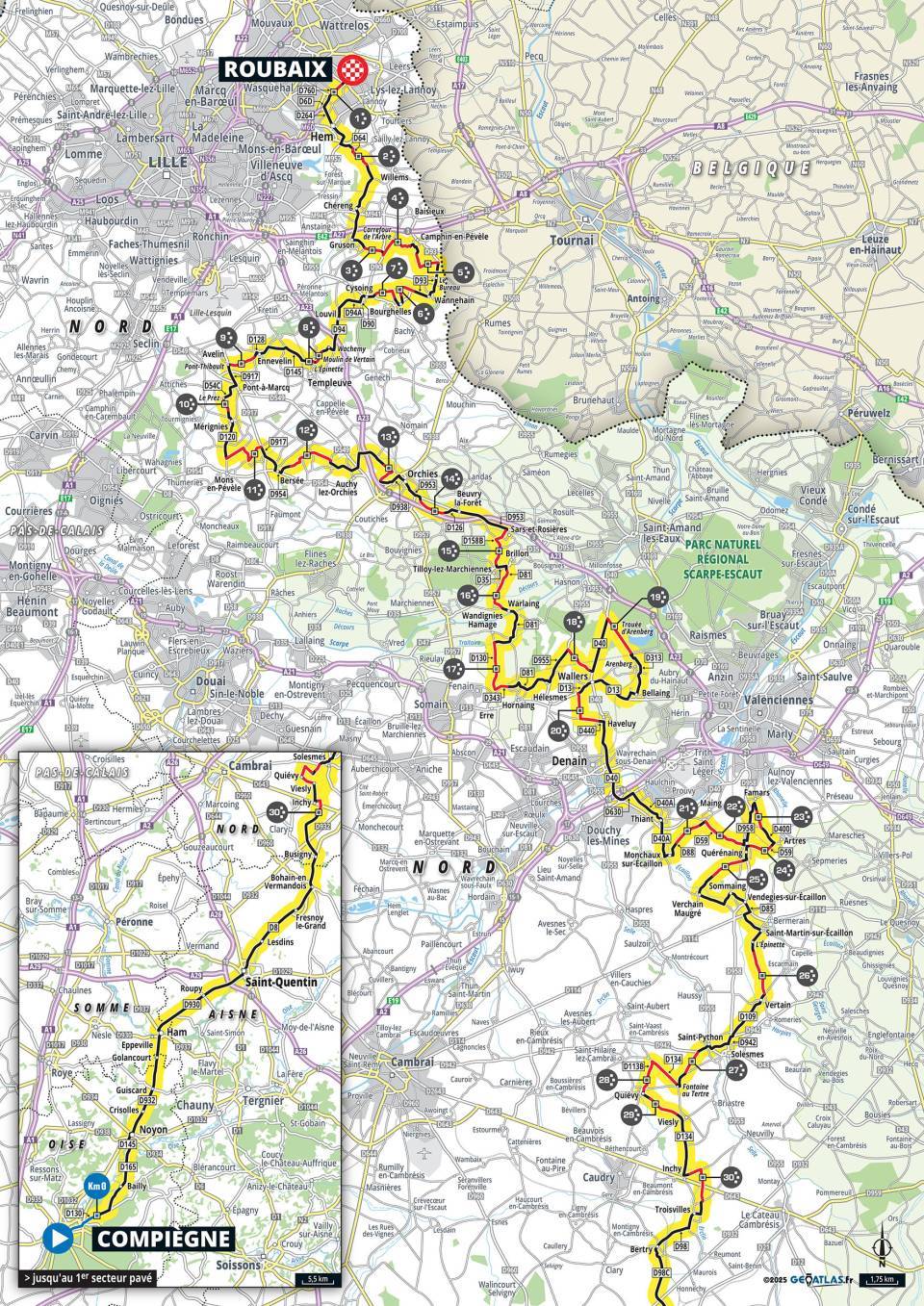
The men’s Paris-Roubaix is notorious for its cobbled secteurs – 30 of them this season, totalling 55.3km of hellish tooth-rattling riding throughout the 259.2km route.

The women’s race starts in Denain, covers 148.5km and includes 17 cobbled secteurs totalling 29.2km.

When it’s dry, as it has been for most of the recent races, the riders arrive for the ritual lap of the velodrome in Roubaix covered in dust; wet weather, as in 2021 when the race was rescheduled to October, swaps that for mud. The women’s race this year is set for a scorcher – highs of 24ºC and dry – while the men’s will be a touch cooler, with light rain predicted in the morning.

Paris-Roubaix 2025 race schedules

The women’s route heads south before turning back north to Roubaix.

The women’s race starts at 1pm CEST on Saturday 12 April, with the first cobbles secteur scheduled from 2.46pm CEST.

The scheduled earliest finish is 4.47pm CEST.

The men’s route starts in Compiègne, northeast of Paris.

The men’s race starts at 11.10am CEST on Sunday 13 April and is scheduled to hit the first secteur at around 1.30pm CEST. The scheduled earliest finish time is 5.03pm CEST.

How can I watch Paris-Roubaix 2025 live in the UK?

Coverage of the women’s race (Saturday 12 April) is from 1.15pm BST to 4.30pm BST on TNT Sports 4. The men’s race (Sunday 13 April) starts at 10am BST (Sunday 13 April) on TNT Sports 1 and runs until 4.45pm BST. TNT Sports is available via the Discovery+ app, EE TV, Sky and Virgin Media.

How else can I watch the 2025 Paris-Roubaix when I’m outside of the UK?

A Virtual Private Network (VPN) is software that enables you to change your device’s IP address, making it appear as though you’re accessing the internet from another country.

As long as you adhere to your broadcaster’s terms and conditions, a VPN enables you to unblock your usual streaming services, no matter your location. Additionally, a VPN can improve playback speeds and significantly enhance your overall internet security.

There are many VPN options available, but we recommend NordVPN as the best choice. It offers strong streaming capabilities, robust security features, and excellent value for money.

At BikeRadar (published by Our Media Limited), we review VPN services to help you access online content and services securely while you’re on the go. This includes activities such as streaming your favourite TV shows, live web content or using apps from different countries (provided it’s okay with the service provider’s terms and conditions). It’s important to note: BikeRadar does not endorse or support the use of VPN services for illegal or malicious activities, such as accessing paid-for pirated content. Please ensure you enjoy online content responsibly.

How can I watch Paris-Roubaix 2025 live in the USA and Canada?

Both races will be hosted in the USA by NBC and its paid-for streaming service, Peacock. The women’s race begins at 8.40am ET (12 April) and the men’s 5.05am ET, with CNBC network coverage of the latter from 10am-12pm ET.

Subscriptions cost $7.99 a month, or $79.99 a year for a basic plan, rising to $13.99 a month or $139.99 a year for an ad-free plan.

In Canada, racing is available on FloBikes, with a subscription costing CAN$150 for 12 months.

How can I watch Paris-Roubaix 2025 live in Australia?

SBS will be covering the women’s and men’s racing live and on-demand.

How else can I watch Paris-Roubaix 2025?

There’s live terrestrial coverage in many European countries, with france.tv showing the races live and on demand on France 3.

You’ll have to wait until April 24 to know if Motorola was brave enough to make a wooden Razr

Motorola is gearing up to announce new phones on April 24, based on a short teaser video the company shared on X. The video shows what looks like two types of phone — presumably a member of the 2025 Razr family and a Moto Edge — sliding and unfolding into place to spell “AI.”

There’s little else to go on from the video other than the April 24, 2025 date and a glimpse of some new finish options for Motorola’s phones, including a wood option. Last year’s Razr and Razr+ came in a variety of bright, poppy colors with faux suede and leather backs. Historically, Motorola has also prided itself on offering unique customizations options, starting all the way back with the Moto X in 2013, which was also available with a wooden finish. It’s possible that wood-paneled options ends up exclusive to the Moto Edge, but it would certainly make the Razr and Razr+ standout from other foldables if they got it, too.

Big reveals. Iconicdesigns. Coming 4/24 �. #MakeItIconic #GatewayToIconic pic.twitter.com/PhfPg4o71h

— motorola (@Moto) April 10, 2025

Beyond that, the improvements Motorola could reasonably make to the Razr are more expected. It’s made the front cover screen bigger before, and it could again on the 2025 Razr. The 2025 Razr+ couldn’t get a bigger front display without Motorola changing the dimensions of the phone itself, but that’s possible, too. If Motorola wanted to really offer a Razr worth upgrading to, it would also improve the phone’s camera, fixing things like color reproduction and photo processing. 

We should have a better idea of what Motorola has planned when it makes its April 24 announcement, until then, smart money is on the company cramming in a few more AI-powered features.

This article originally appeared on Engadget at https://www.engadget.com/mobile/smartphones/youll-have-to-wait-until-april-24-to-know-if-motorola-was-brave-enough-to-make-a-wooden-razr-211723767.html?src=rss

Sony’s first PS5 exclusive of 2025 is… The Last of Us

Naughty Dog is back with yet another way for players to buy The Last of Us. The team announced a new bundle called The Last of Us Complete, which has the latest editions of both award-winning games for the PlayStation 5. This Complete edition runs $100 for the digital bundle, which is available now. A physical collector’s edition can be pre-ordered now for $110, with availability expected on July 10.

The original 2013 game was remastered for the PS4 just a year after its release, then received a complete remake and rebrand as The Last of Us Part I in 2022 for the PS5. Naughty Dog also moved pretty quick on the remaster of the 2020 sequel, pushing out the The Last of Us Part II Remastered early last year. The Part II project was a $10 upgrade that included new content as well as new bells and whistles for the graphics, but the Part I remake displeased some fans with its $70 asking price.

The announcement of this new game bundle was timed to align nicely with the debut of the TV adaptation’s second season, which premieres on April 13 and has already been confirmed for a third season. Between this new bundle being dubbed Complete and a recent interview with creator Neil Druckman, this does seem to squash any hopes fans might have had for the game to have a third installment. At least that means Complete really should be the last time you need to buy the titles. (At least, the last time until the PlayStation 6 arrives…)

This article originally appeared on Engadget at https://www.engadget.com/gaming/playstation/sonys-first-ps5-exclusive-of-2025-is-the-last-of-us-210329305.html?src=rss

You Can Bring Back One-Tap ‘Do Not Disturb’ to Your Google Pixel

Software updates are great when they make features better, but that doesn’t always happen. Case in point: a recent Google Pixel update that’s brought in a flurry of complaints. One of the least popular changes altered how Pixels handle the Do Not Disturb feature. Previously, you could swipe down from the top of your Pixel’s screen and press the Do Not Disturb button in quick settings to toggle it on or off. The March 2025 update changed that, forcing you to make multiple taps to activate or deactivate Do Not Disturb on your Google Pixel smartphone.

Plenty of Google Pixel users took to Reddit to complain about this change. Fortunately, there are easy ways to fix this behavior.

Restore one-tap Do Not Disturb to your Google Pixel smartphone

The easiest way to bring back the old Do No Disturb button is by downloading an app. Simple DND lets you do exactly what the old button used to. Once you install the app and give it the required permissions, simply tap the Add Tile button to send a quick Do Not Disturb toggle back to your Pixel’s quick settings pane. 

Once the tile is there, you can rearrange it as you see fit. Just swipe down from the top of your Pixel’s screen and select the pencil icon to edit and reorder your quick settings tiles. You can use this to move the new Do Not Disturb button to your preferred location. This app was developed by someone who faced the exact same problem after the update, and doesn’t do anything other than restoring the old Do Not Disturb button. 

The other alternative is to add a Do Not Disturb button to the lock screen and access it from there. This will require you to give up one of the two shortcuts on your lock screen and replace it with Do Not Disturb. You can change this by going to your Pixel phone’s Settings app and navigating to Display > Lock screen > Shortcuts. Now select one of the shortcuts and pick Do Not Disturb to add it there. 

In the meantime, if you want Google to bring back the old, one-tap button, you can send your feedback to the company. On your Pixel, go to Settings > Tips & support > Send feedback. Be sure to describe the problem in detail so that the person reading it can understand the issue and pass it on to the relevant team accordingly. 

[$] Atomic writes for ext4

Building on the discussion in the two previous sessions on untorn (or
atomic) writes, for buffered I/O and for XFS using direct I/O, Ojaswin Mujoo
remotely led a
session on support for the feature on ext4. That took place in the combined storage and
filesystem track at the
2025 Linux Storage, Filesystem, Memory Management, and BPF Summit. Part of
the support for the feature is already in the upstream kernel, with more
coming. But
there are still some challenges that Mujoo wanted to discuss.