
Wi-Fi Giant TP-Link’s US Future Hinges on Its Claimed Split From China

The ubiquitous but often overlooked Wi-Fi router lies at the heart of one of Washington’s biggest national security dilemmas — and a rift between two brothers on opposite sides of the Pacific. From a report: US investigators are probing the China ties of TP-Link, the new American incarnation of a consumer Wi-Fi behemoth, following its rapid growth and a spate of cyber attacks by Chinese state-sponsored actors targeting many router brands. The inquiry is testing whether TP-Link’s corporate makeover represents enough of a divorce from China to spare it from a ban in a crucial market.

While TP-Link’s recent restructuring split the company into separate US- and China-headquartered businesses, a Bloomberg News investigation found that the resulting American venture still has substantial operations in mainland China. If US officials conclude TP-Link’s China connections pose an “unacceptable risk,” they could use a powerful new authority to ban the company from the US. Such an outcome could also unravel plans by the owner of its US business, Jeffrey Chao, to start fresh in California following an estrangement from his older brother, who started the router business with him in Shenzhen nearly three decades ago.

In an interview — the first Jeffrey Chao said he has ever given — he told Bloomberg he’s quitting China. He opened a new headquarters in Irvine last year and said he will invest $700 million in the US to build a factory and jumpstart research and development on highly secure routers while awaiting the green card he said he applied for in January. He has also traded his perch in a Hong Kong skyscraper for a 1980s-era split-level near his office, joined a neighborhood evangelical church, and is now eyeing a Cadillac Escalade for road trips, he said, burnishing his American credentials. “I know the current relationship between the US and China is complex,” Chao said in the interview last month. “I have chosen the US.”


Read more of this story at Slashdot.


The rights for Tequila Works’s games are up for auction after insolvency filing

Tequila Works, the Spanish developer that created games like Rime and Gylt and published games like The Sexy Brutale, is auctioning off its intellectual property (via VGC). The studio filed for insolvency in 2024 after “prolonged market conditions” made it financially-difficult to stay above water.

The games and IP rights available to bid on at auction site Escrapalia include Tequila Works’ first game Deadlight, Rime and its horror adventure game Gylt. The company is also auctioning off in-development projects, including “The Ancient Mariner,” “Dungeon Tour” and “Brawler Crawler.” 

Prior to it filing for insolvency and Tequila Works’ founders stepping down, the studio released Song of Nunu: A League of Legends Story, one of the games on the short-lived Riot Forge publishing label. Riot announced it was shutting down Riot Forge in January 2024. The label published League of Legends spin-off games in variety of different genres, including turn-based RPG Ruined King, 2D action RPGThe Mageseeker, and more.

Back in 2022, Tencent acquired a controlling stake in Tequila Works, a connection that made sense given the Chinese company also owns Riot. Contraction across the games industry, the failure of Riot Forge games to connect with a larger audience and Tequila Work’s Gylt starting life as a Google Stadia-exclusive all likely contributed to the studio’s current position.

This article originally appeared on Engadget at https://www.engadget.com/gaming/the-rights-for-tequila-workss-games-are-up-for-auction-after-insolvency-filing-193627934.html?src=rss

Here’s Every Nintendo Switch 2 Game You Can Preorder In The US Right Now

Here's Every Nintendo Switch 2 Game You Can Preorder In The US Right Now
As much as we’d like to tell you that Nintendo and its retail partners have opened up US preorders for the recently-announced Switch 2 and at the originally announced MSRPs ($449 for the Switch 2 and $499 for the Switch 2 + Mario Kart World Bundle), that is not the case. There’s still no word on the situation as Nintendo continues to assess

Introduction to Wireplumber

Wireplumber is the session and policy manager for Pipewire. It has its own systemd user service. It is a separate project, with separate concerns. Current version is 0.5.8 on Fedora Workstation 41. Session managers save the current state of open audio applications along with their connections, allowing sessions to be easily restored without having to […]

Microsoft’s 50th Anniversary Surface Laptop Is Stunning And You Could Win It For Free

Microsoft's 50th Anniversary Surface Laptop Is Stunning And You Could Win It For Free
If the prospect of winning a brand-new Microsoft laptop sounds appealing, you might benefit from paying attention to the information we’re giving you now. So the gist is that Microsoft is celebrating its 50th anniversary, and to commemorate this achievement, it’s giving out some Surface laptops for free. Pretty cool, eh?

Microsoft made

Zenvo Previews World’s Most Powerful V12 Engine For A Road Car And It’s A Beast

Zenvo Previews World's Most Powerful V12 Engine For A Road Car And It's A Beast
The most powerful V12 ever fitted to a production car has been revealed. It comes from Danish automaker Zenvo and was developed not by the usual suspect like AMG, Cosworth, or the VW Group, but by Mahle. The 6.6-liter V12 sports four turbos and will be featured in the Zenvo Aurora hypercar, paired with an electric hybrid system. On its own

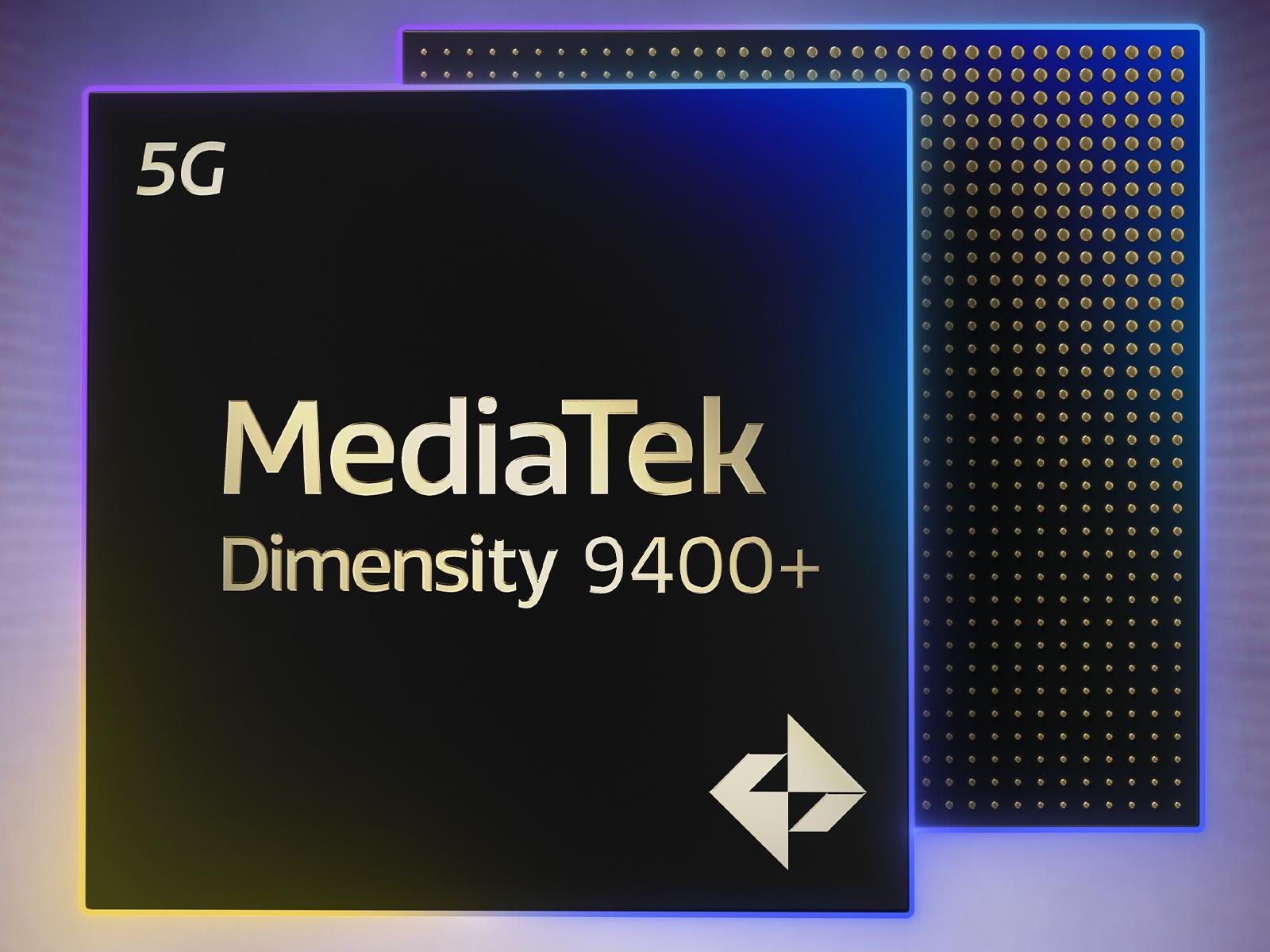
MediaTek Unveils Dimensity 9400+ Flagship With AI And Gaming Boosts For Android

MediaTek Unveils Dimensity 9400+ Flagship With AI And Gaming Boosts For Android
MediaTek has a new flagship chip for Android phones, the Dimensity 9400+. The plus-designated chip arrives six months after MediaTek unveiled its non-plus Dimensity 9400 silicon and is mostly an iterative upgrade with a clock speed boost, though it does also boast a couple of noteworthy features that can purportedly boost AI workloads and

Android Auto Is Plotting A Course For Smart Glasses Navigation, Is It A Good Idea?

Android Auto Is Plotting A Course For Smart Glasses Navigation, Is It A Good Idea?
The good folks at Google’s Android Auto (AA) dev team could be prepping (or testing) the ability to run navigation on smart glasses, if a breakdown of the latest AA Beta is anything to go by. The idea is cool in that it gives smart glass drivers navigation information and directional cues directly in their line of sight without the need for

Razer PC Remote Play Launches For Glorious Game Streaming On The Go

Razer PC Remote Play Launches For Glorious Game Streaming On The Go
Cloud and remote gaming are gaining in popularity, with Razer joining the fray with its PC Remote Play. It’s the company’s rendition of a platform that allows you to stream PC games to mobile devices from anywhere you have internet access. This will work with devices such as smartphones, tablets, and Windows handhelds, which often have controllers

China Raises Tariffs on US Imports To 125%

China responded to President Trump’s tariffs on Friday, raising its own tariffs on American goods to 125%, from 84%. The New York Times: The announcement by China’s State Council came after Trump administration officials clarified on Thursday that China was now facing a minimum tariff rate of 145% on all exports to United States. China said its new tariffs will take effect on Saturday. China said it plans to ignore any further increases announced by Washington from here. Bloomberg: In a statement following China’s retaliatory move, the Commerce Ministry said Washington’s repeated use of excessively high tariffs has become little more than a numbers game — economically meaningless and revealing its use of tariffs as a tool for bullying and coercion. “It’s become a joke,” the ministry said. CNN: The trade war between the world’s two economic superpowers has tanked international markets and fueled fears of a global recession.

“There are no winners in a trade war, and going against the world will only lead to self-isolation,” [Chinese leader] Xi Jinping told Spanish Prime Minister Pedro Sanchez in Beijing on Friday, according to state broadcaster CCTV.

“For over 70 years, China’s development has relied on self-reliance and hard work — never on handouts from others, and it is not afraid of any unjust suppression,” Xi added.


Read more of this story at Slashdot.

FDA Plans To Phase Out Animal Testing Requirements

The Food and Drug Administration says it would begin phasing out animal testing requirements for antibody therapies and other drugs and move toward AI-based models and other tools it deems “human-relevant.” Axios: The FDA said it would launch a pilot program over the next year allowing select developers of monoclonal antibodies to use a primarily non-animal-based testing strategy. Commissioner Marty Makary in a statement said the shift would improve drug safety, lower research and development costs and address ethical concerns about animal experimentation.


Read more of this story at Slashdot.

AI Models Still Struggle To Debug Software, Microsoft Study Shows

Some of the best AI models today still struggle to resolve software bugs that wouldn’t trip up experienced devs. TechCrunch: A new study from Microsoft Research, Microsoft’s R&D division, reveals that models, including Anthropic’s Claude 3.7 Sonnet and OpenAI’s o3-mini, fail to debug many issues in a software development benchmark called SWE-bench Lite. The results are a sobering reminder that, despite bold pronouncements from companies like OpenAI, AI is still no match for human experts in domains such as coding.

The study’s co-authors tested nine different models as the backbone for a “single prompt-based agent” that had access to a number of debugging tools, including a Python debugger. They tasked this agent with solving a curated set of 300 software debugging tasks from SWE-bench Lite.

According to the co-authors, even when equipped with stronger and more recent models, their agent rarely completed more than half of the debugging tasks successfully. Claude 3.7 Sonnet had the highest average success rate (48.4%), followed by OpenAI’s o1 (30.2%), and o3-mini (22.1%).


Read more of this story at Slashdot.
Russian Cable Attacks ‘Threaten To Cut Off World’s Internet’

Military chiefs at Nato have been warned of global internet blackouts following a string of suspected Russian attacks on subsea cables. From a report: Telecoms companies including Vodafone, O2 owner Telefonica and Orange have written to UK, EU and Nato officials warning that a rise in sabotage incidents was putting critical services at risk. In an open letter, they wrote: “The repercussions of damage to subsea cables extend far beyond Europe, potentially affecting global internet and power infrastructure, international communications, financial transactions and critical services worldwide.”

It comes after a spike in incidents relating to fibre optic cables on seabeds that carry huge volumes of data, voice and internet traffic between countries. More than 500 cables carry around 95pc of all international data, while their remote location makes them difficult and costly to monitor. At least 11 subsea cables have been damaged in the Baltic Sea since October 2023 and similar outages have been reported in the North Sea.

The incidents have fuelled fears of sabotage by hostile actors, with more than 50 Russian ships observed in areas of high cable density in the Baltic Sea. The UK is monitoring the Russian spy ship Yantar amid concerns that it is mapping critical underwater infrastructure. Concerns have also been raised about Chinese sabotage following a number of incidents around Taiwan.


Read more of this story at Slashdot.

Microsoft is About To Launch Recall For Real This Time

Microsoft is starting to gradually roll out a preview of Recall, its feature that captures screenshots of what you do on a Copilot Plus PC to find again later, to Windows Insiders. From a report: This new rollout could indicate that Microsoft is finally getting close to launching Recall more widely. Microsoft originally intended to launch Recall alongside Copilot Plus PCs last June, but the feature was delayed following concerns raised by security experts. The company then planned to launch it in October, but that got pushed as well so that the company could deliver “a secure and trusted experience.”


Read more of this story at Slashdot.

Fintech Founder Charged With Fraud After ‘AI’ Shopping App Found To Be Powered By Humans in the Philippines

Albert Saniger, the founder and former CEO of Nate, an AI shopping app that promised a “universal” checkout experience, was charged with defrauding investors on Wednesday, according to a press release from the U.S. Department of Justice. From a report: Founded in 2018, Nate raised over $50 million from investors like Coatue and Forerunner Ventures, most recently raising a $38 million Series A in 2021 led by Renegade Partners. Nate said its app’s users could buy from any e-commerce site with a single click, thanks to AI. In reality, however, Nate relied heavily on hundreds of human contractors in a call center in the Philippines to manually complete those purchases, the DOJ’s Southern District of New York alleges.

Saniger raised millions in venture funding by claiming that Nate was able to transact online “without human intervention,” except for edge cases where the AI failed to complete a transaction. But despite Nate acquiring some AI technology and hiring data scientists, its app’s actual automation rate was effectively 0%, the DOJ claims.


Read more of this story at Slashdot.

ChatGPT can now remember and reference all your previous chats

OpenAI today announced a significant expansion of ChatGPT’s customization and memory capabilities. For some users, it will now be able to remember information from the full breadth of their prior conversations with it and adjust its responses based on that information.

This means ChatGPT will learn more about the user over time to personalize its responses, above and beyond just a handful of key facts.

Some time ago, OpenAI added a feature called “Memory” that allowed a limited number of pieces of information to be retained and used for future responses. Users often had to specifically ask ChatGPT to remember something to trigger this, though it occasionally tried to guess at what it should remember, too. (When something was added to its memory, there was a message saying that its memory had been updated.)

Read full article

Comments

Researchers concerned to find AI models misrepresenting their “reasoning” processes

Remember when teachers demanded that you “show your work” in school? Some new types of AI models promise to do exactly that, but new research suggests that the “work” they show can sometimes be misleading or disconnected from the actual process used to reach the answer.

New research from Anthropic—creator of the ChatGPT-like Claude AI assistant—examines simulated reasoning (SR) models like DeepSeek’s R1, and its own Claude series. In a research paper posted last week, Anthropic’s Alignment Science team demonstrated that these SR models frequently fail to disclose when they’ve used external help or taken shortcuts, despite features designed to show their “reasoning” process.

(It’s worth noting that OpenAI’s o1 and o3 series SR models were excluded from this study.)

Read full article

Comments