We may earn a commission from links on this page. Deal pricing and availability subject to change after time of publication.
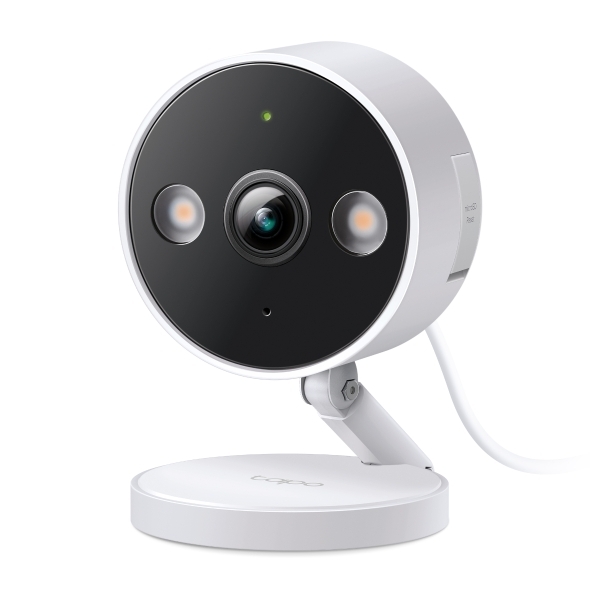
If you’re looking for a home security camera that doesn’t cost a fortune but still delivers sharp video and smart features, the TP-Link Tapo C120 might be worth a closer look. At $24.99 (down from $39.99), it undercuts a lot of competition while still offering 2K video, color night vision, and voice control via Alexa and Google Assistant.
It’s compact, just over two inches wide, with a clean design that fits just as easily on a bookshelf as it does on an outdoor wall. And thanks to its magnetic base and weatherproof IP66 rating, you can mount it indoors or out without stressing over the elements. That said, it plugs in with the included 10-foot USB-C cable, so it’s not battery-powered, but you won’t be dealing with frequent recharges either.
What the TP-Link Tapo C120 does well is core functionality. Its video feed is sharp thanks to its 4MP sensor (with a 120-degree field of view), and it gives you full-color night vision (using its Starlight sensor plus its built-in spotlights) when there’s ambient light—or even in complete darkness if you toggle the white LEDs. And if you don’t want to light things up, you can always switch to black-and-white infrared mode via the companion app. Motion detection is customizable—you can set it to notify you only for people or cars, for example, which keeps the spammy alerts in check. You get the option to store clips locally using your own microSD card (up to 512GB) or pay for cloud storage via Tapo Care. That subscription starts at $3.49/month and adds things like longer clip history and better filtering, but it’s optional if you’re okay with handling storage yourself.
That said, it doesn’t support Apple HomeKit or IFTTT, according to this PCMag review. Google Assistant and Alexa work fine, especially for viewing the feed on smart displays, but automation is limited beyond that. Two-way audio is there, too, but you have to hold a button on the app to talk, which can be annoying if you’re using it frequently. Still, the footage it captures—especially at night—is better than what you’d expect from a sub-$30 camera.
Potential PS5 buyers in Europe, the UK, Australia and more will now need to fork over up to 100 more AUD, EUR and other local currencies for a console. Sony has announced a series of price hikes for the PS5, blaming “a backdrop of a challenging economic environment, including high inflation and fluctuating exchange rates.” The company last raised PS5 prices across these markets in 2022.
Only the PS5 Digital Edition’s cost changes in Europe and the UK. It will increase to €500 ($570) from €450 ($513) in Europe and to £430 ($567) from £390 ($514) in the UK.
Prices for the Digital Edition and PS5 with disc drive are rising significantly across the board. The Digital Edition is increasing to AUD $750 (USD $475) from AUD $650 (USD $412) in Australia. Meanwhile, in New Zealand, the PS5 with disc drive is now NZD $950 (USD $558), up from NZD $900. Those new prices go into effect immediately, so hopefully, you did some shopping over the weekend if you wanted a new PS5.
In contrast, Sony is reducing the cost of purchasing the add-on disc drive. Buyers will pay €80 in Europe (down from €120) and £70 in the UK, down from £100.
This article originally appeared on Engadget at https://www.engadget.com/gaming/playstation/ps5-prices-are-increasing-across-europe-uk-and-australia-123025793.html?src=rss
Most of us have a love-hate relationship with our cars. We love our vehicles because they represent freedom (and economic necessity, if you rely on one to get to work or do your grocery shopping), but we hate how much they cost—and the fact that you never actually stop paying for them. It costs an average of $1,452 every year just to keep your vehicle running, and the overall cost of owning a car is a whopping $6,684 annually.
As crucial as vehicle maintenance is in terms of making sure your car is reliable, people tend to skip an awful lot of it. If all you do every year is the basics—changing the oil and engine filters in a standard tune-up—you’re skipping a bunch of maintenance that only seems less important. Here are the vehicle maintenance steps you should definitely not skip.
Cleaning battery terminals
Your car’s battery is where the magic starts: When you turn the key or press the ignition button, a charged, fully-functioning battery sets everything in motion. Even if your battery is relatively new and still in good shape, corrosion can build up on the terminals. Anything that inhibits the connection between your battery and the systems it powers will impact your car’s performance and can damage your engine and electrical systems, so cleaning those terminals twice a year is a good idea. It’s a pretty simple process, actually.
Checking all the fluids
Sure, you change the oil according to a schedule—but your car runs on a lot of different fluids, and you should be checking and replacing them all regularly. This includes:
Transmission fluid. Just because it’s “sealed” or described as “lifetime” doesn’t mean it shouldn’t be checked and possibly changed out. Making sure levels haven’t dropped when you change the oil is a good idea, and even if your transmission fluid is holding up at 100,000 miles, you should change it out.
Brake fluid. Brake fluid can break down just like engine oil, so it’s a good idea to check it every time you change the oil, and change it out every few years, even if your brakes are working properly. You’re better off asking your mechanic to do this for you unless you’re very experienced, though, as brake fluid changes can be a bit more complicated than other fluids used in your car.
Differential fluid. The differential distributes power to your wheels, making turns smoother and giving your car more stability. You should check your car’s manual for specifics, but generally speaking you should have it changed when you hit 30,000 miles or so.
Coolant. If you haven’t checked your antifreeze recently, now would be the time. It’s incredibly easy to drain and replace your coolant, which you should do according to manufacturer recommendations or every few years.
Power steering. You like being able to steer your car without putting your back into it, don’t you? Then you should be checking your power steering fluid to make sure it doesn’t resemble mud. If it does, change it. If it doesn’t, look up the recommended replacement schedule for your car and change it then.
Change the wipers
The worst time to realize your windshield wipers have become a shell of their former selves is when you’re caught in a rainstorm and can’t see anything through the pour. Plus, there’s nothing less fun than changing your wipers in the midst of a storm. Your wipers will give you some warning that they’re wearing out, leaving streaks and making a lot of squeaky noises, so when you notice those signs, it’s time to pop off the old ones and pop on the new.
Check the lights
You rely on your car’s various lights—headlights, hazard lights, signal lights, and brake lights—for safe operation of the vehicle, so it’s amazing how many people don’t bother to check if they actually work. Take two minutes every year to turn on the lights and walk around the car to ensure they’re all working properly. Changing out a bulb here and there can spare you from being pulled over by a police officer—or worse.
Check tire pressure
Proper tire pressure affects just about every aspect of your driving experience—it can make braking harder, affect the stability of the car (if you’ve never felt a car shake because the tires were overinflated, you haven’t lived), and impact fuel efficiency. Check the tire pressure (this is literally printed on the tire itself) at least once a month and adjust as needed.
Even if you get your tires rotated regularly (as you should), you should also check your tires’ tread wear every now and then. Rapid or uneven wear on tire tread could indicate other problems with the car, and if your tires are starting to get a little bald it’s a very good idea to get them replaced before their lack of traction gets you into an accident.
Cleaning out the drains
You might not even be aware of the fact that your car has several drains that keep water from collecting in the engine—or in the cabin area. All of these drains should be inspected and cleaned out periodically—otherwise moisture will build up, rusting components and staining parts of the car. Typical drain locations include:
Sunroofs. If you have a sunroof, there are drains built into the car that carry rain and other water that gets through the seals. Your car’s manual will show you exactly where they are, but they’re generally located in the corners of your sunroof well.
Doors. Drains are often located at the bottom of your doors. Often the sunroof drains are connected to these as well.
Windshield. Look where the windshield meets the hood of the vehicle, and you’ll likely find drains at each end.
Trunk/bed. Drains are often included in the read of the vehicle as well.
All of these drains can get clogged with gunk, which can lead to water inside the car, or invisible rusting and corrosion that destroys the vehicle from the inside-out. They can usually be cleaned with just a garden hose—the water pressure alone should work to expel built-up debris. If you have a stubborn clog, a length of wire run down through the drain should help.
Change the cabin filter
You probably replace engine filters regularly, but have you ever inspected and replaced the cabin filter? These filters clean the air pumped into your vehicle’s interior via the A/C, heat, or ventilation system. It gets filthy just like any other filter, which leads to lower air quality in your vehicle’s cabin and extra stress on your systems. Look at your manual to find out where it’s hiding, then swap it out at least once a year—more often if you notice a drop in air quality, or if you regularly drive through some dusty areas.
Washing the exterior
You might think washing your car is a luxury, or a non-essential aspect of maintenance, but you would be wrong. Your car is bombarded with a ton of gross stuff—from dirt that scratches the finish, bugs that muck up your windshield, and corrosive stuff that can undermine your vehicle’s seals and other components. In other words, not washing your car on a regular basis will shorten its lifespan and increase your maintenance costs.
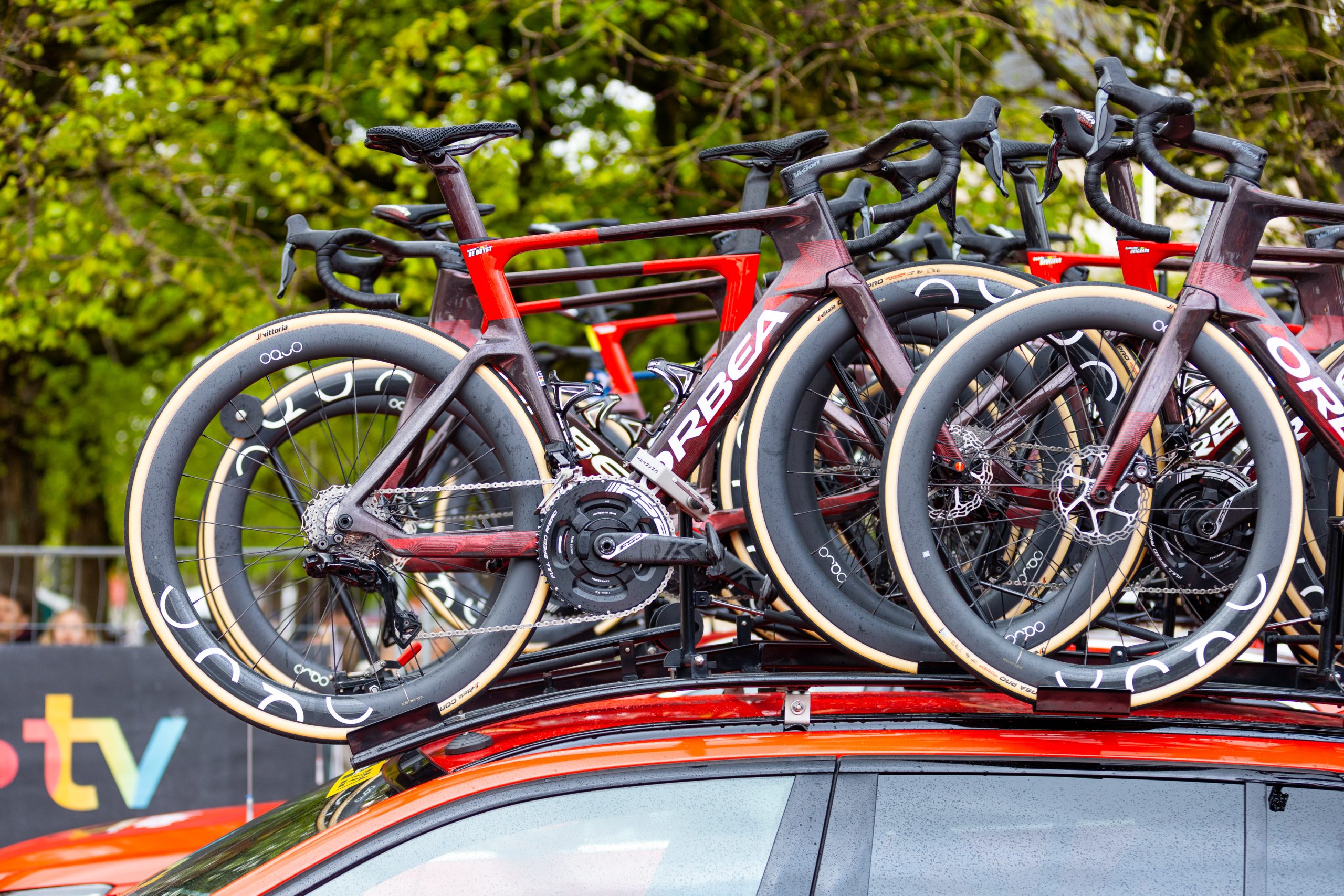
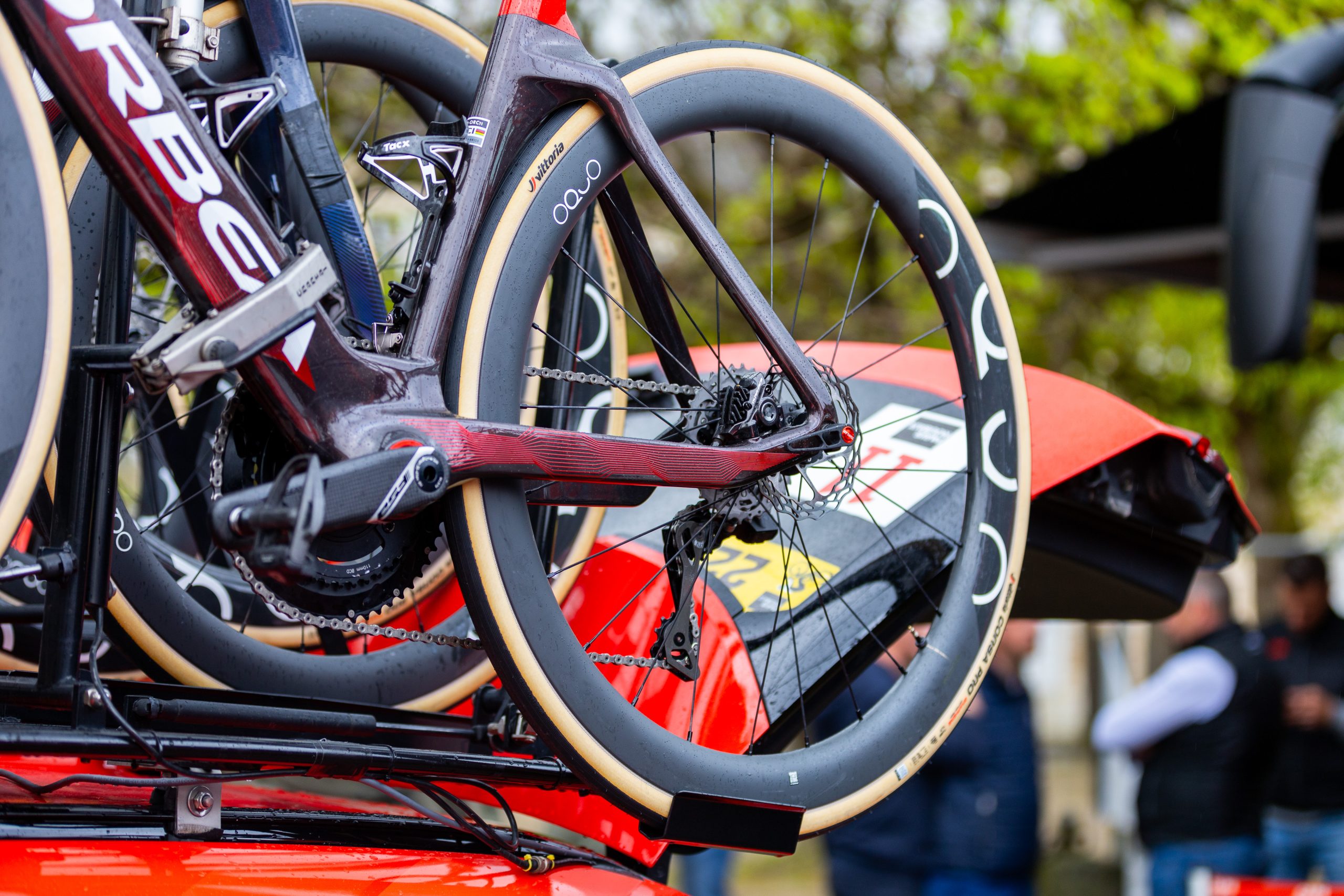
The wheelset has ‘RP50LTD’ printed on the rim. Oquo’s current ‘Road Performance’ line-up comprises of the RP35LTD, RP45LTD and RP57LTD wheelsets.
As you might expect, the new wheelset features a 50mm-deep rim and “wide internal width”, though we don’t have any figures to work with for the latter.
We spotted the wheels on a Lotto team car at the start, but they were used in the race, too. Felix Smith / Our Media
It’s fair to assume, though, that the wider rim width is intended to better support the increasingly wide tyres seen on race bikes. Oquo says the rim itself has also been designed to improve comfort.
That makes the wheelset a good fit for the harsh cobbles of Paris-Roubaix.
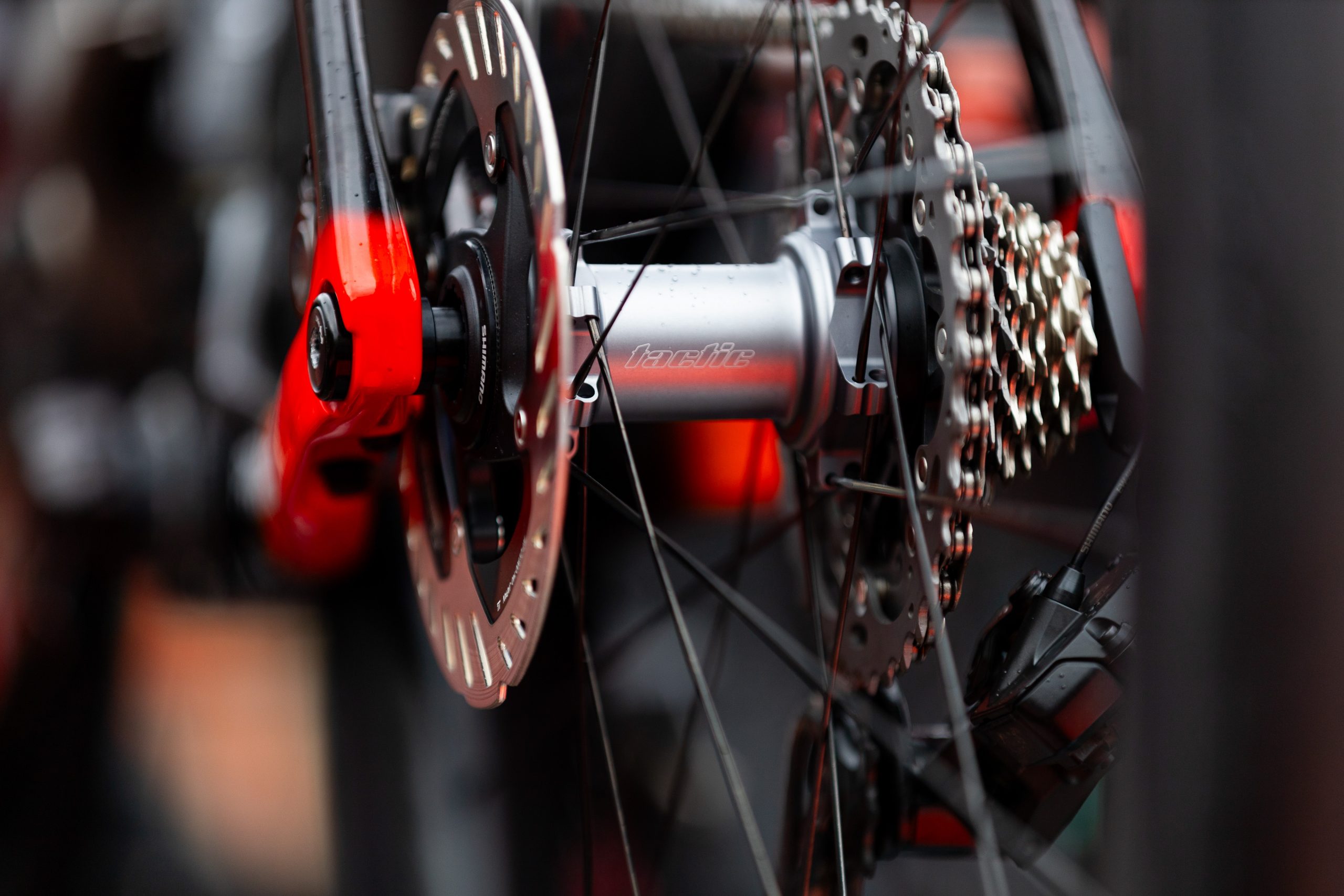
The new rims are laced onto trick-looking Tactic Racing hubs. Felix Smith / Our Media
We saw the wheelset mounted to a bike on top of a Lotto team car at the start of Paris-Roubaix, but it was also used by members of the team in the race, including Joshua Giddings and Baptiste Veistroffer.
19-21mm is considered a typical internal width for conservative road wheels, with 21-23mm now common for designs intended for use with 28-32mm tyres.
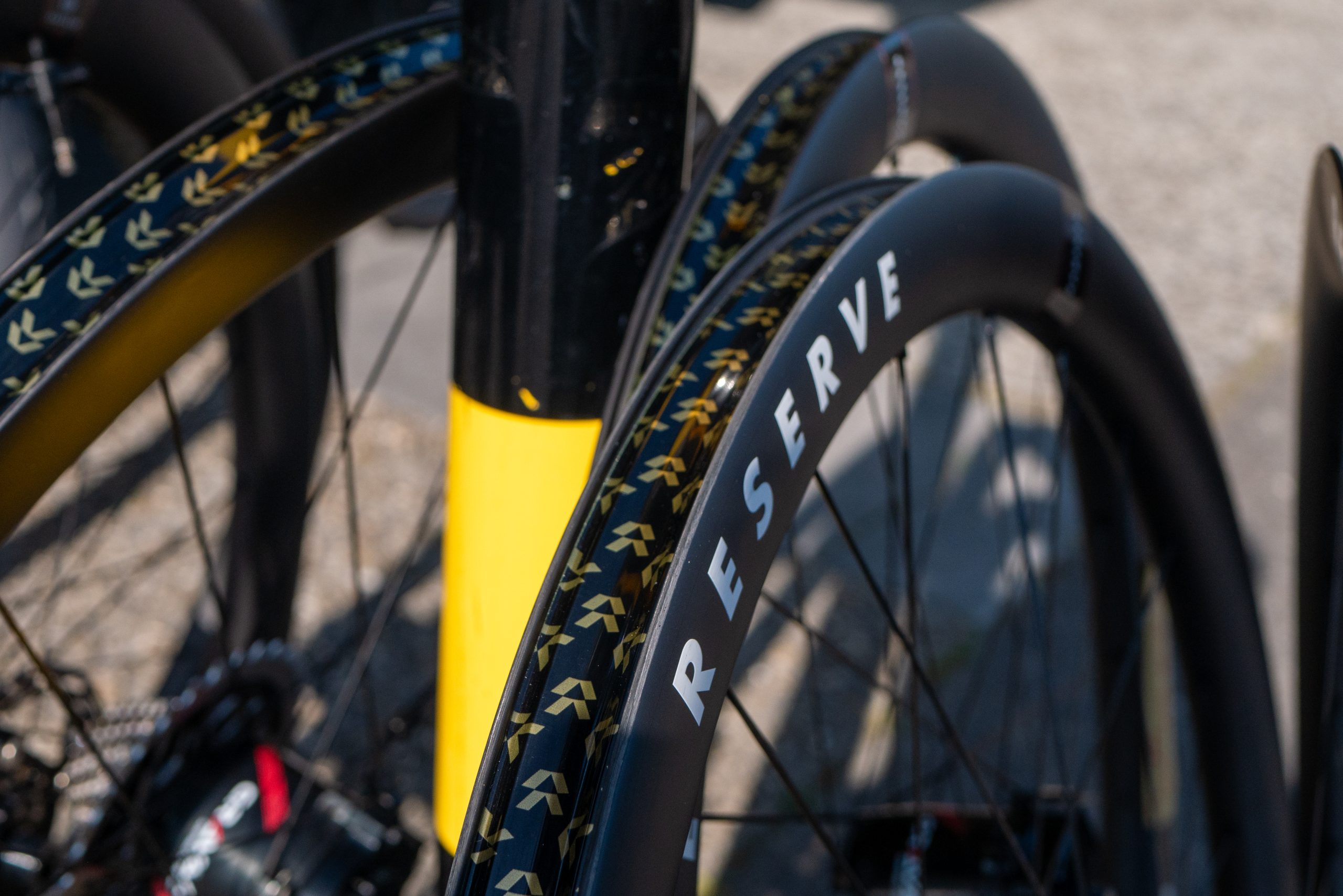
Reserve is a brand known for its wide road wheels. These were used by the Visma–Lease a Bike team at Paris-Roubaix. Felix Smith / Our Media
Some road wheels take this further: Reserve’s 52|63 aero wheelset features a 25mm internal width at the front and 24mm at the rear, while Zipp’s 353 NSW and 303 Firecrest wheels have a 25mm intrernal width.
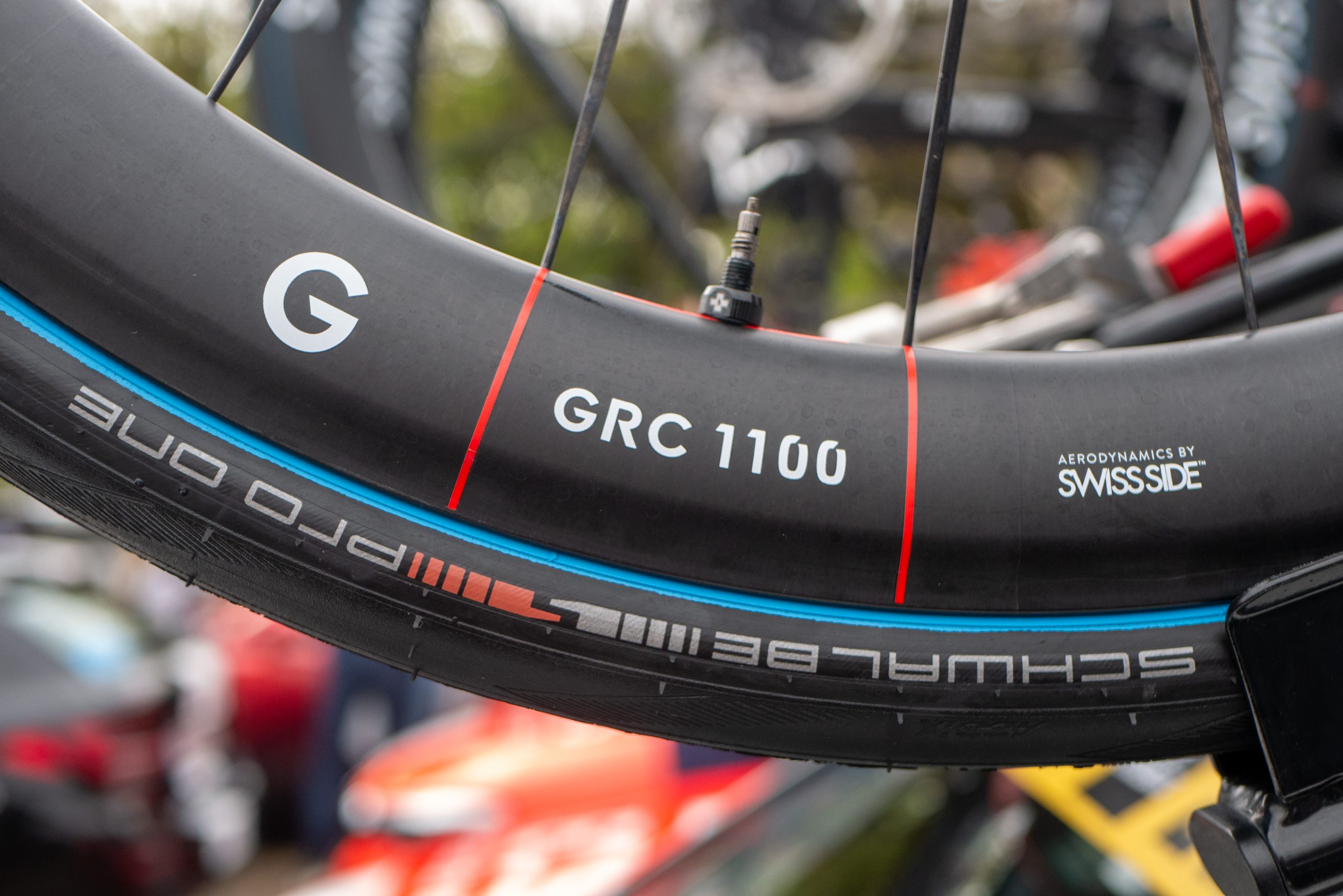
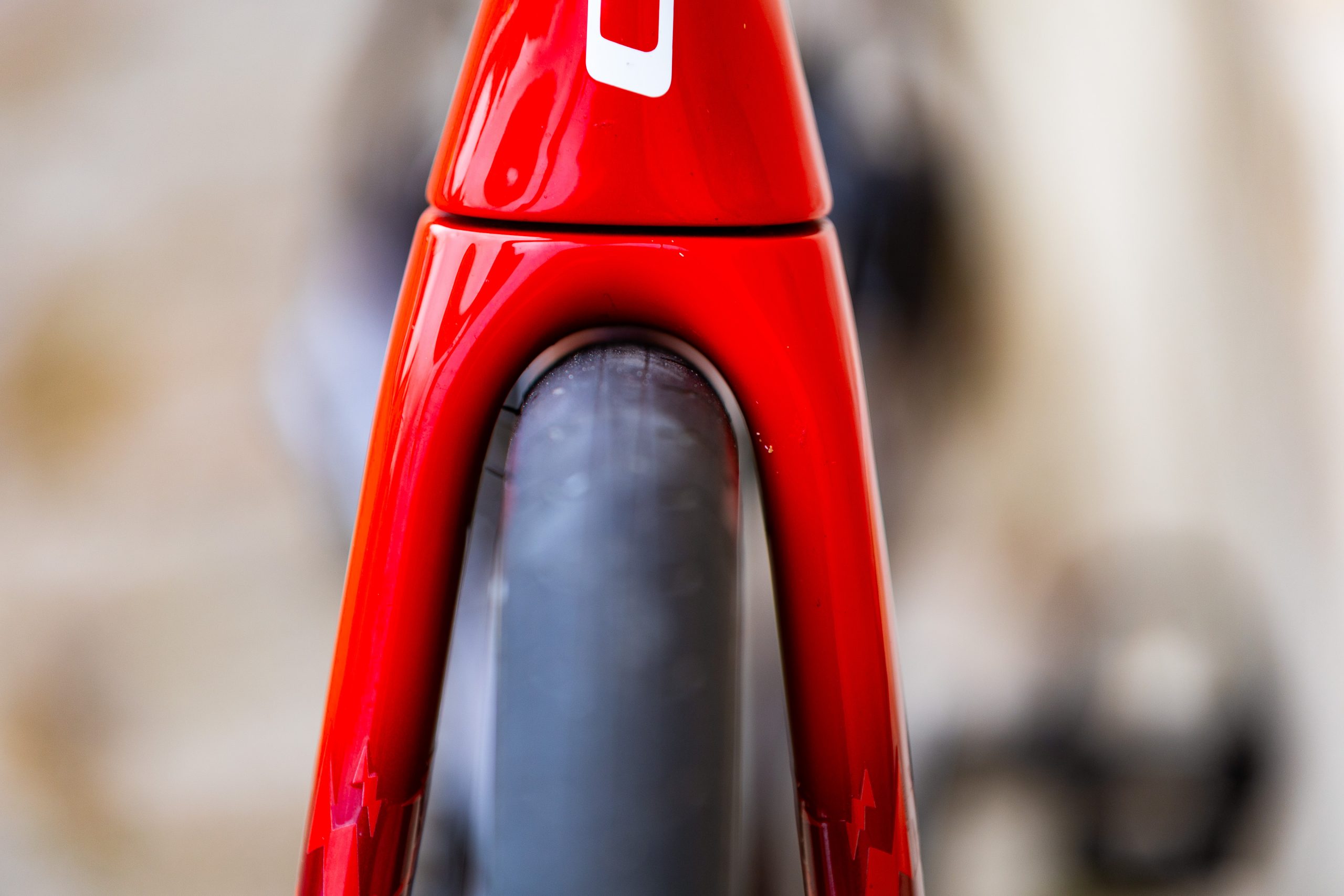
Tudor riders opted for DT Swiss’s 50mm-deep GRC 1100 gravel wheels for their 24mm inner width. This ballooned their Schwalbe Pro One tyres to the point where light barely passed between the tyre and the fork crown. Liam Cahill / Our Media
Part of the advantage with the DT Swiss gravel wheels is the greater external width, which makes them better optimised for wide tyres from an aero perspective – the standard ARC wheels are ‘only’ 20mm / 27mm wide, internally and externally
Oquo’s new wheelset is a sign of things to come then, and while there’s no official word on a launch date, we’ll bring you more when we have it.
Taco van der Hoorn used 35mm tyres for Paris-Roubaix. Felix Smith / Our Media
For anyone who misses the way smartphones used to work, Samsung has announced two new “rugged” Galaxy devices, the Galaxy XCover 7 Pro and the Galaxy Tab Active 5 Pro, that feature removable backplates and user-replaceable batteries.
The Galaxy XCover 7 Pro is designed for enterprise customers, but it comes packed with some of the same Galaxy AI features Samsung has been pushing on its flagship smartphones, including Google’s Circle to Search and Object Eraser. The phone uses a Snapdragon 7s Gen 3 chip, has a brighter screen and comes with a 4,350mAh battery, but the reason to buy it are all the ways Samsung’s made it tougher and more customizable than the average phone. That includes IP68 water and dust resistance, MIL-STD-810H certification for drops, programmable buttons, built-in pogo pins as another charging option and a battery you can replace yourself just by popping off the back of the phone.
Samsung
The Galaxy Tab Active 5 Pro has a 10.1-inch screen and uses the same Snapdragon chip as the XCover 7 Pro, but the tablet offers even more options when it comes to charging. Samsung says the Galaxy Tab Active 5 Pro can be used without a battery inside if it’s connected to a dock and you can also hot-swap batteries on the tablet without turning it off. You’ll get to enjoy many of the same durability benefits as the XCover 7 Pro, and the IP68 water and dust resistance extends to the Galaxy Tab Active 5 Pro’s S-Pen stylus, too.
Samsung
Neither of these devices are for normal people by any means, but they are good illustration of how formerly common-sense features like batteries you can replace yourself have become niche. We got lighter and sleeker flagship phones in the process, but one has to wonder whether XCover owners are the ones actually living the good life.
The Galaxy XCover 7 Pro will be available to order on May 8, 2025. The Galaxy Tab Active 5 Pro is schedule to be released in “early June,” according to Samsung.
This article originally appeared on Engadget at https://www.engadget.com/mobile/smartphones/samsungs-latest-rugged-devices-are-keeping-old-school-mobile-traditions-alive-120056640.html?src=rss
New episodes of season 2 of The Last of Us are premiering on HBO every Sunday night, and Ars’ Kyle Orland (who’s played the games) and Andrew Cunningham (who hasn’t) will be talking about them here every Monday morning. While these recaps don’t delve into every single plot point of the episode, there are obviously heavy spoilers contained within, so go watch the episode first if you want to go in fresh.
Kyle: To start us off as we return to the world of The Last of Us, as a non-game player, maybe recap what you remember from the first season and what you’ve heard about the second.
Andrew: Going into the first season, I’d been aware of The Last of Us, the video game, as a story about an older guy and a kid trying to navigate a post-apocalyptic world. And the show was also mostly that: It’s Joel and Ellie against the world, and who knows, maybe this spunky young girl with an apparent immunity to the society-ravaging fungal infection could hold the key to a cure!
Things fell apart at the end of last season when the Fireflies (a group of survivalists/doctors/scientists/etc.) may or may not have been threatening to kill Ellie in order to research their cure, which made Joel go on a murder rampage, which he then lied to Ellie about. We fade to black as they make their way back toward the one semi-functioning human settlement they’d visited on their travels, where Joel’s brother and his family also happen to live.
Going into this season: I know nothing. I don’t really engage in TV show fandoms or keep up with casting announcements or plot speculation. And the only thing I know about the second game going into this is a vague sense that it wasn’t as well-received as the first. In short, I am as a newborn baby, ready to take in the second season of a show I kind of like with the freshest possible eyes.
Kyle: I may be to blame for that vague sense you have. I fell in love with the first game, especially the relationship between Joel and Ellie, and I thought the first season of the show captured that quite well. I thought the endings to both the game and season 1 of the show were just about perfect and that any continuation after that was gonna struggle to justify itself.
Without giving too much away, I think the second game misses a lot of what made the narrative of the first one special and gets sidetracked in a lot of frankly gratuitous directions. That said, this premiere episode of the second season drew me in more than I expected.
One jarring thing (in a good way) about both the second game and the second season is suddenly seeing Joel and Ellie just existing in a thriving community with electric lights, music, alcohol, decent food, laughter, etc., etc. After the near-constant precarity and danger they’ve faced in the recent past, it really throws you for a loop.
Andrew: Unfortunately but predictably, you see both of them struggling to adapt in different ways; these are two extremely individualistic, out-for-number-one people. Ellie (now a 19-year-old, after a five-year time jump) never met a rule she couldn’t break, even when it endangers her friends and other community members.
And while Joel will happily fix your circuit breaker or re-string your guitar, he emphatically rejected a needs-of-the-many-outweigh-the-needs-of-the-few approach at the end of last season. When stuff breaks bad (and I feel confident that it will, that’s the show that it is) these may not be the best people to have in your corner.
My only real Game Question for you at the outset is the big one: Is season 2 adapting The Last of Us Part II or is it doing its own thing or are we somewhere in between or is it too early to say?
“Oh, dang, is that Catherine O’Hara?”
Kyle: From what I have heard it will be adapting the first section of the second game (it’s a long game) and making some changes and digressions that expand on the game’s story (like the well-received Nick Offerman episode last season). Already, I can tell you that Joel’s therapy scene was created for the TV show, and I think it improves on a somewhat similar “Joel pours his heart out” scene from early in the game.
The debut episode is also already showing a willingness to move around scenes from the game to make them fit better in chronological order, which I’m already appreciating.
One thing I think the show is already doing well, too, is showing 19-year-old Ellie “acting like every 19-year-old ever” (as one character puts it) to father figure Joel. Even in a zombie apocalypse, it’s a relatable bit of character-building for anyone who’s been a teenager or raised a teenager.
Andrew: Joel’s therapist, played by the wonderful Catherine O’Hara. (See, that’s why you don’t follow casting announcements, so you can watch a show and be like, “Oh, dang, is that Catherine O’Hara?”)
I didn’t know if it was a direct adaptation, but I did notice that the show’s video gamey storytelling reflexes were still fully intact. We almost instantly end up in a ruined grocery store chock-full of environmental storytelling (Ellie notes a happy birthday banner and 2003’s Employee of the Year wall).
And like in any new game new season of a TV show, we quickly run into a whole new variant of mushroom monster that retains some of its strategic instincts and can take cover rather than blindly rushing at you. Some of the jump scares were so much like quick-time events that I almost grabbed my controller so I could press X and help Ellie out.
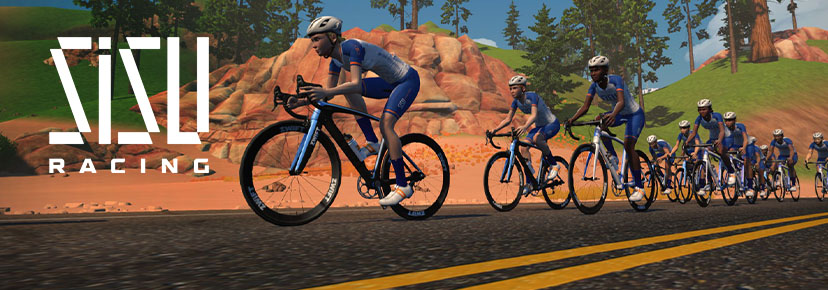
Why ride the new roads in Zwift’s France when you can race them? The team at SISU Racing is holding the next edition of their popular SISU Reissu series. It’s the France Reissu, and it happens April 14-20!
The Finnish word Reissu roughly translates as a journey or trip, embodying the concept of travel, adventure, or excursion. The Reissu is a 3 or 5-stage GC series. The rider, and team, in each grade who complete the series with the lowest cumulative time will be crowned with the Johtaja Jersey (symbolically at this stage). Stages 1, 3, and 4 comprise a 3-Stage GC, or race all 5 for the full journey.
America’s Department of Energy launched a federally funded R&D center in 1946 called the Argonne National Laboratory, and its research became the basis for all of the world’s commercial nuclear reactors.
But it’s now developed an AI-based tool that can “help operators run nuclear plants,” reports the Wall Street Journal, citing comments from a senior nuclear engineer in the lab’s nuclear science and engineering division:
Argonne’s plan is to offer the Parameter-Free Reasoning Operator for Automated Identification and Diagnosis, or PRO-AID, to new, tech-forward nuclear builds, but it’s also eyeing the so-called dinosaurs, some of which are being resurrected by companies like Amazon and Microsoft to help power their AI data centers. The global push for AI is poised to fuel a sharp rise in electricity demand, with consumption from data centers expected to more than double by the end of the decade, the International Energy Agency said Thursday. The owners of roughly a third of U.S. nuclear plants are in talks with tech companies to provide electricity for those data centers, the Wall Street Journal has reported.
PRO-AID performs real-time monitoring and diagnostics using generative AI combined with large language models that notify and explain to staff when something seems amiss at a plant. It also uses a form of automated reasoning — which uses mathematical logic to encode knowledge in AI systems — to mimic the way a human operator asks questions and comes to understand how the plant is operating [according to Richard Vilim, a senior nuclear engineer within the lab’s nuclear science and engineering division].
The tool can also help improve the efficiency of the personnel needed to operate a nuclear plant, Vilim said. That’s especially important as older employees leave the workforce. “If we can hand off some of these lower-level capabilities to a machine, when someone retires, you don’t need to replace him or her,” he said… Part of the efficiency in updating technology will come from consolidating the monitoring staff at a utility’s nuclear plants at a single, centralized location — much as gas-powered plants already do.
It hasn’t found its way into a commercial nuclear plant yet, the article acknowledges. But the senior nuclear engineer points out that America’s newer gas-powered plants ended up being more automated with digital monitoring tools. Meanwhile the average age of America’s 94 operating nuclear reactors is 42 years old, and “nearly all” of them have had their licenses extended, according to the article. (Those nuclear plants still provide almost 20% of America’s electricity.)
In a very real sense, the Internet, this marvelous worldwide digital communications network that you’re using right now, was created because one man was annoyed at having too many computer terminals in his office.
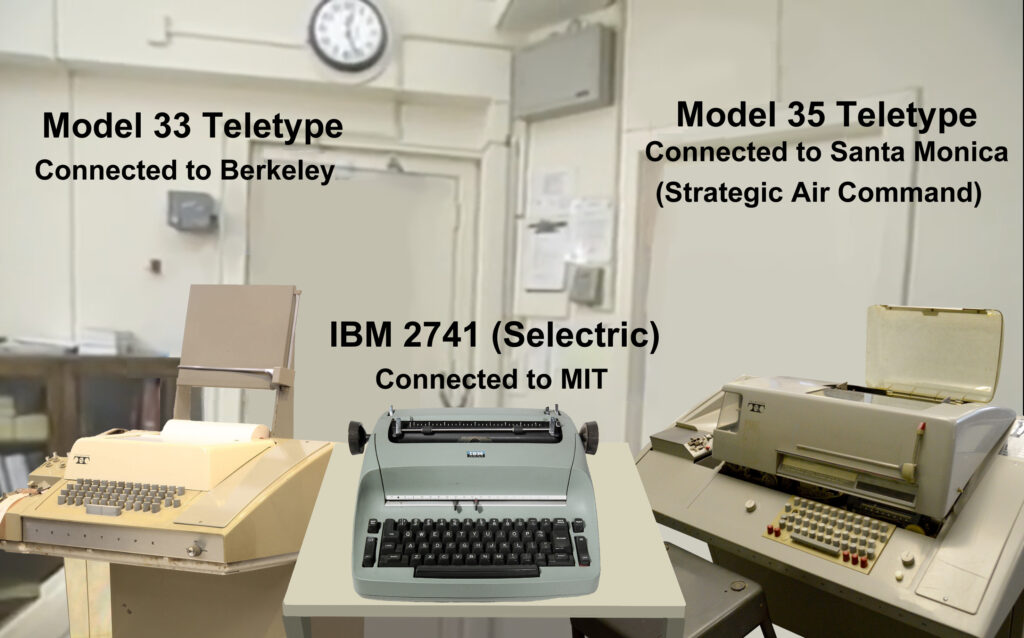
The year was 1966. Robert Taylor was the director of the Advanced Research Projects Agency’s Information Processing Techniques Office. The agency was created in 1958 by President Eisenhower in response to the launch of Sputnik. So Taylor was in the Pentagon, a great place for acronyms like ARPA and IPTO. He had three massive terminals crammed into a room next to his office. Each one was connected to a different mainframe computer. They all worked slightly differently, and it was frustrating to remember multiple procedures to log in and retrieve information.
Author’s re-creation of Bob Taylor’s office with three teletypes.
Credit:
Rama & Musée Bolo (Wikipedia/Creative Commons), steve lodefink (Wikipedia/Creative Commons), The Computer Museum @ System Source
In those days, computers took up entire rooms, and users accessed them through teletype terminals—electric typewriters hooked up to either a serial cable or a modem and a phone line. ARPA was funding multiple research projects across the United States, but users of these different systems had no way to share their resources with each other. Wouldn’t it be great if there was a network that connected all these computers?
The spectator who threw a water bottle at Mathieu van der Poel, hitting the Dutchman in the face as he soloed to a third consecutive Paris-Roubaix victory on Sunday, has handed himself in to police, according to Belgian media outlet, Nieuwsblad.
Van der Poel was hit by the bottle on the Templeuve sector, with approximately 30km of the race remaining.
On Monday morning, Nieuwsblad reported that an unidentified man had handed himself in to police in West Flanders and reportedly expressed his regret about the incident.
Speaking to Sporza after the race, van der Poel described the incident as “attempted manslaughter”.
“We can’t let this pass,” said van der Poel.
“It was a full bidon, and it hurt a lot. If I take that bidon on my nose, it’s broken.
“Hopefully, the police can identify the man because there has to be a trial for this.
“This is attempted manslaughter. If the UCI doesn’t take action, then we will do it with the team.”
Van der Poel crossed the finish line at the Roubaix velodrome one minute and 18 seconds ahead of defending Tour de France champion – and Paris-Roubaix debutant – Tadej Pogačar.
Pogačar, the first defending Tour winner to ride Paris-Roubaix since Greg LeMond in 1991, had teed up a thrilling finale by matching van der Poel throughout the race.
The pair were leading until sector nine, approximately 40km from the finish, when Pogačar went into a tight right-hand corner too fast, and crashed on the grass verge lining the cobbles.
Pogačar didn’t require a bike change but lost time due to a dropped chain, and dropped further behind when he suffered a subsequent front-wheel puncture.
Van der Poel also punctured on the run-in to Roubaix but a quick bike change saw the 30-year-old re-establish his advantage to become the third rider in history – after Octave Lapize (1909-1911) and Francesco Moser (1978-1980) – to win Paris-Roubaix three times in a row.
10 years ago “certificate authorities normally issued certificate lifetimes lasting a year or more,” remembers a new blog post Thursday by the EFF’s engineering director. So in 2015 when the free cert authority Let’s Encrypt first started issuing 90-day TLS certificates for websites, “it was considered a bold move, that helped push the ecosystem towards shorter certificate life times.”
And then this January Let’s Encrypt announced new six-day certificates…
This week saw a related announcement from the EFF engineering director. More than 31 million web sites maintain their HTTPS certificates using the EFF’s Certbot tool (which automatically fetches free HTTPS certificates forever) — and Certbot is now supporting Let’s Encrypt’s six-day certificates. (It’s accomplished through ACME profiles with dynamic renewal at 1/3rd of lifetime left or 1/2 of lifetime left, if the lifetime is shorter than 10 days):
There is debate on how short these lifetimes should be, but with ACME profiles you can have the default or “classic” Let’s Encrypt experience (90 days) or start actively using other profile types through Certbot with the –preferred-profile and –required-profile flags. For six day certificates, you can choose the “shortlived” profile.
Why shorter lifetimes are better (according to the EFF’s engineering director):
If a certificate’s private key is compromised, that compromise can’t last as long.
With shorter life spans for the certificates, automation is encouraged. Which facilitates robust security of web servers.
Certificate revocation is historically flaky. Lifetimes 10 days and under prevent the need to invoke the revocation process and deal with continued usage of a compromised key.
Spoilers follow for The Last of Us season two, episode one
The heart of all things The Last of Us, whether it’s the games or the first season of the HBO adaptation, is the relationship between Joel and Ellie. It was brought to life in remarkable fashion by Pedro Pascal and Bella Ramsey in season one; the pair’s chemistry was the show’s undeniable high point. So it’s a bit of a shock that they only share a few minutes of screen time together in the season two premiere “Future Days” — and that their time together is strained to say the very least.
That all comes near the end of the episode, though. Backing up a bit, the show resumes exactly where we left off, with Ellie saying “okay” to Joel’s lies about what happened in the season one finale. That episode saw him decimate the Fireflies to save the immune Ellie. The Fireflies were hoping to make a cure for the cordyceps infection that devastated the world, but it would have killed her in the process. “Okay” meant that she was accepting his story, even if she didn’t quite believe it. Fast forward five years, and things are tense — so tense that our hardened Joel is in therapy.
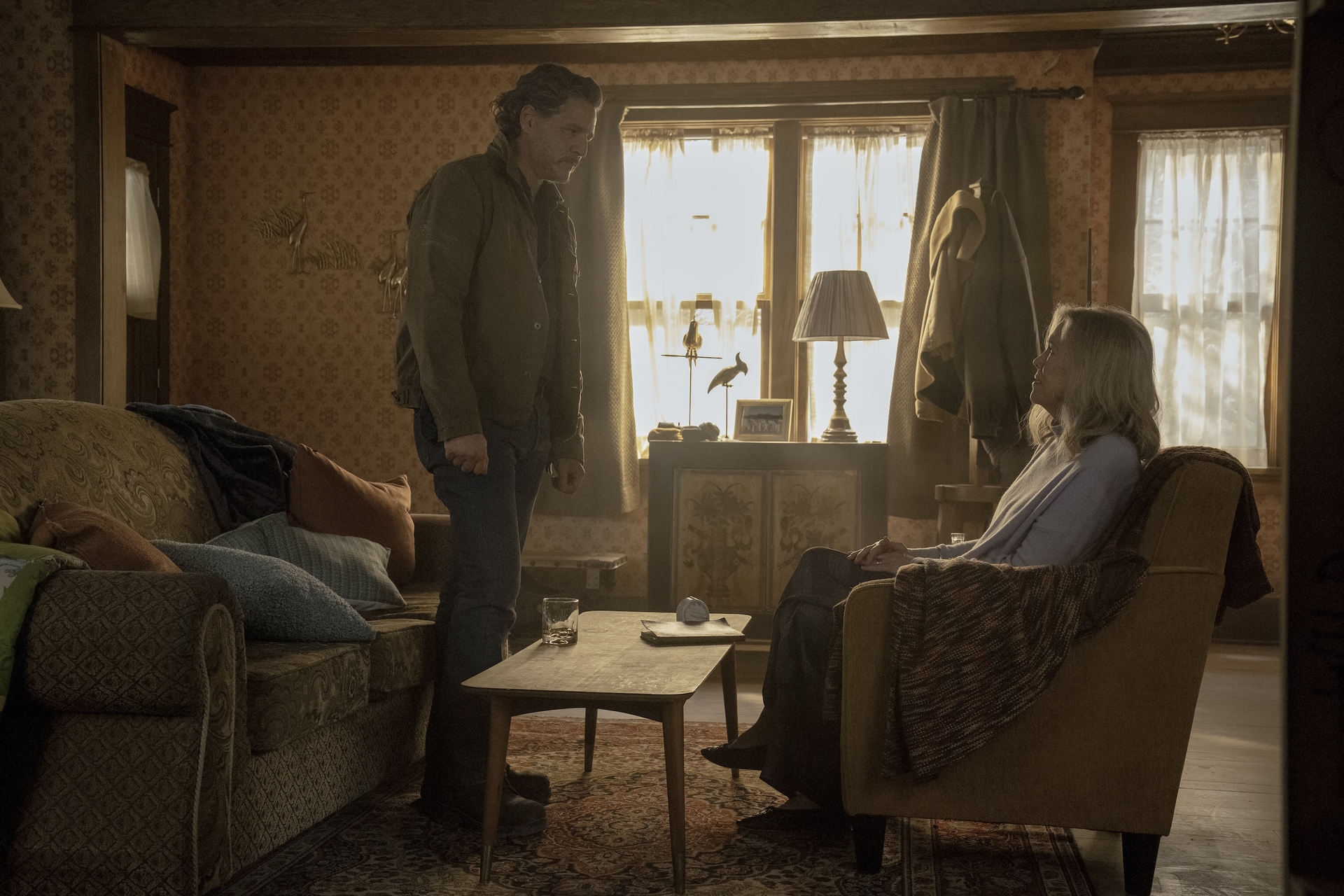
We get to eavesdrop on a session with Joel’s therapist Gail, played by the always-wonderful Catherine O’Hara. I’ve been looking forward to seeing how she’d be used since Gail was revealed in an early trailer, and both her and Joel are having a day when they get together. Joel’s relationship with Ellie is apparently what drove him to meet with Gail, and he’s going on about the distance in their relationship — she barely talks to him, sulks and acts distant, and Gail isn’t exactly impressed. She notes that Ellie is acting like every other 19-year-old acts towards their father, and also says it’s clear there’s a lot more going on between them.
Pedro Pascal and Catherine O’Hara in HBO’s The Last of Us season two
Photograph by Liane Hentscher/HBO
Gail then opens up to Joel in an effort to get him to be honest (and because she’s a few drinks in) and drops a bit of a bomb in the process: Joel shot her husband Eugene (a character from The Last of Us Part II who we never met in the game). She says she understood that he had to do it — an implication but not confirmation that Eugene had been infected — but can’t forgive him for the way she found out and can’t help but hate him for what he did. Not the kind of thing you usually hear from your therapist, but that’s The Last of Us for you. She then gets Joel to tearfully admit he did something to Ellie, but when she asks if he hurt her, he responds by saying he saved her and then gets the hell out of her house. Season one showed Joel as a more vulnerable person than his game counterpart, a change that benefitted him given the expanded drama and depth of the show, and I’m glad season two is emphasizing that in a way that’s pretty unconventional for the post-apocalypse world.
We also get a hint at the discord between Joel and Ellie via Dina, a new character introduced as Ellie’s best friend through a conversation she has with Joel. The two of them are getting along just fine; Joel even calls her “kiddo,” showing a similar dad-like affection for Dina that he usually does with Ellie. After a little chat she asks him point blank why Ellie’s angry with him, and he responds with more vagaries about the two of them figuring out what it’s like being a father and daughter at her age while asking Dina to keep the therapy sessions he’s having a secret — his therapy-speak when discussing how he’s dealing with everything was just too on the nose for her to miss.
Isabela Merced and Bella Ramsey in The Last of Us season two
Photograph by Liane Hentscher/HBO
But the most pivotal scene in this exposition-heavy episode is the New Year’s Eve party where Dina and Ellie share a dance, share a kiss and get shouted at by the drunk town bigot. Just as Ellie is about to treat him like a clicker, Joel intercedes, shoves Seth to the ground and asks if she’s okay — which gets him a disgusted look and verbal smackdown from Ellie, after which he slinks away in decidedly un-Joel fashion.
Things are decidedly unwell between the pair, and while it’s an intriguing note to start the story on, it’s also hard not to be disappointed about the lack of time together for Pascal and Ramsey. Having them at odds is a totally reasonable story beat — even if she was a normal 19-year-old, they’d be having their share of challenges. But the loss of their connection and the lack of interactions between the two put a subdued mood over everything, something that episode writer / director and showrunner Craig Mazin certainly intended and will exploit throughout the season.
Photograph by Liane Hentscher/HBO
Mazin also paid tribute to the game in some lovely ways in this episode, particularly with the town party scene. Right from the start of season one, I expected to see more scenes from the game done nearly note-for-note in the show, and my expectations have been largely defied throughout, right from the start of the series’ first episode. It’s been clear that the goal of the show is not to reproduce all of the game’s iconic scenes but expand on it while still picking the right moments to deploy some tributes to the source material. The party scene is a perfect example, starting off with a shot of Ellie’s back as she looks over the merriment in front of her; what follows is nearly identical to the pivotal game scene in dialog, set design and framing. What is different, though, is the timing — we’re getting this right off the bat rather than much later in the story as you’d find in the game.
Similarly, the episode’s other most significant scene takes place right at the beginning. After that quick flashback, we’re immediately introduced to Abby, one of the second game’s playable characters. We learn that she and her friends are survivors of Joel’s Firefly massacre at the hospital in Utah, and that Abby in particular is keen on revenge. Mazin and co-showrunner Neil Druckmann have already discussed how they wanted to introduce Abby and get into her motivations quicker in the show than in the game, largely because players build a relationship with her through gameplay. In this case, though, we already know that Abby is after Joel, and the episode ends with her crew reaching Jackson. While “Future Days” focused more on scene-setting than action (with the exception of some pretty tense scenes of Ellie and Dina against some Infected), things are clearly going to ratchet up next week — and not just with Abby, as the show also teased a major Infected threat as well. Let’s get those flamethrowers ready for next Sunday.
Infected score: 6/10
One of the main complaints from fans of the video games during season one was a relative lack of Infected. The showrunners say they’ve changed things up in season two — let’s see if they’re sticking to their word.
Episode one was mostly an exposition episode without a ton of action, but we did see Ellie and Dina stealthily take down a pair of Clickers. But the most exciting bit was seeing a Stalker in action for the first time in the show. It had Ellie completely fooled, even giving her another bite that she had to hide from Dina. Here’s hoping we see more of these creepers as the season goes on. And, of course, the threat of tendrils lurking in the pipe in the middle of Jackson promises bigger problems soon, but we’re not there yet. I’m giving this episode a 6 of 10 — there wasn’t all that much action, but the stalker reveal was intense enough to up this episode’s rating.
This article originally appeared on Engadget at https://www.engadget.com/entertainment/tv-movies/the-last-of-us-season-two-premiere-future-days-highlights-the-fracture-between-ellie-and-joel-020029565.html?src=rss
Late Friday news broke that U.S. President Trump’s new tariffs included exemptions for smartphones, computer monitors, semiconductors, and other electronics. But Sunday morning America’s commerce secretary insisted “a special-focus type of tariff” was coming for those products, reports ABC News. President Trump “is saying they’re exempt from the reciprocal tariffs,” the commerce secretary told an interviewer, “but they’re included in the semiconductor tariffs, which are coming in probably a month or two…. This is not like a permanent sort of exemption.”
The Wall Street Journal notes that Sunday the president himself posted on social media that “NOBODY is getting ‘off the hook’ for the unfair Trade Balances, and Non Monetary Tariff Barriers… There was no Tariff ‘exception’ announced on Friday. These products are subject to the existing 20% Fentanyl Tariffs, and they are just moving to a different Tariff ‘bucket.'”
“The administration is expected to take the first step toward enacting the new tariffs as soon as next week,” reports the New York Times, “opening an investigation to determine the effects of semiconductor imports on national security.”
More from ABC News:
Commerce Secretary Howard Lutnick said Sunday that the administration’s decision Friday night to exempt a range of electronic devices from tariffs implemented earlier this month was only a temporary reprieve.. Lutnick said on “This Week” that the White House will implement “a tariff model in order to encourage” the semiconductor industry, as well as the pharmaceutical industry, to move its business to the United States. “We can’t be beholden and rely upon foreign countries for fundamental things that we need,” he said…. “These are things that are national security that we need to be made in America.”
Catch up on the latest Linux news: OpenSSH 10, KDE Frameworks 6.13, Mint’s LMDE 7 to feature full OEM install support, ArcoLinux winds down, Linux swap explained, and more.
“Can you help me take down the Texas lottery?”
That’s what a London banker-turned-bookmaker asked “acquaintances” in 2023, reports the Wall Street Journal. The plan was to buy “nearly every possible number in a coming drawing” — purchasing $1 tickets for 25.8 million possible combinations, since “The jackpot was heading to $95 million. If nobody else also picked the winning numbers, the profit would be nearly $60 million.”
Marantelli flew to the U.S. with a few trusted lieutenants. They set up shop in a defunct dentist’s office, a warehouse and two other spots in Texas. The crew worked out a way to get official ticket-printing terminals. Trucks hauled in dozens of them and reams of paper… [Then Texas announced no winner in an earlier lottery, rolling its jackpot into another drawing three days later.] The machines — manned by a disparate bunch of associates and some of their children — screeched away nearly around the clock, spitting out 100 or more tickets every second. Texas politicians later likened the operation to a sweatshop.
Trying to pull off the gambit required deep pockets and a knack for staying under the radar — both hallmarks of the secretive Tasmanian gambler who bankrolled the operation. Born Zeljko Ranogajec, he was nicknamed “the Joker” for his ability to pull off capers at far-flung casinos and racetracks. Adding to his mystique, he changed his name to John Wilson several decades ago. Among some associates, though, he still goes by Zeljko, or Z. Over the years, Ranogajec and his partners have won hundreds of millions of dollars by applying Wall Street-style analytics to betting opportunities around the world. Like card counters at a blackjack table, they use data and math to hunt for situations ripe for flipping the house edge in their favor. Then they throw piles of money at it, betting an estimated $10 billion annually.
The Texas lottery play, one of their most ambitious operations ever, paid off spectacularly with a $57.8 million jackpot win. That, in turn, spilled their activities into public view and sparked a Texas-size uproar about whether other lotto players — and indeed the entire state — had been hoodwinked. Early this month, the state’s lieutenant governor, Dan Patrick, called the crew’s win “the biggest theft from the people of Texas in the history of Texas.” In response to written questions addressed to Marantelli and Ranogajec, Glenn Gelband, a New Jersey lawyer who represents the limited partnership that claimed the Texas prize, said “all applicable laws, rules and regulations were followed….”
Lottery officials and state lawmakers have taken steps to prevent a repeat.
The article also looks at a group of Princeton University graduates calling themselves Black Swan Capital that’s “won millions in recent years” by targetting state lottery drawings with unusually favorable odds.
“State lottery directors say they are seeing more organized efforts to buy lottery tickets in bulk,” according to the article, “but that the groups are largely operating legally and transparently…”
Somewhere in Montana sits the only coal-fired power plant in America that hasn’t installed modern pollution controls to limit particulate matter, according to the Environmental Protecction Agency. Mining.com notes that it has the highest emission rate of fine particulate matter out of any U.S. coal-burning power plant.
When inhaled, the finest particles are able to penetrate deep into the lungs and even potentially the bloodstream, exacerbating heart and lung disease, causing asthma attacks and even sometimes leading to premature death.
Yet America’s dirtiest coal-fired power plant — and dozens of others — “are being exempted from stringent air pollution mandates,” reports Bloomberg, “as part of US. President Donald Trump’s bid to revitalize the industry:
Talen Energy Corp.’s Colstrip in Montana is among 47 plants receiving two-year waivers from rules to control mercury and other pollutants as part of a White House effort to ease regulation on coal-fired sites, according to a list seen by Bloomberg News. The exemptions were among a slew of actions announced by the White House Tuesday to expand the mining and use of coal. The Trump administration has argued coal is a vital part of the mix to ensure sufficient energy supply to meet booming demand for AI data centers. The carve-out, which begins in July 2027, lasts until July 2029, according to the proclamation.
In an email to Bloomberg, a White House spokesperson said the move meant that America “will produce beautiful, clean coal” while addressing “necessary electrical demand from emerging technologies such as AI.”
Linux Mint Debian Edition 7 “will come with full support for OEM installations,” according to their monthly newsletter, so Linux Mint “can be pre-installed on computers which are sold throughout the World. It’s a very important feature and it’s one of the very few remaining things which wasn’t supported by Linux Mint Debian Edition.”
Slashdot reader BrianFagioli speculates that “this could be a sign of something much bigger.”
OEM installs are typically reserved for operating systems meant to ship on hardware. It’s how companies preload Linux on laptops without setting a username, password, or timezone… Mint has supported this for years — but only in its Ubuntu-based version. So why is this feature suddenly coming to Linux Mint Debian Edition, which the team has repeatedly described as a contingency? In other words, if the Debian variant is merely a plan B, why make it ready for OEMs?
Their blog post goes on to speculate about possible explanations (like the hypothetical possibility of dissatisfaction with Snap packages or Canonical’s decisions around telemetry and packaging).
Apple hasn’t abandoned its previously rumored plans to release a less expensive Vision Pro, according to Bloomberg. Mark Gurman reports in the Power On newsletter this weekend that the company has two new models in development: one that’s lighter and cheaper than the first generation headset, and one that would tether to a Mac. While Apple had once considered the latter setup for AR glasses, it shifted the idea over to the Vision Pro so it can “create an ultra-low-latency system for streaming a user’s Mac display or for connecting to high-end enterprise applications,” according to Gurman.
Apple’s ultimate goal, though, is reportedly to create AR glasses that are practical and comfortable enough to be worn like regular glasses, and the next iterations of the Vision Pro are seen as steps toward getting there. Gurman reports that Apple CEO Tim Cook is “hell-bent on creating an industry-leading product before Meta can.”
This article originally appeared on Engadget at https://www.engadget.com/ar-vr/apple-is-reportedly-working-on-two-new-versions-of-the-vision-pro-153536984.html?src=rss