
The fifth weekly release candidate of the Linux 6.15 kernel is now available for testing…
Category Archives: Unfiltered RSS
Nintendo is suing the accessory brand that flaunted Switch 2 mockups ahead of its reveal
Nintendo is going after the company that showed off unauthorized mockups of the not-yet-announced Switch 2 at CES 2025. In a lawsuit filed on Friday, Nintendo accuses accessory maker Genki of trademark infringement, unfair competition and false advertising, arguing that Genki “embarked upon a strategic campaign intended to capitalize on the public interest surrounding Nintendo’s next-generation console.” According to Nintendo, Genki promoted accessories it claimed are compatible with the Switch 2 despite not having official access to the console, and used the Switch logo to do so.
Following the initial reports in January that Genki brought Switch 2 mockups to CES and published a video said to show a 3D render of the console, Nintendo released a statement to say that neither the hardware nor imagery were official, per IGN. While Genki reportedly claimed it had access to a Switch 2 at first, the company later wrote on X that it does “not own or possess a black market console,” and told Game*Spark (translated by Automaton) that its mockups were based solely on leaked information. In the lawsuit, Nintendo says Genki’s “statements were contradictory and inconsistent,” yet the company “maintained its representation to consumers that its accessories will be compatible with the Nintendo Switch 2 upon the console’s release.”
Nintendo officially announced the Switch 2 on January 16, a little over a week after the mockups made their CES appearance. Even in the months since, Nintendo alleges, Genki “continues to exploit the attention of the media and fan base and usurp and threaten sales of Nintendo’s own accessories,” through means including piggybacking on Nintendo Direct with its own “Genki Direct” event immediately after. In a statement shared on X following the filing, Genki said it is “taking [the lawsuit] seriously and working with legal counsel to respond thoughtfully.”
“What we can say is this: Genki has always been an independent company focused on building innovative gaming accessories for the community we love,” Genki’s post continued. “We’re proud of the work we’ve done, and we stand by the quality and originality of our products. While we can’t comment in detail, we’re continuing preparations to fulfill orders and showcase our newest products at PAX East this week.”
The Nintendo Switch 2 arrives after years of rumors and speculation. In the lawsuit, Nintendo notes that it began planning the next-gen console shortly after the release of the first. Pre-orders for the Nintendo Switch 2 opened in April, and the console will be available on June 5.
This article originally appeared on Engadget at https://www.engadget.com/gaming/nintendo/nintendo-is-suing-the-accessory-brand-that-flaunted-switch-2-mockups-ahead-of-its-reveal-210341646.html?src=rss
Disneyland Imagineers Defend New Show Recreating Walt Disney as a Robot
“When Disneyland turns 70 this July, Main Street’s Opera House will play host to the return of Walt Disney, who will sit down with audiences to tell his story in robot form,” writes Gizmodo.
But they point out Walt’s granddaughter Johanna Miller wrote a Facebook post opposing the idea in November. (“They are Dehumanizing him. People are not replaceable…”)
The idea of a Robotic Grampa to give the public a feeling of who the living man was just makes no sense. It would be an imposter… You could never get the casual ness of his talking interacting with the camera his excitement to show and tell people about what is new at the park.
You can not add life to one. Empty of a soul or essence of the man. Knowing that he did not want this. Having your predecessors tell you that this was out of bounds…. So so Sad and disappointed.
The Facebook post claims that the son of a Disney engineer even remembers Walt saying that he never wanted to be an animatronic himself. And “Members of the Walt Disney family are said to be divided,” reports the Los Angeles Times, “with many supporting the animatronic and some others against it, say those in the know who have declined to speak on the record for fear of ruining their relationships.”
So that Facebook post “raised anew ethical questions that often surround any project attempting to capture the dead via technology,” their article adds, “be it holographic representations of performers or digitally re-created cinematic animations. And then some media outlets got a partial preview Wednesday, the Los Angeles Times reports:
An early sculpt of what would become the animatronic was revealed, one complete with age spots on Disney’s hands and weariness around his eyes — Imagineers stressed their intent is faithful accuracy — but much of the attraction remains secretive. The animatronic wasn’t shown, nor did Imagineering provide any images of the figure, which it promises will be one of its most technically advanced. Instead, Imagineering sought to show the care in which it was bringing Disney back to life while also attempting to assuage any fears regarding what has become a much-debated project among the Disney community…
Longtime Imagineer Tom Fitzgerald, known for his work on beloved Disney projects such as Star Tours and the Guardians of the Galaxy coaster in Florida, said Wednesday that “A Magical Life” has been in the works for about seven years. Asked directly about ethical concerns in representing the deceased via a robotic figurine, Fitzgerald noted the importance of the Walt Disney story, not only to the company but to culture at large… “What could we do at Disneyland for our audience that would be part of our tool kit vernacular but that would bring Walt to life in a way that you could only experience at the park? We felt the technology had gotten there. We felt there was a need to tell that story in a fresh way….”
“Walt Disney — A Magical Life” will walk a fine line when it opens, attempting to inspire a new generation to look into Disney’s life while also portraying him as more than just a character in the park’s arsenal. “Why are we doing this now?” Fitzgerald says. “For two reasons. One is Disneyland’s 70th anniversary is an ideal time we thought to create a permanent tribute to Walt Disney in the Opera House. The other: I grew up watching Walt Disney on television. I guess I’m the old man. He came into our living room every week and chatted and it was very casual and you felt like you knew the man. But a lot of people today don’t know Walt Disney was an individual. They think Walt Disney is a company.”
And now nearly 60 years after his death, Disney will once again grace Main Street, whether or not audiences — or even some members of his family — are ready to greet him.


Read more of this story at Slashdot.
‘KDE Plasma LTS Releases Are Dead’
With its Start menu-style application launcher and its bottom-of-the-screen taskbar, KDE Plasma is a “nice” and “traditional” desktop environment that’s “also highly customizable,” notes It’s FOSS News.
But there’s a change coming…
In contrast to other desktop environments, KDE offers a long-term support release (LTS) of Plasma, where bug fixes and security updates are provided for an extended period, with no new major changes being introduced. However, that is no longer the case now. Shared by Nate Graham, a prominent contributor within the KDE community, KDE has decided to stop working on LTS releases of Plasma, shifting its focus on extending support for the bug-fix and feature releases instead.
The reasoning behind this move is multi-faceted, with factors such as inconsistent expectations from the community, developers’ reluctance to work on older versions, and the lack of consistency in LTS support for Frameworks and Gear apps… I believe this move will provide Plasma users with a better Linux desktop experience, thanks to the extended bug-fix period, which will enhance the stability of each release.
From Graham’s blog post:
It’s no secret that our Plasma LTS (“Long-Term Support”) product isn’t great. It really only means we backport bug-fixes for longer than usual — usually without even testing them, since no Plasma developers enjoy living on or testing old branches. And there’s no corresponding LTS product for Frameworks or Gear apps, leaving a lot of holes in the LTS umbrella. Then there’s the fact that “LTS” means different things to different people; many have an expansive definition of the term that gives them expectations of stability that are impossible to meet.
Our conclusion was that the fairly limited nature of the product isn’t meeting anyone’s expectations, so we decided to not continue it. Instead, we’ll lengthen the effective support period of normal Plasma releases a bit by adding on an extra bug-fix release, taking us from five to six.
We also revisited the topic of reducing from three to two Plasma feature releases per year, with a much longer bug-fix release schedule. It would effectively make every Plasma version a sort of mini-LTS, and we’d also try to align them with the twice-yearly release schedules of Kubuntu and Fedora.
However, the concept of “Long-Term Support” doesn’t go away just because we’re not giving that label to any of our software releases anymore. Really, it was always a label applied by distros anyway — the distros doing the hard work of building an LTS final product out of myriad software components that were never themselves declared LTS by their own developers. It’s a lot of work.
So we decided to strengthen our messaging that users of KDE software on LTS distros should be reporting issues to their distro, and not to KDE. An LTS software stack is complex and requires a lot of engineering effort to stabilize; the most appropriate people to triage issues on LTS distros are the engineers putting them together. This will free up time among KDE’s bug triagers and developers to focus on current issues they can reproduce and fix, rather than wasting time on issues that can’t be reproduced due to a hugely different software stack, or that were fixed months or years ago yet reported to us anyway due to many users’ unfamiliarity with software release schedules and bug reporting.


Read more of this story at Slashdot.
SpaceX’s Texas HQ, Starbase, is officially on its way to becoming a city
The votes are in and residents of a small swath of southern Texas are in favor of Starbase becoming a real city. The newly-designated city is home to SpaceX and many of its employees, and it’s where Elon Musk’s company builds rocket engines, launches spacecraft and manufactures other space-related tech. According to the final vote tally, 212 residents voted in favor of incorporating as Starbase, while six voted against the measure — but, it’s worth noting that most of the eligible voters in the locale are SpaceX employees and only 143 votes were needed to make Starbase a city.
Musk celebrated on X, while the city also made its first post, stating that “becoming a city will help us continue building the best community possible for the men and women building the future of humanity’s place in space.” The idea for Starbase dates back to March 2021, when Musk first teased the idea on what was then Twitter. Now that the vote has taken place, Starbase will be separated from Cameron County as its own roughly 1.5-square mile city. This designation is particularly important considering SpaceX may be able to circumvent governmental red tape when it comes to scheduling rocket launches. Previously, Musk’s company had to get permission from county authorities to close a nearby highway or restrict public access to Boca Chica Beach and Boca Chica State Park for rocket launches.
While the vote to designate Starbase as an official Texas city passed, county commissioners and judges still need to declare the election results official, according to Remi Garza, the elections administrator for Cameron County. Even though SpaceX may get a helping hand with Starbase handling its own building and permitting processes, Cameron County Judge Eddie Trevino told NBC News that any changes to the existing procedures that SpaceX has to go through would be unnecessary.
This article originally appeared on Engadget at https://www.engadget.com/science/space/spacexs-texas-hq-starbase-is-officially-on-its-way-to-becoming-a-city-185643351.html?src=rss
Review: Thunderbolts* is a refreshing return to peak Marvel form
It looks like Marvel has another critical and box office hit on its hands—and deservedly so—with Thunderbolts*, a follow-up of sorts to 2021’s Black Widow and the final film in the MCU’s Phase Five.
Yes, the asterisk is part of the title. Yes, I found that choice inexplicable when it was first announced. And yes, having seen the film, the asterisk makes perfect sense now as a well-timed joke. I won’t spill the beans because that would spoil the fun. Instead, I’ll simply say that Thunderbolts* is a refreshing return to peak Marvel form: well-paced, witty, and action-packed with enough heart to ensure you care about the characters.
(Some spoilers below.)
Tech Leaders Launch Campaign To Make CS and AI a Graduation Requirement
“Our future won’t be handed to us,” says the young narrator in a new ad from the nonprofit Code.org. “We will build it.”
“But how can we when the education we need is still just an elective?” says another young voice…
The ad goes on to tout the power “to create with computer science and AI — the skills transforming every industry…” and ends by saying “This isn’t radical. It’s what education is supposed to do. Make computer science and AI a graduation requirement.”
There’s also a hard-hitting new web site, which urges people to sign a letter of support (already signed by executives from top tech companies including Microsoft, Dropbox, AMD, Meta, Blue Origin, and Palantir — and by Steve Ballmer, who is listed as the chairman of the L.A. Clippers basketball team).
Long-time Slashdot reader theodp says the letter ran in the New York Times, while this campaign will officially kick off Monday…
Code.org teased the new Unlock8 campaign last month on social media as it celebrated a new Executive Order that makes K–12 AI literacy a U.S. priority, which it called a big win for CS & AI education, adding, “We’ve been building to this moment.” The move to make CS and AI a graduation requirement is a marked reversal of Code.org’s early days, when it offered Congressional testimony on behalf of itself and tech-led Computing in the Core reassuring lawmakers that: “Making computer science courses ‘count’ would not require schools to offer computer science or students to study it; it would simply allow existing computer science courses to satisfy a requirement that already exists.”


Read more of this story at Slashdot.
Buzzkill Nintendo Files Suit Against Genki For Switch 2 Mockups

Nintendo’s lawyers have been busy lately. The company is in an ongoing legal battle with the makers of Palworld, and they’re squashing developers of Switch emulation software. The legal team isn’t getting rest any time soon as the company has a new target in its crosshairs, third party accessory manufacturer Genki.
This new legal kerfuffle
Should You Trust Redis’s Rebaptism Into the Holy Open Source Spirit?
Be sure to take the included poll after you read this delve into Redis and the wishy-washy world that has become the company’s relationship with open-source.
The post Should You Trust Redis’s Rebaptism Into the Holy Open Source Spirit? appeared first on FOSS Force.
NASA’s SPHEREx space telescope has begun its mission to map the entire sky in 3D
A space observatory designed to map the entire sky over a period of two years to further our understanding of the early universe has started snapping images. SPHEREx, which launched in early March, got started with its observations this past week after over a month of setup procedures and system checks, according to NASA. The space telescope will complete about 14.5 orbits of Earth per day, capturing roughly 3,600 images daily and observing the sky in an unprecedented 102 wavelengths of infrared light. Its observations will eventually be combined to create four “all-sky” maps.
SPHEREx’s 25 month survey will be a comprehensive one. The spacecraft “orbits Earth from north to south, passing over the poles, and each day it takes images along one circular strip of the sky,” NASA explains. “As the days pass and the planet moves around the Sun, SPHEREx’s field of view shifts as well so that after six months, the observatory will have looked out into space in every direction.” Researchers will use the SPHEREx observations to study the universe’s expansion in the moments after the big bang, and search for the ingredients for life elsewhere in the Milky Way.
This article originally appeared on Engadget at https://www.engadget.com/science/space/nasas-spherex-space-telescope-has-begun-its-mission-to-map-the-entire-sky-in-3d-173458720.html?src=rss
Apple reportedly wants to split up the iPhone’s release schedule
Instead of deciding between four new models of iPhones every fall, you may have to choose among three in both the spring and the fall. A new report from The Information claims that Apple will change the release cycle for its smartphones, starting with the iPhone 18 in 2026. According to The Information, three unnamed supply chain sources detailed that the more expensive models will launch first, meaning the Pro models will keep the fall release window and the standard model iPhones will get pushed to the following spring.
It’s a notable departure from the typical all-at-once release schedule, but it could indicate that Apple wants to make room for other models, like the long-rumored foldable iPhone. If the report is accurate, Apple would release the iPhone 18 Pro, iPhone 18 Pro Max and potentially the foldable iPhone in fall 2026, followed by the iPhone 18 base model, the iPhone 18 Slim and the iPhone 18e in spring 2027.
If you’ve been paying close attention to Apple’s releases, this change may not be much of a surprise. While the company has been releasing its annual batch of new iPhones in September or October since the iPhone 5, Apple started breaking from the schedule with the introduction of the iPhone SE models, which were usually released in March or April. More recently, Apple introduced the iPhone 16e in February to replace the SE range. As for the iPhone 17, we’re still expecting Apple’s regularly programmed schedule with four new devices to be revealed this September.
This article originally appeared on Engadget at https://www.engadget.com/mobile/smartphones/apple-reportedly-wants-to-split-up-the-iphones-release-schedule-164737099.html?src=rss
FSF Announces Free Software Hackathon Honoring Its 40th Anniversary
Thursday the Free Software Foundation announced plans for a celebratory hackathon in November to improve free/libre software “in honor of its fortieth anniversary.
The FSF has been campaigning for software freedom for over forty years. As part of its celebrations, the organization is inviting the wider free software community (both projects and individual contributors) to participate in a global, online hackathon to help improve important libre software projects.
All free software projects, regardless of affiliation or (free) license, are invited to participate. As of now, the advanced GNU/Linux distribution and package manager GNU Guix, the boot software distribution GNU Boot, the media publishing system MediaGoblin, and the Free Software Directory, the FSF’s catalog of useful free software, have announced that they will submit a project. Interested contributors are encouraged to review the hackathon guidelines, which the FSF has made available online…
Hackathon contributions will be judged by a panel appointed by the FSF. The project and contributors making the most noteworthy contributions/patches will be given prizes by the Foundation. The hackathon will conclude with a closing ceremony.
“The FSF’s free software hackathon will be held November 21-23, 2025,” according to the announcement. “Submissions will be open until May 27.”


Read more of this story at Slashdot.
Google Is Developing Android Desktop Mode To Compete With DeX

It’s not uncommon for companies to adopt or iterate on popular features from rivals, to bring their products up to feature parity or to keep users in their ecosystem. Google’s development of the “inactivity robot,” mirrors a feature already found on Apple’s iOS 18.01. Meta is also mirroring some features from TikTok on Instagram. Now, it seems
We May Be In a ‘Post-Herd Immunity World’, says Immunology Expert
Dr. Paul Offit, an expert on infectious disease and immunology, told the Guardian that “We’re living in a post-herd-immunity world. I think the measles outbreak proves that. Measles — because it is the most contagious of the vaccine-preventable diseases, the most contagious human disease really — it is the first to come back.”
Three large outbreaks in Canada, Mexico and the US now account for the overwhelming majority of roughly 2,300 measles cases across the World Health Organization’s six-country Americas region, according to the health authority’s update this week. Risk of measles is considered high in the Americas, and has grown 11-fold compared with 2024. Only slightly behind, data released earlier this week from the European Centre for Disease Prevention and Control (ECDC) and WHO also noted that measles cases across Europe were up tenfold in 2024 compared to 2023. That data also indicated that the 2024 measles cases in Europe followed a seasonal pattern, which was not previously noted in 2021 through 2023. Of the European cases, which reportedly hit 35,212 for 2024, 87% were reported in Romania. The ECDC said the dip in vaccine rates has impacted the recent spike in measles, with only three countries, Hungary, Malta and Portugal, having coverage of 95% or more for both doses of the measles vaccine.


Read more of this story at Slashdot.
Linux Kernel to Drop Support for Legacy i486 and Early 586 CPUs
Linux kernel developers target outdated CPU support, with major code cleanup and a push for streamlined x86 architecture support.
Security Researchers Create Proof-of-Concept Program that Evades Linux Syscall-Watching Antivirus
Slashdot reader Mirnotoriety shared this report from the Register:
A proof-of-concept program has been released to demonstrate a so-called monitoring “blind spot” in how some Linux antivirus and other endpoint protection tools use the kernel’s io_uring interface.
That interface allows applications to make IO requests without using traditional system calls [to enhance performance by enabling asynchronous I/O operations between user space and the Linux kernel through shared ring buffers]. That’s a problem for security tools that rely on syscall monitoring to detect threats… [which] may miss changes that are instead going through the io_uring queues.
To demonstrate this, security shop ARMO built a proof-of-concept named Curing that lives entirely through io_uring. Because it avoids system calls, the program apparently went undetected by tools including Falco, Tetragon, and Microsoft Defender in their default configurations. ARMO claimed this is a “major blind spot” in the Linux security stack… “Not many companies are using it but you don’t need to be using it for an attacker to use it as enabled by default in most Linux systems, potentially tens of thousands of servers,” ARMO’s CEO Shauli Rozen told The Register. “If you’re not using io_uring then disable it, but that’s not always easy with cloud vendors.”


Read more of this story at Slashdot.
Trump Torched Decades of Science in Just 100 Days—and the Fallout Is Global

In its first 100 days, the Trump administration has slashed federal agencies, canceled national reports, and yanked funding from universities. The shockwaves will be felt worldwide.
Sensor Monitoring For The ASUS ROG MAXIMUS Z690 FORMULA Coming For Linux 6.16
For those that happen to have the ASUS ROG MAXIMUS Z690 FORMULA or are shopping for a higher-end Intel Alder Lake / Raptor Lake desktop motherboard for Linux use, the ROG MAXIMUS Z690 FORMULA is the latest motherboard seeing hardware sensor monitoring support under Linux with the next version of the kernel…
Apple iPads Are Selling For Wonderfully Low Prices On These Deals
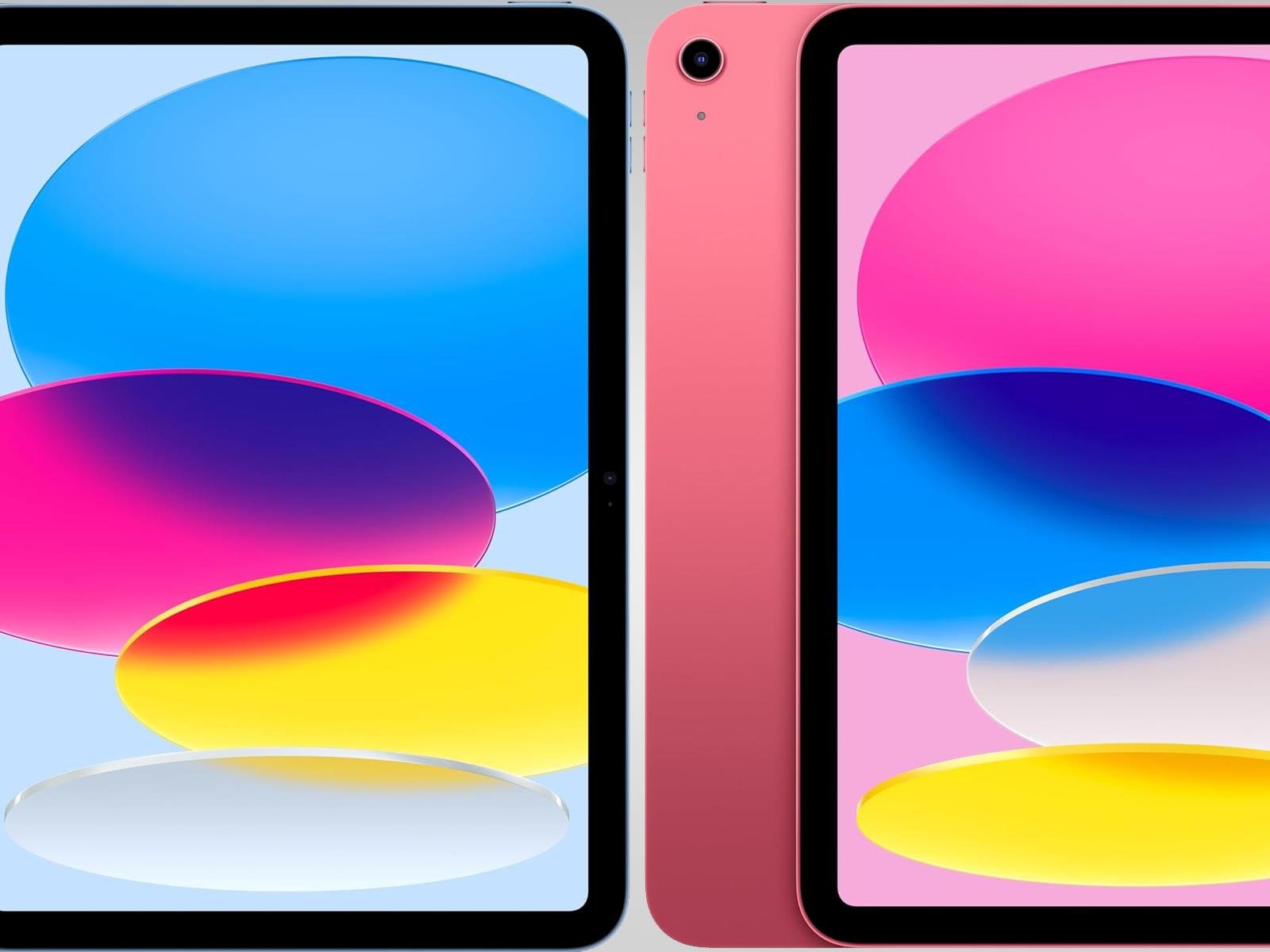
Amazon recently announced that it’s next official Prime Day sales event will take place sometime in July. That’s only two quick months away, but if you don’t want to wait and are in the market for an Apple iPad tablet right now, we have good news—several models are on sale at Amazon, with prices starting as low as $299 for the newest models.
Case
Cheap Linux VPS Hosting Is A Trap: What You Need To Look For
Cheap Linux VPS hosting is a trap you need to be cautious about. Find out all the important industry secrets and what to look out for.