Last week System76 CEO Carl Richell criticized age-verification laws for operating systems — but he now sees a “real possibility” Colorado’s law might exclude open-source.
Phoronix reports that the System76 CEO met with the state Senator who co-authored Colorado’s bill, and then posted on X.com that the Senator “suggested excluding open source software from the bill.”
Richell: This appears to be a real possibility. Amendments are expected… It’s my hope we can move fast enough to influence excluding open source.. No illusions, it’s an uphill battle, but we have an open door to advocate for the open source community.
Vague language has been a recurring problem with new state age-verification legislation. Richell pointed out later that “In one proposed bill, Garmin would have to verify the age of their watch customers at device setup.” Richell also sees New York’s bill as “unlikely to be applicable to Linux distributions,” since its language calls for “commercially reasonable age assurance” that free operating systems could use — and Richell isn’t sure one exists as described by the bill. “As written today, it’s extremely broad and vague and that makes it scary.”
Richell answered several follow-up questions about operating system age-verification laws. “What about California?” someone asked…
Richell: We hope to make sensible, strong arguments for excluding open source which then becomes a standard for other states. It’s going to be difficult.
Q: Open source is not the only target to exclude. Please ensure that the bill is amended so that it does not require applications that have no possible use for the age bracket to ask about it.
Richell: We discussed this as well. I proposed that apps that do not require age to modify app behavior or access by some other legislation be barred from reading age brackets to better protect privacy.
There may have been some extra incentive for the Trump administration to get the TikTok US deal done. According to a report from The Wall Street Journal, the Trump administration is set to receive a total of $10 billion in the deal that allowed TikTok to remain in the US. The new investors who acquired stakes in the US entity of TikTok already paid a $2.5 billion fee to the administration when the deal closed in January, but WSJ‘s latest report noted that the group of investors would continue to make payments until the total hits $10 billion.
After a group of investors, which includes Oracle along with the Silver Lake and MGX investment firms, acquired stakes in the US-based TikTok entity called TikTok USDS Joint Venture, the WSJ previously reported that the administration would receive a “multibillion-dollar fee” for its work on the deal. To better contextualize the recently-revealed $10 billion fee the Trump administration is receiving, the US entity of TikTok was valued at $14 billion by Vice President JD Vance.
The Trump administration has previously involved itself in major deals with other US corporations. Last year, the administration invested $8.9 billion into Intel and received a nearly 9 percent equity stake. In terms of unprecedented windfalls, the Trump administration also received a Boeing 747-8 as a gift from the Qatari government in May.
This article originally appeared on Engadget at https://www.engadget.com/big-tech/trump-administration-will-reportedly-get-10-billion-for-brokering-the-tiktok-deal-180954979.html?src=rss
If your Windows install is feeling creaky and you want to freshen up, or if you don’t have Windows at all, the fastest way to fix things up is to simply do a clean install. Back up your important stuff to a NAS, a second PC, external storage, or even a cloud service, and then wipe the whole system disk and start fresh. It’s amazing how many
The deal to take control of TikTok’s U.S. business came with an unusual condition, according to people familiar with the matter. The investors — which include Oracle, Abu Dhabi investor MGX, and private-equity firm Silver Lake — “paid the Treasury Department about $2.5 billion when the deal closed in January,” reports the Wall Street Journal, “and are set to make several additional payments until hitting the $10 billion total.”
The $10 billion payment would be nearly unprecedented for a government helping arrange a transaction, historians have said… Investment bankers advising on a typical deal receive fees of less than 1% of the transaction value, and the percentage generally gets smaller as the deal size increases. Bank of America is in line to make some $130 million for advising railroad operator Norfolk Southern on its $71.5 billion sale to Union Pacific, one of the largest fees on record for a single bank on a deal. Administration officials have said the fee is justified given Trump’s role in saving TikTok in the U.S. and navigating negotiations with China to get the deal done while addressing the security concerns of lawmakers…
The TikTok fee extracted from private-sector investors is the administration’s latest transaction involving the nation’s largest businesses. Trump took a nearly 10% stake in semiconductor company Intel and has agreed to take a chunk of chip sales to China from Nvidia in exchange for granting export licenses. The administration has also taken equity stakes in other companies and has a say in the operations of U.S. Steel following a “golden share” agreement with Japan’s Nippon Steel in its takeover.
Reuters notes earlier this month, a lawsuit was filed by investors in two of TikTok’s social media rivals, seeking to reverse the approval of the deal.
Thanks to long-time Slashdot reader schwit1 for sharing the news.
Google Gemini has been integrated into Google Maps to provide two new features: Ask Maps and Immersive Navigation. Of the two new features, Immersive Navigation will likely be the most-welcomed change, and the most radical made to navigation in the past decade (sorry, traffic monitoring). Instead of relying on a 2D grid, Immersive Navigation
Need something new for your reading list? This week, we recommend A.D. Sui’s The Iron Garden Sutra, a meditative horror sci-fi/fantasy and murder mystery.
I don’t typically gravitate toward locked room mysteries, but the description of this book ticked all the right boxes to win me over: “a death monk and a team of researchers trapped onboard a spaceship of the dead encounter something beyond human understanding.” It has all the makings of a compelling murder mystery, which is fine on its own, but thanks to the philosophical musings of its main character, Vessel Iris, and a setting that almost demands existential contemplation, it becomes something much deeper.
Vessel Iris is a monk some time in the far future whose mission is to perform funeral rites for the dead so their souls may reach their ultimate destination, according to the beliefs of his religion, the Starlit Order. “Vessels” like Iris share their mind with an AI companion, which creates a really interesting dynamic for the reader, as there is a constant dialogue going on between the two from the start (carrying a tone that sometimes verges on “old married couple,” which I quite enjoyed). Iris shows up to an ancient ship called the Counsel of Nicaea expecting to perform his duties for the long-deceased on board and instead finds himself facing a group of researchers who are very much not dead — and a jumbled mess of bones from the hundreds of bodies they disturbed by moving, which he’ll have to sort in order to properly bless.
Despite being a ghost ship in most respects, it turns out the Nicaea is alive with vegetation and gardens that would have once supported the humans that lived there. And, there’s seemingly something else, as Iris’ AI begins to pick up strange pings from a presence on the ship, and one by one the team of researchers starts getting picked off. As everything unravels, Iris begins to question his faith and his purpose.
This was such a great read, and I was excited to learn it’s the first in a two-book series, The Cosmic Wheel series. Fans of horror sci-fi/sci-fantasy should definitely check this one out.
This article originally appeared on Engadget at https://www.engadget.com/entertainment/what-to-read-this-weekend-locked-in-with-the-iron-garden-sutra-172342019.html?src=rss
California saw its worst drought in 10,000 years between 2012 and 2015, remembers the Washington Post. And yet genetic analyses of California’s scarlet monkeyflower “found that many rapidly evolved… allowing them to cope with water scarcity and rebound from decline.”
“The fact that certain organisms are able to adapt just because of genetics that are already present is a great source of hope,” said Daniel Anstett, a plant biologist at Cornell University and lead author on a new study on the issue. “It’s one more arrow in the quiver of different ways that populations might be able to survive the massive climate change we’re inflicting on the planet.” The recovery of [Sequoia National Park’s] scarlet monkeyflowers offers rare, real-world evidence of what scientists call “evolutionary rescue,” according to the study published Thursday in the journal Science. It suggests that some species may be able to evolve quickly enough to keep up with the accelerating consequences of human-caused warming — essentially saving themselves from extinction.
This discovery could help people decide how to distribute limited conservation funds by pinpointing which species have enough genetic diversity to be resilient, ecologists Mark Urban and Laurinne Balstad, who were not involved in the study, wrote in a separate analysis published by Science. “The challenge going forward is to identify when evolutionary rescue is possible, when it is not, and how to rescue those species that cannot rescue themselves,” Urban and Balstad wrote.
Meta could be preparing for one of the largest layoffs in its history, according to a Reuters report. The tech giant is planning to cut about 20 percent of its workforce, according to the outlet’s sources. According to the report, neither a date nor the exact number of layoffs has been finalized yet.
However, Reuters reported that Meta’s top executives have told “other senior leaders” to start “planning how to pare back.” In its latest financial report, the company’s employee headcount was 78,865 as of December 31, 2025, while revenue reached nearly $60 billion for the fourth quarter and more than $200 billion for the entire year. A Meta spokesperson told Reuters that this was “speculative reporting about theoretical approaches.”
Meta is no stranger to major layoffs. Earlier this year, Meta targeted about 1,000 employees in its layoffs with the Reality Labs division that’s responsible for the company’s virtual reality and metaverse efforts. Early last year, Meta laid off about five percent of its workforce, following a smaller round of firings that same month. Meanwhile, the company has been spending heavily to acquire AI startups, like Moltbook, a social network designed for AI agents, and Manus, a startup focused on AI agents for task automation.
This article originally appeared on Engadget at https://www.engadget.com/big-tech/meta-is-reportedly-planning-to-cut-up-to-20-percent-of-its-staff-in-upcoming-layoffs-160812304.html?src=rss
Digg has shut down, for now, just a few months after its open beta launched. Justin Mezzell, the company’s CEO, has explained on the home page that it noticed hours after the beta launched that it was already being targeted by SEO spammers. “The internet is now populated, in meaningful part, by sophisticated AI agents and automated accounts,” he wrote. Apparently, the Digg team wasn’t ready for the scale and the speed at which bots found and started flooding the website.
Mezzell said Digg banned thousands of accounts and deployed both internal tools and external solutions, but they weren’t enough. He admitted that the votes and the comments on the website couldn’t be trusted due to the amount of bot activity it got. While Digg has decided to significantly downsize its team, a small number of staff members has stayed to rebuild it completely. He said it wasn’t enough to present Digg as an alternative to current social networks and community-based websites. “What comes next needs to be genuinely different,” he added.
The CEO didn’t explain how Digg will reinvent itself, but he did announce that its founder, Kevin Rose, is joining the company full time. Rose bought back Digg last year in partnership with Reddit co-founder Alexis Ohanian. Back then, they said they had “a fresh vision to restore the spirit of discovery and genuine community that made the early web a fun and exciting place to be.” Based on what happened to Digg, that’s now harder to achieve with the state of the internet today.
This article originally appeared on Engadget at https://www.engadget.com/social-media/digg-shuts-down-for-a-hard-reset-because-it-was-flooded-with-bots-153848094.html?src=rss
“A new study suggests the productivity boost from AI may be far smaller than executives claim,” writes Slashdot reader BrianFagioli:
According to research cited in Foxit’s State of Document Intelligence report, while 89% of executives and 79% of end users say AI tools make them feel more productive, the actual time savings shrink dramatically once people account for reviewing and validating AI-generated output.
The survey of 1,000 desk-based workers and 400 executives in the United States and United Kingdom found executives believe AI saves them about 4.6 hours per week, but they spend roughly 4 hours and 20 minutes verifying those results. End users reported a similar pattern, estimating 3.6 hours saved but 3 hours and 50 minutes spent reviewing AI work. Once that “verification burden” is factored in, executives gain just 16 minutes per week, while end users actually lose about 14 minutes.
Last June Texas Agriculture Commissioner Sid Miller said in a statement that Texans “have a God-given right to know what’s on their plate, and for millions of Texans, it better come from a pasture, not a lab. It’s plain cowboy logic that we must safeguard our real, authentic meat industry from synthetic alternatives.”
But California company Wildtype sells lab-grown salmon — and is suing Texas over its ban on cell-cultivated meat, the Austin Chronicle reported this week. The company’s founder says lab-grown salmon eliminates the mercury, microplastic, and antibiotic contamination commonly found in seafood. And one chef in Austin, Texas says lab-grown salmon is “awesome” and “something new”– at the only Texas restaurant that was serving it last summer:
Just two months after the salmon hit the menu, Texas banned the sale of cell-cultivated meat…
A lawsuit from Wildtype and one other FDA-approved cultivated meat company [argues] it’s anti-capitalism and unconstitutional… This law “was not enacted to protect the health and safety of Texas consumers — indeed, it allows the continued distribution of cultivated meat to consumers so long as it is not sold. Instead, SB 261 was enacted to stifle the growth of the cultivated meat industry to protect Texas’ conventional agricultural industry from innovative competition that is exclusively based outside of Texas….” [according to the lawsuit]. It was filed in September, immediately after the ban took effect, and cell-cultivated companies are awaiting judgment.
That Texas ban would last two years, notes U.S. News and World Reports, adding that
Alabama, Florida, Indiana, Mississippi, Montana, and Nebraska have also passed bans, some temporary “on the manufacturing, sale or distribution of cell-cultured meat.” Meanwhile, a new five-year moratorium on lab-grown meat was signed this week by the governor of South Dakota “after rejecting a permanent ban last month,” reports South Dakota Searchlight:
The new law bars the sale, manufacture or distribution of “cell-cultured protein” products from July 1 this year through June 30, 2031. Violations are punishable by up to 30 days in jail, a fine of up to $500, or both.
“But supporters of lab-grown meat are not going down without a fight,” adds U.S. News and World Reports, with another lawsuit also filed challenging a ban in Florida:
When Florida Gov. Ron DeSantis signed the ban in Florida, he described it as “fighting back against the global elite’s plan to force the world to eat meat grown in a petri dish or bugs to achieve their authoritarian goals.” He added that his administration “will save our beef.”
Samsung is looking into reports of a possible issue with its Galaxy S26 Ultra that is causing some users to complain of eye fatigue. It’s not yet clear if there is an actual issue with Samsung’s new flagship smartphone, and if so, whether it can be addressed in a firmware or software update. For the time being, Samsung is looking into the
OpenRazer 3.12 was just released today as the newest update to these independently-maintained, open-source drivers for Razer devices on Linux. Paired with the likes of the Polychromatic GUI, OpenRazer allows for a pleasant experience for the Razer gaming peripherals under Linux…
You’d be hard pressed to find a TV these days that does not come with a baked-in smart platform for easy access streaming services like Netflix, Hulu, and the sort. Older models tend to be slow, though, and really old models are sometimes deprecated, as we recently saw when Netflix left behind legacy TVs and the PlayStation 3. That’s all to
Monitor makers are in a specs arms race, part of which includes a pivot to dual-mode displays that can crank the refresh rate up when dropping below the native resolution. We’ve even seen some 1,000Hz claims emerge. In an effort to keep up with faster refresh rates, Microsoft is ramping up support in Windows to report refresh rates that leap
KDE announced the release of Marknote 1.5, the WYSIWYG (What You See Is What You Get) note-taking application for the Linux desktop, which lets you create, edit, and organize rich text notes.
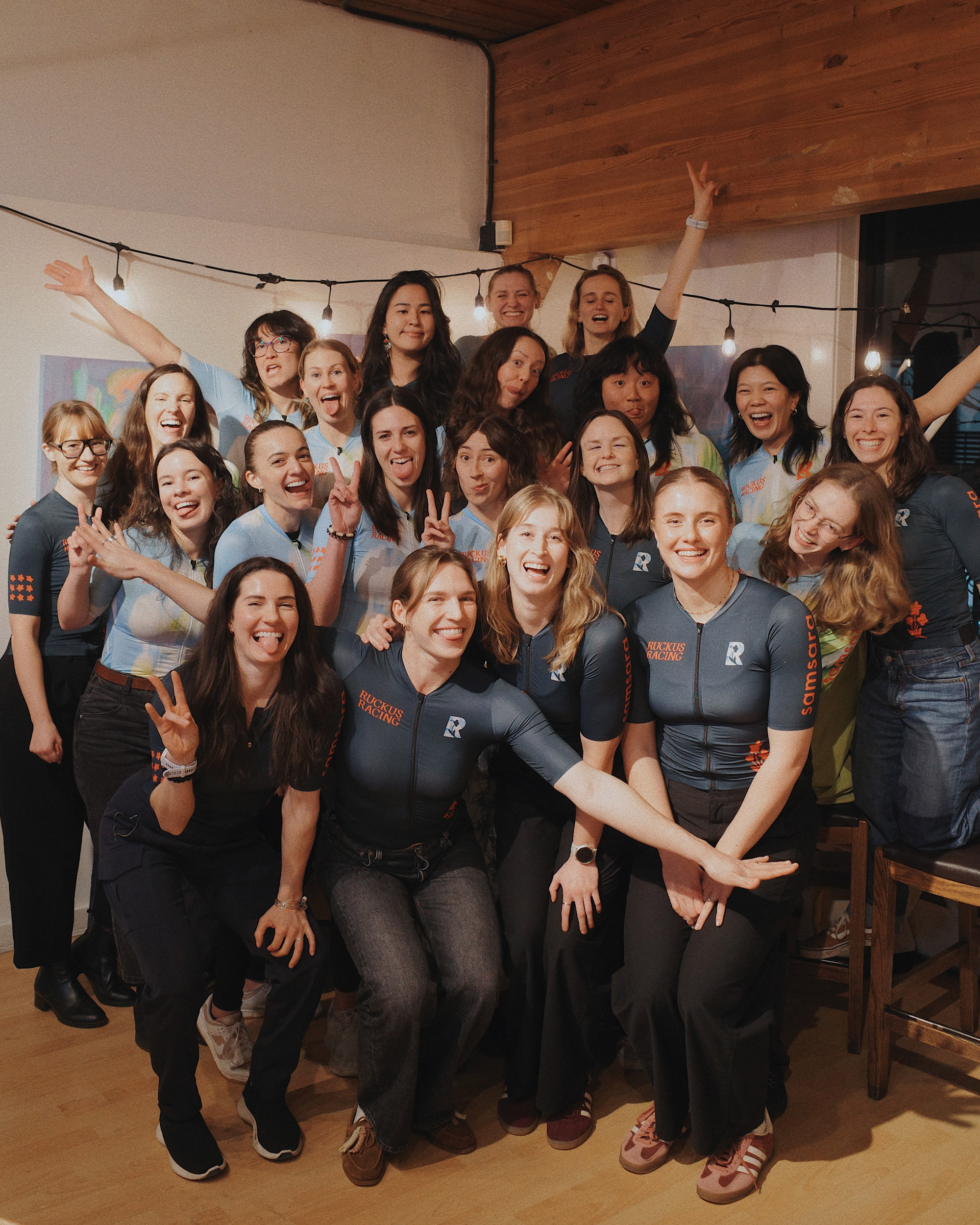
As part of Women’s History Month, we’re featuring four different women’s clubs with a strong presence on Zwift. Looking to join a women’s club? See our Women’s Clubs on Zwift post!
Photo credit Melanie Katcher
When was your club founded?
Back in 2022!
How did your club come to exist?
All of our founding members were freshly racing together in the 2022 season when an iconic local event neglected to offer an amateur women’s category. We rallied the local community, caused a bit of a ruckus, and drove a change. As such, Ruckus Racing was born. Now, we are a race team and development ground run for women, by women.
Have any/all your club members ever met up IRL? If so, please tell us about it!
Absolutely, and it’s one of the most important parts of what we do. Zwift is a great way for us to stay connected through the off-season and build community beyond Vancouver, but magic happens when we clip in together outside.
We host team rides, public group rides and clinics, and community workshops. There’s something really powerful about being able to ride with the same names you raced beside on Zwift in the real world. Riding together IRL is about building a visible, welcoming space for womxn in cycling.
Do most/many/any of your members also ride outdoors?
Yes, all the time! We meet once or twice a week on Zwift for team interval training in the off-season, but when the weather allows, we do our best to transition these sessions outside in the winter and spring.
Year-round, we also meet for our Friday morning coffee rides, a team ritual that usually is more of a social pace, but we sometimes can’t help but add a lil’ bit of spice. Starting in March, we scale up our in-person rides together leading up to races!
What do you see as the biggest hurdle for women to start cycling?
We feel as though female-identifying athletes are often dichotomized. We’re either there “just for fun” OR there to compete at our highest level. But what we know is that competing and pushing our limits is fun. Hence, our motto “having fun, taken seriously”. We’re here toeing start lines, welcoming new racers and building stoke to show that women can be playful and still bring our all to a race.
We also see how cycling can be a really intimidating sport to get involved in on a competitive level, especially as an amateur or someone newer to the sport, and so we do our best to create opportunities for the local womxn’s cycling scene to feel a sense of community and support. That looks like running race skills clinics, hosting weekly group rides out to the local crit races, and giving newer riders a chance to ask the team questions and get involved.
Is the answer the same for women starting cycling on Zwift?
Zwift can actually be a really approachable entry point, because there’s significantly less social pressure when you’re joining a virtual event and riding with strangers from your living room. It removes a lot of the barriers that can make outdoor group riding intimidating at first.
That said, the platform isn’t immune to the dynamics of the real world. Women’s representation still isn’t always that strong. Especially in races, you might find yourself as one of only a few (or the only) women in the field. That’s why initiatives like women-specific events and communities matter so much. When riders log on and see other women racing, hosting rides, and building clubs, it changes the experience to one that feels more tangible and welcoming.
Do you have thoughts/ideas/dreams for how we (we as a collective humanity, not necessarily Zwift – but it can include Zwift if you want) get more women riding?
Honestly, one of the biggest shifts we’d love to see is a collective realization that it doesn’t have to be that serious. Most people riding bikes, whether on Zwift or outside, are doing it recreationally, even if they are pinning on a race number. We’re not all going pro. Cycling culture can sometimes make it feel like you need everything dialed before you start: understanding zone training, chasing FTP gains, tracking nutrition to the gram, or owning all the “right” gear. But none of that is required to get on a bike and enjoy it.
For many people, the magic of cycling is much simpler… being outside, finding community, and discovering what your body can do. And often, once you start riding, the performance side comes naturally if you want it to. Plenty of people end up loving the training details, and that’s great too. We sure do as a race team! But you don’t need that focus to get started.
What is a fun fact you’d like to share about your club?
We’re based in Vancouver, Canada, but a big portion of our team are from England! So, Percy Pigs have become a bit of a currency on the team… IYKYK.
If you had a magic wand to change one thing about the Zwift product OR the Zwift community, what would you wish for?
We put this question to the team to see what the people really want! In no particular order…
Custom playlists that match structured workouts so that the ragers hit when the intervals get brutal
Voice-to-text and/or group calls in Zwift Companion so you can talk to your riding buddies more easily
The ability to design your own kit!!!
A super small training view so that we can watch Netflix more easily